|
|
|
LANGA Adriano O.F.M.
Questoes Cristas a Religiao Tradicional Africana. Moçambique
Braga, Editorial Franciscana 1984 256pp., 23cm., softcover, good condition, C105782
Référence libraire : R105782
|
|
|
Lancine. Sylla
Tribalisme et parti unique en Afrique Noire. Esquisse d'une théorie générale de l'intégration nationale.
Côté d'Ivoire, Université Nationale de Côte d'Ivoire, Presses de la Fondation Nationale des Sciences Politiques, 1977, in-8, broché, 391p. PAsasges pointés au stylo sur 18 pages. Bon exemplaire de travail.
Référence libraire : 81342

|
|
|
LANGSDORFF, Baron de
Voyage et chasses en Ouganda.
Ouvrage illustre de 45 gravures tirées hors texte et d'une carte, 1 vol. in-12 reliure demi-percaline brune, Librairie Hachette & Cie, Paris, 1910, 238 pp.
Référence libraire : 71575

|
|
|
Lancaster, R
Travels in China
Woodridge Suffolk: Antique Collector's Club 1989. First. Hardcover. As New/As New. A Plantsman's Paradise 516 pp profuse color & b/w ill end paper maps. Author has a long and distinguished career as a plantsman. He has travelled worldwide to study the world's flora. As a result of his travels in China he is able to describe 1000 different plants and provides 400 photographs. As new in as new unclipped jacket. Large format book printed on thick coated stock. Very heavy book. Antique Collector's Club hardcover
Référence libraire : 1345

|
|
|
Lancaster, Carol
Aid to Africa: So Much to Do, So Little Done
Paperback in very good condition. Minor shelf wear only, spine slightly sunned; contents clean and sound throughout. Used
|
|
|
LANCRET & DUTERTRE (delineavit) & BOSQ (sculpsit) & PARIS (sculpsit) & BALTARD (sculpsit)
DESCRIPTION DE L'EGYPTE. Basse Egypte. Vues de Birket el Hâggy, Élévations et coupe du pont de Beysous, Pont de Chybyn, Tourelles contre les Arabes. (ETAT MODERNE, volume I, planche 74)
- Imprimerie Impériale, Paris 1809-1829, 53,5x70cm, une feuille. - Original, unshaved, full-page etching from the "Imperial edition" of the Description de l'Égypte, or 'Recueil des observations et recherches faites en Égypte pendant l'expédition française, publié par les ordres de Sa Majesté l'Empereur Napoléon le Grand [A Collection of the observations and research carried out in Egypt during the French expedition, published on the orders of his Majesty the Emperor Napoleon the Great]'. Produced between February 1802 and 1830 on the orders of Naopleon Bonaparte and published between 1809 and 1828, 1,000 copies were printed and distributed to institutions, on vergé paper with an 'Égypte ancienne et moderne' watermark, visible when held up to the light. Light marginal spotting not touching image, otherwise in very fresh, fine condition. An engraving from the Description de l'Egypte, one of the masterpieces of French printing and the birth of a new field: Egyptology. A gigantic survey of Egypt at the time of Bonaparte's conquests in 1798 and 1799, the work is divided into 13 volumes of engravings making up 892 plates, of which 72 colored, as well as presenting the splendors of the Egypt of the Pharaohs in 9 volumes. The other volumes discuss natural history and present a fascinating portrait of Coptic and Islamic Egypt as it was seen by Bonaparte's Eastern Armies. The 'Egyptian campaign', militarily a disaster, demonstrates, through the engravings of the Description d'Egypte, the scientific success it nonetheless became thanks to the 167 expert members of the Commission of the Sciences and Arts of the Institut d'Egypte [Egyptian Institute] who followed Napoleon's army. The Institut gathered together in Egypt the mathematician Monge, the chemist Berthollet, the naturalist Geoffroy Saint-Hilaire as well as numerous artists, engineers, architects and doctors. They were tasked with re-discovering modern and ancient Egypt and displaying its natural treasures as well as the know-how of its inhabitants. This edition, the so-called "Imperial" edition of the plates for the Description de l'Egypte was printed in four large formats, two of which were specially created for it and christened "Moyen-Egypte" and "Grand-Egypte". A special press was built to print it, the process extending over 20 years, from 1809 to 1829. The "Imperial" edition proved so popular that a second edition, this time in black and white and without the "Egypte ancienne et moderne" watermark - known as the "Royal Edition" - was published during the Restoration by the printing house of C.-L.-F. Panckoucke (Paris). The engravings of the Description d'Egypte owe a great deal to Baron Dominique-Vivant Denon, illustrator, diplomat, collector and later Director of the Musée Napoléon (the Louvre). His exploration of the South of Egypt gave Bonaparte the idea of sending the experts of the Institut there, thus creating a faithful and complete portrait of the area. This was the research gathered together from 1802 in the mammoth Description de L'Egypte. Denon embarked on this story of archeological exploration at the age of 51, reaching first Alexandria and then Cairo before exploring Upper Egypt. Along with the members of the Institut d'Egypte, the Natural History Museum's painter H.J. Redouté (brother of Pierre-Joseph Redouté, author of Roses), the mineralogist Dolomiue, and the draughtsman Joly, Denon then explored the Nile Delta and Lower Egypt. When, however, he joined the 21st Light Infantry Regiment as it marched across Upper Egypt in pursuit of the retreating Mameluks in November 1798, he found himself the only civilian. In the very midst of the battle itself, he reeled off sketches of the works of art that peppered his path right up to the threshold of the Sudan. He said that he had crossed "a country that is, apart from its name, entirely unknown to Europeans, and therefore everything was worth describing" (Voyages dans la Basse et la Haute Egypte pendant

|
|
|
LANCRET & JOLLOIS Jean-Baptiste Prosper & DEVILLIERS & CHABROL & REDOUTE (delineavit) & COLLECTIF
DESCRIPTION DE L'EGYPTE. Edfou (Apollinopolis magna). Bas-reliefs du grand temple. (ANTIQUITES, volume I, planche 57)
- Imprimerie Impériale, Paris 1809-1829, 54x71cm, une feuille. - Original, unshaved, full-page etching from the "Imperial edition" of the Description de l'Égypte, or 'Recueil des observations et recherches faites en Égypte pendant l'expédition française, publié par les ordres de Sa Majesté l'Empereur Napoléon le Grand [A Collection of the observations and research carried out in Egypt during the French expedition, published on the orders of his Majesty the Emperor Napoleon the Great]'. Produced between February 1802 and 1830 on the orders of Naopleon Bonaparte and published between 1809 and 1828, 1,000 copies were printed and distributed to institutions, on vergé paper with an 'Égypte ancienne et moderne' watermark, visible when held up to the light. Light marginal spotting not touching image, otherwise in very fresh, fine condition. An engraving from the Description de l'Egypte, one of the masterpieces of French printing and the birth of a new field: Egyptology. A gigantic survey of Egypt at the time of Bonaparte's conquests in 1798 and 1799, the work is divided into 13 volumes of engravings making up 892 plates, of which 72 colored, as well as presenting the splendors of the Egypt of the Pharaohs in 9 volumes. The other volumes discuss natural history and present a fascinating portrait of Coptic and Islamic Egypt as it was seen by Bonaparte's Eastern Armies. The 'Egyptian campaign', militarily a disaster, demonstrates, through the engravings of the Description d'Egypte, the scientific success it nonetheless became thanks to the 167 expert members of the Commission of the Sciences and Arts of the Institut d'Egypte [Egyptian Institute] who followed Napoleon's army. The Institut gathered together in Egypt the mathematician Monge, the chemist Berthollet, the naturalist Geoffroy Saint-Hilaire as well as numerous artists, engineers, architects and doctors. They were tasked with re-discovering modern and ancient Egypt and displaying its natural treasures as well as the know-how of its inhabitants. This edition, the so-called "Imperial" edition of the plates for the Description de l'Egypte was printed in four large formats, two of which were specially created for it and christened "Moyen-Egypte" and "Grand-Egypte". A special press was built to print it, the process extending over 20 years, from 1809 to 1829. The "Imperial" edition proved so popular that a second edition, this time in black and white and without the "Egypte ancienne et moderne" watermark - known as the "Royal Edition" - was published during the Restoration by the printing house of C.-L.-F. Panckoucke (Paris). The engravings of the Description d'Egypte owe a great deal to Baron Dominique-Vivant Denon, illustrator, diplomat, collector and later Director of the Musée Napoléon (the Louvre). His exploration of the South of Egypt gave Bonaparte the idea of sending the experts of the Institut there, thus creating a faithful and complete portrait of the area. This was the research gathered together from 1802 in the mammoth Description de L'Egypte. Denon embarked on this story of archeological exploration at the age of 51, reaching first Alexandria and then Cairo before exploring Upper Egypt. Along with the members of the Institut d'Egypte, the Natural History Museum's painter H.J. Redouté (brother of Pierre-Joseph Redouté, author of Roses), the mineralogist Dolomiue, and the draughtsman Joly, Denon then explored the Nile Delta and Lower Egypt. When, however, he joined the 21st Light Infantry Regiment as it marched across Upper Egypt in pursuit of the retreating Mameluks in November 1798, he found himself the only civilian. In the very midst of the battle itself, he reeled off sketches of the works of art that peppered his path right up to the threshold of the Sudan. He said that he had crossed "a country that is, apart from its name, entirely unknown to Europeans, and therefore everything was worth describing" (Voyages dans la Basse et la Haute Egypte pendant le

|
|
|
LANCRET François-Joseph & CHARLIN (sculpsit)
DESCRIPTION DE L'EGYPTE. Thèbes. Karnak. Coupe, détail et bas-reliefs intérieurs de la porte du sud. (ANTIQUITES, volume III, planche 53)
- Imprimerie Impériale, Paris 1809-1829, 71x54cm, une feuille. - Original, unshaved, full-page etching from the "Imperial edition" of the Description de l'Égypte, or 'Recueil des observations et recherches faites en Égypte pendant l'expédition française, publié par les ordres de Sa Majesté l'Empereur Napoléon le Grand [A Collection of the observations and research carried out in Egypt during the French expedition, published on the orders of his Majesty the Emperor Napoleon the Great]'. Produced between February 1802 and 1830 on the orders of Naopleon Bonaparte and published between 1809 and 1828, 1,000 copies were printed and distributed to institutions, on vergé paper with an 'Égypte ancienne et moderne' watermark, visible when held up to the light. Light marginal spotting not touching image, otherwise in very fresh, fine condition. An engraving from the Description de l'Egypte, one of the masterpieces of French printing and the birth of a new field: Egyptology. A gigantic survey of Egypt at the time of Bonaparte's conquests in 1798 and 1799, the work is divided into 13 volumes of engravings making up 892 plates, of which 72 colored, as well as presenting the splendors of the Egypt of the Pharaohs in 9 volumes. The other volumes discuss natural history and present a fascinating portrait of Coptic and Islamic Egypt as it was seen by Bonaparte's Eastern Armies. The 'Egyptian campaign', militarily a disaster, demonstrates, through the engravings of the Description d'Egypte, the scientific success it nonetheless became thanks to the 167 expert members of the Commission of the Sciences and Arts of the Institut d'Egypte [Egyptian Institute] who followed Napoleon's army. The Institut gathered together in Egypt the mathematician Monge, the chemist Berthollet, the naturalist Geoffroy Saint-Hilaire as well as numerous artists, engineers, architects and doctors. They were tasked with re-discovering modern and ancient Egypt and displaying its natural treasures as well as the know-how of its inhabitants. This edition, the so-called "Imperial" edition of the plates for the Description de l'Egypte was printed in four large formats, two of which were specially created for it and christened "Moyen-Egypte" and "Grand-Egypte". A special press was built to print it, the process extending over 20 years, from 1809 to 1829. The "Imperial" edition proved so popular that a second edition, this time in black and white and without the "Egypte ancienne et moderne" watermark - known as the "Royal Edition" - was published during the Restoration by the printing house of C.-L.-F. Panckoucke (Paris). The engravings of the Description d'Egypte owe a great deal to Baron Dominique-Vivant Denon, illustrator, diplomat, collector and later Director of the Musée Napoléon (the Louvre). His exploration of the South of Egypt gave Bonaparte the idea of sending the experts of the Institut there, thus creating a faithful and complete portrait of the area. This was the research gathered together from 1802 in the mammoth Description de L'Egypte. Denon embarked on this story of archeological exploration at the age of 51, reaching first Alexandria and then Cairo before exploring Upper Egypt. Along with the members of the Institut d'Egypte, the Natural History Museum's painter H.J. Redouté (brother of Pierre-Joseph Redouté, author of Roses), the mineralogist Dolomiue, and the draughtsman Joly, Denon then explored the Nile Delta and Lower Egypt. When, however, he joined the 21st Light Infantry Regiment as it marched across Upper Egypt in pursuit of the retreating Mameluks in November 1798, he found himself the only civilian. In the very midst of the battle itself, he reeled off sketches of the works of art that peppered his path right up to the threshold of the Sudan. He said that he had crossed "a country that is, apart from its name, entirely unknown to Europeans, and therefore everything was worth describing" (Voyages dans la Basse et la Haute Egypte pendant le

|
|
|
LANCRET François-Joseph & JOMARD Edme-François & LECLERC Auguste-Toussaint & POMEL Claude-Joseph
DESCRIPTION DE L'EGYPTE. Thèbes. Karnak. Inscriptions gravées sur la terrasse du grand Temple du sud, frise et bas-reliefs du grand Temple du sud. (ANTIQUITES, volume III, planche 57)
- Imprimerie Impériale, Paris 1809-1829, 71x54cm, une feuille. - Original, unshaved, full-page etching from the "Imperial edition" of the Description de l'Égypte, or 'Recueil des observations et recherches faites en Égypte pendant l'expédition française, publié par les ordres de Sa Majesté l'Empereur Napoléon le Grand [A Collection of the observations and research carried out in Egypt during the French expedition, published on the orders of his Majesty the Emperor Napoleon the Great]'. Produced between February 1802 and 1830 on the orders of Naopleon Bonaparte and published between 1809 and 1828, 1,000 copies were printed and distributed to institutions, on vergé paper with an 'Égypte ancienne et moderne' watermark, visible when held up to the light. Light marginal spotting not touching image, otherwise in very fresh, fine condition. An engraving from the Description de l'Egypte, one of the masterpieces of French printing and the birth of a new field: Egyptology. A gigantic survey of Egypt at the time of Bonaparte's conquests in 1798 and 1799, the work is divided into 13 volumes of engravings making up 892 plates, of which 72 colored, as well as presenting the splendors of the Egypt of the Pharaohs in 9 volumes. The other volumes discuss natural history and present a fascinating portrait of Coptic and Islamic Egypt as it was seen by Bonaparte's Eastern Armies. The 'Egyptian campaign', militarily a disaster, demonstrates, through the engravings of the Description d'Egypte, the scientific success it nonetheless became thanks to the 167 expert members of the Commission of the Sciences and Arts of the Institut d'Egypte [Egyptian Institute] who followed Napoleon's army. The Institut gathered together in Egypt the mathematician Monge, the chemist Berthollet, the naturalist Geoffroy Saint-Hilaire as well as numerous artists, engineers, architects and doctors. They were tasked with re-discovering modern and ancient Egypt and displaying its natural treasures as well as the know-how of its inhabitants. This edition, the so-called "Imperial" edition of the plates for the Description de l'Egypte was printed in four large formats, two of which were specially created for it and christened "Moyen-Egypte" and "Grand-Egypte". A special press was built to print it, the process extending over 20 years, from 1809 to 1829. The "Imperial" edition proved so popular that a second edition, this time in black and white and without the "Egypte ancienne et moderne" watermark - known as the "Royal Edition" - was published during the Restoration by the printing house of C.-L.-F. Panckoucke (Paris). The engravings of the Description d'Egypte owe a great deal to Baron Dominique-Vivant Denon, illustrator, diplomat, collector and later Director of the Musée Napoléon (the Louvre). His exploration of the South of Egypt gave Bonaparte the idea of sending the experts of the Institut there, thus creating a faithful and complete portrait of the area. This was the research gathered together from 1802 in the mammoth Description de L'Egypte. Denon embarked on this story of archeological exploration at the age of 51, reaching first Alexandria and then Cairo before exploring Upper Egypt. Along with the members of the Institut d'Egypte, the Natural History Museum's painter H.J. Redouté (brother of Pierre-Joseph Redouté, author of Roses), the mineralogist Dolomiue, and the draughtsman Joly, Denon then explored the Nile Delta and Lower Egypt. When, however, he joined the 21st Light Infantry Regiment as it marched across Upper Egypt in pursuit of the retreating Mameluks in November 1798, he found himself the only civilian. In the very midst of the battle itself, he reeled off sketches of the works of art that peppered his path right up to the threshold of the Sudan. He said that he had crossed "a country that is, apart from its name, entirely unknown to Europeans, and therefore everything was worth describing" (Voyages dans la Basse et la Haute Egypte pendant le

|
|
|
LANCRET François-Joseph & LEGRAND Hyacinthe(sculpsit)
DESCRIPTION DE L'EGYPTE. Thèbes. Karnak. Coupe de la porte sud. (ANTIQUITES, volume III, planche 52)
- Imprimerie Impériale, Paris 1809-1829, 71x54cm, une feuille. - Original, unshaved, full-page etching from the "Imperial edition" of the Description de l'Égypte, or 'Recueil des observations et recherches faites en Égypte pendant l'expédition française, publié par les ordres de Sa Majesté l'Empereur Napoléon le Grand [A Collection of the observations and research carried out in Egypt during the French expedition, published on the orders of his Majesty the Emperor Napoleon the Great]'. Produced between February 1802 and 1830 on the orders of Naopleon Bonaparte and published between 1809 and 1828, 1,000 copies were printed and distributed to institutions, on vergé paper with an 'Égypte ancienne et moderne' watermark, visible when held up to the light. Light marginal spotting not touching image, otherwise in very fresh, fine condition. An engraving from the Description de l'Egypte, one of the masterpieces of French printing and the birth of a new field: Egyptology. A gigantic survey of Egypt at the time of Bonaparte's conquests in 1798 and 1799, the work is divided into 13 volumes of engravings making up 892 plates, of which 72 colored, as well as presenting the splendors of the Egypt of the Pharaohs in 9 volumes. The other volumes discuss natural history and present a fascinating portrait of Coptic and Islamic Egypt as it was seen by Bonaparte's Eastern Armies. The 'Egyptian campaign', militarily a disaster, demonstrates, through the engravings of the Description d'Egypte, the scientific success it nonetheless became thanks to the 167 expert members of the Commission of the Sciences and Arts of the Institut d'Egypte [Egyptian Institute] who followed Napoleon's army. The Institut gathered together in Egypt the mathematician Monge, the chemist Berthollet, the naturalist Geoffroy Saint-Hilaire as well as numerous artists, engineers, architects and doctors. They were tasked with re-discovering modern and ancient Egypt and displaying its natural treasures as well as the know-how of its inhabitants. This edition, the so-called "Imperial" edition of the plates for the Description de l'Egypte was printed in four large formats, two of which were specially created for it and christened "Moyen-Egypte" and "Grand-Egypte". A special press was built to print it, the process extending over 20 years, from 1809 to 1829. The "Imperial" edition proved so popular that a second edition, this time in black and white and without the "Egypte ancienne et moderne" watermark - known as the "Royal Edition" - was published during the Restoration by the printing house of C.-L.-F. Panckoucke (Paris). The engravings of the Description d'Egypte owe a great deal to Baron Dominique-Vivant Denon, illustrator, diplomat, collector and later Director of the Musée Napoléon (the Louvre). His exploration of the South of Egypt gave Bonaparte the idea of sending the experts of the Institut there, thus creating a faithful and complete portrait of the area. This was the research gathered together from 1802 in the mammoth Description de L'Egypte. Denon embarked on this story of archeological exploration at the age of 51, reaching first Alexandria and then Cairo before exploring Upper Egypt. Along with the members of the Institut d'Egypte, the Natural History Museum's painter H.J. Redouté (brother of Pierre-Joseph Redouté, author of Roses), the mineralogist Dolomiue, and the draughtsman Joly, Denon then explored the Nile Delta and Lower Egypt. When, however, he joined the 21st Light Infantry Regiment as it marched across Upper Egypt in pursuit of the retreating Mameluks in November 1798, he found himself the only civilian. In the very midst of the battle itself, he reeled off sketches of the works of art that peppered his path right up to the threshold of the Sudan. He said that he had crossed "a country that is, apart from its name, entirely unknown to Europeans, and therefore everything was worth describing" (Voyages dans la Basse et la Haute Egypte pendant le

|
|
|
LANCRET François-Joseph & POMEL Claude-Joseph
DESCRIPTION DE L'EGYPTE. Thèbes. Karnak. Plan et détail du plafond de la porte du sud. (ANTIQUITES, volume III, planche 50)
- Imprimerie Impériale, Paris 1809-1829, 71x54cm, une feuille. - Original, unshaved, full-page etching from the "Imperial edition" of the Description de l'Égypte, or 'Recueil des observations et recherches faites en Égypte pendant l'expédition française, publié par les ordres de Sa Majesté l'Empereur Napoléon le Grand [A Collection of the observations and research carried out in Egypt during the French expedition, published on the orders of his Majesty the Emperor Napoleon the Great]'. Produced between February 1802 and 1830 on the orders of Naopleon Bonaparte and published between 1809 and 1828, 1,000 copies were printed and distributed to institutions, on vergé paper with an 'Égypte ancienne et moderne' watermark, visible when held up to the light. Light marginal spotting not touching image, otherwise in very fresh, fine condition. An engraving from the Description de l'Egypte, one of the masterpieces of French printing and the birth of a new field: Egyptology. A gigantic survey of Egypt at the time of Bonaparte's conquests in 1798 and 1799, the work is divided into 13 volumes of engravings making up 892 plates, of which 72 colored, as well as presenting the splendors of the Egypt of the Pharaohs in 9 volumes. The other volumes discuss natural history and present a fascinating portrait of Coptic and Islamic Egypt as it was seen by Bonaparte's Eastern Armies. The 'Egyptian campaign', militarily a disaster, demonstrates, through the engravings of the Description d'Egypte, the scientific success it nonetheless became thanks to the 167 expert members of the Commission of the Sciences and Arts of the Institut d'Egypte [Egyptian Institute] who followed Napoleon's army. The Institut gathered together in Egypt the mathematician Monge, the chemist Berthollet, the naturalist Geoffroy Saint-Hilaire as well as numerous artists, engineers, architects and doctors. They were tasked with re-discovering modern and ancient Egypt and displaying its natural treasures as well as the know-how of its inhabitants. This edition, the so-called "Imperial" edition of the plates for the Description de l'Egypte was printed in four large formats, two of which were specially created for it and christened "Moyen-Egypte" and "Grand-Egypte". A special press was built to print it, the process extending over 20 years, from 1809 to 1829. The "Imperial" edition proved so popular that a second edition, this time in black and white and without the "Egypte ancienne et moderne" watermark - known as the "Royal Edition" - was published during the Restoration by the printing house of C.-L.-F. Panckoucke (Paris). The engravings of the Description d'Egypte owe a great deal to Baron Dominique-Vivant Denon, illustrator, diplomat, collector and later Director of the Musée Napoléon (the Louvre). His exploration of the South of Egypt gave Bonaparte the idea of sending the experts of the Institut there, thus creating a faithful and complete portrait of the area. This was the research gathered together from 1802 in the mammoth Description de L'Egypte. Denon embarked on this story of archeological exploration at the age of 51, reaching first Alexandria and then Cairo before exploring Upper Egypt. Along with the members of the Institut d'Egypte, the Natural History Museum's painter H.J. Redouté (brother of Pierre-Joseph Redouté, author of Roses), the mineralogist Dolomiue, and the draughtsman Joly, Denon then explored the Nile Delta and Lower Egypt. When, however, he joined the 21st Light Infantry Regiment as it marched across Upper Egypt in pursuit of the retreating Mameluks in November 1798, he found himself the only civilian. In the very midst of the battle itself, he reeled off sketches of the works of art that peppered his path right up to the threshold of the Sudan. He said that he had crossed "a country that is, apart from its name, entirely unknown to Europeans, and therefore everything was worth describing" (Voyages dans la Basse et la Haute Egypte pendant le

|
|
|
Land, Cees op't
Africa tribal art. With contributions by Cees op't Land, Bernd Leicht, Peter de Boer. (English translation by Piet Keusen).
(Eppelheim), Edition Schulte/Weiss, (2006). 264 S. Mit 176 farb. Abb. 31cm. OPp. m. SU (dieser am Rücken verblasst).
Référence libraire : 89157

|
|
|
Landbeck, P
Malu Malu. Erlebnisse aus der Sturm- und Drangperiode des Kongostaates.
Berlin, Scherl Verlag, 1930.
Référence libraire : 11265

|
|
|
LANDER Richard & John
Journal d'une expédition entreprise dans le but d'explorer le cours et l'embouchure du Niger, ou relation d'un voyage sur cette rivière depuis Yaourie jusqu'à son embouchure
- Paulin, Paris 1832, 13x20,5cm, 3 volumes reliés. - Edition originale de la traduction française. Reliures à la bradel en plein cartonnage vert sapin, dos lisse partiellement décolorés et ornés de filets dorés, traces de frottements sur les mors, gardes et contreplats de papier vert d'eau, coins émoussés, tranches jaunes, reliures de l'époque. Ouvrage illustré de figures dans le texte et bien complet de ses 2 cartes ainsi que de ses 5 gravures hors-texte. Indications de rangement de bibliothèque, à l'encre rouge, en têtes des contreplats, quelques petites rousseurs. [ENGLISH DESCRIPTION ON DEMAND]

|
|
|
Landesverband baden
Nachweis der Arische abstimmung
Karlsruhe 1939. unknown
Référence libraire : 85010

|
|
|
Landskron
Remington rolling block pistols
Buena Park: rolling block press Buena Park California 1981 1981. First edition book number 219 Deluxe Edition of 500 copies. Very Good. edited and designed by Charles R Suydam. this is a first edition book number 219 of the Deluxe Edition of 500 copies autographed to a person name withheld with regards Jerry Landskron. This is a historically written book about Remington rolling lock pistols and contains drawings reproductions of official paperwork pictures of some of the different models of rolling blocks and other assorted information about that tie those types of guns in particular. The author is local or was at the time of publication in orange county . The interior the book is clean without Marx the edges the book are clean is very expensively printed on chrome gloss paper was printed by Taylor publishing company Dallas Texas Library of Congress catalog number 81 50481 first edition June 1981 ISBN number zero 940028 00X copyright by the author of the cover is an impressive red leatherette with gold embossed titling on this line which is in good shape and a gold roadblock on the front along with letters one of 500 there is some minor wear of the gold stamping on one of 500 the edges of the book are clean there is a little bit of smooshing of the bottom corner of the cover at spine not bad but not perfect that is about the only defect I can see except for the small loss of gold stamping on the one of 500.Jerry Landskron was very active at one time the Remington society. <br/><br/>questions e-mail me before buying synthesis kind of a costly item. rolling block press Buena Park California 1981 hardcover
Référence libraire : 140 ISBN : 094002800X 9780940028005
|
|
|
Landstroem B
Das Schiff
Guetersloh: Bertelsmann 1973. Gebunden. Bertelsmann unknown
Référence libraire : 39496
|
|
|
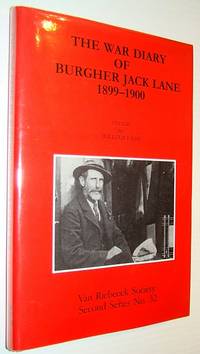
Lane, Jack; Lane, William (Editor)
The War Diary of Burgher Jack Lane 16 November 1899 to 27 February 1900 - Second Series No. 32
Cape Town South Africa: Van Riebeeck Society 2001. Book. Fine. Hardcover. First Edition. 8vo - over 7¾" - 9¾" tall. 161 pages. Bibliography. Index. "Lane a born Ulsterman a burgher of the South African Republic but still loyal to the British cause a storekeeper in the hamlet of Hartbeesfontein in the Western Transvaal faced dire penalties if he did not go to war with his commando. Refusing to bear arms against his mother country he was placed in charge of the ammunition in the main laager of General Piet Cronje Deputy Commandant General of the Republic. Not only was he opposed to Kruger and Krugerism but he was incensed at being commandeered. He criticizes much of what he sees and hears about Cronje. This viewpoint makes the work unique and unmatched by any other diarist in the camps of the Boers." - from dust jacket. Prior owner's ink stamp atop front free endpaper otherwise clean bright and unmarked with negligible wear. Appears unread. Dust jacket now preserved in glossy new archival-grade Brodart. An excellent copy. Van Riebeeck Society Hardcover
Référence libraire : 241G1913 ISBN : 095841128x 9780958411288
|
|
|
Lane, Jack; Lane, William (Editor)
The War Diary of Burgher Jack Lane, 16 November 1899 to 27 February 1900 - Second Series No. 32
161 pages. Bibliography. Index. "Lane, a born Ulsterman, a burgher of the South African Republic but still loyal to the British cause, a storekeeper in the hamlet of Hartbeesfontein in the Western Transvaal, faced dire penalties if he did not go to war with his commando. Refusing to bear arms against his mother country, he was placed in charge of the ammunition in the main laager of General Piet Cronje, Deputy Commandant General of the Republic. Not only was he opposed to Kruger and Krugerism but he was incensed at being commandeered. He criticizes much of what he sees and hears about Cronje. This viewpoint makes the work unique and unmatched by any other diarist in the camps of the Boers." - from dust jacket. Prior owner's ink stamp atop front free endpaper, otherwise clean, bright and unmarked with negligible wear. Appears unread. Dust jacket now preserved in glossy new archival-grade Brodart. An excellent copy. Book

|
|
|
Lane, Rose Wilder; 'Gulbrandsen'; Dawson, EB; Casserly, Lieut-Col Gordon; Walmsley, Leo; Wills, Archie; 'Traverse'; Miller, TS;
The Wide World Magazine - True Stories of Adventure April Apr. 1923 Vol L No. 300: Search for the Grosvenor Treasure
New York: The International News Company 1923. Book. Illus. by Elcock Howard; Woodville R. Caton; Prater E.; Pears Charles; Holloway W.H.; Cleaver Reginald; Hiley Francis G.; Soper G.; De Walton John; Wigfull W.E.; Prater E.; Pears Charles; Holloway W.H.; Cleaver Reginald; Hiley Francis G.; Soper G. Very Good. Single Issue Magazine. First Edition. 4to - over 9¾" - 12" tall. Pages 442-528 plus 16 pages of great vintage ads many illustrated. Features: A Soldier of Fortune - a story smuggled in bits from a French prison part 1; A Woman in Unknown Albania - Part I - Mrs. Rose Wilder Lane describes her adventures among the remote northern mountains where tribal blood-feuds still flourish - article with photos; The Election at Rodeo - an account of the happenings at a town in Argentina on the occasion of the Presidential election of 1914; The Search for the Grosvenor Treasure - an account of the wreck of the Grosvenor on the lonely coast of Pondoland South Africa and operations of seekers of her sunken treasure of precious metals and stones - with photos; The Terror of the Terai - the story of one of the most remarkable elephant hunts on record - a twelve days' chase after a man-killing 'rogue'; Photo of a Venetian funeral; Three Asses in the Pyrenees - the humourous travels of a huband and wife with their donkey part 4; Across the Pacific in a Chinese Junk - Captain George Ward and his voyage from Amoy China to Victoria British Columbia - article with photos one of which includes Douglas Fairbanks and Mary Pickford aboard the vessel; Forgotten - the terrible experience of a young surveyor off the coast of Trinidad; The Witching of the M'Bumbo - a tale of native witchcraft and trial by ordeal in Nigeria; Our Unlucky Day - an account of a series of disasters which struck a steamer the S.S. Z_____ in the Gulf of Mexico; The Village of the Greeks - visit to a tiny hamlet in the Sicilian Mountains - with photos; The Gower Affair - a story of black magic at Porto Lokkoh on the West Coast of Africa. Above-average wear. Front cover loose but present. A worthy vintage copy. The International News Company Paperback
Référence libraire : 346H5244

|
|
|
Lane-Pool, S
Babar
Oxford: Calarendon Press 1899. First. Hardcover. VG. 206 pp. Volume in the rulers of India series. Interesting biography. VG only in orig. blue cloth. Wear at spine tips and corners. Calarendon Press hardcover
Référence libraire : 1884
|
|
|
LANFREY, P.
Expedition D'Egypte et Campagne de Syrie. Mit Anmerkungen für den Schulgebrauch v. Dr Küsswetter.
Mit 2 Abb & 1 Karte.
|
|
|
LANG M.E.
Ein Tag in der Steppe
LANG M.E. Ein Tag in der Steppe. Berna, Hallwag 1967, In 4° ad album, cartonato editoriale in busta, pp. 80 con illustrazioni prevalentemente in colore. Bella edizione Buono (Good) . <br> <br> <br>
|
|
|
LANG, A.et TASTEVIN, C
La Tribu des Va-Nyaneka.
Corbeil, Imprimerie Crété, 1937. 4to. 10, 213, (1) S. m. wenigen Melodien, 2 Bl., 16 Bildtafeln. (Angola et Rhodesia (1912 - 1914) = Mission Rohan-Chabot 5). Neuer Lwdbd m. aufgezogenem Umschlagtitel (priv. St. a. d. T.).
Référence libraire : 1205634
|
|
|
Lang, Herbert (Photo)
South Africa's Big Game and other Animals (with two maps). Glimpses from Kruger National Park and other Reseves within the Union.
Johannesburg and Cape Town, The Central News Agency um, 1935.
Référence libraire : 118738

|
|
|
LANGA Adriano O.F.M.
Questoes Cristas a Religiao Tradicional Africana. Moçambique
256pp., 23cm., softcover, good condition, C105782
|
|
|
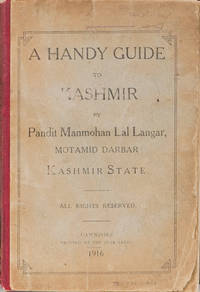
Langar, M
A Handy Guide to Kashmir
Ca: Star Press 1918. August 1916 Edition. Orig Printed Stiff Wraps. VG. by Pandit Man Mohan Lal Langar Motamid Darbar - Kashmir State. 208 pp folding map at fron and at rear 1 folding plan in text. Hints for visitors routes descriptions of valleys and cities arts and industries sport eastern and western Kashmir routes Ladakh appendices plus rules for shooting in the Pamirs and Thian Shan. A fascinating information packed guide book. VG in original printed stiff wraps. Star Press unknown
Référence libraire : 1883
|
|
|
LANGE Kurt HIRMER Max
L'Egitto. Architettura - Scultura - Pittura di Trenta Secoli.
In 4° (cm. 30,8x24), legatura in tutta tela editoriale con titoli oro al piatto e al dorso, pp. 92 con numerose illustrazioni nel testo e 260 illustrazioni in bianco e nero ed a colori su 244 tavole fuori testo. Buon esemplare.
|
|
|
Lange, Eitel:
Puck und die Welt. Im Kleinauto um die Erde. 1.-15. Tausend
Verlag Rudolf Thalhammer München 1957. Hardcover mit Leinenrücken ohne Schutzumschlag Mit einer Widmung der Autorin im Vorsatz. Zustand: keine Beschädigungen keine Eintragungen. Rücken Ecken Kanten gut. Verlag Rudolf Thalhammer, München, hardcover
Référence libraire : 222371
|
|
|
Lange, H
Kilimanjaro. The white roof of Africa. (Engl. by J.P. Roper).
(Leipzig, Edition, 1982). (Lizenzausg. f. Washington, The Mountaineer. 4°. M. zahlr. (teils farb.) Abb. 175 S. OLwd. St. a. Vorsatz.
Référence libraire : 810233
|
|
|
Lange, Harald
Kamerapirsch durch afrikanische Lebensräume. 1. Auflage.,
Leipzig, F.A.Brockhaus Verlag. 1981. Mit 32 Seiten Text und ca. 80 Seiten mit teils farbig fotografierten Abbildungen., 4°, OLeinwand mit illustriertem Schutzumschlag (dieser mit starken Gebrauchsspuren).,
Référence libraire : 13558
|
|
|
Lange, Henry
Afrika: Das Land zwischen dem Tanganika See und dem Indischen Ocean. Maßstab 1 : 5.000.000.
o. O., o. Vlg., o. J. Farblithographie. 21 x 31 cm. Im Passepartout., Abbildung
Référence libraire : 1454BG

|
|
|
Lange, Henry
Karte von Afrika. Nach den neuesten Forschungen mit Angabe der wichtigsten Entdeckungen.
Lpz., Purfürst 1863. Waagerechte Falzen rückseitig verstärkt, senkrecht teilweise mit Einrissen, Rückseitig ein paar Krickeleien mit Bleistift.
Référence libraire : 48636AB
|
|
|
Lange, Herbert
Speckwastl in Afrika.
Wien, ?sterreichischer Bundesverlag, 1955. original Leinenband mit original Schutzumschlag, 8?, 217 Seiten mit einigen Illustrationen von Hans Wulz; Zustand: Schutzumschlag mit Rissen und Fehlstellen, Buch selbst gut +
Référence libraire : FD28-492

|
|
|
Lange, Kurt u. Max Hirmer
Ägypten
Mit Beiträgen von Eberhard Otto u. Christiane Desroches-Noblecourt. München, Hirmer u. R. Piper, (1978). Fol. 208 S. mit 86 Zeichnungen u. Grundrissen im Text u. Tafelteil mit 60 Farbtafeln u. 270 Tafelabbildungen. Or.-Pp. [3 Warenabbildungen]
Référence libraire : 41839

|
|
|
Lange, Kurt u. Max Hirmer
Ägypten
Mit Beiträgen von E. Otto u. C. Desroches-Noblecourt. Sonderausgabe. München, Hirmer u. R. Piper, (1980). Fol. 208 S. mit 86 Zeichnungen u. Grundrissen im Text u. Tafelteil mit 60 Farbtafeln u. 270 Tafelabbildungen. Or.-Pp. mit Schutzumschlag; kl. Randläsuren. [7 Warenabbildungen]
Référence libraire : 47929

|
|
|
Lange, P(aul) Werner
Henry Morton Stanley. Die Biographie.
(Stuttgart), Edition Erdmann, (1990). 407 S. mit zahlr. teils ganzseit., teils doppelblattgr. Textabb. 8°. OLwd. (kl. Gebrssprn.) mit OU.
Référence libraire : 19624
|
|
|
Lange, P. Werner
Heiliger Berg der Massai. Oldonyo Lengai.
Zürich, AS Verlag, 2009. zahlr. farb. Abb. u. Karten, 240 S., Gr.-8°, OPp. m. SchU.
Référence libraire : 16728

|
|
|
Lange, Ulrich
Eine geomorphologisch-pedochemische Fallstudie aus Ost-Burundi: Morphodynamik und Morphogenese in den wechselfeuchten Tropen.
Karlsruhe ., Im Selbstverlag des Geographischen Instituts der Universität (TH) Karlsruhe., 1986. 220 Seiten, mit Abbildungen und Tabellen im Text. Erschien in der Reihe: Karlsruher Geographische Hefte, Heft 13. Zustand: Aus einer Institutsbibliothek ausgeschieden, unterer Rücken mit kleinem Aufkleber, Einbandränder minimal gebräunt, Titelblatt mit Bibliotheksstempel und Inventarnummer. 8°. S OBroschur / Okarton.
Référence libraire : 044878
|
|
|
Lange, Werner P
Kontinent der kurzen Schatten. Eine Entdeckungsgeschichte Afrikas.
Leipzig Jena Berlin: Urania-Verlag. 1987. 262 S. Gr.8vo. Mit 137 Abbildungen und 6 Karten. Original-Leinwand mit Schutzumschlag.
Référence libraire : 7377
|
|
|
Langenmaier, Th
Lexikon zur alten Geographie d. südöstl. Äquatorialafrika.
Hamburg, Friederichsen & Co. 1918. 4°. M. 50 Abb. VII, 100 S. Hlwd. (Abh. d. Hamburg. Kolonialinst. 39, C 6).
Référence libraire : 631084
|
|
|
Langenmaier, Theodor
Lexikon zur alten Geographie des südöstlichen Äquatorialafrika. Mit 50 Textskizzen.
Hamburg, Friederichsen, 1918. 4° (27,5 x 19 cm). VII, 100 Seiten. Mit kleinen Kartenskizzen. Original-Broschur. (Rücken am Fuß mit kleiner Fehlstelle, am Kapital etwas lädiert). * Abhandlungen des Hamburgischen Kolonialinstituts; Reihe C, Geographie, Geologie, Mineralogie und Paläontologie, Bd. 6 (= 39 des Gesamtwerks). [2 Warenabbildungen]
Référence libraire : 35239A

|
|
|
Langer, H. u. S
Arzt am Rande der Sahara
Leipzig, Brockhaus, 1975. Mit zahlreichen fotografischen Tafelabbildungen. 161 S., 1 Bl. Or.-Lwd. mit Schutzumschlag.
Référence libraire : 56699

|
|
|
Langer, Sigrun u. Heinz
Algerische Sahara. Land zwischen Atlas und Ahaggar.
Leipzig, Brockhaus 1977. (1. Aufl.). Groß-8°. 150 S. m. teils farb. Fotogr., Begleittext u. 1 Kartenskizze sowie einer 2 seitigen Beilage m. Bildverzeichnis in russischer, englischer u. französischer Sprache. Illustr. OPp.
Référence libraire : 17220
|
|
|
LANGHEINRICH, F
Schambala-Wörterbuch.
Hamburg, Friederichsen, 1921. 4°. 502 S. OKart. Unaufgeschn. (Abh.. d. Hamburg. Kolonialinst. 43 = Reihe B/23).
Référence libraire : 1112478
|
|
|
Langheld, Wilhelm
Zwanzig Jahre in deutschen Kolonien.
Berlin, Weicher, 1909. XII, 431 S., 4 Bll. Mit 2 farb. Faltkarten und zahlreichen Abbildungen. Orig.-Leinwand.
Référence libraire : 26533AB
|
|
|
Langmead, Peter
The Zambians.
Kabulonga, Langmead & Baker, 2013. 95 S. (17x17 cm) Broschierte Ausgabe
Référence libraire : 41167
|
|
|
Langner Ilse
Die Zyklopen
Roman: Hamburg. Gebunden. Hamburg unknown
Référence libraire : 11697
|
|
|
Langsdorff, Werner von
Deutsche Flagge über Sand und Palmen. 53 Kolonialkrieger erzählen.
Gütersloh, Verlag C. Bertelsmann, 1936.
Référence libraire : 201834

|
|
|
LANGUE-MENYE GISELE
LA PROMOTION DE LA PLANIFICATION FAMILIALE AU CAMEROUN: ANALYSE DE CONTENU DES MESSAGES ET IMPACT D'UNE CAMPAGNE DE COMMUNICATION AUDIOVISUELLE
Ceped. 1999. In-8 Carré. Broché. Bon état. Couv. convenable. Dos satisfaisant. Intérieur frais. Plaquette de 47 pages. Etiquette de code sur le dos. Tampon et annotations de bibliothèque en page de titre. Centre Français sur la Population et le Développement. Les Dossiers du CEPED, n° 53, juin 1999.

|
|
|

 Recevoir par e-mail
 Télécharger en PDF
 Flux RSS
 Lien permanent


