|
|
|
LE MARQUIS DE COMPIEGE.
AFRIQUE EQUATORIALE: GABONAIS - PAHOUINS - GALLOIS.
, Paris, E. Plon, 1875., Broche, original couverture d' editeur, frontispice, 12x19cm, 359pp, illustre, carte l'Afrique equatoriale depliante.
書籍販売業者の参照番号
: 7091
|
|
|
LE MASSON HUGUES
FAUT-IL, ENCORE, AIDER LES PAYS EN DEVELOPPEMENT ?, HISTOIRE D'UN CAS EXEMPLAIRE
ISBN : 2866451260. Le Félin. 1992. In-8 Carré. Broché. Etat d'usage. Couv. légèrement pliée. Dos satisfaisant. Intérieur frais. 223 pages. Illustré de quelques cartes en noir et blanc hors texte. Etiquette de code sur le dos. Tampon et annotations de bibliothèque en page de titre. Préface de René Lenoir. L'exemple du Soudan.

|
|
|
LE MASSON HUGUES
FAUT-IL, ENCORE, AIDER LES PAYS EN DEVELOPPEMENT ?, HISTOIRE D'UN CAS EXEMPLAIRE
Le Félin. 1992. In-8. Broché. Etat d'usage, Couv. légèrement pliée, Dos satisfaisant, Intérieur frais. 223 pages. Illustré de quelques cartes en noir et blanc hors texte. Etiquette de code sur le dos. Tampon et annotations de bibliothèque en page de titre.. . . . Classification Dewey : 967-Afrique centrale
書籍販売業者の参照番号
: RO40178409

|
|
|
LE MAY G.H.L.
Black and white in South Africa: The politics of survival
Langue anglaise, Librairy of the 20th century, 1971, 128 pp., broché, nombreuses illustrations et photos, légères traces d'usage, bon état.
書籍販売業者の参照番号
: 68493

|
|
|
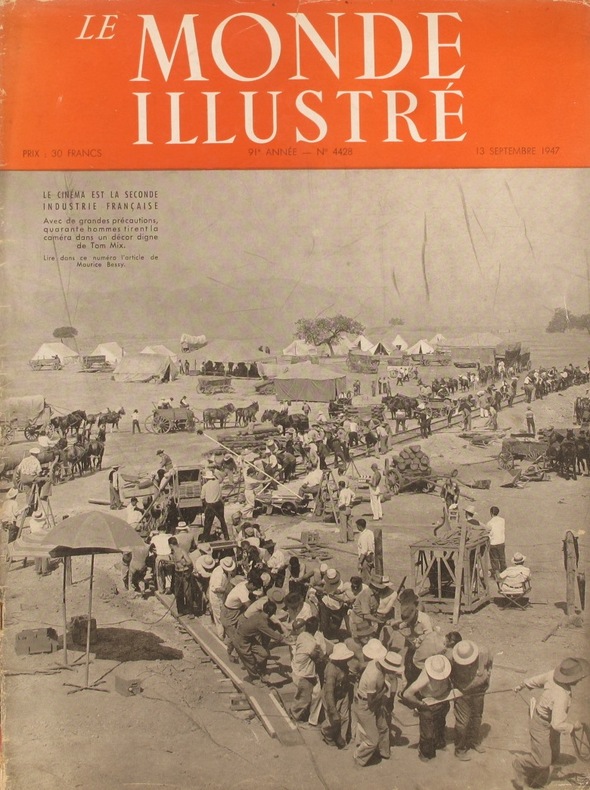
LE MONDE ILLUSTRE
Le Monde illustré N° 4428. Le cinéma - La femme en Afrique noire - Rome - Notre-Dame de Paris…
Couverture souple. Revue. 28 x 37 cm. 32 pages.
書籍販売業者の参照番号
: 116886
|
|
|
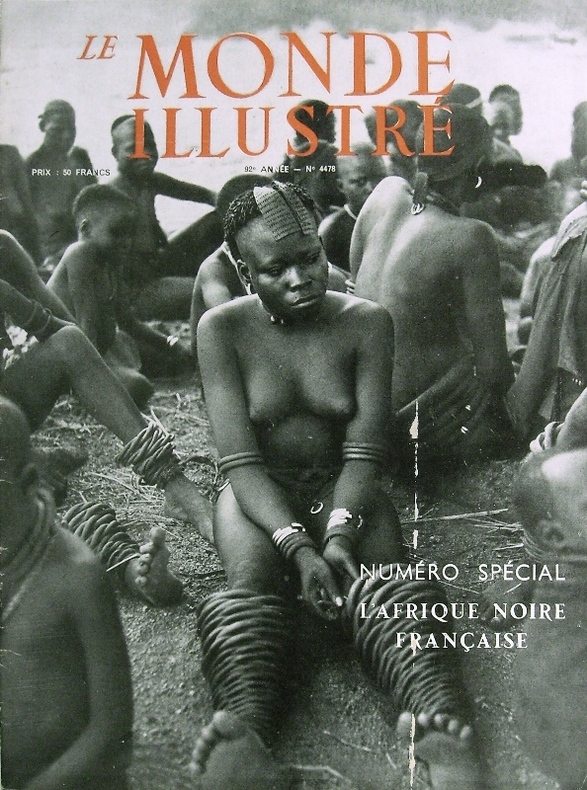
LE MONDE ILLUSTRE
Le Monde illustré N° 4478. Numéro spécial. L'Afrique noire française.
Couverture souple. Revue. 28 x 37 cm. 28 pages.
書籍販売業者の参照番号
: 108130
|
|
|
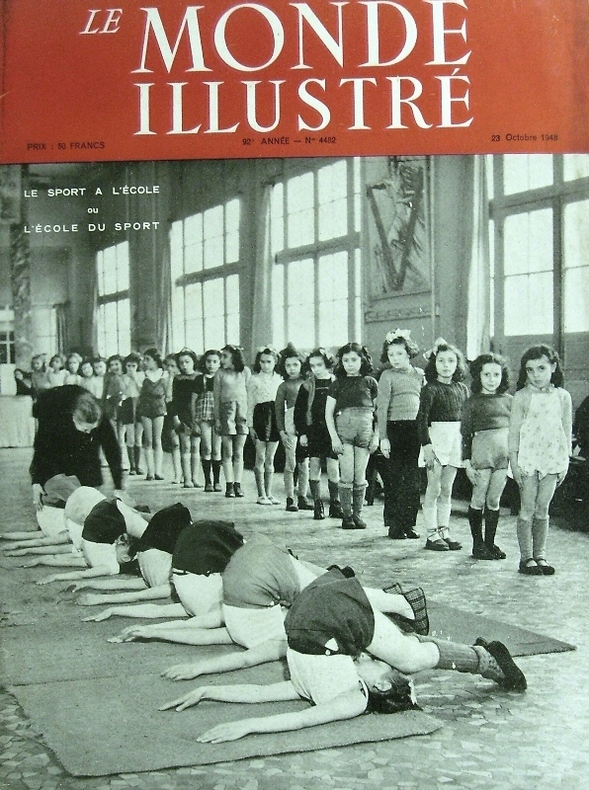
LE MONDE ILLUSTRE
Le Monde illustré N° 4482.
Couverture souple. Revue. 28 x 37 cm. 24 pages.
書籍販売業者の参照番号
: 108133
|
|
|
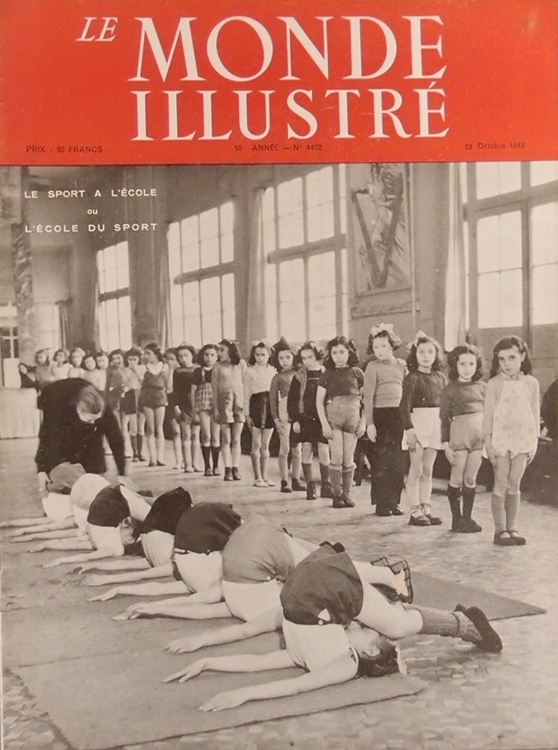
LE MONDE ILLUSTRE
Le Monde illustré N° 4482. Le sport à l'école - Vacances en Afrique centrale…
Couverture souple. Revue. 28 x 37 cm. 24 pages.
書籍販売業者の参照番号
: 125048
|
|
|
LE MONDE MODERNE.
AFRICA Y LA DEFENSA DEL OCCIDENTE.
24x17. 149p.

|
|
|
LE MONDE MODERNE.
AFRICA Y LA DEFENSA DEL OCCIDENTE.
24x17. 149p.

|
|
|
LE PAPE MARC, VIDAL CLAUDINE
COTE D'IVOIRE, L'ANNEE TERRIBLE, 1999-2000
ISBN : 2845863179. Karthala. 2002. In-8 Carré. Broché. Bon état. Couv. convenable. Dos satisfaisant. Intérieur frais. 354 pages. Illustré d'une carte en noir et blanc hors texte. Etiquette de code sur le dos. Tampon et annotations de bibliothèque en page de titre. 'Les Afriques', Collection dir. par Jean-François Bayart.

|
|
|
LE PAPE MARC, VIDAL CLAUDINE
COTE D'IVOIRE, L'ANNEE TERRIBLE, 1999-2000
Karthala. 2002. In-8. Broché. Bon état, Couv. convenable, Dos satisfaisant, Intérieur frais. 354 pages. Illustré d'une carte en noir et blanc hors texte. Etiquette de code sur le dos. Tampon et annotations de bibliothèque en page de titre.. . . . Classification Dewey : 966-Afrique occidentale
書籍販売業者の参照番号
: RO40180847

|
|
|
LE PERE
DESCRIPTION DE L'EGYPTE. Edfou (Apollinopolis magna). Plan et coupe générale du grand temple, Détails de constructions intérieures. (ANTIQUITES, volume I, planche 50)
- Imprimerie Impériale, Paris 1809-1829, 54x71cm, une feuille. - Original, unshaved, full-page etching from the "Imperial edition" of the Description de l'Égypte, or 'Recueil des observations et recherches faites en Égypte pendant l'expédition française, publié par les ordres de Sa Majesté l'Empereur Napoléon le Grand [A Collection of the observations and research carried out in Egypt during the French expedition, published on the orders of his Majesty the Emperor Napoleon the Great]'. Produced between February 1802 and 1830 on the orders of Naopleon Bonaparte and published between 1809 and 1828, 1,000 copies were printed and distributed to institutions, on vergé paper with an 'Égypte ancienne et moderne' watermark, visible when held up to the light. Light marginal spotting not touching image, otherwise in very fresh, fine condition. An engraving from the Description de l'Egypte, one of the masterpieces of French printing and the birth of a new field: Egyptology. A gigantic survey of Egypt at the time of Bonaparte's conquests in 1798 and 1799, the work is divided into 13 volumes of engravings making up 892 plates, of which 72 colored, as well as presenting the splendors of the Egypt of the Pharaohs in 9 volumes. The other volumes discuss natural history and present a fascinating portrait of Coptic and Islamic Egypt as it was seen by Bonaparte's Eastern Armies. The 'Egyptian campaign', militarily a disaster, demonstrates, through the engravings of the Description d'Egypte, the scientific success it nonetheless became thanks to the 167 expert members of the Commission of the Sciences and Arts of the Institut d'Egypte [Egyptian Institute] who followed Napoleon's army. The Institut gathered together in Egypt the mathematician Monge, the chemist Berthollet, the naturalist Geoffroy Saint-Hilaire as well as numerous artists, engineers, architects and doctors. They were tasked with re-discovering modern and ancient Egypt and displaying its natural treasures as well as the know-how of its inhabitants. This edition, the so-called "Imperial" edition of the plates for the Description de l'Egypte was printed in four large formats, two of which were specially created for it and christened "Moyen-Egypte" and "Grand-Egypte". A special press was built to print it, the process extending over 20 years, from 1809 to 1829. The "Imperial" edition proved so popular that a second edition, this time in black and white and without the "Egypte ancienne et moderne" watermark - known as the "Royal Edition" - was published during the Restoration by the printing house of C.-L.-F. Panckoucke (Paris). The engravings of the Description d'Egypte owe a great deal to Baron Dominique-Vivant Denon, illustrator, diplomat, collector and later Director of the Musée Napoléon (the Louvre). His exploration of the South of Egypt gave Bonaparte the idea of sending the experts of the Institut there, thus creating a faithful and complete portrait of the area. This was the research gathered together from 1802 in the mammoth Description de L'Egypte. Denon embarked on this story of archeological exploration at the age of 51, reaching first Alexandria and then Cairo before exploring Upper Egypt. Along with the members of the Institut d'Egypte, the Natural History Museum's painter H.J. Redouté (brother of Pierre-Joseph Redouté, author of Roses), the mineralogist Dolomiue, and the draughtsman Joly, Denon then explored the Nile Delta and Lower Egypt. When, however, he joined the 21st Light Infantry Regiment as it marched across Upper Egypt in pursuit of the retreating Mameluks in November 1798, he found himself the only civilian. In the very midst of the battle itself, he reeled off sketches of the works of art that peppered his path right up to the threshold of the Sudan. He said that he had crossed "a country that is, apart from its name, entirely unknown to Europeans, and therefore everything was worth describing" (Voyages dans la Basse et la Haute Egypte pendant le

|
|
|
LE PERE
DESCRIPTION DE L'EGYPTE. Edfou (Apollinopolis magna). Plan, coupes et élévations du petit temple. (ANTIQUITES, volume I, planche 62)
- Imprimerie Impériale, Paris 1809-1829, 54x71cm, une feuille. - Gravure originale à l'eau-forte in plano, non rognée, extraite de l'édition dite « Impériale » de la Description de l'Égypte ou Recueil des observations et recherches faites en Égypte pendant l'expédition française, publié par les ordres de Sa Majesté l'Empereur Napoléon le Grand. Réalisée entre février 1802 et 1829 sur ordre de Napoléon Bonaparte et publiée à partir de 1809 [en réalité 1810], elle fut tirée à 1000 exemplaires sur Vergé filigrané « Égypte ancienne et moderne » et offerte aux institutions. Légères et marginales rousseurs sans aucune atteinte à la gravure, sinon très bel état de fraîcheur et de conservation. EDFOU : Planche issue d'une série de vues du grand temple d'Edfou et des constructions de son complexe religieux. Le temple d'Horus, fleuron de l'architecture ptolémaïque et exceptionnellement bien conservé, se compose d'un majestueux portique d'entrée, d'une salle hypostyle, tous deux abondamment documentés grâce aux gravures des savants de l'Institut d'Egypte. Commencé en 237 avant notre ère par Ptolémée III et fini 180 ans plus tard sous Tibère, il offre une vue spectaculaire aux dessinateurs venus explorer la rive gauche du Nil. Volume ANTIQUITES, I : Ces gravures fournissent à Jean-François Champollion une documentation épigraphique fondamentale pour le déchiffrage des hiéroglyphes et inspirent une lignée d'archéologues comme Mariette, Maspero et Carter qui donnent un nouveau visage à l'Egypte ancienne. Elles suscitent un engouement tel qu'elles donnent naissance au phénomène de l'égyptomanie et à l'orientalisme de Delacroix, Fromentin, Marilhat, Decamps mais aussi Théophile Gautier... Financiers, politiciens, marchands, et fouilleurs de tous ordres se presseront sur les rives du Nil en quête de bonnes affaires à la suite de cette redécouverte de l'Egypte. A l'origine de l'égyptologie, ces planches connaîtront une postérité immense. LA DESCRIPTION DE L'EGYPTE, édition IMPERIALE (1809-1829) : La Description de l'Egypte est un des chefs d'uvre de l'édition française et le point de départ d'une nouvelle science : l'égyptologie. Titanesque exposé de l'Egypte au temps des conquêtes de Bonaparte entre 1798 et 1799, elle est répartie en 23 volumes dont 13 volumes de gravures rassemblant près de 1000 planches en noir et 72 en couleur. Les 6 volumes de planches intitulées Antiquités sont consacrés aux splendeurs de l'Egypte pharaonique. L'Histoire naturelle est répartie en 3 volumes de gravures. Un volume est consacré aux Cartes géographiques et topographiques tandis que les 3 volumes : Etat Moderne dressent un portrait saisissant de l'Egypte copte et islamique telle qu'elle était vue par les armées d'Orient de Bonaparte. La « campagne d'Egypte », désastre militaire, dévoile à travers les gravures de la Description de l'Egypte la réussite scientifique qu'elle est devenue, grâce aux quelques 167 savants membres de la Commission des sciences et des arts de l'Institut d'Egypte qui suivaient l'armée de Napoléon. L'Institut a réuni en Egypte le mathématicien Monge, le chimiste Berthollet, le naturaliste Geoffroy Saint-Hilaire, ainsi que de nombreux artistes, ingénieurs, architectes, médecins... Ils eurent la charge de redécouvrir l'Egypte moderne et antique, d'en montrer les richesses naturelles, et le savoir-faire de ses habitants. L'édition originale, dite « Impériale », de la Description de l'Egypte fut réalisée sur quatre formats de grande taille, deux d'entre eux spécialement créés pour elle et baptisés formats « Moyen-Egypte » et « Grand-Egypte ». On construisit une presse spécifique pour son impression, qui s'étala sur vingt ans, entre 1809 et 1829. L'édition Impériale s'avéra si populaire qu'une deuxième édition en 37 volumes entièrement en noir et sans le filigrane « Egypte ancienne et moderne », dite édition « Panckoucke », fut publiée à partir de 1821 par l'imprimerie C.-L.-F. Panckoucke (Paris). La réalisation de ce monument d'érudi

|
|
|
LE PERE & ADAM (sculpsit)
DESCRIPTION DE L'EGYPTE. Thèbes. Medynet-Abou. Détails d'un pilier caryatide et d'une colonne du péristyle du palais. (ANTIQUITES, volume II, planche 7)
- Imprimerie Impériale, Paris 1809-1829, 71x53,5cm, une feuille. - Original, unshaved, full-page etching from the "Imperial edition" of the Description de l'Égypte, or 'Recueil des observations et recherches faites en Égypte pendant l'expédition française, publié par les ordres de Sa Majesté l'Empereur Napoléon le Grand [A Collection of the observations and research carried out in Egypt during the French expedition, published on the orders of his Majesty the Emperor Napoleon the Great]'. Produced between February 1802 and 1830 on the orders of Naopleon Bonaparte and published between 1809 and 1828, 1,000 copies were printed and distributed to institutions, on vergé paper with an 'Égypte ancienne et moderne' watermark, visible when held up to the light. Light marginal spotting not touching image, otherwise in very fresh, fine condition. An engraving from the Description de l'Egypte, one of the masterpieces of French printing and the birth of a new field: Egyptology. A gigantic survey of Egypt at the time of Bonaparte's conquests in 1798 and 1799, the work is divided into 13 volumes of engravings making up 892 plates, of which 72 colored, as well as presenting the splendors of the Egypt of the Pharaohs in 9 volumes. The other volumes discuss natural history and present a fascinating portrait of Coptic and Islamic Egypt as it was seen by Bonaparte's Eastern Armies. The 'Egyptian campaign', militarily a disaster, demonstrates, through the engravings of the Description d'Egypte, the scientific success it nonetheless became thanks to the 167 expert members of the Commission of the Sciences and Arts of the Institut d'Egypte [Egyptian Institute] who followed Napoleon's army. The Institut gathered together in Egypt the mathematician Monge, the chemist Berthollet, the naturalist Geoffroy Saint-Hilaire as well as numerous artists, engineers, architects and doctors. They were tasked with re-discovering modern and ancient Egypt and displaying its natural treasures as well as the know-how of its inhabitants. This edition, the so-called "Imperial" edition of the plates for the Description de l'Egypte was printed in four large formats, two of which were specially created for it and christened "Moyen-Egypte" and "Grand-Egypte". A special press was built to print it, the process extending over 20 years, from 1809 to 1829. The "Imperial" edition proved so popular that a second edition, this time in black and white and without the "Egypte ancienne et moderne" watermark - known as the "Royal Edition" - was published during the Restoration by the printing house of C.-L.-F. Panckoucke (Paris). The engravings of the Description d'Egypte owe a great deal to Baron Dominique-Vivant Denon, illustrator, diplomat, collector and later Director of the Musée Napoléon (the Louvre). His exploration of the South of Egypt gave Bonaparte the idea of sending the experts of the Institut there, thus creating a faithful and complete portrait of the area. This was the research gathered together from 1802 in the mammoth Description de L'Egypte. Denon embarked on this story of archeological exploration at the age of 51, reaching first Alexandria and then Cairo before exploring Upper Egypt. Along with the members of the Institut d'Egypte, the Natural History Museum's painter H.J. Redouté (brother of Pierre-Joseph Redouté, author of Roses), the mineralogist Dolomiue, and the draughtsman Joly, Denon then explored the Nile Delta and Lower Egypt. When, however, he joined the 21st Light Infantry Regiment as it marched across Upper Egypt in pursuit of the retreating Mameluks in November 1798, he found himself the only civilian. In the very midst of the battle itself, he reeled off sketches of the works of art that peppered his path right up to the threshold of the Sudan. He said that he had crossed "a country that is, apart from its name, entirely unknown to Europeans, and therefore everything was worth describing" (Voyages dans la Basse et la Haute Egypte pendant

|
|
|
LE PERE & BOUTELOU (sculpsit)
DESCRIPTION DE L'EGYPTE. Erment (Hermonthis). Plan, coupe et élévations du temple. (ANTIQUITES, volume I, planche 94)
- Imprimerie Impériale, Paris 1809-1829, 71x54cm, une feuille. - Original, unshaved, full-page etching from the "Imperial edition" of the Description de l'Égypte, or 'Recueil des observations et recherches faites en Égypte pendant l'expédition française, publié par les ordres de Sa Majesté l'Empereur Napoléon le Grand [A Collection of the observations and research carried out in Egypt during the French expedition, published on the orders of his Majesty the Emperor Napoleon the Great]'. Produced between February 1802 and 1830 on the orders of Naopleon Bonaparte and published between 1809 and 1828, 1,000 copies were printed and distributed to institutions, on vergé paper with an 'Égypte ancienne et moderne' watermark, visible when held up to the light. Light marginal spotting not touching image, otherwise in very fresh, fine condition. An engraving from the Description de l'Egypte, one of the masterpieces of French printing and the birth of a new field: Egyptology. A gigantic survey of Egypt at the time of Bonaparte's conquests in 1798 and 1799, the work is divided into 13 volumes of engravings making up 892 plates, of which 72 colored, as well as presenting the splendors of the Egypt of the Pharaohs in 9 volumes. The other volumes discuss natural history and present a fascinating portrait of Coptic and Islamic Egypt as it was seen by Bonaparte's Eastern Armies. The 'Egyptian campaign', militarily a disaster, demonstrates, through the engravings of the Description d'Egypte, the scientific success it nonetheless became thanks to the 167 expert members of the Commission of the Sciences and Arts of the Institut d'Egypte [Egyptian Institute] who followed Napoleon's army. The Institut gathered together in Egypt the mathematician Monge, the chemist Berthollet, the naturalist Geoffroy Saint-Hilaire as well as numerous artists, engineers, architects and doctors. They were tasked with re-discovering modern and ancient Egypt and displaying its natural treasures as well as the know-how of its inhabitants. This edition, the so-called "Imperial" edition of the plates for the Description de l'Egypte was printed in four large formats, two of which were specially created for it and christened "Moyen-Egypte" and "Grand-Egypte". A special press was built to print it, the process extending over 20 years, from 1809 to 1829. The "Imperial" edition proved so popular that a second edition, this time in black and white and without the "Egypte ancienne et moderne" watermark - known as the "Royal Edition" - was published during the Restoration by the printing house of C.-L.-F. Panckoucke (Paris). The engravings of the Description d'Egypte owe a great deal to Baron Dominique-Vivant Denon, illustrator, diplomat, collector and later Director of the Musée Napoléon (the Louvre). His exploration of the South of Egypt gave Bonaparte the idea of sending the experts of the Institut there, thus creating a faithful and complete portrait of the area. This was the research gathered together from 1802 in the mammoth Description de L'Egypte. Denon embarked on this story of archeological exploration at the age of 51, reaching first Alexandria and then Cairo before exploring Upper Egypt. Along with the members of the Institut d'Egypte, the Natural History Museum's painter H.J. Redouté (brother of Pierre-Joseph Redouté, author of Roses), the mineralogist Dolomiue, and the draughtsman Joly, Denon then explored the Nile Delta and Lower Egypt. When, however, he joined the 21st Light Infantry Regiment as it marched across Upper Egypt in pursuit of the retreating Mameluks in November 1798, he found himself the only civilian. In the very midst of the battle itself, he reeled off sketches of the works of art that peppered his path right up to the threshold of the Sudan. He said that he had crossed "a country that is, apart from its name, entirely unknown to Europeans, and therefore everything was worth describing" (Voyages dans la Basse et la Haute Egypte pendant le

|
|
|
LE PERE Gratien & BALTARD (sculpsit)
DESCRIPTION DE L'EGYPTE. Thèbes. Karnak. Vue et détails de l'un des Sphinx placés à l'entrée principale du palais. Détail de l'un des Sphinx de l'allée du Sud. Petit torse en granit trouvé près de la porte du Sud. (ANTIQUITES, volume III, planche 29)
- Imprimerie Impériale, Paris 1809-1829, 71x54cm, une feuille. - Original, unshaved, full-page etching from the "Imperial edition" of the Description de l'Égypte, or 'Recueil des observations et recherches faites en Égypte pendant l'expédition française, publié par les ordres de Sa Majesté l'Empereur Napoléon le Grand [A Collection of the observations and research carried out in Egypt during the French expedition, published on the orders of his Majesty the Emperor Napoleon the Great]'. Produced between February 1802 and 1830 on the orders of Naopleon Bonaparte and published between 1809 and 1828, 1,000 copies were printed and distributed to institutions, on vergé paper with an 'Égypte ancienne et moderne' watermark, visible when held up to the light. Light marginal spotting not touching image, otherwise in very fresh, fine condition. An engraving from the Description de l'Egypte, one of the masterpieces of French printing and the birth of a new field: Egyptology. A gigantic survey of Egypt at the time of Bonaparte's conquests in 1798 and 1799, the work is divided into 13 volumes of engravings making up 892 plates, of which 72 colored, as well as presenting the splendors of the Egypt of the Pharaohs in 9 volumes. The other volumes discuss natural history and present a fascinating portrait of Coptic and Islamic Egypt as it was seen by Bonaparte's Eastern Armies. The 'Egyptian campaign', militarily a disaster, demonstrates, through the engravings of the Description d'Egypte, the scientific success it nonetheless became thanks to the 167 expert members of the Commission of the Sciences and Arts of the Institut d'Egypte [Egyptian Institute] who followed Napoleon's army. The Institut gathered together in Egypt the mathematician Monge, the chemist Berthollet, the naturalist Geoffroy Saint-Hilaire as well as numerous artists, engineers, architects and doctors. They were tasked with re-discovering modern and ancient Egypt and displaying its natural treasures as well as the know-how of its inhabitants. This edition, the so-called "Imperial" edition of the plates for the Description de l'Egypte was printed in four large formats, two of which were specially created for it and christened "Moyen-Egypte" and "Grand-Egypte". A special press was built to print it, the process extending over 20 years, from 1809 to 1829. The "Imperial" edition proved so popular that a second edition, this time in black and white and without the "Egypte ancienne et moderne" watermark - known as the "Royal Edition" - was published during the Restoration by the printing house of C.-L.-F. Panckoucke (Paris). The engravings of the Description d'Egypte owe a great deal to Baron Dominique-Vivant Denon, illustrator, diplomat, collector and later Director of the Musée Napoléon (the Louvre). His exploration of the South of Egypt gave Bonaparte the idea of sending the experts of the Institut there, thus creating a faithful and complete portrait of the area. This was the research gathered together from 1802 in the mammoth Description de L'Egypte. Denon embarked on this story of archeological exploration at the age of 51, reaching first Alexandria and then Cairo before exploring Upper Egypt. Along with the members of the Institut d'Egypte, the Natural History Museum's painter H.J. Redouté (brother of Pierre-Joseph Redouté, author of Roses), the mineralogist Dolomiue, and the draughtsman Joly, Denon then explored the Nile Delta and Lower Egypt. When, however, he joined the 21st Light Infantry Regiment as it marched across Upper Egypt in pursuit of the retreating Mameluks in November 1798, he found himself the only civilian. In the very midst of the battle itself, he reeled off sketches of the works of art that peppered his path right up to the threshold of the Sudan. He said that he had crossed "a country that is, apart from its name, entirely unknown to Europeans, and therefore everything was worth describing" (Voyages dans la Basse et la Haute Egypte pendant le

|
|
|
LE PERE Gratien & COLLIN (sculpsit)
DESCRIPTION DE L'EGYPTE. Isthme de Soueys (canal des deux mers). Tableau synoptique des différents points de nivellement de l'isthme, rapportés au meqyas de l'île de Roudah. (ETAT MODERNE, volume I, planche 14)
- Imprimerie Impériale, Paris 1809-1829, 53,5x70cm, une feuille. - Original, unshaved, full-page etching from the "Imperial edition" of the Description de l'Égypte, or 'Recueil des observations et recherches faites en Égypte pendant l'expédition française, publié par les ordres de Sa Majesté l'Empereur Napoléon le Grand [A Collection of the observations and research carried out in Egypt during the French expedition, published on the orders of his Majesty the Emperor Napoleon the Great]'. Produced between February 1802 and 1830 on the orders of Naopleon Bonaparte and published between 1809 and 1828, 1,000 copies were printed and distributed to institutions, on vergé paper with an 'Égypte ancienne et moderne' watermark, visible when held up to the light. Light marginal spotting not touching image, otherwise in very fresh, fine condition. An engraving from the Description de l'Egypte, one of the masterpieces of French printing and the birth of a new field: Egyptology. A gigantic survey of Egypt at the time of Bonaparte's conquests in 1798 and 1799, the work is divided into 13 volumes of engravings making up 892 plates, of which 72 colored, as well as presenting the splendors of the Egypt of the Pharaohs in 9 volumes. The other volumes discuss natural history and present a fascinating portrait of Coptic and Islamic Egypt as it was seen by Bonaparte's Eastern Armies. The 'Egyptian campaign', militarily a disaster, demonstrates, through the engravings of the Description d'Egypte, the scientific success it nonetheless became thanks to the 167 expert members of the Commission of the Sciences and Arts of the Institut d'Egypte [Egyptian Institute] who followed Napoleon's army. The Institut gathered together in Egypt the mathematician Monge, the chemist Berthollet, the naturalist Geoffroy Saint-Hilaire as well as numerous artists, engineers, architects and doctors. They were tasked with re-discovering modern and ancient Egypt and displaying its natural treasures as well as the know-how of its inhabitants. This edition, the so-called "Imperial" edition of the plates for the Description de l'Egypte was printed in four large formats, two of which were specially created for it and christened "Moyen-Egypte" and "Grand-Egypte". A special press was built to print it, the process extending over 20 years, from 1809 to 1829. The "Imperial" edition proved so popular that a second edition, this time in black and white and without the "Egypte ancienne et moderne" watermark - known as the "Royal Edition" - was published during the Restoration by the printing house of C.-L.-F. Panckoucke (Paris). The engravings of the Description d'Egypte owe a great deal to Baron Dominique-Vivant Denon, illustrator, diplomat, collector and later Director of the Musée Napoléon (the Louvre). His exploration of the South of Egypt gave Bonaparte the idea of sending the experts of the Institut there, thus creating a faithful and complete portrait of the area. This was the research gathered together from 1802 in the mammoth Description de L'Egypte. Denon embarked on this story of archeological exploration at the age of 51, reaching first Alexandria and then Cairo before exploring Upper Egypt. Along with the members of the Institut d'Egypte, the Natural History Museum's painter H.J. Redouté (brother of Pierre-Joseph Redouté, author of Roses), the mineralogist Dolomiue, and the draughtsman Joly, Denon then explored the Nile Delta and Lower Egypt. When, however, he joined the 21st Light Infantry Regiment as it marched across Upper Egypt in pursuit of the retreating Mameluks in November 1798, he found himself the only civilian. In the very midst of the battle itself, he reeled off sketches of the works of art that peppered his path right up to the threshold of the Sudan. He said that he had crossed "a country that is, apart from its name, entirely unknown to Europeans, and therefore everything was worth describing" (Voyages dans la Basse et la Haute Egypte pendant

|
|
|
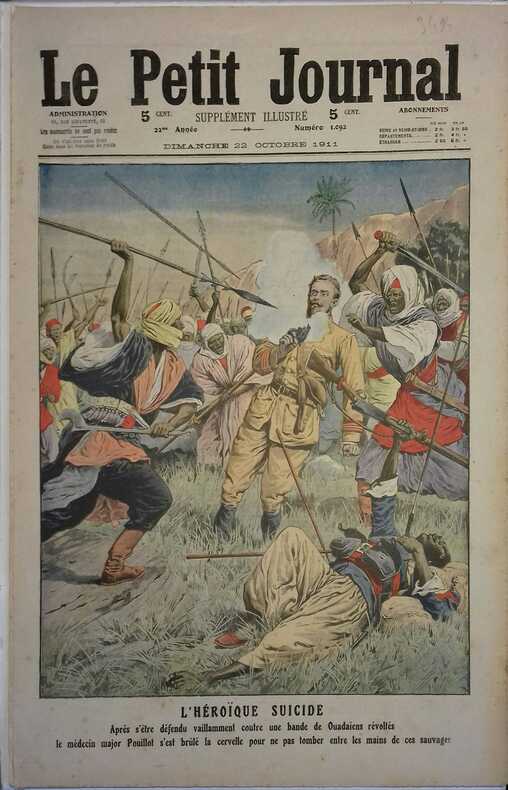
LE PETIT JOURNAL Supplément illustré
Le Petit journal - Supplément illustré N° 1092 : Suicide du médecin-major Pouillot. (Gravure en première page). Gravure en dernière page: Acrobates chinois au "dépôt".
Couverture souple. 8 pages. 31 x 45 cm. Gravures en couleurs.
書籍販売業者の参照番号
: 3494
|
|
|
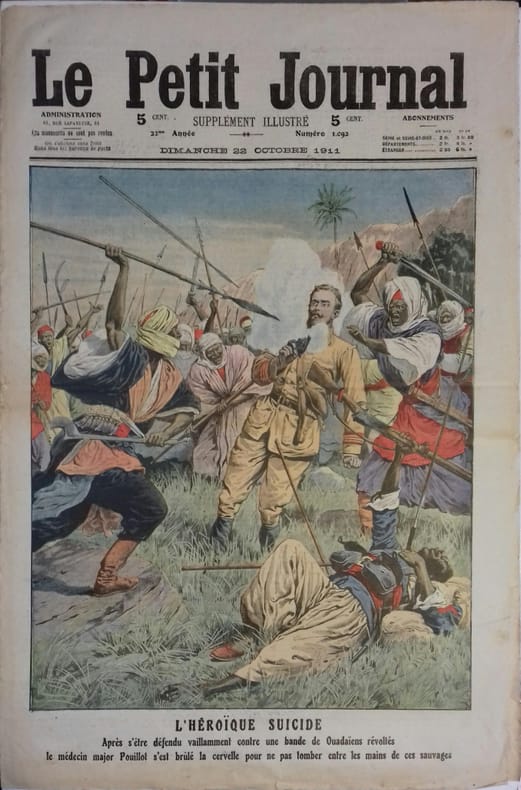
LE PETIT JOURNAL Supplément illustré
Le Petit journal - Supplément illustré N° 1092 : Suicide du médecin-major Pouillot. (Gravure en première page). Gravure en dernière page: Acrobates chinois au "dépôt".
Couverture souple. 8 pages. 31 x 45 cm. Gravures en couleurs.
書籍販売業者の参照番号
: 94714
|
|
|
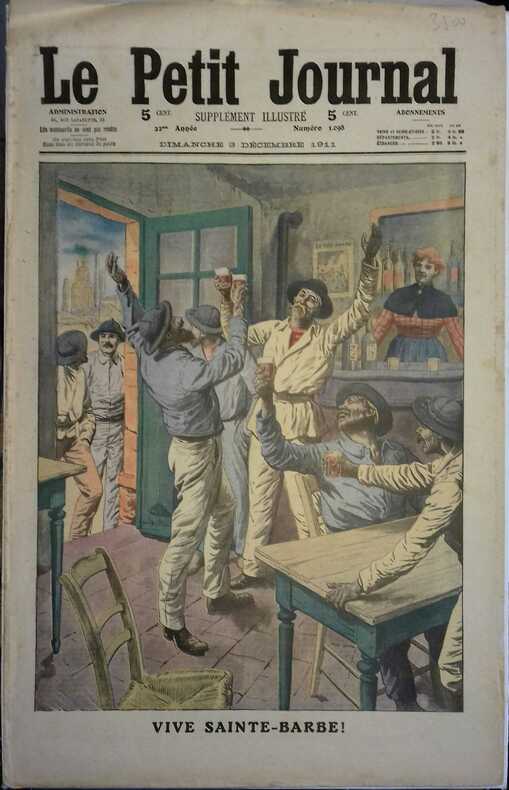
LE PETIT JOURNAL Supplément illustré
Le Petit journal - Supplément illustré N° 1098 : La Sainte-Barbe en pays minier. (Gravure en première page). Gravure en dernière page: Au Ouadaï, soumission du sultan Doudmourah.
Couverture souple. 8 pages. 31 x 45 cm. Gravures en couleurs.
書籍販売業者の参照番号
: 3500
|
|
|
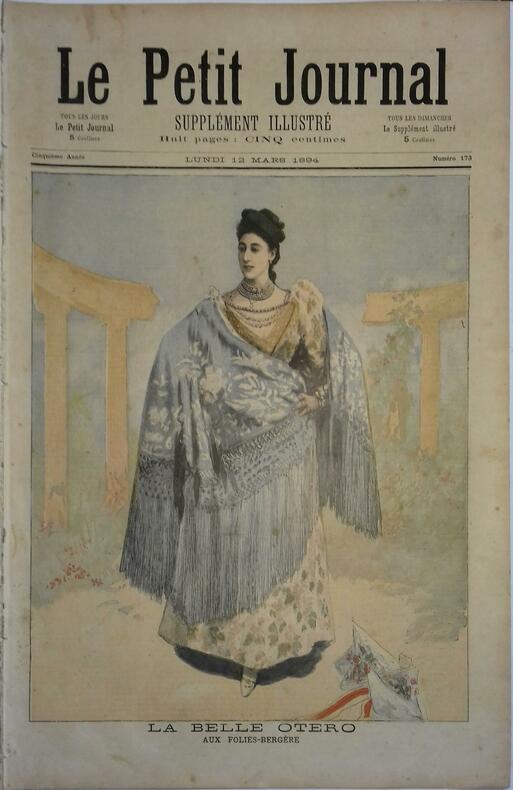
LE PETIT JOURNAL Supplément illustré
Le Petit journal - Supplément illustré N° 173 : La belle Otero aux folies-bergère (Gravure en première page). Gravure en dernière page: Défaite anglaise en Afrique.
Couverture souple. 8 pages. 31 x 45 cm. Gravures en couleurs. Légèrement défraîchi.
書籍販売業者の参照番号
: 49815
|
|
|
LE PETIT JOURNAL Supplément illustré
Le Petit journal - Supplément illustré N° 22 : Une dompteuse dévorée par une lionne. (Gravure en première page). Gravure en dernière page : Répression de l'esclavage en Afrique.
Couverture souple. 8 pages. 31 x 45 cm. Gravures en couleurs. Défraîchi, réparé.
書籍販売業者の参照番号
: 81588
|
|
|
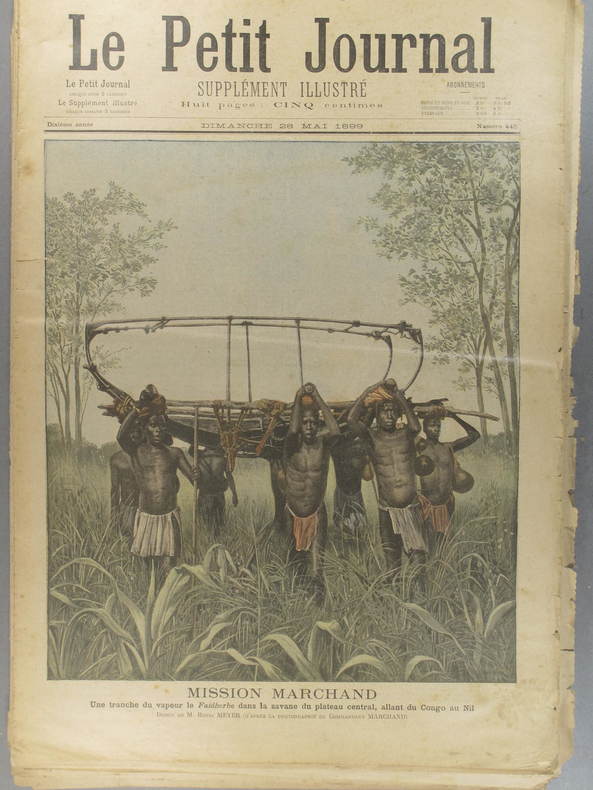
LE PETIT JOURNAL Supplément illustré
Le Petit journal - Supplément illustré N° 445 : Mission Marchand (Gravures en première et en dernière pages). Transport de pîèces de bateau à vapeur entre le Congo et le Nil. (Mission Marchand).
Couverture souple. 8 pages. 31 x 45 cm. Gravures en couleurs. Légèrement défraîchi.
書籍販売業者の参照番号
: 125437
|
|
|
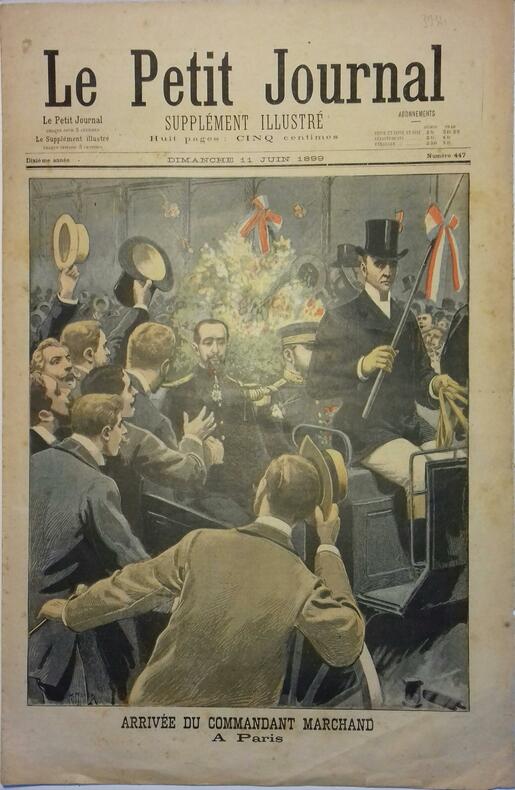
LE PETIT JOURNAL Supplément illustré
Le Petit journal - Supplément illustré N° 447. : Arrivée du Commandant Marchand à Paris. (Gravure en première page). Gravure en dernière page: le Commandant Marchand à Toulon.
Couverture souple. 8 pages. 31 x 45 cm. Gravures en couleurs.
書籍販売業者の参照番号
: 3934
|
|
|
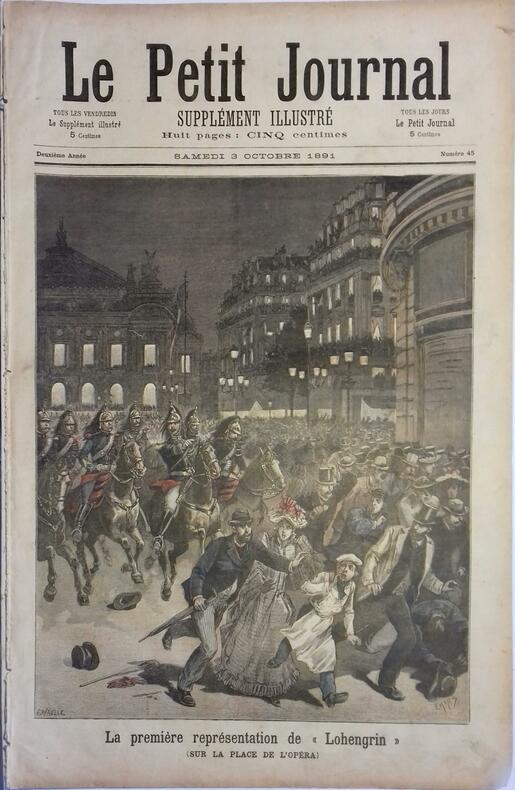
LE PETIT JOURNAL Supplément illustré
Le Petit journal - Supplément illustré N° 45 : La première repésentation de "Lohengrin" (manifestation sur la place de l'opéra) (Gravure en première page). Gravure en dernière page : Destruction d'une expédition allemande en Afrique.
Couverture souple. 8 pages. 31 x 45 cm. Gravures en couleurs. Légèrement défraîchi.
書籍販売業者の参照番号
: 49875
|
|
|
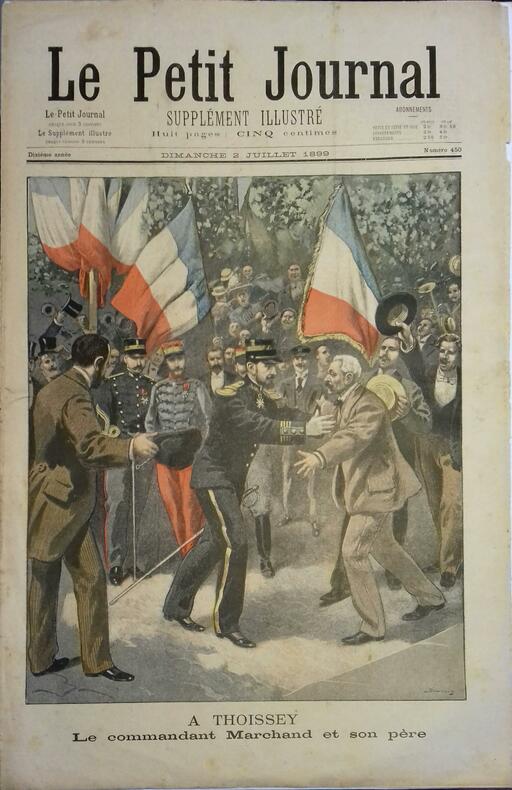
LE PETIT JOURNAL Supplément illustré
Le Petit journal - Supplément illustré N° 450 : A Thoissey : Le commandant Marchand et son père(Gravure en première page). Gravure en dernière page : Le drame des fêtes de Paris.
Couverture souple. 8 pages. 31 x 45 cm. Gravures en couleurs. Légèrement défraîchi.
書籍販売業者の参照番号
: 49965
|
|
|
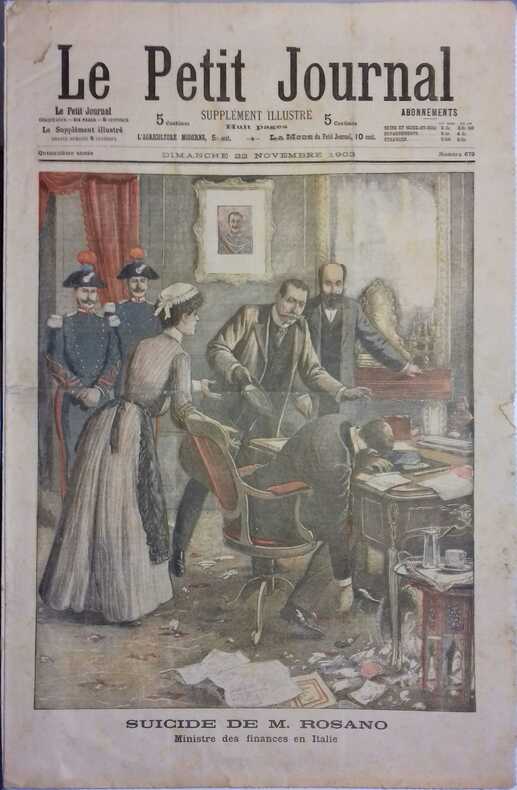
LE PETIT JOURNAL Supplément illustré
Le Petit journal - Supplément illustré N° 679 : Suicide de M. Rosano, ministre des finances en Italie (Gravure en première page). Gravure en dernière page: En Afrique : Massacre d'une garnison allemande.
Couverture souple. Numéro complet. 8 pages. Gravures en couleur. Légèrement défraîchi.
書籍販売業者の参照番号
: 43539
|
|
|
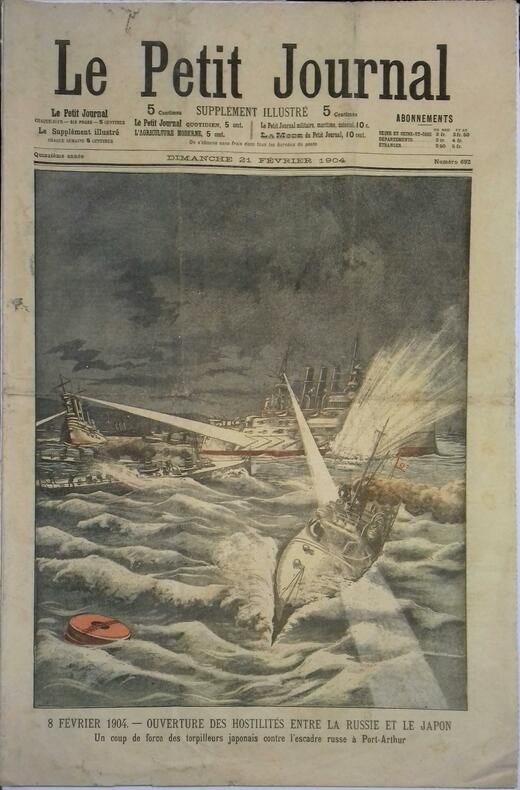
LE PETIT JOURNAL Supplément illustré
Le Petit journal - Supplément illustré N° 692 : 8 février 1904. Ouverture des hostilités entre la Russie et le Japon (Gravure en première page). Gravure en dernière page : Combat sanglant dans le Sud-Ouest Africain : la garnison allemande de Windhoek, assiégée par les Herreros, débloquée.
Couverture souple. 8 pages. 31 x 45 cm. Gravures en couleurs. Légèrement défraîchi.
書籍販売業者の参照番号
: 49809
|
|
|
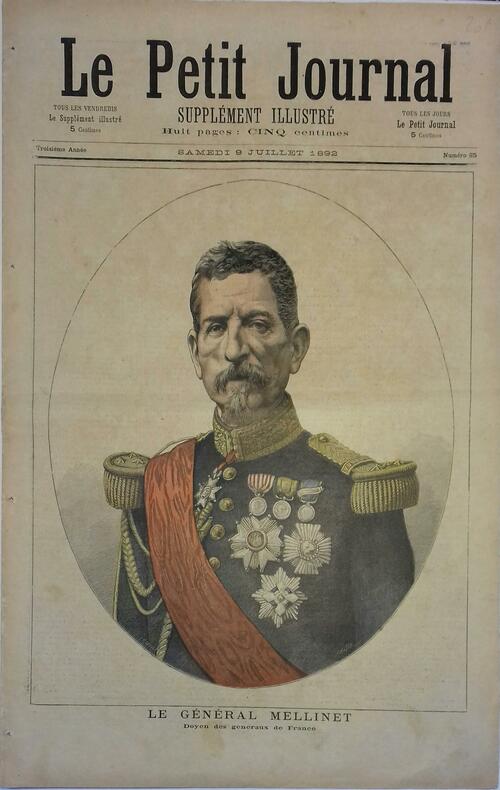
LE PETIT JOURNAL Supplément illustré
Le Petit journal - Supplément illustré N° 85 : Le Général Mellinet, doyen des généraux de France. (Gravure en première page). Gravure en dernière page : Le lieutenant Mizon.
Couverture souple. 8 pages. 31 x 45 cm. Gravures en couleurs.
書籍販売業者の参照番号
: 74038
|
|
|
LE PETIT PARISIEN Supplément littéraire illustré
Le Petit Parisien - Supplément littéraire illustré N° 261 : La guerre civile en Italie : Un combat dans un village aux environs de Carrare. Gravure à la une. Gravure (demi-page) en dernière page : Le Général Gourko.
Couverture souple. Numéro complet, gravures en noir et blanc. 8 pages. 30 x 45 cm. Défraîchi, manques en marge.
書籍販売業者の参照番号
: 61170

|
|
|
LE PICHON A. / BALDE S.
Le troupeau des songes-Le sacrifice du fils et l'enfant prophète dans les traditions des Peuls du Fouladou
1990 P. Ed. de la Maison des Sciences de l'Homme 1990 in-8 br. 357 pp. biblio. index 35 ill. phot. h.t. dont 13 en couleurs Bon état.
書籍販売業者の参照番号
: 8117
|
|
|
LE PRAT (Thérèse). LE PRAT (Thérèse).
Masques et destins. Masks Fates Faces. Paris, Olivier Perrin éditeur. Grand in-4 cartonné, couv. ill. d'une photographie en noir et blanc, 52 planches photographiques non paginées.
Paris OLIVIER PERRIN ÉDITEUR 1
書籍販売業者の参照番号
: 12675

|
|
|
Le Quellec, Jean Loic; Bahn, Paul, translator
Rock Art in Africa: Mythology and Legend
Paris: Flammarion 2004 Paris: Flammarion 2004. First edition stated first printing. Folio. Cloth binding 212 pp. Illustrated throughout with stunning photographs in color. The paintings and engravings found on African cave walls and rocks—some ancient some still in use today—are remarkable artworks that hold clues to understanding the history of humankind posits ethnologist and anthropologist Jean-Loïc Le Quellec. A leading expert on Saharan cave art he offers this detailed and heavily illustrated analysis of rock art in each of Africa's four main geographical zones—the Sahara the Horn and East Africa Southern Africa and the west and central continent—describing styles that range from representational realism to abstract symbolism and patterns. Color photos and drawings depict works ranging from the so-called "Cave of Swimmers" in Libya featured in the film The English Patient to the hundreds of figures on the great overhang of Song at Sanga in Mali. New in new dust jacket. Flammarion hardcover
書籍販売業者の参照番号
: 014982 ISBN : 2080304445 9782080304445
|
|
|
Le Quellec Jean-Loïc
Maisons du Sahara - Habiter le désert.
Hazan. 2006. In-4. Relié. Etat d'usage, Coins frottés, Coiffe en tête abîmée, Papier jauni. 197 pages, jaquette conservée légèrement abimée, nombreuses photos en couleur dans et hors texte.. Avec Jaquette. . . Classification Dewey : 966-Afrique occidentale
書籍販売業者の参照番号
: R200130523

|
|
|
Le Quellec, Jean-Loic
Rock Art in Africa. Mythology and Legend. Translated by Paul Bahn.
Paris, Éditions Flammarion, 2004. 212 p., many illustr. 4°, cloth with dust jacket.
書籍販売業者の参照番号
: 14121 ISBN : 2080304445
|
|
|
Le Quellec, Jean-Loïc
Sahara. Landschaft und Kultur. Fotos von Tiziana u. Gianni Baldizzione.
Paris, Flammarion 2004. 191 S. mit sehr zahlr. (überwieg. ganz- oder doppelseit.) farb. Abbildungen, illustrierte Vorsätze, OPp. mit farb. ill. OUmschl. Sehr gutes Exemplar. DEA. OPp. mit farb. ill. OUmschl. Sehr gutes Exemplar. DEA.
書籍販売業者の参照番号
: 94120AB
|
|
|
Le Quellec, Jean-Loïc, Tiziana Baldizzone und Gianni Baldizzone
Sahara. Landschaft und Kultur
Paris: Flammarion Verlag, 2004. 28,5 x 28,5 cm ; Pp.
書籍販売業者の参照番号
: 114574

|
|
|
Le Querrec Guy,Romano Aldo,Sclavis Louis,Texier Henri
Carnet de routes - Romano, Sclavis, Texier, Le Querrec (CD)
Label Bleu CD 1995 "1 CD ""Carnet de routes"", voyage africain du trio de jazz Romano / Sclavis / Texier raconté en images par Guy Le Querrec, complet du livret de 86 pages ; 1. Standing Ovation (for Mandela) 2. Vol 3. Daoulagad (à GLQ) 4. Bororo Dance 5. Annobon 6. Les Petits Lits blancs 7. Flash Mémoire 8. Korokoro 9. Entrave ; frottements dans les angles de l'étui carton, par ailleurs CD et son boîtier et livret en très bon état. Livraison a domicile (La Poste) ou en Mondial Relay sur simple demande."
書籍販売業者の参照番号
: yl149
|
|
|
LE QUERREC, Guy
Lobi, les enfants de la forêt
Editions Le Bec en l'air 2015 In-8 relié 22,7 cm sur 17,3. 113 pages. Bon état d’occasion.
書籍販売業者の参照番号
: 123539
|
|
|
Le Ragois
Histoire de France
Douai: Jacquart. Gebunden. Jacquart unknown
書籍販売業者の参照番号
: 23160

|
|
|
LE ROUGE (Georges-Louis).
[EGYPTE] L'Egypte.
Paris, Sr. Le Rouge, 1743. 280 x 211 mm.
書籍販売業者の参照番号
: LBW01b50
|
|
|
Le Routard
Madagascar
Hachette Tourisme 2005 11 4x3x19cm. 2005. Broché.
書籍販売業者の参照番号
: 500144165

|
|
|
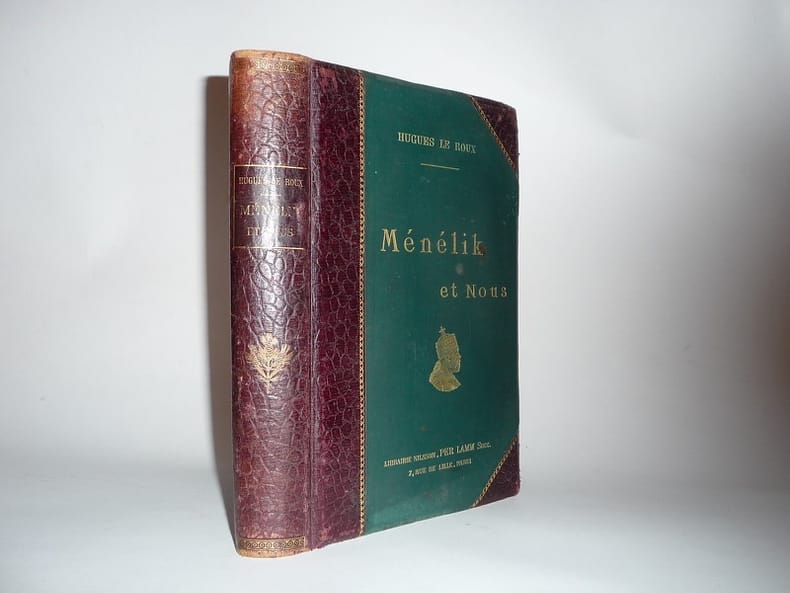
LE ROUX (Hugues)
Ménélik et nous.
P., Librairie Nilsson, [1901]. In-8 reliure éditeur demi-basane brune à coins, dos lisse avec titre doré et fleuron, auteur, titre et portrait de Ménélik dorés au plat sup., tête dorée, 446 pp., nbr. illustr. dans le texte d'après des photographies, 3 pl. en couleurs, 2 cartes dépliantes en couleurs dont une grande.
書籍販売業者の参照番号
: 562183
|
|
|
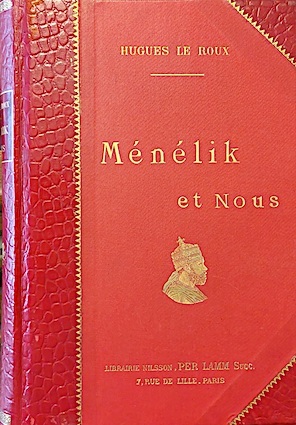
LE ROUX (Hugues);
Ménélik et nous. Le carrefour d'Aden - la route d'Addis-Ababâ - Je suis l'hôte du Négus - vers le Nil Bleu - France et Abyssinie.
Librairie Nilsson Paris 1902 1 vol. In-8 de 446 pp.; demi-chagrin à coins éditeur, dos et plats ornés, tête dorée.
書籍販売業者の参照番号
: 15080
|
|
|
LE ROUX Thomas Hugo
Beschijvende klankleer van het Afrikaans
129 [vii] pp., gecart., stempeltje, 23cm., Academic dissertation [Akademies proefschrift ter verkrijging van de graad van doctor in de Nederlandse letteren aan de rijksuniversiteit te Leiden, 1910]
|
|
|
LE ROUX Thomas Hugo
Beschijvende klankleer van het Afrikaans
Leiden, Sijthoff 1910 129 [vii] pp., gecart., stempeltje, 23cm., Academic dissertation [Akademies proefschrift ter verkrijging van de graad van doctor in de Nederlandse letteren aan de rijksuniversiteit te Leiden, 1910]
書籍販売業者の参照番号
: C50652
|
|
|
LE ROY
A 5000 METRES D'ALTITUDE EN AFRIQUE
1934 demi-reliure basane havane clair in-octavo, dos - titre frappé or et filets, tranches jaspées, couverture de brochage recto conservée, 16 illustrations hors-texte en héliogravure, 96 pages, 1934 à Paris Flammarion Editeur,
書籍販売業者の参照番号
: 8087
|
|
|
LE ROY (A.)
Au Kilima-ndjaro
Paris, Souvenirs Africains, 1914 ; in-4° br. 480p. 100 gravures et 3 cartes. Peu commun
書籍販売業者の参照番号
: 35500099
|
|
|
LE ROY (A.)
Au Kilima-Ndjaro (Afrique orientale).
P., L. De Soye et fils, s.d. [1893]. Grand in-8, pleine percaline rouge d’éditeur, dos lisse orné à froid, premier plat titré et illustré d’un motif doré (guerrier masaï) et second plat orné à froid, tranches dorées, [3]ff.-469 pp., frontispice, 6 cartes et 89 gravures dessinées par l'auteur, in et h.-t. Edition originale.
書籍販売業者の参照番号
: 561790

|
|
|

 検索結果のメールを受信する
 PDFファイルの検索結果をダウンロード
 RSSフィード
 パーマネントリンク


