|
|
|
LE BOULICAUT Albert
Au pays des mystères, pélerinage d'un chrétien à La Mecque et à Médine
- Plon, Paris 1913, 12x19,5cm, broché. - Deuxième édition. Bel envoi autographe de Albert Le Boulicaut à l'un de ses amis. Un manque en pied du dos, premier plat débroché comportant une déchirure angulaire sans manque, piqûres sur les plats, petites rousseurs éparses. Rare. [ENGLISH DESCRIPTION ON DEMAND]
|
|
|
LE BRETON Alain
Poursuites. Roman.
Reliure club. 251 pages.
|
|
|
LE BRETON, Robert
Eléphants & Pygmées [ Livre dédicacé par l'auteur ]
1 vol. in-8 br., collection Sciences et Voyages, Julliard, Paris, 1958, 204 pp. Exceptionnel exemplaire, dédicacé par l'auteur et contenant une photo dédicacée de l'auteur discutant au milieu de pygmées, et 3 coupures de presse : "Drame éclair dans la banlieue bordelaise [à Talence ] : L'explorateur Le Breton, qui voulait reprendre sa femme, abat sa belle-mère d'un coup de revolver" Français

|
|
|
LE BRIS EMILE
LES MARCHES RURAUX DANS LA CIRCONSCRIPTION DE VO, REPUBLIQUE DU TOGO
ISBN : 2709907143. ORSTOM. 1984. In-8 Carré. Broché. Bon état. Couv. convenable. Dos satisfaisant. Intérieur frais. 93 pages. Illustré de nombreux graphiques, cartes et photos en noir et blanc dans et hors texte. Etiquette de code sur le dos. Tampon et annotations de bibliothèque en page de titre. Institut Français de Recherche Scientifique pour le Développement en Coopération. Collection 'Travaux et Documents', n° 171, 1984.

|
|
|
Le Clezio, J. M. G
Onitsha. Roman. Aus dem Französischen von Uli Wittmann.
Köln, Kiepenheuer & Witsch, 1993. 8°, 285 Seiten. Orig.Pappband mit OSU.
Référence libraire : 21091
|
|
|
Le Clézio, J. M. G
Der Afrikaner
Aus dem Französischen von Uli Wittmann. München, Hanser, 2007. Mit fotografischen Abbildungen. 133 S., 1 Bl. Or.-Pp. mit Schutzumschlag.
Référence libraire : 214215

|
|
|
Le Comte de Beauvoir:
Java Siam Canton. Voyage Autour du Monde. Ouvrage Enrichi d`une grande carte spéciale et de quatorze gravures-photographies par deschamps
Henri Plon Imprimeur-Éditeur Paris 1872. Hardcover mit Lederrücken und -ecken ohne Schutzumschlag Zustand: keine Beschädigungen keine Eintragungen. Rücken Ecken Kanten sehr gut. Sauber und gut gepflegt. Mit Kennungen einer Klosterbibliothek. Henri Plon, Imprimeur-Éditeur, Paris, hardcover
Référence libraire : 256092
|
|
|
LE CORVAISIER Lucienne
Au pays des sorciers et des Griots. Légendes d'Afrique noire
Editions de l'Union Française 1954, In-4 broché, 157 pages. Illustrations de Guy Le Breton-Oliveau. Très bon état.
|
|
|
LE CORVAISIER, Lucienne - llustrations de Guy Le Breton-Oliveau
AU PAYS DES SORCIERS ET DES GRIOTS. Légendes d'Afrique Noire.
Paris, Editions de l'Union Française, 1954 - in-4 broché - Couverture illustrée, carte en frontispice - Illustrations hors-texte de Guy Le Breton-Oliveau - 157 pp. - Bon état, exemplaires très frais
|
|
|
LE COURRIER DE L'UNESCO
Num?ro sp?cial : Histoire de l'Afrique.
Revue. 30 pages.
|
|
|
LE FEVRE Georges & TRANIN Edmond (BRENET Albert)
Cap sur l'Afrique
Edition Hachette, 1947. In-8 (23 x 15 cm) broché, couverture illustrée sous jaquette illustrée en couleurs, Iluustrations : planches photographiques en noir et dessins de Albert Brenet, 328 p. Menus manques en dos de la jaquette.

|
|
|
LE FEVRE Georges - TRANIN Edmond
Cap sur l'Afrique. Illustr? par A. Brenet.
Broch?. 329 pages. Petit manque ? la jaquette.
|
|
|
Le Fevre, Georges
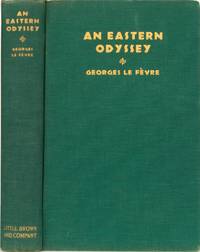
An Eastern Odyssey
Boston: Little Brown and Company 1935. First American. Hardcover. VG. the third expedition of Haardt and Audouin-Dubreuil in Central Asia. 354 pp ill fold out map end paper maps of exploring route through China Mongolia Tibet Afghanistan Turkestan Iraq and Syria. VG in orig. cloth. Little, Brown and Company hardcover
Référence libraire : 4914
|
|
|
LE FEVRE, G. - TRANIN, E
Auf den Spuren des Douha. Eine abenteuerliche Erzälung. Mit 34 Illustrationen von E. Bröckl
1 Vol. In-8 m.tela edit.Piatto ill pag. 304 34 disegni n.t PROG 27321 CATT_ATT 39
|
|
|
Le General Compte de Segur, Marcel:
Histoire de napoléon et de la Grande-Armée pendant l`Année 1812
Baudouin Frères Paris 1825. Hardcover Sixième Édition tome premier Sixième Édition tome premier. Zustand: Mit einem ExLibris Der Einband ist schadhaft wellig am Rücken verletzt Die Ecken sind bestoßen. Innen fast fleckenfrei. Baudouin Frères, Paris, hardcover
Référence libraire : 244996
|
|
|
LE GUENNEC-COPPENS FRANCOISE
FEMMES VOILEES DE LAMU (KENYA), VARIATIONS CULTURELLES ET DYNAMIQUES SOCIALES
Recherche sur les Civilisations. 1983. In-4 Carré. Broché. Bon état. Couv. légèrement passée. Dos satisfaisant. Intérieur frais. 221 pages. Illustré de nombreux schémas et photos en noir et blanc hors texte. Etiquette de code sur le dos. Tampon et annotations de bibliothèque en page de titre. 'Mémoire', n° 22. Centre de recherches, d'échanges et de documentation universitaire, Kenya.

|
|
|
LE LEU
DESCRIPTION DE L'EGYPTE. Orthoptères. Sauterelles. (Histoire Naturelle, planche 4)
- Imprimerie Impériale, Paris 1809-1829, 53,5x70cm, une feuille. - Gravure originale à l'eau-forte in plano, non rognée, extraite de l'édition dite « Impériale » de la Description de l'Égypte ou Recueil des observations et recherches faites en Égypte pendant l'expédition française, publié par les ordres de Sa Majesté l'Empereur Napoléon le Grand. Réalisée entre février 1802 et 1829 sur ordre de Napoléon Bonaparte et publiée à partir de 1809 [en réalité 1810], elle fut tirée à 1000 exemplaires sur Vergé filigrané « Égypte ancienne et moderne » et offerte aux institutions. Infimes et marginales piqûres sans atteinte à la gravure, sinon excellent état de fraîcheur et de conservation. Volume HISTOIRE NATURELLE, orthoptères : Ces gravures montrent le génie scientifique des savants français à l'uvre sur le sol égyptien, préparant celui-ci à devenir une colonie française. Ce projet colonisateur en gestation depuis le règne de Louis XIV s'accompagne avec l'arrivée de Bonaparte d'une étude approfondie de la faune et la flore à travers les travaux des plus grands naturalistes, minéralogistes, entomologistes de l'époque. La Description de l'Egypte révèle l'intégralité de cette immense entreprise scientifique au fil de ses gravures, d'après les dessins des membres de l'Académie des sciences dont Etienne Geoffroy Saint-Hillaire, Alire Raffenau-Delile ou Henri-Joseph Redouté. Selon les mots de Geoffroy Saint-Hilaire « Nous avons recueilli les matériaux du plus bel ouvrage qu'une nation ait pu faire entreprendre. En déplorant le sort de tant de braves guerriers, qui après tant de glorieux exploits ont succombé en Egypte, on se consolera par l'existence d'ouvrages aussi précieux. » LA DESCRIPTION DE L'EGYPTE, édition IMPERIALE (1809-1829) : La Description de l'Egypte est un des chefs d'uvre de l'édition française et le point de départ d'une nouvelle science : l'égyptologie. Titanesque exposé de l'Egypte au temps des conquêtes de Bonaparte entre 1798 et 1799, elle est répartie en 23 volumes dont 13 volumes de gravures rassemblant près de 1000 planches en noir et 72 en couleur. Les 6 volumes de planches intitulées Antiquités sont consacrés aux splendeurs de l'Egypte pharaonique. L'Histoire naturelle est répartie en 3 volumes de gravures. Un volume est consacré aux Cartes géographiques et topographiques tandis que les 3 volumes : Etat Moderne dressent un portrait saisissant de l'Egypte copte et islamique telle qu'elle était vue par les armées d'Orient de Bonaparte. La « campagne d'Egypte », désastre militaire, dévoile à travers les gravures de la Description de l'Egypte la réussite scientifique qu'elle est devenue, grâce aux quelques 167 savants membres de la Commission des sciences et des arts de l'Institut d'Egypte qui suivaient l'armée de Napoléon. L'Institut a réuni en Egypte le mathématicien Monge, le chimiste Berthollet, le naturaliste Geoffroy Saint-Hilaire, ainsi que de nombreux artistes, ingénieurs, architectes, médecins... Ils eurent la charge de redécouvrir l'Egypte moderne et antique, d'en montrer les richesses naturelles, et le savoir-faire de ses habitants. L'édition originale, dite « Impériale », de la Description de l'Egypte fut réalisée sur quatre formats de grande taille, deux d'entre eux spécialement créés pour elle et baptisés formats « Moyen-Egypte » et « Grand-Egypte ». On construisit une presse spécifique pour son impression, qui s'étala sur vingt ans, entre 1809 et 1829. L'édition Impériale s'avéra si populaire qu'une deuxième édition en 37 volumes entièrement en noir et sans le filigrane « Egypte ancienne et moderne », dite édition « Panckoucke », fut publiée à partir de 1821 par l'imprimerie C.-L.-F. Panckoucke (Paris). La réalisation de ce monument d'érudition doit beaucoup au baron Dominique Vivant Denon, illustrateur, diplomate, collectionneur et par la suite directeur du musée Napoléon du Louvre qui accompagna Napoléon en Egypte avec de nombreux autres savants mais décida seul de s'aventurer dans le Sud d

|
|
|
LE MASSON HUGUES
FAUT-IL, ENCORE, AIDER LES PAYS EN DEVELOPPEMENT ?, HISTOIRE D'UN CAS EXEMPLAIRE
ISBN : 2866451260. Le Félin. 1992. In-8 Carré. Broché. Etat d'usage. Couv. légèrement pliée. Dos satisfaisant. Intérieur frais. 223 pages. Illustré de quelques cartes en noir et blanc hors texte. Etiquette de code sur le dos. Tampon et annotations de bibliothèque en page de titre. Préface de René Lenoir. L'exemple du Soudan.

|
|
|
LE MONDE MODERNE.
AFRICA Y LA DEFENSA DEL OCCIDENTE.
24x17. 149p.

|
|
|
LE MONDE MODERNE.
AFRICA Y LA DEFENSA DEL OCCIDENTE.
24x17. 149p.

|
|
|
LE PAPE MARC, VIDAL CLAUDINE
COTE D'IVOIRE, L'ANNEE TERRIBLE, 1999-2000
ISBN : 2845863179. Karthala. 2002. In-8 Carré. Broché. Bon état. Couv. convenable. Dos satisfaisant. Intérieur frais. 354 pages. Illustré d'une carte en noir et blanc hors texte. Etiquette de code sur le dos. Tampon et annotations de bibliothèque en page de titre. 'Les Afriques', Collection dir. par Jean-François Bayart.

|
|
|
LE PERE
DESCRIPTION DE L'EGYPTE. Edfou (Apollinopolis magna). Plan et coupe générale du grand temple, Détails de constructions intérieures. (ANTIQUITES, volume I, planche 50)
- Imprimerie Impériale, Paris 1809-1829, 54x71cm, une feuille. - Original, unshaved, full-page etching from the "Imperial edition" of the Description de l'Égypte, or 'Recueil des observations et recherches faites en Égypte pendant l'expédition française, publié par les ordres de Sa Majesté l'Empereur Napoléon le Grand [A Collection of the observations and research carried out in Egypt during the French expedition, published on the orders of his Majesty the Emperor Napoleon the Great]'. Produced between February 1802 and 1830 on the orders of Naopleon Bonaparte and published between 1809 and 1828, 1,000 copies were printed and distributed to institutions, on vergé paper with an 'Égypte ancienne et moderne' watermark, visible when held up to the light. Light marginal spotting not touching image, otherwise in very fresh, fine condition. An engraving from the Description de l'Egypte, one of the masterpieces of French printing and the birth of a new field: Egyptology. A gigantic survey of Egypt at the time of Bonaparte's conquests in 1798 and 1799, the work is divided into 13 volumes of engravings making up 892 plates, of which 72 colored, as well as presenting the splendors of the Egypt of the Pharaohs in 9 volumes. The other volumes discuss natural history and present a fascinating portrait of Coptic and Islamic Egypt as it was seen by Bonaparte's Eastern Armies. The 'Egyptian campaign', militarily a disaster, demonstrates, through the engravings of the Description d'Egypte, the scientific success it nonetheless became thanks to the 167 expert members of the Commission of the Sciences and Arts of the Institut d'Egypte [Egyptian Institute] who followed Napoleon's army. The Institut gathered together in Egypt the mathematician Monge, the chemist Berthollet, the naturalist Geoffroy Saint-Hilaire as well as numerous artists, engineers, architects and doctors. They were tasked with re-discovering modern and ancient Egypt and displaying its natural treasures as well as the know-how of its inhabitants. This edition, the so-called "Imperial" edition of the plates for the Description de l'Egypte was printed in four large formats, two of which were specially created for it and christened "Moyen-Egypte" and "Grand-Egypte". A special press was built to print it, the process extending over 20 years, from 1809 to 1829. The "Imperial" edition proved so popular that a second edition, this time in black and white and without the "Egypte ancienne et moderne" watermark - known as the "Royal Edition" - was published during the Restoration by the printing house of C.-L.-F. Panckoucke (Paris). The engravings of the Description d'Egypte owe a great deal to Baron Dominique-Vivant Denon, illustrator, diplomat, collector and later Director of the Musée Napoléon (the Louvre). His exploration of the South of Egypt gave Bonaparte the idea of sending the experts of the Institut there, thus creating a faithful and complete portrait of the area. This was the research gathered together from 1802 in the mammoth Description de L'Egypte. Denon embarked on this story of archeological exploration at the age of 51, reaching first Alexandria and then Cairo before exploring Upper Egypt. Along with the members of the Institut d'Egypte, the Natural History Museum's painter H.J. Redouté (brother of Pierre-Joseph Redouté, author of Roses), the mineralogist Dolomiue, and the draughtsman Joly, Denon then explored the Nile Delta and Lower Egypt. When, however, he joined the 21st Light Infantry Regiment as it marched across Upper Egypt in pursuit of the retreating Mameluks in November 1798, he found himself the only civilian. In the very midst of the battle itself, he reeled off sketches of the works of art that peppered his path right up to the threshold of the Sudan. He said that he had crossed "a country that is, apart from its name, entirely unknown to Europeans, and therefore everything was worth describing" (Voyages dans la Basse et la Haute Egypte pendant le

|
|
|
LE PERE
DESCRIPTION DE L'EGYPTE. Edfou (Apollinopolis magna). Plan, coupes et élévations du petit temple. (ANTIQUITES, volume I, planche 62)
- Imprimerie Impériale, Paris 1809-1829, 54x71cm, une feuille. - Gravure originale à l'eau-forte in plano, non rognée, extraite de l'édition dite « Impériale » de la Description de l'Égypte ou Recueil des observations et recherches faites en Égypte pendant l'expédition française, publié par les ordres de Sa Majesté l'Empereur Napoléon le Grand. Réalisée entre février 1802 et 1829 sur ordre de Napoléon Bonaparte et publiée à partir de 1809 [en réalité 1810], elle fut tirée à 1000 exemplaires sur Vergé filigrané « Égypte ancienne et moderne » et offerte aux institutions. Légères et marginales rousseurs sans aucune atteinte à la gravure, sinon très bel état de fraîcheur et de conservation. EDFOU : Planche issue d'une série de vues du grand temple d'Edfou et des constructions de son complexe religieux. Le temple d'Horus, fleuron de l'architecture ptolémaïque et exceptionnellement bien conservé, se compose d'un majestueux portique d'entrée, d'une salle hypostyle, tous deux abondamment documentés grâce aux gravures des savants de l'Institut d'Egypte. Commencé en 237 avant notre ère par Ptolémée III et fini 180 ans plus tard sous Tibère, il offre une vue spectaculaire aux dessinateurs venus explorer la rive gauche du Nil. Volume ANTIQUITES, I : Ces gravures fournissent à Jean-François Champollion une documentation épigraphique fondamentale pour le déchiffrage des hiéroglyphes et inspirent une lignée d'archéologues comme Mariette, Maspero et Carter qui donnent un nouveau visage à l'Egypte ancienne. Elles suscitent un engouement tel qu'elles donnent naissance au phénomène de l'égyptomanie et à l'orientalisme de Delacroix, Fromentin, Marilhat, Decamps mais aussi Théophile Gautier... Financiers, politiciens, marchands, et fouilleurs de tous ordres se presseront sur les rives du Nil en quête de bonnes affaires à la suite de cette redécouverte de l'Egypte. A l'origine de l'égyptologie, ces planches connaîtront une postérité immense. LA DESCRIPTION DE L'EGYPTE, édition IMPERIALE (1809-1829) : La Description de l'Egypte est un des chefs d'uvre de l'édition française et le point de départ d'une nouvelle science : l'égyptologie. Titanesque exposé de l'Egypte au temps des conquêtes de Bonaparte entre 1798 et 1799, elle est répartie en 23 volumes dont 13 volumes de gravures rassemblant près de 1000 planches en noir et 72 en couleur. Les 6 volumes de planches intitulées Antiquités sont consacrés aux splendeurs de l'Egypte pharaonique. L'Histoire naturelle est répartie en 3 volumes de gravures. Un volume est consacré aux Cartes géographiques et topographiques tandis que les 3 volumes : Etat Moderne dressent un portrait saisissant de l'Egypte copte et islamique telle qu'elle était vue par les armées d'Orient de Bonaparte. La « campagne d'Egypte », désastre militaire, dévoile à travers les gravures de la Description de l'Egypte la réussite scientifique qu'elle est devenue, grâce aux quelques 167 savants membres de la Commission des sciences et des arts de l'Institut d'Egypte qui suivaient l'armée de Napoléon. L'Institut a réuni en Egypte le mathématicien Monge, le chimiste Berthollet, le naturaliste Geoffroy Saint-Hilaire, ainsi que de nombreux artistes, ingénieurs, architectes, médecins... Ils eurent la charge de redécouvrir l'Egypte moderne et antique, d'en montrer les richesses naturelles, et le savoir-faire de ses habitants. L'édition originale, dite « Impériale », de la Description de l'Egypte fut réalisée sur quatre formats de grande taille, deux d'entre eux spécialement créés pour elle et baptisés formats « Moyen-Egypte » et « Grand-Egypte ». On construisit une presse spécifique pour son impression, qui s'étala sur vingt ans, entre 1809 et 1829. L'édition Impériale s'avéra si populaire qu'une deuxième édition en 37 volumes entièrement en noir et sans le filigrane « Egypte ancienne et moderne », dite édition « Panckoucke », fut publiée à partir de 1821 par l'imprimerie C.-L.-F. Panckoucke (Paris). La réalisation de ce monument d'érudi

|
|
|
LE PERE & ADAM (sculpsit)
DESCRIPTION DE L'EGYPTE. Thèbes. Medynet-Abou. Détails d'un pilier caryatide et d'une colonne du péristyle du palais. (ANTIQUITES, volume II, planche 7)
- Imprimerie Impériale, Paris 1809-1829, 71x53,5cm, une feuille. - Original, unshaved, full-page etching from the "Imperial edition" of the Description de l'Égypte, or 'Recueil des observations et recherches faites en Égypte pendant l'expédition française, publié par les ordres de Sa Majesté l'Empereur Napoléon le Grand [A Collection of the observations and research carried out in Egypt during the French expedition, published on the orders of his Majesty the Emperor Napoleon the Great]'. Produced between February 1802 and 1830 on the orders of Naopleon Bonaparte and published between 1809 and 1828, 1,000 copies were printed and distributed to institutions, on vergé paper with an 'Égypte ancienne et moderne' watermark, visible when held up to the light. Light marginal spotting not touching image, otherwise in very fresh, fine condition. An engraving from the Description de l'Egypte, one of the masterpieces of French printing and the birth of a new field: Egyptology. A gigantic survey of Egypt at the time of Bonaparte's conquests in 1798 and 1799, the work is divided into 13 volumes of engravings making up 892 plates, of which 72 colored, as well as presenting the splendors of the Egypt of the Pharaohs in 9 volumes. The other volumes discuss natural history and present a fascinating portrait of Coptic and Islamic Egypt as it was seen by Bonaparte's Eastern Armies. The 'Egyptian campaign', militarily a disaster, demonstrates, through the engravings of the Description d'Egypte, the scientific success it nonetheless became thanks to the 167 expert members of the Commission of the Sciences and Arts of the Institut d'Egypte [Egyptian Institute] who followed Napoleon's army. The Institut gathered together in Egypt the mathematician Monge, the chemist Berthollet, the naturalist Geoffroy Saint-Hilaire as well as numerous artists, engineers, architects and doctors. They were tasked with re-discovering modern and ancient Egypt and displaying its natural treasures as well as the know-how of its inhabitants. This edition, the so-called "Imperial" edition of the plates for the Description de l'Egypte was printed in four large formats, two of which were specially created for it and christened "Moyen-Egypte" and "Grand-Egypte". A special press was built to print it, the process extending over 20 years, from 1809 to 1829. The "Imperial" edition proved so popular that a second edition, this time in black and white and without the "Egypte ancienne et moderne" watermark - known as the "Royal Edition" - was published during the Restoration by the printing house of C.-L.-F. Panckoucke (Paris). The engravings of the Description d'Egypte owe a great deal to Baron Dominique-Vivant Denon, illustrator, diplomat, collector and later Director of the Musée Napoléon (the Louvre). His exploration of the South of Egypt gave Bonaparte the idea of sending the experts of the Institut there, thus creating a faithful and complete portrait of the area. This was the research gathered together from 1802 in the mammoth Description de L'Egypte. Denon embarked on this story of archeological exploration at the age of 51, reaching first Alexandria and then Cairo before exploring Upper Egypt. Along with the members of the Institut d'Egypte, the Natural History Museum's painter H.J. Redouté (brother of Pierre-Joseph Redouté, author of Roses), the mineralogist Dolomiue, and the draughtsman Joly, Denon then explored the Nile Delta and Lower Egypt. When, however, he joined the 21st Light Infantry Regiment as it marched across Upper Egypt in pursuit of the retreating Mameluks in November 1798, he found himself the only civilian. In the very midst of the battle itself, he reeled off sketches of the works of art that peppered his path right up to the threshold of the Sudan. He said that he had crossed "a country that is, apart from its name, entirely unknown to Europeans, and therefore everything was worth describing" (Voyages dans la Basse et la Haute Egypte pendant

|
|
|
LE PERE & BOUTELOU (sculpsit)
DESCRIPTION DE L'EGYPTE. Erment (Hermonthis). Plan, coupe et élévations du temple. (ANTIQUITES, volume I, planche 94)
- Imprimerie Impériale, Paris 1809-1829, 71x54cm, une feuille. - Original, unshaved, full-page etching from the "Imperial edition" of the Description de l'Égypte, or 'Recueil des observations et recherches faites en Égypte pendant l'expédition française, publié par les ordres de Sa Majesté l'Empereur Napoléon le Grand [A Collection of the observations and research carried out in Egypt during the French expedition, published on the orders of his Majesty the Emperor Napoleon the Great]'. Produced between February 1802 and 1830 on the orders of Naopleon Bonaparte and published between 1809 and 1828, 1,000 copies were printed and distributed to institutions, on vergé paper with an 'Égypte ancienne et moderne' watermark, visible when held up to the light. Light marginal spotting not touching image, otherwise in very fresh, fine condition. An engraving from the Description de l'Egypte, one of the masterpieces of French printing and the birth of a new field: Egyptology. A gigantic survey of Egypt at the time of Bonaparte's conquests in 1798 and 1799, the work is divided into 13 volumes of engravings making up 892 plates, of which 72 colored, as well as presenting the splendors of the Egypt of the Pharaohs in 9 volumes. The other volumes discuss natural history and present a fascinating portrait of Coptic and Islamic Egypt as it was seen by Bonaparte's Eastern Armies. The 'Egyptian campaign', militarily a disaster, demonstrates, through the engravings of the Description d'Egypte, the scientific success it nonetheless became thanks to the 167 expert members of the Commission of the Sciences and Arts of the Institut d'Egypte [Egyptian Institute] who followed Napoleon's army. The Institut gathered together in Egypt the mathematician Monge, the chemist Berthollet, the naturalist Geoffroy Saint-Hilaire as well as numerous artists, engineers, architects and doctors. They were tasked with re-discovering modern and ancient Egypt and displaying its natural treasures as well as the know-how of its inhabitants. This edition, the so-called "Imperial" edition of the plates for the Description de l'Egypte was printed in four large formats, two of which were specially created for it and christened "Moyen-Egypte" and "Grand-Egypte". A special press was built to print it, the process extending over 20 years, from 1809 to 1829. The "Imperial" edition proved so popular that a second edition, this time in black and white and without the "Egypte ancienne et moderne" watermark - known as the "Royal Edition" - was published during the Restoration by the printing house of C.-L.-F. Panckoucke (Paris). The engravings of the Description d'Egypte owe a great deal to Baron Dominique-Vivant Denon, illustrator, diplomat, collector and later Director of the Musée Napoléon (the Louvre). His exploration of the South of Egypt gave Bonaparte the idea of sending the experts of the Institut there, thus creating a faithful and complete portrait of the area. This was the research gathered together from 1802 in the mammoth Description de L'Egypte. Denon embarked on this story of archeological exploration at the age of 51, reaching first Alexandria and then Cairo before exploring Upper Egypt. Along with the members of the Institut d'Egypte, the Natural History Museum's painter H.J. Redouté (brother of Pierre-Joseph Redouté, author of Roses), the mineralogist Dolomiue, and the draughtsman Joly, Denon then explored the Nile Delta and Lower Egypt. When, however, he joined the 21st Light Infantry Regiment as it marched across Upper Egypt in pursuit of the retreating Mameluks in November 1798, he found himself the only civilian. In the very midst of the battle itself, he reeled off sketches of the works of art that peppered his path right up to the threshold of the Sudan. He said that he had crossed "a country that is, apart from its name, entirely unknown to Europeans, and therefore everything was worth describing" (Voyages dans la Basse et la Haute Egypte pendant le

|
|
|
LE PERE Gratien & BALTARD (sculpsit)
DESCRIPTION DE L'EGYPTE. Thèbes. Karnak. Vue et détails de l'un des Sphinx placés à l'entrée principale du palais. Détail de l'un des Sphinx de l'allée du Sud. Petit torse en granit trouvé près de la porte du Sud. (ANTIQUITES, volume III, planche 29)
- Imprimerie Impériale, Paris 1809-1829, 71x54cm, une feuille. - Original, unshaved, full-page etching from the "Imperial edition" of the Description de l'Égypte, or 'Recueil des observations et recherches faites en Égypte pendant l'expédition française, publié par les ordres de Sa Majesté l'Empereur Napoléon le Grand [A Collection of the observations and research carried out in Egypt during the French expedition, published on the orders of his Majesty the Emperor Napoleon the Great]'. Produced between February 1802 and 1830 on the orders of Naopleon Bonaparte and published between 1809 and 1828, 1,000 copies were printed and distributed to institutions, on vergé paper with an 'Égypte ancienne et moderne' watermark, visible when held up to the light. Light marginal spotting not touching image, otherwise in very fresh, fine condition. An engraving from the Description de l'Egypte, one of the masterpieces of French printing and the birth of a new field: Egyptology. A gigantic survey of Egypt at the time of Bonaparte's conquests in 1798 and 1799, the work is divided into 13 volumes of engravings making up 892 plates, of which 72 colored, as well as presenting the splendors of the Egypt of the Pharaohs in 9 volumes. The other volumes discuss natural history and present a fascinating portrait of Coptic and Islamic Egypt as it was seen by Bonaparte's Eastern Armies. The 'Egyptian campaign', militarily a disaster, demonstrates, through the engravings of the Description d'Egypte, the scientific success it nonetheless became thanks to the 167 expert members of the Commission of the Sciences and Arts of the Institut d'Egypte [Egyptian Institute] who followed Napoleon's army. The Institut gathered together in Egypt the mathematician Monge, the chemist Berthollet, the naturalist Geoffroy Saint-Hilaire as well as numerous artists, engineers, architects and doctors. They were tasked with re-discovering modern and ancient Egypt and displaying its natural treasures as well as the know-how of its inhabitants. This edition, the so-called "Imperial" edition of the plates for the Description de l'Egypte was printed in four large formats, two of which were specially created for it and christened "Moyen-Egypte" and "Grand-Egypte". A special press was built to print it, the process extending over 20 years, from 1809 to 1829. The "Imperial" edition proved so popular that a second edition, this time in black and white and without the "Egypte ancienne et moderne" watermark - known as the "Royal Edition" - was published during the Restoration by the printing house of C.-L.-F. Panckoucke (Paris). The engravings of the Description d'Egypte owe a great deal to Baron Dominique-Vivant Denon, illustrator, diplomat, collector and later Director of the Musée Napoléon (the Louvre). His exploration of the South of Egypt gave Bonaparte the idea of sending the experts of the Institut there, thus creating a faithful and complete portrait of the area. This was the research gathered together from 1802 in the mammoth Description de L'Egypte. Denon embarked on this story of archeological exploration at the age of 51, reaching first Alexandria and then Cairo before exploring Upper Egypt. Along with the members of the Institut d'Egypte, the Natural History Museum's painter H.J. Redouté (brother of Pierre-Joseph Redouté, author of Roses), the mineralogist Dolomiue, and the draughtsman Joly, Denon then explored the Nile Delta and Lower Egypt. When, however, he joined the 21st Light Infantry Regiment as it marched across Upper Egypt in pursuit of the retreating Mameluks in November 1798, he found himself the only civilian. In the very midst of the battle itself, he reeled off sketches of the works of art that peppered his path right up to the threshold of the Sudan. He said that he had crossed "a country that is, apart from its name, entirely unknown to Europeans, and therefore everything was worth describing" (Voyages dans la Basse et la Haute Egypte pendant le

|
|
|
LE PERE Gratien & COLLIN (sculpsit)
DESCRIPTION DE L'EGYPTE. Isthme de Soueys (canal des deux mers). Tableau synoptique des différents points de nivellement de l'isthme, rapportés au meqyas de l'île de Roudah. (ETAT MODERNE, volume I, planche 14)
- Imprimerie Impériale, Paris 1809-1829, 53,5x70cm, une feuille. - Original, unshaved, full-page etching from the "Imperial edition" of the Description de l'Égypte, or 'Recueil des observations et recherches faites en Égypte pendant l'expédition française, publié par les ordres de Sa Majesté l'Empereur Napoléon le Grand [A Collection of the observations and research carried out in Egypt during the French expedition, published on the orders of his Majesty the Emperor Napoleon the Great]'. Produced between February 1802 and 1830 on the orders of Naopleon Bonaparte and published between 1809 and 1828, 1,000 copies were printed and distributed to institutions, on vergé paper with an 'Égypte ancienne et moderne' watermark, visible when held up to the light. Light marginal spotting not touching image, otherwise in very fresh, fine condition. An engraving from the Description de l'Egypte, one of the masterpieces of French printing and the birth of a new field: Egyptology. A gigantic survey of Egypt at the time of Bonaparte's conquests in 1798 and 1799, the work is divided into 13 volumes of engravings making up 892 plates, of which 72 colored, as well as presenting the splendors of the Egypt of the Pharaohs in 9 volumes. The other volumes discuss natural history and present a fascinating portrait of Coptic and Islamic Egypt as it was seen by Bonaparte's Eastern Armies. The 'Egyptian campaign', militarily a disaster, demonstrates, through the engravings of the Description d'Egypte, the scientific success it nonetheless became thanks to the 167 expert members of the Commission of the Sciences and Arts of the Institut d'Egypte [Egyptian Institute] who followed Napoleon's army. The Institut gathered together in Egypt the mathematician Monge, the chemist Berthollet, the naturalist Geoffroy Saint-Hilaire as well as numerous artists, engineers, architects and doctors. They were tasked with re-discovering modern and ancient Egypt and displaying its natural treasures as well as the know-how of its inhabitants. This edition, the so-called "Imperial" edition of the plates for the Description de l'Egypte was printed in four large formats, two of which were specially created for it and christened "Moyen-Egypte" and "Grand-Egypte". A special press was built to print it, the process extending over 20 years, from 1809 to 1829. The "Imperial" edition proved so popular that a second edition, this time in black and white and without the "Egypte ancienne et moderne" watermark - known as the "Royal Edition" - was published during the Restoration by the printing house of C.-L.-F. Panckoucke (Paris). The engravings of the Description d'Egypte owe a great deal to Baron Dominique-Vivant Denon, illustrator, diplomat, collector and later Director of the Musée Napoléon (the Louvre). His exploration of the South of Egypt gave Bonaparte the idea of sending the experts of the Institut there, thus creating a faithful and complete portrait of the area. This was the research gathered together from 1802 in the mammoth Description de L'Egypte. Denon embarked on this story of archeological exploration at the age of 51, reaching first Alexandria and then Cairo before exploring Upper Egypt. Along with the members of the Institut d'Egypte, the Natural History Museum's painter H.J. Redouté (brother of Pierre-Joseph Redouté, author of Roses), the mineralogist Dolomiue, and the draughtsman Joly, Denon then explored the Nile Delta and Lower Egypt. When, however, he joined the 21st Light Infantry Regiment as it marched across Upper Egypt in pursuit of the retreating Mameluks in November 1798, he found himself the only civilian. In the very midst of the battle itself, he reeled off sketches of the works of art that peppered his path right up to the threshold of the Sudan. He said that he had crossed "a country that is, apart from its name, entirely unknown to Europeans, and therefore everything was worth describing" (Voyages dans la Basse et la Haute Egypte pendant

|
|
|
Le Quellec, Jean Loic; Bahn, Paul, translator
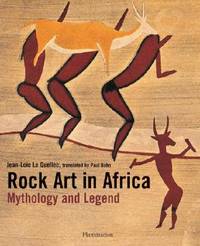
Rock Art in Africa: Mythology and Legend
Paris: Flammarion 2004 Paris: Flammarion 2004. First edition stated first printing. Folio. Cloth binding 212 pp. Illustrated throughout with stunning photographs in color. The paintings and engravings found on African cave walls and rocks—some ancient some still in use today—are remarkable artworks that hold clues to understanding the history of humankind posits ethnologist and anthropologist Jean-Loïc Le Quellec. A leading expert on Saharan cave art he offers this detailed and heavily illustrated analysis of rock art in each of Africa's four main geographical zones—the Sahara the Horn and East Africa Southern Africa and the west and central continent—describing styles that range from representational realism to abstract symbolism and patterns. Color photos and drawings depict works ranging from the so-called "Cave of Swimmers" in Libya featured in the film The English Patient to the hundreds of figures on the great overhang of Song at Sanga in Mali. New in new dust jacket. Flammarion hardcover
Référence libraire : 014982 ISBN : 2080304445 9782080304445
|
|
|
Le Quellec, Jean-Loic
Rock Art in Africa. Mythology and Legend. Translated by Paul Bahn.
Paris, Éditions Flammarion, 2004. 212 p., many illustr. 4°, cloth with dust jacket.
Référence libraire : 14121 ISBN : 2080304445
|
|
|
Le Quellec, Jean-Loïc
Sahara. Landschaft und Kultur. Fotos von Tiziana u. Gianni Baldizzione.
Paris, Flammarion 2004. 191 S. mit sehr zahlr. (überwieg. ganz- oder doppelseit.) farb. Abbildungen, illustrierte Vorsätze, OPp. mit farb. ill. OUmschl. Sehr gutes Exemplar. DEA. OPp. mit farb. ill. OUmschl. Sehr gutes Exemplar. DEA.
Référence libraire : 94120AB
|
|
|
Le Quellec, Jean-Loïc, Tiziana Baldizzone und Gianni Baldizzone
Sahara. Landschaft und Kultur
Paris: Flammarion Verlag, 2004. 28,5 x 28,5 cm ; Pp.
Référence libraire : 114574

|
|
|
Le Ragois
Histoire de France
Douai: Jacquart. Gebunden. Jacquart unknown
Référence libraire : 23160

|
|
|
LE ROUX Thomas Hugo
Beschijvende klankleer van het Afrikaans
129 [vii] pp., gecart., stempeltje, 23cm., Academic dissertation [Akademies proefschrift ter verkrijging van de graad van doctor in de Nederlandse letteren aan de rijksuniversiteit te Leiden, 1910]
|
|
|
LE ROY A. (Mgr)
A 5000 m?tres d'altitude en Afrique. Photos hors texte.
Broch?. 96 pages.
|
|
|
Le Roy, Alexandre
Au Kilima-ndjaro.
Paris, Au secrétariat du souvenir africain, (1914). Ca. 20 x 28 cm. 487 Seiten. Mit vielen Abbildungen und 3 Karten. Orig.-Leinenband.
Référence libraire : 100185DB

|
|
|
LE VAILLANT F.
Primo viaggio di Le Vaillant nell'interno dell'Africa pel Capo Buona Speranza. Traduzione dall'originale francese di F. Contarini, in 3 voll.
in 16° pp. 292, 290, 29, 4 b., bross. edit. ill. e sovracop. trasparente, cofanetto rilegato e ill. L'A., appassionato ornitologo pronto ad affrontare qualsiasi fatica per amore della scienza, ha dato un grande contribuito a descrivere e classificare molte specie d'uccelli scoperti nei suoi viaggi; con belle riproduz. a colori delle incisioni originali di Dell'Acqua, raffig. tipi umani, villaggi e uccelli africani. Bella carta ed ottimo esemplare. 536/27

|
|
|
LE VAILLANT F.
PRIMO VIAGGIO NELL'INTERNO DELL'AFRICA PEL CAPO BUONA SPERANZA. Traduzione dall’originale francese di F. Contarini.
In-16 p. (mm. 152x95), 3 volumi, mz. pelle coeva, fregi e tit. oro al dorso, pp. XXXII,243; 276; 266,(2). ben illustrato f.t., come da Indice, da 14 tavole a colori inc. in rame, di vedute e costumi. L’opera fa parte della “Raccolta di viaggi dopo quelli di Cook” eseguiti tanto per mare quanto per terra, e non pubblicati finora in lingua italiana (Tomi V-VII). Prima traduzione italiana. Cfr. CLIO,IV, p. 2619. Esempl. con lievi fioriture o arrossature intercalate nel t., altrimenti ben conservato.
|
|
|
LE VAILLANT F.
SECONDO VIAGGIO DI F. LE VAILLANT NELL'INTERNO DELL'AFRICA PEL CAPO BUONA SPERANZA. Tomi XLV, XLVI e XLVII della "Raccolta di viaggi dopo quelli di Cook eseguiti tanto per mare quanto per terra...".
In-16 gr. (mm. 151x94), 4 volumi, mz. pelle coeva, fregi e tit. oro al dorso, pp. XXXVI,277; 310,(2); 274,(2); 263,(17); ben illustrato f.t., come da indice, da 18 belle tavole inc. in rame e colorate a mano. Esempl. con fioriture intercalate nel t., ma complessivamente ben conservato.

|
|
|
LE VAILLANT F.) -
Abrégé des voyages de Levaillant en Afrique.
Tours, 1851, 8vo bella legatura coeva piena pelle con impress. a secco ai piatti, dorso con snodi e titoli in oro, pp. 235 con due tav. lit. f.t.

|
|
|
LE VAILLANT F..
Primo viaggio di F. Le Vaillant nell'interno dell'Africa pel Capo Buona Speranza. Traduzione dall'originale francese di F. Contarini.
In 16°, br. edit. con sovrac. alla francese ill. e protezione in acetato, pp. (2),292,(6); (2),298,(8); (2),289,(5), con num. tavv. a col. f.t.; lievi mancanze al cofanetto, per il resto copie molto buone. (L015)
|
|
|
LE VAILLANT François
VOYAGE DANS L’INTERIEUR DE L’AFRIQUE, PAR LE CAP DE BONNE ESPERANCE. Dans les années 1780, 81, 82, 83, 84 & 85. Nouvelle édition.
In-8 p. (mm. 213x138), primo vol. (su 2), cartoncino rustico coevo (dorso con picc. manc.), pp. XXIV,271, molto ben illustrato f.t. da 6 tavole inc. in rame di cui: una all’antiporta, 3 dedicate ai costumi locali e 2, ripieg., con la “vue des montagnes du Cap de Bonne Espérance couvertes de nuages” e il “camp de Pampoen-Kraal” nel paese degli Ottentotti. Viaggio del celebre ornitologo francese François Levaillant (1753-1824) nelle zone dell’Africa fino ad allora inesplorate. Con qualche fiorit. e pagine ingiallite per la qualità della carta ma complessivam. buon esemplare con barbe.

|
|
|
LE VAILLANT François
Voyage de F. Vaillant dans l'intérieur de l'Afrique par le Cap de Bonne-Espérance et second voyage dans l'intérieur de l'Afrique par le Cap de Bonne-Espérance dans les années 1783, 84 et 85
Paris, de l'Imprimerie Crapelet, 1797, an VI. 2 volumes reliés pleine basane blonde de l'époque, dos lisses très ornés de filets et fleurons dorés, pièce de titre de maroquin rouge et de tomaison de maroquin vert, plats à encadrement de triples filets dorés, roulette dorée intérieure, toutes tranches dorées, gardes de papier orangé. XXXII + 383 + 403 pages.+ 3 volumes reliés à l'identique (pour le Second voyage), Paris, Jansen, An 3 de la République, XLIV + 304 + 426 + 525 pages. Infimes petits défauts d'usage aux reliures sans aucune gravité. Rare et bel ensemble des 2 voyages de LE VAILLANT en reliure identique. Description des 38 gravures qui illustrent ces 2 voyages et se décomposant comme suit : 1er Voyage : 20 gravures, certaines dépliantes. Campement dans le pays des grands Namaquois, vue des montagnes du Cap de Bonne-Espérance, couvertes des nuages du Sud Est (dépliante). Le manchot aigrette. Camp à Duywen-Hock rivière (dépliante, déchirée sur 5cm sans manque de papier, sans gravité). Le Touraco ... Camp de Pampoen-Kraal (dépliante). Klaas, jeune Hottentot... Camp à l'entrée du port. Grande chasse d'éléphants (dépliante). Camp à Jager-Kraal dans le pays d'Auteniquois (dépliante). Camp sur les bords de la grande rivière des poissons (dépliante, trois taches marginales sans gravité). Narina, hjeune Gonaquoise. Jeune Hottentot Gonaquoi. La Hottentote. Le porte lambeau (présente une petite déchirure marginale sans manque de papier, sans gravité). Jeune caffre. Femme caffre. Camp à une horde de caffres détruits (dépliante). Hottentote à tablier (gravure qui manque fréquemment, mais bien présente dans notre exemplaire, en raison des attributs sexuels de la jeune femme jugés choquants). Girafe male. Girage femelle. 2me Voayge : 18 gravures, certaines dépliantes : Vue du cap de Bonne-Espérance prise en rade (Montagne du Diable, Montagne de la Table, Tête du Lion, Croupe du Lion, Pointe des Pendus), avec, en cartouches Vue du ca prise de l'ile Robin et Montagnes du cap vue en mer du côte de l'ouest. Anhinga male. Campement au Heere logement (dépliante). Passage de la rivère des élephants. Campement. Euphorbe-concombre. Tête d'hippopotampe male. Hippopotame femelle. Tête de girafe. Camp de la girafe sur le bord de la rivière d'Oirange (dépliante). Loup Tachete. Grand Namaquois. Euphorbe à côté de Melons. HOuzouana. Houzouana (en portrait). Femme Houzouana. Sanglier à large groin. Le singe noir. L'oricou. Toutes les gravures sont de très belle qualité, gravées par Hulk, Boutelou, Mariage, Bovinet, Amélie Coiny. François Le Vaillant, né en 1753 en Guyane, décédé en 1824, explorateur, collectionneur et ornithologue français. On lui doit la première description de la girafe.
|
|
|
Le Vaillant, (F.)
Zweyte Reise in d. Innere von Afrika. Unternommen in d. Jahren 1783, 1784 u. 1785. Aus d. Französ. übers. M. Anmerk. versehen von J.R. Forster. Neue Ausgabe. 3 Bde.
Wien, Bauer, 1815. M. 1 gef. gest. Kte. u. 18 gef. Kpfr.-Taf. XI, 352 S.; 2 Bl., 448; 560 S. Ppbde. d. Zt. m. Rsch. Einbde. bestoßen u. beschabt. Kl. Exlibris a. Innendeckel. Teils (stellenw. auch stärker) gebräunt bzw. braunfl. Bd. 3 Einbd. m. Nässeschaden u. im Text m. Nässepur (gegen Ende stärker, auch m. kl. Textverl.). (Magazin von merkwürd. neuen Reisebeschreibungen 23-25).
Référence libraire : 169974
|
|
|
Le Vaillant, (Francois)
Erste Reise in das Innere von Afrika, während der Jahre 1780 bis 1782. 2 Bde.
(Wien, Schrämbl, 1792). XVI S., 352 S.; 1 Bl., 374 S. 12 (davon 2 mehrfach gefalt.) Kupfertafeln. Kl.-8°. HLdr. der Zeit mit goldgeprägtem Rückenschild (etw. berieben und bestoßen). [5 Warenabbildungen]
Référence libraire : 22647

|
|
|
Le Vaillant, (François)
Voyage de Monsieur Le Vaillant dans l'intérieur de l'Afrique par le Cap de Bonne-Espérance. Nouv. Éd. 2 Bände.
Lausanne, Mourer/Hignou, 1790. 8vo. XXIV, 271 S.; 1 Bl., 290 S. Hldr. d. Zeit auf 5 Bünden m. dezenter Rückenvergoldung.
Référence libraire : 172

|
|
|
LE VAILLANT, [Francois]
Second Voyage de F. le Vaillant, dans l'Interieur de l'Afrique, par le Cap de Bonne-Esperance, pendant les annees 1783, 1784, et 1785.
Paris, Desray/Crapelet 1803. Bd. 1 (v. 3). 8°. XLIV, 343 S. Mit 6 gefalt. Kupfertaf. HLdr. d. Zt. Beieb. Kap. bestoßen, Taf. m. kl. Einrissen. [3 Warenabbildungen]
Référence libraire : 1614-21

|
|
|
Le Vaillant, F
Erste Reise in das Innere von Afrika während der Jahre 1780 bis 1782. Aus d. Französ. übers. M. Anmerk. v. J.R. Forster. Bd. 1 (v. 3).
Berlin, Vossische Buchhandlung, 1790. M. 7 (st. 12) Kpfr.-Taf. XII, 428 S. Schlichte Br. d. Zt. m. Rsign. Papierbezug am Rücken nicht mehr vorhanden. Umschl. angeschmutzt u. fleckig. Gebräunt, teils fleckig. Teils etwas eselsohrig. St. verso Tit. (Magazin von merkwürd. neuen Reisebeschreib. 2).
Référence libraire : 170056
|
|
|
Le Vaillant, F
Erste Reise in das Innere von Afrika. Unternommen in d. Jahren 1780, 1781 u. 1782. Aus d. Französ. übersetzt. M. Anmerk. v. J.R. Forster. Neue Ausgabe. 2 Bde.
Wien, Bauer, 1815. M. 5 Kpfr.-Taf. XVI, 352 S.; 2 Bl., 374 S. Ppbde. d. Zt. m. Rsch. Einbde. leicht bestoßen u. beschabt. Kl. Exlibris a. Innendeckel. Teils gebräunt bzw. braunfl. (Magazin von merkwürd. neuen Reisebeschreibungen 3-4).
Référence libraire : 169844
|
|
|
LE VAILLANT, F. ; ( BOULENGER, Jacques) ; [ LEVAILLANT, François ]
Voyages de F. Le Vaillant dans l'Intérieur de l'Afrique 1781-1785 (2 Tomes - Complet)
1 vol. in-12 reliure pleine basane racinée, dos à 4 nerfs dorés orné, couverture conservée, Nouvelle Bibliothèque des Voyages, Librairie Plon, Les Petits-Fils de Plon et Nourrit, Paris, 1931, XVII-245-279 pp. Le "Voyage dans l'intérieur de l'Afrique" publié par l'explorateur François Levaillant connut un immense succès lors de sa publication en 1790 ; le texte de la présente édition a été abrégé et résumé par endroits par Jacques Boulenger. Bon état pour cet exemplaire bien relié (très lég. trace de mouill. au premier plat, très bon état par ailleurs). Français

|
|
|
LE VAILLANT, François
Primo viaggio di F.Le Vaillant nell'interno dell'Africa pel capo Buona Speranza.Traduz.dall'orig.francese di F.Contarini.Vol.I-III
3 Vol. In-16 pag. 292+290+300 ill. di Dall'Acqua(inc.a col.riprod.f.t) PROG 2323 CATT_ATT 31
|
|
|

 Recevoir par e-mail
 Télécharger en PDF
 Flux RSS
 Lien permanent


