|
|
|
REDOUTE & BOUQUET (sculpsit) & PLEE (sculpsit)
DESCRIPTION DE L'EGYPTE. Poissons du Nil. La Perche latous, le Cyprin lebis. (Histoire Naturelle, planche 9)
- Imprimerie Impériale, Paris 1809-1829, 53,5x70cm, une feuille. - Gravure originale à l'eau-forte in plano, non rognée, extraite de l'édition dite « Impériale » de la Description de l'Égypte ou Recueil des observations et recherches faites en Égypte pendant l'expédition française, publié par les ordres de Sa Majesté l'Empereur Napoléon le Grand. Réalisée entre février 1802 et 1829 sur ordre de Napoléon Bonaparte et publiée à partir de 1809 [en réalité 1810], elle fut tirée à 1000 exemplaires sur Vergé filigrané « Égypte ancienne et moderne » et offerte aux institutions. Planche appartenant à la série des Poissons, dont l'étude fut réalisée par Étienne Geoffroy Saint-Hilaire (1772-1844), naturaliste français qui participa à la campagne d'Égypte, et recueillit à cette occasion de nombreuses observations sur les mammifères, les reptiles et les poissons notamment. Infimes et marginales rousseurs sans atteinte à la gravure, un petit trou de ver en marge supérieure, une petite déchirure restaurée en bordure de la marge gauche, sinon excellent état de fraîcheur et de conservation. Volume HISTOIRE NATURELLE, poissons : Ces gravures montrent le génie scientifique des savants français à l'uvre sur le sol égyptien, préparant celui-ci à devenir une colonie française. Ce projet colonisateur en gestation depuis le règne de Louis XIV s'accompagne avec l'arrivée de Bonaparte d'une étude approfondie de la faune et la flore à travers les travaux des plus grands naturalistes, minéralogistes, entomologistes de l'époque. La Description de l'Egypte révèle l'intégralité de cette immense entreprise scientifique au fil de ses gravures, d'après les dessins des membres de l'Académie des sciences dont Etienne Geoffroy Saint-Hillaire, Alire Raffenau-Delile ou Henri-Joseph Redouté. Selon les mots de Geoffroy Saint-Hilaire « Nous avons recueilli les matériaux du plus bel ouvrage qu'une nation ait pu faire entreprendre. En déplorant le sort de tant de braves guerriers, qui après tant de glorieux exploits ont succombé en Egypte, on se consolera par l'existence d'ouvrages aussi précieux. » LA DESCRIPTION DE L'EGYPTE, édition IMPERIALE (1809-1829) : La Description de l'Egypte est un des chefs d'uvre de l'édition française et le point de départ d'une nouvelle science : l'égyptologie. Titanesque exposé de l'Egypte au temps des conquêtes de Bonaparte entre 1798 et 1799, elle est répartie en 23 volumes dont 13 volumes de gravures rassemblant près de 1000 planches en noir et 72 en couleur. Les 6 volumes de planches intitulées Antiquités sont consacrés aux splendeurs de l'Egypte pharaonique. L'Histoire naturelle est répartie en 3 volumes de gravures. Un volume est consacré aux Cartes géographiques et topographiques tandis que les 3 volumes : Etat Moderne dressent un portrait saisissant de l'Egypte copte et islamique telle qu'elle était vue par les armées d'Orient de Bonaparte. La « campagne d'Egypte », désastre militaire, dévoile à travers les gravures de la Description de l'Egypte la réussite scientifique qu'elle est devenue, grâce aux quelques 167 savants membres de la Commission des sciences et des arts de l'Institut d'Egypte qui suivaient l'armée de Napoléon. L'Institut a réuni en Egypte le mathématicien Monge, le chimiste Berthollet, le naturaliste Geoffroy Saint-Hilaire, ainsi que de nombreux artistes, ingénieurs, architectes, médecins... Ils eurent la charge de redécouvrir l'Egypte moderne et antique, d'en montrer les richesses naturelles, et le savoir-faire de ses habitants. L'édition originale, dite « Impériale », de la Description de l'Egypte fut réalisée sur quatre formats de grande taille, deux d'entre eux spécialement créés pour elle et baptisés formats « Moyen-Egypte » et « Grand-Egypte ». On construisit une presse spécifique pour son impression, qui s'étala sur vingt ans, entre 1809 et 1829. L'édition Impériale s'avéra si populaire qu'une deuxième édition en 37 volumes entièrement en noir et sans le filigrane « Egypte ancienne et moderne », d

|
|
|
REDOUTE & CAZENAVE (sculpsit)
DESCRIPTION DE L'EGYPTE. Vases, meubles et instruments. Qoulleh, Barils, Jarres, Pots à chapelet, Pot où nichent les pigeons, Alambic, Moule à sucre, Autres vases pour divers usages. (ETAT MODERNE, volume II, planche EE)
- Imprimerie Impériale, Paris 1809-1829, 71x53,5cm, une feuille. - Original, unshaved, full-page etching from the "Imperial edition" of the Description de l'Égypte, or 'Recueil des observations et recherches faites en Égypte pendant l'expédition française, publié par les ordres de Sa Majesté l'Empereur Napoléon le Grand [A Collection of the observations and research carried out in Egypt during the French expedition, published on the orders of his Majesty the Emperor Napoleon the Great]'. Produced between February 1802 and 1830 on the orders of Naopleon Bonaparte and published between 1809 and 1828, 1,000 copies were printed and distributed to institutions, on vergé paper with an 'Égypte ancienne et moderne' watermark, visible when held up to the light. Light marginal spotting not touching image, otherwise in very fresh, fine condition. An engraving from the Description de l'Egypte, one of the masterpieces of French printing and the birth of a new field: Egyptology. A gigantic survey of Egypt at the time of Bonaparte's conquests in 1798 and 1799, the work is divided into 13 volumes of engravings making up 892 plates, of which 72 colored, as well as presenting the splendors of the Egypt of the Pharaohs in 9 volumes. The other volumes discuss natural history and present a fascinating portrait of Coptic and Islamic Egypt as it was seen by Bonaparte's Eastern Armies. The 'Egyptian campaign', militarily a disaster, demonstrates, through the engravings of the Description d'Egypte, the scientific success it nonetheless became thanks to the 167 expert members of the Commission of the Sciences and Arts of the Institut d'Egypte [Egyptian Institute] who followed Napoleon's army. The Institut gathered together in Egypt the mathematician Monge, the chemist Berthollet, the naturalist Geoffroy Saint-Hilaire as well as numerous artists, engineers, architects and doctors. They were tasked with re-discovering modern and ancient Egypt and displaying its natural treasures as well as the know-how of its inhabitants. This edition, the so-called "Imperial" edition of the plates for the Description de l'Egypte was printed in four large formats, two of which were specially created for it and christened "Moyen-Egypte" and "Grand-Egypte". A special press was built to print it, the process extending over 20 years, from 1809 to 1829. The "Imperial" edition proved so popular that a second edition, this time in black and white and without the "Egypte ancienne et moderne" watermark - known as the "Royal Edition" - was published during the Restoration by the printing house of C.-L.-F. Panckoucke (Paris). The engravings of the Description d'Egypte owe a great deal to Baron Dominique-Vivant Denon, illustrator, diplomat, collector and later Director of the Musée Napoléon (the Louvre). His exploration of the South of Egypt gave Bonaparte the idea of sending the experts of the Institut there, thus creating a faithful and complete portrait of the area. This was the research gathered together from 1802 in the mammoth Description de L'Egypte. Denon embarked on this story of archeological exploration at the age of 51, reaching first Alexandria and then Cairo before exploring Upper Egypt. Along with the members of the Institut d'Egypte, the Natural History Museum's painter H.J. Redouté (brother of Pierre-Joseph Redouté, author of Roses), the mineralogist Dolomiue, and the draughtsman Joly, Denon then explored the Nile Delta and Lower Egypt. When, however, he joined the 21st Light Infantry Regiment as it marched across Upper Egypt in pursuit of the retreating Mameluks in November 1798, he found himself the only civilian. In the very midst of the battle itself, he reeled off sketches of the works of art that peppered his path right up to the threshold of the Sudan. He said that he had crossed "a country that is, apart from its name, entirely unknown to Europeans, and therefore everything was worth describing" (Voyages dans la Basse et la Haute Egypte pendant

|
|
|
REDOUTE & CHAILLY (sculpsit)
DESCRIPTION DE L'EGYPTE. Vases, meubles et instruments. Qoulleh, Doraq, Ebryq, Autres vases destinés à rafraichir l'eau. (ETAT MODERNE, volume II, planche FF)
- Imprimerie Impériale, Paris 1809-1829, 71x53,5cm, une feuille. - Original, unshaved, full-page etching from the "Imperial edition" of the Description de l'Égypte, or 'Recueil des observations et recherches faites en Égypte pendant l'expédition française, publié par les ordres de Sa Majesté l'Empereur Napoléon le Grand [A Collection of the observations and research carried out in Egypt during the French expedition, published on the orders of his Majesty the Emperor Napoleon the Great]'. Produced between February 1802 and 1830 on the orders of Naopleon Bonaparte and published between 1809 and 1828, 1,000 copies were printed and distributed to institutions, on vergé paper with an 'Égypte ancienne et moderne' watermark, visible when held up to the light. Light marginal spotting not touching image, otherwise in very fresh, fine condition. An engraving from the Description de l'Egypte, one of the masterpieces of French printing and the birth of a new field: Egyptology. A gigantic survey of Egypt at the time of Bonaparte's conquests in 1798 and 1799, the work is divided into 13 volumes of engravings making up 892 plates, of which 72 colored, as well as presenting the splendors of the Egypt of the Pharaohs in 9 volumes. The other volumes discuss natural history and present a fascinating portrait of Coptic and Islamic Egypt as it was seen by Bonaparte's Eastern Armies. The 'Egyptian campaign', militarily a disaster, demonstrates, through the engravings of the Description d'Egypte, the scientific success it nonetheless became thanks to the 167 expert members of the Commission of the Sciences and Arts of the Institut d'Egypte [Egyptian Institute] who followed Napoleon's army. The Institut gathered together in Egypt the mathematician Monge, the chemist Berthollet, the naturalist Geoffroy Saint-Hilaire as well as numerous artists, engineers, architects and doctors. They were tasked with re-discovering modern and ancient Egypt and displaying its natural treasures as well as the know-how of its inhabitants. This edition, the so-called "Imperial" edition of the plates for the Description de l'Egypte was printed in four large formats, two of which were specially created for it and christened "Moyen-Egypte" and "Grand-Egypte". A special press was built to print it, the process extending over 20 years, from 1809 to 1829. The "Imperial" edition proved so popular that a second edition, this time in black and white and without the "Egypte ancienne et moderne" watermark - known as the "Royal Edition" - was published during the Restoration by the printing house of C.-L.-F. Panckoucke (Paris). The engravings of the Description d'Egypte owe a great deal to Baron Dominique-Vivant Denon, illustrator, diplomat, collector and later Director of the Musée Napoléon (the Louvre). His exploration of the South of Egypt gave Bonaparte the idea of sending the experts of the Institut there, thus creating a faithful and complete portrait of the area. This was the research gathered together from 1802 in the mammoth Description de L'Egypte. Denon embarked on this story of archeological exploration at the age of 51, reaching first Alexandria and then Cairo before exploring Upper Egypt. Along with the members of the Institut d'Egypte, the Natural History Museum's painter H.J. Redouté (brother of Pierre-Joseph Redouté, author of Roses), the mineralogist Dolomiue, and the draughtsman Joly, Denon then explored the Nile Delta and Lower Egypt. When, however, he joined the 21st Light Infantry Regiment as it marched across Upper Egypt in pursuit of the retreating Mameluks in November 1798, he found himself the only civilian. In the very midst of the battle itself, he reeled off sketches of the works of art that peppered his path right up to the threshold of the Sudan. He said that he had crossed "a country that is, apart from its name, entirely unknown to Europeans, and therefore everything was worth describing" (Voyages dans la Basse et la Haute Egypte pendant

|
|
|
REDOUTE & DEVILLIERS FRèRES (sculpsit) & DELAPORTE (sculpsit)
DESCRIPTION DE L'EGYPTE. Lacs de Natroun. Plan et vue du monastère St Macaire, Vue des monastères Anbâ-Bichây et du Sayd ou des Syriens, Vue intérieure du monastère Anbâ-Bichây, Plan et détails du monastère de Sayd ou des Syriens. (ETAT MODERNE, volume II, planche 105)
- Imprimerie Impériale, Paris 1809-1829, 53,5x71cm, une feuille. - Original, unshaved, full-page etching from the "Imperial edition" of the Description de l'Égypte, or 'Recueil des observations et recherches faites en Égypte pendant l'expédition française, publié par les ordres de Sa Majesté l'Empereur Napoléon le Grand [A Collection of the observations and research carried out in Egypt during the French expedition, published on the orders of his Majesty the Emperor Napoleon the Great]'. Produced between February 1802 and 1830 on the orders of Naopleon Bonaparte and published between 1809 and 1828, 1,000 copies were printed and distributed to institutions, on vergé paper with an 'Égypte ancienne et moderne' watermark, visible when held up to the light. Light marginal spotting not touching image, otherwise in very fresh, fine condition. An engraving from the Description de l'Egypte, one of the masterpieces of French printing and the birth of a new field: Egyptology. A gigantic survey of Egypt at the time of Bonaparte's conquests in 1798 and 1799, the work is divided into 13 volumes of engravings making up 892 plates, of which 72 colored, as well as presenting the splendors of the Egypt of the Pharaohs in 9 volumes. The other volumes discuss natural history and present a fascinating portrait of Coptic and Islamic Egypt as it was seen by Bonaparte's Eastern Armies. The 'Egyptian campaign', militarily a disaster, demonstrates, through the engravings of the Description d'Egypte, the scientific success it nonetheless became thanks to the 167 expert members of the Commission of the Sciences and Arts of the Institut d'Egypte [Egyptian Institute] who followed Napoleon's army. The Institut gathered together in Egypt the mathematician Monge, the chemist Berthollet, the naturalist Geoffroy Saint-Hilaire as well as numerous artists, engineers, architects and doctors. They were tasked with re-discovering modern and ancient Egypt and displaying its natural treasures as well as the know-how of its inhabitants. This edition, the so-called "Imperial" edition of the plates for the Description de l'Egypte was printed in four large formats, two of which were specially created for it and christened "Moyen-Egypte" and "Grand-Egypte". A special press was built to print it, the process extending over 20 years, from 1809 to 1829. The "Imperial" edition proved so popular that a second edition, this time in black and white and without the "Egypte ancienne et moderne" watermark - known as the "Royal Edition" - was published during the Restoration by the printing house of C.-L.-F. Panckoucke (Paris). The engravings of the Description d'Egypte owe a great deal to Baron Dominique-Vivant Denon, illustrator, diplomat, collector and later Director of the Musée Napoléon (the Louvre). His exploration of the South of Egypt gave Bonaparte the idea of sending the experts of the Institut there, thus creating a faithful and complete portrait of the area. This was the research gathered together from 1802 in the mammoth Description de L'Egypte. Denon embarked on this story of archeological exploration at the age of 51, reaching first Alexandria and then Cairo before exploring Upper Egypt. Along with the members of the Institut d'Egypte, the Natural History Museum's painter H.J. Redouté (brother of Pierre-Joseph Redouté, author of Roses), the mineralogist Dolomiue, and the draughtsman Joly, Denon then explored the Nile Delta and Lower Egypt. When, however, he joined the 21st Light Infantry Regiment as it marched across Upper Egypt in pursuit of the retreating Mameluks in November 1798, he found himself the only civilian. In the very midst of the battle itself, he reeled off sketches of the works of art that peppered his path right up to the threshold of the Sudan. He said that he had crossed "a country that is, apart from its name, entirely unknown to Europeans, and therefore everything was worth describing" (Voyages dans la Basse et la Haute Egypte pendant

|
|
|
REDOUTE & JOMARD Edme-François
DESCRIPTION DE L'EGYPTE. Alexandrie. Plan, coupes et détails d'une grande citerne, Détails d'une colonne avec un chapiteau en marbre, Sarcophages, statue et socle en granit. (ANTIQUITES, volume V, planche 36)
- Imprimerie Impériale, Paris 1809-1829, 53,5x71cm, une feuille. - Original, unshaved, full-page etching from the "Imperial edition" of the Description de l'Égypte, or 'Recueil des observations et recherches faites en Égypte pendant l'expédition française, publié par les ordres de Sa Majesté l'Empereur Napoléon le Grand [A Collection of the observations and research carried out in Egypt during the French expedition, published on the orders of his Majesty the Emperor Napoleon the Great]'. Produced between February 1802 and 1830 on the orders of Naopleon Bonaparte and published between 1809 and 1828, 1,000 copies were printed and distributed to institutions, on vergé paper with an 'Égypte ancienne et moderne' watermark, visible when held up to the light. Light marginal spotting not touching image, otherwise in very fresh, fine condition. An engraving from the Description de l'Egypte, one of the masterpieces of French printing and the birth of a new field: Egyptology. A gigantic survey of Egypt at the time of Bonaparte's conquests in 1798 and 1799, the work is divided into 13 volumes of engravings making up 892 plates, of which 72 colored, as well as presenting the splendors of the Egypt of the Pharaohs in 9 volumes. The other volumes discuss natural history and present a fascinating portrait of Coptic and Islamic Egypt as it was seen by Bonaparte's Eastern Armies. The 'Egyptian campaign', militarily a disaster, demonstrates, through the engravings of the Description d'Egypte, the scientific success it nonetheless became thanks to the 167 expert members of the Commission of the Sciences and Arts of the Institut d'Egypte [Egyptian Institute] who followed Napoleon's army. The Institut gathered together in Egypt the mathematician Monge, the chemist Berthollet, the naturalist Geoffroy Saint-Hilaire as well as numerous artists, engineers, architects and doctors. They were tasked with re-discovering modern and ancient Egypt and displaying its natural treasures as well as the know-how of its inhabitants. This edition, the so-called "Imperial" edition of the plates for the Description de l'Egypte was printed in four large formats, two of which were specially created for it and christened "Moyen-Egypte" and "Grand-Egypte". A special press was built to print it, the process extending over 20 years, from 1809 to 1829. The "Imperial" edition proved so popular that a second edition, this time in black and white and without the "Egypte ancienne et moderne" watermark - known as the "Royal Edition" - was published during the Restoration by the printing house of C.-L.-F. Panckoucke (Paris). The engravings of the Description d'Egypte owe a great deal to Baron Dominique-Vivant Denon, illustrator, diplomat, collector and later Director of the Musée Napoléon (the Louvre). His exploration of the South of Egypt gave Bonaparte the idea of sending the experts of the Institut there, thus creating a faithful and complete portrait of the area. This was the research gathered together from 1802 in the mammoth Description de L'Egypte. Denon embarked on this story of archeological exploration at the age of 51, reaching first Alexandria and then Cairo before exploring Upper Egypt. Along with the members of the Institut d'Egypte, the Natural History Museum's painter H.J. Redouté (brother of Pierre-Joseph Redouté, author of Roses), the mineralogist Dolomiue, and the draughtsman Joly, Denon then explored the Nile Delta and Lower Egypt. When, however, he joined the 21st Light Infantry Regiment as it marched across Upper Egypt in pursuit of the retreating Mameluks in November 1798, he found himself the only civilian. In the very midst of the battle itself, he reeled off sketches of the works of art that peppered his path right up to the threshold of the Sudan. He said that he had crossed "a country that is, apart from its name, entirely unknown to Europeans, and therefore everything was worth describing" (Voyages dans la Basse et la Haute Egypte pendant

|
|
|
REDOUTE & MIGER (sculpsit) & SELLIER PèRE (sculpsit)
DESCRIPTION DE L'EGYPTE. Poissons du Nil. Le Pimelode guemel, le Pimelode scheilan. (Histoire Naturelle, planche 13)
- Imprimerie Impériale, Paris 1809-1829, 53,5x70cm, une feuille. - Gravure originale à l'eau-forte in plano, non rognée, extraite de l'édition dite « Impériale » de la Description de l'Égypte ou Recueil des observations et recherches faites en Égypte pendant l'expédition française, publié par les ordres de Sa Majesté l'Empereur Napoléon le Grand. Réalisée entre février 1802 et 1829 sur ordre de Napoléon Bonaparte et publiée à partir de 1809 [en réalité 1810], elle fut tirée à 1000 exemplaires sur Vergé filigrané « Égypte ancienne et moderne » et offerte aux institutions. Planche appartenant à la série des Poissons, dont l'étude fut réalisée par Étienne Geoffroy Saint-Hilaire (1772-1844), naturaliste français qui participa à la campagne d'Égypte, et recueillit à cette occasion de nombreuses observations sur les mammifères, les reptiles et les poissons notamment. Infimes rousseurs avec très légère atteinte à la gravure, un petit trou de ver en marge gauche, sinon excellent état de fraîcheur et de conservation. Volume HISTOIRE NATURELLE, poissons : Ces gravures montrent le génie scientifique des savants français à l'uvre sur le sol égyptien, préparant celui-ci à devenir une colonie française. Ce projet colonisateur en gestation depuis le règne de Louis XIV s'accompagne avec l'arrivée de Bonaparte d'une étude approfondie de la faune et la flore à travers les travaux des plus grands naturalistes, minéralogistes, entomologistes de l'époque. La Description de l'Egypte révèle l'intégralité de cette immense entreprise scientifique au fil de ses gravures, d'après les dessins des membres de l'Académie des sciences dont Etienne Geoffroy Saint-Hillaire, Alire Raffenau-Delile ou Henri-Joseph Redouté. Selon les mots de Geoffroy Saint-Hilaire « Nous avons recueilli les matériaux du plus bel ouvrage qu'une nation ait pu faire entreprendre. En déplorant le sort de tant de braves guerriers, qui après tant de glorieux exploits ont succombé en Egypte, on se consolera par l'existence d'ouvrages aussi précieux. » LA DESCRIPTION DE L'EGYPTE, édition IMPERIALE (1809-1829) : La Description de l'Egypte est un des chefs d'uvre de l'édition française et le point de départ d'une nouvelle science : l'égyptologie. Titanesque exposé de l'Egypte au temps des conquêtes de Bonaparte entre 1798 et 1799, elle est répartie en 23 volumes dont 13 volumes de gravures rassemblant près de 1000 planches en noir et 72 en couleur. Les 6 volumes de planches intitulées Antiquités sont consacrés aux splendeurs de l'Egypte pharaonique. L'Histoire naturelle est répartie en 3 volumes de gravures. Un volume est consacré aux Cartes géographiques et topographiques tandis que les 3 volumes : Etat Moderne dressent un portrait saisissant de l'Egypte copte et islamique telle qu'elle était vue par les armées d'Orient de Bonaparte. La « campagne d'Egypte », désastre militaire, dévoile à travers les gravures de la Description de l'Egypte la réussite scientifique qu'elle est devenue, grâce aux quelques 167 savants membres de la Commission des sciences et des arts de l'Institut d'Egypte qui suivaient l'armée de Napoléon. L'Institut a réuni en Egypte le mathématicien Monge, le chimiste Berthollet, le naturaliste Geoffroy Saint-Hilaire, ainsi que de nombreux artistes, ingénieurs, architectes, médecins... Ils eurent la charge de redécouvrir l'Egypte moderne et antique, d'en montrer les richesses naturelles, et le savoir-faire de ses habitants. L'édition originale, dite « Impériale », de la Description de l'Egypte fut réalisée sur quatre formats de grande taille, deux d'entre eux spécialement créés pour elle et baptisés formats « Moyen-Egypte » et « Grand-Egypte ». On construisit une presse spécifique pour son impression, qui s'étala sur vingt ans, entre 1809 et 1829. L'édition Impériale s'avéra si populaire qu'une deuxième édition en 37 volumes entièrement en noir et sans le filigrane « Egypte ancienne et moderne », dite édition « Panckoucke », fut publiée à partir de 1821 par l'impri

|
|
|
REDOUTE & PHELIPPEAUX Antoine
DESCRIPTION DE L'EGYPTE. Thèbes. Karnak. Bas-relief sculpté dans l'une des salles latérales du petit temple du Sud. (ANTIQUITES, volume III, planche 64)
- Imprimerie Impériale, Paris 1809-1829, 71x54cm, une feuille. - Original, unshaved, full-page etching from the "Imperial edition" of the Description de l'Égypte, or 'Recueil des observations et recherches faites en Égypte pendant l'expédition française, publié par les ordres de Sa Majesté l'Empereur Napoléon le Grand [A Collection of the observations and research carried out in Egypt during the French expedition, published on the orders of his Majesty the Emperor Napoleon the Great]'. Produced between February 1802 and 1830 on the orders of Naopleon Bonaparte and published between 1809 and 1828, 1,000 copies were printed and distributed to institutions, on vergé paper with an 'Égypte ancienne et moderne' watermark, visible when held up to the light. Light marginal spotting not touching image, otherwise in very fresh, fine condition. An engraving from the Description de l'Egypte, one of the masterpieces of French printing and the birth of a new field: Egyptology. A gigantic survey of Egypt at the time of Bonaparte's conquests in 1798 and 1799, the work is divided into 13 volumes of engravings making up 892 plates, of which 72 colored, as well as presenting the splendors of the Egypt of the Pharaohs in 9 volumes. The other volumes discuss natural history and present a fascinating portrait of Coptic and Islamic Egypt as it was seen by Bonaparte's Eastern Armies. The 'Egyptian campaign', militarily a disaster, demonstrates, through the engravings of the Description d'Egypte, the scientific success it nonetheless became thanks to the 167 expert members of the Commission of the Sciences and Arts of the Institut d'Egypte [Egyptian Institute] who followed Napoleon's army. The Institut gathered together in Egypt the mathematician Monge, the chemist Berthollet, the naturalist Geoffroy Saint-Hilaire as well as numerous artists, engineers, architects and doctors. They were tasked with re-discovering modern and ancient Egypt and displaying its natural treasures as well as the know-how of its inhabitants. This edition, the so-called "Imperial" edition of the plates for the Description de l'Egypte was printed in four large formats, two of which were specially created for it and christened "Moyen-Egypte" and "Grand-Egypte". A special press was built to print it, the process extending over 20 years, from 1809 to 1829. The "Imperial" edition proved so popular that a second edition, this time in black and white and without the "Egypte ancienne et moderne" watermark - known as the "Royal Edition" - was published during the Restoration by the printing house of C.-L.-F. Panckoucke (Paris). The engravings of the Description d'Egypte owe a great deal to Baron Dominique-Vivant Denon, illustrator, diplomat, collector and later Director of the Musée Napoléon (the Louvre). His exploration of the South of Egypt gave Bonaparte the idea of sending the experts of the Institut there, thus creating a faithful and complete portrait of the area. This was the research gathered together from 1802 in the mammoth Description de L'Egypte. Denon embarked on this story of archeological exploration at the age of 51, reaching first Alexandria and then Cairo before exploring Upper Egypt. Along with the members of the Institut d'Egypte, the Natural History Museum's painter H.J. Redouté (brother of Pierre-Joseph Redouté, author of Roses), the mineralogist Dolomiue, and the draughtsman Joly, Denon then explored the Nile Delta and Lower Egypt. When, however, he joined the 21st Light Infantry Regiment as it marched across Upper Egypt in pursuit of the retreating Mameluks in November 1798, he found himself the only civilian. In the very midst of the battle itself, he reeled off sketches of the works of art that peppered his path right up to the threshold of the Sudan. He said that he had crossed "a country that is, apart from its name, entirely unknown to Europeans, and therefore everything was worth describing" (Voyages dans la Basse et la Haute Egypte pendant le

|
|
|
REDOUTE & POMEL Claude-Joseph
DESCRIPTION DE L'EGYPTE. Denderah (Tentyris). Détail de la face latérale de l'est dans le portique du grand temple. (ANTIQUITES, volume IV, planche 17)
- Imprimerie Impériale, Paris 1809-1829, 71x54cm, une feuille. - Original, unshaved, full-page etching from the "Imperial edition" of the Description de l'Égypte, or 'Recueil des observations et recherches faites en Égypte pendant l'expédition française, publié par les ordres de Sa Majesté l'Empereur Napoléon le Grand [A Collection of the observations and research carried out in Egypt during the French expedition, published on the orders of his Majesty the Emperor Napoleon the Great]'. Produced between February 1802 and 1830 on the orders of Naopleon Bonaparte and published between 1809 and 1828, 1,000 copies were printed and distributed to institutions, on vergé paper with an 'Égypte ancienne et moderne' watermark, visible when held up to the light. Light marginal spotting not touching image, otherwise in very fresh, fine condition. An engraving from the Description de l'Egypte, one of the masterpieces of French printing and the birth of a new field: Egyptology. A gigantic survey of Egypt at the time of Bonaparte's conquests in 1798 and 1799, the work is divided into 13 volumes of engravings making up 892 plates, of which 72 colored, as well as presenting the splendors of the Egypt of the Pharaohs in 9 volumes. The other volumes discuss natural history and present a fascinating portrait of Coptic and Islamic Egypt as it was seen by Bonaparte's Eastern Armies. The 'Egyptian campaign', militarily a disaster, demonstrates, through the engravings of the Description d'Egypte, the scientific success it nonetheless became thanks to the 167 expert members of the Commission of the Sciences and Arts of the Institut d'Egypte [Egyptian Institute] who followed Napoleon's army. The Institut gathered together in Egypt the mathematician Monge, the chemist Berthollet, the naturalist Geoffroy Saint-Hilaire as well as numerous artists, engineers, architects and doctors. They were tasked with re-discovering modern and ancient Egypt and displaying its natural treasures as well as the know-how of its inhabitants. This edition, the so-called "Imperial" edition of the plates for the Description de l'Egypte was printed in four large formats, two of which were specially created for it and christened "Moyen-Egypte" and "Grand-Egypte". A special press was built to print it, the process extending over 20 years, from 1809 to 1829. The "Imperial" edition proved so popular that a second edition, this time in black and white and without the "Egypte ancienne et moderne" watermark - known as the "Royal Edition" - was published during the Restoration by the printing house of C.-L.-F. Panckoucke (Paris). The engravings of the Description d'Egypte owe a great deal to Baron Dominique-Vivant Denon, illustrator, diplomat, collector and later Director of the Musée Napoléon (the Louvre). His exploration of the South of Egypt gave Bonaparte the idea of sending the experts of the Institut there, thus creating a faithful and complete portrait of the area. This was the research gathered together from 1802 in the mammoth Description de L'Egypte. Denon embarked on this story of archeological exploration at the age of 51, reaching first Alexandria and then Cairo before exploring Upper Egypt. Along with the members of the Institut d'Egypte, the Natural History Museum's painter H.J. Redouté (brother of Pierre-Joseph Redouté, author of Roses), the mineralogist Dolomiue, and the draughtsman Joly, Denon then explored the Nile Delta and Lower Egypt. When, however, he joined the 21st Light Infantry Regiment as it marched across Upper Egypt in pursuit of the retreating Mameluks in November 1798, he found himself the only civilian. In the very midst of the battle itself, he reeled off sketches of the works of art that peppered his path right up to the threshold of the Sudan. He said that he had crossed "a country that is, apart from its name, entirely unknown to Europeans, and therefore everything was worth describing" (Voyages dans la Basse et la Haute Egypte pendant le

|
|
|
REDOUTE André & BALTARD Jean Joseph François
DESCRIPTION DE L'EGYPTE. Thèbes. Louqsor. Détails des colosses oriental et occidental placés près de la porte du palais. (ANTIQUITES, volume III, planche 13)
- Imprimerie Impériale, Paris 1809-1829, 71x54cm, une feuille. - Original, unshaved, full-page etching from the "Imperial edition" of the Description de l'Égypte, or 'Recueil des observations et recherches faites en Égypte pendant l'expédition française, publié par les ordres de Sa Majesté l'Empereur Napoléon le Grand [A Collection of the observations and research carried out in Egypt during the French expedition, published on the orders of his Majesty the Emperor Napoleon the Great]'. Produced between February 1802 and 1830 on the orders of Naopleon Bonaparte and published between 1809 and 1828, 1,000 copies were printed and distributed to institutions, on vergé paper with an 'Égypte ancienne et moderne' watermark, visible when held up to the light. Light marginal spotting not touching image, otherwise in very fresh, fine condition. An engraving from the Description de l'Egypte, one of the masterpieces of French printing and the birth of a new field: Egyptology. A gigantic survey of Egypt at the time of Bonaparte's conquests in 1798 and 1799, the work is divided into 13 volumes of engravings making up 892 plates, of which 72 colored, as well as presenting the splendors of the Egypt of the Pharaohs in 9 volumes. The other volumes discuss natural history and present a fascinating portrait of Coptic and Islamic Egypt as it was seen by Bonaparte's Eastern Armies. The 'Egyptian campaign', militarily a disaster, demonstrates, through the engravings of the Description d'Egypte, the scientific success it nonetheless became thanks to the 167 expert members of the Commission of the Sciences and Arts of the Institut d'Egypte [Egyptian Institute] who followed Napoleon's army. The Institut gathered together in Egypt the mathematician Monge, the chemist Berthollet, the naturalist Geoffroy Saint-Hilaire as well as numerous artists, engineers, architects and doctors. They were tasked with re-discovering modern and ancient Egypt and displaying its natural treasures as well as the know-how of its inhabitants. This edition, the so-called "Imperial" edition of the plates for the Description de l'Egypte was printed in four large formats, two of which were specially created for it and christened "Moyen-Egypte" and "Grand-Egypte". A special press was built to print it, the process extending over 20 years, from 1809 to 1829. The "Imperial" edition proved so popular that a second edition, this time in black and white and without the "Egypte ancienne et moderne" watermark - known as the "Royal Edition" - was published during the Restoration by the printing house of C.-L.-F. Panckoucke (Paris). The engravings of the Description d'Egypte owe a great deal to Baron Dominique-Vivant Denon, illustrator, diplomat, collector and later Director of the Musée Napoléon (the Louvre). His exploration of the South of Egypt gave Bonaparte the idea of sending the experts of the Institut there, thus creating a faithful and complete portrait of the area. This was the research gathered together from 1802 in the mammoth Description de L'Egypte. Denon embarked on this story of archeological exploration at the age of 51, reaching first Alexandria and then Cairo before exploring Upper Egypt. Along with the members of the Institut d'Egypte, the Natural History Museum's painter H.J. Redouté (brother of Pierre-Joseph Redouté, author of Roses), the mineralogist Dolomiue, and the draughtsman Joly, Denon then explored the Nile Delta and Lower Egypt. When, however, he joined the 21st Light Infantry Regiment as it marched across Upper Egypt in pursuit of the retreating Mameluks in November 1798, he found himself the only civilian. In the very midst of the battle itself, he reeled off sketches of the works of art that peppered his path right up to the threshold of the Sudan. He said that he had crossed "a country that is, apart from its name, entirely unknown to Europeans, and therefore everything was worth describing" (Voyages dans la Basse et la Haute Egypte pendant le

|
|
|
REDOUTE H. J. & BALTARD (sculpsit)
DESCRIPTION DE L'EGYPTE. Rosette et environs. Vue de la colline appellée Tell Abou Menna et de Kafr el Geneyneh dans le Delta. (ETAT MODERNE, volume I, planche 80)
- Imprimerie Impériale, Paris 1809-1829, 53,5x70cm, une feuille. - Original, unshaved, full-page etching from the "Imperial edition" of the Description de l'Égypte, or 'Recueil des observations et recherches faites en Égypte pendant l'expédition française, publié par les ordres de Sa Majesté l'Empereur Napoléon le Grand [A Collection of the observations and research carried out in Egypt during the French expedition, published on the orders of his Majesty the Emperor Napoleon the Great]'. Produced between February 1802 and 1830 on the orders of Naopleon Bonaparte and published between 1809 and 1828, 1,000 copies were printed and distributed to institutions, on vergé paper with an 'Égypte ancienne et moderne' watermark, visible when held up to the light. Light marginal spotting not touching image, otherwise in very fresh, fine condition. An engraving from the Description de l'Egypte, one of the masterpieces of French printing and the birth of a new field: Egyptology. A gigantic survey of Egypt at the time of Bonaparte's conquests in 1798 and 1799, the work is divided into 13 volumes of engravings making up 892 plates, of which 72 colored, as well as presenting the splendors of the Egypt of the Pharaohs in 9 volumes. The other volumes discuss natural history and present a fascinating portrait of Coptic and Islamic Egypt as it was seen by Bonaparte's Eastern Armies. The 'Egyptian campaign', militarily a disaster, demonstrates, through the engravings of the Description d'Egypte, the scientific success it nonetheless became thanks to the 167 expert members of the Commission of the Sciences and Arts of the Institut d'Egypte [Egyptian Institute] who followed Napoleon's army. The Institut gathered together in Egypt the mathematician Monge, the chemist Berthollet, the naturalist Geoffroy Saint-Hilaire as well as numerous artists, engineers, architects and doctors. They were tasked with re-discovering modern and ancient Egypt and displaying its natural treasures as well as the know-how of its inhabitants. This edition, the so-called "Imperial" edition of the plates for the Description de l'Egypte was printed in four large formats, two of which were specially created for it and christened "Moyen-Egypte" and "Grand-Egypte". A special press was built to print it, the process extending over 20 years, from 1809 to 1829. The "Imperial" edition proved so popular that a second edition, this time in black and white and without the "Egypte ancienne et moderne" watermark - known as the "Royal Edition" - was published during the Restoration by the printing house of C.-L.-F. Panckoucke (Paris). The engravings of the Description d'Egypte owe a great deal to Baron Dominique-Vivant Denon, illustrator, diplomat, collector and later Director of the Musée Napoléon (the Louvre). His exploration of the South of Egypt gave Bonaparte the idea of sending the experts of the Institut there, thus creating a faithful and complete portrait of the area. This was the research gathered together from 1802 in the mammoth Description de L'Egypte. Denon embarked on this story of archeological exploration at the age of 51, reaching first Alexandria and then Cairo before exploring Upper Egypt. Along with the members of the Institut d'Egypte, the Natural History Museum's painter H.J. Redouté (brother of Pierre-Joseph Redouté, author of Roses), the mineralogist Dolomiue, and the draughtsman Joly, Denon then explored the Nile Delta and Lower Egypt. When, however, he joined the 21st Light Infantry Regiment as it marched across Upper Egypt in pursuit of the retreating Mameluks in November 1798, he found himself the only civilian. In the very midst of the battle itself, he reeled off sketches of the works of art that peppered his path right up to the threshold of the Sudan. He said that he had crossed "a country that is, apart from its name, entirely unknown to Europeans, and therefore everything was worth describing" (Voyages dans la Basse et la Haute Egypte pendant

|
|
|
REDOUTE Henri-Joseph & LANDELLE (sculpsit)
DESCRIPTION DE L'EGYPTE. Thèbes. Louqsor. Divers vases sculptés sur les murs du Palais. (ANTIQUITES, volume III, planche 15)
- Imprimerie Impériale, Paris 1809, 71x54cm, une feuille. - Original, unshaved, full-page etching from the "Imperial edition" of the Description de l'Égypte, or 'Recueil des observations et recherches faites en Égypte pendant l'expédition française, publié par les ordres de Sa Majesté l'Empereur Napoléon le Grand [A Collection of the observations and research carried out in Egypt during the French expedition, published on the orders of his Majesty the Emperor Napoleon the Great]'. Produced between February 1802 and 1830 on the orders of Naopleon Bonaparte and published between 1809 and 1828, 1,000 copies were printed and distributed to institutions, on vergé paper with an 'Égypte ancienne et moderne' watermark, visible when held up to the light. Light marginal spotting not touching image, otherwise in very fresh, fine condition. An engraving from the Description de l'Egypte, one of the masterpieces of French printing and the birth of a new field: Egyptology. A gigantic survey of Egypt at the time of Bonaparte's conquests in 1798 and 1799, the work is divided into 13 volumes of engravings making up 892 plates, of which 72 colored, as well as presenting the splendors of the Egypt of the Pharaohs in 9 volumes. The other volumes discuss natural history and present a fascinating portrait of Coptic and Islamic Egypt as it was seen by Bonaparte's Eastern Armies. The 'Egyptian campaign', militarily a disaster, demonstrates, through the engravings of the Description d'Egypte, the scientific success it nonetheless became thanks to the 167 expert members of the Commission of the Sciences and Arts of the Institut d'Egypte [Egyptian Institute] who followed Napoleon's army. The Institut gathered together in Egypt the mathematician Monge, the chemist Berthollet, the naturalist Geoffroy Saint-Hilaire as well as numerous artists, engineers, architects and doctors. They were tasked with re-discovering modern and ancient Egypt and displaying its natural treasures as well as the know-how of its inhabitants. This edition, the so-called "Imperial" edition of the plates for the Description de l'Egypte was printed in four large formats, two of which were specially created for it and christened "Moyen-Egypte" and "Grand-Egypte". A special press was built to print it, the process extending over 20 years, from 1809 to 1829. The "Imperial" edition proved so popular that a second edition, this time in black and white and without the "Egypte ancienne et moderne" watermark - known as the "Royal Edition" - was published during the Restoration by the printing house of C.-L.-F. Panckoucke (Paris). The engravings of the Description d'Egypte owe a great deal to Baron Dominique-Vivant Denon, illustrator, diplomat, collector and later Director of the Musée Napoléon (the Louvre). His exploration of the South of Egypt gave Bonaparte the idea of sending the experts of the Institut there, thus creating a faithful and complete portrait of the area. This was the research gathered together from 1802 in the mammoth Description de L'Egypte. Denon embarked on this story of archeological exploration at the age of 51, reaching first Alexandria and then Cairo before exploring Upper Egypt. Along with the members of the Institut d'Egypte, the Natural History Museum's painter H.J. Redouté (brother of Pierre-Joseph Redouté, author of Roses), the mineralogist Dolomiue, and the draughtsman Joly, Denon then explored the Nile Delta and Lower Egypt. When, however, he joined the 21st Light Infantry Regiment as it marched across Upper Egypt in pursuit of the retreating Mameluks in November 1798, he found himself the only civilian. In the very midst of the battle itself, he reeled off sketches of the works of art that peppered his path right up to the threshold of the Sudan. He said that he had crossed "a country that is, apart from its name, entirely unknown to Europeans, and therefore everything was worth describing" (Voyages dans la Basse et la Haute Egypte pendant les cam

|
|
|
REED, Douglas
The Battle for Rhodesia
1 Vol. In-8 cart.editoriale con sovracpt pag. 172 PROG 7652 CATT_ATT 16
|
|
|
Reeh, Günther
Als Telegrafenbauer in Deutsch-Südwest.
Erfurt, Sutton Verlag, 2006.
书商的参考编号 : 123737

|
|
|
Reepen, Hans
Kinder der Steppe.
Hamburg, Hanseatische Verlagsanstalt (1927). M. 1 Frontisp. sowie zahlr. Kohle-u. Federzeichng. v. H.A. Aschenborn. 272 S. Illustr. OLwd.
书商的参考编号 : 0944
|
|
|
REEVE, Henry Fenwick
The Gambia; Its History, Ancient, Medieval and Modern together with its Geographical, Geological and Ethnographical Conditions and a Description of the Birds, Beasts and Fishes found therein
8vo [24 x 16 cm]; xv, 288 pp, frontis (portrait), numerous illustrations from photos, 3 maps including foldout and large folding at end, bibliog, index, with the errata slip. original pictorial gilt cloth with gilt title lettering on front cover and spine, outer edges slightly rubbed, some minor foxing, else near fine, signed by the author 'with the author's complements', 1916, on half title page. A picture of this book is ava Conover 558. Work 15. Well-written and nicely illustrated, covering all aspects of this western African country, with much on nature, the peoples, etc. An obituary from a 1920 newspaper is tipped-in on endpaper.
|
|
|
Regenass, René
Die Kälte des Äquators : Roman René Regenass
Zürich SV International, Schweizer Verl.-Haus, 1982. 236 S. 22 cm, Leinen ,mit Schutzumschlag ,mit Goldprägung auf Einbandrücken
书商的参考编号 : 22300
|
|
|
REGGIORI ALBERTO.
Dottore, è finito il diesel. La vita quotidiana di un medico in Uganda, fra ammalati, poveri e guerriglia (1985-1996). Presentazione di Giancarlo Cesana.
In 8°, br. edit. ill., pp. 215,(1); coll. "L'eco 22"; ottimo es.. (spedizione standard SEMPRE tracciata con raccomandata-piego di libri, eventuale FATTURA da richiedere all'ordine)
|
|
|
Rehfeldt, Walter
Bilder vom Kriege in Deutsch-Ostafrika nach Aquarellen.
Hamburg, Fuchs, 1920. Quer-Folio. 30 montierte Farbtafeln, die Trägerkartons jeweils mit gedruckter Legende. Lose in genarbter Orig.-Kartonmappe mit geprägtem Deckeltitel und montierter Farbtafel.
书商的参考编号 : 57336AB
|
|
|
Rehkopp Alfons
Die Stadt und ihre Buerger
Koeln: Schauberg 1959. Gebunden mit Schutzumschlag. Schauberg unknown
书商的参考编号 : 15555
|
|
|
Rehrl, Annette
"Sie zwangen mich zu töten". Afrikas verlorene Kinder.
München, Knaur Taschenbuch Verlag, 2006. 19 cm, 233 Seiten, mit Schwarzweißfotos auf Tafeln, Taschenbuch. Vollständige Taschenbuchausgabe, 2. Auflage Mängelexemplar (Stempel auf Fussschnitt), Kratzer in hinterem Buchdeckel, gut erhalten. Knaur 77850.
书商的参考编号 : 26440AB
|
|
|
REHS, MICHAEL [herausgegeben von].
Zeitschrift für Kulturaustausch 1. 34. Jahrgang, 1984/1. Vj. Erkundungen II. Enthält: Das Volk der Slums als Lanzenspitze der Revolution? Frantz Fanons Thesen zum Lumpenproletariat und die Darstellung der Großstadt in der afrikanischen Gegenwartsliteratur, von Edith Ihekweazu: Die Sorben, von Bodo Hager: Der Kairo-Müll, empirische Betrachtungen zu einem Strukturproblem der Nahost-Megalopole, u.a.
|
|
|
Rehtwisch Theodor
Geschichte der Freiheitskriege 1812-15 3 Baende
Leipzig: Wigand 1908. Gebunden. Wigand unknown
书商的参考编号 : 27873
|
|
|
REIBELL (Emile)
Le commandant Lamy d'après sa correspondance et ses souvenirs de campagne (1858-1900).
P., Hachette, 1903. Grand in-8 reliure pleine toile noire, dos lisse, titre doré, [2] ff., XVII-576 pp., [2] ff., portrait en frontispice, 11 cartes hors-texte.
书商的参考编号 : 562187
|
|
|
REIBELL (Emile)
Le commandant Lamy d'parès sa correspondance et ses souvenirs de campagne (1858-1900).
P., Hachette, 1903. Grand in-8 reliure lég. post. demi-basane fauve, dos à 5 nerfs et fleuronné, pièce de titre basane verte, [2] ff., XVII-576 pp., [2] ff., portrait en frontispice, 11 cartes hors-texte
书商的参考编号 : 543654
|
|
|
REIBELL (Emile).
Le Commandant Lamy. D'après sa correspondance et ses souvenirs de campagne, 1858-1900. Algérie, Tunisie, Tonkin, Sahara, Congo, Madagascar, Soudan.
Hachette, 1903, pt in-4°, xvii-576 pp, 2e édition, un portrait en frontispice, 11 cartes hors texte, reliure demi-chagrin rouge à coins, dos à 5 nerfs soulignés à froid, tête dorée (rel. de l’époque), bon état
书商的参考编号 : 84323
|
|
|
REIBELL (Général)
L'épopée saharienne Carnet de route de la mission saharienne Foureau-Lamy (1898-1900)
Plon 1931, in-8 relié demi-chagrin chocolat, dos à cinq nerfs et fleurons dorés, XXIII-422 p. (très bon exemplaire) Sur bon papier, avec 4 dessins, 11 gravures et une carte dépliante. Document vécu ô combien précieux que ces carnets de celui qui commandait l'escorte militaire de cette célèbre exédition scientifique et militaire ; belle préface du général de Chambrun qui en fit partie.
书商的参考编号 : 47021
|
|
|
Reich Hanns
Sud Afrika
In 4°, pp. 100. Legatura in mz tela con piatti illustrati in colore. Dorso leggermente usurato. Ampio corredo illustrativo fotografico in nero.
|
|
|
Reich, Hanns
Südafrika.
München, Reich, 1955. 95 S., viele s/w Fotos. Or.-Kart., guter Zust.
书商的参考编号 : 3771AB
|
|
|
Reich, Konrad
Dor führt ümmer ein den annern an. Zweihundertneunmal Humor auf Platt ...
Rostock, Hinstorff Verlag, (1989). Gross-8°. 152, [3] S. mit Illustrationen von Inge Jastram. Original-Leinenband mit Schutzumschlag. 2. Aufl. Schnitt u. Vorsätze nur ein wenig gebräunt, Umschlag leicht abgegriffen bzw. berieben, ansonsten sauber.
书商的参考编号 : 13857AB

|
|
|
Reichard, Paul
Deutsch-Ostafrika. Das Land und seine Bewohner, seine politische u. wirtschaftliche Entwickelung dargestellt.
Leipzig:, O. Spamer, 1892. 8°. IV, 524 S., 36 Vollbilder nach Originalphotographien, Leinen mit Einbandillustration (Buchblock leicht verzogen und geknickt; Einband berieben; leicht stockfleckig)
书商的参考编号 : 82787BB

|
|
|
Reichard, Paul
Deutsch-Ostafrika. Das Land und seine Bewohner, seine politische und wirtschaftliche Entwicklung. Mit 36 Vollbildern nach Originalphotographien.
Leipzig, Spamer, 1892. 3 Bll., 524 Seiten. Illustr.Original Leinwand (etwas berieben und leicht fleckig).
书商的参考编号 : 13023

|
|
|
Reichard, Paul
Dr. Emin Pascha, ein Vorkämpfer der Kultur im Innern Afrikas.
Leipzig, Verlag und Druck von Otto Spamer., 1891. 8°, OLw., Guter Zustand, Bindung voll intakt; kl. Stockflecken im Titelbereich und an den Schnitten, wenige Bleistiftnotizen. 313 S.
书商的参考编号 : 39323

|
|
|
Reichard, Paul
Stanley. in: "Geisteshelden" Hrsg. v. Anton Bettelheim, 24. Bd.
Berlin, Ernst Hofmann Co, 1897. 8°. 214 S. Interimsbrosch. (Wenige S. etw. locker, mit wenigen Bleistiftanstr.).
书商的参考编号 : 202678CB
|
|
|
Reichart, A. und M. Küsters
Key to the Elementary Kiswaheli Grammar or Introduction into the East African Negro Language and Life.
Heidelberg (u.a.), Groos, 1926. 64 Seiten. 19 cm. Originalbroschur.
书商的参考编号 : 304495

|
|
|
Reichenberger EJ
Europa in Truemmern
Graz: Anton Pustet1950. Gebunden. Anton Pustet1950 unknown
书商的参考编号 : 15574
|
|
|
Reichhardt / Treutler / Lampe
Berlin Quellen und Dokumente 1945-1951 2 Baende
Berlin: Spitzing 1951. Gebunden. Spitzing unknown
书商的参考编号 : 3855
|
|
|
Reichhart, Rosa, Reinhard Uhlin und Hermann Binninger:
Regenstauf und Umgebung - Wie es einmal war.
Heinrich Gietl Verlag GmbH Regenstauf. 1985. Softcover. Zustand: Keine Beschädigungen mit einer Eintragung im Vorsatz. Rücken Ecken Kanten gut. Heinrich Gietl Verlag GmbH, Regenstauf., paperback
书商的参考编号 : 318262
|
|
|
Reichhart, Franz
Babamkhulu erzählt. Märchen aus Afrika für Kinder erzählt von Franz Reichart
Wien, Herder, 1983. Mit zahlreichen Illustrationen von Helga Lauth, 8°, 102 S., illustr. Papp-Einband gebunden
书商的参考编号 : 19083
|
|
|
Reikat, Andrea
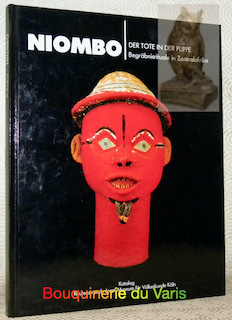
Niombo - Begräbnisrituale in Zentralafrika - Katalog zu einer Ausstellung des Rautenstrauch-Joest-Museums für Völkerkunde,
Köln, Rautenstrauch-Joest-Museum, 1990. 4°, 107 S. mit zahlreichen s/w-Abbildungen, farbig illustr. original Pappband (Hardcover), Erstausgabe sehr schönes, sauberes Exemplar (hhstaho)
书商的参考编号 : 14315CB

|
|
|
Reikat, Andrea
Niombo : Begräbnisrituale in Zentralafrika ; Katalog zu einer Ausstellung des Rautenstrauch-Joest-Museums ; [Ausstellung 30.11.90 bis 26.5.1990 im Rautenstrauch-Joest-Museum für Völkerkunde, Köln ; 29.8.1991 bis 17.11.91 im Reiss-Museum, Mannheim]. Ethnographische Sammlungen zeitgenössischer Künstler.
Köln : Rautenstrauch-Joest-Museum - Köln : Stadt, 1990. 107 S. : überwiegend Ill., Kt. ; 28 cm; fadengeh., illustr.
书商的参考编号 : 1162374

|
|
|
Reikat, Andrea
Niombo. Begräbnisrituale in Zentralafrika. Ausstellung im Rautenstrauch-Joest-Museums für Völkerkunde, Köln, 30.11.1990 bis 26.5.1990, und im Reiss-Museum, Mannheim, 29.08.1991 bis 17.11.1991
Köln: Rautenstrauch-Joest-Museum, 1990. 107 S. ; 27,5 x 21,5 cm ; Pp. ;
书商的参考编号 : 118091

|
|
|
Reikat, Andrea
Präkoloniale Geldformen in Afrika. Abschlußarbeit zur Erlangung des Magister Artium.
Duisburg 1989. 194 (1) S., einige s/w Abb. Lit.verz. 4° Br. *Ex Libris, sonst sehr gutes Ex.*.
书商的参考编号 : 221488
|
|
|
REIKAT, Andrea.
Niombo. Begräbnisrituale in Zentralafrika. Katalog zu einer Ausstellung des Rautenstrauch-Joest-Museums für Völkerkunde in der Serie “Ethnographische Sammlungen zeitgenössischer Künstler”
Köln, 1990, 275x215mm, 107Seiten, Verlegereinband. Exemplar wie neu.
书商的参考编号 : 52259
|
|
|
Reimar Schefold
Toys for the Souls, Life and Art on the Mentawai Islands / located off the west coast of Sumatra in Indonesia.
, Vision Publishers, 2017 Gebonden, Hardcover, 300 x 240 mm, 228 pages, 200 illustrations. ISBN 9782960137590.
书商的参考编号 : 51260
|
|
|
Rein, Adolf
Die europäische Ausbreitung über die Erde.
Potsdam, Akademische Verlagsgesellschaft Athenaion bH, 1931. 406 S. 4° Quart, Leinen
书商的参考编号 : 104376

|
|
|
REINAUD Joseph Toussaint
Relation des voyages faits par les Arabes et les Persans dans l'Inde et à la Chine dans le IXe siècle de l'ère chrétienne
- Imprimerie royale, Paris 1845, 9,5x15cm, 2 volumes reliés en 1. - Edition originale de la traduction française, des corrections, des additions et des éclaircissements, établis par Joseph Toussaint Reinaud en 1845, d'après le texte arabe imprimé en 1811 par les soins de Louis Langlès. Reliure à la bradel en plein papier marbré, plats de couverture conservés, reliure signée Thomas Boichot. Très rare exemplaire sans rousseur. [ENGLISH DESCRIPTION ON DEMAND]

|
|
|
REINER Otto -
Achtzehn Jahre Farmer in Afrika.
Leipzig, Paul List, 1924, 16mo tutta tela editoriale con fregi e titoli dorati, pp. 362 con un ritratto in antiporta, tavole fotografiche fuori testo e cartine in fine.

|
|
|
Reinhardt Guldager und Städtisches Museum Braunschweig (Hrsg.)
Afrikanische Impressionen. Kunst - Kult - Architektur. Mit Beiträgen von Rolf Italiaander und Martin Gosebruch.
Düsseldorf, Droste Verlag, 1980.
书商的参考编号 : 45085

|
|
|
Reinhardt, Klaus
Die Wende vor Moskau. Das Scheitern der Strategie Hitlers im Winter1941/42
Deutsche Verlags-Anstalt 1972. hardcover. Good/Acceptable Jacket. 19 to 25 cm tall Octavo 8vo. German language. Deutsch Sprache. Seven maps in the back pocket. The jacket has some Sellotape repairs Posted within 1 working day. 1st class tracked post to the UK Airmail tracked worldwide. Robust recyclable packaging. Deutsche Verlags-Anstalt hardcover
书商的参考编号 : 305875

|
|
|
Reinhardt, Elisabeth, Wilhelm Stormer Enno Bunz u a:
Zeitschrift für bayerische Landesgeschichte 2004 Band 67 Heft 1-3. Herausgegeben von der Kommission für bayerische Landesgeschichte bei der Bayerischen Akademie der Wissenschaften in Verbindung mit der Gesellschaft für fränkische Geschichte und der Schwäbischen Forschungsgemeinschaft.
Verlag C.H. Beck München 2004. Softcover Band 67 Zustand: keine Beschädigungen keine Eintragungen. Rücken Ecken Kanten sehr gut. Der Preis ist für alle 3 Bücher der Hefte 1-3. Verlag C.H. Beck, München, paperback
书商的参考编号 : 243252
|
|
|

 ?????????
 ?????PDF???
 RSS feed
 ??
??


