|
|
|
BLAEU Johannes (Alkmaar 1596 circa - Amsterdam 1663)
Macerata
Opera tratta dalla rara prima edizione del Theatrum Civitatum et Admirandorum Italiae ad aevi veteris & praesentis temporis faciem expressum à Ioanne Blaeu G. F., stampata ad Amsterdam nel 1663. Si tratta del primo, monumentale, libro interamente dedicato alla cartografia urbana della sola penisola, preceduto dal “tascabile” Italia Hodierna di Jodocus Hondius del 1627 e realizzato in probabile concorrenza con Johannes Janssonius che, nel 1657, aveva pubblicato il Theatrum praecipuarum urbium, contenente un volume dedicato all’Italia. Johannes Blaeu, durante la sua lunga attività editoriale pubblica tre volumi sulle città italiane. Nel 1663 i primi tre, suddivisi in Stato della Chiesa, Roma e Regno di Napoli e Sicilia. Alla sua morte i suoi eredi danno alla luce altri due volumi datati 1682 incentrati sulle città del Piemonte e della Savoia, poi ristampati da altri editori nel 1693 e 1697. Il francese Pierre Mortier pubblica una ristampa nel 1704/5, intitolata Nouveau Theatre de l’Italie. L’opera è in quattro volumi e comprende le lastre del Blaeu, ritoccate e modificate in piccola parte, integrate dall’aggiunta di numerose nuove mappe di proprio disegno, raffiguranti le città della parte settentrionale della penisola, racchiuse nel primo volume dell’opera. L’atlante del Mortier venne pubblicato con testo latino, francese ed olandese. Il grande successo dell’opera diede origine ad un’ulteriore ristampa, praticamente identica, curata da Alberts ed edita nel 1724/5. Esemplare con testo descrittivo la verso, della prima edizione del 1663. Bibliografia Koeman, Atlas Neerlandici, pp. 332/338; Cremonini pp. 49-52, 39. Map taken form the rare first edition of Theatrum Civitatum et Admirandorum Italiae ad aevi veteris & praesentis temporis faciem expressum à Ioanne Blaeu G. F., printed by Johannes Blaeu, Amsterdam, 1663. This is the first monumental town book entirely covering Italy, preceded by the "pocket-size" Italia Hodierna by Jodocus Hondius jr. (1627) and realized in likely competition with Johannes Janssonius who, in 1657, published the Theatrum praecipuarum urbium, containing a volume dedicated to Italy. Johannes Blaeu, during his long editorial activity published three volumes on Italian cities. In 1663 the first three, divided into the State of the Church, Rome and the Kingdom of Naples and Sicily. At his death his heirs gave birth to two more volumes dated 1682 focused on the cities of Piedmont and Savoy, then reprinted by other publishers in 1693 and 1697. Pierre Mortier publishes a reprint in 1704/5, entitled Nouveau Theatre de l'Italie. The work is in four volumes and includes the plates of Blaeu, retouched and modified in small part, supplemented by the addition of several new maps of his own design, depicting the cities of the northern part of the peninsula, enclosed in the first volume of the work. Mortier's atlas was published with Latin, French and Dutch texts. The great success of the work gave rise to a further reprint, virtually identical, edited by R. Alberts and published in 1724/5. Example of the first edition, showing descriptive text on the back of the map. Literature Koeman, Atlas Neerlandici, pp. 332/338; Cremonini pp. 49-52, 39.

|
|
|
BLAEU Johannes (Alkmaar 1596 circa - Amsterdam 1663)
Macerata
Opera per la prima volta pubblicata nel Theatrum Civitatum et admirandorum Italiae, stampato da Johannes Blaeu ad Amsterdam nel 1663. Esemplare tratto dal Nouveau Theatre de l'Italie pubblicato ad Amsterdam nel 1704/5 da Pierre Mortier e ristampato da R. Alberts nel 1724. Johannes Blaeu, durante la sua lunga attività editoriale pubblica tre volumi sulle città italiane. Nel 1663 i primi tre, suddivisi in Stato della Chiesa, Roma e Regno di Napoli e Sicilia. Alla sua morte i suoi eredi danno alla luce altri due volumi datati 1682 incentrati sulle città del Piemonte e della Savoia, poi ristampati da altri editori nel 1693 e 1697. Il francese Pierre Mortier pubblica una ristampa nel 1704/5, intitolata Nouveau Theatre de l’Italie. L’opera è in quattro volumi e comprende le lastre del Blaeu, ritoccate e modificate in piccola parte, integrate dall’aggiunta di numerose nuove mappe di proprio disegno, raffiguranti le città della parte settentrionale della penisola, racchiuse nel primo volume dell’opera. L’atlante del Mortier venne pubblicato con testo latino, francese ed olandese. La particolarità che differenzia le due edizioni di Blaeu e Mortier è rappresentata dal fatto che il testo non è al verso della singola mappa (che quindi è bianca nel retro), ma si trova all’inizio di ogni singolo volume. Il grande successo dell’opera diede origine ad un’ulteriore ristampa, praticamente identica, curata da R. Alberts ed edita nel 1724/5. Le opere tratte dalla prima edizione del Blaeu, 1663, sono caratterizzate dalla presenza del testo al verso, qui assente. Incisione in rame, in buono stato di conservazione. Bibliografia Koeman pp. 332/338, Cremonini pp. 83-90. Work first included in Theatrum Civitatum et Admirandorum Italiae ad aevi veteris & praesentis temporis faciem expressum à Ioanne Blaeu G. F., printed by Johannes Blaeu, Amsterdam, 1663. Example taken from Nouveau Theatre de l'Italie - Amsterdam nel 1704/5 - by Pierre Mortier or from the da R. Alberts issue (1724). Without descriptive text on the back. The Theatrum Civitatum et Admirandorum Italiae is the first monumental town book entirely covering Italy, preceded by the "pocket-size" Italia Hodierna by Jodocus Hondius jr. (1627) and realized in likely competition with Johannes Janssonius who, in 1657, published the Theatrum praecipuarum urbium, containing a volume dedicated to Italy. Johannes Blaeu, during his long editorial activity published three volumes on Italian cities. In 1663 the first three, divided into the State of the Church, Rome and the Kingdom of Naples and Sicily. At his death his heirs gave birth to two more volumes dated 1682 focused on the cities of Piedmont and Savoy, then reprinted by other publishers in 1693 and 1697. Pierre Mortier publishes a reprint in 1704/5, entitled Nouveau Theatre de l'Italie. The work is in four volumes and includes the plates of Blaeu, retouched and modified in small part, supplemented by the addition of several new maps of his own design, depicting the cities of the northern part of the peninsula, enclosed in the first volume of the work. Mortier's atlas was published with Latin, French and Dutch texts. The great success of the work gave rise to a further reprint, virtually identical, edited by R. Alberts and published in 1724/5. Literature Koeman, Atlas Neerlandici, pp. 332/338; Cremonini pp. 49-52, 39.

|
|
|
BLAEU Johannes (Alkmaar 1596 circa - Amsterdam 1663)
Narni
Opera tratta dalla rara prima edizione del Theatrum Civitatum et Admirandorum Italiae ad aevi veteris & praesentis temporis faciem expressum à Ioanne Blaeu G. F., stampata ad Amsterdam nel 1663. Si tratta del primo, monumentale, libro interamente dedicato alla cartografia urbana della sola penisola, preceduto dal “tascabile” Italia Hodierna di Jodocus Hondius del 1627 e realizzato in probabile concorrenza con Johannes Janssonius che, nel 1657, aveva pubblicato il Theatrum praecipuarum urbium, contenente un volume dedicato all’Italia. Johannes Blaeu, durante la sua lunga attività editoriale pubblica tre volumi sulle città italiane. Nel 1663 i primi tre, suddivisi in Stato della Chiesa, Roma e Regno di Napoli e Sicilia. Alla sua morte i suoi eredi danno alla luce altri due volumi datati 1682 incentrati sulle città del Piemonte e della Savoia, poi ristampati da altri editori nel 1693 e 1697. Il francese Pierre Mortier pubblica una ristampa nel 1704/5, intitolata Nouveau Theatre de l’Italie. L’opera è in quattro volumi e comprende le lastre del Blaeu, ritoccate e modificate in piccola parte, integrate dall’aggiunta di numerose nuove mappe di proprio disegno, raffiguranti le città della parte settentrionale della penisola, racchiuse nel primo volume dell’opera. L’atlante del Mortier venne pubblicato con testo latino, francese ed olandese. Il grande successo dell’opera diede origine ad un’ulteriore ristampa, praticamente identica, curata da Alberts ed edita nel 1724/5. Esemplare con testo descrittivo la verso, della prima edizione del 1663. Bibliografia Koeman, Atlas Neerlandici, pp. 332/338; Cremonini pp. 49-52, 39. Map taken form the rare first edition of Theatrum Civitatum et Admirandorum Italiae ad aevi veteris & praesentis temporis faciem expressum à Ioanne Blaeu G. F., printed by Johannes Blaeu, Amsterdam, 1663. This is the first monumental town book entirely covering Italy, preceded by the "pocket-size" Italia Hodierna by Jodocus Hondius jr. (1627) and realized in likely competition with Johannes Janssonius who, in 1657, published the Theatrum praecipuarum urbium, containing a volume dedicated to Italy. Johannes Blaeu, during his long editorial activity published three volumes on Italian cities. In 1663 the first three, divided into the State of the Church, Rome and the Kingdom of Naples and Sicily. At his death his heirs gave birth to two more volumes dated 1682 focused on the cities of Piedmont and Savoy, then reprinted by other publishers in 1693 and 1697. Pierre Mortier publishes a reprint in 1704/5, entitled Nouveau Theatre de l'Italie. The work is in four volumes and includes the plates of Blaeu, retouched and modified in small part, supplemented by the addition of several new maps of his own design, depicting the cities of the northern part of the peninsula, enclosed in the first volume of the work. Mortier's atlas was published with Latin, French and Dutch texts. The great success of the work gave rise to a further reprint, virtually identical, edited by R. Alberts and published in 1724/5. Example of the first edition, showing descriptive text on the back of the map. Literature Koeman, Atlas Neerlandici, pp. 332/338; Cremonini pp. 49-52, 39.

|
|
|
BLAEU Johannes (Alkmaar 1596 circa - Amsterdam 1663)
Norsia
Opera tratta dalla rara prima edizione del Theatrum Civitatum et Admirandorum Italiae ad aevi veteris & praesentis temporis faciem expressum à Ioanne Blaeu G. F., stampata ad Amsterdam nel 1663. Si tratta del primo, monumentale, libro interamente dedicato alla cartografia urbana della sola penisola, preceduto dal “tascabile” Italia Hodierna di Jodocus Hondius del 1627 e realizzato in probabile concorrenza con Johannes Janssonius che, nel 1657, aveva pubblicato il Theatrum praecipuarum urbium, contenente un volume dedicato all’Italia. Johannes Blaeu, durante la sua lunga attività editoriale pubblica tre volumi sulle città italiane. Nel 1663 i primi tre, suddivisi in Stato della Chiesa, Roma e Regno di Napoli e Sicilia. Alla sua morte i suoi eredi danno alla luce altri due volumi datati 1682 incentrati sulle città del Piemonte e della Savoia, poi ristampati da altri editori nel 1693 e 1697. Il francese Pierre Mortier pubblica una ristampa nel 1704/5, intitolata Nouveau Theatre de l’Italie. L’opera è in quattro volumi e comprende le lastre del Blaeu, ritoccate e modificate in piccola parte, integrate dall’aggiunta di numerose nuove mappe di proprio disegno, raffiguranti le città della parte settentrionale della penisola, racchiuse nel primo volume dell’opera. L’atlante del Mortier venne pubblicato con testo latino, francese ed olandese. Il grande successo dell’opera diede origine ad un’ulteriore ristampa, praticamente identica, curata da Alberts ed edita nel 1724/5. Esemplare con testo descrittivo la verso, della prima edizione del 1663. Bibliografia Koeman, Atlas Neerlandici, pp. 332/338; Cremonini pp. 49-52, 39. Map taken form the rare first edition of Theatrum Civitatum et Admirandorum Italiae ad aevi veteris & praesentis temporis faciem expressum à Ioanne Blaeu G. F., printed by Johannes Blaeu, Amsterdam, 1663. This is the first monumental town book entirely covering Italy, preceded by the "pocket-size" Italia Hodierna by Jodocus Hondius jr. (1627) and realized in likely competition with Johannes Janssonius who, in 1657, published the Theatrum praecipuarum urbium, containing a volume dedicated to Italy. Johannes Blaeu, during his long editorial activity published three volumes on Italian cities. In 1663 the first three, divided into the State of the Church, Rome and the Kingdom of Naples and Sicily. At his death his heirs gave birth to two more volumes dated 1682 focused on the cities of Piedmont and Savoy, then reprinted by other publishers in 1693 and 1697. Pierre Mortier publishes a reprint in 1704/5, entitled Nouveau Theatre de l'Italie. The work is in four volumes and includes the plates of Blaeu, retouched and modified in small part, supplemented by the addition of several new maps of his own design, depicting the cities of the northern part of the peninsula, enclosed in the first volume of the work. Mortier's atlas was published with Latin, French and Dutch texts. The great success of the work gave rise to a further reprint, virtually identical, edited by R. Alberts and published in 1724/5. Example of the first edition, showing descriptive text on the back of the map. Literature Koeman, Atlas Neerlandici, pp. 332/338; Cremonini pp. 49-52, 39.

|
|
|
BLAEU Johannes (Alkmaar 1596 circa - Amsterdam 1663)
Pozzuolo
Opera per la prima volta pubblicata nel Theatrum Civitatum et admirandorum Italiae, stampato da Johannes Blaeu ad Amsterdam nel 1663. Esemplare tratto dal Nouveau Theatre de l'Italie pubblicato ad Amsterdam nel 1704/5 da Pierre Mortier e ristampato da R. Alberts nel 1724. Johannes Blaeu, durante la sua lunga attività editoriale pubblica tre volumi sulle città italiane. Nel 1663 i primi tre, suddivisi in Stato della Chiesa, Roma e Regno di Napoli e Sicilia. Alla sua morte i suoi eredi danno alla luce altri due volumi datati 1682 incentrati sulle città del Piemonte e della Savoia, poi ristampati da altri editori nel 1693 e 1697. Il francese Pierre Mortier pubblica una ristampa nel 1704/5, intitolata Nouveau Theatre de l’Italie. L’opera è in quattro volumi e comprende le lastre del Blaeu, ritoccate e modificate in piccola parte, integrate dall’aggiunta di numerose nuove mappe di proprio disegno, raffiguranti le città della parte settentrionale della penisola, racchiuse nel primo volume dell’opera. L’atlante del Mortier venne pubblicato con testo latino, francese ed olandese. La particolarità che differenzia le due edizioni di Blaeu e Mortier è rappresentata dal fatto che il testo non è al verso della singola mappa (che quindi è bianca nel retro), ma si trova all’inizio di ogni singolo volume. Il grande successo dell’opera diede origine ad un’ulteriore ristampa, praticamente identica, curata da R. Alberts ed edita nel 1724/5. Le opere tratte dalla prima edizione del Blaeu, 1663, sono caratterizzate dalla presenza del testo al verso, qui assente. Incisione in rame, in buono stato di conservazione. Bibliografia Koeman pp. 332/338, Cremonini pp. 83-90. Work first included in Theatrum Civitatum et Admirandorum Italiae ad aevi veteris & praesentis temporis faciem expressum à Ioanne Blaeu G. F., printed by Johannes Blaeu, Amsterdam, 1663. Example taken from Nouveau Theatre de l'Italie - Amsterdam nel 1704/5 - by Pierre Mortier or from the da R. Alberts issue (1724). Without descriptive text on the back. The Theatrum Civitatum et Admirandorum Italiae is the first monumental town book entirely covering Italy, preceded by the "pocket-size" Italia Hodierna by Jodocus Hondius jr. (1627) and realized in likely competition with Johannes Janssonius who, in 1657, published the Theatrum praecipuarum urbium, containing a volume dedicated to Italy. Johannes Blaeu, during his long editorial activity published three volumes on Italian cities. In 1663 the first three, divided into the State of the Church, Rome and the Kingdom of Naples and Sicily. At his death his heirs gave birth to two more volumes dated 1682 focused on the cities of Piedmont and Savoy, then reprinted by other publishers in 1693 and 1697. Pierre Mortier publishes a reprint in 1704/5, entitled Nouveau Theatre de l'Italie. The work is in four volumes and includes the plates of Blaeu, retouched and modified in small part, supplemented by the addition of several new maps of his own design, depicting the cities of the northern part of the peninsula, enclosed in the first volume of the work. Mortier's atlas was published with Latin, French and Dutch texts. The great success of the work gave rise to a further reprint, virtually identical, edited by R. Alberts and published in 1724/5. Literature Koeman, Atlas Neerlandici, pp. 332/338; Cremonini pp. 49-52, 39.

|
|
|
BLAEU Johannes (Alkmaar 1596 circa - Amsterdam 1663)
Puteolanus Ager
Opera tratta dalla rara prima edizione del Theatrum Civitatum et Admirandorum Italiae ad aevi veteris & praesentis temporis faciem expressum à Ioanne Blaeu G. F., stampata ad Amsterdam nel 1663. Si tratta del primo, monumentale, libro interamente dedicato alla cartografia urbana della sola penisola, preceduto dal “tascabile” Italia Hodierna di Jodocus Hondius del 1627 e realizzato in probabile concorrenza con Johannes Janssonius che, nel 1657, aveva pubblicato il Theatrum praecipuarum urbium, contenente un volume dedicato all’Italia. Johannes Blaeu, durante la sua lunga attività editoriale pubblica tre volumi sulle città italiane. Nel 1663 i primi tre, suddivisi in Stato della Chiesa, Roma e Regno di Napoli e Sicilia. Alla sua morte i suoi eredi danno alla luce altri due volumi datati 1682 incentrati sulle città del Piemonte e della Savoia, poi ristampati da altri editori nel 1693 e 1697. Il francese Pierre Mortier pubblica una ristampa nel 1704/5, intitolata Nouveau Theatre de l’Italie. L’opera è in quattro volumi e comprende le lastre del Blaeu, ritoccate e modificate in piccola parte, integrate dall’aggiunta di numerose nuove mappe di proprio disegno, raffiguranti le città della parte settentrionale della penisola, racchiuse nel primo volume dell’opera. L’atlante del Mortier venne pubblicato con testo latino, francese ed olandese. Il grande successo dell’opera diede origine ad un’ulteriore ristampa, praticamente identica, curata da Alberts ed edita nel 1724/5. Esemplare con testo descrittivo la verso, della prima edizione del 1663. Bibliografia Koeman, Atlas Neerlandici, pp. 332/338; Cremonini pp. 49-52, 39. Map taken form the rare first edition of Theatrum Civitatum et Admirandorum Italiae ad aevi veteris & praesentis temporis faciem expressum à Ioanne Blaeu G. F., printed by Johannes Blaeu, Amsterdam, 1663. This is the first monumental town book entirely covering Italy, preceded by the "pocket-size" Italia Hodierna by Jodocus Hondius jr. (1627) and realized in likely competition with Johannes Janssonius who, in 1657, published the Theatrum praecipuarum urbium, containing a volume dedicated to Italy. Johannes Blaeu, during his long editorial activity published three volumes on Italian cities. In 1663 the first three, divided into the State of the Church, Rome and the Kingdom of Naples and Sicily. At his death his heirs gave birth to two more volumes dated 1682 focused on the cities of Piedmont and Savoy, then reprinted by other publishers in 1693 and 1697. Pierre Mortier publishes a reprint in 1704/5, entitled Nouveau Theatre de l'Italie. The work is in four volumes and includes the plates of Blaeu, retouched and modified in small part, supplemented by the addition of several new maps of his own design, depicting the cities of the northern part of the peninsula, enclosed in the first volume of the work. Mortier's atlas was published with Latin, French and Dutch texts. The great success of the work gave rise to a further reprint, virtually identical, edited by R. Alberts and published in 1724/5. Example of the first edition, showing descriptive text on the back of the map. Literature Koeman, Atlas Neerlandici, pp. 332/338; Cremonini pp. 49-52, 39.

|
|
|
BLAEU Johannes (Alkmaar 1596 circa - Amsterdam 1663)
Rimini Ville de l'Etat de l'Eglise
Seconda edizione della pianta di di Rimini di Johannes Blaeu, inserita nel Nouveau Theatre d'Italie di Pierre Mortier (1704) opera prestigiosa che illustra le città d'Italia e che chiude l'epoca dei grandi atlanti cittadini.Nella stampa Rimini è vista in pianta, creando un alzato per tutti gli edifici rimarchevoli legati al potere religioso, civile e militare di cui in basso tramite una bella legenda riccamente decorata si danno i ragguagli. Lungo la foce del Marecchia sono ancorate delle imbarcazioni. Opera per la prima volta pubblicata nel Theatrum Civitatum et admirandorum Italiae, stampato da Johannes Blaeu ad Amsterdam nel 1663. Esemplare tratto dal Nouveau Theatre de l'Italie pubblicato ad Amsterdam nel 1704/5 da Pierre Mortier e ristampato da R. Alberts nel 1724. Johannes Blaeu, durante la sua lunga attività editoriale pubblica tre volumi sulle città italiane. Nel 1663 i primi tre, suddivisi in Stato della Chiesa, Roma e Regno di Napoli e Sicilia. Alla sua morte i suoi eredi danno alla luce altri due volumi datati 1682 incentrati sulle città del Piemonte e della Savoia, poi ristampati da altri editori nel 1693 e 1697. Il francese Pierre Mortier pubblica una ristampa nel 1704/5, intitolata Nouveau Theatre de l’Italie. L’opera è in quattro volumi e comprende le lastre del Blaeu, ritoccate e modificate in piccola parte, integrate dall’aggiunta di numerose nuove mappe di proprio disegno, raffiguranti le città della parte settentrionale della penisola, racchiuse nel primo volume dell’opera. L’atlante del Mortier venne pubblicato con testo latino, francese ed olandese. La particolarità che differenzia le due edizioni di Blaeu e Mortier è rappresentata dal fatto che il testo non è al verso della singola mappa (che quindi è bianca nel retro), ma si trova all’inizio di ogni singolo volume. Il grande successo dell’opera diede origine ad un’ulteriore ristampa, praticamente identica, curata da R. Alberts ed edita nel 1724/5. Le opere tratte dalla prima edizione del Blaeu, 1663, sono caratterizzate dalla presenza del testo al verso, qui assente. Incisione in rame, in buono stato di conservazione. Bibliografia Koeman pp. 332/338, Cremonini pp. 83-90. Incisione in rame, in ottimo stato di conservazione. Work first included in Theatrum Civitatum et Admirandorum Italiae ad aevi veteris & praesentis temporis faciem expressum à Ioanne Blaeu G. F., printed by Johannes Blaeu, Amsterdam, 1663. Example taken from Nouveau Theatre de l'Italie - Amsterdam nel 1704/5 - by Pierre Mortier or from the da R. Alberts issue (1724). Without descriptive text on the back. The Theatrum Civitatum et Admirandorum Italiae is the first monumental town book entirely covering Italy, preceded by the "pocket-size" Italia Hodierna by Jodocus Hondius jr. (1627) and realized in likely competition with Johannes Janssonius who, in 1657, published the Theatrum praecipuarum urbium, containing a volume dedicated to Italy. Johannes Blaeu, during his long editorial activity published three volumes on Italian cities. In 1663 the first three, divided into the State of the Church, Rome and the Kingdom of Naples and Sicily. At his death his heirs gave birth to two more volumes dated 1682 focused on the cities of Piedmont and Savoy, then reprinted by other publishers in 1693 and 1697. Pierre Mortier publishes a reprint in 1704/5, entitled Nouveau Theatre de l'Italie. The work is in four volumes and includes the plates of Blaeu, retouched and modified in small part, supplemented by the addition of several new maps of his own design, depicting the cities of the northern part of the peninsula, enclosed in the first volume of the work. Mortier's atlas was published with Latin, French and Dutch texts. The great success of the work gave rise to a further reprint, virtually identical, edited by R. Alberts and published in 1724/5. Literature Koeman, Atlas Neerlandici, pp. 332/338; Cremonini pp. 49-52, 39.

|
|
|
BLAEU Johannes (Alkmaar 1596 circa - Amsterdam 1663)
Rocca Contrada
Opera tratta dalla rara prima edizione del Theatrum Civitatum et Admirandorum Italiae ad aevi veteris & praesentis temporis faciem expressum à Ioanne Blaeu G. F., stampata ad Amsterdam nel 1663. Si tratta del primo, monumentale, libro interamente dedicato alla cartografia urbana della sola penisola, preceduto dal “tascabile” Italia Hodierna di Jodocus Hondius del 1627 e realizzato in probabile concorrenza con Johannes Janssonius che, nel 1657, aveva pubblicato il Theatrum praecipuarum urbium, contenente un volume dedicato all’Italia. Johannes Blaeu, durante la sua lunga attività editoriale pubblica tre volumi sulle città italiane. Nel 1663 i primi tre, suddivisi in Stato della Chiesa, Roma e Regno di Napoli e Sicilia. Alla sua morte i suoi eredi danno alla luce altri due volumi datati 1682 incentrati sulle città del Piemonte e della Savoia, poi ristampati da altri editori nel 1693 e 1697. Il francese Pierre Mortier pubblica una ristampa nel 1704/5, intitolata Nouveau Theatre de l’Italie. L’opera è in quattro volumi e comprende le lastre del Blaeu, ritoccate e modificate in piccola parte, integrate dall’aggiunta di numerose nuove mappe di proprio disegno, raffiguranti le città della parte settentrionale della penisola, racchiuse nel primo volume dell’opera. L’atlante del Mortier venne pubblicato con testo latino, francese ed olandese. Il grande successo dell’opera diede origine ad un’ulteriore ristampa, praticamente identica, curata da Alberts ed edita nel 1724/5. Esemplare con testo descrittivo la verso, della prima edizione del 1663. Bibliografia Koeman, Atlas Neerlandici, pp. 332/338; Cremonini pp. 49-52, 39. Map taken form the rare first edition of Theatrum Civitatum et Admirandorum Italiae ad aevi veteris & praesentis temporis faciem expressum à Ioanne Blaeu G. F., printed by Johannes Blaeu, Amsterdam, 1663. This is the first monumental town book entirely covering Italy, preceded by the "pocket-size" Italia Hodierna by Jodocus Hondius jr. (1627) and realized in likely competition with Johannes Janssonius who, in 1657, published the Theatrum praecipuarum urbium, containing a volume dedicated to Italy. Johannes Blaeu, during his long editorial activity published three volumes on Italian cities. In 1663 the first three, divided into the State of the Church, Rome and the Kingdom of Naples and Sicily. At his death his heirs gave birth to two more volumes dated 1682 focused on the cities of Piedmont and Savoy, then reprinted by other publishers in 1693 and 1697. Pierre Mortier publishes a reprint in 1704/5, entitled Nouveau Theatre de l'Italie. The work is in four volumes and includes the plates of Blaeu, retouched and modified in small part, supplemented by the addition of several new maps of his own design, depicting the cities of the northern part of the peninsula, enclosed in the first volume of the work. Mortier's atlas was published with Latin, French and Dutch texts. The great success of the work gave rise to a further reprint, virtually identical, edited by R. Alberts and published in 1724/5. Example of the first edition, showing descriptive text on the back of the map. Literature Koeman, Atlas Neerlandici, pp. 332/338; Cremonini pp. 49-52, 39.

|
|
|
BLAEU Johannes (Alkmaar 1596 circa - Amsterdam 1663)
Rocca Contrada Ville de l'etat de l'Eglise dans la Marche d'Ancone
Opera per la prima volta pubblicata nel Theatrum Civitatum et admirandorum Italiae, stampato da Johannes Blaeu ad Amsterdam nel 1663. Esemplare tratto dal Nouveau Theatre de l'Italie pubblicato ad Amsterdam nel 1704/5 da Pierre Mortier e ristampato da R. Alberts nel 1724. Johannes Blaeu, durante la sua lunga attività editoriale pubblica tre volumi sulle città italiane. Nel 1663 i primi tre, suddivisi in Stato della Chiesa, Roma e Regno di Napoli e Sicilia. Alla sua morte i suoi eredi danno alla luce altri due volumi datati 1682 incentrati sulle città del Piemonte e della Savoia, poi ristampati da altri editori nel 1693 e 1697. Il francese Pierre Mortier pubblica una ristampa nel 1704/5, intitolata Nouveau Theatre de l’Italie. L’opera è in quattro volumi e comprende le lastre del Blaeu, ritoccate e modificate in piccola parte, integrate dall’aggiunta di numerose nuove mappe di proprio disegno, raffiguranti le città della parte settentrionale della penisola, racchiuse nel primo volume dell’opera. L’atlante del Mortier venne pubblicato con testo latino, francese ed olandese. La particolarità che differenzia le due edizioni di Blaeu e Mortier è rappresentata dal fatto che il testo non è al verso della singola mappa (che quindi è bianca nel retro), ma si trova all’inizio di ogni singolo volume. Il grande successo dell’opera diede origine ad un’ulteriore ristampa, praticamente identica, curata da R. Alberts ed edita nel 1724/5. Le opere tratte dalla prima edizione del Blaeu, 1663, sono caratterizzate dalla presenza del testo al verso, qui assente. Incisione in rame, in buono stato di conservazione. Bibliografia Koeman pp. 332/338, Cremonini pp. 83-90. Work first included in Theatrum Civitatum et Admirandorum Italiae ad aevi veteris & praesentis temporis faciem expressum à Ioanne Blaeu G. F., printed by Johannes Blaeu, Amsterdam, 1663. Example taken from Nouveau Theatre de l'Italie - Amsterdam nel 1704/5 - by Pierre Mortier or from the da R. Alberts issue (1724). Without descriptive text on the back. The Theatrum Civitatum et Admirandorum Italiae is the first monumental town book entirely covering Italy, preceded by the "pocket-size" Italia Hodierna by Jodocus Hondius jr. (1627) and realized in likely competition with Johannes Janssonius who, in 1657, published the Theatrum praecipuarum urbium, containing a volume dedicated to Italy. Johannes Blaeu, during his long editorial activity published three volumes on Italian cities. In 1663 the first three, divided into the State of the Church, Rome and the Kingdom of Naples and Sicily. At his death his heirs gave birth to two more volumes dated 1682 focused on the cities of Piedmont and Savoy, then reprinted by other publishers in 1693 and 1697. Pierre Mortier publishes a reprint in 1704/5, entitled Nouveau Theatre de l'Italie. The work is in four volumes and includes the plates of Blaeu, retouched and modified in small part, supplemented by the addition of several new maps of his own design, depicting the cities of the northern part of the peninsula, enclosed in the first volume of the work. Mortier's atlas was published with Latin, French and Dutch texts. The great success of the work gave rise to a further reprint, virtually identical, edited by R. Alberts and published in 1724/5. Literature Koeman, Atlas Neerlandici, pp. 332/338; Cremonini pp. 49-52, 39.

|
|
|
BLAEU Johannes (Alkmaar 1596 circa - Amsterdam 1663)
Sancti Damiani Oppidum
Opera per la prima volta pubblicata nel “Theatrum Civitatum et admirandorum Italiae”, pubblicato ad Amsterdam nel 1663. Johannes Blaeu, durante la sua lunga attività editoriale pubblica tre volumi sulle città italiane. Nel 1663 i primi tre, suddivisi in Stato della Chiesa, Roma e Regno di Napoli e Sicilia. Alla sua morte i suoi eredi danno alla luce altri due volumi datati 1682 incentrati sulle città del Piemonte e della Savoia, poi ristmapti da altri editori nel 1693 e 1697. Il francese Pierre Mortier pubblica una ristampa nel 1704/5, intitolata “Nouveau Theatre de l’Italie”. L’opera è in quattro volumi e comprende le lastre del Blaeu, ritoccate e modificate in piccola parte, integrate dall’aggiunta di numerose nuove mappe di proprio disegno, raffiguranti le città della parte settentrionale della penisola, racchiuse nel primo volume dell’opera. L’atlante del Mortier venne pubblicato con testo latino, francese ed olandese. La particolarità che differenzia le due edizioni di Blaeu e Mortier è rappresentata dal fatto che il testo non è al verso della singola mappa (che quindi è bianca nel retro), ma si trova all’inizio di ogni singolo volume. Il grande successo dell’opera diede origine ad un’ulteriore ristampa, praticamente identica, curata da R. Alberts ed edita nel 1724/5. Le opere tratte dalla prima edizione del Blaeu, 1663, sono caratterizzate dalla presenza del testo al verso e sono piuttorsto rare. Incisione in rame, in buono stato di conservazione. Esemplare tratto dal "Nouveau Theatre de l'Italie" pubblicato ad Amsterdam nel 1704/5 o nel 1724. Bibliografia: Koeman pp. 332/338, Cremonini pp. 83-90. From "Theatre des etats de Son Altesse Royale le Duc de Savoye.." published by Mortier in The Hague in 1700.

|
|
|
BLAEU Johannes (Alkmaar 1596 circa - Amsterdam 1663)
Senogallia
Opera tratta dalla rara prima edizione del Theatrum Civitatum et Admirandorum Italiae ad aevi veteris & praesentis temporis faciem expressum à Ioanne Blaeu G. F., stampata ad Amsterdam nel 1663. Si tratta del primo, monumentale, libro interamente dedicato alla cartografia urbana della sola penisola, preceduto dal “tascabile” Italia Hodierna di Jodocus Hondius del 1627 e realizzato in probabile concorrenza con Johannes Janssonius che, nel 1657, aveva pubblicato il Theatrum praecipuarum urbium, contenente un volume dedicato all’Italia. Johannes Blaeu, durante la sua lunga attività editoriale pubblica tre volumi sulle città italiane. Nel 1663 i primi tre, suddivisi in Stato della Chiesa, Roma e Regno di Napoli e Sicilia. Alla sua morte i suoi eredi danno alla luce altri due volumi datati 1682 incentrati sulle città del Piemonte e della Savoia, poi ristampati da altri editori nel 1693 e 1697. Il francese Pierre Mortier pubblica una ristampa nel 1704/5, intitolata Nouveau Theatre de l’Italie. L’opera è in quattro volumi e comprende le lastre del Blaeu, ritoccate e modificate in piccola parte, integrate dall’aggiunta di numerose nuove mappe di proprio disegno, raffiguranti le città della parte settentrionale della penisola, racchiuse nel primo volume dell’opera. L’atlante del Mortier venne pubblicato con testo latino, francese ed olandese. Il grande successo dell’opera diede origine ad un’ulteriore ristampa, praticamente identica, curata da Alberts ed edita nel 1724/5. Esemplare con testo descrittivo la verso, della prima edizione del 1663. Bibliografia Koeman, Atlas Neerlandici, pp. 332/338; Cremonini pp. 49-52, 39. Map taken form the rare first edition of Theatrum Civitatum et Admirandorum Italiae ad aevi veteris & praesentis temporis faciem expressum à Ioanne Blaeu G. F., printed by Johannes Blaeu, Amsterdam, 1663. This is the first monumental town book entirely covering Italy, preceded by the "pocket-size" Italia Hodierna by Jodocus Hondius jr. (1627) and realized in likely competition with Johannes Janssonius who, in 1657, published the Theatrum praecipuarum urbium, containing a volume dedicated to Italy. Johannes Blaeu, during his long editorial activity published three volumes on Italian cities. In 1663 the first three, divided into the State of the Church, Rome and the Kingdom of Naples and Sicily. At his death his heirs gave birth to two more volumes dated 1682 focused on the cities of Piedmont and Savoy, then reprinted by other publishers in 1693 and 1697. Pierre Mortier publishes a reprint in 1704/5, entitled Nouveau Theatre de l'Italie. The work is in four volumes and includes the plates of Blaeu, retouched and modified in small part, supplemented by the addition of several new maps of his own design, depicting the cities of the northern part of the peninsula, enclosed in the first volume of the work. Mortier's atlas was published with Latin, French and Dutch texts. The great success of the work gave rise to a further reprint, virtually identical, edited by R. Alberts and published in 1724/5. Example of the first edition, showing descriptive text on the back of the map. Literature Koeman, Atlas Neerlandici, pp. 332/338; Cremonini pp. 49-52, 39.

|
|
|
BLAEU Johannes (Alkmaar 1596 circa - Amsterdam 1663)
Senogallia ville de l’Etat de l’Eglise
Opera per la prima volta pubblicata nel Theatrum Civitatum et admirandorum Italiae, stampato da Johannes Blaeu ad Amsterdam nel 1663. Esemplare tratto dal Nouveau Theatre de l'Italie pubblicato ad Amsterdam nel 1704/5 da Pierre Mortier e ristampato da R. Alberts nel 1724. Johannes Blaeu, durante la sua lunga attività editoriale pubblica tre volumi sulle città italiane. Nel 1663 i primi tre, suddivisi in Stato della Chiesa, Roma e Regno di Napoli e Sicilia. Alla sua morte i suoi eredi danno alla luce altri due volumi datati 1682 incentrati sulle città del Piemonte e della Savoia, poi ristampati da altri editori nel 1693 e 1697. Il francese Pierre Mortier pubblica una ristampa nel 1704/5, intitolata Nouveau Theatre de l’Italie. L’opera è in quattro volumi e comprende le lastre del Blaeu, ritoccate e modificate in piccola parte, integrate dall’aggiunta di numerose nuove mappe di proprio disegno, raffiguranti le città della parte settentrionale della penisola, racchiuse nel primo volume dell’opera. L’atlante del Mortier venne pubblicato con testo latino, francese ed olandese. La particolarità che differenzia le due edizioni di Blaeu e Mortier è rappresentata dal fatto che il testo non è al verso della singola mappa (che quindi è bianca nel retro), ma si trova all’inizio di ogni singolo volume. Il grande successo dell’opera diede origine ad un’ulteriore ristampa, praticamente identica, curata da R. Alberts ed edita nel 1724/5. Le opere tratte dalla prima edizione del Blaeu, 1663, sono caratterizzate dalla presenza del testo al verso, qui assente. Incisione in rame, in buono stato di conservazione. Bibliografia Koeman pp. 332/338, Cremonini pp. 83-90. Work first included in Theatrum Civitatum et Admirandorum Italiae ad aevi veteris & praesentis temporis faciem expressum à Ioanne Blaeu G. F., printed by Johannes Blaeu, Amsterdam, 1663. Example taken from Nouveau Theatre de l'Italie - Amsterdam nel 1704/5 - by Pierre Mortier or from the da R. Alberts issue (1724). Without descriptive text on the back. The Theatrum Civitatum et Admirandorum Italiae is the first monumental town book entirely covering Italy, preceded by the "pocket-size" Italia Hodierna by Jodocus Hondius jr. (1627) and realized in likely competition with Johannes Janssonius who, in 1657, published the Theatrum praecipuarum urbium, containing a volume dedicated to Italy. Johannes Blaeu, during his long editorial activity published three volumes on Italian cities. In 1663 the first three, divided into the State of the Church, Rome and the Kingdom of Naples and Sicily. At his death his heirs gave birth to two more volumes dated 1682 focused on the cities of Piedmont and Savoy, then reprinted by other publishers in 1693 and 1697. Pierre Mortier publishes a reprint in 1704/5, entitled Nouveau Theatre de l'Italie. The work is in four volumes and includes the plates of Blaeu, retouched and modified in small part, supplemented by the addition of several new maps of his own design, depicting the cities of the northern part of the peninsula, enclosed in the first volume of the work. Mortier's atlas was published with Latin, French and Dutch texts. The great success of the work gave rise to a further reprint, virtually identical, edited by R. Alberts and published in 1724/5. Literature Koeman, Atlas Neerlandici, pp. 332/338; Cremonini pp. 49-52, 39.

|
|
|
BLAEU Johannes (Alkmaar 1596 circa - Amsterdam 1663)
Spoleto
Opera per la prima volta pubblicata nel Theatrum Civitatum et admirandorum Italiae, stampato da Johannes Blaeu ad Amsterdam nel 1663. Esemplare tratto dal Nouveau Theatre de l'Italie pubblicato ad Amsterdam nel 1704/5 da Pierre Mortier e ristampato da R. Alberts nel 1724. Johannes Blaeu, durante la sua lunga attività editoriale pubblica tre volumi sulle città italiane. Nel 1663 i primi tre, suddivisi in Stato della Chiesa, Roma e Regno di Napoli e Sicilia. Alla sua morte i suoi eredi danno alla luce altri due volumi datati 1682 incentrati sulle città del Piemonte e della Savoia, poi ristampati da altri editori nel 1693 e 1697. Il francese Pierre Mortier pubblica una ristampa nel 1704/5, intitolata Nouveau Theatre de l’Italie. L’opera è in quattro volumi e comprende le lastre del Blaeu, ritoccate e modificate in piccola parte, integrate dall’aggiunta di numerose nuove mappe di proprio disegno, raffiguranti le città della parte settentrionale della penisola, racchiuse nel primo volume dell’opera. L’atlante del Mortier venne pubblicato con testo latino, francese ed olandese. La particolarità che differenzia le due edizioni di Blaeu e Mortier è rappresentata dal fatto che il testo non è al verso della singola mappa (che quindi è bianca nel retro), ma si trova all’inizio di ogni singolo volume. Il grande successo dell’opera diede origine ad un’ulteriore ristampa, praticamente identica, curata da R. Alberts ed edita nel 1724/5. Le opere tratte dalla prima edizione del Blaeu, 1663, sono caratterizzate dalla presenza del testo al verso, qui assente. Incisione in rame, in buono stato di conservazione. Bibliografia Koeman pp. 332/338, Cremonini pp. 83-90. Work first included in Theatrum Civitatum et Admirandorum Italiae ad aevi veteris & praesentis temporis faciem expressum à Ioanne Blaeu G. F., printed by Johannes Blaeu, Amsterdam, 1663. Example taken from Nouveau Theatre de l'Italie - Amsterdam nel 1704/5 - by Pierre Mortier or from the da R. Alberts issue (1724). Without descriptive text on the back. The Theatrum Civitatum et Admirandorum Italiae is the first monumental town book entirely covering Italy, preceded by the "pocket-size" Italia Hodierna by Jodocus Hondius jr. (1627) and realized in likely competition with Johannes Janssonius who, in 1657, published the Theatrum praecipuarum urbium, containing a volume dedicated to Italy. Johannes Blaeu, during his long editorial activity published three volumes on Italian cities. In 1663 the first three, divided into the State of the Church, Rome and the Kingdom of Naples and Sicily. At his death his heirs gave birth to two more volumes dated 1682 focused on the cities of Piedmont and Savoy, then reprinted by other publishers in 1693 and 1697. Pierre Mortier publishes a reprint in 1704/5, entitled Nouveau Theatre de l'Italie. The work is in four volumes and includes the plates of Blaeu, retouched and modified in small part, supplemented by the addition of several new maps of his own design, depicting the cities of the northern part of the peninsula, enclosed in the first volume of the work. Mortier's atlas was published with Latin, French and Dutch texts. The great success of the work gave rise to a further reprint, virtually identical, edited by R. Alberts and published in 1724/5. Literature Koeman, Atlas Neerlandici, pp. 332/338; Cremonini pp. 49-52, 39.

|
|
|
BLAEU Johannes (Alkmaar 1596 circa - Amsterdam 1663)
Theatrum Civitatum et Admirandorum Italiae ad aevi veteris & praesentis temporis faciem expressum à Ioanne Blaeu G. F.
Amsterdam presso l’autore 1663. Volume in 2°, legatura in tutta pergamena coeva con fregi in oro, tre frontespizi, antiporta incisa raffigurante l’allegoria della Chiesa, 1 dedica, (8), 253 pp. (corrispondenti a 213 carte nn) illustrato da 77 tavole raffiguranti piante e vedute a volo d’uccello delle principali città dell’Italia Centrale. Prima edizione di questo capolavoro della cartografia urbana del ‘600, dedicato alle città dello Stato della Chiesa. Si tratta del primo, monumentale, libro interamente dedicato alla cartografia urbana della sola penisola, preceduto dal “tascabile” Italia Hodierna di Jodocus Hondius del 1627 e realizzato in probabile concorrenza con Johannes Janssonius che, nel 1657, aveva pubblicato il Theatrum praecipuarum urbium, contenente un volume dedicato all’Italia. Johannes Blaeu, durante la sua lunga attività editoriale pubblica tre volumi sulle città italiane. Nel 1663 i primi tre, suddivisi in Stato della Chiesa, Roma e Regno di Napoli e Sicilia. Alla sua morte i suoi eredi danno alla luce altri due volumi datati 1682 incentrati sulle città del Piemonte e della Savoia, poi ristampati da altri editori nel 1693 e 1697. Il francese Pierre Mortier pubblica una ristampa nel 1704/5, intitolata Nouveau Theatre de l’Italie. L’opera è in quattro volumi e comprende le lastre del Blaeu, ritoccate e modificate in piccola parte, integrate dall’aggiunta di numerose nuove mappe di proprio disegno, raffiguranti le città della parte settentrionale della penisola, racchiuse nel primo volume dell’opera. L’atlante del Mortier venne pubblicato con testo latino, francese ed olandese. Il grande successo dell’opera diede origine ad un’ulteriore ristampa, praticamente identica, curata da Alberts ed edita nel 1724/5. Magnifico esemplare. Bibliografia Koeman, Atlas Neerlandici, pp. 332/338; Cremonini pp. 49-52, 39. Amsterdam 1663. Volume in 2°, contemporary vellum's binding with gold friezes, three frontispieces, engraved antiporta depicting the allegory of the Church, one sheet of dedication, (8), 253 pp. Illustrated by 77 plates depicting city plans and bird's eye views, of the main cities of Central Italy. First edition of this masterpiece of this very important town book of the 17th Century, dedicated to the Papal State. This is the first monumental town book entirely covering Italy, preceded by the "pocket-size" Italia Hodierna by Jodocus Hondius jr. (1627) and realized in likely competition with Johannes Janssonius who, in 1657, published the Theatrum praecipuarum urbium, containing a volume dedicated to Italy. Johannes Blaeu, during his long editorial activity published three volumes on Italian cities. In 1663 the first three, divided into the State of the Church, Rome and the Kingdom of Naples and Sicily. At his death his heirs gave birth to two more volumes dated 1682 focused on the cities of Piedmont and Savoy, then reprinted by other publishers in 1693 and 1697. Pierre Mortier publishes a reprint in 1704/5, entitled Nouveau Theatre de l'Italie. The work is in four volumes and includes the plates of Blaeu, retouched and modified in small part, supplemented by the addition of several new maps of his own design, depicting the cities of the northern part of the peninsula, enclosed in the first volume of the work. Mortier's atlas was published with Latin, French and Dutch texts. The great success of the work gave rise to a further reprint, virtually identical, edited by R. Alberts and published in 1724/5. Literature Koeman, Atlas Neerlandici, pp. 332/338; Cremonini pp. 49-52, 39.

|
|
|
BLAEU Johannes (Alkmaar 1596 circa - Amsterdam 1663)
Utrisque Portus Ostiae Delineatio
Opera per la prima volta pubblicata nel Theatrum Civitatum et admirandorum Italiae, stampato da Johannes Blaeu ad Amsterdam nel 1663. Esemplare tratto dal Nouveau Theatre de l'Italie pubblicato ad Amsterdam nel 1704/5 da Pierre Mortier e ristampato da R. Alberts nel 1724. Johannes Blaeu, durante la sua lunga attività editoriale pubblica tre volumi sulle città italiane. Nel 1663 i primi tre, suddivisi in Stato della Chiesa, Roma e Regno di Napoli e Sicilia. Alla sua morte i suoi eredi danno alla luce altri due volumi datati 1682 incentrati sulle città del Piemonte e della Savoia, poi ristampati da altri editori nel 1693 e 1697. Il francese Pierre Mortier pubblica una ristampa nel 1704/5, intitolata Nouveau Theatre de l’Italie. L’opera è in quattro volumi e comprende le lastre del Blaeu, ritoccate e modificate in piccola parte, integrate dall’aggiunta di numerose nuove mappe di proprio disegno, raffiguranti le città della parte settentrionale della penisola, racchiuse nel primo volume dell’opera. L’atlante del Mortier venne pubblicato con testo latino, francese ed olandese. La particolarità che differenzia le due edizioni di Blaeu e Mortier è rappresentata dal fatto che il testo non è al verso della singola mappa (che quindi è bianca nel retro), ma si trova all’inizio di ogni singolo volume. Il grande successo dell’opera diede origine ad un’ulteriore ristampa, praticamente identica, curata da R. Alberts ed edita nel 1724/5. Le opere tratte dalla prima edizione del Blaeu, 1663, sono caratterizzate dalla presenza del testo al verso, qui assente. Incisione in rame, in buono stato di conservazione. Bibliografia Koeman pp. 332/338, Cremonini pp. 83-90. Work first included in Theatrum Civitatum et Admirandorum Italiae ad aevi veteris & praesentis temporis faciem expressum à Ioanne Blaeu G. F., printed by Johannes Blaeu, Amsterdam, 1663. Example taken from Nouveau Theatre de l'Italie - Amsterdam nel 1704/5 - by Pierre Mortier or from the da R. Alberts issue (1724). Without descriptive text on the back. The Theatrum Civitatum et Admirandorum Italiae is the first monumental town book entirely covering Italy, preceded by the "pocket-size" Italia Hodierna by Jodocus Hondius jr. (1627) and realized in likely competition with Johannes Janssonius who, in 1657, published the Theatrum praecipuarum urbium, containing a volume dedicated to Italy. Johannes Blaeu, during his long editorial activity published three volumes on Italian cities. In 1663 the first three, divided into the State of the Church, Rome and the Kingdom of Naples and Sicily. At his death his heirs gave birth to two more volumes dated 1682 focused on the cities of Piedmont and Savoy, then reprinted by other publishers in 1693 and 1697. Pierre Mortier publishes a reprint in 1704/5, entitled Nouveau Theatre de l'Italie. The work is in four volumes and includes the plates of Blaeu, retouched and modified in small part, supplemented by the addition of several new maps of his own design, depicting the cities of the northern part of the peninsula, enclosed in the first volume of the work. Mortier's atlas was published with Latin, French and Dutch texts. The great success of the work gave rise to a further reprint, virtually identical, edited by R. Alberts and published in 1724/5. Literature Koeman, Atlas Neerlandici, pp. 332/338; Cremonini pp. 49-52, 39.

|
|
|
BLAEU Johannes (Alkmaar 1596 circa - Amsterdam 1663)
Velletri
Opera tratta dalla rara prima edizione del Theatrum Civitatum et Admirandorum Italiae ad aevi veteris & praesentis temporis faciem expressum à Ioanne Blaeu G. F., stampata ad Amsterdam nel 1663. Si tratta del primo, monumentale, libro interamente dedicato alla cartografia urbana della sola penisola, preceduto dal “tascabile” Italia Hodierna di Jodocus Hondius del 1627 e realizzato in probabile concorrenza con Johannes Janssonius che, nel 1657, aveva pubblicato il Theatrum praecipuarum urbium, contenente un volume dedicato all’Italia. Johannes Blaeu, durante la sua lunga attività editoriale pubblica tre volumi sulle città italiane. Nel 1663 i primi tre, suddivisi in Stato della Chiesa, Roma e Regno di Napoli e Sicilia. Alla sua morte i suoi eredi danno alla luce altri due volumi datati 1682 incentrati sulle città del Piemonte e della Savoia, poi ristampati da altri editori nel 1693 e 1697. Il francese Pierre Mortier pubblica una ristampa nel 1704/5, intitolata Nouveau Theatre de l’Italie. L’opera è in quattro volumi e comprende le lastre del Blaeu, ritoccate e modificate in piccola parte, integrate dall’aggiunta di numerose nuove mappe di proprio disegno, raffiguranti le città della parte settentrionale della penisola, racchiuse nel primo volume dell’opera. L’atlante del Mortier venne pubblicato con testo latino, francese ed olandese. Il grande successo dell’opera diede origine ad un’ulteriore ristampa, praticamente identica, curata da Alberts ed edita nel 1724/5. Esemplare con testo descrittivo la verso, della prima edizione del 1663. Bibliografia Koeman, Atlas Neerlandici, pp. 332/338; Cremonini pp. 49-52, 39. Map taken form the rare first edition of Theatrum Civitatum et Admirandorum Italiae ad aevi veteris & praesentis temporis faciem expressum à Ioanne Blaeu G. F., printed by Johannes Blaeu, Amsterdam, 1663. This is the first monumental town book entirely covering Italy, preceded by the "pocket-size" Italia Hodierna by Jodocus Hondius jr. (1627) and realized in likely competition with Johannes Janssonius who, in 1657, published the Theatrum praecipuarum urbium, containing a volume dedicated to Italy. Johannes Blaeu, during his long editorial activity published three volumes on Italian cities. In 1663 the first three, divided into the State of the Church, Rome and the Kingdom of Naples and Sicily. At his death his heirs gave birth to two more volumes dated 1682 focused on the cities of Piedmont and Savoy, then reprinted by other publishers in 1693 and 1697. Pierre Mortier publishes a reprint in 1704/5, entitled Nouveau Theatre de l'Italie. The work is in four volumes and includes the plates of Blaeu, retouched and modified in small part, supplemented by the addition of several new maps of his own design, depicting the cities of the northern part of the peninsula, enclosed in the first volume of the work. Mortier's atlas was published with Latin, French and Dutch texts. The great success of the work gave rise to a further reprint, virtually identical, edited by R. Alberts and published in 1724/5. Example of the first edition, showing descriptive text on the back of the map. Literature Koeman, Atlas Neerlandici, pp. 332/338; Cremonini pp. 49-52, 39.

|
|
|
BLAEU Johannes (Alkmaar 1596 circa - Amsterdam 1663)
Viterbo
Opera tratta dalla rara prima edizione del Theatrum Civitatum et Admirandorum Italiae ad aevi veteris & praesentis temporis faciem expressum à Ioanne Blaeu G. F., stampata ad Amsterdam nel 1663. Si tratta del primo, monumentale, libro interamente dedicato alla cartografia urbana della sola penisola, preceduto dal “tascabile” Italia Hodierna di Jodocus Hondius del 1627 e realizzato in probabile concorrenza con Johannes Janssonius che, nel 1657, aveva pubblicato il Theatrum praecipuarum urbium, contenente un volume dedicato all’Italia. Johannes Blaeu, durante la sua lunga attività editoriale pubblica tre volumi sulle città italiane. Nel 1663 i primi tre, suddivisi in Stato della Chiesa, Roma e Regno di Napoli e Sicilia. Alla sua morte i suoi eredi danno alla luce altri due volumi datati 1682 incentrati sulle città del Piemonte e della Savoia, poi ristampati da altri editori nel 1693 e 1697. Il francese Pierre Mortier pubblica una ristampa nel 1704/5, intitolata Nouveau Theatre de l’Italie. L’opera è in quattro volumi e comprende le lastre del Blaeu, ritoccate e modificate in piccola parte, integrate dall’aggiunta di numerose nuove mappe di proprio disegno, raffiguranti le città della parte settentrionale della penisola, racchiuse nel primo volume dell’opera. L’atlante del Mortier venne pubblicato con testo latino, francese ed olandese. Il grande successo dell’opera diede origine ad un’ulteriore ristampa, praticamente identica, curata da Alberts ed edita nel 1724/5. Esemplare con testo descrittivo la verso, della prima edizione del 1663. Bibliografia Koeman, Atlas Neerlandici, pp. 332/338; Cremonini pp. 49-52, 39. Map taken form the rare first edition of Theatrum Civitatum et Admirandorum Italiae ad aevi veteris & praesentis temporis faciem expressum à Ioanne Blaeu G. F., printed by Johannes Blaeu, Amsterdam, 1663. This is the first monumental town book entirely covering Italy, preceded by the "pocket-size" Italia Hodierna by Jodocus Hondius jr. (1627) and realized in likely competition with Johannes Janssonius who, in 1657, published the Theatrum praecipuarum urbium, containing a volume dedicated to Italy. Johannes Blaeu, during his long editorial activity published three volumes on Italian cities. In 1663 the first three, divided into the State of the Church, Rome and the Kingdom of Naples and Sicily. At his death his heirs gave birth to two more volumes dated 1682 focused on the cities of Piedmont and Savoy, then reprinted by other publishers in 1693 and 1697. Pierre Mortier publishes a reprint in 1704/5, entitled Nouveau Theatre de l'Italie. The work is in four volumes and includes the plates of Blaeu, retouched and modified in small part, supplemented by the addition of several new maps of his own design, depicting the cities of the northern part of the peninsula, enclosed in the first volume of the work. Mortier's atlas was published with Latin, French and Dutch texts. The great success of the work gave rise to a further reprint, virtually identical, edited by R. Alberts and published in 1724/5. Example of the first edition, showing descriptive text on the back of the map. Literature Koeman, Atlas Neerlandici, pp. 332/338; Cremonini pp. 49-52, 39.

|
|
|
BLAEU Willem Janszoon (Uitgeest 1571- Amsterdam 1638)
Italiae, Sardiniae, Corsicae et confinium Regionum nova Tabula effigies paecipuarum Urbium et habituum inibi simul complecte
- Prima carte à figures della penisola -Incisione in rame, acquaforte e bulino, 1606, firmata e datata in lastra in basso a destra. Esemplare nel rarissimo primo stato di quattro, con la firma Guilelmus Iannsonius, edito nel 1606.Magnifica prova, ricca di toni, impressa su carta vergata coeva, rifilata alla linea marginale e con margini aggiunti, nel complesso in ottimo stato di conservazione. Delicata coloritura coeva.I primi esempi delle così denominate “carte con figure”, nascono nell’Olanda Meridionale del tardo ‘500. Una delle prime rappresentazioni di carta geografica decorata è il celebre Viaggio di Abramo di Ortelius, pubblicata nel Parergon del 1586. Per questa carta Ortelius si avvalse della collaborazione del pittore Maarten de Vos, che realizzò le scene per il bordo decorato. Jodocus Hondius, nel 1590, produce 3 piccole mappe di Inghilterra, Francia e Paesi Bassi con dei bordi decorati, seguito da Pieter van den Keere (Kaerius) che nel 1596 realizza una mappa decorata dell’Olanda. Ma lo sviluppo vero e proprio alle mappe con le decorazioni lo diedero la carta murale in 15 fogli dell’Europa di Jodocus Hondius (1595) e la carta del Mondo in 20 fogli di Willem J. Blaeu del 1605. Negli anni seguenti, il Blaeu realizzò diverse carte decorate di formato in-folio, a partire proprio dalla carta dell’Italia del 1606. Dal punto di vista cartografico, la mappa è interamente basata sulla carta di Mercator del 1589, che venne poi inserita anche negli atlanti Mercator & Hondius editi a partire dal 1606, in Amsterdam da Jodocus Hondius. La carta si presenta decorata su tre bordi. Il lato superiore è composto quasi interamente da un lungo panorama di Roma, al quale sono accostati una pianta di Venezia ed una di Genova. Negli angoli inferiori, si trovano le piante di Napoli e Firenze, mentre ai lati alcune scene di costume raffiguranti nobildonne e nobiluomini dei principali siti della penisola. La fonte del panorama di Roma è sicuramente la grande veduta panoramica della città disegnata da Hedrick van Cliven ed edita ad Amsterdam da Hendrick Hondius (1599-1605). Le altre piante delle città sono chiaramente riduzioni delle tavole del Civitates Orbis Terrarum di Braun & Hogenberg. La carta ebbe una seconda stesura, ad opera di Blaeu, nel 1620 circa, e due ristampe a cura di Cornelis e Danker Dankerts (1640 e 1661). Tutte le edizioni di questa carta sono assolutamente rarissime. Schilder elenca solo 10 esemplari conosciuti di questa carta, nessuno presente nelle raccolte italiane. Borri cita il primo stato della mappa, al quale assegna la rarità di 95/100, descrivendola come “pregiata e decorativa carta in rigoroso stile mercatoriano, rarissima, mai ristampata, è la prima del genere delle cartes à figures”, ignorando quindi l’esistenza degli stati successivi. - FIRTS EDITION OF THE FIRST CARTE A FIGURE OF ITALY - Etching and engraving, 1606, signed and dated in the plate lower right. Example of the very rare first state of four, with the imprint Guilelmus Iannsonius, published in 1606. Magnificent proof, rich in shades, printed on contemporary laid paper, trimmed to the marginal line and with added margins, overall in very good condition. Contemporary delicate coloring.The first examples of the so-called "carte à figures", born in Holland in the late '500. One of the first representations of a decorated map is the famous Travel of Abraham by Ortelius, published in the Parergon of 1586. For this map Ortelius had the collaboration of the painter Maarten de Vos, who designed the sets for the decorated border. Jodocus Hondius in 1590, produces 3 small maps of England, France and the Netherlands with decorated edges, followed by Pieter van den Keere (Kaerius), which in 1596 created a map of Holland decorated. But the real development to the maps with the decor gave it a wall map of Europe in 15 sheets of Jodocus Hondius (1595) and the map of the World in 20 sheets of Willem J. Blaeu in 1605. In the following years, Blaeu created several maps decorated, in-folio format, starting from the map of Italy in 1606. From the cartographic point of view, the map is entirely based on the work by Mercator of 1589, which was then inserted also in & Mercator Hondius atlas published in 1606 in Amsterdam by Jodocus Hondius. The map presents decorated on three edges. The upper side is made up almost entirely of a long panorama of Rome, which are combined with a plan of Venice and one of Genoa. In the lower corners, are the plants of Naples and Florence, while the sides costume depicting scenes noblemen and noblewomen of the main sites of the peninsula. The source of the panorama of Rome is definitely the great view of the city designed by Hedrick van Cliven and published in Amsterdam by Hendrick Hondius (1599-1605). Other city maps are clearly reductions of the plates inserted in the Civitates Orbis Terrarum by Braun & Hogenberg.The map had a second state, by Blaeu, around 1620, and two reprints edited by Cornelis and Danker Dankerts (1640 and 1661). All editions of this paper are absolutely rare. Schilder lists only 10 known examples of this map, no one present in the Italian collections. Borri cites the first state of the map, which assigns to the rarity of 95/100, describing it as "fine and decorative map in strict style mercatoriano, rare, never reprinted, is the first of its kind of cartes à figures", thus ignoring the ' existence of successive states. G. Schilder, Monumenta Cartographica Neerlandica, vol. VI, pp. 55/63 e 367/370, 89; Borri, L’Italia nelle antiche carte dal medioevo all’unità nazionale, p. 97, 89.

|
|
|
BLAKE H. Mc. K., POTTER T.W. & WHITEHOUSE D.B. (eds.)
Papers in Italian Archaeology, I: the Lancaster Seminar. Recent research in prehistoric, classical and medieval archaeology [2 volumes]
2 volumes, together: [xvi] + 560 + [20] pp., with illustrations in and out of text and few folding plates, in-4, in the series "BAR Supplementary Series" volume 41-i/ii, softcovers, good condition, G93370
|
|
|
Blake, William (1571?1638)
Stato della Chiesa, con la Toscana.
o.J. Kol. Kupferstichkarte. Balttgrösse: 50 x 64 cm. + Wichtig: Für unsere Kunden in der EU erfolgt der Versand alle 14 Tage verzollt ab Deutschland / Postbank-Konto in Deutschland vorhanden +, Abb.
Ссылка продавца : 822CG

|
|
|
BLANC Charles
Histoire de la Renaissance artistique en Italie [2 tomes]
Complet en 2 tomes, reliés en 1 volume: xxiii,488 + 321pp., 25cm., reliure cart. moderne (plats marbrés, dos en toile avec titre doré), texte très frais et sans rousseurs, bel état, S88465
|
|
|
BLANC CHARLES.
De Paris a Venise. Notes au crayon…
Cm. 18, pp. (4) 310 (2). Con parecchie incisioni nel testo. Legatura del tempo in meza percxallina con titoli e fregi al dorso. Una piccola gora al margine inferiore delle ultime carte, peraltro ottima conservazione.
|
|
|
Blanc Joseph.
BIBLIOGRAPHIE ITALICO-FRANÇAISE UNIVERSELLE OU CATALOGUE METHODIQUE DE TOUS LES IMPRIMES EN LANGUE FRANÇAISE SUR L'ITALIE ANCIENNE ET MODERNE DEPUIS L'ORIGINE DE L'IMPRIMERIE 1475-1885.
(Codice BB/0934) Due volumi in 8° (26,7 cm) 1889 colonne (944 pp). EDIZIONE ORIGINALE. Testo in francese. Volume 1: Rome, Eglise, Italie. Volume 2: Traductions du latin et de l'italien, Mémoires et Articles des Revues, Tables et Index. Grandi margini non rifilati. Buone legature in tela rossa, tasselli e titoli oro, brossure editoriali conservate. Ottimo esemplare. ~~~ SPEDIZIONE IN ITALIA SEMPRE TRACCIATA

|
|
|
BLANC, Albert
Discours prononcés par. Son Exc. le Baron Blanc Ministre des Affaires Étrangers dans la discussion du budget des affaires étrangères à la. Chambre des Députés les 3 et 5 mai 1894.
Rome. Imprimerie de Cabinet du Ministèere des affaires étrangèrss 1894. 28 pages. Original softcover. (A little used). Mit Stempel "Sammlung Markgrafen von Baden". 25x18 cm
Ссылка продавца : 140891
|
|
|
Blanc, Bernhard Lukas
Zur Geologie zwischen Madesimo und Chiavenna (Provinz Sondrio, Italien).
Zürich, Juris-Verlag, 1965. 8°. 134 (2) S. Mit 4 (davon 2 gef.) Tafeln und Textabbildungen. Orig.-Broschur. + Wichtig: Für unsere Kunden in der EU erfolgt der Versand alle 14 Tage verzollt ab Deutschland / Postbank-Konto in Deutschland vorhanden +
Ссылка продавца : 5124CB
|
|
|
BLANC, Charles.
Histoire de la Renaissance artistique en Italie. T. I-II (complet).
2 volumes grand in-8°, XXIII-488+321 pages, broches. Fortes rousseurs. Mque le 1er plat du T. II. [CA27/5]
|
|
|
BLANCH LUIGI
SCRITTI STORICI A CURA DI BENEDETTO CROCE, 3 Volumi
Tre volumi in 8vo; pp. XXVII, 399; VIII, 430; VIII, 421. Copertine tutta tela editoriali. stato perfetto. Il Regno di Napoli dal 1801 al 1806 e la campagna del Murat nel 1815. Il Regno di Napoli dalla Restaurazione Borbonica all'avvento di Re Ferdinando II (1815 - 1830) con appendice sul 1848 e la reazione. Saggi vari di storia. Blanch da giovane aveva militato nell'esercito napoletano e, regnate Murat, partecipo' alle campagne di Russia e di Germania e a quella d'Italia del 1815, ma, dimessosi dopo le vicende del 1820-21, si era tutto raccolto negli studi della storia e della politica. (Benedetto Croce). raro.
|
|
|
Blaschnik, Arthur - 1823 Strehlen/Schlesien - Berlin 1918
Blick in den Vesta-Tempel von Tivoli.
o.J. Aquarell, über Bleistift, auf Velin, links unten signiert und bezeichnet ?Blaschnik fe Roma.?. 29,5:22 cm. Vermutlich Vorzeichnung für eine Lithogaphie. Bei unserer Darstellung der Innenseite des berühmten Vesta-Tempels von Tivoli handelt es sich sicher um eine sehr seltene Wiedergabe des Motivs ? für gewöhnlich wurde die Außenseite des Tempels, entweder von der gegenüberliegenden Bergseite oder von unten vom Tal her, zusammen mit der Schlucht und den Wasserfällen, von den Malern der Zeit wiedergegeben. Blaschnik jedoch zeigt den Tempel vom Garten des Gasthauses aus, das sich auch heute noch dort befindet.
Ссылка продавца : 013-I

|
|
|
Blaschnik, Arthur - 1823 Strehlen/Schlesien - Berlin 1918
Italienische Landschaft mit Gutshaus.
o.J. Aquarell über Bleistift, auf Velin, links unten signiert ?Blaschnik?, rechts unten undeutlich bezeichnet ?Covigliajo...?. 14,5:20,3 cm. Feines bildhaft ausgeführtes Aquarell!
Ссылка продавца : 313-E

|
|
|
Blasco Ibanez V.
Tre Mesi In Italia nel Paese Dell’Arte. Prima Traduzione dallo Spagnolo di Amato Mori e Gilberto Beccari.
Milano, Bietti, 1930. Bross. editoriale , gora d’acqua marginale, carta ingiallita uniforme.
|
|
|
BLASCO IBÁÑEZ, Vicente.
En el Pais del Arte. Tres meses en Italia.
Valencia, Editorial Prometeo, s.a. (1923). 4to.; 293 pp., 1 h. Encuadernación moderna en media tela.

|
|
|
BLASERNA, Pietro (1836-1918) y HELMHOLTZ, Hermann (1821-1894).
Le Son et la Musique. [Suivi de:] Causes Physiologiques de l'Harmonie Musicale.
Paris, Félix Alcan Éditeur, 1886. 4to.; 2 hs., 208 pp. Con 50 ilustraciones entre el texto. Encuadernación original en tela estampada.

|
|
|
BLASI BENEDETTO
VIE - PIAZZE E VILLE DI ROMA. NEL LORO VALORE ARTISTICO E TOPOGRAFICO
BLASI BENEDETTO VIE - PIAZZE E VILLE DI ROMA. NEL LORO VALORE ARTISTICO E TOPOGRAFICO. Roma, Lib. di Scienze e Lettere 1923, ill. in bianco e nero f.t. Buono (Good) Buon es., ma con segni del tempo. <br> in ottavo <br> leg. bross. <br> pp. 454<br>
|
|
|
Blasi Carlo
La vegetazione d'Italia con carta delle serie di vegetazione in scala 1:500.000
ill.

|
|
|
BLASON SCAREL Silvia (ed.)
Attila, flagellum Dei. Gruppo Archeologico Aquileiese. Convegno internazionale di studi storici sulla figura di Attila e sulla discesa degli Unni in Italia nel 452 d.C.
241pp. + plates out-of-text in colour, 24cm., in the series "Studia historica" vol.129, softcover, few stains of humidity on cover and edges (not affecting the text), text in very good condition, G75764
|
|
|
Blaue Grotte - Capri
Blaue Grotte. Stahlstich-Ansicht.
Ohne Ort, um 1850. Bild ca. 11,5 x 15,5 cm, Blatt ca. 18 x 23 cm. 1 Blatt, verso weiß.
Ссылка продавца : 53428

|
|
|
BLESER CHANOINE
ROME ET SES MONUMENTS, GUIDE DU VOYAGEUR CATHOLIQUE DANS LA CAPITALE DU MONDE CHRETIEN
Charles Fonteyn, Louvain - Hachette, Paris - Spithoever, Rome. 1881. In-12. Broché. Etat d'usage, 1er plat abîmé, Dos abîmé, Intérieur acceptable. 544 pages. Plan dépliable en noir et blanc en frontispice. Illustré de nombreux plans en noir et blanc hors texte, dont certains sur planches dépliables. Dos défraîchi. 1er plat et quelques feuillets détachés. 2e plat taché et déchiré, avec petit manque.. . . . Classification Dewey : 945-Italie
Ссылка продавца : RO40138076

|
|
|
BLESER (Chanoine Edouard de).-
Rome et ses monuments. Guide du voyageur catholique dans la capitale du monde chrétien. Cinquième édition entièrement refoncue par M. Horace Marucchi et M. l'Abbé Jean Roger. Septante-huit plans annotés. Tome I [seul] : PARTIE HISTORIQUE.
Louvain, Fonteyn, Rome, Spithoever, P., Hachette, et Bruxelles, Société Belge de Librairie, 1891, petit in 8° relié demi-chagrin noir, dos à nerfs, VI-539 pages ; table alphabétique in-fine.
Ссылка продавца : 63095
|
|
|
BLESER CHANOINE
ROME ET SES MONUMENTS, GUIDE DU VOYAGEUR CATHOLIQUE DANS LA CAPITALE DU MONDE CHRETIEN
Charles Fonteyn, Louvain - Hachette, Paris - Spithoever, Rome. 1881. In-12 Carré. Broché. Etat d'usage. 1er plat abîmé. Dos abîmé. Intérieur acceptable. 544 pages. Plan dépliable en noir et blanc en frontispice. Illustré de nombreux plans en noir et blanc hors texte, dont certains sur planches dépliables. Dos défraîchi. 1er plat et quelques feuillets détachés. 2e plat taché et déchiré, avec petit manque. 4e édition. Augmentée d'un itinéraire à Rome. Plans de Rome, des Basiliques S. Pierre, S. Jean de Latran, Ste Marie Majeure, S. Paul Hors les Murs. S. Marie in Cosmedin, S. Alexis, S. Augustin, du Gesù...

|
|
|
BLOCH RAYMOND & COUSIN JEAN
"ROME ET SON DESTIN - COLLECTION ""DESTIN DU MONDE""."
ARMAND COLIN. 1960. In-4. Relié. Bon état, Couv. convenable, Dos satisfaisant, Intérieur frais. XI+544 pages. Nombreuses illustrations en noir et blanc et en couleurs dans et hors texte.. . . . Classification Dewey : 945-Italie
Ссылка продавца : ROD0106893
|
|
|
BLOCH RAYMOND / COUSIN JEAN
"ROME ET SON DESTIN / COLLECTION ""DESTIN DU MONDE - ANTIQUITE"""
ARMAND COLIN. 1960. In-8. Broché. Bon état, Couv. convenable, Dos satisfaisant, Intérieur frais. 545 pages. Nombreuses photos et illustrations et cartes en couleurs (8) et noir et blanc,dans et hors texte. Quelques accrocs sur la jaquette.. Avec Jaquette. . . Classification Dewey : 945-Italie
Ссылка продавца : R200093602
|
|
|
BLOCH (Raymond).
L'Art et la Civilisation étrusques.
Plon, 1955, in-12, 230 pp, 84 illustrations dont 33 hors texte, biblio, broché, jaquette illustrée, trace de mouillure ancienne en marge des 15 derniers feuillets sinon bon état (Coll. Civilisations d'hier et d'aujourd'hui)
Ссылка продавца : 35961
|
|
|
BLOCH Raymond
Le mystère étrusque.
Couverture rigide. Reliure de l'éditeur. 268 pages. Une carte hors texte.
Ссылка продавца : 133825

|
|
|
BLOCH (Raymond).-
Le mystère étrusque. Edition revue et eugmentée.
1968 Paris, Club Français du Livre, 1968, in 8° reliure décorée de l'éditeur, jaquette rhodoïd, V-155 pages ; illustrations hors-texte et carte volante ; cachet-ex-libris.
Ссылка продавца : 81215
|
|
|
BLOCH (Raymond).
Le mystère étrusque. Deuxième édition revue et augmentée.
Paris Club Français du Livre 1963 1 vol. relié in-8, toile éditeur décorée, rhodoïd, 242 pp., nombreuses reproductions. Tirage limité. Bel exemplaire, bien complet de la carte dépliante volante. Petites déchirures au rhodoïd. Sinon bon état.
Ссылка продавца : 31861
|
|
|
BLOCH (Raymond).
Le mystère étrusque. Deuxième édition revue et augmentée.
Paris Club Français du Livre 1963 1 vol. relié in-8, toile éditeur décorée, rhodoïd, 242 pp., nombreuses reproductions. Tirage limité. Bel exemplaire, bien complet de la carte dépliante volante. Petites déchirures au rhodoïd. Sinon bon état.
Ссылка продавца : 31861
|
|
|
BLOCH (Raymond).
Le mystère étrusque.
P., Le Club français du Livre, 1958 ; in-8. 230pp.-8ff. 47 illustrations in-texte en noir. Pleine toile rouille de l'éditeur, illustrée de portraits en médaillons. Bon état.
Ссылка продавца : 6300
|
|
|
BLOCH RAYMOND
LES ORIGINES DE ROME.
PRESSES UNIVERSITAIRES DE FRANCE. 1946. In-12. Broché. Etat d'usage, Couv. légèrement passée, Manque en coiffe de pied, Papier jauni. 126 pages - coins abîmés - tâches brunes sur les plats - dos fendu - coiffe en tête abîmée.. . . . Classification Dewey : 945-Italie
Ссылка продавца : R240071381
|
|
|
BLOCH, Raymond.
Les origines de Rome.
Paris, Le Club Français du Livre,. Non daté. In-8. Relié. Bon état, Couv. convenable, Dos satisfaisant, Intérieur frais. Portrait de l'Histoire, 1959, in 8, reliure pleine toile rouge de l'éditeur, quelques illustrations, 170 pp. Exemplaire numéroté (N°2136).. . . . Classification Dewey : 945-Italie
Ссылка продавца : R300261416
|
|
|
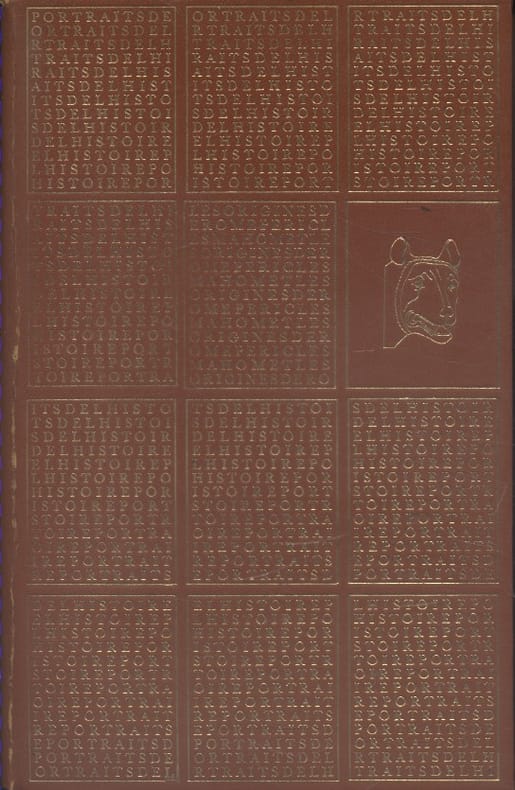
BLOCH Raymond
Les origines de Rome.
Couverture rigide. Reliure de l'éditeur. 182 pages.
Ссылка продавца : 133831
|
|
|

 Получить результаты поиска по электронной почте
 Загрузить результаты в формате PDF
  RSS-канал
 Постоянная ссылка


