|
Otto Seel
Poesia universale di Roma tra l'Ellade e il presente
p. 573
|
|
|
Otto Walter F.
Teofania. Lo spirito della religione greca Antica
16mo, br. ed. pp.184. Gli dèi non sono frutto di invenzioni, elucubrazioni o rappresentazioni, ma possono soltanto essere sperimentati». Tale era la prospettiva di Walter F. Otto, ribadita in questo libro, che si può considerare il suo lascito: muovendo da una critica serrata alle «posizioni teoriche che continuano a ostacolare la genuina comprensione della religione greca», e lasciando poi risuonare direttamente «la voce del più spirituale e creativo di tutti i popoli ... che ben riusciamo a percepire, purché ci mettiamo in ascolto di quel che hanno da dirci i suoi maggiori testimoni da Omero in poi », Otto ci mostra come i miti siano in realtà autentiche «rivelazioni ontologiche», in quanto nati non già da sogni dell'anima, ma «dalla lucida contemplazione dell'occhio spirituale spalancato sull'essere delle cose». E ci spiega perché gli dèi greci continueranno sempre a parlarci: «Apollo, Dioniso, Afrodite, Ermes e tutti gli altri restano per noi manifestazioni sempre luminose ed estremamente significative. E per quanto possa risultarci difficile credere seriamente in loro, il loro sguardo sublime non cessa di venirci incontro appena ci solleviamo da tutto ciò che è meramente fattuale nelle altezze dove dimorano le forme».
|
|
|
OTTO, Walter F
Der europäische Geist und die Weisheit des Ostens. Gedanken über das Erbe Homers.
Frankfurt, Klostermann, 1931. 27 S., 2 eingeklebte Photos. Originalbroschur (Außenrand geknickt)
書籍販売業者の参照番号
: 3606635
|
|
|
Otto, Walter F
Die Manen oder von den Urformen des Totenglaubens - Eine Untersuchung zur Religion der Griechen, Römer und Semiten und zum Volksglauben überhaupt,
Darmstadt, Wissenschaftliche Buchgesellschaft WBG, 1962. gr.8°, 115 S., roter original Leineneinband mit goldener Rückenbeschriftung, 3. Auflage [unveränderter fotomechanischer Nachdru sehr schönes, sauberes Exemplar ohne nennenswerte Mängel
書籍販売業者の参照番号
: 40250AB

|
|
|
Ouessant, Marcel
La Revolution De Chemises Noires (1919-1922)
Mm 120x190 Brossura editoriale di pagine 254. Testo in lingua francese / French text. Opera in buone condizioni. Spedizione in 24 ore dalla conferma dell'ordine.

|
|
|
OURSEL/ROUILLER Raymond/Jacques.
UNIVERS ROMAN.
|
|
|
ouvrage collectif
REVUE DES DEUX MONDES - 1864 tome 53
Paris Bureau de la Revue des Deux Mondes 1864 -in-8 demi-Maroquin un fort volume, reliure demi-maroquin cerise grand in-octavo à coins (binding half morocco with corners), reliure d'époque signée "PETIT" successeur de "SIMIER", dos 4 nerfs (spine with raised bands) décoré "or" et à froid (gilt and blind stamping decoration), titre et tomaison frappés "or" (gilt title and volume numbering) dans un encadrement d'un double filet fin "or", triple filets fins "or" en place des nerfs avec un filet à froid de part et d'autre des nerfs, plats décorés or (gilt decoration on the cover) avec 3 filets fins "or" aux mors et aux coins (joints and corners with three gilt line), papier marbré aux plats (cover with marbled paper), toutes tranches lisses (all edges smoothes) peignées (painting edges) rouge et bleu, sans illustrations (nop illustration), 1032 pages, 1864 Paris Bureau de la Revue des Deux Mondes Editeur,
書籍販売業者の参照番号
: 11187
|
|
|
ouvrage collectif
REVUE DES DEUX MONDES - 1866 tome 66
Paris Bureau de la Revue des Deux Mondes 1866 -in-8 demi-Maroquin un fort volume, reliure demi-maroquin cerise grand in-octavo à coins (binding half morocco with corners), reliure d'époque signée "PETIT" successeur de "SIMIER", dos 4 nerfs (spine with raised bands) décoré "or" et à froid (gilt and blind stamping decoration), titre et tomaison frappés "or" (gilt title and volume numbering) dans un encadrement d'un double filet fin "or", triple filets fins "or" en place des nerfs avec un filet à froid de part et d'autre des nerfs, plats décorés or (gilt decoration on the cover) avec 3 filets fins "or" aux mors et aux coins (joints and corners with three gilt line), papier marbré aux plats (cover with marbled paper), toutes tranches lisses (all edges smoothes) peignées (painting edges) rouge et bleu, sans illustrations (no illustration), 1056 pages, 1866 Paris Bureau de la Revue des Deux Mondes Editeur,
書籍販売業者の参照番号
: 11193
|
|
|
ouvrage collectif
REVUE DES DEUX MONDES - 1868 tome 75
Paris Bureau de la Revue des Deux Mondes 1868 -in-8 demi-Maroquin un fort volume, reliure demi-maroquin cerise grand in-octavo à coins (binding half morocco with corners), reliure d'époque signée "PETIT" successeur de "SIMIER", dos 4 nerfs (spine with raised bands) décoré "or" et à froid (gilt and blind stamping decoration), titre et tomaison frappés "or" (gilt title and volume numbering) dans un encadrement d'un double filet fin "or", triple filets fins "or" en place des nerfs avec un filet à froid de part et d'autre des nerfs, plats décorés or (gilt decoration on the cover) avec 3 filets fins "or" aux mors et aux coins (joints and corners with three gilt line), papier marbré aux plats (cover with marbled paper), toutes tranches lisses (all edges smoothes) peignées (painting edges) rouge et bleu, sans illustrations (nop illustration), 1032 pages, 1868 Paris Bureau de la Revue des Deux Mondes Editeur,
書籍販売業者の参照番号
: 11183
|
|
|
Ovadiah, Ruth; Ovadiah, Asher
Hellenistic, Roman and Early Byzantine Mosaic Pavements in Israel [SIGNED BY AUTHORS]. [SERIES]: Bibliotheca Archaeologica / 6.
SIGNED BY AUTHORS. Contains plates in color. 29X22 cm. 276+CXCII pages. Hardcover in dust jacket. Cover slightly water stained at bottom edge. Else in good condition. PLEASE NOTE: This item is overweight. We may ask for extra shipping costs.
|
|
|
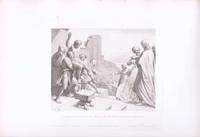
Overbeck, Johann Friedrich (German, Lubeck 1789 - 1869 Rome), After
Barabbas is Released and Jesus is Delivered to be Crucified. First Edition of the Engraving
Dusseldorf: August Wilhelm Schulgen circa 1850. Engraving together with a letterpress description in English and French. 35 x 44.5 cm sheet size. Good. Tearing Age Toning Foxing at sheet edges else Good.Fueled by dissatisfaction with the direction of the Vienna Academy a group of six German students founded the Brotherhood of St. Luke in 1809. Among them was Johann Friedrich Overbeck son of a senator of the Hanseatic free city of Lübeck. The brotherhood was a direct reference to the old painter’s guilds of medieval times. Four of the artists Overbeck Franz Pforr Ludwig Vogel and Johann Konrad Hottinger settled in Rome in 1810. Later joined by Friedrich Wilhelm Schadow Peter von Cornelius Philipp Veit and Julius Schnorr von Carolsfeld they were mockingly referred to as the Nazarenes. The group advocated a renewed interest in religious art and monumental wall paintings…… Their religious zeal most likely stemmed from the fact that almost all of them were Roman Catholic converts. Although the pursuit of spiritual and artistic simplicity and piety were typically romantic characteristics the means by which they attempted to depict their dreams were classical. It has been suggested that the Nazarenes should be considered a special branch of German Romanticism. They strove for a new form of German religious-patriotic art fusing Dürer with Fra Angelico Perugino and a young Raphael. Dusseldorf: August Wilhelm Schulgen, circa 1850 unknown
書籍販売業者の参照番号
: 75-7652
|
|
|
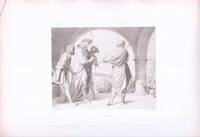
Overbeck, Johann Friedrich (German, Lubeck 1789 - 1869 Rome), After
Behold the Man!. First Edition of the Engraving
Dusseldorf: August Wilhelm Schulgen circa 1850. Engraving together with a letterpress description in English and French. 35 x 44.5 cm sheet size. Good. Tearing Age Toning Foxing at sheet edges else Good.Fueled by dissatisfaction with the direction of the Vienna Academy a group of six German students founded the Brotherhood of St. Luke in 1809. Among them was Johann Friedrich Overbeck son of a senator of the Hanseatic free city of Lübeck. The brotherhood was a direct reference to the old painter’s guilds of medieval times. Four of the artists Overbeck Franz Pforr Ludwig Vogel and Johann Konrad Hottinger settled in Rome in 1810. Later joined by Friedrich Wilhelm Schadow Peter von Cornelius Philipp Veit and Julius Schnorr von Carolsfeld they were mockingly referred to as the Nazarenes. The group advocated a renewed interest in religious art and monumental wall paintings…… Their religious zeal most likely stemmed from the fact that almost all of them were Roman Catholic converts. Although the pursuit of spiritual and artistic simplicity and piety were typically romantic characteristics the means by which they attempted to depict their dreams were classical. It has been suggested that the Nazarenes should be considered a special branch of German Romanticism. They strove for a new form of German religious-patriotic art fusing Dürer with Fra Angelico Perugino and a young Raphael. Dusseldorf: August Wilhelm Schulgen, circa 1850 unknown
書籍販売業者の参照番号
: 75-7654
|
|
|
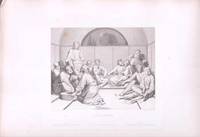
Overbeck, Johann Friedrich (German, Lubeck 1789 - 1869 Rome), After
Christ Washes His Disciples' Feet. First Edition of the Engraving
Dusseldorf: August Wilhelm Schulgen circa 1850. Engraving together with a letterpress description in English and French. 35 x 44.5 cm sheet size. Good. Tearing Age Toning Foxing at sheet edges else Good.Fueled by dissatisfaction with the direction of the Vienna Academy a group of six German students founded the Brotherhood of St. Luke in 1809. Among them was Johann Friedrich Overbeck son of a senator of the Hanseatic free city of Lübeck. The brotherhood was a direct reference to the old painter’s guilds of medieval times. Four of the artists Overbeck Franz Pforr Ludwig Vogel and Johann Konrad Hottinger settled in Rome in 1810. Later joined by Friedrich Wilhelm Schadow Peter von Cornelius Philipp Veit and Julius Schnorr von Carolsfeld they were mockingly referred to as the Nazarenes. The group advocated a renewed interest in religious art and monumental wall paintings…… Their religious zeal most likely stemmed from the fact that almost all of them were Roman Catholic converts. Although the pursuit of spiritual and artistic simplicity and piety were typically romantic characteristics the means by which they attempted to depict their dreams were classical. It has been suggested that the Nazarenes should be considered a special branch of German Romanticism. They strove for a new form of German religious-patriotic art fusing Dürer with Fra Angelico Perugino and a young Raphael. Dusseldorf: August Wilhelm Schulgen, circa 1850 unknown
書籍販売業者の参照番号
: 75-7646
|
|
|
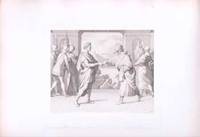
Overbeck, Johann Friedrich (German, Lubeck 1789 - 1869 Rome), After
Herod and Pilate are Made Friends. First Edition of the Engraving
Dusseldorf: August Wilhelm Schulgen circa 1850. Engraving together with a letterpress description in English and French. 35 x 44.5 cm sheet size. Good. Tearing Age Toning Foxing at sheet edges else Good.Fueled by dissatisfaction with the direction of the Vienna Academy a group of six German students founded the Brotherhood of St. Luke in 1809. Among them was Johann Friedrich Overbeck son of a senator of the Hanseatic free city of Lübeck. The brotherhood was a direct reference to the old painter’s guilds of medieval times. Four of the artists Overbeck Franz Pforr Ludwig Vogel and Johann Konrad Hottinger settled in Rome in 1810. Later joined by Friedrich Wilhelm Schadow Peter von Cornelius Philipp Veit and Julius Schnorr von Carolsfeld they were mockingly referred to as the Nazarenes. The group advocated a renewed interest in religious art and monumental wall paintings…… Their religious zeal most likely stemmed from the fact that almost all of them were Roman Catholic converts. Although the pursuit of spiritual and artistic simplicity and piety were typically romantic characteristics the means by which they attempted to depict their dreams were classical. It has been suggested that the Nazarenes should be considered a special branch of German Romanticism. They strove for a new form of German religious-patriotic art fusing Dürer with Fra Angelico Perugino and a young Raphael. Dusseldorf: August Wilhelm Schulgen, circa 1850 unknown
書籍販売業者の参照番号
: 75-7651
|
|
|
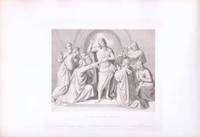
Overbeck, Johann Friedrich (German, Lubeck 1789 - 1869 Rome), After
Jesus Appeareth to Thomas. First Edition of the Engraving
Dusseldorf: August Wilhelm Schulgen circa 1850. Engraving together with a letterpress description in English and French. 35 x 44.5 cm sheet size. Good. Tearing Age Toning Foxing at sheet edges else Good.Fueled by dissatisfaction with the direction of the Vienna Academy a group of six German students founded the Brotherhood of St. Luke in 1809. Among them was Johann Friedrich Overbeck son of a senator of the Hanseatic free city of Lübeck. The brotherhood was a direct reference to the old painter’s guilds of medieval times. Four of the artists Overbeck Franz Pforr Ludwig Vogel and Johann Konrad Hottinger settled in Rome in 1810. Later joined by Friedrich Wilhelm Schadow Peter von Cornelius Philipp Veit and Julius Schnorr von Carolsfeld they were mockingly referred to as the Nazarenes. The group advocated a renewed interest in religious art and monumental wall paintings…… Their religious zeal most likely stemmed from the fact that almost all of them were Roman Catholic converts. Although the pursuit of spiritual and artistic simplicity and piety were typically romantic characteristics the means by which they attempted to depict their dreams were classical. It has been suggested that the Nazarenes should be considered a special branch of German Romanticism. They strove for a new form of German religious-patriotic art fusing Dürer with Fra Angelico Perugino and a young Raphael. Dusseldorf: August Wilhelm Schulgen, circa 1850 unknown
書籍販売業者の参照番号
: 75-7659
|
|
|
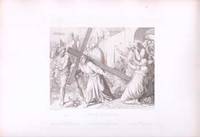
Overbeck, Johann Friedrich (German, Lubeck 1789 - 1869 Rome), After
Jesus Bearing his Own Cross. First Edition of the Engraving
Dusseldorf: August Wilhelm Schulgen circa 1850. Engraving together with a letterpress description in English and French. 35 x 44.5 cm sheet size. Good. Tearing Age Toning Foxing at sheet edges else Good.Fueled by dissatisfaction with the direction of the Vienna Academy a group of six German students founded the Brotherhood of St. Luke in 1809. Among them was Johann Friedrich Overbeck son of a senator of the Hanseatic free city of Lübeck. The brotherhood was a direct reference to the old painter’s guilds of medieval times. Four of the artists Overbeck Franz Pforr Ludwig Vogel and Johann Konrad Hottinger settled in Rome in 1810. Later joined by Friedrich Wilhelm Schadow Peter von Cornelius Philipp Veit and Julius Schnorr von Carolsfeld they were mockingly referred to as the Nazarenes. The group advocated a renewed interest in religious art and monumental wall paintings…… Their religious zeal most likely stemmed from the fact that almost all of them were Roman Catholic converts. Although the pursuit of spiritual and artistic simplicity and piety were typically romantic characteristics the means by which they attempted to depict their dreams were classical. It has been suggested that the Nazarenes should be considered a special branch of German Romanticism. They strove for a new form of German religious-patriotic art fusing Dürer with Fra Angelico Perugino and a young Raphael. Dusseldorf: August Wilhelm Schulgen, circa 1850 unknown
書籍販売業者の参照番号
: 75-7655
|
|
|
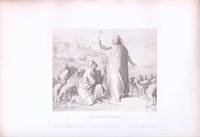
Overbeck, Johann Friedrich (German, Lubeck 1789 - 1869 Rome), After
Jesus Christ Commandeth Peter to Feed His Lambs and Sheep. First Edition of the Engraving
Dusseldorf: August Wilhelm Schulgen circa 1850. Engraving together with a letterpress description in English and French. 35 x 44.5 cm sheet size. Good. Tearing Age Toning Foxing at sheet edges else Good.Fueled by dissatisfaction with the direction of the Vienna Academy a group of six German students founded the Brotherhood of St. Luke in 1809. Among them was Johann Friedrich Overbeck son of a senator of the Hanseatic free city of Lübeck. The brotherhood was a direct reference to the old painter’s guilds of medieval times. Four of the artists Overbeck Franz Pforr Ludwig Vogel and Johann Konrad Hottinger settled in Rome in 1810. Later joined by Friedrich Wilhelm Schadow Peter von Cornelius Philipp Veit and Julius Schnorr von Carolsfeld they were mockingly referred to as the Nazarenes. The group advocated a renewed interest in religious art and monumental wall paintings…… Their religious zeal most likely stemmed from the fact that almost all of them were Roman Catholic converts. Although the pursuit of spiritual and artistic simplicity and piety were typically romantic characteristics the means by which they attempted to depict their dreams were classical. It has been suggested that the Nazarenes should be considered a special branch of German Romanticism. They strove for a new form of German religious-patriotic art fusing Dürer with Fra Angelico Perugino and a young Raphael. Dusseldorf: August Wilhelm Schulgen, circa 1850 unknown
書籍販売業者の参照番号
: 75-7660
|
|
|
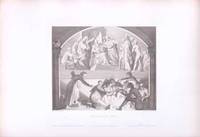
Overbeck, Johann Friedrich (German, Lubeck 1789 - 1869 Rome), After
Jesus Christ is Thrice denied of Peter. First Edition of the Engraving
Dusseldorf: August Wilhelm Schulgen circa 1850. Engraving together with a letterpress description in English and French. 35 x 44.5 cm sheet size. Good. Tearing Age Toning Foxing at sheet edges else Good.Fueled by dissatisfaction with the direction of the Vienna Academy a group of six German students founded the Brotherhood of St. Luke in 1809. Among them was Johann Friedrich Overbeck son of a senator of the Hanseatic free city of Lübeck. The brotherhood was a direct reference to the old painter’s guilds of medieval times. Four of the artists Overbeck Franz Pforr Ludwig Vogel and Johann Konrad Hottinger settled in Rome in 1810. Later joined by Friedrich Wilhelm Schadow Peter von Cornelius Philipp Veit and Julius Schnorr von Carolsfeld they were mockingly referred to as the Nazarenes. The group advocated a renewed interest in religious art and monumental wall paintings…… Their religious zeal most likely stemmed from the fact that almost all of them were Roman Catholic converts. Although the pursuit of spiritual and artistic simplicity and piety were typically romantic characteristics the means by which they attempted to depict their dreams were classical. It has been suggested that the Nazarenes should be considered a special branch of German Romanticism. They strove for a new form of German religious-patriotic art fusing Dürer with Fra Angelico Perugino and a young Raphael. Dusseldorf: August Wilhelm Schulgen, circa 1850 unknown
書籍販売業者の参照番号
: 75-7650
|
|
|
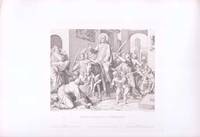
Overbeck, Johann Friedrich (German, Lubeck 1789 - 1869 Rome), After
Jesus Entering into Jerusalem. First Edition of the Engraving
Dusseldorf: August Wilhelm Schulgen circa 1850. Engraving together with a letterpress description in English and French. 35 x 44.5 cm sheet size. Good. Tearing Age Toning Foxing at sheet edges else Good.Fueled by dissatisfaction with the direction of the Vienna Academy a group of six German students founded the Brotherhood of St. Luke in 1809. Among them was Johann Friedrich Overbeck son of a senator of the Hanseatic free city of Lübeck. The brotherhood was a direct reference to the old painter’s guilds of medieval times. Four of the artists Overbeck Franz Pforr Ludwig Vogel and Johann Konrad Hottinger settled in Rome in 1810. Later joined by Friedrich Wilhelm Schadow Peter von Cornelius Philipp Veit and Julius Schnorr von Carolsfeld they were mockingly referred to as the Nazarenes. The group advocated a renewed interest in religious art and monumental wall paintings…… Their religious zeal most likely stemmed from the fact that almost all of them were Roman Catholic converts. Although the pursuit of spiritual and artistic simplicity and piety were typically romantic characteristics the means by which they attempted to depict their dreams were classical. It has been suggested that the Nazarenes should be considered a special branch of German Romanticism. They strove for a new form of German religious-patriotic art fusing Dürer with Fra Angelico Perugino and a young Raphael. Dusseldorf: August Wilhelm Schulgen, circa 1850 unknown
書籍販売業者の参照番号
: 75-7643
|
|
|
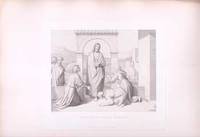
Overbeck, Johann Friedrich (German, Lubeck 1789 - 1869 Rome), After
Jesus in the House of Mary and Martha. First Edition of the Engraving
Dusseldorf: August Wilhelm Schulgen circa 1850. Engraving together with a letterpress description in English and French. 35 x 44.5 cm sheet size. Good. Tearing Age Toning Foxing at sheet edges else Good.Fueled by dissatisfaction with the direction of the Vienna Academy a group of six German students founded the Brotherhood of St. Luke in 1809. Among them was Johann Friedrich Overbeck son of a senator of the Hanseatic free city of Lübeck. The brotherhood was a direct reference to the old painter’s guilds of medieval times. Four of the artists Overbeck Franz Pforr Ludwig Vogel and Johann Konrad Hottinger settled in Rome in 1810. Later joined by Friedrich Wilhelm Schadow Peter von Cornelius Philipp Veit and Julius Schnorr von Carolsfeld they were mockingly referred to as the Nazarenes. The group advocated a renewed interest in religious art and monumental wall paintings…… Their religious zeal most likely stemmed from the fact that almost all of them were Roman Catholic converts. Although the pursuit of spiritual and artistic simplicity and piety were typically romantic characteristics the means by which they attempted to depict their dreams were classical. It has been suggested that the Nazarenes should be considered a special branch of German Romanticism. They strove for a new form of German religious-patriotic art fusing Dürer with Fra Angelico Perugino and a young Raphael. Dusseldorf: August Wilhelm Schulgen, circa 1850 unknown
書籍販売業者の参照番号
: 75-7640
|
|
|
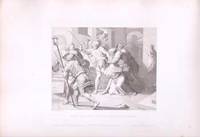
Overbeck, Johann Friedrich (German, Lubeck 1789 - 1869 Rome), After
Jesus is Apprehended and Carried to the High-Priest. First Edition of the Engraving
Dusseldorf: August Wilhelm Schulgen circa 1850. Engraving together with a letterpress description in English and French. 35 x 44.5 cm sheet size. Good. Tearing Age Toning Foxing at sheet edges else Good.Fueled by dissatisfaction with the direction of the Vienna Academy a group of six German students founded the Brotherhood of St. Luke in 1809. Among them was Johann Friedrich Overbeck son of a senator of the Hanseatic free city of Lübeck. The brotherhood was a direct reference to the old painter’s guilds of medieval times. Four of the artists Overbeck Franz Pforr Ludwig Vogel and Johann Konrad Hottinger settled in Rome in 1810. Later joined by Friedrich Wilhelm Schadow Peter von Cornelius Philipp Veit and Julius Schnorr von Carolsfeld they were mockingly referred to as the Nazarenes. The group advocated a renewed interest in religious art and monumental wall paintings…… Their religious zeal most likely stemmed from the fact that almost all of them were Roman Catholic converts. Although the pursuit of spiritual and artistic simplicity and piety were typically romantic characteristics the means by which they attempted to depict their dreams were classical. It has been suggested that the Nazarenes should be considered a special branch of German Romanticism. They strove for a new form of German religious-patriotic art fusing Dürer with Fra Angelico Perugino and a young Raphael. Dusseldorf: August Wilhelm Schulgen, circa 1850 unknown
書籍販売業者の参照番号
: 75-7649
|
|
|
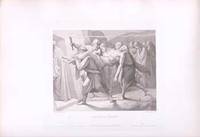
Overbeck, Johann Friedrich (German, Lubeck 1789 - 1869 Rome), After
Jesus is Buried. First Edition of the Engraving
Dusseldorf: August Wilhelm Schulgen circa 1850. Engraving together with a letterpress description in English and French. 35 x 44.5 cm sheet size. Good. Tearing Age Toning Foxing at sheet edges else Good.Fueled by dissatisfaction with the direction of the Vienna Academy a group of six German students founded the Brotherhood of St. Luke in 1809. Among them was Johann Friedrich Overbeck son of a senator of the Hanseatic free city of Lübeck. The brotherhood was a direct reference to the old painter’s guilds of medieval times. Four of the artists Overbeck Franz Pforr Ludwig Vogel and Johann Konrad Hottinger settled in Rome in 1810. Later joined by Friedrich Wilhelm Schadow Peter von Cornelius Philipp Veit and Julius Schnorr von Carolsfeld they were mockingly referred to as the Nazarenes. The group advocated a renewed interest in religious art and monumental wall paintings…… Their religious zeal most likely stemmed from the fact that almost all of them were Roman Catholic converts. Although the pursuit of spiritual and artistic simplicity and piety were typically romantic characteristics the means by which they attempted to depict their dreams were classical. It has been suggested that the Nazarenes should be considered a special branch of German Romanticism. They strove for a new form of German religious-patriotic art fusing Dürer with Fra Angelico Perugino and a young Raphael. Dusseldorf: August Wilhelm Schulgen, circa 1850 unknown
書籍販売業者の参照番号
: 75-7657
|
|
|
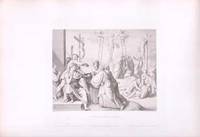
Overbeck, Johann Friedrich (German, Lubeck 1789 - 1869 Rome), After
Jesus is Crucified. First Edition of the Engraving
Dusseldorf: August Wilhelm Schulgen circa 1850. Engraving together with a letterpress description in English and French. 35 x 44.5 cm sheet size. Good. Tearing Age Toning Foxing at sheet edges else Good.Fueled by dissatisfaction with the direction of the Vienna Academy a group of six German students founded the Brotherhood of St. Luke in 1809. Among them was Johann Friedrich Overbeck son of a senator of the Hanseatic free city of Lübeck. The brotherhood was a direct reference to the old painter’s guilds of medieval times. Four of the artists Overbeck Franz Pforr Ludwig Vogel and Johann Konrad Hottinger settled in Rome in 1810. Later joined by Friedrich Wilhelm Schadow Peter von Cornelius Philipp Veit and Julius Schnorr von Carolsfeld they were mockingly referred to as the Nazarenes. The group advocated a renewed interest in religious art and monumental wall paintings…… Their religious zeal most likely stemmed from the fact that almost all of them were Roman Catholic converts. Although the pursuit of spiritual and artistic simplicity and piety were typically romantic characteristics the means by which they attempted to depict their dreams were classical. It has been suggested that the Nazarenes should be considered a special branch of German Romanticism. They strove for a new form of German religious-patriotic art fusing Dürer with Fra Angelico Perugino and a young Raphael. Dusseldorf: August Wilhelm Schulgen, circa 1850 unknown
書籍販売業者の参照番号
: 75-7656
|
|
|
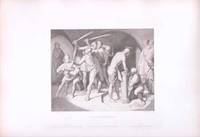
Overbeck, Johann Friedrich (German, Lubeck 1789 - 1869 Rome), After
Jesus is Scourged. First Edition of the Engraving
Dusseldorf: August Wilhelm Schulgen circa 1850. Engraving together with a letterpress description in English and French. 35 x 44.5 cm sheet size. Good. Tearing Age Toning Foxing at sheet edges else Good.Fueled by dissatisfaction with the direction of the Vienna Academy a group of six German students founded the Brotherhood of St. Luke in 1809. Among them was Johann Friedrich Overbeck son of a senator of the Hanseatic free city of Lübeck. The brotherhood was a direct reference to the old painter’s guilds of medieval times. Four of the artists Overbeck Franz Pforr Ludwig Vogel and Johann Konrad Hottinger settled in Rome in 1810. Later joined by Friedrich Wilhelm Schadow Peter von Cornelius Philipp Veit and Julius Schnorr von Carolsfeld they were mockingly referred to as the Nazarenes. The group advocated a renewed interest in religious art and monumental wall paintings…… Their religious zeal most likely stemmed from the fact that almost all of them were Roman Catholic converts. Although the pursuit of spiritual and artistic simplicity and piety were typically romantic characteristics the means by which they attempted to depict their dreams were classical. It has been suggested that the Nazarenes should be considered a special branch of German Romanticism. They strove for a new form of German religious-patriotic art fusing Dürer with Fra Angelico Perugino and a young Raphael. Dusseldorf: August Wilhelm Schulgen, circa 1850 unknown
書籍販売業者の参照番号
: 75-7653
|
|
|
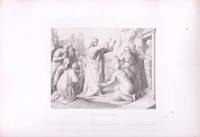
Overbeck, Johann Friedrich (German, Lubeck 1789 - 1869 Rome), After
Jesus Raises Lazarus to Life. First Edition of the Engraving
Dusseldorf: August Wilhelm Schulgen circa 1850. Engraving together with a letterpress description in English and French. 35 x 44.5 cm sheet size. Good. Tearing Age Toning Foxing at sheet edges else Good.Fueled by dissatisfaction with the direction of the Vienna Academy a group of six German students founded the Brotherhood of St. Luke in 1809. Among them was Johann Friedrich Overbeck son of a senator of the Hanseatic free city of Lübeck. The brotherhood was a direct reference to the old painter’s guilds of medieval times. Four of the artists Overbeck Franz Pforr Ludwig Vogel and Johann Konrad Hottinger settled in Rome in 1810. Later joined by Friedrich Wilhelm Schadow Peter von Cornelius Philipp Veit and Julius Schnorr von Carolsfeld they were mockingly referred to as the Nazarenes. The group advocated a renewed interest in religious art and monumental wall paintings…… Their religious zeal most likely stemmed from the fact that almost all of them were Roman Catholic converts. Although the pursuit of spiritual and artistic simplicity and piety were typically romantic characteristics the means by which they attempted to depict their dreams were classical. It has been suggested that the Nazarenes should be considered a special branch of German Romanticism. They strove for a new form of German religious-patriotic art fusing Dürer with Fra Angelico Perugino and a young Raphael. Dusseldorf: August Wilhelm Schulgen, circa 1850 unknown
書籍販売業者の参照番号
: 75-7642
|
|
|
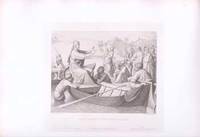
Overbeck, Johann Friedrich (German, Lubeck 1789 - 1869 Rome), After
Jesus Sitting in the Ship Teacheth the Multitude. First Edition of the Engraving
Dusseldorf: August Wilhelm Schulgen circa 1850. Engraving together with a letterpress description in English and French. 35 x 44.5 cm sheet size. Good. Tearing Age Toning Foxing at sheet edges else Good.Fueled by dissatisfaction with the direction of the Vienna Academy a group of six German students founded the Brotherhood of St. Luke in 1809. Among them was Johann Friedrich Overbeck son of a senator of the Hanseatic free city of Lübeck. The brotherhood was a direct reference to the old painter’s guilds of medieval times. Four of the artists Overbeck Franz Pforr Ludwig Vogel and Johann Konrad Hottinger settled in Rome in 1810. Later joined by Friedrich Wilhelm Schadow Peter von Cornelius Philipp Veit and Julius Schnorr von Carolsfeld they were mockingly referred to as the Nazarenes. The group advocated a renewed interest in religious art and monumental wall paintings…… Their religious zeal most likely stemmed from the fact that almost all of them were Roman Catholic converts. Although the pursuit of spiritual and artistic simplicity and piety were typically romantic characteristics the means by which they attempted to depict their dreams were classical. It has been suggested that the Nazarenes should be considered a special branch of German Romanticism. They strove for a new form of German religious-patriotic art fusing Dürer with Fra Angelico Perugino and a young Raphael. Dusseldorf: August Wilhelm Schulgen, circa 1850 unknown
書籍販売業者の参照番号
: 75-7637
|
|
|
Overbeck, Johann Friedrich (German, Lubeck 1789 - 1869 Rome), After
Jesus Speaketh Wo to the Phaisees. First Edition of the Engraving
Dusseldorf: August Wilhelm Schulgen circa 1850. Engraving together with a letterpress description in English and French. 35 x 44.5 cm sheet size. Good. Tearing Age Toning Foxing at sheet edges else Good.Fueled by dissatisfaction with the direction of the Vienna Academy a group of six German students founded the Brotherhood of St. Luke in 1809. Among them was Johann Friedrich Overbeck son of a senator of the Hanseatic free city of Lübeck. The brotherhood was a direct reference to the old painter’s guilds of medieval times. Four of the artists Overbeck Franz Pforr Ludwig Vogel and Johann Konrad Hottinger settled in Rome in 1810. Later joined by Friedrich Wilhelm Schadow Peter von Cornelius Philipp Veit and Julius Schnorr von Carolsfeld they were mockingly referred to as the Nazarenes. The group advocated a renewed interest in religious art and monumental wall paintings…… Their religious zeal most likely stemmed from the fact that almost all of them were Roman Catholic converts. Although the pursuit of spiritual and artistic simplicity and piety were typically romantic characteristics the means by which they attempted to depict their dreams were classical. It has been suggested that the Nazarenes should be considered a special branch of German Romanticism. They strove for a new form of German religious-patriotic art fusing Dürer with Fra Angelico Perugino and a young Raphael. Dusseldorf: August Wilhelm Schulgen, circa 1850 unknown
書籍販売業者の参照番号
: 75-7644
|
|
|
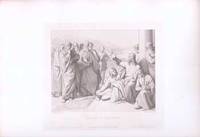
Overbeck, Johann Friedrich (German, Lubeck 1789 - 1869 Rome), After
John Baptizeth Jesus. First Edition of the Engraving
Dusseldorf: August Wilhelm Schulgen circa 1850. Engraving together with a letterpress description in English and French. 35 x 44.5 cm sheet size. Good. Tearing Age Toning Foxing and minor Staining at sheet edges else Good.Fueled by dissatisfaction with the direction of the Vienna Academy a group of six German students founded the Brotherhood of St. Luke in 1809. Among them was Johann Friedrich Overbeck son of a senator of the Hanseatic free city of Lübeck. The brotherhood was a direct reference to the old painter’s guilds of medieval times. Four of the artists Overbeck Franz Pforr Ludwig Vogel and Johann Konrad Hottinger settled in Rome in 1810. Later joined by Friedrich Wilhelm Schadow Peter von Cornelius Philipp Veit and Julius Schnorr von Carolsfeld they were mockingly referred to as the Nazarenes. The group advocated a renewed interest in religious art and monumental wall paintings…… Their religious zeal most likely stemmed from the fact that almost all of them were Roman Catholic converts. Although the pursuit of spiritual and artistic simplicity and piety were typically romantic characteristics the means by which they attempted to depict their dreams were classical. It has been suggested that the Nazarenes should be considered a special branch of German Romanticism. They strove for a new form of German religious-patriotic art fusing Dürer with Fra Angelico Perugino and a young Raphael. Dusseldorf: August Wilhelm Schulgen, circa 1850 unknown
書籍販売業者の参照番号
: 75-7632
|
|
|
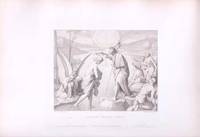
Overbeck, Johann Friedrich (German, Lubeck 1789 - 1869 Rome), After
John Is His Name. First Edition of the Engraving
Dusseldorf: August Wilhelm Schulgen circa 1850. Engraving together with a letterpress description in English and French. 35 x 44.5 cm sheet size. Good. Tearing Age Toning and Foxing at sheet edges else Good.Fueled by dissatisfaction with the direction of the Vienna Academy a group of six German students founded the Brotherhood of St. Luke in 1809. Among them was Johann Friedrich Overbeck son of a senator of the Hanseatic free city of Lübeck. The brotherhood was a direct reference to the old painter’s guilds of medieval times. Four of the artists Overbeck Franz Pforr Ludwig Vogel and Johann Konrad Hottinger settled in Rome in 1810. Later joined by Friedrich Wilhelm Schadow Peter von Cornelius Philipp Veit and Julius Schnorr von Carolsfeld they were mockingly referred to as the Nazarenes. The group advocated a renewed interest in religious art and monumental wall paintings…… Their religious zeal most likely stemmed from the fact that almost all of them were Roman Catholic converts. Although the pursuit of spiritual and artistic simplicity and piety were typically romantic characteristics the means by which they attempted to depict their dreams were classical. It has been suggested that the Nazarenes should be considered a special branch of German Romanticism. They strove for a new form of German religious-patriotic art fusing Dürer with Fra Angelico Perugino and a young Raphael. Dusseldorf: August Wilhelm Schulgen, circa 1850 unknown
書籍販売業者の参照番号
: 75-7624
|
|
|
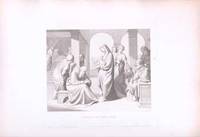
Overbeck, Johann Friedrich (German, Lubeck 1789 - 1869 Rome), After
John Leaning on Jesus's Bosum. First Edition of the Engraving
Dusseldorf: August Wilhelm Schulgen circa 1850. Engraving together with a letterpress description in English and French. 35 x 44.5 cm sheet size. Good. Tearing Age Toning Foxing at sheet edges. Spotting else Good.Fueled by dissatisfaction with the direction of the Vienna Academy a group of six German students founded the Brotherhood of St. Luke in 1809. Among them was Johann Friedrich Overbeck son of a senator of the Hanseatic free city of Lübeck. The brotherhood was a direct reference to the old painter’s guilds of medieval times. Four of the artists Overbeck Franz Pforr Ludwig Vogel and Johann Konrad Hottinger settled in Rome in 1810. Later joined by Friedrich Wilhelm Schadow Peter von Cornelius Philipp Veit and Julius Schnorr von Carolsfeld they were mockingly referred to as the Nazarenes. The group advocated a renewed interest in religious art and monumental wall paintings…… Their religious zeal most likely stemmed from the fact that almost all of them were Roman Catholic converts. Although the pursuit of spiritual and artistic simplicity and piety were typically romantic characteristics the means by which they attempted to depict their dreams were classical. It has been suggested that the Nazarenes should be considered a special branch of German Romanticism. They strove for a new form of German religious-patriotic art fusing Dürer with Fra Angelico Perugino and a young Raphael. Dusseldorf: August Wilhelm Schulgen, circa 1850 unknown
書籍販売業者の参照番号
: 75-7647
|
|
|
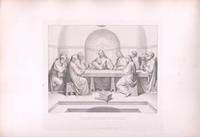
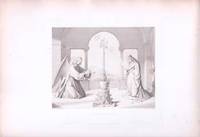
Overbeck, Johann Friedrich (German, Lubeck 1789 - 1869 Rome), After
The Annunciation of the Blessed Virgin Mary. First Edition of the Engraving
Dusseldorf: August Wilhelm Schulgen circa 1850. Engraving together with a letterpress description in English and French. 35 x 44.5 cm sheet size. Good. Tearing Age Toning and Foxing at sheet edges else Good.Fueled by dissatisfaction with the direction of the Vienna Academy a group of six German students founded the Brotherhood of St. Luke in 1809. Among them was Johann Friedrich Overbeck son of a senator of the Hanseatic free city of Lübeck. The brotherhood was a direct reference to the old painter’s guilds of medieval times. Four of the artists Overbeck Franz Pforr Ludwig Vogel and Johann Konrad Hottinger settled in Rome in 1810. Later joined by Friedrich Wilhelm Schadow Peter von Cornelius Philipp Veit and Julius Schnorr von Carolsfeld they were mockingly referred to as the Nazarenes. The group advocated a renewed interest in religious art and monumental wall paintings…… Their religious zeal most likely stemmed from the fact that almost all of them were Roman Catholic converts. Although the pursuit of spiritual and artistic simplicity and piety were typically romantic characteristics the means by which they attempted to depict their dreams were classical. It has been suggested that the Nazarenes should be considered a special branch of German Romanticism. They strove for a new form of German religious-patriotic art fusing Dürer with Fra Angelico Perugino and a young Raphael. Dusseldorf: August Wilhelm Schulgen, circa 1850 unknown
書籍販売業者の参照番号
: 75-7622
|
|
|
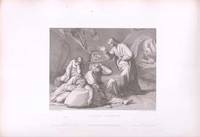
Overbeck, Johann Friedrich (German, Lubeck 1789 - 1869 Rome), After
The Apostles Asleep. First Edition of the Engraving
Dusseldorf: August Wilhelm Schulgen circa 1850. Engraving together with a letterpress description in English and French. 35 x 44.5 cm sheet size. Good. Tearing Age Toning Foxing at sheet edges else Good.Fueled by dissatisfaction with the direction of the Vienna Academy a group of six German students founded the Brotherhood of St. Luke in 1809. Among them was Johann Friedrich Overbeck son of a senator of the Hanseatic free city of Lübeck. The brotherhood was a direct reference to the old painter’s guilds of medieval times. Four of the artists Overbeck Franz Pforr Ludwig Vogel and Johann Konrad Hottinger settled in Rome in 1810. Later joined by Friedrich Wilhelm Schadow Peter von Cornelius Philipp Veit and Julius Schnorr von Carolsfeld they were mockingly referred to as the Nazarenes. The group advocated a renewed interest in religious art and monumental wall paintings…… Their religious zeal most likely stemmed from the fact that almost all of them were Roman Catholic converts. Although the pursuit of spiritual and artistic simplicity and piety were typically romantic characteristics the means by which they attempted to depict their dreams were classical. It has been suggested that the Nazarenes should be considered a special branch of German Romanticism. They strove for a new form of German religious-patriotic art fusing Dürer with Fra Angelico Perugino and a young Raphael. Dusseldorf: August Wilhelm Schulgen, circa 1850 unknown
書籍販売業者の参照番号
: 75-7648
|
|
|
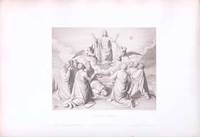
Overbeck, Johann Friedrich (German, Lubeck 1789 - 1869 Rome), After
The Ascension of Jesus. First Edition of the Engraving
Dusseldorf: August Wilhelm Schulgen circa 1850. Engraving together with a letterpress description in English and French. 35 x 44.5 cm sheet size. Good. Tearing Age Toning Foxing at sheet edges else Good.Fueled by dissatisfaction with the direction of the Vienna Academy a group of six German students founded the Brotherhood of St. Luke in 1809. Among them was Johann Friedrich Overbeck son of a senator of the Hanseatic free city of Lübeck. The brotherhood was a direct reference to the old painter’s guilds of medieval times. Four of the artists Overbeck Franz Pforr Ludwig Vogel and Johann Konrad Hottinger settled in Rome in 1810. Later joined by Friedrich Wilhelm Schadow Peter von Cornelius Philipp Veit and Julius Schnorr von Carolsfeld they were mockingly referred to as the Nazarenes. The group advocated a renewed interest in religious art and monumental wall paintings…… Their religious zeal most likely stemmed from the fact that almost all of them were Roman Catholic converts. Although the pursuit of spiritual and artistic simplicity and piety were typically romantic characteristics the means by which they attempted to depict their dreams were classical. It has been suggested that the Nazarenes should be considered a special branch of German Romanticism. They strove for a new form of German religious-patriotic art fusing Dürer with Fra Angelico Perugino and a young Raphael. Dusseldorf: August Wilhelm Schulgen, circa 1850 unknown
書籍販売業者の参照番号
: 75-7661
|
|
|
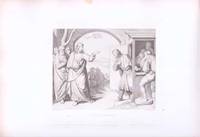
Overbeck, Johann Friedrich (German, Lubeck 1789 - 1869 Rome), After
The Calling of Mathew. First Edition of the Engraving
Dusseldorf: August Wilhelm Schulgen circa 1850. Engraving together with a letterpress description in English and French. 35 x 44.5 cm sheet size. Good. Tearing Age Toning Foxing at sheet edges minor Staining else Good.Fueled by dissatisfaction with the direction of the Vienna Academy a group of six German students founded the Brotherhood of St. Luke in 1809. Among them was Johann Friedrich Overbeck son of a senator of the Hanseatic free city of Lübeck. The brotherhood was a direct reference to the old painter’s guilds of medieval times. Four of the artists Overbeck Franz Pforr Ludwig Vogel and Johann Konrad Hottinger settled in Rome in 1810. Later joined by Friedrich Wilhelm Schadow Peter von Cornelius Philipp Veit and Julius Schnorr von Carolsfeld they were mockingly referred to as the Nazarenes. The group advocated a renewed interest in religious art and monumental wall paintings…… Their religious zeal most likely stemmed from the fact that almost all of them were Roman Catholic converts. Although the pursuit of spiritual and artistic simplicity and piety were typically romantic characteristics the means by which they attempted to depict their dreams were classical. It has been suggested that the Nazarenes should be considered a special branch of German Romanticism. They strove for a new form of German religious-patriotic art fusing Dürer with Fra Angelico Perugino and a young Raphael. Dusseldorf: August Wilhelm Schulgen, circa 1850 unknown
書籍販売業者の参照番号
: 75-7635
|
|
|
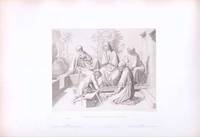
Overbeck, Johann Friedrich (German, Lubeck 1789 - 1869 Rome), After
The Child Jesus in the Work-shop of Joseph. First Edition of the Engraving
Dusseldorf: August Wilhelm Schulgen circa 1850. Engraving together with a letterpress description in English and French. 35 x 44.5 cm sheet size. Good. Tearing Age Toning Foxing and minor Staining at sheet edges else Good.Fueled by dissatisfaction with the direction of the Vienna Academy a group of six German students founded the Brotherhood of St. Luke in 1809. Among them was Johann Friedrich Overbeck son of a senator of the Hanseatic free city of Lübeck. The brotherhood was a direct reference to the old painter’s guilds of medieval times. Four of the artists Overbeck Franz Pforr Ludwig Vogel and Johann Konrad Hottinger settled in Rome in 1810. Later joined by Friedrich Wilhelm Schadow Peter von Cornelius Philipp Veit and Julius Schnorr von Carolsfeld they were mockingly referred to as the Nazarenes. The group advocated a renewed interest in religious art and monumental wall paintings…… Their religious zeal most likely stemmed from the fact that almost all of them were Roman Catholic converts. Although the pursuit of spiritual and artistic simplicity and piety were typically romantic characteristics the means by which they attempted to depict their dreams were classical. It has been suggested that the Nazarenes should be considered a special branch of German Romanticism. They strove for a new form of German religious-patriotic art fusing Dürer with Fra Angelico Perugino and a young Raphael. Dusseldorf: August Wilhelm Schulgen, circa 1850 unknown
書籍販売業者の参照番号
: 75-7630
|
|
|
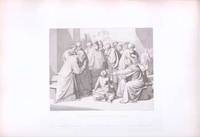
Overbeck, Johann Friedrich (German, Lubeck 1789 - 1869 Rome), After
The Child Jesus in the Midst of the Doctors. First Edition of the Engraving
Dusseldorf: August Wilhelm Schulgen circa 1850. Engraving together with a letterpress description in English and French. 35 x 44.5 cm sheet size. Good. Tearing Age Toning Foxing and minor Staining at sheet edges else Good.Fueled by dissatisfaction with the direction of the Vienna Academy a group of six German students founded the Brotherhood of St. Luke in 1809. Among them was Johann Friedrich Overbeck son of a senator of the Hanseatic free city of Lübeck. The brotherhood was a direct reference to the old painter’s guilds of medieval times. Four of the artists Overbeck Franz Pforr Ludwig Vogel and Johann Konrad Hottinger settled in Rome in 1810. Later joined by Friedrich Wilhelm Schadow Peter von Cornelius Philipp Veit and Julius Schnorr von Carolsfeld they were mockingly referred to as the Nazarenes. The group advocated a renewed interest in religious art and monumental wall paintings…… Their religious zeal most likely stemmed from the fact that almost all of them were Roman Catholic converts. Although the pursuit of spiritual and artistic simplicity and piety were typically romantic characteristics the means by which they attempted to depict their dreams were classical. It has been suggested that the Nazarenes should be considered a special branch of German Romanticism. They strove for a new form of German religious-patriotic art fusing Dürer with Fra Angelico Perugino and a young Raphael. Dusseldorf: August Wilhelm Schulgen, circa 1850 unknown
書籍販売業者の参照番号
: 75-7631
|
|
|
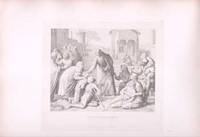
Overbeck, Johann Friedrich (German, Lubeck 1789 - 1869 Rome), After
The Cure of the Sicks. First Edition of the Engraving
Dusseldorf: August Wilhelm Schulgen circa 1850. Engraving together with a letterpress description in English and French. 35 x 44.5 cm sheet size. Good. Tearing Age Toning Foxing and minor Staining at sheet edges else Good.Fueled by dissatisfaction with the direction of the Vienna Academy a group of six German students founded the Brotherhood of St. Luke in 1809. Among them was Johann Friedrich Overbeck son of a senator of the Hanseatic free city of Lübeck. The brotherhood was a direct reference to the old painter’s guilds of medieval times. Four of the artists Overbeck Franz Pforr Ludwig Vogel and Johann Konrad Hottinger settled in Rome in 1810. Later joined by Friedrich Wilhelm Schadow Peter von Cornelius Philipp Veit and Julius Schnorr von Carolsfeld they were mockingly referred to as the Nazarenes. The group advocated a renewed interest in religious art and monumental wall paintings…… Their religious zeal most likely stemmed from the fact that almost all of them were Roman Catholic converts. Although the pursuit of spiritual and artistic simplicity and piety were typically romantic characteristics the means by which they attempted to depict their dreams were classical. It has been suggested that the Nazarenes should be considered a special branch of German Romanticism. They strove for a new form of German religious-patriotic art fusing Dürer with Fra Angelico Perugino and a young Raphael. Dusseldorf: August Wilhelm Schulgen, circa 1850 unknown
書籍販売業者の参照番号
: 75-7634
|
|
|
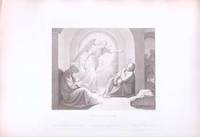
Overbeck, Johann Friedrich (German, Lubeck 1789 - 1869 Rome), After
The Flight into Egypt. First Edition of the Engraving
Dusseldorf: August Wilhelm Schulgen circa 1850. Engraving together with a letterpress description in English and French. 35 x 44.5 cm sheet size. Good. Tearing Age Toning Foxing and minor Staining at sheet edges else Good.Fueled by dissatisfaction with the direction of the Vienna Academy a group of six German students founded the Brotherhood of St. Luke in 1809. Among them was Johann Friedrich Overbeck son of a senator of the Hanseatic free city of Lübeck. The brotherhood was a direct reference to the old painter’s guilds of medieval times. Four of the artists Overbeck Franz Pforr Ludwig Vogel and Johann Konrad Hottinger settled in Rome in 1810. Later joined by Friedrich Wilhelm Schadow Peter von Cornelius Philipp Veit and Julius Schnorr von Carolsfeld they were mockingly referred to as the Nazarenes. The group advocated a renewed interest in religious art and monumental wall paintings…… Their religious zeal most likely stemmed from the fact that almost all of them were Roman Catholic converts. Although the pursuit of spiritual and artistic simplicity and piety were typically romantic characteristics the means by which they attempted to depict their dreams were classical. It has been suggested that the Nazarenes should be considered a special branch of German Romanticism. They strove for a new form of German religious-patriotic art fusing Dürer with Fra Angelico Perugino and a young Raphael. Dusseldorf: August Wilhelm Schulgen, circa 1850 unknown
書籍販売業者の参照番号
: 75-7628
|
|
|
Overbeck, Johann Friedrich (German, Lubeck 1789 - 1869 Rome), After
The Marriage in Cana of Galilee. First Edition of the Engraving
Dusseldorf: August Wilhelm Schulgen circa 1850. Engraving together with a letterpress description in English and French. 35 x 44.5 cm sheet size. Good. Tearing Age Toning Foxing and minor Staining at sheet edges else Good.Fueled by dissatisfaction with the direction of the Vienna Academy a group of six German students founded the Brotherhood of St. Luke in 1809. Among them was Johann Friedrich Overbeck son of a senator of the Hanseatic free city of Lübeck. The brotherhood was a direct reference to the old painter’s guilds of medieval times. Four of the artists Overbeck Franz Pforr Ludwig Vogel and Johann Konrad Hottinger settled in Rome in 1810. Later joined by Friedrich Wilhelm Schadow Peter von Cornelius Philipp Veit and Julius Schnorr von Carolsfeld they were mockingly referred to as the Nazarenes. The group advocated a renewed interest in religious art and monumental wall paintings…… Their religious zeal most likely stemmed from the fact that almost all of them were Roman Catholic converts. Although the pursuit of spiritual and artistic simplicity and piety were typically romantic characteristics the means by which they attempted to depict their dreams were classical. It has been suggested that the Nazarenes should be considered a special branch of German Romanticism. They strove for a new form of German religious-patriotic art fusing Dürer with Fra Angelico Perugino and a young Raphael. Dusseldorf: August Wilhelm Schulgen, circa 1850 unknown
書籍販売業者の参照番号
: 75-7633
|
|
|
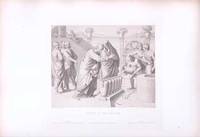
Overbeck, Johann Friedrich (German, Lubeck 1789 - 1869 Rome), After
The Massacre of the Innocents. First Edition of the Engraving
Dusseldorf: August Wilhelm Schulgen circa 1850. Engraving together with a letterpress description in English and French. 35 x 44.5 cm sheet size. Good. Tearing Age Toning Foxing and minor Staining at sheet edges else Good.Fueled by dissatisfaction with the direction of the Vienna Academy a group of six German students founded the Brotherhood of St. Luke in 1809. Among them was Johann Friedrich Overbeck son of a senator of the Hanseatic free city of Lübeck. The brotherhood was a direct reference to the old painter’s guilds of medieval times. Four of the artists Overbeck Franz Pforr Ludwig Vogel and Johann Konrad Hottinger settled in Rome in 1810. Later joined by Friedrich Wilhelm Schadow Peter von Cornelius Philipp Veit and Julius Schnorr von Carolsfeld they were mockingly referred to as the Nazarenes. The group advocated a renewed interest in religious art and monumental wall paintings…… Their religious zeal most likely stemmed from the fact that almost all of them were Roman Catholic converts. Although the pursuit of spiritual and artistic simplicity and piety were typically romantic characteristics the means by which they attempted to depict their dreams were classical. It has been suggested that the Nazarenes should be considered a special branch of German Romanticism. They strove for a new form of German religious-patriotic art fusing Dürer with Fra Angelico Perugino and a young Raphael. Dusseldorf: August Wilhelm Schulgen, circa 1850 unknown
書籍販売業者の参照番号
: 75-7629
|
|
|
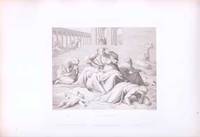
Overbeck, Johann Friedrich (German, Lubeck 1789 - 1869 Rome), After
The Nativity of Jesus Christ. First Edition of the Engraving
Dusseldorf: August Wilhelm Schulgen circa 1850. Engraving together with a letterpress description in English and French. 35 x 44.5 cm sheet size. Good. Tearing Age Toning and Foxing at sheet edges else Good.Fueled by dissatisfaction with the direction of the Vienna Academy a group of six German students founded the Brotherhood of St. Luke in 1809. Among them was Johann Friedrich Overbeck son of a senator of the Hanseatic free city of Lübeck. The brotherhood was a direct reference to the old painter’s guilds of medieval times. Four of the artists Overbeck Franz Pforr Ludwig Vogel and Johann Konrad Hottinger settled in Rome in 1810. Later joined by Friedrich Wilhelm Schadow Peter von Cornelius Philipp Veit and Julius Schnorr von Carolsfeld they were mockingly referred to as the Nazarenes. The group advocated a renewed interest in religious art and monumental wall paintings…… Their religious zeal most likely stemmed from the fact that almost all of them were Roman Catholic converts. Although the pursuit of spiritual and artistic simplicity and piety were typically romantic characteristics the means by which they attempted to depict their dreams were classical. It has been suggested that the Nazarenes should be considered a special branch of German Romanticism. They strove for a new form of German religious-patriotic art fusing Dürer with Fra Angelico Perugino and a young Raphael. Dusseldorf: August Wilhelm Schulgen, circa 1850 unknown
書籍販売業者の参照番号
: 75-7625
|
|
|
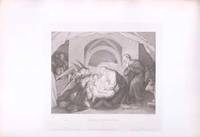
Overbeck, Johann Friedrich (German, Lubeck 1789 - 1869 Rome), After
The Offerings of the Wise Men. First Edition of the Engraving
Dusseldorf: August Wilhelm Schulgen circa 1850. Engraving together with a letterpress description in English and French. 35 x 44.5 cm sheet size. Good. Tearing Age Toning Foxing and minor Staining at sheet edges else Good.Fueled by dissatisfaction with the direction of the Vienna Academy a group of six German students founded the Brotherhood of St. Luke in 1809. Among them was Johann Friedrich Overbeck son of a senator of the Hanseatic free city of Lübeck. The brotherhood was a direct reference to the old painter’s guilds of medieval times. Four of the artists Overbeck Franz Pforr Ludwig Vogel and Johann Konrad Hottinger settled in Rome in 1810. Later joined by Friedrich Wilhelm Schadow Peter von Cornelius Philipp Veit and Julius Schnorr von Carolsfeld they were mockingly referred to as the Nazarenes. The group advocated a renewed interest in religious art and monumental wall paintings…… Their religious zeal most likely stemmed from the fact that almost all of them were Roman Catholic converts. Although the pursuit of spiritual and artistic simplicity and piety were typically romantic characteristics the means by which they attempted to depict their dreams were classical. It has been suggested that the Nazarenes should be considered a special branch of German Romanticism. They strove for a new form of German religious-patriotic art fusing Dürer with Fra Angelico Perugino and a young Raphael. Dusseldorf: August Wilhelm Schulgen, circa 1850 unknown
書籍販売業者の参照番号
: 75-7627
|
|
|
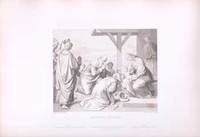
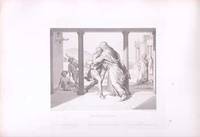
Overbeck, Johann Friedrich (German, Lubeck 1789 - 1869 Rome), After
The parable of the Prodigal Son. First Edition of the Engraving
Dusseldorf: August Wilhelm Schulgen circa 1850. Engraving together with a letterpress description in English and French. 35 x 44.5 cm sheet size. Good. Tearing Age Toning Foxing at sheet edges else Good.Fueled by dissatisfaction with the direction of the Vienna Academy a group of six German students founded the Brotherhood of St. Luke in 1809. Among them was Johann Friedrich Overbeck son of a senator of the Hanseatic free city of Lübeck. The brotherhood was a direct reference to the old painter’s guilds of medieval times. Four of the artists Overbeck Franz Pforr Ludwig Vogel and Johann Konrad Hottinger settled in Rome in 1810. Later joined by Friedrich Wilhelm Schadow Peter von Cornelius Philipp Veit and Julius Schnorr von Carolsfeld they were mockingly referred to as the Nazarenes. The group advocated a renewed interest in religious art and monumental wall paintings…… Their religious zeal most likely stemmed from the fact that almost all of them were Roman Catholic converts. Although the pursuit of spiritual and artistic simplicity and piety were typically romantic characteristics the means by which they attempted to depict their dreams were classical. It has been suggested that the Nazarenes should be considered a special branch of German Romanticism. They strove for a new form of German religious-patriotic art fusing Dürer with Fra Angelico Perugino and a young Raphael. Dusseldorf: August Wilhelm Schulgen, circa 1850 unknown
書籍販売業者の参照番号
: 75-7641
|
|
|
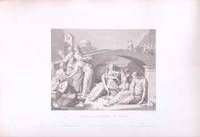
Overbeck, Johann Friedrich (German, Lubeck 1789 - 1869 Rome), After
The Parable of the Ten Virgins. First Edition of the Engraving
Dusseldorf: August Wilhelm Schulgen circa 1850. Engraving together with a letterpress description in English and French. 35 x 44.5 cm sheet size. Good. Tearing Age Toning Foxing at sheet edges else Good.Fueled by dissatisfaction with the direction of the Vienna Academy a group of six German students founded the Brotherhood of St. Luke in 1809. Among them was Johann Friedrich Overbeck son of a senator of the Hanseatic free city of Lübeck. The brotherhood was a direct reference to the old painter’s guilds of medieval times. Four of the artists Overbeck Franz Pforr Ludwig Vogel and Johann Konrad Hottinger settled in Rome in 1810. Later joined by Friedrich Wilhelm Schadow Peter von Cornelius Philipp Veit and Julius Schnorr von Carolsfeld they were mockingly referred to as the Nazarenes. The group advocated a renewed interest in religious art and monumental wall paintings…… Their religious zeal most likely stemmed from the fact that almost all of them were Roman Catholic converts. Although the pursuit of spiritual and artistic simplicity and piety were typically romantic characteristics the means by which they attempted to depict their dreams were classical. It has been suggested that the Nazarenes should be considered a special branch of German Romanticism. They strove for a new form of German religious-patriotic art fusing Dürer with Fra Angelico Perugino and a young Raphael. Dusseldorf: August Wilhelm Schulgen, circa 1850 unknown
書籍販売業者の参照番号
: 75-7645
|
|
|
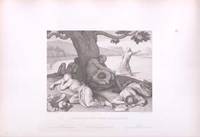
Overbeck, Johann Friedrich (German, Lubeck 1789 - 1869 Rome), After
The Parable of the Good Seed and of the Cockle. First Edition of the Engraving
Dusseldorf: August Wilhelm Schulgen circa 1850. Engraving together with a letterpress description in English and French. 35 x 44.5 cm sheet size. Good. Tearing Age Toning Foxing at sheet edges else Good.Fueled by dissatisfaction with the direction of the Vienna Academy a group of six German students founded the Brotherhood of St. Luke in 1809. Among them was Johann Friedrich Overbeck son of a senator of the Hanseatic free city of Lübeck. The brotherhood was a direct reference to the old painter’s guilds of medieval times. Four of the artists Overbeck Franz Pforr Ludwig Vogel and Johann Konrad Hottinger settled in Rome in 1810. Later joined by Friedrich Wilhelm Schadow Peter von Cornelius Philipp Veit and Julius Schnorr von Carolsfeld they were mockingly referred to as the Nazarenes. The group advocated a renewed interest in religious art and monumental wall paintings…… Their religious zeal most likely stemmed from the fact that almost all of them were Roman Catholic converts. Although the pursuit of spiritual and artistic simplicity and piety were typically romantic characteristics the means by which they attempted to depict their dreams were classical. It has been suggested that the Nazarenes should be considered a special branch of German Romanticism. They strove for a new form of German religious-patriotic art fusing Dürer with Fra Angelico Perugino and a young Raphael. Dusseldorf: August Wilhelm Schulgen, circa 1850 unknown
書籍販売業者の参照番号
: 75-7638
|
|
|
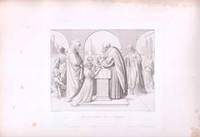
Overbeck, Johann Friedrich (German, Lubeck 1789 - 1869 Rome), After
The Presentation of the Child Jesus in the Temple. First Edition of the Engraving
Dusseldorf: August Wilhelm Schulgen circa 1850. Engraving together with a letterpress description in English and French. 35 x 44.5 cm sheet size. Good. Tearing Age Toning Foxing and Staining at sheet edges else Good.Fueled by dissatisfaction with the direction of the Vienna Academy a group of six German students founded the Brotherhood of St. Luke in 1809. Among them was Johann Friedrich Overbeck son of a senator of the Hanseatic free city of Lübeck. The brotherhood was a direct reference to the old painter’s guilds of medieval times. Four of the artists Overbeck Franz Pforr Ludwig Vogel and Johann Konrad Hottinger settled in Rome in 1810. Later joined by Friedrich Wilhelm Schadow Peter von Cornelius Philipp Veit and Julius Schnorr von Carolsfeld they were mockingly referred to as the Nazarenes. The group advocated a renewed interest in religious art and monumental wall paintings…… Their religious zeal most likely stemmed from the fact that almost all of them were Roman Catholic converts. Although the pursuit of spiritual and artistic simplicity and piety were typically romantic characteristics the means by which they attempted to depict their dreams were classical. It has been suggested that the Nazarenes should be considered a special branch of German Romanticism. They strove for a new form of German religious-patriotic art fusing Dürer with Fra Angelico Perugino and a young Raphael. Dusseldorf: August Wilhelm Schulgen, circa 1850 unknown
書籍販売業者の参照番号
: 75-7626
|
|
|
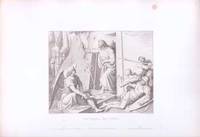
Overbeck, Johann Friedrich (German, Lubeck 1789 - 1869 Rome), After
The Resurrection of Jesus Christ. First Edition of the Engraving
Dusseldorf: August Wilhelm Schulgen circa 1850. Engraving together with a letterpress description in English and French. 35 x 44.5 cm sheet size. Good. Tearing Age Toning Foxing at sheet edges else Good.Fueled by dissatisfaction with the direction of the Vienna Academy a group of six German students founded the Brotherhood of St. Luke in 1809. Among them was Johann Friedrich Overbeck son of a senator of the Hanseatic free city of Lübeck. The brotherhood was a direct reference to the old painter’s guilds of medieval times. Four of the artists Overbeck Franz Pforr Ludwig Vogel and Johann Konrad Hottinger settled in Rome in 1810. Later joined by Friedrich Wilhelm Schadow Peter von Cornelius Philipp Veit and Julius Schnorr von Carolsfeld they were mockingly referred to as the Nazarenes. The group advocated a renewed interest in religious art and monumental wall paintings…… Their religious zeal most likely stemmed from the fact that almost all of them were Roman Catholic converts. Although the pursuit of spiritual and artistic simplicity and piety were typically romantic characteristics the means by which they attempted to depict their dreams were classical. It has been suggested that the Nazarenes should be considered a special branch of German Romanticism. They strove for a new form of German religious-patriotic art fusing Dürer with Fra Angelico Perugino and a young Raphael. Dusseldorf: August Wilhelm Schulgen, circa 1850 unknown
書籍販売業者の参照番号
: 75-7658
|
|
|
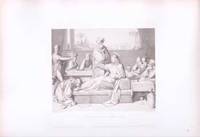
Overbeck, Johann Friedrich (German, Lubeck 1789 - 1869 Rome), After
The Sinner Anointed the Feet of Jesus. First Edition of the Engraving
Dusseldorf: August Wilhelm Schulgen circa 1850. Engraving together with a letterpress description in English and French. 35 x 44.5 cm sheet size. Good. Tearing Age Toning Foxing at sheet edges else Good.Fueled by dissatisfaction with the direction of the Vienna Academy a group of six German students founded the Brotherhood of St. Luke in 1809. Among them was Johann Friedrich Overbeck son of a senator of the Hanseatic free city of Lübeck. The brotherhood was a direct reference to the old painter’s guilds of medieval times. Four of the artists Overbeck Franz Pforr Ludwig Vogel and Johann Konrad Hottinger settled in Rome in 1810. Later joined by Friedrich Wilhelm Schadow Peter von Cornelius Philipp Veit and Julius Schnorr von Carolsfeld they were mockingly referred to as the Nazarenes. The group advocated a renewed interest in religious art and monumental wall paintings…… Their religious zeal most likely stemmed from the fact that almost all of them were Roman Catholic converts. Although the pursuit of spiritual and artistic simplicity and piety were typically romantic characteristics the means by which they attempted to depict their dreams were classical. It has been suggested that the Nazarenes should be considered a special branch of German Romanticism. They strove for a new form of German religious-patriotic art fusing Dürer with Fra Angelico Perugino and a young Raphael. Dusseldorf: August Wilhelm Schulgen, circa 1850 unknown
書籍販売業者の参照番号
: 75-7636
|
|
|
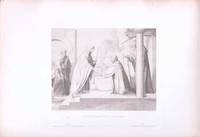
Overbeck, Johann Friedrich (German, Lubeck 1789 - 1869 Rome), After
The Visitation of the Blessed Virgin. First Edition of the Engraving
Dusseldorf: August Wilhelm Schulgen circa 1850. Engraving together with a letterpress description in English and French. 35 x 44.5 cm sheet size. Good. Tearing Age Toning and Foxing at sheet edges else Good.Fueled by dissatisfaction with the direction of the Vienna Academy a group of six German students founded the Brotherhood of St. Luke in 1809. Among them was Johann Friedrich Overbeck son of a senator of the Hanseatic free city of Lübeck. The brotherhood was a direct reference to the old painter’s guilds of medieval times. Four of the artists Overbeck Franz Pforr Ludwig Vogel and Johann Konrad Hottinger settled in Rome in 1810. Later joined by Friedrich Wilhelm Schadow Peter von Cornelius Philipp Veit and Julius Schnorr von Carolsfeld they were mockingly referred to as the Nazarenes. The group advocated a renewed interest in religious art and monumental wall paintings…… Their religious zeal most likely stemmed from the fact that almost all of them were Roman Catholic converts. Although the pursuit of spiritual and artistic simplicity and piety were typically romantic characteristics the means by which they attempted to depict their dreams were classical. It has been suggested that the Nazarenes should be considered a special branch of German Romanticism. They strove for a new form of German religious-patriotic art fusing Dürer with Fra Angelico Perugino and a young Raphael. Dusseldorf: August Wilhelm Schulgen, circa 1850 unknown
書籍販売業者の参照番号
: 75-7623
|
|
|
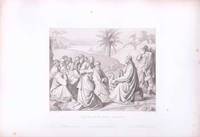
Overbeck, Johann Friedrich (German, Lubeck 1789 - 1869 Rome), After
Who is the Greatest in the Kingdom of Heaven First Edition of the Engraving
Dusseldorf: August Wilhelm Schulgen circa 1850. Engraving together with a letterpress description in English and French. 35 x 44.5 cm sheet size. Good. Tearing Age Toning Foxing at sheet edges else Good.Fueled by dissatisfaction with the direction of the Vienna Academy a group of six German students founded the Brotherhood of St. Luke in 1809. Among them was Johann Friedrich Overbeck son of a senator of the Hanseatic free city of Lübeck. The brotherhood was a direct reference to the old painter’s guilds of medieval times. Four of the artists Overbeck Franz Pforr Ludwig Vogel and Johann Konrad Hottinger settled in Rome in 1810. Later joined by Friedrich Wilhelm Schadow Peter von Cornelius Philipp Veit and Julius Schnorr von Carolsfeld they were mockingly referred to as the Nazarenes. The group advocated a renewed interest in religious art and monumental wall paintings…… Their religious zeal most likely stemmed from the fact that almost all of them were Roman Catholic converts. Although the pursuit of spiritual and artistic simplicity and piety were typically romantic characteristics the means by which they attempted to depict their dreams were classical. It has been suggested that the Nazarenes should be considered a special branch of German Romanticism. They strove for a new form of German religious-patriotic art fusing Dürer with Fra Angelico Perugino and a young Raphael. Dusseldorf: August Wilhelm Schulgen, circa 1850 unknown
書籍販売業者の参照番号
: 75-7639
|
|

 検索結果のメールを受信する
 PDFファイルの検索結果をダウンロード
 RSSフィード
 パーマネントリンク


