|
Ovadiah, Ruth; Ovadiah, Asher
Hellenistic, Roman and Early Byzantine Mosaic Pavements in Israel [SIGNED BY AUTHORS]. [SERIES]: Bibliotheca Archaeologica / 6.
SIGNED BY AUTHORS. Contains plates in color. 29X22 cm. 276+CXCII pages. Hardcover in dust jacket. Cover slightly water stained at bottom edge. Else in good condition. PLEASE NOTE: This item is overweight. We may ask for extra shipping costs.
|
|
|
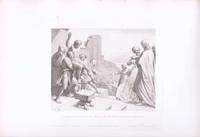
Overbeck, Johann Friedrich (German, Lubeck 1789 - 1869 Rome), After
Barabbas is Released and Jesus is Delivered to be Crucified. First Edition of the Engraving
Dusseldorf: August Wilhelm Schulgen circa 1850. Engraving together with a letterpress description in English and French. 35 x 44.5 cm sheet size. Good. Tearing Age Toning Foxing at sheet edges else Good.Fueled by dissatisfaction with the direction of the Vienna Academy a group of six German students founded the Brotherhood of St. Luke in 1809. Among them was Johann Friedrich Overbeck son of a senator of the Hanseatic free city of Lübeck. The brotherhood was a direct reference to the old painter’s guilds of medieval times. Four of the artists Overbeck Franz Pforr Ludwig Vogel and Johann Konrad Hottinger settled in Rome in 1810. Later joined by Friedrich Wilhelm Schadow Peter von Cornelius Philipp Veit and Julius Schnorr von Carolsfeld they were mockingly referred to as the Nazarenes. The group advocated a renewed interest in religious art and monumental wall paintings…… Their religious zeal most likely stemmed from the fact that almost all of them were Roman Catholic converts. Although the pursuit of spiritual and artistic simplicity and piety were typically romantic characteristics the means by which they attempted to depict their dreams were classical. It has been suggested that the Nazarenes should be considered a special branch of German Romanticism. They strove for a new form of German religious-patriotic art fusing Dürer with Fra Angelico Perugino and a young Raphael. Dusseldorf: August Wilhelm Schulgen, circa 1850 unknown
Referentie van de boekhandelaar : 75-7652
|
|
|
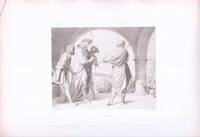
Overbeck, Johann Friedrich (German, Lubeck 1789 - 1869 Rome), After
Behold the Man!. First Edition of the Engraving
Dusseldorf: August Wilhelm Schulgen circa 1850. Engraving together with a letterpress description in English and French. 35 x 44.5 cm sheet size. Good. Tearing Age Toning Foxing at sheet edges else Good.Fueled by dissatisfaction with the direction of the Vienna Academy a group of six German students founded the Brotherhood of St. Luke in 1809. Among them was Johann Friedrich Overbeck son of a senator of the Hanseatic free city of Lübeck. The brotherhood was a direct reference to the old painter’s guilds of medieval times. Four of the artists Overbeck Franz Pforr Ludwig Vogel and Johann Konrad Hottinger settled in Rome in 1810. Later joined by Friedrich Wilhelm Schadow Peter von Cornelius Philipp Veit and Julius Schnorr von Carolsfeld they were mockingly referred to as the Nazarenes. The group advocated a renewed interest in religious art and monumental wall paintings…… Their religious zeal most likely stemmed from the fact that almost all of them were Roman Catholic converts. Although the pursuit of spiritual and artistic simplicity and piety were typically romantic characteristics the means by which they attempted to depict their dreams were classical. It has been suggested that the Nazarenes should be considered a special branch of German Romanticism. They strove for a new form of German religious-patriotic art fusing Dürer with Fra Angelico Perugino and a young Raphael. Dusseldorf: August Wilhelm Schulgen, circa 1850 unknown
Referentie van de boekhandelaar : 75-7654
|
|
|
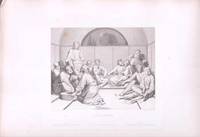
Overbeck, Johann Friedrich (German, Lubeck 1789 - 1869 Rome), After
Christ Washes His Disciples' Feet. First Edition of the Engraving
Dusseldorf: August Wilhelm Schulgen circa 1850. Engraving together with a letterpress description in English and French. 35 x 44.5 cm sheet size. Good. Tearing Age Toning Foxing at sheet edges else Good.Fueled by dissatisfaction with the direction of the Vienna Academy a group of six German students founded the Brotherhood of St. Luke in 1809. Among them was Johann Friedrich Overbeck son of a senator of the Hanseatic free city of Lübeck. The brotherhood was a direct reference to the old painter’s guilds of medieval times. Four of the artists Overbeck Franz Pforr Ludwig Vogel and Johann Konrad Hottinger settled in Rome in 1810. Later joined by Friedrich Wilhelm Schadow Peter von Cornelius Philipp Veit and Julius Schnorr von Carolsfeld they were mockingly referred to as the Nazarenes. The group advocated a renewed interest in religious art and monumental wall paintings…… Their religious zeal most likely stemmed from the fact that almost all of them were Roman Catholic converts. Although the pursuit of spiritual and artistic simplicity and piety were typically romantic characteristics the means by which they attempted to depict their dreams were classical. It has been suggested that the Nazarenes should be considered a special branch of German Romanticism. They strove for a new form of German religious-patriotic art fusing Dürer with Fra Angelico Perugino and a young Raphael. Dusseldorf: August Wilhelm Schulgen, circa 1850 unknown
Referentie van de boekhandelaar : 75-7646
|
|
|
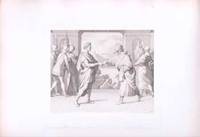
Overbeck, Johann Friedrich (German, Lubeck 1789 - 1869 Rome), After
Herod and Pilate are Made Friends. First Edition of the Engraving
Dusseldorf: August Wilhelm Schulgen circa 1850. Engraving together with a letterpress description in English and French. 35 x 44.5 cm sheet size. Good. Tearing Age Toning Foxing at sheet edges else Good.Fueled by dissatisfaction with the direction of the Vienna Academy a group of six German students founded the Brotherhood of St. Luke in 1809. Among them was Johann Friedrich Overbeck son of a senator of the Hanseatic free city of Lübeck. The brotherhood was a direct reference to the old painter’s guilds of medieval times. Four of the artists Overbeck Franz Pforr Ludwig Vogel and Johann Konrad Hottinger settled in Rome in 1810. Later joined by Friedrich Wilhelm Schadow Peter von Cornelius Philipp Veit and Julius Schnorr von Carolsfeld they were mockingly referred to as the Nazarenes. The group advocated a renewed interest in religious art and monumental wall paintings…… Their religious zeal most likely stemmed from the fact that almost all of them were Roman Catholic converts. Although the pursuit of spiritual and artistic simplicity and piety were typically romantic characteristics the means by which they attempted to depict their dreams were classical. It has been suggested that the Nazarenes should be considered a special branch of German Romanticism. They strove for a new form of German religious-patriotic art fusing Dürer with Fra Angelico Perugino and a young Raphael. Dusseldorf: August Wilhelm Schulgen, circa 1850 unknown
Referentie van de boekhandelaar : 75-7651
|
|
|
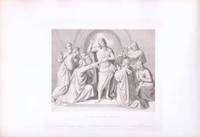
Overbeck, Johann Friedrich (German, Lubeck 1789 - 1869 Rome), After
Jesus Appeareth to Thomas. First Edition of the Engraving
Dusseldorf: August Wilhelm Schulgen circa 1850. Engraving together with a letterpress description in English and French. 35 x 44.5 cm sheet size. Good. Tearing Age Toning Foxing at sheet edges else Good.Fueled by dissatisfaction with the direction of the Vienna Academy a group of six German students founded the Brotherhood of St. Luke in 1809. Among them was Johann Friedrich Overbeck son of a senator of the Hanseatic free city of Lübeck. The brotherhood was a direct reference to the old painter’s guilds of medieval times. Four of the artists Overbeck Franz Pforr Ludwig Vogel and Johann Konrad Hottinger settled in Rome in 1810. Later joined by Friedrich Wilhelm Schadow Peter von Cornelius Philipp Veit and Julius Schnorr von Carolsfeld they were mockingly referred to as the Nazarenes. The group advocated a renewed interest in religious art and monumental wall paintings…… Their religious zeal most likely stemmed from the fact that almost all of them were Roman Catholic converts. Although the pursuit of spiritual and artistic simplicity and piety were typically romantic characteristics the means by which they attempted to depict their dreams were classical. It has been suggested that the Nazarenes should be considered a special branch of German Romanticism. They strove for a new form of German religious-patriotic art fusing Dürer with Fra Angelico Perugino and a young Raphael. Dusseldorf: August Wilhelm Schulgen, circa 1850 unknown
Referentie van de boekhandelaar : 75-7659
|
|
|
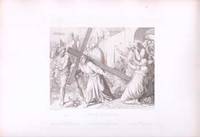
Overbeck, Johann Friedrich (German, Lubeck 1789 - 1869 Rome), After
Jesus Bearing his Own Cross. First Edition of the Engraving
Dusseldorf: August Wilhelm Schulgen circa 1850. Engraving together with a letterpress description in English and French. 35 x 44.5 cm sheet size. Good. Tearing Age Toning Foxing at sheet edges else Good.Fueled by dissatisfaction with the direction of the Vienna Academy a group of six German students founded the Brotherhood of St. Luke in 1809. Among them was Johann Friedrich Overbeck son of a senator of the Hanseatic free city of Lübeck. The brotherhood was a direct reference to the old painter’s guilds of medieval times. Four of the artists Overbeck Franz Pforr Ludwig Vogel and Johann Konrad Hottinger settled in Rome in 1810. Later joined by Friedrich Wilhelm Schadow Peter von Cornelius Philipp Veit and Julius Schnorr von Carolsfeld they were mockingly referred to as the Nazarenes. The group advocated a renewed interest in religious art and monumental wall paintings…… Their religious zeal most likely stemmed from the fact that almost all of them were Roman Catholic converts. Although the pursuit of spiritual and artistic simplicity and piety were typically romantic characteristics the means by which they attempted to depict their dreams were classical. It has been suggested that the Nazarenes should be considered a special branch of German Romanticism. They strove for a new form of German religious-patriotic art fusing Dürer with Fra Angelico Perugino and a young Raphael. Dusseldorf: August Wilhelm Schulgen, circa 1850 unknown
Referentie van de boekhandelaar : 75-7655
|
|
|
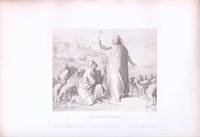
Overbeck, Johann Friedrich (German, Lubeck 1789 - 1869 Rome), After
Jesus Christ Commandeth Peter to Feed His Lambs and Sheep. First Edition of the Engraving
Dusseldorf: August Wilhelm Schulgen circa 1850. Engraving together with a letterpress description in English and French. 35 x 44.5 cm sheet size. Good. Tearing Age Toning Foxing at sheet edges else Good.Fueled by dissatisfaction with the direction of the Vienna Academy a group of six German students founded the Brotherhood of St. Luke in 1809. Among them was Johann Friedrich Overbeck son of a senator of the Hanseatic free city of Lübeck. The brotherhood was a direct reference to the old painter’s guilds of medieval times. Four of the artists Overbeck Franz Pforr Ludwig Vogel and Johann Konrad Hottinger settled in Rome in 1810. Later joined by Friedrich Wilhelm Schadow Peter von Cornelius Philipp Veit and Julius Schnorr von Carolsfeld they were mockingly referred to as the Nazarenes. The group advocated a renewed interest in religious art and monumental wall paintings…… Their religious zeal most likely stemmed from the fact that almost all of them were Roman Catholic converts. Although the pursuit of spiritual and artistic simplicity and piety were typically romantic characteristics the means by which they attempted to depict their dreams were classical. It has been suggested that the Nazarenes should be considered a special branch of German Romanticism. They strove for a new form of German religious-patriotic art fusing Dürer with Fra Angelico Perugino and a young Raphael. Dusseldorf: August Wilhelm Schulgen, circa 1850 unknown
Referentie van de boekhandelaar : 75-7660
|
|
|
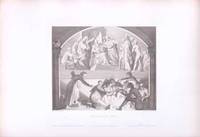
Overbeck, Johann Friedrich (German, Lubeck 1789 - 1869 Rome), After
Jesus Christ is Thrice denied of Peter. First Edition of the Engraving
Dusseldorf: August Wilhelm Schulgen circa 1850. Engraving together with a letterpress description in English and French. 35 x 44.5 cm sheet size. Good. Tearing Age Toning Foxing at sheet edges else Good.Fueled by dissatisfaction with the direction of the Vienna Academy a group of six German students founded the Brotherhood of St. Luke in 1809. Among them was Johann Friedrich Overbeck son of a senator of the Hanseatic free city of Lübeck. The brotherhood was a direct reference to the old painter’s guilds of medieval times. Four of the artists Overbeck Franz Pforr Ludwig Vogel and Johann Konrad Hottinger settled in Rome in 1810. Later joined by Friedrich Wilhelm Schadow Peter von Cornelius Philipp Veit and Julius Schnorr von Carolsfeld they were mockingly referred to as the Nazarenes. The group advocated a renewed interest in religious art and monumental wall paintings…… Their religious zeal most likely stemmed from the fact that almost all of them were Roman Catholic converts. Although the pursuit of spiritual and artistic simplicity and piety were typically romantic characteristics the means by which they attempted to depict their dreams were classical. It has been suggested that the Nazarenes should be considered a special branch of German Romanticism. They strove for a new form of German religious-patriotic art fusing Dürer with Fra Angelico Perugino and a young Raphael. Dusseldorf: August Wilhelm Schulgen, circa 1850 unknown
Referentie van de boekhandelaar : 75-7650
|
|
|
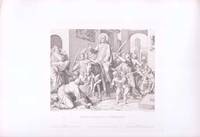
Overbeck, Johann Friedrich (German, Lubeck 1789 - 1869 Rome), After
Jesus Entering into Jerusalem. First Edition of the Engraving
Dusseldorf: August Wilhelm Schulgen circa 1850. Engraving together with a letterpress description in English and French. 35 x 44.5 cm sheet size. Good. Tearing Age Toning Foxing at sheet edges else Good.Fueled by dissatisfaction with the direction of the Vienna Academy a group of six German students founded the Brotherhood of St. Luke in 1809. Among them was Johann Friedrich Overbeck son of a senator of the Hanseatic free city of Lübeck. The brotherhood was a direct reference to the old painter’s guilds of medieval times. Four of the artists Overbeck Franz Pforr Ludwig Vogel and Johann Konrad Hottinger settled in Rome in 1810. Later joined by Friedrich Wilhelm Schadow Peter von Cornelius Philipp Veit and Julius Schnorr von Carolsfeld they were mockingly referred to as the Nazarenes. The group advocated a renewed interest in religious art and monumental wall paintings…… Their religious zeal most likely stemmed from the fact that almost all of them were Roman Catholic converts. Although the pursuit of spiritual and artistic simplicity and piety were typically romantic characteristics the means by which they attempted to depict their dreams were classical. It has been suggested that the Nazarenes should be considered a special branch of German Romanticism. They strove for a new form of German religious-patriotic art fusing Dürer with Fra Angelico Perugino and a young Raphael. Dusseldorf: August Wilhelm Schulgen, circa 1850 unknown
Referentie van de boekhandelaar : 75-7643
|
|
|
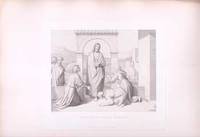
Overbeck, Johann Friedrich (German, Lubeck 1789 - 1869 Rome), After
Jesus in the House of Mary and Martha. First Edition of the Engraving
Dusseldorf: August Wilhelm Schulgen circa 1850. Engraving together with a letterpress description in English and French. 35 x 44.5 cm sheet size. Good. Tearing Age Toning Foxing at sheet edges else Good.Fueled by dissatisfaction with the direction of the Vienna Academy a group of six German students founded the Brotherhood of St. Luke in 1809. Among them was Johann Friedrich Overbeck son of a senator of the Hanseatic free city of Lübeck. The brotherhood was a direct reference to the old painter’s guilds of medieval times. Four of the artists Overbeck Franz Pforr Ludwig Vogel and Johann Konrad Hottinger settled in Rome in 1810. Later joined by Friedrich Wilhelm Schadow Peter von Cornelius Philipp Veit and Julius Schnorr von Carolsfeld they were mockingly referred to as the Nazarenes. The group advocated a renewed interest in religious art and monumental wall paintings…… Their religious zeal most likely stemmed from the fact that almost all of them were Roman Catholic converts. Although the pursuit of spiritual and artistic simplicity and piety were typically romantic characteristics the means by which they attempted to depict their dreams were classical. It has been suggested that the Nazarenes should be considered a special branch of German Romanticism. They strove for a new form of German religious-patriotic art fusing Dürer with Fra Angelico Perugino and a young Raphael. Dusseldorf: August Wilhelm Schulgen, circa 1850 unknown
Referentie van de boekhandelaar : 75-7640
|
|
|
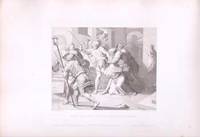
Overbeck, Johann Friedrich (German, Lubeck 1789 - 1869 Rome), After
Jesus is Apprehended and Carried to the High-Priest. First Edition of the Engraving
Dusseldorf: August Wilhelm Schulgen circa 1850. Engraving together with a letterpress description in English and French. 35 x 44.5 cm sheet size. Good. Tearing Age Toning Foxing at sheet edges else Good.Fueled by dissatisfaction with the direction of the Vienna Academy a group of six German students founded the Brotherhood of St. Luke in 1809. Among them was Johann Friedrich Overbeck son of a senator of the Hanseatic free city of Lübeck. The brotherhood was a direct reference to the old painter’s guilds of medieval times. Four of the artists Overbeck Franz Pforr Ludwig Vogel and Johann Konrad Hottinger settled in Rome in 1810. Later joined by Friedrich Wilhelm Schadow Peter von Cornelius Philipp Veit and Julius Schnorr von Carolsfeld they were mockingly referred to as the Nazarenes. The group advocated a renewed interest in religious art and monumental wall paintings…… Their religious zeal most likely stemmed from the fact that almost all of them were Roman Catholic converts. Although the pursuit of spiritual and artistic simplicity and piety were typically romantic characteristics the means by which they attempted to depict their dreams were classical. It has been suggested that the Nazarenes should be considered a special branch of German Romanticism. They strove for a new form of German religious-patriotic art fusing Dürer with Fra Angelico Perugino and a young Raphael. Dusseldorf: August Wilhelm Schulgen, circa 1850 unknown
Referentie van de boekhandelaar : 75-7649
|
|
|
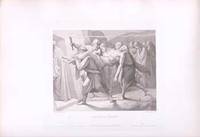
Overbeck, Johann Friedrich (German, Lubeck 1789 - 1869 Rome), After
Jesus is Buried. First Edition of the Engraving
Dusseldorf: August Wilhelm Schulgen circa 1850. Engraving together with a letterpress description in English and French. 35 x 44.5 cm sheet size. Good. Tearing Age Toning Foxing at sheet edges else Good.Fueled by dissatisfaction with the direction of the Vienna Academy a group of six German students founded the Brotherhood of St. Luke in 1809. Among them was Johann Friedrich Overbeck son of a senator of the Hanseatic free city of Lübeck. The brotherhood was a direct reference to the old painter’s guilds of medieval times. Four of the artists Overbeck Franz Pforr Ludwig Vogel and Johann Konrad Hottinger settled in Rome in 1810. Later joined by Friedrich Wilhelm Schadow Peter von Cornelius Philipp Veit and Julius Schnorr von Carolsfeld they were mockingly referred to as the Nazarenes. The group advocated a renewed interest in religious art and monumental wall paintings…… Their religious zeal most likely stemmed from the fact that almost all of them were Roman Catholic converts. Although the pursuit of spiritual and artistic simplicity and piety were typically romantic characteristics the means by which they attempted to depict their dreams were classical. It has been suggested that the Nazarenes should be considered a special branch of German Romanticism. They strove for a new form of German religious-patriotic art fusing Dürer with Fra Angelico Perugino and a young Raphael. Dusseldorf: August Wilhelm Schulgen, circa 1850 unknown
Referentie van de boekhandelaar : 75-7657
|
|
|
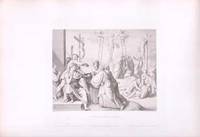
Overbeck, Johann Friedrich (German, Lubeck 1789 - 1869 Rome), After
Jesus is Crucified. First Edition of the Engraving
Dusseldorf: August Wilhelm Schulgen circa 1850. Engraving together with a letterpress description in English and French. 35 x 44.5 cm sheet size. Good. Tearing Age Toning Foxing at sheet edges else Good.Fueled by dissatisfaction with the direction of the Vienna Academy a group of six German students founded the Brotherhood of St. Luke in 1809. Among them was Johann Friedrich Overbeck son of a senator of the Hanseatic free city of Lübeck. The brotherhood was a direct reference to the old painter’s guilds of medieval times. Four of the artists Overbeck Franz Pforr Ludwig Vogel and Johann Konrad Hottinger settled in Rome in 1810. Later joined by Friedrich Wilhelm Schadow Peter von Cornelius Philipp Veit and Julius Schnorr von Carolsfeld they were mockingly referred to as the Nazarenes. The group advocated a renewed interest in religious art and monumental wall paintings…… Their religious zeal most likely stemmed from the fact that almost all of them were Roman Catholic converts. Although the pursuit of spiritual and artistic simplicity and piety were typically romantic characteristics the means by which they attempted to depict their dreams were classical. It has been suggested that the Nazarenes should be considered a special branch of German Romanticism. They strove for a new form of German religious-patriotic art fusing Dürer with Fra Angelico Perugino and a young Raphael. Dusseldorf: August Wilhelm Schulgen, circa 1850 unknown
Referentie van de boekhandelaar : 75-7656
|
|
|
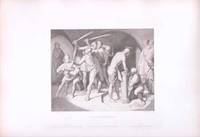
Overbeck, Johann Friedrich (German, Lubeck 1789 - 1869 Rome), After
Jesus is Scourged. First Edition of the Engraving
Dusseldorf: August Wilhelm Schulgen circa 1850. Engraving together with a letterpress description in English and French. 35 x 44.5 cm sheet size. Good. Tearing Age Toning Foxing at sheet edges else Good.Fueled by dissatisfaction with the direction of the Vienna Academy a group of six German students founded the Brotherhood of St. Luke in 1809. Among them was Johann Friedrich Overbeck son of a senator of the Hanseatic free city of Lübeck. The brotherhood was a direct reference to the old painter’s guilds of medieval times. Four of the artists Overbeck Franz Pforr Ludwig Vogel and Johann Konrad Hottinger settled in Rome in 1810. Later joined by Friedrich Wilhelm Schadow Peter von Cornelius Philipp Veit and Julius Schnorr von Carolsfeld they were mockingly referred to as the Nazarenes. The group advocated a renewed interest in religious art and monumental wall paintings…… Their religious zeal most likely stemmed from the fact that almost all of them were Roman Catholic converts. Although the pursuit of spiritual and artistic simplicity and piety were typically romantic characteristics the means by which they attempted to depict their dreams were classical. It has been suggested that the Nazarenes should be considered a special branch of German Romanticism. They strove for a new form of German religious-patriotic art fusing Dürer with Fra Angelico Perugino and a young Raphael. Dusseldorf: August Wilhelm Schulgen, circa 1850 unknown
Referentie van de boekhandelaar : 75-7653
|
|
|
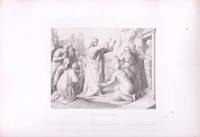
Overbeck, Johann Friedrich (German, Lubeck 1789 - 1869 Rome), After
Jesus Raises Lazarus to Life. First Edition of the Engraving
Dusseldorf: August Wilhelm Schulgen circa 1850. Engraving together with a letterpress description in English and French. 35 x 44.5 cm sheet size. Good. Tearing Age Toning Foxing at sheet edges else Good.Fueled by dissatisfaction with the direction of the Vienna Academy a group of six German students founded the Brotherhood of St. Luke in 1809. Among them was Johann Friedrich Overbeck son of a senator of the Hanseatic free city of Lübeck. The brotherhood was a direct reference to the old painter’s guilds of medieval times. Four of the artists Overbeck Franz Pforr Ludwig Vogel and Johann Konrad Hottinger settled in Rome in 1810. Later joined by Friedrich Wilhelm Schadow Peter von Cornelius Philipp Veit and Julius Schnorr von Carolsfeld they were mockingly referred to as the Nazarenes. The group advocated a renewed interest in religious art and monumental wall paintings…… Their religious zeal most likely stemmed from the fact that almost all of them were Roman Catholic converts. Although the pursuit of spiritual and artistic simplicity and piety were typically romantic characteristics the means by which they attempted to depict their dreams were classical. It has been suggested that the Nazarenes should be considered a special branch of German Romanticism. They strove for a new form of German religious-patriotic art fusing Dürer with Fra Angelico Perugino and a young Raphael. Dusseldorf: August Wilhelm Schulgen, circa 1850 unknown
Referentie van de boekhandelaar : 75-7642
|
|
|
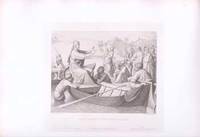
Overbeck, Johann Friedrich (German, Lubeck 1789 - 1869 Rome), After
Jesus Sitting in the Ship Teacheth the Multitude. First Edition of the Engraving
Dusseldorf: August Wilhelm Schulgen circa 1850. Engraving together with a letterpress description in English and French. 35 x 44.5 cm sheet size. Good. Tearing Age Toning Foxing at sheet edges else Good.Fueled by dissatisfaction with the direction of the Vienna Academy a group of six German students founded the Brotherhood of St. Luke in 1809. Among them was Johann Friedrich Overbeck son of a senator of the Hanseatic free city of Lübeck. The brotherhood was a direct reference to the old painter’s guilds of medieval times. Four of the artists Overbeck Franz Pforr Ludwig Vogel and Johann Konrad Hottinger settled in Rome in 1810. Later joined by Friedrich Wilhelm Schadow Peter von Cornelius Philipp Veit and Julius Schnorr von Carolsfeld they were mockingly referred to as the Nazarenes. The group advocated a renewed interest in religious art and monumental wall paintings…… Their religious zeal most likely stemmed from the fact that almost all of them were Roman Catholic converts. Although the pursuit of spiritual and artistic simplicity and piety were typically romantic characteristics the means by which they attempted to depict their dreams were classical. It has been suggested that the Nazarenes should be considered a special branch of German Romanticism. They strove for a new form of German religious-patriotic art fusing Dürer with Fra Angelico Perugino and a young Raphael. Dusseldorf: August Wilhelm Schulgen, circa 1850 unknown
Referentie van de boekhandelaar : 75-7637
|
|
|
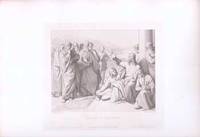
Overbeck, Johann Friedrich (German, Lubeck 1789 - 1869 Rome), After
Jesus Speaketh Wo to the Phaisees. First Edition of the Engraving
Dusseldorf: August Wilhelm Schulgen circa 1850. Engraving together with a letterpress description in English and French. 35 x 44.5 cm sheet size. Good. Tearing Age Toning Foxing at sheet edges else Good.Fueled by dissatisfaction with the direction of the Vienna Academy a group of six German students founded the Brotherhood of St. Luke in 1809. Among them was Johann Friedrich Overbeck son of a senator of the Hanseatic free city of Lübeck. The brotherhood was a direct reference to the old painter’s guilds of medieval times. Four of the artists Overbeck Franz Pforr Ludwig Vogel and Johann Konrad Hottinger settled in Rome in 1810. Later joined by Friedrich Wilhelm Schadow Peter von Cornelius Philipp Veit and Julius Schnorr von Carolsfeld they were mockingly referred to as the Nazarenes. The group advocated a renewed interest in religious art and monumental wall paintings…… Their religious zeal most likely stemmed from the fact that almost all of them were Roman Catholic converts. Although the pursuit of spiritual and artistic simplicity and piety were typically romantic characteristics the means by which they attempted to depict their dreams were classical. It has been suggested that the Nazarenes should be considered a special branch of German Romanticism. They strove for a new form of German religious-patriotic art fusing Dürer with Fra Angelico Perugino and a young Raphael. Dusseldorf: August Wilhelm Schulgen, circa 1850 unknown
Referentie van de boekhandelaar : 75-7644
|
|
|
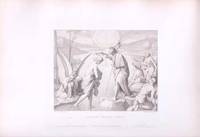
Overbeck, Johann Friedrich (German, Lubeck 1789 - 1869 Rome), After
John Baptizeth Jesus. First Edition of the Engraving
Dusseldorf: August Wilhelm Schulgen circa 1850. Engraving together with a letterpress description in English and French. 35 x 44.5 cm sheet size. Good. Tearing Age Toning Foxing and minor Staining at sheet edges else Good.Fueled by dissatisfaction with the direction of the Vienna Academy a group of six German students founded the Brotherhood of St. Luke in 1809. Among them was Johann Friedrich Overbeck son of a senator of the Hanseatic free city of Lübeck. The brotherhood was a direct reference to the old painter’s guilds of medieval times. Four of the artists Overbeck Franz Pforr Ludwig Vogel and Johann Konrad Hottinger settled in Rome in 1810. Later joined by Friedrich Wilhelm Schadow Peter von Cornelius Philipp Veit and Julius Schnorr von Carolsfeld they were mockingly referred to as the Nazarenes. The group advocated a renewed interest in religious art and monumental wall paintings…… Their religious zeal most likely stemmed from the fact that almost all of them were Roman Catholic converts. Although the pursuit of spiritual and artistic simplicity and piety were typically romantic characteristics the means by which they attempted to depict their dreams were classical. It has been suggested that the Nazarenes should be considered a special branch of German Romanticism. They strove for a new form of German religious-patriotic art fusing Dürer with Fra Angelico Perugino and a young Raphael. Dusseldorf: August Wilhelm Schulgen, circa 1850 unknown
Referentie van de boekhandelaar : 75-7632
|
|
|
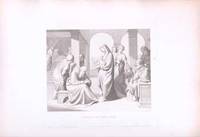
Overbeck, Johann Friedrich (German, Lubeck 1789 - 1869 Rome), After
John Is His Name. First Edition of the Engraving
Dusseldorf: August Wilhelm Schulgen circa 1850. Engraving together with a letterpress description in English and French. 35 x 44.5 cm sheet size. Good. Tearing Age Toning and Foxing at sheet edges else Good.Fueled by dissatisfaction with the direction of the Vienna Academy a group of six German students founded the Brotherhood of St. Luke in 1809. Among them was Johann Friedrich Overbeck son of a senator of the Hanseatic free city of Lübeck. The brotherhood was a direct reference to the old painter’s guilds of medieval times. Four of the artists Overbeck Franz Pforr Ludwig Vogel and Johann Konrad Hottinger settled in Rome in 1810. Later joined by Friedrich Wilhelm Schadow Peter von Cornelius Philipp Veit and Julius Schnorr von Carolsfeld they were mockingly referred to as the Nazarenes. The group advocated a renewed interest in religious art and monumental wall paintings…… Their religious zeal most likely stemmed from the fact that almost all of them were Roman Catholic converts. Although the pursuit of spiritual and artistic simplicity and piety were typically romantic characteristics the means by which they attempted to depict their dreams were classical. It has been suggested that the Nazarenes should be considered a special branch of German Romanticism. They strove for a new form of German religious-patriotic art fusing Dürer with Fra Angelico Perugino and a young Raphael. Dusseldorf: August Wilhelm Schulgen, circa 1850 unknown
Referentie van de boekhandelaar : 75-7624
|
|
|
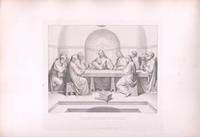
Overbeck, Johann Friedrich (German, Lubeck 1789 - 1869 Rome), After
John Leaning on Jesus's Bosum. First Edition of the Engraving
Dusseldorf: August Wilhelm Schulgen circa 1850. Engraving together with a letterpress description in English and French. 35 x 44.5 cm sheet size. Good. Tearing Age Toning Foxing at sheet edges. Spotting else Good.Fueled by dissatisfaction with the direction of the Vienna Academy a group of six German students founded the Brotherhood of St. Luke in 1809. Among them was Johann Friedrich Overbeck son of a senator of the Hanseatic free city of Lübeck. The brotherhood was a direct reference to the old painter’s guilds of medieval times. Four of the artists Overbeck Franz Pforr Ludwig Vogel and Johann Konrad Hottinger settled in Rome in 1810. Later joined by Friedrich Wilhelm Schadow Peter von Cornelius Philipp Veit and Julius Schnorr von Carolsfeld they were mockingly referred to as the Nazarenes. The group advocated a renewed interest in religious art and monumental wall paintings…… Their religious zeal most likely stemmed from the fact that almost all of them were Roman Catholic converts. Although the pursuit of spiritual and artistic simplicity and piety were typically romantic characteristics the means by which they attempted to depict their dreams were classical. It has been suggested that the Nazarenes should be considered a special branch of German Romanticism. They strove for a new form of German religious-patriotic art fusing Dürer with Fra Angelico Perugino and a young Raphael. Dusseldorf: August Wilhelm Schulgen, circa 1850 unknown
Referentie van de boekhandelaar : 75-7647
|
|
|
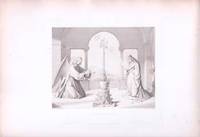
Overbeck, Johann Friedrich (German, Lubeck 1789 - 1869 Rome), After
The Annunciation of the Blessed Virgin Mary. First Edition of the Engraving
Dusseldorf: August Wilhelm Schulgen circa 1850. Engraving together with a letterpress description in English and French. 35 x 44.5 cm sheet size. Good. Tearing Age Toning and Foxing at sheet edges else Good.Fueled by dissatisfaction with the direction of the Vienna Academy a group of six German students founded the Brotherhood of St. Luke in 1809. Among them was Johann Friedrich Overbeck son of a senator of the Hanseatic free city of Lübeck. The brotherhood was a direct reference to the old painter’s guilds of medieval times. Four of the artists Overbeck Franz Pforr Ludwig Vogel and Johann Konrad Hottinger settled in Rome in 1810. Later joined by Friedrich Wilhelm Schadow Peter von Cornelius Philipp Veit and Julius Schnorr von Carolsfeld they were mockingly referred to as the Nazarenes. The group advocated a renewed interest in religious art and monumental wall paintings…… Their religious zeal most likely stemmed from the fact that almost all of them were Roman Catholic converts. Although the pursuit of spiritual and artistic simplicity and piety were typically romantic characteristics the means by which they attempted to depict their dreams were classical. It has been suggested that the Nazarenes should be considered a special branch of German Romanticism. They strove for a new form of German religious-patriotic art fusing Dürer with Fra Angelico Perugino and a young Raphael. Dusseldorf: August Wilhelm Schulgen, circa 1850 unknown
Referentie van de boekhandelaar : 75-7622
|
|
|
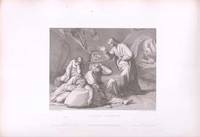
Overbeck, Johann Friedrich (German, Lubeck 1789 - 1869 Rome), After
The Apostles Asleep. First Edition of the Engraving
Dusseldorf: August Wilhelm Schulgen circa 1850. Engraving together with a letterpress description in English and French. 35 x 44.5 cm sheet size. Good. Tearing Age Toning Foxing at sheet edges else Good.Fueled by dissatisfaction with the direction of the Vienna Academy a group of six German students founded the Brotherhood of St. Luke in 1809. Among them was Johann Friedrich Overbeck son of a senator of the Hanseatic free city of Lübeck. The brotherhood was a direct reference to the old painter’s guilds of medieval times. Four of the artists Overbeck Franz Pforr Ludwig Vogel and Johann Konrad Hottinger settled in Rome in 1810. Later joined by Friedrich Wilhelm Schadow Peter von Cornelius Philipp Veit and Julius Schnorr von Carolsfeld they were mockingly referred to as the Nazarenes. The group advocated a renewed interest in religious art and monumental wall paintings…… Their religious zeal most likely stemmed from the fact that almost all of them were Roman Catholic converts. Although the pursuit of spiritual and artistic simplicity and piety were typically romantic characteristics the means by which they attempted to depict their dreams were classical. It has been suggested that the Nazarenes should be considered a special branch of German Romanticism. They strove for a new form of German religious-patriotic art fusing Dürer with Fra Angelico Perugino and a young Raphael. Dusseldorf: August Wilhelm Schulgen, circa 1850 unknown
Referentie van de boekhandelaar : 75-7648
|
|
|
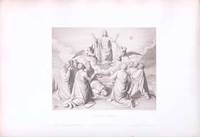
Overbeck, Johann Friedrich (German, Lubeck 1789 - 1869 Rome), After
The Ascension of Jesus. First Edition of the Engraving
Dusseldorf: August Wilhelm Schulgen circa 1850. Engraving together with a letterpress description in English and French. 35 x 44.5 cm sheet size. Good. Tearing Age Toning Foxing at sheet edges else Good.Fueled by dissatisfaction with the direction of the Vienna Academy a group of six German students founded the Brotherhood of St. Luke in 1809. Among them was Johann Friedrich Overbeck son of a senator of the Hanseatic free city of Lübeck. The brotherhood was a direct reference to the old painter’s guilds of medieval times. Four of the artists Overbeck Franz Pforr Ludwig Vogel and Johann Konrad Hottinger settled in Rome in 1810. Later joined by Friedrich Wilhelm Schadow Peter von Cornelius Philipp Veit and Julius Schnorr von Carolsfeld they were mockingly referred to as the Nazarenes. The group advocated a renewed interest in religious art and monumental wall paintings…… Their religious zeal most likely stemmed from the fact that almost all of them were Roman Catholic converts. Although the pursuit of spiritual and artistic simplicity and piety were typically romantic characteristics the means by which they attempted to depict their dreams were classical. It has been suggested that the Nazarenes should be considered a special branch of German Romanticism. They strove for a new form of German religious-patriotic art fusing Dürer with Fra Angelico Perugino and a young Raphael. Dusseldorf: August Wilhelm Schulgen, circa 1850 unknown
Referentie van de boekhandelaar : 75-7661
|
|
|
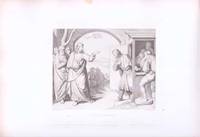
Overbeck, Johann Friedrich (German, Lubeck 1789 - 1869 Rome), After
The Calling of Mathew. First Edition of the Engraving
Dusseldorf: August Wilhelm Schulgen circa 1850. Engraving together with a letterpress description in English and French. 35 x 44.5 cm sheet size. Good. Tearing Age Toning Foxing at sheet edges minor Staining else Good.Fueled by dissatisfaction with the direction of the Vienna Academy a group of six German students founded the Brotherhood of St. Luke in 1809. Among them was Johann Friedrich Overbeck son of a senator of the Hanseatic free city of Lübeck. The brotherhood was a direct reference to the old painter’s guilds of medieval times. Four of the artists Overbeck Franz Pforr Ludwig Vogel and Johann Konrad Hottinger settled in Rome in 1810. Later joined by Friedrich Wilhelm Schadow Peter von Cornelius Philipp Veit and Julius Schnorr von Carolsfeld they were mockingly referred to as the Nazarenes. The group advocated a renewed interest in religious art and monumental wall paintings…… Their religious zeal most likely stemmed from the fact that almost all of them were Roman Catholic converts. Although the pursuit of spiritual and artistic simplicity and piety were typically romantic characteristics the means by which they attempted to depict their dreams were classical. It has been suggested that the Nazarenes should be considered a special branch of German Romanticism. They strove for a new form of German religious-patriotic art fusing Dürer with Fra Angelico Perugino and a young Raphael. Dusseldorf: August Wilhelm Schulgen, circa 1850 unknown
Referentie van de boekhandelaar : 75-7635
|
|
|
Overbeck, Johann Friedrich (German, Lubeck 1789 - 1869 Rome), After
The Child Jesus in the Work-shop of Joseph. First Edition of the Engraving
Dusseldorf: August Wilhelm Schulgen circa 1850. Engraving together with a letterpress description in English and French. 35 x 44.5 cm sheet size. Good. Tearing Age Toning Foxing and minor Staining at sheet edges else Good.Fueled by dissatisfaction with the direction of the Vienna Academy a group of six German students founded the Brotherhood of St. Luke in 1809. Among them was Johann Friedrich Overbeck son of a senator of the Hanseatic free city of Lübeck. The brotherhood was a direct reference to the old painter’s guilds of medieval times. Four of the artists Overbeck Franz Pforr Ludwig Vogel and Johann Konrad Hottinger settled in Rome in 1810. Later joined by Friedrich Wilhelm Schadow Peter von Cornelius Philipp Veit and Julius Schnorr von Carolsfeld they were mockingly referred to as the Nazarenes. The group advocated a renewed interest in religious art and monumental wall paintings…… Their religious zeal most likely stemmed from the fact that almost all of them were Roman Catholic converts. Although the pursuit of spiritual and artistic simplicity and piety were typically romantic characteristics the means by which they attempted to depict their dreams were classical. It has been suggested that the Nazarenes should be considered a special branch of German Romanticism. They strove for a new form of German religious-patriotic art fusing Dürer with Fra Angelico Perugino and a young Raphael. Dusseldorf: August Wilhelm Schulgen, circa 1850 unknown
Referentie van de boekhandelaar : 75-7630
|
|
|
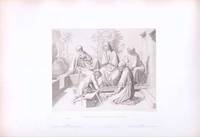
Overbeck, Johann Friedrich (German, Lubeck 1789 - 1869 Rome), After
The Child Jesus in the Midst of the Doctors. First Edition of the Engraving
Dusseldorf: August Wilhelm Schulgen circa 1850. Engraving together with a letterpress description in English and French. 35 x 44.5 cm sheet size. Good. Tearing Age Toning Foxing and minor Staining at sheet edges else Good.Fueled by dissatisfaction with the direction of the Vienna Academy a group of six German students founded the Brotherhood of St. Luke in 1809. Among them was Johann Friedrich Overbeck son of a senator of the Hanseatic free city of Lübeck. The brotherhood was a direct reference to the old painter’s guilds of medieval times. Four of the artists Overbeck Franz Pforr Ludwig Vogel and Johann Konrad Hottinger settled in Rome in 1810. Later joined by Friedrich Wilhelm Schadow Peter von Cornelius Philipp Veit and Julius Schnorr von Carolsfeld they were mockingly referred to as the Nazarenes. The group advocated a renewed interest in religious art and monumental wall paintings…… Their religious zeal most likely stemmed from the fact that almost all of them were Roman Catholic converts. Although the pursuit of spiritual and artistic simplicity and piety were typically romantic characteristics the means by which they attempted to depict their dreams were classical. It has been suggested that the Nazarenes should be considered a special branch of German Romanticism. They strove for a new form of German religious-patriotic art fusing Dürer with Fra Angelico Perugino and a young Raphael. Dusseldorf: August Wilhelm Schulgen, circa 1850 unknown
Referentie van de boekhandelaar : 75-7631
|
|
|
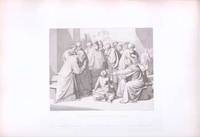
Overbeck, Johann Friedrich (German, Lubeck 1789 - 1869 Rome), After
The Cure of the Sicks. First Edition of the Engraving
Dusseldorf: August Wilhelm Schulgen circa 1850. Engraving together with a letterpress description in English and French. 35 x 44.5 cm sheet size. Good. Tearing Age Toning Foxing and minor Staining at sheet edges else Good.Fueled by dissatisfaction with the direction of the Vienna Academy a group of six German students founded the Brotherhood of St. Luke in 1809. Among them was Johann Friedrich Overbeck son of a senator of the Hanseatic free city of Lübeck. The brotherhood was a direct reference to the old painter’s guilds of medieval times. Four of the artists Overbeck Franz Pforr Ludwig Vogel and Johann Konrad Hottinger settled in Rome in 1810. Later joined by Friedrich Wilhelm Schadow Peter von Cornelius Philipp Veit and Julius Schnorr von Carolsfeld they were mockingly referred to as the Nazarenes. The group advocated a renewed interest in religious art and monumental wall paintings…… Their religious zeal most likely stemmed from the fact that almost all of them were Roman Catholic converts. Although the pursuit of spiritual and artistic simplicity and piety were typically romantic characteristics the means by which they attempted to depict their dreams were classical. It has been suggested that the Nazarenes should be considered a special branch of German Romanticism. They strove for a new form of German religious-patriotic art fusing Dürer with Fra Angelico Perugino and a young Raphael. Dusseldorf: August Wilhelm Schulgen, circa 1850 unknown
Referentie van de boekhandelaar : 75-7634
|
|
|
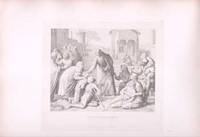
Overbeck, Johann Friedrich (German, Lubeck 1789 - 1869 Rome), After
The Flight into Egypt. First Edition of the Engraving
Dusseldorf: August Wilhelm Schulgen circa 1850. Engraving together with a letterpress description in English and French. 35 x 44.5 cm sheet size. Good. Tearing Age Toning Foxing and minor Staining at sheet edges else Good.Fueled by dissatisfaction with the direction of the Vienna Academy a group of six German students founded the Brotherhood of St. Luke in 1809. Among them was Johann Friedrich Overbeck son of a senator of the Hanseatic free city of Lübeck. The brotherhood was a direct reference to the old painter’s guilds of medieval times. Four of the artists Overbeck Franz Pforr Ludwig Vogel and Johann Konrad Hottinger settled in Rome in 1810. Later joined by Friedrich Wilhelm Schadow Peter von Cornelius Philipp Veit and Julius Schnorr von Carolsfeld they were mockingly referred to as the Nazarenes. The group advocated a renewed interest in religious art and monumental wall paintings…… Their religious zeal most likely stemmed from the fact that almost all of them were Roman Catholic converts. Although the pursuit of spiritual and artistic simplicity and piety were typically romantic characteristics the means by which they attempted to depict their dreams were classical. It has been suggested that the Nazarenes should be considered a special branch of German Romanticism. They strove for a new form of German religious-patriotic art fusing Dürer with Fra Angelico Perugino and a young Raphael. Dusseldorf: August Wilhelm Schulgen, circa 1850 unknown
Referentie van de boekhandelaar : 75-7628
|
|
|
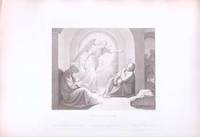
Overbeck, Johann Friedrich (German, Lubeck 1789 - 1869 Rome), After
The Marriage in Cana of Galilee. First Edition of the Engraving
Dusseldorf: August Wilhelm Schulgen circa 1850. Engraving together with a letterpress description in English and French. 35 x 44.5 cm sheet size. Good. Tearing Age Toning Foxing and minor Staining at sheet edges else Good.Fueled by dissatisfaction with the direction of the Vienna Academy a group of six German students founded the Brotherhood of St. Luke in 1809. Among them was Johann Friedrich Overbeck son of a senator of the Hanseatic free city of Lübeck. The brotherhood was a direct reference to the old painter’s guilds of medieval times. Four of the artists Overbeck Franz Pforr Ludwig Vogel and Johann Konrad Hottinger settled in Rome in 1810. Later joined by Friedrich Wilhelm Schadow Peter von Cornelius Philipp Veit and Julius Schnorr von Carolsfeld they were mockingly referred to as the Nazarenes. The group advocated a renewed interest in religious art and monumental wall paintings…… Their religious zeal most likely stemmed from the fact that almost all of them were Roman Catholic converts. Although the pursuit of spiritual and artistic simplicity and piety were typically romantic characteristics the means by which they attempted to depict their dreams were classical. It has been suggested that the Nazarenes should be considered a special branch of German Romanticism. They strove for a new form of German religious-patriotic art fusing Dürer with Fra Angelico Perugino and a young Raphael. Dusseldorf: August Wilhelm Schulgen, circa 1850 unknown
Referentie van de boekhandelaar : 75-7633
|
|
|
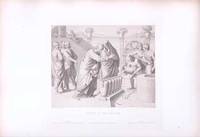
Overbeck, Johann Friedrich (German, Lubeck 1789 - 1869 Rome), After
The Massacre of the Innocents. First Edition of the Engraving
Dusseldorf: August Wilhelm Schulgen circa 1850. Engraving together with a letterpress description in English and French. 35 x 44.5 cm sheet size. Good. Tearing Age Toning Foxing and minor Staining at sheet edges else Good.Fueled by dissatisfaction with the direction of the Vienna Academy a group of six German students founded the Brotherhood of St. Luke in 1809. Among them was Johann Friedrich Overbeck son of a senator of the Hanseatic free city of Lübeck. The brotherhood was a direct reference to the old painter’s guilds of medieval times. Four of the artists Overbeck Franz Pforr Ludwig Vogel and Johann Konrad Hottinger settled in Rome in 1810. Later joined by Friedrich Wilhelm Schadow Peter von Cornelius Philipp Veit and Julius Schnorr von Carolsfeld they were mockingly referred to as the Nazarenes. The group advocated a renewed interest in religious art and monumental wall paintings…… Their religious zeal most likely stemmed from the fact that almost all of them were Roman Catholic converts. Although the pursuit of spiritual and artistic simplicity and piety were typically romantic characteristics the means by which they attempted to depict their dreams were classical. It has been suggested that the Nazarenes should be considered a special branch of German Romanticism. They strove for a new form of German religious-patriotic art fusing Dürer with Fra Angelico Perugino and a young Raphael. Dusseldorf: August Wilhelm Schulgen, circa 1850 unknown
Referentie van de boekhandelaar : 75-7629
|
|
|
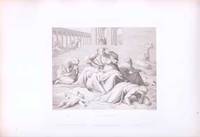
Overbeck, Johann Friedrich (German, Lubeck 1789 - 1869 Rome), After
The Nativity of Jesus Christ. First Edition of the Engraving
Dusseldorf: August Wilhelm Schulgen circa 1850. Engraving together with a letterpress description in English and French. 35 x 44.5 cm sheet size. Good. Tearing Age Toning and Foxing at sheet edges else Good.Fueled by dissatisfaction with the direction of the Vienna Academy a group of six German students founded the Brotherhood of St. Luke in 1809. Among them was Johann Friedrich Overbeck son of a senator of the Hanseatic free city of Lübeck. The brotherhood was a direct reference to the old painter’s guilds of medieval times. Four of the artists Overbeck Franz Pforr Ludwig Vogel and Johann Konrad Hottinger settled in Rome in 1810. Later joined by Friedrich Wilhelm Schadow Peter von Cornelius Philipp Veit and Julius Schnorr von Carolsfeld they were mockingly referred to as the Nazarenes. The group advocated a renewed interest in religious art and monumental wall paintings…… Their religious zeal most likely stemmed from the fact that almost all of them were Roman Catholic converts. Although the pursuit of spiritual and artistic simplicity and piety were typically romantic characteristics the means by which they attempted to depict their dreams were classical. It has been suggested that the Nazarenes should be considered a special branch of German Romanticism. They strove for a new form of German religious-patriotic art fusing Dürer with Fra Angelico Perugino and a young Raphael. Dusseldorf: August Wilhelm Schulgen, circa 1850 unknown
Referentie van de boekhandelaar : 75-7625
|
|
|
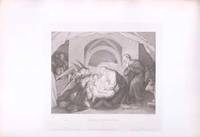
Overbeck, Johann Friedrich (German, Lubeck 1789 - 1869 Rome), After
The Offerings of the Wise Men. First Edition of the Engraving
Dusseldorf: August Wilhelm Schulgen circa 1850. Engraving together with a letterpress description in English and French. 35 x 44.5 cm sheet size. Good. Tearing Age Toning Foxing and minor Staining at sheet edges else Good.Fueled by dissatisfaction with the direction of the Vienna Academy a group of six German students founded the Brotherhood of St. Luke in 1809. Among them was Johann Friedrich Overbeck son of a senator of the Hanseatic free city of Lübeck. The brotherhood was a direct reference to the old painter’s guilds of medieval times. Four of the artists Overbeck Franz Pforr Ludwig Vogel and Johann Konrad Hottinger settled in Rome in 1810. Later joined by Friedrich Wilhelm Schadow Peter von Cornelius Philipp Veit and Julius Schnorr von Carolsfeld they were mockingly referred to as the Nazarenes. The group advocated a renewed interest in religious art and monumental wall paintings…… Their religious zeal most likely stemmed from the fact that almost all of them were Roman Catholic converts. Although the pursuit of spiritual and artistic simplicity and piety were typically romantic characteristics the means by which they attempted to depict their dreams were classical. It has been suggested that the Nazarenes should be considered a special branch of German Romanticism. They strove for a new form of German religious-patriotic art fusing Dürer with Fra Angelico Perugino and a young Raphael. Dusseldorf: August Wilhelm Schulgen, circa 1850 unknown
Referentie van de boekhandelaar : 75-7627
|
|
|
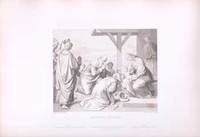
Overbeck, Johann Friedrich (German, Lubeck 1789 - 1869 Rome), After
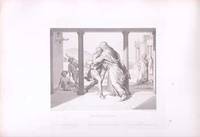
The parable of the Prodigal Son. First Edition of the Engraving
Dusseldorf: August Wilhelm Schulgen circa 1850. Engraving together with a letterpress description in English and French. 35 x 44.5 cm sheet size. Good. Tearing Age Toning Foxing at sheet edges else Good.Fueled by dissatisfaction with the direction of the Vienna Academy a group of six German students founded the Brotherhood of St. Luke in 1809. Among them was Johann Friedrich Overbeck son of a senator of the Hanseatic free city of Lübeck. The brotherhood was a direct reference to the old painter’s guilds of medieval times. Four of the artists Overbeck Franz Pforr Ludwig Vogel and Johann Konrad Hottinger settled in Rome in 1810. Later joined by Friedrich Wilhelm Schadow Peter von Cornelius Philipp Veit and Julius Schnorr von Carolsfeld they were mockingly referred to as the Nazarenes. The group advocated a renewed interest in religious art and monumental wall paintings…… Their religious zeal most likely stemmed from the fact that almost all of them were Roman Catholic converts. Although the pursuit of spiritual and artistic simplicity and piety were typically romantic characteristics the means by which they attempted to depict their dreams were classical. It has been suggested that the Nazarenes should be considered a special branch of German Romanticism. They strove for a new form of German religious-patriotic art fusing Dürer with Fra Angelico Perugino and a young Raphael. Dusseldorf: August Wilhelm Schulgen, circa 1850 unknown
Referentie van de boekhandelaar : 75-7641
|
|
|
Overbeck, Johann Friedrich (German, Lubeck 1789 - 1869 Rome), After
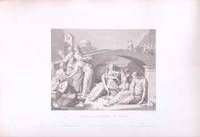
The Parable of the Ten Virgins. First Edition of the Engraving
Dusseldorf: August Wilhelm Schulgen circa 1850. Engraving together with a letterpress description in English and French. 35 x 44.5 cm sheet size. Good. Tearing Age Toning Foxing at sheet edges else Good.Fueled by dissatisfaction with the direction of the Vienna Academy a group of six German students founded the Brotherhood of St. Luke in 1809. Among them was Johann Friedrich Overbeck son of a senator of the Hanseatic free city of Lübeck. The brotherhood was a direct reference to the old painter’s guilds of medieval times. Four of the artists Overbeck Franz Pforr Ludwig Vogel and Johann Konrad Hottinger settled in Rome in 1810. Later joined by Friedrich Wilhelm Schadow Peter von Cornelius Philipp Veit and Julius Schnorr von Carolsfeld they were mockingly referred to as the Nazarenes. The group advocated a renewed interest in religious art and monumental wall paintings…… Their religious zeal most likely stemmed from the fact that almost all of them were Roman Catholic converts. Although the pursuit of spiritual and artistic simplicity and piety were typically romantic characteristics the means by which they attempted to depict their dreams were classical. It has been suggested that the Nazarenes should be considered a special branch of German Romanticism. They strove for a new form of German religious-patriotic art fusing Dürer with Fra Angelico Perugino and a young Raphael. Dusseldorf: August Wilhelm Schulgen, circa 1850 unknown
Referentie van de boekhandelaar : 75-7645
|
|
|
Overbeck, Johann Friedrich (German, Lubeck 1789 - 1869 Rome), After
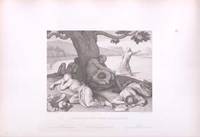
The Parable of the Good Seed and of the Cockle. First Edition of the Engraving
Dusseldorf: August Wilhelm Schulgen circa 1850. Engraving together with a letterpress description in English and French. 35 x 44.5 cm sheet size. Good. Tearing Age Toning Foxing at sheet edges else Good.Fueled by dissatisfaction with the direction of the Vienna Academy a group of six German students founded the Brotherhood of St. Luke in 1809. Among them was Johann Friedrich Overbeck son of a senator of the Hanseatic free city of Lübeck. The brotherhood was a direct reference to the old painter’s guilds of medieval times. Four of the artists Overbeck Franz Pforr Ludwig Vogel and Johann Konrad Hottinger settled in Rome in 1810. Later joined by Friedrich Wilhelm Schadow Peter von Cornelius Philipp Veit and Julius Schnorr von Carolsfeld they were mockingly referred to as the Nazarenes. The group advocated a renewed interest in religious art and monumental wall paintings…… Their religious zeal most likely stemmed from the fact that almost all of them were Roman Catholic converts. Although the pursuit of spiritual and artistic simplicity and piety were typically romantic characteristics the means by which they attempted to depict their dreams were classical. It has been suggested that the Nazarenes should be considered a special branch of German Romanticism. They strove for a new form of German religious-patriotic art fusing Dürer with Fra Angelico Perugino and a young Raphael. Dusseldorf: August Wilhelm Schulgen, circa 1850 unknown
Referentie van de boekhandelaar : 75-7638
|
|
|
Overbeck, Johann Friedrich (German, Lubeck 1789 - 1869 Rome), After
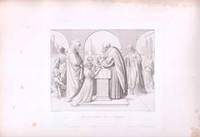
The Presentation of the Child Jesus in the Temple. First Edition of the Engraving
Dusseldorf: August Wilhelm Schulgen circa 1850. Engraving together with a letterpress description in English and French. 35 x 44.5 cm sheet size. Good. Tearing Age Toning Foxing and Staining at sheet edges else Good.Fueled by dissatisfaction with the direction of the Vienna Academy a group of six German students founded the Brotherhood of St. Luke in 1809. Among them was Johann Friedrich Overbeck son of a senator of the Hanseatic free city of Lübeck. The brotherhood was a direct reference to the old painter’s guilds of medieval times. Four of the artists Overbeck Franz Pforr Ludwig Vogel and Johann Konrad Hottinger settled in Rome in 1810. Later joined by Friedrich Wilhelm Schadow Peter von Cornelius Philipp Veit and Julius Schnorr von Carolsfeld they were mockingly referred to as the Nazarenes. The group advocated a renewed interest in religious art and monumental wall paintings…… Their religious zeal most likely stemmed from the fact that almost all of them were Roman Catholic converts. Although the pursuit of spiritual and artistic simplicity and piety were typically romantic characteristics the means by which they attempted to depict their dreams were classical. It has been suggested that the Nazarenes should be considered a special branch of German Romanticism. They strove for a new form of German religious-patriotic art fusing Dürer with Fra Angelico Perugino and a young Raphael. Dusseldorf: August Wilhelm Schulgen, circa 1850 unknown
Referentie van de boekhandelaar : 75-7626
|
|
|
Overbeck, Johann Friedrich (German, Lubeck 1789 - 1869 Rome), After
The Resurrection of Jesus Christ. First Edition of the Engraving
Dusseldorf: August Wilhelm Schulgen circa 1850. Engraving together with a letterpress description in English and French. 35 x 44.5 cm sheet size. Good. Tearing Age Toning Foxing at sheet edges else Good.Fueled by dissatisfaction with the direction of the Vienna Academy a group of six German students founded the Brotherhood of St. Luke in 1809. Among them was Johann Friedrich Overbeck son of a senator of the Hanseatic free city of Lübeck. The brotherhood was a direct reference to the old painter’s guilds of medieval times. Four of the artists Overbeck Franz Pforr Ludwig Vogel and Johann Konrad Hottinger settled in Rome in 1810. Later joined by Friedrich Wilhelm Schadow Peter von Cornelius Philipp Veit and Julius Schnorr von Carolsfeld they were mockingly referred to as the Nazarenes. The group advocated a renewed interest in religious art and monumental wall paintings…… Their religious zeal most likely stemmed from the fact that almost all of them were Roman Catholic converts. Although the pursuit of spiritual and artistic simplicity and piety were typically romantic characteristics the means by which they attempted to depict their dreams were classical. It has been suggested that the Nazarenes should be considered a special branch of German Romanticism. They strove for a new form of German religious-patriotic art fusing Dürer with Fra Angelico Perugino and a young Raphael. Dusseldorf: August Wilhelm Schulgen, circa 1850 unknown
Referentie van de boekhandelaar : 75-7658
|
|
|
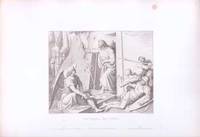
Overbeck, Johann Friedrich (German, Lubeck 1789 - 1869 Rome), After
The Sinner Anointed the Feet of Jesus. First Edition of the Engraving
Dusseldorf: August Wilhelm Schulgen circa 1850. Engraving together with a letterpress description in English and French. 35 x 44.5 cm sheet size. Good. Tearing Age Toning Foxing at sheet edges else Good.Fueled by dissatisfaction with the direction of the Vienna Academy a group of six German students founded the Brotherhood of St. Luke in 1809. Among them was Johann Friedrich Overbeck son of a senator of the Hanseatic free city of Lübeck. The brotherhood was a direct reference to the old painter’s guilds of medieval times. Four of the artists Overbeck Franz Pforr Ludwig Vogel and Johann Konrad Hottinger settled in Rome in 1810. Later joined by Friedrich Wilhelm Schadow Peter von Cornelius Philipp Veit and Julius Schnorr von Carolsfeld they were mockingly referred to as the Nazarenes. The group advocated a renewed interest in religious art and monumental wall paintings…… Their religious zeal most likely stemmed from the fact that almost all of them were Roman Catholic converts. Although the pursuit of spiritual and artistic simplicity and piety were typically romantic characteristics the means by which they attempted to depict their dreams were classical. It has been suggested that the Nazarenes should be considered a special branch of German Romanticism. They strove for a new form of German religious-patriotic art fusing Dürer with Fra Angelico Perugino and a young Raphael. Dusseldorf: August Wilhelm Schulgen, circa 1850 unknown
Referentie van de boekhandelaar : 75-7636
|
|
|
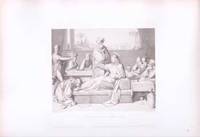
Overbeck, Johann Friedrich (German, Lubeck 1789 - 1869 Rome), After
The Visitation of the Blessed Virgin. First Edition of the Engraving
Dusseldorf: August Wilhelm Schulgen circa 1850. Engraving together with a letterpress description in English and French. 35 x 44.5 cm sheet size. Good. Tearing Age Toning and Foxing at sheet edges else Good.Fueled by dissatisfaction with the direction of the Vienna Academy a group of six German students founded the Brotherhood of St. Luke in 1809. Among them was Johann Friedrich Overbeck son of a senator of the Hanseatic free city of Lübeck. The brotherhood was a direct reference to the old painter’s guilds of medieval times. Four of the artists Overbeck Franz Pforr Ludwig Vogel and Johann Konrad Hottinger settled in Rome in 1810. Later joined by Friedrich Wilhelm Schadow Peter von Cornelius Philipp Veit and Julius Schnorr von Carolsfeld they were mockingly referred to as the Nazarenes. The group advocated a renewed interest in religious art and monumental wall paintings…… Their religious zeal most likely stemmed from the fact that almost all of them were Roman Catholic converts. Although the pursuit of spiritual and artistic simplicity and piety were typically romantic characteristics the means by which they attempted to depict their dreams were classical. It has been suggested that the Nazarenes should be considered a special branch of German Romanticism. They strove for a new form of German religious-patriotic art fusing Dürer with Fra Angelico Perugino and a young Raphael. Dusseldorf: August Wilhelm Schulgen, circa 1850 unknown
Referentie van de boekhandelaar : 75-7623
|
|
|
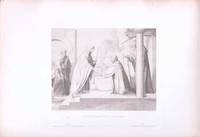
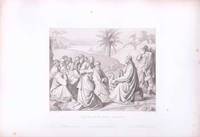
Overbeck, Johann Friedrich (German, Lubeck 1789 - 1869 Rome), After
Who is the Greatest in the Kingdom of Heaven First Edition of the Engraving
Dusseldorf: August Wilhelm Schulgen circa 1850. Engraving together with a letterpress description in English and French. 35 x 44.5 cm sheet size. Good. Tearing Age Toning Foxing at sheet edges else Good.Fueled by dissatisfaction with the direction of the Vienna Academy a group of six German students founded the Brotherhood of St. Luke in 1809. Among them was Johann Friedrich Overbeck son of a senator of the Hanseatic free city of Lübeck. The brotherhood was a direct reference to the old painter’s guilds of medieval times. Four of the artists Overbeck Franz Pforr Ludwig Vogel and Johann Konrad Hottinger settled in Rome in 1810. Later joined by Friedrich Wilhelm Schadow Peter von Cornelius Philipp Veit and Julius Schnorr von Carolsfeld they were mockingly referred to as the Nazarenes. The group advocated a renewed interest in religious art and monumental wall paintings…… Their religious zeal most likely stemmed from the fact that almost all of them were Roman Catholic converts. Although the pursuit of spiritual and artistic simplicity and piety were typically romantic characteristics the means by which they attempted to depict their dreams were classical. It has been suggested that the Nazarenes should be considered a special branch of German Romanticism. They strove for a new form of German religious-patriotic art fusing Dürer with Fra Angelico Perugino and a young Raphael. Dusseldorf: August Wilhelm Schulgen, circa 1850 unknown
Referentie van de boekhandelaar : 75-7639
|
|
|
OVERBEKE Bonaventura, van.
Degli avanzi dell'antica Roma opra postuma di Bonaventura Overbeke. Pittore e cittadino d'Amsterdam tradotta e di varie osservazioni critiche e riflessive accresciuta da Paolo Rolli [...].
In Londra, presso Tommaso Edlin, 1739, in-8, brossura in carta marmorizzata successiva, pp. [2], VIII, 401, [3]. Manca il ritratto dell'autore; eroso l'angolo superiore esterno delle prime 7 carte (margine bianco). Manca l'album di illustrazioni incise in rame. Lievi bruniture. Ampi margini.

|
|
|
OVERLAET, B.
HOFKUNST VAN DE SASSANIEDEN.
, Brussel, Gemeentekrediet, 1993 softcover originele geillustreerde uitgeversomslag in kleur, 25x30cm, 310pp, geillustreerd in kleur en z/w. ISBN X.
Referentie van de boekhandelaar : 8988
|
|
|
OVID
Publii Ovidii Nasonis. Fastorum Libri VI. Ovid's Fasti; with Notes and an Introduction. [Text in Latin; Introduction and Notes in English]. VESEY BLIGH'S COPY IN PERIOD BINDING
8vo., First Edition, text in Latin, introduction and notes in English; contemporary full calf, sides with triple frame border stopped at corners by rosettes all in blind, back gilt with compartments ruled in gilt and blind, wanting original label but impressed lettering just legible, doublures tooled in blind, speckled edges, one or two slight scuffs to covers, small ink mark on lower board else a remarkably clean, crisp and highly desirable copy in unrestored period binding. EDWARD VESEY BLIGH'S COPY WITH HIS SIGNATURE ON FRONT FREE ENDPAPER. A NOTABLE COPY OF ONE OF KEIGHTLEY'S FINEST CLASSICAL COMMENTARIES. Remembered today primarily for his 'Fairy Mythology' (1828), Thomas Keightley (1789-1872) was also a classical historian and scholar of note; his editions of Greek and Roman texts were produced mainly from Trinity College Dublin. His 'Fasti' is based on the Krebs text, and Keightley notes the most important variant readings of the fifty-eight collated MSS of the poem, together with (not unnaturally) appropriate references to his own 'Mythology of Greece and Italy' published eight years previously. The edition received several laudatory reviews (notably in the 'Gentleman's Magazine') and was adopted for use by at least one major public school. The Hon. Edward Vesey Bligh, brother to 6th Earl of Darnley, was vicar of Birling in Kent and Chairman of the Prayer Book Revision Society
|
|
|
Ovid (43 B.C.-17 A.D.); Davidson, James (1732-1809); Clarke, John (1687-1734).
P. OVIDII NASONIS METAMORPHOSEON LIBRI X, OR, TEN SELECT BOOKS OF OVID'S METAMORPHOSES; With an English Translation, Compiled from the Two Former Translations by Davidson and Clarke; A Prosody Table and References (after the manner of Mr. Stirling) Pointing out, at one view, the scanning of each verse, and Davidson's English notes.
pp. iv, [40], 328. 8vo. 200 mm. Scattered age stain. Autograph ownerships of: Henry cotton; Hugo Cotton. Original full plain leather binding; front board detached. Hardbound. Good. The short introduction calls this present edition of Ovid's Metamorphoses "the first that has ever been attempted in America." Metamorphoses in English & Latin, with extensive notes. Evans 22753. PAIMP 6
|
|
|
Ovid (= Publius Ovidius Naso)
Ovids Liebeskunst,
Berlin, Deutsche Buchvertriebs- und Verlagsgesellschaft, o.J. [1939]. 8°, 97 S., heller original Leineneinband mit dem illustr. original Schutzumschlag (Entwurf: Franz Christophe), leichte papierbedingte Nachdunklung innen, ganz schwacher Keller- oder Lagergeruch (verfliegt), nette mehrzeilige Widmung von 1947 auf der Vorsatzseite, sonst ein schönes, sauberes Exemplar
Referentie van de boekhandelaar : 42262AB

|
|
|
Ovid (= Publius Ovidius Naso) (Verf.) und Remus Giomini (Ed.)
P. Ovidi Nasonis Heroidas. Recognovit et edidit Remus Giomini. Vol. 1 et 2. (= Collana di testi critici latini 4 e 5). 2 Bände.
Roma (Rom): Angelo Signorelli 1957. XLV, (1), 78; XI, (1), 155, (5) Seiten. Ungeöffnet und unbeschnitten. 8° (17,5-22,5 cm) Orig.-Broschuren. [Softcover / Paperback].
Referentie van de boekhandelaar : 2143423

|
|
|
Ovid. (Publius Ovidius Naso) [43 B.C.-18 A.D.]
OVID'S ART OF LOVE; Together with his Remedy of Love. Translated into English Verse. To Which are Added, The Court of Love and The History of Love. A New Edition, with Plates.
pp. xii, [13]-214 + Frontis, and one unusual engraved plate. Small 12mo. 14 cm. Slight marginal damp stain. Well foxed and browned. Disbound. Very mildly XLib. Rare American edition of Ovid. **PRICE JUST REDUCED! SMALL BOX 7.
|
|
|
Ovid; F. A. Paley
P. OVIDII NASONIS [OVID]: FASTORUM LIBRI SEX With English Notes. a New Edition, Revised
Minor shelfwear. Foxing to first few pages. ; Xxxiii, 304pp. ; Grammar School Classics; 304 pages
|
|
|
OVIDE
L'Art d'Aimer
Editions complexes.2005.In-8,couv.avec fenètre s'ouvrant sur un dessin de Gabriel Lefebure.L'Art d'Aimer précédé de L'Amour à Rome par Jacques Lacarrière.Illustrations en couleurs de Gabriel Lefebure. TBE.Ex.1017.
Referentie van de boekhandelaar : 47796
|
|

 De zoekresultaten per email ontvangen
 Zoekresultaten downloaden als PDF
 RSS feed
 Permanente link


