|
|
|
Bradley Mark
Colour and Meaning in Ancient Rome
8vo, hardcover in dj, 8.78 by .79 inches. (282 pages) Explores the definition and function of colour in Rome during the early Empire using a wide variety of contemporary sources.Explores how ancient Romans categorised, organised and described colours, and outlines the principal differences and similarities between ancient and modern concepts of colour. By drawing together evidence from contemporary philosophers, elegists, epic writers, historians and satirists, Bradley explores the definition and function of colour in Rome during the early Empire.Explores how ancient Romans categorised, organised and described colours, and outlines the principal differences and similarities between ancient and modern concepts of colour. By drawing together evidence from contemporary philosophers, elegists, epic writers, historians and satirists, Bradley explores the definition and function of colour in Rome during the early Empire.The study of colour has become familiar territory in recent anthropology, linguistics, art history and archaeology. Classicists, however, have traditionally subordinated the study of colour to form. By drawing together evidence from contemporary philosophers, elegists, epic writers, historians and satirists, Mark Bradley reinstates colour as an essential informative unit for the classification and evaluation of the Roman world. He also demonstrates that the questions of what colour was and how it functioned - as well as how it could be misused and misunderstood - were topics of intellectual debate in early imperial Rome. Suggesting strategies for interpreting Roman expressions of colour in Latin texts, Dr Bradley offers new approaches to understanding the relationship between perception and knowledge in Roman elite thought. In doing so, he highlights the fundamental role that colour performed in the realms of communication and information, and its intellectual contribution to contemporary discussions of society, politics and morality.Introduction, 1. The rainbow, 2. Lucretius and the philosophy of color, 3. Pliny the Elder and the unnatural history of color, 4. Color and rhetoric, 5. The natural body, 6. The unnatural body, 7. Purple, Conclusion: colours triumphant, Envoi: Aulus Gellius, Attic Nights 2.26. BiographicalNote: Mark Bradley is Lecturer in Ancient History at the University of Nottingham. He is the author of a number of articles in the field of Roman visual culture, and has also worked on aspects of ancient approaches to pollution and cleanliness, as well as the reception of classical antiquity during the British Empire.
|
|
|
Bradley Mark
Rome, Pollution and Propriety. Dirt, Disease and Hygiene in the Eternal City from Antiquity to Modernity.
8vo, br. ed. 1st paperback ed. XX,320p. ills.(B&W photographs and line drawings). Paperback. 'This volume aims ambitiously 'to identify the defining characteristics, functions and discourses of pollution in Rome' (XVIII) during antiquity and from the Renaissance to the twentieth century. It forms the proceedings of a conference held in 2007 at the British School at Rome, which brought together scholars with a wide range of specialisms all linked by an interest in the concept of pollution and its discourse through the lens of a singel city: Rome. Theories from Mary Douglas's 'Purity and Danger' (1966) are prominent in the majority of the papers in this volume, with a particular focus on her much-quoted statement that 'dirt is matter out of place' (.). Another theme linking this diverse collection of papers is the idea of pollution and purity as political weapons, especially wielded by religious authorities (3). Furthermore, the majority of the papers consider how pollution as metaphor interacts in multiple, and often conflicting, ways with pollution as a lived reality.' (.) This volume is as entertaining and thought-provoking as the conference itself and provides a novel way of thinking about the city of Rome, both past and present.' (ZENA KAMASH in The Journal of Romanan Studies, 2014, pp.252-53).

|
|
|
Bradley, K. R.
Slaves and Masters in the Roman Empire: A Study in Social Control
8vo, br. ed. . 168 pages. extensive underlinings and highlirigs. ow good., Remains usable and very readable. Structurally sound
|
|
|
Bradley, Keith R.
DISCOVERING THE ROMAN FAMILY Studies in Roman Social History
Scholars' bookplate to inner cover (Slater & Dunbabin). Corner creasing to about 3 pages. Browning to corners of about 2 pages. ; 8.1 X 5.4 X 0.8 inches; 240 pages
|
|
|
Bradley, Mark & Kenneth Stow (Eds. )
ROME, POLLUTION AND PROPRIETY Dirt, Disease and Hygiene in the Eternal City from Antiquity to Modernity
Book is fine. DJ has very light edgewear along top edge. ; Rome, Pollution and Propriety brings together scholars from a range of disciplines in order to examine the historical continuity of dirt, disease and hygiene in one environment, and to explore the development and transformation of these ideas alongside major chapters in the city's history, such as early Roman urban development, Roman pagan religion, the medieval Church, the Renaissance, the Unification of Italy, and the advent of Fascism. This volume sets out to identify the defining characteristics, functions and discourses of pollution in Rome in such realms as disease and medicine, death and burial, sexuality and virginity, prostitution, purity and absolution, personal hygiene and morality, criminality, bodies and cleansing, waste disposal, decay, ruins and urban renovation, as well as studying the means by which that pollution was policed and controlled. ; British School at Rome Studies; 342 pages
|
|
|
BRADNOCK ROBERT ET ROMA
GOA HANDBOOK - FOOTPRINT
GOA HANDBOOK. 2000. In-8. Broché. Bon état, Couv. défraîchie, Dos satisfaisant, Intérieur acceptable. 295 pages. Couverture illustrée en couleur et rempliée. Nombreuses illustrations en couleur dans le texte et hors texte. Carte géographique en couleur hors texte.. . . . Classification Dewey : 912-Atlas, cartes et plans
Riferimento per il libraio : R160106315 ISBN : 1900949458
|
|
|
Bradnock, Robert & Roma [editors]
Sri Lanka Handbook: With the Maldives 1st ed
hardcover. Good. Access codes and supplements are not guaranteed with used items. May be an ex-library book. hardcover
Riferimento per il libraio : 0844249025.G ISBN : 0844249025 9780844249025

|
|
|
BRAEMER François
"L'art dans l'Occident romain; trésors d'argenterie, sculptures de bronze et de pierre : catalogue."
Paris, Réunion des Musées Nationaux, 1963. 16 x 21, 189 pp., 64 planches en N/B, broché, bon état.
Riferimento per il libraio : 32075
|
|
|
BRAET Jules
"Selecta poetica; extraits des poèmes latins de second ordre; tome 2."
Alost, Imprimerie Spitaels-Schuermans, 1885. "12 x 18, 278 pp., reliure dos toilé, état moyen (couverture défraîchie; cachet du Collège jésuite Saint Stanislas à Mons)."
Riferimento per il libraio : 91084
|
|
|
BRAGAGLIA A. G.
Territorii tedeschi di Roma
In 8, pp. 238 + (2) con tavv. f.t. con foto in b/n e xilografie di Prampolini nel testo. Piccolo forellino al frontespizio. Br. ed. illustrata da Filiberto Scarpelli.
|
|
|
Bragaglia A.G.
LE MASCHERE ROMANE(1947)
In 8', br. ed. con risv., pp. 555, con venti tavole fuori testo di E.Prampolini; sigla aut. dell'A. all'acchiello, pieghe e bruniture al dorso, fioriture ai tagli, interno in buono stato, ordinari segni del tempo.

|
|
|
BRAGAGLIA Anton Giulio
Storia del teatro Popolare Romano
In 8°, legatura in tela editoriale con titolo oro su tassello al dorso, pp. 712 con 20 tavole fuori testo di E. Prampolini, oltre a 246 illustrazioni anche a colori nel testo e fuori testo. Edizione aumentata, di 300 aggiunte e 3 capitoli, de "Le Maschere Romane". Ottimo esemplare.
|
|
|
Bragaglia Foto
Roma, Istituto multinazionale d'agricoltura, balaustra e fontana
Bella e luminosa foto in buono stato di dimensioni 18x24

|
|
|
BRAGAGLIA, Anton Giulio (Frosinone, 1890 - Roma, 1960)
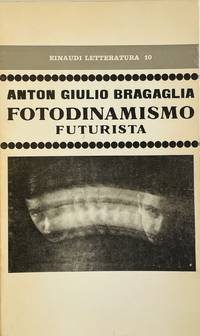
Fotodinamismo futurista
Torino: Einaudi Einaudi Letteratura 1970. Brossura wrappers. Molto buono Very Good. Con un regesto di Antonella Vigliani Bragaglia saggi di Maurizio Calvesi Maurizio Fagiolo Filiberto Menna e un'introduzione di Giulio Carlo Argan. 44 illustrazioni fotografiche in bianco e nero e a colori fuori testo. A cura del centro studi Bragaglia. Cm 205x125. pp. 220. Molto buono Very Good. Prima edizione First Edition. Einaudi, Einaudi Letteratura unknown
Riferimento per il libraio : 239066
|
|
|
BRAGAGLIA, Anton Giulio (Frosinone, 1890 - Roma, 1960)
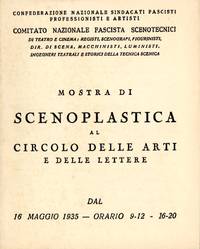
Mostra di Scenoplastica al Circolo delle Arti e delle Lettere
Roma: Confederazione Nazionale Sindacati Fascisti Professionisti e Artisti 1935. Rilegatura a punto metallico stapled binding. Ottimo Fine. Programma dell'esposizione organizzata dalla Confederazione Nazionale Sindacati Fascisti Professionisti e Artisti - COMITATO NAZIONALE FASCISTA SCENOTECNICI di teatro e cinema: registi scenografi figurinisti dir. di scena macchinisti luministi ingegneri teatrali e storici della tecnica scenica presso il Circolo delle Arti e delle Lettere Roma dal 16 maggio 1935. Segretario Nazionale: Anton Giulio Bragaglia. Presentazione a cura del Comitato. <strong>Testo di Anton Giulio Bragaglia</strong>. Gli espositori: Ambroso Belli A.G.B. Bassoli Bologna Broggi Cagnoli Comencini Conti Colombo De Cruciati Dalmonte Favalli Grigioni Kaneclin Ketof Leonori Memoli Montonati Nelli Pacuvio Paladini Pellegrini Rojetti Sagrestani Segota Stroppa Thayaht Tosi Valentini. Cm 153x123. pp. 12. Ottimo Fine. . <em>La mostra destinata all'estero voleva con questa anticipazione romana dare un primo esempio della scenotecnica italiana.</em> <em>"Il fatto fondamentale è"; la fine della pittura o meglio la fine del pennellone perchè oggi la pittura si fa coi riflettori. Pochi hanno decisamente riflettuto su questo avvenimento che prenderà possesso della realtà ogni giorno di più. Anche Moussinac lo tocca con poche parole dove dice che è" venuto un nuovo "element nouveau de trasfiguration: l'electricité";". Anche lui sa che soltanto <strong>la luce colorata oggi fa la scenografia</strong> operando sulle architetture sceniche nude o su pavimenti neutri realizzando la pittura scenica del nostro tempo dal testo di A.G. Bragaglia.</em> Confederazione Nazionale Sindacati Fascisti Professionisti e Artisti, unknown
Riferimento per il libraio : 239305
|
|
|
BRAGAGLIA, Anton Giulio (Frosinone, 1890 - Roma, 1960)
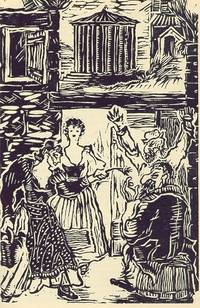
Storia del Teatro Popolare Romano
Roma: Colombo 1958. Rilegato sovracoperta hard cover dust jacket. Molto buono Very Good. Con 20 xilografie originali di Enrico Prampolini. Numerose tavole in nero e una a colori in antiporta. Testo introduttivo di Curzio Malaparte ai risvolti della sovracoperta da ''Il Tempo'' di Milano 24 Dicembre 1953. Seconda edizione con 300 aggiunte e 3 capitoli prima edizione: ibidem 1947 col titolo ''Maschere romane''. 8vo. pp. 712. Molto buono Very Good. Fioriture ai tagli Yellowing of edges. Seconda edizione 2nd Edition. Colombo, hardcover
Riferimento per il libraio : 5822
|
|
|
BRAGAGLIA, Anton Giulio
Storia del teatro popolare romano
1 Vol. In-8 t. editoriale, sovracopt. ill pag. 712 numerosiss. ill. e tavv. f.t.(*) (*)Xilografie di Prampolini PROG 29749 CATT_ATT 41
|
|
|
BRAGAGLIA, Anton Giulio.
Le maschere romane. Con venti tavole fuori testo di E. Prampolini.
In 16°, br. fig., pp. 555. Prima ediz.
|
|
|
BRAGAGLIA, Anton Giulio.
Storia del teatro Popolare Romano.
In 8°, t.tl. edit., tit. in oro su tass. al d., sovr. fig. a colori, pp. 712 con 20 tavv. f.t. di E. Prampolini, oltre a 246 ill. anche col. n.t. e f.t. (Edizione aumentata, di 300 aggiunte e 3 capitoli, de "Le Maschere Romane").
|
|
|
BRAIDER Donald
La vie tumultueuse du Greco. Lumière et Flamme (roman).
Paris, Presses de la Cité, 1969 13 x 21, 249 pp., cartonnage éditeur + jaquette, bon état
Riferimento per il libraio : 9456
|
|
|
Braillard Philippe
L'impostura del Club di Roma
brossura

|
|
|
BRAMBILLA Ambrogio attivo a Roma tra il 1579 ed il 1599
Nova Urbis Romae Descriptio Anni 1587
Rarissima pianta prospettica della città dal Gianicolo, incisa da Ambrogio Brambilla per il tipografo Girolamo Franzini. Si tratta di una piccola pianta, dipendente da quella che il Brambilla stesso incise per Claudio Duchetti nel 1582, aggiornata in parte alla riforma urbanistica di Sisto V. Sono raffigurati gli obelischi di S. Pietro, S. Giovanni e S. M. Maggiore e la via Nova. L’opera è di grandissima rarità; Hülsen (1915) descrive due esemplari nei cataloghi di inizio secolo delle librerie antiquarie romane Rappaport e Lang. Marigliani (2007) riproduce l’esemplare di una collezione privata romana, con una legenda è molto nutrita, addirittura stampata su una lastra separata; è composta da 136 rimandi, dei quali i primi 114 derivano dalla pianta del 1582.In alto, nel riquadro di sinistra, troviamo il titolo e le indicazioni editoriali: NOVA URBIS ROMAE DESCRIPTIO ANNI 1587. Per Ambrosiu s brambilla spictore[m] delineatu s et incisa m. Nel riquadro di destra si legge: Roma fu edifficata gl’anni del mondo 5550 e da poi la destruttione de Troia anni 753 da Romolo, e Remo, fratelli nati da Silvia figliola de Numitore Re de Albano: fu anticame[n]te il suo circuito de le mura miglia 32.Orientazione nei quattro lati al centro con il nome dei punti cardinali: SEPTENTRIO, MERIDIES, OCCIDENS, ORIENS, il nord è a sinistra. Acquaforte e bulino, stampata su carta vergata coeva, con ampi margini, in perfetto stato di conservazione.BibliografiaBifolco - Ronca, Cartografia e Topografia italiana del XVI secolo (2018), pp. 2406-2407, tav. 1238; Ganado (1994): II, n. 116 e III. n. 93; Hülsen (1915): XVIa, p. 63-64, n. 80; Marigliani (2007): n. 60. A very rare map of the city from the Janiculum Hill, engraved by Ambrogio Brambilla for the publisher Girolamo Franzini. It is a small map, based on the one that Brambilla himself engraved for Claudio Duchetti in 1582, partly updated to the urban reform of Sixtus V. The obelisks of S. Pietro, S. Giovanni and S. M. Maggiore and the via Nova are represented. The work is of great rarity; Hülsen (1915) describes two examples in the catalogs of the beginning of the century of the Roman antique bookshops Rappaport and Lang. Marigliani (2007) reproduces the exemple of a private Roman collection, with a very large legend, even printed on a separate plate; it is composed of 136 references, of which the first 114 derive from the map of 1582.Above, in the left box, we find the title and the printing details: NOVA URBIS ROMAE DESCRIPTIO ANNI 1587. For Ambrosiu s brambilla spictore[m] delineatu s et incisa m. Orientation in the four sides with the name of the cardinal points: SEPTENTRIO, MERIDIES, OCCIDENS, ORIENS, the north is on the left. Etching and engraving, printed on contempoary laid paper, with wide margins, in perfect condition.LiteratureBifolco - Ronca, Cartografia e Topografia italiana del XVI secolo (2018), pp. 2406-2407, tav. 1238; Ganado (1994): II, n. 116 e III. n. 93; Hülsen (1915): XVIa, p. 63-64, n. 80; Marigliani (2007): n. 60. Bifolco - Ronca, Cartografia e Topografia italiana del XVI secolo (2018), pp. 2406-2407, tav. 1238.

|
|
|
Bramerini Fabrizio
Atlante letterario di Villa Borghese. Ambientazioni della narrativa a Roma
ill., br. Il Parco Storico più famoso di Roma e forse d'Italia è un luogo reale e bellissimo. Ma è anche il set di tante scene immaginarie descritte da grandi autori in libri famosi e meno noti: da Moravia ad Ammaniti, da D'Annunzio a Moccia, da Pasolini e Pirandello a García Márquez e Veltroni... Questo libro è una mappa di luoghi letterari, articolata nei 14 luoghi più noti della Villa e dei suoi dintorni (Piazza di Siena, lo Zoo, il Pincio...), costruita attraverso la raccolta ragionata di circa 300 tra le più belle citazioni tratte da oltre 200 romanzi o racconti di 130 autori, classificate in 8 diversi temi (amore, follia, svago, natura...). Prefazioni di Alberta Campitelli e Valter Fabietti.

|
|
|
Branca Giovanni (cittadino romano)
LE MACHINE (1978)
copia anastatica, In 8, br. ed. muta con perg. ill. in n., pp. non numerate, ill. in n. n.t.;.lievi tracce d'uso alla cop., interno ottimo.Luogo di pubblicazione Roma Editore VivarelliAnno pubblicazione 1978Materia/Argomento Ingegneria, Architettura, Storia locale, Roma

|
|
|
BRANCALEONI Alvaro
Bellezze de Roma. Versi romaneschi di Alvaro Brancaleoni.
In 16, pp. 68. Con lievi marmoriz. ai piatti. Br. ed. ill. Ed. orig.
|
|
|
BRANCATI Antonio
Il Regime Delle Acque nell'antichità
In 8, pp. 36. Bross. edit. numerose ill. n. testo.
|
|
|
BRANCHETTI Maria Grazia
EPOS. Uomini e armi nella pittura a Roma dal XVI al XIX secolo. Presentazione di Giovanni Spadolini.
In-folio (cm. 40), tela editoriale, sovracoperta editoriale illustrata (piccole abrasioni), pp. 160, (2), con illustrazioni a colori nel testo applicate alle pagine. In buono stato di conservazione (good copy).
|
|
|
BRANCOLI, C.
Volto di Roma. Piccola guida storico-artistica
pp. 46, disegni di M. A. Fedeli n.t.; in 8°. Bross. edit. Buono
|
|
|
Brand, C.E.
ROMAN MILITARY LAW
Ex-library copy with usual stamps, call numbers. Traces of removed pocket on back board. Book has been rebound in dark red library buckram. Light pencil marginalia on a few pages. ; In view of the importance of both the legal and military aspects of the Roman Empire, an account for the Roman armies is of considerable significance to historians in both fields. Colonel C. E. Brand describes this system of control. ; 209 pages
|
|
|
Brandi (R.P.M. Gio. Antonio)
Cronologia de sommi pontefici.
Rome Francesco Corbelletti 1627 1627 Francesco Corbelletti, Rome, 1627.Ouvrage présentant la succession des Papes depuis Jésus Christ jusqu'au Pape régnant en 1627, Urbain VIII (Maffeo Barberini). Chaque Pape est présenté par un portrait gravé sur bois et une colonne de biographie (deux colonnes par page).1 volume in-8 demi vélin ivoire postérieur, [1f.] blanc, page de titre, deux pages de table, 61 feuillets et [1f.] blanc. Ex-libris de Fontenay, ancien ambassadeur de France à Rome. Nombreuses mentions manuscrites en garde et sur la page de titre (biffées), page de titre réparée.
Riferimento per il libraio : 2648
|
|
|
Brandizzi Vittucci Paola
La gens Aelia Lamia. Personaggi e monumenti del I sec. a.C. a Sperlonga Roma e Formia
br. Nel 1848, in via Graziosa all'Esquilino, durante lavori di riqualificazione urbana, vengono alla luce resti di una domus, allora datata intorno al 50 a.C. Oggi, partendo dall'esame delle decorazioni e in particolare dal paesaggio rappresentato - la costa di Sperlonga - nelle splendide pitture murarie, Paola Brandizzi Vittucci propone una ridatazione della casa ad epoca augustea, affermando possibile attribuire la dimora a un membro appartenente alla gens Aelia Lamia. L'esame delle notizie fornite dalle fonti a proposito dei vari componenti della gens e dei monumenti ad essi collegabili, a Roma e a Formia, permette infatti di costruire un quadro cronologico convincente, attingendo anche alla biografia di personaggi storici contemporanei, in particolare Cicerone, fortemente legato ai Lamia.

|
|
|
Brandizzi Vitucci Paola
LA COLLEZIONE ARCHEOLOGICA NEL CASALE DI ROMA VECCHIA
In 8, br. ed. pp. 102, + XLVI tav. in n.f.t., volume in ottimo stato.Luogo di pubblicazione RomaEditore Comitato per l'archeologia lazialeAnno pubblicazione 1981Collana Cataloghi dei Musei locali e delle Collezioni del Lazio-3Materia/Argomento Archeologia, Storia locale, Roma

|
|
|
Brandon, Samuel
Gesù e gli Zeloti. Il cristianesimo sovversivo prima di Paolo
Mm 140x210 Brossura editoriale, 422 pagine. Opera in condizioni pari al nuovo. SPEDIZIONE IN 24 ORE DALLA CONFERMA DELL'ORDINE.
|
|
|
Brands, Gunnar & Severin, Hans-Georg [Eds.]
Die spätantike Stadt und ihre Christianisierung: Symposion vom 14/ bis 16/ Februar 2000 in Halle/Saale. [SERIES]: Spätantike - Frühes Christentum - Byzanz / Kunst im ersten Jahrtausend, Reihe B: Studien und Persoektiven - Band 11..
RARE collection of 23 papers in German and English from the international symposium on the christianization of cities in Late Antiquity. Copy from the library of an eminent Israeli archaeologist Yoram Tsafrir (1938-2015), who also contributed a paper included in this volume. Most papers are in German, three are in English. [LIST OF AUTHORS]: Gunnar Brands, Achim Arbeiter, Franz A. Bauer, Albrecht Berger, Robert Born, Beat Brenk, Ortwin Dally, Klaus S. Freyberger, Peter Grossmann, Andreas Gutsfeld, Wolfram Hoepfner, Kenneth Holum, Hans-Rudolf Meier, Karl Leo Noethlichs, Alexis Oepen, Ulrich Real, Klaus Rheidt, Hans-Georg Severin, Hilke Thür, Yoram Tsafrir Bryan Ward-Perkins, Rainer Warland, Ulrike Wulf. Includes 125 b&w full-page plates, several of them fold-out, and index of places (Orts- und Länderregister). 245x175mm. VIII+310 pages & 125 full-page plates. Illustrated Hardcover. Cover and spine rubbed. Cover edges and spine bottom edge bumped. Cover upper corners and spine upper edge rubbed. Previous owner's name (Yoram Tsafrir) written in Hebrew in pencil on front whitepage upper edge/corner. [SUMMARY]: This extremely rare volume of conference proceedings, of immense interest to historians of urban development and Christianity in Late Antiquity, is in good condition.
|
|
|
Branko Fredde van Oppen de Ruiter, Ronald Wallenfels (eds)
Hellenistic Sealings & Archives. Proceedings of The Edfu Connection, an international conference
, Brepols, 2021 Paperback, xxxvi + 260 pages, Size:216 x 280 mm, Illustrations:367 b/w, 8 col., 9 tables b/w., 8 maps b/w, Language: English. ISBN 9782503591278.
Riferimento per il libraio : 65135
|
|
|
Braudel, Fernand
Il Mediterraneo. Lo Spazio La Storia Gli Uomini Le Tradizioni
Mm 125x195 Prima edizione italiana. Volume in copertina rigida con sovraccoperta, 283 pagine con 23 figure in nero e a colori non comprese nel testo. Esemplare in ottime condizioni, solo quattro tracce di nastro adesivo ai fogli di guardia. SPEDIZIONE IN 24 ORE DALLA CONFERMA DELL'ORDINE.
|
|
|
Brauer, George C.
THE AGE OF THE SOLDIER EMPERORS Imperial Rome, A.D. 244-284
DJ is very discolored with light chipping and edgewear. Book has very light shelfwear with slight bumping along bottom edge of boards. ; Noyes Classical Studies; 288 pages; Looks at the history of the Roman Empire in the middle part of the third century A. D. From the reign of Philip the Arab to Carus and his dynasty before the reign of Diocletian. Book is heavily illustrated with pictures of coins of the period.
|
|
|
Brauer, George C.
THE AGE OF THE SOLDIER EMPERORS Imperial Rome, A.D. 244-284
DJ is discolored along edges of front panel. DJ has minor shelfwear. ; Noyes Classical Studies; 288 pages; Looks at the history of the Roman Empire in the middle part of the third century A. D. From the reign of Philip the Arab to Carus and his dynasty before the reign of Diocletian. Book is heavily illustrated with pictures of coins of the period.
|
|
|
Brauer, George C.
THE AGE OF THE SOLDIER EMPERORS Imperial Rome, A.D. 244-284
Foxing to textblock and endpapers. DJ is discolored along edges and spine. DJ has minor shelfwear. ; Noyes Classical Studies; 288 pages; Looks at the history of the Roman Empire in the middle part of the third century A. D. From the reign of Philip the Arab to Carus and his dynasty before the reign of Diocletian. Book is heavily illustrated with pictures of coins of the period.
|
|
|
Brauer, George C.
THE AGE OF THE SOLDIER EMPERORS Imperial Rome, A.D. 244-284
Ex-library copy with usual stamps, call numbers and pocket. Minor shelfwear. ; Noyes Classical Studies; 288 pages; Looks at the history of the Roman Empire in the middle part of the third century A. D. From the reign of Philip the Arab to Carus and his dynasty before the reign of Diocletian. Book is heavily illustrated with pictures of coins of the period.
|
|
|
Brauer, George C.
THE AGE OF THE SOLDIER EMPERORS Imperial Rome, A.D. 244-284
Dustjacket spine is slightly discolored. Tiny chip to DJ at head of spine. Former owner's name on ffep. ; Noyes Classical Studies; 288 pages; Looks at the history of the Roman Empire in the middle part of the third century A. D. From the reign of Philip the Arab to Carus and his dynasty before the reign of Diocletian. Book is heavily illustrated with pictures of coins of the period.
|
|
|
BRAUN & Franz HOGENBERG Georg
Antiqua Urbis Roma Imago Accuratissima
Grande pianta della città stampata su due fogli, ispirata alla celebre carta del Pirro Ligorio, tratta dal Civitates Orbis Terrarum. Questa straordinaria ricostruzione di Roma durante il regno di Augusto, arricchita da una cospicua legenda con 269 richiami, costituisce il lavorò più ambizioso contenuto nel Civitates Orbis Terrarum, del quale oltretutto è una delle sole tre mappe a doppio foglio. L’opera è inserita nel Civitates Orbis Terrarum, il primo atlante devoto esclusivamente alle piante e vedute delle principali città del mondo. Il primo volume delle Civitates Orbis Terrarum fu pubblicato a Colonia nel 1572. Il sesto e ultimo volume apparve nel 1617. Questo grande atlante di città – cartografia urbana - curato da Georg Braun e inciso in gran parte da Franz Hogenberg, conteneva 546 prospettive, vedute a volo d'uccello e vedute cartografiche di città di tutto il mondo. Franz Hogenberg realizzò le tavole dei primi quattro volumi e Simon van den Neuwel (Novellanus, attivo dal 1580) quelle dei volumi V e VI. Georg Braun (1541-1622), un ecclesiastico di Colonia, fu il principale redattore dell'opera e fu molto aiutato nel suo progetto dalla vicinanza e dal continuo interesse di Abraham Ortelius, il cui Theatrum Orbis Terrarum del 1570 fu, come raccolta sistematica e completa di mappe di stile uniforme, il primo vero atlante. Le Civitates, in effetti, erano destinate ad accompagnare il Theatrum, come indicato dalla somiglianza dei titoli e dai riferimenti contemporanei sulla natura complementare delle due opere. Tuttavia, le Civitates erano progettate per avere un approccio più popolare, senza dubbio perché la novità di una raccolta di piante e vedute di città rappresentava un'impresa commerciale più rischiosa di un atlante mondiale, per il quale c'erano stati diversi precedenti di successo. Franz Hogenberg (1535-1590) era figlio di un incisore di Monaco che si era stabilito a Malines. Incise la maggior parte delle tavole del Theatrum di Ortelius e la maggior parte di quelle delle Civitates, e potrebbe essere anche indicato come il responsabile dell'origine del progetto. Oltre un centinaio di artisti e cartografi diversi, il più importante dei quali fu l'artista di Anversa Georg Hoefnagel (1542-1600), fornirono i disegni per le tavole delle Civitates. Hoefnagel non solo contribuì alla maggior parte del materiale originale per le città spagnole e italiane, ma rielaborò e modificò anche quello di altri collaboratori. Dopo la morte di Hoefnagel, il figlio Jakob continuò il lavoro per le Civitates. Gli autori della raccolta si proponevano di raffigurare "non icones et typi urbium", cioè non immagini generiche e tipizzate, "sed urbes ipsae admirabili caelaturae artificio, spectantium oculis subiectae appareant": non intendeva alludere o idealizzare, ma rappresentare fedelmente sulla carta, riprodurre esattamente, e in tempo reale, ciò che l'occhio vede, come annunciato nella prefazione al primo volume delle Civitates Orbis Terrarum. Incisione in rame, bella coloritura coeva, leggeri restauri perfettamente eseguiti per il resto in buono stato di conservazione. A good example, with fine original colour, of the Braun & Hogenberg Plan of Rome, first published in the 1588 edition of the Civitates Orbis Terrarum.Braun & Hogenberg's view is based upon the work of Pirro Ligorio. However, the title banner and lower key embellishments are completely revised, the former lacking the strapwork used by Braun & Hogenberg and replaced with a tapestry style fringe, while the lower key is now embellished with images of two nobles.Rome is shown from the west in a bird's-eye view that was a major achievement in its day. It includes the most important buildings from antiquity, several aqueducts, the Aurelian Wall and large arterial streets. The three figures in Roman garb in the foreground underscore the aim of meticulous reconstruction.Mont Testaccio is shown on the far side of the Tiber in the lower right-hand edge of the picture, with the Pyramid of Cestius above it to the right. At the center of the illustration the Marcellus Theatre can be identified above the island in the Tiber, with the vast Circus Maximus, used for chariot races, just above it to the right. Above that is the Palatine represented with intricately detailed buildings, an indication of the confusion at the time about how the seat of imperial power actually looked.To the north the Coliseum flanks the Palatine. In the lower left-hand part of the picture field is the Campus Martius, with the stadium of Domitian at the center, site of the modern Piazza Navona. Slightly higher up is the Pantheon with its monumental dome, looking as it does today. On the lower left edge the two great imperial mausoleums are shown as they would have appeared during the Roman epoch. Above the mausoleum of Augustus and below, at the bend in the river, is that of Hadrian.In the lower left-hand corner, the Mons Vaticanus with the Circus built by Caligua and a Neronian palace are recognizable outside the city. The baths of Diocletan dominate the northeastern part of the city. The Castra Praetoria, the barracks of the Praetorian Guard, is shown below the city walls in the upper left-hand corner. The work is included in the Civitates Orbis Terrarum, the first atlas devoted exclusively to plans and views of the world's major cities. Printed in six volumes between 1572 and 1617 it was so successful and widespread that several editions translated into Latin, German and French were printed. The first volume of the Civitates Orbis Terrarum was published in Cologne in 1572. The sixth and the final volume appeared in 1617. This great city atlas, edited by Georg Braun and largely engraved by Franz Hogenberg, eventually contained 546 prospects, bird-eye views and map views of cities from all over the world. Fransz Hogenberg produced the plates for the first four books, and Simon van den Neuwel (Novellanus, active since 1580) those for volumes V and VI. Georg Braun (1541-1622), a cleric of Cologne, was the principal editor of the work, and was greatly assisted in his project by the close, and continued interest of Abraham Ortelius, whose Theatrum Orbis Terrarum of 1570 was, as a systematic and comprehensive collection of maps of uniform style, the first true atlas. The Civitates, indeed, was intended as a companion for the Theatrum, as indicated by the similarity in the titles and by contemporary references regarding the complementary nature of two works. Nevertheless, the Civitates was designs to be more popular in approach, no doubt because the novelty of a collection of city plans and views represented a more hazardous commercial undertaking than a world atlas, for which there had been a number of successful precedents. Franz Hogenberg (1535-1590) was the son of a Munich engraves who settled in Malines. He engraved most of the plates for Ortelius's Theatrum and the majority of those in the Civitates, and may have been responsible for originating the project. Over a hundred of different artists and cartographers, the most significant of w... Fauser, A. 11932; Huelsen (1915) n. 38; Caldana, Roma Antica, p. 84, n. I.17.

|
|
|
BRAUN & Franz HOGENBERG Georg
Roma
Sorprendente veduta a volo d'uccello di Roma con cartiglio decorativo con titolo, che mostra la città com'era nel 1550. Sono incluse varie strutture superstiti dell'antica Roma: le mura circostanti, il Pantheon, il Colosseo, l'Arco di Costantino e il Foro Romano. Nell'angolo sinistro in primo piano si possono vedere il Palazzo Papale e l'Obelisco dal circo di Caligola e Nerone. In basso due figure in primo piano e due ampie tabelle con la legenda."E' una copia ridotta della pianta del Camocio (o della precedente di Leon Pitor come sostiene Scaccia Scarafoni) nella quale la città è ritratta a volo d'uccello dal Gianicolo" (cfr. Marigliani p. 152). L’opera è inserita nel Civitates Orbis Terrarum, il primo atlante devoto esclusivamente alle piante e vedute delle principali città del mondo. Il primo volume delle Civitates Orbis Terrarum fu pubblicato a Colonia nel 1572. Il sesto e ultimo volume apparve nel 1617. Questo grande atlante di città – cartografia urbana - curato da Georg Braun e inciso in gran parte da Franz Hogenberg, conteneva 546 prospettive, vedute a volo d'uccello e vedute cartografiche di città di tutto il mondo. Franz Hogenberg realizzò le tavole dei primi quattro volumi e Simon van den Neuwel (Novellanus, attivo dal 1580) quelle dei volumi V e VI. Georg Braun (1541-1622), un ecclesiastico di Colonia, fu il principale redattore dell'opera e fu molto aiutato nel suo progetto dalla vicinanza e dal continuo interesse di Abraham Ortelius, il cui Theatrum Orbis Terrarum del 1570 fu, come raccolta sistematica e completa di mappe di stile uniforme, il primo vero atlante. Le Civitates, in effetti, erano destinate ad accompagnare il Theatrum, come indicato dalla somiglianza dei titoli e dai riferimenti contemporanei sulla natura complementare delle due opere. Tuttavia, le Civitates erano progettate per avere un approccio più popolare, senza dubbio perché la novità di una raccolta di piante e vedute di città rappresentava un'impresa commerciale più rischiosa di un atlante mondiale, per il quale c'erano stati diversi precedenti di successo. Franz Hogenberg (1535-1590) era figlio di un incisore di Monaco che si era stabilito a Malines. Incise la maggior parte delle tavole del Theatrum di Ortelius e la maggior parte di quelle delle Civitates, e potrebbe essere anche indicato come il responsabile dell'origine del progetto. Oltre un centinaio di artisti e cartografi diversi, il più importante dei quali fu l'artista di Anversa Georg Hoefnagel (1542-1600), fornirono i disegni per le tavole delle Civitates. Hoefnagel non solo contribuì alla maggior parte del materiale originale per le città spagnole e italiane, ma rielaborò e modificò anche quello di altri collaboratori. Dopo la morte di Hoefnagel, il figlio Jakob continuò il lavoro per le Civitates. Gli autori della raccolta si proponevano di raffigurare "non icones et typi urbium", cioè non immagini generiche e tipizzate, "sed urbes ipsae admirabili caelaturae artificio, spectantium oculis subiectae appareant": non intendeva alludere o idealizzare, ma rappresentare fedelmente sulla carta, riprodurre esattamente, e in tempo reale, ciò che l'occhio vede, come annunciato nella prefazione al primo volume delle Civitates Orbis Terrarum. Incisione in rame, finemente colorata a mano, lieve gora d'acqua nel margine inferiore destro, piega di carta centrale, per il resto in ottimo stato di conservazione.BibliografiaA. P. Frutaz, "Le piante di Roma", tav. 123; C. Marigliani, "Le Piante di Roma delle collezioni private", n. 52; M. Gori Sassoli (a cura di), "Roma Veduta" n. 12; Scaccia Scarafoni, "Le Piante di Roma", n. 156. Striking bird's-eye plan of Rome with decorative title cartouche, showing the city as it was c. 1550. Included are various surviving features of ancient Rome: the surrounding walls, the Pantheon, the Coliseum, the Arch of Constantine, and the Forum Romanum. In the left corner in the foreground can be seen the Papal Palace and the Obelisk from the circus of Caligula and Nero. With two figures in the foreground, and two extensive tables of explanations."E' una copia ridotta della pianta del Camocio (o della precedente di Leon Pitor come sostiene Scaccia Scarafoni) nella quale la città è ritratta a volo d'uccello dal Gianicolo" (cfr. Marigliani p. 152). The work is included in the Civitates Orbis Terrarum, the first atlas devoted exclusively to plans and views of the world's major cities. Printed in six volumes between 1572 and 1617 it was so successful and widespread that several editions translated into Latin, German and French were printed. The first volume of the Civitates Orbis Terrarum was published in Cologne in 1572. The sixth and the final volume appeared in 1617. This great city atlas, edited by Georg Braun and largely engraved by Franz Hogenberg, eventually contained 546 prospects, bird-eye views and map views of cities from all over the world. Fransz Hogenberg produced the plates for the first four books, and Simon van den Neuwel (Novellanus, active since 1580) those for volumes V and VI. Georg Braun (1541-1622), a cleric of Cologne, was the principal editor of the work, and was greatly assisted in his project by the close, and continued interest of Abraham Ortelius, whose Theatrum Orbis Terrarum of 1570 was, as a systematic and comprehensive collection of maps of uniform style, the first true atlas. The Civitates, indeed, was intended as a companion for the Theatrum, as indicated by the similarity in the titles and by contemporary references regarding the complementary nature of two works. Nevertheless, the Civitates was designs to be more popular in approach, no doubt because the novelty of a collection of city plans and views represented a more hazardous commercial undertaking than a world atlas, for which there had been a number of successful precedents. Franz Hogenberg (1535-1590) was the son of a Munich engraves who settled in Malines. He engraved most of the plates for Ortelius's Theatrum and the majority of those in the Civitates, and may have been responsible for originating the project. Over a hundred of different artists and cartographers, the most significant of whom was Antwerp artist Georg Hoefnagel (1542-1600), engraved the cooper-plates of the Civitates from drawings. He not only contributed most of the original material for the Spanish and Italian towns but also reworked and modified those of other contributors. After Hoefnagel's death his son Jakob continued the work for the Civitates. The author set out to depict "non icones et typi urbium," that is, not generic and typified images, "sed urbes ipsae admirabili caelaturae artificio, spectantium oculis subiectae appareant": not intended to allude or idealize but to represent faithfully on paper, to reproduce exactly, and in real time, what the eye sees, as announced in the preface to the first volume of Civitates Orbis Terrarum. Etching on copperplate with original hand colour, a light waterstain in the lower right corner, otherwise in good conditions.BibliografiaA. P. Frutaz, "Le piante di Roma", tav. 123; C. Marigliani, "Le Piante di Roma delle collezioni private", n. 52; M. Gori Sassoli (a cura di), "Roma Veduta" n. 12; Scaccia Scarafoni, "Le Piante di Roma", n. 156.

|
|
|
BRAUN & Franz HOGENBERG Georg
Urbis Romae Situs Cum Iis Quae Adhuc Conspiciuntur Veter Monumet Reliquiis Pyrrho Ligorio...
Pianta archeologica di Roma, a proiezione verticale obliqua, orientata con il nord in alto.La pianta deriva da quella che Pirro Ligorio disegna per l'editore Michele Tramezzino nel 1552. Si tratta della prima derivazione stampata all'estero ed è ridotta leggermente nelle dimensioni. Erroneamente viene indicata come data d'esecuzioni il 1570, invece del 1552. Appare per la prima volta nel 1575, inserita nel Civitates Orbis Terrarum, il primo atlante devoto esclusivamente alle piante e vedute delle principali città del mondo. L’opera è inserita nel Civitates Orbis Terrarum, il primo atlante devoto esclusivamente alle piante e vedute delle principali città del mondo. Il primo volume delle Civitates Orbis Terrarum fu pubblicato a Colonia nel 1572. Il sesto e ultimo volume apparve nel 1617. Questo grande atlante di città – cartografia urbana - curato da Georg Braun e inciso in gran parte da Franz Hogenberg, conteneva 546 prospettive, vedute a volo d'uccello e vedute cartografiche di città di tutto il mondo. Franz Hogenberg realizzò le tavole dei primi quattro volumi e Simon van den Neuwel (Novellanus, attivo dal 1580) quelle dei volumi V e VI. Georg Braun (1541-1622), un ecclesiastico di Colonia, fu il principale redattore dell'opera e fu molto aiutato nel suo progetto dalla vicinanza e dal continuo interesse di Abraham Ortelius, il cui Theatrum Orbis Terrarum del 1570 fu, come raccolta sistematica e completa di mappe di stile uniforme, il primo vero atlante. Le Civitates, in effetti, erano destinate ad accompagnare il Theatrum, come indicato dalla somiglianza dei titoli e dai riferimenti contemporanei sulla natura complementare delle due opere. Tuttavia, le Civitates erano progettate per avere un approccio più popolare, senza dubbio perché la novità di una raccolta di piante e vedute di città rappresentava un'impresa commerciale più rischiosa di un atlante mondiale, per il quale c'erano stati diversi precedenti di successo. Franz Hogenberg (1535-1590) era figlio di un incisore di Monaco che si era stabilito a Malines. Incise la maggior parte delle tavole del Theatrum di Ortelius e la maggior parte di quelle delle Civitates, e potrebbe essere anche indicato come il responsabile dell'origine del progetto. Oltre un centinaio di artisti e cartografi diversi, il più importante dei quali fu l'artista di Anversa Georg Hoefnagel (1542-1600), fornirono i disegni per le tavole delle Civitates. Hoefnagel non solo contribuì alla maggior parte del materiale originale per le città spagnole e italiane, ma rielaborò e modificò anche quello di altri collaboratori. Dopo la morte di Hoefnagel, il figlio Jakob continuò il lavoro per le Civitates. Gli autori della raccolta si proponevano di raffigurare "non icones et typi urbium", cioè non immagini generiche e tipizzate, "sed urbes ipsae admirabili caelaturae artificio, spectantium oculis subiectae appareant": non intendeva alludere o idealizzare, ma rappresentare fedelmente sulla carta, riprodurre esattamente, e in tempo reale, ciò che l'occhio vede, come annunciato nella prefazione al primo volume delle Civitates Orbis Terrarum. Incisione in rame, finemente colorata a mano, in ottimo stato di conservazione. Archeological map of Rome published in the Civitates Orbis Terrarum of 1575.The map is a close copy of the Pirro Ligorio map of Rome (1552, published by Michele Tramezzino) reduced in size. Latin text edition. The work is included in the Civitates Orbis Terrarum, the first atlas devoted exclusively to plans and views of the world's major cities. Printed in six volumes between 1572 and 1617 it was so successful and widespread that several editions translated into Latin, German and French were printed. The first volume of the Civitates Orbis Terrarum was published in Cologne in 1572. The sixth and the final volume appeared in 1617. This great city atlas, edited by Georg Braun and largely engraved by Franz Hogenberg, eventually contained 546 prospects, bird-eye views and map views of cities from all over the world. Fransz Hogenberg produced the plates for the first four books, and Simon van den Neuwel (Novellanus, active since 1580) those for volumes V and VI. Georg Braun (1541-1622), a cleric of Cologne, was the principal editor of the work, and was greatly assisted in his project by the close, and continued interest of Abraham Ortelius, whose Theatrum Orbis Terrarum of 1570 was, as a systematic and comprehensive collection of maps of uniform style, the first true atlas. The Civitates, indeed, was intended as a companion for the Theatrum, as indicated by the similarity in the titles and by contemporary references regarding the complementary nature of two works. Nevertheless, the Civitates was designs to be more popular in approach, no doubt because the novelty of a collection of city plans and views represented a more hazardous commercial undertaking than a world atlas, for which there had been a number of successful precedents. Franz Hogenberg (1535-1590) was the son of a Munich engraves who settled in Malines. He engraved most of the plates for Ortelius's Theatrum and the majority of those in the Civitates, and may have been responsible for originating the project. Over a hundred of different artists and cartographers, the most significant of whom was Antwerp artist Georg Hoefnagel (1542-1600), engraved the cooper-plates of the Civitates from drawings. He not only contributed most of the original material for the Spanish and Italian towns but also reworked and modified those of other contributors. After Hoefnagel's death his son Jakob continued the work for the Civitates. The author set out to depict "non icones et typi urbium," that is, not generic and typified images, "sed urbes ipsae admirabili caelaturae artificio, spectantium oculis subiectae appareant": not intended to allude or idealize but to represent faithfully on paper, to reproduce exactly, and in real time, what the eye sees, as announced in the preface to the first volume of Civitates Orbis Terrarum. Copperplate with fine later hand colour, good condition. Scaccia Scarafoni p. 29, n. 22.

|
|
|
Braund, David
ROME AND THE FRIENDLY KING The Character of the Client Kingship
Minor sticker stain to bottom front corner of DJ. DJ is price-clipped. Minor shelfwear and rubbing to DJ. DJ spine is sunned. Light bumping to book. Single Ex-library plate to inner front cover (also with scholar's name A. K. Bowman). ; 226 pages; First major study of the relationship between Rome and the kings of her world. It covers the whole of that world over a period of six centuries from the third century BC. It aims to give a functional definition of what is usually called client kingship-- to show what a client king (or friendly king to use the Roman term) was in practice.
|
|
|
Braund, David
ROME AND THE FRIENDLY KING The Character of the Client Kingship
DJ is protected in mylar sleeve. Blank white sticker to ffep to cover former owner's name. ; 226 pages; First major study of the relationship between Rome and the kings of her world. It covers the whole of that world over a period of six centuries from the third century BC. It aims to give a functional definition of what is usually called client kingship-- to show what a client king (or friendly king to use the Roman term) was in practice.
|
|
|
Braund, David
ROME AND THE FRIENDLY KING The Character of the Client Kingship
Ex-library copy with usual stamps, call numbers and pocket. Call numbers on spine have been removed leaving sticker residue to boards. Slight wear to corners. A couple of genealogical tables at back have a few small tears. ; 226 pages; First major study of the relationship between Rome and the kings of her world. It covers the whole of that world over a period of six centuries from the third century BC. It aims to give a functional definition of what is usually called client kingship-- to show what a client king (or friendly king to use the Roman term) was in practice.
|
|
|
Braund, David
ROME AND THE FRIENDLY KING The Character of the Client Kingship
DJ spine is discolored. Minor shelfwear to DJ. ; 226 pages; First major study of the relationship between Rome and the kings of her world. It covers the whole of that world over a period of six centuries from the third century BC. It aims to give a functional definition of what is usually called client kingship-- to show what a client king (or friendly king to use the Roman term) was in practice.
|
|
|
Braund, David
ROME AND THE FRIENDLY KING The Character of the Client Kingship
DJ spine is discolored. Minor shelfwear and rubbing to DJ. Light bumping to book. ; 226 pages; First major study of the relationship between Rome and the kings of her world. It covers the whole of that world over a period of six centuries from the third century BC. It aims to give a functional definition of what is usually called client kingship-- to show what a client king (or friendly king to use the Roman term) was in practice.
|
|
|
Braund, David
RULING ROMAN BRITAIN Kings, Queens, Governors and Emperors from Julius Caesar to Agricola
Minor shelfwear to DJ else Fine. ; In this book, David Braund offers a significantly different perspective upon the history of Roman Britain. Rather than relying on archaeology, the author concentrates on the literary evidence, drawing a colorful picture of the social and political context of Roman imperialism. The study discusses Roman theories of imperialism as well as the intellectual and political atmosphere within which Caesar mounted his invasions of Britain in 55 and 54 B. C. Braund shows how the ideologies and power structures at work in Rome fundamentally shaped politics and society in Roman Britain. Thus he develops an understanding of the literary sources which goes beyond mere translation and allows the reader insights into this remote corner of the Roman world. ; 0.87 x 8.43 x 5.67 Inches; 217 pages
|
|
|

 Ricevere i risultati per e-mail
 Scaricare i risultati in PDF
 RSS feed
 Link
Link


