|
TRIPET J.
On top. The book for beginners.
Cartonnage de l'éditeur. 64 pages. 21x28cm.
|
|
|
TRISTAN (Flora)
Promenades dans Londres.
In-8, demi-maroquin bleu nuit, dos à 4 faux-nerfs filetés or, auteur et titre dorés, daté en pied, couverture conservée (rel. moderne dans le goût de l'époque), lj, (3), 412 p. Edition originale, couverture de premier tirage et page de titre de remise en vente comportant une mention fictive de "deuxième édition". "À la faveur d'un quatrième séjour à Londres (mai-août 1839), Flora Tristan actualisa la vaste enquête sur l'Angleterre industrielle. Elle montrait l'Angleterre comme le laboratoire de la civilisation qui ne tarderait pas à gagner l'Europe; elle mettait en garde contre un modèle de développement où l'homme était sacrifié à la tyrannie du profit. Les 'Promenades dans Londres' approfondissaient sa vocation d'enquêtrice sociale" (S. Michaud, in Maitron cd-rom). Du point de vue de la composition et du style, certainement le meilleur des livres de Flora Tristan, où elle donne toute la mesure de son intelligence, de sa sensibilité et de sa lucidité politique. La parution de l'ouvrage en mai 1840 coïncida avec une crise économique majeure, une grève quasi-générale des corporations parisiennes et une structuration de l'organisation ouvrière à un niveau jamais encore atteint. "Les Promenades" obtinrent, dans ce contexte, un accueil élogieux de la presse républicaine et socialiste et un important retentissement populaire. "Au fond, à scruter de près les 'Promenades dans Londres', on peut dire que trois livres s'y trouvent superposés : une enquête de science sociale, une didactique révolutionnaire, un Evangile romantique" (François Bedarida). (J. Puech, 'Vie et oeuvre de F. Tristan', p. 489, n° 9. Maitron, Cd-rom). Quelques rousseurs éparses. Très bon exemplaire, très bien établi dans une reliure de maître.
|
|
|
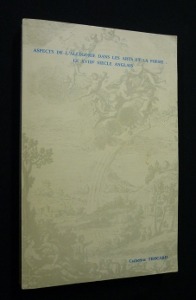
Trocard Catherine
Aspects de l'allégorie dans les arts et la poésie : le XVIIIe siècle anglais
Sans mention d'éditeur Broché 1982 In-8, (25.5x16.5 cm), broché, couverture illustrée, 348 pages, illustrations en noir et blanc, bibliographie, envoi de Suzon Trocard ; coins légèrement cornés, bon état. Livraison a domicile (La Poste) ou en Mondial Relay sur simple demande.
Referentie van de boekhandelaar : ql466
|
|
|
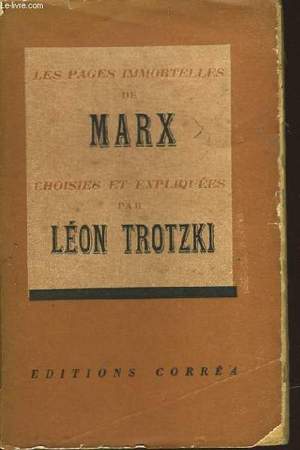
TROTZKI LEON
LES PAGES IMMORTELLES DE MARX
EDITIONS CORREA. 1947. In-12. Broché. Bon état, Couv. convenable, Dos satisfaisant, Papier jauni. 283 pages.. . . . Classification Dewey : 942-Angleterre
Referentie van de boekhandelaar : RO30022513
|
|
|
TROLLOPE Joanna
Les liens du sang. Traduit par Dominiqie Peters.
Broché. 298 pages.
|
|
|
TROLLOPE, Anthony.
AYALA'S ANGEL.
Hardcover in-16, 631 pp. HB + DW (No Marks, no Inscriptions) VERY GOOD +++ in a GOOD +++ Unclipped DW [EMB-@]
|
|
|
TROLLOPE, Anthony.
Doctor Thorne.
Hardcover in-16, 569 pp. HB + DW (No Marks, no Inscriptions) VERY GOOD +++ in a GOOD unclipped ++ DW [EMB-@]
|
|
|
TROLOPPE Anthony
The last chronicle of Barset. In two volumes. Vol. II (seul). With ten illustrations by George H. Thomas.
Reliure percaline de l'éditeur. 463 pages.
|
|
|
TRUPTIL, R.J.:
Le Système bancaire anglais et la Place de Londres. Préface de M. Charles Rist.
Paris, Librairie du Recueil Sirey, 1934, in-4°, VIII + 293 p., non coupé, brochure originale, bon exemplaire.
Referentie van de boekhandelaar : 20605aaf
|
|
|
TRÉSAL (Joseph).
Bibliothèque de l'enseignement de l'histoire ecclésiastique. Les Origines du schisme anglican (1509-1571).
Paris, Victor Lecoffre, 1908 in-12, XXIII pp., 460 pp., broché. Manque la première couverture.
Referentie van de boekhandelaar : 232795

|
|
|
TUMERELLE Maurice
Vacances anglaises.
Bruxelles, Librairie Vanderlinden, 1939 15 x 20, 140 pp., photographies hors texte N/B, broché, bon état
Referentie van de boekhandelaar : 6370
|
|
|
TURR Général
ARRESTATION PROCES ET CONDAMNATION du Général Türr racontés par lui-même. Suivis des vicissitudes ultérieures par l'avocat Curti.
Paris Dentu 1863. In-8 IV 142pp. Demi basane havane, dos à faux nerfs orné de filets noirs et dorés, reliure de l'époque. Quelques pâles rousseurs, exemplaire bien complet.
Referentie van de boekhandelaar : GITe137
|
|
|
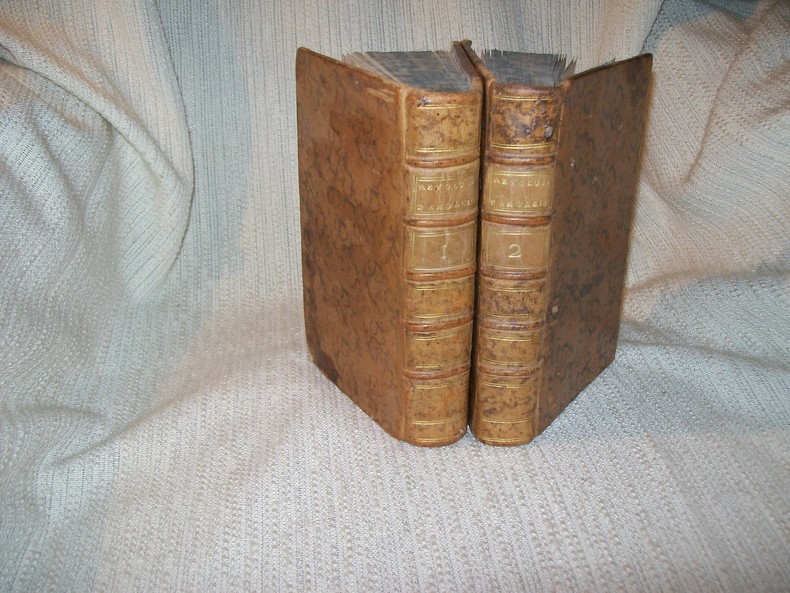
TURPIN
HISTOIRE DES REVOLUTIONS D'ANGLETERRE pour servir de suite à celles du Père d'Orléans.
A Paris chez Leclerc, Knapen, Savoye, Cussac, Desenne 1786. 2 volumes in-12 4 feuillets non chiffrésII-XLIV 4 feuillets non chiffrés 2-446pp / 4 feuillets non chiffrés 2-439pp 1 feuillet non chiffré. Pleine basane havane marbrée, dos à nerfs orné de filets dorés, pièces de titre et de tomaison blondes, tranches marbrées, reliure de l'époque. Belle vignette armoriée gravée en tête de l'épître dédicatoire. Petit manque de cuir au bas du dos du Tome I, sur 1 coin et 1 coupe. Edition complète en deux volumes.
Referentie van de boekhandelaar : GITf208
|
|
|
TURK, Egbert
Nugae Curialium. Le règne d'Henri II Plantagenêt (1145-1189) et l'éthique politique
1 vol. in-8 br., Centre de Recherches d'Histoire et de Philologie de la IVe Section de l'Ecole pratique des Hautes Etudes, Hautes Etudes médiévales et modernes, Librairie Minard, Librairie Champion, Librairie Droz, Genève, 1977, 233 pp.
Referentie van de boekhandelaar : 62559

|
|
|
TURNER (Sharon).-
The History of England during the Middle Ages. Third edition.
London, Paternoster Row, 1830, 5 volumes in 8° reliés demi-basane tabac à coins, dos à faux nerfs orné, étiquettes de titres rouges, et de tomaison bleues, XXVII-479, XVI-603, XXIX-531, XV-504 et XVI-527 pages ; rousseurs et traces dhumidité, reliures frottées ; 6 étiquettes manquent.
Referentie van de boekhandelaar : 32571
|
|
|
TURNER (Sharon).-
The history of the reign of Henry the Eight : comprising the political history of the Commencement of the English Reformation.
London, Paternoster-Row, 1828, 2 volumes in 8° reliés demi-basane tabac à coins, dos à faux nerfs ornés, étiquettes de titre rouges, et de tomaison bleues, XX-477 et XII-568 pages ; quelques rousseurs ; reliures très frottées, les étiquettes de titre manquent.
Referentie van de boekhandelaar : 32572
|
|
|
TURQUAN (Joseph), AURIAC (J. d')
Une aventurière de haut vol. Lady Hamilton, ambassadrice d'Angleterre. et la Révolution de Naples (1763 - 1815)
Paris, Emile-Paul frères, 1913 in-8, IV-376 pp., portrait-frontispice en héliogravure, broché. Quelques rousseurs, second plat de couverture abîmé.
Referentie van de boekhandelaar : 210994
|
|
|
TURK, Egbert
Nugae Curialium. Le règne d'Henri II Plantagenêt (1145-1189) et l'éthique politique
1 vol. in-8 br., Centre de Recherches d'Histoire et de Philologie de la IVe Section de l'Ecole pratique des Hautes Etudes, Hautes Etudes médiévales et modernes, Librairie Minard, Librairie Champion, Librairie Droz, Genève, 1977, 233 pp. Bon exemplaire Français

|
|
|
TUTTLE (Elizabeth).
Les Iles britanniques à l'âge moderne, 1485-1783.
Hachette, 2006, in-8°, 255 pp, une carte, biblio, chronologie, glossaire, broché, couv. illustrée, surlignures stabilo sur 3 pages, bon état (Coll. Carré Histoire)
Referentie van de boekhandelaar : 127012

|
|
|
TWAIN, Mark.
Le Prince et le Pauvre. Illustrations de A. Matthey.
Hardcover in-12, 197 pages, cartonnage illustre. Bel exemplaire. [NV-2]
|
|
|
TYTLER (William).
Recherches historiques et critiques sur les principales preuves de l'accusation intentée contre Marie Stuart avec un examen des Histoires de Robertson et de Hume au sujet de ces preuves.
P., Amyot, 1860, in-8°, viii-202 pp, ouvrage traduit de l'anglais en 1772 [par le Père Avril], préface par le prince Alexandre Labanoff, broché, couv. imprimée orange, qqs rousseurs éparses, bon état
Referentie van de boekhandelaar : 24381
|
|
|
TYTLER (William)
Recherches historiques et critiques sur les principales preuves de l'accusation intentée contre Marie Stuart, avec un Examen des histoires de Robertson et de Hume.
In-8, broché, couverture imprimé orange, vi, 202 p. Paris, Amyot, 1860.
Referentie van de boekhandelaar : 33977
|
|
|
TYTLER (William)
Recherches historiques et critiques sur les principales preuves de l'accusation intentée contre Marie Stuart, avec un Examen des histoires de Robertson et de Hume.
In-8, broché, couverture imprimé orange, vi, 202 p. Ouvrage traduit de l'anglais en 1772. Couverture salie, auréoles.
|
|
|
UN SIECLE DE PERFIDIES
Un siècle de perfidies jugé par les caricaturistes français. Brochure antianglaise publiée sous l'occupation.
Couverture souple. Broché. 27 x 36 cm. 32 pages.
Referentie van de boekhandelaar : 146772

|
|
|
Un Ami des Lettres et des Arts ; [ KEVERBERG DE KESSEL, Charles Louis Guillaume Joseph de ; Karel Lodewijk Willem Josef van Keverberg van Kessel ]
Ursula, Princesse britannique, d'après la Légende et les peintures d'Hemling [ Edition originale ]
1 vol. in-8 reliure de l'époque demi-basane marron, Chez J.-N. Houdin, Gand, 1818, 1 f., xi-235 pp. avec 2 planches hors texte (dont une représentant la châsse de Sainte Ursule)
Referentie van de boekhandelaar : 64353

|
|
|
UNE REUNION DE PROFESSEURS
Cours élémentaire de langue anglaise. Deuxième année.
Cartonnage de l'éditeur. 155 pages. Couverture tachée. Traces d'usages. Graffittis à l'encre.
|
|
|
UNE REUNION DE PROFESSEURS
The word-book to success.
Cartonnage de l'éditeur. 170 pages. Annoations au crayon.
|
|
|
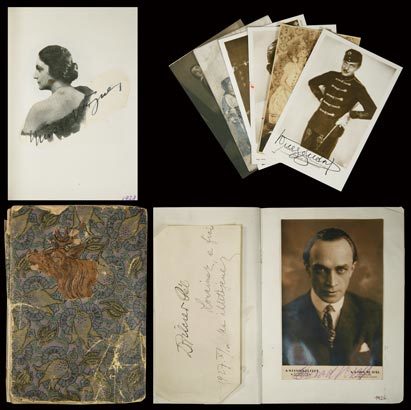
UNGARN. -
Autogrammsammlung berühmter Persönlichkeiten, Schauspieler und Musiker, gesammelt von einer jungen Ungarin im mondänen Budapest der 1920er Jahre.
1926 - 1928, pt. in-8vo, 54 Bl. + 6 leere Bl. + 21 Postk. + 5 Zeitungsausschnitten, Vorder- u. Hinterdeckel abgefallen, vorne Relief eines Hirschkopfes aufgeklebt.
Referentie van de boekhandelaar : 67045aaf
|
|
|
United Kingdom, Home Office
Air Raid Precautions; Directions for the Erection and Sinking of the Galvanised Corrugated Steel Shelter
London: United Kingdom Home Office 1939. Presumed First Edition First printing. Wraps. Fair. Format is approximately 6 inches by 9.5 inches. 16 pages including covers. Illustrations. Cover worn and soiled with some edge tears creasing and chipping. It gives instructions on how to position and put together an Anderson Shelter. The shelter was sunk into the ground and is a logical precursor to the Cold War Fallout Shelters. This work includes a Description of the Shelter information on the Locations of the Shelter The Excavation Erection of the Shelter Covering the Shelter and then Finishing the Shelter off. Illustrations go from page 6 through 16 Among the aspects addressed in the illustrations are methods for drainage Terraced Houses Semi-detached Houses Illustration of major individual parts Erecting the back arch Frame arrangement Views from the inside and completion of the earth cover. Air raid shelters are structures for the protection of non-combatants as well as combatants against enemy attacks from the air. They are similar to bunkers in many regards although they are not designed to defend against ground attack but many have been used as defensive structures in such situations. Before WWII the U.K. had difficulty choosing the location of air raid shelters. During WWII many types of structures were used as air raid shelters such as cellars German Hochbunkers basements and underpasses. The U.K. began building street communal shelters as air raid shelters in 1940. Anderson shelters designed in 1938 and built to hold up to six people were also in common use in the U.K. Indoor shelters known as Morrison shelters were also in use. Prior to World War II in May 1924 an Air Raid Precautions Committee was set up in the United Kingdom. For years little progress was made with shelters because of the apparently irreconcilable conflict between the need to send the public underground for shelter and the need to keep them above ground for protection against gas attacks. In February 1936 the Home Secretary appointed a technical Committee on Structural Precautions against Air Attack. By November 1937 there had only been slow progress because of a serious lack of data on which to base any design recommendations and the Committee proposed that the Home Office should have its own department for research into structural precautions rather than relying on research work done by the Bombing Test Committee to support the development of bomb design and strategy. This proposal was eventually implemented in January 1939. They also decided to issue free to poorer households the Anderson shelter and to provide steel props to create shelters in suitable basements. The Anderson shelter was designed in 1938 by William Paterson and Oscar Carl Karl Kerrison in response to a request from the Home Office. It was named after Sir John Anderson then Lord Privy Seal with special responsibility for preparing air-raid precautions immediately prior to the outbreak of World War II and it was he who then initiated the development of the shelter. After evaluation by David Anderson Bertram Lawrence Hurst and Sir Henry Jupp of the Institution of Civil Engineers the design was released for production. Anderson shelters were designed to accommodate up to six people. The main principle of protection was based on curved and straight galvanized corrugated steel panels. Six curved panels were bolted together at the top so forming the main body of the shelter three straight sheets on either side and two more straight panels were fixed to each end one containing the door—a total of fourteen panels. A small drainage sump was often incorporated in the floor to collect rainwater seeping into the shelter. The shelters were 6 feet high 4.5 feet wide and 6.5 feet long. They were either buried 4 ft deep in the soil and then covered with a minimum of 15 inches of soil above the roof or in some cases installed inside people's houses and covered with sandbags. When they were buried outside the earth banks could be planted with vegetables and flowers that at times could be quite an appealing sight and in this way would become the subject of competitions of the best-planted shelter among householders in the neighborhood. The internal fitting out of the shelter was left to the owner and so there were wide variations in comfort. Anderson shelters were issued free to all householders who earned less than £5 a week equivalent to £320 in 2020 when adjusted for inflation. Those with a higher income were charged £7 £440 in 2020 for their shelter. One and a half million shelters of this type were distributed between February 1939 and the outbreak of war. During the war a further 2.1 million were erected. Large numbers were manufactured at John Summers & Sons ironworks at Shotton on Deeside with production peaking at 50000 units per week. The Anderson shelters performed well under blast and ground shock because they had good connectivity and ductility which meant that they could absorb a great deal of energy through plastic deformation without falling apart. Because of the large number made and their robustness many Anderson shelters still survive. Many were dug up after the war and converted into storage sheds for use in gardens and allotments. United Kingdom, Home Office paperback
Referentie van de boekhandelaar : 83836
|
|
|
United Kingdom, The Admiralty, Naval Intelligence Division
Albania; Geographical Handbook Series B. R. 542 Restricted
London: United Kingdom The Admiralty Naval Intelligence Division 1945. Presumed First Edition First printing. Hardcover. Good. xiii 1 416 pages. Frontis illustrations. Illustrations. Maps. Diagrams. Fold-outs. Conversion Tables. Indexes. Large color folding map in rear pocket Compiled and drawn by N.I.D.5 1945. Cover has wear and soiling. Corners a bit rubbed. Cloth torn at bottom of spine rear board. Some endpaper discoloration. This was prepared by the Oxford sub-centre of the Naval Intelligence Division under the direction of Lieut.-Colonel K. Mason Professor of Geography at the University of Oxford and was the work of a number of contributors whose names are on p. 347. The book was for the use of persons in H. M. Service only and must not be show or made available to the Press or to any member of the public. Fep has stamped statement "To be kept under lock and key when not in use." There is also a longer stamped statement entitled Conditions of Release what amplifies the control conditions for this item. In 1915 a Geographical Section was formed in the Naval Intelligence Division to write Geographical Handbooks on various parts of the world. The purpose of these handbooks was to supply by scientific research and skilled arrangement material for the discussion of naval military and political problems as distinct from an examination of the problems themselves. The old handbooks had been extensively used in the Second World War but experience showed both their value and their limitations. The old series did not cover many of the countries closed affected by the Second World War. There a new series was initiated resulting in a new set of books produced in the Naval Intelligence Division by trained geographers drawn largely from the Universities. The books follow in general a uniform approach and are illustrated by numerous maps and photographs. These are designed first to provide for the use of Commanding Officers information in a clear and comprehensive form about countries they may interact with. Secondarily these works supplied material for orientation lectures on the country for a variety of naval personnel. United Kingdom, The Admiralty, Naval Intelligence Division hardcover
Referentie van de boekhandelaar : 74899
|
|
|
United Kingdom
Collected Diplomatic Documents Relating to the Outbreak of the European War
London England: His Majesty's Stationery Office 1915. Presumed first edition/first printing. Hardcover. Good. Cover has some wear and soiling. Some page corners turned. Signed by previous owner. xix 3 561 3 p. Includes index. Stiff card cover. List of Principal Persons Mentioned. The object of this volume was to bring together the official correspondence published by the various European Governemnt relating to the outbreak of the First World War. The correspondence thus collected was not new though official translations of the Serbian and Austrian book first appeared in this volume. The work was undertaken for the benefit of students of history and politics. The intention was to republish only those original documents which the various governments had laid before the world as authentic records of events. Documents which were not included in the collections originally published by the various governments but were officially published subsequently are presented at the end of the volume in Part X. His Majesty's Stationery Office hardcover
Referentie van de boekhandelaar : 68203
|
|
|
United Kingdom
Coronation 1937 King George VI and Elizabeth.
London UK: 1937. Fabric Broadside. 26 x 27 cm. Very Good. London, UK: 1937. unknown
Referentie van de boekhandelaar : 68-8832
|
|
|
United Kingdom, Revenue and Customs
Demand Note. Income Tax House Duty and Land Tax. Parish of Birch Mr. Alfred Shalders 1891. Printed Form with MS notes in ink & stamped matted & framed. Verification of authenticity on verso.
London UK: Eldridge 1891. Framed and matted engraving signed in ink. 12" x 9" Good with toning & creasing. London, UK: Eldridge, 1891. unknown
Referentie van de boekhandelaar : 63-5716

|
|
|
United Kingdom, Lord Privy Seal's Office
Evacuation Why and How
London: United Kingdom Lord Privy Seal's Office 1939. Presumed First Edition First printing. Single sheet printed on both sides. Fair. Sheet is approximately 11 inches by 8.5 inches folded in half with printing on all four sides/pages. Sheet has wear soiling and some staining. Some creasing noted. This is Public Information Leaflet No. 3. It addresses Why evacuation The Government Evacuation Scheme What You Have To Do with sections on Schoolchildren Children under five Expectant Mothers and The Blind Private Arrangements and discussion that Work Must Go On. On the last page there is a note at the end identifying the ;evacuable' areas under the Government Scheme which includes a long list of locations from which there may be some evacuations. Air Raid Precautions ARP refers to a number of organizations and guidelines in the United Kingdom dedicated to the protection of civilians from the danger of air raids. Government consideration for air raid precautions increased in the 1920s and 30s with the Raid Wardens' Service set up in 1937 to report on bombing incidents. Every local council was responsible for organizing ARP wardens messengers ambulance drivers rescue parties and liaison with police and fire brigades. From 1 September 1939 ARP wardens enforced the "blackout". Heavy curtains and shutters were required on all private residences commercial premises and factories to prevent light escaping and so making them a possible marker for enemy bombers to locate their targets. With increased enemy bombing during the Blitz the ARP services were central in reporting and dealing with bombing incidents. They managed the air raid sirens and ensured people were directed to shelters. The evacuation of civilians in Britain during the Second World War was designed to protect people especially children from the risks associated with aerial bombing of cities by moving them to areas thought to be less at risk. Operation Pied Piper which began on 1 September 1939 officially relocated 1.5 million people. There were further waves of official evacuation and re-evacuation from the south and east coasts in June 1940 when a seaborne invasion was expected and from affected cities after the Blitz began in September 1940. There were also official evacuations from the UK to other parts of the British Empire and many non-official evacuations within and from the UK. Other mass movements of civilians included British citizens arriving from the Channel Islands and displaced people arriving from continental Europe. The Government Evacuation Scheme was developed during summer 1938 by the Anderson Committee and implemented by the Ministry of Health. The country was divided into zones classified as either "evacuation" "neutral" or "reception" with priority evacuees being moved from the major urban centers and billeted on the available private housing in more rural areas. Each zone covered roughly a third of the population although several urban areas later bombed had not been classified for evacuation. In early 1939 the reception areas compiled lists of available housing. Space was found for about 2000 people and the government also constructed camps which provided a few thousand additional spaces. The government began to publicize its plan through the local authorities in summer 1939. The government had overestimated demand: only half of all school-aged children were moved from the urban areas instead of the expected 80%. There was enormous regional variation: as few as 15% of the children were evacuated from some urban areas while over 60% of children were evacuated from Manchester Belfast and Liverpool. Over 3000000 people were evacuated. United Kingdom, Lord Privy Seal's Office unknown
Referentie van de boekhandelaar : 83838
|
|
|
United Kingdom; Ministry of Labour
Factory Orders: A Volume of Regulations Orders Rules etc. under the Factories Act 1961 and Certain Other Acts
London: Her Majesty's Stationery Office. 1963. Ex-Library book. Hardcover is sound and clean with lightly worn lower edge leading corners and spine ends. Page block is a bit grubby. Library stamp on FEP; minor pen underlining on pages v vi; contents otherwise in good condition with sound binding clean pages and clear text throughout. Dust jacket has darkened spine with minor water spotting and large chips tears and creases on edges. T. Sixth Edition. hardcover. Good/Acceptable. Ex-Library. Her Majesty's Stationery Office. Hardcover
Referentie van de boekhandelaar : 270150
|
|
|
United Kingdom, Parliament
Further Correspondence with the United States Ambassador respecting the "Trading with the Enemy Extension of Powers Act 1915." In continuation of "Miscellaneous No. 11 1916": Dc. 8225. Miscellaneous. No. 36 1916
London: Harrison and Sons 1916. Presumed first edition/first printing. Wraps. Good. No dust jacket. Number in ink at bottom of page 3. 7 1 p. Cd. 8353. Printed under the Authority of His Majesty's Stationery Office. Harrison and Sons paperback
Referentie van de boekhandelaar : 64719
|
|
|
United Kingdom, Parliament
Further Correspondence between His Majesty's Government and the United States Government respecting the Rights of Belligerents. In continuation of "Miscellaneous No. 6 1915": Cd. 7816. Miscellaneous No. 14 1916
London: Harrison and Sons 1916. Presumed first edition/first printing. Wraps. Fair. No dust jacket. Historical society stamp on front page. Number in ink at bottom of front page. Some damp staining at bottom. 21 1 p. Cd. 8233. Printed under the Authority of His Majesty's Stationery Office. Harrison and Sons paperback
Referentie van de boekhandelaar : 64721
|
|
|
United Kingdom, War Office, General Staff
Handbook of the German Army Home and Colonial.; Fourth Edition revised by the General Staff War Office 1912. Amended to August 1914.
London Nashville: Imperial War Museum 1-901623475jointly with The Battery Press Inc 2002. Reprint edition of work originally published in 1914. Hardcover. Very good. 345 1 pages. Substantial tabular information. This work is Nineteenth in The Battery Press Reference Series. This is the British General Staff's intelligence manual for the German Army at the beginning of World War I. Originally printed in 1912 and amended to August 1914 this reference volume has chapters on the conditions of service organization and numbers available in peace and war administration of the Army and General Staff infantry cavalry artillery technical troops supply and medical services tactics signalling and colonial troops. Also included are appendices giving military pay military terms and topographical signs and abbreviations. This handbook was intended for the use of officers who desired to obtain a comprehensive view of the German Army during peace-time or who may wish to follow its operations during manoeuvres or other training. The Fourth Edition of this handbook was completed after the passing of laws respecting the peace strength of the German Army up to 1915. The main effect of these changes in the law was to perfect rather than to increase the number of the larger units available on mobilization for the first line. Two new Army-Corps were created making 25 in all. Imperial War Museum (1-901623475)jointly with The Battery Press, Inc hardcover
Referentie van de boekhandelaar : 82265 ISBN : 0898393132 9780898393132
|
|
|
United Kingdom
National Register of Psychotherapists 2004 United Kingdom Council for Psychotherapy
new. unknown
Referentie van de boekhandelaar : 2449586-n ISBN : 1583917012 9781583917015

|
|
|
United Kingdom
National Register of Psychotherapists 2004 United Kingdom Council for Psychotherapy
like new. unknown
Referentie van de boekhandelaar : 2449586 ISBN : 1583917012 9781583917015
|
|
|
United Kingdom, Parliament
Sworn Statement by Horst von der Goltz Alias Bridgeman Taylor. Miscellaneous No. 13 1916
London: HMSO 1916. good. 8.25" x 13" 7 wraps appendices staple bound entire document folded in thirds horizontally small creases to front cover edges. Small soiled/discolored areas on front cover stamps of the Bangor Historical Society on front cover small ink number at bottom of front cover. Presented to both Houses of Parliament by Command of His Majesty April 1916 Cd. 8283. Contains a memorandum respecting the case of Horst von der Goltz and the sworn statement by Horst von der Goltz. Appendix A contains addresses of persons taken from a note-book found among von der Goltz's effects; Appendix B contains letter and telegrams in German and in English translation found among von der Goltz's papers. HMSO paperback
Referentie van de boekhandelaar : 55647
|
|
|
United Kingdom, Department of Aircraft Production
Technical Notes.
London: Technical Department Aircraft Production Royal College of Science 1918. Octavo stiff printed wrappers pin-clasps 12 9 8 20 13 18 11 8 8 7 7 8 12 9 12 14 7 7 7 21 10 pp dozens of fold-out diagrams photos illus. Includes Rigging Notes for: Avro Biplane Type 504; B.E.2C 90 H.P. horse power; Bristol Fighter F.2A 190 H.P. Rolls-Royce; Bristol Fighters F.2B 190 H.P. Rolls-Royce and 200 H.P. Hispano-Suiza; De Havilland No. 4 275 H.P. Rolls-Royce 220 H.P. R.A.F. 3A and 200 H.P. B.H.P.; De Havilland No. 5 110 H.P. Le Rone; De Havilland No. 6 90 H.P. R.A.F.1A; De Havviland No. 9 200 H.P. B.H.P; Martynside Scout 160 H.P. Beardmore; Maurice Farman Shorthorn Biplane 80 H.P. REnault Type 1914; Maurice Farman Longhorn 80 H.P. Renault; Nieuport Scout 130 H.P. Clerget; R.E.8 150 H.P. R.A.F. 4A; S.E. 5A 200 H.P. Hispano-Suiza; Sopwith 1 1/2 Strutter 110 H.P. Clerget; Sopwith Biplane F.1 130 H.P. Clerget; Sopwith Dolphin 5.F.1 200 H.P. Hispano-Suiza; Spwith Pup 80 H.P. Le Rhone; Sopwith 2.F.1 130 H.P. Clerget; Spad Biplane Type S.VII 150 H.P. Hispano-Suiza; and Vickers F.B.9 100 H.P. Monosoupape. Good; spine mottled and stained bookplate; otherwise clean and tight. Technical Department, Aircraft Production, Royal College of Science, 1918. unknown
Referentie van de boekhandelaar : 5605fd
|
|
|
United Kingdom, Department of Aircraft Production
Technical Notes.
London: Technical Department Aircraft Production Royal College of Science 1918. Octavo stiff printed wrappers pin-clasps 12 9 8 20 13 18 11 8 8 7 7 8 12 9 12 14 7 7 7 21 10 pp dozens of fold-out diagrams photos illus. Includes Rigging Notes for: Avro Biplane Type 504; B.E.2C 90 H. P. horse power; B.E.2D 90 H.P.; Bristol Fighter F.2A 190 H.P. Rolls-Royce; Bristol Fighter’s F.2B 190 H.P. Rolls-Royce and 200 H.P. Hispano-Suiza; De Havilland No. 5 110 H. P. Le Rone; De Havilland No. 6 90 H.P. R.A.F. 1A; De Havilland No. 9 200 H. P. B.H.P; Martynside Scout 160 H. P. Beardmore; Maurice Farman Shorthorn Biplane 80 H.P. Renault Type 1914; Maurice Farman Longhorn 80 H. P. Renault; Nieuport Scout 130 H. P. Clerget; Sopwith 2.F.1 130 H. P. Clerget; Spad Biplane Type S.VII 150 H. P. Hispano-Suiza; and Vickers F.B.9 100 H. P. Monosoupape. Good; spine mottled and stained bookplate; otherwise clean and tight. Technical Department, Aircraft Production, Royal College of Science, 1918. unknown
Referentie van de boekhandelaar : 3208qsl
|
|
|
United Kingdom
The Effects of the Atomic Bombs at Hiroshima and Nagasaki; Report of the British Mission to Japan
London: His Majesty's Stationery Office 1946. Presumed First Edition First printing. Wraps. Good. The format is approximately 6 inches by 9.75 inches. vi 21 3 pages plus covers. Illustrations unpaginated--12 pages two images per page. Tabular data. Diagram. Cover is worn and soiled with some damp staining at page bottoms and the back. In the course of the war the Ministry of Home Security had evolved a scientific method for the measurement of the effect of air attack in the various forms and the Home Office regarded it as desirable to invite the United States Authorities to agree that a British team of experts trained in that method should co-operate with the United States Strategic Bombing Survey to conduct an investigation into the effects of the bombing of the two Japanese cities. The United States authorities provided every possible facility for the investigation and the detailed arrangements were made by the United States Strategic Bombing Survey. In addition to factual examinations at Hiroshima and Nagasaki the United States Authorities placed at the disposal of the British experts the records and observations which their more prolonged and detailed study had produced. In particular the part of this report which deals with the effects of atomic bombs on the human structure is based on material supplied by the Medical Section of the Joint Commission for the Investigation of the Effects of the Atomic Bomb. This report by the British experts is now published in this country simultaneously with the publication in America of the corresponding report of the United States Strategic Bombing Survey. His Majesty's Government considers that a full understanding of the consequences of the new form of attack may assist the United Nations Organisation in its task of securing the control of atomic energy for the common good and in abolishing the use of weapons of mass destruction. From the Introduction: 1. On August 6th 1945 shortly after 8 a.m. an American Super-Fortress flying at 30000 feet dropped a single atomic bomb over the Japanese mercantile city of Hiroshima. The bomb exploded over the city centre. Three days later on August 9th just after 11 a.m. a Super-Fortress flying at the same height which had found its primary target cloud-obscured dropped a second atomic bomb over the industrial city of Nagasaki. This bomb exploded over the city's factory area. In Hiroshima more than four square miles of city were destroyed and 80000 people were killed. In the smaller city of Nagasaki about one and a half square miles were destroyed and nearly 40000 people were killed. The causes of destruction and of death differed in many points from those which had acted in the conventional raids of the past. It was clear that bombing had changed its character and its scale beyond recognition. 2. The British Mission which spent the month of November 1945 in Hiroshima and Nagasaki had been concerned in the past with the appreciation of air raid damage in Great Britain and subsequently on the Continent of Europe. While some of its members had for other reasons made a wartime study of Japanese conditions it was not as a whole expert in Japanese affairs. Nor was it instructed to obtain a detailed picture of those effects of the bomb which were peculiar to Japan. The report which follows tells what was seen and what could be learnt three months after the bombing in Hiroshima and in Nagasaki. But its intention is as it was the object of the Mission to point to general conclusions on the effects to be expected from similar atomic bombs should they fall outside Japan and in particular in Great Britain. The reader should picture the destruction here set down as it would strike a city which he knows well in its people its houses its public buildings its factories and its public services. His Majesty's Stationery Office paperback
Referentie van de boekhandelaar : 85740
|
|
|
United Kingdom, Ministry of Information
The Eighth Army September 1941 to January 1943
London: His Majesty's Stationery Office 1944. First edition. Presumed first printing. Wraps. Good. No dust jacket. Cover has some wear and soiling. 104 p. Includes: illustrations maps. This is part of The Army at War series. From Wikipedia: "The Eighth Army was one of the best-known formations of the British Army during World War II fighting in the North African and Italian campaigns. It was a British formation always commanded by British officers however its personnel came from throughout the British Empire and Commonwealth; complemented by units composed of exiles from Nazi-occupied Europe. Subordinate units came from Australia British India Canada Free French Forces Greece New Zealand Poland Rhodesia South Africa and the United Kingdom. Significant formations which passed through the Army included: V Corps X Corps XIII Corps XXX Corps I Canadian Corps Polish II Corps.Eighth Army first went into action as an Army as part of Operation Crusader the Allied operation to relieve the besieged city of Tobruk on 17 November 1941 when it crossed the Egyptian frontier into Libya to attack Erwin Rommel's Panzer Army Africa. On 26 November the Commander-in-Chief Middle East Command General Sir Claude Auchinleck replaced Cunningham with Major-General Neil Ritchie following disagreements between Auchinleck and Cunningham. Despite achieving a number of tactical successes Rommel was forced to concede Tobruk and was pushed back to El Agheila by the end of 1941. In February 1942 Rommel had regrouped his forces sufficiently to push the over-extended Eighth Army back to the Gazala line just west of Tobruk. Both sides commenced a period of building their strength to launch new offensives but it was Rommel who took the initiative first forcing Eighth Army from the Gazala position. Ritchie proved unable to halt Rommel and was replaced when Auchinleck himself took direct command of the army. The Panzer Army Afrika were eventually stopped by Auchinleck at the First battle of El Alamein. Auchinleck wishing to pause and regroup Eighth Army which had expended a lot of its strength in halting Rommel came under intense political pressure from Winston Churchill to strike back immediately. However he proved unable to build on his success at Alamein and was replaced as Commander-in-Chief Middle-East in August 1942 by General Alexander and as Eighth Army commander by Lieutenant-General William Gott. Gott was killed in an air crash on his way to take up his command and so Lieutenant-General Bernard Montgomery was appointed in his place. Alexander and Montgomery were able to resist the pressure from Churchill building the army's strength and adding a pursuit formation X Corps to the Army's XIII Corps and XXX Corps. At the beginning of November 1942 the Eighth Army defeated Rommel in the decisive Second Battle of El Alamein pursuing the defeated Axis army across Libya and reaching the Mareth defensive line on the Tunisian border in February 1943 where it came under the control of 18th Army Group. Eighth Army outflanked the Mareth defenses in March 1943 and after further fighting alongside British First Army the other 18th Army Group component which had been campaigning in Tunisia since November 1942 the Axis forces in North Africa surrendered in May 1943. '. His Majesty's Stationery Office paperback
Referentie van de boekhandelaar : 66754
|
|
|
United Kingdom, Home Office
The Protection of Your Home Against Air Raids; Read This Book Through Then Keep It Carefully
London: His Majesty's Stationery Office 1938. Presumed First Edition First printing. Wraps. Good. Format is approximately 4.75 inches by 7 inches. 36 pages plus covers. S. O. Code No. 34-9999. 51--2269--2. Opening statement on page one signed by Samuel Hoare. Contents include: Section 1 Things To Do Now; Section 2: Things To DO If There Should Ever Be A War; Section 3: Things To Do In An Air Raid; Section 4: Extra Precautions; and Section 5: What To Do If Anyone Is Hurt. As the threat of conflict again overshadowed Britain in the 1930s the nation began to take measures to prepare itself for the possibility of war. One of a series of official publications issued by the Home Office The Protection of Your Home Against Air Raids offers a glimpse of the precautions all households were urged to take in the event of aerial attack. Addressing problems such as "Things to get for your refuge-room" and "What the head of the household should do" this allows the reader a glimpse into the general public's experience of wartime Britain. The Civil Defence Service was a civilian volunteer organization in Great Britain during World War II. Established by the Home Office in 1935 as Air Raid Precautions ARP its name was changed to the Civil Defence Service CD in 1941. The Civil Defence Service included the ARP Wardens Service as well as firemen initially the Auxiliary Fire Service AFS and latterly the National Fire Service NFS fire watchers later the Fire Guard rescue first aid post and stretcher parties. Over 1.9 million people served within the CD and nearly 2400 lost their lives to enemy action. Publication such as this supported the members of the Service and the civil population at large. Air Raid Precautions ARP refers to a number of organizations and guidelines in the United Kingdom dedicated to the protection of civilians from the danger of air raids. Government consideration for air raid precautions increased in the 1920s and 30s with the Raid Wardens' Service set up in 1937 to report on bombing incidents.1 Every local council was responsible for organizing ARP wardens messengers ambulance drivers rescue parties and liaison with police and fire brigades. From 1 September 1939 ARP wardens enforced the "blackout". Heavy curtains and shutters were required on all private residences commercial premises and factories to prevent light escaping and so making them a possible marker for enemy bombers to locate their targets. With increased enemy bombing during the Blitz the ARP services were central in reporting and dealing with bombing incidents. They managed the air raid sirens and ensured people were directed to shelters. Women were involved in ARP services through the Women's Voluntary Service. The Auxiliary Fire Service was set up in 1938 to support existing local fire services which were amalgamated into a National Fire Service in 1941. From 1941 the ARP officially changed its title to Civil Defence Service to reflect the wider range of roles it then encompassed. During the war almost 7000 Civil Defence workers were killed. In all some 1.5 million men and women served within the organization during World War Two. Over 127000 full-time personnel were involved at the height of the Blitz but by the end of 1943 this had dropped to 70000. The Civil Defence Service was stood down towards the end of the war in Europe on 2 May 1945. His Majesty's Stationery Office paperback
Referentie van de boekhandelaar : 83835
|
|
|
United Kingdom, Lord Privy Seal's Office
Your Food In War-Time
London: United Kingdom Lord Privy Seal's Office 1939. Presumed First Edition First printing. Single sheet printed on both sides. Fair. Sheet is approximately 11 inches by 8.5 inches folded in half with printing on all four sides/pages. Sheet has wear soiling and some staining. Some creasing noted. Contains the number 51--4382 1 which may be related to the printing. This is Public Information Leaflet No. 4. It addresses Your Food in War-Time What the Government Have Done How You Can Help Food Supplies For Evacuation National Housekeeping in War Time with a discussion of Central Control and Local Distribution and a Rationing Scheme. At the end of the leaflet enquiries about food supplies in war time were directed to the Director Food Defence Plans Department. Air Raid Precautions ARP refers to a number of organizations and guidelines in the United Kingdom dedicated to the protection of civilians from the danger of air raids. Government consideration for air raid precautions increased in the 1920s and 30s with the Raid Wardens' Service set up in 1937 to report on bombing incidents. Every local council was responsible for organizing ARP wardens messengers ambulance drivers rescue parties and liaison with police and fire brigades. From 1 September 1939 ARP wardens enforced the "blackout". Heavy curtains and shutters were required on all private residences commercial premises and factories to prevent light escaping and so making them a possible marker for enemy bombers to locate their targets. With increased enemy bombing during the Blitz the ARP services were central in reporting and dealing with bombing incidents. They managed the air raid sirens and ensured people were directed to shelters. For many people who experienced World War Two on the homefront their most vivid memories were of food. Rationing changed the way people cooked and ate - food shortages meant that home cooks often had to use their initiative to create meals out of meager rations. This led to popular dishes such as Lord Woolton Pie Vinegar Cake and Spam Hash. The government rationed food in World War Two to ensure people got an equal amount of food each week. In 1939 Britain only grew enough food to feed one person in every three and with Nazi U-boats threatening to starve the country into defeat the government had to take action to prevent a food shortage. It was also worried that as food became scarcer prices would soar and people would hoard food. On 3 April 1940 Baron Woolton became Minister of Food. He had been a social workers and former managing director of the Lewis store chain in Northern England. Woolton was the mastermind behind the recipe books and nutritional advice offered by the Ministry of Food - he knew that it wasn't enough to ration food; the government had to advise people as well. Woolton worked closely with his chief scientific advisor Jack Drummond who helped the government's rationing strategy. Woolton's method communicating with the public was effective and by 1945 housewives had a much deeper understanding of nutrition. The Ministry issued many cooking leaflets often dedicated to specific topics such as the health benefits of carrots. The Ministry of Food employed 15000 people at its height with 18 Food Officers and 1500 Food Control Committees. The Ministry became involved in every aspect of consumer life - from telling grocers where to get their supplies from in order to reduce petrol costs to advising home cooks on recipes. Unknown to the British population the Ministry of Food also created secret food depot warehouses throughout the country in which it stockpiled food in the event of invasion. The Ministry of Food issued ration books to every family. Each one contained coupons which allowed them to buy a limited amount. Petrol was the first commodity to be rationed in 1939 followed by butter sugar bacon paper and meat in early 1940. By the end of the war half of Britain's food was rationed. United Kingdom, Lord Privy Seal's Office unknown
Referentie van de boekhandelaar : 83839
|
|
|
United Kingdom, Lord Privy Seal's Office
Your Gas Mask How to Keep it and How to Use it; Masking Your Windows
London: United Kingdom Lord Privy Seal's Office 1939. Presumed First Edition First printing. Single sheet printed on both sides. Fair. Sheet is approximately 11 inches by 8.5 inches folded in half with printing on all four sides/pages. Sheet has wear soiling and some staining. Minor corner creasing. This has on the lower right corner of the last page the number 51-4154 printer's code. This is Public Information Leaflet No. 2. The contents address taking care of one's gas mask how to store it how to put it on how to take it off and how to put one's mask away. Additionally there is information relative to blackout requirements and how to mask one's windows and control interior lighting. There was a pointed reminder not to forget about skylights for those structures with them. Air Raid Precautions ARP refers to a number of organizations and guidelines in the United Kingdom dedicated to the protection of civilians from the danger of air raids. Government consideration for air raid precautions increased in the 1920s and 30s with the Raid Wardens' Service set up in 1937 to report on bombing incidents. Every local council was responsible for organizing ARP wardens messengers ambulance drivers rescue parties and liaison with police and fire brigades. From 1 September 1939 ARP wardens enforced the "blackout". Heavy curtains and shutters were required on all private residences commercial premises and factories to prevent light escaping and so making them a possible marker for enemy bombers to locate their targets. With increased enemy bombing during the Blitz the ARP services were central in reporting and dealing with bombing incidents. They managed the air raid sirens and ensured people were directed to shelters. The fear of the use of poison gas by German aircraft was one of the paramount concerns of the Second World War. Although Britain France and Germany had all renewed the Geneva Gas Protocol 1925 in September 1939 there were still concerns that the enemy might have employed gas against military or civilian personnel and ARP personnel were trained to handle gas attacks and on anti-gas measures and protection. Several arms of the ARP services were directly concerned with gas. The Decontamination Service was the first to decontaminate roads buildings and materials contaminated by liquid or jelly gases which would evaporate over time and these would have been dealt with by using a neutralizing agent against the liquid or jelly. Decontamination of people was carried out as part of first aid while later decontamination personnel were trained in rescue work as well. Depots were set up as six depots per 100000 people with two decontamination squadrons per depot each squadron consisting of six men with their equipment. The Cleansing Service was to clean people who had been exposed through showers by mobile units with special vans and lorries. Clothing had to be boiled if exposed for varying lengths of time dependent on the material. Civilian clothing was the responsibility of the Ministry of Health. Each gas presented its own problems and required special counters and the Gas Identification Service with 3 personnel per 100000 population provided where possible was to identify the gas used in an attack. United Kingdom, Lord Privy Seal's Office unknown
Referentie van de boekhandelaar : 83837
|
|
|
Unsworth Barry
Une affaire de moralité. Roman traduit de l'anglais
France loisirs 1997 259 pages in8. 1997. Reliure Editeur avec jaquette. 259 pages. Dans une bourgade anglaise à la fin du XIVe siècle une troupe de comédiens ambulants se prépare à jouer. Le roman dépeint la vie difficile de ces artistes leurs rivalités avec les confréries organisées et la découverte fascinante qu'un jeune prêtre fait de leur condition dans un contexte marqué par la guerre la peste et les aspirations à la justice
Referentie van de boekhandelaar : 12052

|
|
|
URI PIERRE
LA GRANDE-BRETAGNE REJOINT L'EUROPE DU COMMONWEALTH AU MARCHE COMMUN
PLON. 1967. In-8. Broché. Bon état, Couv. convenable, Dos satisfaisant, Intérieur frais. 172 pages - tampon en page de garde. . . . Classification Dewey : 942-Angleterre
Referentie van de boekhandelaar : R240114050
|
|

 De zoekresultaten per email ontvangen
 Zoekresultaten downloaden als PDF
 RSS feed
 Permanente link


