Washington DC: U. S. Government Printing Office 1948. Presumed First Edition First printing. Hardcover. Good. Ex-library with usual library markings. Pencil erasure residue on fep. A number of blank pages at back to fill out the binding. This is part of the Treaties and Other International Acts series 2495 Department of State Publication 4728 Literal print--iii 1 241 pages. The North Atlantic Treaty item is part of the Treaties and Other International Acts series 3521 Department of State Literal print--19 pages. . The IAEA item is part of the Treaties and Other International Acts series 3873 Department of State Publication Literal print--132 pages. Regarding NATO For more than 40 years the ATOMAL Agreement has served as the framework within which NATO and the other NATO members that have become parties to this agreement have received the information that is necessary to an understanding and knowledge of and participation in the political and strategic consensus upon which the collective military capacity of the Alliance depends. This agreement permits only the transfer of atomic information not weapons nuclear material or equipment. This is important for the cohesiveness of the Alliance and will enhance its effectiveness. The International Convention for the Safety of Life at Sea SOLAS is an international maritime treaty which requires Signatory flag states to ensure that ships flagged by them comply with minimum safety standards in construction equipment and operation. The first version of SOLAS was passed in 1914 in response to the sinking of the RMS Titanic. It prescribed numbers of lifeboats and other emergency equipment along with safety procedures including continuous radio watches. The 1914 treaty never entered into force due to the outbreak of the First World War. Further versions were adopted in 1929 and 1948. The current version of the SOLAS Convention is the 1974 version known as SOLAS 1974 which came into force on 25 May 1980. As of March 2016 SOLAS 1974 has 162 contracting States which flag about 99% of merchant ships around the world in terms of gross tonnage. The SOLAS Convention in its successive forms is generally regarded as the most important of all international treaties concerning the safety of merchant ships. The main objective of the SOLAS Convention is to specify minimum standards for the construction equipment and operation of ships compatible with their safety. Flag States are responsible for ensuring that ships under their flag comply with its requirements and a number of certificates are prescribed in the Convention as proof that this has been done. Control provisions also allow Contracting Governments to inspect ships of other Contracting States if there are clear grounds for believing that the ship and its equipment do not substantially comply with the requirements of the Convention - this procedure is known as port State control. The current SOLAS Convention includes Articles setting out general obligations amendment procedure and so on followed by an Annex divided into 12 Chapters. In 1953 the President of the United States Dwight D. Eisenhower proposed the creation of an international body to both regulate and promote the peaceful use of atomic power nuclear power in his Atoms for Peace address to the UN General Assembly.23 In September 1954 the United States proposed to the General Assembly the creation of an international agency to take control of fissile material which could be used either for nuclear power or for nuclear weapons. This agency would establish a kind of "nuclear bank." The United States also called for an international scientific conference on all of the peaceful aspects of nuclear power. By November 1954 it had become clear that the Soviet Union would reject any international custody of fissile material if the United States did not agree to a disarmament first but that a clearing house for nuclear transactions might be possible. From 8 to 20 August 1955 the United Nations held the International Conference on the Peaceful Uses of Atomic Energy in Geneva Switzerland. In October 1956 a Conference on the IAEA Statute was held at the Headquarters of the United Nations to approve the founding document for the IAEA which was negotiated in 1955-1956 by a group of twelve countries.2 The Statute of the IAEA was approved on 23 October 1956 and came into force on 29 July 1957. U. S. Government Printing Office hardcover
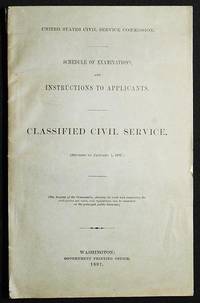
Washington D.C.: Government Printing Office 1897. Paperback. Very Good -. 96 p. 5 leaves of facsimiles drawings and tables: in-text drawing and tables; 23 cm. Stapled; green wrappers printed in black. With loose a smaller sheet containing revised ages for entrance to different branches of the service as of Jan. 2 1897 as well as errata. Very scarce. In Very Good- Condition: wrapper is separating at ends of spine with minor loss; front wrapper is lightly creased; back wrapper is discolored sunned; pages are clean and tight. Government Printing Office paperback
Washington DC: Government Printing Office 1918. Second Edition stated. Presumed first printing. Hardcover. Good. xi 433 5 pages. Tabbed Sections. Tables. Forms. Index. Several sheets of lined paper bound in for note-taking. Cover has some wear and soiling including inside boards. Corners bumped with some wear. Name of previous owner inside front cover. Title page torn at bottom near spine. These Regulations address General Rules The Selective Service System Registration Classification Rules and Principles The Process of Selection Special and Exceptional Cases Induction and Mobilization Physical Examination Disbursement Forms Master List Statutes Officers and Others in the Service of the United States and Certifying Officers. Some six weeks after the United States formally entered the First World War the U.S Congress passes the Selective Service Act on May 18 1917 giving the U.S. president the power to draft soldiers. When he went before Congress on April 2 1917 to deliver his war message President Woodrow Wilson had pledged all of his nation's considerable material resources to help the Allies—France Britain Russia and Italy—defeat the Central Powers. What the Allies desperately needed however were fresh troops to relieve their exhausted men on the battlefields of the Western Front and these the U.S. was not immediately able to provide. Despite Wilson's effort to improve military preparedness over the course of 1916 at the time of Congress's war declaration the U.S. had only a small army of volunteers—some 100000 men—that was in no way trained or equipped for the kind of fighting that was going on in Europe. To remedy this situation Wilson pushed the government to adopt military conscription which he argued was the most democratic form of enlistment. To that end Congress passed the Selective Service Act which Wilson signed into law on May 18 1917. The act required all men in the U.S. between the ages of 21 and 30 to register for military service. Within a few months some 10 million men across the country had registered in response to the military draft. The first troops of the American Expeditionary Force AEF under commander in chief General John J. Pershing began arriving on the European continent in June 1917. The majority of the new conscripts still needed to be mobilized transported and trained however and the AEF did not begin to play a substantial role in the fighting in France until nearly a year later during the late spring and summer of 1918. By the end of World War I in November 1918 some 24 million men had registered under the Selective Service Act. Of the almost 4.8 million Americans who eventually served in the war some 2.8 million had been drafted. Government Printing Office hardcover
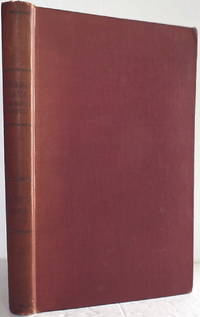
Washington D. C.: Government Printing Office. First edition. Hard cover issue in original cloth. Published Washington D. C.: Government Printing Office 1929. 8vo. 6 1/4" x 9 1/4" vi424pp. illus. tables. Burgundy cloth with gilt spine titles tab indexed page block with all edge marbling. Spine lettering dull light wear/rub at the spine ends and tips mild age toning to the paper. Ownership name of Captain Henry Williams CC on fly leaf. A well preserved attractive copy. Very good. . Very Good. Hard. 1st. 1929. Government Printing Office unknown
H.M. Stationery Off. Used - Good. Volume 1. Ships from UK in 48 hours or less usually same day. Your purchase helps support Sri Lankan Children's Charity 'The Rainbow Centre'. Ex-library so some stamps and wear and may have sticker on cover but in good overall condition. 100% money back guarantee. We are a world class secondhand bookstore based in Hertfordshire United Kingdom and specialize in high quality textbooks across an enormous variety of subjects. We aim to provide a vast range of textbooks rare and collectible books at a great price. Our donations to The Rainbow Centre have helped provide an education and a safe haven to hundreds of children who live in appalling conditions. We provide a 100% money back guarantee and are dedicated to providing our customers with the highest standards of service in the bookselling industry. H.M. Stationery Off unknown
Referenz des Buchhändlers : Z1-C-062-00904 ISBN : 0117714100 9780117714106