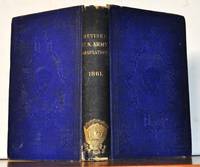
Philadelphia: J. B. Lippincott 1861. Hardcover. Fair in No Dust Jacket dust jacket. Previous owner's name on front pastedown. Binding sound hinges broken exposing guttering. Clean tanned pages with some foxing. Cloth over boards has heavy shelf wear edge wear at upper extremity of spine. Note by Simon Cameron Secretary of War dated August 10 1861 indicating that this publication underwent revision as the Civil War began. 9.0" tall; 559 pages. J. B. Lippincott hardcover
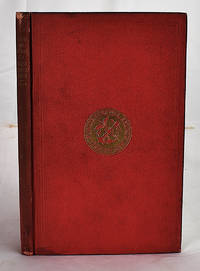
Government Printing Office Washington D.C. 1889. First Edition. Hardcover. Very Good. Maritime Medicine : Rare American imprint from the "New Navy" period 8vo 23 x 15 cm. Publisher's red pebbled cloth gilt seal of the Marine Hospital Service on upper cover. Spine moderately darkened. Government Printing Office, Washington [D.C.] hardcover
Philadelphia: George W. Childs 1863. New edition. Hardcover. Very Good. 8vo 594 pages original blue embossed cloth rebacked with original extra-gilt spine laid down. <br/><br/>Ex libris " Alfred Read / Lt. Col. 12th Ind. Cav." signed on front free endpaper; signed again on the title-page. amd possibly in the Preface. The 12th Indiana Cavalry later became the 127th Indiana Cavalry. The 12th was mustered in 1863 and saw a lot of action in Tennessee Alabama Louisiana and Georgia. His third inked name is clearly "Reed". He sometimes appears in the roster as "Read". According to the roster he was mustered out Mar. 31 1864; however the Lt. Col. lead a raid on the town of Vienna p now New Hope Alabama on May 29 1864. Col Reed was from Monticello White County IN. Obviously a man of mystery. George W. Childs hardcover
U.S. G.P.O. Collectible - Good. Washington: U.S. Government Printing Office 1983. Sm 4to Hardcover. 2ix88227 page 'Committee Print'7pp. Plates. Good book. Red boards with gilt spine lettering and horizontal double ruling to the crown and foot. Light soiling to the boards top-edge and fore-edge. Page edges of and pages 56-118 279-376 534-598 663-third rear free endpaper toned. Pamphlet pages glued to the front free endpapers. Large orange pocket glue to the front pastedown. Otherwise inside clean. 'Rhodes Tavern Initiative 11' pamphlet in pocket. 2 'Kathryn A Eckles' pamphlets laid-in. Inquire if you need further information. U.S. G.P.O. hardcover
Washington DC: United States Congress Office of Technology Assessment 1989. Presumed First Edition First printing. Trade paperback. Good. John Bergling Cover design. xii 116 4 pages. Illustrations. Boxes. Figures. Tables. Footnotes. Front cover has some sticker residue. Cover has some other wear and soiling. This special report examines a wide range of potential improvements to the Space Shuttle explores the future of space transportation for humans and presents policy options for congressional consideration. It is one of a series of products from abroad assessment of space transportation technologies undertaken by OTA requested by the Senate Committee on Commerce Science and Transportation and the House Committee on Science Space and Technology. In undertaking this effort OTA sought the contributions of a wide spectrum of knowledgeable individuals and organizations. Some provided information others reviewed drafts. OTA gratefully acknowledges their contributions of time and intellectual effort. OTA also appreciates the help and cooperation of NASA and the Air Force. The Office of Technology Assessment OTA was an office of the United States Congress from 1972 to 1995. OTA's purpose was to provide Congressional members and committees with objective and authoritative analysis of scientific and technical issues of the late 20th century i.e. technology assessment. It was a leader in practicing and encouraging delivery of public services in innovative and inexpensive ways including early involvement in the distribution of government documents through electronic publishing. Congress established the Office of Technology Assessment with the Technology Assessment Act of 1972.1 It was governed by a twelve-member board comprising six members of Congress from each party — half from the Senate and half from the House of Representatives. During its twenty-four-year life it produced about 750 studies on a wide range of topics including acid rain health care global climate change and polygraphs. Criticism of the agency was fueled by Fat City a book by Donald Lambro; it called OTA an "unnecessary agency" that duplicated government work done elsewhere. OTA was "de-funded" in the "Contract with America" period. United States, Congress, Office of Technology Assessment paperback
Washington DC: United States Department of the Army 1950. Presumed First Edition First printing thus. Wraps. very good. Format is approximately 5.875 inches by 9.125 inches. vi 116 wraps 8 fold-out maps some color at back. Some wear and soiling to covers. RESTRICTED marking crossed out and Stamp stating "Restricted Classification Removed Per Executive Order 10501" on front cover. Other stamps and cross outs on cover and title page. This pamphlet supersedes MS #T-22 "Peculiarities of Russian Warfare" published by the Historical Division Special Staff U.S. Army in June 1949. Pamphlet was prepared by a committee of former German officers at the EUCOM Historical Division Interrogation Enclosure Neustadt Germany in late 1947 and early 1948. All of these officers had extensive experience on the eastern front during the period 1941-45. The principal author commanded in succession a panzer division a corps a panzer army and an army group. The reader is reminded that publications in the GERMAN REPORTS SERIES were written by Germans from the German point of view. For instance the "Introduction" and "Conclusions" to Russian Combat Methods in World War II present the views of the German author without interpretation by American personnel. Throughout this pamphlet Russian combat methods are evaluated in terms of the German combat doctrine and Russian staff methods are compared to those of the German General Staff. Organization equipment and procedures of the German and Russian Armies differed considerably from those of the United States Army. Tactical example in the text have been carefully dated and an effort has been made to indicated the progress of the Russian Army in overcoming the weaknesses noted in the early stages of the war. In preparation of this revised edition the German text has been retranslated and certain changes in typography and chapter titles have been made to improve clarity. United States, Department of the Army paperback
Washington DC: U. S. Government Printing Office 1948. Presumed First Edition First printing. Hardcover. Good. Ex-library with usual library markings. Pencil erasure residue on fep. A number of blank pages at back to fill out the binding. This is part of the Treaties and Other International Acts series 2495 Department of State Publication 4728 Literal print--iii 1 241 pages. The North Atlantic Treaty item is part of the Treaties and Other International Acts series 3521 Department of State Literal print--19 pages. . The IAEA item is part of the Treaties and Other International Acts series 3873 Department of State Publication Literal print--132 pages. Regarding NATO For more than 40 years the ATOMAL Agreement has served as the framework within which NATO and the other NATO members that have become parties to this agreement have received the information that is necessary to an understanding and knowledge of and participation in the political and strategic consensus upon which the collective military capacity of the Alliance depends. This agreement permits only the transfer of atomic information not weapons nuclear material or equipment. This is important for the cohesiveness of the Alliance and will enhance its effectiveness. The International Convention for the Safety of Life at Sea SOLAS is an international maritime treaty which requires Signatory flag states to ensure that ships flagged by them comply with minimum safety standards in construction equipment and operation. The first version of SOLAS was passed in 1914 in response to the sinking of the RMS Titanic. It prescribed numbers of lifeboats and other emergency equipment along with safety procedures including continuous radio watches. The 1914 treaty never entered into force due to the outbreak of the First World War. Further versions were adopted in 1929 and 1948. The current version of the SOLAS Convention is the 1974 version known as SOLAS 1974 which came into force on 25 May 1980. As of March 2016 SOLAS 1974 has 162 contracting States which flag about 99% of merchant ships around the world in terms of gross tonnage. The SOLAS Convention in its successive forms is generally regarded as the most important of all international treaties concerning the safety of merchant ships. The main objective of the SOLAS Convention is to specify minimum standards for the construction equipment and operation of ships compatible with their safety. Flag States are responsible for ensuring that ships under their flag comply with its requirements and a number of certificates are prescribed in the Convention as proof that this has been done. Control provisions also allow Contracting Governments to inspect ships of other Contracting States if there are clear grounds for believing that the ship and its equipment do not substantially comply with the requirements of the Convention - this procedure is known as port State control. The current SOLAS Convention includes Articles setting out general obligations amendment procedure and so on followed by an Annex divided into 12 Chapters. In 1953 the President of the United States Dwight D. Eisenhower proposed the creation of an international body to both regulate and promote the peaceful use of atomic power nuclear power in his Atoms for Peace address to the UN General Assembly.23 In September 1954 the United States proposed to the General Assembly the creation of an international agency to take control of fissile material which could be used either for nuclear power or for nuclear weapons. This agency would establish a kind of "nuclear bank." The United States also called for an international scientific conference on all of the peaceful aspects of nuclear power. By November 1954 it had become clear that the Soviet Union would reject any international custody of fissile material if the United States did not agree to a disarmament first but that a clearing house for nuclear transactions might be possible. From 8 to 20 August 1955 the United Nations held the International Conference on the Peaceful Uses of Atomic Energy in Geneva Switzerland. In October 1956 a Conference on the IAEA Statute was held at the Headquarters of the United Nations to approve the founding document for the IAEA which was negotiated in 1955-1956 by a group of twelve countries.2 The Statute of the IAEA was approved on 23 October 1956 and came into force on 29 July 1957. U. S. Government Printing Office hardcover
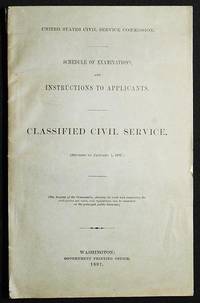
Washington D.C.: Government Printing Office 1897. Paperback. Very Good -. 96 p. 5 leaves of facsimiles drawings and tables: in-text drawing and tables; 23 cm. Stapled; green wrappers printed in black. With loose a smaller sheet containing revised ages for entrance to different branches of the service as of Jan. 2 1897 as well as errata. Very scarce. In Very Good- Condition: wrapper is separating at ends of spine with minor loss; front wrapper is lightly creased; back wrapper is discolored sunned; pages are clean and tight. Government Printing Office paperback