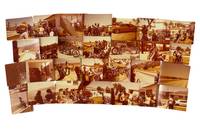
1970. Latino History Photography Popular Culture Unidentified photographer Southern California motorcycle culture photographs circa 1970s document Chicano and white working class leisure mobility and community formation within West Coast biker subculture. The images record a multiracial group of riders engaged in mechanical work travel and social gathering across Los Angeles and desert regions providing direct visual evidence of how motorcycle culture intersected with broader forms of expression in Southern California including customization road travel and neighborhood based social networks. The archive supports research into Chicano cultural life subcultural identity and the material culture of motorcycles and automobiles in the late twentieth century.<br /> <br /> Los Angeles and Salton Sea region California circa 1970s. Archive of 35 original color snapshot photographs each measuring approximately 4.5 x 3.5 inches with occasional manuscript notations including one identifying "Salton Sea." The photographs depict a group of riders traveling in caravans repairing motorcycles and gathering in residential and roadside settings. Multiple customized motorcycles are visible including chopper style bikes with extended forks sissy bars and modified fuel tanks alongside standard production models such as Honda CB series motorcycles. Additional vehicles include pickup trucks vans and a lowrider style Chevrolet automobile with wire spoke wheels and modified body features indicating overlap with Southern California car culture. Figures appear in repeated groupings including men in bandanas sunglasses and sleeveless shirts and women in casual attire with scenes set against suburban homes motels and desert landscapes. One photograph includes a child posed before a motorcycle indicating the presence of family within the group.<br /> <br /> The archive situates motorcycle culture within the broader social landscape of Southern California during the 1970s when Chicano identity automotive customization and working class leisure converged in both urban neighborhoods and regional travel routes. The presence of both customized motorcycles and lowrider vehicles demonstrates the exchange of aesthetic and technical practices across related subcultures while the repeated depiction of group travel and shared spaces reflects the importance of collective identity within biker communities. These photographs document everyday practices rather than staged events preserving a vernacular record of social life mobility and cultural expression in the region. Minor creasing and light surface wear with slight color fading in some images; overall very good condition. A cohesive photographic archive of Chicano and multiracial motorcycle culture in Southern California during the late twentieth century. unknown
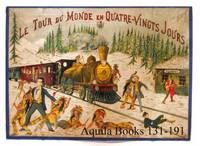
Paris: Jouet & Brillard 1923. Undetermined. very good. Original box with multicoloured litho cover. Box is worn but basically complete. 25 X 35 cm. Box contains 5 separate puzzles depicting scenes from Verne's Around the World in 80 Days. Each puzzle plywood with mounted litho image. Each puzzle has the odd corner missing but each is more or less complete and in nice condition. very good Rare. Two of the images including the cover of the box depict California scenes including the following: Attaque du Train and Bar a San Francisco ou Fix Grise Passepartout. The other images are scenes from Phileas Fogg's adventures. The artist that produced the images was E. Chevalier and all of the images are signed. A great Jules Verne/California item. The cover image of the indians attacking the train in front of Kearney station is great. 1923 Jouet & Brillard unknown
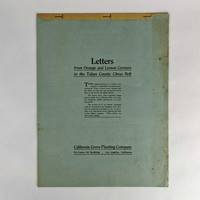
Los Angeles: California Grove Planting Company 1914. Softcover Paperback. Near Fine Condition. 27.5cm x 21cm. 9 leaves printed recto only. Side-stapled. Eight letters from citrus growers in the Tulare County area that verify the output and recommend the purchase of citrus orchards in the district. Unrecorded in OCLC. Covers soiled. Category: Farming & Rural Life; Countries::North America::United States; Inventory No: 0023201. BZDB407 Farming & Rural Life; Countries::North America::United States; Unbranded California Grove Planting Company Letters from Orange and Lemon Growers in the Tulare County Citrus Belt California Grove Planting Company paperback
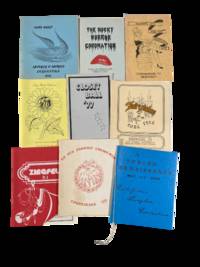
1977. California Imperial Court System coronation program archive of drag performance and community-based organizing ephemera of LGBTQ activist and mutual aid networks during the late 1970s and early 1980s. Produced between 1976 and 1981 by regional courts in Long Beach Monterey and Stockton these materials record ceremonial and social functions central to the Imperial Court System founded in 1965 by José Sarria. The programs capture a period of expanding queer visibility and institution-building prior to the HIV/AIDS Crisis when drag pageantry was fundamental to fundraising political engagement and mutual aid. <br /> <br /> Archive of nine saddle-stapled coronation and event programs issued by California chapters of the Imperial Court System. Includes programs for events such as "Closet Ball '77" "The Rocky Horror Coronation" 1979 "A Spring Renaissance" 1980 and "Ziegfeld '81." Contents feature illustrated covers event schedules advertisements contestant listings and messages from reigning court figures including Empress Dorothy Big Mouth Empress IX Sophie and Emperor James Michael V. Several programs incorporate humor and personal commentary alongside dedications reflecting interpersonal and organizational bonds. The 1976 Long Beach program includes promotional material for Empress candidates notably a full-page image of Louella Mother in drag sponsored by "Queen Mother III of Los Angeles." References throughout the programs identify interconnected networks such as the San Francisco Tavern Guild Operation Concern and affiliated courts across California indicating coordinated regional activity and shared institutional culture.<br /> <br /> These materials document the Imperial Court System's dual function as a performance-based institution and a framework for charitable and social support within LGBTQ communities. Coronation events formalized hierarchies of emperors and empresses while generating funds for local causes embedding drag within broader systems of civic engagement. The programs also reflect the aesthetic and rhetorical strategies of queer communities navigating public visibility in the years following gay liberation movements of the late 1960s and 1970s. Minor toning rubbing and scattered staining to the 1978 "Old Fashion Christmas" program with occasional handling creases; otherwise well-preserved; overall very good condition. A cohesive archive illustrating the intersection of drag performance leadership and mutual aid in California's Imperial Court System. unknown

 De zoekresultaten per email ontvangen
 Zoekresultaten downloaden als PDF
 RSS feed
 Permanente link