|
|
|
PIRAZZOLI-T’SERSTEVENS, Michèle:
Living architecture. Chinese.
New York, Grosset & Dunlap, 1971, in-8vo, 191 p., richely ill. with very nices heliogravures, drawings and plans, orig. clothbound with illustr. jacket slightly damaged.
Riferimento per il libraio : 87195aaf
|
|
|
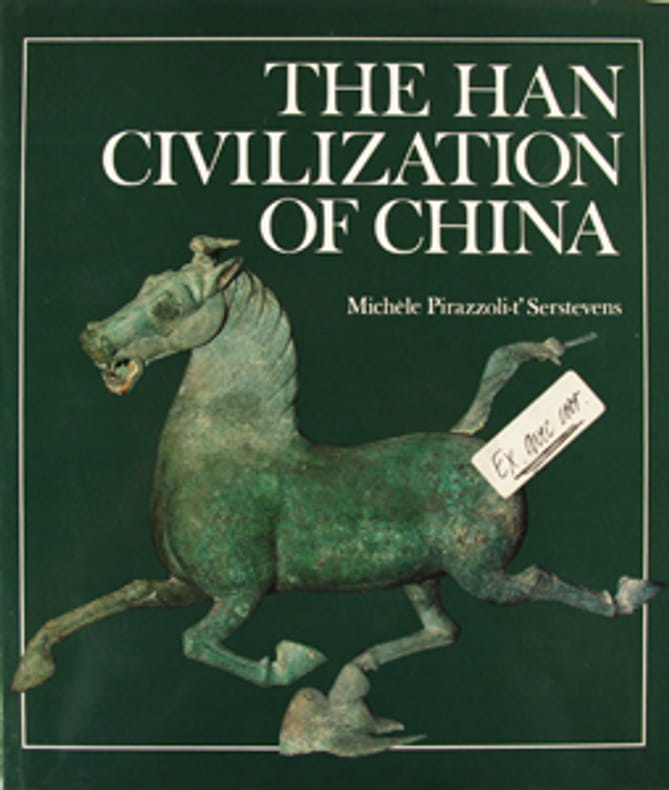
PIRAZZOLI-T'SERSTEVENS, Michèle:
The Han civilization of China.
Oxford, Phaidon, 1982, in-4°, 240 p., richly illustrated b/w and colour, copy from the archives of Office du Livre with stamp: ‘Exemplaire d’Archive’, and with pencil emendations, else fine, orig. clothbound with jacket.
Riferimento per il libraio : 87041aaf
|
|
|
PIREY SAINT-ALBY (B. de).
Vagues sanglantes. Victoires navales d'autrefois.
Plon, 1930, in-12, 266 pp, bandeaux, culs-de-lampe et dessins de Gustave Alaux, cart. percaline crème, dos lisse avec titres rouges, plats de papier carmin (rel. de l'époque), papier jauni, bon état
Riferimento per il libraio : 124384
|
|
|
PIRAZZOLI-T'SERSTEVENS MICHELE / BOUVIER NICOLAS
CHINE
ISBN : 2826401149. OFFICE DU LIVRE. 1970. In-8 Carré. Broché. Bon état. Couv. convenable. Dos satisfaisant. Intérieur frais. 192 pages augmentées de nombreuses photos et schémas en noir et blanc dans et hors texte- une carte d'invitation au vernissage le 20 novembre 2008 TONY SOULIE ARCHITECTURE UNIVERSELLE
|
|
|
Pirazzoli-t'Serstevens, Michèle
China. Bilddokumentation: Nicolas Bouvier und Denise Blum.
Fribourg, Office du Livre 1970. Kl.-4°. 192 S. Original-Pappband. (=Architektur der Welt).
Riferimento per il libraio : 45345AB
|
|
|
PIRAZZOLI-T'STEVENS Michèle
La Chine des Han. Histoire et civilisation. Photographies en noir et en couleurs.
Reliure toile de l'éditeur. 234 pages. 25x29cm. (Sans la jaquette).
|
|
|
PIRAZZOLI-T´SERSTEVEN/BOUVIER, Michele/Nicolas.
ARCHITECTURE UNIVERSELLE. CHINE.
|
|
|
PIRES, Tomé (c.1468-c.1540).
A Suma Oriental de Tomé Pires e o Livro de Francisco Rodrigues [c.1515]. Leitura e notas de Armando Cortesão.
Coimbra, Universidade, 1978. 4to.; X pp., 503 pp., 1 h. Con 42 láminas fuera de texto y cuatro mapas plegados. Cubiertas originales.

|
|
|
Pirovano, Carlo (Ed.)
Ombre elettriche. Saggi e ricerche sul cinema cinese.
Editoriale Electa; (Mailand), 1982. 274 S.; mit sehr zahlreichen Abbildungen. Broschiert.
Riferimento per il libraio : 1038119

|
|
|
Piry, A. Théophile
Le Saint Édit. Étude de littérature chinoise préparée par A. Théophile Piry.
Shanghai, Bureau des Statistiques, Inspectorat Général des Douanes, 1879. XIX, 317 S., 1 Bl. 4°, green cloth with gilt chinese lettering (about 1900), by the use of parts of the original binding.
Riferimento per il libraio : 200065
|
|
|
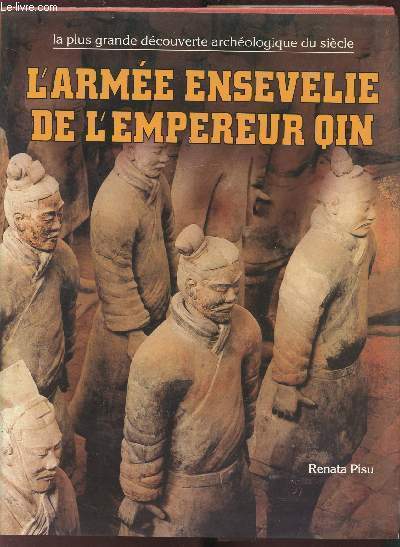
Pisu Renata.
L'armée ensevelie de l'Empereur Qin - La plus grande découverte archéologique du siècle -
France Loisirs. Non daté. In-4. Relié. Etat d'usage, Couv. convenable, Dos satisfaisant, Quelques rousseurs. 78 pages. Nombreuses photographies en couleurs dans et/ou hors texte dont frontispice. Avec Jaquette. . . Classification Dewey : 951-Chine
Riferimento per il libraio : R160208182
|
|
|
PISU Renata - texte traduit et adapté de l?italien par Christian Pessey
L'Armée ensevelie de l'Empereur Qin - La plus grande découverte archéologique du siècle JOINT : L'armée léendaire de Qin Shi Hu
SOLAR, 1 ère Edition - 1985 - In-4, 28 x 21,50 - Reliure éditeur pleine toile avec jaquette illustrée en couleurs - mportante iconographie NB ou couleurs in & HT, certaines PP - 78 pages - Exemplaire comme neuf HONG KONG, Chinese art Treasures CO - Sans date, vers 1980 - In-8 - broché - couverture illustrée - Illustrations en texte -32 pages - Propre - (Texte en français, anglais allemand et espagnol
Riferimento per il libraio : 12392
|
|
|
PISU Renata
L'armée ensevelie de l'empereur Qin.
Cartonnage de l'éditeur sous jaquette, 28X22 cm, 78 pages, copyright 1985, illustrations en couleurs, éditions France loisirs. Très bon état.
Riferimento per il libraio : 31205
|
|
|
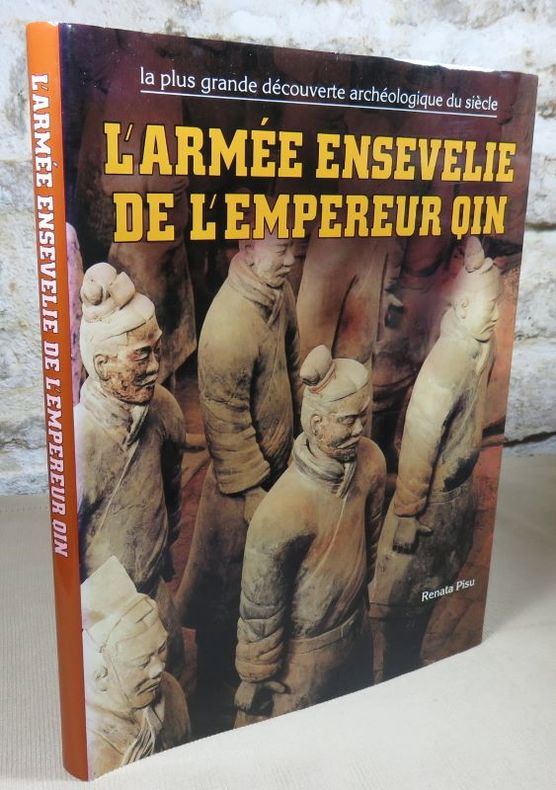
PISU (Renata).
L'Armée ensevelie de l'empereur Qin - La plus grande de découverte archéologique du siècle.
Paris, Solar, [cop. 1985] 1 volume 20,8 x 27,5cm Reliure éditeur pleine toile sous jaquette illustrée couleurs. 78p., 1 feuillet; plan et cartes, nombreuses illustrations in texte, vignettes, pleines et doubles pages, la plupart en couleurs. Très bon état.
Riferimento per il libraio : 19904
|
|
|
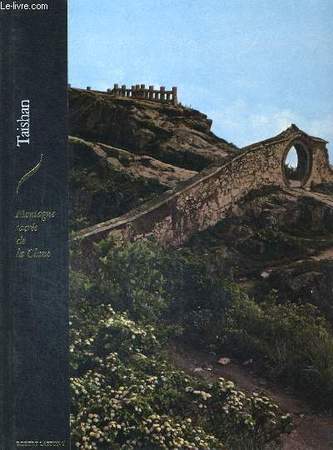
PISU RENATA.
TAISHAN. MONTAGNE SACREE DE LA CHINE.
ROBERT LAFFONT . COLLECTION LES HAUTS LIEUX DE LA SPIRITUALITE.. 1985.. In-4. Broché. Bon état, Couv. convenable, Dos satisfaisant, Intérieur frais. 138 pages. 1ère de couverture illustrée en couleurs. Nombreuses photographies en noir et blanc et couleurs.. . . . Classification Dewey : 951-Chine
Riferimento per il libraio : R160053169
|
|
|
PISU Renata / BAILLET Philippe .
Taishan, montagne sacrée de la Chine.
LAFFONT Robert. 1985. In-4. Cartonnage d'éditeurs. Bon état, Couv. convenable, Dos satisfaisant, Intérieur frais. 137 pages. Nombreuses photos en couleurs hors-texte. Dos simili-cuir noir.. . . . Classification Dewey : 951-Chine
Riferimento per il libraio : RO80014335
|
|
|
PISU RENATA.
TAISHAN - MONTAGNE SACREE DE LA CHINE - COLLECTION LES HAUTS LIEUS DE LA SPIRITUALITE
ROBERT LAFFONT. 1985. In-Folio. Relié. Bon état, Couv. convenable, Dos satisfaisant, Intérieur frais. 137 Pages - Nombreuses planches photos et dessins en noir et blanc et en couleurs dans et hors texte. . . . Classification Dewey : 951-Chine
Riferimento per il libraio : R160182679
|
|
|
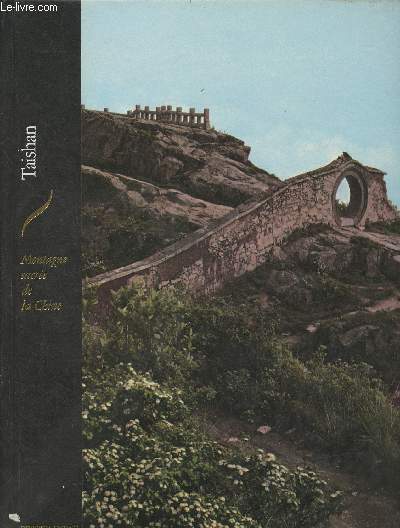
Pisu Renata
Taishan, montage sacrée de la Chine
Robert Laffont. 1985. In-4. Cartonné. Bon état, Coins frottés, Dos satisfaisant, Papier jauni. 137 pages. Rares rousseurs. Nombreuses photos et illustrations en noir et blanc et en couleurs, in et hors texte. Deux colonnes de texte.. . . . Classification Dewey : 951-Chine
Riferimento per il libraio : RO30362226
|
|
|
PISU (Renata).
L'Armée ensevelie de l'empereur Qin - La plus grande de découverte archéologique du siècle.
Traduction et adaptation, par Christian PESSEY, de "I Soldati dell' imperatore Qin Shi Huang", ouvrage publié en 1983 par la journaliste italienne Renata PISU alternant photos couleurs de la fameuse armée de guerriers en terre cuite grandeur nature, tous différents, avec leurs chevaux, leurs chars et leurs armes, gardant le mausolée de l'empereur Qin (premier unificateur de la Chine, mort en 210 av. J.-C,), et textes sur le tumulus et les fosses, "l'armée ensevelie" et la société chinoise de l'époque; chronologie; index; plan et cartes, croquis et nombreuses photos couleurs. 1ère édition; exemplaire bien complet de sa jaquette. Français
|
|
|
PISU Renata - texte traduit et adapté de l?italien par Christian Pessey
L'Armée ensevelie de l'Empereur Qin - La plus grande découverte archéologique du siècle JOINT : L'armée léendaire de Qin Shi Hu
SOLAR, 1 ère Edition - 1985 - In-4, 28 x 21,50 - Reliure éditeur pleine toile avec jaquette illustrée en couleurs - mportante iconographie NB ou couleurs in & HT, certaines PP - 78 pages - Exemplaire comme neuf HONG KONG, Chinese art Treasures CO - Sans date, vers 1980 - In-8 - broché - couverture illustrée - Illustrations en texte -32 pages - Propre - (Texte en français, anglais allemand et espagnol
|
|
|
Pisu, Renata
Qui Pechino
cm. 28, rilegatura editoriale in cartone; pp, 64, numerose illustrazioni nel testo, 24 tavole a colori e 48 tavole in nero fuori testo

|
|
|
Pisu, Renata
QUI PECHINO
Previous owner's name to front free endpaper; A profusely illustrated coffeetable book on Peking (in Italian) ; Grandi Citta Del Mondo; 4to; 64, 44 pages
|
|
|
PITON Charles
La Chine sa religion,ses mœurs,ses missions.
In 12 cartonné rouge à décor passe-partout.Faux-titre, titre,II,149 pages,1 page de table des matières, illustrations en noir hors-texte. Toulouse société des livres religieux 1880.Coiffes réparées.Sinon bon exemplaire
Riferimento per il libraio : 4966
|
|
|
PITMAN, Norman Hinsdale
Chinese Fairy Stories
London, George G. Harrap & Co. [1911]. 183 pp, 8 coloured plates in orange and black, yellow cloth boards with black titles and gilt illustration to front cover, gilt and black spine, top cut gilt, spine and endpapers darkened, otherweise a very tight and clean copy. First edition. Contents: Yow-to's first lesson -- The boy who slept -- The boy and the porridge -- The gods know -- Lo-sun, the blind boy -- Sibg Li's fortune -- Fairy Old Boy and the tiger -- Yu-kong and the demon -- The boy who became emperor -- The ashes of deceit -- The bride of the dragon king.
Riferimento per il libraio : CHIN0363

|
|
|
Pizzinelli Corrado
Le Due Cine
br. ed.
|
|
|
Pizzinelli, Corrado
The Republic of China. By Corrado Pizzinelli
Udine: Magnus 1982. 179, (3) Seiten. Durchgängig mit zahlreichen Photographien. 4° (25-35 cm). Orig.-Leinenband mit photographisch illustriertem Orig.-Schutzumschlag und ebensolchem Pappschuber. [Hardcover / fest gebunden].
Riferimento per il libraio : 7077059
|
|
|
Pizzini F, Collotti Pischel E
La lunga vita di Mao Tzetung
21 cm, br. illustrata, p. xxxvii, 349; numerose foto, alcune sottolineature a matita

|
|
|
PKG 17 : Halbleder. - Fontein, Jan / Hempel, Rose
China - Korea - Japan.
Berlin, Propyläen Verlag, 1968. 4° (28x20), 362 S. + 456 Tafeln mit 527 Abb., davon 56 farbig, 33 Zeichnungen und 4 Karten im Text, OHldr mit OU im Pappschuber, originalverpackt, ohne Gebrauchsspuren, offensichtlich ungelesen, [= PKG Propyläen Kunstgeschichte in achtzehn Bänden; 17 : Halbleder-Ausgabe],
Riferimento per il libraio : 57334AB

|
|
|
PKG 17 : Halbleder. - Fontein, Jan / Hempel, Rose
China - Korea - Japan.
Berlin, Propyläen Verlag, 1968. 4° (28x20), 362 S. + 456 Tafeln mit 527 Abb., davon 56 farbig, 33 Zeichnungen und 4 Karten im Text, OHldr, ohne Gebrauchsspuren, offensichtlich ungelesen, [= PKG Propyläen Kunstgeschichte in achtzehn Bänden; 17 : Halbleder-Ausgabe],
Riferimento per il libraio : 44352AB

|
|
|
PKG 17 : Halbleder. - Fontein, Jan / Hempel, Rose
China - Korea - Japan.
Berlin, Propyläen Verlag, 1968. 4° (28x20), 362 S. + 456 Tafeln mit 527 Abb., davon 56 farbig, 33 Zeichnungen und 4 Karten im Text, OHldr, nahezu ungelesen, schönes gepflegtes Exemplar, [= PKG Propyläen Kunstgeschichte in achtzehn Bänden; 17 : Halbleder-Ausgabe],
Riferimento per il libraio : 40224AB

|
|
|
PLANTADE Jean-Marc et PLANTADE Yidir
"La face cachée de la Chine; toute la vérité sur la plus grande jungle économique du monde. Collection : Document."
Paris, Bourin , Editeur, 2006. 14 x 22, 284 pp., broché, très bon état.
Riferimento per il libraio : 103.536
|
|
|
PLAN P.-P.:
A côté du chemin.
Genève, Ch. Eggimann ] Cie, 1892. In-8 broché de 78-[2] pages, couverture ivoire à rabats, empoussiérée, dos et bords du premier plat fendillé.
Riferimento per il libraio : 10711
|
|
|
PLAN CARPIN (Jean de)
Histoire des Mongols: Enquéte d'un envoyé d'Innocent IV dans l'Empire Tartare (1245-1247)
Paris, Editions Franciscaines, 1961. 1 volume, broché, couvertures souples imprimées, in-8, 157 pp., 1 carte, très bon état.
Riferimento per il libraio : 4564
|
|
|
PLANCHON Mathieu
L'HORLOGE, son histoire rétrospective, pittoresque et artistique. Nouvelle édition.Fabrique des Montres Zénith 1923. In-8 broché couverture illustrée VIII 232pp. Portrait de l'auteur en frontispice, abondante illustration dans le texte ou à pleine page: horloges, pendules, intérieurs de boutiques...
Riferimento per il libraio : GIT00021
|
|
|
PLANTADE YIDIR ET JEAN-MARC
LA FACE CACHEE DE LA CHINE - TOUTE LA VERITE SUR LA PLUS GRANDE JUNGLE ECONOMIQUE DU MONDE
BOURIN. 2006. In-8. Broché. Bon état, Couv. convenable, Dos satisfaisant, Intérieur frais. 284 pages. 1 carte en noir et blanc, hors texte.. . . . Classification Dewey : 951-Chine
Riferimento per il libraio : R200088064
|
|
|
PLAUCHUT (Edmond)
Les Races Jaunes - Les Célestes
Paris, Schleicher Frères Editeurs, 1898. 1 volume in-12, nombreuses illustrations (55) in-texte, 4 planches en couleurs hors texte, reliure moderne plein cuir tabac, couvertures conservées, très bon état général.
Riferimento per il libraio : 3244

|
|
|
PLAUCHUT (Edmond)
Les Races Jaunes - Les Célestes
Paris, Schleicher Frères Editeurs, 1898. 1 volume in-12, nombreuses illustrations (55) in-texte, 4 planches en couleurs hors texte, reliure toilée d'éditeur, couvertures conservées, très bon état général. Un autre exemplaire, à cartonnage éditeur polychrome, en très bon état est vendu 130 .
Riferimento per il libraio : 6122
|
|
|
Plasschaert, Sylvain
Wie is bang van China ?
2001 Davidsfonds Uitgeverij Soft cover
Riferimento per il libraio : 022624
|
|
|
PLA National Defense University China
International Strategic Relations And China's National Security: Volume 1
Hardback. New. The international strategic relations have been undergoing great turbulence readjustment and reformation since the financial crisis in 2008. hardcover
Riferimento per il libraio : A9789814675734 ISBN : 9814675733 9789814675734
|
|
|
PLA National Defense University China
International Strategic Relations And China's National Security: World At The Crossroads
Paperback / softback. New. paperback
Riferimento per il libraio : A9789813148987 ISBN : 9813148985 9789813148987

|
|
|
PLA National Defense University China
International Strategic Relations And China's National Security: World At The Crossroads
Paperback / softback. New. paperback
Riferimento per il libraio : B9789813148987 ISBN : 9813148985 9789813148987
|
|
|
PLA National Defense University China
International Strategic Relations And China's National Security: World At The Crossroads
Hardback. New. The world was standing at the crossroads in 2015 as globalization propelled human beings into an increasingly integrated community of common destiny. In the meantime the world witnessed the strategic competition among major powers. This annual publication offers views opinions and predictions on global political and security issues and China's strategic choices by Chinese scholars. It covers almost all the significant issues that took place in the international security arena in 2015. Besides the relations among major powers it studies the international community's fight against Islamic State IS the strategic situation in the Korean Peninsula political situation in Myanmar the Joint Comprehensive Plan of Action on the Iranian nuclear issue free navigation in the South China Sea China's Belt and Road Initiative and its grand diplomacy.This book argues that the strategic competition among major powers is heightening and smaller countries as well as extremist forces like the IS are seeking strategic space by taking advantage of the conflicts among major powers. The book concludes that to address this major historic challenge in international politics it is essential that some major powers drop the hostile stance towards each other and enhance partnership to foster international cooperation. hardcover
Riferimento per il libraio : A9789813144934 ISBN : 9813144939 9789813144934
|
|
|
Plantade, Charles:
Le mariage Chinoise. Chansonnette comique. Paroles du Mis. Eug. de Lonlay [chant et piano]
[3] S. Am Rücken zwei Löcher. Leicht stockfleckig. Titelvignette.

|
|
|
Plappert, Rainer (Hrsg.)
Reise zur Verbotenen Stadt : Europäer unterwegs nach China ; eine Ausstellung der Universitätsbibliothek, 16. November - 12. Dezember 2004 ; Katalog. Schriften der Universitätsbibliothek Erlangen-Nürnberg ; Bd. 43.
Erlangen : Univ.-Bibliothek, 2004. 216 S. : zahlr. Ill., Kt. ; 30 cm; fadengeh. Orig.-Pappband.
Riferimento per il libraio : 1118485

|
|
|
Plate, A. G
Der ferne Osten. Ein Reisehandbuch.
Bremen, Schünemann, 1907. 2 Bll., 298 S. mit zahlr. Textabb. und Karten. 8°. OLwd. (etw. fleckig).
Riferimento per il libraio : 3331
|
|
|
Plate, Herbert
Über die Ketten der Lutingbrücke
Maos rote Rebellen auf dem Langen Marsch. Balve, Engelbert-Verlag, 1974. 156 S. Or.-Pp. mit Schutzumschlag.
Riferimento per il libraio : 201874

|
|
|
Plate, Herbert
Über die Ketten der Lutingbrücke. Maos rote Rebellen auf dem langen Marsch.
Balve/Sauerland, Engelbert-Verlag, 1974. 21 cm, 156 Seiten, mit einer Karte, Pappband in Leinenstruktur. 1. Auflage wenig gebraucht, gut erhalten.
Riferimento per il libraio : 41913AB
|
|
|
Plath, J. H
Die Quellen der alten chinesischen Geschichte mit Analyse des Sse-ki und J-sse.
Mchn, Commission bei G. Franz., 1870. 8°. 104,2 S. OBroschur. Rücken und Umschlag gering beschädigt, Papier etwas vergilbt.
Riferimento per il libraio : 12525

|
|
|
Platt Stephen R.
Autumn in the Heavenly Kingdom: China, the West, and the Epic Story of the Taiping Civil War
8vo, br. ed. xix-470pp. A gripping account of China’s nineteenth-century Taiping Rebellion, one of the largest civil wars in history. Autumn in the Heavenly Kingdom brims with unforgettable characters and vivid re-creations of massive and often gruesome battles—a sweeping yet intimate portrait of the conflict that shaped the fate of modern China. The story begins in the early 1850s, the waning years of the Qing dynasty, when word spread of a major revolution brewing in the provinces, led by a failed civil servant who claimed to be the son of God and brother of Jesus. The Taiping rebels drew their power from the poor and the disenfranchised, unleashing the ethnic rage of millions of Chinese against their Manchu rulers. This homegrown movement seemed all but unstoppable until Britain and the United States stepped in and threw their support behind the Manchus: after years of massive carnage, all opposition to Qing rule was effectively snuffed out for generations. Stephen R. Platt recounts these events in spellbinding detail, building his story on two fascinating characters with opposing visions for China’s future: the conservative Confucian scholar Zeng Guofan, an accidental general who emerged as the most influential military strategist in China’s modern history; and Hong Rengan, a brilliant Taiping leader whose grand vision of building a modern, industrial, and pro-Western Chinese state ended in tragic failure. This is an essential and enthralling history of the rise and fall of the movement that, a century and a half ago, might have launched China on an entirely different path into the modern world. Hong Kong in 1852 was a diseased and watery place, a rocky island off the southern shore of the Qing Empire where the inhabitants lived in dread of what one described as "the miasma set free from the ground which was everywhere being turned up." A small British settlement sat between the mountains and the bay, but the emerald and sapphire glory of the scene belied the darkness below the surface. Leaving the concentration of godowns, military barracks, and trading firms along the colony's nostalgically named central streets (The Queen's Road, Wellington Street, Holly-wood Road), one could find the grandest vistas in the gravel paths that led up the coast into the hills, but the European settlement soon gave way to scattered Chinese houses among fields growing rice and sweet potatoes unchanged in the decade since the British took the island as their prize in the Opium War. Some of the wealthier merchants had built opulent mansions in those hills, with terraced gardens commanding a view of the harbor and town. But as though their builders had strayed too far from the protection of the settlement, the inhabitants of those houses sickened and died. Marked as "homes of fever or death," the ghostly manors sat silent and abandoned, their empty gaze passing judgment on the settlers below. One of those settlers was Theodore Hamberg, a young Swedish missionary with a thin chinstrap beard that set off his delicate, nearly effeminate features. He was blessed with a lovely voice, and in his youth in Stockholm he had sung together with Jenny Lind, the "Swedish Nightingale." But while Lind went on to conquer the opera halls of Europe and America, bringing suitors such as Frédéric Chopin and Hans Christian Andersen to their knees along the way, Hamberg's life took an entirely different path. His strong tenor found its destined outlet in preaching, and in 1847 he left his native Sweden to sail to the opposite end of the world, to this malarial colony of Hong Kong, with the sole purpose of bringing the Chinese to their knees after a different fashion. Theodore Hamberg might well have lived his life in obscurity, for his proudest accomplishments meant little to anyone beyond a small circle of Protestant missionaries. He was one of the first Europeans in his generation to brave the Chinese countryside, leaving the relative safety of Hong Kong to preach in a village outside the Chinese trading port of Canton a hundred miles up the Pearl River (though for health reasons he finally returned to the colony). He was also the first to learn to speak the dialect of the Hakka, or "guest people"-a gypsy minority thickly populous in south China. All of that might have meant little to anyone in the world outside except that one day in the late spring of 1852, one of his converts from the countryside brought a guest to meet him, a short, round-faced Hakka named Hong Rengan who had a remarkable story to tell. The strangest thing about this Hakka, Hamberg recalled from their first meeting, was how much he already seemed to know about God and Jesus despite the fact that he hailed from well beyond the narrow reach of the Hong Kong missionaries. Hamberg listened with curiosity as Hong Rengan gave a baffling account of the events leading to his arrival in Hong Kong. He spoke of visions and battles, armies and congregations of believers, a heavenly prophet from among the Hakkas. He had, or at least so he claimed, been hunted by the agents of the Qing dynasty and had lived in disguise under an assumed name. He had been kidnapped, had escaped, and had lived for four days in the forest, six days in a cave. None of it made much sense, though, and Hamberg confessed, "I could form no clear conception of the whole matter." Not knowing what to make of the story, he asked Hong Rengan to write it down, which he did, and then-though Hamberg had expected him to stay for baptism-he left without explanation. Hamberg put the sheets of paper with Hong Rengan's story into his desk and turned his mind to other matters. He would think little of them again for nearly a year, until the spring of 1853 when the news came that Nanjing had fallen in a torrent of blood, and Hamberg realized that the strange events sketched out in Hong Rengan's tale meant more than he had ever imagined. News of the mounting upheaval in China reached Hamberg and the other settlers in Hong Kong and up the coast in Shanghai only in scattered and vague accounts. From Chinese government reports there seemed no pattern to the rising disorder of the early 1850s, no principle or cohesion. Local uprisings and small-scale banditry in China's countryside were a perennial thorn in the side of the imperial authorities, hardly anything new or noteworthy, though they certainly did seem to have increased in the years following the Opium War. Chinese travelers and clandestine Catholic missionaries deep in the interior forwarded rumors of some larger movement led by a man known as "Tian De," or "Heavenly Virtue," but just as many accounts reported that the man was dead, killed by imperial forces, or that he had never existed in the first place. In the absence of any clear news, the foreigners in their coastal ports paid little attention, concerned only that bandits might disrupt the production of tea and silk. But the fall of the southern capital of Nanjing in 1853 brought a massive civil war right to the doorstep of the foreign settlement in Shanghai, which was just two hundred miles downriver at the mouth of the sea. Half a million rebels calling themselves the Taiping Tianguo ("Heavenly Kingdom of Great Peace") flooded down the Yangtze from central China on a grand flotilla of commandeered ships to Nanjing, leaving a swath of emptied cities and shattered imperial defenses behind them, and the debate was settled; this was no mere bandit uprising. Fear gripped the city of Shanghai. There was no direct communication with Nanjing, no concrete information (the American steamer Susquehanna tried to sail upriver to Nanjing to investigate but ran aground). Rumors spread that the insurgents would next march on Shanghai to attack the foreigners, and the city's Chinese population boarded up their houses, packed up their furniture, and took to riverboats or fled into the countryside for safety. The foreign settlers called up their unready defenses, rallying a haphazard volunteer defense corps to man the city walls and bringing up the few ships in ready reach-two British steamers and a brig-of- war, and one steamer each for the French and Americans. But there it ended, at least for the time being. The Taiping did not march on Shanghai, and the city's vigilance eased off. Instead, the rebels set their targets northward toward Beijing, the capital of the Manchu rulers, and dug in for a long and bloody campaign with Nanjing as their base of operations. Their "Heavenly Capital," as Nanjing was now renamed, lay tantalizingly just out of reach of Shanghai. One British ship did manage to visit in late April 1853 but brought back conflicting impressions of what was happening there, the clearest opinion being that of the British plenipotentiary, who declared the Taiping to have an ideology of "superstition and nonsense." The visitors learned nothing about the rebels' origins. Despite the scarcity of clear information, raw accounts of the civil war in China radiated outward from Shanghai and Hong Kong to capture the imagination of the Western world. Europe had been through its own convulsions just five years earlier with the revolutions of 1848, and the events in China seemed a remarkable parallel: the downtrodden people of China, oppressed by their Manchu overlords, had, it seemed, risen up to demand satisfaction. The Economist called it "a social change or convulsion such as have of late afflicted Europe" and mused that "it is singular to find similar commotions at the same time in Asia and Europe." Here was evidence that the empire at the other end of the world was now connected to the economic and political systems of the West. Karl Marx, in 1853 a London correspondent for the New-York Daily Tribune struggling to give shape to his ideas on capitalism, likewise considered the rebellion in China to be a sign of China's integration into the global economy, describing it as the end result of Britain's forcing China open to foreign trade in the recent Opium War. In Marx's terminology, what was happening in China was not merely a rebellion or a hodgepodge of uprisings but "one formidable revolution," one that demonstrated the interconnectedness of the industrial world. Indeed, it was in China, he argued, that one could see the future of the West: "the next uprising of the people of Europe, and their next movement for republican freedom and economy of Government," he wrote, "may depend more probably on what is now passing in the Celestial Empire- the very opposite of Europe-than on any other political cause that now exists." As he explained it, the disorder in China had its roots in the opium trade; a decade earlier, Britain had cracked China's markets open with its warships, and in doing so it had undermined the "superstitious faith" of the Chinese in their ruling dynasty. Exposure to the world meant the destruction of the old order, he believed, for "dissolution must follow as surely as that of any mummy carefully preserved in a hermetically sealed coffin, whenever it is brought into contact with the open air." But the effects of the Qing dynasty's dissolution would not be limited to China itself. The whole of the Taiping Revolution was, in his mind, Britain's fault, and now the effects of her actions overseas were going to be felt back home: "the question," he wrote, "is how that revolution will in time react on England, and through England on Europe." Marx predicted that the loss of China's markets to the Taiping Revolution would undermine British exports of cotton and wool. Merchants in a chaotic China would accept only bullion in exchange for their goods, sapping Britain's stores of precious metals. Worse, the revolution would cut off England's source of tea imports, and the price of tea (to which most of the British were addicted) would spike in England at the same time that a poor harvest in Western Europe looked likely to send food prices through the roof, reducing still further the demand for manufactured goods and undermining the whole manufacturing industry on which Britain's economy depended. "It may be safely augured," Marx concluded, "that the Chinese revolution will throw the spark into the overloaded mine of the present industrial system and cause the explosion of the long-prepared general crisis, which, spreading abroad, will be closely followed by political revolutions on the Continent." If Marx was keen to convince the readers of the New-York Daily Tribune that the Chinese civil war was one of class struggle and economic revolution analogous to the movements in Europe, the editors of the Daily Picayune in the southern slave port of New Orleans saw it in rather different terms, after their own particular vision of the world. It was, as they saw it, a racial war, and China was a slave state in upheaval. The Taiping had emerged, the editors explained, from the southern provinces of Guangxi and Guangdong, whose inhabitants were "principally of the primitive Chinese race." The northern Manchus, in contrast, were "the ruling race in China" who had taken the throne two hundred years earlier, since which time "China has been accordingly ruled as a conquered country by its masters." The two races never mixed, they explained, and in accordance with their southern vision of a harmonious slave-based society, the Picayune offered that in China "The quiet, patient, laboring millions have submitted to their masters mostly with exemplary gentleness." The sole threat to the stability of this Manchu-Chinese country of peacefully coexisting masters and slaves was these "primitive" people of south China who refused to submit to the yoke. The Taiping Rebellion, then, was a dark analogy to an uprising of African slaves in the United States. The London Times, for its part, was the most prescient of observers, honing in immediately on the question of whether Britain should send its navy into the Chinese conflict and, if so, on which side. In an editorial on May 17, 1853, just after the news of Nanjing's fall reached London, an editorial in The Times noted that the Taiping seemed unstoppable and that "according to all computable chances, they will succeed thus far in subverting the Government of China." The Times had also run a report from a Shanghai paper asking whether "a change of masters" was something desired by the Chinese nation at large, offering that the Taiping-though hardly beloved in northern China-represented a force of change that was indeed welcome to the Chinese, and "throughout the country the feeling seems to be growing deeper that the exactions and oppressions of the mandarins are no longer to be borne." By the end of the summer, The Times declared flatly that the rebellion in China was "in all respects the greatest revolution the world has yet seen." But the rebels themselves were a cipher. The reader of The Times would easily conclude that the Taiping enjoyed the support, grudging at least, of the Chinese people and were poised to overthrow the Manchus and usher in a new era of government. But the editors also sounded a note of caution about Britain's ignorance. "We are without any substantial information as to the origin or objects of the rebellion," they wrote. "We know that the existing Government of China is likely to be subverted in a civil war, but nothing more." Britain, they worried, simply didn't know enough about the nature or ideology of the rebels to decide whether it should support or encourage them: "We cannot tell in the case before us on which side our interest or our duties may lie-whether the insurrection is justifiable or unjustifiable, promising or unpromising; whether the feelings of the people are involved in it or not, or whether its success would bring a change for the better or worse, or any change at all, in our own relations with the Chinese." As it turned out, however, answers to the most pressing of these questions-of the origins of the rebellion, of who the Taiping really were and what they believed in-were to be found in Hong Kong, scribbled on a few stray sheets of paper stuffed into a drawer in Theodore Hamberg's desk.
|
|
|
Platz, Bonif(acius) und Gustav A. Ritter:
Asien. Populäre Schilderungen der Länder und der Lebensweise, Sitten und Gebräuche der eingeborenen Bevölkerung ... / Die Völker der Erde. Von Dr. Bonif. Platz. Neu bearbeitet und hrsg. von Gustav A. Ritter. Mit mehreren hundert Original-Aufnahmen.
Gutes, stabiles Exemplar; Einband (vor allem der Rücken) etwas berieben; mit schönen Jugendstil-Vorsätzen; die Seiten etwas nachgedunkelt. - In Frakturschrift. - Asien. Populäre Schilderungen der Länder und der Lebensweise, Sitten und Gebräuche der eingeborenen Bevölkerung unter besonderer Berücksichtigung der Entdeckungs- und Forschungsreisen von A. von Humboldt, M.A. Castren, A.R. von Middendorf, Karsten Niebuhr, Gebr. Schlagintweit, L. Kreitner, M. Garnier, E. Bonvalot, W. Junghuhn, Graf v. Szechenyi, A.D. Carey, C.R. Littledale; F.E. Youshusband; Fetschenko; A. Prschewalskij; Koslow; A.E. Nordenskjöld; G. Radde; F. v. Richthofen; Svenhedin u.a. sowie der Niederlassungen und Besitzergreifungen der Europäer von der Entdeckung des Seeweges nach Ostindien im Mittelalter bis zur Gegenwart ... (Titelblatt) // INHALT / Kapitel: Allgemeine Umrisse; Asiens organische Welt; Sibirien; Das nördliche Vorderasien; Das südliche Vorderasien; Arabien; Das Hochland von Iran; Russisch-Zentralasien; Chinesisch-Zentralasien; China; Japan; Ostindien (Vorderindien); Hinterindien und der Malaiische Archipel. --- ... Auch in diesem Bande ist das Ziel des Verfassers fest im Auge behalten worden: die Völker der Erde zu schildern wie sie sind, mit allen ihren Licht- und Schattenseiten, um ein wahrheitsgetreues Bild von dem Völkerleben des größten aller Erdteile zu geben, wie es sich im Wandel der Weltgeschichte entwickelt hat und wie es sich gegenwärtig darstellt. Hand in Hand damit mußte aber auch wieder gleichzeitig eine Betrachtung der Länder, ihrer Natur und ihrer allmählichen Entwicklung bis zu ihrer gegenwärtigen gestaltung gehen, denn der Mensch ist ja untrennbar von der Scholle, auf der er lebt. ... (Vorwort d. Verlages).
|
|
|

 Ricevere i risultati per e-mail
 Scaricare i risultati in PDF
 RSS feed
 Link
Link


