|
CROSS, STANLEY THOMAS
1907 - 1950 AWESOME ARCHIVE OF 35 ORIGINAL MANUSCRIPT DIARIES HANDWRITTEN BY AN INSIDER AT THE LEAGUE OF NATIONS THE INTERNATIONAL COURTS AND THE UNITED NATIONS WORKING UNDER THE NOTED NORWEGIAN EDVARD HAMBRO
PURNODE BELGIUM THE HAGUE NETHERLANDS GENEVA. Very Good. 1907. On offer is a sensational archive of historically significant original manuscript diaries of Stanley Thomas Cross an well placed employee of the BBC British Broadcasting Company acting as a 'switch-censor' at the League of Nations Permanent Court of International Justice and United Nations International Court of Justice at The Hague under Edvard Isak Hambro b.1911 - d.1977; was a Norwegian politician; the 25th President of the United Nations General Assembly 1970 - 1971 and also served on the UN's International Law Commission from 1972 to 1977. The historical significance of the diaries is inestimable as they provide primary information on the day-to-day inner workings of the Court of Justice over a period of 25 years spanning the Second World War as well as of the activities of a wartime BBC 'switch censor'. Cross does a super job of describing his employment at the League of Nations 'jet-setting' for the BBC between London England; Geneva Switzerland; The Hague Holland and Purnode Belgium plus other exotic locales. By diarizing his own life he also captures much of the work he does for Edvard Hambro providing an almost parallel `biography` of Hambro`s work. Over 35 volumes from 1907 - 1950 lacking 1914-1919 1940 1945 1946 Cross over writes most days misses some but collector's researchers and historians of the era International law and post-World War I Europe will find a treasure trove of insider details. The diaries are written by a cultured educated individual in international affairs though he is not afraid to let his prejudices` show: on November 15th Cross is present at the first session of the General Assembly at its new headquarters in Geneva 'I wore the old tail coat got for H T Cs wedding for the third time in my life'. On 12 May 1936: 'Council met 1700-1800 re Ethiopian affair. Ital delegation left Geneva!!' On 3 September 1924: 'Exciting day at Court. Election of President for 1925-7. Loder to be reelected & was exceedingly upset with result & in my opinion behaved in a contemptible & undignified manner. Moore was the best candidate but there were always 4 votes stoutly opposed to him I suspect coming from the Jap & the 2 S. American Dagos. . To day Thursday morning Loder who had been talked to by Finlay announced that he withdrew his candidature; Moore did the same that being the bargain between them. After several more ballots & another adjournment Huber was elected President much against his wishes.' He describes the effects on London of German bombing. On 11 May 1941: 'Left Blackheath 1630 had to take several trams & buses to get to town because of results of Blitz. Crossed Lambeth Bridge on foot. Most of London Bridges closed. Ho of Commons Westmr Abbey Deanery & other buildings have been hit. Also Big Ben but it still functions.' 13 May 1941: 'Had to do a Belgian transmission 9am Then for a walk to see results of blitz. Ludgate hill lower part S. Side K. William Street Gt Tower St Gresham St & Newgate especially. Old Bailey & "Divisions" blitzed. Also Bartlett's Buildings.' BIO NOTES: Stanley Thomas Cross c.1884 - 1950 was educated at Christ's Hospital London and Pembroke College Oxford. After a period as a schoolmaster and service in the Great War he worked as a translator at the League of Nations Permanent Court of International Justice at The Hague. On the outbreak of the Second World War he was employed at the BBC in London as a 'switch censor'; at the end of 1944. By 1947 he was back translating at The Hague where he worked closely with Edvard Isak Hambro later President of the U.N. by whom he was held in high regard. Thereafter he returned to the Hague where he worked at the Registry of the United Nations International Court of Justice until his retirement in 1949. In August 1949 Cross retired to Purnode where beset with money worries he died six months later. Loosely inserted in the last volume is a manuscript account 4to 1 p by Cross's wife Alice of his last day and death after an attack of angina. Mostly 12mo the first six are uniform by W. Straker Ltd of Ludgate Hill; the rest 'Boot's Home Diary' in various colours and slightly larger format from 1939. All in good condition: lightly-aged and with a few preliminary leaves not containing diary entries torn out by Cross from the volumes for 1920 and 1921. Later volumes with accounts at end. Overall VG.; 12mo - over 6¾" - 7¾" tall; KEYWORDS: HISTORY OF STANLEY CROSS LEAGUE OF NATIONS THE UNITED NATIONS BBC BRITISH BROADCASTING COMPANY EDVARD ISAK HAMBRO UNITED NATIONS GENERAL ASSEMBLY NORWEGIAN NORWAY CINEY-PURNODE BELGIUM THE HAGUE INTERNATIONAL COURTS GENEVA SWITZERLAND INTERNATIONAL LAW UN WORLD COURTS HOLLAND THE NETHERLANDS POST WORLD WAR I WORLD WAR ONE WWI WW1 WWII WORLD WAR II WORLD WAR TWO WW2 VADE MECUM HANDWRITTEN MANUSCRIPT DOCUMENT LETTER AUTOGRAPH DIARY JOURNAL LOG KEEPSAKE WRITER HAND WRITTEN DOCUMENTS SIGNED LETTERS MANUSCRIPTS HISTORICAL HOLOGRAPH WRITERS DIARIES JOURNALS LOGS AUTOGRAPHS PERSONAL MEMOIR MEMORIAL PERSONAL HISTORY TRAVEL 20TH CENTURY antiquité contrat vélin document manuscrit papier Antike Brief Pergament Dokument Manuskript Papier oggetto d'antiquariato atto velina documento manoscritto carta antigüedad hecho vitela documento manuscrito Papel . unknown
Bookseller reference : 0001420
|
|
|
Cross, W K
The Charlton Standard Catalogue of First World War Canadian Infantry Badges Second Edition
Charlton Press Inc 1994. A fine trade paperback. 2nd Edition 1994. 2nd Edition. Trade Paperback. Fine. Charlton Press Inc
Bookseller reference : 2COL0786
|
|
|
CROSSLEY-HOLLAND Kevin
The Seeing Stone with At the Crossing-Places with King of the Middle-March. Illustrated by John Lawrence. THE ARTHUR TRILOGY COMPLETE IN PUBLISHER'S SLIP-CASES
Folio Society 2009-2010. 3 vols. 8vo. First Edition thus with coloured frontispieces numerous coloured and monochrome illustrations inn the text and endpaper maps on blue stock; pictorial boards blue cloth backs lettered in silver a near fine set in publisher's board slip-cases. Folio Society, hardcover
Bookseller reference : 28972
|
|
|
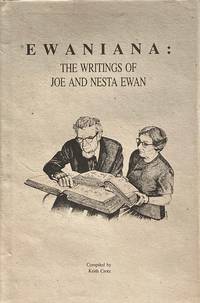
Crotz, K
Ewaniana: the writings of Joe and Nesta Ewan
American Botanist Chillicothe 1989. 1st edition. Fine/Fine. Hard covers dust jacket Inscribed by Joe Ewan.Owner's bookplate. Offprint of Taxon article "Opportunities in botanical history" 1970 by Joe Ewan loosely inserted. American Botanist, Chillicothe hardcover
Bookseller reference : 27258
|
|
|
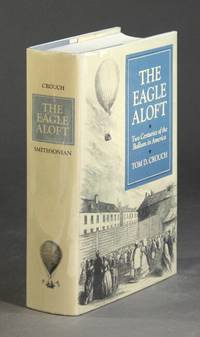
Crouch Tom D.
The eagle aloft. Two centuries of the ballon in America
Washington D.C.: Smithsonian Institution Press 1983. First edition 4to pp. 770; illustrated throughout; fine in original cloth dust-jacket. A comprehensive history of the balloon in the United States. <br/><br/> Smithsonian Institution Press hardcover books
Bookseller reference : 24339
|
|
|
Crouch, Howard R
Relic Hunter: The Field Account of Civil War Sites Artifacts and Hunting 2006 5th printing with Supplement
Oakpark VA: SCS Publications 2006. This is the 2006 most recent printing. with Supplement. NEW and unread in near PERFECT condition only very light rubbing to the cover -- like you sometimes find in any new book store. Flat uncreased spine. NO chips tears or fading. Bright and shiny. Sharp corners. Square and tight. Pages are fresh crisp clean and unmarked - obviously never read. Important guide to the use of an electronic metal detector to search for artifacts in Civil War camps and battle sites. Well illustrated with photos and diagrams. Bibliographical references. Bound in the original turquiose full color pictorial wraps printed in white. From the publisher: "First published in 1978 RELIC HUNTER takes the reader into Virginia's woods and fields and back into time searching for the many long forgotten Civil War camp and battle sites. Utilizing the electronic metal detector the hunters through their explorations and finds have created a vast new body of knowledge which this volume seeks to illuminate. This is a unique and fully photo illustrated book that combines exploration adventure and solid reference data. Covered are CW uniforms cavalry equipment CW glass digging house sites battlefields hunting site research and much more Included are a state seal and bullet I.D. chart.". 5th printing with Supplement. Softcover. New condition. Illus. by NOT a library discard. 220pp.; iii; 46pp. Supplement. Great Packaging Fast Shipping. SCS Publications Paperback
Bookseller reference : 029781
|
|
|
Crouch, Tom D
The eagle aloft. Two centuries of the ballon in America
Washington D.C.: Smithsonian Institution Press 1983. First edition 4to pp. 770; illustrated throughout; fine in original cloth dust-jacket. A comprehensive history of the balloon in the United States. Smithsonian Institution Press unknown
Bookseller reference : 24339
|
|
|
Crowder, D F, And R W Tabor
Routes And Rocks: Hiker's Guide To The North Cascades From Glacier Peak To Lake Chelan Stated First Edition Hardcover In Dust Jacket
Seattle Wa: The Mountaineers 1965. 1st Edition 1st Printing. Hardcover. Fine/Very Good. Xii 235 Pp 3 Maps In Pocket At Rear. Hardcover Illustrated Cloth. First Edition Stated. Fine; Ownership Signature Of Mildred Stewart Dee Reputedly The First Female Architecture Student At Usc Dated October 1966. Fine. In The Original Plain Glassine Dust Jacket Browned And Lightly Worn Tear At Top Of Spine. Three Folding Maps In Pocket At Rear. <br/> <br/> The Mountaineers hardcover
Bookseller reference : 052678
|
|
|
Crowe, Eyre A R A
With Thackery In America
London Paris & Melbourne: Cassell And Company Limited 1893 Beautiful Green/Gilt Covers. Slight Bumping Spine Top. Engraved Frontispiece. Owner's Name. 179 Pgs Index. A Selected List Of Cassell Company Publications. Light Foxing Rear. 8vo - over 7¾ - 9¾" tall. 1st Edition. Decorative Cloth. Very Good. Cassell And Company Limited hardcover
Bookseller reference : 286828
|
|
|
Crowquill, Alfred
SEYMOUR'S SKETCHES Comprising Eighty-Six Caricature Etchings. Illustrated in Prose and Verse By Alfred Crowquill. With a descriptive list of the plates and a biographical notice of Robert Seymour including an account of his connexion with the Pickwick P
London: George Routledge & Sons 1878. Three-Quarter Leather. Fine. 8vo - over 7¾" - 9¾" tall. 172pp Illus. with 86 caricatures. Bound by Baynton Bath Eng. in extra three-quarter crimson morocco over marbled boards with gilt lines and marbled endpapers. The spine is executed with six raised bands gilt lettering and five vignette blocks for the gilt rectangles. FINE CONDITION. A little off-setting. The binding is described in an old bookdealers slip as 'newly bound'. <br/> <br/> George Routledge & Sons hardcover
Bookseller reference : J497
|
|
|
CRP VERDIERE C R P
Réflexions sur l'histoire religieuse des français et recherches sur le protestantisme
Paris: C. Douniol 1856. Fine. C. Douniol Paris 1856 16.50 x 25 cm broché First edition. Catholic times in France Calvinism in France spread of communism at the time of Luther the Michelade. Light worming to front cover interior foxing. Rare. C. Douniol unknown
Bookseller reference : 15795

|
|
|
Cruickshank, Gordon
For Millionaires Only - The World's Most Expensive Cars
128 pages including index. Features the world's most glamorous cars. The history, lifestyle and images surrounding the most expensive accessories in the world. Illustrated in full colour throughout. Gift greetings upon front endpaper. Light wear. Nice copy. Book
|
|
|
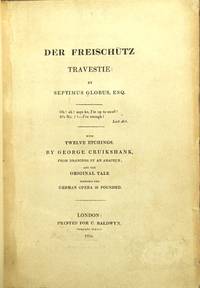
CRUIKSHANK, GEORGE
Globus Septimus. Der freischutz travestie. With twelve etchings by.from drawings by an amateur and the original tale whereon the German opera is founded
London: printed by C. Baldwyn 1824. First edition this one of large-paper issue with India proofs tall 8vo 3 & 68pp. 12 mounted plates; a very good copy in 19th-century blue polished calf gilt with some wear to extremities and scattered minor scuff-marks titled in gilt on front cover gilt decorated spine in 6 compartments page edges browning not affecting illustrations not preserving the original wrappers. Cohn 36 identifies the author as C. Apel and the delineator of the plates as Crowquill. printed by C. Baldwyn unknown
Bookseller reference : 10504
|
|
|
Cruikshank, George
THE COMIC ALMANACK FOR 1836 18371841 & 1842 4 Volumes
London: Charles Tilt Book. Illus. by Illustrations By George Cruikshank. Paperbound. printed paper wraps each volume approximatel 64 pp plus advertisements at rear each volume contains 12 full page b & w illustrations of months and numerous text illustrations by Cruikshank spine have perished 1836 volume is complete but disbound wraps of all volumes lightly soiled Size: 12mo. Charles Tilt Paperback
Bookseller reference : 21800
|
|
|
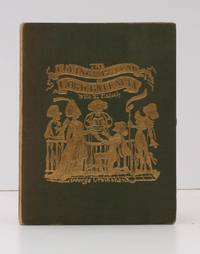
CRUIKSHANK, illus George
The Loving Ballad of Lord Bateman. Illustrated by George Cruikshank. RARE AND CHARMING CRUIKSHANK
David Bogue 1851. 24mo. First Edition with engraved frontispiece engraved musical score and 10 fine engraved plates in the text; original limp green cloth upper board elaborately blocked and lettered in gilt primrose endpapers expertly recased with cloth backstrip to style a remarkably well-preserved bright crisp copy. David Bogue, hardcover
Bookseller reference : 33564
|
|
|
CRUIKSHANK GEORGE
Globus Septimus. Der freischutz travestie. With twelve etchings by.from drawings by an amateur and the original tale whereon the German opera is founded
London: printed by C. Baldwyn 1824. First edition this one of large-paper issue with India proofs tall 8vo 3 & 68pp. 12 mounted plates; a very good copy in 19th-century blue polished calf gilt with some wear to extremities and scattered minor scuff-marks titled in gilt on front cover gilt decorated spine in 6 compartments page edges browning not affecting illustrations not preserving the original wrappers. Cohn 36 identifies the author as C. Apel and the delineator of the plates as Crowquill. <br/><br/> printed by C. Baldwyn unknown books
Bookseller reference : 10504
|
|
|
CRUISE, Walt (1890-1975)
Signature
Outfielder with the St. Louis Browns and Boston Red Sox debuting in 1914. Bold signature and address in blue ballpoint 2½" X 1" tipped to 5" X 3" card n.p. n.d. Very good. Uncommon. unknown
Bookseller reference : 23112

|
|
|
Crum, Adam J
Gold Coins of Ancient Rome Featuring the XII Caesars Legacy Collection
Argos Publishing. Fine in Fine dust jacket. 2021. Hardcover. 057881787X . Folio 13" - 23" tall; 63 pages . Argos Publishing hardcover
Bookseller reference : 28398 ISBN : 057881787X 9780578817873
|
|
|
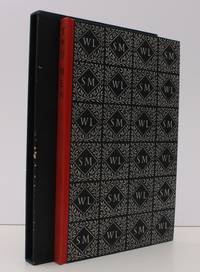
CRUTCHLEY Brooke
Two Men: Walter Lewis and Stanley Morison at Cambridge. Printed for his Friends by the University Printer Christman 1968. NEAR FINE COPY IN PUBLISHER'S SLIP-CASE
University Press Cambridge 1968. 8vo. First Edition with title in red and black plates and several mounted type specimens at end; patterned boards red cloth back lettered in gilt a near fine copy in publisher's board slip-case. University Press, Cambridge, hardcover
Bookseller reference : 39601
|
|
|
CRYSTAL David
The Stories of English. With a New Afterword by the Author. NEAR FINE COPY IN PUBLISHER'S SLIP-CASE
Folio Society 2020. 8vo. First Edition thus with illustrations and maps; blue cloth boards lettered in black backstrip lettered in white and red a near fine copy in publisher's board slip-case. SLIP-CASE NOT SHOWN IN IMAGE. Folio Society, hardcover
Bookseller reference : 43414

|
|
|
CS FORESTER C S
THE HAPPY RETURN aka BEAT TO QUARTERS
London England: Michael Joseph. Very Good. 1937. On offer is a super autographed copy of the First Edition of the first book in the immortal Horatio Hornblower series: The Happy Return by C.S. Forester signed on the fep some light book dealer's pencil notes on another endpaper. Only 12000 copies were printed of the First Edition thusly signed makes for an inordinately scarce title. This a VG copy lacking the dustjacket London green silver gilt crisp and save for a very slight cocking very light sunning to the spine it would be near fine. ; 8vo - over 7¾" - 9¾" tall; KEYWORDS: AUTOGRAPH C.S.FORESTER THE HAPPY RETURN FIRST EDITION HORATIO HORNBLOWER SIGNED AUTOGRAPHED NAVAL ROYAL NAVY NAVAL ADVENTURE PATRICK O'BRIEN CAPTAIN JACK AUBREY NICOLAS RAMAGE DUDLEY POPE MARINE NAUTICAL ADVENTURE HISTORICAL NAVAL WARFARE NAPOLEON BONAPARTE FRENCH REVOLUTION TRAFALGER LORD NELSON AGE OF SAIL FRIGATES THE HAPPY RETURN BEAT TO QUARTERS SEAMAN . Michael Joseph unknown
Bookseller reference : 0001552
|
|
|
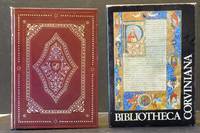
Csapodi Csaba - Csapodine Gardonyi Klara
Bibliotheca Corviniana Hungarian Edition
Hungary: Helikon Kiado 1990. Book. Fine. Leather. First Edition Thus. Folio - over 12" - 15" tall. Book is Fine bound in brown leather with intricate gilt decoration and in a Very Good Plus slipcase small sticker shadow and a bit of rubbing at the edges. The Bibliotheca Corviniana was one of the most renowned libraries of the Renaissance world. Gorgeous plates throughout. Text in Hungarian. Helikon Kiado Hardcover
Bookseller reference : 006072 ISBN : 9632080653 9789632080659
|
|
|
Csapodi Csaba Csapodine Gardonyi Klara
Bibliotheca Corviniana Hungarian Edition
Hungary: Helikon Kiado 1990. Book is Fine bound in brown leather with intricate gilt decoration and in a Very Good Plus slipcase small sticker shadow and a bit of rubbing at the edges. The Bibliotheca Corviniana was one of the most renowned libraries of the Renaissance world. Gorgeous plates throughout. Text in Hungarian. . First Edition Thus. Leather. Fine/No Jacket As Issued. Folio - over 12" - 15" Tall. Helikon Kiado Hardcover books
Bookseller reference : 006072 ISBN : 9632080653 9789632080659
|
|
|
Csapodi, Csaba; & Klara Csapodi-Gardonyi; Tibor Szanto
Bibliotheca Corviniana Biblioteka Króla Macieja Korwina
Wroclaw: Ossolineum Corvina Magyar Helikon 1981. Fine condition in a Very Good dust jacket only lightly rubbed. NO chips. NO tears. NO creases. NO fading. NOT price clipped 1200- zloty. Sharp corners. Hinges are perfect. NO owner's name or bookplate. NOT a remainder. Pages are clean crisp and unmarked. NO underlining. NO highlighting. NO margin notes. Beautifully illustrated with 114 full page color plates showing magnificent illuminated manuscripts book bindings etc. Text in Polish by Csaba Csapodi and Klara Csapodi-Gardonyi. Compiled by Tibor Szántó. Bound in the original gilt-stamped oatmeal color cloth. Complete with dust jacket. Oversize Hardcover. 23.5 cm wide by 33 cm tall. This large heavy book will require extra postage for Priority and International shipments but only the standard charge for media mail. Oversize Hardcover. Fine condition/Very Good dust jacket. 328pp. Great Packaging Fast Shipping. Ossolineum Corvina Magyar Helikon Hardcover
Bookseller reference : 019530 ISBN : 830400321X 9788304003217
|
|
|
Csik S. & E. Papa
Theoretical issues in generative phonology: an annotated bibliography
Bloomington: Indiana University Linguistics Club 1979. First edition 2 volumes 4to pp. iv 70; xix 3 124; printed from typescript. Fine in original beige and blue wrappers. <br/><br/> Indiana University Linguistics Club unknown books
Bookseller reference : 32652
|
|
|
Cte d'. HERISSON
Journal d'un officier d'ordonnance Juillet 1870 - Février 1871
Paris: Ollendorff 1885. Fine. Ollendorff Paris 1885 12 x 19 cm broché Seventh edition. Two lacks to head and to foot of spine a joint cracked to head. Ollendorff unknown
Bookseller reference : 15390

|
|
|
Cte d'. HERISSON
Les responsabilités de l'année terrible
Paris: Ollendorff 1891. Fine. Ollendorff Paris 1891 12 x 19 cm broché Ninth edition. Spine sunned with a lack at foot slight corner lacks to boards. Ollendorff hardcover
Bookseller reference : 15741

|
|
|
Cte de GRAMMONT
Mémoires
Paris: Au bureau de la bibliothèque choisie 1829. Fine. Au bureau de la bibliothèque choisie Paris 1829 12.50 x 21 cm relié New edition. Half raspberry calf binding smooth spine decorated with quadruple gilt and blind fillets with some small stains marbled edges. Some occasional light foxing. Au bureau de la bibliothèque choisie unknown
Bookseller reference : 17804

|
|
|
Cte de PUYMAIGRE
Petit romancero choix de vieux chants espagnols traduits et annotés
Paris: Librairie de la société bibliographique 1878. Fine. Librairie de la société bibliographique Paris 1878 9 x 14.50 cm relié First edition in French. Full cream cardboard binding smooth spine. Light foxing to endpapers and edges. Librairie de la société bibliographique unknown
Bookseller reference : 11601

|
|
|
Cte GOBLET D'ALVIELLA
Le cinquantième anniversaire de Brahma Somaj. Brahmanisme. Extrait de la Revue des Deux Mondes
s. l. Paris: Extrait de La Revue des deux mondes 1880. Fine. Extrait de La Revue des deux mondes s. l. Paris 1880 15.50 x 25 cm agrafé First edition. Plain paper cover. Rare. Extrait de La Revue des deux mondes unknown
Bookseller reference : 17691

|
|
|
Cte GOBLET D'ALVIELLA
Le rationalisme religieux aux Etats Unis. Extrait de la Revue des Deux Mondes
s. l. Paris: Extrait de La Revue des deux mondes 1883. Fine. Extrait de La Revue des deux mondes s. l. Paris 1883 15.50 x 25 cm agrafé First edition. Plain paper cover. Rare. Extrait de La Revue des deux mondes unknown
Bookseller reference : 19823

|
|
|
Ctsse de RICHEMONT
Histoire de mademoiselle Le Gras Louise de Marillac
Paris: C. Poussielgue 1894. Fine. C. Poussielgue Paris 1894 11.50 x 18 cm relié Fourth edition. Half navy blue shagreen binding spine with five raised bands decorated with gilt fleurons light rubbing to joints gilt edges contemporary binding. Handsome copy complete with its folding facsimile. C. Poussielgue hardcover
Bookseller reference : 13388

|
|
|
Cuban Bishops
1903 Pair of Cuban Episcopal Appointment Letters from Bishops of Havana and Pinar del Río Announcing Their Canonical Installations Following the Reorganization of the Cuban Church
Havana Cuba Pina Del Rio. Good with no dust jacket. 1903. Non-Book. On offer is a finely preserved pair of early-Republican Cuban episcopal letters each addressed to Al Sr. Gobernador Civil de Matanzas and written within forty-eight hours of one another in November of 1903 formally notifying the provincial civil authority of new episcopal incumbents. Though issued by different dioceses Havana and Pinar del Río the letters share the same diplomatic register and courtesy formula B. L. M. Besa la mano evidence of the Churchs restored protocol with the Republican state soon after independence. The first Pinar del Río 19 de Noviembre de 1903 is from Braulio Orúe y Oyarzun newly installed Bishop of Pinar del Río. On his printed heading Braulio Obispo de Pinar del Río B. L. M. he reports that con fecha 18 del actual ha tomado posesión de este Obispado on the 18th of this month he took possession of this Bishopric offering his respectful compliments. His autograph appears beneath with a marginal docket Nov 23 Avísese recibido atentamente kindly noted. The second Habana 21 de Nbre = Noviembre de 1903 is from Pedro González y Estrada newly elevated Bishop of Havana by Pope Pius X. On letterhead bearing the diocesan arms and the heading El Obispo de la Habana B. L. M. he notifies the Governor of his advancement and extends formal consideration. The lower margin notes Nov 26 Avísese recibido cordial y afectuosamente received cordially and affectionately. The shared addressee near-contemporaneous dates and identical courtesies show routine yet revealing churchstate notification practice at the dawn of the Republic. Both employ the deferential closing formula Besa la mano. This is a phrase whose persistence from colonial to republican correspondence encapsulates the Churchs continuity amid political change. BIO NOTES: Braulio Orúe y Oyarzun 18391904 a Basque-born prelate and former auxiliary of Havana became the first bishop of the newly created diocese of Pinar del Río in 1903 guiding the see through its inaugural year. Pedro González y Estrada 18431914 a Cuban cleric later renowned for rebuilding parochial structures after the wars of independence assumed the Havana see in 1903 under Pius X strengthening ties between the Cuban hierarchy and Rome during the Republics early years. Together the letters constitute a compact archive of churchstate protocol in early Republican Cuba: formal language paired courtesies and episcopal insignia addressing a secular magistrate. They preserve the tone of late-colonial politeness carried into the new polity and document how ecclesiastical authority was publicly acknowledged by civil government. Few such official letters are documented in private collections; surviving examples are chiefly preserved in diocesan archives. Condition: Both on original cream wove/laid paper measuring approximately 9.5x7.5 inches. Printed headings with brown-ink holograph completions. Even toning with scattered foxing light handling; episcopal arms and headings crisp; autographs strong and legible; marginal docketing intact. No losses; VG. ; Manuscripts; 8vo 8" - 9" tall; 2 pages; Signed by Author . unknown
Bookseller reference : 20CCUBA10
|
|
|
Cuban Government
1857 Remarkable primitive Chinese and Spanish Indentured Labour Contract from the Macau to Havana Coolie Trade with Thumbprint Signatures of Labourer
Macao Macau China Havana Cuba. Good with no dust jacket. 1857. Non-Book. On offer is a remarkable Chinese and Spanish primitive contract for an Chinese indentured labourer known as a coolie in 1857 which had been sold to a plantation owner in Cuba where the man will begin working following his voyage from Macau to Havana. This contract is particularly rare as it features a thumbprint signature of the Chinese labourer Chen Yom on both the front and back of the contract. This contract was written for Cheom Yom age 19 of Defom China. It states in Portuguese on one side and Chinese on the other that Yom is agreeing to work for Dn. Rafael R. Torices in Cuba for eight years upon his arrival in Havana. The contract indicates the terms of Yoms eight years of servitude discussing when he will work rest how his medical issues will be treated what money will be advanced to him by Torices clothing Torices will provide which Yom will pay for out of his wages and more. The contract is stamped with the seal of the Consulate General of Cuba and is signed in ink by A. R. Ferran Manuel Arito d Younga Procurador. It is also signed in Chinese and stamped with Yoms fingerprint. Dated possibly March 7 1857 there is a handwritten Spanish note on the back of the contract indicating that Yom is being passed off upon his arrival in Havana and this note is dated June 20 1857. This correlates with the arrival of the Dutch vessel Christina which arrived in Havana from Macao on June 20 1857 indicating that Yom may have been aboard this ship. This contract provides evidence of the conditions Chinese coolie workers faced in the colonies where they were sent to work making it an essential piece of Chinese history. Primitive contracts were the first contracts offered to slaves following their emancipation. After completion of a primitive contract such as this one a contrata was offered. The Chinese coolie trade a system of indentured labor that targeted young poor Chinese men operated from 1847-1874. Throughout this period African slavery was slowly being abolished around the world. The coolie trade was initiated by Britain and was eventually dominated by both Britain and the United States of America. Chinese coolie laborers were sent to work in British American and Spanish colonies and the nature of the trade changed throughout its 27-year operation due to social and political pressures. The coolie trade took place in large part between the shipping port in Macao now a part of China then under Portuguese rule and Havana Cuba then under Spanish control. As Macau was under Portuguese rule at the time of the coolie trade they transported coolies on their vessels frequently and many of the documents related to the trade were written in Portuguese and/or Spanish. To learn more about the Chinese coolie trade and its importance in world history click here to read our in-depth research blog on the topic. The contract is partially printed filled in with ink. Text on both sides of the single folio leaf measuring 8x11.5 inches. The document exhibits age toning small rips and tears that do not impede readability and evidence of significant folds and creases. Good. ; Manuscripts; 8vo 8" - 9" tall; 1 pages; Signed by Author . unknown
Bookseller reference : 0012114
|
|
|
Cuban Government
1861 Manuscript Record of Black Residents of Guane Pinar Del Rio Cuba Transcribed from Government-Mandated Afro-Cuban Registrations
Cuba Pinar Del Rio Guane. Good with no dust jacket. 1861. Non-Book. On offer is a remarkable piece of Afro-Cuban history related to the Black Cuban population in 1861 several years before the African slave trade in Cuba was formally abolished. This document is a 12-page government-compiled list of all Black residents of Guane Pinar del Rio Cuba. The information was gathered from registration cards that were completed and collected in accordance with a Cuban Royal Order imposed on December 2 1859. Residents of colour had to indicate their name age marital status and profession or social position. This document lists 322 of these Black residents and provides all of their information. It is stamped by the Captain of the Government of Guane. Cuba had a great need for inexpensive labour to support their sugar industry. While America and Britain signed a treaty in 1814 to abolish the African slave trade it took many years for complete global abolition. The African slave trade was not ended in Cuba until 1886 despite it being formally abolished in 1867 Yun & Laremont 2001. During the Chinese coolie trade 1847-1874 African slaves often worked alongside Chinese indentured labourers. This document provides insight into not only who the Afro-Cuban citizens were within the Pinar del Rio population but also into the record keeping of the Cuban government and the restrictions placed upon the Black population of the time. The document approx 8.5x12 inches. It appears to have previously been stapled and there are marks where the staples were removed. It contains three sets of folded templates that have been hand-filled with four pages of content in each set. They are unbound with a total of 12 pages of content. The document is age toned with minor bends and some small tears that do not impact the content. Overall Good. ; Manuscripts; 8vo 8" - 9" tall; 12 pages . unknown
Bookseller reference : 0012121
|
|
|
Cuban Government
1866 Pair of Havana Government Manuscripts Authorizing and Publicizing the Chinese Coolie Voyage of the Spanish Frigate Burdeos y Habana 2 Chartered by Hermanos y Watson
Havana Cuba Macao China: Chinese Coolie Trade Havana Cuba MacAo. Good with no dust jacket. 1866. Non-Book. On offer is an extraordinary pair of interrelated Havana government manuscripts dated June 13 1866 and June 22 1866 documenting both the authorization and the ministerial publication order for a single verifiable coolie voyage being the transport of 240 Chinese laborers aboard the Spanish frigate Burdeos y Habana No. 2 chartered by the Havana merchant firm Caro Hermanos y Watson. Together these two documents form a complete bureaucratic chain tracing the internal certification and public announcement of a named Chinese coolie voyage representing one of an iteration of the trans-Pacific indenture system before its abolition in 1874. The first document signed Caro Hnos. Y Watson and issued by the Superior Civil Governor of Havana confirms compliance with the Reglamento de Colonos Asiáticos and certifies that the firm had chartered the frigate Burdeos y Habana No. 2 to convey 240 colonists from Macao to Havana. The second document issued nine days later by the Ministerio de Ultramar and addressed to the Director de la Gaceta de la Habana orders publication of the voyage details in accordance with Article 4 of the Reglamento de Avisos de Ausentes thereby making the notice official in the colonial press. Both manuscripts were written while the ship was still at sea one as an internal act of compliance the other as a ministerial act of recordkeeping revealing the layered bureaucracy that sustained the importation of Asian labor under Spanish rule. According to John Asomes definitive Coolie Ships of the Chinese Diaspora 18461874 the frigate Burdeos y Habana No. 2 departed Macao on March 24 1866 carrying 242 Chinese men and arrived in Havana on August 27 1866 disembarking 224 survivors after nearly five months in transit. These documents reflect the precise administrative rhythm of the trade: local verification metropolitan approval and public disclosure in the Havana Gazette. The Chinese coolie trade a system of indentured labor that targeted young poor Chinese men operated from 18471874. Throughout this period African slavery was slowly being abolished around the world. The coolie trade was initiated by Britain and was eventually dominated by both Britain and the United States of America. Chinese coolie laborers were sent to work in British American and Spanish colonies and the nature of the trade changed throughout its 27-year operation due to social and political pressures. The coolie trade took place in large part between the shipping port in Macao now a part of China then under Portuguese rule and Havana Cuba then under Spanish control. As Macao was under Portuguese rule at the time of the coolie trade they transported coolies on their vessels frequently and many of the manifests were written in Portuguese and/or Spanish. To learn more about the Chinese coolie trade and its importance in world history click here to read our in-depth research blog on the topic. Both manuscripts are written in an elegant colonial hand in brown ink on watermarked laid paper. The first measures approximately 8 x 12 inches and bears the official green Sello 8º revenue stamp; the second about 12½ x 8½ inches remains legible with minor toning and wear. Both Good; Manuscripts; 4to 11" - 13" tall; 2 pages; On offer is a fascinating government document that demonstrates communication surrounding the Chinese coolie labour ships were discussed in 19th century Havana. The document is from the Superior Civil Governor in Havana. It indicates that coolie trading company Caro Hermanos y Watson have shown compliance with the article of the Colonial Regulation and that they have chartered the Spanish frigate Burdeos y Habana to bring 240 Asian colonists to Havana. It was signed on June 13 1866 with the words Caro huos Watson. Caro Hermano y and Watson were merchant coolie importers. They were agents working with the Compagnie Générale Transatlantique which specialized in coolie trading. The Burdeos y Habana left Macao on March 15 1866 with 231 Chinese men on board. It arrived in Havana one month after this letter was signed on July 20 1866. 204 Chinese men arrived alive and were sent to work as coolies on Cuban plantations. The Chinese coolie trade a system of indentured labor that targeted young poor Chinese men operated from 1847-1874. Throughout this period African slavery was slowly being abolished around the world. The coolie trade was initiated by Britain and was eventually dominated by both Britain and the United States of America. Chinese coolie laborers were sent to work in British American and Spanish colonies and the nature of the trade changed throughout its 27-year operation due to social and political pressures. The coolie trade took place in large part between the shipping port in Macao now a part of China then under Portuguese rule and Havana Cuba then under Spanish control. As Macau was under Portugese rule at the time of the coolie trade they transported coolies on their vessels frequently and many of the manifests were written in Portuguese and/or Spanish. To learn more about the Chinese coolie trade and its importance in world history click here to read our in-depth research blog on the topic. This document measures 8x12 inches. It exhibits age toning and small tears on the margins. Written in ink it is very legible with a lovely seal stamped and embossed at the top. Spanish language. Good. ; Signed by Author . Chinese Coolie Trade Havana Cuba MacAo unknown
Bookseller reference : 0012095
|
|
|
Cuban Government
1867 Detailed Death Record That Charts the Journey of the Spanish Coolie Vessel Reina Des Los Angelos from Macao China to Mariel Cuba
Mariel Cuba Macao Macau China. Very Good with no dust jacket. 1867. Non-Book. Manuscripts; 8vo 8" - 9" tall; 1 pages; Signed by Author . unknown
Bookseller reference : 0012115
|
|
|
Cuban Government
18801881 Matanzas Cuba Bureaucracy and Empire: Four-Page Colonial Fiscal Manuscript Detailing Tribute Payments and Havana Merchant Accounts
Matanzas Cuba Havana. Good with no dust jacket. 1880. Non-Book. On offer is a four-page 19th-century Cuban colonial manuscript written in Matanzas in 1880 documenting fiscal receipts and tribute acknowledgments on official Spanish stamped paper issued for Oficio Año 1881.This finely preserved document captures the bureaucratic pulse of Cuba at a turning point postTen Years War 18681878 and on the eve of full emancipation 1886. The manuscript is written on papel sellado bearing the seated allegorical figure of Justicia and the printed legend OFICIO AÑO 1881 5 Centavos de Peso with serial number 200.709. It records a series of attestations by Matanzas officials and merchants concerning monthly tributes tributos mensuales and mercantile accounts cartas mercantes. At its center is Doña María García de Cobarrubias a Havana resident on Calle de los Zapatos whose payments are certified as duly satisfied: ha satisfecho el tributo mensual. Her appearance as a named taxpayer offers insight into the economic agency of women in the colonial bureaucracy a detail that enhances the social-historical context of the manuscript. Surrounding her case are attestations and receipts signed by Manuel Rodríguez Arencibia Luis Pérez Patricio Amador and others. These are clerks and intermediaries of the Matanzas Secretaría de Hacienda all revalidating accounts and renewals across multiple months October November December and January. This document emerges precisely at the time of the Patronato Law of 1880 which nominally abolished slavery in Cuba while replacing it with a system of apprenticeship that bound freed people to their former masters. The Matanzas fiscal bureaucracy one of the islands most active oversaw this transition by intensifying its record-keeping of all taxes contracts and dues. The language and cadence of this manuscriptformal repetitive and confirmatoryembody the colonial states effort to maintain financial and social control during one of the most turbulent reorganizations of its history. A compelling bureaucratic relic from a defining moment in Cubas colonial and economic historylinking the fiscal rhythms of Matanzas to Havanas mercantile life at the threshold between enslavement patronage and modern taxation. The manuscript consists of four densely written pages in brown ink highly legible on both sides of two folio leaves each approx. 8½ × 12½ in. . Toning folds and small tears consistent with the age of the document are present. A few words are partially obscured by a small tear but this does not impact the legibility of the document as a whole. It is otherwise good and it is complete. Spanish Language. Overall Good. Translations for this listing are completed by online translation software. ; Manuscripts; 4to 11" - 13" tall; 4 pages; Signed by Author . unknown
Bookseller reference : 0012124
|
|
|
Cuban Officials
1863 Cuban Cedula for Chinese Coolie Labourer with Rare Manuscript Note Indicating He is Now Free
Havana Cuba. Fair with no dust jacket. 1863. Non-Book. On offer is an important document from the Chinese coolie trade being a cedula identification card for a Chinese man who was called Martin from Asia dated March 6 1863. The cedula indicates that Martin is working an eight year contract in Havana. What makes this particular cedula so rare is a manuscript note on the back dated in Havana on July 24 1863 which indicates that this coolie is being set free from his promise to work and that there will be indemnization. The cedula is a typed form stamped by the Government of Havana and filled in ink with Martins details. The form contains information about the cedula its purpose and consequences of not carrying it. It has a pre-printed signature of a Cuban official at the bottom. The manuscript note about the coolies freedom is hand-signed by F. De la Cava. This cedula provides a glimpse into the documentation required by coolies brought to Cuba to work as indentured servants and paints a picture of the conditions in which these coolies lived and worked. The Chinese coolie trade a system of indentured labor that targeted young poor Chinese men operated from 1847-1874. The coolie trade took place in large part between the shipping port in Macao now a part of China then under Portuguese rule and Havana Cuba then under Spanish control. Coolies were transported from China on ships many of which had formerly been used as African slave ships Yun & Laremont 2001. The coolie ships often had slave names eg Africano Mauritius or ironic names Dreams Hope Live Yankees Wandering Jew Yun & Laremont 2001 p. 110. Many did not survive the journey with approximately 16400 Chinese coolies dying on European and American coolie ships to Cuba during a 26-year period Yun & Laremont 2001 p. 111-112. This accounted for a mortality rate of 12-30% though on some voyages the death rate reached 50% as in the case of the Portuguese ship Cors in its 1857 sailing. These deaths were caused by violence rebellions thirst suffocation and sickness Yun & Laremont 2001. To learn more about the Chinese coolie trade and its importance in world history click here to read our in-depth research blog on the topic. This document measures 8.5x12 inches. It shows significant signs of age including age toning frayed edges folds and creases. It is entirely legible. Spanish language. Overall Fair. ; Manuscripts; 8vo 8" - 9" tall; 1 pages; Signed by Author . unknown
Bookseller reference : 0012108
|
|
|
Cuban Officials
1866 Complete Criminal Investigation with Sworn Testimonies of 13 Chinese Coolies Who Sailed to Havana Aboard the French Ship Amaril Trehouart Featuring Discussion of Opium Aboard the Ship
Havana Cuba. Good with no dust jacket. 1874. Non-Book. On offer is a string-bound 22 page police investigation into the deaths of 33 Chinese people aboard the French coolie ship Amaril Trehouart which sailed from Macao to Havana arriving in March of 1866. The Amaril was a French vessel that made two crossings during the Chinese coolie trade. This document relates to its November 29 1865 departure run by Captain P. Cotte on which 313 Chinese people boarded and 280 arrived alive in Havana on March 15 1866. This reflected a 10.5% death rate on this voyage. The Amaril was owned and operated by the Campbell brothers who made this shipment in collaboration with the Carbaga brothers. This document is dated March 16 1866 the day after the vessel arrived in Havana. The first page is stamped Sur Comisaria de Policia del Quinto Distrito South Police Station of the Fifth District. It introduces the ship and the investigation and presents the order to interrogate the 13 newly arrived Chinese from the Amaril. The second page which discusses the investigation is stamped by the Cuban police. This investigation is criminal in nature looking into any violence against Chinese passengers. The Chinese people that are questioned in the investigation are being kept in a Depository where they will be kept until their contracts are sold to a plantation owners. The next several folio pages are transcriptions of the questions and answers given to and by each of the 13 interviewed Chinese coolies. The information covered in each interrogation include the name and origin of the person their reason for coming to the Island always an 8 year primitive contract whether there was food given and more. In all cases the coolies reported that food was abundant. However one coolie folio p. 4 reports that they water they drank made them sick. It is also reported that they were given opio opium to smoke. There is also a report that the sick were separated from the good healthy people. In the manuscript conclusion at the end of the report it is reported that 30 colonos perished they ate cold food and no opium to smoke. Given what we know about the deplorable conditions of coolie trade ship transport it is believed that much of these testimonies were highly coerced and manipulated to show the ship in a positive light. The Chinese coolie trade a system of indentured labor that targeted young poor Chinese men operated from 1847-1874. The coolie trade took place in large part between the shipping port in Macao now a part of China then under Portuguese rule and Havana Cuba then under Spanish control. Coolies were transported from China on ships many of which had formerly been used as African slave ships Yun & Laremont 2001. The coolie ships often had slave names eg Africano Mauritius or ironic names Dreams Hope Live Yankees Wandering Jew Yun & Laremont 2001 p. 110. Many did not survive the journey with approximately 16400 Chinese coolies dying on European and American coolie ships to Cuba during a 26-year period Yun & Laremont 2001 p. 111-112. This accounted for a mortality rate of 12-30% though on some voyages the death rate reached 50% as in the case of the Portuguese ship Cors in its 1857 sailing. These deaths were caused by violence rebellions thirst suffocation and sickness Yun & Laremont 2001. To learn more about the Chinese coolie trade and its importance in world history click here to read our in-depth research blog on the topic. This folio is genuinely remarkable. While we and others hold multiple examples of individual depositions from Chinese coolies it is exceptionally rare to find a complete example of a police investigation into one specific ship including the additional notes about the investigation and investigators. This piece would make an absolutely sensational addition to any academic research collection. 20 pages folio plus 2 pages octavo. String bound age toning frayed edges normal wear for age. Overall G. Asome John. Coolie Ships of the Chinese Diaspora 1846-1874 p. 252. Proverse Hong Kong. Kindle Edition. ; Manuscripts; 4to 11" - 13" tall; 22 pages; Signed by Author . unknown
Bookseller reference : 0012113
|
|
|
Cuban Officials
1867 Rare Contract for the "Rental" of an Emancipated Slave in Havana Cuba
Havana Cuba. Good with no dust jacket. 1867. Non-Book. On offer is a rare contract from the Administration of Central Depot of the Emancipated stating the terms of a slave rental commencing in 1867. This contract was made for an emancipated slave named Fammouf Luciano of the Congo. He is to be rented by one Francisco de Salaz. The contract is signed July 8 1867. A highlight of this particular rental contract is the name of the Expedition during which this particular African slave was found which was the "Sancti Espiritus and Trinidad". The contract is signed by the Salaz who will rent this man and witnesses. This rental contract is extremely rare and a remarkable though tragic piece of the history of the Cuban slave trade. To think that this man was emancipated and yet was able to be rented out once again is heartbreaking and provides yet another piece of the puzzle of Cuban slavery history. Cuba had a great need for inexpensive labour to support their sugar industry. While America and Britain signed a treaty in 1814 to abolish the African slave trade it took many years for complete global abolition. The African slave trade was not ended in Cuba until 1886 despite it being formally abolished in 1867 Yun & Laremont 2001. The details of this contract closely align with contracts of Chinese coolie labourers and the printed nature of this contract implies that many emancipated African slaves were contracted following their emancipation. Based on knowledge of the contracted Chinese labourers we know that conditions for indentured workers were equal to or worse than those of slaves. This document is printed and filled out in ink. It is one page with the manuscript content on the recto of a single sheet and typed terms of the contract on the verso. It measures 8x12 inches. It exhibits age toning and creasing appropriate to its age. Overall G. ; Manuscripts; 8vo 8" - 9" tall; 2 pages; Signed by Author . unknown
Bookseller reference : 0012111
|
|
|
Cuban Officials
1873 Complete Inventory of the Matanzas Cuban Plantation Colombia Including List of African Slaves and Chinese Coolies Working At the Time
Matanzas Cuba. Good with no dust jacket. 1873. Non-Book. On offer is a fascinating and rare manuscript being the complete inventory of the Plantation Colombia in Palmilla Matanzas Cuba dated January 1873. The inventory begins with a list of male and female slaves names and ages with notes as to which slaves are fugitives. Beginning on the third page notes as to the origin of the slaves are included. The list includes slaves who are Criollo Creole - native African from nations and tribes including Ganga Congo Carabali Lucimi Mandinga Mozambique and others and Chinese. Following the list of slaves and their details there are notes about the plantation itself. Notes include a reference to broken cannons wood on the plantation horses in poor condition a negro named Antonio Molina who has been remitted and more. Many of the slaves are indicated as having been remitted by the Junta de la Deud del Tesoro Government of the Debt of the Treasury. A representative of the Junta received this list in order for them to intervene in the delivery of Plantation Colombia to Senores Domenech & Company. The document is signed by seven Cuban witnesses who testify to the accuracy and contend that everything looks good and is to the entire satisfaction of the officials. This piece is an excellent example of how slavery and indentured servitude was viewed and managed at the tail end of the Chinese Coolie Trade when the Chinese were working alongside Black slaves. There is much to be learned about the Plantation Colombia and about the management and assessment of Cuban plantations more generally from this piece. The Chinese coolie trade a system of indentured labor that targeted young poor Chinese men operated from 1847-1874. Throughout this period African slavery was slowly being abolished around the world. The coolie trade was initiated by Britain and was eventually dominated by both Britain and the United States of America. Chinese coolie laborers were sent to work in British American and Spanish colonies and the nature of the trade changed throughout its 27-year operation due to social and political pressures. The coolie trade took place in large part between the shipping port in Macao now a part of China then under Portuguese rule and Havana Cuba then under Spanish control. As Macau was under Portugese rule at the time of the coolie trade they transported coolies on their vessels frequently and many of the manifests were written in Portuguese and/or Spanish. To learn more about the Chinese coolie trade and its importance in world history contact seller for link to academic blog. Four pages writing on front and back for 8 pages of content. It is unbound but appears to have been removed from a larger document. It is possible that the first pages of the document is missing as the slave inventory begins at #12. This is not confirmed. Age toning and minor rips and folds present but overall G. ; Manuscripts; 4to 11" - 13" tall; 8 pages; Signed by Author . unknown
Bookseller reference : 0012116
|
|
|
Cuban Officials
1874 Cuban Medical Manuscript Certificate for Soldier from the Militia of Disciplined Soldiers of Color
Havana Cuba. Very Good with no dust jacket. 1874. Non-Book. Manuscripts; 8vo 8" - 9" tall; 1 pages; On offer is a fascinating medical leave document stamped by the Milicias Disciplinadas de Color 1 Seccion First Section of the Militia of Disciplined Soldiers of Color. This manuscript is written to Don Garino Crupo and Salbom Furiente Colonel Commander of the first unit of the Militia of Color. The certificate indicates that it is certified that a soldier of this unit Guillermo Vasquez was seen at the hospital and has "poor configuration of the left leg" Translation. The certificate indicates that compensation is required. This certificate was written in 1874 in the midst of the Ten Years' War between Cuba and Spain the first of three wars Cuba fought against Spain for its independence. It was common during this period of Cuban history for people of African descent both slaves and free men to enlist in the Cuban militias. There was a large Black population in Cuba at this time. Cuba had a great need for inexpensive labour to support their sugar industry. While America and Britain signed a treaty in 1814 to abolish the African slave trade it took many years for complete global abolition. The African slave trade was not ended in Cuba until 1886 despite it being formally abolished in 1867 Yun & Laremont 2001. During the Chinese coolie trade 1847-1874 African slaves often worked alongside Chinese indentured labourers. This medical certificate is folded to measure approx 8x6 inches. It is one folio leaf folded in half. The writing is on the recto of the first page. It is in very good condition exhibiting age toning and is otherwise in great shape. Spanish language. VG. ; Signed by Author . unknown
Bookseller reference : 0012112
|
|
|
Cuban Officials, Cuban Government
18771883 Cuban Emancipation Archive: Two Complete Expedientes Demonstrating Coartación and Patronato Pathways to Freedom Including Afro-Cuban and Chinese Legal Intersections
Cuba Havana Matanzas. Good with no dust jacket. Non-Book. On offer is a complete paired archive of two Cuban administrative expedientes documenting emancipation through distinct legal mechanisms in the final years of slavery. Together the files preserve the two principal and contrasting routes to freedom in late colonial Cuba: one purchased through negotiated valuation coartación ; the other secured through legal action under the Patronato system. Both expedientes are internally coherent and complete preserving the full administrative arc from initial claim or valuation through testimony financial settlement and final legal recognition of freedom. Taken together they form a comparative corpus demonstrating how emancipation was enacted contested and recorded within the colonial legal system. Of particular significance is the documented intervention of an asiático Chinese individual within the first expediente introducing a direct link between Afro-Cuban emancipation processes and the Chinese diaspora in Cuba. This cross-diaspora legal interaction is rarely preserved within a single administrative file and is here embedded within a complete emancipation proceeding. Archive I: Freedom Through Capital and Negotiation18771882 Emancipation Expediente for Isabel a Morena Criolla Property of Don Diego Pintado Culminating in the Issuance of Her Cédula de Libre Spanning from an initial valuation in 1877 through final administrative acts in May 1882 this expediente records the process by which Isabels freedom was priced negotiated and formally granted. The file defines Isabel as property and assigns a fixed redemption value: quedó concertada en trescientos veinte y cinco pesos. Payment terms are specified as pagaderos en oro o en billetes del Banco Español de la Habana
con aumento del 10% que fija la ley para pago de contribuciones al Estado establishing both the monetary structure and the state-imposed surcharge attached to emancipation. On 2 May 1882 a third party identified as el asiático Maico Lino appears before the Secretariat and formally withdraws a claim previously made in Isabels favor: se aparta de la reclamación que había establecido á favor de la morena Isabel Criolla
por virtud de un convenio
This intervention records a negotiated resolution involving multiple parties after which the Board proceeds to authorize Isabels emancipation. On 3 May 1882 Isabel appears in person to receive her cédula de libre no. 760 with the record noting: no firmando por no saber escribir. The expediente closes on 4 May 1882 with certification that the regulatory requirements had been fulfilled and her freedom formally granted. Archive II: Freedom Through Law and Litigation1883 Matanzas Patronato Emancipation Expediente for Clemente Cavillo a Moreno Laborer of the San Antonio / San Miguel Sugar Estates Culminating in a Formal Declaration of Freedom This expediente documents emancipation under the Patronato system through a wage dispute brought by Clemente Cavillo. The case proceeds through the Junta Provincial de Patronato de Matanzas between July and October 1883. On 11 July 1883 Clemente appears before the authorities and states that he has not been paid wages for six months while working on the properties of Don Julián Gómez. He frames this non-payment as grounds for emancipation:
por cuyo motivo reclama su libertad
. The expediente preserves the administrative process in full including deposit of the disputed amount pending adjudication circulation through municipal and provincial authorities and recorded testimony from multiple witnesses. None establish continuous payment. On 17 August 1883 the Junta determines that sufficient proof of payment has not been provided and rules:
acordó la Junta declarar exento de patronato al reclamante
Clemente is thereby declared exempt from patronato under statutory authority and legally free. The decision is finalized without appeal and the necessary documentation is issued completing the process. Taken together these two expedientes form a complete comparative record of emancipation in late nineteenth-century Cuba. One documents freedom obtained through negotiated financial redemption; the other records freedom secured through legal challenge to plantation labor practices. Both preserve named individuals specific monetary values and the full administrative sequence of emancipation. The inclusion of a Chinese claimant within the first file further situates the material within the broader legal and social intersections of Afro-Cuban and Chinese populations under the colonial system. As a paired archive the material provides a clear and direct basis for research into the legal economic and administrative mechanisms through which slavery was dismantled in practice. Condition: Both archives comprise two physically related components: the full expediente and a smaller associated document recording the financial deposit tied to each case. They contain age-toning as would be expected and minor bends tears and other imperfections. The text is legible as are the stamps. Overall Good. ; Manuscripts; 8vo 8" - 9" tall; Signed by Author . unknown
Bookseller reference : 0012132
|
|
|
Cuban Officials
1880 Cedula De Vecindad for a Matanzas Native Visiting the United States
Matanzas Cuba. Fair with no dust jacket. 1880. Non-Book. On offer is an identification document a Cedula de vecindad for a Cuban from Matanzas who is traveling to the United States. It is referred to as a passport on the document. The cedula is a typed form dated 1880 filled in with ink. It includes identifying details of the Matanzas man D. Leoncio Junico. On the recto is a manuscript note dated 1881 indicating that the man is traveling to the USA. It is signed by a Cuban official and Junico. This cedula is from the early post-slavery era in Cuba and provides insight into the documents required by the average citizen at the time. The Chinese coolie trade a system of indentured labor that targeted young poor Chinese men operated from 1847-1874. The coolie trade took place in large part between the shipping port in Macao now a part of China then under Portuguese rule and Havana Cuba then under Spanish control. Coolies were transported from China on ships many of which had formerly been used as African slave ships Yun & Laremont 2001. The coolie ships often had slave names eg Africano Mauritius or ironic names Dreams Hope Live Yankees Wandering Jew Yun & Laremont 2001 p. 110. Many did not survive the journey with approximately 16400 Chinese coolies dying on European and American coolie ships to Cuba during a 26-year period Yun & Laremont 2001 p. 111-112. This accounted for a mortality rate of 12-30% though on some voyages the death rate reached 50% as in the case of the Portuguese ship Cors in its 1857 sailing. These deaths were caused by violence rebellions thirst suffocation and sickness Yun & Laremont 2001. To learn more about the Chinese coolie trade and its importance in world history click here to read our in-depth research blog on the topic. This document measures 5.75x8.5 inches. It shows significant signs of age including age toning folds and small punctures that do not impact readability. It is entirely legible. Spanish language. Overall Fair. ; Manuscripts; 8vo 8" - 9" tall; 1 pages; Signed by Author . unknown
Bookseller reference : 0012109
|
|
|
Cuban Officials
1884 Covellanos Authorization for the Chinese Society chen-Chi-Chic-Louk Renamed hong-Kong Presenting a Colonial Record of Chinese Community Organization in Cuba
Havana Cuba Matanzas. Very Good with no dust jacket. 1884. Non-Book. On offer is a terrific 1884 Cuban government manuscript concerning the formal authorization of a Sociedad de Recreo a Chinese mutual-aid and social association in the town of Covellanos province of Matanzas. Written in a fine slanted colonial hand this complete bureaucratic file includes the mayors petition the provincial delegates recommendation and the endorsements of multiple senior officials. It records the request of D. Arturo Fregan to change the name of his Chinese recreation society from Chen-Chi-Chic-Louk to Hong-Kong following the death of its president D. Agustín Chanfan. The letter specifies that the society would continue to operate under the same Reglamento aprobado por este Gobierno en 22 de junio de 1880 the colonial regulation governing associations of freed or contracted Asians. The text opens: El Alcalde del municipal de Covellanos remite a V. S. La instancia del súbdito D. Arturo Fregan solicitando el cambio de una Beca de la Sociedad de Recreo que existe en aquella villa intitulada Chen-Chi-Chic-Louk por el de Hong-Kong rigiéndose por el mismo Reglamento aprobado por este Gobierno en 22 de junio de 1880 a consecuencia de haber fallecido el de su clase D. Agustín Chanfan
The verso contains the complete chain of approvals: En vista de lo informado por el Alcalde de Covellanos no se encuentra inconveniente en que V. E. Se sirva acceder a lo solicitado por el referido súbdito Arturo Fregan. It bears the signatures and flourished rubrics of Cecilio Rodríguez Mesa José Luis de la Portillas and Miró dated Matanzas August 718 1884. This document captures a moment in Cubas transition from indentured Chinese labor to free community organization. The Sociedad de Recreo Hong-Kong represents the self-organization of Chinese residents under Spanish colonial oversight a decade after the abolition of the coolie trade 18471874. By 1884 such associations provided cultural continuity benevolent relief and collective identity to Chinese Cubans who had survived contract servitude. Condition: One folio sheet 8.5x6 inches written recto and verso in dark brown ink on laid paper. Light toning and foxing minor edge wear folds small spots of oxidation; entirely legible and well-preserved. Endorsed and countersigned three times dated between 7 and 18 August 1884.; Manuscripts; 8vo 8" - 9" tall; 1 pages; Signed by Author . unknown
Bookseller reference : 0012084
|
|
|
Cuban Officials
1888 Cuban Administrative Expediente Concerning the Detention and Investigation of a Chinese Man in Matanzas Suspected of Being an Escaped Presidio Prisoner
Matanzas Cuba Havana. Good with no dust jacket. 1888. Non-Book. On offer is a rare archive of fourteen Cuban government manuscript documents concerning the detention and investigation of a Chinese man in Matanzas Cuba in November 1888 who was suspected of being an escaped prisoner from the Presidio de La Habana. The documents record the bureaucratic process through which municipal authorities provincial officials and the command of the Havana presidio attempted to determine whether the detained man was a fugitive who had deserted from the prison system two years earlier. Cases such as this illustrate the precarious legal position of Chinese residents in late nineteenth-century Cuba who were frequently subject to surveillance detention and identity verification by colonial authorities even after the formal end of the coolie indenture system. The case centres on a Chinese man who stated that his name was Lucio Memolien. The file begins with his detention by local authorities after he was discovered without identification papers. Because Chinese residents were required to carry documentation the man was taken into custody while officials attempted to determine his identity and place of residence. Two letters dated November 1 and 3 1888 document the earliest stage of the case. These communications show that the man had been detained by the Guardia Civil for lacking identification papers indocumentado. Acting under a government circular of 13 October 1887 provincial officials instructed the police to provide the detainee with a temporary pass so that he could travel to his place of residence and obtain the legally required cédula personal. One of the letters also admonishes a municipal official for forwarding the detainee improperly rather than following the procedures established in the circular. In these early communications the detainee is again described: el asiático que dice llamarse
Translation: the Asiatic who says his name is
reflecting the uncertainty authorities often had when recording Chinese names in Spanish documents. The surname appears with minor variations in the file most commonly Memolien but also Mamelion in one communication a common issue in files such as these where clerks attempted to approximate names phonetically. Shortly after his detention authorities began to suspect that the detainee might actually be José Rey a prisoner who had desertó el día 23 de Octubre de 1886 deserted on the 23rd of October 1886 from the Havana presidio. This suspicion triggered an administrative investigation and the man was transferred through several levels of the colonial bureaucracy while officials attempted to confirm whether he was the escaped convict. Several documents record that the detainee repeatedly identified himself as el asiático que dice llamarse Lucio Memolien the Asiatic who says his name is Lucio Memolien though he remained in custody while officials attempted to verify his identity. One communication notes that he was being held para la identificación que estime más procedente for the identification that may be considered most appropriate while authorities investigated the possible connection to the fugitive. The documents also trace the suspects movement through the local administrative system. Municipal and district officials were instructed to locate and present him for examination. One report explains that he initially no se halló en el lugar que Vuestra orden indicó was not found in the place that your order indicated though he was eventually secured and brought before the authorities. Another document records that a las tres de la tarde del día de hoy ha tenido ingreso en este establecimiento el asiático Lucio Memolien at three oclock in the afternoon of this day the Asiatic Lucio Memolien was admitted into this establishment. Because the suspected fugitive had escaped from the Havana prison system the provincial authorities ultimately referred the matter to the Presidio de La Habana for confirmation. A letter issued from the Comandancia del Presidio de La Habana reports that the detainee had been brought to the prison command for identification: En el día de ayer
se incorporó a este Presidio un asiático que dice llamarse Lucio Memolien por presumirse que fuese el penado José Rey que desertó el día 23 de Octubre de 1886.Translation: Yesterday
an Asiatic who says his name is Lucio Memolien was brought to this Presidio as it was presumed that he might be the prisoner José Rey who deserted on the 23rd of October 1886.After examining the detainee and comparing him with the description of the escaped prisoner the presidio authorities concluded that the man was not the fugitive: y como el individuo citado después del oportuno reconocimiento resulta no ser el referido desertor. Translation: and since the said individual after the appropriate examination proves not to be the aforementioned deserter. The investigation therefore closed with the determination that Lucio Memolien was not the escaped prisoner José Rey. The final summary of the file preserved on stationery of the Secretaría del Gobierno Civil de Matanzas records the outcome: Expediente promovido a consecuencia de haber sido detenido el asiático que dice llamarse Lucio Memolien por creer ser el prófugo José Rey que desertó del Presidio Departamental de la Habana; y que después del reconocimiento resultó no serlo. Translation: File initiated as a consequence of the detention of the Asiatic who says his name is Lucio Memolien believed to be the fugitive José Rey who deserted from the Departmental Presidio of Havana; and who after examination was found not to be the same person. Taken together the documents preserve the complete administrative chain of custody of the investigation. The Chinese coolie trade a system of indentured labor targeting young poor Chinese men operated between 1847 and 1874. The trade ran largely between Macao then under Portuguese rule and Havana Cuba then under Spanish control. Laborers were transported on ships many of which had previously been used in the African slave trade Yun & Laremont 2001. These vessels often carried names associated with slavery or ironically hopeful titles such as Africano Mauritius Dreams Hope Live Yankees and Wandering Jew Yun & Laremont 2001 p. 110. Conditions were frequently brutal. An estimated 16400 Chinese laborers died aboard coolie ships traveling to Cuba during a twenty-six-year period representing mortality rates between 12% and 30% though some voyages saw death rates as high as 50%. Although indenture ended in 1874 tens of thousands of Chinese laborers remained in Cuba in the decades that followed. Many lived under close surveillance by colonial authorities particularly when suspected of desertion from labor contracts or involvement in the penal labor system. This 1888 investigation into Lucio Memolien detained in Matanzas after being mistaken for the escaped prisoner José Rey reflects that broader system of monitoring and control. Physical Description and ConditionFourteen manuscript leaves approximately 20 pages of text forming an administrative case file from the Civil Government of Matanzas concerning the detention and identification of a Chinese man in November 1888. Eleven leaves measure approximately 6 × 8 inches with several larger leaves measuring approximately 8 × 12 inches. All are written in Spanish manuscript ink in clear nineteenth-century cursive hands. Most leaves bear district mail stamps and many are signed by the issuing official. One leaf is on Presidio de La Habana Comandancia letterhead and another on Secretaría del Gobierno Civil de Matanzas. One sheet bears the printed fiscal paper notation Papel Oficio clase 14 40 centavos cada cien pliegos Habilitado para el año 1888. Two additional letters issued in Havana on 1 and 3 November 1888 concern the initial detention of the same individual by the Guardia Civil for lacking identification papers and the issuance of a temporary pass so that he might obtain a cédula personal in accordance with the government circular of 13 October 1887.Likely removed from a larger governmental expediente. Age toning minor bending small tears and light edge fraying though all text remains fully legible. Two leaves retain small pieces of Scotch tape applied by a previous collector as makeshift binding. Overall Good condition.; Manuscripts; 8vo 8" - 9" tall; 14 pages; Signed by Author . unknown
Bookseller reference : 0012131
|
|
|
CUCKSEE, Frank
Signed Photograph
Very Good. Measures 8 x 10 inches glossy finish <br/><br/>Jerry Maren was the Lollipop Kid part of the Lollipop Guild with the Munchkins in the film "The Wizard of Oz". A versatile performer he went on the perform as Little Oscar for the Oscar Mayer meat company and as Mayor McCheese and The Hamburglar for McDonalds Corp. He also had a walk-on in a "Seinfeld" episode. This photograph is a color print of the Lollipop Guild boldly signed " Jerry Maren / Lollipop Kid " in black ink and undersigned by Marcella Krienzler who was married to Emil Kranzler one of the village Munchkins. Note: likely signed after Emil's death in 1993 at a convention at the OzCot in Chesterton Indiana. unknown
Bookseller reference : 2020124
|
|
|
CULBERTSON STEVENS et al
1890s ORIGINAL ARCHIVE OF MANUSCRIPT LETTERS BETWEEN ABILENE KANSAS AND ONE LAND AGENT'S FAMILY ABOUT HIS HOLDINGS IN ILLINOIS
ABILENE KANSAS APPLE RIVER GALENA ILLINOIS. Very Good. 1890. On offer is a great late 19th Century original archive of 16 handwritten letters 30 pages all told relating to Culbertson Stevens Real Estate and Loan Agent in Abilene Kansas in the 1890s. Most of the letters have to do with his land back in Galena Illinois and Apple River where his mother still lives. There are letters by her some by Culbertson and a few written by the men living near the land and finally some letters to and from his brother L. S. Stevens who owns a Mercantile Agency in Chicago. Here are some snippets: "C. Stevens Real Estate and Load Agent Abilene Kas. Nov. 3rd 1890 Dear Mother Your letter received. Am glad you went out to Apple River. Mr. Emmor is entirely mistaken about what I said and you may read him this letter when he comes in. I wrote him to allow parties to mine on the land but they must fill up the holes after the stopped work. I told him not to pasture any more cattle on the land as the expenses ate up all the profit. He went on and fixed the fence without any authority from me nor did he write me he anticipated fixing the fence and taking in cattle. He never had any authority to cut and sell wood and I am to think he has done this of course people will tell stories on him or anyone else for that matter who looks after the property. I have always thought Mr. Emmor was honest and would do what was right. With love C." "Galena Nov. 5th 90' Dear Son I have been looking over your letter this morning and fear my letter in some respects might be misleading
.Mr. Euar spoke of working up a party to run a level some place there and spoke of he and Loren being concerned in the scheme said he had sent L. specimens &c. I suppose L. knows all about it. One thing Ed spoke about was he sent in a petition last spring to have the road changed and it would run on the line between Mr. Martin and us but failed because we were not represented or had not given our consent. He said he knew we should have been written too about it but he did not move in it until so late. He did not have time to speak to you
.I seemed to me it would be better for us to have that road closed up then there would be no traffic through our land
.Have heard nothing from Jennie's folks for a long time. I had a paper from Eureka yesterday. The Perry house is burned and a lot of other buildings and she can send it to you
.Your mother S. C. Stevens." November 10th 1890 Dear Brother I send you a number of letters received from mamma read them over and you will see what is the matter. I wish you would go over to Galena and straighten this out. I guess Mr. Emmor so instructed to rent the pasture or lay out any money in fixing fences. He had no authority to cut a strip around the land or sell my wood. He has done all this without consulting me and I do not know but what it would be a good idea after you have settled up with him to let Ed Page look after things. I do not like the way Emmor has done. Can't you and Maggie go over for a few days while you attend to this Mamma would be delighted to have you go. I received the pictures of Culbertson the II. He is a fine boy and I rather judge from his eyes he will make a great shooter. I will have to have to lend my hammerless gun to him sure. With love to you all C." Overall VG.; Manuscript; 4to - over 9¾" - 12" tall; KEYWORDS: HISTORY OF CULBERTSON STEVENS 19TH CENTURY ABILENE KANSAS REAL ESTATE AGENT L. S. STEVENS COMMERCE ECONOMY BUSINESS MID WEST ALS AUTOGRAPH LETTERS SIGNED AMERICANA WESTERN AMERICANA HANDWRITTEN MANUSCRIPT AUTOGRAPHED AUTHORS MANUSCRIPT DOCUMENT LETTER AUTOGRAPH KEEPSAKE WRITER HAND WRITTEN DOCUMENTS SIGNED LETTERS MANUSCRIPTS HISTORICAL HOLOGRAPH WRITERS AUTOGRAPHS PERSONAL MEMOIR MEMORIAL PERSONAL HISTORY ARCHIVE DIARY DIARIES antiquité contrat vélin document manuscrit papier Antike Brief Pergament Dokument Manuskript Papier oggetto d'antiquariato atto velina documento manoscritto carta antigüedad hecho vitela documento manuscrito Papel . unknown
Bookseller reference : 0001942
|
|
|
Culham, Larry; Cathcart, Ruth; Edelstein, Fran
Antique Showcase Magazine, January 1983 - Review of Wimodausis / Tunbridge Ware
52 pages. Features: Review of the 29th annual Toronto Antique Show; Louis Wine Ltd. Makes Toronto its New Home - article with photo of Gary Wine; Tunbridge Ware; Grosvenor House Antiques Fair is Reborn; Toby and Character Jugs; Review of Richard M. Bueschel book on collectible slot machines; Clean and unmarked with moderate wear. A quality copy. Magazine

|
|

 Receive by email
 Download as PDF document
 RSS feed
 Permanent link


