|
Gustave CHARPENTIER
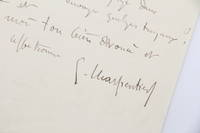
Lettre autographe datée et signée à propos d'une solennité musicale devant être jouée après l'inauguration d'un monument consacré à Ludwig van Beethoven
s. l. Paris: S. n. 1927. Fine. S. n. s. l. Paris Juillet 1927 11.50 x 18 cm une page Autograph letter dated and signed by Gustave Charpentier 14 lines in black ink regarding musical pieces to be performed after the inauguration of a monument commemorating Ludwig van Beethoven Traces of folding inherent to postal delivery a filing number in blue felt-tip pen in the lower right corner of the letter. The composer seeks: "". pour des sonneries de trompettes ou de cors. des thèmes bien caractéristiques assez courts pris dans les oeuvres du maître."" "". for trumpet or horn fanfares. themes quite characteristic fairly short taken from the master's works."" for this he asks for help from a composer friend: "". pourrais-tu faire un voyage dans ta mémoire et m'envoyer quelques tuyaux "" "". could you take a journey through your memory and send me some tips"" S. n. unknown
Referenz des Buchhändlers : 84157
|
|
|
Gustave CHENEVIER
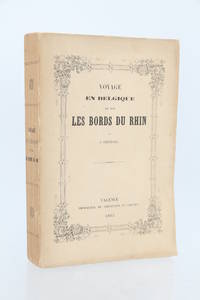
Voyage en Belgique et sur les bords du Rhin
Valence Valence: Imprimerie de Chenevier et Chavet 1863. Fine. Imprimerie de Chenevier et Chavet Valence Valence 1863 11.50 x 18 cm broché The rare first edition. Spine sunned occasional foxing. Imprimerie de Chenevier et Chavet unknown
Referenz des Buchhändlers : 85447
|
|
|
Gustave CLAUDIN
Mes souvenirs les boulevards de 1840-1871
Paris: Calmann-Lévy 1884. Fine. Calmann-Lévy Paris 1884 12 x 19 cm broché Fourth edition. Spine cracked interessant index. Calmann-Lévy unknown
Referenz des Buchhändlers : 14152

|
|
|
Gustave CLAUDIN
Mes souvenirs les boulevards de 1840-1870
Paris: Girard & Cie 1884. Fine. Girard & Cie Paris 1884 11 x 18 cm relié Fourth edition. Publisher's full chocolate percaline binding smooth spine decorated with floral motif front board decorated with floral motifs. Occasional light foxing otherwise handsome copy. Girard & Cie unknown
Referenz des Buchhändlers : 15682

|
|
|
Gustave COURBET - Etienne BAUDRY
Le camp des bourgeois
Paris: E. Dentu 1868. Fine. E. Dentu Paris 1868 12.50 x 19 cm broché First edition for which there were no large paper copies. Work decorated with several original plate illustrations by Gustave Courbet. Spine slightly split at the head also with a small section missing. Emile Zola quotes this work in L'Evénement illustré' on 5 May 1868: 'c'est là une uvre qui fera sensation. L'auteur est un utilitaire tombant à bras raccourcis sur la bourgeoisie fainéante et oisive. . Courbet ne pouvait guère trouver un texte dont l'esprit convînt mieux à son genre de talent. Le Franc-Comtois a dû se réjouir en lui de ce plaidoyer en faveur des paysans des rudes enfants de la terre. Aussi comme il s'est mis volontiers à dauber les bourgeois les messieurs qui ne sauraient distinguer une pelle d'un râteau ! Chacun de ses dessins est une satire.' this is a work that will cause a sensation. The author is a vehicle lashing out at the lazy and idle bourgeoisie. . Courbet could scarcely find a text whose spirit was better suited to his talent. The Franc-Comtois must have rejoiced in this plea in favour of peasants the formidable children of the earth. Also since he was willing to ridicule the bourgeois gentlemen who could not tell a spade from a rake! Each of his drawings is a satire.' Very rare. E. Dentu unknown
Referenz des Buchhändlers : 22888

|
|
|
Gustave COURBET
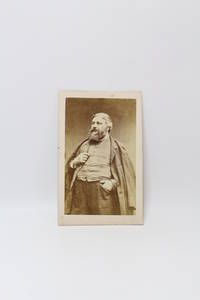
Portrait photographique de Gustave Courbet
Paris: Carjat 1870. Fine. Carjat Paris s. d. circa 1870 6.50 x 10.40 cm une photographie Rare original photograph on albumen paper in carte de visite format mounted on a board depicting Gustave Courbet. Handwritten annotations on the back. We have been able to find only one other copy of this photograph at the New York International Center of Photography. Carjat unknown
Referenz des Buchhändlers : 71500
|
|
|
Gustave COHEN
Tableau de la littérature française médiévale idées et sensibilités
Paris: Richard-Masse 1950. Fine. Richard-Masse Paris 1950 25 x 25 cm en feuilles sous chemise et étui First edition one of 25 numbered copies on pur fil the only deluxe copies. Autograph signature of the author below the justification page. Work illustrated with reproductions hors-texte. Handsome copy complete with publisher's slip. Richard-Masse unknown
Referenz des Buchhändlers : 36381

|
|
|
Gustave CROUVEZIER - Maurice BARRES
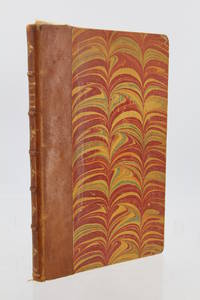
L'aviation pendant la guerre
Paris & Nancy: Berger-Levrault 1915. Fine. Berger-Levrault Paris & Nancy 1915 14 x 22.50 cm relié First edition. Bradel binding in half tawny shagreen spine with five raised bands decorated with gilt fleurons and black fillets gilt lettering ""Lycée Montaigne"" at foot of spine combed paper boards marbled paper endpapers and pastedowns corners slightly bumped some tears to leading edges. Preface by Maurice Barrès. Work illustrated with 86 photographs diagrams and silhouettes of aircraft and seaplanes of the belligerent armies. Berger-Levrault hardcover
Referenz des Buchhändlers : 81107
|
|
|
Gustave d' ALAUX
L'empereur Soulouque et son empire. Haïti. Extrait de la Revue des Deux Mondes
s. l. Paris: Extrait de La Revue des deux mondes 1850. Fine. Extrait de La Revue des deux mondes s. l. Paris 1850 15.50 x 25 cm agrafé First editions. Plain paper cover. Rare. Extrait de La Revue des deux mondes unknown
Referenz des Buchhändlers : 17605

|
|
|
Gustave d' ALAUX
Madrid et les madrilènes. Extrait de la Revue des Deux Mondes
s. l. Paris: Extrait de La Revue des deux mondes 1850. Fine. Extrait de La Revue des deux mondes s. l. Paris 1850 15.50 x 25 cm agrafé First edition. Plain paper cover. Rare. Extrait de La Revue des deux mondes unknown
Referenz des Buchhändlers : 17640

|
|
|
Gustave de MOLINARI
L'alimentation de Paris durant le siège. Extrait de la Revue des Deux Mondes
s. l. Paris: Extrait de La Revue des deux mondes 1871. Fine. Extrait de La Revue des deux mondes s. l. Paris 1871 15.50 x 25 cm agrafé First edition. Plain paper cover. Rare. Extrait de La Revue des deux mondes unknown
Referenz des Buchhändlers : 18799

|
|
|
Gustave de BEAUMONT
L'Irlande sociale politique et religieuse
Paris: Librairie de Charles Gosselin 1839. Fine. Librairie de Charles Gosselin Paris 1839 13 x 21.50 cm 2 volumes reliés First edition with a false statement of third edition. Twentieth-century binding skillful pastiche of a contemporary binding in half green calf. Spine with raised bands decorated with 3 blind-tooled fleurons with roulettes on the bands at tail and head. Black calf title and volume labels. Covers and spine preserved. Very fresh paper. Some soiling on the cover of the second volume. Very handsome copy in superb condition. Important monograph on Ireland in 1830 from social economic and religious perspectives. Gustave de Beaumont stayed for 2 years in Ireland in the company of his friend Alexis de Tocqueville whose ideas and spirit he shared. He was then shocked and astounded by Ireland's state of misery. Analyzing the history of Ireland Beaumont presents the ills from which Ireland suffers under the yoke of a foreign oppressive and unjust aristocracy; Beaumont thus advances the teachings of liberalism to which he joins great moral significance and profound meaning of justice. This work received glowing reviews and was considered as ""the most serious study the most nourished with facts and the most solidly sustained in thought that has appeared in France on Ireland in the 19th century."" It was received by contemporaries as a work analogous to that which M. de Tocqueville executed with such success for the United States of America. Librairie de Charles Gosselin hardcover
Referenz des Buchhändlers : 85964

|
|
|
Gustave de MOLINARI
La question constitutionnelle. Les conditions d'existence de la République
Paris: La Revue des deux mondes 1873. Fine. La Revue des deux mondes Paris 1873 15 x 24 cm Agrafé Extract from the Revue des deux mondes.First edition. Rare.In plain wrappers. La Revue des deux mondes unknown
Referenz des Buchhändlers : 27614

|
|
|
Gustave de BELOT
La république du Salvador
Paris: E. Dentu 1865. Fine. E. Dentu Paris 1865 17 x 25 cm broché First edition. Topography physical geography political institutions population customs railways of Salvador and Honduras. Spine cracked and reglued with very slight loss at foot handsome interior condition. Rare. E. Dentu unknown
Referenz des Buchhändlers : 4892

|
|
|
Gustave de MOLINARI
Les approvisionnements de Paris à la fin du siège. Extrait de la Revue des Deux Mondes
s. l. Paris: Extrait de La Revue des deux mondes 1871. Fine. Extrait de La Revue des deux mondes s. l. Paris 1871 15.50 x 25 cm agrafé First edition. Plain paper cover. Rare. Extrait de La Revue des deux mondes unknown
Referenz des Buchhändlers : 18786

|
|
|
Gustave de MOLINARI
Les clubs rouges pendant le siège de Paris
Paris: Garnier frères 1871. Fine. Garnier frères Paris 1871 12 x 19 cm broché First edition. Work illustrated with a frontispiece engraving. Spine sunned with a repaired tear and small repaired tear at foot some foxing. Garnier frères unknown
Referenz des Buchhändlers : 31130

|
|
|
Gustave DORE - Heliodore PISAN
Cervantès Don Quichotte Il ne fut pas moins ravi d'un autre choeur de danse qui entra bientôt après. Gravure originale sur bois debout. Tome 2 ch.20
Paris: Hetzel 1863. Fine. Hetzel Paris 1863 43 x 21 cm une feuille First edition. Wood engraving signed in the plate by the artist. Plate created specifically for the illustration of Cervantes' Don Quixote for the 1863 Hachette edition. Gustave Doré first traveled to Spain in 1855 in the company of Théophile Gautier and publisher Paul Dalloz. In 1861 responding to a commission from the journal Le Tour du monde he returned there with Baron Jean Charles Davillier a knowledgeable Hispanophile who would recount their journey in his Voyage en Espagne. Doré went there primarily with a view to illustrating Don Quixote: ""Je me rends donc dans la patrie de cet illustre hidalgo pour étudier tous les lieux qu'il a parcourus et remplis de ses exploits et faire ainsi une chose qui aura son parfum local"" ""I am therefore going to the homeland of this illustrious hidalgo to study all the places he has traveled through and filled with his exploits and thus create something that will have its local flavor"". Gustave Doré would thus conduct several working sessions with Louis Viardot translator of Cervantes' text. Cervantes' novel ranks among the most illustrated narratives in European literature but Doré wanted to surpass his predecessors Tony Johannot Grandville Daumier. Upon its publication in 1863 the work would be the subject of unanimous praise notably from Emile Zola: ""On appelle ça illustrer un ouvrage : moi je prétends que c'est le refaire. Au lieu d'un chef-d'oeuvre l'esprit humain en compte deux"" ""They call that illustrating a work: I claim that it's remaking it. Instead of one masterpiece the human spirit now counts two"". See our other engravings by Gustave Doré Gustave Doré L'Imaginaire au pouvoir Musée d'Orsay 2014 Virtual exhibition on Gustave Doré on the Gallica website Hetzel unknown
Referenz des Buchhändlers : 47269

|
|
|
Gustave DORE - Heliodore PISAN
Cervantès Don Quichotte Les meuniers les tirèrent l'un l'autre par les pieds par la tête. Gravure originale sur bois debout. Tome 2 ch.29
Paris: Hetzel 1863. Fine. Hetzel Paris 1863 31 x 43 cm une feuille First edition. Wood engraving signed in the plate by the artist. Plate specially created for the illustration of Cervantes' Don Quixote for the 1863 Hachette edition. Gustave Doré first traveled to Spain in 1855 in the company of Théophile Gautier and publisher Paul Dalloz. In 1861 responding to a commission from the journal Le Tour du monde he returned there with Baron Jean Charles Davillier an avid hispanophile who would recount their journey in his Voyage en Espagne. Doré went there primarily with a view to illustrating Don Quixote: ""I am therefore going to the homeland of this illustrious hidalgo to study all the places he traveled through and filled with his exploits and thus create something that will have its local flavor"". Gustave Doré would thus conduct several work sessions with Louis Viardot translator of Cervantes' text. Cervantes' novel is among the most illustrated stories in European literature but Doré wanted to surpass his predecessors Tony Johannot Grandville Daumier. Upon its publication in 1863 the work would be the subject of unanimous praise notably from Emile Zola: ""They call that illustrating a work: I maintain that it is remaking it. Instead of one masterpiece the human spirit now counts two"". See our other engravings by Gustave Doré Gustave Doré L'Imaginaire au pouvoir Musée d'Orsay 2014 Virtual exhibition around Gustave Doré on the Gallica website Hetzel unknown
Referenz des Buchhändlers : 47258

|
|
|
Gustave DORE - Heliodore PISAN
Cervantès Don Quichotte Voilà comme je châtie les insolents qui ne savent pas retenir leur langue. Tome 2 ch. 60
Paris: Hetzel 1863. Fine. Hetzel Paris 1863 21 x 43 cm une feuille First edition. Wood engraving signed in the plate by the artist. Plate created specifically for the illustration of Cervantes' Don Quixote for the Hachette edition of 1863. Gustave Doré first traveled to Spain in 1855 in the company of Théophile Gautier and publisher Paul Dalloz. In 1861 responding to a commission from the journal Le Tour du monde he returned there with Baron Jean Charles Davillier an experienced hispanophile who would recount their journey in his Voyage en Espagne. Doré went there primarily with a view to illustrating Don Quixote: ""I am therefore going to the homeland of this illustrious hidalgo to study all the places he traveled through and filled with his exploits and thus create something that will have its local flavor"". Gustave Doré would thus conduct several working sessions with Louis Viardot translator of Cervantes' text. Cervantes' novel is among the most illustrated stories in European literature but Doré wanted to surpass his predecessors Tony Johannot Grandville Daumier. When it appeared in 1863 the work received unanimous praise notably from Emile Zola: ""They call that illustrating a work: I contend that it is remaking it. Instead of one masterpiece the human spirit counts two"". See our other engravings by Gustave Doré Gustave Doré L'Imaginaire au pouvoir Musée d'Orsay 2014 Virtual exhibition on Gustave Doré on the Gallica website Hetzel unknown
Referenz des Buchhändlers : 47313

|
|
|
Gustave DORE - Heliodore PISAN
Cervantès Don Quichotte Finalement maître et valet restèrent trois jours chez les mariés où ils furent traités comme des rois. Gravure originale sur bois debout. Tome 2 ch.22
Paris: Hetzel 1863. Fine. Hetzel Paris 1863 31 x 43 cm une feuille First edition. Wood engraving signed in the plate by the artist. Plate created specifically for the illustration of Cervantes' Don Quixote for the 1863 Hachette edition. Gustave Doré first traveled to Spain in 1855 in the company of Théophile Gautier and publisher Paul Dalloz. In 1861 responding to a commission from the journal Le Tour du monde he returned there with Baron Jean Charles Davillier an avid hispanophile who would recount their journey in his Voyage en Espagne. Doré went there primarily with a view to illustrating Don Quixote: ""Je me rends donc dans la patrie de cet illustre hidalgo pour étudier tous les lieux qu'il a parcourus et remplis de ses exploits et faire ainsi une chose qui aura son parfum local"" ""I am therefore going to the homeland of this illustrious hidalgo to study all the places he traveled through and filled with his exploits and thus create something that will have its local flavor"". Gustave Doré would thus hold several working sessions with Louis Viardot translator of Cervantes' text. Cervantes' novel is among the most illustrated stories in European literature but Doré wanted to surpass his predecessors Tony Johannot Grandville Daumier. Upon its publication in 1863 the work would be the object of unanimous praise notably from Emile Zola: ""On appelle ça illustrer un ouvrage : moi je prétends que c'est le refaire. Au lieu d'un chef-d'oeuvre l'esprit humain en compte deux"" ""They call that illustrating a work: I maintain that it's remaking it. Instead of one masterpiece the human spirit now counts two"". See our other engravings by Gustave Doré Gustave Doré L'Imaginaire au pouvoir Musée d'Orsay 2014 Virtual exhibition on Gustave Doré on the Gallica website Hetzel unknown
Referenz des Buchhändlers : 47266

|
|
|
Gustave DORE - Heliodore PISAN
Cervantès Don Quichotte Mort de Don Quichotte.
Paris: Hetzel 1863. Fine. Hetzel Paris 1863 21 x 43 cm une feuille First edition. Wood engraving signed in the plate by the artist. Plate created specifically for the illustration of Cervantes' Don Quixote for the 1863 Hachette edition. Gustave Doré first traveled to Spain in 1855 accompanied by Théophile Gautier and publisher Paul Dalloz. In 1861 responding to a commission from the journal Le Tour du monde he returned there with Baron Jean Charles Davillier an informed hispanophile who would recount their journey in his Voyage en Espagne. Doré went there primarily with a view to illustrating Don Quixote: ""Je me rends donc dans la patrie de cet illustre hidalgo pour étudier tous les lieux qu'il a parcourus et remplis de ses exploits et faire ainsi une chose qui aura son parfum local"" ""I am therefore going to the homeland of this illustrious hidalgo to study all the places he traveled through and filled with his exploits and thus create something that will have its local flavor"". Gustave Doré would thus conduct several working sessions with Louis Viardot translator of Cervantes' text. Cervantes' novel is among the most illustrated narratives in European literature but Doré wanted to surpass his predecessors Tony Johannot Grandville Daumier. Upon its publication in 1863 the work would receive unanimous praise notably from Emile Zola: ""On appelle ça illustrer un ouvrage : moi je prétends que c'est le refaire. Au lieu d'un chef-d'oeuvre l'esprit humain en compte deux"" ""They call that illustrating a work: I maintain that it is remaking it. Instead of one masterpiece the human spirit now counts two"". See our other engravings by Gustave Doré Gustave Doré L'Imaginaire au pouvoir Musée d'Orsay 2014 Virtual exhibition on Gustave Doré on the Gallica website Hetzel unknown
Referenz des Buchhändlers : 47301

|
|
|
Gustave DORE - Heliodore PISAN
Cervantès Don Quichotte Là se termine le chant de l'amoureuse Altisidore. Tome 2 ch.44
Paris: Hetzel 1863. Fine. Hetzel Paris 1863 21 x 43 cm une feuille First edition. Wood engraving signed in the plate by the artist. Some very discreet worming. Plate created specifically for the illustration of Cervantes' Don Quixote in the Hachette edition of 1863. Gustave Doré first travelled to Spain in 1855 in the company of Théophile Gautier and the publisher Paul Dalloz. In 1861 responding to a commission from the journal Le Tour du monde he returned there with Baron Jean Charles Davillier a learned hispanophile who would recount their journey in his Voyage en Espagne. Doré went there primarily with a view to illustrating Don Quixote: ""Je me rends donc dans la patrie de cet illustre hidalgo pour étudier tous les lieux qu'il a parcourus et remplis de ses exploits et faire ainsi une chose qui aura son parfum local"" ""I am therefore going to the homeland of this illustrious hidalgo to study all the places he traversed and filled with his exploits and thus create something that will have its local flavour"". Gustave Doré would thus undertake several working sessions with Louis Viardot translator of Cervantes' text. Cervantes' novel ranks among the most illustrated narratives in European literature but Doré wanted to surpass his predecessors Tony Johannot Grandville Daumier. Upon its publication in 1863 the work would receive unanimous praise notably from Emile Zola: ""On appelle ça illustrer un ouvrage : moi je prétends que c'est le refaire. Au lieu d'un chef-d'oeuvre l'esprit humain en compte deux"" ""They call that illustrating a work: I maintain that it is remaking it. Instead of one masterpiece the human spirit now counts two"". See our other engravings by Gustave Doré Gustave Doré L'Imaginaire au pouvoir Musée d'Orsay 2014 Virtual exhibition on Gustave Doré on the Gallica website Hetzel unknown
Referenz des Buchhändlers : 47294

|
|
|
Gustave DORE - Heliodore PISAN
Cervantès Don Quichotte L'on regarda la maison où il y eut grande assemblée de dames. Tome 2 ch. 62
Paris: Hetzel 1863. Fine. Hetzel Paris 1863 21 x 43 cm une feuille First edition. Wood engraving signed in the plate by the artist. Plate created specifically for the illustration of Cervantes' Don Quixote for the Hachette edition of 1863. Gustave Doré first traveled to Spain in 1855 in the company of Théophile Gautier and publisher Paul Dalloz. In 1861 responding to a commission from the journal Le Tour du monde he returned there with Baron Jean Charles Davillier a knowledgeable hispanophile who would recount their journey in his Voyage en Espagne. Doré went there primarily with a view to illustrating Don Quixote: ""I am therefore going to the homeland of this illustrious hidalgo to study all the places he traveled through and filled with his exploits and thus create something that will have its local flavor"". Gustave Doré would thus conduct several working sessions with Louis Viardot translator of Cervantes' text. Cervantes' novel ranks among the most illustrated stories in European literature but Doré wanted to surpass his predecessors Tony Johannot Grandville Daumier. Upon its publication in 1863 the work would be the subject of unanimous praise notably from Émile Zola: ""They call that illustrating a work: I maintain that it's remaking it. Instead of one masterpiece the human spirit now counts two"". See our other engravings by Gustave Doré Gustave Doré L'Imaginaire au pouvoir Musée d'Orsay 2014 Virtual exhibition on Gustave Doré on the Gallica website Hetzel unknown
Referenz des Buchhändlers : 47310

|
|
|
Gustave DORE - Heliodore PISAN
Cervantès Don Quichotte Celui-ci répondit pour le singe. Gravure originale sur bois debout. Tome 2 ch.25
Paris: Hetzel 1863. Fine. Hetzel Paris 1863 31 x 43 cm une feuille First edition. Wood engraving signed in the plate by the artist. Plate specially created for the illustration of Cervantes' Don Quixote for the Hachette edition of 1863. Gustave Doré first traveled to Spain in 1855 in the company of Théophile Gautier and publisher Paul Dalloz. In 1861 responding to a commission from the journal Le Tour du monde he returned there with Baron Jean Charles Davillier a knowledgeable hispanophile who would recount their journey in his Voyage en Espagne. Doré went there primarily with a view to illustrating Don Quichotte: ""Je me rends donc dans la patrie de cet illustre hidalgo pour étudier tous les lieux qu'il a parcourus et remplis de ses exploits et faire ainsi une chose qui aura son parfum local"" ""I am therefore going to the homeland of this illustrious hidalgo to study all the places he traveled through and filled with his exploits and thus create something that will have its local flavor"". Gustave Doré would thus hold several working sessions with Louis Viardot translator of Cervantes' text. Cervantes' novel ranks among the most illustrated stories in European literature but Doré wanted to surpass his predecessors Tony Johannot Grandville Daumier. Upon its publication in 1863 the work would be the subject of unanimous praise notably from Emile Zola: ""On appelle ça illustrer un ouvrage : moi je prétends que c'est le refaire. Au lieu d'un chef-d'oeuvre l'esprit humain en compte deux"" ""They call that illustrating a work: I claim it's remaking it. Instead of one masterpiece the human mind now counts two"". See our other engravings by Gustave Doré Gustave Doré L'Imaginaire au pouvoir Musée d'Orsay 2014 Virtual exhibition on Gustave Doré on the Gallica website Hetzel unknown
Referenz des Buchhändlers : 47261

|
|
|
Gustave DORE - Heliodore PISAN
Cervantès Don Quichotte Un jour donc il demanda au duc et à la duchesse la permission de prendre congé d'eux. Tome 2 ch.57
Paris: Hetzel 1863. Fine. Hetzel Paris 1863 21 x 43 cm une feuille First edition. Wood engraving signed in the plate by the artist. Some pale spotting in the margin of the plate. Plate created specifically for the illustration of Don Quixote by Cervantes for the Hachette edition of 1863. Gustave Doré first traveled to Spain in 1855 in the company of Théophile Gautier and publisher Paul Dalloz. In 1861 responding to a commission from the journal Le Tour du monde he returned there with Baron Jean Charles Davillier a knowledgeable Hispanophile who would recount their journey in his Voyage en Espagne. Doré went there primarily with a view to illustrating Don Quixote: ""Je me rends donc dans la patrie de cet illustre hidalgo pour étudier tous les lieux qu'il a parcourus et remplis de ses exploits et faire ainsi une chose qui aura son parfum local"" ""I am therefore going to the homeland of this illustrious hidalgo to study all the places he traveled through and filled with his exploits and thus create something that will have its local flavor"". Gustave Doré would thus conduct several working sessions with Louis Viardot translator of Cervantes' text. Cervantes' novel counts among the most illustrated stories in European literature but Doré wanted to surpass his predecessors Tony Johannot Grandville Daumier. When it appeared in 1863 the work would be the subject of unanimous praise notably from Émile Zola: ""On appelle ça illustrer un ouvrage : moi je prétends que c'est le refaire. Au lieu d'un chef-d'oeuvre l'esprit humain en compte deux"" ""They call that illustrating a work: I maintain that it is remaking it. Instead of one masterpiece the human spirit counts two"". See our other engravings by Gustave Doré Gustave Doré L'Imaginaire au pouvoir Musée d'Orsay 2014 Virtual exhibition on Gustave Doré on the Gallica website Hetzel unknown
Referenz des Buchhändlers : 47283

|
|
|
Gustave DORE - Heliodore PISAN
Cervantès Don Quichotte Puis il alla prendre la bénédiction de son seigneur. Tome 2 ch.44
Paris: Hetzel 1863. Fine. Hetzel Paris 1863 21 x 43 cm une feuille First edition. Wood engraving signed in the plate by the artist. Plate created specifically for the illustration of Cervantes' Don Quixote in the Hachette edition of 1863. Gustave Doré first travelled to Spain in 1855 in the company of Théophile Gautier and the publisher Paul Dalloz. In 1861 responding to a commission from the journal Le Tour du monde he returned there with Baron Jean Charles Davillier a learned hispanophile who would recount their journey in his Voyage en Espagne. Doré went there primarily with a view to illustrating Don Quixote: ""Je me rends donc dans la patrie de cet illustre hidalgo pour étudier tous les lieux qu'il a parcourus et remplis de ses exploits et faire ainsi une chose qui aura son parfum local"" ""I am therefore going to the homeland of this illustrious hidalgo to study all the places he traversed and filled with his exploits and thus create something that will have its local flavour"". Gustave Doré would thus undertake several working sessions with Louis Viardot translator of Cervantes' text. Cervantes' novel ranks among the most illustrated narratives in European literature but Doré wanted to surpass his predecessors Tony Johannot Grandville Daumier. Upon its publication in 1863 the work would receive unanimous praise notably from Emile Zola: ""On appelle ça illustrer un ouvrage : moi je prétends que c'est le refaire. Au lieu d'un chef-d'oeuvre l'esprit humain en compte deux"" ""They call that illustrating a work: I maintain that it is remaking it. Instead of one masterpiece the human spirit now counts two"". See our other engravings by Gustave Doré Gustave Doré L'Imaginaire au pouvoir Musée d'Orsay 2014 Virtual exhibition on Gustave Doré on the Gallica website Hetzel unknown
Referenz des Buchhändlers : 47295

|
|
|
Gustave DORE - Heliodore PISAN
Cervantès Don Quichotte On releva Don Quichotte et on lui découvrit le visage qu'on trouva pâle inanimé et inondé de sueur. Tome 2 ch. 64
Paris: Hetzel 1863. Fine. Hetzel Paris 1863 21 x 43 cm une feuille First edition. Wood engraving signed in the plate by the artist. A long tear without loss to the left margin of the plate. Plate created specifically for the illustration of Cervantes' Don Quixote for the 1863 Hachette edition. Gustave Doré first traveled to Spain in 1855 accompanied by Théophile Gautier and publisher Paul Dalloz. In 1861 responding to a commission from the journal Le Tour du monde he returned there with Baron Jean Charles Davillier an informed hispanophile who would recount their journey in his Voyage en Espagne. Doré went there primarily with a view to illustrating Don Quixote: ""Je me rends donc dans la patrie de cet illustre hidalgo pour étudier tous les lieux qu'il a parcourus et remplis de ses exploits et faire ainsi une chose qui aura son parfum local"" ""I am therefore going to the homeland of this illustrious hidalgo to study all the places he traveled through and filled with his exploits and thus create something that will have its local flavor"". Gustave Doré would thus conduct several working sessions with Louis Viardot translator of Cervantes' text. Cervantes' novel is among the most illustrated narratives in European literature but Doré wanted to surpass his predecessors Tony Johannot Grandville Daumier. Upon its publication in 1863 the work would receive unanimous praise notably from Emile Zola: ""On appelle ça illustrer un ouvrage : moi je prétends que c'est le refaire. Au lieu d'un chef-d'oeuvre l'esprit humain en compte deux"" ""They call that illustrating a work: I maintain that it is remaking it. Instead of one masterpiece the human spirit now counts two"". See our other engravings by Gustave Doré Gustave Doré L'Imaginaire au pouvoir Musée d'Orsay 2014 Virtual exhibition on Gustave Doré on the Gallica website Hetzel unknown
Referenz des Buchhändlers : 47307

|
|
|
Gustave DORE - Heliodore PISAN
Cervantès Don Quichotte Pour être si grièvement blessé dit Sancho ce garçon-là jase beaucoup. Gravure originale sur bois debout. Tome 2 ch.21
Paris: Hetzel 1863. Fine. Hetzel Paris 1863 43 x 21 cm une feuille First edition. Wood engraving signed in the plate by the artist. Plate created specifically for the illustration of Cervantes' Don Quixote for the 1863 Hachette edition. Gustave Doré first traveled to Spain in 1855 in the company of Théophile Gautier and publisher Paul Dalloz. In 1861 responding to a commission from the journal Le Tour du monde he returned there with Baron Jean Charles Davillier a knowledgeable Hispanophile who would recount their journey in his Voyage en Espagne. Doré went there primarily with a view to illustrating Don Quixote: ""Je me rends donc dans la patrie de cet illustre hidalgo pour étudier tous les lieux qu'il a parcourus et remplis de ses exploits et faire ainsi une chose qui aura son parfum local"" ""I am therefore going to the homeland of this illustrious hidalgo to study all the places he has traveled through and filled with his exploits and thus create something that will have its local flavor"". Gustave Doré would thus conduct several working sessions with Louis Viardot translator of Cervantes' text. Cervantes' novel ranks among the most illustrated narratives in European literature but Doré wanted to surpass his predecessors Tony Johannot Grandville Daumier. Upon its publication in 1863 the work would be the subject of unanimous praise notably from Emile Zola: ""On appelle ça illustrer un ouvrage : moi je prétends que c'est le refaire. Au lieu d'un chef-d'oeuvre l'esprit humain en compte deux"" ""They call that illustrating a work: I claim that it's remaking it. Instead of one masterpiece the human spirit now counts two"". See our other engravings by Gustave Doré Gustave Doré L'Imaginaire au pouvoir Musée d'Orsay 2014 Virtual exhibition on Gustave Doré on the Gallica website Hetzel unknown
Referenz des Buchhändlers : 47267

|
|
|
Gustave DORE - Heliodore PISAN
Cervantès Don Quichotte Montésinos me dit que tous ces gens de la procession étaient les serviteurs de Durandart et de Bélerme. Gravure originale sur bois debout. Tome 2 ch.23
Paris: Hetzel 1863. Fine. Hetzel Paris 1863 31 x 43 cm une feuille First edition. Wood engraving signed in the plate by the artist. Plate specially created for the illustration of Cervantes' Don Quixote for the Hachette edition of 1863. Gustave Doré first traveled to Spain in 1855 in the company of Théophile Gautier and publisher Paul Dalloz. In 1861 responding to a commission from the journal Le Tour du monde he returned there with Baron Jean Charles Davillier a knowledgeable hispanophile who would recount their journey in his Voyage en Espagne. Doré went there primarily with a view to illustrating Don Quichotte: ""Je me rends donc dans la patrie de cet illustre hidalgo pour étudier tous les lieux qu'il a parcourus et remplis de ses exploits et faire ainsi une chose qui aura son parfum local"" ""I am therefore going to the homeland of this illustrious hidalgo to study all the places he traveled through and filled with his exploits and thus create something that will have its local flavor"". Gustave Doré would thus hold several working sessions with Louis Viardot translator of Cervantes' text. Cervantes' novel ranks among the most illustrated stories in European literature but Doré wanted to surpass his predecessors Tony Johannot Grandville Daumier. Upon its publication in 1863 the work would be the subject of unanimous praise notably from Emile Zola: ""On appelle ça illustrer un ouvrage : moi je prétends que c'est le refaire. Au lieu d'un chef-d'oeuvre l'esprit humain en compte deux"" ""They call that illustrating a work: I claim it's remaking it. Instead of one masterpiece the human mind now counts two"". See our other engravings by Gustave Doré Gustave Doré L'Imaginaire au pouvoir Musée d'Orsay 2014 Virtual exhibition on Gustave Doré on the Gallica website Hetzel unknown
Referenz des Buchhändlers : 47262

|
|
|
Gustave DORE - Heliodore PISAN
Cervantès Don Quichotte Retirez-vous Seigneur Don Quichotte ; la pauvre enfant ne reviendra point à elle tant que votre grâce restera là. Tome 2 ch.46
Paris: Hetzel 1863. Fine. Hetzel Paris 1863 21 x 43 cm une feuille First edition. Wood engraving signed on the plate by the artist. Plate created specifically for the illustration of Cervantes' Don Quixote for the Hachette edition of 1863. Gustave Doré first traveled to Spain in 1855 accompanied by Théophile Gautier and publisher Paul Dalloz. In 1861 responding to a commission from the journal Le Tour du monde he returned there with Baron Jean Charles Davillier an avid hispanophile who would recount their journey in his Voyage en Espagne. Doré went there primarily for the illustration of Don Quixote: ""I am therefore going to the homeland of this illustrious hidalgo to study all the places he traveled through and filled with his exploits and thus create something that will have its local flavor"". Gustave Doré would thus conduct several working sessions with Louis Viardot translator of Cervantes' text. Cervantes' novel is among the most illustrated narratives in European literature but Doré wanted to surpass his predecessors Tony Johannot Grandville Daumier. Upon its publication in 1863 the work would receive unanimous praise notably from Emile Zola: ""They call that illustrating a work: I maintain that it's remaking it. Instead of one masterpiece the human spirit now counts two"". See our other engravings by Gustave Doré Gustave Doré L'Imaginaire au pouvoir Musée d'Orsay 2014 Virtual exhibition about Gustave Doré on the Gallica website Hetzel unknown
Referenz des Buchhändlers : 47291

|
|
|
Gustave DORE - Heliodore PISAN
Cervantès Don Quichotte S'il vous plaît seigneur de devenir notre hôte vous serez accueilli avec courtoisie et libéralité. Tome 2 ch.58
Paris: Hetzel 1863. Fine. Hetzel Paris 1863 43 x 21 cm une feuille First edition. Wood engraving signed in the plate by the artist. Pale foxing in the upper margin not affecting the engraving. Plate created specifically for the illustration of Don Quixote by Cervantes for the Hachette edition of 1863. Gustave Doré first traveled to Spain in 1855 in the company of Théophile Gautier and publisher Paul Dalloz. In 1861 responding to a commission from the journal Le Tour du monde he returned there with Baron Jean Charles Davillier a knowledgeable Hispanophile who would recount their journey in his Voyage en Espagne. Doré went there primarily with a view to illustrating Don Quixote: ""Je me rends donc dans la patrie de cet illustre hidalgo pour étudier tous les lieux qu'il a parcourus et remplis de ses exploits et faire ainsi une chose qui aura son parfum local"" ""I am therefore going to the homeland of this illustrious hidalgo to study all the places he traveled through and filled with his exploits and thus create something that will have its local flavor"". Gustave Doré would thus conduct several working sessions with Louis Viardot translator of Cervantes' text. Cervantes' novel counts among the most illustrated stories in European literature but Doré wanted to surpass his predecessors Tony Johannot Grandville Daumier. When it appeared in 1863 the work would be the subject of unanimous praise notably from Émile Zola: ""On appelle ça illustrer un ouvrage : moi je prétends que c'est le refaire. Au lieu d'un chef-d'oeuvre l'esprit humain en compte deux"" ""They call that illustrating a work: I maintain that it is remaking it. Instead of one masterpiece the human spirit counts two"". See our other engravings by Gustave Doré Gustave Doré L'Imaginaire au pouvoir Musée d'Orsay 2014 Virtual exhibition on Gustave Doré on the Gallica website Hetzel unknown
Referenz des Buchhändlers : 47282

|
|
|
Gustave DORE - Heliodore PISAN
Cervantès Don Quichotte Le gouverneur Sancho Panza rendant la justice. Tome 2 ch.45
Paris: Hetzel 1863. Fine. Hetzel Paris 1863 21 x 43 cm une feuille First edition. Wood engraving signed in the plate by the artist. A small foxing spot in the upper margin not touching the engraving. Plate created specifically for the illustration of Cervantes' Don Quixote for the Hachette edition of 1863. Gustave Doré traveled to Spain first in 1855 in the company of Théophile Gautier and publisher Paul Dalloz. In 1861 responding to a commission from the journal Le Tour du monde he returned there with Baron Jean Charles Davillier a knowledgeable hispanophile who would recount their journey in his Voyage en Espagne. Doré went there mainly with a view to illustrating Don Quixote: ""I am therefore going to the homeland of this illustrious hidalgo to study all the places he traveled through and filled with his exploits and thus create something that will have its local flavor"". Gustave Doré would thus conduct several working sessions with Louis Viardot translator of Cervantes' text. Cervantes' novel is among the most illustrated narratives in European literature but Doré wanted to surpass his predecessors Tony Johannot Grandville Daumier. Upon its publication in 1863 the work would be the subject of unanimous praise notably from Émile Zola: ""They call that illustrating a work: I maintain that it's remaking it. Instead of one masterpiece the human spirit counts two"". See our other engravings by Gustave Doré Gustave Doré L'Imaginaire au pouvoir Musée d'Orsay 2014 Virtual exhibition about Gustave Doré on the Gallica website Hetzel unknown
Referenz des Buchhändlers : 47292

|
|
|
Gustave DORE - Heliodore PISAN
Cervantès Don Quichotte Ils virent qu'il avait les yeux fermés comme un homme endormi. Gravure originale sur bois debout. Tome 2 ch.22
Paris: Hetzel 1863. Fine. Hetzel Paris 1863 31 x 43 cm une feuille First edition. Wood engraving signed in the plate by the artist. Plate created specifically for the illustration of Cervantes' Don Quixote for the 1863 Hachette edition. Gustave Doré first traveled to Spain in 1855 in the company of Théophile Gautier and publisher Paul Dalloz. In 1861 responding to a commission from the journal Le Tour du monde he returned there with Baron Jean Charles Davillier an avid hispanophile who would recount their journey in his Voyage en Espagne. Doré went there primarily with a view to illustrating Don Quixote: ""Je me rends donc dans la patrie de cet illustre hidalgo pour étudier tous les lieux qu'il a parcourus et remplis de ses exploits et faire ainsi une chose qui aura son parfum local"" ""I am therefore going to the homeland of this illustrious hidalgo to study all the places he traveled through and filled with his exploits and thus create something that will have its local flavor"". Gustave Doré would thus hold several working sessions with Louis Viardot translator of Cervantes' text. Cervantes' novel is among the most illustrated stories in European literature but Doré wanted to surpass his predecessors Tony Johannot Grandville Daumier. Upon its publication in 1863 the work would be the object of unanimous praise notably from Emile Zola: ""On appelle ça illustrer un ouvrage : moi je prétends que c'est le refaire. Au lieu d'un chef-d'oeuvre l'esprit humain en compte deux"" ""They call that illustrating a work: I maintain that it's remaking it. Instead of one masterpiece the human spirit now counts two"". See our other engravings by Gustave Doré Gustave Doré L'Imaginaire au pouvoir Musée d'Orsay 2014 Virtual exhibition on Gustave Doré on the Gallica website Hetzel unknown
Referenz des Buchhändlers : 47264

|
|
|
Gustave DORE - Heliodore PISAN
Cervantès Don Quichotte L'hidalgo se décida à piquer sa jument. Gravure originale sur bois debout. Tome 2 ch.17
Paris: Hetzel 1863. Fine. Hetzel Paris 1863 21 x 43 cm une feuille First edition. Wood engraving signed in the plate by the artist. Light foxing to lower right margin not touching the plate. Plate created specifically for the illustration of Cervantes' Don Quixote for the Hachette edition of 1863. Gustave Doré first travelled to Spain in 1855 accompanied by Théophile Gautier and the publisher Paul Dalloz. In 1861 fulfilling a commission from the journal Le Tour du monde he returned there with Baron Jean Charles Davillier an experienced hispanophile who would recount their journey in his Voyage en Espagne. Doré went there primarily with a view to illustrating Don Quixote: ""I am therefore going to the homeland of this illustrious hidalgo to study all the places he travelled through and filled with his exploits and thus create something which will have its local flavour"". Gustave Doré would thus hold several working sessions with Louis Viardot translator of Cervantes' text. Cervantes' novel is among the most illustrated stories in European literature but Doré wanted to surpass his predecessors Tony Johannot Grandville Daumier. When it appeared in 1863 the work was the subject of unanimous praise notably from Emile Zola: ""They call that illustrating a work: I maintain that it's remaking it. Instead of one masterpiece the human spirit now counts two"". See our other engravings by Gustave Doré Gustave Doré L'Imaginaire au pouvoir Musée d'Orsay 2014 Virtual exhibition on Gustave Doré on the Gallica website Hetzel unknown
Referenz des Buchhändlers : 47274

|
|
|
Gustave DORE - Heliodore PISAN
Cervantès Don Quichotte Dis-moi toi qui réponds était-ce la vérit était-ce un songe . Tome 2 ch. 62
Paris: Hetzel 1863. Fine. Hetzel Paris 1863 21 x 43 cm une feuille First edition. Wood engraving signed in the plate by the artist. Some light foxing. Plate specially created for the illustration of Cervantes' Don Quixote for the Hachette edition of 1863. Gustave Doré first traveled to Spain in 1855 in the company of Théophile Gautier and publisher Paul Dalloz. In 1861 responding to a commission from the journal Le Tour du monde he returned there with Baron Jean Charles Davillier a knowledgeable hispanophile who would recount their journey in his Voyage en Espagne. Doré went there primarily with a view to illustrating Don Quixote: ""I am therefore going to the homeland of this illustrious hidalgo to study all the places he traveled through and filled with his exploits and thus create something that will have its local flavor"". Gustave Doré would thus conduct several work sessions with Louis Viardot translator of Cervantes' text. Cervantes' novel ranks among the most illustrated narratives in European literature but Doré wanted to surpass his predecessors Tony Johannot Grandville Daumier. When it was published in 1863 the work would be the object of unanimous praise notably from Emile Zola: ""They call that illustrating a work: I maintain that it's recreating it. Instead of one masterpiece the human spirit now counts two"". See our other engravings by Gustave Doré Gustave Doré L'Imaginaire au pouvoir Musée d'Orsay 2014 Virtual exhibition on Gustave Doré on the Gallica website Hetzel unknown
Referenz des Buchhändlers : 47309

|
|
|
Gustave DORE - Heliodore PISAN
Cervantès Don QuichotteDon Quichotte qui s'était déjà jeté à genoux au côté de Sancho. Gravure originale sur bois debout. Tome 2 ch.10
Paris: Hetzel 1863. Fine. Hetzel Paris 1863 43 x 21 cm une feuille First edition. Wood engraving signed on the plate by the artist. Light foxing not affecting the engraving. Plate created specifically for the illustration of Cervantes' Don Quixote in the Hachette edition of 1863. Gustave Doré first traveled to Spain in 1855 in the company of Théophile Gautier and publisher Paul Dalloz. In 1861 responding to a commission from the journal Le Tour du monde he returned there with Baron Jean Charles Davillier a knowledgeable hispanophile who would recount their journey in his Voyage en Espagne. Doré went there primarily with a view to illustrating Don Quixote: ""I am therefore going to the homeland of this illustrious hidalgo to study all the places he traveled through and filled with his exploits and thus create something that will have its local flavor"". Gustave Doré would thus conduct several working sessions with Louis Viardot translator of Cervantes' text. Cervantes' novel is among the most illustrated stories in European literature but Doré wanted to surpass his predecessors Tony Johannot Grandville Daumier. Upon its publication in 1863 the work would be the subject of unanimous praise notably from Emile Zola: ""They call that illustrating a work: I maintain that it is remaking it. Instead of one masterpiece the human spirit counts two"". See our other engravings by Gustave Doré Gustave Doré L'Imaginaire au pouvoir Musée d'Orsay 2014 Virtual exhibition about Gustave Doré on the Gallica website Hetzel unknown
Referenz des Buchhändlers : 47278

|
|
|
Gustave DORE - Heliodore PISAN
Cervantès Don Quichotte De l'aventure Sancho resta moulu Don Quichotte épouvanté le grison meurtri de coups et rossinante fort peu catholique. Gravure originale sur bois debout. Tome 2 ch.58
Paris: Hetzel 1863. Fine. Hetzel Paris 1863 43 x 21 cm une feuille First edition. Wood engraving signed on the plate by the artist. Plate created specifically for the illustration of Cervantes' Don Quixote in the Hachette edition of 1863. Gustave Doré first traveled to Spain in 1855 in the company of Théophile Gautier and publisher Paul Dalloz. In 1861 responding to a commission from the journal Le Tour du monde he returned there with Baron Jean Charles Davillier a knowledgeable hispanophile who would recount their journey in his Voyage en Espagne. Doré went there primarily with a view to illustrating Don Quixote: ""I am therefore going to the homeland of this illustrious hidalgo to study all the places he traveled through and filled with his exploits and thus create something that will have its local flavor"". Gustave Doré would thus conduct several working sessions with Louis Viardot translator of Cervantes' text. Cervantes' novel is among the most illustrated stories in European literature but Doré wanted to surpass his predecessors Tony Johannot Grandville Daumier. Upon its publication in 1863 the work would be the subject of unanimous praise notably from Emile Zola: ""They call that illustrating a work: I maintain that it is remaking it. Instead of one masterpiece the human spirit counts two"". See our other engravings by Gustave Doré Gustave Doré L'Imaginaire au pouvoir Musée d'Orsay 2014 Virtual exhibition about Gustave Doré on the Gallica website Hetzel unknown
Referenz des Buchhändlers : 47281

|
|
|
Gustave DORE
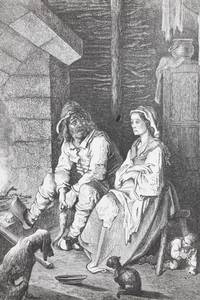
Charles Perrault Contes Le Petit Poucet ""Tu vois bien que nous ne pouvons plus nourrir nos enfants"" - Gravure originale sur bois debout tirée sur chine et contrecollée sur vergé de Hollande
Paris: Hetzel 1862. Fine. Hetzel Paris 1862 29.90 x 42.10 cm une feuille Original wood engraving on end-grain wood signed in the plate by the artist and engraver. Composition created by Gustave Doré and engraved on China paper and mounted on Holland laid paper at the request of publisher Hetzel to illustrate his folio edition of Perrault's Contes in 1862. A pale marginal dampstain not touching the image as well as a discreet black spot in the center of the engraving. These illustrations of the Contes are considered the most successful of this text: Gustave Doré offers an unprecedented dramatic vision. With him everything contributes to the dramatization of the tale from the theatrical staging of the tableau to the smallest details that generate terrifying realism through the technique known as ""tinted wood"". He uses India ink or gouache previously diluted as required by the ""wash"" technique. For Perrault's tales the eleven finest engravers of the period were enlisted to engrave with burin the forty wood blocks: Pannemaker Pisan Pierdon Maurand Boetzel Brevière Hébert Deschamps Dumont Delduc and Fagnon. Gustave Doré's work in the context of illustrating the Contes is paramount; he does not reduce engraving to its ornamental function but transforms it into a true object of narration. These illustrations are Doré's most famous works and immediately received enthusiastic reviews notably that of Sainte-Beuve in Les Nouveaux lundis 23 December 1861: ""Un Perrault comme il n'y en eut jamais jusqu'ici et comme il ne s'en verra plus. . Je ne puis que dire que ces dessins me semblent fort beaux d'un tour riche et opulent qu'ils ont un caractère grandiose qui renouvelle l'aspect de ces humbles contes et leur rend de leur premier merveilleux antérieur à Perrault même."" ""A Perrault such as there never was until now and such as there will never be again. . I can only say that these drawings seem very beautiful to me of a rich and opulent turn that they have a grandiose character that renews the aspect of these humble tales and restores to them their original wonder that predates Perrault himself."" Hetzel unknown
Referenz des Buchhändlers : 79636
|
|
|
Gustave DORE
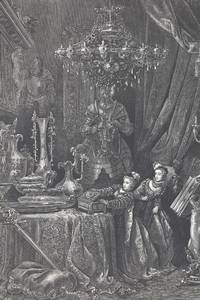
Charles Perrault Contes La Barbe bleue ""Les voisines & les amies tant elles avaient d'impatience de voir toutes les richesses de sa maison"" - Gravure originale sur bois debout tirée sur chine et contrecollée sur vergé de Hollande
Paris: Hetzel 1862. Fine. Hetzel Paris 1862 29.90 x 42.10 cm une feuille Original wood engraving signed on the plate by the artist and engraver. Composition created by Gustave Doré and engraved on China paper and mounted on laid Holland paper at the request of publisher Hetzel to illustrate his folio edition of Perrault's Contes in 1862. Small fold to lower right corner not affecting the engraving and occasional light worming to margin. These illustrations of the Contes are considered the most successful of this text: Gustave Doré presents an unprecedented dramatic vision. With him everything contributes to the dramatization of the tale from the theatrical staging of the scene to the smallest details that generate terrifying realism through the technique known as ""tinted wood"". He uses India ink or gouache previously diluted as required by the ""wash"" technique. For Perrault's tales the eleven best engravers of the time were employed to engrave with burin the forty wooden plates: Pannemaker Pisan Pierdon Maurand Boetzel Brevière Hébert Deschamps Dumont Delduc and Fagnon. Gustave Doré's work in illustrating the Contes is paramount; he does not reduce engraving to its ornamental function but transforms it into a true object of narration. These illustrations are Doré's most famous works and immediately received enthusiastic criticism notably that of Sainte-Beuve in Les Nouveaux lundis December 23 1861: ""Un Perrault comme il n'y en eut jamais jusqu'ici et comme il ne s'en verra plus. . Je ne puis que dire que ces dessins me semblent fort beaux d'un tour riche et opulent qu'ils ont un caractère grandiose qui renouvelle l'aspect de ces humbles contes et leur rend de leur premier merveilleux antérieur à Perrault même."" ""A Perrault like there never was before and as will never be seen again. . I can only say that these drawings seem very beautiful to me of a rich and opulent turn that they have a grandiose character that renews the aspect of these humble tales and restores to them their original marvelous quality that existed before Perrault himself."" Hetzel unknown
Referenz des Buchhändlers : 79671
|
|
|
Gustave DORE
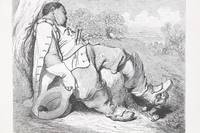
Charles Perrault Contes Le Petit Poucet ""Le Petit Poucet s'étant approché de l'ogre lui tira doucement ses bottes"" - Gravure originale sur bois debout tirée sur chine et contrecollée sur vergé de Hollande
Paris: Hetzel 1862. Fine. Hetzel Paris 1862 29.90 x 42.10 cm une feuille Original wood engraving signed in the plate by the artist and engraver. Composition created by Gustave Doré and engraved on China paper and mounted on Dutch laid paper at the request of publisher Hetzel to illustrate his folio edition of Perrault's Contes in 1862. A light marginal dampstain not affecting the design as well as some foxing in the margin. These illustrations of the Contes are considered the most successful of this text: Gustave Doré offers an unprecedented dramatic vision. With him everything contributes to the dramatization of the tale from the theatrical staging of the tableau to the smallest details that generate terrifying realism through the technique known as ""tinted wood."" He uses India ink or gouache previously diluted as required by the ""wash"" technique. For Perrault's tales the eleven best engravers of the time were enlisted to engrave the forty wood plates with the burin: Pannemaker Pisan Pierdon Maurand Boetzel Brevière Hébert Deschamps Dumont Delduc and Fagnon. Gustave Doré's work in illustrating the Contes is essential; he does not reduce engraving to its ornamental function but transforms it into a true object of narration. These illustrations are Doré's most famous works and immediately received enthusiastic reviews notably that of Sainte-Beuve in Les Nouveaux lundis December 23 1861: ""Un Perrault comme il n'y en eut jamais jusqu'ici et comme il ne s'en verra plus. . Je ne puis que dire que ces dessins me semblent fort beaux d'un tour riche et opulent qu'ils ont un caractère grandiose qui renouvelle l'aspect de ces humbles contes et leur rend de leur premier merveilleux antérieur à Perrault même."" ""A Perrault the likes of which has never existed until now and the likes of which will never be seen again. . I can only say that these drawings seem very beautiful to me of a rich and opulent style that they have a grandiose character that renews the aspect of these humble tales and restores to them their first marvelous quality that preceded Perrault himself."" Hetzel unknown
Referenz des Buchhändlers : 79645
|
|
|
Gustave DORE
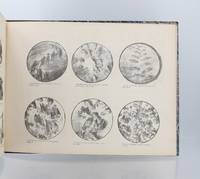
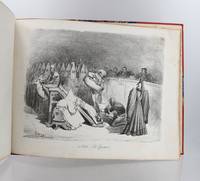
Des-agréments d'un voyage d'agrément
Paris: Féchoz & Letouzey 1860. Fine. Before the golden age of comics the ""Age of Doré"" Féchoz & Letouzey Paris s. d. 1860 36 x 27.50 cm relié Album of lithographed plates in third state first cover printed in 3 tones black bistre with gradients and white highlights followed by 24 lithographs in black on 12 double-sided pages. Gray half calf binding smooth spine some foxing original soft cover preserved binding signed by Charles Septier. Created in 1851 this youthful work influenced by Rodolphe Töppfer's style is now considered an incunabulum of comic strips. Féchoz & Letouzey paperback
Referenz des Buchhändlers : 84302
|
|
|
Gustave DORE
Folies gauloises depuis les Romains jusqu'à nos jours - Album de moeurs et de costumes
s. l.: Au bureau du journal amusant 1859. Fine. From barbarian invasions to the Romantic era : France as seen by its most famous cartoonist Au bureau du journal amusant s. l. s. d. 1859 34.50 x 26.50 cm relié 20 full-page lithographs in black by Gustave Doré in second state. Red half oblong Bradel-style cloth binding smooth spine black morocco title label marbled paper boards beige paper endpapers and flyleaves corners slightly dulled. Au bureau du journal amusant hardcover
Referenz des Buchhändlers : 84308
|
|
|
Gustave DORE - Ernest L'EPINE
Histoire aussi intéressante qu'invraisemblable de l'intrépide capitaine Castagnette neveu de l'homme à la tête de bois
Paris: Hachette & Cie 1872. Fine. Hachette & Cie Paris 1872 22.50 x 31 cm reliure de l'éditeur Third edition. Publisher's full navy blue cloth binding smooth spine faded headcaps lightly rubbed front cover decorated with gilt ornament marbled endpapers and pastedowns corners slightly bumped marbled edges. Work illustrated with 43 wood vignettes by Gustave Doré. Occasional foxing two ink stains in margins of pages 72 and 73. Hachette & Cie hardcover
Referenz des Buchhändlers : 41485

|
|
|
Gustave DORE - Myles Birket FOSTER - Xavier Boniface SAINTINE
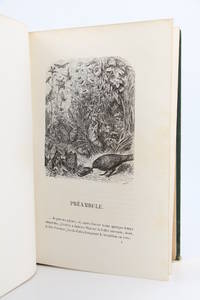
Le chemin des écoliers - Promenade de Paris à Marly-le-Roi en suivant les bords du Rhin
Paris: Hachette & Cie 1861. Fine. Hachette & Cie Paris 1861 15.50 x 24.50 cm relié Illustrated edition with 450 vignettes by Gustave Doré Myles Birket Foster. Half-green shagreen binding spine with four raised bands decorated with gilt quadruple compartments gilt dots at head and foot of spine blind-ruled frame on green cardboard boards white watered silk endpapers and pastedowns all edges gilt contemporary binding. Light discoloration on the boards. Handsome copy despite some minor foxing. Hachette & Cie hardcover
Referenz des Buchhändlers : 85556
|
|
|
Gustave DORE - Honore de BALZAC
Les contes drolatiques colligez es abbayes de Touraine et mis en lumière par le sieur de Balzac pour l'esbattement des pantagruelistes et non aultres
Paris: Garnier frères 1860. Fine. Garnier frères Paris 1860 S.d 13.50 x 20 cm relié Sixth edition and second printing of the 425 compositions by Gustave Doré. ""masterpiece where each vignette is a discovery"" Béradi Full red long-grained morocco binding signed Thivet at the top of the first endpaper. Richly decorated spine with raised bands. Gilt title. Triple gilt ruling on boards. Rich inner gilt border. All edges gilt. Spine slightly faded. Scattered foxing. Superb copy very rare in full binding moreover in full morocco. ""The idea of illustrating these texts had been suggested by the Bibliophile Jacob Paul Lacroix who had been commissioned by Balzac's widow for the philological revision of the text. The illustrations fall within a caricatural and 'droll' vein; they reveal Gustave Doré's immense talent his attraction to landscape and his ease in portraying grotesque characters as well as in capturing burlesque scenes. 'This illustration is like no other in its powerful originality: it is Gaulish Rabelaisian and sparkling with wit. Doré certainly lavished the best of his talent on the Contes drolatiques. They had no success however and the entire edition was marked down. Today it is one of Doré's most sought-after works"" Leblanc. Garnier frères hardcover
Referenz des Buchhändlers : 66252

|
|
|
Gustave DORE
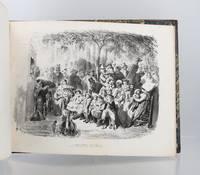
Les différents publics de Paris par Gustave Doré
Paris: Au bureau du journal amusant 1854. Fine. Au bureau du journal amusant Paris S.d 1854 34.50 x 26.50 cm relié Gustave's 'jeunesse Doré' talent's no need of years First edition first printing of this rare album with its precious publisher's lithographed green cover by Belin and twenty original captioned lithographed plates by Gustave Doré. One of Doré's earliest efforts his debut album of illustrations he published at age twenty-two: ""In this album Doré begins to display an unprecedented mastery of comedy and exuberance. We are constantly drawn in by the abundant playfulness of his verve and as Béraldi says 'by a very accurate very witty and yet measured observation'""Henri Leblanc Catalogue de l'oeuvre complète de Gustave Doré. Later olive-green 3/4 Russian morocco binding faded spine light scuffing to the corners marbled pastedowns and endleaves original covers preserved binding signed Ch. Septier. Au bureau du journal amusant unknown
Referenz des Buchhändlers : 84305
|
|
|
Gustave DORE
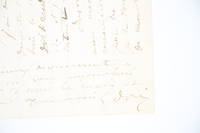
Lettre autographe signée adressée à Paul Dalloz
1874. Fine. 1874 13.20 x 20.70 cm 4 pages sur un double feuillet Autograph letter signed by Gustave Doré addressed to Paul Dalloz. Four pages written in black ink on a double sheet of white paper with envelope. Fine letter full of torment in which Gustave Doré dreads being supported again for the rank of officer in the Legion of Honor he who was made chevalier in 1861 after the publication of Dante's Inferno and thanks to Paul Dalloz's intervention. Doré thanks him moreover for this past influence: ""Je viens te remercier encore et du plus profond de mon cur de l'amitié toute dévouée que vous m'avez témoignée dans ces dernières circonstances ; et je t'assure que je te conserve pour ce fait des sentiments aussi reconnaissants que pour le service que tu m'as si spontanément et cordialement rendu il y douze ans."" ""I come to thank you again and from the depths of my heart for the devoted friendship you have shown me in these recent circumstances; and I assure you that I preserve for this fact feelings as grateful as for the service you rendered me so spontaneously and cordially twelve years ago."" He nevertheless asks him not to propose him for the rank of officer: ""Mais je viens réclamer de toi les mêmes amitiés te priant te suppliant même de t'arrêter complétement et absolument ce qui je n'en doute pas te coûtera plus encore qu'autre chose. J'ai beaucoup pensé à tout ce que tu m'as dit hier et je trouve que je me suis trompé tout à fait en te laissant t'engager si obligeamment dans ces démarches."" ""But I come to claim from you the same friendships asking you even begging you to stop completely and absolutely which I do not doubt will cost you more than anything else. I have thought much about everything you told me yesterday and I find that I was quite wrong to let you engage so obligingly in these steps."" Gustave Doré was nevertheless appointed officer of the Legion of Honor on January 15 1879.through Paul Dalloz's intervention. unknown
Referenz des Buchhändlers : 77339
|
|
|
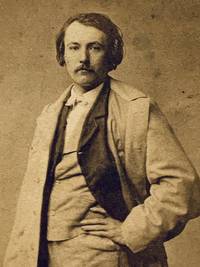
Gustave DORE - Pierre PETIT
PHOTOGRAPHIE Portrait photographique de Gustave Doré
Paris: Pierre Petit 1860. Fine. Pierre Petit Paris 1860 Ca 5.80 x 10.30 cm une photographie Original albumen photograph in carte-de-visite format mounted on Pierre Petit cardboard mount with his mark on the reverse. Full-length portrait of Gustave Doré dressed in white around age 30 with mustache. Very rare photograph of the painter in his youth. Manuscript annotation on the reverse. The Musée d'Orsay holds a photograph of Doré by Pierre Petit from the same period but the artist wears a black velvet waistcoat a black coat hands in pockets. Pierre Petit unknown
Referenz des Buchhändlers : 73056
|
|
|
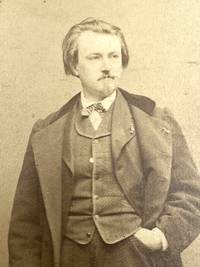
Gustave DORE - Etienne CARJAT
PHOTOGRAPHIE Portrait photographique de Gustave Doré
Paris: Carjat et Cie 1865. Fine. Carjat et Cie Paris 1865 ca 6 x 10.70 cm une photographie Original albumen photograph carte-de-visite format mounted on card with photographer's stamp on verso and lower margin. Full-length standing portrait of Gustave Doré dressed in white around age 35 wearing moustache and goatee. Very rare photograph of the painter in his youth who was roughly the same age as Carjat. The painter with an absent and detached air almost melancholy in a very dandy pose holds a cigar in his right hand with his left hand slipped into his trouser pocket. Fine print. A copy held by the Musée Carnavalet in Paris but in a much darker tonality. Carjat et Cie unknown
Referenz des Buchhändlers : 82913
|
|
|
Gustave DROZ
Entre nous
Paris: J.Hetzel 1867. Fine. J.Hetzel Paris 1867 11.50 x 18.50 cm relié First edition. Half navy blue morocco binding with corners spine with five raised bands decorated with gilt fleurons two bands with small tears marbled paper boards marbled endpapers and pastedowns top edge gilt elegant unsigned binding. Occasional foxing. Handsome copy attractively bound. J.Hetzel hardcover
Referenz des Buchhändlers : 49651

|
|

 Per e-mail erhalten
 Als pdf-Dokument herunterladen
 RSS feed
 Permanenter link


