|
Benesch, Ladislaus, Edler von
Old lamps of central Europe and other lightning devices. Translated and edited by Leroy Thwing
xii, 34 p. illus., plates. 28 cm. Hardcover Very good condition good d.j.
|
|
|
Benezit, E
Dictionnaire Des Peintres Sculpteurs Dessinateurs Et Graveurs - Tome 13 Nouvelle Édition 1999
Paris France: Gründ 1999. Appears unread. Fine condition. NOT a library discard. Sharp corners. NO owner's name or bookplate. Pages are fresh crisp clean and unmarked - apparently never read. Dictionnaire critique et documentaire Des Peintres Sculpteurs Dessinateurs Et Graveurs - Tome 13 Nouvelle Édition 1999. Volume 13 only covering SOLIMENA - VALENTIN in the alphabet. Text in French. Bound in the original dark red cloth stamped in bright gold on the spine and front cover. . Nouvelle Édition. Hardcover. Fine condition/No dust jacket. Thick 8vo. 959pp. Great Packaging Fast Shipping. Gründ Hardcover
書籍販売業者の参照番号
: 022581
|
|
|
Benfield, Thomas; White, Thomas the elder; White, Thomas the younger
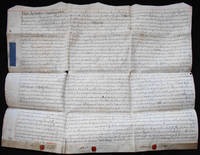
1 handwritten parchment deed for land in the Parish of Cheltenham Gloustershire England
1755. Very Good. Handwritten parchment deed folded. On 2 Aug. 1755 a quadrupartite deed involving #1 Thomas Benfield of Cheltenham in Gloucester County innholder; #2 Thomas White the elder of the same place yeoman and Thomas White the younger of the parish of Cheltenham yeoman; #3 John Ellis of the city of Gloucester ironmonger; and #4 Daniel Cooke of Cheltenham of the city of Gloucester tallowchandler. Relates to about 6 acres of land in the parish of Cheltenham. Signed by Thomas Benfield and both Thomas Whites each with a wax seal. Six blue 6-pence stamps along one side; one GR 248 stamp on the outside. In Very Good Condition: separation at one fold with minor loss; light soiling; solid. unknown
書籍販売業者の参照番号
: 008307
|
|
|
Bengamin Gayelord HAUSER
Beauté à la carte
Paris: Buchet-Chastel 1961. Fine. Buchet-Chastel Paris 1961 14 x 23 cm relié First edition of the French translation of which there were no deluxe copies a Service de Presse advance copy. Half turquoise sheep binding with corners spine slightly faded with four fine raised bands marbled paper boards blue paper endpapers and pastedowns covers and spine preserved. Rare signed autograph inscription by the author in English. Buchet-Chastel hardcover
書籍販売業者の参照番号
: 35045

|
|
|
BENGE, Raymond A "Ray" (1902-97)
Signature
This pitcher debuted in 1925 with the Cleveland Indians until 1926 also playing for the Philadelphia Phillies 1928-32 1936 Brooklyn Dodgers 1933-35 Boston Braves 1936 and Cincinnati Reds 1938. Bold signature in blue ballpoint heavy stock 5" X 3" card n.p. n.y. Near fine. Large and nice late life example. unknown
書籍販売業者の参照番号
: 24789

|
|
|
Bengesco, Georges and Jean Malcolm (Voltaire)
Voltaire. Bibliographie de ses oeuvres with Table de la bibliographie de Voltaire.
Paris: Emile Perrin 1882-1890. Five volumes bound in three complete with the supplement issued in 1953. FIRST and only non-reprint EDITION OF THE MONUMENTAL BIBLIOGRAPHY OF VOLTAIRE. Thousands of items described in great detail. Engraved frontispieces. Edition limited to 550 numbered sets of which this is one of 500 on good wove paper. Large 8vos. Attractively bound in recent cloth leather spine labels. ENTIRELY UNCUT. Original wraps bound in. Light foxing else an excellent set. Supplement in wraps. Scarce and important. <br/><br/> Paris: Emile Perrin, 1882-1890 paperback
書籍販売業者の参照番号
: 3213
|
|
|
Bengston, Billy Al
Puerto Escondido Watercolor Suite 1977
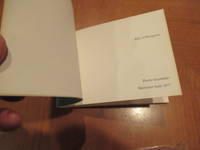
Los Angeles: Art Catalogues 1977. First Edition . Green Printed Wrappers. Fine/No Dust Jacket. 5 3/4" x 4 1/4. Frontispiece Portrait; 20 Color Plates. 62 Pp. One Of A Stated Printing Of 3000 Copies Printed For The Showing At The James Corcoran Gallery In 1977. Author Chronology And Bibliographyy At End. This Example Warmly Inscribed By Bengston To An Art Professor And His Wife An Art Teacher "For . And . / Con Amour/ B. A. B. / J.L. E. ______________________ Ac / 5 22 77" The Whole Laid Out As A Constructed Design In Four Lines Across The Top Of The First Blank Page. A Particularly Special Inscription For An Item Which Is Scarce Perhaps Becaue Of Its Small Size And Seldom Found Signed. <br/> <br/> Art Catalogues unknown
書籍販売業者の参照番号
: 018947
|
|
|
Benigno CACARES
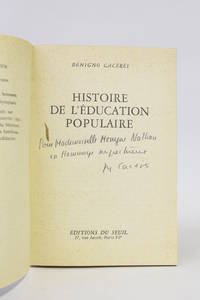
Histoire de l'éducation populaire
Paris: Seuil 1964. Fine. Seuil Paris 1964 12 x 17.50 cm broché First edition an advance service de presse copy. Autograph inscription from Benigno Cacérès to Monique Nathan. Seuil unknown
書籍販売業者の参照番号
: 56774
|
|
|
BENINGFIELD (illus) Gordon
Beningfield's English Landscape. SIGNED BY THE AUTHOR
Viking 1985. Oblong 4to. First Edition with a coloured frontispiece numerous coloured illustrations the majority full-page throughout and pictorial endpapers; boards gilt back a fine copy in the dustwrapper. WITH THE AUTHOR'S SIGNED HOLOGRAPH PRESENTATION INSCRIPTION ON TITLE. Viking, hardcover
書籍販売業者の参照番号
: 32467

|
|
|
BENITO
Enfin le voici ! pl.20 La Gazette du Bon ton 1921 n°3
Paris: Lucien Vogel éditeur 1921. Fine. Lucien Vogel éditeur Paris 1921 18 x 24 cm une feuille Original color print heightened with gold printed on vergé paper signed in plate. An original print used to illustrate the Gazette du bon ton one of the most attractive and influential 20th century fashion magazines featuring the talents of French artists and other contributors from the burgeoning Art Deco movement. A celebrated fashion magazine established in 1912 by Lucien Vogel La Gazette du bon ton appeared until 1925 with a hiatus from 1915 to 1920 due to the war the editor-in-chief having been called up for service. It consisted of 69 issues printed in only 2000 copies each and notably illustrated with 573 color plates and 148 sketches of the models of the great designers. Right from the start this sumptuous publication was aimed at bibliophiles and fashionable society Françoise Tétart-Vittu La Gazette du bon ton in Dictionnaire de la mode 2016 and was printed on fine vergé paper using a type cut specially for the magazine by Georges Peignot known as Cochin later used in 1946 by Christian Dior. The prints were made using stencils heightened in colors some highlighted in gold or palladium. The story began in 1912 when Lucien Vogel a man of the world involved in fashion he had already been part of the fashion magazine Femina decided with his wife Cosette de Brunhoff the sister of Jean creator of Babar to set up the Gazette du bon ton subtitled at the time: Art fashion frivolities. Georges Charensol noted the reasoning of the editor-in-chief: In 1910 he observed there was no really artistic fashion magazine nothing representative of the spirit of the time. My dream was therefore to make a luxury magazine with truly modern artists
I was assured of success because when it comes to fashion no country on earth can compete with France. Un grand éditeur dart. Lucien Vogel in Les Nouvelles littéraires no. 133 May 1925. The magazine was immediately successful not only in France but also in the United States and Latin America. At first Vogel put together a team of seven artists: André-Édouard Marty and Pierre Brissaud followed by Georges Lepape and Dammicourt as well as eventually his friends from school and the School of Fine Arts like George Barbier Bernard Boutet de Monvel and Charles Martin. Other talented people soon came flocking to join the team: Guy Arnoux Léon Bakst Benito Boutet de Monvel Umberto Brunelleschi Chas Laborde Jean-Gabriel Domergue Raoul Dufy Édouard Halouze Alexandre Iacovleff Jean Émile Laboureur Charles Loupot Chalres Martin Maggie Salcedo. These artist mostly unknown when Lucien Vogel sought them out later became emblematic and sought-after artistic figures. It was also they who worked on the advertising drawings for the Gazette. The plates put the spotlight on and celebrate dresses by seven designers of the age: Lanvin Doeuillet Paquin Poiret Worth Vionnet and Doucet. The designers provided exclusive models for each issue. Nonetheless some of the illustrations are not based on real models but simply on the illustrators conception of the fashion of the day. The Gazette du bon ton was an important step in the history of fashion. Combining aesthetic demands with the physical whole it brought together for the first time the great talents of the artistic literary and fashion worlds; and imposed through this alchemy a completely new image of women: slender independent and daring which was shared by the new generation of designers including Coco Chanel Jean Patou Marcel Rochas and so on
Taken over in 1920 by Condé Montrose Nast the Gazette du bon ton was an important influence on the new layout and aesthetics of that little dying paper that Nast had bought a few years earlier: Vogue. Lucien Vogel éditeur unknown
書籍販売業者の参照番号
: 54856

|
|
|
BENITO
Enfin le voici ! pl.20 La Gazette du Bon ton 1921 n°3
Paris: Lucien Vogel éditeur 1921. Fine. Lucien Vogel éditeur Paris 1921 18 x 24 cm une feuille original print finely enhanced color to gold printed on laid paper signed lower right of the board. Original content produced for the illustration of The Gazette fashionable one of the finest and most influential twentieth century fashion magazines celebrating the talent of creators and artists French burgeoning art deco. Famous fashion magazine founded in 1912 by Lucien Vogel The Gazette fashionable appeared until 1925 with an interruption during the War of 1915 to 1920 due to mobilization of its editor. She is 69 Deliveries from just 2000 copies and is illustrated including 573 color plates and 148 sketches depicting models of fashion designers. Upon publication these luxury publications ""are for bibliophiles and worldly aesthetes"" Françoise Tétart-Vittu ""good Gazette of tone"" in the fashion dictionary 2016. Printed on fine laid paper they use a typeface created specifically for the magazine by Georges Peignot the Cochin character taken in 1946 by Christian Dior. The prints are made with the technique of metal stencil enhanced color and some outlined in gold or palladium. The adventure began in 1912 when Lucien Vogel man of the world and fashion - it has already participated in Femina magazine - decided to found with his wife Cosette de Brunhoff John's sister the father of Babar Gazette good tone in which the subtitle is then ""Art fashions and frivolities."" Georges Charensol quotes the editor: ""In 1910 he observed there was no truly artistic fashion magazine and representative of the spirit of his time. So I thought of making a glossy magazine with truly modern artists . I was certain of success because no country for fashion can compete with France. """" A great art editor. Lucien Vogel ""in Literary News No. 133 May 1925. The success of the magazine is immediate not only in France but also the US and South America. Originally Vogel therefore brings together a group of seven artists: André-Édouard Marty and Pierre Brissaud followed by Georges Lepape and Dammicourt; and finally his friends from the School of Fine Arts as are George Barbier Bernard Boutet de Monvel or Charles Martin. Other talents come quickly reach the equipped Guy Arnoux Léon Bakst Benito Boutet de Monvel Umberto Brunelleschi Chas Laborde Jean-Gabriel Domergue Raoul Dufy Edward Halouze Alexander Iacovleff Jean Emile Laboureur Charles Loupot Charles Martin Maggie Salcedo. These artists mostly unknown when Lucien Vogel appealed to them will eventually become iconic figures and artistic sought. These are the same illustrators who make the drawings advertisements Gazette. The boards highlight the dresses and sublime seven artists of the time: Lanvin Doeuillet Paquin Poiret Worth Vionnet and Doucet. The designers provide for each number of exclusive models. Nevertheless some of Illustrations contained no real model but only the idea that the illustrator is done in the fashion of the day. Gazette fashionable is a milestone in the history of fashion. Combining the aesthetic requirement and plastic unit it brings together for the first time the great talents of the world of arts literature and fashion and imposed by this alchemy a new image of women slender independent and bold also driven by the new generation of designers Coco Chanel Jean Patou Rochas Marcel . Recovery in 1920 by Condé Montrose Nast Gazette fashionable modeled for the new composition and the aesthetic choices of the ""little dying newspaper"" that Nast had bought a few years ago: the Vogue magazine. Lucien Vogel éditeur hardcover
書籍販売業者の参照番号
: 57593

|
|
|
BENITO
Enfin le voici ! La Gazette du Bon ton n°3. Année 1921 - Planche 20
Paris: Lucien Vogel éditeur 1921. Fine. Lucien Vogel éditeur Paris 1921 19.50 x 25 cm une feuille Original color print printed on vergé paper signed in the plate. An original print used to illustrate the Gazette du bon ton one of the most attractive and influential 20th century fashion magazines featuring the talents of French artists and other contributors from the burgeoning Art Deco movement. A celebrated fashion magazine established in 1912 by Lucien Vogel La Gazette du bon ton appeared until 1925 with a hiatus from 1915 to 1920 due to the war the editor-in-chief having been called up for service. It consisted of 69 issues printed in only 2000 copies each and notably illustrated with 573 color plates and 148 sketches of the models of the great designers. Right from the start this sumptuous publication was aimed at bibliophiles and fashionable society Françoise Tétart-Vittu La Gazette du bon ton in Dictionnaire de la mode 2016 and was printed on fine vergé paper using a type cut specially for the magazine by Georges Peignot known as Cochin later used in 1946 by Christian Dior. The prints were made using stencils heightened in colors some highlighted in gold or palladium. The story began in 1912 when Lucien Vogel a man of the world involved in fashion he had already been part of the fashion magazine Femina decided with his wife Cosette de Brunhoff the sister of Jean creator of Babar to set up the Gazette du bon ton subtitled at the time: Art fashion frivolities. Georges Charensol noted the reasoning of the editor-in-chief: In 1910 he observed there was no really artistic fashion magazine nothing representative of the spirit of the time. My dream was therefore to make a luxury magazine with truly modern artists
I was assured of success because when it comes to fashion no country on earth can compete with France. Un grand éditeur dart. Lucien Vogel in Les Nouvelles littéraires no. 133 May 1925. The magazine was immediately successful not only in France but also in the United States and Latin America. At first Vogel put together a team of seven artists: André-Édouard Marty and Pierre Brissaud followed by Georges Lepape and Dammicourt as well as eventually his friends from school and the School of Fine Arts like George Barbier Bernard Boutet de Monvel and Charles Martin. Other talented people soon came flocking to join the team: Guy Arnoux Léon Bakst Benito Boutet de Monvel Umberto Brunelleschi Chas Laborde Jean-Gabriel Domergue Raoul Dufy Édouard Halouze Alexandre Iacovleff Jean Émile Laboureur Charles Loupot Chalres Martin Maggie Salcedo. These artist mostly unknown when Lucien Vogel sought them out later became emblematic and sought-after artistic figures. It was also they who worked on the advertising drawings for the Gazette. The plates put the spotlight on and celebrate dresses by seven designers of the age: Lanvin Doeuillet Paquin Poiret Worth Vionnet and Doucet. The designers provided exclusive models for each issue. Nonetheless some of the illustrations are not based on real models but simply on the illustrators conception of the fashion of the day. The Gazette du bon ton was an important step in the history of fashion. Combining aesthetic demands with the physical whole it brought together for the first time the great talents of the artistic literary and fashion worlds; and imposed through this alchemy a completely new image of women: slender independent and daring which was shared by the new generation of designers including Coco Chanel Jean Patou Marcel Rochas and so on
Taken over in 1920 by Condé Montrose Nast the Gazette du bon ton was an important influence on the new layout and aesthetics of that little dying paper that Nast had bought a few years earlier: Vogue. Lucien Vogel éditeur unknown
書籍販売業者の参照番号
: 39011

|
|
|
BENITO
La Fourrure blanche. Manteau pour la Côte d'Azur pl.10 La Gazette du Bon ton 1922 n°2
Paris: Lucien Vogel éditeur 1922. Fine. Lucien Vogel éditeur Paris 1922 18 x 24 cm une feuille Original color print printed on vergé paper signed in the plate. An original print used to illustrate the Gazette du bon ton one of the most attractive and influential 20th century fashion magazines featuring the talents of French artists and other contributors from the burgeoning Art Deco movement. A celebrated fashion magazine established in 1912 by Lucien Vogel La Gazette du bon ton appeared until 1925 with a hiatus from 1915 to 1920 due to the war the editor-in-chief having been called up for service. It consisted of 69 issues printed in only 2000 copies each and notably illustrated with 573 color plates and 148 sketches of the models of the great designers. Right from the start this sumptuous publication was aimed at bibliophiles and fashionable society Françoise Tétart-Vittu La Gazette du bon ton in Dictionnaire de la mode 2016 and was printed on fine vergé paper using a type cut specially for the magazine by Georges Peignot known as Cochin later used in 1946 by Christian Dior. The prints were made using stencils heightened in colors some highlighted in gold or palladium. The story began in 1912 when Lucien Vogel a man of the world involved in fashion he had already been part of the fashion magazine Femina decided with his wife Cosette de Brunhoff the sister of Jean creator of Babar to set up the Gazette du bon ton subtitled at the time: Art fashion frivolities. Georges Charensol noted the reasoning of the editor-in-chief: In 1910 he observed there was no really artistic fashion magazine nothing representative of the spirit of the time. My dream was therefore to make a luxury magazine with truly modern artists
I was assured of success because when it comes to fashion no country on earth can compete with France. Un grand éditeur dart. Lucien Vogel in Les Nouvelles littéraires no. 133 May 1925. The magazine was immediately successful not only in France but also in the United States and Latin America. At first Vogel put together a team of seven artists: André-Édouard Marty and Pierre Brissaud followed by Georges Lepape and Dammicourt as well as eventually his friends from school and the School of Fine Arts like George Barbier Bernard Boutet de Monvel and Charles Martin. Other talented people soon came flocking to join the team: Guy Arnoux Léon Bakst Benito Boutet de Monvel Umberto Brunelleschi Chas Laborde Jean-Gabriel Domergue Raoul Dufy Édouard Halouze Alexandre Iacovleff Jean Émile Laboureur Charles Loupot Chalres Martin Maggie Salcedo. These artist mostly unknown when Lucien Vogel sought them out later became emblematic and sought-after artistic figures. It was also they who worked on the advertising drawings for the Gazette. The plates put the spotlight on and celebrate dresses by seven designers of the age: Lanvin Doeuillet Paquin Poiret Worth Vionnet and Doucet. The designers provided exclusive models for each issue. Nonetheless some of the illustrations are not based on real models but simply on the illustrators conception of the fashion of the day. The Gazette du bon ton was an important step in the history of fashion. Combining aesthetic demands with the physical whole it brought together for the first time the great talents of the artistic literary and fashion worlds; and imposed through this alchemy a completely new image of women: slender independent and daring which was shared by the new generation of designers including Coco Chanel Jean Patou Marcel Rochas and so on
Taken over in 1920 by Condé Montrose Nast the Gazette du bon ton was an important influence on the new layout and aesthetics of that little dying paper that Nast had bought a few years earlier: Vogue. Lucien Vogel éditeur unknown
書籍販売業者の参照番号
: 54960

|
|
|
BENITO
Les Quatre bouquets. Robe du soir garnie de fleurs. La Gazette du Bon ton n°7 - Année 1920. Planche 50
Paris: Lucien Vogel éditeur 1920. Fine. Lucien Vogel éditeur Paris circa 1920 19.50 x 25 cm une feuille Original color print printed on vergé paper signed in the plate. An original print used to illustrate the Gazette du bon ton one of the most attractive and influential 20th century fashion magazines featuring the talents of French artists and other contributors from the burgeoning Art Deco movement. A celebrated fashion magazine established in 1912 by Lucien Vogel La Gazette du bon ton appeared until 1925 with a hiatus from 1915 to 1920 due to the war the editor-in-chief having been called up for service. It consisted of 69 issues printed in only 2000 copies each and notably illustrated with 573 color plates and 148 sketches of the models of the great designers. Right from the start this sumptuous publication was aimed at bibliophiles and fashionable society Françoise Tétart-Vittu La Gazette du bon ton in Dictionnaire de la mode 2016 and was printed on fine vergé paper using a type cut specially for the magazine by Georges Peignot known as Cochin later used in 1946 by Christian Dior. The prints were made using stencils heightened in colors some highlighted in gold or palladium. The story began in 1912 when Lucien Vogel a man of the world involved in fashion he had already been part of the fashion magazine Femina decided with his wife Cosette de Brunhoff the sister of Jean creator of Babar to set up the Gazette du bon ton subtitled at the time: Art fashion frivolities. Georges Charensol noted the reasoning of the editor-in-chief: In 1910 he observed there was no really artistic fashion magazine nothing representative of the spirit of the time. My dream was therefore to make a luxury magazine with truly modern artists
I was assured of success because when it comes to fashion no country on earth can compete with France. Un grand éditeur dart. Lucien Vogel in Les Nouvelles littéraires no. 133 May 1925. The magazine was immediately successful not only in France but also in the United States and Latin America. At first Vogel put together a team of seven artists: André-Édouard Marty and Pierre Brissaud followed by Georges Lepape and Dammicourt as well as eventually his friends from school and the School of Fine Arts like George Barbier Bernard Boutet de Monvel and Charles Martin. Other talented people soon came flocking to join the team: Guy Arnoux Léon Bakst Benito Boutet de Monvel Umberto Brunelleschi Chas Laborde Jean-Gabriel Domergue Raoul Dufy Édouard Halouze Alexandre Iacovleff Jean Émile Laboureur Charles Loupot Chalres Martin Maggie Salcedo. These artist mostly unknown when Lucien Vogel sought them out later became emblematic and sought-after artistic figures. It was also they who worked on the advertising drawings for the Gazette. The plates put the spotlight on and celebrate dresses by seven designers of the age: Lanvin Doeuillet Paquin Poiret Worth Vionnet and Doucet. The designers provided exclusive models for each issue. Nonetheless some of the illustrations are not based on real models but simply on the illustrators conception of the fashion of the day. The Gazette du bon ton was an important step in the history of fashion. Combining aesthetic demands with the physical whole it brought together for the first time the great talents of the artistic literary and fashion worlds; and imposed through this alchemy a completely new image of women: slender independent and daring which was shared by the new generation of designers including Coco Chanel Jean Patou Marcel Rochas and so on
Taken over in 1920 by Condé Montrose Nast the Gazette du bon ton was an important influence on the new layout and aesthetics of that little dying paper that Nast had bought a few years earlier: Vogue. Lucien Vogel éditeur unknown
書籍販売業者の参照番号
: 43220
|
|
|
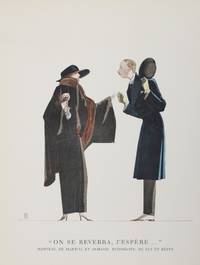
BENITO - (MARTIAL & ARMAND) - (LUS & BEFVE)
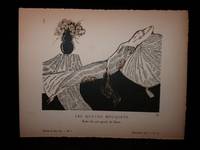
"On se reverra j'espère."" Manteau de Martial et Armand. Redingotte de Lus et Befve pl.58 La Gazette du Bon ton 1922 n°8
Paris: Lucien Vogel éditeur 1922. Fine. Lucien Vogel éditeur Paris 1922 18 x 24 cm une feuille Original color print printed on laid paper signed in the lower left of the plate. La Gazette du bon ton one of the most beautiful and influential fashion magazines of the 20th century celebrating the talent of French creators and artists in the full flowering of Art Deco. Famous fashion magazine founded in 1912 by Lucien Vogel La Gazette du bon ton appeared until 1925 with an interruption during the War from 1915 to 1920 due to the mobilization of its editor-in-chief. It consists of 69 issues printed in only 2000 copies and is illustrated notably with 573 color plates and 148 sketches representing models by great couturiers. From their publication these luxurious publications ""addressed bibliophiles and worldly aesthetes"" Françoise Tétart-Vittu ""La Gazette du bon ton"" in Dictionnaire de la mode 2016. Printed on beautiful laid paper they use a typeface specially created for the magazine by Georges Peignot the Cochin character adopted in 1946 by Christian Dior. The prints are made using the metallic stencil technique enhanced in colors and some highlighted in gold or palladium. The adventure begins in 1912 when Lucien Vogel man of the world and fashion - he had already participated in the magazine Femina - decides to found with his wife Cosette de Brunhoff sister of Jean the father of Babar La Gazette du bon ton whose subtitle was then ""Art modes et frivolités"". Georges Charensol reports the words of the editor-in-chief: ""In 1910 he observes there existed no fashion journal that was truly artistic and representative of the spirit of its time. I was therefore thinking of making a luxury magazine with truly modern artists . I was certain of success because for fashion no country can rival France."" ""Un grand éditeur d'art. Lucien Vogel"" in Les Nouvelles littéraires no. 133 May 1925. The magazine's success is immediate not only in France but also in the United States and South America. Originally Vogel therefore brings together a group of seven artists: André-Édouard Marty and Pierre Brissaud followed by Georges Lepape and Dammicourt; and finally his friends from the École des beaux-arts who are George Barbier Bernard Boutet de Monvel or Charles Martin. Other talents quickly come to join the team: Guy Arnoux Léon Bakst Benito Boutet de Monvel Umberto Brunelleschi Chas Laborde Jean-Gabriel Domergue Raoul Dufy Édouard Halouze Alexandre Iacovleff Jean Émile Laboureur Charles Loupot Charles Martin Maggie Salcedo. These artists mostly unknown when Lucien Vogel calls upon them will subsequently become emblematic and sought-after artistic figures. These same illustrators create the drawings for the Gazette's advertisements. The plates highlight and sublimate the dresses of seven creators of the time: Lanvin Doeuillet Paquin Poiret Worth Vionnet and Doucet. The couturiers provide exclusive models for each issue. Nevertheless some of the illustrations feature no real model but only the illustrator's idea of the fashion of the day. La Gazette du bon ton is a decisive step in the history of fashion. Combining aesthetic demands and artistic unity it brings together for the first time the great talents from the worlds of arts letters and fashion and imposes through this alchemy a completely new image of woman slender independent and audacious also carried by the new generation of couturiers Coco Chanel Jean Patou Marcel Rochas. Acquired in 1920 by Condé Montrose Nast La Gazette du bon ton would largely inspire the new composition and aesthetic choices of the ""little dying journal"" that Nast had bought a few years earlier: Vogue magazine. Lucien Vogel éditeur unknown
書籍販売業者の参照番号
: 84737
|
|
|
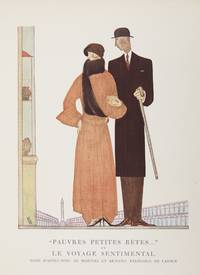
BENITO - (MARTIAL & ARMAND) - LARSEN
"Pauvres petites bêtes."" ou Le Voyage sentimental. Robe d'après-midi de Martial et Armand. Pardessus de Larsen pl.74 La Gazette du Bon ton 1922 n°10
Paris: Lucien Vogel éditeur 1922. Fine. Lucien Vogel éditeur Paris 1922 18 x 24 cm une feuille Original color print on laid paper signed in the lower left of the plate. Original engraving created for the illustration of La Gazette du bon ton one of the most beautiful and influential fashion magazines of the 20th century celebrating the talent of French creators and artists during the flourishing of Art Deco. Famous fashion magazine founded in 1912 by Lucien Vogel La Gazette du bon ton was published until 1925 with an interruption during the War from 1915 to 1920 due to the mobilization of its editor-in-chief. It consists of 69 issues printed in only 2000 copies and is illustrated notably with 573 color plates and 148 sketches representing models by great couturiers. From their publication these luxurious publications ""addressed bibliophiles and worldly aesthetes"" Françoise Tétart-Vittu ""La Gazette du bon ton"" in Dictionnaire de la mode 2016. Printed on fine laid paper they used a typeface specially created for the magazine by Georges Peignot the Cochin character adopted in 1946 by Christian Dior. The prints were created using the metal stencil technique heightened in colors and some highlighted in gold or palladium. The adventure began in 1912 when Lucien Vogel a man of society and fashion - he had already participated in the magazine Femina - decided to found with his wife Cosette de Brunhoff sister of Jean the father of Babar the Gazette du bon ton whose subtitle was then ""Art modes et frivolités"". Georges Charensol reported the words of the editor-in-chief: ""En 1910 observe-t-il il n'existait aucun journal de mode véritablement artistique et représentatif de l'esprit de son époque. Je songeais donc à faire un magazine de luxe avec des artistes véritablement modernes . J'étais certain du succès car pour la mode aucun pays ne peut rivaliser avec la France."" ""In 1910 he observed there was no truly artistic fashion journal representative of the spirit of its time. I therefore thought of making a luxury magazine with truly modern artists . I was certain of success because for fashion no country can rival France."" ""Un grand éditeur d'art. Lucien Vogel"" in Les Nouvelles littéraires n°133 May 1925. The magazine's success was immediate not only in France but also in the United States and South America. Originally Vogel therefore assembled a group of seven artists: André-Édouard Marty and Pierre Brissaud followed by Georges Lepape and Dammicourt; and finally his friends from the École des beaux-arts such as George Barbier Bernard Boutet de Monvel or Charles Martin. Other talents quickly joined the team: Guy Arnoux Léon Bakst Benito Boutet de Monvel Umberto Brunelleschi Chas Laborde Jean-Gabriel Domergue Raoul Dufy Édouard Halouze Alexandre Iacovleff Jean Émile Laboureur Charles Loupot Charles Martin Maggie Salcedo. These artists mostly unknown when Lucien Vogel called upon them would later become emblematic and sought-after artistic figures. These same illustrators created the drawings for the Gazette's advertisements. The plates highlight and sublimate the dresses of seven creators of the era: Lanvin Doeuillet Paquin Poiret Worth Vionnet and Doucet. The couturiers provided exclusive models for each issue. Nevertheless some of the illustrations featured no real model but only the illustrator's idea of the fashion of the day. La Gazette du bon ton is a decisive step in the history of fashion. Combining aesthetic excellence and plastic unity it brought together for the first time the great talents from the worlds of arts letters and fashion and imposed through this alchemy a completely new image of woman slender independent and audacious also carried by the new generation of couturiers Coco Chanel Jean Patou Marcel Rochas. Taken over in 1920 by Condé Montrose Nast the Gazette du bon ton would largely inspire the new composition and aesthetic choices of the ""dying little journal"" that Nast had Lucien Vogel éditeur unknown
書籍販売業者の参照番号
: 84731
|
|
|
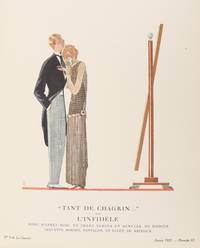
BENITO - (RODIER) - (N KRIEGCK)
"Tant de chagrin."" ou L'Infidèle. Robe d'après-midi en crêpe tchina et agnella de Rodier. Jaquette brodée pantalon et gilet de Kriegck pl.65 La Gazette du Bon ton 1922 n°9
Paris: Lucien Vogel éditeur 1922. Fine. Lucien Vogel éditeur Paris 1922 18 x 24 cm une feuille Original color print very finely heightened with palladium printed on laid paper signed at bottom left of the plate. La Gazette du bon ton one of the most beautiful and influential fashion magazines of the 20th century celebrating the talent of French creators and artists in the full bloom of Art Deco. Famous fashion magazine founded in 1912 by Lucien Vogel La Gazette du bon ton was published until 1925 with an interruption during the War from 1915 to 1920 due to the mobilization of its editor-in-chief. It consists of 69 issues printed in only 2000 copies and is illustrated notably with 573 color plates and 148 sketches representing models by great couturiers. From their publication these luxurious publications ""addressed bibliophiles and worldly aesthetes"" Françoise Tétart-Vittu ""La Gazette du bon ton"" in Dictionnaire de la mode 2016. Printed on beautiful laid paper they use a typeface specially created for the magazine by Georges Peignot the Cochin character adopted in 1946 by Christian Dior. The prints are made using the metal stencil technique heightened in colors and some outlined in gold or palladium. The adventure begins in 1912 when Lucien Vogel man of society and fashion - he had already participated in the magazine Femina - decides to found with his wife Cosette de Brunhoff sister of Jean the father of Babar the Gazette du bon ton whose subtitle was then ""Art modes et frivolités"". Georges Charensol reports the words of the editor-in-chief: ""In 1910 he observes there existed no fashion journal truly artistic and representative of the spirit of its time. I was therefore thinking of making a luxury magazine with truly modern artists . I was certain of success because for fashion no country can rival France."" ""Un grand éditeur d'art. Lucien Vogel"" in Les Nouvelles littéraires n°133 May 1925. The success of the magazine is immediate not only in France but also in the United States and South America. Originally Vogel thus brings together a group of seven artists: André-Édouard Marty and Pierre Brissaud followed by Georges Lepape and Dammicourt; and finally his friends from the École des beaux-arts who are George Barbier Bernard Boutet de Monvel or Charles Martin. Other talents quickly join the team: Guy Arnoux Léon Bakst Benito Boutet de Monvel Umberto Brunelleschi Chas Laborde Jean-Gabriel Domergue Raoul Dufy Édouard Halouze Alexandre Iacovleff Jean Émile Laboureur Charles Loupot Charles Martin Maggie Salcedo. These artists most of them unknown when Lucien Vogel calls upon them would subsequently become emblematic and sought-after artistic figures. These are the same illustrators who create the drawings for the Gazette's advertisements. The plates highlight and sublime the dresses of seven creators of the time: Lanvin Doeuillet Paquin Poiret Worth Vionnet and Doucet. The couturiers provide exclusive models for each issue. Nevertheless some of the illustrations feature no real model but only the idea that the illustrator has of the fashion of the day. La Gazette du bon ton is a decisive step in the history of fashion. Combining aesthetic requirements and plastic unity it brings together for the first time the great talents of the worlds of arts letters and fashion and imposes through this alchemy a completely new image of woman slender independent and audacious also carried by the new generation of couturiers Coco Chanel Jean Patou Marcel Rochas. Taken over in 1920 by Condé Montrose Nast the Gazette du bon ton would largely inspire the new composition and aesthetic choices of the ""little dying journal"" that Nast had bought a few years earlier: Vogue magazine. Lucien Vogel éditeur unknown
書籍販売業者の参照番号
: 84793
|
|
|
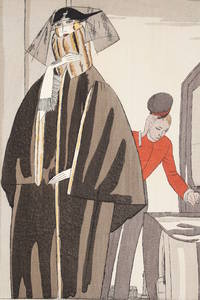
BENITO - (Jeanne LANVIN)
L'Heure du thé. Manteau de fourrure de Jeanne Lanvin pl.51 La Gazette du Bon ton 1920 n°7
Paris: Lucien Vogel éditeur 1920. Fine. Lucien Vogel éditeur Paris Septembre 1920 18 x 24 cm une feuille Original color print printed on vergé paper signed in the plate. An original print used to illustrate the Gazette du bon ton one of the most attractive and influential 20th century fashion magazines featuring the talents of French artists and other contributors from the burgeoning Art Deco movement. A celebrated fashion magazine established in 1912 by Lucien Vogel La Gazette du bon ton appeared until 1925 with a hiatus from 1915 to 1920 due to the war the editor-in-chief having been called up for service. It consisted of 69 issues printed in only 2000 copies each and notably illustrated with 573 color plates and 148 sketches of the models of the great designers. Right from the start this sumptuous publication was aimed at bibliophiles and fashionable society Françoise Tétart-Vittu La Gazette du bon ton in Dictionnaire de la mode 2016 and was printed on fine vergé paper using a type cut specially for the magazine by Georges Peignot known as Cochin later used in 1946 by Christian Dior. The prints were made using stencils heightened in colors some highlighted in gold or palladium. The story began in 1912 when Lucien Vogel a man of the world involved in fashion he had already been part of the fashion magazine Femina decided with his wife Cosette de Brunhoff the sister of Jean creator of Babar to set up the Gazette du bon ton subtitled at the time: Art fashion frivolities. Georges Charensol noted the reasoning of the editor-in-chief: In 1910 he observed there was no really artistic fashion magazine nothing representative of the spirit of the time. My dream was therefore to make a luxury magazine with truly modern artists
I was assured of success because when it comes to fashion no country on earth can compete with France. Un grand éditeur dart. Lucien Vogel in Les Nouvelles littéraires no. 133 May 1925. The magazine was immediately successful not only in France but also in the United States and Latin America. At first Vogel put together a team of seven artists: André-Édouard Marty and Pierre Brissaud followed by Georges Lepape and Dammicourt as well as eventually his friends from school and the School of Fine Arts like George Barbier Bernard Boutet de Monvel and Charles Martin. Other talented people soon came flocking to join the team: Guy Arnoux Léon Bakst Benito Boutet de Monvel Umberto Brunelleschi Chas Laborde Jean-Gabriel Domergue Raoul Dufy Édouard Halouze Alexandre Iacovleff Jean Émile Laboureur Charles Loupot Chalres Martin Maggie Salcedo. These artist mostly unknown when Lucien Vogel sought them out later became emblematic and sought-after artistic figures. It was also they who worked on the advertising drawings for the Gazette. The plates put the spotlight on and celebrate dresses by seven designers of the age: Lanvin Doeuillet Paquin Poiret Worth Vionnet and Doucet. The designers provided exclusive models for each issue. Nonetheless some of the illustrations are not based on real models but simply on the illustrators conception of the fashion of the day. The Gazette du bon ton was an important step in the history of fashion. Combining aesthetic demands with the physical whole it brought together for the first time the great talents of the artistic literary and fashion worlds; and imposed through this alchemy a completely new image of women: slender independent and daring which was shared by the new generation of designers including Coco Chanel Jean Patou Marcel Rochas and so on
Taken over in 1920 by Condé Montrose Nast the Gazette du bon ton was an important influence on the new layout and aesthetics of that little dying paper that Nast had bought a few years earlier: Vogue. Lucien Vogel éditeur unknown
書籍販売業者の参照番号
: 54793
|
|
|
BENITO - (Gustave BEER) - (LARSEN)
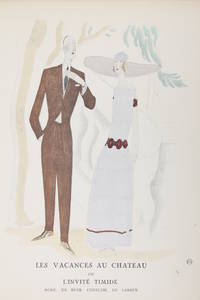
Les Vacances au Château ou l'invité timide. Robe de Beer. Costume de Larsen pl.51 La Gazette du Bon ton 1922 n°7
Paris: Lucien Vogel éditeur 1922. Fine. Lucien Vogel éditeur Paris 1922 18 x 24 cm une feuille Original color print printed on laid paper signed lower right on the plate. La Gazette du bon ton one of the most beautiful and influential fashion magazines of the 20th century celebrating the talent of French creators and artists at the height of the Art Deco movement. The famous fashion magazine founded in 1912 by Lucien Vogel La Gazette du bon ton was published until 1925 with an interruption during the War from 1915 to 1920 due to the mobilization of its editor-in-chief. It consists of 69 issues printed in only 2000 copies and is illustrated notably with 573 color plates and 148 sketches representing models by great couturiers. From their publication these luxurious publications ""address bibliophiles and worldly aesthetes"" Françoise Tétart-Vittu ""La Gazette du bon ton"" in Dictionnaire de la mode 2016. Printed on fine laid paper they use a typeface specially created for the magazine by Georges Peignot the Cochin typeface adopted in 1946 by Christian Dior. The prints are created using the metallic stencil technique heightened in colors and some highlighted with gold or palladium. The adventure begins in 1912 when Lucien Vogel a man of society and fashion - he had already participated in the magazine Femina - decides to found with his wife Cosette de Brunhoff sister of Jean the father of Babar the Gazette du bon ton whose subtitle was then ""Art modes et frivolités"". Georges Charensol reports the words of the editor-in-chief: ""In 1910 he observes there existed no fashion journal that was truly artistic and representative of the spirit of its time. I therefore thought of making a luxury magazine with truly modern artists . I was certain of success because in fashion no country can rival France."" ""Un grand éditeur d'art. Lucien Vogel"" in Les Nouvelles littéraires n°133 May 1925. The magazine's success was immediate not only in France but also in the United States and South America. Originally Vogel assembled a group of seven artists: André-Édouard Marty and Pierre Brissaud followed by Georges Lepape and Dammicourt; and finally his friends from the École des beaux-arts including George Barbier Bernard Boutet de Monvel and Charles Martin. Other talents quickly joined the team: Guy Arnoux Léon Bakst Benito Boutet de Monvel Umberto Brunelleschi Chas Laborde Jean-Gabriel Domergue Raoul Dufy Édouard Halouze Alexandre Iacovleff Jean Émile Laboureur Charles Loupot Charles Martin Maggie Salcedo. These artists mostly unknown when Lucien Vogel called upon them would subsequently become emblematic and sought-after artistic figures. These same illustrators created the drawings for the Gazette's advertisements. The plates highlight and sublimate the dresses of seven creators of the era: Lanvin Doeuillet Paquin Poiret Worth Vionnet and Doucet. The couturiers provided exclusive models for each issue. Nevertheless some of the illustrations show no real model but only the illustrator's idea of the fashion of the day. La Gazette du bon ton is a decisive step in the history of fashion. Combining aesthetic demands and plastic unity it brought together for the first time the great talents of the world of arts letters and fashion and imposed through this alchemy a completely new image of woman slender independent and audacious also carried by the new generation of couturiers Coco Chanel Jean Patou Marcel Rochas. Taken over in 1920 by Condé Montrose Nast the Gazette du bon ton would largely inspire the new composition and aesthetic choices of the ""dying little journal"" that Nast had bought a few years earlier: Vogue magazine. Lucien Vogel éditeur unknown
書籍販売業者の参照番号
: 84724
|
|
|
BENITO - (Gustave BEER) - (LARSEN)
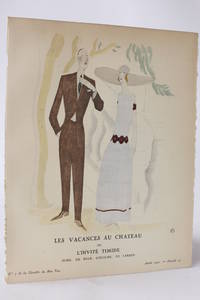
Les Vacances au Château ou l'invité timide. Robe de Beer. Costume de Larsen pl.51 La Gazette du Bon ton 1922 n°7
Paris: Lucien Vogel éditeur 1922. Fine. Lucien Vogel éditeur Paris 1922 18 x 24 cm une feuille Original color print printed on vergé paper signed in the plate. An original print used to illustrate the Gazette du bon ton one of the most attractive and influential 20th century fashion magazines featuring the talents of French artists and other contributors from the burgeoning Art Deco movement. A celebrated fashion magazine established in 1912 by Lucien Vogel La Gazette du bon ton appeared until 1925 with a hiatus from 1915 to 1920 due to the war the editor-in-chief having been called up for service. It consisted of 69 issues printed in only 2000 copies each and notably illustrated with 573 color plates and 148 sketches of the models of the great designers. Right from the start this sumptuous publication was aimed at bibliophiles and fashionable society Françoise Tétart-Vittu La Gazette du bon ton in Dictionnaire de la mode 2016 and was printed on fine vergé paper using a type cut specially for the magazine by Georges Peignot known as Cochin later used in 1946 by Christian Dior. The prints were made using stencils heightened in colors some highlighted in gold or palladium. The story began in 1912 when Lucien Vogel a man of the world involved in fashion he had already been part of the fashion magazine Femina decided with his wife Cosette de Brunhoff the sister of Jean creator of Babar to set up the Gazette du bon ton subtitled at the time: Art fashion frivolities. Georges Charensol noted the reasoning of the editor-in-chief: 'In 1910' he observed there was no really artistic fashion magazine nothing representative of the spirit of the time. My dream was therefore to make a luxury magazine with truly modern artists
I was assured of success because when it comes to fashion no country on earth can compete with France.' Un grand éditeur d'art. Lucien Vogel in Les Nouvelles littéraires no. 133 May 1925. The magazine was immediately successful not only in France but also in the United States and Latin America. At first Vogel put together a team of seven artists: André-Édouard Marty and Pierre Brissaud followed by Georges Lepape and Dammicourt as well as eventually his friends from school and the School of Fine Arts like George Barbier Bernard Boutet de Monvel and Charles Martin. Other talented people soon came flocking to join the team: Guy Arnoux Léon Bakst Benito Boutet de Monvel Umberto Brunelleschi Chas Laborde Jean-Gabriel Domergue Raoul Dufy Édouard Halouze Alexandre Iacovleff Jean Émile Laboureur Charles Loupot Chalres Martin Maggie Salcedo. These artist mostly unknown when Lucien Vogel sought them out later became emblematic and sought-after artistic figures. It was also they who worked on the advertising drawings for the Gazette. The plates put the spotlight on and celebrate dresses by seven designers of the age: Lanvin Doeuillet Paquin Poiret Worth Vionnet and Doucet. The designers provided exclusive models for each issue. Nonetheless some of the illustrations are not based on real models but simply on the illustrator's conception of the fashion of the day. The Gazette du bon ton was an important step in the history of fashion. Combining aesthetic demands with the physical whole it brought together for the first time the great talents of the artistic literary and fashion worlds; and imposed through this alchemy a completely new image of women: slender independent and daring which was shared by the new generation of designers including Coco Chanel Jean Patou Marcel Rochas and so on
Taken over in 1920 by Condé Montrose Nast the Gazette du bon ton was an important influence on the new layout and aesthetics of that little dying paper that Nast had bought a few years earlier: Vogue. Lucien Vogel éditeur unknown
書籍販売業者の参照番号
: 55007
|
|
|
BENITO - (Gustave BEER) - (N KRIEGCK)
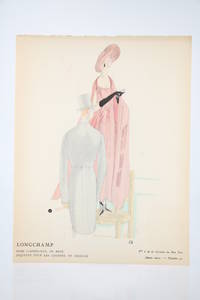
Longchamp. Robe d'après-midi de Beer. Jaquette pour les courses de Kriegck pl.44 La Gazette du Bon ton 1922 n°6
Paris: Lucien Vogel éditeur 1922. Fine. Lucien Vogel éditeur Paris 1922 18 x 24 cm une feuille Original color print printed on laid paper signed in the lower right of the plate. Some discreet stains of no concern. La Gazette du bon ton one of the most beautiful and influential fashion magazines of the 20th century celebrating the talent of French creators and artists during the height of the Art Deco movement. Famous fashion magazine founded in 1912 by Lucien Vogel La Gazette du bon ton was published until 1925 with an interruption during the War from 1915 to 1920 due to the mobilization of its editor-in-chief. It comprises 69 issues printed in only 2000 copies and is illustrated notably with 573 color plates and 148 sketches representing models by great couturiers. From their publication these luxurious publications ""address bibliophiles and worldly aesthetes"" Françoise Tétart-Vittu ""La Gazette du bon ton"" in Dictionnaire de la mode 2016. Printed on fine laid paper they use a typeface specially created for the magazine by Georges Peignot the Cochin typeface adopted in 1946 by Christian Dior. The prints are created using the metallic stencil technique heightened in colors and some highlighted with gold or palladium. The adventure begins in 1912 when Lucien Vogel man of the world and fashion - he had already participated in the magazine Femina - decides to found with his wife Cosette de Brunhoff sister of Jean the father of Babar the Gazette du bon ton whose subtitle was then ""Art modes et frivolités"". Georges Charensol reports the words of the editor-in-chief: ""En 1910 observe-t-il il n'existait aucun journal de mode véritablement artistique et représentatif de l'esprit de son époque. Je songeais donc à faire un magazine de luxe avec des artistes véritablement modernes . J'étais certain du succès car pour la mode aucun pays ne peut rivaliser avec la France."" ""In 1910 he observes there was no fashion journal that was truly artistic and representative of the spirit of its time. I therefore thought of making a luxury magazine with truly modern artists . I was certain of success because for fashion no country can rival France."" ""Un grand éditeur d'art. Lucien Vogel"" in Les Nouvelles littéraires n°133 May 1925. The success of the magazine is immediate not only in France but also in the United States and South America. Originally Vogel thus brings together a group of seven artists: André-Édouard Marty and Pierre Brissaud followed by Georges Lepape and Dammicourt; and finally his friends from the École des beaux-arts such as George Barbier Bernard Boutet de Monvel or Charles Martin. Other talents quickly join the team: Guy Arnoux Léon Bakst Benito Boutet de Monvel Umberto Brunelleschi Chas Laborde Jean-Gabriel Domergue Raoul Dufy Édouard Halouze Alexandre Iacovleff Jean Émile Laboureur Charles Loupot Charles Martin Maggie Salcedo. These artists mostly unknown when Lucien Vogel calls upon them will subsequently become emblematic and sought-after artistic figures. These same illustrators create the drawings for the Gazette's advertisements. The plates highlight and sublimate the dresses of seven creators of the period: Lanvin Doeuillet Paquin Poiret Worth Vionnet and Doucet. The couturiers provide exclusive models for each issue. Nevertheless some of the illustrations show no real model but only the illustrator's idea of contemporary fashion. La Gazette du bon ton is a decisive step in the history of fashion. Combining aesthetic excellence and plastic unity it brings together for the first time the great talents from the worlds of arts letters and fashion and establishes through this alchemy a completely new image of woman slender independent and audacious also carried by the new generation of couturiers Coco Chanel Jean Patou Marcel Rochas. Taken over in 1920 by Condé Montrose Nast La Gazette du bon ton will largely inspire the new composition and aesthetic choices of the ""dying little jou Lucien Vogel éditeur unknown
書籍販売業者の参照番号
: 77352
|
|
|
Benj (Benjamin) Allen & co, Inc
Benj. Allen & Co. Inc. 1933 Annual Illustrated Catalog: Jewelry Diamonds Watches Clocks Sterling Silver Silver Plated Ware Pewter Glassware and Optical Goods Equipment for Jewelry Stors Watch Makers' Tools and Materials
Chicago: Benj. Allen & Co. Very Good with no dust jacket. 1933. First Edition. Hardcover. Covers are lightly soiled with a tiny bit of rubbing at the corners. ; 4to 11" - 13" tall; 668 pages . Benj. Allen & Co. hardcover
書籍販売業者の参照番号
: 27130
|
|
|
Benjacob, Isaac and Jacob and Menachem Mendel Slatkine
Ozar Ha-Sepharim. Thesaurus Librorum Hebraicorum tam impressum quam manu scriptum. Bibliographie der gesammten hebraeischen Literatur mit Einschluss der Handschriften with supplement Otsar Hasefarim: bibliography of Judaica and Hebraica
Wilna Vilna: Jacob Benjacob / Romm 1880 and Jerusalem: Defus Sivan 1965. First and only edition of this extremely rare and important bibliography of books and manuscripts in Hebrew and Yiddish up to 1863 with the almost equally rare supplement. Over 15000 items thoroughly described. Title-pages in Hebrew Russian Latin and German. Text in Hebrew some titles in Yiddish in two columns. Over 700 pp. Printed in a very small edition much of which has surely been destroyed. WITH THE 481-PAGE SUPPLEMENT BY MENACHEM MENDEL SLATKINE published in 1965. Slatkine provides numerous additions corrections and notes to the original work as well a s a complete index. Small 4tos. Bound in original hardcover bindings. Light wear else fine and bright. Slatkine also has dustjacket none issued with Benjacob. Brisman gives a long detailed and highly favorable account of these works A History and Guide to Judaic Bibliography pp. 19-24 33 etc. in which he calls them "the most reliable and accurate Hebrew bibliography." <br/><br/> Wilna (Vilna): Jacob Benjacob / Romm, 1880 [and] Jerusalem: Defus Sivan, 1965 hardcover
書籍販売業者の参照番号
: 1619
|
|
|
Benjamin , Chloe
THE IMMORTALISTS
New York: Putnam 2018. Book. New. Soft cover. 1st. True Edition Uncorrected Proof Illustrated soft cover wraps 346 page book . Condition : New. Size: 8vo - over 7¾ - 9¾" tall. Putnam Paperback
書籍販売業者の参照番号
: 011518-W
|
|
|
Benjamin BARBE - Alexandre DUMAS FILS
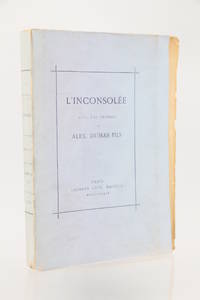
L'inconsolée
Paris: Calmann Lévy 1879. Fine. Calmann Lévy Paris 1879 13 x 19 cm broché First edition printed anonymously one of the few copies on Holland paper of which no mention is made. Spine and boards marginally faded small tears on some deckled edges full-margined copy. Preface by Alexandre Dumas fils. Calmann Lévy hardcover
書籍販売業者の参照番号
: 86999
|
|
|
Benjamin CONSTANT
Adolphe
Paris: H. Piazza 1923. Fine. H. Piazza Paris 1923 17.50 x 24.50 cm broché New edition one of 500 numbered copies on Japan paper ours one of the few hors commerce copies deluxe issue. Small brown stains of no consequence at foot of spine and front cover handsome copy. H. Piazza unknown
書籍販売業者の参照番号
: 39638

|
|
|
Benjamin CONSTANT
Adolphe anecdote trouvée dans les papiers d'un inconnu Adolphe an anecdote found among the papers of an unknown man
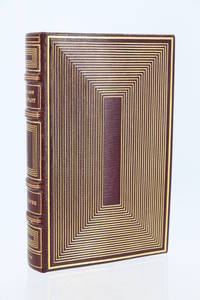
Londres London & Paris: H. ColburnTreuttel et Würtz 1816. Fine. H. Colburn Treuttel et Würtz Londres London & Paris 1816 11 x 18.40 cm broché sous chemise et étui First French edition published around June 15 1816 only a few days after the London edition. Our copy bears all the features of the second state of the Parisian edition: with the London address preceding that of Paris on the title page then on the verso the absence of the warning to counterfeiters and at the end of the volume page 228 the absence of the printer's name. Small marginal lacks to the temporary covers upper joints slightly cracked at head a small tear on the title page a former owner having added the word ""par"" on the title page above the author's name he also copied a critique of the work by Honoré de Balzac at the foot of the last page of text. Our copy is presented in a full burgundy morocco chemise spine with four raised bands set with double gilt fillets and decorated with quintuple gilt compartments boards decorated with a frame of gilt fillets creating a perspective effect burgundy watered silk endpapers and pastedowns frame of quintuple gilt fillets on the pastedowns slipcase edged with burgundy morocco marbled paper boards pink felt interior elegant set signed by Creuzevault. Rare copy in original wrappers and uncut of one of the most important novels of the 19th century. H. ColburnTreuttel et Würtz hardcover
書籍販売業者の参照番号
: 85017
|
|
|
Benjamin CONSTANT - Rosalie CONSTANT
Correspondance 1786-1830
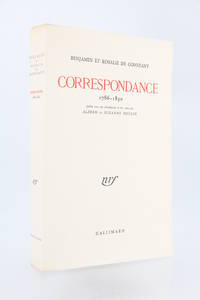
Paris: Gallimard 1955. Fine. Gallimard Paris 1955 14.50 x 22.50 cm broché First edition one of 88 numbered copies on pure laid paper deluxe copies. Introduction and notes by Alfred and Suzanne Roulin. Final signature poorly cut resulting in some small lacks to the leaves. Handsome copy. Gallimard unknown
書籍販売業者の参照番号
: 87694
|
|
|
Benjamin CONSTANT - Rosalie de CONSTANT
Correspondance de Benjamin et Rosalie de Constant 1786-1830
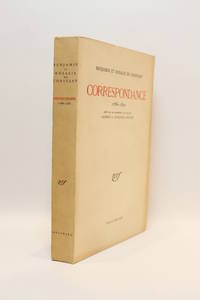
Paris: Gallimard 1955. Fine. Gallimard Paris 1955 14 x 23 cm broché Edition one of the numbered copies on châtaignier paper the only issue after 88 pur fil copies. Introduction and notes by Alfred and Suzanne Roulin. Handsome copy despite the spine being slightly sunned. Gallimard unknown
書籍販売業者の参照番号
: 72254
|
|
|
Benjamin CONSTANT
Des suites de la contre Révolution de 1660 en Angleterre
à Paris: se vend chez F. Buisson 1798. Fine. se vend chez F. Buisson à Paris An VII 1798 14 x 21 cm broché Second edition statement on the title page. Edition published at the date of the original it is possible that the second edition statement is fictitious. One copy in the electronic catalogue of the BN de France none in French catalogues but numerous ones in England. Pamphlet in its original state in blue paper wrappers. Political pamphlet denouncing the restoration of the monarchy in England and the tyranny of Charles II after the popular revolution that had deposed it. A parallel is established with the situation of the young French republic. Constant was accused of having wanted to prepare minds for the coup d'état of 18 Brumaire. se vend chez F. Buisson unknown
書籍販売業者の参照番号
: 16305

|
|
|
Benjamin CONSTANT
Deuxième lettre à M. Odillon Barrot. Sur le procès de Wilfried Regnault condamné à mort. Avec un plan figuré du lieu où s'est commis l'assassinat
à Paris: Chez Bechet Planchet Delaunay 1818. Fine. Chez Bechet Planchet Delaunay à Paris 1818 13 x 21.50 cm broché First edition. In original wrappers under contemporary blue paper. Second letter written by Benjamin Constant addressed to the lawyer at the court of cassation Odillon Barrot in which the author once again defends the accused condemned to death not on evidence but on rumors and prejudices. « Je montrerai tout à l'heure que de tous ceux sur qui le soupçon pouvait planer Regnault était celui qu'il devait le moins atteindre. » I will show presently that of all those on whom suspicion could fall Regnault was the one it should least have reached. Constant reviews all the facts of the trial examines and confronts them and dismantles the prosecution. The account is most interesting. Chez Bechet, Planchet, Delaunay unknown
書籍販売業者の参照番号
: 20020

|
|
|
Benjamin CONSTANT
Discours de M. Benjamin Constant à la Chambre des députés
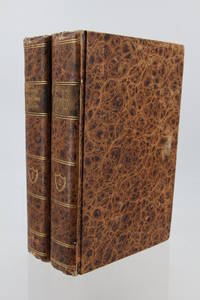
Paris: Ambroise Dupont & Cie 1827. Fine. Ambroise Dupont & Cie Paris 1827-1828 12.50 x 21 cm 2 volumes reliés First edition. Bradel bindings in full marbled boards smooth spines decorated with double gilt fillets brown sheepskin title labels tears without loss to headcaps two corners slightly bumped yellow edges. Work illustrated with a portrait of B. Constant as frontispiece to the second volume and complete with the folding facsimile. Scattered foxing affecting mainly the first volume. Ambroise Dupont & Cie hardcover
書籍販売業者の参照番号
: 81334
|
|
|
Benjamin CONSTANT
Discours de M. Benjamin Constant à la Chambre des députés
Paris: Ambroise Dupont & Cie 1827. Fine. Ambroise Dupont & Cie Paris 1827-1828 12.50 x 21 cm 2 volumes reliés First edition. Bradel binding in full marbled boards smooth spines decorated with double gilt fillets brown sheep title labels tears without loss to headcaps two corners slightly bumped yellow edges. Work illustrated with a portrait of B. Constant as frontispiece to the second volume and complete with the folding facsimile. Scattered foxing mainly affecting the first volume. Ambroise Dupont & Cie hardcover
書籍販売業者の参照番号
: 36840

|
|
|
Benjamin CONSTANT
Du polythéisme romain considéré dans ses rapports avec la philosophie grecque et la religion chrétienne ouvrage posthume de Benjamin Constant précédé d'une introduction de M. J. Matter
Paris: Béchet aîné 1833. Fine. Béchet aîné Paris 1833 13 x 20.50 cm 2 volumes in-8 reliés First edition. Full bronze sheep bindings smooth spines richly decorated gilt fillets framing the boards gilt laurel and olive crown stamps in medallion on the front board of volume 1 speckled edges prize binding from the lycée de Bordeaux. Important alphabetical and analytical index at the end. Handsome copy attractively bound in Romantic binding. Béchet aîné hardcover
書籍販売業者の参照番号
: 17210

|
|
|
Benjamin CONSTANT
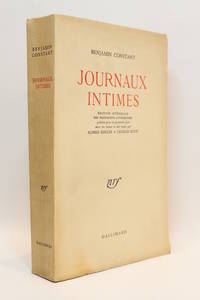
Journaux intimes
Paris: Gallimard 1952. Fine. Gallimard Paris 1952 14 x 23 cm broché Complete edition of the autograph manuscripts published for the first time one of the numbered copies on châtaignier paper the only printing after 88 on pur fil. Index and notes by Alfred Roulin and Charles Roth. Handsome copy despite slight sunning to the foot of the first cover. Gallimard unknown
書籍販売業者の参照番号
: 72253
|
|
|
Benjamin CONSTANT
Principes de politique applicables à tous les gouvernements représentatifs et particulièrement à la constitution actuelle de la France
Paris: A. Eymery 1815. Fine. A. Eymery Paris 1815 13.50 x 21 cm broché First edition. A slight lack at foot of spine a tear with loss to front cover small corner losses to covers some occasional light foxing. Rare copy preserved in its original wrappers. A. Eymery unknown
書籍販売業者の参照番号
: 18472

|
|
|
Benjamin CONSTANT DE REBECQUE - SCHILLER
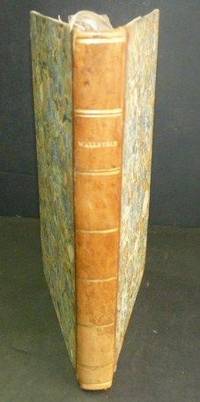
Wallstein tragédie en cinq actes et en vers précédée de quelques réflexions sur le théatre allemand et suivie de notes historiques
Genève Geneva: J.J. Paschoud 1809. Fine. J.J. Paschoud Genève Geneva 1809 13.50 x 20.50 cm relié First edition of this adaptation of Schiller's drama and its important preface established by Benjamin Constant. Half hazel sheep binding smooth spine decorated with gilt fillets slightly faded at foot speckled edges tiny wormhole at foot of one hinge. Dampstain to head of final leaves otherwise a handsome copy. J.J. Paschoud unknown
書籍販売業者の参照番号
: 22429
|
|
|
Benjamin de LABORDE
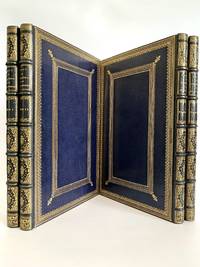
Choix de chansons mises en musique. Dédiées à Madame la Dauphine
Paris: Chez De Lormel 1773. Fine. Chez De Lormel Paris 1773 16 x 25 cm 4 volumes reliés First edition of one of the most beautiful books of the 18th century of which the text and the music are entirely engraved$. It is illustrated with an engraved title 3 frontispieces by Le Bouteux and Le Barbier a dedication page with the Dauphine arms and 100 figures by Moreau le Jeune Le Barbier Le Bouteux and Saint-Quentin finely engraved in copperplate by Masquelier and Née. The portrait of Laborde which can be found on some copies is not part of this edition and was printed in 1774 separately. Dentelle bindings in full navy blue morocco signed by Bruyère at the bottom of the pastedown endpaper. Slipcase covered with a blue marbled paper suede interior lined with navy leather; a wide navy silk riband allows the works to be taken out. Spine in five compartments very richly adorned with decorated panels and small finishing tools fillet at the top and the bottom. Boards framed with fillets and large gilt lace work tooling with fleurons in the corner pieces. Leading edges and spine-ends highlighted with double gilt fillets. Large interior frieze. Overall immaculate paper with some rare foxing in volume I. Slipcase rubbed on the top. Tiny miniscule signs of rubbing on 2 spine-ends one compartment and one leading edge. Very large margins. Large library label: Morel de Voleine. Magnificent copy bound in 4 volumes very rare condition. There are usually only copies with 2 volumes for understandable cost issues. It is also very rare to find volumes of this colour that are not faded or sundamaged. Chez De Lormel hardcover
書籍販売業者の参照番号
: 72581
|
|
|
Benjamin Edward Spence
19th Century Manuscript Letter from Sculptor Benjamin Edward Spence to the Reverend Dr. Raffles
England. Very Good with no dust jacket. Non-Book. On offer is a letter written and signed by British sculptor Benjamin Edward Spence 1822-1866 to Rev Dr. Raffles. 7-3/8 x 4-1/2 inches. Two horseshoe holes at bottom of page not affecting hand-writing otherwise good condition. Autograph Letter Signed. Two pages. Dated Walton near Liverpool Sept 4th no year. To Reverend Dr. Raffles seeking the submission of a note from Raffles concerning an upcoming motion at the meeting of the Brooks Testimonial. Benjamin Edward Spence was a British neo-classical sculptor who spent much of his professional life in Italy. At the age of 16 he made a portrait bust of William Roscoe and in 1846 he was awarded the Heywood silver medal and a cash by the Royal Manchester Institution for a group in clay of the death of the Duke of York at the battle of Agincourt. Between 1849 and 1867 Spence contributed to the exhibition of the Royal Academy five times: in 1850 with "Ophelia" in 1856 "Venus and Cupid" in 1861 "Hippolytus" and in 1867 "The Parting of Hector and Andromache". He contributed "Highland Mary" to the Exposition Universelle 1855 and two works "Finding of Moses" and "Jeanie Deans before Queen Caroline" to the International Exhibition 1862. A number works of his that were not exhibited in England were engraved for the Art Journal. ; Manuscripts; 8vo 8" - 9" tall; 2 pages; Signed by Author . unknown
書籍販売業者の参照番号
: 0012310
|
|
|
Benjamin FONDANE - Henri MICHAUX - Leon-Paul FARGUE
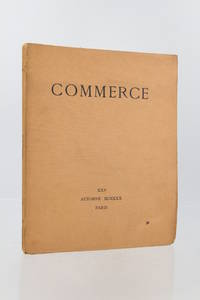
Commerce Cahier XXV de l'automne 1930
Paris: Chez L. Giraud-Badin 1930. Fine. Chez L. Giraud-Badin Paris 1930 20 x 25 cm broché First edition published in 2900 copies ours being one of the copies on Alfa paper. Two stains on the spine which also has a small tear at the head a stain at the lower right corner of the first cover. Literary contributions by Léon-Paul Fargue ""Une violette noire"" Benjamin Fondane ""Ulysse"" Henri Michaux ""Un certain plume"" Jean Follain ""Poèmes"" André Gide ""Oedipe"" Georges Meredith ""Amour moderne"" Louis Brauquier ""Panama"". Commerce a literary review founded by Marguerite Caetani presented itself as twenty-nine ""quarterly notebooks published under the care of Valéry Fargue and Larbaud"" between 1924 and 1932. Its publication forms part of the competitive tradition of French reviews of the 1920s and was not content merely to showcase the most prominent authors of French literature: it played the role of ""discoverer"" of young talents and unearthed forgotten seminal texts. Chez L. Giraud-Badin unknown
書籍販売業者の参照番号
: 82601
|
|
|
Benjamin FONDANE
Faux traité d'esthétique
Paris: Denoël 1938. Fine. Denoël Paris 1938 14 x 22.50 cm broché First Edition for which he was not drawn from large paper. Some bites on the boards. Rare autograph dedication signed by Benjamin Fondane to the poet Raymond Datheil. Denoël hardcover
書籍販売業者の参照番号
: 68840

|
|
|
Benjamin FONDANE
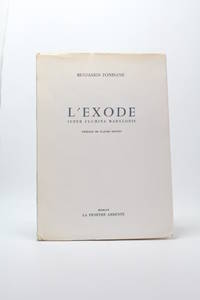
L'exode
Paris: La fenêtre ardente 1965. Fine. La fenêtre ardente Paris 1965 14 x 19.50 cm broché First edition one of 300 copies on offset the only issue after 40 on pur fil. Boards very lightly and marginally sunned at head pleasant and rare copy. Preface by Claude Sernet autograph inscription signed by Claude Sernet at the end of his preface to Charles Dobzynski. La fenêtre ardente hardcover
書籍販売業者の参照番号
: 71928
|
|
|
Benjamin FONDANE
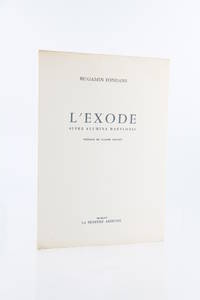
L'exode
Paris: La fenêtre ardente 1965. Fine. La fenêtre ardente Paris 1965 14 x 19.50 cm broché First edition one of 300 copies on offset the only issue after 40 pur fil. Minimal foxing to margins of covers handsome and rare copy. Preface by Claude Sernet. La fenêtre ardente unknown
書籍販売業者の参照番号
: 80446
|
|
|
Benjamin FONDANE
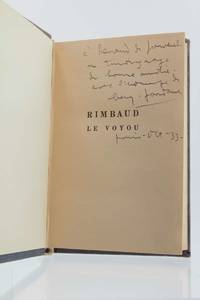
Rimbaud le voyou
Paris: Denoël & Steele 1933. Fine. Denoël & Steele Paris 1933 11.50 x 18.50 cm relié sous chemise-étui The first edition of which there were no deluxe copies. Bradel binding in full blue cloth smooth spine uniformly faded. Our copy is presented in a half blue morocco chemise smooth spine and paste-paper boards paper lining slipcase of the same paper and bordered in blue morocco signed by P. Goy and C. Vilaine. Dedicatee's bookplate pasted on a pastedown. Rare autograph inscription dated and signed by Benjamin Fondane on this important text: ""A Renaud de Jouvenel en témoignage de bonne amitié avec l'hommage de Benjamin Fondane."" Denoël & Steele hardcover
書籍販売業者の参照番号
: 76035
|
|
|
Benjamin FONDANE
Titanic
Paris: Les Cahiers du Journal des Poètes 1937. Fine. Les Cahiers du Journal des Poètes Paris 1937 14 x 19.50 cm broché First edition one of 300 copies not numbered. Handsome autograph inscription from Benjamin Fondane :"" A Roger Caillois and puisse ce livre le trouver to ses ""heures de faiblesse"" où il aime la poésie au cas où il s'en trouve dans Titanic."" A good copy. Les Cahiers du Journal des Poètes unknown
書籍販売業者の参照番号
: 56008

|
|
|
Benjamin FONDANE
Ulysse
Paris: Les Cahiers du Journal des Poètes 1933. Fine. Les Cahiers du Journal des Poètes Paris 1933 14 x 19.50 cm broché First Edition one of 500 numbered copies on Featherweight only leading copies. A tiny lack at the head of the back some small marginal gaps on some leaves that were poorly cut some foxing also margins of some leaves first guard slightly and partially shaded. Annotations in pencil by a owner on the last guard. Autograph tribute dated and signed by Benjamin Fondane specifying his Parisian address on a guard. Les Cahiers du Journal des Poètes unknown
書籍販売業者の参照番号
: 61799

|
|
|
Benjamin FONDANE - (inscribed to Jacques PREVERT)
Ulysse - Exemplaire de Jacques Prévert
Bruxelles Brussels: Les Cahiers du Journal des Poètes 1933. Fine. Les Cahiers du Journal des Poètes Bruxelles Brussels 1933 14 x 19.50 cm broché First edition one of 500 numbered copies on Featherweight the only deluxe issue. Small loss and foxing to the headcap and upper edge a crease and minor tears to the front cover endpapers slightly toned without consequence. Exceptional signed autograph presentation from Benjamin Fondane: « A Jacques Prévert cordialement. B. Fondane. Paris / 3 / 33. » Les Cahiers du Journal des Poètes unknown
書籍販売業者の参照番号
: 66828

|
|
|
Benjamin FILLON
Un cousin de Paul Scarron
Fontenay-le-Comte: P. Robuchon 1871. Fine. P. Robuchon Fontenay-le-Comte 1871 16 x 24 cm broché First edition of this pamphlet printed in very small numbers on laid paper. Some foxing and a marginal tear without consequence to the first cover minor foxing to interior. Rare. P. Robuchon unknown
書籍販売業者の参照番号
: 11414

|
|
|
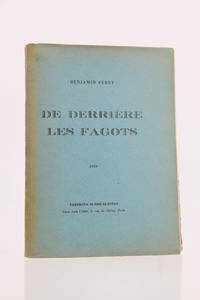
Benjamin PERET
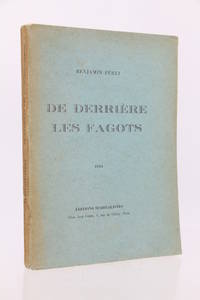
De Derrière les Fagots
Paris: Editions Surréalistes 1934. Fine. Editions Surréalistes Paris 1934 14 x 19.50 cm broché First edition one of 550 numbered copies on bouffant paper the only issue after 24 pearlescent Japan and 25 light green. Spine and boards marginally faded as usual spine split then reglued at head handsome interior condition. Editions Surréalistes hardcover
書籍販売業者の参照番号
: 85572
|
|
|
Benjamin PERET
De Derrière les Fagots
Paris: Editions Surréalistes 1934. Fine. Editions Surréalistes Paris 1934 14 x 19.50 cm broché First edition one of 550 numbered copies on bouffant paper the only issue after 24 on nacreous Japan paper and 25 on vert lumière paper. Spine and covers marginally faded as usual handsome interior condition. Editions Surréalistes unknown
書籍販売業者の参照番号
: 80094
|
|

 検索結果のメールを受信する
 PDFファイルの検索結果をダウンロード
 RSSフィード
 パーマネントリンク


