|
Le Français n°114 de la quatrième année
Versailles: Le Français 1871. Fine. Le Français Versailles 14 Mai 1871 38 x 56 cm en feuilles First edition. As issued. Rare. Le Français unknown
Referenz des Buchhändlers : 17911

|
|
|
Le Français n°129 de la quatrième année
Versailles: Le Français 1871. Fine. Le Français Versailles 29 Mai 1871 38 x 56 cm en feuilles First edition. As issued. Rare. Le Français unknown
Referenz des Buchhändlers : 17910

|
|
|
Le Français n°95 de la quatrième année
Versailles: Le Français 1871. Fine. Le Français Versailles 25 Avril 1871 38 x 56 cm en feuilles First edition. As issued. Rare. Le Français unknown
Referenz des Buchhändlers : 17912

|
|
|
Le Français n°130 de la quatrième année
Versailles: Le Français 1871. Fine. Le Français Versailles 31 Mai 1871 38 x 56 cm en feuilles First edition. As issued. Rare. Le Français unknown
Referenz des Buchhändlers : 17908

|
|
|
Le Libre N°4 de la deuxième année
Paris: Le Libre 1898. Fine. Le Libre Paris Avril 1898 20 x 26.50 cm broché First edition. Contributions by Paul Adam Mecislas Golberg Henry Martel Henri Ner and Laurent Tailhade among others. Rare. Le Libre unknown
Referenz des Buchhändlers : 13399
|
|
|
Le Luxe : The First and Largest Parisian Fashion Magazine of the World, August, 1884
2 p., 17 plates Unbound Ex-library, Good condition, in worn folder, some plates edge chipped
|
|
|
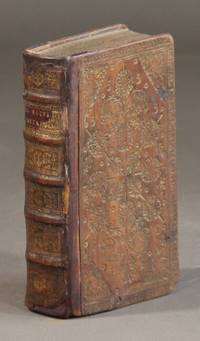
Le Nouveau Testament c'est à dire la nouvelle alliance de notre seigneur Jesus-Christ
Charenton i.e. Charenton-le-Pont France: par Estienne Lucas marchand libraire demeurant à Paris rue Chartière près le Puits Certain à la Bible d'Or 1662. 12mo 3 p.l. including an engraved title page the balance unpaginated and largely in double column; together with as issued: Les Pseaumes de David mis en rime Françoise par Clement Marot with a separate title Charenton 1662; the whole bound in contemporary French calf with an all-over design in gilt rebacked with old spine laid down small pieces missing at top and bottom a.e.g. and gauffered with birds and tulips once colored but now faded; lacks clasps and hasps 18th-century morocco label applied but now chipped away corners bumped; tightly bound occasional minor worming and dampstaining; overall appearance is good or better. OCLC locates 7 copies only Concordia College in Wisconsin in the U.S. par Estienne Lucas, marchand libraire, demeurant à Paris, rue Chartière, près le Puits Certain, à la Bible d'Or unknown
Referenz des Buchhändlers : 25496
|
|
|
Le Nouveau Testament c'est àdire la nouvelle alliance de notre seigneur Jesus-Christ
Charenton: par Estienne Lucas marchand libraire demeurant a` Paris rue Chartie`re pre`s le Puits Certain a` la Bible d'Or 1662. 12mo 3 p.l. including an engraved title-p. the balance unpaginated and largely in double column; together with as issued: Les Pseaumes de David mis en rime Françoise par Clement Marot with a separate title Charenton 1662; the whole bound in contemporary French calf with an all-over design in gilt rebacked with old spine laid down small pieces missing at top and bottom a.e.g. and gauffered with birds and tulips once colored but now faded; lacks clasps and hasps 18th century morocco label applied but now chipped away corners bumped; tightly bound occasional minor worming and dampstaining; overall appearance is good or better. Not found in OCLC; Santa Barbara copy only in RLIN. <br/><br/> par Estienne Lucas, marchand libraire, demeurant a` Paris, rue Chartie`re, pre`s le Puits Certain, a` la Bible d'Or unknown books
Referenz des Buchhändlers : 25496
|
|
|
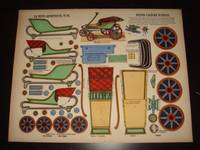
Le Petit architecte n°81 : Petite calèche d'enfant
Épinal: Pellerin 1890. Fine. Pellerin Épinal s. d. circa 1880-1900 49 x 39 cm Image d'Épinal color lithograph large format printed on heavy paper. Very light marginal foxing otherwise handsome condition colors very well preserved. These sheets are cardboard constructions or models on which a pattern was printed. This pattern must be cut out then assembled to construct various objects or life scenes. The Épinal imagery published several series of cut-out models including the ""Grandes Constructions"" in 39 x 49 cm format the ""Moyennes Constructions"" and the ""Petites Constructions"". From 1880 to 1908 constructions were published featuring architecture costumes ships and various vehicles. During this same period paper theaters or ""théâtre chez soi"" also enjoyed great success. This toy model developed and endured until the Second World War. Once sold by peddlers the images d'Épinal owe their name to Jean-Charles Pellerin who was the first printer to publish this type of image in series and who lived in the town of Épinal Vosges. The subjects are very varied but generally revolve around religion history French Revolution battles military uniforms or drawn from successful novels. Épinal imagery takes its origins from imagery a popular art born in the 15th century intended primarily for the illiterate public of the countryside. Originally the image is engraved on a wooden block and printing is done using a hand press. It is then colored using stencils. In the 19th century lead castings were made from the engraved wood blocks: stereotypes which allowed production to be increased. In 1820 lithography was adopted which induced a radical change in style with finer drawings. In 1900 coloring was still done by stencil thanks to a machine that could color 300 images per hour the Aquatype. Pellerin unknown
Referenz des Buchhändlers : 26659
|
|
|
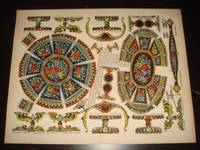
Le Petit architecte n°78 : Corbeille & Panier à ouvrage
Épinal: Pellerin & Cie 1890. Fine. Pellerin & Cie Épinal s. d. circa 1880-1900 49 x 39 cm Épinal print color lithograph large format printed on heavy paper. Fine condition colors very well preserved. These plates are cardboard constructions or models on which a pattern was printed. This pattern must be cut out then assembled to construct various objects or life scenes. The Épinal print works published several series of cut-out models including the ""Grandes Constructions"" in 39 x 49 cm format the ""Moyennes Constructions"" and the ""Petites Constructions"". From 1880 to 1908 constructions were published featuring architecture costumes ships and various vehicles. During this same period paper theaters or ""théâtre chez soi"" also enjoyed great success. This type of toy developed and endured until the Second World War. Formerly sold by peddlers Épinal prints owe their name to Jean-Charles Pellerin who was the first printer to publish this type of image in series and who lived in the town of Épinal Vosges. The subjects are very varied but generally revolve around religion history French Revolution battles military uniforms or drawn from successful novels. Épinal imagery takes its origins in imagery a popular art born in the 15th century intended primarily for the illiterate rural public. Originally the image is engraved on a wooden plate and printing is carried out using a hand press. It is then colored using stencils. In the 19th century lead castings were made from the engraved wood blocks: stereotypes which allowed production to be increased. In 1820 lithography was adopted which induced a radical change in style with finer drawings. In 1900 coloring was still done by stencil thanks to a machine that could color 300 images per hour the Aquatype. Pellerin & Cie unknown
Referenz des Buchhändlers : 26643
|
|
|
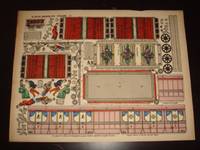
Le Petit architecte n°100 : Wagon
Épinal: Pellerin 1890. Fine. Pellerin Épinal s. d. circa 1880-1900 49 x 39 cm Image d'Épinal color lithograph large format printed on heavy paper. Light foxing and minimal tears in left margin otherwise handsome condition colors very well preserved. These plates are constructions or cardboard models on which a pattern was printed. This pattern must be cut out and then assembled to construct various objects or life scenes. The Épinal imagery published several series of cut-out models including the ""Grandes Constructions"" in 39 x 49 cm format the ""Moyennes Constructions"" and the ""Petites Constructions"". From 1880 to 1908 constructions were published featuring architecture costumes boats and various vehicles. During this same period paper theaters or ""home theater"" also enjoyed great success. This toy model developed and lasted until the Second World War. Once sold by peddlers the images d'Épinal owe their name to Jean-Charles Pellerin who was the first printer to publish this type of image in series and who lived in the town of Épinal Vosges. The subjects are very varied but generally revolve around religion history French Revolution battles military uniforms or drawn from successful novels. The imagery of Épinal has its origins in imagery a popular art born in the 15th century intended mainly for the illiterate rural public. Originally the image is engraved on a wooden block and printing is done using a hand press. It is then colored using stencils. In the 19th century lead castings are made from the engraved wood blocks: stereotypes which allow production to be increased. In 1820 lithography was adopted which induced a radical change in style with finer drawings. In 1900 coloring was still done by stencil thanks to a machine that could color 300 images per hour the Aquatype. Pellerin unknown
Referenz des Buchhändlers : 26676
|
|
|
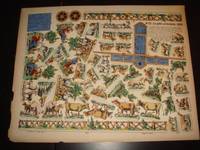
Le Petit architecte n°30 : Bergerie
Épinal: Pellerin & Cie 1890. Fine. Pellerin & Cie Épinal s. d. circa 1880-1900 49 x 39 cm Image d'Épinal color lithograph large format printed on heavy paper. Small tears and marginal lacks not touching the engraving otherwise handsome condition colors very well preserved. These plates are cardboard constructions or models on which a pattern was printed. This pattern must be cut out then assembled to construct various objects or life scenes. The Imagerie d'Épinal published several series of cut-out models including the ""Grandes Constructions"" in 39 x 49 cm format the ""Moyennes Constructions"" and the ""Petites Constructions"". From 1880 to 1908 constructions were published featuring architecture costumes boats and various vehicles. During this same period paper theaters or ""théâtre chez soi"" also enjoyed great success. This toy model developed and endured until the Second World War. Once sold by peddlers the images d'Épinal owe their name to Jean-Charles Pellerin who was the first printer to publish this type of image in series and who lived in the town of Épinal Vosges. The subjects are very varied but generally revolve around religion history French Revolution battles military uniforms or drawn from bestselling novels. The Imagerie d'Épinal has its origins in popular imagery a folk art born in the 15th century intended mainly for the illiterate rural public. Originally the image is engraved on a wooden plate and printing is done using a hand press. It is then colored by means of stencils. In the 19th century lead castings are made from the engraved wood blocks: stereotypes which allow production to be increased. In 1820 lithography was adopted which induced a radical change in style with finer drawings. In 1900 coloring was still done by stencil thanks to a machine that could color 300 images per hour the Aquatype. Pellerin & Cie unknown
Referenz des Buchhändlers : 26402
|
|
|
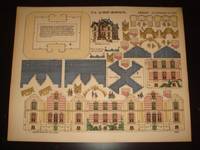
Le Petit architecte n°91 : Chalet aux environs de Paris
Épinal: Pellerin & Cie 1890. Fine. Pellerin & Cie Épinal s. d. circa 1880-1900 49 x 39 cm Épinal print color lithograph large format printed on heavy paper. Very light marginal foxing otherwise handsome condition colors very well preserved. These sheets are cardboard constructions or models on which a pattern was printed. This pattern must be cut out then assembled to construct various objects or life scenes. The Épinal imagery published several series of cut-out models including the ""Grandes Constructions"" in 39 x 49 cm format the ""Moyennes Constructions"" and the ""Petites Constructions"". From 1880 to 1908 constructions were published featuring architecture costumes boats and various vehicles. During this same period paper theaters or ""home theater"" also enjoyed great success. This toy model developed and endured until the Second World War. Once sold by peddlers Épinal prints owe their name to Jean-Charles Pellerin who was the first printer to publish this type of image in series and who lived in the town of Épinal Vosges. The subjects are very varied but generally revolve around religion history French Revolution battles military uniforms or drawn from successful novels. Épinal imagery takes its origins from imagery a popular art born in the 15th century intended primarily for the illiterate rural public. Originally the image is engraved on a wood block and printing is carried out using a hand press. It is then colored by means of stencils. In the 19th century lead castings are made from the engraved wood blocks: stereotypes which allow production to be increased. In 1820 lithography was adopted which induced a radical change in style with finer drawings. In 1900 coloring is still done by stencil thanks to a machine that can color 300 images per hour the Aquatype. Pellerin & Cie unknown
Referenz des Buchhändlers : 26662
|
|
|
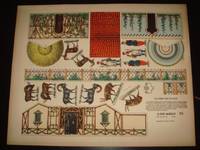
Le Petit architecte n°55 : le Jardin des plantes
Épinal: Pellerin 1890. Fine. Pellerin Épinal s. d. circa 1880-1900 49 x 39 cm Image d'Épinal color lithograph large format printed on heavy paper. Very light marginal foxing otherwise handsome condition colors very well preserved. These sheets are cardboard constructions or models on which a pattern was printed. This pattern must be cut out then assembled to construct various objects or life scenes. The Épinal imagery published several series of cut-out models including the ""Grandes Constructions"" in 39 x 49 cm format the ""Moyennes Constructions"" and the ""Petites Constructions"". From 1880 to 1908 constructions were published with subjects including architecture costumes ships and various vehicles. During this same period paper theaters or ""théâtre chez soi"" also enjoyed great success. This toy model developed and lasted until the Second World War. Once sold by peddlers the images d'Épinal owe their name to Jean-Charles Pellerin who was the first printer to publish this type of image in series and who lived in the town of Épinal Vosges. The subjects are very varied but generally revolve around religion history French Revolution battles military uniforms or drawn from popular novels. Épinal imagery takes its origins in imagery a popular art born in the 15th century intended mainly for the illiterate rural public. Originally the image is engraved on a wooden plate and printing is done using a hand press. It is then colored using stencils. In the 19th century lead castings were made from the engraved wood blocks: stereotypes which allowed production to be increased. In 1820 lithography was adopted which induced a radical change in style with finer drawings. In 1900 coloring was still done by stencil thanks to a machine that could color 300 images per hour the Aquatype. Pellerin unknown
Referenz des Buchhändlers : 26667
|
|
|
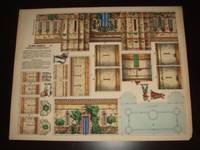
Le Petit architecte n°59 : Château de Barbe-bleue
Épinal: Pellerin & Cie 1890. Fine. Pellerin & Cie Épinal s. d. circa 1880-1900 49 x 39 cm Image d'Épinal color lithograph large format printed on heavy paper. Very light marginal foxing two small inconsequential tears to right margin otherwise handsome condition colors very well preserved. These sheets are cardboard constructions or models on which a pattern was printed. This pattern must be cut out then assembled to construct various objects or life scenes. The Épinal imagery published several series of cut-out models including the ""Grandes Constructions"" in 39 x 49 cm format the ""Moyennes Constructions"" and the ""Petites Constructions"". From 1880 to 1908 constructions were published with subjects including architecture costumes ships and various vehicles. During this same period paper theaters or ""théâtre chez soi"" also enjoyed great success. This toy model developed and lasted until the Second World War. Once sold by peddlers the images d'Épinal owe their name to Jean-Charles Pellerin who was the first printer to publish this type of image in series and who lived in the town of Épinal Vosges. The subjects are very varied but generally revolve around religion history French Revolution battles military uniforms or drawn from popular novels. Épinal imagery takes its origins in imagery a popular art born in the 15th century intended mainly for the illiterate rural public. Originally the image is engraved on a wooden plate and printing is done using a hand press. It is then colored using stencils. In the 19th century lead castings were made from the engraved wood blocks: stereotypes which allowed production to be increased. In 1820 lithography was adopted which induced a radical change in style with finer drawings. In 1900 coloring was still done by stencil thanks to a machine that could color 300 images per hour the Aquatype. Pellerin & Cie unknown
Referenz des Buchhändlers : 26666
|
|
|
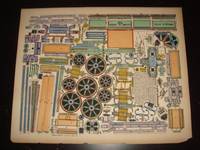
Le Petit architecte n°11 : Pompe à incendie
Épinal: Pellerin 1890. Fine. Pellerin Épinal s. d. circa 1880-1900 49 x 39 cm Épinal print color lithograph large format printed on heavy paper. Small tears with minor lacks to lower margin not affecting the image otherwise fine condition colors very well preserved. These plates are cardboard constructions or models on which a pattern was printed. This pattern must be cut out then assembled to construct various objects or life scenes. The Épinal imagery published several series of cut-out models including the ""Grandes Constructions"" in 39 x 49 cm format the ""Moyennes Constructions"" and the ""Petites Constructions"". From 1880 to 1908 constructions were published featuring architecture costumes boats and various vehicles. During this same period paper theaters or ""théâtre chez soi"" also enjoyed great success. This toy model developed and lasted until the Second World War. Formerly sold by peddlers Épinal prints owe their name to Jean-Charles Pellerin who was the first printer to mass-produce this type of image and who lived in the town of Épinal Vosges. The subjects are very varied but generally revolve around religion history French Revolution battles military uniforms or drawn from bestselling novels. Épinal imagery has its origins in imagery a popular art form born in the 15th century intended primarily for the illiterate rural public. Originally the image is engraved on a wooden plate and printing is done using a hand press. It is then colored using stencils. In the 19th century lead castings were made from the engraved wood blocks: stereotypes which allowed production to increase. In 1820 lithography was adopted which induced a radical change in style with finer drawings. In 1900 coloring was still done by stencil using a machine that could color 300 images per hour the Aquatype. Pellerin unknown
Referenz des Buchhändlers : 26674
|
|
|
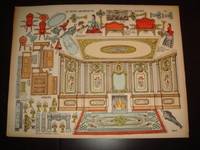
Le Petit architecte n°106 : le Salon
Épinal: Olivier-Pinot 1890. Fine. Olivier-Pinot Épinal s. d. circa 1880-1900 49 x 39 cm Image d'Épinal color lithograph large format printed on heavy paper. Fine condition colors very well preserved. These sheets are cardboard constructions or models on which a pattern was printed. This pattern must be cut out then assembled to construct various objects or life scenes. The Épinal imagery published several series of cut-out models including the ""Grandes Constructions"" in 39 x 49 cm format the ""Moyennes Constructions"" and the ""Petites Constructions"". From 1880 to 1908 constructions were published featuring architecture costumes boats and various vehicles. During this same period paper theaters or ""théâtre chez soi"" also enjoyed great success. This toy model developed and endured until the Second World War. Once sold by peddlers the images d'Épinal owe their name to Jean-Charles Pellerin who was the first printer to publish this type of image in series and who lived in the town of Épinal Vosges. The subjects are very varied but generally revolve around religion history French Revolution battles military uniforms or drawn from successful novels. Épinal imagery takes its origins in imagery a popular art born in the 15th century intended mainly for the illiterate public of the countryside. Originally the image is engraved on a wooden plate and printing is done using a hand press. It is then colored using stencils. In the 19th century lead castings were made from the engraved wood blocks: stereotypes which allowed production to be increased. In 1820 lithography was adopted which induced a radical change in style with finer drawings. In 1900 coloring was still done by stencil thanks to a machine that could color 300 images per hour the Aquatype. Olivier-Pinot unknown
Referenz des Buchhändlers : 26411
|
|
|
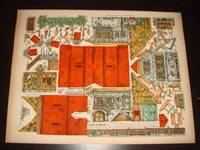
Le Petit architecte n°12 : Habitation champêtre
Épinal: Pellerin 1890. Fine. Pellerin Épinal s. d. circa 1880-1900 49 x 39 cm Épinal print color lithograph large format printed on heavy paper. Light marginal foxing a small repaired tear in right margin not touching the engraving otherwise fine condition colors very well preserved. These plates are cardboard constructions or models on which a pattern was printed. This pattern must be cut out then assembled to construct various objects or life scenes. The Épinal print works published several series of cut-out models including the ""Grandes Constructions"" in 39 x 49 cm format the ""Moyennes Constructions"" and the ""Petites Constructions"". From 1880 to 1908 constructions were published featuring architecture costumes ships and various vehicles. During this same period paper theaters or ""théâtre chez soi"" also enjoyed great success. This type of toy developed and endured until the Second World War. Formerly sold by peddlers Épinal prints owe their name to Jean-Charles Pellerin who was the first printer to publish this type of image in series and who lived in the town of Épinal Vosges. The subjects are very varied but generally revolve around religion history French Revolution battles military uniforms or drawn from successful novels. Épinal imagery takes its origins in imagery a popular art born in the 15th century intended primarily for the illiterate rural public. Originally the image is engraved on a wooden plate and printing is carried out using a hand press. It is then colored using stencils. In the 19th century lead castings were made from the engraved wood blocks: stereotypes which allowed production to be increased. In 1820 lithography was adopted which induced a radical change in style with finer drawings. In 1900 coloring was still done by stencil thanks to a machine that could color 300 images per hour the Aquatype. Pellerin unknown
Referenz des Buchhändlers : 26640
|
|
|
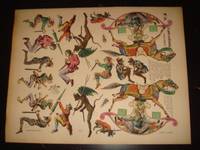
Le Petit architecte n°34 : Cheval à bascule
Épinal: Pellerin 1890. Fine. Pellerin Épinal s. d. circa 1880-1900 49 x 39 cm Épinal print color lithograph large format printed on heavy paper. Light marginal foxing otherwise handsome condition two tears restored in margin not touching the engraving otherwise handsome condition colors very well preserved. These sheets are cardboard constructions or models on which a pattern was printed. This pattern must be cut out then assembled to construct various objects or life scenes. The Épinal imagery published several series of cut-out models including the ""Grandes Constructions"" in 39 x 49 cm format the ""Moyennes Constructions"" and the ""Petites Constructions"". From 1880 to 1908 constructions were published featuring architecture costumes boats and various vehicles. During this same period paper theaters or ""théâtre chez soi"" also enjoyed great success. This toy model developed and lasted until the Second World War. Once sold by peddlers the Épinal prints owe their name to Jean-Charles Pellerin who was the first printer to publish this type of image in series and who lived in the town of Épinal Vosges. The subjects are very varied but generally revolve around religion history French Revolution battles military uniforms or drawn from successful novels. Épinal imagery takes its origins in popular art imagery born in the 15th century intended mainly for the illiterate rural public. Originally the image is engraved on a wooden board and printing is done using a hand press. It is then colored using stencils. In the 19th century lead castings were made from the engraved wood: the stereotypes which allowed production to be increased. In 1820 lithography was adopted which induced a radical style change with finer drawings. In 1900 coloring was still done with stencils thanks to a machine that could color 300 images per hour the Aquatype. Pellerin unknown
Referenz des Buchhändlers : 26649
|
|
|
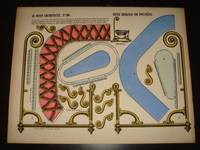
Le Petit architecte n°80 : Petit berceau de poupées
Épinal: Pellerin 1890. Fine. Pellerin Épinal s. d. circa 1880-1900 49 x 39 cm Image d'Épinal color lithograph large format printed on heavy paper. Light marginal foxing otherwise handsome condition colors very well preserved. These sheets are cardboard constructions or models on which a pattern was printed. This pattern must be cut out then assembled to construct various objects or life scenes. The Épinal imagery published several series of cut-out models including the ""Grandes Constructions"" in 39 x 49 cm format the ""Moyennes Constructions"" and the ""Petites Constructions"". From 1880 to 1908 constructions were published featuring architecture costumes ships and various vehicles. During this same period paper theaters or ""théâtre chez soi"" also enjoyed great success. This toy model developed and endured until the Second World War. Once sold by peddlers the images d'Épinal owe their name to Jean-Charles Pellerin who was the first printer to publish this type of image in series and who lived in the town of Épinal Vosges. The subjects are very varied but generally revolve around religion history French Revolution battles military uniforms or drawn from successful novels. Épinal imagery takes its origins from imagery a popular art born in the 15th century intended primarily for the illiterate public of the countryside. Originally the image is engraved on a wooden block and printing is done using a hand press. It is then colored using stencils. In the 19th century lead castings were made from the engraved wood blocks: stereotypes which allowed production to be increased. In 1820 lithography was adopted which induced a radical change in style with finer drawings. In 1900 coloring was still done by stencil thanks to a machine that could color 300 images per hour the Aquatype. Pellerin unknown
Referenz des Buchhändlers : 26658
|
|
|
Le petit chansonnier françois ou choix des meilleurs chansons sur des airs connus
à Genève Geneva: S. n. 1778. Fine. S. n. à Genève Geneva 1778 10 x 17 cm relié First edition. One frontispiece. Contemporary full blonde sheep binding. Smooth spine decorated red morocco title-label. Headcap worn. One hole at foot. 2 corners slightly bumped. Rubbing. The collection is divided between deceased authors and living authors with the finest portion given to contemporary authors. For each song the tune to which it should be sung is specified. An alphabetical table of contents allows the songs to be easily found. S. n. unknown
Referenz des Buchhändlers : 35649

|
|
|
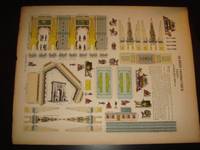
Le Petit constructeur parisien n°1 : la porte Saint-Denis
Épinal: Olivier-Pinot 1890. Fine. Olivier-Pinot Épinal s. d. circa 1880-1900 39 x 49 cm Image d'Épinal color lithograph large format printed on heavy paper. Small repaired tears to upper margin and small lacks of no consequence otherwise fine condition colors very well preserved. These sheets are cardboard constructions or models on which a pattern was printed. This pattern must be cut out then assembled to build various objects or life scenes. The Épinal imagery published several series of cut-out models including the ""Grandes Constructions"" in 39 x 49 cm format the ""Moyennes Constructions"" and the ""Petites Constructions"". From 1880 to 1908 constructions were published featuring architecture costumes boats and various vehicles. During this same period paper theaters or ""théâtre chez soi"" also enjoyed great success. This model toy developed and lasted until the Second World War. Once sold by peddlers the images d'Épinal owe their name to Jean-Charles Pellerin who was the first printer to publish this type of image in series and who lived in the town of Épinal Vosges. The subjects are very varied but generally revolve around religion history French Revolution battles military uniforms or drawn from successful novels. Épinal imagery has its origins in imagery a popular art born in the 15th century intended mainly for the illiterate rural public. Originally the image is engraved on a wooden plate and printing is done using a hand press. It is then colored using stencils. In the 19th century lead castings were made from the engraved wood blocks: stereotypes which allowed production to be increased. In 1820 lithography was adopted which induced a radical change in style with finer drawings. In 1900 coloring was still done by stencil thanks to a machine that could color 300 images per hour the Aquatype. Olivier-Pinot unknown
Referenz des Buchhändlers : 26132
|
|
|
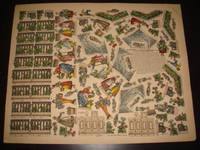
Le petit constructeur : complément de la Fontaine monumentale n°39
Épinal: Olivier-Pinot 1890. Fine. Olivier-Pinot Épinal s. d. circa 1880-1900 39 x 49 cm Image d'Épinal color lithograph large format printed on heavy paper. A small tear repaired in right margin 3 cm a pale angular dampstain without damage to the engraving otherwise fine condition colors very well preserved. These plates are cardboard constructions or models on which a pattern was printed. This pattern must be cut out and then assembled to construct various objects or life scenes. The Épinal imagery published several series of cut-out models including the ""Large Constructions"" in 39 x 49 cm format the ""Medium Constructions"" and the ""Small Constructions"". From 1880 to 1908 constructions were published featuring architecture costumes boats and various vehicles. During this same period paper theaters or ""home theater"" also enjoyed great success. This toy model developed and endured until the Second World War. Once sold by peddlers the images d'Épinal owe their name to Jean-Charles Pellerin who was the first printer to publish this type of image in series and who lived in the town of Épinal Vosges. The subjects are very varied but generally revolve around religion history French Revolution battles military uniforms or drawn from successful novels. The Épinal imagery has its origins in imagery a popular art born in the 15th century intended mainly for the illiterate rural public. Originally the image is engraved on a wooden plate and printing is done using a hand press. It is then colored using stencils. In the 19th century lead castings were made from the engraved wood: stereotypes which allowed production to be increased. In 1820 lithography was adopted which induced a radical change in style with finer drawings. In 1900 coloring was still done by stencil using a machine that could color 300 images per hour the Aquatype. Olivier-Pinot unknown
Referenz des Buchhändlers : 25466
|
|
|
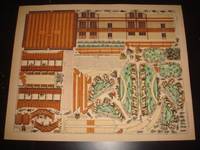
Le petit constructeur parisien : Châlet du Bois de Boulogne n°10
Épinal: Olivier-Pinot 1890. Fine. Olivier-Pinot Épinal s. d. circa 1880-1900 39 x 49 cm Image d'Épinal color lithograph large format printed on heavy paper. Very fine condition colors exceptionally well preserved. These sheets are cardboard constructions or models on which a pattern was printed. This pattern must be cut out then assembled to construct various objects or life scenes. The Épinal imagery published several series of cut-out models including the ""Grandes Constructions"" in 39 x 49 cm format the ""Moyennes Constructions"" and the ""Petites Constructions"". From 1880 to 1908 constructions were published featuring architecture costumes boats and various vehicles. During this same period paper theaters or ""théâtre chez soi"" also enjoyed great success. This toy model developed and endured until the Second World War. Once sold by peddlers the images d'Épinal owe their name to Jean-Charles Pellerin who was the first printer to publish this type of image in series and who lived in the town of Épinal Vosges. The subjects are very varied but generally revolve around religion history French Revolution battles military uniforms or drawn from successful novels. Épinal imagery has its origins in imagery a popular art born in the 15th century intended primarily for the illiterate public of the countryside. Originally the image is engraved on a wooden block and printing is carried out using a hand press. It is then colored using stencils. In the 19th century lead castings were made from the engraved wood blocks: stereotypes which allowed production to be increased. In 1820 lithography was adopted which induced a radical change in style with finer drawings. In 1900 coloring was still done by stencil using a machine that could color 300 images per hour the Aquatype. Olivier-Pinot unknown
Referenz des Buchhändlers : 25459
|
|
|
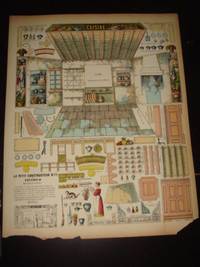
Le Petit constructeur n°77 : Cuisine
Épinal: Olivier-Pinot 1890. Fine. Olivier-Pinot Épinal s. d. circa 1880-1900 39 x 49 cm Image d'Épinal color lithograph large format printed on heavy paper. Lacks to lower margin not touching the engraving otherwise handsome condition colors very well preserved. These plates are cardboard constructions or models on which a pattern was printed. This pattern must be cut out then assembled to construct various objects or life scenes. The Imagerie d'Épinal published several series of cut-out models including the ""Grandes Constructions"" in 39 x 49 cm format the ""Moyennes Constructions"" and the ""Petites Constructions"". From 1880 to 1908 constructions were published featuring architecture costumes boats and various vehicles. During this same period paper theaters or ""théâtre chez soi"" also enjoyed great success. This toy model developed and endured until the Second World War. Once sold by peddlers the images d'Épinal owe their name to Jean-Charles Pellerin who was the first printer to publish this type of image in series and who lived in the town of Épinal Vosges. The subjects are very varied but generally revolve around religion history French Revolution battles military uniforms or drawn from bestselling novels. The Imagerie d'Épinal has its origins in popular imagery a folk art born in the 15th century intended mainly for the illiterate rural public. Originally the image is engraved on a wooden plate and printing is done using a hand press. It is then colored by means of stencils. In the 19th century lead castings are made from the engraved wood blocks: stereotypes which allow production to be increased. In 1820 lithography was adopted which induced a radical change in style with finer drawings. In 1900 coloring was still done by stencil thanks to a machine that could color 300 images per hour the Aquatype. Olivier-Pinot unknown
Referenz des Buchhändlers : 26403
|
|
|
Le Pot-Au-Feu Dix Neuvieme Annee 1911 Entire Year Half Morocco Binding 24 Issues
Paris: Le Pot-Au-Feu 1911. 1st Edition 1st Printing. Hardcover. Very Good. Engravings Throughout. Entire Year 24 Issues Complete With Front And Rear Orange Covers Of Each Issue Bound In Quarter Morocco Over Maroon Pebbled Cloth With Morocco Tips. Four Bands Title And Year On Spine Floral Patterned Endpapers. 10 1/8" Tall. Contents Fine Covers Bright And Without Wear Or Ceases Or Marks. Binding Very Minor Wear Binding Professionally Refurbished Especially At Corners. <br/> <br/> Le Pot-Au-Feu hardcover
Referenz des Buchhändlers : 027579

|
|
|
Le voyage du major Serpa Pinto dans l'Afrique Australe
Paris: La Revue des deux mondes 1882. Fine. La Revue des deux mondes Paris 1882 15.50 x 25 cm agrafé Extract from the Revue des deux mondes. First edition. In plain wrappers. Rare. La Revue des deux mondes unknown
Referenz des Buchhändlers : 20052

|
|
|
Le voyage d'un missionnaire anglais en Sibérie
Paris: La Revue des deux mondes 1882. Fine. La Revue des deux mondes Paris 1882 15.50 x 25 cm agrafé Extract from the Revue des deux mondes. First edition. In plain wrappers. Rare. La Revue des deux mondes unknown
Referenz des Buchhändlers : 20035

|
|
|
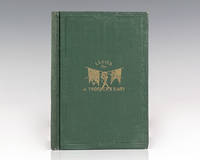
Leaves From A Trooper’s Diary.
Philadelphia: Published by the Author 1869. First edition of an Anderson Cavalry officer's Civil War memoir. Octavo original cloth decorated in gilt. In good condition. Rare. Combining autobiography and history the memoir was one of the most popular forms of Civil War literature. Generally presented as nonfiction and relating experiences in a first-person voice the form reached its peak in the 1880s when hundreds of Civil War memoirs appeared before an insatiable public. Some memoirs typically those of war heroes came out immediately as books. Others were published as newspaper or magazine articles some of which were later collected. The popularity of such Civil War narratives lived on through the twentieth century attesting to the enduring interest that Americans took in the national conflict. Published by the Author hardcover
Referenz des Buchhändlers : 132681
|
|
|
Lectures Delivered in a Course Before the Lowell Institute in Boston By Members of the Massachusetts Historical Society on Subjects Relating to Early History of Massachusetts
Boston: Published By the Society 1869 Green/gilt embossed cloth clean tight. viii 498 pgs. First Edition. Decorative Cloth. Very Good. Published By the Society hardcover
Referenz des Buchhändlers : 00285990
|
|
|
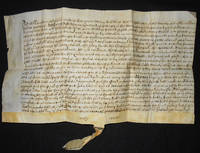
Legal Document involving Mary Russell Thomas Kennard and John Unie of Sussex Co. England
1665. Very Good. 1 handwritten parchment document 19 x 33 cm. dated 28 Nov. 1665. Mary Russell of Ripe or Eckington in Sussex Co. widow has purchased from Thomas Kennard of Hellingly in Sussex Co. yeoman a house outbuildings etc. in Hawkhurst Trent Co. Russell appoints John Unie clerk of Ripe or Eckington in Sussex Co. to act for her as her attorney regarding this property. Signed by Mary Russell and signed by witnesses Richard Russell George Foord and Henry Coby on the reverse. In Very Good Condition: minor loss along one side; light finger soiling along edges; otherwise clean and solid. unknown
Referenz des Buchhändlers : 008779
|
|
|
Leisten Und Dienen: Eine Jubilaumsschrift Herausgegeben Aus Anlass Des 75 Jahrigen . Waffen Und Metallwaren Fabrik Carl Eickhorn
Solingen GE: Carl Eickhorn 1940. 56pp/illus with tipped in pictures several in color. 75 year history of Karl Eickhorn the German sword and dagger maker. Top edge of spine has separation. 1st Edition. Boards. Very Good/No Jacket. 4to - over 9¾" - 12" tall. Carl Eickhorn Hardcover
Referenz des Buchhändlers : 012116
|
|
|
Les Boers et la politique anglaise. Extrait de la Revue des Deux Mondes
s. l. Paris: Extrait de La Revue des deux mondes 1881. Fine. Extrait de La Revue des deux mondes s. l. Paris 1881 15.50 x 25 cm agrafé First edition. Plain paper cover. Rare. Extrait de La Revue des deux mondes unknown
Referenz des Buchhändlers : 19696

|
|
|
Les diables de Loudun
Paris: Ghio 1876. Fine. Ghio Paris 1876 10.50 x 16 cm broché First edition. Split spine with lacks corner damage to boards Henry de Salles library bookplate pasted to head of front board. Ghio hardcover
Referenz des Buchhändlers : 23299

|
|
|
Les débuts d'un protectorat. La France en Tunisie
Paris: Extrait de la Revue des deux mondes 1887. Fine. Extrait de la Revue des deux mondes Paris 1887 15.50 x 25 cm agrafé First edition of these two articles. Plain paper cover. Rare. Extrait de la Revue des deux mondes unknown
Referenz des Buchhändlers : 20571

|
|
|
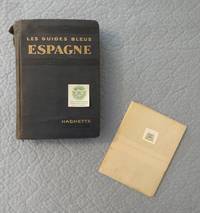
Les Guides Bleus Espagne
Paris: Hachette 1927. published under the direction of Marcel Monmarche The text is in French. Provenance: Walter Muir Whitehill Jr. Dated: Bayonne 26 VIII 1930 VIII stands for the month of August; this is a European style of date. Walter Muir Whitehill Jr 1905 - 1978 was an American historian writer and the director of the Boston Athenaeum for almost 30 years. Whitehill earned degrees from Harvard in 1926 and 1929 where he would later teach for 21 years. Whitehill spent five years in Spain studying Spanish Medieval history architecture and art. In 1932 when this book is inscribed with his name and dated Whitehill was in Santiago de Compostela Spain where he was the first to transcribe the medieval Codex Calixtinus. Whitehill was also a trustee of Monticello. His wife was a descendant of Thomas Jefferson and they are buried in the family graveyard there. The book is a 16mo size blue clothbound hardcover with rounded corners with gilt titles on spine and front cover. Endpapers are two different maps. There is a pocket after the rear end page into which is a large folded full color map is stored. 618 pages including index. There are color and black and white maps and drawings throughout the text. There is a two inch tear to back external spine seam spine is sunned and head and heel of spine are chipped. Edgewear worn bottom corners. There is a crack to the binding at the title page. A two-page spread color map of Barcelona has spotting or foxing in the margin. Pages are tanned and the borders of some pages are more darkly tanned. A blue ribbon bookmark is bound into the book and has caused discoloration in the center seam of pages 224/225 and 424/425. The top bottom and outside pages were speckled blue but that has faded as the pages have tanned. There is foxing or spotting in the side margin of page 167 and the bottom margin of page 373. Pencilled price on fep. Name and date on fep as described above. . Cloth. Good/No Jacket. 16mo - over 5¾" - 6¾" tall. Hachette Hardcover
Referenz des Buchhändlers : 006789
|
|
|
Les juifs allemands et leurs ennemis
Paris: La Revue des deux mondes 1882. Fine. La Revue des deux mondes Paris 1882 15.50 x 25 cm agrafé Extract from the Revue des deux mondes. First edition. In plain wrappers. Rare. La Revue des deux mondes unknown
Referenz des Buchhändlers : 20043

|
|
|
Les pêcheries de Terre-Neuve et les traités
Paris: Extrait de la Revue des deux mondes 1874. Fine. Extrait de la Revue des deux mondes Paris 1874 15.50 x 25 cm agrafé First edition. Plain paper cover. Rare. Extrait de la Revue des deux mondes unknown
Referenz des Buchhändlers : 20642

|
|
|
Les soucis de l'Allemagne. Extrait de la Revue des Deux Mondes
s. l. Paris: Extrait de La Revue des deux mondes 1878. Fine. Extrait de La Revue des deux mondes s. l. Paris 1878 15.50 x 25 cm agrafé First edition. Plain paper cover. Rare. Extrait de La Revue des deux mondes unknown
Referenz des Buchhändlers : 17543

|
|
|
Les territoires du sud de l'Algérie première partie : ce qu'ils sont et pourquoi ils ont été créés
Alger Algiers: J. Carbonel 1922. Fine. J. Carbonel Alger Algiers 1922 16 x 24.50 cm broché First edition published by order of M. Steeg Governor General of Algeria. Work illustrated with seven folding plates in black and in colors. Handsome copy. J. Carbonel unknown
Referenz des Buchhändlers : 9805

|
|
|
Let'er Buck!; Souvenir Program Round-Up Pendleton Oregon
Pendleton Oregon. Very Good. 1922. First Edition. Brochure. Vertical crease. Opens up to 16x11". ; Small 4to 9" - 11" tall . unknown
Referenz des Buchhändlers : 14749
|
|
|
Letter To Will Durant With Prospectus For The New Thesaurus Linguae Graecae
Irvine: University Of California 1973. No Binding. Near Fine. One Page Letter Signed To Will Durant Promoting The Ui Project To Compile All Works In Ancient Greek. With The 10 Page Prospectus For The Project. The Thesaurus Linguae Graecae® Tlg® Is A Research Program At The University Of California Irvine. Founded In 1972 The Tlg Has Collected And Digitized Most Literary Texts Written In Greek From Homer To The Fall Of Byzantium In Ad 1453. Its Goal Is To Create A Comprehensive Digital Library Of Greek Literature From Antiquity To The Present Era. The Thesaurus Was Eventually Published By Oxford University Press And Is Now In Its 4Th Edition. <br/> <br/> University Of California unknown
Referenz des Buchhändlers : 037308
|
|
|
Letters of Margaret Countess of Coningsby from France in 1737-8
Middle Hill: Typis Medio Montanis excudit C Gilmour Middle Hill Press 1842 Book. Good. Hardcover. 2 12 pages. Bound in original Middle Hill paper covered boards worn. Remains of printed paper label to spine. Pages are lightly browned title page spotted. Holzenberg 110 - here without the additional title page which is sometimes found. Typis Medio Montanis excudit C Gilmour [Middle Hill Press] hardcover
Referenz des Buchhändlers : MH78b
|
|
|
Lettre a Mylord Sur la nécessité & la Justice de l'entiére Restitution de la Monarchie d'Espagne
France 1710. Paperback. Very Good . Traduit de l'Anglois." 24 p.; 20 cm. Signatures: A-C4 4to. No publication information. At foot of p. 24: "Londres le 10 20 Février 1710" although largely trimmed off in this copy. Knuttel 15905. The identity of the English-language original if it exists has not been established. A very scarce pamphlet from the War of the Spanish Succession arguing that the stronger claim to the Spanish throne lay with the Austrian claimant Archduke Charles rather than with the French claimant Philip based on blood and degree rather than on Salic Law. In Very Good Condition: stitched edge slightly rubbed; light foxing in some margins; otherwise clean and bright. paperback
Referenz des Buchhändlers : 001486

|
|
|
Lettres patentes ; Edits ; Arrests ; Declarations. de l'année 1771
à Paris: Chez P. G. Simon 1771. Fine. Chez P. G. Simon à Paris 1771 19.50 x 25.80 cm relié Interesting collection of 106 edicts decrees letters patent and declarations running from February 22 to December 31 1771. Contemporary full brown marbled calf binding. Spine with raised bands decorated with 4 compartmentalized flowers; gilt roll at head and foot. Red morocco title-labels. On the upper cover a piece of leather torn away measuring 3 x 5 cm. Upper joint cracked at foot. Rubbing. 3 corners slightly bumped. These decrees and other laws concern the economic administrative judicial and economic life of the country. A manuscript table of contents at the end of the work the same hand having paginated the volume. Chez P. G. Simon hardcover
Referenz des Buchhändlers : 37112
|
|
|
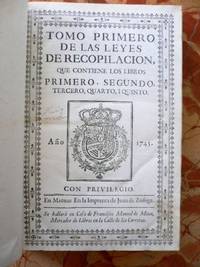
Leyes de recopilacion que contiene los libros primero segundo tercero. nono
Madrid: En la imprenta de Juan de Zuniga. 1745. Fine. En la imprenta de Juan de Zuniga. Madrid 1745 30 x 20 cm deux volumes reliés The first collection of laws governing Spain appeared in 1567 under the instigation of King Philip II. This collection would be reprinted and supplemented until 1775. A third book appeared containing los autos acordados. This edition is complete with its index at the end of volume II. Absent from the Bibliothèque Nationale de France and French catalogues copies from 1775 and 1772 at the British Library Cambridge and Southampton these libraries never hold all 2 volumes but either the first second or third. Full flamed calf bindings from the early 19th century. Smooth spine with fillets. Red title label and black volume label. Headcaps rubbed. Various scuffing. One tear to the tailcap of volume I. Surface abrasions on the edges. Upper headcap of volume II torn away. Collection of laws decrees and ordinances of the Kingdom of Spain. En la imprenta de Juan de Zuniga. unknown
Referenz des Buchhändlers : 14333
|
|
|
Liber revencionum compotorum et casualitatum receptorum in scaccario Hiberniae per Franciiscum Blundell militem & Barronettum Vice-thesaurarium ac Generalem Receptorem Dni Regis Regni sui predicti . 1621 1622 Provinciae Conatiae & Ultoniae
Middle Hill : Middle Hill Press 1846 Book. Good. Disbound. 12 pages. Pages 1-8 measure approximately 34 x 21cm; pages 9-12 slightly shorter. Pages lightly browned. Holzenberg 112. [ Middle Hill Press ] unknown
Referenz des Buchhändlers : MH260
|
|
|
LIBERTY: A Weekly for Everybody. Vol. 4 #3. May 21 1927
NY:: Liberty. G 10" x 13" Magazine; small cover edge tears. 1927. ISBN: Includes P.G. Wodehouse story with 3 pictures by Wallace Morgan - 5. ISBN: pp. 86 pp. Catalogs: PERIODICALS. Keywords: P.G. Wodehouse Humor Golf Gloria Swanson. Liberty unknown
Referenz des Buchhändlers : BOOKS030668I
|
|
|
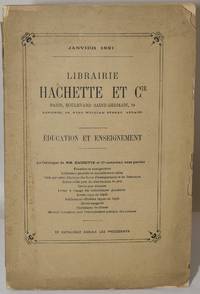
LIBRAIRIE HACHETTE ET Cie - Education Et Enseignement
Paris: Librairie Hachette Et Cie 1891. Soft Cover. Good binding. Book catalog 19th c. French. No pencil or ink markings in text. Paper binding. Address written at top of rear cover. Heavy edgewear to rear cover with several chips and tears. Chips and tears on front cover. First few pages and last few pages have several chips and closed tears. ; Not Ex-Libary. Good binding. Librairie Hachette Et Cie unknown books
Referenz des Buchhändlers : 239550
|
|
|
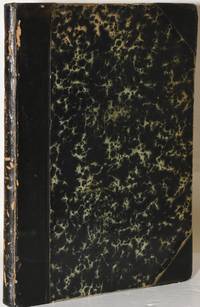
Library of Cornell University: Catalogue of the Historical Library of Andrew Dickson White First President of Cornell University I The Protestant Reformation and Its Forerunners
Ithaca NY: The University Press 1889. Hard Cover. Very Good binding. Providence Public Library bookplate attached to front paste-down. Cardholder presumably removed from rear paste-down. Blind stamps of the public library affixed to pages 13/14 15/16. "No Longer The Property Of The Providence Public Library." stamped on title page. No pencil or ink markings in text. One-half black leather and marbled boards. Moderate edgewear. Very Good binding. The University Press unknown books
Referenz des Buchhändlers : 229150
|
|

 Per e-mail erhalten
 Als pdf-Dokument herunterladen
 RSS feed
 Permanenter link


