|
Bernard BOUTET DE MONVEL
Costumes parisiens. Blouse à plis en toile Kaki guêtres hautes en drap beige chapeau de feutre. Tenue de golf pl.16 Journal des Dames et des Modes 1912 n°9
Paris: S. n. 1912. Fine. S. n. Paris 1912 14 x 22.50 cm une feuille original print in color printed on laid paper signed lower left of the board. One of the first French fashion magazines published a few days before the famous Gazette fashionable and bringing together the greatest French artists of the Art Deco movement. The Journal ladies and modes is a trimensuelle illustrated French fashion magazine created in 1797. Its publication was stopped in 1839 before being taken in June 1912 under the leadership of Tommaso Antongini secretary friend and biographer of Gabriele 'Annunzio. It will disappear in August 1914 on the eve of the First World War. The review was drawn to 1279 copies making it for the time a relatively confidential publication. The 186 plates with great finesse are engraved on strong paper and colored stencil. They represent the majority of the time women but also men and children. The models are not unlike those of the Gazette fashionable whose publication will be launched a few months later those renowned couturiers but are the fruit of the imagination of the illustrators themselves. The stencils are mostly executed by George Barbier but other artists collaborating on the magazine: Léon Bakst B. Berty Bernard Boutet de Monvel Roger Broders Jan van Brock Umberto Brunelleschi H. Robert Dammy Etienne Drian Abel Faivre Marie-Madeleine Franc-Nohain Xavier Gosé Paul Iribe Kriegck Victor Lhuer Pierre Legrain Charles Martin Fernand Simeon Ismael Smith Armand Vallee and Gerda Wegener. Many of these illustrators will also be involved in The Gazette fashionable. Their work emblematic of the Art Deco movement emphasize the influence of Orientalism and costumes of the Ballets Russes while registering in the daily activities of affluent French of the time. From the preface of the first issue of 1912 Anatole France said: ""After seventy-five years he is reborn. He is reborn through the efforts of a few ingenious minds and artists. He is reborn for the curious if there is that do not simply modes newspaper fired several thousand and illustrated by photography. And if publishers make us very exactly in its format with its paper printing its processes of etching and coloring the old classic patterns of the past is that they intend to continue the pleasantly and become charming classic fashion of today and tomorrow. "" S. n. unknown
书商的参考编号 : 57632

|
|
|
Bernard BOUTET DE MONVEL - (John REDFERN)
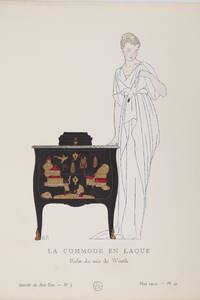
La Commode en laque. Robe du soir de Worth pl.49 La Gazette du Bon ton 1914 n°5
Paris: Lucien Vogel éditeur 1914. Fine. Lucien Vogel éditeur Paris Mai 1914 19 x 24.50 cm une feuille Original color print heightened with gold printed on laid paper signed at bottom left of the plate. Original engraving created to illustrate La Gazette du bon ton one of the most beautiful and influential fashion magazines of the 20th century celebrating the talent of French creators and artists at the height of the Art Deco movement. Famous fashion magazine founded in 1912 by Lucien Vogel La Gazette du bon ton was published until 1925 with an interruption during the War from 1915 to 1920 due to the mobilization of its editor-in-chief. It consists of 69 issues printed in only 2000 copies and is notably illustrated with 573 color plates and 148 sketches representing models by great couturiers. From their publication these luxurious publications ""addressed bibliophiles and worldly aesthetes"" Françoise Tétart-Vittu ""La Gazette du bon ton"" in Dictionnaire de la mode 2016. Printed on fine laid paper they used a typeface specially created for the magazine by Georges Peignot the Cochin character later adopted in 1946 by Christian Dior. The prints were made using the metal stencil technique enhanced in colors and some highlighted with gold or palladium. The adventure began in 1912 when Lucien Vogel a man of society and fashion - he had already participated in the magazine Femina - decided to found with his wife Cosette de Brunhoff sister of Jean father of Babar the Gazette du bon ton whose subtitle was then ""Art modes et frivolités"". Georges Charensol reported the words of the editor-in-chief: ""En 1910 observe-t-il il n'existait aucun journal de mode véritablement artistique et représentatif de l'esprit de son époque. Je songeais donc à faire un magazine de luxe avec des artistes véritablement modernes . J'étais certain du succès car pour la mode aucun pays ne peut rivaliser avec la France."" ""In 1910 he observed there was no truly artistic fashion magazine representative of the spirit of its time. I therefore thought of making a luxury magazine with truly modern artists . I was certain of success because for fashion no country can rival France."" ""Un grand éditeur d'art. Lucien Vogel"" in Les Nouvelles littéraires n°133 May 1925. The magazine's success was immediate not only in France but also in the United States and South America. Originally Vogel brought together a group of seven artists: André-Édouard Marty and Pierre Brissaud followed by Georges Lepape and Dammicourt; and finally his friends from the École des beaux-arts including George Barbier Bernard Boutet de Monvel and Charles Martin. Other talents quickly joined the team: Guy Arnoux Léon Bakst Benito Umberto Brunelleschi Chas Laborde Jean-Gabriel Domergue Raoul Dufy Édouard Halouze Alexandre Iacovleff Jean Émile Laboureur Charles Loupot Maggie Salcedo. These artists mostly unknown when Lucien Vogel called upon them would later become emblematic and sought-after artistic figures. These same illustrators created the drawings for the Gazette's advertisements. The plates highlighted and sublimated the dresses of seven creators of the era: Lanvin Doeuillet Paquin Poiret Worth Vionnet and Doucet. The couturiers provided exclusive models for each issue. Nevertheless some of the illustrations featured no real model but only the illustrator's idea of contemporary fashion. La Gazette du bon ton was a decisive step in the history of fashion. Combining aesthetic demands and plastic unity it brought together for the first time the great talents of the worlds of arts letters and fashion and imposed through this alchemy a completely new image of woman: slender independent and audacious also carried by the new generation of couturiers Coco Chanel Jean Patou Marcel Rochas. Taken over in 1920 by Condé Montrose Nast La Gazette du bon ton would largely inspire the new composition and aesthetic choices of the ""dying little magazine"" that Nast had bought a Lucien Vogel éditeur unknown
书商的参考编号 : 84705
|
|
|
Bernard BOUTET DE MONVEL
La Redingote ou Le Retour aux traditions pl.2 La Gazette du Bon ton 1920 n°1
Paris: Lucien Vogel éditeur 1920. Fine. Lucien Vogel éditeur Paris Février 1920 18 x 24 cm une feuille Original color print printed on vergé paper signed in the plate. An original print used to illustrate the Gazette du bon ton one of the most attractive and influential 20th century fashion magazines featuring the talents of French artists and other contributors from the burgeoning Art Deco movement. A celebrated fashion magazine established in 1912 by Lucien Vogel La Gazette du bon ton appeared until 1925 with a hiatus from 1915 to 1920 due to the war the editor-in-chief having been called up for service. It consisted of 69 issues printed in only 2000 copies each and notably illustrated with 573 color plates and 148 sketches of the models of the great designers. Right from the start this sumptuous publication was aimed at bibliophiles and fashionable society Françoise Tétart-Vittu La Gazette du bon ton in Dictionnaire de la mode 2016 and was printed on fine vergé paper using a type cut specially for the magazine by Georges Peignot known as Cochin later used in 1946 by Christian Dior. The prints were made using stencils heightened in colors some highlighted in gold or palladium. The story began in 1912 when Lucien Vogel a man of the world involved in fashion he had already been part of the fashion magazine Femina decided with his wife Cosette de Brunhoff the sister of Jean creator of Babar to set up the Gazette du bon ton subtitled at the time: Art fashion frivolities. Georges Charensol noted the reasoning of the editor-in-chief: In 1910 he observed there was no really artistic fashion magazine nothing representative of the spirit of the time. My dream was therefore to make a luxury magazine with truly modern artists
I was assured of success because when it comes to fashion no country on earth can compete with France. Un grand éditeur dart. Lucien Vogel in Les Nouvelles littéraires no. 133 May 1925. The magazine was immediately successful not only in France but also in the United States and Latin America. At first Vogel put together a team of seven artists: André-Édouard Marty and Pierre Brissaud followed by Georges Lepape and Dammicourt as well as eventually his friends from school and the School of Fine Arts like George Barbier Bernard Boutet de Monvel and Charles Martin. Other talented people soon came flocking to join the team: Guy Arnoux Léon Bakst Benito Boutet de Monvel Umberto Brunelleschi Chas Laborde Jean-Gabriel Domergue Raoul Dufy Édouard Halouze Alexandre Iacovleff Jean Émile Laboureur Charles Loupot Chalres Martin Maggie Salcedo. These artist mostly unknown when Lucien Vogel sought them out later became emblematic and sought-after artistic figures. It was also they who worked on the advertising drawings for the Gazette. The plates put the spotlight on and celebrate dresses by seven designers of the age: Lanvin Doeuillet Paquin Poiret Worth Vionnet and Doucet. The designers provided exclusive models for each issue. Nonetheless some of the illustrations are not based on real models but simply on the illustrators conception of the fashion of the day. The Gazette du bon ton was an important step in the history of fashion. Combining aesthetic demands with the physical whole it brought together for the first time the great talents of the artistic literary and fashion worlds; and imposed through this alchemy a completely new image of women: slender independent and daring which was shared by the new generation of designers including Coco Chanel Jean Patou Marcel Rochas and so on
Taken over in 1920 by Condé Montrose Nast the Gazette du bon ton was an important influence on the new layout and aesthetics of that little dying paper that Nast had bought a few years earlier: Vogue. Lucien Vogel éditeur unknown
书商的参考编号 : 54710
|
|
|
Bernard BOUTET DE MONVEL - (Charles-Frederick WORTH)
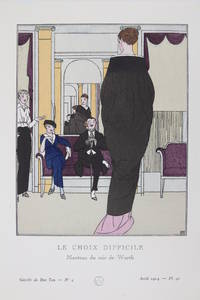
Le Choix difficile. Manteau du soir de Worth pl.40 La Gazette du Bon ton 1914 n°4
Paris: Lucien Vogel éditeur 1914. Fine. Lucien Vogel éditeur Paris Avril 1914 19 x 24.50 cm une feuille Original color print printed on laid paper signed lower right on the plate. Original engraving created for the illustration of La Gazette du bon ton one of the most beautiful and influential fashion magazines of the 20th century celebrating the talent of French creators and artists in the heyday of Art Deco. Famous fashion magazine founded in 1912 by Lucien Vogel La Gazette du bon ton was published until 1925 with an interruption during the War from 1915 to 1920 due to the mobilization of its editor-in-chief. It consists of 69 issues printed in only 2000 copies and is illustrated notably with 573 color plates and 148 sketches representing models by great couturiers. From their publication these luxurious publications ""addressed bibliophiles and worldly aesthetes"" Françoise Tétart-Vittu ""La Gazette du bon ton"" in Dictionnaire de la mode 2016. Printed on fine laid paper they used a typeface specially created for the magazine by Georges Peignot the Cochin character adopted in 1946 by Christian Dior. The prints were created using the metal stencil technique enhanced in colors and some highlighted in gold or palladium. The adventure began in 1912 when Lucien Vogel a man of society and fashion - he had already participated in the magazine Femina - decided to found with his wife Cosette de Brunhoff sister of Jean the father of Babar the Gazette du bon ton whose subtitle was then ""Art modes et frivolités"". Georges Charensol reports the words of the editor-in-chief: ""En 1910 observe-t-il il n'existait aucun journal de mode véritablement artistique et représentatif de l'esprit de son époque. Je songeais donc à faire un magazine de luxe avec des artistes véritablement modernes . J'étais certain du succès car pour la mode aucun pays ne peut rivaliser avec la France."" ""In 1910 he observes there was no truly artistic fashion journal representative of the spirit of its time. So I was thinking of making a luxury magazine with truly modern artists . I was certain of success because for fashion no country can rival France."" ""Un grand éditeur d'art. Lucien Vogel"" in Les Nouvelles littéraires n°133 May 1925. The magazine's success was immediate not only in France but also in the United States and South America. Originally Vogel therefore brought together a group of seven artists: André-Édouard Marty and Pierre Brissaud followed by Georges Lepape and Dammicourt; and finally his friends from the École des beaux-arts who were George Barbier Bernard Boutet de Monvel or Charles Martin. Other talents quickly joined the team: Guy Arnoux Léon Bakst Benito Umberto Brunelleschi Chas Laborde Jean-Gabriel Domergue Raoul Dufy Édouard Halouze Alexandre Iacovleff Jean Émile Laboureur Charles Loupot Maggie Salcedo. These artists mostly unknown when Lucien Vogel called upon them would later become emblematic and sought-after artistic figures. These same illustrators created the drawings for the Gazette's advertisements. The plates highlighted and sublimated the dresses of seven creators of the time: Lanvin Doeuillet Paquin Poiret Worth Vionnet and Doucet. The couturiers provided exclusive models for each issue. Nevertheless some of the illustrations featured no real model but only the illustrator's idea of the fashion of the day. La Gazette du bon ton was a decisive step in the history of fashion. Combining aesthetic requirements and plastic unity it brought together for the first time the great talents from the worlds of arts letters and fashion and imposed through this alchemy a completely new image of woman slender independent and bold also carried by the new generation of couturiers Coco Chanel Jean Patou Marcel Rochas. Taken over in 1920 by Condé Montrose Nast the Gazette du bon ton would largely inspire the new composition and aesthetic choices of the ""dying little journal"" that Nast had bought a few years earlie Lucien Vogel éditeur unknown
书商的参考编号 : 84716
|
|
|
Bernard BOUTET DE MONVEL - (Louise CHERUIT)
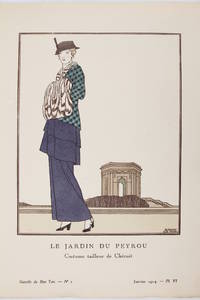
Le Jardin du Peyrou. Costume tailleur de Chéruit pl.6 La Gazette du Bon ton 1914 n°1
Paris: Lucien Vogel éditeur 1914. Fine. Lucien Vogel éditeur Paris Janvier 1914 19 x 24.50 cm une feuille Original color print printed on laid paper signed at bottom right of the plate. Original engraving created for the illustration of La Gazette du bon ton one of the most beautiful and influential fashion magazines of the 20th century celebrating the talent of French creators and artists during the flourishing of Art Deco. Famous fashion magazine founded in 1912 by Lucien Vogel La Gazette du bon ton was published until 1925 with an interruption during the War from 1915 to 1920 due to the mobilization of its editor-in-chief. It consists of 69 issues printed in only 2000 copies and is illustrated notably with 573 color plates and 148 sketches representing models by great couturiers. From their publication these luxurious publications ""addressed bibliophiles and fashionable aesthetes"" Françoise Tétart-Vittu ""La Gazette du bon ton"" in Dictionnaire de la mode 2016. Printed on fine laid paper they used a typeface specially created for the magazine by Georges Peignot the Cochin character adopted in 1946 by Christian Dior. The prints are created using the metal stencil technique heightened in colors and for some highlighted in gold or palladium. The adventure begins in 1912 when Lucien Vogel a man of society and fashion - he had already participated in the magazine Femina - decides to found with his wife Cosette de Brunhoff sister of Jean the father of Babar the Gazette du bon ton whose subtitle was then ""Art modes et frivolités"". Georges Charensol reports the words of the editor-in-chief: ""En 1910 observe-t-il il n'existait aucun journal de mode véritablement artistique et représentatif de l'esprit de son époque. Je songeais donc à faire un magazine de luxe avec des artistes véritablement modernes . J'étais certain du succès car pour la mode aucun pays ne peut rivaliser avec la France."" ""In 1910 he observed there was no truly artistic fashion journal representative of the spirit of its time. I was therefore thinking of making a luxury magazine with truly modern artists . I was certain of success because for fashion no country can rival France."" ""Un grand éditeur d'art. Lucien Vogel"" in Les Nouvelles littéraires n°133 May 1925. The magazine's success was immediate not only in France but also in the United States and South America. Originally Vogel therefore brought together a group of seven artists: André-Édouard Marty and Pierre Brissaud followed by Georges Lepape and Dammicourt; and finally his friends from the École des beaux-arts who were George Barbier Bernard Boutet de Monvel or Charles Martin. Other talents quickly joined the team: Guy Arnoux Léon Bakst Benito Boutet de Monvel Umberto Brunelleschi Chas Laborde Jean-Gabriel Domergue Raoul Dufy Édouard Halouze Alexandre Iacovleff Jean Émile Laboureur Charles Loupot Charles Martin Maggie Salcedo. These artists unknown for the most part when Lucien Vogel called upon them would subsequently become emblematic and sought-after artistic figures. These same illustrators created the drawings for the Gazette's advertisements. The plates highlight and sublimate the dresses of seven creators of the period: Lanvin Doeuillet Paquin Poiret Worth Vionnet and Doucet. The couturiers provided exclusive models for each issue. Nevertheless some of the illustrations featured no real model but only the illustrator's idea of contemporary fashion. La Gazette du bon ton is a decisive step in the history of fashion. Combining aesthetic demands and plastic unity it brought together for the first time the great talents of the worlds of arts letters and fashion and imposed through this alchemy a completely new image of woman slender independent and audacious also carried by the new generation of couturiers Coco Chanel Jean Patou Marcel Rochas. Taken over in 1920 by Condé Montrose Nast the Gazette du bon ton would largely inspire the new composition and aestheti Lucien Vogel éditeur unknown
书商的参考编号 : 84684
|
|
|
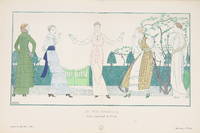
Bernard BOUTET DE MONVEL - (Charles-Frederick WORTH)
Les Jeux innocents. Robes d'après-midi de Worth pl.58 La Gazette du Bon ton 1914 n°6
Paris: Lucien Vogel éditeur 1914. Fine. Lucien Vogel éditeur Paris Juin 1914 36.50 x 24 cm une feuille Original double color print printed on laid paper signed at bottom left of the plate. Original engraving created for the illustration of La Gazette du bon ton one of the most beautiful and influential fashion magazines of the 20th century celebrating the talent of French creators and artists at the height of the Art Deco movement. Famous fashion magazine founded in 1912 by Lucien Vogel La Gazette du bon ton was published until 1925 with an interruption during the War from 1915 to 1920 due to the mobilization of its editor-in-chief. It consists of 69 issues printed in only 2000 copies and is illustrated notably with 573 color plates and 148 sketches representing models by great couturiers. From their publication these luxurious publications ""address bibliophiles and fashionable aesthetes"" Françoise Tétart-Vittu ""La Gazette du bon ton"" in Dictionnaire de la mode 2016. Printed on fine laid paper they use a typeface specially created for the magazine by Georges Peignot the Cochin character adopted in 1946 by Christian Dior. The prints are created using the metallic stencil technique heightened in colors and for some highlighted in gold or palladium. The adventure begins in 1912 when Lucien Vogel a man of society and fashion - he had already participated in the magazine Femina - decides to found with his wife Cosette de Brunhoff sister of Jean the father of Babar the Gazette du bon ton whose subtitle was then ""Art modes et frivolités"". Georges Charensol reports the words of the editor-in-chief: ""En 1910 observe-t-il il n'existait aucun journal de mode véritablement artistique et représentatif de l'esprit de son époque. Je songeais donc à faire un magazine de luxe avec des artistes véritablement modernes . J'étais certain du succès car pour la mode aucun pays ne peut rivaliser avec la France."" ""In 1910 he observes there existed no fashion journal that was truly artistic and representative of the spirit of its time. I therefore thought of making a luxury magazine with truly modern artists . I was certain of success because for fashion no country can rival France."" ""Un grand éditeur d'art. Lucien Vogel"" in Les Nouvelles littéraires n°133 May 1925. The magazine's success is immediate not only in France but also in the United States and South America. Originally Vogel thus brings together a group of seven artists: André-Édouard Marty and Pierre Brissaud followed by Georges Lepape and Dammicourt; and finally his friends from the École des beaux-arts who are George Barbier Bernard Boutet de Monvel or Charles Martin. Other talents quickly join the team: Guy Arnoux Léon Bakst Benito Boutet de Monvel Umberto Brunelleschi Chas Laborde Jean-Gabriel Domergue Raoul Dufy Édouard Halouze Alexandre Iacovleff Jean Émile Laboureur Charles Loupot Charles Martin Maggie Salcedo. These artists mostly unknown when Lucien Vogel calls upon them will subsequently become emblematic and sought-after artistic figures. These same illustrators create the drawings for the Gazette's advertisements. The plates highlight and sublimate the dresses of seven creators of the era: Lanvin Doeuillet Paquin Poiret Worth Vionnet and Doucet. The couturiers provide exclusive models for each issue. Nevertheless some of the illustrations feature no real model but only the illustrator's idea of contemporary fashion. La Gazette du bon ton is a decisive step in fashion history. Combining aesthetic requirement and plastic unity it brings together for the first time the great talents from the worlds of arts letters and fashion and imposes through this alchemy a completely new image of woman slender independent and bold also carried by the new generation of couturiers Coco Chanel Jean Patou Marcel Rochas. Taken over in 1920 by Condé Montrose Nast the Gazette du bon ton would largely inspire the new composition and aesthetic choices of the "" Lucien Vogel éditeur unknown
书商的参考编号 : 84760
|
|
|
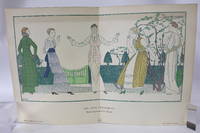
Bernard BOUTET DE MONVEL - (Charles-Frederick WORTH)
Les Jeux innocents. Robes d'après-midi de Worth pl.58 La Gazette du Bon ton 1914 n°6
Paris: Lucien Vogel éditeur 1914. Fine. Lucien Vogel éditeur Paris Juin 1914 36.50 x 24 cm une feuille Double original color print printed on vergé paper signed in the plate. An original print used to illustrate the Gazette du bon ton one of the most attractive and influential 20th century fashion magazines featuring the talents of French artists and other contributors from the burgeoning Art Deco movement. A celebrated fashion magazine established in 1912 by Lucien Vogel La Gazette du bon ton appeared until 1925 with a hiatus from 1915 to 1920 due to the war the editor-in-chief having been called up for service. It consisted of 69 issues printed in only 2000 copies each and notably illustrated with 573 color plates and 148 sketches of the models of the great designers. Right from the start this sumptuous publication was aimed at bibliophiles and fashionable society Françoise Tétart-Vittu La Gazette du bon ton in Dictionnaire de la mode 2016 and was printed on fine vergé paper using a type cut specially for the magazine by Georges Peignot known as Cochin later used in 1946 by Christian Dior. The prints were made using stencils heightened in colors some highlighted in gold or palladium. The story began in 1912 when Lucien Vogel a man of the world involved in fashion he had already been part of the fashion magazine Femina decided with his wife Cosette de Brunhoff the sister of Jean creator of Babar to set up the Gazette du bon ton subtitled at the time: Art fashion frivolities. Georges Charensol noted the reasoning of the editor-in-chief: 'In 1910' he observed there was no really artistic fashion magazine nothing representative of the spirit of the time. My dream was therefore to make a luxury magazine with truly modern artists
I was assured of success because when it comes to fashion no country on earth can compete with France.' Un grand éditeur d'art. Lucien Vogel in Les Nouvelles littéraires no. 133 May 1925. The magazine was immediately successful not only in France but also in the United States and Latin America. At first Vogel put together a team of seven artists: André-Édouard Marty and Pierre Brissaud followed by Georges Lepape and Dammicourt as well as eventually his friends from school and the School of Fine Arts like George Barbier Bernard Boutet de Monvel and Charles Martin. Other talented people soon came flocking to join the team: Guy Arnoux Léon Bakst Benito Boutet de Monvel Umberto Brunelleschi Chas Laborde Jean-Gabriel Domergue Raoul Dufy Édouard Halouze Alexandre Iacovleff Jean Émile Laboureur Charles Loupot Chalres Martin Maggie Salcedo. These artist mostly unknown when Lucien Vogel sought them out later became emblematic and sought-after artistic figures. It was also they who worked on the advertising drawings for the Gazette. The plates put the spotlight on and celebrate dresses by seven designers of the age: Lanvin Doeuillet Paquin Poiret Worth Vionnet and Doucet. The designers provided exclusive models for each issue. Nonetheless some of the illustrations are not based on real models but simply on the illustrator's conception of the fashion of the day. The Gazette du bon ton was an important step in the history of fashion. Combining aesthetic demands with the physical whole it brought together for the first time the great talents of the artistic literary and fashion worlds; and imposed through this alchemy a completely new image of women: slender independent and daring which was shared by the new generation of designers including Coco Chanel Jean Patou Marcel Rochas and so on
Taken over in 1920 by Condé Montrose Nast the Gazette du bon ton was an important influence on the new layout and aesthetics of that little dying paper that Nast had bought a few years earlier: Vogue. Lucien Vogel éditeur unknown
书商的参考编号 : 54679
|
|
|
Bernard BOUTET DE MONVEL - (Georges DOEUILLET)
Les Premiers soupçons. Costumes trotteurs de Doeuillet pl.10 La Gazette du Bon ton 1912-1913 n°3
Paris: Lucien Vogel éditeur 1912. Fine. Lucien Vogel éditeur Paris 1912-1913 19 x 24.50 cm une feuille Original color print printed on vergé paper signed in the plate. An original print used to illustrate the Gazette du bon ton one of the most attractive and influential 20th century fashion magazines featuring the talents of French artists and other contributors from the burgeoning Art Deco movement. A celebrated fashion magazine established in 1912 by Lucien Vogel La Gazette du bon ton appeared until 1925 with a hiatus from 1915 to 1920 due to the war the editor-in-chief having been called up for service. It consisted of 69 issues printed in only 2000 copies each and notably illustrated with 573 color plates and 148 sketches of the models of the great designers. Right from the start this sumptuous publication was aimed at bibliophiles and fashionable society Françoise Tétart-Vittu La Gazette du bon ton in Dictionnaire de la mode 2016 and was printed on fine vergé paper using a type cut specially for the magazine by Georges Peignot known as Cochin later used in 1946 by Christian Dior. The prints were made using stencils heightened in colors some highlighted in gold or palladium. The story began in 1912 when Lucien Vogel a man of the world involved in fashion he had already been part of the fashion magazine Femina decided with his wife Cosette de Brunhoff the sister of Jean creator of Babar to set up the Gazette du bon ton subtitled at the time: Art fashion frivolities. Georges Charensol noted the reasoning of the editor-in-chief: In 1910 he observed there was no really artistic fashion magazine nothing representative of the spirit of the time. My dream was therefore to make a luxury magazine with truly modern artists
I was assured of success because when it comes to fashion no country on earth can compete with France. Un grand éditeur dart. Lucien Vogel in Les Nouvelles littéraires no. 133 May 1925. The magazine was immediately successful not only in France but also in the United States and Latin America. At first Vogel put together a team of seven artists: André-Édouard Marty and Pierre Brissaud followed by Georges Lepape and Dammicourt as well as eventually his friends from school and the School of Fine Arts like George Barbier Bernard Boutet de Monvel and Charles Martin. Other talented people soon came flocking to join the team: Guy Arnoux Léon Bakst Benito Boutet de Monvel Umberto Brunelleschi Chas Laborde Jean-Gabriel Domergue Raoul Dufy Édouard Halouze Alexandre Iacovleff Jean Émile Laboureur Charles Loupot Chalres Martin Maggie Salcedo. These artist mostly unknown when Lucien Vogel sought them out later became emblematic and sought-after artistic figures. It was also they who worked on the advertising drawings for the Gazette. The plates put the spotlight on and celebrate dresses by seven designers of the age: Lanvin Doeuillet Paquin Poiret Worth Vionnet and Doucet. The designers provided exclusive models for each issue. Nonetheless some of the illustrations are not based on real models but simply on the illustrators conception of the fashion of the day. The Gazette du bon ton was an important step in the history of fashion. Combining aesthetic demands with the physical whole it brought together for the first time the great talents of the artistic literary and fashion worlds; and imposed through this alchemy a completely new image of women: slender independent and daring which was shared by the new generation of designers including Coco Chanel Jean Patou Marcel Rochas and so on
Taken over in 1920 by Condé Montrose Nast the Gazette du bon ton was an important influence on the new layout and aesthetics of that little dying paper that Nast had bought a few years earlier: Vogue. Lucien Vogel éditeur unknown
书商的参考编号 : 54501
|
|
|
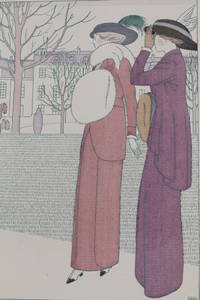
Bernard BOUTET DE MONVEL - (Charles-Frederick WORTH)
M. Bergson a promis de venir. Robe de dîner de Worth pl.30 La Gazette du Bon ton 1914 n°3
Paris: Lucien Vogel éditeur 1914. Fine. Lucien Vogel éditeur Paris Mars 1914 19 x 24.50 cm une feuille Original color print printed on laid paper signed at the top right of the plate. Original engraving created for the illustration of La Gazette du bon ton one of the most beautiful and influential fashion magazines of the 20th century celebrating the talent of French creators and artists during the flourishing of Art Deco. The famous fashion magazine founded in 1912 by Lucien Vogel La Gazette du bon ton was published until 1925 with an interruption during the War from 1915 to 1920 due to the mobilization of its editor-in-chief. It consists of 69 issues printed in only 2000 copies and is illustrated notably with 573 color plates and 148 sketches representing models by great couturiers. From their publication these luxurious publications ""were addressed to bibliophiles and worldly aesthetes"" Françoise Tétart-Vittu ""La Gazette du bon ton"" in Dictionnaire de la mode 2016. Printed on fine laid paper they use a typeface specially created for the magazine by Georges Peignot the Cochin character taken up in 1946 by Christian Dior. The prints are created using the metal stencil technique heightened in colors and for some highlighted in gold or palladium. The adventure begins in 1912 when Lucien Vogel a man of the world and fashion - he had already participated in the magazine Femina - decides to found with his wife Cosette de Brunhoff sister of Jean the father of Babar La Gazette du bon ton whose subtitle was then ""Art modes et frivolités"". Georges Charensol reports the words of the editor-in-chief: ""In 1910 he observes there existed no fashion journal that was truly artistic and representative of the spirit of its time. I was therefore thinking of making a luxury magazine with truly modern artists . I was certain of success because for fashion no country can rival France."" ""Un grand éditeur d'art. Lucien Vogel"" in Les Nouvelles littéraires n°133 May 1925. The success of the magazine is immediate not only in France but also in the United States and South America. Originally Vogel therefore brings together a group of seven artists: André-Édouard Marty and Pierre Brissaud followed by Georges Lepape and Dammicourt; and finally his friends from the École des beaux-arts who are George Barbier Bernard Boutet de Monvel or Charles Martin. Other talents quickly come to join the team: Guy Arnoux Léon Bakst Benito Umberto Brunelleschi Chas Laborde Jean-Gabriel Domergue Raoul Dufy Édouard Halouze Alexandre Iacovleff Jean Émile Laboureur Charles Loupot Maggie Salcedo. These artists mostly unknown when Lucien Vogel calls upon them will subsequently become emblematic and sought-after artistic figures. These same illustrators create the drawings for the Gazette's advertisements. The plates highlight and sublime the dresses of seven creators of the time: Lanvin Doeuillet Paquin Poiret Worth Vionnet and Doucet. The couturiers provide exclusive models for each issue. Nevertheless some of the illustrations feature no real model but only the idea that the illustrator has of the fashion of the day. La Gazette du bon ton is a decisive step in the history of fashion. Combining aesthetic requirement and plastic unity it brings together for the first time the great talents of the world of arts letters and fashion and imposes through this alchemy a completely new image of woman slender independent and audacious also carried by the new generation of couturiers Coco Chanel Jean Patou Marcel Rochas. Taken over in 1920 by Condé Montrose Nast La Gazette du bon ton will largely inspire the new composition and aesthetic choices of the ""dying little journal"" that Nast had bought a few years earlier: Vogue magazine. Lucien Vogel éditeur unknown
书商的参考编号 : 84755
|
|
|
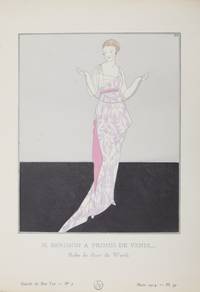
Bernard BOUTET DE MONVEL - (Charles-Frederick WORTH)
M. Bergson a promis de venir. Robe de dîner de Worth pl.30 La Gazette du Bon ton 1914 n°3
Paris: Lucien Vogel éditeur 1914. Fine. Lucien Vogel éditeur Paris Mars 1914 19 x 24.50 cm une feuille Original color print printed on vergé paper signed in the plate. An original print used to illustrate the Gazette du bon ton one of the most attractive and influential 20th century fashion magazines featuring the talents of French artists and other contributors from the burgeoning Art Deco movement. A celebrated fashion magazine established in 1912 by Lucien Vogel La Gazette du bon ton appeared until 1925 with a hiatus from 1915 to 1920 due to the war the editor-in-chief having been called up for service. It consisted of 69 issues printed in only 2000 copies each and notably illustrated with 573 color plates and 148 sketches of the models of the great designers. Right from the start this sumptuous publication was aimed at bibliophiles and fashionable society Françoise Tétart-Vittu La Gazette du bon ton in Dictionnaire de la mode 2016 and was printed on fine vergé paper using a type cut specially for the magazine by Georges Peignot known as Cochin later used in 1946 by Christian Dior. The prints were made using stencils heightened in colors some highlighted in gold or palladium. The story began in 1912 when Lucien Vogel a man of the world involved in fashion he had already been part of the fashion magazine Femina decided with his wife Cosette de Brunhoff the sister of Jean creator of Babar to set up the Gazette du bon ton subtitled at the time: Art fashion frivolities. Georges Charensol noted the reasoning of the editor-in-chief: 'In 1910' he observed there was no really artistic fashion magazine nothing representative of the spirit of the time. My dream was therefore to make a luxury magazine with truly modern artists
I was assured of success because when it comes to fashion no country on earth can compete with France.' Un grand éditeur d'art. Lucien Vogel in Les Nouvelles littéraires no. 133 May 1925. The magazine was immediately successful not only in France but also in the United States and Latin America. At first Vogel put together a team of seven artists: André-Édouard Marty and Pierre Brissaud followed by Georges Lepape and Dammicourt as well as eventually his friends from school and the School of Fine Arts like George Barbier Bernard Boutet de Monvel and Charles Martin. Other talented people soon came flocking to join the team: Guy Arnoux Léon Bakst Benito Boutet de Monvel Umberto Brunelleschi Chas Laborde Jean-Gabriel Domergue Raoul Dufy Édouard Halouze Alexandre Iacovleff Jean Émile Laboureur Charles Loupot Chalres Martin Maggie Salcedo. These artist mostly unknown when Lucien Vogel sought them out later became emblematic and sought-after artistic figures. It was also they who worked on the advertising drawings for the Gazette. The plates put the spotlight on and celebrate dresses by seven designers of the age: Lanvin Doeuillet Paquin Poiret Worth Vionnet and Doucet. The designers provided exclusive models for each issue. Nonetheless some of the illustrations are not based on real models but simply on the illustrator's conception of the fashion of the day. The Gazette du bon ton was an important step in the history of fashion. Combining aesthetic demands with the physical whole it brought together for the first time the great talents of the artistic literary and fashion worlds; and imposed through this alchemy a completely new image of women: slender independent and daring which was shared by the new generation of designers including Coco Chanel Jean Patou Marcel Rochas and so on
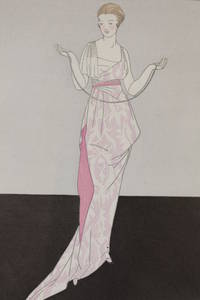
Taken over in 1920 by Condé Montrose Nast the Gazette du bon ton was an important influence on the new layout and aesthetics of that little dying paper that Nast had bought a few years earlier: Vogue. Lucien Vogel éditeur unknown
书商的参考编号 : 54644
|
|
|
Bernard BOUTET DE MONVEL - (Charles-Frederick WORTH)
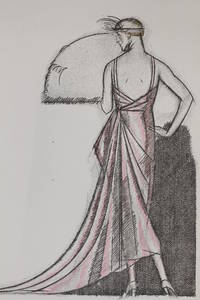
Une robe du soir de Worth pl.39 La Gazette du Bon ton 1920 n°5
Paris: Lucien Vogel éditeur 1920. Fine. Lucien Vogel éditeur Paris Juin 1920 18 x 24 cm une feuille Original color print printed on vergé paper signed in the plate. An original print used to illustrate the Gazette du bon ton one of the most attractive and influential 20th century fashion magazines featuring the talents of French artists and other contributors from the burgeoning Art Deco movement. A celebrated fashion magazine established in 1912 by Lucien Vogel La Gazette du bon ton appeared until 1925 with a hiatus from 1915 to 1920 due to the war the editor-in-chief having been called up for service. It consisted of 69 issues printed in only 2000 copies each and notably illustrated with 573 color plates and 148 sketches of the models of the great designers. Right from the start this sumptuous publication was aimed at bibliophiles and fashionable society Françoise Tétart-Vittu La Gazette du bon ton in Dictionnaire de la mode 2016 and was printed on fine vergé paper using a type cut specially for the magazine by Georges Peignot known as Cochin later used in 1946 by Christian Dior. The prints were made using stencils heightened in colors some highlighted in gold or palladium. The story began in 1912 when Lucien Vogel a man of the world involved in fashion he had already been part of the fashion magazine Femina decided with his wife Cosette de Brunhoff the sister of Jean creator of Babar to set up the Gazette du bon ton subtitled at the time: Art fashion frivolities. Georges Charensol noted the reasoning of the editor-in-chief: In 1910 he observed there was no really artistic fashion magazine nothing representative of the spirit of the time. My dream was therefore to make a luxury magazine with truly modern artists
I was assured of success because when it comes to fashion no country on earth can compete with France. Un grand éditeur dart. Lucien Vogel in Les Nouvelles littéraires no. 133 May 1925. The magazine was immediately successful not only in France but also in the United States and Latin America. At first Vogel put together a team of seven artists: André-Édouard Marty and Pierre Brissaud followed by Georges Lepape and Dammicourt as well as eventually his friends from school and the School of Fine Arts like George Barbier Bernard Boutet de Monvel and Charles Martin. Other talented people soon came flocking to join the team: Guy Arnoux Léon Bakst Benito Boutet de Monvel Umberto Brunelleschi Chas Laborde Jean-Gabriel Domergue Raoul Dufy Édouard Halouze Alexandre Iacovleff Jean Émile Laboureur Charles Loupot Chalres Martin Maggie Salcedo. These artist mostly unknown when Lucien Vogel sought them out later became emblematic and sought-after artistic figures. It was also they who worked on the advertising drawings for the Gazette. The plates put the spotlight on and celebrate dresses by seven designers of the age: Lanvin Doeuillet Paquin Poiret Worth Vionnet and Doucet. The designers provided exclusive models for each issue. Nonetheless some of the illustrations are not based on real models but simply on the illustrators conception of the fashion of the day. The Gazette du bon ton was an important step in the history of fashion. Combining aesthetic demands with the physical whole it brought together for the first time the great talents of the artistic literary and fashion worlds; and imposed through this alchemy a completely new image of women: slender independent and daring which was shared by the new generation of designers including Coco Chanel Jean Patou Marcel Rochas and so on
Taken over in 1920 by Condé Montrose Nast the Gazette du bon ton was an important influence on the new layout and aesthetics of that little dying paper that Nast had bought a few years earlier: Vogue. Lucien Vogel éditeur unknown
书商的参考编号 : 54779
|
|
|
Bernard CLAVEL
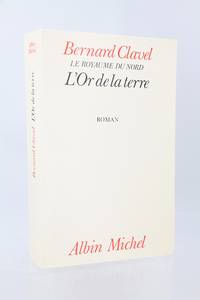
L'or de la terre
Paris: Albin Michel 1984. Fine. Albin Michel Paris 1984 15 x 24 cm broché First edition one of 60 numbered copies on deckle-edged laid paper the only deluxe copies. A very fine copy. Albin Michel unknown
书商的参考编号 : 85763
|
|
|
Bernard CLAVEL
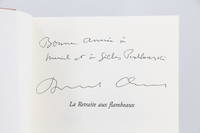
La retraite aux flambeaux
Paris: Robert Laffont 2002. Fine. Robert Laffont Paris 2002 13 x 20 cm broché First edition on ordinary paper. Handsome copy with the illustrated dust jacket. Signed autograph inscription by Bernard Clavel to Muriel and Gilles Pudlowski. Robert Laffont unknown
书商的参考编号 : 83843
|
|
|
Bernard CLAVEL
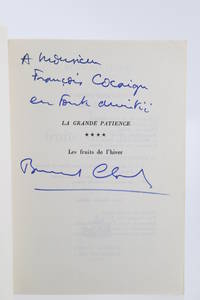
Les fruits de l'hiver
Paris: Robert Laffont 1969. Fine. Robert Laffont Paris 1969 13.50 x 21.50 cm broché New edition published a few months after the first edition. Spine very lightly sunned small stains to fore edge otherwise handsome copy. The work won the Prix Goncourt for 1968. Autograph inscription signed by Bernard Clavel to François Cocaigne. Robert Laffont unknown
书商的参考编号 : 86882
|
|
|
Bernard CLAVEL
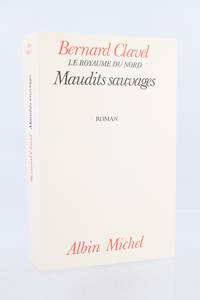
Maudits sauvages
Paris: Albin Michel 1989. Fine. Albin Michel Paris 1989 15 x 24 cm broché First edition one of 60 numbered copies on laid paper the only deluxe copies. Very handsome copy. Albin Michel unknown
书商的参考编号 : 85761
|
|
|
Bernard CLAVEL
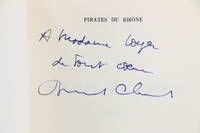
Pirates du Rhône
Paris: Robert Laffont 1974. Fine. Robert Laffont Paris 1974 13 x 21 cm broché New edition of which there were no deluxe copies and printed on the occasion of the television adaptation of this novel. Spine and boards slightly and marginally discolored and faded otherwise a handsome copy. Signed autograph inscription from Bernard Clavel to Madame Loyen. Robert Laffont hardcover
书商的参考编号 : 83833
|
|
|
Bernard COMBETTE
Des hommes.
Paris: Edition du temps présent 1912. Fine. Edition du temps présent Paris 1912 13.50 x 19.50 cm broché First edition of which there were no deluxe copies. Friendly autograph inscription from Bernard Combette to André Lhote. Minor worming to endpapers. Edition du temps présent unknown
书商的参考编号 : 14651
|
|
|
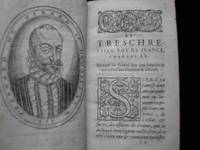
Bernard de (Seigneur du Haillan) GIRARD
De l'estat et succez des affaires de France. Oeuvre depuis les précédentes éditions augmenté & illustré contenant sommairement l'histoire des roys de France & les choses plus remarquables par eux instituées pour l'ornement & grandeur de leur Royaume. Ensemble une sommaire histoire des seigneurs comtes et ducs d'Anjou. Par Bernard de Girard Seigneur du Haillan secrétaire de monseigneur le duc d'Anjou
à Paris: Chez Pierre l'Huillier 1573. Fine. Chez Pierre l'Huillier à Paris 1573 12.30 x 8 cm relié New edition after the first edition of 1570 privilege of 1572 the summary history of the counts of Anjou has its own title page. The edition includes a portrait of the author. Although this book was reprinted several times the 16th-century editions are now quite uncommon. 4th edition 'of a work that was very successful and is still worth consulting.' Brunet II 1612. Contemporary full brown sheep binding from the first half of the 19th century spine with raised bands fillets and date at foot. Copy trimmed short. Bernard de Girard 1535-1610 was born and died in Bordeaux after having been secretary to François de Noailles and having made himself known as a poet and historian he was appointed by Charles IX in 1571 as historiographer of France then genealogist of the order of the Holy Spirit by Henri III. He was the first French writer to have composed a body of national history and if he adopted certain fables he rejected numerous generally accepted traditions. Chez Pierre l'Huillier hardcover
书商的参考编号 : 7880
|
|
|
Bernard de MONTFAUCON
Histoires des révolutions du Portugal
Limoges: Barbou frères 1850. Fine. Barbou frères Limoges s. d. 12.50 x 20.50 cm relié New edition. Half black cloth binding smooth spine marbled paper boards upper corners slightly bumped. Work illustrated with an engraving as frontispiece. Some light foxing of no great concern endpapers partially shaded. Rare. Barbou frères hardcover
书商的参考编号 : 32491
|
|
|
Bernard de MONTFAUCON
La verité de l'histoire de Judith
à Paris: Chez Simon Langronne 1692. Fine. Chez Simon Langronne à Paris 1692 9 x 16 cm relié Second edition statement. Translation by Bernard de Montfaucon from the Vulgate and Greek text. Contemporary full burgundy morocco binding. Jansenist spine with raised bands. Gilt title. Gilt roll on edges and turn-ins. Gilt edges. Spine slightly faded. Traces of rubbing. Title page browned. Handsome copy. The author proves that the story of Judith is authentic and that it is not fiction or a parable as many commentators had declared notably the Protestants. 3 distinct parts compose the work. Chez Simon Langronne hardcover
书商的参考编号 : 62897
|
|
|
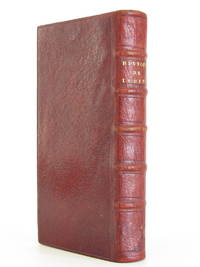
Bernard de LA MONNOYE
Les Noëls bourguignons de bernard de La Monnoye publiés pour la première fois avec une traduction littérale en regard du texte patois et précédés d'une notice sur La Monnoye et de l'histoire des Noëls de Bourgogne par F. Fertiault
Paris: Lavigne 1842. Fine. Lavigne Paris 1842 11.50 x 18.50 cm relié New edition with some parts in first edition. Half olive sheep binding with corners smooth spine now decorated with gilt romantic arabesques light scratches to spine pine cardboard boards marbled endpapers and pastedowns contemporary romantic binding. Work complete with its musical stave plates at rear. Occasional light foxing. Lavigne hardcover
书商的参考编号 : 24977
|
|
|
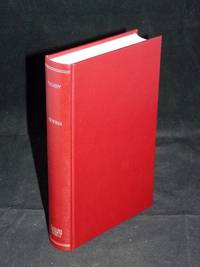
Bernard de PALISSY
Oeuvres
Genève Geneva: Slatkine reprints 1969. Fine. Slatkine reprints Genève Geneva 1969 13.50 x 22 cm reliure de l'éditeur New edition. Publisher's binding over purple paper boards. A good copy. Slatkine reprints hardcover
书商的参考编号 : 41440
|
|
|
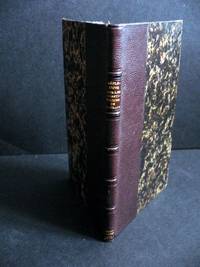
Bernard de MONTFAUCON
Reflexions sur les Constitutions de l'abbaye de La Trappe
à Ville-Franche Villefranche-de-Rouergue: Chez Pierre Granseigne 1678. Fine. Chez Pierre Granseigne à Ville-Franche Villefranche-de-Rouergue 1678 8 x 14.30 cm relié Rare edition printed in Villefranche after the original of 1671 published in Paris. Work attributed to Bernard de Montfaucon but whose authorship is disputed. Binding in black half-shagreen late 19th century. Jansenist spine with raised bands with title and date. Trimmed short on title page. Bernard de Montfaucon originally from Roquetaillade near Limoux was one of the most erudite men of his time and thereby one of the most famous of his era notably for his monumental work: antiquity explained in figures. He was a Benedictine of the congregation of Saint Maur. The abbey of La Trappe founded by the order of Cistercians was annexed to the domain of the Benedictines. It was reformed in the 17th century according to 'the rule of strict observance' by the abbot de Rancé much more rigid and severe than that of the Cistercians. It is precisely this reform that Bernard de Montfaucon comments upon a reform which breathed new spiritual life into Christianity and which saved the abbey of La Trappe from the oblivion and decadence into which many abbeys fell at that time. NB: This work is available at the bookshop on request within 48 hours. Chez Pierre Granseigne hardcover
书商的参考编号 : 25009
|
|
|
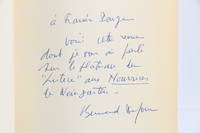
Bernard DUFOUR
Figures N°1 - Exemplaire de Francis Ponge
Paris & New York : Figures 1961. Fine. Figures Paris & New York 1961 15.50 x 24 cm broché First edition of the only issue of this bilingual review animated by Bernard Dufour Georges Lambrichs and Albert Loeb. Complete with publisher's advertising slip. Illustrations. Contributions by Michel Butor: ""La peinture se repeuple"" André Pieyre de Mandiargues: ""La rénovation dans la carrière de Max Ernst"" Robert Lebel: ""Lam ou la récupération de l'exotisme"" Jean Grenier ""Lanskoy: matière et lumière"" René de Solier: ""Triade"" Pierre Klossowski: ""La Judith de Frédéric Tonnerre 1865"" Charles Lapicque: ""Actualité de Poussin"". Precious autograph inscription signed by Bernard Dufour: ""A Francis Ponge voici cette revue dont je vous ai parlé sur le plateau de ""Lutèce"" aux nourrices de Weingarten"" To Francis Ponge here is this review I spoke to you about on the set of ""Lutèce"" to the nurses of Weingarten. Figures unknown
书商的参考编号 : 88108
|
|
|
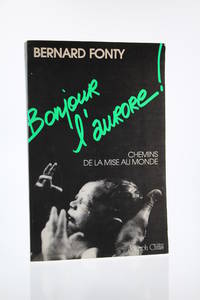
Bernard FONTY
Bonjour l'aurore ! Chemins de la mise au monde
Paris: Joseph Clims 1986. Fine. Joseph Clims Paris 1986 14.50 x 22 cm broché First edition. Handsome copy. Precious signed autograph inscription from Bernard Fonty gynecologist-obstetrician surgeon to Gisèle Halimi. Joseph Clims unknown
书商的参考编号 : 76437
|
|
|
Bernard FRANK
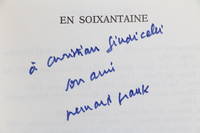
En soixantaine - Chroniques 1961-1971
Paris: Julliard 1996. Fine. Julliard Paris 1996 14 x 22.50 cm broché First edition of which there were no deluxe copies. A small fold to lower right corner of back cover otherwise handsome copy retaining publisher's wraparound band. Autograph inscription signed by Bernard Frank to Christian Giudicelli. Julliard unknown
书商的参考编号 : 81259
|
|
|
Bernard FRANK
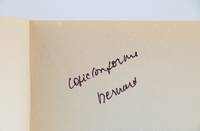
Géographie universelle suivie de Israël
Paris: Flammarion 1989. Fine. Flammarion Paris 1989 15 x 21 cm broché The first collected edition of which there were no deluxe copies. Spine slightly faded. Curious autograph inscription signed by Bernard Frank on the half-title page: ""Copie conforme. Bernard"" Flammarion unknown
书商的参考编号 : 82722
|
|
|
Bernard FRANK
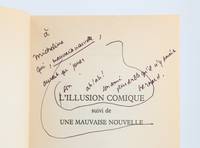
L'illusion comique
Paris: Flammarion 1989. Fine. Flammarion Paris 1989 14 x 20 cm broché The first edition of which there were no deluxe copies. Handsome copy. Autograph inscription signed by Bernard Frank to a friend named Micheline: ""A Micheline qui mauvaise nouvelle aurait pu jouer son illusion comique ah! ah! son ami plus drôle qu'il n'y avait. Bernard."" Flammarion unknown
书商的参考编号 : 86472
|
|
|
Bernard FRANK
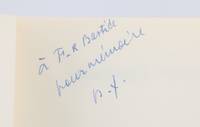
La Panoplie littéraire
Paris: Flammarion 1980. Fine. Flammarion Paris 1980 14 x 20 cm broché New edition. Handsome copy. Signed autograph inscription from Bernard Frank to François-Régis Bastide. Flammarion unknown
书商的参考编号 : 84713
|
|
|
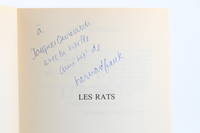
Bernard FRANK
Les Rats
Paris: Flammarion 1985. Fine. Flammarion Paris 1985 14 x 20 cm broché New edition of which there were no deluxe copies. Spine somewhat wrinkled and yellowed. Signed and inscribed copy from Bernard Frank to Jacques Ourévitch. Flammarion unknown
书商的参考编号 : 78845
|
|
|
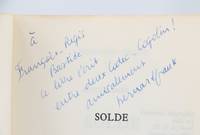
Bernard FRANK
Solde
Paris: Flammarion 1980. Fine. Flammarion Paris 1980 15 x 21 cm broché First edition on ordinary paper. Minor scratches and stains on the back board. Amusing signed autograph inscription from Bernard Frank to François-Régis Bastide: "". ce livre écrit entre deux Codec-Cogolin ! Bernard Frank."" "". this book written between two Codec-Cogolin! Bernard Frank."" Flammarion unknown
书商的参考编号 : 84712
|
|
|
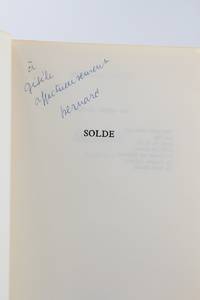
Bernard FRANK - (inscribed to Gisele HALIMI)
Solde
Paris: Flammarion 1980. Fine. Flammarion Paris 1980 15 x 21 cm broché First edition on ordinary paper. Three small spots on the lower cover. Inscribed by Bernard Frank to Gisèle Halimi: ""A Gisèle affectueusement Bernard."" Provenance: from the library of Gisèle Halimi. Flammarion unknown
书商的参考编号 : 76253
|
|
|
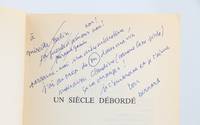
Bernard FRANK
Un siècle débordé
Paris: Flammarion 1987. Fine. Flammarion Paris 1987 15 x 21 cm broché The first edition of which there were no deluxe copies. Handsome copy. Humorous and fine autograph inscription signed by Bernard Frank to a close friend named Micheline: ""A Mireille Balin non ! sa gueule d'amour non ! Bernard the first and last names having been crossed out by Bernard Frank pardonne-moi ma chère Micheline j'ai eu trop de m dans ma vie mais avec Claudine comme casse-pieds ça va changer ! Je t'embrasse et je t'aime ton bernard."" Flammarion unknown
书商的参考编号 : 86473
|
|
|
Bernard FRANK
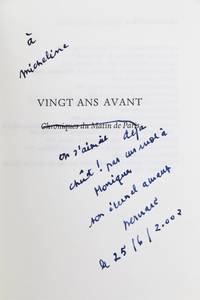
Vingt ans avant - Chroniques du Matin de Paris
Paris: Grasset 2002. Fine. Grasset Paris 2002 14 x 22.50 cm broché First collected edition of which there were no deluxe copies. Coffee stains on the spine covers an endpaper and the edges. Curious and fine signed autograph inscription from Bernard Frank to one of his close female friends named Micheline: ""A Micheline vingt ans avant on s'aimait déjà chût ! pas un mot à Monique son éternel amant Bernard le 25/6/2.002"" ""To Micheline twenty years ago we already loved each other shush! not a word to Monique her eternal lover Bernard 25/6/2.002"" Grasset unknown
书商的参考编号 : 82955
|
|
|
Bernard GHEERBRANT
Le Club des libraires de France 1953-1966
Paris: IMEC éditions 1997. Fine. IMEC éditions Paris 1997 17 x 23.50 cm broché first edition on plain paper. autograph dedication of the author autograph signed by Bernard Gheerbrant to Françoise and Pierre D umayet: ""in memory of this time when we treated with innocence of"" old ""friends ."" Iconography pleasant copy. IMEC éditions unknown
书商的参考编号 : 60363

|
|
|
Bernard GIRAUDEAU
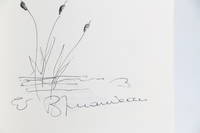
Cher Amour
Paris: Editions Métailié 2009. Fine. Editions Métailié Paris 2009 14 x 21.50 cm broché The first edition of which there were no deluxe copies. Minor stains of no consequence on the edges handsome copy complete with its wraparound band. Signed autograph inscription by Bernard Giraudeau to Nadine Nimier wife and widow of Roger Nimier with a drawing representing a bouquet of marsh plants. Editions Métailié unknown
书商的参考编号 : 79427
|
|
|
Bernard GROETHUYSEN
J.-J. Rousseau
Paris: Gallimard 1949. Fine. Gallimard Paris 1949 12 x 19 cm broché First edition one of 23 numbered copies on pur fil the only large paper copies. Three tiny stains not serious to the spine and upper cover. A very good copy. Gallimard unknown
书商的参考编号 : 53009

|
|
|
Bernard GRASSET
Psychologie de l'immortalité
Paris: Gallimard 1929. Fine. Gallimard Paris 1929 14.50 x 19.50 cm broché Edition a numbered copies on Alfa paper. Signed autograph Bernard Grasset Robert Garric. Catholic reformist he was the founder of ""social Teams"" in 1920 which aimed to establish a social elite and bring the good word about the brotherhood born of the trenches to the workers in the tradition of patronage. Simone de Beauvoir then student of Robert Garric in philosophy at the Institut Sainte-Marie of Neuilly remembers him in his ""Memoirs of a Tidy Wench"" ""Garric appeared; I forgot everything else and myself; the authority of his voice subdued me. In twenty years we he explained he had discovered in the trenches the joys of camaraderie that removed social barriers. . To deny all limits and all separations get out of my class out of my skin: this slogan electrified me. . Must serve my life! Must serve all my life! "" Gallimard unknown
书商的参考编号 : 48554

|
|
|
Bernard GRASSET
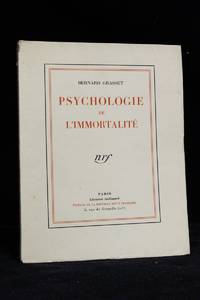
Psychologie de l'immortalité
Paris: Nrf 1929. Fine. Nrf Paris 1929 17.50 x 22.50 cm broché First edition one of 3 numbered copies on old Japan paper and reimposed in Tellière quarto format deluxe copy. Spine cracked with small lacks at head and foot some minor foxing. Nrf unknown
书商的参考编号 : 52921
|
|
|
Bernard GRASSET
Remarques sur le bonheur
Paris: Gallimard 1931. Fine. Gallimard Paris 1931 14.50 x 19.50 cm broché First edition a 1800 numbered copies on Alfa paper. Signed autograph Bernard Grasset Robert Garric. Catholic reformist the dedicatee was the founder of ""social Teams"" in 1920 which aimed to establish a social elite and bring the good word about the brotherhood born of the trenches to the workers in the tradition of patronage. Simone de Beauvoir then student of Robert Garric in philosophy at the Institut Sainte-Marie of Neuilly remembers him in his ""Memoirs of a Tidy Wench"" ""Garric appeared; I forgot everything else and myself; the authority of his voice subdued me. In twenty years we he explained he had discovered in the trenches the joys of camaraderie that removed social barriers. . To deny all limits and all separations get out of my class out of my skin: this slogan electrified me. . Must serve my life! Must serve all my life! "" Light bites on guard. Gallimard unknown
书商的参考编号 : 48553

|
|
|
Bernard KAYSER
Cent ans d'expansion cannoise. La campagne devant l'urbanisation
Cannes: Imp. Devaye 1954. Fine. Imp. Devaye Cannes 1954 19 x 27.50 cm broché First edition of which no deluxe copies were printed. Rare pamphlet illustrated with charts and maps hors-texte. Handsome copy. Imp. Devaye unknown
书商的参考编号 : 35802
|
|
|
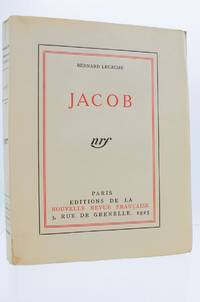
Bernard LECACHE
Jacob
Paris: Nrf 1925. Fine. Nrf Paris 1925 17 x 23 cm broché First edition one of 109 numbered copies on Lafuma Navarre paper and reimposed in Tellière quarto format deluxe issue. Handsome copy despite a small dampstain at foot of spine. Nrf unknown
书商的参考编号 : 75151
|
|
|
Bernard le Bovier de FONTENELLE
Jugement de Pluton sur les deux parties des Nouveaux dialogues des morts
à Paris: Chez Michel Brunet 1703. Fine. Chez Michel Brunet à Paris 1703 9.50 x 16.50 cm relié Second edition after the first published in 1684. Contemporary full blonde calf binding. Spine with five raised bands decorated with gilt compartments and fleurons as well as a red title-label. Gilt roulette on edges and headcaps. All edges speckled red. Handsome copy. The work was written after the publication of the Nouveaux dialogues de mort and is connected to it only by the literary device of giving voice to the dead a genre which was very popular in the 17th century. Through a series of letters Lettres des Vivants aux Morts Requête des morts désintéressés. Fénelon presents a satirical portrait of the political events of his time. Chez Michel Brunet hardcover
书商的参考编号 : 49900

|
|
|
Bernard Leach
Kenzan and His Tradition: The Lives and Times of Koetsu Sotatsu Korin and Kenzan
New York: Transatlantic Arts Inc. 1967. cloth hardcover in dust jacket. there are a few over-opened places though the sewn binding remains intact. the front free endpaper has a very small owner name which was partly erased and the front pastedown has a very small ink date/place.dj has rubbing and minor wear to spine-ends. else clean no other writing or markings. binding feels sturdy despite above note. dj price is intact.; pre-isbn. english text.; 173pp. 12 color plates 102 b/w illustrations. japanese ceramics. the author was a master of the techniques himself. First American Edition. Hardcover. Good/Very Good Minus. 4to - over 9¾" - 12" tall. Transatlantic Arts, Inc. Hardcover
书商的参考编号 : 25326
|
|
|
Bernard Leach
Kenzan and His Tradition: The Lives and Times of Koetsu Sotatsu Korin and Kenzan
New York: Transatlantic Arts Inc. 1967. cloth hardcover in dust jacket. dj has minor rubbing and very slight wear one short closed edge-tear. couple of very small old smudge spots to top edge minor. else clean no writing or markings. dj price is intact. sturdy binding.; pre-isbn. english text.; 173pp. 12 color plates 102 b/w illustrations. japanese ceramics. the author was a master of the techniques himself. First American Edition. Hardcover. Near Fine/Very Good. 4to - over 9¾" - 12" tall. Transatlantic Arts, Inc. Hardcover
书商的参考编号 : 25335
|
|
|
Bernard LECACHE
Les porteurs de croix Palestine 1929
Paris: Edition des portiques 1929. Fine. Edition des portiques Paris 1929 12 x 19 cm broché First edition a Service de Presse advance copy. Precious signed autograph inscription from Bernard Lecache to Henri Béraud: "". son fidèle et dévoué. en remerciement aussi du magnifique éloge de Séverine."" "". his faithful and devoted. in gratitude also for the magnificent eulogy of Séverine."" Iconography. Worming to first cover and front endpaper spine and covers slightly discolored. Provenance: from Henri Béraud's library on Ré Island. Edition des portiques unknown
书商的参考编号 : 51558

|
|
|
Bernard le Bovier de FONTENELLE
Poesies pastorales. Avec un traité sur la nature de l'Eglogue & une digression sur les Anciens et les Modernes
à Paris: Chez Michel Brunet 1698. Fine. Chez Michel Brunet à Paris 1698 10 x 16.50 cm relié Second edition the first appeared in 1688. Contemporary full speckled calf binding. Raised bands spine handsomely decorated. Tawny title label. A handsome copy. In the quarrel between the Ancients and the Moderns Fontenelle here takes the side of the latter with numerous mockeries and satires against the defenders of the Ancients. Chez Michel Brunet hardcover
书商的参考编号 : 19607
|
|
|
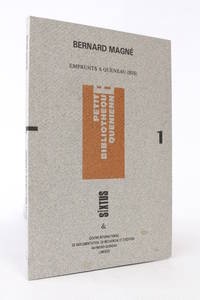
Bernard MAGNE
Emprunts à Queneau bis
Limoges: Centre international de documentation de recherche et d'édition Raymond Queneau 1989. Fine. Centre international de documentation de recherche et d'édition Raymond Queneau Limoges 1989 11.50 x 17 cm broché First edition printed in a numbered edition of 500 copies of this first volume of the ""Petite bibliothèque quenienne"". Three small light stains on the first cover. . Centre international de documentation, de recherche et d'édition Raymond Queneau unknown
书商的参考编号 : 60189
|
|
|
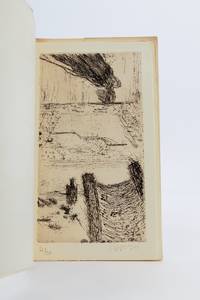
Bernard NOEL - Ghislain QUEVY
A vif enfin la Nuit
Montpellier: Fata Morgana 1968. Fine. Fata Morgana Montpellier 1968 15 x 26 cm en feuilles First edition one of 50 numbered copies on Arches paper deluxe edition. Covers lightly sunned handsome interior condition. Our copy includes like the 50 copies of the deluxe edition the original etching by Ghislian Quévy which he signed and numbered. Fata Morgana unknown
书商的参考编号 : 78949
|
|
|
Bernard NOEL - Auguste CHABAUD
A vif enfin la nuit
Montpellier: Fata Morgana 1968. Fine. Fata Morgana Montpellier 1968 14.50 x 26 cm en feuilles First edition one of 120 numbered copies on Ingres paper the only large paper copies after 50 Arches paper. Covers slightly sunned internally good. Fata Morgana unknown
书商的参考编号 : 53779

|
|

 ?????????
 ?????PDF???
 RSS feed
 ??
??


