|
CONTE - DELAUNAY
DESCRIPTION DE L'EGYPTE. Arts et métiers. La Faiseuse de mottes à brûler Le Chamelier. ETAT MODERNE volume II planche XXVIII
Paris: Imprimerie Impériale 1809. Fine. Imprimerie Impériale Paris 1809-1829 53.50 x 71 cm une feuille Original etching in plano uncut from the so-called ""Imperial"" edition of the Description de l'Égypte ou Recueil des observations et recherches faites en Égypte pendant l'expédition française publié par les ordres de Sa Majesté l'Empereur Napoléon le Grand. Executed between February 1802 and 1829 by order of Napoleon Bonaparte and published from 1809 actually 1810 it was printed in 1000 copies on watermarked laid paper ""Égypte ancienne et moderne"" and offered to institutions. Slight marginal foxing not affecting the engraving otherwise in very fine fresh condition and well preserved. Volume ETAT MODERNE II: The genius of the Institute's scholars is particularly revealed through the plates of the section called Egypte Moderne. Architecture industry social structures health conditions water systems music crafts are presented with exceptional precision and graphic quality. The spirit of Diderot and d'Alembert's L'Encyclopédie remains underlying in the approach of the draughtsmen of the Description de L'Egypte who accompany the text volumes with numerous detailed plates endeavoring to create a portrait of the populations imbued with beauty and respect. Wealthy pashas or simple pottery artisans are represented with sensitivity going about their occupations amid aesthetic compositions without falling into idealism or caricature. LA DESCRIPTION DE L'EGYPTE IMPERIAL edition 1809-1829: La Description de l'Egypte is one of the masterpieces of French publishing and the starting point of a new science: Egyptology. A titanic exposition of Egypt at the time of Bonaparte's conquests between 1798 and 1799 it is divided into 23 volumes including 13 volumes of engravings gathering nearly 1000 plates in black and 72 in color. The 6 volumes of plates entitled Antiquités are devoted to the splendors of pharaonic Egypt. L'Histoire naturelle is divided into 3 volumes of engravings. One volume is devoted to Cartes géographiques et topographiques while the 3 volumes : Etat Moderne present a striking portrait of Coptic and Islamic Egypt as it was seen by Bonaparte's armies of the East. The ""Egyptian campaign"" a military disaster reveals through the engravings of the Description de l'Egypte the scientific success it became thanks to the some 167 scholars members of the Commission of Sciences and Arts of the Institute of Egypt who followed Napoleon's army. The Institute brought together in Egypt the mathematician Monge the chemist Berthollet the naturalist Geoffroy Saint-Hilaire as well as numerous artists engineers architects physicians. They were charged with rediscovering modern and ancient Egypt showing its natural riches and the know-how of its inhabitants. The first edition called ""Imperial"" of the Description de l'Egypte was produced in four large formats two of them specially created for it and named ""Moyen-Egypte"" and ""Grand-Egypte"" formats. A specific press was built for its printing which spread over twenty years between 1809 and 1829. The Imperial edition proved so popular that a second edition in 37 volumes entirely in black and without the ""Egypte ancienne et moderne"" watermark called the ""Panckoucke"" edition was published from 1821 by the C.-L.-F. Panckoucke printing house Paris. The realization of this monument of erudition owes much to Baron Dominique Vivant Denon illustrator diplomat collector and later director of the Napoleon Museum of the Louvre who accompanied Napoleon to Egypt with numerous other scholars but decided alone to venture into the South of the country while the other invited scientists remained confined to the Cairo region. The fabulous sketches brought back by Denon from his romantic ride gave Bonaparte the idea to send the other members of the Institute there and thus create a faithful and complete portrait of the territory. Following Denon it was therefore the greatest French scientists and Imprimerie Impériale unknown
Referenz des Buchhändlers : 26394

|
|
|
OLIVIER-PINOT
Constructions pour enfants n°21 : Cabane du pêcheur
Épinal: Olivier-Pinot 1890. Fine. Olivier-Pinot Épinal s. d. circa 1880-1900 49 x 39 cm Épinal Image color lithograph large format printed on heavy paper. Light marginal foxing otherwise fine condition colors very well preserved. These plates are cardboard constructions or models on which a pattern was printed. This pattern must be cut out then assembled to construct various objects or life scenes. The Épinal imagery published several series of cut-out models including the ""Large Constructions"" in 39 x 49 cm format the ""Medium Constructions"" and the ""Small Constructions"". From 1880 to 1908 constructions were published with subjects including architecture costumes boats and various vehicles. During this same period paper theaters or ""theater at home"" also enjoyed great success. This type of toy developed and endured until the Second World War. Formerly sold by peddlers Épinal images owe their name to Jean-Charles Pellerin who was the first printer to publish this type of image in series and who lived in the town of Épinal Vosges. The subjects are very varied but generally revolve around religion history French Revolution battles military uniforms or drawn from successful novels. Épinal imagery has its origins in imagery a popular art born in the 15th century intended primarily for the illiterate rural public. Originally the image is engraved on a wooden plate and printing is done using a hand press. It is then colored using stencils. In the 19th century lead castings were made from the engraved wood: stereotypes which allowed production to be increased. In 1820 lithography was adopted which induced a radical change in style with finer drawings. In 1900 coloring was still done by stencil using a machine that could color 300 images per hour the Aquatype. Olivier-Pinot unknown
Referenz des Buchhändlers : 26654

|
|
|
A FUCHS
L'oeuvre d'après-guerre de Hofmannstahl
Paris: H. Didier & Cie 1936. Fine. H. Didier & Cie Paris 1936 16 x 24.50 cm agrafé First edition published in a small number of copies of this offprint. Tears and marginal lacks to the front board extending throughout the text block boards slightly and marginally faded. Paper browned. Rare. H. Didier & Cie hardcover
Referenz des Buchhändlers : 26970

|
|
|
PLEE
DESCRIPTION DE L'EGYPTE. Botanique. Elatine luxurians Sodada decidua. Histoire Naturelle planche 26
Paris: Imprimerie Impériale 1809. Fine. Imprimerie Impériale Paris 1809-1829 71 x 54 cm une feuille Original unshaved full-page etching from the Imperial edition of the Description de l'Égypte or Recueil des observations et recherches faites en Égypte pendant l'expédition française publié par les ordres de Sa Majesté l'Empereur Napoléon le Grand A Collection of the observations and research carried out in Egypt during the French expedition published on the orders of his Majesty the Emperor Napoleon the Great'.Produced between February 1802 and 1830 on the orders of Naopleon Bonaparte and published between 1809 and 1828 1000 copies were printed and distributed to institutions on vergé paper with an 'Égypte ancienne et moderne' watermark visible when held up to the light. Light marginal spotting not touching image otherwise in very fresh fine condition. An engraving from the Description de l'Egypte one of the masterpieces of French printing and the birth of a new field: Egyptology. A gigantic survey of Egypt at the time of Bonaparte's conquests in 1798 and 1799 the work is divided into 13 volumes of engravings making up 892 plates of which 72 colored as well as presenting the splendors of the Egypt of the Pharaohs in 9 volumes. The other volumes discuss natural history and present a fascinating portrait of Coptic and Islamic Egypt as it was seen by Bonaparte's Eastern Armies. The Egyptian campaign' militarily a disaster demonstrates through the engravings of the Description d'Egypte the scientific success it nonetheless became thanks to the 167 expert members of the Commission of the Sciences and Arts of the Institut d'Egypte Egyptian Institute who followed Napoleon's army. The Institut gathered together in Egypt the mathematician Monge the chemist Berthollet the naturalist Geoffroy Saint-Hilaire as well as numerous artists engineers architects and doctors. They were tasked with re-discovering modern and ancient Egypt and displaying its natural treasures as well as the know-how of its inhabitants.This edition the so-called Imperial edition of the plates for the Description de l'Egypte was printed in four large formats two of which were specially created for it and christened Moyen-Egypte and Grand-Egypte. A special press was built to print it the process extending over 20 years from 1809 to 1829. The Imperial edition proved so popular that a second edition this time in black and white and without the Egypte ancienne et moderne watermark known as the Royal Edition was published during the Restoration by the printing house of C.-L.-F. Panckoucke Paris.The engravings of the Description d'Egypte owe a great deal to Baron Dominique-Vivant Denon illustrator diplomat collector and later Director of the Musée Napoléon the Louvre. His exploration of the South of Egypt gave Bonaparte the idea of sending the experts of the Institut there thus creating a faithful and complete portrait of the area. This was the research gathered together from 1802 in the mammoth Description de L'Egypte.Denon embarked on this story of archeological exploration at the age of 51 reaching first Alexandria and then Cairo before exploring Upper Egypt. Along with the members of the Institut d'Egypte the Natural History Museum's painter H.J. Redouté brother of Pierre-Joseph Redouté author of Roses the mineralogist Dolomiue and the draughtsman Joly Denon then explored the Nile Delta and Lower Egypt. When however he joined the 21st Light Infantry Regiment as it marched across Upper Egypt in pursuit of the retreating Mameluks in November 1798 he found himself the only civilian. In the very midst of the battle itself he reeled off sketches of the works of art that peppered his path right up to the threshold of the Sudan. He said that he had crossed a country that is apart from its name entirely unknown to Europeans and therefore everything was worth describing Voyages dans la Basse et la Haute Egypte pendant les campagnes de Imprimerie Impériale unknown
Referenz des Buchhändlers : 26445

|
|
|
COLLECTIF
Catalogue de livres rares et précieux la plupart reliés en maroquin provenant de la bibliothèque de M.L. De B. de F. Bordes de Fortage
Paris & Bordeaux: Lib. Damascène MorgandMarcel Mounastre-Picamilh 1919. Fine. Lib. Damascène Morgand Marcel Mounastre-Picamilh Paris & Bordeaux 1919 16 x 25 cm broché First edition of this catalogue whose sale took place on December 4th & 5th 1919. Catalogue illustrated with 7 plates. Spine and boards lightly and marginally faded without significance. Hammer price annotations in pencil in margins. Lib. Damascène MorgandMarcel Mounastre-Picamilh hardcover
Referenz des Buchhändlers : 27053

|
|
|
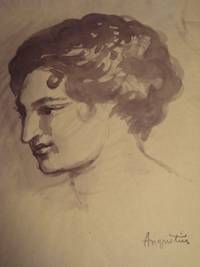
Louis ANQUETIN
Portrait de femme
1899. Fine. Fin XIXème - Début XXème 20 x 24 cm Original ink and wash drawing mounted on tab on cardboard. Artist's stamp signature in the lower right corner of the work and studio stamp signature on verso. Light angular fold marks otherwise very fine condition. Provenance: from the artist's studio catalogued in the Louis Anquetin Studio catalogue Thierry de Maigret 28/11/08. Louis Anquetin born in Étrépagny in 1861 and died in Paris in 1932 was an important French painter. He began his career alongside avant-garde painters such as Vincent Van Gogh and Henri de Toulouse-Lautrec. With Émile Bernard he invented Cloisonnism. From 1884 to 1893 Louis Anquetin continuously explored the new possibilities offered by the liberation that Impressionism introduced to French painting. From 1893 onwards following a long confrontation with the ""masters of the past"" he adopted a pictorial approach that would place him on the margins of the general art movement and distance him from his friends. Dazzled by Baroque art and its creative vigor he believed that his youthful friends had embarked on a path that would lead to the death of painting. He believed in ""perfect painting"" embodied in remembering the lessons of Michelangelo and Rubens in particular. His work therefore became more classical; he advocated a return to craftsmanship proposing to reflect on the a priori conditions of all possible forms of art while respecting the rules of perspective and anatomy as practiced by the masters of the 16th and 17th centuries. Leaving only a few works that can be described as monumental Anquetin proved prolific through his numerous studies and sketches he who considered drawing to be ""an all-powerful means of expression"" the essential foundation of all plastic arts. By deliberately working against the grain of his era Louis Anquetin made possible the existence of an original modern figuration. Through his obstinacy and passion for painting he indeed prevented the path of the great Western tradition from being completely blocked. His works can be admired in numerous prestigious museums such as the Musée d'Orsay and the Louvre in Paris in San Francisco and Detroit at the Hermitage Museum in Saint Petersburg at the National Gallery and the Tate in London etc. unknown
Referenz des Buchhändlers : 26286
|
|
|
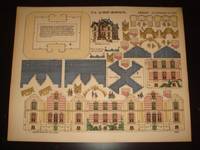
Le Petit architecte n°91 : Chalet aux environs de Paris
Épinal: Pellerin & Cie 1890. Fine. Pellerin & Cie Épinal s. d. circa 1880-1900 49 x 39 cm Épinal print color lithograph large format printed on heavy paper. Very light marginal foxing otherwise handsome condition colors very well preserved. These sheets are cardboard constructions or models on which a pattern was printed. This pattern must be cut out then assembled to construct various objects or life scenes. The Épinal imagery published several series of cut-out models including the ""Grandes Constructions"" in 39 x 49 cm format the ""Moyennes Constructions"" and the ""Petites Constructions"". From 1880 to 1908 constructions were published featuring architecture costumes boats and various vehicles. During this same period paper theaters or ""home theater"" also enjoyed great success. This toy model developed and endured until the Second World War. Once sold by peddlers Épinal prints owe their name to Jean-Charles Pellerin who was the first printer to publish this type of image in series and who lived in the town of Épinal Vosges. The subjects are very varied but generally revolve around religion history French Revolution battles military uniforms or drawn from successful novels. Épinal imagery takes its origins from imagery a popular art born in the 15th century intended primarily for the illiterate rural public. Originally the image is engraved on a wood block and printing is carried out using a hand press. It is then colored by means of stencils. In the 19th century lead castings are made from the engraved wood blocks: stereotypes which allow production to be increased. In 1820 lithography was adopted which induced a radical change in style with finer drawings. In 1900 coloring is still done by stencil thanks to a machine that can color 300 images per hour the Aquatype. Pellerin & Cie unknown
Referenz des Buchhändlers : 26662
|
|
|
Jean-Baptiste Prosper JOLLOIS - [Edouard de VILLIERS DU TERRAGE] DEVILLIERS
Description de l'Egypte. Antiquités. Description de Thèbes. Deuxième livraison
à Paris: Imprimerie Impériale 1812. Fine. Imprimerie Impériale à Paris 1812 27 x 42.50 cm Un Vol. broché First edition printed on strong laid paper containing the second fascicle of the Antiquities section corresponding to chapter IX. The first fascicle containing chapters I to VIII appeared in 1809 and the third in 1818 Our copy lacks both the half-title page and the general title of the Description de l'Egypte. Full vellum-style paper boards binding smooth spine black shagreen title label with a very slight loss. This general description of Thebes forms the most important and voluminous chapter of the Antiquities section occupying an entire volume and fascicle and containing both in situ descriptions of monuments and archaeological sites Karnak Luxor. and historical and geographical research considerations on mummies symbols. In appendix a description of the quarries used for construction and a second on astronomical monuments. Imprimerie Impériale hardcover
Referenz des Buchhändlers : 27103

|
|
|
Alexandre DUMAS
Angèle drame en cinq actes
Paris: Marchant 1833. Fine. Marchant Paris 1833 17 x 26.50 cm broché First edition. A tiny corner lack at the foot of one joint pale marginal dampstaining reaching the first pages some light foxing. Rare. Marchant unknown
Referenz des Buchhändlers : 26930

|
|
|
Jacques MARTIN
Moïse homme de Dieu
Paris: Decroix & Johanet 1952. Fine. Decroix & Johanet Paris 1952 15 x 24.50 cm broché First edition one of 250 numbered copies on Marais paper the only issue. Illustrations by Pierre Bollaert. Very fine full-page autograph inscription from the author slight dampstain at foot of front board. Decroix & Johanet unknown
Referenz des Buchhändlers : 2999

|
|
|
OLIVIER-PINOT
Constructions mécaniques n°60 fonctionnant au moyen du sable : Bateau pêcheur
Épinal: Olivier-Pinot 1890. Fine. Olivier-Pinot Épinal s. d. circa 1880-1900 49 x 39 cm Image d'Épinal color lithograph large format printed on heavy paper. Marginal foxing otherwise handsome condition colors very well preserved. These plates are constructions or cardboard models on which a pattern was printed. This pattern must be cut out then assembled to construct various objects or scenes of daily life. The Épinal imagery published several series of cut-out models including the ""Grandes Constructions"" in 39 x 49 cm format the ""Moyennes Constructions"" and the ""Petites Constructions"". From 1880 to 1908 constructions were published featuring architecture costumes ships and various vehicles. During this same period paper theaters or ""théâtre chez soi"" also enjoyed great success. This type of toy developed and lasted until the Second World War. Once sold by peddlers the images d'Épinal owe their name to Jean-Charles Pellerin who was the first printer to publish this type of image in series and who lived in the town of Épinal Vosges. The subjects are very varied but generally revolve around religion history French Revolution battles military uniforms or drawn from popular novels. The imagery of Épinal takes its origins in imagery a popular art born in the 15th century intended primarily for the illiterate rural public. Originally the image is engraved on a wooden plate and printing is carried out using a hand press. It is then colored using stencils. In the 19th century lead castings are made from the engraved wood blocks: stereotypes which allow production to be increased. In 1820 lithography was adopted which induced a radical change in style with finer drawings. In 1900 coloring was still done by stencil thanks to a machine that could color 300 images per hour the Aquatype. Olivier-Pinot unknown
Referenz des Buchhändlers : 26695

|
|
|
Grandes constructions faciles n°44 : Gare américaine à Maryland
Épinal: Pellerin 1890. Fine. Pellerin Épinal s. d. circa 1880-1900 49 x 39 cm Image d'Épinal color lithograph large format printed on heavy paper. Fine condition colors very well preserved. These plates are cardboard constructions or models on which a pattern was printed. These plates are cardboard constructions or models on which a pattern was printed. This pattern must be cut out then assembled to construct various objects or life scenes. The Épinal imagery published several series of cut-out models including the ""Grandes Constructions"" in 39 x 49 cm format the ""Moyennes Constructions"" and the ""Petites Constructions"". From 1880 to 1908 constructions were published featuring architecture costumes boats and various vehicles. During this same period paper theaters or ""théâtre chez soi"" also enjoyed great success. This toy model developed and lasted until the Second World War. Formerly sold by peddlers the images d'Épinal owe their name to Jean-Charles Pellerin who was the first printer to publish this type of image in series and who lived in the town of Épinal Vosges. The subjects are very varied but generally revolve around religion history French Revolution battles military uniforms or drawn from successful novels. The Épinal imagery takes its origins in imagery popular art born in the 15th century intended primarily for the illiterate rural public. Originally the image is engraved on a wooden plate and printing is carried out using a hand press. It is then colored using stencils. In the 19th century lead castings were made from the engraved wood: the stereotypes which allowed production to be increased. In 1820 they switched to lithography which induced a radical change in style with finer drawings. In 1900 coloring was still done with stencils using a machine that could color 300 images per hour the Aquatype. Pellerin unknown
Referenz des Buchhändlers : 26628

|
|
|
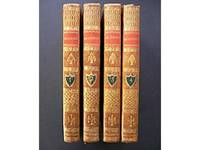
Caroline PICHLER
Agathocles ou lettres écrites de Rome et de Grèce au commencement du quatrième siècle
Paris: Chez Blanchardet Eymery 1812. Fine. Chez Blanchard et Eymery Paris 1812 10 x 17.50 cm quatre volumes reliés First French edition translated by Isabelle de Montolieu. Illustrated with a frontispiece by Le Cerf. The half-title of volume 1 is normally replaced by two catalogue leaves. Contemporary full speckled calf bindings. Smooth spines decorated with two Grotesque compartments urn tools and multiple fillets. Red title label and black volume labels. Charming decorative set. Some surface wear small lack to one headcap. Caroline Pichler was born in Vienna in 1769. She was very early classified among child prodigies and her first novel appeared in 1799 but it was with Agathocles 1808 that she quickly achieved success and was translated throughout Europe. Here is what can be found in Michaud's universal bibliography about her: ""This book which appeared at the time of the publication of Chateaubriand's Martyrs rests on the same foundation and is only the development of the same idea in a different form. Nothing is more curious and interesting than comparing these two works composed for the same purpose and at the same time in such different languages and countries."" see the translator's note which exonerates Madame Pichler from any possible imitation. Caroline Pichler was for a long time the center of Viennese literary life thanks to her salon she published her last novel in 1840. Chez Blanchardet Eymery unknown
Referenz des Buchhändlers : 27081
|
|
|
Charles-Louis BALZAC - DUTERTRE (delineavit) - REDOUTE (delineavit)
DESCRIPTION DE L'EGYPTE. Vases meubles et instruments. Tentes de mamelouk Boiserie de fenêtre Berceau Chassemouche Planchers en mosaïque Carreaux en faïence Coffret en nacre Écritoire et détails Serrure en bois Cuillers en écaille ornées d'ambre de corail et de nacre. ETAT MODERNE volume II planche GG
Paris: Imprimerie Impériale 1809. Fine. Imprimerie Impériale Paris 1809-1829 53.50 x 71 cm une feuille Original unshaved full-page etching from the Imperial edition of the Description de l'Égypte or Recueil des observations et recherches faites en Égypte pendant l'expédition française publié par les ordres de Sa Majesté l'Empereur Napoléon le Grand A Collection of the observations and research carried out in Egypt during the French expedition published on the orders of his Majesty the Emperor Napoleon the Great'.Produced between February 1802 and 1830 on the orders of Naopleon Bonaparte and published between 1809 and 1828 1000 copies were printed and distributed to institutions on vergé paper with an 'Égypte ancienne et moderne' watermark visible when held up to the light. Light marginal spotting not touching image otherwise in very fresh fine condition. An engraving from the Description de l'Egypte one of the masterpieces of French printing and the birth of a new field: Egyptology. A gigantic survey of Egypt at the time of Bonaparte's conquests in 1798 and 1799 the work is divided into 13 volumes of engravings making up 892 plates of which 72 colored as well as presenting the splendors of the Egypt of the Pharaohs in 9 volumes. The other volumes discuss natural history and present a fascinating portrait of Coptic and Islamic Egypt as it was seen by Bonaparte's Eastern Armies. The Egyptian campaign' militarily a disaster demonstrates through the engravings of the Description d'Egypte the scientific success it nonetheless became thanks to the 167 expert members of the Commission of the Sciences and Arts of the Institut d'Egypte Egyptian Institute who followed Napoleon's army. The Institut gathered together in Egypt the mathematician Monge the chemist Berthollet the naturalist Geoffroy Saint-Hilaire as well as numerous artists engineers architects and doctors. They were tasked with re-discovering modern and ancient Egypt and displaying its natural treasures as well as the know-how of its inhabitants.This edition the so-called Imperial edition of the plates for the Description de l'Egypte was printed in four large formats two of which were specially created for it and christened Moyen-Egypte and Grand-Egypte. A special press was built to print it the process extending over 20 years from 1809 to 1829. The Imperial edition proved so popular that a second edition this time in black and white and without the Egypte ancienne et moderne watermark known as the Royal Edition was published during the Restoration by the printing house of C.-L.-F. Panckoucke Paris.The engravings of the Description d'Egypte owe a great deal to Baron Dominique-Vivant Denon illustrator diplomat collector and later Director of the Musée Napoléon the Louvre. His exploration of the South of Egypt gave Bonaparte the idea of sending the experts of the Institut there thus creating a faithful and complete portrait of the area. This was the research gathered together from 1802 in the mammoth Description de L'Egypte.Denon embarked on this story of archeological exploration at the age of 51 reaching first Alexandria and then Cairo before exploring Upper Egypt. Along with the members of the Institut d'Egypte the Natural History Museum's painter H.J. Redouté brother of Pierre-Joseph Redouté author of Roses the mineralogist Dolomiue and the draughtsman Joly Denon then explored the Nile Delta and Lower Egypt. When however he joined the 21st Light Infantry Regiment as it marched across Upper Egypt in pursuit of the retreating Mameluks in November 1798 he found himself the only civilian. In the very midst of the battle itself he reeled off sketches of the works of art that peppered his path right up to the threshold of the Sudan. He said that he had crossed a country that is apart from its name entirely unknown to Europeans and therefore everything was worth describing Voyages dans la Basse et la Haute Egypte pendant les campagnes Imprimerie Impériale unknown
Referenz des Buchhändlers : 26384

|
|
|
PLEE
DESCRIPTION DE L'EGYPTE. Botanique. Avena arundinacea Avena forskalii Trisetaria linearis. Histoire Naturelle planche 12
Paris: Imprimerie Impériale 1809. Fine. Imprimerie Impériale Paris 1809-1829 71 x 54 cm une feuille Original unshaved full-page etching from the Imperial edition of the Description de l'Égypte or Recueil des observations et recherches faites en Égypte pendant l'expédition française publié par les ordres de Sa Majesté l'Empereur Napoléon le Grand A Collection of the observations and research carried out in Egypt during the French expedition published on the orders of his Majesty the Emperor Napoleon the Great'.Produced between February 1802 and 1830 on the orders of Naopleon Bonaparte and published between 1809 and 1828 1000 copies were printed and distributed to institutions on vergé paper with an 'Égypte ancienne et moderne' watermark visible when held up to the light. Light marginal spotting not touching image otherwise in very fresh fine condition. An engraving from the Description de l'Egypte one of the masterpieces of French printing and the birth of a new field: Egyptology. A gigantic survey of Egypt at the time of Bonaparte's conquests in 1798 and 1799 the work is divided into 13 volumes of engravings making up 892 plates of which 72 colored as well as presenting the splendors of the Egypt of the Pharaohs in 9 volumes. The other volumes discuss natural history and present a fascinating portrait of Coptic and Islamic Egypt as it was seen by Bonaparte's Eastern Armies. The Egyptian campaign' militarily a disaster demonstrates through the engravings of the Description d'Egypte the scientific success it nonetheless became thanks to the 167 expert members of the Commission of the Sciences and Arts of the Institut d'Egypte Egyptian Institute who followed Napoleon's army. The Institut gathered together in Egypt the mathematician Monge the chemist Berthollet the naturalist Geoffroy Saint-Hilaire as well as numerous artists engineers architects and doctors. They were tasked with re-discovering modern and ancient Egypt and displaying its natural treasures as well as the know-how of its inhabitants.This edition the so-called Imperial edition of the plates for the Description de l'Egypte was printed in four large formats two of which were specially created for it and christened Moyen-Egypte and Grand-Egypte. A special press was built to print it the process extending over 20 years from 1809 to 1829. The Imperial edition proved so popular that a second edition this time in black and white and without the Egypte ancienne et moderne watermark known as the Royal Edition was published during the Restoration by the printing house of C.-L.-F. Panckoucke Paris.The engravings of the Description d'Egypte owe a great deal to Baron Dominique-Vivant Denon illustrator diplomat collector and later Director of the Musée Napoléon the Louvre. His exploration of the South of Egypt gave Bonaparte the idea of sending the experts of the Institut there thus creating a faithful and complete portrait of the area. This was the research gathered together from 1802 in the mammoth Description de L'Egypte.Denon embarked on this story of archeological exploration at the age of 51 reaching first Alexandria and then Cairo before exploring Upper Egypt. Along with the members of the Institut d'Egypte the Natural History Museum's painter H.J. Redouté brother of Pierre-Joseph Redouté author of Roses the mineralogist Dolomiue and the draughtsman Joly Denon then explored the Nile Delta and Lower Egypt. When however he joined the 21st Light Infantry Regiment as it marched across Upper Egypt in pursuit of the retreating Mameluks in November 1798 he found himself the only civilian. In the very midst of the battle itself he reeled off sketches of the works of art that peppered his path right up to the threshold of the Sudan. He said that he had crossed a country that is apart from its name entirely unknown to Europeans and therefore everything was worth describing Voyages dans la Basse et la Haute Egypte pendant les campagnes de Imprimerie Impériale unknown
Referenz des Buchhändlers : 26472

|
|
|
GASPARD-MICHEL
Dione poème
Paris: Emile-Paul frères 1926. Fine. Emile-Paul frères Paris 1926 16 x 21.50 cm broché First edition one of 343 numbered copies on Arches paper ours one of the few hors commerce copies reserved for the author. Autograph inscription signed by Gaspard-Michel to the wife of Joannin Ardouin who was proofreader at Emile-Paul frères in the form of verse. Endpapers partially and lightly shaded otherwise handsome copy with fragile covers without any defect. Emile-Paul frères unknown
Referenz des Buchhändlers : 26781

|
|
|
Edme-Francois JOMARD - CAZENAVE (sculpsit) - ALLAIS (sculpsit)
DESCRIPTION DE L'EGYPTE. Collection d'antiques. Figures amulettes en scarabée et autres en terre cuite en bois en bronze émeraude.
Paris: Imprimerie Impériale 1809. Fine. Imprimerie Impériale Paris 1809-1829 53.50 x 71 cm une feuille Original unshaved full-page etching from the Imperial edition of the Description de l'Égypte or Recueil des observations et recherches faites en Égypte pendant l'expédition française publié par les ordres de Sa Majesté l'Empereur Napoléon le Grand A Collection of the observations and research carried out in Egypt during the French expedition published on the orders of his Majesty the Emperor Napoleon the Great'.Produced between February 1802 and 1830 on the orders of Naopleon Bonaparte and published between 1809 and 1828 1000 copies were printed and distributed to institutions on vergé paper with an 'Égypte ancienne et moderne' watermark visible when held up to the light. Light marginal spotting not touching image otherwise in very fresh fine condition. An engraving from the Description de l'Egypte one of the masterpieces of French printing and the birth of a new field: Egyptology. A gigantic survey of Egypt at the time of Bonaparte's conquests in 1798 and 1799 the work is divided into 13 volumes of engravings making up 892 plates of which 72 colored as well as presenting the splendors of the Egypt of the Pharaohs in 9 volumes. The other volumes discuss natural history and present a fascinating portrait of Coptic and Islamic Egypt as it was seen by Bonaparte's Eastern Armies. The Egyptian campaign' militarily a disaster demonstrates through the engravings of the Description d'Egypte the scientific success it nonetheless became thanks to the 167 expert members of the Commission of the Sciences and Arts of the Institut d'Egypte Egyptian Institute who followed Napoleon's army. The Institut gathered together in Egypt the mathematician Monge the chemist Berthollet the naturalist Geoffroy Saint-Hilaire as well as numerous artists engineers architects and doctors. They were tasked with re-discovering modern and ancient Egypt and displaying its natural treasures as well as the know-how of its inhabitants.This edition the so-called Imperial edition of the plates for the Description de l'Egypte was printed in four large formats two of which were specially created for it and christened Moyen-Egypte and Grand-Egypte. A special press was built to print it the process extending over 20 years from 1809 to 1829. The Imperial edition proved so popular that a second edition this time in black and white and without the Egypte ancienne et moderne watermark known as the Royal Edition was published during the Restoration by the printing house of C.-L.-F. Panckoucke Paris.The engravings of the Description d'Egypte owe a great deal to Baron Dominique-Vivant Denon illustrator diplomat collector and later Director of the Musée Napoléon the Louvre. His exploration of the South of Egypt gave Bonaparte the idea of sending the experts of the Institut there thus creating a faithful and complete portrait of the area. This was the research gathered together from 1802 in the mammoth Description de L'Egypte.Denon embarked on this story of archeological exploration at the age of 51 reaching first Alexandria and then Cairo before exploring Upper Egypt. Along with the members of the Institut d'Egypte the Natural History Museum's painter H.J. Redouté brother of Pierre-Joseph Redouté author of Roses the mineralogist Dolomiue and the draughtsman Joly Denon then explored the Nile Delta and Lower Egypt. When however he joined the 21st Light Infantry Regiment as it marched across Upper Egypt in pursuit of the retreating Mameluks in November 1798 he found himself the only civilian. In the very midst of the battle itself he reeled off sketches of the works of art that peppered his path right up to the threshold of the Sudan. He said that he had crossed a country that is apart from its name entirely unknown to Europeans and therefore everything was worth describing Voyages dans la Basse et la Haute Egypte pendant les campagnes Imprimerie Impériale unknown
Referenz des Buchhändlers : 26239

|
|
|
Armand RASTOUL
L'église de Paris sous la Commune persécutions et martyrs récit complet
Paris: C. Dillet 1871. Fine. C. Dillet Paris 1871 11 x 18.50 cm relié First edition. Half aubergine sheep binding smooth spine decorated with gilt arabesques with minor rubbing aubergine paper boards marbled endpapers and pastedowns light rubbing to edges contemporary binding. A manuscript annotation by a previous owner about the author at the head of the half-title page. Occasional foxing. C. Dillet hardcover
Referenz des Buchhändlers : 26987

|
|
|
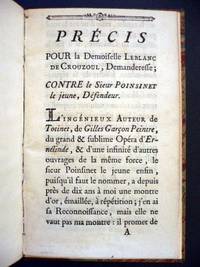
(Jules CLARETIE's copy) - Antoine-Alexandre-Henri POINSINET
Précis pour la demoiselle Leblanc de Crouzoul contre le sieur Poinsinet le jeune défendeur
Paris: De l' imprimerie de monsieur Lambert 1768. Fine. De l' imprimerie de monsieur Lambert Paris 1768 10 x 16.70 cm relié First edition rare. Half morocco binding with long grain early 20th century smooth spine date at foot Jules Claretie's gilt monogram at foot of spine. A curious affair where a woman asks a man of letters who has become famous to return her gold repeating watch he claiming that an artist under 25 years of age is not bound to honesty etc. Provenance: from the library of Jules Claretie. De l' imprimerie de monsieur Lambert unknown
Referenz des Buchhändlers : 26137
|
|
|
DUTERTRE - MONSALDI
DESCRIPTION DE L'EGYPTE. Pyramides de Memphis. Bas-reliefs sculptés dans les tombeaux situés à l'est de la seconde pyramide. ANTIQUITES volume V planche 18
Paris: Imprimerie Impériale 1809. Fine. Imprimerie Impériale Paris 1809-1829 71 x 53.50 cm une feuille Original unshaved full-page etching from the Imperial edition of the Description de l'Égypte or Recueil des observations et recherches faites en Égypte pendant l'expédition française publié par les ordres de Sa Majesté l'Empereur Napoléon le Grand A Collection of the observations and research carried out in Egypt during the French expedition published on the orders of his Majesty the Emperor Napoleon the Great'.Produced between February 1802 and 1830 on the orders of Naopleon Bonaparte and published between 1809 and 1828 1000 copies were printed and distributed to institutions on vergé paper with an 'Égypte ancienne et moderne' watermark visible when held up to the light. Light marginal spotting not touching image otherwise in very fresh fine condition. An engraving from the Description de l'Egypte one of the masterpieces of French printing and the birth of a new field: Egyptology. A gigantic survey of Egypt at the time of Bonaparte's conquests in 1798 and 1799 the work is divided into 13 volumes of engravings making up 892 plates of which 72 colored as well as presenting the splendors of the Egypt of the Pharaohs in 9 volumes. The other volumes discuss natural history and present a fascinating portrait of Coptic and Islamic Egypt as it was seen by Bonaparte's Eastern Armies. The Egyptian campaign' militarily a disaster demonstrates through the engravings of the Description d'Egypte the scientific success it nonetheless became thanks to the 167 expert members of the Commission of the Sciences and Arts of the Institut d'Egypte Egyptian Institute who followed Napoleon's army. The Institut gathered together in Egypt the mathematician Monge the chemist Berthollet the naturalist Geoffroy Saint-Hilaire as well as numerous artists engineers architects and doctors. They were tasked with re-discovering modern and ancient Egypt and displaying its natural treasures as well as the know-how of its inhabitants.This edition the so-called Imperial edition of the plates for the Description de l'Egypte was printed in four large formats two of which were specially created for it and christened Moyen-Egypte and Grand-Egypte. A special press was built to print it the process extending over 20 years from 1809 to 1829. The Imperial edition proved so popular that a second edition this time in black and white and without the Egypte ancienne et moderne watermark known as the Royal Edition was published during the Restoration by the printing house of C.-L.-F. Panckoucke Paris.The engravings of the Description d'Egypte owe a great deal to Baron Dominique-Vivant Denon illustrator diplomat collector and later Director of the Musée Napoléon the Louvre. His exploration of the South of Egypt gave Bonaparte the idea of sending the experts of the Institut there thus creating a faithful and complete portrait of the area. This was the research gathered together from 1802 in the mammoth Description de L'Egypte.Denon embarked on this story of archeological exploration at the age of 51 reaching first Alexandria and then Cairo before exploring Upper Egypt. Along with the members of the Institut d'Egypte the Natural History Museum's painter H.J. Redouté brother of Pierre-Joseph Redouté author of Roses the mineralogist Dolomiue and the draughtsman Joly Denon then explored the Nile Delta and Lower Egypt. When however he joined the 21st Light Infantry Regiment as it marched across Upper Egypt in pursuit of the retreating Mameluks in November 1798 he found himself the only civilian. In the very midst of the battle itself he reeled off sketches of the works of art that peppered his path right up to the threshold of the Sudan. He said that he had crossed a country that is apart from its name entirely unknown to Europeans and therefore everything was worth describing Voyages dans la Basse et la Haute Egypte pendant les campagnes Imprimerie Impériale unknown
Referenz des Buchhändlers : 26193

|
|
|
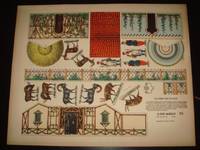
Le Petit architecte n°55 : le Jardin des plantes
Épinal: Pellerin 1890. Fine. Pellerin Épinal s. d. circa 1880-1900 49 x 39 cm Image d'Épinal color lithograph large format printed on heavy paper. Very light marginal foxing otherwise handsome condition colors very well preserved. These sheets are cardboard constructions or models on which a pattern was printed. This pattern must be cut out then assembled to construct various objects or life scenes. The Épinal imagery published several series of cut-out models including the ""Grandes Constructions"" in 39 x 49 cm format the ""Moyennes Constructions"" and the ""Petites Constructions"". From 1880 to 1908 constructions were published with subjects including architecture costumes ships and various vehicles. During this same period paper theaters or ""théâtre chez soi"" also enjoyed great success. This toy model developed and lasted until the Second World War. Once sold by peddlers the images d'Épinal owe their name to Jean-Charles Pellerin who was the first printer to publish this type of image in series and who lived in the town of Épinal Vosges. The subjects are very varied but generally revolve around religion history French Revolution battles military uniforms or drawn from popular novels. Épinal imagery takes its origins in imagery a popular art born in the 15th century intended mainly for the illiterate rural public. Originally the image is engraved on a wooden plate and printing is done using a hand press. It is then colored using stencils. In the 19th century lead castings were made from the engraved wood blocks: stereotypes which allowed production to be increased. In 1820 lithography was adopted which induced a radical change in style with finer drawings. In 1900 coloring was still done by stencil thanks to a machine that could color 300 images per hour the Aquatype. Pellerin unknown
Referenz des Buchhändlers : 26667
|
|
|
Marcelin DEFOURNEAUX
Pablo de Olavide ou l'afrancesado 1725-1803
Paris: P.U.F. 1959. Fine. P.U.F. Paris 1959 17 x 25.50 cm broché First edition of which there were no deluxe copies. Work illustrated with a portrait of P. de Olivade as frontispiece. Spine slightly sunned without consequence otherwise a handsome copy. P.U.F. unknown
Referenz des Buchhändlers : 3281

|
|
|
Gabriel MAUGAIN
L'italie dans quelques publications de jésuites français
Paris: Honoré Champion 1910. Fine. Honoré Champion Paris 1910 16.50 x 26 cm broché First edition .Small tears with minimal marginal losses to boards several tears with losses to spine handsome interior condition. Honoré Champion hardcover
Referenz des Buchhändlers : 26362

|
|
|
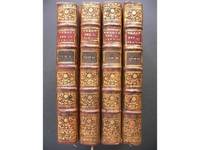
Madame de GENLIS
Théâtre à l'usage des jeunes personnes
à Paris: Chez Panckoucke 1779. Fine. Chez Panckoucke à Paris 1779-1780 12 x 20 cm 4 volumes reliés First edition. Contemporary half calf bindings. Decorated spine with raised bands. Red morocco title label and brown sheep volume label. Lacks to headcaps of volume IV. A small lack to tail of volume III. Rubbing. Quite good copies very fresh. The complete set comprises 24 plays. Many of these plays were originally intended for the children of Orléans under the care of the Comtesse de Genlis. The roles are performed by children. Madame de Genlis thus inaugurated a new genre in theatre a theatre made by and for children. In the final volume the preface specifies that this volume is intended solely for the children of artisans and merchants. It goes without saying that none of the plays is without a certain moral lesson which it demonstrates. Volume I: Agar dans le désert; La belle et la bête; Les flacons; L'isle heureuse; L'enfant gâté; La curieuse; Les dangers du monde. Volume II: L'aveugle de Spa; La colombe; Cécile ou le sacrifice de l'amitié; Les ennemies généreuses; La bonne mère; L'intrigante. Volume III: Le bal d'enfans; Le voyageur; Vathek; Les faux amis; Le magistrat. Volume IV: La rosière de Salency; La marchande de mode; La lingère; Le libraire; Le vrai sage; Le portrait. Chez Panckoucke hardcover
Referenz des Buchhändlers : 26471
|
|
|
DUHAMEL
DESCRIPTION DE L'EGYPTE. Botanique. Raphanus recurvatus Cleome droserifolia. Histoire Naturelle planche 36
Paris: Imprimerie Impériale 1809. Fine. Imprimerie Impériale Paris 1809-1829 71 x 54 cm une feuille Original unshaved full-page etching from the Imperial edition of the Description de l'Égypte or Recueil des observations et recherches faites en Égypte pendant l'expédition française publié par les ordres de Sa Majesté l'Empereur Napoléon le Grand A Collection of the observations and research carried out in Egypt during the French expedition published on the orders of his Majesty the Emperor Napoleon the Great'.Produced between February 1802 and 1830 on the orders of Naopleon Bonaparte and published between 1809 and 1828 1000 copies were printed and distributed to institutions on vergé paper with an 'Égypte ancienne et moderne' watermark visible when held up to the light. Light marginal spotting not touching image otherwise in very fresh fine condition. An engraving from the Description de l'Egypte one of the masterpieces of French printing and the birth of a new field: Egyptology. A gigantic survey of Egypt at the time of Bonaparte's conquests in 1798 and 1799 the work is divided into 13 volumes of engravings making up 892 plates of which 72 colored as well as presenting the splendors of the Egypt of the Pharaohs in 9 volumes. The other volumes discuss natural history and present a fascinating portrait of Coptic and Islamic Egypt as it was seen by Bonaparte's Eastern Armies. The Egyptian campaign' militarily a disaster demonstrates through the engravings of the Description d'Egypte the scientific success it nonetheless became thanks to the 167 expert members of the Commission of the Sciences and Arts of the Institut d'Egypte Egyptian Institute who followed Napoleon's army. The Institut gathered together in Egypt the mathematician Monge the chemist Berthollet the naturalist Geoffroy Saint-Hilaire as well as numerous artists engineers architects and doctors. They were tasked with re-discovering modern and ancient Egypt and displaying its natural treasures as well as the know-how of its inhabitants.This edition the so-called Imperial edition of the plates for the Description de l'Egypte was printed in four large formats two of which were specially created for it and christened Moyen-Egypte and Grand-Egypte. A special press was built to print it the process extending over 20 years from 1809 to 1829. The Imperial edition proved so popular that a second edition this time in black and white and without the Egypte ancienne et moderne watermark known as the Royal Edition was published during the Restoration by the printing house of C.-L.-F. Panckoucke Paris.The engravings of the Description d'Egypte owe a great deal to Baron Dominique-Vivant Denon illustrator diplomat collector and later Director of the Musée Napoléon the Louvre. His exploration of the South of Egypt gave Bonaparte the idea of sending the experts of the Institut there thus creating a faithful and complete portrait of the area. This was the research gathered together from 1802 in the mammoth Description de L'Egypte.Denon embarked on this story of archeological exploration at the age of 51 reaching first Alexandria and then Cairo before exploring Upper Egypt. Along with the members of the Institut d'Egypte the Natural History Museum's painter H.J. Redouté brother of Pierre-Joseph Redouté author of Roses the mineralogist Dolomiue and the draughtsman Joly Denon then explored the Nile Delta and Lower Egypt. When however he joined the 21st Light Infantry Regiment as it marched across Upper Egypt in pursuit of the retreating Mameluks in November 1798 he found himself the only civilian. In the very midst of the battle itself he reeled off sketches of the works of art that peppered his path right up to the threshold of the Sudan. He said that he had crossed a country that is apart from its name entirely unknown to Europeans and therefore everything was worth describing Voyages dans la Basse et la Haute Egypte pendant les campagnes de Imprimerie Impériale unknown
Referenz des Buchhändlers : 26452

|
|
|
DUTERTRE - Charles-Louis BALZAC - SMITH
DESCRIPTION DE L'EGYPTE. Papyrus. Hiéroglyphes. Inscriptions et médailles. Pierre avec inscription trouvée à Edfoû Bas-reliefs Autel en pierre Buste en albâtre Étoffe brodée en couleur. ANTIQUITES volume V planche 47
Paris: Imprimerie Impériale 1809. Fine. Imprimerie Impériale Paris 1809-1829 53.50 x 71 cm une feuille Original unshaved full-page etching from the Imperial edition of the Description de l'Égypte or Recueil des observations et recherches faites en Égypte pendant l'expédition française publié par les ordres de Sa Majesté l'Empereur Napoléon le Grand A Collection of the observations and research carried out in Egypt during the French expedition published on the orders of his Majesty the Emperor Napoleon the Great'.Produced between February 1802 and 1830 on the orders of Naopleon Bonaparte and published between 1809 and 1828 1000 copies were printed and distributed to institutions on vergé paper with an 'Égypte ancienne et moderne' watermark visible when held up to the light. Light marginal spotting not touching image otherwise in very fresh fine condition. An engraving from the Description de l'Egypte one of the masterpieces of French printing and the birth of a new field: Egyptology. A gigantic survey of Egypt at the time of Bonaparte's conquests in 1798 and 1799 the work is divided into 13 volumes of engravings making up 892 plates of which 72 colored as well as presenting the splendors of the Egypt of the Pharaohs in 9 volumes. The other volumes discuss natural history and present a fascinating portrait of Coptic and Islamic Egypt as it was seen by Bonaparte's Eastern Armies. The Egyptian campaign' militarily a disaster demonstrates through the engravings of the Description d'Egypte the scientific success it nonetheless became thanks to the 167 expert members of the Commission of the Sciences and Arts of the Institut d'Egypte Egyptian Institute who followed Napoleon's army. The Institut gathered together in Egypt the mathematician Monge the chemist Berthollet the naturalist Geoffroy Saint-Hilaire as well as numerous artists engineers architects and doctors. They were tasked with re-discovering modern and ancient Egypt and displaying its natural treasures as well as the know-how of its inhabitants.This edition the so-called Imperial edition of the plates for the Description de l'Egypte was printed in four large formats two of which were specially created for it and christened Moyen-Egypte and Grand-Egypte. A special press was built to print it the process extending over 20 years from 1809 to 1829. The Imperial edition proved so popular that a second edition this time in black and white and without the Egypte ancienne et moderne watermark known as the Royal Edition was published during the Restoration by the printing house of C.-L.-F. Panckoucke Paris.The engravings of the Description d'Egypte owe a great deal to Baron Dominique-Vivant Denon illustrator diplomat collector and later Director of the Musée Napoléon the Louvre. His exploration of the South of Egypt gave Bonaparte the idea of sending the experts of the Institut there thus creating a faithful and complete portrait of the area. This was the research gathered together from 1802 in the mammoth Description de L'Egypte.Denon embarked on this story of archeological exploration at the age of 51 reaching first Alexandria and then Cairo before exploring Upper Egypt. Along with the members of the Institut d'Egypte the Natural History Museum's painter H.J. Redouté brother of Pierre-Joseph Redouté author of Roses the mineralogist Dolomiue and the draughtsman Joly Denon then explored the Nile Delta and Lower Egypt. When however he joined the 21st Light Infantry Regiment as it marched across Upper Egypt in pursuit of the retreating Mameluks in November 1798 he found himself the only civilian. In the very midst of the battle itself he reeled off sketches of the works of art that peppered his path right up to the threshold of the Sudan. He said that he had crossed a country that is apart from its name entirely unknown to Europeans and therefore everything was worth describing Voyages dans la Basse et la Haute Egypte pendant les campagnes Imprimerie Impériale unknown
Referenz des Buchhändlers : 26216

|
|
|
ANONYME
Jésuite-femme sous le voile
Bordeaux & Paris: E. FouraignanE. Dentu 1852. Fine. E. Fouraignan E. Dentu Bordeaux & Paris s. d. 11.50 x 17.50 cm broché First edition published anonymously by the former Jesuit reverend father de R. Small lacks at head and foot of spine split at tail slight corner lacks on boards. Rare. E. FouraignanE. Dentu hardcover
Referenz des Buchhändlers : 26340

|
|
|
CAILLOT DUVAL
Les mystifications de Caillot-Duval. Choix de ses lettres les plus amusantes avec les réponses de ses victimes. Nouvelle édition complètement remaniée par Lorédan Larchey
Paris: H. Daragon 1901. Fine. H. Daragon Paris 1901 12 x 19.50 cm Relié First edition. One of 350 copies on Alfa-Vergé paper after 25 deluxe copies. Original wrappers preserved. Half marbled red calf. Spine with raised bands decorated with fillets on the bands. Rubbing to headcap. The front cover is detached. Good copy. NB: This work is available at the bookstore upon request within 48 hours. H. Daragon hardcover
Referenz des Buchhändlers : 26276

|
|
|
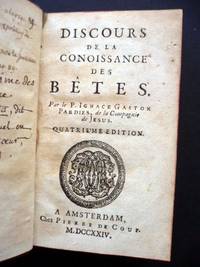
Ignace-Gaston PARDIES
Discours de la connoissance des bêtes
à Amsterdam: Chez Pierre de Coup 1724. Fine. Chez Pierre de Coup à Amsterdam 1724 7.50 x 13 cm relié Fourth edition statement the first edition having appeared in 1672. Contemporary full brown sheep binding. Spine with raised bands decorated. Red morocco title label. 2 tears to spine with losses. Surface wear to lower board. The work is constructed in two parts: an exposition of Cartesianism and all the reasoning of the Cartesians for the first and a refutation for the second. This work by Pardies 1636-1673 mathematician and philosopher had the greatest impact undoubtedly because the defense was so weak that it was seen as a reinforcement of the Cartesian theory of mechanism. NB: This work is available at the bookstore upon request within 48 hours. Chez Pierre de Coup hardcover
Referenz des Buchhändlers : 26469
|
|
|
Francois CHAMARD
L'auteur de l'hymne Pange Lingua
Lille: Imp. classique de Saint AugustinDesclée de Brouwer & Cie 1882. Fine. Imp. classique de Saint Augustin Desclée de Brouwer & Cie Lille 1882 16 x 24.50 cm broché First edition printed in a small number of copies of this offprint. A tear at head and foot of one joint slight corner losses to boards which also show pale marginal dampstaining light interior foxing. Rare. Imp. classique de Saint AugustinDesclée, de Brouwer & Cie hardcover
Referenz des Buchhändlers : 26353

|
|
|
Pierre BRIZON - Ernest POISSON
La coopération
Paris: Aristide Quillet 1913. Fine. Aristide Quillet Paris 1913 13.50 x 19.50 cm reliure de l'éditeur First edition published under the technical direction of Compère-Morel. Publisher's binding in full burgundy flexible boards smooth spine with minor rubbing small tears and marginal rubbing to first and second covers handsome interior condition. Illustrated. From the series: Encyclopédie socialiste syndicale coopérative de l'internationale ouvrière. Aristide Quillet hardcover
Referenz des Buchhändlers : 26258

|
|
|
CONTE - TEXIER
DESCRIPTION DE L'EGYPTE. Arts et métiers. Le Fabricant de sel ammoniaque. ETAT MODERNE volume II planche XXIV
Paris: Imprimerie Impériale 1809. Fine. Imprimerie Impériale Paris 1809-1829 71 x 53.50 cm une feuille Original etching in plano untrimmed extracted from the so-called ""Imperial"" edition of the Description de l'Égypte ou Recueil des observations et recherches faites en Égypte pendant l'expédition française publié par les ordres de Sa Majesté l'Empereur Napoléon le Grand. Executed between February 1802 and 1829 by order of Napoleon Bonaparte and published from 1809 actually 1810 it was printed in 1000 copies on watermarked laid paper ""Égypte ancienne et moderne"" and offered to institutions. Light and marginal foxing not affecting the engraving otherwise in very fine fresh condition and preservation. Volume MODERN STATE II: The genius of the scholars of the Institute is particularly revealed through the plates of the section called Modern Egypt. Architecture industry social structures health conditions water systems music crafts are displayed with exceptional precision and graphic quality. The spirit of Diderot and d'Alembert's Encyclopédie remains underlying in the approach of the draftsmen of the Description de L'Egypte who accompany the text volumes with numerous detailed plates endeavoring to create a portrait of the populations imbued with beauty and respect. Wealthy pachas or simple potter craftsmen are represented with sensitivity going about their occupations amid aesthetic compositions without falling into idealism or caricature. THE DESCRIPTION DE L'EGYPTE IMPERIAL edition 1809-1829: La Description de l'Egypte is one of the masterpieces of French publishing and the starting point of a new science: Egyptology. A titanic exposition of Egypt at the time of Bonaparte's conquests between 1798 and 1799 it is divided into 23 volumes including 13 volumes of engravings gathering nearly 1000 plates in black and 72 in color. The 6 volumes of plates titled Antiquités are devoted to the splendors of Pharaonic Egypt. Natural History is divided into 3 volumes of engravings. One volume is devoted to Geographic and topographic maps while the 3 volumes : Modern State present a striking portrait of Coptic and Islamic Egypt as it was seen by Bonaparte's Army of the Orient. The ""Egyptian campaign"" a military disaster reveals through the engravings of the Description de l'Egypte the scientific success it became thanks to the some 167 scholars members of the Commission of Sciences and Arts of the Institute of Egypt who followed Napoleon's army. The Institute brought together in Egypt the mathematician Monge the chemist Berthollet the naturalist Geoffroy Saint-Hilaire as well as numerous artists engineers architects physicians. They were charged with rediscovering modern and ancient Egypt showing its natural riches and the know-how of its inhabitants. The first edition called ""Imperial"" of the Description de l'Egypte was executed in four large formats two of them specially created for it and named ""Middle-Egypt"" and ""Grand-Egypt"" formats. A specific press was built for its printing which extended over twenty years between 1809 and 1829. The Imperial edition proved so popular that a second edition in 37 volumes entirely in black and without the ""Ancient and modern Egypt"" watermark called the ""Panckoucke"" edition was published from 1821 by the C.-L.-F. Panckoucke printing house Paris. The realization of this monument of erudition owes much to Baron Dominique Vivant Denon illustrator diplomat collector and subsequently director of the Napoléon Museum at the Louvre who accompanied Napoleon to Egypt with numerous other scholars but decided alone to venture into the South of the country while the other invited scientists remained confined to the Cairo region. The fabulous sketches brought back by Denon from his romantic ride gave Bonaparte the idea to send the other members of the Institute there and thus create a faithful and complete portrait of the territory. Following Denon it was therefore the greatest French scientis Imprimerie Impériale unknown
Referenz des Buchhändlers : 26388

|
|
|
Robert MARRAST
José de Espronceda et son temps. Littérature société politique au temps du Romantisme
Paris: Klincksieck 1974. Fine. Klincksieck Paris 1974 15.50 x 23.50 cm broché First edition of which there were no deluxe copies. Signed and inscribed by Robert Marrast. Handsome copy. Klincksieck unknown
Referenz des Buchhändlers : 26266

|
|
|
DUTERTRE - MASSON - RIBAUT (sculpsit)
DESCRIPTION DE L'EGYPTE. Collection d'antiques. Figures en pâte de porcelaine en bois peint en basalte Bas-relief en pierre Masques en terre en bronze. ANTIQUITES volume V planche 69
Paris: Imprimerie Impériale 1809. Fine. Imprimerie Impériale Paris 1809-1829 53.50 x 71 cm une feuille Original unshaved full-page etching from the Imperial edition of the Description de l'Égypte or Recueil des observations et recherches faites en Égypte pendant l'expédition française publié par les ordres de Sa Majesté l'Empereur Napoléon le Grand A Collection of the observations and research carried out in Egypt during the French expedition published on the orders of his Majesty the Emperor Napoleon the Great'.Produced between February 1802 and 1830 on the orders of Naopleon Bonaparte and published between 1809 and 1828 1000 copies were printed and distributed to institutions on vergé paper with an 'Égypte ancienne et moderne' watermark visible when held up to the light. Light marginal spotting not touching image otherwise in very fresh fine condition. An engraving from the Description de l'Egypte one of the masterpieces of French printing and the birth of a new field: Egyptology. A gigantic survey of Egypt at the time of Bonaparte's conquests in 1798 and 1799 the work is divided into 13 volumes of engravings making up 892 plates of which 72 colored as well as presenting the splendors of the Egypt of the Pharaohs in 9 volumes. The other volumes discuss natural history and present a fascinating portrait of Coptic and Islamic Egypt as it was seen by Bonaparte's Eastern Armies. The Egyptian campaign' militarily a disaster demonstrates through the engravings of the Description d'Egypte the scientific success it nonetheless became thanks to the 167 expert members of the Commission of the Sciences and Arts of the Institut d'Egypte Egyptian Institute who followed Napoleon's army. The Institut gathered together in Egypt the mathematician Monge the chemist Berthollet the naturalist Geoffroy Saint-Hilaire as well as numerous artists engineers architects and doctors. They were tasked with re-discovering modern and ancient Egypt and displaying its natural treasures as well as the know-how of its inhabitants.This edition the so-called Imperial edition of the plates for the Description de l'Egypte was printed in four large formats two of which were specially created for it and christened Moyen-Egypte and Grand-Egypte. A special press was built to print it the process extending over 20 years from 1809 to 1829. The Imperial edition proved so popular that a second edition this time in black and white and without the Egypte ancienne et moderne watermark known as the Royal Edition was published during the Restoration by the printing house of C.-L.-F. Panckoucke Paris.The engravings of the Description d'Egypte owe a great deal to Baron Dominique-Vivant Denon illustrator diplomat collector and later Director of the Musée Napoléon the Louvre. His exploration of the South of Egypt gave Bonaparte the idea of sending the experts of the Institut there thus creating a faithful and complete portrait of the area. This was the research gathered together from 1802 in the mammoth Description de L'Egypte.Denon embarked on this story of archeological exploration at the age of 51 reaching first Alexandria and then Cairo before exploring Upper Egypt. Along with the members of the Institut d'Egypte the Natural History Museum's painter H.J. Redouté brother of Pierre-Joseph Redouté author of Roses the mineralogist Dolomiue and the draughtsman Joly Denon then explored the Nile Delta and Lower Egypt. When however he joined the 21st Light Infantry Regiment as it marched across Upper Egypt in pursuit of the retreating Mameluks in November 1798 he found himself the only civilian. In the very midst of the battle itself he reeled off sketches of the works of art that peppered his path right up to the threshold of the Sudan. He said that he had crossed a country that is apart from its name entirely unknown to Europeans and therefore everything was worth describing Voyages dans la Basse et la Haute Egypte pendant les campagnes Imprimerie Impériale unknown
Referenz des Buchhändlers : 26228

|
|
|
Eugene ARNAUD
Supplément à la notice historique et bibliographique sur les imprimeurs de l'Académie protestante de Die en Dauphiné au XVIIème siècle
Grenoble: Imp. Joseph allier 1886. Fine. Imp. Joseph allier Grenoble 1886 16.50 x 25.50 cm broché First edition printed in 175 copies. Autograph inscription from one bibliophile to another bibliophile. Rare and handsome copy. Imp. Joseph allier unknown
Referenz des Buchhändlers : 26360

|
|
|
GUYARD FILS
DESCRIPTION DE L'EGYPTE. Botanique. Dorycnium argenteum Picris sulphurea Picris lyrata. Histoire Naturelle planche 40
Paris: Imprimerie Impériale 1809. Fine. Imprimerie Impériale Paris 1809-1829 71 x 54 cm une feuille Original unshaved full-page etching from the Imperial edition of the Description de l'Égypte or Recueil des observations et recherches faites en Égypte pendant l'expédition française publié par les ordres de Sa Majesté l'Empereur Napoléon le Grand A Collection of the observations and research carried out in Egypt during the French expedition published on the orders of his Majesty the Emperor Napoleon the Great'.Produced between February 1802 and 1830 on the orders of Naopleon Bonaparte and published between 1809 and 1828 1000 copies were printed and distributed to institutions on vergé paper with an 'Égypte ancienne et moderne' watermark visible when held up to the light. Light marginal spotting not touching image otherwise in very fresh fine condition. An engraving from the Description de l'Egypte one of the masterpieces of French printing and the birth of a new field: Egyptology. A gigantic survey of Egypt at the time of Bonaparte's conquests in 1798 and 1799 the work is divided into 13 volumes of engravings making up 892 plates of which 72 colored as well as presenting the splendors of the Egypt of the Pharaohs in 9 volumes. The other volumes discuss natural history and present a fascinating portrait of Coptic and Islamic Egypt as it was seen by Bonaparte's Eastern Armies. The Egyptian campaign' militarily a disaster demonstrates through the engravings of the Description d'Egypte the scientific success it nonetheless became thanks to the 167 expert members of the Commission of the Sciences and Arts of the Institut d'Egypte Egyptian Institute who followed Napoleon's army. The Institut gathered together in Egypt the mathematician Monge the chemist Berthollet the naturalist Geoffroy Saint-Hilaire as well as numerous artists engineers architects and doctors. They were tasked with re-discovering modern and ancient Egypt and displaying its natural treasures as well as the know-how of its inhabitants.This edition the so-called Imperial edition of the plates for the Description de l'Egypte was printed in four large formats two of which were specially created for it and christened Moyen-Egypte and Grand-Egypte. A special press was built to print it the process extending over 20 years from 1809 to 1829. The Imperial edition proved so popular that a second edition this time in black and white and without the Egypte ancienne et moderne watermark known as the Royal Edition was published during the Restoration by the printing house of C.-L.-F. Panckoucke Paris.The engravings of the Description d'Egypte owe a great deal to Baron Dominique-Vivant Denon illustrator diplomat collector and later Director of the Musée Napoléon the Louvre. His exploration of the South of Egypt gave Bonaparte the idea of sending the experts of the Institut there thus creating a faithful and complete portrait of the area. This was the research gathered together from 1802 in the mammoth Description de L'Egypte.Denon embarked on this story of archeological exploration at the age of 51 reaching first Alexandria and then Cairo before exploring Upper Egypt. Along with the members of the Institut d'Egypte the Natural History Museum's painter H.J. Redouté brother of Pierre-Joseph Redouté author of Roses the mineralogist Dolomiue and the draughtsman Joly Denon then explored the Nile Delta and Lower Egypt. When however he joined the 21st Light Infantry Regiment as it marched across Upper Egypt in pursuit of the retreating Mameluks in November 1798 he found himself the only civilian. In the very midst of the battle itself he reeled off sketches of the works of art that peppered his path right up to the threshold of the Sudan. He said that he had crossed a country that is apart from its name entirely unknown to Europeans and therefore everything was worth describing Voyages dans la Basse et la Haute Egypte pendant les campagnes de Imprimerie Impériale unknown
Referenz des Buchhändlers : 26457

|
|
|
Charles RAPPOPORT
La révolution sociale
Paris: Aristide Quillet 1912. Fine. Aristide Quillet Paris 1912 14 x 19.50 cm reliure de l'éditeur First edition published under the technical direction of Compère-Morel. Publisher's binding in full burgundy flexible boards smooth spine with minor rubbing small tears and marginal rubbing to first cover handsome interior condition. Illustrated. From the series: Encyclopédie socialiste syndicale coopérative de l'internationale ouvrière. Aristide Quillet hardcover
Referenz des Buchhändlers : 26257

|
|
|
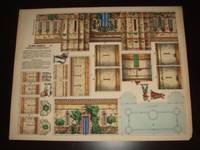
Le Petit architecte n°59 : Château de Barbe-bleue
Épinal: Pellerin & Cie 1890. Fine. Pellerin & Cie Épinal s. d. circa 1880-1900 49 x 39 cm Image d'Épinal color lithograph large format printed on heavy paper. Very light marginal foxing two small inconsequential tears to right margin otherwise handsome condition colors very well preserved. These sheets are cardboard constructions or models on which a pattern was printed. This pattern must be cut out then assembled to construct various objects or life scenes. The Épinal imagery published several series of cut-out models including the ""Grandes Constructions"" in 39 x 49 cm format the ""Moyennes Constructions"" and the ""Petites Constructions"". From 1880 to 1908 constructions were published with subjects including architecture costumes ships and various vehicles. During this same period paper theaters or ""théâtre chez soi"" also enjoyed great success. This toy model developed and lasted until the Second World War. Once sold by peddlers the images d'Épinal owe their name to Jean-Charles Pellerin who was the first printer to publish this type of image in series and who lived in the town of Épinal Vosges. The subjects are very varied but generally revolve around religion history French Revolution battles military uniforms or drawn from popular novels. Épinal imagery takes its origins in imagery a popular art born in the 15th century intended mainly for the illiterate rural public. Originally the image is engraved on a wooden plate and printing is done using a hand press. It is then colored using stencils. In the 19th century lead castings were made from the engraved wood blocks: stereotypes which allowed production to be increased. In 1820 lithography was adopted which induced a radical change in style with finer drawings. In 1900 coloring was still done by stencil thanks to a machine that could color 300 images per hour the Aquatype. Pellerin & Cie unknown
Referenz des Buchhändlers : 26666
|
|
|
Rene DAUMAL
Lettres à ses amis 1 Letters to His Friends 1
Paris: Gallimard 1958. Fine. Gallimard Paris 1958 12 x 19 cm broché First edition one of 35 numbered copies on pur fil the only deluxe paper issue. Illustrated. A fine copy. Gallimard unknown
Referenz des Buchhändlers : 27164

|
|
|
Edme-Francois JOMARD - Constantin SMITH (aqua forti)
DESCRIPTION DE L'EGYPTE. Papyrus. Hiéroglyphes. Inscriptions et médailles. Plan coupes et détails hiéroglyphiques d'un monolithe égyptien trouvé à Damiette. ANTIQUITES volume V planche 48
Paris: Imprimerie Impériale 1809. Fine. Imprimerie Impériale Paris 1809-1829 71 x 53.50 cm une feuille Original unshaved full-page etching from the Imperial edition of the Description de l'Égypte or Recueil des observations et recherches faites en Égypte pendant l'expédition française publié par les ordres de Sa Majesté l'Empereur Napoléon le Grand A Collection of the observations and research carried out in Egypt during the French expedition published on the orders of his Majesty the Emperor Napoleon the Great'.Produced between February 1802 and 1830 on the orders of Naopleon Bonaparte and published between 1809 and 1828 1000 copies were printed and distributed to institutions on vergé paper with an 'Égypte ancienne et moderne' watermark visible when held up to the light. Light marginal spotting not touching image otherwise in very fresh fine condition. An engraving from the Description de l'Egypte one of the masterpieces of French printing and the birth of a new field: Egyptology. A gigantic survey of Egypt at the time of Bonaparte's conquests in 1798 and 1799 the work is divided into 13 volumes of engravings making up 892 plates of which 72 colored as well as presenting the splendors of the Egypt of the Pharaohs in 9 volumes. The other volumes discuss natural history and present a fascinating portrait of Coptic and Islamic Egypt as it was seen by Bonaparte's Eastern Armies. The Egyptian campaign' militarily a disaster demonstrates through the engravings of the Description d'Egypte the scientific success it nonetheless became thanks to the 167 expert members of the Commission of the Sciences and Arts of the Institut d'Egypte Egyptian Institute who followed Napoleon's army. The Institut gathered together in Egypt the mathematician Monge the chemist Berthollet the naturalist Geoffroy Saint-Hilaire as well as numerous artists engineers architects and doctors. They were tasked with re-discovering modern and ancient Egypt and displaying its natural treasures as well as the know-how of its inhabitants.This edition the so-called Imperial edition of the plates for the Description de l'Egypte was printed in four large formats two of which were specially created for it and christened Moyen-Egypte and Grand-Egypte. A special press was built to print it the process extending over 20 years from 1809 to 1829. The Imperial edition proved so popular that a second edition this time in black and white and without the Egypte ancienne et moderne watermark known as the Royal Edition was published during the Restoration by the printing house of C.-L.-F. Panckoucke Paris.The engravings of the Description d'Egypte owe a great deal to Baron Dominique-Vivant Denon illustrator diplomat collector and later Director of the Musée Napoléon the Louvre. His exploration of the South of Egypt gave Bonaparte the idea of sending the experts of the Institut there thus creating a faithful and complete portrait of the area. This was the research gathered together from 1802 in the mammoth Description de L'Egypte.Denon embarked on this story of archeological exploration at the age of 51 reaching first Alexandria and then Cairo before exploring Upper Egypt. Along with the members of the Institut d'Egypte the Natural History Museum's painter H.J. Redouté brother of Pierre-Joseph Redouté author of Roses the mineralogist Dolomiue and the draughtsman Joly Denon then explored the Nile Delta and Lower Egypt. When however he joined the 21st Light Infantry Regiment as it marched across Upper Egypt in pursuit of the retreating Mameluks in November 1798 he found himself the only civilian. In the very midst of the battle itself he reeled off sketches of the works of art that peppered his path right up to the threshold of the Sudan. He said that he had crossed a country that is apart from its name entirely unknown to Europeans and therefore everything was worth describing Voyages dans la Basse et la Haute Egypte pendant les campagnes Imprimerie Impériale unknown
Referenz des Buchhändlers : 26217

|
|
|
CONTE - HUBERT (sculpsit)
DESCRIPTION DE L'EGYPTE. Arts et métiers. Vue intérieure du moulin à huile. ETAT MODERNE volume II planche XII
Paris: Imprimerie Impériale 1809. Fine. Imprimerie Impériale Paris 1809-1829 71 x 53.50 cm une feuille Original etching in plano untrimmed extracted from the so-called ""Imperial"" edition of the Description de l'Égypte ou Recueil des observations et recherches faites en Égypte pendant l'expédition française publié par les ordres de Sa Majesté l'Empereur Napoléon le Grand. Created between February 1802 and 1829 by order of Napoleon Bonaparte and published from 1809 actually 1810 it was printed in 1000 copies on watermarked laid paper ""Égypte ancienne et moderne"" and offered to institutions. Light and marginal foxing not affecting the engraving otherwise very fine condition and preservation. Volume ETAT MODERNE II: The genius of the Institute's scholars is particularly revealed through the plates of the section called Egypte Moderne. Architecture industry social structures health conditions water management music and craftsmanship are presented with exceptional precision and graphic quality. The spirit of Diderot and d'Alembert's L'Encyclopédie remains underlying in the approach of the Description de L'Egypte draftsmen who accompany the text volumes with numerous detailed plates endeavoring to create a portrait of the populations imbued with beauty and respect. Wealthy pashas or simple potter artisans are represented with sensitivity going about their occupations amid aesthetic compositions without falling into idealism or caricature. LA DESCRIPTION DE L'EGYPTE IMPERIAL edition 1809-1829: La Description de l'Egypte is one of the masterpieces of French publishing and the starting point of a new science: Egyptology. A titanic exposition of Egypt during Bonaparte's conquests between 1798 and 1799 it is divided into 23 volumes including 13 volumes of engravings gathering nearly 1000 plates in black and 72 in color. The 6 volumes of plates entitled Antiquités are devoted to the splendors of Pharaonic Egypt. L'Histoire naturelle is divided into 3 volumes of engravings. One volume is devoted to Cartes géographiques et topographiques while the 3 volumes : Etat Moderne present a striking portrait of Coptic and Islamic Egypt as it was seen by Bonaparte's armies of the Orient. The ""Egyptian campaign"" a military disaster reveals through the engravings of the Description de l'Egypte the scientific success it became thanks to the approximately 167 scholars members of the Commission of Sciences and Arts of the Institute of Egypt who followed Napoleon's army. The Institute brought together in Egypt the mathematician Monge the chemist Berthollet the naturalist Geoffroy Saint-Hilaire as well as numerous artists engineers architects doctors. They were charged with rediscovering modern and ancient Egypt showing its natural riches and the expertise of its inhabitants. The first edition called ""Imperial"" of the Description de l'Egypte was produced in four large formats two of them specially created for it and named ""Moyen-Egypte"" and ""Grand-Egypte"" formats. A specific press was built for its printing which stretched over twenty years between 1809 and 1829. The Imperial edition proved so popular that a second edition in 37 volumes entirely in black and without the ""Egypte ancienne et moderne"" watermark called the ""Panckoucke"" edition was published from 1821 by the C.-L.-F. Panckoucke printing house Paris. The realization of this monument of erudition owes much to Baron Dominique Vivant Denon illustrator diplomat collector and later director of the Napoleon Museum at the Louvre who accompanied Napoleon to Egypt with many other scholars but decided alone to venture into the South of the country while the other invited scientists remained confined to the Cairo region. The fabulous sketches brought back by Denon from his romantic ride gave Bonaparte the idea to send the other members of the Institute there and thus create a faithful and complete portrait of the territory. Following Denon it was therefore the greatest French scientis Imprimerie Impériale unknown
Referenz des Buchhändlers : 26337

|
|
|
Pierre-Dominique MARTIN - COLLIN (sculpsit) - DE SAINT MORIEN (sculpsit)
DESCRIPTION DE L'EGYPTE. Alexandrie. Plan coupes et détails d'un monument souterrain situé à l'ouest de la ville antique. ANTIQUITES volume V planche 42
Paris: Imprimerie Impériale 1809. Fine. Imprimerie Impériale Paris 1809-1829 71 x 53.50 cm une feuille Original unshaved full-page etching from the Imperial edition of the Description de l'Égypte or Recueil des observations et recherches faites en Égypte pendant l'expédition française publié par les ordres de Sa Majesté l'Empereur Napoléon le Grand A Collection of the observations and research carried out in Egypt during the French expedition published on the orders of his Majesty the Emperor Napoleon the Great'.Produced between February 1802 and 1830 on the orders of Naopleon Bonaparte and published between 1809 and 1828 1000 copies were printed and distributed to institutions on vergé paper with an 'Égypte ancienne et moderne' watermark visible when held up to the light. Light marginal spotting not touching image otherwise in very fresh fine condition. An engraving from the Description de l'Egypte one of the masterpieces of French printing and the birth of a new field: Egyptology. A gigantic survey of Egypt at the time of Bonaparte's conquests in 1798 and 1799 the work is divided into 13 volumes of engravings making up 892 plates of which 72 colored as well as presenting the splendors of the Egypt of the Pharaohs in 9 volumes. The other volumes discuss natural history and present a fascinating portrait of Coptic and Islamic Egypt as it was seen by Bonaparte's Eastern Armies. The Egyptian campaign' militarily a disaster demonstrates through the engravings of the Description d'Egypte the scientific success it nonetheless became thanks to the 167 expert members of the Commission of the Sciences and Arts of the Institut d'Egypte Egyptian Institute who followed Napoleon's army. The Institut gathered together in Egypt the mathematician Monge the chemist Berthollet the naturalist Geoffroy Saint-Hilaire as well as numerous artists engineers architects and doctors. They were tasked with re-discovering modern and ancient Egypt and displaying its natural treasures as well as the know-how of its inhabitants.This edition the so-called Imperial edition of the plates for the Description de l'Egypte was printed in four large formats two of which were specially created for it and christened Moyen-Egypte and Grand-Egypte. A special press was built to print it the process extending over 20 years from 1809 to 1829. The Imperial edition proved so popular that a second edition this time in black and white and without the Egypte ancienne et moderne watermark known as the Royal Edition was published during the Restoration by the printing house of C.-L.-F. Panckoucke Paris.The engravings of the Description d'Egypte owe a great deal to Baron Dominique-Vivant Denon illustrator diplomat collector and later Director of the Musée Napoléon the Louvre. His exploration of the South of Egypt gave Bonaparte the idea of sending the experts of the Institut there thus creating a faithful and complete portrait of the area. This was the research gathered together from 1802 in the mammoth Description de L'Egypte.Denon embarked on this story of archeological exploration at the age of 51 reaching first Alexandria and then Cairo before exploring Upper Egypt. Along with the members of the Institut d'Egypte the Natural History Museum's painter H.J. Redouté brother of Pierre-Joseph Redouté author of Roses the mineralogist Dolomiue and the draughtsman Joly Denon then explored the Nile Delta and Lower Egypt. When however he joined the 21st Light Infantry Regiment as it marched across Upper Egypt in pursuit of the retreating Mameluks in November 1798 he found himself the only civilian. In the very midst of the battle itself he reeled off sketches of the works of art that peppered his path right up to the threshold of the Sudan. He said that he had crossed a country that is apart from its name entirely unknown to Europeans and therefore everything was worth describing Voyages dans la Basse et la Haute Egypte pendant les campagnes Imprimerie Impériale unknown
Referenz des Buchhändlers : 26212

|
|
|
OLIVIER-PINOT
Constructions pour enfants n°7 : Corps de garde
Épinal: Olivier-Pinot 1890. Fine. Olivier-Pinot Épinal s. d. circa 1880-1900 49 x 39 cm Épinal Image color lithograph large format printed on heavy paper. Repaired tears to left margin slightly affecting the engraving and with small lacks otherwise fine condition colors very well preserved. These sheets are cardboard constructions or models on which a pattern was printed. This pattern must be cut out then assembled to construct various objects or life scenes. The Épinal imagery published several series of cut-out models including the ""Grandes Constructions"" in 39 x 49 cm format the ""Moyennes Constructions"" and the ""Petites Constructions"". From 1880 to 1908 constructions were published featuring architecture costumes ships and various vehicles. During this same period paper theaters or ""théâtre chez soi"" also enjoyed great success. This toy model developed and endured until the Second World War. Once sold by peddlers the Épinal images owe their name to Jean-Charles Pellerin who was the first printer to publish this type of image in series and who lived in the town of Épinal Vosges. The subjects are very varied but generally revolve around religion history French Revolution battles military uniforms or drawn from successful novels. Épinal imagery takes its origins from imagery a popular art born in the 15th century intended primarily for the illiterate rural public. Originally the image is engraved on a wooden block and printing is done using a hand press. It is then colored by means of stencils. In the 19th century lead castings were made from the engraved wood blocks: stereotypes which allowed production to be increased. In 1820 lithography was adopted which induced a radical change in style with finer drawings. In 1900 coloring was still done by stencil thanks to a machine that could color 300 images per hour the Aquatype. Olivier-Pinot unknown
Referenz des Buchhändlers : 26397
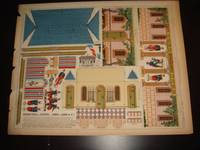
|
|
|
CONTE - DELAUNAY - SCHROEDER (sculpsit)
DESCRIPTION DE L'EGYPTE. Arts et métiers. Charrue Machine à battre les grains. ETAT MODERNE volume II planche VIII
Paris: Imprimerie Impériale 1809. Fine. Imprimerie Impériale Paris 1809-1829 53.50 x 71 cm une feuille Original etching in plano untrimmed extracted from the so-called ""Imperial"" edition of the Description de l'Égypte ou Recueil des observations et recherches faites en Égypte pendant l'expédition française publié par les ordres de Sa Majesté l'Empereur Napoléon le Grand. Executed between February 1802 and 1829 by order of Napoleon Bonaparte and published from 1809 actually 1810 it was printed in 1000 copies on watermarked laid paper ""Égypte ancienne et moderne"" and offered to institutions. Light and marginal foxing not affecting the engraving otherwise very fine condition and preservation. Volume MODERN STATE II: The genius of the scholars of the Institute is particularly revealed through the plates of the section called Modern Egypt. Architecture industry social structures sanitary conditions water management music craftsmanship are presented with exceptional precision and graphic quality. The spirit of Diderot and d'Alembert's Encyclopedia remains underlying in the approach of the draughtsmen of the Description de L'Egypte who accompany the text volumes with numerous detailed plates endeavoring to draw a portrait of the populations imbued with beauty and respect. Wealthy pashas or simple potter craftsmen are represented with sensitivity going about their occupations in the midst of aesthetic compositions without falling into idealism or caricature. THE DESCRIPTION OF EGYPT IMPERIAL edition 1809-1829: The Description of Egypt is one of the masterpieces of French publishing and the starting point of a new science: Egyptology. Titanic exposition of Egypt at the time of Bonaparte's conquests between 1798 and 1799 it is divided into 23 volumes including 13 volumes of engravings gathering nearly 1000 plates in black and 72 in color. The 6 volumes of plates entitled Antiquities are devoted to the splendors of Pharaonic Egypt. Natural History is divided into 3 volumes of engravings. One volume is devoted to Geographical and topographical maps while the 3 volumes : Modern State draw a striking portrait of Coptic and Islamic Egypt as it was seen by Bonaparte's armies of the Orient. The ""Egyptian campaign"" military disaster reveals through the engravings of the Description of Egypt the scientific success it became thanks to the some 167 scholars members of the Commission of Sciences and Arts of the Institute of Egypt who followed Napoleon's army. The Institute brought together in Egypt the mathematician Monge the chemist Berthollet the naturalist Geoffroy Saint-Hilaire as well as numerous artists engineers architects physicians. They were charged with rediscovering modern and ancient Egypt showing its natural riches and the know-how of its inhabitants. The first edition called ""Imperial"" of the Description of Egypt was executed in four large formats two of them specially created for it and baptized ""Middle-Egypt"" and ""Grand-Egypt"" formats. A specific press was built for its printing which stretched over twenty years between 1809 and 1829. The Imperial edition proved so popular that a second edition in 37 volumes entirely in black and without the watermark ""ancient and modern Egypt"" called the ""Panckoucke"" edition was published from 1821 by the C.-L.-F. Panckoucke printing house Paris. The realization of this monument of erudition owes much to Baron Dominique Vivant Denon illustrator diplomat collector and subsequently director of the Napoleon Museum at the Louvre who accompanied Napoleon to Egypt with numerous other scholars but decided alone to venture into the South of the country while the other invited scientists remained confined in the Cairo region. The fabulous sketches brought back by Denon from his romantic cavalcade gave Bonaparte the idea to send the other members of the Institute there and thus draw a faithful and complete portrait of the territory. Following Denon it was therefore the greatest Fre Imprimerie Impériale unknown
Referenz des Buchhändlers : 26330

|
|
|
Robert GUIETTE
L'allumeur de rêves
Ostende Ostend & Bruges: Editions de la Flandre littéraire 1927. Fine. Editions de la Flandre littéraire Ostende Ostend & Bruges 1927 16.50 x 25 cm agrafé First edition published in a small number of copies of this offprint from la Flandre littéraire. Autograph inscription from Robert Guiette to André Salmon. Work illustrated with a frontispiece by James Ensor. Preface by Franz Hellens. Light marginal worming to the first cover. Rare. Editions de la Flandre littéraire unknown
Referenz des Buchhändlers : 27206

|
|
|
Henri MICHAUX
Connaissance par les gouffres
Paris: Gallimard 1961. Fine. Gallimard Paris 1961 14.50 x 19 cm broché First edition one of 21 numbered copies on Hollande paper the tirage de tête. A fine copy. Gallimard unknown
Referenz des Buchhändlers : 27144

|
|
|
Edme-Francois JOMARD - PROTAIN (delineavit) - Charles-Louis BALZAC
DESCRIPTION DE L'EGYPTE. Alexandrie. Vue de trois colonnes en granit situées au sud de l'ancienne basilique vulgairement nommée Mosquée de St Athanase Vue intérieure plans coupes et détails d'une tour antique placée au nord des deux obélisques et connue sous le nom de Tour des Romains. ANTIQUITES volume V planche 35
Paris: Imprimerie Impériale 1809. Fine. Imprimerie Impériale Paris 1809-1829 71 x 53.50 cm une feuille Original unshaved full-page etching from the Imperial edition of the Description de l'Égypte or Recueil des observations et recherches faites en Égypte pendant l'expédition française publié par les ordres de Sa Majesté l'Empereur Napoléon le Grand A Collection of the observations and research carried out in Egypt during the French expedition published on the orders of his Majesty the Emperor Napoleon the Great'.Produced between February 1802 and 1830 on the orders of Naopleon Bonaparte and published between 1809 and 1828 1000 copies were printed and distributed to institutions on vergé paper with an 'Égypte ancienne et moderne' watermark visible when held up to the light. Light marginal spotting not touching image otherwise in very fresh fine condition. An engraving from the Description de l'Egypte one of the masterpieces of French printing and the birth of a new field: Egyptology. A gigantic survey of Egypt at the time of Bonaparte's conquests in 1798 and 1799 the work is divided into 13 volumes of engravings making up 892 plates of which 72 colored as well as presenting the splendors of the Egypt of the Pharaohs in 9 volumes. The other volumes discuss natural history and present a fascinating portrait of Coptic and Islamic Egypt as it was seen by Bonaparte's Eastern Armies. The Egyptian campaign' militarily a disaster demonstrates through the engravings of the Description d'Egypte the scientific success it nonetheless became thanks to the 167 expert members of the Commission of the Sciences and Arts of the Institut d'Egypte Egyptian Institute who followed Napoleon's army. The Institut gathered together in Egypt the mathematician Monge the chemist Berthollet the naturalist Geoffroy Saint-Hilaire as well as numerous artists engineers architects and doctors. They were tasked with re-discovering modern and ancient Egypt and displaying its natural treasures as well as the know-how of its inhabitants.This edition the so-called Imperial edition of the plates for the Description de l'Egypte was printed in four large formats two of which were specially created for it and christened Moyen-Egypte and Grand-Egypte. A special press was built to print it the process extending over 20 years from 1809 to 1829. The Imperial edition proved so popular that a second edition this time in black and white and without the Egypte ancienne et moderne watermark known as the Royal Edition was published during the Restoration by the printing house of C.-L.-F. Panckoucke Paris.The engravings of the Description d'Egypte owe a great deal to Baron Dominique-Vivant Denon illustrator diplomat collector and later Director of the Musée Napoléon the Louvre. His exploration of the South of Egypt gave Bonaparte the idea of sending the experts of the Institut there thus creating a faithful and complete portrait of the area. This was the research gathered together from 1802 in the mammoth Description de L'Egypte.Denon embarked on this story of archeological exploration at the age of 51 reaching first Alexandria and then Cairo before exploring Upper Egypt. Along with the members of the Institut d'Egypte the Natural History Museum's painter H.J. Redouté brother of Pierre-Joseph Redouté author of Roses the mineralogist Dolomiue and the draughtsman Joly Denon then explored the Nile Delta and Lower Egypt. When however he joined the 21st Light Infantry Regiment as it marched across Upper Egypt in pursuit of the retreating Mameluks in November 1798 he found himself the only civilian. In the very midst of the battle itself he reeled off sketches of the works of art that peppered his path right up to the threshold of the Sudan. He said that he had crossed a country that is apart from its name entirely unknown to Europeans and therefore everything was worth describing Voyages dans la Basse et la Haute Egypte pendant les campagnes Imprimerie Impériale unknown
Referenz des Buchhändlers : 26208

|
|
|
Sujet mécanique fonctionnant à la main n°85 : la Fête au village
Épinal: Olivier-Pinot 1890. Fine. Olivier-Pinot Épinal s. d. circa 1880-1900 49 x 39 cm Image d'Épinal color lithograph large format printed on heavy paper. Light marginal foxing otherwise handsome condition colors very well preserved. These plates are constructions or cardboard models on which a pattern was printed. This pattern must be cut out and then assembled to construct various objects or life scenes. The Épinal imagery published several series of cut-out models including the ""Grandes Constructions"" in 39 x 49 cm format the ""Moyennes Constructions"" and the ""Petites Constructions"". From 1880 to 1908 constructions were published featuring architecture costumes boats and various vehicles. During this same period paper theaters or ""home theater"" also enjoyed great success. This toy model developed and lasted until the Second World War. Once sold by peddlers the images d'Épinal owe their name to Jean-Charles Pellerin who was the first printer to publish this type of image in series and who lived in the town of Épinal Vosges. The subjects are very varied but generally revolve around religion history French Revolution battles military uniforms or drawn from successful novels. The imagery of Épinal has its origins in imagery a popular art born in the 15th century intended mainly for the illiterate rural public. Originally the image is engraved on a wooden block and printing is done using a hand press. It is then colored using stencils. In the 19th century lead castings are made from the engraved wood blocks: stereotypes which allow production to be increased. In 1820 lithography was adopted which induced a radical change in style with finer drawings. In 1900 coloring was still done by stencil thanks to a machine that could color 300 images per hour the Aquatype. Olivier-Pinot unknown
Referenz des Buchhändlers : 26688
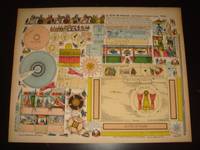
|
|
|
DUHAMEL - PLEE (sculpsit)
DESCRIPTION DE L'EGYPTE. Botanique. Agrostis spicata Poa aegyptiaca Poa cynosuroides. Histoire Naturelle planche 10
Paris: Imprimerie Impériale 1809. Fine. Imprimerie Impériale Paris 1809-1829 71 x 54 cm une feuille Original unshaved full-page etching from the Imperial edition of the Description de l'Égypte or Recueil des observations et recherches faites en Égypte pendant l'expédition française publié par les ordres de Sa Majesté l'Empereur Napoléon le Grand A Collection of the observations and research carried out in Egypt during the French expedition published on the orders of his Majesty the Emperor Napoleon the Great'.Produced between February 1802 and 1830 on the orders of Naopleon Bonaparte and published between 1809 and 1828 1000 copies were printed and distributed to institutions on vergé paper with an 'Égypte ancienne et moderne' watermark visible when held up to the light. Light marginal spotting not touching image otherwise in very fresh fine condition. An engraving from the Description de l'Egypte one of the masterpieces of French printing and the birth of a new field: Egyptology. A gigantic survey of Egypt at the time of Bonaparte's conquests in 1798 and 1799 the work is divided into 13 volumes of engravings making up 892 plates of which 72 colored as well as presenting the splendors of the Egypt of the Pharaohs in 9 volumes. The other volumes discuss natural history and present a fascinating portrait of Coptic and Islamic Egypt as it was seen by Bonaparte's Eastern Armies. The Egyptian campaign' militarily a disaster demonstrates through the engravings of the Description d'Egypte the scientific success it nonetheless became thanks to the 167 expert members of the Commission of the Sciences and Arts of the Institut d'Egypte Egyptian Institute who followed Napoleon's army. The Institut gathered together in Egypt the mathematician Monge the chemist Berthollet the naturalist Geoffroy Saint-Hilaire as well as numerous artists engineers architects and doctors. They were tasked with re-discovering modern and ancient Egypt and displaying its natural treasures as well as the know-how of its inhabitants.This edition the so-called Imperial edition of the plates for the Description de l'Egypte was printed in four large formats two of which were specially created for it and christened Moyen-Egypte and Grand-Egypte. A special press was built to print it the process extending over 20 years from 1809 to 1829. The Imperial edition proved so popular that a second edition this time in black and white and without the Egypte ancienne et moderne watermark known as the Royal Edition was published during the Restoration by the printing house of C.-L.-F. Panckoucke Paris.The engravings of the Description d'Egypte owe a great deal to Baron Dominique-Vivant Denon illustrator diplomat collector and later Director of the Musée Napoléon the Louvre. His exploration of the South of Egypt gave Bonaparte the idea of sending the experts of the Institut there thus creating a faithful and complete portrait of the area. This was the research gathered together from 1802 in the mammoth Description de L'Egypte.Denon embarked on this story of archeological exploration at the age of 51 reaching first Alexandria and then Cairo before exploring Upper Egypt. Along with the members of the Institut d'Egypte the Natural History Museum's painter H.J. Redouté brother of Pierre-Joseph Redouté author of Roses the mineralogist Dolomiue and the draughtsman Joly Denon then explored the Nile Delta and Lower Egypt. When however he joined the 21st Light Infantry Regiment as it marched across Upper Egypt in pursuit of the retreating Mameluks in November 1798 he found himself the only civilian. In the very midst of the battle itself he reeled off sketches of the works of art that peppered his path right up to the threshold of the Sudan. He said that he had crossed a country that is apart from its name entirely unknown to Europeans and therefore everything was worth describing Voyages dans la Basse et la Haute Egypte pendant les campagnes de Imprimerie Impériale unknown
Referenz des Buchhändlers : 26474

|
|
|
Le Petit architecte n°11 : Pompe à incendie
Épinal: Pellerin 1890. Fine. Pellerin Épinal s. d. circa 1880-1900 49 x 39 cm Épinal print color lithograph large format printed on heavy paper. Small tears with minor lacks to lower margin not affecting the image otherwise fine condition colors very well preserved. These plates are cardboard constructions or models on which a pattern was printed. This pattern must be cut out then assembled to construct various objects or life scenes. The Épinal imagery published several series of cut-out models including the ""Grandes Constructions"" in 39 x 49 cm format the ""Moyennes Constructions"" and the ""Petites Constructions"". From 1880 to 1908 constructions were published featuring architecture costumes boats and various vehicles. During this same period paper theaters or ""théâtre chez soi"" also enjoyed great success. This toy model developed and lasted until the Second World War. Formerly sold by peddlers Épinal prints owe their name to Jean-Charles Pellerin who was the first printer to mass-produce this type of image and who lived in the town of Épinal Vosges. The subjects are very varied but generally revolve around religion history French Revolution battles military uniforms or drawn from bestselling novels. Épinal imagery has its origins in imagery a popular art form born in the 15th century intended primarily for the illiterate rural public. Originally the image is engraved on a wooden plate and printing is done using a hand press. It is then colored using stencils. In the 19th century lead castings were made from the engraved wood blocks: stereotypes which allowed production to increase. In 1820 lithography was adopted which induced a radical change in style with finer drawings. In 1900 coloring was still done by stencil using a machine that could color 300 images per hour the Aquatype. Pellerin unknown
Referenz des Buchhändlers : 26674
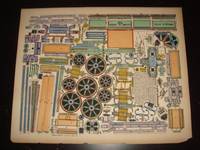
|
|

 Per e-mail erhalten
 Als pdf-Dokument herunterladen
 RSS feed
 Permanenter link


