|
COLLECTIF
Hommage à Ernest Martinenche études hispaniques et américaines
Paris: Editions d'Artrey 1939. Fine. Editions d'Artrey Paris s. d. 1939 20.50 x 26.50 cm broché First edition printed on alfa mousse paper. Contributions by Jules Supervielle Marcel Bataillon Jean Sarrailh Raymond Bayer.Work illustrated with a photographic portrait of E. Martinenche as frontispiece. Spine and boards slightly and marginally sunned without gravity handsome interior condition. Editions d'Artrey hardcover
Ссылка продавца : 29548

|
|
|
Gregoire SARKISSIAN
Le Soudan égyptien étude de droit international public
Paris: Emile Larose 1913. Fine. Emile Larose Paris 1913 16.50 x 25.50 cm broché First edition. Work illustrated with a map at the end. Autograph inscription by Grégoire Sarkissian on the half-title page. Two small tears at head and foot of spine three light marginal tears to slightly faded boards handsome interior condition. Emile Larose hardcover
Ссылка продавца : 29465

|
|
|
COLLECTIF - Haim Vidal SEPHIHA
Mélanges offerts à Charles Vincent Aubrun
Paris: Editions hispaniques 1975. Fine. Editions hispaniques Paris 1975 16.50 x 25 cm 2 volumes brochés First edition. Signed autograph inscription from Charles Vincent Aubrun to one of his colleagues. Spine and covers lightly and marginally sunned handsome interior condition. Editions hispaniques unknown
Ссылка продавца : 29357

|
|
|
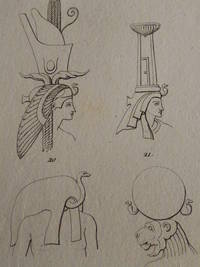
Dominique VIVANT DENON - BALTARD (sculpsit)
Voyage dans la Basse et Haute Egypte : Coiffures hiéroglyphiques. Vases dessinés d'après des bas-reliefs égyptiens. Planche 115.<br />
Paris: Didot 1803. Fine. Didot Paris 1803 40.50 x 54 cm une feuille Original unshaved full-page etching from the Imperial edition of the Description de l'Égypte or Recueil des observations et recherches faites en Égypte pendant l'expédition française publié par les ordres de Sa Majesté l'Empereur Napoléon le Grand A Collection of the observations and research carried out in Egypt during the French expedition published on the orders of his Majesty the Emperor Napoleon the Great'.Produced between February 1802 and 1830 on the orders of Naopleon Bonaparte and published between 1809 and 1828 1000 copies were printed and distributed to institutions on vergé paper with an 'Égypte ancienne et moderne' watermark visible when held up to the light. Light marginal spotting not touching image otherwise in very fresh fine condition. An engraving from the Description de l'Egypte one of the masterpieces of French printing and the birth of a new field: Egyptology. A gigantic survey of Egypt at the time of Bonaparte's conquests in 1798 and 1799 the work is divided into 13 volumes of engravings making up 892 plates of which 72 colored as well as presenting the splendors of the Egypt of the Pharaohs in 9 volumes. The other volumes discuss natural history and present a fascinating portrait of Coptic and Islamic Egypt as it was seen by Bonaparte's Eastern Armies. The Egyptian campaign' militarily a disaster demonstrates through the engravings of the Description d'Egypte the scientific success it nonetheless became thanks to the 167 expert members of the Commission of the Sciences and Arts of the Institut d'Egypte Egyptian Institute who followed Napoleon's army. The Institut gathered together in Egypt the mathematician Monge the chemist Berthollet the naturalist Geoffroy Saint-Hilaire as well as numerous artists engineers architects and doctors. They were tasked with re-discovering modern and ancient Egypt and displaying its natural treasures as well as the know-how of its inhabitants.This edition the so-called Imperial edition of the plates for the Description de l'Egypte was printed in four large formats two of which were specially created for it and christened Moyen-Egypte and Grand-Egypte. A special press was built to print it the process extending over 20 years from 1809 to 1829. The Imperial edition proved so popular that a second edition this time in black and white and without the Egypte ancienne et moderne watermark known as the Royal Edition was published during the Restoration by the printing house of C.-L.-F. Panckoucke Paris.The engravings of the Description d'Egypte owe a great deal to Baron Dominique-Vivant Denon illustrator diplomat collector and later Director of the Musée Napoléon the Louvre. His exploration of the South of Egypt gave Bonaparte the idea of sending the experts of the Institut there thus creating a faithful and complete portrait of the area. This was the research gathered together from 1802 in the mammoth Description de L'Egypte.Denon embarked on this story of archeological exploration at the age of 51 reaching first Alexandria and then Cairo before exploring Upper Egypt. Along with the members of the Institut d'Egypte the Natural History Museum's painter H.J. Redouté brother of Pierre-Joseph Redouté author of Roses the mineralogist Dolomiue and the draughtsman Joly Denon then explored the Nile Delta and Lower Egypt. When however he joined the 21st Light Infantry Regiment as it marched across Upper Egypt in pursuit of the retreating Mameluks in November 1798 he found himself the only civilian. In the very midst of the battle itself he reeled off sketches of the works of art that peppered his path right up to the threshold of the Sudan. He said that he had crossed a country that is apart from its name entirely unknown to Europeans and therefore everything was worth describing Voyages dans la Basse et la Haute Egypte pendant les campagnes de Bonaparte en 179 Didot unknown
Ссылка продавца : 29767
|
|
|
Dominique VIVANT DENON - COINY (sculpsit)
Voyage dans la Basse et Haute Egypte : 1. Vue d'Ajaccio en Corse. 2. Vue de Fréjus. Planche 91.<br />
Paris: Didot 1803. Fine. Didot Paris 1803 40 x 54 cm une feuille Original in folio engraving untrimmed from Vivant Denon's Voyage dans la Basse et la Haute Egypte. Plate composed of 2 views described by the author as follows: No. 1. View of Ajaccio small town that became famous for being the birthplace of a great man; I have represented our arrival there see the Journal volume II page 341. No. 2. View of Fréjus from the Aix gate side; I have represented the moment when the two frigates bringing Bonaparte back to France enter the port of this town; an event that belongs to history and will become through it a more lasting monument than the Roman amphitheatre whose ruins can be seen in the foreground of the print. Some foxing otherwise fine condition. First published in two volumes including an atlas of engravings by Didot in 1802 the 'Voyage dans la Basse et la Haute Égypte' was so successful that it was translated as early as 1803 into English and German then a few years later into Dutch and Italian among others. Almost all the plates are drawn by Denon who also engraved a small number himself notably portraits of Egyptian inhabitants which have retained all the freshness of sketches taken from life nos 104-111. Some twenty engravers also collaborated in creating the etchings including Baltard Galien Réville and others. Dominique Vivant Baron Denon known as Vivant Denon born in Givry on January 4 1747 and died in Paris on April 27 1825 was a French engraver writer diplomat and administrator. At Bonaparte's invitation he joined the Egyptian expedition embarking on May 14 1798 aboard the frigate ""La Junon"". Protected by French troops he had the opportunity to travel throughout the country in all directions gathering material that served as the basis for his most important artistic and literary work. He particularly accompanied General Desaix to Upper Egypt from which he brought back numerous sketches ink washes and other drawings in pen black stone or red chalk. He drew relentlessly most often on his knee standing or even on horseback and sometimes even under enemy fire. After a 13-month journey during which he drew several thousand sketches Vivant Denon returned to France with Bonaparte and became the first artist to publish an account of this expedition. The 141 plates accompanying his Journal retrace his entire journey from the coasts of Corsica to the pharaonic monuments of Upper Egypt. Bonaparte then appointed him director general of the central museum of the Republic which became the Napoléon museum then the royal museum of the Louvre and administrator of the arts. In 1805 Vivant Denon relaunched the Vendôme column project which had been suspended in 1803. He then organized expeditions throughout imperial Europe to amass art objects which were plundered to be taken to the Louvre. In 1814 Louis XVIII confirmed him as head of the Louvre one wing of which still bears his name today. He is considered a great precursor of museology art history and Egyptology. Didot unknown
Ссылка продавца : 29741
|
|
|
R DREUX-HUZARD
Dans les airs roman fiction : une guerre aérienne les grands voyages aériens
Le Caire Cairo: Imp. de la sté orientale de publicité 1917. Fine. Imp. de la sté orientale de publicité Le Caire Cairo 1917 11.50 x 19.50 cm broché First edition printed in a very small number of copies of this work that had been delayed by the outbreak of the Great War. Autograph inscription signed by R. Dreux-Huzard the dedicatee's name has unfortunately been crossed out. Spine and boards slightly and marginally faded without significance small light stains on front board. Rare. Imp. de la sté orientale de publicité hardcover
Ссылка продавца : 29488

|
|
|
Baron de HUBNER
Sixte-Quint d'après des correspondances diplomatiques inédites tirées des archives d'état du Vatican de Simancas Venise Paris Vienne et Florence
Paris: Lib. A. Franck 1870. Fine. Lib. A. Franck Paris 1870 13.50 x 21.50 cm 3 volumes reliés First edition. Half navy blue morocco bindings spines with five raised bands slightly faded marbled paper boards marbled endpapers and pastedowns contemporary binding. Handsome copy attractively bound despite occasional light foxing. Lib. A. Franck hardcover
Ссылка продавца : 29531

|
|
|
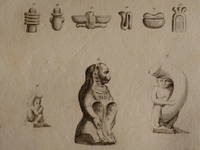
Dominique VIVANT DENON - Hyacinthe LEGRAND (sculpsit)
Voyage dans la Basse et Haute Egypte : Antiquités Egyptiennes. Planche 98.<br />
Paris: Didot 1803. Fine. Didot Paris 1803 40.50 x 54 cm une feuille Original unshaved full-page etching from the Imperial edition of the Description de l'Égypte or Recueil des observations et recherches faites en Égypte pendant l'expédition française publié par les ordres de Sa Majesté l'Empereur Napoléon le Grand A Collection of the observations and research carried out in Egypt during the French expedition published on the orders of his Majesty the Emperor Napoleon the Great'.Produced between February 1802 and 1830 on the orders of Naopleon Bonaparte and published between 1809 and 1828 1000 copies were printed and distributed to institutions on vergé paper with an 'Égypte ancienne et moderne' watermark visible when held up to the light. Light marginal spotting not touching image otherwise in very fresh fine condition. An engraving from the Description de l'Egypte one of the masterpieces of French printing and the birth of a new field: Egyptology. A gigantic survey of Egypt at the time of Bonaparte's conquests in 1798 and 1799 the work is divided into 13 volumes of engravings making up 892 plates of which 72 colored as well as presenting the splendors of the Egypt of the Pharaohs in 9 volumes. The other volumes discuss natural history and present a fascinating portrait of Coptic and Islamic Egypt as it was seen by Bonaparte's Eastern Armies. The Egyptian campaign' militarily a disaster demonstrates through the engravings of the Description d'Egypte the scientific success it nonetheless became thanks to the 167 expert members of the Commission of the Sciences and Arts of the Institut d'Egypte Egyptian Institute who followed Napoleon's army. The Institut gathered together in Egypt the mathematician Monge the chemist Berthollet the naturalist Geoffroy Saint-Hilaire as well as numerous artists engineers architects and doctors. They were tasked with re-discovering modern and ancient Egypt and displaying its natural treasures as well as the know-how of its inhabitants.This edition the so-called Imperial edition of the plates for the Description de l'Egypte was printed in four large formats two of which were specially created for it and christened Moyen-Egypte and Grand-Egypte. A special press was built to print it the process extending over 20 years from 1809 to 1829. The Imperial edition proved so popular that a second edition this time in black and white and without the Egypte ancienne et moderne watermark known as the Royal Edition was published during the Restoration by the printing house of C.-L.-F. Panckoucke Paris.The engravings of the Description d'Egypte owe a great deal to Baron Dominique-Vivant Denon illustrator diplomat collector and later Director of the Musée Napoléon the Louvre. His exploration of the South of Egypt gave Bonaparte the idea of sending the experts of the Institut there thus creating a faithful and complete portrait of the area. This was the research gathered together from 1802 in the mammoth Description de L'Egypte.Denon embarked on this story of archeological exploration at the age of 51 reaching first Alexandria and then Cairo before exploring Upper Egypt. Along with the members of the Institut d'Egypte the Natural History Museum's painter H.J. Redouté brother of Pierre-Joseph Redouté author of Roses the mineralogist Dolomiue and the draughtsman Joly Denon then explored the Nile Delta and Lower Egypt. When however he joined the 21st Light Infantry Regiment as it marched across Upper Egypt in pursuit of the retreating Mameluks in November 1798 he found himself the only civilian. In the very midst of the battle itself he reeled off sketches of the works of art that peppered his path right up to the threshold of the Sudan. He said that he had crossed a country that is apart from its name entirely unknown to Europeans and therefore everything was worth describing Voyages dans la Basse et la Haute Egypte pendant les campagnes de Bonaparte en 179 Didot unknown
Ссылка продавца : 29748
|
|
|
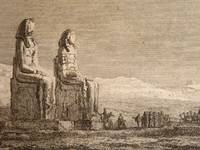
Dominique VIVANT DENON - L PETIT
Voyage dans la Basse et Haute Egypte : Statues dites de Memnon. Planche 44.<br />
Paris: Didot 1803. Fine. Didot Paris 1803 40.50 x 54 cm une feuille Original unshaved full-page etching from the Imperial edition of the Description de l'Égypte or Recueil des observations et recherches faites en Égypte pendant l'expédition française publié par les ordres de Sa Majesté l'Empereur Napoléon le Grand A Collection of the observations and research carried out in Egypt during the French expedition published on the orders of his Majesty the Emperor Napoleon the Great'.Produced between February 1802 and 1830 on the orders of Naopleon Bonaparte and published between 1809 and 1828 1000 copies were printed and distributed to institutions on vergé paper with an 'Égypte ancienne et moderne' watermark visible when held up to the light. Light marginal spotting not touching image otherwise in very fresh fine condition. An engraving from the Description de l'Egypte one of the masterpieces of French printing and the birth of a new field: Egyptology. A gigantic survey of Egypt at the time of Bonaparte's conquests in 1798 and 1799 the work is divided into 13 volumes of engravings making up 892 plates of which 72 colored as well as presenting the splendors of the Egypt of the Pharaohs in 9 volumes. The other volumes discuss natural history and present a fascinating portrait of Coptic and Islamic Egypt as it was seen by Bonaparte's Eastern Armies. The Egyptian campaign' militarily a disaster demonstrates through the engravings of the Description d'Egypte the scientific success it nonetheless became thanks to the 167 expert members of the Commission of the Sciences and Arts of the Institut d'Egypte Egyptian Institute who followed Napoleon's army. The Institut gathered together in Egypt the mathematician Monge the chemist Berthollet the naturalist Geoffroy Saint-Hilaire as well as numerous artists engineers architects and doctors. They were tasked with re-discovering modern and ancient Egypt and displaying its natural treasures as well as the know-how of its inhabitants.This edition the so-called Imperial edition of the plates for the Description de l'Egypte was printed in four large formats two of which were specially created for it and christened Moyen-Egypte and Grand-Egypte. A special press was built to print it the process extending over 20 years from 1809 to 1829. The Imperial edition proved so popular that a second edition this time in black and white and without the Egypte ancienne et moderne watermark known as the Royal Edition was published during the Restoration by the printing house of C.-L.-F. Panckoucke Paris.The engravings of the Description d'Egypte owe a great deal to Baron Dominique-Vivant Denon illustrator diplomat collector and later Director of the Musée Napoléon the Louvre. His exploration of the South of Egypt gave Bonaparte the idea of sending the experts of the Institut there thus creating a faithful and complete portrait of the area. This was the research gathered together from 1802 in the mammoth Description de L'Egypte.Denon embarked on this story of archeological exploration at the age of 51 reaching first Alexandria and then Cairo before exploring Upper Egypt. Along with the members of the Institut d'Egypte the Natural History Museum's painter H.J. Redouté brother of Pierre-Joseph Redouté author of Roses the mineralogist Dolomiue and the draughtsman Joly Denon then explored the Nile Delta and Lower Egypt. When however he joined the 21st Light Infantry Regiment as it marched across Upper Egypt in pursuit of the retreating Mameluks in November 1798 he found himself the only civilian. In the very midst of the battle itself he reeled off sketches of the works of art that peppered his path right up to the threshold of the Sudan. He said that he had crossed a country that is apart from its name entirely unknown to Europeans and therefore everything was worth describing Voyages dans la Basse et la Haute Egypte pendant les campagnes de Bonaparte en 179 Didot unknown
Ссылка продавца : 29666
|
|
|
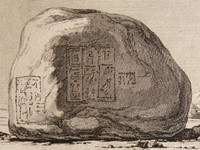
Dominique VIVANT DENON - DUPARC (sculpsit)
Voyage dans la Basse et Haute Egypte : 1.Bloc de granit. 2. Rochers de granit. Planche 67.<br />
Paris: Didot 1803. Fine. Didot Paris 1803 40 x 54 cm une feuille Original unshaved full-page etching from the Imperial edition of the Description de l'Égypte or Recueil des observations et recherches faites en Égypte pendant l'expédition française publié par les ordres de Sa Majesté l'Empereur Napoléon le Grand A Collection of the observations and research carried out in Egypt during the French expedition published on the orders of his Majesty the Emperor Napoleon the Great'.Produced between February 1802 and 1830 on the orders of Naopleon Bonaparte and published between 1809 and 1828 1000 copies were printed and distributed to institutions on vergé paper with an 'Égypte ancienne et moderne' watermark visible when held up to the light. Light marginal spotting not touching image otherwise in very fresh fine condition. An engraving from the Description de l'Egypte one of the masterpieces of French printing and the birth of a new field: Egyptology. A gigantic survey of Egypt at the time of Bonaparte's conquests in 1798 and 1799 the work is divided into 13 volumes of engravings making up 892 plates of which 72 colored as well as presenting the splendors of the Egypt of the Pharaohs in 9 volumes. The other volumes discuss natural history and present a fascinating portrait of Coptic and Islamic Egypt as it was seen by Bonaparte's Eastern Armies. The Egyptian campaign' militarily a disaster demonstrates through the engravings of the Description d'Egypte the scientific success it nonetheless became thanks to the 167 expert members of the Commission of the Sciences and Arts of the Institut d'Egypte Egyptian Institute who followed Napoleon's army. The Institut gathered together in Egypt the mathematician Monge the chemist Berthollet the naturalist Geoffroy Saint-Hilaire as well as numerous artists engineers architects and doctors. They were tasked with re-discovering modern and ancient Egypt and displaying its natural treasures as well as the know-how of its inhabitants.This edition the so-called Imperial edition of the plates for the Description de l'Egypte was printed in four large formats two of which were specially created for it and christened Moyen-Egypte and Grand-Egypte. A special press was built to print it the process extending over 20 years from 1809 to 1829. The Imperial edition proved so popular that a second edition this time in black and white and without the Egypte ancienne et moderne watermark known as the Royal Edition was published during the Restoration by the printing house of C.-L.-F. Panckoucke Paris.The engravings of the Description d'Egypte owe a great deal to Baron Dominique-Vivant Denon illustrator diplomat collector and later Director of the Musée Napoléon the Louvre. His exploration of the South of Egypt gave Bonaparte the idea of sending the experts of the Institut there thus creating a faithful and complete portrait of the area. This was the research gathered together from 1802 in the mammoth Description de L'Egypte.Denon embarked on this story of archeological exploration at the age of 51 reaching first Alexandria and then Cairo before exploring Upper Egypt. Along with the members of the Institut d'Egypte the Natural History Museum's painter H.J. Redouté brother of Pierre-Joseph Redouté author of Roses the mineralogist Dolomiue and the draughtsman Joly Denon then explored the Nile Delta and Lower Egypt. When however he joined the 21st Light Infantry Regiment as it marched across Upper Egypt in pursuit of the retreating Mameluks in November 1798 he found himself the only civilian. In the very midst of the battle itself he reeled off sketches of the works of art that peppered his path right up to the threshold of the Sudan. He said that he had crossed a country that is apart from its name entirely unknown to Europeans and therefore everything was worth describing Voyages dans la Basse et la Haute Egypte pendant les campagnes de Bonaparte en 1798 e Didot unknown
Ссылка продавца : 29704
|
|
|
Georges VANOR
L'art symboliste
Paris: Vanier 1889. Fine. Vanier Paris 1889 12.50 x 19 cm broché First edition of which there were no deluxe copies. Preface by Paul Adam. Spine slightly faded with a central lack four corner lacks to boards. Rare. Vanier hardcover
Ссылка продавца : 29020

|
|
|
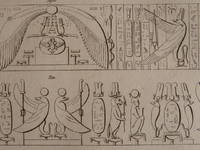
Dominique VIVANT DENON - GALIEN (sculpsit)
Voyage dans la Basse et Haute Egypte : Frises emblématiques de différents temples égyptiens. Planche 117.<br />
Paris: Didot 1803. Fine. Didot Paris 1803 40 x 54 cm une feuille Original unshaved full-page etching from the Imperial edition of the Description de l'Égypte or Recueil des observations et recherches faites en Égypte pendant l'expédition française publié par les ordres de Sa Majesté l'Empereur Napoléon le Grand A Collection of the observations and research carried out in Egypt during the French expedition published on the orders of his Majesty the Emperor Napoleon the Great'.Produced between February 1802 and 1830 on the orders of Naopleon Bonaparte and published between 1809 and 1828 1000 copies were printed and distributed to institutions on vergé paper with an 'Égypte ancienne et moderne' watermark visible when held up to the light. Light marginal spotting not touching image otherwise in very fresh fine condition. An engraving from the Description de l'Egypte one of the masterpieces of French printing and the birth of a new field: Egyptology. A gigantic survey of Egypt at the time of Bonaparte's conquests in 1798 and 1799 the work is divided into 13 volumes of engravings making up 892 plates of which 72 colored as well as presenting the splendors of the Egypt of the Pharaohs in 9 volumes. The other volumes discuss natural history and present a fascinating portrait of Coptic and Islamic Egypt as it was seen by Bonaparte's Eastern Armies. The Egyptian campaign' militarily a disaster demonstrates through the engravings of the Description d'Egypte the scientific success it nonetheless became thanks to the 167 expert members of the Commission of the Sciences and Arts of the Institut d'Egypte Egyptian Institute who followed Napoleon's army. The Institut gathered together in Egypt the mathematician Monge the chemist Berthollet the naturalist Geoffroy Saint-Hilaire as well as numerous artists engineers architects and doctors. They were tasked with re-discovering modern and ancient Egypt and displaying its natural treasures as well as the know-how of its inhabitants.This edition the so-called Imperial edition of the plates for the Description de l'Egypte was printed in four large formats two of which were specially created for it and christened Moyen-Egypte and Grand-Egypte. A special press was built to print it the process extending over 20 years from 1809 to 1829. The Imperial edition proved so popular that a second edition this time in black and white and without the Egypte ancienne et moderne watermark known as the Royal Edition was published during the Restoration by the printing house of C.-L.-F. Panckoucke Paris.The engravings of the Description d'Egypte owe a great deal to Baron Dominique-Vivant Denon illustrator diplomat collector and later Director of the Musée Napoléon the Louvre. His exploration of the South of Egypt gave Bonaparte the idea of sending the experts of the Institut there thus creating a faithful and complete portrait of the area. This was the research gathered together from 1802 in the mammoth Description de L'Egypte.Denon embarked on this story of archeological exploration at the age of 51 reaching first Alexandria and then Cairo before exploring Upper Egypt. Along with the members of the Institut d'Egypte the Natural History Museum's painter H.J. Redouté brother of Pierre-Joseph Redouté author of Roses the mineralogist Dolomiue and the draughtsman Joly Denon then explored the Nile Delta and Lower Egypt. When however he joined the 21st Light Infantry Regiment as it marched across Upper Egypt in pursuit of the retreating Mameluks in November 1798 he found himself the only civilian. In the very midst of the battle itself he reeled off sketches of the works of art that peppered his path right up to the threshold of the Sudan. He said that he had crossed a country that is apart from its name entirely unknown to Europeans and therefore everything was worth describing Voyages dans la Basse et la Haute Egypte pendant les campagnes de Bonaparte en 1798 e Didot unknown
Ссылка продавца : 29770
|
|
|
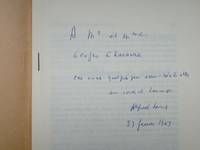
Alfred SAUVY
Sociologie du surréalisme
Paris & La Haye The Hague: Mouton 1968. Fine. Mouton Paris & La Haye The Hague 1968 14 x 22.50 cm broché First edition printed in a very small number of copies of this offprint. Rare autograph inscription from Alfred Sauvy. Mouton unknown
Ссылка продавца : 29594
|
|
|
COLLECTIF
La revue blanche N°7 de la nouvelle série
Paris: La Revue Blanche 1892. Fine. La Revue Blanche Paris 25 avril 1892 13.50 x 22 cm broché First edition. Contributions by C. Mauclair P. Louis L. Muhlfeld O. Hansson. La Revue Blanche unknown
Ссылка продавца : 29311

|
|
|
Pierre SUDREAU
L'enchaînement
Paris: Plon 1967. Fine. Plon Paris 1967 14 x 21.50 cm en feuilles sous chemise et étui First edition one of 200 numbered copies on deluxe paper ours unnumbered the only deluxe copies. Our copy was specially printed for Jacques Duhamel who was Minister of Cultural Affairs under Georges Pompidou. Fine copy. Plon unknown
Ссылка продавца : 29407

|
|
|
Marcel FAVRE
Le vieux village
Paris: Les Editions de la Nouvelle France 1945. Fine. Les Editions de la Nouvelle France Paris 1945 12 x 19 cm broché First edition one of 230 numbered copies on white vellum the only deluxe copies. Work illustrated with a frontispiece and headpieces engraved on wood by Pierre Mestre. Les Editions de la Nouvelle France hardcover
Ссылка продавца : 29178

|
|
|
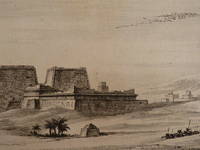
Dominique VIVANT DENON - COINY (sculpsit)
Voyage dans la Basse et Haute Egypte : 1. Vue d'Etfoù du Sud au Nord. 3. Vue d'Etfoù du Nord au sud. Planche 56.<br />
Paris: Didot 1803. Fine. Didot Paris 1803 40 x 54 cm une feuille Original unshaved full-page etching from the Imperial edition of the Description de l'Égypte or Recueil des observations et recherches faites en Égypte pendant l'expédition française publié par les ordres de Sa Majesté l'Empereur Napoléon le Grand A Collection of the observations and research carried out in Egypt during the French expedition published on the orders of his Majesty the Emperor Napoleon the Great'.Produced between February 1802 and 1830 on the orders of Naopleon Bonaparte and published between 1809 and 1828 1000 copies were printed and distributed to institutions on vergé paper with an 'Égypte ancienne et moderne' watermark visible when held up to the light. Light marginal spotting not touching image otherwise in very fresh fine condition. An engraving from the Description de l'Egypte one of the masterpieces of French printing and the birth of a new field: Egyptology. A gigantic survey of Egypt at the time of Bonaparte's conquests in 1798 and 1799 the work is divided into 13 volumes of engravings making up 892 plates of which 72 colored as well as presenting the splendors of the Egypt of the Pharaohs in 9 volumes. The other volumes discuss natural history and present a fascinating portrait of Coptic and Islamic Egypt as it was seen by Bonaparte's Eastern Armies. The Egyptian campaign' militarily a disaster demonstrates through the engravings of the Description d'Egypte the scientific success it nonetheless became thanks to the 167 expert members of the Commission of the Sciences and Arts of the Institut d'Egypte Egyptian Institute who followed Napoleon's army. The Institut gathered together in Egypt the mathematician Monge the chemist Berthollet the naturalist Geoffroy Saint-Hilaire as well as numerous artists engineers architects and doctors. They were tasked with re-discovering modern and ancient Egypt and displaying its natural treasures as well as the know-how of its inhabitants.This edition the so-called Imperial edition of the plates for the Description de l'Egypte was printed in four large formats two of which were specially created for it and christened Moyen-Egypte and Grand-Egypte. A special press was built to print it the process extending over 20 years from 1809 to 1829. The Imperial edition proved so popular that a second edition this time in black and white and without the Egypte ancienne et moderne watermark known as the Royal Edition was published during the Restoration by the printing house of C.-L.-F. Panckoucke Paris.The engravings of the Description d'Egypte owe a great deal to Baron Dominique-Vivant Denon illustrator diplomat collector and later Director of the Musée Napoléon the Louvre. His exploration of the South of Egypt gave Bonaparte the idea of sending the experts of the Institut there thus creating a faithful and complete portrait of the area. This was the research gathered together from 1802 in the mammoth Description de L'Egypte.Denon embarked on this story of archeological exploration at the age of 51 reaching first Alexandria and then Cairo before exploring Upper Egypt. Along with the members of the Institut d'Egypte the Natural History Museum's painter H.J. Redouté brother of Pierre-Joseph Redouté author of Roses the mineralogist Dolomiue and the draughtsman Joly Denon then explored the Nile Delta and Lower Egypt. When however he joined the 21st Light Infantry Regiment as it marched across Upper Egypt in pursuit of the retreating Mameluks in November 1798 he found himself the only civilian. In the very midst of the battle itself he reeled off sketches of the works of art that peppered his path right up to the threshold of the Sudan. He said that he had crossed a country that is apart from its name entirely unknown to Europeans and therefore everything was worth describing Voyages dans la Basse et la Haute Egypte pendant les campagnes de Bonaparte en 1798 e Didot unknown
Ссылка продавца : 29693
|
|
|
Alexandre VIALATTE (edited by) - Franz WERFEL
Verdi roman de l'Opéra
Paris: Victor Attinger 1933. Fine. Victor Attinger Paris 1933 13.50 x 20.50 cm broché First edition of the French translation established by Alexandre Vialatte and Dora Kris a Service de Presse advance copy. No deluxe copies were printed. Bookplate pasted to verso of front cover. Victor Attinger unknown
Ссылка продавца : 29046

|
|
|
Augustin THIERRY
Dix ans d'études historiques
La Haye The Hague: G. Vervloet 1835. Fine. G. Vervloet La Haye The Hague 1835 10 x 15 cm relié Edition published the same year as the first edition. Half chocolate sheep binding spine with four raised bands decorated with gilt friezes and blind fillets joints lightly rubbed at head and foot marbled paper boards marbled endpapers and pastedowns lower corners slightly bumped contemporary binding. Some foxing marginal pen annotations on certain pages by a former owner. G. Vervloet hardcover
Ссылка продавца : 29113

|
|
|
Dominique VIVANT DENON - FORTIER (sculpsit)
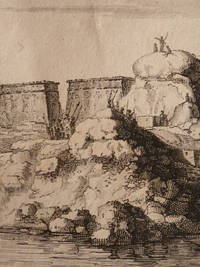
Voyage dans la Basse et Haute Egypte : 1. Vue de l'isle de Philae de l'Est à l'Ouest. 2. De l'Ouest à l'Est. 3. Autre vue de l'isle de Philae. Planche 71.<br />
Paris: Didot 1803. Fine. Didot Paris 1803 40 x 54 cm une feuille Original unshaved full-page etching from the Imperial edition of the Description de l'Égypte or Recueil des observations et recherches faites en Égypte pendant l'expédition française publié par les ordres de Sa Majesté l'Empereur Napoléon le Grand A Collection of the observations and research carried out in Egypt during the French expedition published on the orders of his Majesty the Emperor Napoleon the Great'.Produced between February 1802 and 1830 on the orders of Naopleon Bonaparte and published between 1809 and 1828 1000 copies were printed and distributed to institutions on vergé paper with an 'Égypte ancienne et moderne' watermark visible when held up to the light. Light marginal spotting not touching image otherwise in very fresh fine condition. An engraving from the Description de l'Egypte one of the masterpieces of French printing and the birth of a new field: Egyptology. A gigantic survey of Egypt at the time of Bonaparte's conquests in 1798 and 1799 the work is divided into 13 volumes of engravings making up 892 plates of which 72 colored as well as presenting the splendors of the Egypt of the Pharaohs in 9 volumes. The other volumes discuss natural history and present a fascinating portrait of Coptic and Islamic Egypt as it was seen by Bonaparte's Eastern Armies. The Egyptian campaign' militarily a disaster demonstrates through the engravings of the Description d'Egypte the scientific success it nonetheless became thanks to the 167 expert members of the Commission of the Sciences and Arts of the Institut d'Egypte Egyptian Institute who followed Napoleon's army. The Institut gathered together in Egypt the mathematician Monge the chemist Berthollet the naturalist Geoffroy Saint-Hilaire as well as numerous artists engineers architects and doctors. They were tasked with re-discovering modern and ancient Egypt and displaying its natural treasures as well as the know-how of its inhabitants.This edition the so-called Imperial edition of the plates for the Description de l'Egypte was printed in four large formats two of which were specially created for it and christened Moyen-Egypte and Grand-Egypte. A special press was built to print it the process extending over 20 years from 1809 to 1829. The Imperial edition proved so popular that a second edition this time in black and white and without the Egypte ancienne et moderne watermark known as the Royal Edition was published during the Restoration by the printing house of C.-L.-F. Panckoucke Paris.The engravings of the Description d'Egypte owe a great deal to Baron Dominique-Vivant Denon illustrator diplomat collector and later Director of the Musée Napoléon the Louvre. His exploration of the South of Egypt gave Bonaparte the idea of sending the experts of the Institut there thus creating a faithful and complete portrait of the area. This was the research gathered together from 1802 in the mammoth Description de L'Egypte.Denon embarked on this story of archeological exploration at the age of 51 reaching first Alexandria and then Cairo before exploring Upper Egypt. Along with the members of the Institut d'Egypte the Natural History Museum's painter H.J. Redouté brother of Pierre-Joseph Redouté author of Roses the mineralogist Dolomiue and the draughtsman Joly Denon then explored the Nile Delta and Lower Egypt. When however he joined the 21st Light Infantry Regiment as it marched across Upper Egypt in pursuit of the retreating Mameluks in November 1798 he found himself the only civilian. In the very midst of the battle itself he reeled off sketches of the works of art that peppered his path right up to the threshold of the Sudan. He said that he had crossed a country that is apart from its name entirely unknown to Europeans and therefore everything was worth describing Voyages dans la Basse et la Haute Egypte pendant les campagnes de Bonaparte en 1798 e Didot unknown
Ссылка продавца : 29708
|
|
|
Edmond JABES
L'ineffaçable. - L'inaperçu
Paris: Gallimard 1980. Fine. Gallimard Paris 1980 15 x 22 cm broché First edition one of 23 numbered copies on vélin d'Arches the only large paper copies. Two small traces of sunning not serious to head and to foot of spine a good copy. Gallimard unknown
Ссылка продавца : 29422

|
|
|
Dominique VIVANT DENON - BALTARD (sculpsit)
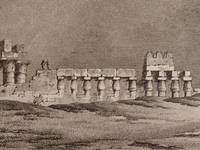
Voyage dans la Basse et Haute Egypte : 1. Vue de Louqssor à la pointe du jour. 2. Vue d'un temple à Louqssor avec un ouragan. Planche 47.<br />
Paris: Didot 1803. Fine. Didot Paris 1803 40.50 x 54 cm une feuille Original unshaved full-page etching from the Imperial edition of the Description de l'Égypte or Recueil des observations et recherches faites en Égypte pendant l'expédition française publié par les ordres de Sa Majesté l'Empereur Napoléon le Grand A Collection of the observations and research carried out in Egypt during the French expedition published on the orders of his Majesty the Emperor Napoleon the Great'.Produced between February 1802 and 1830 on the orders of Naopleon Bonaparte and published between 1809 and 1828 1000 copies were printed and distributed to institutions on vergé paper with an 'Égypte ancienne et moderne' watermark visible when held up to the light. Light marginal spotting not touching image otherwise in very fresh fine condition. An engraving from the Description de l'Egypte one of the masterpieces of French printing and the birth of a new field: Egyptology. A gigantic survey of Egypt at the time of Bonaparte's conquests in 1798 and 1799 the work is divided into 13 volumes of engravings making up 892 plates of which 72 colored as well as presenting the splendors of the Egypt of the Pharaohs in 9 volumes. The other volumes discuss natural history and present a fascinating portrait of Coptic and Islamic Egypt as it was seen by Bonaparte's Eastern Armies. The Egyptian campaign' militarily a disaster demonstrates through the engravings of the Description d'Egypte the scientific success it nonetheless became thanks to the 167 expert members of the Commission of the Sciences and Arts of the Institut d'Egypte Egyptian Institute who followed Napoleon's army. The Institut gathered together in Egypt the mathematician Monge the chemist Berthollet the naturalist Geoffroy Saint-Hilaire as well as numerous artists engineers architects and doctors. They were tasked with re-discovering modern and ancient Egypt and displaying its natural treasures as well as the know-how of its inhabitants.This edition the so-called Imperial edition of the plates for the Description de l'Egypte was printed in four large formats two of which were specially created for it and christened Moyen-Egypte and Grand-Egypte. A special press was built to print it the process extending over 20 years from 1809 to 1829. The Imperial edition proved so popular that a second edition this time in black and white and without the Egypte ancienne et moderne watermark known as the Royal Edition was published during the Restoration by the printing house of C.-L.-F. Panckoucke Paris.The engravings of the Description d'Egypte owe a great deal to Baron Dominique-Vivant Denon illustrator diplomat collector and later Director of the Musée Napoléon the Louvre. His exploration of the South of Egypt gave Bonaparte the idea of sending the experts of the Institut there thus creating a faithful and complete portrait of the area. This was the research gathered together from 1802 in the mammoth Description de L'Egypte.Denon embarked on this story of archeological exploration at the age of 51 reaching first Alexandria and then Cairo before exploring Upper Egypt. Along with the members of the Institut d'Egypte the Natural History Museum's painter H.J. Redouté brother of Pierre-Joseph Redouté author of Roses the mineralogist Dolomiue and the draughtsman Joly Denon then explored the Nile Delta and Lower Egypt. When however he joined the 21st Light Infantry Regiment as it marched across Upper Egypt in pursuit of the retreating Mameluks in November 1798 he found himself the only civilian. In the very midst of the battle itself he reeled off sketches of the works of art that peppered his path right up to the threshold of the Sudan. He said that he had crossed a country that is apart from its name entirely unknown to Europeans and therefore everything was worth describing Voyages dans la Basse et la Haute Egypte pendant les campagnes de Bonaparte en 179 Didot unknown
Ссылка продавца : 29669
|
|
|
Claude STEPHANE
Le chasseur endormi
Paris: Théo Schmied 1969. Fine. Théo Schmied Paris 1969 13.50 x 21.50 cm broché First edition one of 450 copies on offset paper the only deluxe copies with 50 Arches. Fine autograph inscription by Claude Stéphane to one of his friends. Furthermore our copy like all copies from the deluxe issue contains an original color watercolor by the author which he has signed mounted facing the endpaper where the inscription appears. Finally our copy retains the complete etching by Claude Stéphane on loose sheet as frontispiece and engraved by Jacques David. Boards very slightly and marginally faded at head handsome copy. Rare. Théo Schmied hardcover
Ссылка продавца : 29258

|
|
|
Charles READ
Henri IV et le ministre Daniel Chamier d'après un journal inédit du voyage de ce dernier à la cour en 1607
Paris: A. DurandAmyot 1854. Fine. A. Durand Amyot Paris 1854 14 x 23 cm broché First edition. Text preceded and followed by some considerations and documents to serve the study of Henri IV's character. Two small marginal tears without loss to the first cover occasional light foxing. A. DurandAmyot unknown
Ссылка продавца : 29461

|
|
|
Gaston PARIS
Sur ""Amadas et Idoine""
s. l.: S. n. 1901. Fine. S. n. s. l. 1901 14 x 22 cm broché The first edition published in a small number of copies. Our copy is presented in plain wrappers with manuscript annotation on the first cover. Light worming to covers handsome interior condition. S. n. unknown
Ссылка продавца : 29542

|
|
|
Etienne ACCARY
La petite culture en Tunisie
Paris: Arthur Rousseau 1902. Fine. Arthur Rousseau Paris 1902 17 x 25.50 cm broché First edition. Small lacks to head of spine and at corners to covers marginally faded handsome interior condition. Rare. Arthur Rousseau unknown
Ссылка продавца : 29454

|
|
|
J J MARCEL
Description de l'Egypte. Etat moderne. Tome second.
Paris: Imprimerie Impériale 1812. Fine. Imprimerie Impériale Paris 1812 26.50 x 43 cm Un Vol. broché This volume contains: Notice sur la conformation physique des égyptiens et des différentes races qui habitent en Egypte suivie de quelques réflexions sur l'embaumement des momie; par M. le Baron de Larrey. Mémoire sur la partie occidentale de la province de Bahyreh par M. Gratien le Père. Notice sur la préparation des peaux en Egypte; par M. Boudet. Mémoire sur le Meqyâs de l'île de Roudah et sur les inscriptions que renferme ce momument. First edition. Original blue wrappers. Fine condition as the copy is as issued with full margins on laid paper. A tear to spine. The notice on the physical conformations of the peoples of Egypt relates more to aesthetic considerations. The second text discusses the history of a forgotten province of Egypt and recounts the author's journey. Interesting considerations on the tanning of hides in Egypt particularly on morocco leather. The Meqyâs is the famous nilometer located on the island of Roudah. The work begins with a history of travellers in Egypt and the interest that can be found in reading these voyages. The numerous bibliographical notes prove very useful. Imprimerie Impériale hardcover
Ссылка продавца : 26470

|
|
|
COLLECTIF
Poésie cahiers mensuels illustrés N°de Mars 1927 de la 6ème année
Paris: Imprimerie d'art Le croquis 1927. Fine. Imprimerie d'art Le croquis Paris Mars 1927 22.50 x 28.50 cm agrafé First edition. Contributions by J. Strombolis R. Douteau de Lescailles O. Charpentier. Issue illustrated with original woodcuts by P. Berdier and A. Margat. First cover slightly worn one joint cracked at head handsome interior condition. Imprimerie d'art Le croquis unknown
Ссылка продавца : 29369

|
|
|
Dominique VIVANT DENON - FOSSEYEUX (sculpsit)
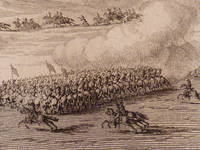
Voyage dans la Basse et Haute Egypte : Bataille de Samanhout Planche 37.<br />
Paris: Didot 1803. Fine. Didot Paris 1803 40.50 x 54 cm une feuille Original unshaved full-page etching from the Imperial edition of the Description de l'Égypte or Recueil des observations et recherches faites en Égypte pendant l'expédition française publié par les ordres de Sa Majesté l'Empereur Napoléon le Grand A Collection of the observations and research carried out in Egypt during the French expedition published on the orders of his Majesty the Emperor Napoleon the Great'.Produced between February 1802 and 1830 on the orders of Naopleon Bonaparte and published between 1809 and 1828 1000 copies were printed and distributed to institutions on vergé paper with an 'Égypte ancienne et moderne' watermark visible when held up to the light. Light marginal spotting not touching image otherwise in very fresh fine condition. An engraving from the Description de l'Egypte one of the masterpieces of French printing and the birth of a new field: Egyptology. A gigantic survey of Egypt at the time of Bonaparte's conquests in 1798 and 1799 the work is divided into 13 volumes of engravings making up 892 plates of which 72 colored as well as presenting the splendors of the Egypt of the Pharaohs in 9 volumes. The other volumes discuss natural history and present a fascinating portrait of Coptic and Islamic Egypt as it was seen by Bonaparte's Eastern Armies. The Egyptian campaign' militarily a disaster demonstrates through the engravings of the Description d'Egypte the scientific success it nonetheless became thanks to the 167 expert members of the Commission of the Sciences and Arts of the Institut d'Egypte Egyptian Institute who followed Napoleon's army. The Institut gathered together in Egypt the mathematician Monge the chemist Berthollet the naturalist Geoffroy Saint-Hilaire as well as numerous artists engineers architects and doctors. They were tasked with re-discovering modern and ancient Egypt and displaying its natural treasures as well as the know-how of its inhabitants.This edition the so-called Imperial edition of the plates for the Description de l'Egypte was printed in four large formats two of which were specially created for it and christened Moyen-Egypte and Grand-Egypte. A special press was built to print it the process extending over 20 years from 1809 to 1829. The Imperial edition proved so popular that a second edition this time in black and white and without the Egypte ancienne et moderne watermark known as the Royal Edition was published during the Restoration by the printing house of C.-L.-F. Panckoucke Paris.The engravings of the Description d'Egypte owe a great deal to Baron Dominique-Vivant Denon illustrator diplomat collector and later Director of the Musée Napoléon the Louvre. His exploration of the South of Egypt gave Bonaparte the idea of sending the experts of the Institut there thus creating a faithful and complete portrait of the area. This was the research gathered together from 1802 in the mammoth Description de L'Egypte.Denon embarked on this story of archeological exploration at the age of 51 reaching first Alexandria and then Cairo before exploring Upper Egypt. Along with the members of the Institut d'Egypte the Natural History Museum's painter H.J. Redouté brother of Pierre-Joseph Redouté author of Roses the mineralogist Dolomiue and the draughtsman Joly Denon then explored the Nile Delta and Lower Egypt. When however he joined the 21st Light Infantry Regiment as it marched across Upper Egypt in pursuit of the retreating Mameluks in November 1798 he found himself the only civilian. In the very midst of the battle itself he reeled off sketches of the works of art that peppered his path right up to the threshold of the Sudan. He said that he had crossed a country that is apart from its name entirely unknown to Europeans and therefore everything was worth describing Voyages dans la Basse et la Haute Egypte pendant les campagnes de Bonaparte en 179 Didot unknown
Ссылка продавца : 29658
|
|
|
Charles BONNET
Contemplation de la nature
à Amsterdam: Chez Marc-Michel Rey 1770. Fine. Chez Marc-Michel Rey à Amsterdam 1770 10 x 17 cm 2 volumes reliés Second edition after the original published in 1764. Contemporary full calf binding. Spine with raised bands decorated with fleurons in compartments. Red morocco title label and beige morocco volume label. Head of volume I worn. A lack to the second compartment of the second volume. Joints of volume II split at foot. Some surface abrasions to the boards. Bonnet 1720-1793 is considered one of the fathers of modern biology he was the first to use the term Evolution in biology both for his experimental research and his philosophy which had a profound influence on naturalists. It was when he was struck with blindness that he turned to theory. This work takes up the first eight chapters of the ""Considérations sur les corps organisés"" published in 1762 where Bonnet expounds his theory on the preexistence of germs. Bonnet moreover reports numerous observations of natural history. Chez Marc-Michel Rey hardcover
Ссылка продавца : 29237
|
|
|
Robert SABATIER
Les poisons délectables
Paris: Albin Michel 1965. Fine. Albin Michel Paris 1965 14.50 x 19.50 cm broché First edition one of 1500 numbered copies on alfa mousse paper the only deluxe copies together with 13 on pur fil. Inscribed by the author to Véronique and Georges Charaire. Handsome copy retaining publisher's wraparound band. Albin Michel unknown
Ссылка продавца : 29247

|
|
|
Marguerite DURAND-VIEL ROUSSEAU
La cité marine
s. l. Paris: S. n.chez l'auteur 1964. Fine. S. n. chez l'auteur s. l. Paris s. d. ca 1964 14 x 22.50 cm broché First edition printed in very small numbers at the author's expense. Inscribed by Marguerite Durand-Viel Rousseau. Spine and boards very slightly and marginally faded otherwise handsome copy. We include with this copy an autograph letter of 2 pages recto-verso from the author providing explanations about the book's content and the poetic approach associated with it. Rare ensemble. S. n.[chez l'auteur] hardcover
Ссылка продавца : 29362

|
|
|
Charles MORTET
La première édition de Virgile imprimée à Paris 1470-1472
Besançon: Typ. & Lith Jacquin 1906. Fine. Typ. & Lith Jacquin Besançon 1906 16.50 x 25 cm broché The first edition published in a small number of copies of this offprint. Inscription from C. Mortet on the front cover. Rare pamphlet illustrated with 3 facsimile plates. Handsome copy. Typ. & Lith Jacquin unknown
Ссылка продавца : 27978

|
|
|
Charles JORET
Le Livre des simples inédit de Modène et son auteur
Paris: Alphonse Picard 1888. Fine. Alphonse Picard Paris 1888 14 x 22.50 cm broché First edition published in a small number of copies. Inscribed by Charles Joret. Spine and covers slightly and marginally faded without consequence two minute corner chips to covers handsome interior condition. Rare pamphlet. Alphonse Picard unknown
Ссылка продавца : 29502

|
|
|
Dominique VIVANT DENON
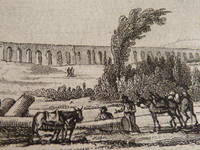
Voyage dans la Basse et Haute Egypte : 1. Mosquée près Rossette. 2. Calis ou canal qui conduit l'eau au Caire. 3. L'Aqueduc qui conduit l'eau du Nil au Caire. Planche 21.<br />
Paris: Didot 1803. Fine. Didot Paris 1803 40.50 x 54 cm une feuille Original unshaved full-page etching from the Imperial edition of the Description de l'Égypte or Recueil des observations et recherches faites en Égypte pendant l'expédition française publié par les ordres de Sa Majesté l'Empereur Napoléon le Grand A Collection of the observations and research carried out in Egypt during the French expedition published on the orders of his Majesty the Emperor Napoleon the Great'.Produced between February 1802 and 1830 on the orders of Naopleon Bonaparte and published between 1809 and 1828 1000 copies were printed and distributed to institutions on vergé paper with an 'Égypte ancienne et moderne' watermark visible when held up to the light. Light marginal spotting not touching image otherwise in very fresh fine condition. An engraving from the Description de l'Egypte one of the masterpieces of French printing and the birth of a new field: Egyptology. A gigantic survey of Egypt at the time of Bonaparte's conquests in 1798 and 1799 the work is divided into 13 volumes of engravings making up 892 plates of which 72 colored as well as presenting the splendors of the Egypt of the Pharaohs in 9 volumes. The other volumes discuss natural history and present a fascinating portrait of Coptic and Islamic Egypt as it was seen by Bonaparte's Eastern Armies. The Egyptian campaign' militarily a disaster demonstrates through the engravings of the Description d'Egypte the scientific success it nonetheless became thanks to the 167 expert members of the Commission of the Sciences and Arts of the Institut d'Egypte Egyptian Institute who followed Napoleon's army. The Institut gathered together in Egypt the mathematician Monge the chemist Berthollet the naturalist Geoffroy Saint-Hilaire as well as numerous artists engineers architects and doctors. They were tasked with re-discovering modern and ancient Egypt and displaying its natural treasures as well as the know-how of its inhabitants.This edition the so-called Imperial edition of the plates for the Description de l'Egypte was printed in four large formats two of which were specially created for it and christened Moyen-Egypte and Grand-Egypte. A special press was built to print it the process extending over 20 years from 1809 to 1829. The Imperial edition proved so popular that a second edition this time in black and white and without the Egypte ancienne et moderne watermark known as the Royal Edition was published during the Restoration by the printing house of C.-L.-F. Panckoucke Paris.The engravings of the Description d'Egypte owe a great deal to Baron Dominique-Vivant Denon illustrator diplomat collector and later Director of the Musée Napoléon the Louvre. His exploration of the South of Egypt gave Bonaparte the idea of sending the experts of the Institut there thus creating a faithful and complete portrait of the area. This was the research gathered together from 1802 in the mammoth Description de L'Egypte.Denon embarked on this story of archeological exploration at the age of 51 reaching first Alexandria and then Cairo before exploring Upper Egypt. Along with the members of the Institut d'Egypte the Natural History Museum's painter H.J. Redouté brother of Pierre-Joseph Redouté author of Roses the mineralogist Dolomiue and the draughtsman Joly Denon then explored the Nile Delta and Lower Egypt. When however he joined the 21st Light Infantry Regiment as it marched across Upper Egypt in pursuit of the retreating Mameluks in November 1798 he found himself the only civilian. In the very midst of the battle itself he reeled off sketches of the works of art that peppered his path right up to the threshold of the Sudan. He said that he had crossed a country that is apart from its name entirely unknown to Europeans and therefore everything was worth describing Voyages dans la Basse et la Haute Egypte pendant les campagnes de Bonaparte en 179 Didot unknown
Ссылка продавца : 29644
|
|
|
COLLECTIF
Départ Arts & lettres N°4
Bourges: Départ 1946. Fine. Départ Bourges Mars 1946 16 x 24 cm agrafé First edition one of 95 numbered copies on coated paper the only deluxe copies. Contributions by L. Thibaudet P. de La Tour du Pin M. Boin C. Lehec. Spine and front cover partially faded handsome interior condition. Départ unknown
Ссылка продавца : 29572

|
|
|
Dominique VIVANT DENON - L CROUTELLE (sculpsit)
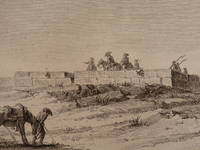
Voyage dans la Basse et Haute Egypte : 1. Monument voisin de Qouss. 2. Tombeaux antiques dans les carrières de la haute Egypte. Planche 55.<br />
Paris: Didot 1803. Fine. Didot Paris 1803 40 x 54 cm une feuille Original unshaved full-page etching from the Imperial edition of the Description de l'Égypte or Recueil des observations et recherches faites en Égypte pendant l'expédition française publié par les ordres de Sa Majesté l'Empereur Napoléon le Grand A Collection of the observations and research carried out in Egypt during the French expedition published on the orders of his Majesty the Emperor Napoleon the Great'.Produced between February 1802 and 1830 on the orders of Naopleon Bonaparte and published between 1809 and 1828 1000 copies were printed and distributed to institutions on vergé paper with an 'Égypte ancienne et moderne' watermark visible when held up to the light. Light marginal spotting not touching image otherwise in very fresh fine condition. An engraving from the Description de l'Egypte one of the masterpieces of French printing and the birth of a new field: Egyptology. A gigantic survey of Egypt at the time of Bonaparte's conquests in 1798 and 1799 the work is divided into 13 volumes of engravings making up 892 plates of which 72 colored as well as presenting the splendors of the Egypt of the Pharaohs in 9 volumes. The other volumes discuss natural history and present a fascinating portrait of Coptic and Islamic Egypt as it was seen by Bonaparte's Eastern Armies. The Egyptian campaign' militarily a disaster demonstrates through the engravings of the Description d'Egypte the scientific success it nonetheless became thanks to the 167 expert members of the Commission of the Sciences and Arts of the Institut d'Egypte Egyptian Institute who followed Napoleon's army. The Institut gathered together in Egypt the mathematician Monge the chemist Berthollet the naturalist Geoffroy Saint-Hilaire as well as numerous artists engineers architects and doctors. They were tasked with re-discovering modern and ancient Egypt and displaying its natural treasures as well as the know-how of its inhabitants.This edition the so-called Imperial edition of the plates for the Description de l'Egypte was printed in four large formats two of which were specially created for it and christened Moyen-Egypte and Grand-Egypte. A special press was built to print it the process extending over 20 years from 1809 to 1829. The Imperial edition proved so popular that a second edition this time in black and white and without the Egypte ancienne et moderne watermark known as the Royal Edition was published during the Restoration by the printing house of C.-L.-F. Panckoucke Paris.The engravings of the Description d'Egypte owe a great deal to Baron Dominique-Vivant Denon illustrator diplomat collector and later Director of the Musée Napoléon the Louvre. His exploration of the South of Egypt gave Bonaparte the idea of sending the experts of the Institut there thus creating a faithful and complete portrait of the area. This was the research gathered together from 1802 in the mammoth Description de L'Egypte.Denon embarked on this story of archeological exploration at the age of 51 reaching first Alexandria and then Cairo before exploring Upper Egypt. Along with the members of the Institut d'Egypte the Natural History Museum's painter H.J. Redouté brother of Pierre-Joseph Redouté author of Roses the mineralogist Dolomiue and the draughtsman Joly Denon then explored the Nile Delta and Lower Egypt. When however he joined the 21st Light Infantry Regiment as it marched across Upper Egypt in pursuit of the retreating Mameluks in November 1798 he found himself the only civilian. In the very midst of the battle itself he reeled off sketches of the works of art that peppered his path right up to the threshold of the Sudan. He said that he had crossed a country that is apart from its name entirely unknown to Europeans and therefore everything was worth describing Voyages dans la Basse et la Haute Egypte pendant les campagnes de Bonaparte en 1798 e Didot unknown
Ссылка продавца : 29692
|
|
|
Tristan TZARA
Saluer le chemin - In Départ N°2
Bourges: Départ 1945. Fine. Départ Bourges Novembre 1945 16 x 24 cm agrafé First edition one of 100 numbered copies on Canson paper the only deluxe copies. Other contributions by F. Garcia-Lorca J. Doucet J. Planchon. Issue illustrated with original tailpieces by J. Mary. Minor foxing spots to front board otherwise a handsome copy. Départ unknown
Ссылка продавца : 29560

|
|
|
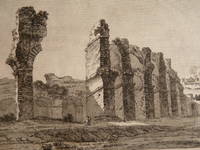
Dominique VIVANT DENON - BALTARD (sculpsit)
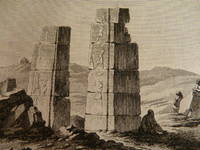
Voyage dans la Basse et Haute Egypte : 1. Ruines de la porte d'un temple d'Eléphantine. 2. Ruines d'un des temples d'Eléphantine. Planche 65.<br />
Paris: Didot 1803. Fine. Didot Paris 1803 40.50 x 54 cm une feuille Original unshaved full-page etching from the Imperial edition of the Description de l'Égypte or Recueil des observations et recherches faites en Égypte pendant l'expédition française publié par les ordres de Sa Majesté l'Empereur Napoléon le Grand A Collection of the observations and research carried out in Egypt during the French expedition published on the orders of his Majesty the Emperor Napoleon the Great'.Produced between February 1802 and 1830 on the orders of Naopleon Bonaparte and published between 1809 and 1828 1000 copies were printed and distributed to institutions on vergé paper with an 'Égypte ancienne et moderne' watermark visible when held up to the light. Light marginal spotting not touching image otherwise in very fresh fine condition. An engraving from the Description de l'Egypte one of the masterpieces of French printing and the birth of a new field: Egyptology. A gigantic survey of Egypt at the time of Bonaparte's conquests in 1798 and 1799 the work is divided into 13 volumes of engravings making up 892 plates of which 72 colored as well as presenting the splendors of the Egypt of the Pharaohs in 9 volumes. The other volumes discuss natural history and present a fascinating portrait of Coptic and Islamic Egypt as it was seen by Bonaparte's Eastern Armies. The Egyptian campaign' militarily a disaster demonstrates through the engravings of the Description d'Egypte the scientific success it nonetheless became thanks to the 167 expert members of the Commission of the Sciences and Arts of the Institut d'Egypte Egyptian Institute who followed Napoleon's army. The Institut gathered together in Egypt the mathematician Monge the chemist Berthollet the naturalist Geoffroy Saint-Hilaire as well as numerous artists engineers architects and doctors. They were tasked with re-discovering modern and ancient Egypt and displaying its natural treasures as well as the know-how of its inhabitants.This edition the so-called Imperial edition of the plates for the Description de l'Egypte was printed in four large formats two of which were specially created for it and christened Moyen-Egypte and Grand-Egypte. A special press was built to print it the process extending over 20 years from 1809 to 1829. The Imperial edition proved so popular that a second edition this time in black and white and without the Egypte ancienne et moderne watermark known as the Royal Edition was published during the Restoration by the printing house of C.-L.-F. Panckoucke Paris.The engravings of the Description d'Egypte owe a great deal to Baron Dominique-Vivant Denon illustrator diplomat collector and later Director of the Musée Napoléon the Louvre. His exploration of the South of Egypt gave Bonaparte the idea of sending the experts of the Institut there thus creating a faithful and complete portrait of the area. This was the research gathered together from 1802 in the mammoth Description de L'Egypte.Denon embarked on this story of archeological exploration at the age of 51 reaching first Alexandria and then Cairo before exploring Upper Egypt. Along with the members of the Institut d'Egypte the Natural History Museum's painter H.J. Redouté brother of Pierre-Joseph Redouté author of Roses the mineralogist Dolomiue and the draughtsman Joly Denon then explored the Nile Delta and Lower Egypt. When however he joined the 21st Light Infantry Regiment as it marched across Upper Egypt in pursuit of the retreating Mameluks in November 1798 he found himself the only civilian. In the very midst of the battle itself he reeled off sketches of the works of art that peppered his path right up to the threshold of the Sudan. He said that he had crossed a country that is apart from its name entirely unknown to Europeans and therefore everything was worth describing Voyages dans la Basse et la Haute Egypte pendant les campagnes de Bonaparte en 179 Didot unknown
Ссылка продавца : 29702
|
|
|
Henri TERRASSE
L'art hispano-mauresque des origines au XIIIème siècle
Paris: Les éditions G. van Oest 1932. Fine. Les éditions G. van Oest Paris 1932 19.50 x 28.50 cm broché First edition. Signed autograph inscription from a previous owner to a friend as a gift. Work illustrated with 80 photographic plates hors-texte. Spine and boards lightly and marginally sunned without severity otherwise handsome copy. Les éditions G. van Oest hardcover
Ссылка продавца : 29360

|
|
|
Edmond JABES
Le soupçon. - Le désert
Paris: Gallimard 1978. Fine. Gallimard Paris 1978 15 x 22 cm broché First edition one of 23 numbered copies on Arches vellum the only deluxe copies. Two light traces of sunning at head and foot of spine without consequence endpapers very slightly and marginally aged without any concern handsome copy. Gallimard hardcover
Ссылка продавца : 29421

|
|
|
Edouard LUCAS
Récréations mathématiques volume 2
Paris: Gauthier-Villars & fils 1896. Fine. Gauthier-Villars & fils Paris 1896 15 x 21.50 cm broché Second edition. Dominoes misère games hopscotch Hamilton's icosian game. Worming to final endpaper otherwise a handsome copy. Gauthier-Villars & fils unknown
Ссылка продавца : 29450

|
|
|
Dominique VIVANT DENON - L CROUTELLE (sculpsit)
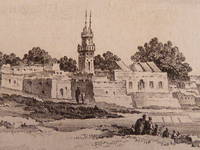
Voyage dans la Basse et Haute Egypte : 1. Vue du Couvent blanc. 2. Déïr beyâdh le Couvent blanc. 3. Vue de Minyéh. Planche 32.<br />
Paris: Didot 1803. Fine. Didot Paris 1803 40.50 x 54 cm une feuille Original unshaved full-page etching from the Imperial edition of the Description de l'Égypte or Recueil des observations et recherches faites en Égypte pendant l'expédition française publié par les ordres de Sa Majesté l'Empereur Napoléon le Grand A Collection of the observations and research carried out in Egypt during the French expedition published on the orders of his Majesty the Emperor Napoleon the Great'.Produced between February 1802 and 1830 on the orders of Naopleon Bonaparte and published between 1809 and 1828 1000 copies were printed and distributed to institutions on vergé paper with an 'Égypte ancienne et moderne' watermark visible when held up to the light. Light marginal spotting not touching image otherwise in very fresh fine condition. An engraving from the Description de l'Egypte one of the masterpieces of French printing and the birth of a new field: Egyptology. A gigantic survey of Egypt at the time of Bonaparte's conquests in 1798 and 1799 the work is divided into 13 volumes of engravings making up 892 plates of which 72 colored as well as presenting the splendors of the Egypt of the Pharaohs in 9 volumes. The other volumes discuss natural history and present a fascinating portrait of Coptic and Islamic Egypt as it was seen by Bonaparte's Eastern Armies. The Egyptian campaign' militarily a disaster demonstrates through the engravings of the Description d'Egypte the scientific success it nonetheless became thanks to the 167 expert members of the Commission of the Sciences and Arts of the Institut d'Egypte Egyptian Institute who followed Napoleon's army. The Institut gathered together in Egypt the mathematician Monge the chemist Berthollet the naturalist Geoffroy Saint-Hilaire as well as numerous artists engineers architects and doctors. They were tasked with re-discovering modern and ancient Egypt and displaying its natural treasures as well as the know-how of its inhabitants.This edition the so-called Imperial edition of the plates for the Description de l'Egypte was printed in four large formats two of which were specially created for it and christened Moyen-Egypte and Grand-Egypte. A special press was built to print it the process extending over 20 years from 1809 to 1829. The Imperial edition proved so popular that a second edition this time in black and white and without the Egypte ancienne et moderne watermark known as the Royal Edition was published during the Restoration by the printing house of C.-L.-F. Panckoucke Paris.The engravings of the Description d'Egypte owe a great deal to Baron Dominique-Vivant Denon illustrator diplomat collector and later Director of the Musée Napoléon the Louvre. His exploration of the South of Egypt gave Bonaparte the idea of sending the experts of the Institut there thus creating a faithful and complete portrait of the area. This was the research gathered together from 1802 in the mammoth Description de L'Egypte.Denon embarked on this story of archeological exploration at the age of 51 reaching first Alexandria and then Cairo before exploring Upper Egypt. Along with the members of the Institut d'Egypte the Natural History Museum's painter H.J. Redouté brother of Pierre-Joseph Redouté author of Roses the mineralogist Dolomiue and the draughtsman Joly Denon then explored the Nile Delta and Lower Egypt. When however he joined the 21st Light Infantry Regiment as it marched across Upper Egypt in pursuit of the retreating Mameluks in November 1798 he found himself the only civilian. In the very midst of the battle itself he reeled off sketches of the works of art that peppered his path right up to the threshold of the Sudan. He said that he had crossed a country that is apart from its name entirely unknown to Europeans and therefore everything was worth describing Voyages dans la Basse et la Haute Egypte pendant les campagnes de Bonaparte en 179 Didot unknown
Ссылка продавца : 29655
|
|
|
Josephin PELADAN
Les manuscrits de Léonard de Vinci
Paris: Sansot & Cie 1910. Fine. Sansot & Cie Paris 1910 12 x 19 cm broché First edition on ordinary paper. Two small tears of no consequence at foot of joints otherwise a handsome copy. Sansot & Cie unknown
Ссылка продавца : 29034

|
|
|
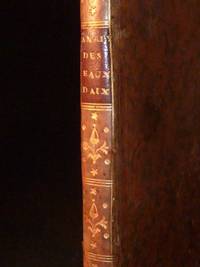
Joseph DAQUIN
Analyse des eaux thermales d'Aix en Savoye ; dans laquelle on expose les diverses manières d'user de ces eaux la méthode & le régime de vivre qu'il convient de suivre pendant leur usage & les différentes maladies pour lesquelles elles sont employées ; avec plusieurs Observations qui y sont relatives pour en constater les propriétés
Chambéry: De l'Imprimerie de M. F. Gorrin 1772. Fine. De l'Imprimerie de M. F. Gorrin Chambéry 1772 12 x 20 cm relié First edition not cited by Quérard who proposes the date of 1773. Contemporary full speckled blonde calf binding. Smooth spine decorated with a red morocco title label. Small tools depicting thistles and acorns as well as gilt stars. All edges marbled. One endpaper slightly detached and one corner rubbed. The Savoyard physician Joseph Daquin besides his status as creator of psychiatric medicine known as alienism presents a particular interest for thermalism and medical hygiene. It was upon observing the ignorance of thermal waters and their blind prescription that he decided to implement his research and propose his Analysis. He notably evokes in this work the Roman baths of Aix les Bains national until the 19th century which were rediscovered by chance the year of the publication of his study. De l'Imprimerie de M. F. Gorrin unknown
Ссылка продавца : 29304
|
|
|
Gerard MURAIL
Lorris dans la forêt
s. l.: Les cahiers à Haute voix 1960. Fine. Les cahiers à Haute voix s. l. 1960 16 x 22.50 cm broché First edition one of 700 numbered copies on alfa paper the only deluxe copies along with 20 offset Lourmarin. Signed and inscribed by Gérard Murail. Work illustrated with drawings by Marc Hénard. Spine and boards slightly and marginally faded a small insignificant stain on the endpaper and its verso handsome interior condition. Les cahiers à Haute voix hardcover
Ссылка продавца : 29595

|
|
|
Louis-Jean LEVESQUE DE POUILLY
Theorie des sentimens agréables où après avoir indiqué les règles que la nature suit dans la distribution du plaisir on établit les principes de la théologie naturelle et ceux de la philosophie morale
à Paris: Chez de Bure père 1774. Fine. Chez de Bure père à Paris 1774 10.50 x 17 cm relié Fifth and best edition expanded with the eulogy of M. de Pouilly lieutenant general of the presidial court of the city of Reims that Levesque de Pouilly endeavored to embellish by abbé de Saulx the text to be engraved on a fountain erected in his honor the 2 speeches he delivered in Reims on March 6 1748 and February 17 1750 and the description of a monument discovered in the city in 1738. This edition is illustrated with a frontispiece two folding plates at the end of the work three title vignettes and a title headpiece all designed by De Seve and engraved by J. Robert. This is the finest edition of this text. Contemporary full calf binding marbled and glazed. Decorated spine with raised bands. Red morocco title label. Fine copy very fresh. ""Esteemed work"" according to Brunet this work revisits the theories of philosophers on sentiment. From a science of feeling the author endeavors to derive a moral philosophy on love and friendship. An interesting edition as it provides insight into the author. Chez de Bure père hardcover
Ссылка продавца : 29182

|
|
|
Maurice DONNAY
Discours de réception à l'Académie française le 19 décembre 1907
Paris: Charpentier & Fasquelle 1910. Fine. Charpentier & Fasquelle Paris 1910 13 x 19 cm broché First edition printed on ordinary paper with no mention of deluxe copies. Handsome copy. Charpentier & Fasquelle unknown
Ссылка продавца : 29052

|
|
|
Dominique VIVANT DENON - RIGO (delineavit) - DUFRENE (sculpsit)
Voyage dans la Basse et Haute Egypte : 1. L'enterrement d'un Musulman en Egypte. 2. La Fiancée d'un Musulman qui va chercher son Epoux. 3. Ecole d'enfans. Planche 103.<br />
Paris: Didot 1803. Fine. Didot Paris 1803 40.50 x 54 cm une feuille Original unshaved full-page etching from the Imperial edition of the Description de l'Égypte or Recueil des observations et recherches faites en Égypte pendant l'expédition française publié par les ordres de Sa Majesté l'Empereur Napoléon le Grand A Collection of the observations and research carried out in Egypt during the French expedition published on the orders of his Majesty the Emperor Napoleon the Great'.Produced between February 1802 and 1830 on the orders of Naopleon Bonaparte and published between 1809 and 1828 1000 copies were printed and distributed to institutions on vergé paper with an 'Égypte ancienne et moderne' watermark visible when held up to the light. Light marginal spotting not touching image otherwise in very fresh fine condition. An engraving from the Description de l'Egypte one of the masterpieces of French printing and the birth of a new field: Egyptology. A gigantic survey of Egypt at the time of Bonaparte's conquests in 1798 and 1799 the work is divided into 13 volumes of engravings making up 892 plates of which 72 colored as well as presenting the splendors of the Egypt of the Pharaohs in 9 volumes. The other volumes discuss natural history and present a fascinating portrait of Coptic and Islamic Egypt as it was seen by Bonaparte's Eastern Armies. The Egyptian campaign' militarily a disaster demonstrates through the engravings of the Description d'Egypte the scientific success it nonetheless became thanks to the 167 expert members of the Commission of the Sciences and Arts of the Institut d'Egypte Egyptian Institute who followed Napoleon's army. The Institut gathered together in Egypt the mathematician Monge the chemist Berthollet the naturalist Geoffroy Saint-Hilaire as well as numerous artists engineers architects and doctors. They were tasked with re-discovering modern and ancient Egypt and displaying its natural treasures as well as the know-how of its inhabitants.This edition the so-called Imperial edition of the plates for the Description de l'Egypte was printed in four large formats two of which were specially created for it and christened Moyen-Egypte and Grand-Egypte. A special press was built to print it the process extending over 20 years from 1809 to 1829. The Imperial edition proved so popular that a second edition this time in black and white and without the Egypte ancienne et moderne watermark known as the Royal Edition was published during the Restoration by the printing house of C.-L.-F. Panckoucke Paris.The engravings of the Description d'Egypte owe a great deal to Baron Dominique-Vivant Denon illustrator diplomat collector and later Director of the Musée Napoléon the Louvre. His exploration of the South of Egypt gave Bonaparte the idea of sending the experts of the Institut there thus creating a faithful and complete portrait of the area. This was the research gathered together from 1802 in the mammoth Description de L'Egypte.Denon embarked on this story of archeological exploration at the age of 51 reaching first Alexandria and then Cairo before exploring Upper Egypt. Along with the members of the Institut d'Egypte the Natural History Museum's painter H.J. Redouté brother of Pierre-Joseph Redouté author of Roses the mineralogist Dolomiue and the draughtsman Joly Denon then explored the Nile Delta and Lower Egypt. When however he joined the 21st Light Infantry Regiment as it marched across Upper Egypt in pursuit of the retreating Mameluks in November 1798 he found himself the only civilian. In the very midst of the battle itself he reeled off sketches of the works of art that peppered his path right up to the threshold of the Sudan. He said that he had crossed a country that is apart from its name entirely unknown to Europeans and therefore everything was worth describing Voyages dans la Basse et la Haute Egypte pendant les campagnes de Bonaparte en 179 Didot unknown
Ссылка продавца : 29753
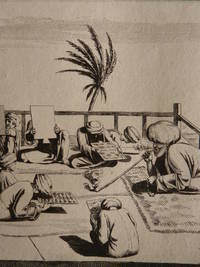
|
|
|
Dominique VIVANT DENON - BALTARD (sculpsit)
Voyage dans la Basse et Haute Egypte : Vues et Plan d'un temple d'Hermontis. Planche 51.<br />
Paris: Didot 1803. Fine. Didot Paris 1803 40 x 54 cm une feuille Original unshaved full-page etching from the Imperial edition of the Description de l'Égypte or Recueil des observations et recherches faites en Égypte pendant l'expédition française publié par les ordres de Sa Majesté l'Empereur Napoléon le Grand A Collection of the observations and research carried out in Egypt during the French expedition published on the orders of his Majesty the Emperor Napoleon the Great'.Produced between February 1802 and 1830 on the orders of Naopleon Bonaparte and published between 1809 and 1828 1000 copies were printed and distributed to institutions on vergé paper with an 'Égypte ancienne et moderne' watermark visible when held up to the light. Light marginal spotting not touching image otherwise in very fresh fine condition. An engraving from the Description de l'Egypte one of the masterpieces of French printing and the birth of a new field: Egyptology. A gigantic survey of Egypt at the time of Bonaparte's conquests in 1798 and 1799 the work is divided into 13 volumes of engravings making up 892 plates of which 72 colored as well as presenting the splendors of the Egypt of the Pharaohs in 9 volumes. The other volumes discuss natural history and present a fascinating portrait of Coptic and Islamic Egypt as it was seen by Bonaparte's Eastern Armies. The Egyptian campaign' militarily a disaster demonstrates through the engravings of the Description d'Egypte the scientific success it nonetheless became thanks to the 167 expert members of the Commission of the Sciences and Arts of the Institut d'Egypte Egyptian Institute who followed Napoleon's army. The Institut gathered together in Egypt the mathematician Monge the chemist Berthollet the naturalist Geoffroy Saint-Hilaire as well as numerous artists engineers architects and doctors. They were tasked with re-discovering modern and ancient Egypt and displaying its natural treasures as well as the know-how of its inhabitants.This edition the so-called Imperial edition of the plates for the Description de l'Egypte was printed in four large formats two of which were specially created for it and christened Moyen-Egypte and Grand-Egypte. A special press was built to print it the process extending over 20 years from 1809 to 1829. The Imperial edition proved so popular that a second edition this time in black and white and without the Egypte ancienne et moderne watermark known as the Royal Edition was published during the Restoration by the printing house of C.-L.-F. Panckoucke Paris.The engravings of the Description d'Egypte owe a great deal to Baron Dominique-Vivant Denon illustrator diplomat collector and later Director of the Musée Napoléon the Louvre. His exploration of the South of Egypt gave Bonaparte the idea of sending the experts of the Institut there thus creating a faithful and complete portrait of the area. This was the research gathered together from 1802 in the mammoth Description de L'Egypte.Denon embarked on this story of archeological exploration at the age of 51 reaching first Alexandria and then Cairo before exploring Upper Egypt. Along with the members of the Institut d'Egypte the Natural History Museum's painter H.J. Redouté brother of Pierre-Joseph Redouté author of Roses the mineralogist Dolomiue and the draughtsman Joly Denon then explored the Nile Delta and Lower Egypt. When however he joined the 21st Light Infantry Regiment as it marched across Upper Egypt in pursuit of the retreating Mameluks in November 1798 he found himself the only civilian. In the very midst of the battle itself he reeled off sketches of the works of art that peppered his path right up to the threshold of the Sudan. He said that he had crossed a country that is apart from its name entirely unknown to Europeans and therefore everything was worth describing Voyages dans la Basse et la Haute Egypte pendant les campagnes de Bonaparte en 1798 e Didot unknown
Ссылка продавца : 29688
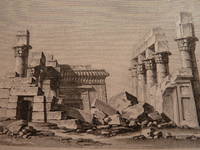
|
|

 Получить результаты поиска по электронной почте
 Загрузить результаты в формате PDF
  RSS-канал
 Постоянная ссылка


