|
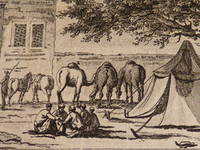
Dominique VIVANT DENON - Hyacinthe LEGRAND (sculpsit)
Voyage dans la Basse et Haute Egypte : Vues de la Basse-Egypte. Planche 16.<br />
Paris: Didot 1803. Fine. Didot Paris 1803 40 x 54 cm une feuille Original unshaved full-page etching from the Imperial edition of the Description de l'Égypte or Recueil des observations et recherches faites en Égypte pendant l'expédition française publié par les ordres de Sa Majesté l'Empereur Napoléon le Grand A Collection of the observations and research carried out in Egypt during the French expedition published on the orders of his Majesty the Emperor Napoleon the Great'.Produced between February 1802 and 1830 on the orders of Naopleon Bonaparte and published between 1809 and 1828 1000 copies were printed and distributed to institutions on vergé paper with an 'Égypte ancienne et moderne' watermark visible when held up to the light. Light marginal spotting not touching image otherwise in very fresh fine condition. An engraving from the Description de l'Egypte one of the masterpieces of French printing and the birth of a new field: Egyptology. A gigantic survey of Egypt at the time of Bonaparte's conquests in 1798 and 1799 the work is divided into 13 volumes of engravings making up 892 plates of which 72 colored as well as presenting the splendors of the Egypt of the Pharaohs in 9 volumes. The other volumes discuss natural history and present a fascinating portrait of Coptic and Islamic Egypt as it was seen by Bonaparte's Eastern Armies. The Egyptian campaign' militarily a disaster demonstrates through the engravings of the Description d'Egypte the scientific success it nonetheless became thanks to the 167 expert members of the Commission of the Sciences and Arts of the Institut d'Egypte Egyptian Institute who followed Napoleon's army. The Institut gathered together in Egypt the mathematician Monge the chemist Berthollet the naturalist Geoffroy Saint-Hilaire as well as numerous artists engineers architects and doctors. They were tasked with re-discovering modern and ancient Egypt and displaying its natural treasures as well as the know-how of its inhabitants.This edition the so-called Imperial edition of the plates for the Description de l'Egypte was printed in four large formats two of which were specially created for it and christened Moyen-Egypte and Grand-Egypte. A special press was built to print it the process extending over 20 years from 1809 to 1829. The Imperial edition proved so popular that a second edition this time in black and white and without the Egypte ancienne et moderne watermark known as the Royal Edition was published during the Restoration by the printing house of C.-L.-F. Panckoucke Paris.The engravings of the Description d'Egypte owe a great deal to Baron Dominique-Vivant Denon illustrator diplomat collector and later Director of the Musée Napoléon the Louvre. His exploration of the South of Egypt gave Bonaparte the idea of sending the experts of the Institut there thus creating a faithful and complete portrait of the area. This was the research gathered together from 1802 in the mammoth Description de L'Egypte.Denon embarked on this story of archeological exploration at the age of 51 reaching first Alexandria and then Cairo before exploring Upper Egypt. Along with the members of the Institut d'Egypte the Natural History Museum's painter H.J. Redouté brother of Pierre-Joseph Redouté author of Roses the mineralogist Dolomiue and the draughtsman Joly Denon then explored the Nile Delta and Lower Egypt. When however he joined the 21st Light Infantry Regiment as it marched across Upper Egypt in pursuit of the retreating Mameluks in November 1798 he found himself the only civilian. In the very midst of the battle itself he reeled off sketches of the works of art that peppered his path right up to the threshold of the Sudan. He said that he had crossed a country that is apart from its name entirely unknown to Europeans and therefore everything was worth describing Voyages dans la Basse et la Haute Egypte pendant les campagnes de Bonaparte en 1798 e Didot unknown
Riferimento per il libraio : 29633
|
|
|
Florentin LORIOT
Explorations et missions dans l'Afrique équatoriale
Paris: Gaume & Cie 1860. Fine. Gaume & Cie Paris 1860 12 x 19 cm broché First edition. Small lacks at head and foot of sunned spine joints slightly cracked at head and foot small corner lacks to boards occasional worming to interior affecting mainly the endpapers. Gaume & Cie hardcover
Riferimento per il libraio : 29580

|
|
|
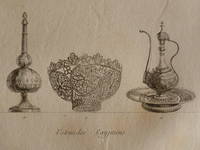
Dominique VIVANT DENON - Hyacinthe LEGRAND (sculpsit)
Voyage dans la Basse et Haute Egypte : Ustensiles Egyptiens. Planche 94.<br />
Paris: Didot 1803. Fine. Didot Paris 1803 40.50 x 54 cm une feuille Original unshaved full-page etching from the Imperial edition of the Description de l'Égypte or Recueil des observations et recherches faites en Égypte pendant l'expédition française publié par les ordres de Sa Majesté l'Empereur Napoléon le Grand A Collection of the observations and research carried out in Egypt during the French expedition published on the orders of his Majesty the Emperor Napoleon the Great'.Produced between February 1802 and 1830 on the orders of Naopleon Bonaparte and published between 1809 and 1828 1000 copies were printed and distributed to institutions on vergé paper with an 'Égypte ancienne et moderne' watermark visible when held up to the light. Light marginal spotting not touching image otherwise in very fresh fine condition. An engraving from the Description de l'Egypte one of the masterpieces of French printing and the birth of a new field: Egyptology. A gigantic survey of Egypt at the time of Bonaparte's conquests in 1798 and 1799 the work is divided into 13 volumes of engravings making up 892 plates of which 72 colored as well as presenting the splendors of the Egypt of the Pharaohs in 9 volumes. The other volumes discuss natural history and present a fascinating portrait of Coptic and Islamic Egypt as it was seen by Bonaparte's Eastern Armies. The Egyptian campaign' militarily a disaster demonstrates through the engravings of the Description d'Egypte the scientific success it nonetheless became thanks to the 167 expert members of the Commission of the Sciences and Arts of the Institut d'Egypte Egyptian Institute who followed Napoleon's army. The Institut gathered together in Egypt the mathematician Monge the chemist Berthollet the naturalist Geoffroy Saint-Hilaire as well as numerous artists engineers architects and doctors. They were tasked with re-discovering modern and ancient Egypt and displaying its natural treasures as well as the know-how of its inhabitants.This edition the so-called Imperial edition of the plates for the Description de l'Egypte was printed in four large formats two of which were specially created for it and christened Moyen-Egypte and Grand-Egypte. A special press was built to print it the process extending over 20 years from 1809 to 1829. The Imperial edition proved so popular that a second edition this time in black and white and without the Egypte ancienne et moderne watermark known as the Royal Edition was published during the Restoration by the printing house of C.-L.-F. Panckoucke Paris.The engravings of the Description d'Egypte owe a great deal to Baron Dominique-Vivant Denon illustrator diplomat collector and later Director of the Musée Napoléon the Louvre. His exploration of the South of Egypt gave Bonaparte the idea of sending the experts of the Institut there thus creating a faithful and complete portrait of the area. This was the research gathered together from 1802 in the mammoth Description de L'Egypte.Denon embarked on this story of archeological exploration at the age of 51 reaching first Alexandria and then Cairo before exploring Upper Egypt. Along with the members of the Institut d'Egypte the Natural History Museum's painter H.J. Redouté brother of Pierre-Joseph Redouté author of Roses the mineralogist Dolomiue and the draughtsman Joly Denon then explored the Nile Delta and Lower Egypt. When however he joined the 21st Light Infantry Regiment as it marched across Upper Egypt in pursuit of the retreating Mameluks in November 1798 he found himself the only civilian. In the very midst of the battle itself he reeled off sketches of the works of art that peppered his path right up to the threshold of the Sudan. He said that he had crossed a country that is apart from its name entirely unknown to Europeans and therefore everything was worth describing Voyages dans la Basse et la Haute Egypte pendant les campagnes de Bonaparte en 179 Didot unknown
Riferimento per il libraio : 29744
|
|
|
Charles YRIARTE
Les portraits cosmopolites
Paris: E. Lachaud 1870. Fine. E. Lachaud Paris 1870 12 x 19 cm broché First edition published under the pseudonym of Marquis de Villemer. About T. Gautier Garibaldi C. Baudelaire H. Berlioz. Some occasional light foxing affecting the first cover and the very first leaves. E. Lachaud unknown
Riferimento per il libraio : 29460

|
|
|
GIGUET
Anecdotes secrètes sur le 18 Fructidor et nouveaux mémoires des déportés à la Guiane écrits par eux-mêmes et faisant suite au journal de Ramel contenant de nouveaux détails sur leur transport à la Guiane et leur séjour dans cette colonie l'arrivée de la frégate la Décade ayant à bord 193 déportés la mort de Rovère Lavilleheurnois Brothier Gibert-Desmolières d'Havelange Letellier etc. et tout ce qui s'est passé à la Guiane jusqu'au 24 Ventôse an VII. Auxquels on a ajouté une nouvelle relation de l'évasion de Pichegru Barthélemy Ramel etc
Paris: Chez Giguet 1799. Fine. Chez Giguet Paris An VII 1799 10 x 18 cm relié First edition with engraved frontispiece. Half caramel sheep binding spine with five raised bands red morocco title and date labels upper headcap fragile and partly worn away repaired tear at foot of spine overall very rubbed. This is a collection compiled by publisher Giguet containing letters and memoirs concerning the deportation to the penal colonies of French Guiana of numerous persons occupying the highest ranks of the Republic at the time of the French Revolution. The assembled pieces refer to the coup d'état of 18 Fructidor fomented under the Directory by the republicans against the moderates and royalists then holding a majority in the councils particularly the legislative ones. Many deputies priests and journalists were then arrested and deported after Paris had been occupied militarily; Lazare Carnot who had been warned of his arrest managed to escape in time. Chez Giguet hardcover
Riferimento per il libraio : 29436

|
|
|
Arthur KLEINCLAUSZ - Henri FOCILLON
Les dessins d'élèves et notes de comptabilité de Jérome Durand peintre et verrier lyonnais 1555-1605
Lyon: Audin & Cie 1924. Fine. Audin & Cie Lyon 1924 19 x 24 cm broché First edition. Iconography. Introduction and supporting documents by G. Guigue. Minimal worming affecting essentially certain margins handsome copy. Audin & Cie unknown
Riferimento per il libraio : 29586

|
|
|
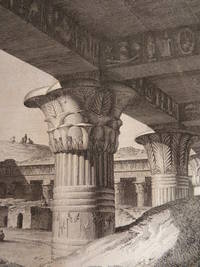
Dominique VIVANT DENON - BALTARD (sculpsit)
Voyage dans la Basse et Haute Egypte : 1. Le Typhonium d'Appolinopolis. 2. Intérieur du temple d'Appolinopolis à Etfoù. Planche 57.<br />
Paris: Didot 1803. Fine. Didot Paris 1803 40.50 x 54 cm une feuille Original unshaved full-page etching from the Imperial edition of the Description de l'Égypte or Recueil des observations et recherches faites en Égypte pendant l'expédition française publié par les ordres de Sa Majesté l'Empereur Napoléon le Grand A Collection of the observations and research carried out in Egypt during the French expedition published on the orders of his Majesty the Emperor Napoleon the Great'.Produced between February 1802 and 1830 on the orders of Naopleon Bonaparte and published between 1809 and 1828 1000 copies were printed and distributed to institutions on vergé paper with an 'Égypte ancienne et moderne' watermark visible when held up to the light. Light marginal spotting not touching image otherwise in very fresh fine condition. An engraving from the Description de l'Egypte one of the masterpieces of French printing and the birth of a new field: Egyptology. A gigantic survey of Egypt at the time of Bonaparte's conquests in 1798 and 1799 the work is divided into 13 volumes of engravings making up 892 plates of which 72 colored as well as presenting the splendors of the Egypt of the Pharaohs in 9 volumes. The other volumes discuss natural history and present a fascinating portrait of Coptic and Islamic Egypt as it was seen by Bonaparte's Eastern Armies. The Egyptian campaign' militarily a disaster demonstrates through the engravings of the Description d'Egypte the scientific success it nonetheless became thanks to the 167 expert members of the Commission of the Sciences and Arts of the Institut d'Egypte Egyptian Institute who followed Napoleon's army. The Institut gathered together in Egypt the mathematician Monge the chemist Berthollet the naturalist Geoffroy Saint-Hilaire as well as numerous artists engineers architects and doctors. They were tasked with re-discovering modern and ancient Egypt and displaying its natural treasures as well as the know-how of its inhabitants.This edition the so-called Imperial edition of the plates for the Description de l'Egypte was printed in four large formats two of which were specially created for it and christened Moyen-Egypte and Grand-Egypte. A special press was built to print it the process extending over 20 years from 1809 to 1829. The Imperial edition proved so popular that a second edition this time in black and white and without the Egypte ancienne et moderne watermark known as the Royal Edition was published during the Restoration by the printing house of C.-L.-F. Panckoucke Paris.The engravings of the Description d'Egypte owe a great deal to Baron Dominique-Vivant Denon illustrator diplomat collector and later Director of the Musée Napoléon the Louvre. His exploration of the South of Egypt gave Bonaparte the idea of sending the experts of the Institut there thus creating a faithful and complete portrait of the area. This was the research gathered together from 1802 in the mammoth Description de L'Egypte.Denon embarked on this story of archeological exploration at the age of 51 reaching first Alexandria and then Cairo before exploring Upper Egypt. Along with the members of the Institut d'Egypte the Natural History Museum's painter H.J. Redouté brother of Pierre-Joseph Redouté author of Roses the mineralogist Dolomiue and the draughtsman Joly Denon then explored the Nile Delta and Lower Egypt. When however he joined the 21st Light Infantry Regiment as it marched across Upper Egypt in pursuit of the retreating Mameluks in November 1798 he found himself the only civilian. In the very midst of the battle itself he reeled off sketches of the works of art that peppered his path right up to the threshold of the Sudan. He said that he had crossed a country that is apart from its name entirely unknown to Europeans and therefore everything was worth describing Voyages dans la Basse et la Haute Egypte pendant les campagnes de Bonaparte en 179 Didot unknown
Riferimento per il libraio : 29694
|
|
|
A CALLAUD
Traité des paratonnerres leur utilité leur théorie leur construction
Paris: Ducher & Cie 1874. Fine. Ducher & Cie Paris 1874 18 x 27.50 cm broché First edition. Work illustrated with 68 figures in the text. Two small lacks to foot and head of spine slight corner lacks to boards boards with two traces of marginal creases foxing. Rare. Ducher & Cie hardcover
Riferimento per il libraio : 29519

|
|
|
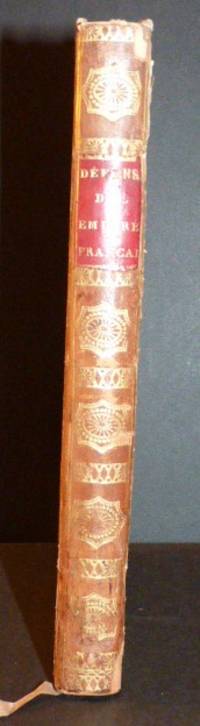
LALLY TOLENDAL
Défense des émigrés français adressée au peuple français
à Paris: Chez Cocheris 1797. Fine. Chez Cocheris à Paris 1797 12 x 19 cm relié Edition published in the year of the original issued in 12mo in London. Half sheep binding in tan. Smooth spine decorated with small tools and 5 gilt ornaments. Headcaps worn. Joints cracked at head and tail. Lally Tolendal wrote this vigorous plea in favor of French émigrés that largely prepared their return. Bookplate of the Dukes of Brissac. Library of Quevilly with the motto Virtute tempore. Chez Cocheris unknown
Riferimento per il libraio : 29477
|
|
|
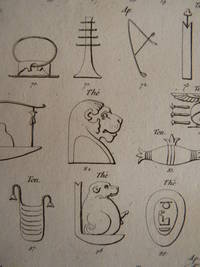
Dominique VIVANT DENON - GALIEN (sculpsit)
Voyage dans la Basse et Haute Egypte : Caractères hiéroglyphiques pris dans différens temples d'Egypte. Planche 114.
Paris: Didot 1803. Fine. Didot Paris 1803 40 x 54 cm une feuille Original unshaved full-page etching from the Imperial edition of the Description de l'Égypte or Recueil des observations et recherches faites en Égypte pendant l'expédition française publié par les ordres de Sa Majesté l'Empereur Napoléon le Grand A Collection of the observations and research carried out in Egypt during the French expedition published on the orders of his Majesty the Emperor Napoleon the Great'.Produced between February 1802 and 1830 on the orders of Naopleon Bonaparte and published between 1809 and 1828 1000 copies were printed and distributed to institutions on vergé paper with an 'Égypte ancienne et moderne' watermark visible when held up to the light. Light marginal spotting not touching image otherwise in very fresh fine condition. An engraving from the Description de l'Egypte one of the masterpieces of French printing and the birth of a new field: Egyptology. A gigantic survey of Egypt at the time of Bonaparte's conquests in 1798 and 1799 the work is divided into 13 volumes of engravings making up 892 plates of which 72 colored as well as presenting the splendors of the Egypt of the Pharaohs in 9 volumes. The other volumes discuss natural history and present a fascinating portrait of Coptic and Islamic Egypt as it was seen by Bonaparte's Eastern Armies. The Egyptian campaign' militarily a disaster demonstrates through the engravings of the Description d'Egypte the scientific success it nonetheless became thanks to the 167 expert members of the Commission of the Sciences and Arts of the Institut d'Egypte Egyptian Institute who followed Napoleon's army. The Institut gathered together in Egypt the mathematician Monge the chemist Berthollet the naturalist Geoffroy Saint-Hilaire as well as numerous artists engineers architects and doctors. They were tasked with re-discovering modern and ancient Egypt and displaying its natural treasures as well as the know-how of its inhabitants.This edition the so-called Imperial edition of the plates for the Description de l'Egypte was printed in four large formats two of which were specially created for it and christened Moyen-Egypte and Grand-Egypte. A special press was built to print it the process extending over 20 years from 1809 to 1829. The Imperial edition proved so popular that a second edition this time in black and white and without the Egypte ancienne et moderne watermark known as the Royal Edition was published during the Restoration by the printing house of C.-L.-F. Panckoucke Paris.The engravings of the Description d'Egypte owe a great deal to Baron Dominique-Vivant Denon illustrator diplomat collector and later Director of the Musée Napoléon the Louvre. His exploration of the South of Egypt gave Bonaparte the idea of sending the experts of the Institut there thus creating a faithful and complete portrait of the area. This was the research gathered together from 1802 in the mammoth Description de L'Egypte.Denon embarked on this story of archeological exploration at the age of 51 reaching first Alexandria and then Cairo before exploring Upper Egypt. Along with the members of the Institut d'Egypte the Natural History Museum's painter H.J. Redouté brother of Pierre-Joseph Redouté author of Roses the mineralogist Dolomiue and the draughtsman Joly Denon then explored the Nile Delta and Lower Egypt. When however he joined the 21st Light Infantry Regiment as it marched across Upper Egypt in pursuit of the retreating Mameluks in November 1798 he found himself the only civilian. In the very midst of the battle itself he reeled off sketches of the works of art that peppered his path right up to the threshold of the Sudan. He said that he had crossed a country that is apart from its name entirely unknown to Europeans and therefore everything was worth describing Voyages dans la Basse et la Haute Egypte pendant les campagnes de Bonaparte en 1798 e Didot unknown
Riferimento per il libraio : 29766
|
|
|
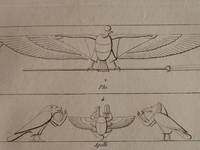
Dominique VIVANT DENON - GALIEN (sculpsit)
Voyage dans la Basse et Haute Egypte : Enseigne militaire Bâton augural et autres emblèmes. Planche 119.<br />
Paris: Didot 1803. Fine. Didot Paris 1803 40 x 54 cm une feuille Original unshaved full-page etching from the Imperial edition of the Description de l'Égypte or Recueil des observations et recherches faites en Égypte pendant l'expédition française publié par les ordres de Sa Majesté l'Empereur Napoléon le Grand A Collection of the observations and research carried out in Egypt during the French expedition published on the orders of his Majesty the Emperor Napoleon the Great'.Produced between February 1802 and 1830 on the orders of Naopleon Bonaparte and published between 1809 and 1828 1000 copies were printed and distributed to institutions on vergé paper with an 'Égypte ancienne et moderne' watermark visible when held up to the light. Light marginal spotting not touching image otherwise in very fresh fine condition. An engraving from the Description de l'Egypte one of the masterpieces of French printing and the birth of a new field: Egyptology. A gigantic survey of Egypt at the time of Bonaparte's conquests in 1798 and 1799 the work is divided into 13 volumes of engravings making up 892 plates of which 72 colored as well as presenting the splendors of the Egypt of the Pharaohs in 9 volumes. The other volumes discuss natural history and present a fascinating portrait of Coptic and Islamic Egypt as it was seen by Bonaparte's Eastern Armies. The Egyptian campaign' militarily a disaster demonstrates through the engravings of the Description d'Egypte the scientific success it nonetheless became thanks to the 167 expert members of the Commission of the Sciences and Arts of the Institut d'Egypte Egyptian Institute who followed Napoleon's army. The Institut gathered together in Egypt the mathematician Monge the chemist Berthollet the naturalist Geoffroy Saint-Hilaire as well as numerous artists engineers architects and doctors. They were tasked with re-discovering modern and ancient Egypt and displaying its natural treasures as well as the know-how of its inhabitants.This edition the so-called Imperial edition of the plates for the Description de l'Egypte was printed in four large formats two of which were specially created for it and christened Moyen-Egypte and Grand-Egypte. A special press was built to print it the process extending over 20 years from 1809 to 1829. The Imperial edition proved so popular that a second edition this time in black and white and without the Egypte ancienne et moderne watermark known as the Royal Edition was published during the Restoration by the printing house of C.-L.-F. Panckoucke Paris.The engravings of the Description d'Egypte owe a great deal to Baron Dominique-Vivant Denon illustrator diplomat collector and later Director of the Musée Napoléon the Louvre. His exploration of the South of Egypt gave Bonaparte the idea of sending the experts of the Institut there thus creating a faithful and complete portrait of the area. This was the research gathered together from 1802 in the mammoth Description de L'Egypte.Denon embarked on this story of archeological exploration at the age of 51 reaching first Alexandria and then Cairo before exploring Upper Egypt. Along with the members of the Institut d'Egypte the Natural History Museum's painter H.J. Redouté brother of Pierre-Joseph Redouté author of Roses the mineralogist Dolomiue and the draughtsman Joly Denon then explored the Nile Delta and Lower Egypt. When however he joined the 21st Light Infantry Regiment as it marched across Upper Egypt in pursuit of the retreating Mameluks in November 1798 he found himself the only civilian. In the very midst of the battle itself he reeled off sketches of the works of art that peppered his path right up to the threshold of the Sudan. He said that he had crossed a country that is apart from its name entirely unknown to Europeans and therefore everything was worth describing Voyages dans la Basse et la Haute Egypte pendant les campagnes de Bonaparte en 1798 e Didot unknown
Riferimento per il libraio : 29771
|
|
|
Robert RICARD
Références portugaises chez l'écrivain espagnol Jovellanos 1744-1811
Coimbra: S. n. 1961. Fine. S. n. Coimbra 1961 17 x 24 cm agrafé First edition printed in a very small number of copies. Autograph tribute from the author. A small crease mark throughout the body of the work. Rare. S. n. unknown
Riferimento per il libraio : 29307

|
|
|
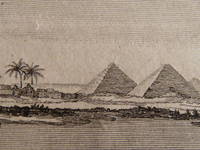
Dominique VIVANT DENON - BERTHAULT (sculpsit)
Voyage dans la Basse et Haute Egypte : Vues des Pyramides de Djyzéh. Planche 19.
Paris: Didot 1803. Fine. Didot Paris 1803 40.50 x 54 cm une feuille Original unshaved full-page etching from the Imperial edition of the Description de l'Égypte or Recueil des observations et recherches faites en Égypte pendant l'expédition française publié par les ordres de Sa Majesté l'Empereur Napoléon le Grand A Collection of the observations and research carried out in Egypt during the French expedition published on the orders of his Majesty the Emperor Napoleon the Great'.Produced between February 1802 and 1830 on the orders of Naopleon Bonaparte and published between 1809 and 1828 1000 copies were printed and distributed to institutions on vergé paper with an 'Égypte ancienne et moderne' watermark visible when held up to the light. Light marginal spotting not touching image otherwise in very fresh fine condition. An engraving from the Description de l'Egypte one of the masterpieces of French printing and the birth of a new field: Egyptology. A gigantic survey of Egypt at the time of Bonaparte's conquests in 1798 and 1799 the work is divided into 13 volumes of engravings making up 892 plates of which 72 colored as well as presenting the splendors of the Egypt of the Pharaohs in 9 volumes. The other volumes discuss natural history and present a fascinating portrait of Coptic and Islamic Egypt as it was seen by Bonaparte's Eastern Armies. The Egyptian campaign' militarily a disaster demonstrates through the engravings of the Description d'Egypte the scientific success it nonetheless became thanks to the 167 expert members of the Commission of the Sciences and Arts of the Institut d'Egypte Egyptian Institute who followed Napoleon's army. The Institut gathered together in Egypt the mathematician Monge the chemist Berthollet the naturalist Geoffroy Saint-Hilaire as well as numerous artists engineers architects and doctors. They were tasked with re-discovering modern and ancient Egypt and displaying its natural treasures as well as the know-how of its inhabitants.This edition the so-called Imperial edition of the plates for the Description de l'Egypte was printed in four large formats two of which were specially created for it and christened Moyen-Egypte and Grand-Egypte. A special press was built to print it the process extending over 20 years from 1809 to 1829. The Imperial edition proved so popular that a second edition this time in black and white and without the Egypte ancienne et moderne watermark known as the Royal Edition was published during the Restoration by the printing house of C.-L.-F. Panckoucke Paris.The engravings of the Description d'Egypte owe a great deal to Baron Dominique-Vivant Denon illustrator diplomat collector and later Director of the Musée Napoléon the Louvre. His exploration of the South of Egypt gave Bonaparte the idea of sending the experts of the Institut there thus creating a faithful and complete portrait of the area. This was the research gathered together from 1802 in the mammoth Description de L'Egypte.Denon embarked on this story of archeological exploration at the age of 51 reaching first Alexandria and then Cairo before exploring Upper Egypt. Along with the members of the Institut d'Egypte the Natural History Museum's painter H.J. Redouté brother of Pierre-Joseph Redouté author of Roses the mineralogist Dolomiue and the draughtsman Joly Denon then explored the Nile Delta and Lower Egypt. When however he joined the 21st Light Infantry Regiment as it marched across Upper Egypt in pursuit of the retreating Mameluks in November 1798 he found himself the only civilian. In the very midst of the battle itself he reeled off sketches of the works of art that peppered his path right up to the threshold of the Sudan. He said that he had crossed a country that is apart from its name entirely unknown to Europeans and therefore everything was worth describing Voyages dans la Basse et la Haute Egypte pendant les campagnes de Bonaparte en 179 Didot unknown
Riferimento per il libraio : 29641
|
|
|
Edmond JABES
Le livre des ressemblances
Paris: Gallimard 1976. Fine. Gallimard Paris 1976 15 x 22 cm broché First edition one of 20 numbered copies on vélin d'Arches the only large paper copies. Spine and covers very slightly and marginally faded not serious otherwise a good copy. Gallimard unknown
Riferimento per il libraio : 29420

|
|
|
Hepworth DIXON
La nouvelle Amérique
Paris: A. Lacroix & Cie 1874. Fine. A. Lacroix & Cie Paris 1874 14 x 22.50 cm broché First edition of the French translation. Preface and biography of the author by Philarète Chasles. Minor lacks to head and foot of spine boards marginally faded some light foxing. Rare. A. Lacroix & Cie hardcover
Riferimento per il libraio : 29530

|
|
|
(to Jules BARBEY D'AUREVILLY) - Paul HEUSY
Un coin de la vie de misère
Paris: Librairie générale 1878. Fine. Librairie générale Paris 1878 11 x 18 cm relié First edition. Contemporary half chocolate shagreen binding spine with four raised bands showing minor rubbing decorated with gilt dots and fleurons gilt initials at foot marbled paper boards marbled endpapers and pastedowns. Precious autograph inscription from the author to Jules Barbey d'Aurevilly. Minor scattered foxing affecting mainly the first leaves. Librairie générale hardcover
Riferimento per il libraio : 29040

|
|
|
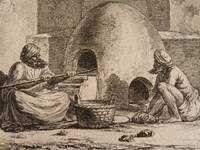
Dominique VIVANT DENON - G MALBESTE (sculpsit) - AF PETIT (sculpsit) A F
Voyage dans la Basse et Haute Egypte : 1. Fours Egyptiens. 2. Quartier général dans des tombeaux près Nagadi. Planche 79.
Paris: Didot 1803. Fine. Didot Paris 1803 40.50 x 54 cm une feuille Original unshaved full-page etching from the Imperial edition of the Description de l'Égypte or Recueil des observations et recherches faites en Égypte pendant l'expédition française publié par les ordres de Sa Majesté l'Empereur Napoléon le Grand A Collection of the observations and research carried out in Egypt during the French expedition published on the orders of his Majesty the Emperor Napoleon the Great'.Produced between February 1802 and 1830 on the orders of Naopleon Bonaparte and published between 1809 and 1828 1000 copies were printed and distributed to institutions on vergé paper with an 'Égypte ancienne et moderne' watermark visible when held up to the light. Light marginal spotting not touching image otherwise in very fresh fine condition. An engraving from the Description de l'Egypte one of the masterpieces of French printing and the birth of a new field: Egyptology. A gigantic survey of Egypt at the time of Bonaparte's conquests in 1798 and 1799 the work is divided into 13 volumes of engravings making up 892 plates of which 72 colored as well as presenting the splendors of the Egypt of the Pharaohs in 9 volumes. The other volumes discuss natural history and present a fascinating portrait of Coptic and Islamic Egypt as it was seen by Bonaparte's Eastern Armies. The Egyptian campaign' militarily a disaster demonstrates through the engravings of the Description d'Egypte the scientific success it nonetheless became thanks to the 167 expert members of the Commission of the Sciences and Arts of the Institut d'Egypte Egyptian Institute who followed Napoleon's army. The Institut gathered together in Egypt the mathematician Monge the chemist Berthollet the naturalist Geoffroy Saint-Hilaire as well as numerous artists engineers architects and doctors. They were tasked with re-discovering modern and ancient Egypt and displaying its natural treasures as well as the know-how of its inhabitants.This edition the so-called Imperial edition of the plates for the Description de l'Egypte was printed in four large formats two of which were specially created for it and christened Moyen-Egypte and Grand-Egypte. A special press was built to print it the process extending over 20 years from 1809 to 1829. The Imperial edition proved so popular that a second edition this time in black and white and without the Egypte ancienne et moderne watermark known as the Royal Edition was published during the Restoration by the printing house of C.-L.-F. Panckoucke Paris.The engravings of the Description d'Egypte owe a great deal to Baron Dominique-Vivant Denon illustrator diplomat collector and later Director of the Musée Napoléon the Louvre. His exploration of the South of Egypt gave Bonaparte the idea of sending the experts of the Institut there thus creating a faithful and complete portrait of the area. This was the research gathered together from 1802 in the mammoth Description de L'Egypte.Denon embarked on this story of archeological exploration at the age of 51 reaching first Alexandria and then Cairo before exploring Upper Egypt. Along with the members of the Institut d'Egypte the Natural History Museum's painter H.J. Redouté brother of Pierre-Joseph Redouté author of Roses the mineralogist Dolomiue and the draughtsman Joly Denon then explored the Nile Delta and Lower Egypt. When however he joined the 21st Light Infantry Regiment as it marched across Upper Egypt in pursuit of the retreating Mameluks in November 1798 he found himself the only civilian. In the very midst of the battle itself he reeled off sketches of the works of art that peppered his path right up to the threshold of the Sudan. He said that he had crossed a country that is apart from its name entirely unknown to Europeans and therefore everything was worth describing Voyages dans la Basse et la Haute Egypte pendant les campagnes de Bonaparte en 179 Didot unknown
Riferimento per il libraio : 29727
|
|
|
A de PANIAGUA
Les celtes bretons et les phocéens dans le sud-ouest de la Gaule
Paris: Paul Catin 1926. Fine. Paul Catin Paris 1926 16.50 x 25.50 cm broché First edition. One minor tear of no consequence at head of spine otherwise handsome copy. Paul Catin unknown
Riferimento per il libraio : 29464

|
|
|
COLLECTIF
La revue blanche N°139 de la 15ème année
Paris: La Revue Blanche 1899. Fine. La Revue Blanche Paris 15 Mars 1899 16.50 x 25 cm broché First edition. Contributions by C. Péguy J. Benda H. Rebell T. Duret R. Coolus L. Blum. La Revue Blanche unknown
Riferimento per il libraio : 29312

|
|
|
Henri de REGNIER
Episodes sites et sonnets
Paris: Léon Vanier 1891. Fine. Léon Vanier Paris 1891 12 x 19 cm relié First collected edition of which there were no deluxe copies. Spine sunned foxing on the final endpaper. Léon Vanier unknown
Riferimento per il libraio : 29559

|
|
|
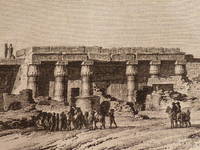
Dominique VIVANT DENON - BALTARD (sculpsit)
Voyage dans la Basse et Haute Egypte : Temple Monolythe. Vue d'un temple de Thèbes à Kournou. Planche 41.<br />
Paris: Didot 1803. Fine. Didot Paris 1803 40.50 x 54 cm une feuille Original unshaved full-page etching from the Imperial edition of the Description de l'Égypte or Recueil des observations et recherches faites en Égypte pendant l'expédition française publié par les ordres de Sa Majesté l'Empereur Napoléon le Grand A Collection of the observations and research carried out in Egypt during the French expedition published on the orders of his Majesty the Emperor Napoleon the Great'.Produced between February 1802 and 1830 on the orders of Naopleon Bonaparte and published between 1809 and 1828 1000 copies were printed and distributed to institutions on vergé paper with an 'Égypte ancienne et moderne' watermark visible when held up to the light. Light marginal spotting not touching image otherwise in very fresh fine condition. An engraving from the Description de l'Egypte one of the masterpieces of French printing and the birth of a new field: Egyptology. A gigantic survey of Egypt at the time of Bonaparte's conquests in 1798 and 1799 the work is divided into 13 volumes of engravings making up 892 plates of which 72 colored as well as presenting the splendors of the Egypt of the Pharaohs in 9 volumes. The other volumes discuss natural history and present a fascinating portrait of Coptic and Islamic Egypt as it was seen by Bonaparte's Eastern Armies. The Egyptian campaign' militarily a disaster demonstrates through the engravings of the Description d'Egypte the scientific success it nonetheless became thanks to the 167 expert members of the Commission of the Sciences and Arts of the Institut d'Egypte Egyptian Institute who followed Napoleon's army. The Institut gathered together in Egypt the mathematician Monge the chemist Berthollet the naturalist Geoffroy Saint-Hilaire as well as numerous artists engineers architects and doctors. They were tasked with re-discovering modern and ancient Egypt and displaying its natural treasures as well as the know-how of its inhabitants.This edition the so-called Imperial edition of the plates for the Description de l'Egypte was printed in four large formats two of which were specially created for it and christened Moyen-Egypte and Grand-Egypte. A special press was built to print it the process extending over 20 years from 1809 to 1829. The Imperial edition proved so popular that a second edition this time in black and white and without the Egypte ancienne et moderne watermark known as the Royal Edition was published during the Restoration by the printing house of C.-L.-F. Panckoucke Paris.The engravings of the Description d'Egypte owe a great deal to Baron Dominique-Vivant Denon illustrator diplomat collector and later Director of the Musée Napoléon the Louvre. His exploration of the South of Egypt gave Bonaparte the idea of sending the experts of the Institut there thus creating a faithful and complete portrait of the area. This was the research gathered together from 1802 in the mammoth Description de L'Egypte.Denon embarked on this story of archeological exploration at the age of 51 reaching first Alexandria and then Cairo before exploring Upper Egypt. Along with the members of the Institut d'Egypte the Natural History Museum's painter H.J. Redouté brother of Pierre-Joseph Redouté author of Roses the mineralogist Dolomiue and the draughtsman Joly Denon then explored the Nile Delta and Lower Egypt. When however he joined the 21st Light Infantry Regiment as it marched across Upper Egypt in pursuit of the retreating Mameluks in November 1798 he found himself the only civilian. In the very midst of the battle itself he reeled off sketches of the works of art that peppered his path right up to the threshold of the Sudan. He said that he had crossed a country that is apart from its name entirely unknown to Europeans and therefore everything was worth describing Voyages dans la Basse et la Haute Egypte pendant les campagnes de Bonaparte en 179 Didot unknown
Riferimento per il libraio : 29663
|
|
|
COLLECTIF
Départ Arts & lettres N°5
Bourges: Départ 1946. Fine. Départ Bourges Avril 1946 16 x 24 cm agrafé First edition one of 95 numbered copies on coated paper the only deluxe copies. Contributions by J. Doucet J. Doumerc F. Reeves V. Watkins. Spine and front cover partially faded handsome interior condition. Départ unknown
Riferimento per il libraio : 29573

|
|
|
Edmond JABES
Le livre du partage
Paris: Gallimard 1987. Fine. Gallimard Paris 1987 15 x 22 cm broché First edition one of 22 numbered copies on vélin d'Arches the only large paper copies. Two small traces of sunning not serious to head and to foot of spine a good copy. Gallimard unknown
Riferimento per il libraio : 29427

|
|
|
CHAUVEAU REVEREND PERE
Le vrai patriotisme : notices sur quelques élèves de l'école Sainte-Geneviève tués à l'ennemi
Tours: Alfred Mame & fils 1846. Fine. Alfred Mame & fils Tours 1846 13.50 x 22 cm relié Ninth edition. Half red cloth binding with corners smooth spine dark brown shagreen title-label showing traces of rubbing binding signed at foot marbled paper boards top edges lightly rubbed. Work illustrated with engravings in the text. Alfred Mame & fils hardcover
Riferimento per il libraio : 29532

|
|
|
Paul STAPFER
La fin de la vieille logique et l'essai d'une méthode nouvelle
Lausanne: Imp. réunies 1913. Fine. Imp. réunies Lausanne 1913 15 x 22 cm broché First edition of this offprint published in a small number of copies. Inscribed by Paul Stapfer. A tiny tear of no consequence to the head of the spine handsome copy. Rare pamphlet. Imp. réunies unknown
Riferimento per il libraio : 29503

|
|
|
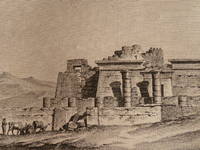
Dominique VIVANT DENON - BALTARD (sculpsit)
Voyage dans la Basse et Haute Egypte : Vue et plan de temples à Thèbes près Médynet-âboù. Planche 46.<br />
Paris: Didot 1803. Fine. Didot Paris 1803 40 x 54 cm une feuille Original unshaved full-page etching from the Imperial edition of the Description de l'Égypte or Recueil des observations et recherches faites en Égypte pendant l'expédition française publié par les ordres de Sa Majesté l'Empereur Napoléon le Grand A Collection of the observations and research carried out in Egypt during the French expedition published on the orders of his Majesty the Emperor Napoleon the Great'.Produced between February 1802 and 1830 on the orders of Naopleon Bonaparte and published between 1809 and 1828 1000 copies were printed and distributed to institutions on vergé paper with an 'Égypte ancienne et moderne' watermark visible when held up to the light. Light marginal spotting not touching image otherwise in very fresh fine condition. An engraving from the Description de l'Egypte one of the masterpieces of French printing and the birth of a new field: Egyptology. A gigantic survey of Egypt at the time of Bonaparte's conquests in 1798 and 1799 the work is divided into 13 volumes of engravings making up 892 plates of which 72 colored as well as presenting the splendors of the Egypt of the Pharaohs in 9 volumes. The other volumes discuss natural history and present a fascinating portrait of Coptic and Islamic Egypt as it was seen by Bonaparte's Eastern Armies. The Egyptian campaign' militarily a disaster demonstrates through the engravings of the Description d'Egypte the scientific success it nonetheless became thanks to the 167 expert members of the Commission of the Sciences and Arts of the Institut d'Egypte Egyptian Institute who followed Napoleon's army. The Institut gathered together in Egypt the mathematician Monge the chemist Berthollet the naturalist Geoffroy Saint-Hilaire as well as numerous artists engineers architects and doctors. They were tasked with re-discovering modern and ancient Egypt and displaying its natural treasures as well as the know-how of its inhabitants.This edition the so-called Imperial edition of the plates for the Description de l'Egypte was printed in four large formats two of which were specially created for it and christened Moyen-Egypte and Grand-Egypte. A special press was built to print it the process extending over 20 years from 1809 to 1829. The Imperial edition proved so popular that a second edition this time in black and white and without the Egypte ancienne et moderne watermark known as the Royal Edition was published during the Restoration by the printing house of C.-L.-F. Panckoucke Paris.The engravings of the Description d'Egypte owe a great deal to Baron Dominique-Vivant Denon illustrator diplomat collector and later Director of the Musée Napoléon the Louvre. His exploration of the South of Egypt gave Bonaparte the idea of sending the experts of the Institut there thus creating a faithful and complete portrait of the area. This was the research gathered together from 1802 in the mammoth Description de L'Egypte.Denon embarked on this story of archeological exploration at the age of 51 reaching first Alexandria and then Cairo before exploring Upper Egypt. Along with the members of the Institut d'Egypte the Natural History Museum's painter H.J. Redouté brother of Pierre-Joseph Redouté author of Roses the mineralogist Dolomiue and the draughtsman Joly Denon then explored the Nile Delta and Lower Egypt. When however he joined the 21st Light Infantry Regiment as it marched across Upper Egypt in pursuit of the retreating Mameluks in November 1798 he found himself the only civilian. In the very midst of the battle itself he reeled off sketches of the works of art that peppered his path right up to the threshold of the Sudan. He said that he had crossed a country that is apart from its name entirely unknown to Europeans and therefore everything was worth describing Voyages dans la Basse et la Haute Egypte pendant les campagnes de Bonaparte en 1798 e Didot unknown
Riferimento per il libraio : 29668
|
|
|
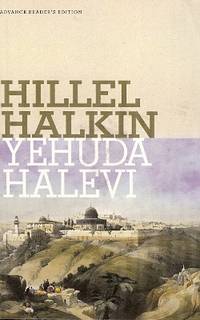
Halkin , Hillel
YEHUDA HALEVI
New York: Schocken Books 2010. Book. Very Fine. Soft cover. 1st Edition. 1st. Edition 1st. Printing before the trade copy 2010 Illustrated soft cover wraps 353 page book . This is the true first edition before the trade copy a scarce book. Condition : Very Fine. with a very light crece at the top corner see image Size: 8vo - over 7¾" - 9¾" tall. Schocken Books Paperback
Riferimento per il libraio : 071510-F ISBN : 0805242066 9780805242065
|
|
|
Etienne BARBAZAN
L'ordene de chevalerie avec une dissertation sur l'origine de la langue françoise. Un essai sur les étimologies. Quelques contes anciens. Et un glossaire pour en faciliter l'intelligence
Lauzanne Lausanne Lausanne & se trouve à Paris: Chez ChaubertClaude Herissant 1759. Fine. Chez Chaubert Claude Herissant Lauzanne Lausanne Lausanne & se trouve à Paris 1759 11.50 x 18 cm relié First edition. Uncommon. Half glacé calf with corners 19th century signed Petit succ de Simier. Raised spine decorated in compartments. Fillets on covers. Etienne Barbazan 1694-1770 was a philologist specializing in medieval manuscripts notably contributing to bringing forgotten texts back to memory and rehabilitating the Middle Ages in the field of research. L'ordene de chevalerie is a 13th-century text on the rules and ceremonies of chivalry of which Barbazan would have had a manuscript in his hands. The work contains other 13th-century texts and a glossary. Chez ChaubertClaude Herissant unknown
Riferimento per il libraio : 30082

|
|
|
Maarten van HEEMSKERCK - Harman Jansz van MULLER (fecit)
Beati Qui Lugent Quoniam Ipsi Consolabuntur. Matt. 5.4. Gravure originale du XVIIe siècle Blessed are those who mourn for they will be comforted
s. l. Hollande Holland: S. n. 1600. Fine. S. n. s. l. Hollande Holland Circa 1600 32.50 x 27.50 cm une feuille Original engraving executed with burin by Harman Jansz van Muller after a 16th-century painting by Maerten Jacobszoon Heemskerk van Veen or Maarten van Heemskerck Marten Maerten Martin. Proof on watermarked laid paper work from the early 17th century. This is an illustration of the Gospel according to Matthew 5-4 ""Blessed are those who mourn for they will be comforted!"" the second of the eight beatitudes pronounced by Jesus during the Sermon on the Mount. Latin inscription in the lower part of the engraving: ""Macte animo pastus fletu quem moeror & eger Luctus agit; nam te solamina grata manebunt. Rore rigat plantas Christi lachrymosa fideli Magdala hinc venia & sequitur lustratio mentis."". Artists' signatures in the plate. Numbered mention ""2"" in the lower right corner of the engraving and manuscript notation ""40"" in the margin in the upper right corner. An old manuscript annotation in Greek characters below the right corner of the plate mark. Watermark of a crown visible by transparency. Minimal foxing mainly marginal small corner dampstains without affecting the engraving otherwise very fine condition for this extremely rare engraving of great freshness. Maerten Jacobszoon Heemskerk van Veen or Maarten van Heemskerck Marten Maerten Martin 1498 in Heemskerk - October 1st 1574 in Haarlem is one of the major portraitists and history painters of the Netherlands. He is famous for his series of the Seven Wonders of the World. The engraver Harman Jansz van Muller worked with Cornelis Cort also known as Cornelio Fiammingo and may have been his pupil. S. n. unknown
Riferimento per il libraio : 29828

|
|
|
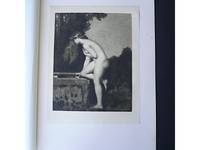
Jean Jacques HENNER
Nu
1890. Fine. S.d. fin XIXe 22.50 x 29 cm une feuille Etching printed on China paper. A tissue guard protects the engraving. Proof before lettering without the painter's and engraver's names. The painting from which this engraving is taken is in the Henner museum. Perfect condition. NB: This work is available at the bookshop on request within 48 hours. unknown
Riferimento per il libraio : 30319
|
|
|
Jean GIRAUDOUX
Elpénor
Paris: Emile-Paul frères 1919. Fine. Emile-Paul frères Paris 1919 13 x 19.50 cm broché First edition printed in 950 numbered copies. Unlettered spine slightly faded as usual and with a small lack at head endpapers marginally and slightly shadowed handsome interior condition. Emile-Paul frères unknown
Riferimento per il libraio : 30383

|
|
|
Jacques-Barthelemy SALGUES
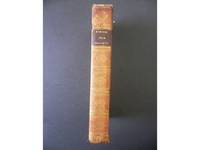
Mémoire au roi pour le Sr. Joseph Lesurques né à Douai.
à Paris: Chez Dentu 1822. Fine. Chez Dentu à Paris 1822 14 x 22 cm relié First edition. One folding engraving before the title page in line. Contemporary half calf binding. Smooth spine decorated with 5 fleurons and roulettes. Bordeaux shagreen title label. Two tears with slight lacks on either side of the head cap. Spine rubbed and head cap browned. Upper joint cracked and open. Lesurques is one of the most famous victims of judicial error. He was unjustly arrested due to his resemblance to one Dubosc in the Lyon mail coach affair of 1796 a famous case of robbery with murder of the courier. Lesurques was beheaded with Courriol. Dubosc finally arrested in 1798 was also executed and Lesurques recognized as innocent. The family demanded Lesurques' rehabilitation for more than 60 years but obtained only partial reparation. Salgues taking up the entire affair and all the case files in this work becomes the spokesman for the unfortunate family demanding reparation for Lesurques' memory. There would be a rehabilitation trial in 1823. Inscription on the half-title page: Hommage à Mr Phillipon de la Marnière de la part de l'infortuné famille Lesurques. ""Tribute to Mr Phillipon de la Marnière from the unfortunate Lesurques family."" Chez Dentu unknown
Riferimento per il libraio : 30283
|
|
|
Henri BACH
Les ressources et les dépenses de l'Eglise de Carthage pendant la première moitié du troisième siècle
Paris: Imp. A. ParentA. Davy successeur 1881. Fine. Imp. A. Parent A. Davy successeur Paris 1881 16.50 x 25 cm broché First edition of this thesis defended at the Protestant Faculty of Theology in Paris to obtain the bachelor's degree in theology. Rare and handsome copy. Imp. A. ParentA. Davy successeur unknown
Riferimento per il libraio : 16561

|
|
|
Antoine de RIVAROL - Honore Gabriel Riquetti Comte de MIRABEAU - Pierre-Ambroise-Francois CHODERLOS DE LACLOS
La galerie des États Généraux
s. l. Paris ou Londres London: S. n. 1789. Fine. S. n. s. l. Paris ou Londres London 1789 13.50 x 21.50 cm broché Reprint of the first edition also published in 1789. A second volume of these portraits would appear a little later. In original wrappers. Title page margins worn. The work is a series of portraits with a key at the end of the book to identify them; it includes Necker Guillotin Sieyès. Luchet also participated in writing some of these portraits. S. n. unknown
Riferimento per il libraio : 30088

|
|
|
Francois-Joseph de LA GRANGE-CHANCEL
Théâtre
à Amsterdam: Chez François L'Honoré et fils 1746. Fine. Chez François L'Honoré et fils à Amsterdam 1746 7.50 x 13.50 cm 2 volumes reliés First collected edition. It is illustrated with a frontispiece repeated in both volumes a title vignette by Picart also repeated and 10 unsigned figures quite charming showing the actors on stage. Later full brown sheep binding circa 1800. Spine with raised bands and fillets. Tan morocco title label. Headcaps worn. Contemporaries saw in La Grange-Chancel the successor to Racine. He boasted of having the highest capacity for writing verse. His connections brought him to Louis XIV who asked Racine to read it and the latter sponsored the author's first play. Many of his plays met with fine success and the author represents if not a great dramatist the taste of an era for a certain kind of theater. Most of the subjects of his plays are drawn from the novels of Calprenède whom he particularly favored. The preface might more justly be called Memoirs of La Grange-Chancel as he recounts his rise from childhood to the launch of his first play Jugurtha. 19th-century engraved armorial bookplate: Le Proux. Chez François L'Honoré et fils hardcover
Riferimento per il libraio : 30186

|
|
|
COLLECTIF
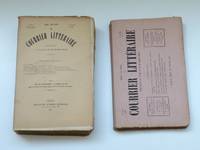
Le Courrier Littéraire. 1876-1877
Paris: Bureaux du Courrier Littéraire 1876. Fine. Bureaux du Courrier Littéraire Paris 1876-1877 16.50 x 25.50 cm broché First edition of this periodical run complete first year of publication from no. 1 of March 10 1876 to no. 24 of February 25 1877 together with the first 7 issues of the second year from no. 1 of March 10 1877 to no. 7 of June 10 1877. Contributions by Jean Aicard Camille Guymon André Lemoyne André Lefèvre Charles Bigot Jules Levallois Célestin Hippeau Marc Monnier François Coppée Gabriel Monod . The review published the sections ""Quinzaine littéraire"" and ""Bulletin dramatique"" on the history and current events of letters and theater ""Etudes"" devoted to a particular work or author a ""Correspondance"" from the rest of Europe a ""Bulletin des périodiques"" listing a selection of French and European publications as well as an important ""Bibliographie"" presenting contemporary works covering domains as varied as Poetry Novels History Arts Geography Philosophy Social Sciences Literary Criticism and Sciences. Some covers stained and partially faded rare and minimal marginal tears and foxing otherwise fine overall condition for this rare periodical run. Bureaux du Courrier Littéraire unknown
Riferimento per il libraio : 30004
|
|
|
Gaston TISSANDIER
Bibliographie aéronautique : catalogue de livres d'histoire de voyages et de fantaisie traitant de la navigation aérienne ou des aérostats
Paris: H. Launette & Cie 1887. Fine. H. Launette & Cie Paris 1887 20.50 x 29.50 cm relié First edition. Half navy blue shagreen binding spine slightly faded with five raised bands showing minor rubbing marks with manuscript note from a previous owner in ballpoint pen marbled paper boards with small and light marginal discoloration of no significance minor rubbing to edges and upper corners marbled endpapers and pastedowns original wrappers preserved contemporary binding. Collector's stamps on endpapers and page 9. Some minor foxing. H. Launette & Cie hardcover
Riferimento per il libraio : 30104

|
|
|
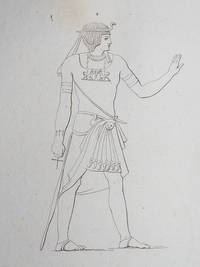
Dominique VIVANT DENON - BALTARD (sculpsit)
Voyage dans la Basse et Haute Egypte : Face intérieure d'un temple dans l'isle Eléphantine. Planche 128.<br />
Paris: Didot 1803. Fine. Didot Paris 1803 40.50 x 54 cm une feuille Original unshaved full-page etching from the Imperial edition of the Description de l'Égypte or Recueil des observations et recherches faites en Égypte pendant l'expédition française publié par les ordres de Sa Majesté l'Empereur Napoléon le Grand A Collection of the observations and research carried out in Egypt during the French expedition published on the orders of his Majesty the Emperor Napoleon the Great'.Produced between February 1802 and 1830 on the orders of Naopleon Bonaparte and published between 1809 and 1828 1000 copies were printed and distributed to institutions on vergé paper with an 'Égypte ancienne et moderne' watermark visible when held up to the light. Light marginal spotting not touching image otherwise in very fresh fine condition. An engraving from the Description de l'Egypte one of the masterpieces of French printing and the birth of a new field: Egyptology. A gigantic survey of Egypt at the time of Bonaparte's conquests in 1798 and 1799 the work is divided into 13 volumes of engravings making up 892 plates of which 72 colored as well as presenting the splendors of the Egypt of the Pharaohs in 9 volumes. The other volumes discuss natural history and present a fascinating portrait of Coptic and Islamic Egypt as it was seen by Bonaparte's Eastern Armies. The Egyptian campaign' militarily a disaster demonstrates through the engravings of the Description d'Egypte the scientific success it nonetheless became thanks to the 167 expert members of the Commission of the Sciences and Arts of the Institut d'Egypte Egyptian Institute who followed Napoleon's army. The Institut gathered together in Egypt the mathematician Monge the chemist Berthollet the naturalist Geoffroy Saint-Hilaire as well as numerous artists engineers architects and doctors. They were tasked with re-discovering modern and ancient Egypt and displaying its natural treasures as well as the know-how of its inhabitants.This edition the so-called Imperial edition of the plates for the Description de l'Egypte was printed in four large formats two of which were specially created for it and christened Moyen-Egypte and Grand-Egypte. A special press was built to print it the process extending over 20 years from 1809 to 1829. The Imperial edition proved so popular that a second edition this time in black and white and without the Egypte ancienne et moderne watermark known as the Royal Edition was published during the Restoration by the printing house of C.-L.-F. Panckoucke Paris.The engravings of the Description d'Egypte owe a great deal to Baron Dominique-Vivant Denon illustrator diplomat collector and later Director of the Musée Napoléon the Louvre. His exploration of the South of Egypt gave Bonaparte the idea of sending the experts of the Institut there thus creating a faithful and complete portrait of the area. This was the research gathered together from 1802 in the mammoth Description de L'Egypte.Denon embarked on this story of archeological exploration at the age of 51 reaching first Alexandria and then Cairo before exploring Upper Egypt. Along with the members of the Institut d'Egypte the Natural History Museum's painter H.J. Redouté brother of Pierre-Joseph Redouté author of Roses the mineralogist Dolomiue and the draughtsman Joly Denon then explored the Nile Delta and Lower Egypt. When however he joined the 21st Light Infantry Regiment as it marched across Upper Egypt in pursuit of the retreating Mameluks in November 1798 he found himself the only civilian. In the very midst of the battle itself he reeled off sketches of the works of art that peppered his path right up to the threshold of the Sudan. He said that he had crossed a country that is apart from its name entirely unknown to Europeans and therefore everything was worth describing Voyages dans la Basse et la Haute Egypte pendant les campagnes de Bonaparte en 179 Didot unknown
Riferimento per il libraio : 29792
|
|
|
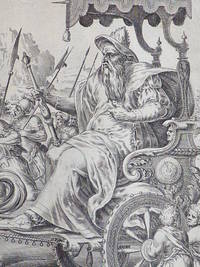
Harman Jansz van MULLER
Post multum vero temporis rediit dominus servorum illorum et contulit rationem cum eis. Matt. 25.19. Gravure originale du XVIIe siècle
s. l. Hollande Holland: S. n. 1600. Fine. S. n. s. l. Hollande Holland Circa 1600 33 x 27.50 cm une feuille Original engraving unsigned executed with burin likely by Harman Jansz van Muller. Proof on watermarked laid paper work from the early 17th century. This is an illustration of the Gospel according to Matthew 25:19 ""After a long time the lord of those servants cometh and reckoneth with them."" Legend in Latin in the lower part of the engraving. Numbered mentions ""4"" at the bottom in the engraving and in the lower right corner in the section devoted to the legend and manuscript mention ""106"" in the margin in the upper right corner. An old manuscript annotation in Greek characters under the right angle of the plate mark. Watermark visible by transparency. Rare and discreet marginal foxing light traces of marginal dampstaining not touching the engraving a tiny corner lack otherwise very handsome state of preservation for this extremely rare engraving of great freshness. The engraver Harman Jansz van Muller worked with Cornelis Cort also known as Cornelio Fiammingo and was perhaps his pupil. S. n. unknown
Riferimento per il libraio : 29891
|
|
|
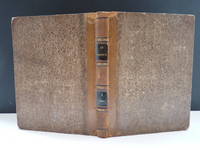
COLLECTIF
Le Voleur gazette des journaux français et étrangers. 1841 1er semestre
Paris: Le Voleur 1841. Fine. Le Voleur Paris 5 janvier - 30 juin 1841 24.50 x 32 cm relié First editions of the 36 issues from the first semester of 1841 14th year bound together in one volume with continuous pagination and not containing the announced engravings. Half sheep binding with corners spine with four raised bands set with gilt and blind fillets and gilt dentelle black shagreen title and volume labels. Binding worn with spine partly detached corners bumped. Contributions by J. Janin E. de Las Cases A. Karr C. de Bernard F. Soulié E. Sue E. Souvestre A. Dumas H. de Balzac E. Guinot C. Nodier P. de Musset M. Masson P. Durand. Founded in 1825 by Charles Lautour-Mezeray and Émile de Girardin the review appeared every five days and was interested as much in literature as in the sciences fine arts or social customs. It published mainly historical chronicles travel and society accounts dealing with France or foreign countries stories and novellas or sections devoted to theatre fashion court news and miscellaneous facts most often taken from other newspapers of the period. Copy from the André Vasseur collection bearing his bookplate. Some foxing and fold marks otherwise handsome interior condition for this rare example of a literary and general review from the early 19th century. Le Voleur hardcover
Riferimento per il libraio : 30030
|
|
|
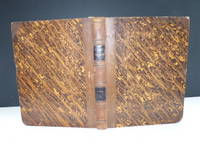
COLLECTIF
Le Voleur gazette des journaux français et étrangers. 1836 1er semestre
Paris: Le Voleur 1836. Fine. Le Voleur Paris 5 janvier - 30 juin 1836 25 x 32.50 cm relié First editions of the 36 issues from the first semester of 1836 9th year bound together in one volume with continuous pagination and not containing the announced engravings. Half sheep binding with corners spine with four raised bands decorated with gilt and blind fillets and gilt dentelle black shagreen title and volume labels. Spine rubbed corners slightly bumped. Contributions by A. Dumas E. Sue E. Scribe C. Nodier Mme la Duchesse d'Abrantès L. Collet A. de Lamartine F. Soulié A. Karr J. Janin H. Moreau E. Souvestre L. Gozlan H. de Balzac Chateaubriand. Founded in 1825 by Charles Lautour-Mezeray and Émile de Girardin the review appeared every five days and was interested in literature as well as sciences fine arts and social customs. It published mainly historical chronicles travel accounts and society pieces dealing with France or foreign countries stories and novellas as well as sections devoted to theater fashion court news and miscellaneous facts most often reprinted from other newspapers of the period. Copy from the André Vasseur collection bearing his bookplate. Some scattered foxing and fold marks otherwise handsome interior condition for this rare example of a literary and general interest review from the early 19th century. Le Voleur hardcover
Riferimento per il libraio : 30024
|
|
|
COLLECTIF
L'Oeuf dur N°2
Paris: L'Oeuf dur 1921. Fine. L'Oeuf dur Paris Avril 1921 14 x 22.50 cm broché First edition one of 30 numbered copies on Holland paper the only deluxe copies. Contributions by Max Jacob ""Intérimes"" J.P. Lafarge Rachilde R. Dunan G. Fourest. Minor worming otherwise a handsome copy. L'Oeuf dur unknown
Riferimento per il libraio : 29839

|
|
|
Paul VAN DEN BOSCH
Les solitaires
Paris: La Table Ronde 1958. Fine. La Table Ronde Paris 1958 12 x 19 cm broché First edition one of 15 numbered copies on alfa paper the only deluxe copies. Inscribed by Paul van den Bosch. Handsome copy. La Table Ronde unknown
Riferimento per il libraio : 30180

|
|
|
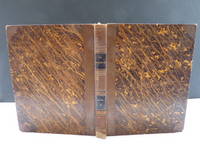
COLLECTIF
Le Voleur gazette des journaux français et étrangers. 1836 2e semestre
Paris: Le Voleur 1836. Fine. Le Voleur Paris 5 juillet - 31 décembre 1836 25 x 32 cm relié First editions of the 36 issues from the second semester of 1836 9th year bound together in one volume with continuous pagination and not containing the announced engravings. Half sheep binding with corners spine with four raised bands set with gilt and blind fillets and gilt dentelle black shagreen title and volume labels. Worn binding with a lack at the foot of the spine corners slightly bumped. Contributions by Chateaubriand F. Soulié A. Dumas A. Karr J. Janin L. Gozlan M. Masson P. de Musset E. Souvestre C. Nodier E. Deschamps A. de Vigny La Rochefoucauld J. Canonge. Founded in 1825 by Charles Lautour-Mezeray and Émile de Girardin the review appeared every five days and was interested in literature as well as sciences fine arts and social customs. It published mainly historical chronicles travel and society accounts covering France or foreign countries stories and novellas or sections devoted to theater fashion court news and miscellaneous facts most often reprinted from other newspapers of the period. Copy from the André Vasseur collection bearing his bookplate. Some scattered foxing and fold marks otherwise handsome interior condition for this rare example of a literary and general review from the early 19th century. Le Voleur hardcover
Riferimento per il libraio : 30025
|
|
|
Algernon Charles SWINBURNE
Laus veneris
Paris: Mercure de France 1933. Fine. Mercure de France Paris 1933 11.50 x 17.50 cm broché First edition of the French translation by Francis Viélé-Griffin printed in 300 numbered copies on laid paper. A small stain to the first cover otherwise a handsome copy with full margins. Mercure de France unknown
Riferimento per il libraio : 30075

|
|
|
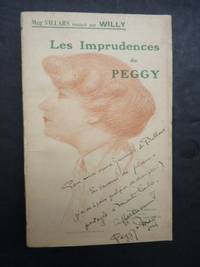
Meg VILLARS - WILLY - (inscribed to Jeanne de BELLUNE)
Les imprudences de Peggy
Paris: Sté d'éditions et de publications parisiennes 1910. Fine. Sté d'éditions et de publications parisiennes Paris s. d. circa 1910 12 x 19 cm broché First edition in French translated by Willy; no mention of large paper copies. An important superb inscription from Meg Villars Willy's mistress while he was married to Colette to Viscountess Jeanne de Bellune "". pour mon amie Jeannot de Bellune / en souvenirs de plaisirs qu'on ose à peine qualifier de champêtres partagés à Monte-Carlo.for my friend Jeannot de Bellune / in memory of shared pleasures that one would hardly dare call rural in Monaco
. Cover illustrated in red by Garnier Salbreux. A handsome copy with an exceptional provenance. Sté d'éditions et de publications parisiennes unknown
Riferimento per il libraio : 29824
|
|
|
Theodore Louis Auguste de, Marquis de FOUDRAS
Chants pour tous
Paris: Amyot 1842. Fine. Amyot Paris 1842 13.50 x 21.50 cm relié First edition. Half pine-green shagreen binding smooth spine decorated with triple blind-tooled compartments and three double gilt fillets at head and foot pine-colored boards with minor scratches of no consequence marbled endpapers and pastedowns corners slightly bumped. Occasional light foxing gift inscription in ink on front endpaper. Amyot hardcover
Riferimento per il libraio : 30299

|
|
|
James GUILLAUME
Etudes révolutionnaires deuxième série
Paris: Stock 1909. Fine. Stock Paris 1909 12 x 19 cm broché First edition on ordinary paper only 4 copies were printed on Holland paper in deluxe format. Handsome copy despite some leaves marginally pinched. Stock unknown
Riferimento per il libraio : 30315

|
|
|
Gerard MOURGUE
Château-fer
Paris: La Table Ronde 1956. Fine. La Table Ronde Paris 1956 12 x 19 cm broché First edition one of 20 numbered copies on pur fil du Marais paper deluxe copy. Autograph inscription by Gérard Mourgue. Handsome copy. La Table Ronde unknown
Riferimento per il libraio : 30150

|
|
|
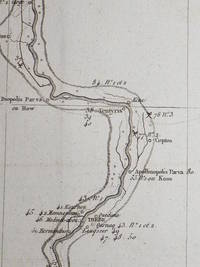
Dominique VIVANT DENON - DANVILLE
Voyage dans la Basse et Haute Egypte : Carte de la haute Egypte sur laquelle sont tracées les marches des troupes commandées par Desaix pendant l'expédition de Bonaparte en Afrique. La ligne ponctuée est aussi celle du voyage du citoyen Denon dans cette partie de l'Egypte et les numéros qui y sont joints servent de renvoi aux Planches du même voyage où l'on trouve les vues des lieux qu'ils indiquent. Planche 140.<br />
Paris: Didot 1803. Fine. Didot Paris 1803 40.50 x 65.50 cm une feuille Original unshaved full-page etching from the Imperial edition of the Description de l'Égypte or Recueil des observations et recherches faites en Égypte pendant l'expédition française publié par les ordres de Sa Majesté l'Empereur Napoléon le Grand A Collection of the observations and research carried out in Egypt during the French expedition published on the orders of his Majesty the Emperor Napoleon the Great'.Produced between February 1802 and 1830 on the orders of Naopleon Bonaparte and published between 1809 and 1828 1000 copies were printed and distributed to institutions on vergé paper with an 'Égypte ancienne et moderne' watermark visible when held up to the light. Light marginal spotting not touching image otherwise in very fresh fine condition. An engraving from the Description de l'Egypte one of the masterpieces of French printing and the birth of a new field: Egyptology. A gigantic survey of Egypt at the time of Bonaparte's conquests in 1798 and 1799 the work is divided into 13 volumes of engravings making up 892 plates of which 72 colored as well as presenting the splendors of the Egypt of the Pharaohs in 9 volumes. The other volumes discuss natural history and present a fascinating portrait of Coptic and Islamic Egypt as it was seen by Bonaparte's Eastern Armies. The Egyptian campaign' militarily a disaster demonstrates through the engravings of the Description d'Egypte the scientific success it nonetheless became thanks to the 167 expert members of the Commission of the Sciences and Arts of the Institut d'Egypte Egyptian Institute who followed Napoleon's army. The Institut gathered together in Egypt the mathematician Monge the chemist Berthollet the naturalist Geoffroy Saint-Hilaire as well as numerous artists engineers architects and doctors. They were tasked with re-discovering modern and ancient Egypt and displaying its natural treasures as well as the know-how of its inhabitants.This edition the so-called Imperial edition of the plates for the Description de l'Egypte was printed in four large formats two of which were specially created for it and christened Moyen-Egypte and Grand-Egypte. A special press was built to print it the process extending over 20 years from 1809 to 1829. The Imperial edition proved so popular that a second edition this time in black and white and without the Egypte ancienne et moderne watermark known as the Royal Edition was published during the Restoration by the printing house of C.-L.-F. Panckoucke Paris.The engravings of the Description d'Egypte owe a great deal to Baron Dominique-Vivant Denon illustrator diplomat collector and later Director of the Musée Napoléon the Louvre. His exploration of the South of Egypt gave Bonaparte the idea of sending the experts of the Institut there thus creating a faithful and complete portrait of the area. This was the research gathered together from 1802 in the mammoth Description de L'Egypte.Denon embarked on this story of archeological exploration at the age of 51 reaching first Alexandria and then Cairo before exploring Upper Egypt. Along with the members of the Institut d'Egypte the Natural History Museum's painter H.J. Redouté brother of Pierre-Joseph Redouté author of Roses the mineralogist Dolomiue and the draughtsman Joly Denon then explored the Nile Delta and Lower Egypt. When however he joined the 21st Light Infantry Regiment as it marched across Upper Egypt in pursuit of the retreating Mameluks in November 1798 he found himself the only civilian. In the very midst of the battle itself he reeled off sketches of the works of art that peppered his path right up to the threshold of the Sudan. He said that he had crossed a country that is apart from its name entirely unknown to Europeans and therefore everything was worth describing Voyages dans la Basse et la Haute Egypte pendant les campagnes de Bonaparte en Didot unknown
Riferimento per il libraio : 29804
|
|

 Ricevere i risultati per e-mail
 Scaricare i risultati in PDF
 RSS feed
 Link
Link


