|
GRAEVIUS,JG J G
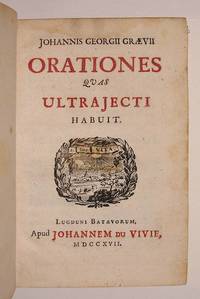
Johannis Georgii Graevii orationes quas Ultrajecti habuit.
Leiden Lugduni Batavorum Apud Johannem du Vivie 1717. XXVIII6071 errata p. Vellum 19.5 cm Ref: STCN ppn 226765288 Details: 6 thongs laced through both joints. Title in red and black and with a woodcut printer's mark depicting a sun-baked landscape in the sky the motto: 'Ab Uno Vita'. Contains 18 speeches including at the end Petrus Burmannus' funeral speech for Graevius held on February 18th 1703 Condition: Vellum slightly soiled some wear to the extremes. Stamp on the verso of the title Note: Johann Georg Graeve or in Latin Johannes Georgius Graevius 1632-1703 was born in Germany and educated at Schulpforta. He was professor of Eloquence at Duisburg from 1657 at Deventer and from 1661 at Utrecht 'where he lived and worked for the last 40 years of his life'. He limited his attention mainly to writers of Latin prose Cicero Suetonius Caesar Justinus Florus. This scholar of international stature is remembered for his 'Inscriptiones antiquae' long time the standard edition; he is also famous for his three 'Thesauri' in which important works of previous leading scholars were collected and reprinted the 'Thesaurus eruditionis scholasticae' 1710 the 12 folio volumes of the 'Thesaurus antiquitatum Romanarum' 1694-99 and the 9 volumes 'Thesaurus antiquitatum et historiarum Italiae' 1704. The latin style of his prefaces his speeches and his letters is said to be elegant. Graevius was an inspiring Latin orator. His lecture room was crowded with his pupils. His speeches were collected and published by one of those pupils Petrus Burmannus the Elder 1668-1741. The collection contains 17 speeches of Graevius and opens with his inaugural speech of 1661. There is also the speech he delivered on the occasion of the 50th anniversary of the University. Furthermore there are four speeches for William III one for the stadholder of Holland Willem III on the occasion of his expedition to England 1689 an eulogy of William III King of Great Britain1691 a funeral speech for Queen Mary II of England the wife of William III 1695 and a funeral speech for William 1702. Graevius was made 'Historiographer Royal' to William III Remarkable is Graevius speech of 1665 'De Cometis contra vulgi opinionem Cometas esse malorum nuntios' in which he contended to the chagrin of orthodox protestants that comets did not herald disaster for the earth. People should not fear comets because these firy celestial objects belonged to the works of God which obeyed the law of nature. To eradicate this cometary superstition he devoted part of his speech to a critical analysis of historical accounts. Graevius was skeptical about the biblical foundation of the belief that comets were signs of God's displeasure. 'Graevius oration overtly questioned the 'post hoc ergo propter hoc' argument as well as the argument from universal consent. Moreover his diatribe was a manifestation of a much broader tendency to put the ancient writers in their own proper context'. E. Jorink "Comets in Context. Some thoughts on Bayle's Pensées diverses' in 'Pierre Bayle 1647-1706 le philosophe de Rotterdam' Leiden/Boston 2008. p. 64 The great comet or 'blazing star' of 1664 coincided with an outbreak of the plague which took the lives of more than 24000 people in Amsterdam only Provenance: On the verso of the title a stamp 'E Bibliotheca Lycei Wernigerodani'. Wernigerode is a German city in Sachsen-Anhalt Collation: 8 6 A-2P8 Photographs on request hardcover
Referentie van de boekhandelaar : 130071
|
|
|
ARISTOTELES
Aristotelis Politicorum libri octo ex Dion. Lambini & Pet. Victorii interpretationibus puriss. graecolatini Theod. Zvingeri Argumentis atque Scholiis Tabulis quinetiam in tres priores libros illustrati Victorii commentariis perpetuis declarati Pythagoreorum veterum Fragmenta politica a Io. Spondano conversa & emendata. Index rerum & verborum pleniss.
Basle Basileae Eusebii Episcopii opera ac impensa 1582. Folio. XX62312 index1 printer's mark p. Modern calf 35.5 cm Details: Nice copy bound in modern full redbrown calf with 5 raised bands on the back. Spine short title in gilt: 'ARISTOTELIS / DE REPVBLICA'. Text in three columns with the Greek in the centre flanked by the Latin translations of Piero Vettori and Denys Lambin respectively on each side. Large printer's woodcut device to the title and last page depicting a bust of 'Hermes triceps' three-headed Hermes on a pillar; each of the heads wears a winged helmet; the middle Hermes holds in his right hand a caduceus and in his left a bishop's staff Episcopius!; from the pillar seems to hang a chopped off head. Large historiated woodcut letter on leaf a2 woodcut letters of various sizes throughout the text. Wide margins Condition: First and last leaf dust-soiled. Small and faint name on the title. Paper yellowing. Small bookplate on the front pastedown. 2 bookplates on the lower pastedown Note: The Greek scholar/philosopher Aristotle 384-322 B.C. is one of the foremost names in the history of thought and perhaps the most influential of all who have ever written. His influence on Werstern science and culture is immense. His boundless industry extended to most branches of higher learning. 74 treatises genuine and spurious have come down to us under his name. His 'Politics' literally 'the things concerning the polis' is among his best known and most widely read works. It embraces in 8 books the historical theoretical and practical aspect of politics. To Aristotle 'politics were the very crown of philosophical study . and the ultimate end of the State to provide an environment in which those capable of the highest mental and moral development might attain thereto. . The important sections of this great work are the sketch of the ideal state . the account of the various forms of government . the discussions of sovranty and responsibility and of kingship'. H.J. Rose 'A handbook of Greek literature' Oxford 1965 p. 276 § This Basle edition of 1582 of the Politics adopts the Greek text Latin translation and the famous commentary earlier published by the Italian scholar Piero Vettori Petrus Victorius 1499-1585 at Florence in 1576. Vettori professor of Greek and Latin in the 'Studio Fiorentino' at Florence was the greatest Italian Greek scholar of his time. His best known works in the field of Greek philology are his commentaries on Aristotle's Rhetoric 1548 Poetics 1560 Politics 1576 and Nicomachean Ethics 1584. Every chapter caput in this Politics edition of 1582 is printed separately followed by Vettori's very extensive and rich commentary. The Greek text is flanked by 2 Latin translations one of Vettori and one which the French scholar and Royal Reader in Greek Denys Lambin Dionysius Lambinus 1520-1572 had published in Paris in 1567. Added to the chapters are hot from the press the notes and diagrams of the Basle professor of Greek and Moral philosophy Theodor Zwinger Theodorus Zuingerus 1533-1588. He is best known for his editions of the Nicomachean Ethics Basle 1566 and the Politica of Aristotle Basle 1582 in which he transformed these works in a series of diagrams analysing and showing their structures in systematic tables. Appended are the 'Pythagoreorum fragmenta politica' in the edition of the French scholar Jean de Sponde or Johannes Spondanus 1557-1595 Provenance: Bookplates of: 'United Presbyterian Church. 'Brown library'. Glasgow 66 Virginia St.' and of 'United Presbyterian College. Brown-Lindsay Library. Shelfmark 3C1.1 No. 5154'. § Small bookplate 'Bibliotheca Classica Stephaniana' of the Swedish classical scholar Staffan Fogelmark on the front pastedown. Fogelmark was Reader in Greek 1972-85 at Lund University; Lecturer in Greek 1985-96. University of Gothenburg: Professor of Greek 1997-2004 Ref: VD16 A 3582 & VD16 P 5468. Bibliotheca Bibliographica Aureliana 38 no. 108.655; Hoffmann 1294. Griechischer Geist aus Basler Pressen no 129. Ebert 1166; Graesse 1214. Adams A 1914. Moss 1129; Not in Brunet Collation: alpha6 beta4 a-z6 A-2G6 Photographs on request Heavy book may require extra shipping costs hardcover
Referentie van de boekhandelaar : 79269

|
|
|
GELLIUS
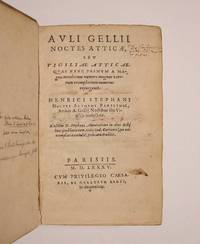
Auli Gellii Noctes Atticae seu Vigiliae Atticae quas nunc primum a magno mendorum numero magnus veterum exemplarium numerus repurgavit. Henrici Stephani Noctes aliquot Parisinae Atticis A. Gellii Noctibus seu Vigiliis invigilatae. Eiusdem H. Stephani annotationes in alios Gellii locos prodibunt cum notis Lud. Carrionis qui vet. exemplaria contulit prelo iam traditis.
Paris Parisiis H. Stephanus 1585. Cum privilegio Caesaris et Gallorum regis in decennium. 8vo. VI231 blank5871 blank;74 index2 blank2053 blank p. Vellum 18 cm Ref: Renouard p. 450/51 15852: 'édition rare et estimable' Schweiger 2378; Brunet 1523/24; Graesse 346; Ebert 8284 Details: 5 thongs laced through both joints. Short title on the back Condition: Vellum soiled and spotted big red stain on the lower board. Occasional old ink underlinings & marginalia. Small and old inscription on the verso of the front flyleaf. A small reference written on the title. On the verso of the title a round red stamp. Upper corner of the last gatherings slightly waterstained. Paper somewhat yellowing Note: The Roman author Aulus Gellius ca. 125-180 AD was never counted as a major author in antiquity nor later. His only work 'Noctes Atticae' or 'Attic Nights' is a miscellany that 'ranges from literature to law from wondrous tales to moral philosophy; one of his favorite topics is the Latin language'. . The exposition in a mildly archaizing but never difficult Latin often takes the form of dialogues with or between culturally eminent persons whom Gellius had known'. It derives its name from the fact of its having been written during the long nights of a winter which the author spent in Attica as a young itinerant student. The Noctes Atticae were exploited by pagans and Christians alike in late antiquity. In medieval florilegia he is much quoted for piquant tales and moral sentiments. 'From Petrarch onward Gellius became a favorite author of the Renaissance'. 'More than 100 manuscripts were copied'. He was used as a valuable source of information on the Latin language and had preserved numerous quotations from lost authors which were presented with grace and elegance. Gellius became a model for the 'Miscellanea' of the Italian humanist Angelo Poliziano. 'In the 18th century however new canons of elegance caused his style to seem less attractive and compilation sank to minor merit' Quotations from 'The Classical Tradition' Cambr. Mass. 2010 p. 386/7 § The notes of Louis Carrion latinized as Ludovicus Carrio Brugensis ca. 1547-1595 which are promised on the title page are lacking in this edition. Carrion had promised the Parisian scholar/publisher Henri Estienne II ca. 1530-1598 to manufacture notes for his Gellius edition. Estienne printed the text of Gellius and waited eight months. In the meantime Carrion delivered material for only 7 leaves. Tired of waiting Estienne published his Gellius replacing Carrion's notes with work of his own: 'Noctes aliquot Parisinae'. Ultimately Carrion sent Estienne notes concerning the first 24 chapters of the first book only together 120 pages. These notes Estienne thereupon published separately in the same year. Most copies are like ours in only a few copies both works have been bound together. § The 'Noctes Parisinae' are 27 in number 7 of which are dedicated to Estienne's friend the historian politician and bookcollector Jacques Auguste de Thou 1553-1617 who was in 1585 'maître des requêtes au parlement de Paris'. Estienne extols his friend 'for his erudition and his extraordinary zeal for the collection of books: noticing the exquisite literary treasures in which his library abounds his judgment in the selection of editions his liberal disbursement in purchasing and his profuse expenditure on binding and decoration'. William Parr Greswell 'A View of the Early Parisian Greek Press' London 1833 volume 2 p. 350 The 'Noctes Parisinae' opens with a defence of Gellius against attacks of the Spanish scholar Juan Luis Vives who mentioned Gellius e.g. 'loquaculus sine eruditione'; and 'quae de significatu vocum disserit sunt frivola et plerumque imperita ac falsa'. Opera Basel 1555 Tom. I p. 480/81 Provenance: In pencil on the front flyleaf: '15 sept. 1965' written by the Flemish linguist Walter Couvreur 1914-1996 who was an Orientalist and professor of Indoeuropean linguistics at the University of Gent. It indicates the date of aquisition. On the pastedown in the rear he wrote the place where he bought it: 'Leipzig Zentralantiquariat DDR'. § On the verso of the title a red stamp: 'Ex Biblioth. Regia Berolinensi' Collation: A-B8 minus blank leaf B8 a-z8 A-R8 S4 leaf S4 blank A-N8 a leaf signed A2 inserted as a kind of half title between leaf C1 and C2; leaf N7 verso and N8 blank Photographs on request hardcover
Referentie van de boekhandelaar : 130065
|
|
|
PHILOSTRATUS
TA TÔN PHILOSTRATÔN LEIPOMENA HAPANTA. Philostratorum quae supersunt omnia. Vita Apollonii libris VIII; Vitae Sophistarum libris II Heroica Imagines priores atque posteriores et Epistolae. Accessere Apollonii Tyanensis epistolae Eusebii liber adversus Hieroclem Callistrati descript. statuarum omnia ex MSS. Codd. recensuit notis perpetuis illustravit versionem totam fere novam fecit Gottfridus Olearius.
Leipzig Lipsiae Apud Thomam Fritsch 1709. Colophon at the end: 'Typis Christophori Fleischeri an. MDCCIX' Folio. VIIIXLIII I;987 p. Vellum 37 cm Ref: Hoffman 377/78; Ebert 16744a; Brunet 4619; Graesse 5273; not yet in VD18 Details: Back with 6 raised bands. Boards with blindstamped borders. Blindstamped floral ornament in the center of the boards. Title in red and black. Woodcut printer's mark on the title: a pegasus flying among the clouds. Text in 2 columns Greek with parallel Latin translation. The commentary is printed on the lower part of the pages. Occasional text engravings Condition: Vellum age-toned spotted and scuffed. Front joint split but strong. Rear joint starting to split. Endpapers worn and waterstained. Small blind stamp near the lower edge of the title. Paper browning occasionally severe foxing Note: The Suda a 10th century Byzantine encyclopedia knows three Greek sophists called Philostratus three generations living between 160 and 250 A.D. The first one is thought to have written most works the 'Vita Apollonii' Life of Apollonius the 'Vitae Sophistarum' Biographies of Sophists the 'Gymnastikos' the 'Heroikos' the 'Eikones' and 'Dialexeis' and a collection of 73 letters mostly love letters. Neue Pauly 9 Philostratos 5-8 In the first years of the third century Philostratus moved to Rome where he entered the court of the emperor Septimius Severius. There he wrote ca. 307 A.D. at the behest of the empress Julia Domna Augusta whose favour he enjoyed a biography of the neopythagorean ascetic and wandering philosopher and also miracle-monger Apollonius of Tyana. Few books have over a long period of time aroused so much upheaval among Christians as this biography. Apollonius was born in the year when Jesus Christ is supposed to be born. It is almost impossible to reveal Apollonius' true identity or to decide whether this is a biography of a real or fictionalized hero or just an Heliodoran romance or a romantic hagiography or even a documentary romance. The question can be dealt from so many angles that the Philostratean studies constitute a separate branch in the research of the culture of the Early Roman Empire. The problem is 'that Philostratus as a man of letters and sophist full of passion for Greek romance and for the studies in rhetoric was hardly interested in the historical Apollonius'. DzielskaM. 'Apollonius of Tyana in legend and history' Rome 1986 p. 14 A fact is that contemporary sources reveal next to nothing about Apollonius. 'To satisfy the empress's demand who asked him Philostratus to narrate the life and achievements of Apollonius he had to invent this figure as it were anew. Thus using his literary imagination this moderately gifted writer turned a modest Cappadocian mystic into an impressive figure full of life politically outstanding and yet also preposterous'. Op. cit. p. 14 Nothing proves that the 'Vita Apollonii Tyanensis' was widely read in the 3rd century. It would probably not have survived were it not for the gouvernor of Bithynia Sossianus Hierocles one of the inspirators of the persecution of the Christians at the beginning of the third century in his province under the emperor Diocletian. At the beginning of the 4th century he published his 'Philaletes' a treatise against Christianity in which he ridiculed the divine attributes of Christ and praised Apollonius' virtues and thaumaturgic abilities. In the 'Philaletes' Hierocles propagated his pagan Christ Apollonius. The Christians were furiously enraged because Hierocles dared to contrast Apollonius with their Saviour. The Christians won under Constantine and the 'Philaletes' vanished soon from the face of earth. It is only known through the 'Against Hierocles' a treatise of the Churchfather Eusebius. The 'Vita Apollonii Tyanensis' in which it was believed that Apollonius was presented as the equal if not the superior of Christ survived however the burning of pagan literature by Christian mobs in early christianity. The 'Vitae Sophistarum' is a collection of biographies of 59 Greek sophists of the so-called Second or New Sophistic. Philostratus consulted their works but used also the oral tradition. This work is a valuable source for the history of philosophy from Nero to the beginning of the third century. The 'Gymnastikos' is a treatise on Greek athletics. In the 'Heroikos' the ghosts of Heroes especially Protesilaos tell remarkable particulars about themselves. The 'Imagines' the description of paintings of Philostratus and the 'Descriptio statuarum' the description of statues written by Callistratus belong to the rhetorical genre of 'ecphrasis' in which the relation of the verbal and visual was explored. Ancient Greek rhetoricians defined it as a 'speech that brings the thing shown vividly before the eyes' for instance the famous description of the Shield of Achilles by Homer in the 18th book of the Iliad vs. 478/608. 'In modern criticism ecphrasis has come to be defined as the 'description of a work of art a category that may be restricted to the visual arts painting and sculpture or expanded to include architecture and other arts'. The Classical Tradition Cambr. Mass. 2010 p. 291 s.v. Ecphrasis § The German theologian and classical scholar Gottfried Olearius 1672 - 1715 was appointed professor of Greek and Latin at the University of Leipzig in 1699. In 1693 he started a journey which brought him to Oxford and Cambridge where he stayed for more than a year to study Greek manuscripts. ADB 24 277/78; he has also a lemma in Wikipedia Provenance: At the lower edge of the title a blind imprint of a small oval stamp in the center of which an imperial eagle. The legend reads: 'empire francais zuiderzée decret du . vrier 181'. Napoleon annexed in 1810 the Netherlands into the French empire. The provinces North Holland and Utrecht were transformed into the 'Département Zuiderzée'. The legend probably refers to the 'decret du 5 février 1810' decree of the 5th february 1810 in which Napoleon regulated the booktrade. On the front pastedown has been pasted a small paper label reading: 'Henry Bousquet' Collation: pi4 a-e4 f2 leaf f2 verso blank; A-6H4 6I2 leaf 6I2 verso blank Photographs on request Heavy book may require extra shipping costs hardcover
Referentie van de boekhandelaar : 17293
|
|
|
HEMSTERHUIS,T- RUHNKEN,D
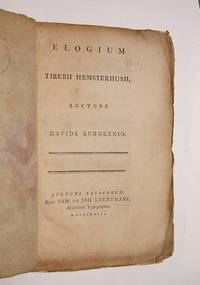
Elogium Tiberii Hemsterhusii auctore Davide Ruhnkenio.
Leiden Lugduni Batavorum Apud Sam. et Joh. Luchtmans Academiae Typographos 1768. 8vo. 604 blank p. Contemporary paper wrappers 22 cm Ref: STCN ppn 240927982 Details: First edition. Margins uncut Condition: Cover worn. Right edge thumbed and slightly chipping. Paper yellowing Note: The honour of reviving the study of Greek in the Netherlands belongs to the Dutch classical scholar Tiberius Hemsterhuis 1685-1766 who was appointed professor Mathematics and Philosophy at the Athenaeum of Amsterdam at the age of 19. His great example was the English classical scholar Richard Bentley 1662-1742 Master of Trinity College Cambridge with whom he corresponded early in his career. In 1705 Hemsterhuis was promoted to a professorship in Harderwijk and in 1717 he was appointed professor of Greek at the University of Franeker. In 1740 he was finally called to Leiden. He produced an edition of Pollux 1706 'Luciani colloquia et Timon' 1708 the complete works of Lucianus 1743 and of the Plutus of Aristophanes 1744 a work which Gudeman calls 'epochemachend'. He contributed also notes to the editions of many other scholars. Sandys observes that 'the work of a Hemsterhuis was worth whole bundles of the mechanically manufactured products of a Burman'. Sandys 2451 Hemsterhuis was the founder of a Dutch school of criticism the so-called 'Schola Hemsterhusiana' which had disciples in Valckenaer Jacob van Lennep and David Ruhnken. The last one was the most famous of his pupils. 'Hemsterhuis has had the supreme felicity of being immortalised by a 'laudator eloquentissimus'. The 'Elogium' delivered in 1768 by his devoted pupil Ruhnken on resigning the office of Rector is one of the Classics in the History of Scholarship. It presents us with the living picture of the perfect critic'. Idem ibidem § The Dutch scholar of German origin David Ruhnken or Ruhnkenius 1723-1798 was born in Pommern and was sent by his parents in 1737 to the Friedrichscollegium in Königsberg where he read Latin authors together with his friend Immanuel Kant. To finish his studies he went in 1744 to Leiden to study Greek under Tiberius Hemsterhuis whom he admired. He later told his biographer Wyttenbach that he found in his teacher the combined gems of Leiden classical scholarship Scaliger and Salmasius in one person. Hemsterhuis wanted to create a worthy successor and appointed him in 1757 to assist him as Reader in Greek. In 1761 Ruhnken succeeded the Latin chair vacated by Oudendorp. He became one of the leading scholars of his days. 'Die Führerstellung der Philologie erbte . von Hemsterhuys der Pommer David Ruhnken der ganz zum Holländer ward und die vornehme und behäbige Würde eines 'Princeps criticorum' zu wahren wusste. Als solchem hat ihm Fr.A. Wolf die Prolegomena gewidmet. . Musterhaftes Latein galt ihm soviel wie Wissenschaft. Aber als Lehrer muss er glänzend gewesen sein. . Alles was Ruhnken veröffentlicht hat ist in seinen Grenzen tadellos'. U. von Wilamowitz-Moellendorff Geschichte der Philologie Lpz./Bln. 1921 p. 39/40 Collation: A-D8 leaf D7 & D8 blank Photographs on request unknown
Referentie van de boekhandelaar : 130073
|
|
|
HEPHAESTION
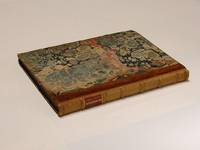
HÊPHAISTIÔNÔS ALEXANDREÔS EGCHEIRIDION PERI METRÔN KAI POIÊMATOS. EIS TO AUTO SCHOLIA. Hephaestionis Alexandrini Enchiridion de metris et poemate. Cum scholiis antiquis et animadversionibus Joannis Cornelii De Pauw.
Utrecht Trajecti ad Rhenum Apud Melchior. Leonardum Charlois 1726. Colophon at the end: Trajecti ad Rhenum Typis Petri Muntendam 4to. IV1887 index1 p. Half calf 21 cm Ref: STCN ppn 185828795; Hoffmann 2203; Brunet 5104; Graesse 3243; Ebert 9451 Details: Back rebacked antique style with 5 raised bands and with a red morocco shield in the second compartment. The boards are original and are covered with marbled paper. Woodcut printer's mark on the title depicting the intertwined initials of M.L. Charlois. Edges dyed red Condition: Rebacked antique style. The paper on the boards is worn. Corners bumped. Upper margin of the first 2 leaves slightly waterstained Note: The study of metrics started already in the time of the Sophists. Herodotus knew iambic trimeters and hexameters. Later the Peripatetici and the Alexandrians developed the technical vocabulary and methods to analyse the metrical structure of lyric parts of Greek tragedies and comedies. What we know of ancient metrics was handed down to us by late antique and byzantine grammarians and commentators especially by the Alexandrian scholar Hephaestion second century A.D. whose 'Enchiridion' summarizes ancient knowledge and offers examples from works now lost. With the help of Hephaestion's handbook the Dutch scholar Willem Canter Guilielmus Canterus 1542-1575 rediscovered the metrical responsion in the lyrical parts of the plays of the Greek tragedians Aeschylus Sophocles and Euripides and was able to correct the corrupted text using metrical responsion. 'Die Theorie des Hephaestion hat bis in moderne Darstellungen der Metrik hinein starke Nachwirkung gehabt'. Neue Pauly 5352 'The terms in which he speaks of the metres of Greek verse and their properties have largely remained in use until the present day'. OphuijsenJ.M. van 'Hephaestion on metre' Leiden 1987 p. 3 § Cornelis de Pauw born ca. 1680 in Utrecht was canon of the 'Sint Jan'. He was a classical scholar of some repute and published several editions of Greek and Roman authors Hephaestion Horapollo Anacreon Quintus Smyrnaeus Theophrastus's Characters Phrynichus Aeschylus. By some detractors he was considered to be an 'homme médiocrement savant' whose ignorance was only exceeded by his impudence. He died in 1749. De Pauw tells us in the short preface that he based his edition on that of the French scholar Hadrianus Turnbebus 'quae nitidissima est' which was published in Paris in 1553. The 'editio princeps' dates from 1526 Florence. De Pauw follows Turnebus 'kata poda' and corrected only some obvious printer's errors. And as the accompanying scholia are often corrupt and displaced and donot offer enough help he decided to add his 'animadversones'. 'Lecturo' p. 2 recto Collation: 2 A-2A4 2B2 Photographs on request hardcover
Referentie van de boekhandelaar : 130095
|
|
|
BORRICHIUS,O
Olai Borrichii Cogitationes De variis latinae linguae aetatibus & Scripto illustris Viri Ger. Joann. Vossii De vitiis sermonis; Accedit ejusdem Defensio nomine Vossii & Stradae adversus Gasp. Scioppium. Bound with: Olai Borrichii Analecta ad Cogitationes De lingua latina. Accedit appendix De lexicis latinis & graecis cum indice addendorum ad Fori Romani literam C.
Copenhagen Hafniae Sumptibus Petri Hauboldi Reg. Acad. Bibliop. 1675 & 1682. 4to. 2 volumes in 1: XVI3146 index; IV631 blank;68 p. Contemporary blindstamped vellum. 21 cm Ref: P.A. Hansen 'A bibliography of Danish contributions to Classical scholarship' no. 1350 1352 & 1413 Details: Short title in ink on the back. Blind ruled borders with floral corner pieces. Title in red and black Condition: Vellum slightly soiled. Boards slightly curved. Paper of the first volume browned Note: The grammarian scientist and physician Ole Borch latinized as Olaus Borrichius 1626-1690 was one of the most important Danish philologists of the 17th century. This polymath was appointed professor of Philology Botany and Chemistry at the University of Copenhagen in 1666. He corresponded with the Dutch scholar Gerardus Joannes Vossius and the German controversionalist Caspar Schoppius. In 1660 Borrichius published 'De lexicorum Latinorum jenunitate . dissertatio' which is a kind of supplement to Vossius' 'De vitiis sermonis'. In 1675 appeared Borrichius' 'Cogitationes de variis latinae linguae aetatibus' in which he corrects Scioppius' division in periods of latin literature golden silver bronze iron that the German scholar had suggested. The book contains also a defence of Vossius against Scioppius. Vossius' 'De vitiis sermonis' Amsterdam 1645 met with a condemnatory judgement of Scioppius. He wrote several letters to Vossius in which he offered to send him one of his works. The Amsterdam professor Vossius answered the letters but also asked his son Isaac who was on his Grand Tour in Italy to pay Scioppius a visit. Isaac fulfilled the request of his father and wrote back that he strongly had the impression that Scioppius suffered from some kind of mental illness. Then Vossius broke off the correspondence. Scioppius was a controversionalist by profession and in 1647 appeared at Venice and Ravenna his attack 'In viri clarissimi Gerardi Iohannis Vossii libro De vitiis sermonis animadversiones' in which Scioppius criticised Vossius for a number of inaccuracies in his 'Antibarbarus'. It was a comment that one could expect from the man who even criticised Cicero for the barbarisms in his work. The attack was reissued in Amsterdam in 1660 en 1666. In 1675 Borrichius published also a 'Dissertatio de causis diversitatis linguarum' on the origin of language and in 1679 a literary history 'Conspectus praestantiorum scriptorum Latinae linguae'. Between 1683 and 1687 he published a topography of ancient Rome 'De antiqua Urbis Romae facie' which work was incorporated in volume 4 of Graevius' Thesaurus antiquitatum Romanarum' 1694-1699 Collation: a-b4; A-2R4; pi2 A-Q4 R2 Photographs on request hardcover
Referentie van de boekhandelaar : 130032
|
|
|
HEMSTERHUIS,T- BERGMAN,JTh J T
Elogium Tiberii Hemsterhusii auctore Davide Ruhnkenio. Accedunt duae Richardi Bentleji epistolae ad Hemsterhusium. Vita Davidis Ruhnkenii auctore Daniele Wyttenbachio. Cum praefatione et annotatione edidit Joannes Theodorus Bergman.
Leiden Lugduni Batavorum Apud S. & J. Luchtmans Amsterdam Amstelodami Apud P. den Hengst et Filium 1824. 8vo. VIIIXLIVIV;532 p. Vellum 22 cm Ref: Ebert 24055: 'Beste Ausgabe dieser beiden Meisterwerke'; Graesse 6/1191 & 6/2481; Spoelder p. 545 Dordrecht 2 Details: Prize copy but without the prize. Back and boards gilt gilt coat of arms of Dordrecht in the centre of both boards. The last 230 pages contain the notes of Bergman Condition: Prize gone. Vellum age-toned back soiled red label in the 'second compartment' gone. Upper board slightly curved. Several marginal pencil annotations and some foxing Note: The honour of reviving the study of Greek in the Netherlands belongs to the Dutch classical scholar Tiberius Hemsterhuis 1685-1766 who became professor Mathematics and Philosophy at the Athenaeum of Amsterdam at the age of 19. His great example was the English classical scholar Richard Bentley 1662-1742 Master of Trinity College Cambridge with whom he corresponded early in his career. In 1705 Hemsterhuis was promoted to a professorship in Harderwijk and in 1717 he was appointed professor of Greek at the University of Franeker. In 1740 he was finally called to Leiden. He produced an edition of Pollux 1706 'Luciani colloquia et Timon' 1708 the complete works of Lucianus 1743 and of the Plutus of Aristophanes 1744 a work which Gudeman calls 'epochemachend'. He contributed also notes to the editions of many other scholars. Sandys observes that 'the work of a Hemsterhuis was worth whole bundles of the mechanically manufactured products of a Burman'. Sandys 2451 Hemsterhuis was the founder of a Dutch school of criticism the so-called 'Schola Hemsterhusiana' which had disciples in Valckenaer Jacob van Lennep and David Ruhnken. The last one was the most famous of his pupils. 'Hemsterhuis has had the supreme felicity of being immortalised by a 'laudator eloquentissimus'. The 'Elogium' delivered in 1768 by his devoted pupil Ruhnken . is one of the Classics in the History of Scholarship. It presents us with the living picture of the perfect critic'. Idem ibidem § The Dutch scholar of German origin David Ruhnken or Ruhnkenius 1723-1798 was born in Pommern and was sent by his parents in 1737 to the Friedrichscollegium in Königsberg where he read Latin authors together with his friend Immanuel Kant. To finish his studies he went in 1744 to Leiden to study Greek under Tiberius Hemsterhuis whom he admired. He later told his biographer Wyttenbach that he found in his teacher the combined gems of Leiden classical scholarship Scaliger and Salmasius in one person. Hemsterhuis wanted to create a worthy successor and appointed him in 1757 to assist him as Reader in Greek. In 1761 Ruhnken succeeded the Latin chair vacated by Oudendorp. He became one of the leading scholars of his days. 'Die Führerstellung der Philologie erbte . von Hemsterhuys der Pommer David Ruhnken der ganz zum Holländer ward und die vornehme und behäbige Würde eines Princeps criticorum zu wahren wusste. Als solchem hat ihm Fr.A. Wolf die Prolegomena gewidmet. . Musterhaftes Latein galt ihm soviel wie Wissenschaft. Aber als Lehrer muss er glänzend gewesen sein. . Alles was Ruhnken veröffentlicht hat ist in seinen Grenzen tadellos'. U. von Wilamowitz-Moellendorff Geschichte der Philologie Lpz./Bln. 1921 p. 39/40 § Ruhnken was immortalized by Daniel Wyttenbach 1746-1820 born at Bern in Switzerland who came to Holland in 1770 to stay there like Ruhnken before him. 'In the next 28 years he held professorships at Amsterdam 1771-99 and then returned to Leyden as Ruhnken's successor for 17 years 1799-1816'. Sandys 2463. He published an edition of the complete Moralia of Plutarchus with Latin translation 1795-1806 a work of permanent value. On the death of Runken he became the most influential classical scholar in the Netherlands. 'The highest praise must be assigned to his Life of Ruhnken a work of absorbing interest to his scholarly contemporaries which still retains its importance as a comprehensive picture of the Scholarship of the Netherlands and not of the Netherlands alone in the age of Ruhnken'. Idem 2/465 Provenance: in ink on front flyleaf: 'W.J.W. Kosteri ex libris'. The specialties of the Dutch scholar Willem Johan Wolff Koster 1896-1986 were metrics and Aristophanes. In his dissertation 'De Re Metrica tractatus Graeci inediti' Leiden 1922 he argued that the current views concerning Greek metrics were founded on an unstable basis and that it would be wise to return to the sources the ancient tractates on metrics. Very influential was his 'Traité de métrique grecque' of 1936 4th. edition 1966. In 1940 he was appointed professor of Greek at the University of Groningen. Linked to his interest was his work on the metrics and the scholia of Aristophanes. In 1927 he already published 'Scholia in Aristophanis Plutum et Nubes' which was only the start of his 'opus magnum' the edition of the 'Scholia in Aristophanem' a scholarly entreprise of nearly half a century that started in 1960 under his supervision and then of D. Holwerda who has seen it through to completion with the appearance of the scholia to the Thesmophoriazusae and Ecclesiazusae in 2007. This enormous project offers the first new critical edition of the complete scholia to Aristophanes since Dübner's in 1842. J.C. Kamerbeek 'Levensbericht W.J.W. Koster' in: Jaarboek 1988 Amsterdam p. 140/45. See also the review of R. Tordoff: 'R.F. Regtuit ed. Scholia in Thesmophoriazusas; Ranas; Ecclesiazusas et Plutum. Scholia in Aristophanem III 2/3' Bryn Mawr Classical Review 2008.09.24 Collation: pi4 -38; A-2K8 2L2 Photographs on request hardcover
Referentie van de boekhandelaar : 130070
|
|
|
MOERIS ATTICISTES
MOIRIDOS ATTIKISTOU LEXEIS ATTIKÔN kai HELLÊNÔN kata stoicheion. Moeridis Atticistae lexicon atticum cum Jo. Hudsoni Steph. Bergleri Claud. Sallierii aliorumque notis. Secundum ordinem MSStorum restituit emendavit animadversionibusque illustravit Joannes Piersonus. Accedit AILIOU HÊRÔDIANOU PHILETAIROS. Aelii Herodiani Philetaerus e Ms nunc primum editus item ejusdem Fragmentum e MSS. emendatius atque auctius.
Leiden Lugduni Batavorum Apud Petrum van der Eyk et Cornelium de Pecker 1759. 8vo. IVLXVI248044 p. Half calf. 22 cm Ref: STCN ppn 240337786; Brunet 31788: 'Bonne édition dans laquelle le texte a été rétabli d'après des manuscrits'; Graesse 4558: 'la meilleure édition'; Ebert 14181: 'The best edition. A new recension from MSS. and restored to its original order'; Neue Pauly 8 col. 343/4: still the first listed edition Details: Back gilt and with 5 raised bands. Shield in the second compartment. Margins uncut Condition: Binding worn. Back rubbed. Boards chafed. Corners bumped. Foot of the spine slightly damaged Note: This edition is according to Klaus Alpers in the Neue Pauly 2001 s.v. 'Lexikographie' a very important contribution to Greek lexicography. NP 15130. Johannes Pierson was a much promising Dutch philologist born in 1731 who died young in 1759 in Leeuwarden where he was rector of the Schola Latina from 1755. At the university of Franeker where the Renaissance of Dutch Greek studies had begun he was a pupil of J.C. Valckenaer and Is. Schrader. In 1751 he matriculated at the University of Leyden to hear T. Hemsterhuis. Hemsterhuis advised his students to use especially the lexica of the ancients. The ancient lexicographers could be of great use for the amending of texts of classical authors and they were of great help to gain a profound knowledge of the Greek language and its vocabulary. Valckenaer chose Ammonius Pierson Moeris Atticistes. This was a great age for ancient lexicographers. In 1754 D. Ruhnkenius published his edition of the Platonic dictionary of Timaeus Sophista. Sandys 2461; NNBW 3 976/77; Gerretzen Schola Hemsterhusiana 1940 p. 46 & 100. § Moeris Moiris was a Greek grammarian and lexicographer from ca. 200 AD. He compiled a lexicon for the use of correct Attic under the title 'Lexeis Attikôn kai Hellênôn kata stoicheion'. Examples of correct Greek are taken from Plato Thucydides Xenophon the Attic orators and Aristophanes. NP 8343/4. The last 50 p. of Pierson's edition are filled with the 'Editio Princeps' of the Philetaerus of Herodian. Nowadays this ancient lexicon is only ascribed to 'Aelius Herodianus et Pseudo-Herodianus' one of the most important Greek grammarians who lived in the 2nd cent. A.D. cf. NP 5465/6 Collation: -48 54 A-2I8 2K62 leaves of gathering Kk are bound in wrong order Photographs on request hardcover
Referentie van de boekhandelaar : 130374
|
|
|
FLORUS
Abrégé de l'Histoire Romaine de L.A. Florus. Traduction nouvelle avec des notes par M. l'Abbé Paul professeur d'éloquence au Collége d'Arles.
Paris Chez les Frères Barbou 1794 - 1795 L'An III de la République Française 12mo. IV384 p. Modern half calf. 18.5 cm Ref: This edition not in Schweiger and Brunet; however cf Schweiger 2366; cf Brunet 2/21312; cf Ebert 7698 Details: Latin text with facing French translation. Back with five raised bands; marbled boards marbled endpapers. Only the upper margin has been cut Condition: Small bookplate on the front pastedown. Small waterstain in the right lower corner and the left inner corner of the first 30 p. Paper yellowing Note: This is the chief work of the Roman historian Lucius Annaeus Florus who lived at the beginning 2nd century AD. It is an abridgement epitome of Roman history with special reference to the wars waged up to the age of Augustus. Florus 'shows a certain literary gift marred however by a strong tendency to rhetoric. His brevity often entails obscurity though he sometimes produces a felicitous epigram. . As an historian he is often inaccurate in both chronology and geography but the work as a whole achieves a limited success as a rapid sketch of Roman military history. It was a favourite school-book in the 17th century'. OCD 2nd ed. p. 442 The Abbé Armand-Laurent Paul 1740-1809 was a French jesuit and grammarian. He wrote a number of scholarly works; the first Barbou edition of his Florus together with his notes and translation dates from 1774 Brunet 22 p. 1312. The edition of 1774 is common the edition of 1794 is rather rare. The translations by Paul are said to be trustworthy but dry Provenance: Bookplate of the Belgian ancient historian and archaeologist Marie Therèse Charlier on the front pastedown Collation: pi2 A-Q12 Photographs on request hardcover
Referentie van de boekhandelaar : 120404
|
|
|
HOMERUS
HOMÊROU BATRACHOMUOMACHIA. Homeri Batrachomyomachia.
Maastricht The Halcyon Press 1929. Colophon: 'Trajecti ad Mosam vulgo Maastricht editum impensis Alexandri Stols' 4to. 20 p. Red/brown morocco. 28.5 cm On the last page: 'Haec BATRACHOMYOMACHIA HOMERI editio anno Mdccccxxix impressa est Harlemi in Officina Enschedaniana typis graecis quorum forma inventa est a Iano van Krimpen. Exemplaria sunt emissa CXXV charta batava quorum hic est numerus XXXV' Ref: Van Dijk 182 Details: No. 35 of 125 copies printed. Secured in a cardboard slipcase covered with marbled paper. Bound by the well known bookbinder Louis Malcorps. Back with 4 raised bands with the Greek title gilt in the second compartment and the gilt year 1929 at the foot of the spine. Boards with a blind ruled border. Blind ruled turn-ins showing at the 4 corners a floral vignet. Marbled endpapers. Fine printing. Dutch laid paper of excellent quality Hollandsch Papier Condition: The slipcase shows some wear. The leather back slightly faded and showing some small and faint scratches Note: The superb typeface the so-called 'Antigone' was designed by the famous Dutch typographer book designer and type designer Jan van Krimpen 1892-1958. This letter is in the Netherlands well known because it was used for an excellent school edition of Homer's Iliad and Odyssey which remained in use at all Dutch gymnasia from 1937 well into the eighties. Van Krimpen worked for the printing house Koninklijke Joh. Enschedé. He also worked with Monotype in England and the Limited Editions Club of New York. Van Krimpen was a leading figure of international reputation in book printing during his lifetime. His work has been described as traditional and classical in style focusing on simplicity and high quality of book printing. Source Wikipedia In 1922 Van Krimpen befriended the bibliophile A.A.M. Stols 1900-1973 who was just had started a publishing firm. From 1923 to 1932 he designed for Stols printer's devices bindings and stamps and after some time he also took care of the typography. Supported by Van Krimpen Stols produced some of the most beautiful typographical works. Over the years the 'Trajectum ad Mosam' press brought more than 550 titles which excelled in typography on the market. § Stols' Halcyon Series was a bibliophile series published between 1927 and 1958 by A.A.M. Stols. He also issued a magazine under this name devoted to the beautiful book and related subjects which appeared from 1940-1944. 'Halcyon' is the Greek word for kingfisher Photographs on request hardcover
Referentie van de boekhandelaar : 155620
|
|
|
VERGILIUS
Aeneas van Virgilius in Nederduitsche verzen door N.C. Brinkman Wed. C. van Streek.
Amsterdam Ter Boekdrukkerij van P.E. Briët 1815. 4to. Frontispiece VII1 blank; 688 p. Half calf 24.5 cm Ref: Geerebaert 14335; Not in OiN Details: Back ruled gilt. Engraved title designed and executed by L. Portman depicted is the Muse Terpsichore who holds in her left arm a 'cithara' in her right hand she holds a laurel wreath with which she crowns a bust of Vergil that stands on a pedestal. The translation is preceded by a 5 page verse dedication to William I the new king of Holland. After each of the 12 books of the Aeneid follow a few pages with 'Aanteekeningen' notes Condition: Binding very scuffed. Back rubbed and chafed. Head of the spine damaged. Paper on the boards gone. Front endpapers and title slightly soiled. Tip of both corners of the title torn off. Lacking as more copies the 8 page list of subscribers to this edition which was separately supplied by the publisher Note: This verse translation into iambic hexameters and heptameters was made by the Dutch author editor of several newspapers and translator Anna Naatje Catharina Brinkman widow of C. Streek 1760-1828. Not much is known about her school career but she was well versed in French German and Latin. She published an epistolary novel 'Eduard en Charles' 1791 and a novel 'Julius en Amalia of de Gevaaren van een al te gevoelig hart' 1805-1806. Her husband died young so she learned to earn her keep as an author newspaper woman and translator. She tried her pen as a playwright in 1795 the first year of the short-lived Batavian Republic which was declared after the ousting of the House of Orange with a play in verse 'De triumph der vryheid' at the end of which the whole cast exclaimed vivat de natie! vivat de Fransen! vivat de vrijheid! i.e. 'long live the nation long live the French liberators long live freedom!'. She was a supporter of Napoleon and his younger brother Louis who was king of Holland 1806-1810. Brinkman was a commercial writer who lend her pen after the fall of Napoleon and the ousting of the French without hesitation to the new rulers of the House of Orange. In 1806 she published a verse translation of the first 2 books of Vergil's Aeneid and in 1809 a complete translation. This was her most ambitious work. She proudly declared that she was the only woman who translated from Latin. For this feat King Louis Bonaparte awarded her 200 guilders for each of the 12 books. The translation was brought on the market for a second time in 1815 probably unsold copies. It is said that for this 1815 edition Brinkman herself sought to rope in subscribers. If this is correct she accomplished a tremendous job for on the 8 page list of subscribers which was loosely supplied by the publisher figure King William I and other members of the Royal House of Orange 13 copies and almost all the ministers of the government and hundreds of officials and dignitaries. Source: Brinkman Anna Catharina in: Digitaal Vrouwenlexicon van Nederland This achievement of roping in subscribers gets even bigger if we consider that the publisher must have had a store full of copies which had been printed 6 years earlier. He only added a new title the servile dedication of Brinkman to William I the new king of Holland and a list with subscribers. Brinkman from then on wrote quite a number of occasional poems for King William and his family which yielded her 'gratificatiën' and an allowance of 700 guilders a year. The number of Brinkman's biography in '1001 Vrouwen' is 580 Photographs on request hardcover
Referentie van de boekhandelaar : 155327
|
|
|
OVIDIUS
P. Ovidii Nasonis Opera omnia in tres tomos divisa cum integris notis Nicolai Heinsii D.F. lectissimisque Variorum notis. Quibus non pauca ad suos quaeque antiquitatis fontes diligenti comparatione reducta accesserunt studio Borchardi Cnippingii.
Amsterdam Amstelodami Prostant apud Waesbergios Boom & Goethals 1702. 8vo. 3 volumes: XVI83216; 805101 blank; 8106 p. 15 plates 1 portrait 1 frontispiece & 2 engraved titles. Vellum 19 cm Ref: STCN ppn 320300935 ppn 320301095 & ppn 320301176; Schweiger 2631; Dibdin 2267/68; Moss 2343; Brunet 4272; Graesse 570; Ebert 15368 Details: Volume 1: an engraved portrait of Ovid and a frontispiece depicting the Judgment of Paris. Title with woodcut printer's mark depicting a celestial sphere flanked by Hercules and Father Time. Volume 2 & 3 have engraved titles depicting the abduction of Europa by Zeus 2 and a Roman emperor on horseback 3. Vol. 2 is adorned with 15 full page engravings. In this copy the index of usually 9 pages has been printed on 6 pages in smaller typeCondition: This nice set has 1 flaw: stains on the margins of 21 leaves of volume 1 and of 16 leaves of volume 2 caused by an attempt to remove ink annotations. Small red ink annotations on 7 pages of vol. 2. Vellum slightly soiled. Paper yellowing Note: The Roman poet Ovid 43 B.C. - 17 A.D 'is perhaps the most consistently influential and popular writer of the classical tradition. His central position is suggested by the many surviving manuscripts of his works and their early publication in printed editions. . Most would agree that it is his Metamorphoses that has had the greatest influence but his other major poems the Heroides Tristia Fasti and particularly his racier works the Amores Ars amatoria and Remedia amoris have played their part in maintaining his reputation as a writer of enduring importance and appeal'. The Classical Tradition Cambr. Mass. 2010 p. 667 § Ovid was widely read in antiquity and remained to be read at the Carolingian court in the Middle Ages. The 12th/13th centuries are even called the 'aetas Ovidiana' for Ovid's love elegy was one of the mainsprings of the phaenomenon of courtly love and its literary expression. His 'Ars amatoria' and the 'Remedia' became part of the school curriculum. Ovid became also the favourite poet of the Renaissance. Shakespeare was inspired more by Ovid than by Vergil. Neue Pauly 9110/119Ovid's appeal lies beyond the bounderies of the scholarly and literary world. Numerous artists in the 16th to 18th century were inspired by the Metamorphoses. § A new age dawns in the textual history of Ovid's poems with the work of the famous Dutch scholar neolatin poet and diplomat Nicolaas Heinsius 1620-1681 'who after 345 years remains the central figure in any account of the editing of Ovid. No modern editor will fail to mention his name in the preface as the 'sospitator Ovidii; no 'apparatus criticus' will fail to cite his numerous contributions to the improvement of the text'. P.E. Knox ed. 'A companion to Ovid' Chichester 2013 online version Heinsius' editions of Ovid offer texts that are based on an extensive first hand knowledge of the manuscripts and that are supplemented with a full textual commentary which records and discusses 'variae lectiones' and notes alterations of the vulgate text. In making his selection from the vast mass of variants Heinsius was according to Sandys guided by a fine taste and a sound judgment acquired by long experience. Heinsius was almost exclusively an editor of Latin poets. Sandys 2323/6 The first Ovid edition based on Heinsius that was produced by the Dutch schoolmaster Borchardus Cnippingius appeared in 1670. It saw reissues in 1683 and in 1702. Cnippingius included also observations of other leading scholars Collation: Volume 1: pi1 8 minus blank leaf 8 A-3G8 leaf 3G8 blank our gathering has one more leaf than the STCN copy. Volume 2: A-3E8. Binder's error in last gathering of volume 2: leaf 3E1 has been bound after the index. Volume 3: A-3E8. STCN calls for a gathering 3F2 at the end of volume 3. That is because in our copy the index of 9 pages has been boiled down to 6 pages in smaller type. The collation of our copy is therefore completePhotographs on request Heavy book may require extra shipping costs hardcover
Referentie van de boekhandelaar : 130112
|
|
|
CATO
Dionysii Catonis Disticha de moribus ad filium praeter sedulam variantis lectionis per omnia conlationem lectissimis etiam adornata flosculis poeticis una cum singulis adposita distichis binorum quoque versuum idiomatum vero diversorum interpretatione quincuplice. Adjecta sunt lemmata Catoniana suis quaeque restituta distichis. And: Historia critica Catoniana per singulorum seriem consuetam Dionysii Catonis Distichorum ex ordine deducta. Cui praemittuntur Maximi Planudis Metaphrasis Graeca cum castigationibus Josephi Scaligeri in eamdem perpetuis: itemque Desiderii Erasmi concinna expositio. Adnexae sunt . Barthii Opitii Daumii Wachii Boxhornii Cannegieteri Withofii & Arntzeniorum fratrum animadversiones selectae. Addita quoque ad calcem Distichorum cuique nova paraphrasis.
Amsterdam Amstelaedami Apud Franciscum Houttuyn 1759. 8vo. 2 volumes in different bindings: Volume 1 vellum & 21 cm: XVI348 p. 5 engraved plates including the frontispiece. Volume 2 contemporary wrappers & 22 cm: X64024 index p. frontispiece. Ref: Volume 1: STCN ppn 184816912; ; Spoelder p. 661 Rotterdam 1. Volume 2: STCN ppn 184816696. Volume 1 & 2: Schweiger 270/71; Brunet 11668; Graesse 282; Ebert 3737 Details: Ad 1: a vellum bound prize copy but without the prize. Boards with gilt double fillet borders and the coat of arms of Rotterdam in the center. The frontispiece and one of the plates no. 4 are skillfully handcoloured. The frontispiece depicts the presenting of a scroll with his 'morum praecepta' by Epictetus to Cato. STCN describes a copy that also has a handcoloured frontispiece. Ad 2: Margins uncut. The frontispiece depicts a scholar in his study; he wears a dressing gown. This volume contains the dedication leaf to the German jurist 'Gustavus Georgius Koenig a Koenigsthal' 1717-1771 which is lacking in most copies. Gustaf Georg König von Königsthal was 'Ratskonsulent' at several German courts. Ad 1 & 2: Both title pages printed in red and black. The frontispieces and plates are engraved by S. Fokke Condition: Ad 1: Vellum age-toned. Gilt fading. All 4 textile fastening ties are gone. Name cut from the upper corner of the front flyleaf. Right upper corner of last 60 p. very slightly warped by moist. Ad 2: Binding worn and scuffed; paper on back partly gone. Stamp on the front flyleaf Note: 'The Distichs of Cato Latin: Catonis Disticha is a Latin collection of proverbial wisdom and morality by an unknown author commonly named Dionysius Cato from the 3rd or 4th century AD. The 'Catonis Disticha' was the most popular medieval schoolbook for teaching Latin prized not only as a Latin textbook but also as a moral compass.' Cato was in use as a Latin teaching aid until the end of the 18th century . 'It was one of the best-known books in the Middle Ages and was translated into many languages'. Wikipedia s.v. 'Distichs of Cato' § Together both volumes here on offer form an ambitious Cato edition numbering ca. 1000 pages in total. It is produced by an anonymous editor. It is the editor's ambition to show that there is more in the 'Disticha Catonis' than meets the schoolboy's eye. He also wants to remove the school squalor of ages. Underneath the 'disticha' lies hidden he tells us much 'utilitas' and 'elegantia'. Volume 1 preface p. VII The first volume contains the Latin text immediately followed by translations into Greek Scaliger English German Opitz Dutch and French. The proverbs/maxims in English Dutch and French are 'in versione . nova'. Idem p. X After these five translations follows a number of 'flosculi poetici' on the same subject or in the same key as Cato's proverb/maxim selected from ancient poets and Neolatin poets. § The second volume contains a voluminous commentary a Greek translation of Planudes and explanations and observations of the anonymous editor and of earlier leading commentators among whom Erasmus and Scaliger. The anonymous editor is according to most bibliographers among them Brunet Ebert and Graesse one König von Königsfeld. On what grounds is not clear. As it happens one Gustavus Georgius Koenig von Koenigsthal is as told above the dedicatee of the second volume. In the 'Göttingische Anzeigen von gelehrten Sachen' Volume 34 1784 König von Königsfeld is already erroneously mentioned as the editor. However no König von Königsfeld seems to have existed. So this must be an error. In the 'Lexicon verstorbener baierischer Schriftsteller des 18. und 19. Jahrhunderts' of Clemens-Alois Baader Augsburg/Leipzig 1824 p. 290/92 it is stated that one Christian Gottlieb König 1711-1782 is the editor. That he was indeed the editor was convincingly proven by the Dutch 'Catonis Disticha'-specialist M. Boas in an interesting 'whodunit' article. 'Anonymus Amstelodamensis Catonianus' in 'Twee en dertigste Jaarboek van het Genootschap Amstelodamum' Amsterdam 1935 p. 147-203 Christian Gottlieb König was born in Altorf in 1711 was appointed in 1734 professor of philosophy at the university of Giessen and became later 'Privatdozent' and Lutheran minister. In 1747 he moved to Amsterdam where he lectured privately Greek Latin and Hebrew. In 1766 he accompanied as a mentor the 15 years old Immanuel Capadoce of Portugese Jewish origin who went to Leiden to study medicin. He died in Leiden in 1782. The article on Koenig in NNBW 10 p. 476/78 is based on Boas Provenance: Ad 2: Stamp of 'Bibliotheca Seminarii Culemborgensis' on front flyleaf Collation: 8 pi1 = frontispiece after leaf 1 A-X8 Y6. Asd 2: 4 after leaf 1 leaf pi1 = frontispiece; after leaf 2 leaf 2pi1 = dedication leaf A-28 2T4. Frontispiece after leaf 1 Photographs on request hardcover
Referentie van de boekhandelaar : 130116
|
|
|
PETITE GRAMMAIRE FRANCOISE, A L'USAGE DES ELEVES DE L'ECOLE ROYALE MILITAIRE
Bound with: Petite grammaire latine à l'usage des élèves de l'École Royale Militaire. &: Petite grammaire grecque à l'usage des élèves de l'École Royale Militaire.
Paris Chez Nyon l'aîné 1778. 3 volumes in 1: 591 blank; 933 blank; 70 p. Contemporary wrappers. 18 cm Details: Marbled wrappers. Woodcut ornament on the title depicting a radiant sun in the heart of which stand the three fleurs-de-lis of the House of Bourbon Condition: Back worn & slightly damaged. The last five leaves slightly waterstained Note: The 'École Royale Militaire' 'was founded in 1750 after the War of the Austrian Succession by Louis XV on the basis of a proposal of Marshal Maurice de Saxe and with the support of Madame de Pompadour and the financier Joseph Paris Duverney with the aim of creating an academic college for cadet officers from poor noble families. It was designed by Ange-Jacques Gabriel and construction began in 1752 on the grounds of the farm of Grenelle but the school did not open until 1760. The 'Comte de Saint-Germain' reorganised it in 1777 under the name of the 'École des Cadets-gentilshommes' School of Young Gentlemen which accepted the young Napoleon Bonaparte in 1784. He graduated from this school in only one year instead of two'. The 'École Militaire' still exists it is a vast complex of buildings housing various military training facilities located in the 7th arrondissement of Paris Southeast of the Champ de Mars. The School was closed down in 1787 and plundered during the Revolution. In 1878 this school for the higher education of future French officers was opened again now as 'École Supérieure de Guerre' ESG. Source Wikipedia 'École Royale Militaire' This convolute of 3 grammars is rare outside France. The Bibliothèque Nationale de France BnF states that the author is Étienne-Maurice Chompré 1701-1784 Collation: A-B12 C6 leaf C6 verso blank; A-D12 leaf D11 verso and D12 blank; A-F6 minus blank leaf F6 Photographs on request unknown
Referentie van de boekhandelaar : 120376
|
|
|
LAUREMBERG, P
Het hernieuwde en verbeterde Acerra Philologica van P. Lauremberg. Dat is: zes honderd nutte en gedenkwaardige geschiedenissen als ook zeer vermakelyke reden-kavelingen. Tot nut der lees-gierige jeugd en een noodzakelyk onderwys tot bevordering der geleerdheid. Uit de beroemste zo Grieksche als Latynsche geschigtschryvers by een gesteld en nu in beter order geschikt en uitgegeven door Joh. Hajenius S.S. Th.C.
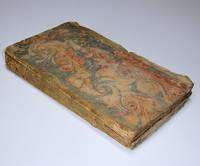
Amsterdam By Nicolaas ten Hoorn 1701. 8vo. XII778 recte 77228 p. Contemporary vellum 18 cm Ref: STCN ppn 180126784; cf. Graesse 4122 Details: A frontispiece designed by I. Goeree and executed by C. Huibertz depicting some mythological figures. Woodcut printer's mark on the title depicting a pedestal loaded with all kinds of symbols of the arts and sciences Condition: Vellum soiled front joint partly split. Paper yellowing Note: 'Medieval education drew heavily from classical authors for pagan learning was necessary for understanding the Scripture. The focus often was on memorizing sententiae and offering exempla and anecdotes that exemplified virtues.' The Classical Tradition Cambr. Mass. 2010 p. 294 Formal education in the classical tradition unfolded in the 16th/18th century 'on three levels. Instruction began in the elementary school where boys at the age of 6 or 7 began to study reading writing arithmetic and basic Christian doctrine. Latin was supposed to predominate although the vernacular regularly crept in. Students remained here for 3 or 4 years after which most quit to become servants day laborers or agricultural workers. The others went to the secondary school whose curriculum was based on Latin grammar and the humanistic doctrines . With this Latin base students could proceed to a university'. Op. cit. 295/95 § A widely read and popular schoolbook for the secondary school in Germany and The Netherlands of that period was this 'Acerra Philologica'. An 'acerra' is an incense box and this 'treasure box' contained a great variety of useful funny memorable and moralizing stories from ancient authorities. The German scholar Petrus Lauremberg is the excerptor of this encyclopedic collection of morally educating short stories. § Peter Lauremberg born in 1585 was since 1614 'Professor der Physik und Mathematik' at the newly established academic Gymnasium at Hamburg. In 1624 he went to Rostock to lecture as 'Professor der Poesie'. He died there in 1639. He wrote a great number of small works on medicin mathematics astronomy but also on music and rhetoric. Allgemeine Deutsche Biographie 1859 His 'Acerra Philologica' was first published in Rostock in 1635 and it started with 200 stories. It was a great commercial and educational success for dozens of editions appeared until deep into the 18th century. The work gradually was expanded to 300 1640 400 1646 500 1658 600 1658 and finally 700 1688. § The 'Acerra' was translated into Dutch in the 17th century by J.L. Blasius and published in 1661 & 1682. In 1701 the Rector of the 'Schola Latina' at Nijmegen Johannes Hajenius published a new augmented and revised Dutch translation. It was repeated in 1717 1734 and 1756. The 'exempla' and 'anecdotes' are concluded by 'Sententiae' where Hajenius packages the morale in a few catchy sometimes rhyming phrases. In the preface Hajenius does not use the metaphor of the incense box he rather wants to present a tasty and appetizing meal from which every one could take what he fancied. Hajenius published the collection not only for schoolboys he says but also for the illiterate i.e. those who cannot read Latin. In this way they could learn in one hour a day what a student learned on the university in many a year. Without knowledge of literature and history one could be considered to be an educated person. p. 1 recto & verso of the preface So the aim of this collections was also to spread a body of classical thought among the less educated those who didnot visit or finish the 'Schola Latina'. Hajenius also inserted a chapter on tabacco. No. 72 This is a funny chapter for more than one reason. It is not only anchronistic but every educated Dutchman of a certain age associates the name Hajenius with the famous tobacco shop of P.G.C. Hajenius 'the old master' of Dutch cigar stores since 1826. Since 1914 the store has been housed in a fine Art Déco building on the Amsterdam Rokin Collation: 6 irregularly signed A-3D8 some irregular pagination Photographs on request hardcover
Referentie van de boekhandelaar : 120427
|
|
|
GAIL,JB J B
Idylles de Bion et de Moschus traduites en Français par J.B. Gail. professeur de Littérature grecque au Collège de France. And 2: Odes inscriptions épitaphes épithalames et fragments d'Anacréon. Avec des notes critques et un discours préliminaire par le citoyen Gail. And 3: Républiques de Sparte et d'Athènes. Traduites de Xénophon par J.-B. Gail. And 4: Manuel d'Épictete et tableau de Cébès en grec avec une traduction française précédée d'un discours contre la Morale de Zénon et contre le Suicide avec des idées d'une morale plus pure. Par Lefebvre Villebrune. Tome 1 & 2. And 5: Hymnes de Callimaque nouvelle édition. Avec une version française et des notes par J.F.G. de la Porte Du Theil. 1re & 2me partie. And 6: Mythologie dramatique. Traduite de grec de Lucien par J.-B. Gail. Tome 1: Les dialogues des Dieux. &
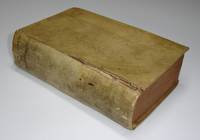
Paris Didot Jeune Chez J.B. Gail An III 1794/95. 12mo. 6 parts in 10 volumes: ad 1: 1062 p. 2 engraved plates including a portrait of Gail. ad 2: IVXX744 p. 4 plates. ad 3: 2107 p. ad 4: 2 volumes: IV2613 blank; IV132 p.; ad 5: II104;14211 blank p. ad 6: IVVIII1051 blank; IV1111 blank; IV178 p. 5 plates. Mottled calf 13 cm Ref: Ad 1: Hoffmann 1426; Ebert 2429; Graesse 1428; Brunet 1950. Ad 2: Hoffmann 1141; cf Ebert 568; Brunet 1255. Ad 3: Hoffmann 3604; Ebert 24146. Ad 4: Oldfather 278; Hoffmann 216; Brunet 21015; Ebert 6785; Graesse 2484. Ad 5: Hoffmann 1430; Graesse 218; Ebert 3356. Ad 6: cf. Hoffmann 2561; Brunet 31213; cf. Graesse 4264; Ebert 12407 Details: Backs gilt and with a red or brown morocco shield on the second 'compartment'. On a shield in the middle 'compartment' the gilt numbers: 1 to 10. Boards with triple fillet gilt borders. Edges of the boards and the book-block gilt. Inside dentelles gilt. Endpapers blue marbled. The portrait and plates are engraved by Barbier Chaudet et alii. Only the 4 volumes dedicated to Epictetus and Callimachus offer a Greek text with a facing French translation the other volumes have a French translation only. § We found in the catalogue of the library of the important Dutch statesman Rutger Jan Schimmelpenninck 1761-1825 which is preserved in the mansion Nijenhuis at Diepenheim an identical set same title same publisher same duodecimo 12mo format published in 1794/95 with the same numbering on the back and as far as we can judge from the description in the catalogue the same binding. We suppose that the publishers Didot and Gail or another bookseller composed several portable sets in a nice binding for educated and well to do gentlemen and women who probably were not able to read the original texts Condition: Bindings slightly worn & scratched. Head of the spines of volume 1 & 2 slightly chafed. Some corners somewhat bumped. Excellent paper. Some faint foxing. A charming set Note: At the end of volume 7 the second volume of the Callimachus there is an advertisement for a collection of 10 titles to be sold as a unit at the price of 300 livres. The publisher and editor of the 10 volumes is Monsieur J.B. Gail. The collection consists of works Gail translated himself i.e. Bion & Moschus Lucianus Xenophon Anacreon 6 volumes; the other 4 volumes were translated by others he tells in the advertisement the two volume sets of Callimachus and of Epictetus. The translator of Callimachus is J.F.G. de la Porte Du Theil the translator of Epictetus is Lefebvre de Villebrune. See for the assignment of this Epictetus to the collection of Greek authors of Gail: F. Schoell 'Répertoire de littérature ancienne ou choix d'auteurs classiques grecs et latins' Paris 1808 Tome I p. 51 § Jean Baptiste Gail 1755-1829 was a celebrated French Hellenist. 'In 1791 he was appointed deputy and in 1792 titular professor at the 'Collège de France'. During the Revolution he quietly performed his professional duties taking no part in politics although he possessed the faculty of ingratiating himself with those in authority. In 1815 he was appointed by the King Keeper of Greek MSS. . Without being a great Greek scholar Gail was a man of unwearied industry whose whole life was devoted to his favourite studies and he deserves every credit for having rescued Greek from the neglect into which it had fallen during the troublous times in which he lived'. Encyclopaedia Britannica 1911 vol. 11 p. 387 His most valuable work were his French translations and his editions of Greek authors. He published also editions of Thucydides and Herodotus § Epictetus' Enchiridium and the 'Tabula Cebetis' in this series were produced by the French sholar and translator Jean-Baptiste Lefebvre de Villebrune 1732-1809. He was professor of Hebrew at the 'Collège de France' from 1791 to 1794 and librarian of the 'Bibliothèque de la Nation' in 1794/95. He was a polyglot who translated from Latin Spanish Italian English German Swedish and Greek. His best known translation is that of the Greek compiler Athenaeus 'Banquet des Savans' 1789-1791 5 volumes. See his French lemma in Wikipedia In 1782 Lefebvre de Villebrune had already published a Greek text of the Enchiridium and a year later a Greek text accompanied by a French translation and some critical notes. His edition was completely eclipsed by the Epictetus edition of the German scholar Schweighaeuser which was published a few year later in 1798 and which was the starting point of a new era of Epictetus scholarship. In the eyes of Schweighaeuser Lefebvre de Villebrune was an incompentent and sloppy scholar. The first volume of this Epictetus set of two contains the Greek text of the Enchiridium with an opposing French translation an introduction of 100 p. and 70 p. notes. The second volume contains a Greek text of the 'Tabula Cebetis' also with an opposing French translation an introduction of 19 p. and notes on 30 pages Photographs on request hardcover
Referentie van de boekhandelaar : 120445

|
|
|
CALLIMACHUS
Callimachi Hymni et Epigrammata. Ex recensione Io. Aug. Ernesti. Curavit Christophorus Fridericus Loesnerus.
Leipzig Lipsiae Sumptibus Caspari Fritsch 1774. Colophon: Lipsiae Ex officina Breitkopfiorum 1774 8vo. II portrait of Callimachus 611230 index p. Contemporary boards. 18.5 cm Ref: VD18 10534695; Hoffmann 1430; Dibdin 1371; Moss 1250; Graesse 218; Ebert 3347 Details: Boards covered with marbled paper. Red shield on the back. Contains a praefatio Greek text & a translation into Latin and 6 p. of Variae Lectiones from a manuscript that Ernesti thought worthwile and an index of 30 pages. Nice portrait of Callimachus engraved by Sysang as frontispiece. The German engraver Johann Christoph Sysang 1703-1757 made this portrait for the Callimachus edition of Leipzig 1741 published by Breitkopf in Leipzig. The copper plate for this portrait was used again in this 1774 edition which was according to the colophon also printed on the presses of Breitkopf Condition: Binding slightly worn at the extremities. Name cut from right upper corner of the front flyleaf. Small stamp on the front flyleaf and the title. Two book labels on the front pastedown. Small stain on back cover. Lower part of spine chafed Note: The Greek poet and scholar Callimachus of Cyrene c. 305 - c. 240 B.C. who is one of the most important authors of later antiquity was given employment at the famous Alexandrian library. He produced there the first scientific literary history. 'It is clear that Callimachus was a poet of great originality and extraordinary refinement. His amazing productivity . was accompanied by bold experimentation in his poetry and a great versatility of style. The scholarly element it is true often adds a frigidity to his verse but the lively personal and realistic touches which appear never allow his writings to degenerate into arid selections of obsure myths'. OCD 2nd ed. p. 195/6 The greater part of his works was already lost in late antiquity. The editio princeps of his surviving works Hymns and epigrams was published by J. Laskaris in 1495 in Florence. The first critical edition of the fragments 400 was made by Bentley 1697. With the discovery of 56 papyri the total rose to almost 900 fragments. Neue Pauly 6188/194 § Dibdin observes concerning this 1774 edition: 'This is a useful compendium of Ernesti's edition of 1761 exhibiting his text without the notes and accompanied by an index of the more difficult words and some various readings from a certain manuscript not before collated'. The Callimachus edition of Ernesti to which Dibdin refers was published in Leiden in 1761. § Johann August Ernesti 1707-1781 was a German classical scholar professor of classics at the University of Leipzig since 1742. As an editor of the Greek classics Ernesti lagged far behind the Dutch professor of Greek Tiberius Hemsterhuis the best Greek scholar of his time and his pupils Lodewijk Caspar Valckenaer and David Ruhnken. The best parts of Ernesti's Callimachus of 1761 are the many corrections and grammatical and critical observations of Hemsterhuis and Ruhnken. Ernesti not only proved with his edition of Callimachus that he was a mediocre Greek scholar but also a measly scholar. The following account tells the story of this Callimachus edition. 'The following is the history of this publication given by Wyttenbach in Vita Ruhnkenii p. 79. A design of reprinting the edition of Graevius Utrecht 1697 being entertained by the Leyden booksellers Luchtmans Ruhnken was induced by his regard and partiality for Ernesti with whom he had been acquainted at Wittenberg to suggest to him a full and complete edition of Callimachus as an undertaking for which he was qualified at the same time offering him the assistance of the three most learned Grecians then in existence Hemsterhuis Valckenaer and himself. It is to be remarked that he had already in his second 'Epistola Critica' addressed to Ernesti and published in 1751 given a large and important collection of notes on Callimachus. Ernesti undertook the task and soon after sent for the inspection of his friend at Leyden the notes which he proposed to insert. Both Ruhnken and Hemsterhuis were surprised and disappointed at finding them poor and meagre; they were therefore returned to Ernesti with the exhortation to improve and render them more worthy of an new edition; and the sources were pointed out from which he might draw the requisite information. At the same time he was again advised to apply for the assistance of Valckenaer who had accumulated valuable materials for explaining and emending the fragments. Accordingly the notes received additions and improvements but not a word from Valckenaer whose assistance Ernesti would not ask for fear his own notes might be obscured by the superior merit of those of his coadjutors. The truth of this account so little creditable to Ernesti has been of late disputed; nor are we able to corroborate it; but from the examination of the book itself we certainly suspect that the editor was fearful of enriching the work with those things which would have added to its intrinsic value but would have eclipsed his own share of the performance'. 'Museum criticum or Cambridge classical researches' volume II Cambridge 1826 p. 151 Provenance: Four Jesuit provenances: Book label on the front pastedown: 'Biblioth. dom Prob. Monast. Soc. Jesu.' § Two small stamps on the front flyleaf: 'Ad us. Stud. Prov. Neerl. S.J. Litt. Class.' and a round stamp: 'Biblioth. Rhetor. Provinc. German. S.J.' § On the verso of the title an oval stamp: 'Bibl. Dom. S. Bonifatii 's Heerenberg I.H.S.' § On the front pastedown also the bookplate: 'Graf von Galen'sche Bibliothek'. To whom of the Von Galen family of old Westphalian nobility this book once belonged is hard to say. Biographie-portal.eu offers the following candidates: August Aloysius Graf von Galen 1866-1912 Landrat. Clemens Graf von Galen 1878-1946 Kardinal; Bischof von Münster. Ferdinand Graf von Galen 1831-1906 Zentrumspolitiker Fideikommißherr. Franz Graf von Galen 1879-1960 Politiker; Mitglied des preußischen Landtags. Friedrich Graf von Galen 1865-1918 Politiker. Maximilian Graf von Galen 1832-1908 Weihbischof von Münster Collation: pi1 4 minus leaf 4; A-H8 I-K4 leaf 4 blank Photographs on request hardcover
Referentie van de boekhandelaar : 120332
|
|
|
SUETONIUS
Cajus Suetonius Tranquillus ad optimorum exemplarium fidem castigatus.
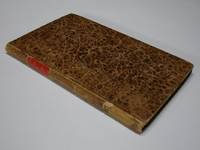
Leiden Lugduni Batavorum Apud S. et J. Luchtmans 1767. 12mo. VI408 p. Vellum 14 cm Ref: Schweiger 2980; Ebert; 21938 Details: The frontispiece depicts the author at a desk having a book before him; he seems to discuss with an emperor Trajan or Hadrian. In the background two rows with busts of emperors Condition: Binding age-toned and slightly soiled. Paper yellowing. One gathering loosening. Some small ink marks Note: The Roman historian Suetonius born c. 69 A.D is the most influential and best known biographer in the Latin language. He was appointed under the emperors Hadrian and Trajan to the secretarial posts of a studiis a bibliothecis and ab epistulis of the palace administration jobs that gave him access to the imperial archives. His Lives of the Emperors De vita Caesarum offers the biographies of 12 emperors from Caesar the founder of the imperial line to Domitian. 'Suetonius like Plutarch believed that a person's character could be revealed in small and insignificant details'. He 'organized his Lives by topics per species rather than chronologically' The Classical Tradition Cambr. Mass. 2010 p. 912/13. Beyond simplicity he has no stylistic pretentions. He quotes verbatim from documents he knew and shows critical ability. 'The great number of scurrilous anecdotes in most of the lives may be due to the nature of his sources'. OCD 2nd ed. p. 1020/1 § Suetonius was read in the Middle Ages. Einhard wrote a biography of Charlemagne along the lines of a Life of Suetonius. From the Renaissance onward he was neglected until the great edition of 1672 by Graevius. Gibbon praised this Roman historian for his strict dedication to historical truth. Nowadays 'historians of Rome take him more seriously than do literary critics'. The Classical Tradition Cambr. Mass. 2010 p. 913 § In the short preface to this edition of 1767 the publisher explains that he has noticed a demand for a handy pocket-Suetonius by schoolboys and men of letters eruditis. He mentions three available scholarly editions all excellent that of Burmannus of Ernesti and of Oudendorp. He compared inter se comparatis he goes on the text of these three editions and concludes that the best text to follow is of course that of Oudendorp of 1751 Oudendorpiam omnium accuratissime textum constitutum habere. This choice does not come as a surprise for Luchtmans was also the publisher of the 1751 edition of Oudendorp. § The Dutch classicist Frans van Oudendorp 1696-1761 is called by Sandys 'the last of the great Latinists of the third age of scholarship'. History of Classical scholarship' 2454 He was a student at Leiden of Jacobus Gronovius Jacobus Perizonius and Petrus Burmannus Sr and in 1740 he was appointed professor of history and rhetoric at his own University. He produced a series of important editions of Latin classics of Julius Sequens Lucanus Fronto Caesar and Apuleius. Van der Aa 14 267/68 In the preface of his Suetonius of 1751 Oudendorp declares that he is not a devotee of any text in particular nulli editioni addictus but that he chose to follow the editions published by Graevius 1672 1691 1697 and 1702 and by Gronovius 1698 and that he followed his own judgement. He consulted also 'haud sine fructu' several manuscripts for 'variae lectiones' Collation: pi3 A-P12 R10 S2 Photographs on request hardcover
Referentie van de boekhandelaar : 120449
|
|
|
HORATIUS
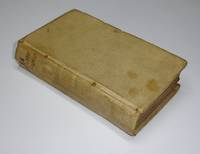
Quinti Horatii Flacci Opera. Cum novo commentario ad modum Joannis Bond.
Paris Parisiis Ex typographia Firminorum Didot 1855. 12mo. VIII462991 blank p. including a frontispiece engraved title 6 photo-lithographs 11 lithographed vignette headpieces 2 double page maps. Brown morocco 14 cm 'Pour quelques exemplaires la photographie cette merveille de notre siècle a reproduit les dessins mêmes de M. Barrias'. Ref: Brunet 3325; Graesse 3357 Details: Signed binding by the French bookbinder Lortic. Back with four raised bands lettered and with four gilt fleurons; gilt short title and imprint in the second and third compartment. Borders of the boards tooled in blind with in the corners a gilt floral element. A fine gilt centerpiece on both boards. Gilt inside dentelles edges gilt. Marbled endpapers. Engraved titlepage within floral borders. Photo-lithographed frontispiece made by the painter and illustrator Félix-Joseph Barrias 6 full page photo-lithographs of Horatian sceneries painted by Jean-Achille Benouville 11 lithographed vignette headpieces especially painted for this Didot edition by Barrias 2 double page maps designed by the engineer Rosa. All pages have rubricated borders. § Dated binding 1864 signed by Lortic. The Database of bookbindings of the British Library shows 37 copies bound by Lortic Condition: Cover a bit worn at the extremes. Some almost invisible discolouring near the outer margin of the upper board. Bookplate on the front pastedown. The right lower corner is partly and very faintly dampstained Note: This book is of interest for several reasons the binding is signed and dated and foremost it is one of the first works of a classical author which is illustrated with photographs. The first book with photographs ever dates from 1844 In the preface to this work of Horace the publisher Ambroise Firmin Didot tells that 'pour quelques exemplaires la photographie cette merveille de notre siècle a reproduit les dessins mêmes de M. Barrias'. Au lecteur p. IV. These photographically reproduced copies of pictures were separately printed and then mounted onto blank pages and they are protected by facing tissue guards. The pictures include a full-page frontispiece 6 landscapes of places associated with Horace and 11 scenes from the daily life in ancient Rome at the beginning of each book. This must have been an expensive production method for the firm Didot brought also cheaper copies on the market with engravings of the illustrations. § In the preface Didot boasts about the excellence of this edition and about the brilliance of its typography. The Didot brothers wanted to equal the beauty of the the edition of Horace published in 1676 by the Elzevier brothers which was edited and commentated upon by Johannes Bond Willems 1517. John Bond 1530-1612 was an English classical scholar famous as editor and commentator of Horace. His work is incorporated in many following editions of Horace. Bond's text & commentary were for this 1855 edition updated by the French scholar F. Dübner. The paintings photographed were made by Félix-Joseph Barrias 1822-1907 an eminent French artist who was a teacher of Edgar Degas and who was very esteemed in his time and by the wellknown landscape painter Jean-Achille Benouville Provenance: 'Austrian provenance': The first owner has done this chef-d'oeuvre of the Didot brothers justice because he had it beautifully bound. The binding is signed by the Parisian master binder P.M. Lortic 1822-1892. Before the title has been added a leaf with a dedicatory text printed in red & black: 'Oloris Venusiani opera/ Carolo Fidlero/ paris refert/ G. Comes ab Enzenberg'. The 'Olor Venusianus' The swan of Venusia is of course Horace who was born in Venusia on the 8th of dec. 63. B.C. The book was donated by a 'Graf G. Wilhelm Von Enzenberg' to one 'Karl Fidler' to equal a debt service or gift. The gilt centerpiece on the boards has in its center the initials K.F. There is a Karl Fidler from Gallicia born 1818 died in Vienna in 1887 who was from 1849 till 1886 a high official of the Austrian Ministery of Internal Affairs. In 1873 Karl Fidler and one 'Graf Enzenberg k.k. Ministerial-Concipis't were members of the 'Anthropologischen Gesellschaft in Wien'. Fidler is indicated here as 'Fidler Carl Ritter v. Sectionschef im k.k. Ministerium für Cultus und Unttericht'. In 1886 one year before his death he was succeeded as 'Sections-Chef' by Dr. Arthur Graf von Enzenberg. A coincidence § On the front pastedown the bookplate of 'Wilhelm Jerusalem'. This is most probably Wilhelm Jerusalem an Austrian Jewish philosopher and pedagogue born in 1854 who died in 1923 in Vienna. 'He studied classical philosophy at the University of Prague and did a doctorate on the theme The Inscription of Sestos and Polybios. Until 1887 he was a teacher at grammar schools in Prague and Nikolsburg. In 1888 he became a member of the staff of teachers at the grammar school 'k.k. Staatsgymnasium im VIII. Bezirk' in Vienna. In 1891 he was an outside lecturer Privatdozent at the University of Vienna. . After World War I he became an associate professor außerordentlicher Professor of philosophy and educational theory at the University of Vienna . In 1919 he became one of the teachers of the 'Schönbrunner Schule' Schönbrunn School which came about after the Vice Mayor of Vienna Max Winter had obtained a considerable part of the Viennese Schönbrunn Palace to be used for the advancement of the education of young women and a small number men to become educators and teachers. In 1923 Jerusalem became a Professor of the University of Vienna. He died of a heart attack. In 1954 a street the Jerusalemgasse in the 21. 'Bezirk' of Vienna was named after him. Source Wikipedia English & German hardcover
Referentie van de boekhandelaar : 120391
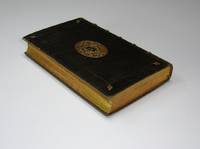
|
|
|
LIPSIUS,J
Iusti Lipsii De constantia libri duo. Qui alloquium praecipue continent in publicis malis. Quinta editio melior & notis auctior.
Leiden Lugduni Batavorum Ex officina Plantiniana apud Franciscum Raphelengium 1591. 8vo. XVI11981 blank p. 18th century boards. 16 cm. 'Lipsius' De Constantia 1584 was a perfect answer to the sorrows of his time'. Ref: STCN ppn 114587760; USTC 423043; cf. Brunet 31093; cf. Graesse 4220 Details: Plantin's woodcut printer's device on the title. The preliminaries contain a dedication to the council of Antwerp and a laudatory poem by Janus Dousa on Lipsius. The last leaf of the preliminary pages is a cancel; on the verso of this cancel is a poem in Greek by B. Vulcanius. The index at the end is preceded by a one page prayer by Lipsius to thank God for the recovery of a long illness when he was 32 Condition: Binding worn especially on the extremes. Head of the spine chafed. Back superficially damaged. 2 old ownership entries on the title. Title soiled. Paper yellowing some foxing Note: Justus Lipsius 1547-1606 the greatest Latin scholar of his time in the Netherlands came in 1579 to the recently founded University of Leiden 1575 to teach Latin. He resided there with great distinction as honorary Professor of History from 1579 till 1591. These were the years of his greatest productivity. It was during this time that he prepared his Seneca and perfected in successive editions his Tacitus and brought out a series of other works. Some were pure scholarship some were collections from classical authors and others were of general interest. Lipsius' greatest strength lay in textual criticism and exegesis. 'His masterpiece in this respect was his Tacitus of which 2 editions appeared in his life-time.' J.E. Sandys History of Classical Scholarship N.Y. 1964 vol. 2 p. 303. Lipsius edited only Latin prose writers. § Lipsius wrote a number of works which were to revive the philosophy of ancient Stoicism in a form that was acceptable to Christianity. The earliest and most famous of these is De Constantia in publicis malis On constancy in times of public calamity first published Leiden/Antwerpen 1584. Twenty years later 1604 Lipsius returned to this subject in a manual Manuductio ad Stoicam Philosophiam. His form of Stoicism created the intellectual movement of Neostoicism and had a direct influence on many contemporary seventeenth and eighteenth-century authors among whom Montesquieu Bossuet and Francis Bacon. § Lipsius published his De Constantia in the first decades of the Eighty Year's War 1568-1648 the Dutch war of independence a bloody political and religious rebellion of the United Provinces of the Netherlands against the king of Spain Philip II the sovereign of The Netherlands. After 1591 the year of this 5th edition Lipsius ate his words and sided with the Spaniards. King Philip nominated him even Historiographus Regius. In the ultima edition of 1599 Lipsius suppressed in a chapter in the second book II7 some lines directed against the Spanish warlord the duke of Alva. § De Constantia is a fictional dialogue and describes a two day meeting held in June 1571 between Lipsius and his host Karel de Langhe latinized as Carolus Langius canon of the Saint-Lambert cathedral. Lipsius tells in the beginning of the dialogue that he is on the run for the turmoil in war-stricken Flanders fugiens patriae meae Leuven turbas. Langius explains Lipsius that the unrest caused by war is a 'morbus animi' and that a sick soul caput 2 can only be cured by wisdom. remedia a Sapientia & Constantia petendum page 5 Constantia is defined as 'rectum et immotum animi robur non elati externis aut fortuitis non depressi'. p. 8 One should follow the Recta Ratio which leads to Constantia and avoid Opinio which leads to Levitas. caput 5 § De Constantia had a great impact. Hear what David Chytraeus a professor at Rostock advised his students: 'Kauffets ihr Studenten und lesets dann in tausent Jahren ist dergleichen Buch in Philosophicis nicht geschrieben oder gesehen worden'. A.M. van de Bilt Lipsius' De constantia en Seneca Nijmegen/Utrecht 1946 p. 40 Later scholars were less enthousiast and spoke of the work as a series of commonplaces and derivations from Seneca and Epictetus. Others praised Lipsius' endeavour to reach a compromise between Stoic philosophy and Christian faith. De Constantia went between 1584 and 1700 through more than 50 editions published in 22 cities in West and Central Europe and was translated into Dutch French German English Spanish Italian and Polish Provenance: Provenance Quedlinburg. On the title: 'Ex libris Sethi Cal/ visii Qued. Sax. 1658'. This is Sethus Calvisius Kallwitz born Leipzig 1596 died Quedlinburg 1663. He was an evangelical theologist from 1637 'Oberpfarrer an der Nikolaikirche in Quedlinburg'. See Pfarrerbuch der Kirchenprovinz Sachsen Bd. 2 2004 p. 152 § The second owner's inscription: 'H.M.A. Cramer . Q. 1767 et .' This is Heinrich Matthias August Cramer 1745-1801 pastor in Quedlinburg who translated a book on the New Testament into German Halle 1776 and is the author of several theological works. Q. of course stands for Quedlinburg. He might have found inspiration in 'De Constantia' for his book 'Unterhaltungen zur Befördering der häuslichen Glückseligkeit' Dessau 1782 § Collation: 8 A-H8 leaf H8 verso blank Photographs on request hardcover
Referentie van de boekhandelaar : 120430
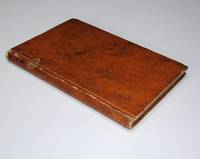
|
|
|
PLUTARCHUS & ISOCRATES
Plutarchi Chaeronensis peri PAIDÔN AGÔGÊS seu De puerorum educatione libellus. Analysi grammatica interpretatione simplici ad textum graecum & paraphrasi perspicua ad modum Iohannis Minellii illustratus studio M. Christiani Iunckeri Dresd. Ill. Gymnas. Sax. Henneb. quod Schleusingae est Conr. Bound with: Isocratis Attici rhetoris Orationes tres. I. ad Demonicum. II. ad Nicoclem. III. quae inscribitur Nicocles. Analysi grammatica interpretatione simplici ad textum graecum & paraphrasi perspicua ad modum Iohannis Minellii illustratae studio M. Christiani Iunckeri Dresd. Ill. Gymnas. Sax. Henneb. quod Schleusingae est Conr.
Leipzig Lipsiae Apud Maurit. Georg. Weidmannum 1719. 8vo. Two parts in 1 volume: XIV3813 stocklist p. Vellum 17 cm Ref: VD18 10402462; Ad 1: Hoffmann 3185; Ad 2: Hoffmann 2478 Details: Two title-pages both printed in red & black. On the left pages printed in two columns the Greek text and a parallel literal word for word translation into Latin; on the right page a polished translation on the lower half of the right pages notes in Latin Condition: Vellum soiled and spotted. Paper foxed and browning Note: The Greek philosopher historian and educator Plutarchus of Chaeroneia was born before 50 A.D. and died after A.D. 120. He is our most important witness of the spiritual climate of the first and second century A.D. He wrote numerous short treatises of popular moral philosophy which go under the general name of Moralia. They include debating themes works in the form of question and answer and serious discussions of philosophical topics. 'It is no exaggeration to say that Renaissance and early modern Europe discovered Greece and Rome through Plutarch's eyes'. The Classical Tradition Cambr. Mass. 2010 p. 748 The treatise 'de puerorum educatione' is the first treatise of the 'Moralia' No. 1 1a-14c. Since Wyttenbach's 'Moralia' edition 1795-1810 Animadvers. I 29-156 it is generally assumed on stylistic and grammatical grounds that this treatise cannot have been written by Plutarchus. Therefore it is very remarkable that a not genuine essay has such a strong influence on European intellectual and cultural life. 'The essay however is interesting in itself since it reflect in many ways the educational conditions of its time. Frankly recognizing the difference in natural endowments the author insists on the great benefits which inevitably come from training. Physical training is of course required and military training is held to be most important for preparing men to win in battle. A knowledge of philosophy is the final goal of education'. Plutarch 'Moralia' with English translation by F.C. Babbitt LCL 197 p. 3 § In the first half of the 18th century alone German scholars published editions in 1705 1719 1738 1744 1745 1749 1750. In 1738 and 1754 German translations appeared. There was evidently much demand for Plutarchus' treatise on the education of children in Germany in the 18th century. § The German historian and schoolmaster Christian Juncker born 1668 became Conrector in 1695 of the 'Hennebergisches Gymnasium Schleusingen'. In 1713 he was appointed Rector of the Gymnasium of Altenburg where he died in 1714. Juncker produced for the Leipzig publisher Weidmann a whole series of Latin school editions in the same manner as this Plutarch/ Isocrates edition of Sallustius Terentius Florus Horatius Vergilius & Suetonius. Weidmann reissued them for decades. They were made in the manner of the popular 'Latin made easy method' of the Dutch schoolmaster Johannes Minellius. The Greek ones first published in 1704 Juncker made as a next step for schoolboys who had already mastered the Greek of the New Testament. p. 2 verso Provenance: On front flyleaf in ink 'Weidlich 1793' Collation: 8 minus leaf 8; A - 2A-8 Photographs on request hardcover
Referentie van de boekhandelaar : 120393
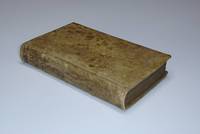
|
|
|
TERTULLIANUS
L'Apologétique et les Prescriptions de Tertullien. Nouvelle édition. Revue & corrigée d'après les Manuscrits les édtions & différens ouvrages de Tertullien avec la traduction & des remarques par M. L'Abbé de Gourcy vicaire général du Diocèse de Bordeaux de l'Académie Royale de Nancy.
Paris A Paris Chez Sorin Libraire rue de la Juiverie à côté de l' Église de la Magdeleine 1780. 12mo. XXXIV42361 blank p. Marbled calf 17.5 cm Ref: Ebert 22582 cf. Brunet 5730 Details: Latin text and French translation. Back gilt a gilt corn sheaf in 2 'compartments' and a red morocco shield. Endpapers & edges marbled. Woodcut ornament on the title. Excellent paper Condition: Small old paper label on the head of spine. Front joint starting to split Note: Not much is known about the beginning of christianity in the Roman province Africa. The first fact is the death in Carthago the capital of Africa of some Christian martyrs from the city of Scilli in 180 AD. With the work of Q. Septimius Florens Tertullianus the church in Africa enters the full light of history. He was born in Carthago ca. 160 studied law and rhetoric in Rome and became after the return to his native city a prominent and vigorous defender of the new faith. Tertullian is considered to be the founder of Western theology. His earliest work called Apologeticum according to the oldest manuscripts or Apologeticus according to Hieronymus Ep. 70 is 'einer der bedeutendsten und glänzendsten Werke Tertullians.' Bardenhewer 2399 It was written ca. 197 and in it we find a clear picture of the organisation and the method of working of the Christian community in Carthago with their bishops priests deacons and lectores baptized believers and catechumeni new members not yet baptized. The persecution of christians inspired Tertullian to write the Apologeticum in which he examined the foundation in Roman law of the persecutions. In this text addressed to the magistrates of the province of Africa Tertullian attacks also the pagan cults and makes it clear that Christians are loyal citizens of Rome. He argues that the persecution of Christians has no legal foundation and that laws which are iniquitous for christians should be abolished. First he refutes the allegations of immoral hidden rites occulta facinora for instance infanticide Thyestian meals or incest; he defends the christians against the accusation of neglect of the traditional worship and of sacrifices and prayers to the state gods on behalf of the Emperor on the ground that there is only one God and that false gods deserve no worship. Of singular beauty and effect is Tertullian's description of parish life of the christians in chapter 39. Christians are not bad citizens their strict moral code makes them refrain from the things which the law forbids. In the last chapters he rejects the idea that christianity is a kind of philosophy. The christian creed is a divine revelation and superior to human philosophy. § Besides the Latin text and French translation of the Apologeticum this volume of 1780 contains also a text and translation of Tertullian's De praescriptionibus adversus Haereticos. We quote Rose about this treatise: 'Heresy was always an especial bugbear of Tertullian and he set out fairly early about 200 to define it. Like a true lawyer he laid down a praescriptio otherwise known as an exceptio an objection to be raised which if sustained would save the controversialist the trouble of any further inquiry into the merits of his opponent's case. Can the propounder of the new doctrine trace it back to the Apostles If so it is Catholic teaching; if not it is heresy and there the matter ends. Hence the title of his work de praescriptione haereticorum. H.J. Rose A Handbook of Latin literature London 1967 p. 474. The Frenchman De Gourcy 1709-1805 was a successful defender of christianity in an age of enlightenment and growing atheism and deism. The two masterpieces of Tertullian 'le plus mâle peut-être & le plus vigoureux dont l'antiquité sainte puisse se glorifier' Préface p. III were translated by him under the auspices of the Catholic Church. Like Tertullian who wanted to immunize christians against heresy De Gourcy tried to immunize against protestantism and atheism. He was 'un des ecclésiastiques que l'assemblée du clergé de France employa pour écrire contre les nouveaux philosophes à l'époque où ils inondaient l'Europe de leurs livres antireligieux. . Le caractère des ouvrages de l'abbé de Gourcy est la méthode et la netteté des idées. Son style est simple et sa critique judicieuse ses raisonnements sont solides et ses connaissances étendues.' He published also on Descartes 1765 the laws of Lycurgus 1768 Rousseau 1772 and Suite des anciens apologistes de la religion chrétienne traduits et analysés 1785. Biographie Universelle Michaud Ancienne et Moderne. Nouvelle édition Tome 17 Paris n.d. 246/47 His translation of Tertullian found several reprints Collation: a12 b6 minus leaf b6; A - S12 Leaf S11 verso and S12 blank Photographs on request unknown
Referentie van de boekhandelaar : 120377
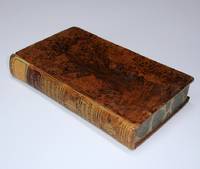
|
|
|
ATHENAGORAS & HERMIAS PHILOSOPHUS
Sancti Athenagorae Atheniensis Philosophi Deprecationem vulgo Legationem pro Christianis. Edidit M. Io.Gottlieb Lindner rector Scholae Arnstadiensis. Bound with: HERMIOU PHILOSOPHOU DIASURMOS TÔN EXÔ PHILOSOPHÔN. Hermiae Philosophi Gentilium Philosophorum Irrisio. Cum adnotationibus Hier. Wolfii Thomae Galei Wilh. Worthii suisque. Graece in usum praelectionum separatim edidit Jo. Christoph. Dommerich dialect. et philosoph. primae professor P.O. in Academia Helmstadiensi.
Langensalza Longosalissae Sumptibus Io.Chr. Martini 1774. Ad 2: Halle Halae Apud Carolum Hermannum Hemmerde 1764. 8vo. 2 volumes in 1: XXXIV23828 index; 10831 blank p. Late 19th century half cloth 17 cm Ref: Ad 1: Hoffmann 1400: 'Dem Text sind schätzbare Anmerkungen beigefügt'; Brunet 1537; Graesse 1245; Ebert 1322; Ad 2: Hoffmann 2214; Brunet 3117: 'Seule édition séparée de cet ouvrage'; Graesse 3251; Ebert 9495 Details: Some woodcut ornaments. Ad 1: After the introduction comes the Greek text with at the lower part of the pages some critical notes and the commentary. Ad 2: After the introduction come 16 pages with the Greek text followed by 70 pages commentary Condition: 19th century binding. Two small paper labels with shelf numbers on the frontcover. Two small stamps on the title. Title of first work slightly soiled. Paper of second work yellowing Note: Athenagoras of Athens a converted pagan philosopher was a Christian apologist who addressed between 176 and 180 AD an apology called 'presbeia' legatio to the emperor Marcus Aurelius Antoninus died 180 and Commodus appointed 176 in which he refuted traditional charges against the Christians of atheism canibalism and incest. Athenagoras is considered to be the most eloquent of the Greek apologists. His 'Legatio' in this 1774 edition called 'Deprecatio' is in the form of a speech composed according to the rules of Greek rhetoric. Through his wide reading in pagan literature he had a good grip of Greek philosophy and religion. He used technical philosophic terms that were current among educated pagans. His style is elegant 'free from superfluous expressions forcible and at times rising to great heights of descriptive power. His arrangements of material is always clear and his argument moves forward quietly and majestically. Even when apparent irrelevant mythological references are introduced they are made to serve Athenagoras' purpose of holding the hearer's and reader's attention and providing interesting information'. L.W. Barnard 'Athenagoras: A Study in Second Century Christian Apologetic' Paris 1972 p. 32 § Johann Gottlieb Lindner born in 1726 was appointed Prorector of the school in Langensalza through the agency of Ernesti. In 1765 be became Rector of this local Lyceum. He died in 1811. Allgemeine Deutsche Biographie 18/705-706 His notes to Athenagoras deserve particular attention. Ad 2: Hermias Philosophus 'was an obscure Christian Apologist presumed to have lived in 3rd century. Nothing is known of him except his name. He wrote a Derision of heathen philosophers 'diasurmos tôn hexo philosophôn' in Latin 'Gentilium Philosophorum Irrisio' a short parody on Greek philosophy themes the nature of the body the soul the world. From Paul's statement in the First Epistle to the Corinthians that 'all worldly knowledge is madness from God' he affirms that all philosophical doctrines come from the apostasy of the angels and are therefore wrong and laughable. Hermias relies rather on cynical and skeptical culture critique and on philosophical biographies and anedoctes than in their real writings if he had ever read them'. Source: Wikipedia's article 'Hermias' which offers also a link to the English translation by J.A.Giles 1857. See also the pages on Hermias on the site: 'The Tertullian Project' § Johann Christoph Dommerich 1723-1767 was since 1759 professor of 'Logik und Metaphysik' at the University of Helmstedt Allgemeine Deutsche Biographie 5/326-327 Provenance: On the title a stamp of 'Bibliotheca Conventus Woerdensis' and of 'Studiehuis Minderbroeders Nijmegen' Collation: a-c8 A-R8 minus the blank leaves R6 R7 & R8; A-G8 leaf G8 verso blank Photographs on request hardcover
Referentie van de boekhandelaar : 120380
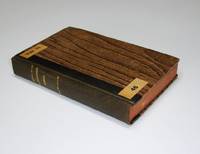
|
|
|
GRONOVIUS,JF J F
Iohannis Frederici Gronovii Observationum libri III ad Wilhelmum A.F.P.N.W.P. Vandermaerium I.C. Bound with: Censorinus De die natali. Henric. Lindenbrogius recensuit et notis iterata hac editione passim adauctis illustravit. And bound with: Iohannis Frederici Gronovii De Sestertiis commentarius.
Ad 1: Leiden Lugduni Batavorum Apud Isaacum Commelinum typis W. Christiani 1639. Ad 2: Leiden Ludgduni Batavorum Ex officina Ioannis Maire 1642. Ad 3: Deventer Daventriae Typis Conradi Thomaei Typogr. 1643 8vo. 3 volumes in 1: XXIV27921 index; XVI25038 index; XVI1355 blank p. folding table with an astrological diagram in the Censorinus Overlapping vellum 16 cm Gronovius' Observationes marked a considerable advance in the study of Latin prose Ref: Ad 1: cf. Graesse 3161. Ad 2: Breugelmans 16423 p. 490; Schweiger 2101; cf. Graesse 2101; Ebert 3909. Ad 3: cf. Brunet 29063; cf. Ebert 8961 Details: Woodcut printer's mark on all 3 titles the third of which depicts a Phoenix that holds between its wings an opened book with on the pages an Alpha and Omega the motto reads Renovabitur. Short title in ink on the back. § The mysterious dedicatee on the title is most probably Willem van der Meer from Delft who matriculated in 1629 at the age of twenty in Leiden. This Willem might have been the son of the Councillor of the 'Hof van Holland' the 'High Court of Holland' Abraham Pietersz. van der Meer member of the political elite of Delft who died in 1638. See 'Hugo de Groot Briefwisseling van Hugo Grotius'. Deel 17 Den Haag 2001 p. 477. The son of Abraham Willem van der Meer 1613-1668 became a lawyer at the 'Hof van Holland'. The connection with Delft is confirmed by the provenance of a 15th century manuscript of Cicero's Epistulae ad Familiares Cod. Guelf. 85. 11. Aug. fol. Katalognr: Heinemann-Nr. 2898 held in the Herzog August Bibliothek Wolfenbüttel and upon which is found the name: Wilhelmus A. F. P. N. W. P. van der Meer Delfensis. Prudentia et simplicitate'. We know also that Van der Meer was a jurist I.C. Gronovius mentions Vandermaerius in a letter to Nicolaas Heinsius dated 30 november 1638. He writes that he and Vandermaerius have bought books at an auction. It is obvious that Heinsius knew him too. Sylloges Epistolarum A Viris Illustribus Scriptarum Tomus III 1727 Ep. 62 May we suggest the following solution for the initials: Abrahami Filius Petri Nepos Wilhelmi Pronepos. If this is right then our Wilhelmus van der Meer son of Abraham Pieterszoon van der Meer and great-grandson of Wilhelmus Willemsz van Alcmaer is indeed the dedicatee. Compare for this kind of abbreviation Paullus Merula's subscription in several Alba Amicorum where he signed Paullus G.F.P.N. Merula i.e. Guilielmi Filius Paulli Nepos Merula See for the ancestry of Van der Meer Wikipedia: Van der Meer de Walcheren Condition: Cover dust-soiled & spotted. Small oval stamp on the front flyleaf. Right upper corner of a few leaves in De Sestertiis slightly wrinkled & soiled Note: Ad 1: The Dutch classicist of German origin Johann Friedrich Gronov or Gronovius 1611-1671 became in 1658 the successor of Daniel Heinsius on the Greek chair of the University of Leiden. He was influenced by Vossius Grotius Heinsius and Scriverius. His editions mark an epoch in the study of Livy of Seneca Tacitus & Gellius. His interest in textual criticism of Latin poetry was due to the discovery of the Florentine MS of the tragedies of Seneca. In his riper years 'the acumen exhibited in his handling of prose is also exemplified in his treatment of the text of poets such as Phaedrus and Martial Seneca and Statius'. Sandys History of Classical Scholarship 2321 His collections with Observationes belong to his best works they offer a dazzling number of erudite observations on Roman law and history and brilliant emendations. After this Observationum libri III of 1639 Gronovius published in Deventer in 1652 his Observationum liber novus. And of the first three books of observations there appeared a second emendatior and auctior edition in 1662 Leiden. The German philologist Fr. Platner combined the libri tres and the liber novus of Gronovius in 1755 Leipzig. In the 19th century the German C.H. Frotscher added to these four books Gronovius' Observationum in scriptoribus ecclesiasticis monobiblos 1831 which he had published in 1651. The great classical scholar Ulrich von Wilamowitz-Moellendorff argued that Gronovius surpassed without doubt Daniel Heinsius in scholarship. 'His Observationes marked a considerable advance in the study of Latin prose . The book is in the usual miscellany form; but his methodical treatment and his concentration on the single object of providing an introduction to the language of the period hold the whole thing together. As recently as fifty years ago 1860th German students were still urged to read him for themselves. At the same time he by no means neglected the subject matter of his authors and wrote successfully on the Roman coinage. U. von Wilamowitz-Moellendorff History of classical scholarship ed. H. Lloyd-Jones London 1982 p. 72 Ad 2: The Roman grammarian Censorinus lived in the first half of the third century A.D. Of him survives De die natali dedicated to his patronus Q. Caerellius on his birthday in A.D. 238. The first part deals with the genetic and astrologic aspects of the date of birth and furthermore numerical mysticism. The second with time and divisions. Its sources are Varro Suetonius De anno Romanorum and several Greek authorities on procreation embryology botany and music. This work is valuable for its otherwise lost sources. The German scholar Heinrich Lindenbrog 1570-1642 published in 1614 in Hamburg his first edition of Censorinus. A revised and augmented second edition was published in Leiden in 1642. Lindenbrog studied classics in Leiden under J.J. Scaliger. After his studies he made a tour which brought him and his friend Johannes van Wouweren to France to the monastery of St. Victor. It was told that they stole there with the help of a monk 16 manuscripts. They became known as 'Les Corsaires de Hamburg'. He was arrested but came free with the help of the French scholar Pierre Dupuy Puteanus the son of the humanist and bibliophile Claude Dupuy who was a great collector of manuscripts. Little is known of the rest of Lindenbrog's life. From 1610 onward till his death he was the librarian of Duke Johann Adolf von Holstein who had assembled in Gottorp a great collection of books. He made his name as a philologist with this Censorinus edition. ADB 18693 Ad 3: Having studied at several universities and travelled in England Holland France and Italy Johannes Fredericus Gronovius came in 1642 to the Dutch city Deventer where he was appointed professor of rhetoric and history at the local Athenaeum Illustre. He didnot regret this modest step for he married there the 22 years old Aleida Ten Nuyl with whom he had a happy marriage and had seven children. In 1658 he left for Leiden. In 1643 he had published in Deventer his De sestertiis commentarius. Gronovius had more interests than editing commenting and textual criticism. During his academic career he published also important works on numismatics and on money in the ancient world. In 1643 he published this De sestertiis commentarius. This small work later grew into Gronovius' famous De Sestertiis seu subsecivorum pecuniae veteris Graecae & Romanae libri IV which was first published in 1656. Gronovius is considered to be 'einer der Wegbereiter der Forschungen über das antike Münzwesen'. NDB 7127 Provenance: Stamp: 'Dr. A. Hinsbergs Bibliothek Hinsberg'. In ink has been added in the stamp: 'Adolf' and 'No. 7724'. Dr. jur. Adolf Hinsberg 1868-1933 lived at Unt. Lichtenplatzerstrasse 108 in Barmen and was 'Rechtsanwalt' and 'Justizrat'. He must also have been a bibliophile considering the number in the stamp. He must have been a freethinker for he was also involved in the feminist movement of the Wilhelmine period 1888-1918 Collation: Ad 1: 8 24; A-T8 minus blank leaves T7 & T8. Ad 2: 8 A-S8 folding table between leaves F4 & F5. Ad 3: 8 A-H8 I6 leaves I4 verso I5 & I6 blank Photographs on request hardcover
Referentie van de boekhandelaar : 120356
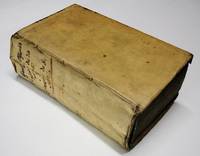
|
|
|
PETIT,P
Petri Petiti Philosophi & Doct. Medici De Amazonibus dissertatio qua an vere extiterint necne variis ultro citroque conjecturis & argumentis disputatur. Multa etiam ad eam gentem pertinentia ex antiquis monumentis eruuntur atque illustrantur. Editio secunda auctior & correctior.
Amsterdam Amstelodami Apud Johannem Wolters & Ysbrandum Haring 1687. 12mo. XII3983 addenda1 blank8 index p. more than 50 engraved text illustations on 39 p. of which one is full page; folding map frontispiece. Overlapping vellum 16.5 cm Ref: STCN ppn 102316597; Brunet 41 529; Graesse 5219 Details: 5 thongs laced through the joints. The frontispiece designed and executed by Joh. van den Aveele depicts a seated Amazone in the background a battle scene obviously inspired by Rubens' painting 'Battle of the Amazons' or 'Amazonomachia'. The map 24x18 depicts the Eastern Mediterranean Condition: Neat ink inscription on the front flyleaf name on the front pastedown. Some gatherings yellowing some at the end browning Note: Greek mythology situated the nation of the Amazons a tribe of virile warrior-women on the borders of the ancient world somewhere along the Danube. Homer for instance tells that their queen Penthesilea came to the help Priamus after Hector's death and that she was killed on the battlefield by Achilles. The heros Heracles campaigned against the Amazons to get their queen's girdle and Plutarch tells how king Theseus was besieged by the Amazons and how their queen Hippolyta came close to conquer Athens. Herodotus located the tribe in the land of the Sarmatae or Sauromates on the Balkan. § The Amazons a female nation skilled in the masculine art of warfare caught the fancy not only of Greek authors but also of sculptors and painters. They were very popular in art from the 7th century B.C. The female warriors wore short tunics sometimes Scythian trousers and often showed one breast. After the Renaissance the epithet 'Amazon' designated a woman on horseback and was usually offered as a compliment. Jeanne d'Arc fought like an Amazon and as proof of military might the Flemish painter Rubens painted Maria de Medici in the guise of 'Minerva Victrix' her right breast bared. The female military prowess however was also considered to pose a threat to civilization. In Germany some protestant demonologists drew a link between Amazons witches and witchcraft. There was however no consensus in modern Europe as to the historical existence of the Amazons. There were reports of Amazon societies in the New World others maintained that because Hippocrates a most reliable source spoke of them the story of Amazons could not be mere legend. In his 'De Amazonibus dissertatio' Pierre Petit or Petrus Petitus tried to prove with the help of the reports of ancient historians of old coins medals reliefs and monuments that the warrior-women of Greek myth really existed in antiquity but that the 'Amazons were never a nation of self-sufficient women. Petit points out correctly that although Hippocrates describes the Amazons on horseback wielding arms and killing men he also characterizes them as the wives of the Sauromates. In the late 17th century improved philology gave rise to skepticism with regard to the historical existence of a tribe composed exclusively of warring woman another skeptical current which Petit traces back to the Greek geographer Strabo ca. 58-25 B.C. dismissed the Amazons as legend because of the impossible male/female inversion they presented'. R.M. Wilkin 'Women Imagination and the Search for Truth in Early Modern France' Aldershot 2008 p. 48 To the 20th century the Amazons have become a topic of feminist studies subject of Broadway productions inspriration for television series and the game industry. § The French scholar Pierre Petit 1617-1687 published on medical subjects e.g. on blood transfusion canibalism the history of tears through the ages and on some classical authors. His 'De Amazonibus dissertatio' was first published in 1685 by the Parisian printer Cramoisy. A French translation was published in 1718 in Amsterdam Provenance: On the front pastedown: 'M. Johannes Sartorius'. This Sartorius also wrote on the front flyleaf: 'Petrus Petit de Amazonibus scripsit tanta diligentia quantam expectari fas erat a doctissimo viro qui nihil quod in hisce nummis ad Historiam vel ad Geographiam pertineret inexplanatum relinquere voluit'. The source of this quote has been added: 'Anselmus Banduri in Bibliotheca Nummaria p. 57'. This work was published in Hamburg in 1719. § The owner probably was Magister Johannes Sartorius 'Polyhistor und Schulmann' 1656-1729. He took his Magister degree in 1678 at the University of Wittenberg and was appointed Professor at the Gymnasium in Thorn. In 1699 he became Rector of the Gymnasium in Elbing. He left in 1704 for a professorship 'der Poesie und Beredtsamkeit' at the academic Gymnasium in Danzig. Allgemeine Deutsche Biographie 30 1890 p. 388 Collation: pi2 4; A-P12 Q10 R12 leaf R11 verso blank minus blank leaf chiR12 R4 Photographs on request hardcover
Referentie van de boekhandelaar : 120431
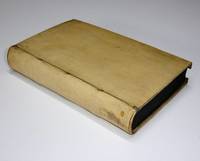
|
|
|
ARISTOPHANES
ARISTOPHANOUS KÔMÔiDIAI iá. Aristophanis comoediae undecim graece & latine cum indice paroemiarum selectiorum et emendationibus virorum doctorum praecipue Josephi Scaligeri. Accesserunt praetera Fragmenta ejusdem ineditarum comoediarum Aristophanis.
Leiden Lugduni Batavorum Ex officina Joannis Maire 1624. 12mo. XXIV935156 recte 60 p. Contemporary boards 14 cm Ref: Breugelmans 16242 with a note on the date he suggests a date after 1626; Hoffmann 1254 a very elaborate description; Dibdin 1299; Smitskamp The Scaliger Collection 5; Brunet 1453; Moss 194: 'a beautiful edition'; Graesse 1207; Ebert 1090 Details: Greek text and Latin translation. Binding: marbled paper over boards. Back ruled gilt and with a red letter label. Edges dyed red. Printer's device on the title: a shoveling farmer above his head the motto 'fac & spera'. 6 woodcut initials Condition: Binding worn at the extremities. Paper on both joints split. Back rubbed. Front flyleaf gone. Inner hinge a bit weak. The title leaf shows two small tears in the gutter Note: This edition has been praised by some critics; it contains a few short but useful notes by the famous French scholar Joseph Scaliger 1540-1609. § Of the Greek comic playwright Aristophanes ca. 455-385 BC born in the radical democracy of Athens survive 11 plays. In a less free society his genre became obsolete in his own time and was later replaced by the harmless plays of Menander. 'Aristophanes' comic mode- a dramatic free form with an almost improvisational feel great poetic and linguistic inventiveness highly topical satire public figures being named and personated on stage and obscenity beyond almost any subsequent standard of acceptability'- never again became a major theatrical tradition'. The classical tradition Cambridge Mass. 2010 p. 69 This opinion seems outdated. Aristophanes sounds very much like modern satyric comedy. He seems to be the creator of his own genre. The 2nd edition of the OCD 40 years older sounds more sympathetic. 'He had a keen eye and ear for the absurd and the pompous; his favoured media are parody satire and exaggeration to the point of phantasy and his favourite targets are men prominent in politics contemporary poets musicians scientists and philosophers and . for a wide public'. OCD 2nd ed. p. 113 § Serious scholarly work on the text of Aristophanes begins in the 16th century with Petrus Victorius J.J. Scaliger and his friend Willem Canter. A new edition with Scaliger's notes was published posthumously in 1624 by Maire in Leiden this edition. That Scaliger a man with a sharp tongue who had loads of ennemies was an admirer of the comic playwright is no wonder. The following epigram can be read in the introduction to Scaliger's text of 1624: Ut templum Charites quod non labatur haberent/ invenere tuum pectus Aristophanes The Graces have found for themselves a temple that would not fall down your breast Aristophanes. p. 8 verso The notes of Scaliger originate from two printed editions once owned by the great man himself and furnished for publication by the Dutch scholar G.J. Vossius 1577-1649 § The Latin verse translations of the Plutus Nubes Ranae Equites and Archanenses were made by Nicodemus Frischlinus that of the Vespae Pax and Lysistrata by Q Septimius Florens Christianus and a prose translation of the Aves Ecclesiazusae and Thesmophoriae by Andreas Divus. Typographus lectori p. 2 recto. After the Greek text of Aristophanes' plays starts at page 898 a 16 page section 'Index vocum et versuum proverbialium' followed by 18 pages with 'Notae excerptae ex variis lectionibus emendationibus et coniecturis virorum doctorum ac potissimum duobus exemplaribus manu Josephi Scaligeri emendatis e Bibliotheca Gerardi Vossii.' At the end we find the 56 recte 60 page Fragments section which was once edited by the Dutch scholar Willem Canter or Gulielmus Canterus with a preface of Andreas Schottus and now produced by the Dutch theologian Willem van der Codde or Gulielmus Coddaeus 1574- after 1625 Collation: 12 A-2Q12 A-B12 C6 Pagination irregular in the fragments part at the end between the gatherings A and B. The page numbers jump back from 24 at the end of A to 21 at the beginning of B else all correct Photographs on request hardcover
Referentie van de boekhandelaar : 120381
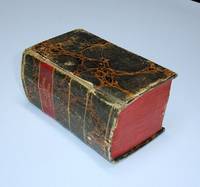
|
|
|
VOLNEY,CF C F
Les ruines ou méditation sur les révolutions des empires. 12e édition. On y a joint La loi naturelle.
Paris Bossange Frères Libraires 1822. XXV1 blank3831 blank p. engraved portrait engraved frontispiece 1 engraved plate and 2 folding tables showing a map of Europe Africa & Asia and a celestial map with the signs of the zodiac. Half calf 13.5 cm Condition: Boards and corners somewhat scuffed. Some slight foxing Note: The French historian philosopher and orientalist Constantin François de Chassebuf de Volney 1757-1820 is one of the founding fathers of the Black Athena theory. After a trip to the Middle East in 1782 he suggested that the ancient Egyptians were originally black Africans and that the Egyptians of his time were mulats with mixed blood. 'Les anciens Égyptiens étaient de vrais Nègres de l'espèce de tous les naturels d'Afrique; et dès-lors on explique comment leur sang allié depuis plusieurs siècles à celui des Romains et des Grecs a dû perdre l'intensité de sa première couleur en conservant cependant l'empreinte de son moule originel .; de penser que cette race d'hommes noirs aujourd'hui notre esclave et l'objet de nos mépris est celle-là même à qui nous devons nos arts nos sciences et jusqu'à l'usage de la parole'. Voyage en Syrie et en Égypte pendant les années 1783 1784 & 1785 Paris 1785 p. 75/6 § In 1791 Volney published his 'Les Ruines ou méditations sur les révolutions des empires' an essay on the philosophy of history. 'L'auteur se met en scène sur les ruines de Palmyre; et là il se livre à de profondes méditations sur la destruction de tant d'empires à qui leur puissance colossale semblait promettre une éternelle durée et qui n'en ont pas moins obéi à cette loi de la nature qui veut que tout périsse. Dans ce même ouvrage Volney établit la nécessité de la tolérance religieuse reconnue aujourd'hui par tous les esprits éclairés. . Les Ruines n'en passent pas moins pour une des productions les plus remarquables de la littérature de la fin du XVIIIe siècle'. Wikipédia s.v. Volney Some of the central ideas in Les Ruines stirred the imagination of its readers. It predicted the final union of all religions by the recognition of the common truth underlying them all and stated that empires rise if government allows enlightened self-interest to flourish Photographs on request hardcover
Referentie van de boekhandelaar : 120374
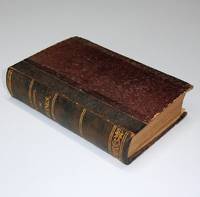
|
|
|
JUVENALIS
D. Iunii Iuvenalis Satirarum libri V. Sulpiciae Satira. Nova editio cura Nicolai Rigaltii.
Paris Lutetiae Ex officina Rob. Stephani 1616. 12mo. XL1262 blank p. 19th century half cloth. 13.5 cm 'The most important most widely read most influential classical poet throughout the 17th and 18th centuries' Ref: Schweiger 2503/04: 'Neue Recension nach Handschriften. Die Noten sind kurz und von Werth. Sauber und nicht häufig'; Dibdin 2154 on the editions of 1613-1616: 'These editions especially the latter are classical and correct and the type is beautiful'; Renouard Robertus tertius p. 202; Moss 2158; Graesse 3520; Ebert 11236 Details: Back ruled gilt boards marbled. Woodcut printer's Olive tree device of the Stephanus family on the title motto: 'Noli altum sapere sed time' in English 'Donot be high-minded but fear'. Epistola Beati Pauli ad Romanos 1120 The preliminaries of this book contain N. Rigaltius' treatise 'De satira Iuvenalis' and five pages testimonia; p. 1-105 contain the text of the satires p. 106-126 the notes of Rigaltius which are highly praised by the bibliographers; Ebert observes: 'The notes are short but full of matter' Condition: Corners slightly bumped. The last 6 pages containing notes of Rigaltius have been bound by mistake at the end of preliminary pages Note: The Roman poet Juvenalis ca. 55-140 AD was the last and the greatest of the Roman satirists. He left 16 hexametric satires in five books averaging 750-800 lines each and apparantly arranged in the order of publication. He 'uses names and examples from the past as protective covers for his exposés of contemporary vice and folly'. The Classical Tradition Cambr. Mass. 2010 p. 501 In the first satire already Juvenal writes that he cannot help writing satire seeing the corruption of Rome and confesses that for safety reasons he lived in an age of absolute monarchy he would only attack the dead. His main theme is the dissolution of the social fabric in a city that was swelling like a tumor where wealth was unevenly divided and which was filled with the smell of decay. 'Something more like that age was born in the 17th century and lasted until revolutions destroyed it. Something like Juvenal's Rome appeared in Venice and Paris and Madrid and London; men and women very like his Juvenal's courtiers and courtesans swaggered through Versailles and Blenheim and scores of petty palaces; men like Juvenal himself were flogged by the duke's footmen or after waiting in the earl's vestibule were repulsed from his door. Much of what Juvenal says is permanently true and has been admired through many changing centuries. But when his poems are read in an age like that which produced them they acquire a double energy an intenser truth. So throughout the 17th and 18th centuries he was one of the most important most widely read most influential best understood classical poets'. G. Highet 'Juvenal the satirist' Oxford 1955 p. 213/14 § Wikipedia offers very sketchy information about the French classical scholar Nicolaus Rigaltius or in French Nicolas Rigault 1577-1654. His Vicipaedia article is however perfect it contains useful information literature and links on this lawyer scholar and libarian after Casaubon of Louis XIII. In 1599 he published the 'editio princeps' of the 'Strategicon' of Onosander and later on he produced texts and commentaries of several classical and byzantine authors e.g. 'Phaedrus' 1599 'Nicolai Rigaltii Glossarium taktikon mixobarbaron' 1601 'Martial' 1601 'Oneirocritica' 1603 'Rei accipitrariae scriptores' editio princeps 1612 'Menandri et Philistionis sententiae' 1613 'Juvenal' 1616 'Tertullian' 1628 'Minucius Felix' 1643 'Cyprianus' 1648. § The French scholar Pierre Pithou 1539-1596 published in 1585 a superior text of Juvenalis and Persius. This edition served in 1616 as a model to Rigaltius whose edition in its turn served as a model to editors of Juvenalis for almost 200 years. Housman 1931 Collation: a12 b8; A-E12 F4 The last gathering gathering F p. 121/126 was bound erroneously between the leaves b4 and b5 of the preliminariary leaves; leaf F4 blank Photographs on request hardcover
Referentie van de boekhandelaar : 120360
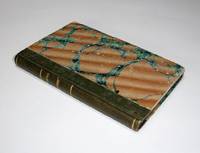
|
|
|
PINDARUS
Pindari carmina. Ex editione Chr. Gottl. Heyne.
Oxford Oxonii Typis N. Bliss impensis M. Bliss et R. Bliss 1808. 16º 2 volumes in 1: IV 2302 blank;1382 blank p Black morocco 12 cm Ref: Hoffmann 3100: 'Schöne Ausgabe'; Schweiger I236; Brunet 4660; Graesse 5295; Ebert 16880; Not in Gerber; Rico Ensayo de bibliografia Pindarica p. 3 Details: Back gilt and with 3 raised bands. Boards with double fillet gilt borders. Within these borders a band of blind-stamped floral motives. Edges of the boards and of the book-block gilt. Gilt inside dentelles. Charming and fine typography. The odes are preceded by explanatory 'argumenta'. There is no Latin translation nor commentary Condition: Wear to the extremes of the binding. Ownership inscription on the front flyleaf Note: A quarter of the works of the Greek poet Pindar ca. 518-438 B.C. his four books of epinicia named after the Great Games the Olympian Pythian Nemean and Isthmian survive. Pindar wrote eulogistic hymns to celebrate a victory in athletics boxing and horse racing. Praised in a magnificent way are the victor his family the native city. 'Each ode draws from a variety of historical cultural and mythological sources. The highly allusive manner by which this material is presented is complemented by an equally rich repertoire of metrical patterns from epic Doric and Aeolic systems'. The Classical tradition Cambridge Mass. 2010 p. 729 'Extended similes and difficult metaphors intricate syntax and rapid narration far-reaching digressions and bold disruptions' result in grandiose but also enigmatic poetry. § Pindar's influence on European literature is great. The great number of editions and translations of Pindar's odes that were printed in the 16th century are an indication of a widespread humanist interest. Pindar was with the Roman poet Horace the chief classical model for modern formal lyric poetry. The poets of the Renaissance borrowed first of all thematic material from Pindar. 'They enriched their language on the model of Pindar's and Horace's odes taking it father away from plain prose and from conventional folk-song phraseology. And in their eagerness to rival the classics they made their own lyrics more dignified less colloquial and song-like . more ceremonial and hymn-like'. G. Highet 'The classical tradition' Oxford 1978 p. 230 § Many of Pindar's maximes and punctuated statements containing elements of traditional wisdom were collected in Renaissance anthologies of 'sententiae'. 'Pindar . provided the Humanists of the Reformation with pithy statements of moral instruction and wordly advice which ensured the poet's place in pedagogical circles. Moreover as a source of proverbial wisdom Pindar was elevated nearly to the status of biblical Salomon. . The sheer variety of Pindarically influenced traditions -the political ode and the personal the religious hymn and the song of genius the freely aimless and the rigorously concise- all serve as a testament not only to Pindar's versatility but also to his rich potential to inspire'. The Classical tradition Cambridge Mass. 2010 p.729/30 § The German classical scholar Christian Gottlob Heyne 1729-1812 was according to Sandys not an original genius. 'He was a many-sided scholar who studied and expounded ancient life in all its successive phases and became the founder of that branch of classical teaching that deals with the study of Realien'. Sandys 3 p.40 The criticism and exposition of ancient poetry is represented in his still important editions of Tibullus Vergil Pindar and the Iliad of Homer. His textual criticism is weak. 'His choice among different readings is guided more by personal preference than by an impartial weighing of the evidence'. . The preparation of the metrical part of his Pindar was entirely entrusted to Hermann then 25 year of age. Heyne's own interest lay not in the metre but in the subject-matter of the Odes'. Idem ibidem Provenance: On the front flyleaf: 'Louis LeBrun from his sincere friend W.L. 11 Mars 1859' Collation: pi2 B-P8 Q4 leaf Q4 blank; pi2 B-I8 K4 leaf K4 blank Photographs on request hardcover
Referentie van de boekhandelaar : 120415
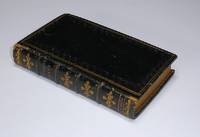
|
|
|
CYPRIANUS
D. Caecilii Cypriani Episcopi Carthaginiensis et martyris opera.
Lyon Lugduni Apud Seb. Gryphium 1550. 8vo. 466 recte 45613 index12 blank; 4566 index1 blank1 printer's mark p. Half calf over wooden boards 18 cm Ref: USTC 123042; Schoenemann 1117 & 119 mentions editions of Sebastianus Gryphius of 1528 and 1544; Graesse 2316 mentions a Gryphius' edition of 1544; a quick search in KVK yields other Gryphius editions of 1535 and 1537; Baudrier 8239 Details: Back with 4 raised bands. Red morocco shield on the back. Gryphius' woodcut printer's mark on the title depicting a griffin which mythological animal symbolizes courage diligence watchfulness and rapidity of execution used as a pun of his family name Gryph or Greif. From the claws of this creature hangs a big rectangular stone beneath which is a winged orb. The motto is 'Virtute duce / comite fortuna' 'Virtue thy leader fortune thy comrade' a quote from a letter of Cicero to Plancus Epistulae ad Familiares liber X3. On the last page of the second volume a woodcut griffin. The text is printed completely in italics. Woodcut initials. This edition seems to be rare. Condition: Back damaged. Head & tail of the spine gone. Joints split. Boards restored first with cloth and in the beginning of the 20th century with paper. Title almost loose soiled & partly waterstained and with 2 stamps and a lengthwise tear of 8 cm which has been repaired provisionally. Right upper corner of first gathering slightly waterstained. Text of page 3 partly worn away. Occasionally old ink underlinings and small marginalia in the first volume. Lower margin of the last gatherings faintly waterstained Note: This Lyonaise edition of 1550 is a reissue cheaper and in a handier octavo format of the first complete edition in folio format of the works of the Church Father Cyprianus by the great Dutch humanist Desiderius Erasmus which appeared in Basel in 1520. § Cyprianus born ca. A.D. 200 was consecrated bishop of Carthago in 248. His letters and tracts deal mainly with difficulties within the Christian community resulting from the persecution by the Roman authorities. Cyprianus insisted upon repentance of those Christians the socalled 'lapsi' who had temporarily given up their creed and taken part in heathen practices under pressure of the State. Cyprianus did not want to receive the lapsi back into the church that easy and the result was turmoil in the Christian community and schism. Cyprianus died a martyr in 258 because he refused to make offerings to the pagan gods of Rome. His deacon Pontius wrote hereafter a short Vita Cypriani the earliest Christian biography. The life also called Passio Cypriani has an apologetic character. It treats the controversies around Cyprian's election to bishop and his decision to go into hiding during the persecution of A.D. 250. The language of Cyprianus' letters and tracts finds many analogies in Roman law. 'His application of juridical categories to the conception of the church permanently influences Western catholicism'. OCD 2nd ed. p.305. Cyprianus' most influential work is his De unitate ecclesiae about the unity of the church. In letter 73 caput 21 his opinion is best summarized in 'salus extra ecclesiam non est' a statement that until this day is a source of controversy. § Erasmus praises Cyprianus for his earnestness the absence of striving for effect and the popularity among his flock. This bishop had not lost touch with his flock as had the scholastic theologians of Erasmus' own day who were alienated from the common believers. The theologians of that time spoke a kind of secret language that no one understood and they discussed subjects in which no one was interested whereas Cyprianus lived for the poor. Erasmus praises in the Dedicatio the eloquence and the pastoris dignitatem of the bishop. § Erasmus opposed the literalists of his time who made issues and controversies of everything and he looked to the Church Fathers to reunite culture and theology. He strove to go back to the sources of true theology and his aim was to understand the Church Fathers who were in his opinion still the best exegetes of the Scriptures. Therefore it was necessary he thought that every educated person could read them in the original Greek or Latin or in translation. Therefore Erasmus moved mountains to publish and translate a host of Church Fathers. From 1516 onward there appeared from his hand editions of Hieronymus Cyprianus Arnobius Hilarius Ambrosius and Augustinus. He translated from Greek into Latin works of Origenes Chrysostomus and Irenaeus. Criticism of later editors is not always justified. Graesse summarizes the criticism concerning Erasmus' Cyprianus thus: 'L'éd. donnée par Érasme laisse beaucoup a desirer.' We have to bear in mind that it was extremely difficult in Erasmus' time to find and collate manuscripts. Nor did he aim at precision work or philological niceties but he strove to offer his public clean texts which they could read themselves. The text he offers is more complete and 'emendatior multo sublatis opera nostra mendis' Erasmus proudly says than previous editions. Dedication letter p. aa4 verso He removed tracts which were falsely attributed to Cyprianus and added three tracts three letters and two orations he had found and which had not been published before. Cyprianus' text in this 1550 edition is preceded by 15 pages with notes of Erasmus 6 pages of indices and a summary of the biography of Pontius. In the margins are repeated Erasmus' very short notes which also appeared in the 1520 edition Provenance: On the front pastedown: 'Beijers 20/IV/73 110- kosten 13191'. The handwriting is of G.F. Diercks the wellknown Dutch patrologist who produced for Brepols editions of Novatianus Cyprianus and Luciferus Calaritanus in the prestigious Series CCSL. § Beijers was a famous auction house in Utrecht. On the title a stamp of 'Bibliotheca Conventus Woerdensis' and of 'Studiehuis Minderbroeders Nijmegen' Collation: aa8 b-z8 A-F8 Pagination jumps between the gathering E and F from 448 to 459 text and catchword correct G4 leaf G4 blank; aa-zz8 AA-FF8 leaf FF8 recto blank Photographs on request hardcover
Referentie van de boekhandelaar : 120379
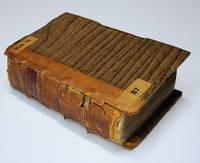
|
|
|
VOLLSTANDIGERE GRIECHISCHE GRAMMATIK,
nach der Lehr-Ordnung der Lateinischen Märkischen Grammatik eingerichtet mit königlichen Preussischen und Chur-Brandenburgischen Privilegio.
Berlin Zu finden bey Christoph Gottlieb Nicolai privilegirten Buchhändler 1730. Small 8°. VIII1244XXXVI index p. Two folding plates. Contemporary half calf 17.5 cm Ref: Not yet in VD18 Details: Back ruled gilt. Boards marbled. Title in red and black. Two folding plates one showing Greek MS abbreviations explained; the other shows a Greek inscription the 'Inscriptio Sigea' Condition: Binding scuffed. Head and foot of the spine worn and slightly damaged. Corners slightly bumped. Front endpapers with ownership inscriptions. Title with some brown stains. Paper yellowing. Internally fine Note: The Universität zu Berlin or University at Berlin was founded in 1810 by the liberal Prussian educational reformer and linguist Wilhelm von Humboldt. But higher education flourished already in the 17th century in this city which became the capital of Prussia in 1701 under Friedrich Wilhelm I the Soldier King who was King of Prussia Markgraf von Brandenburg and Kurfürst of the Holy Roman Empire till 1740. There were 5 gymnasia in the city of which 1 the Berlinisches Gymnasium zum Grauen Kloster was founded in 1574; 2 the Friedrich-Werdersches Gymnasium existed since 1701; 3 the Cöllnisches or Köllnisches Gymasium went back to a 15th century Schola Latina and was refounded as Gymnasium in 1766; 4 the Joachimthalsches Gymnasium was founded in 1607 as Gymnasium Electorale Brandenburgium in valle Joachimica and was moved to Berlin in 1636; in 1707 this school was renamed by king Friedrich Wilhelm I Gymnasium Regium Joachimicum; 5 and the Französisches Gymnasium or Collège français de Berlin founded in 1689 for the children of the Huguenot families who had settled in Brandenburg-Prussia. And then there was in Berlin also the Königlich-Preußische Akademie der Wissenschaften or the Royal Prussian Academy of Sciences an academy established in 1700.§ This very extensive Greek school grammar was produced by the German Polyhistor and linguist Johann Leonard Frisch 1666-1743. The production was commissioned by a board that consisted of the Rectores and Conrectores of 4 Berlin Gymnasia presumably excluding number 5 the French Gymnasium. Preface p. x2 recto The task of the board was the realization of a series of textbooks grammars among which of course a Latin grammar compendia and editions of classical authors to be used in all grammar schools of the Mark Brandenburg. Frisch himself was one of the members of the board as he was Rector of the Gymnasium zum Grauen Kloster since 1727. In 1706 he had already been appointed recommended by Leibniz member of the newly established Königlich-Preußische Akademie der Wissenschaften. Frisch's publications show an amazing range of interests. His scientific activities are reflected in his writing on ornithology entomology comparative linguistics German and Russian grammar etc. He compiled a French and German dictionary and was one of the pioneers of Slavic studies in Germany with his Historia linguae sclavonicae. 'His main work is the German-Latin dictionary 1741 into which he put 50 years of work'. H. Stammerjohann 'Lexicon Grammaticorum: A bio-bibliographical companion to the history of linguistics' 2nd edition Tübingen 2009 p. 492. See also 'Neue Deutsche Biographie' vol. 5 1961 p. 616 Provenance: The provenance is Swedish. Two names on the front pastedown: 'J. P. Jakobsson 1873' and probably 'C. v. Rosenthal 1801'. On the front flyleaf: 'J.P. Jakobsson Kalman 1892' and 'Ake Ljungfors 1930' Collation: x4 A-4I8; 4K-4L4 x8 Photographs on request hardcover
Referentie van de boekhandelaar : 120346
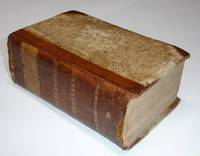
|
|
|
ARISTOTELES
ARISTOTELOUS ÊTHIKÔN NIKOMACHEIÔN biblia deka. Aristotelis De moribus ad Nicomachum libri decem. Ita Graecis interpretatione recenti cum Latinis coniunctis ut ferme singula singulis respondeant: in eorum gratiam qui Graeca cum Latinis comparare volunt.
Heidelberg Heidelbergae 1560. Colophon: 'Heidelbergae Excudebat Lodovicus Lucius Universitatis typographus Anno salutis humanae 1560 Mense Septembri 8vo. VIII567recte 5711 colophon4 blank p. Contemporary blind-tooled pigskin over wooden boards. 17.5 cm Ref: VD16 A 3403; Hoffmann 1291; Schweiger 152; cf. Dibdin 1326 & Moss 1126 for the edition of 1555; cf. Graesse 1212; Cranz A bibliography of Aristotle editions 1501-1600 no. 108.398; J. Lewis 'Adrien Turnèbe 1512-1565 a humanist observed' Genève 1998 p. 127/28 Details: Nice contemporary pigskin over wooden boards. Back with 3 raised bands. Boards decorated with a row of blind-tooled rolls comprising floral motives and heads in medallions. The central panel is adorned with floral motives and palmets. The blind-stamped year 1565 or 1563 is vaguely visible at the bottom of the central panel on the upper board. Greek text with facing Latin translation printed in 2 columns Condition: Pigskin age-tanned worn and scuffed. Paper label at the head of the spine with a short title on it. Small damages to the pigskin. The clasps and catches are gone. Three small ownership inscriptions on the front endpapers. Two old initials in the lower margin of the title page. Small stamp on the verso of the title. A strip of the blank uppermargin of the title torn off without affecting the text. Some contemporary ink marginalia Note: The Greek scholar Aristotle 384-322 B.C. is one of the foremost names in the history of thought and perhaps the most influential of all who have ever written. His influence on Western science and culture is immense. Aristotle's treatise 'Nicomachean Ethics' is perhaps 'the greatest and most famous of all works on morals certainly the most notable exposition of Greek ethics. The title is derived from the name on Aristotle's son Nikomachos . It falls into ten books and its fundamental principle is the doctrine of the Mean according to which every virtue is a proper blend of two opposed and non-moral tendencies as courage of fear and daring and lies between two vices resulting from the exaggeration of one tendency or the other'. H.J. Rose 'A history of Greek literature' London 1965 p. 275/76 § This Heidelberg edition of 1560 is a reissue of an edition with the same title which was published in Paris in 1555 and edited by the French scholar Adrianus Turnebus Adrien Tournèbe 1512-1565 professor of Greek in that city and a specialist in Greek textual criticism. In the preface Adrianus Turnebus lectori to the 1555 edition repeated in this 1560 edition Turnebus declares that he edited the Nicomachean Ethics with the help of Pier Vettori's observations ex Petri Victorii observationibus and some very old manuscripts ex vetustis aliquot exemplaribus. He also realized that this Greek text should also be accessible to students of philosophy who knew only Latin. It was necessary therefore to correct and emend the Latin text. Because translators from Greek into Latin added always something of their own ideas to a translation de suo quaedam addentes or made the Latin text much longer by explaning paraphrases paraphrasibus Graeca explicantes it is not possible to bring the Latin translation into line with the original Greek text ut singula singulis responderent. To avoid an uneven division of the text and translation he thought it necessary to make a translation that connected the Latin translation to the Greek text Graeca & Latina coniungerentur. Adrianus Turnebus lectori page a2 recto & verso The Greek text of the edition of 1555 of Turnebus was based on the edition of 1547 which was published by the Italian scholar Pier Vettori in Florence Provenance: On the front pastedown a small name: 'Nagel'. § On the front flyleaf the ownership entry of: 'Daniel Walasser Giengensis'. Who this Daniel Walasser of Gien a French city in the department of Loiret was we could not find out. § On the same leaf also: 'Ex libris Jacobi Zenetti 1821'. The German 'Privatgelehrte und Schriftsteller' Jakob Zenetti 1801-1844 received his doctor's degree in 1829 at the University Ingolstadt-Landshut-München. He lived in Augsburg and seems to have been a philanthropist. The Zenettistreet in Augsburg is called after him. He wrote 'Einfluss der Philosophie auf das Leben' second edition Augsburg 1842 and some poetry e.g. 'Der ägyptische Joseph: in vier Gesängen' Augsburg 1843. § On the title below the imprint the initials D.W. § On the verso of the title a small and round stamp: 'Sammlung des Dr. Hans Hasso v. Veltheim'. In the centre of the stamp a coat of arms. Hans-Hasso Freiherr von Ludolf Martin Veltheim Ostrau 1885-1956 was a German Indologist anthroposophist Far East traveler occultist and author. He was of old Saxon nobility. He published several books about his travels through East Asia. See Wikipedia: 'Hans Hasso von Veltheim' Hasso was the owner of the barock castle 'Schloss Ostrau' in Ostrau near Halle Saale which he turned it into a meeting point of Anthroposophists from all over the world. After the Second World War he was expropriated. Part of his library and art collection was brought to the Martin-Luther-Universität Halle-Wittenberg the remaining was confiscated by the occupying forces of the Russians. See for this library Wikipedia: 'Schloss Ostrau' See for Hasso's portrait and death mask 'Google Images' Collation: 4 a-z8 A-M8 N4 O4 last 2 leaves blank the leaves d1 & d2 the page numbering is double Photographs on request hardcover
Referentie van de boekhandelaar : 120139

|
|
|
GENNADIUS MASSILIENSIS
Gennadii Massiliensis Presbyteri Liber de Ecclesiasticis dogmatibus. Veteris cuiusdam theologi Homilia Sacra. Marcialis Episcopi Lemovicensis Epistolae. Geverhartus Elmenhorstius ex MS. provulgavit & notas addidit.
Hamburg Hamburgi anno Messiae Regis Aeterni 1614. Colophon at p. 207: 'Explicitum XIV Kalend. Decembris anno Messiae Regis Aeterni 1613' 4to. IV2501 errata1 blank p. Old contemporary boards. 19 cm Ref: VD17 23:274421U; Bardenhewer 'Geschichte der altkirchlichen Literatur' Freiburg i.Br. 1924 volume 4595/597: 'Die wichtigste der älteren Ausgaben'; Graesse 349; Ebert 8313 Details: Title in red & black. Some woodcut initials Condition: Cover very scuffed and worn and chafed at the extremities. Pencil notes on the inside of the frontcover. Last 2 leaves waterstained. Upper margins of last but one leaf repaired. Paper browning. Occasional pencil stripes in the beginning. Old ownership inscription written on the title Note: The first half of this book contains a work of Gennadius Massiliensis and the second half two letters of Marcialis or Martialis Lemovicensis. § Of the works of Gennadius of Marseille who lived during the pontificate of Pope Gelasius 492-496 A.D. only a few survive. From his best known work 'De viris illustribus' a collection of biographic sketches of 90 important 5th century Christians we know that he knew Greek well and that he translated Greek theological works into Latin. His principal aim in life seems to have been to fight and suppress heresies. 'Scripsi' he says somewhere 'adversum omnes haereses libros octo et adversum Nestorium libros quinque et adversus Eutychen libros decem et adversus Pelagium libros tres'. Quoted after Bardenhewer IV596. All these works are lost except the end of the 'Adversum omnes haereses libri octo' which survived under the title: 'Liber de ecclesiasticis dogmatibus'. This work which summarizes the catholic creed went also under the name of Augustine and Isidor of Sevilla; Bardenhewer however follows the editor of this 1614 edition Elmenhorst in attributing it to Gennadius. This 1614 edition is still of importance. Bardenhewer calls it 'die wichtigste unter den älteren Ausgaben'. It was reprinted by Migne in PL 58 979-1054. Elmenhorst proved that this treatise of Gennadius showed signs of interpolation and distortion. In the chapters 21 till 52 for instance passages from a letter of Pope Caelestinus I or the Acta of the Synode of 416 at Milevum also Mileum or even the Synode of 529 at Orange pop up. 'Quae sequuntur capita usque ad cap. LII in MS. non extant. Sunt autem desumpta ad verbum ex decretali epistola Coelestini PP . & ex Concil. Milevitano Africano & Arausicaono II'. Gennadius 1614 p. 136 A comfort for all of us is that Gennadius says that even sinners can perform miraculous works signa prophetic signs prodigia and good deeds sanitates in the name of the Lord chapter 34 p. 43. Nevertheless this title of 1614 once figured on the catholic Index of forbidden books. § Marcialis or Martialis Lemovicensis known in France as Saint Martial was the first bishop of Limoges in the 3rd century A.D. He was sent there by Pope Fabianus to preach the Gospel in the Limousin. His burial site later became the Benedictine Abbey of Saint-Martial which had a great library second only to the library at Cluny and scriptorium. This Abbey was one of the great pilgrimage sites of western Christianity during the Middle Ages. This part of the book contains 2 pastoral letter of Marcialis the first to the citizens of Bordeaux 'ad Burdigalenses' the second to the citizens of Toulouse 'ad Tolosanos'. § The anonymous 'Homilia Sacra' found in a manuscript of the end of the 9th century concerns the preparation for death from baptism till death. The work's main source is Caesarius of Arles 470-542 A.D and the 'Scarapsus' of Pirmin the first abbot of the convent of Reichenau who died ca. 753. § The commentary part on Gennadius and the 'Homilia Sacra' is the most extensive p. 97-189 & 189-201 on the letters of Marcialis the commentary is meagre p. 201-189. Gennadius the 'homilia sacra' and the letters of Marcialis of Limoges were edited and annotated by the German scholar Geverhart Elmenhorst 1580-1621 of Hamburg. He studied in Leiden under the genius J.J. Scaliger and published after his return to his native city works of some late Latin authors. His is known among classical scholars for his Apuleius edition of 1621. His best work is on late antique Christian writers such as Arnobius Hanau 1603 Minucius Felix Hamburg 1612 Gennadius Massiliensis Hamburg 1614 and Sidonius Apollinaris Hanau 1617. See on Elmenhorst ADB 659 The book seems to be rare for in KVK we found only a few copies in European libraries Provenance: written on the title: 'Sum M. Heinr. Meyeri Lips. A. 1645 prid. Kl. April'. In the early summer of June 1669 the relatives friends and colleagues of Heinrich Meyer received from the Rector of the University of Leipzig an invitation dated the 4th of June to attent the funeral service of 'Vir plurimum reverendus & clarissimus Dn. Heinricus Meyerus S.S. Theol. Baccalaureus dignitissimus & D. Nicolai h.l. Symmysta fellow preacher meritissimus'. Meyer was a pillar of the community and a real 'Architectus Spiritualis'. He was born the rector writes in Leipzig on the 5th of March 1619. His parents were there 'honoratissimi' citizens. Father Sebastianus Meyerus Sebastian Meyer was 'Senator Aedilis' of the city. The name of his mother was Sabina Rothaupt. The rector goes on to describe the educational career of Heinrich. He immatriculated in 1639 to study theology. But he was also interested in classical antiquity especially numismatics. This interest studio antiquitatis praesertim in re nummeraria incited him to build a coin collection of his own. In 1642 he published a Magister thesis 'de ritu coenandi veterum'. In 1647 he left for Strasbourg to gain more in-depth theological knowledge. After this he travelled through England The Netherlands and also visited places in Germany. During this trip in Holland he paid a call on Salmasius Heinsius Boxhornius and Gronovius with whom he also corresponded. In 1657 he was called to the diaconate of the 'Nikolaikirche' ad Diaconatum in aede S. Nicolai legitime vocatus. In this year this 'vir bonus et christianus' gains also the right to call himself 'Baccalaureatus in studio Theologico'. In November 1659 he married Elisabeth Heinz. They had 6 children of whom 4 survived. Two years before he died Heinrich suffered a stroke during a sermon cum suo pro rostis sacris fungere officio. Two other strokes undermined his health even more. He died at the age of 50. http://digital.slub-dresden.de/en/workview/dlf/73777/8/ On the internet we found in the library of Strasbourg 1 other book which was once the property of Meyer. There the provenance is 'Heinricus Meyer Dr. 1658' http://ccfr.bnf.fr/portailccfr/jsp/ccfr/sitemap/bmr_sitemap_view.jsprecord=bmr%3AUNIMARC%3A1033918 Collation: pi2 A-H4 2I2 leaf 2I2 verso blank Photographs on request hardcover
Referentie van de boekhandelaar : 130114
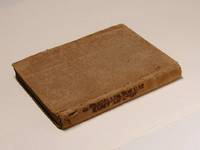
|
|
|
LIBRI DE RE RUSTICA
Libri De Re Rustica a Nicolao Angelio viro consumatissimo nuper maxima diligentia recogniti & typis excusi cum indice & expositione omnium dictionum. Catonis Varronis Columellae Palladii quae aliqua enucleatione indigebant. Additis nuper commentariis Iunii Pompo. Fortunati in librum De cultu hortorum cum adnotationibus Philippi Beroaldi.
N.pl.Florence n.d. Colophon at the end: 'Florentiae per heredes Philippi Iuntae Anno Domini 1521 Die XXVIII. Mensis Septembris' 1521. 4to in 8s. 2 parts in 1 volume: XX218 recte 222;125 leaves. 19th century half vellum 22 cm. Ref: Edit 16 28760; Schweiger 21305/06; Renouard 'Annales des Imprimeries des Alde' 'Notice sur la famille des Iunte' p. XLVI; Adams S807; Ebert 20736; Brunet 5246; Graesse 6/1331 Details: 19th century binding with short title on the back and marbled boards. Good quality white paper. Some text diagrams. Iunta's printer's device on the verso of the last leaf Condition: Some wear to the extremities. Small wormhole in the right upper corner of the first leaf. Old ownership entry below the printer's device. Small booklabel on front pastedown. A small pinpoint wormhole in the upper margin of the last 8 leaves pinpoint wormhole in the inner margins of the gatherings l and m. Some old ink underlinings 2 old ink annotations. Small rust hole in the upper corner of leaf 175. Some slight foxing and soiling of the paper. Small stain in the upper margins of 2 gatherings. The gatherings collate correctly. The page numbering of the second part has some irregularities but is alltogether correct Note: This Italian edition of the Libri de Re Rustica first published by Philip Junta in Florence in 1515 gives us the works of four Roman gentlemen-farmers and landowners Cato Varro Columella and Palladius who wrote about agriculture and were also successful practical farmers. As a cultural movement the Italian Renaissance was the product of the aristocracy and the ruling elite. The greater part of the populace were still rural peasants. Most of them worked on private farms or were tenants who shared the crops with their landowners. The urban elite of this time turned themselves into landed aristocracy owning large villa-farms. Capital produced by commercial and trading activities was invested in land. 'It was particularly in the Florence area that this bourgeois colonization of the surrounding countryside coincided with the development of a trading economy'. G. Gobbi Sicap 'The Florentine Villa: Architecture History Society' Abingdon New York 2007 p. 11 Land and a house in the country lent prestige. 'A landlord of this period who had entrusted his property to a share-cropper frequently visited his lands and oversaw every activity that took place keeping an eye on the stables and cellars and taking charge of the sale of the produce; he thus appeared to participate fully in farming life' Idem p. 14 Thus the residential extra-urban villas of the 'signori' became 'of central importance to the development of the newly-dawning Renaissance culture' Idem p. 15 The rediscovery of classical authors in the early days of humanism provided important confirmation of these aspirations. 'The 'Rei rusticae scriptores' who now took the stage - including the Romans Cato Varro Columella the 'rusticus' Palladio . provided further food for thought adding value to the literary notion of a house in the country as a refuge corresponding to the classical 'topos' of the joys of country life and the practical and educational concept of farming as the purpose and 'magistra of life'. The ideology of the paired words 'utilitas-delectatio' a humanist concept dates back to classical times and appears in the works of the most authoritative Latin writers including Cicero Seneca and Pliny'. Idem p. 19 § The aim of Cato Varro and Columella was to bring Roman farming of their time on a higher level. The conjunction of these three didactic texts can be found from the Middle Ages. They were jointly published for the first time in 1472 in Venice and form the chief texts on agriculture and rural life in antiquity. The oldest of the trio is the Roman politician Marcus Porcius Cato 234-149 B.C. the source of famous maxims for orators like 'rem tene verba sequentur'. In style and in character he was a typical farmer shrewd hardworking frugal honest sincere but limited. His 'De re rustica' also known as 'De agri cultura' is a kind of commonplace book. It gives us a view of the life of an oldfashioned landowner in that age and offers information on Roman cult and rustic folklore. The second work was written by possibly the greatest scholar Rome produced Marcus Terentius Varro 116-27 B.C. Of the mass of works he wrote only one is preserved to us completely 'De re rustica'. He was a landowner on a large scale who wrote the book in his eightieth year annus octogesimus he tells us in the beginning 'ut sarcinas colligam ante quam profiscar e vita'. It is a philosophic dialogue in 3 books in which he gives sound and practical advice for managing a farm I a stock-ranch II poultry aviary and herb-garden III. 'While giving interesting information on the state of agriculture at that time it is withal a pleasantly discursive book the work of a garrulously entertaining old scholar' H.J. Rose 'A Handbook of Latin Literature' London 1967 p. 222. Lucius Junius Moderatus Columella was a contemporary of Seneca. He wrote his 'De re rustica' consisting of 12 books ca. 60-65 A.D. He was a practical farmer on a large scale who was concerned over the decline of the agriculture in his days. 'Book 1 deals with general matters of buildings and labour 2 with soils and crops 3-5 with vines olives and fruittrees 6-7 with domestic animals 8 with poultry and fishponds 9 with game and bees 10 in verse with gardening 11 with the bailiff's duties and the farmer's calendar 12 with the bailiff's wife's duties'. OCD 2nd ed. p. 268 A separate book on arboriculture part of a larger work survives too. His style is straitforward and pleasant. The late antique Roman author Palladius ca. 400 who also seems to have been a landowner produced a kind of abridgment of Columella. § The texts of these four were edited we are told in the preface by the Florentine classical scholar Nicolaus Angelius Buccinensis Niccolò degli Angeli or Angelio Bucinense or Bucinensis who produced many editions for Giunta e.g. of Plautus Terentius and Nemensianus. Nicolò degli Angeli was professor of Latin & Greek in Florence. 'vir de utraque lingua benemeritus' p. AA1 verso He was born in Bucine in 1448 and died ca. 1529 Provenance: The provenance of this book is dealt with in a longer article than usual because it sheds some light on the English booktrade in the first half of the 20th century and on the history of a Russian refugee family. The search for information about previous owners often brings the antiquarian bookseller to unexpected places in this case to a beautiful portrait of a young woman a masterpiece of the Russian painter Kardovsky. And it sometimes occurs that the offspring of a former owner kindly offers to provide supplementary information. § On the front pastedown of this book has been pasted a booklabel in Russian and in English: 'ex libris Boris Alexandrovitch Chroustchoff'. In the 'Guggenheim Museum collection: paintings 1880-1945' we found at first the following concerning the provenance of a painting of the mother of Boris Alexandrovitich Chroustchoff Marya Anastasievna Chroustchova made by the Russian painter Dimitry Kardovsky 1900: 'Biographical information . is fragmentary. According to their son the late Boris Chroustchoff who was in correspondence with J. J. Sweeney in 1959-60 his parents owned a large estate in southern Russia as well as a house in Munich and one in St. Prex near Geneva. . Boris Chroustchoff adds that his father was 'a very great friend of Kandinsky and other members of the Blaue Reiter school especially Javlensky. Both Kandinsky and Javlensky often used to stay with us in the Ukraine and were constant visitors when we lived in Munich. Our house was always full of painters who found a very good subject in my mother. In fact Javlensky painted a very fine portrait of her in a red dress which has now disappeared' letters of December 27 1959 and January 10 1960. The attribution to Javlensky is incorrect. It was Kardovsky Marya Anastasievna and Alexander were separated in 1901. She returned to Russia with her daughter who died soon afterwards and Marya herself apparently perished during the Revolution. Alexander remained in Western Europe with his son Boris and they moved to England. . Boris' 'father Alexander took the portrait with him to England where it hung in their house in Harrow-on-the-Hill until 1908 when it apparently disappeared correspondence with the Museum 1960. Whether it was actually stolen or whether it was sold remains to be established. Boris Chroustchoff has since died and further information has not hitherto been discovered'. § A few years ago we received supplementary information about the owner of this book and about the painting of Kardovsky from the daughter of Boris Chroustchoff Natasha de Chroustchoff who is living in Great Britain. She wrote us that Boris Chroustchoff 1892-1968 'was a very interesting but elusive man whose name can be found mentioned en passant in the lives of others with stronger claims to fame'. His father Alexander sent him to an English public school Harrow in 1906. He also bought a house in the vicinity of the school where the portrait of Marya Anastasievna Chroustchova hung on the stairs. After Boris left school in 1909 he lost sight of the painting of his mother. § After his studies Boris learned the trade from the wellknown London bookseller Irving Davis and the Italian bookseller Guiseppe Pino Orioli who set up a bookshop 'Davis & Orioli' in Museum Street in 1913. Davis died in 1967. Orioli had learned in his turn the trade from the notorious antiquarian bookseller Voynich of the famous Voynich Manuscript. 'In the early 1920s Boris with his friend and business partner Lionel Jellinek opened the Salamander Bookshop in Silverstreet now Barter Street in Bloomsbury London' Natasha informs us. The shop was named after the Croustchoff family crest. Young Boris was the bibliographic expert. 'He specialised in medicine natural history cookery and Russica with a particular interest in incunabulae'. Natasha writes 'I believe they did pretty well until the Wall Street crash of 1929'. 'There are stories about the rather eccentric manner in which my father conducted his affairs: snatching a book out of a potential customer's hand because he didn't like the look of him and so on'. Boris compiled for his own bookshop 5 catalogues which were considered exemplary. § The painting of his mother popped up in the Guggenheim Museum that acquired it from the German art dealer Otto Stangl in 1950. In 1999 Nathasha was allowed to see the painting in the Guggenheim Museum where it was held in depot. In May 2015 Sotheby's in New York auctioned this painting. It was sold with the incomprehensible wisdom of the Museum to benefit the Museums' acquisition fund. Its location now cannot be traced. sothebys.com/en/auctions/ecatalogue/lot.86.html/2015/impressionist-modern-art-n09354 See for this portrait also Wikipedia's article on Kardovsky § Under printer's device in old ink: 'A Fabii Astinea'. § On the pastedown also the name of the next owner 'V.E. Watts'. One V.E. Watts produced a Penguin translation of Boethius 'The Consolation of Philosophy' Collation: AA-8 BB-12; a - z-8 &-8 -8 R-8; Aa-8 Bb-6 A-10 B - O-8 P-12; pagination: 20218; 1-20 235-238 4 leaves 24-34 249-254 & 215-216 2 leaves 43-76 291-294 4 leaves 81-125 For 4to in 8s see Gaskell p. 106 Photographs on request hardcover
Referentie van de boekhandelaar : 130102

|
|
|
LIPSIUS,J
Iusti Lipsii Epistolarum selectarum chilias in qua I. II. III. Centuriae ad Belgas Germanos Gallos Italos Hispanos. IV. Singularis ad Germanos & Gallos. V. Miscellanea. VI. VII. VIII ad Belgas. IX. & X Miscellaneae Postumae. Epistolica institutio eiusdem Lipsii. Accessit in gratiam studiosae iuventutis rerum aliquot insignium & elegantissimarum similitudinum quae in nonnullis epistolis occurrunt index locupletissimus.
N.pl. Geneva Leiden or Cologne Apud Franciscum Helvidium 1611. 8° XVI107818 p. Full contemporary vellum with overlapping edges Ref: VD17 12:646081U. VD17 is not sure about the place where this title was published. Mentioned are Cologne Leiden and Geneva. GLN 15/16 offers a kind of solution: 'Cet 'Helvidius' qui signe au moins six éditions entre 1600 et 1622 est mystérieux. Ladresse genevoise a été ajoutée sur quelques rares exemplaires. Une édition de Juste Lipse de 1611 est souvent située à Leyde Lugduni Batavorum mais la majorité des éditions indiquent 'Coloniæ'. Cependant les répertoires dimprimeurs des Pays-Bas et dAllemagne ne connaissent aucun 'Helvidius' Details: Boards with double fillet blind borders. Initials 'IDC' followed by '1615' stamped on the upper board. Short title in ink on the back. Woodcut ornament on the title Condition: Vellum age-tanned slightly worn & spotted. Small piece missing at the head of the spine. Name cut out of the title at the right margin 4 x 4 cm with some loss of text. The space is filled up by a blank piece of paper. Two ownership inscriptions on the title; Old inscription also on the front pastedown: 'Male habendo et bone sperando consumitur vita mortalium'. Some brown spots on the title and the following 3 leaves plus a very minor wormhole at the top right corner. Small wormhole at lower right corner through the last two leaves. A few minor damp spots at the upper margin of pp. 514-692 a few occasional underlinings up to p. 133 otherwise in very good condition internally. Note: Justus Lipsius 1547-1606 the greatest Latin scholar of his time in the Netherlands came in 1579 to the recently founded University of Leiden 1575 to teach Latin. He resided there with great distinction as honorary Professor of History from 1579 till 1591. The twelve years that Lipsius spent there were the period of his greatest productivity. It was during this time that he prepared his Seneca and perfected in successive editions his Tacitus and brought out a series of other works. Some were pure scholarship some were collections from classical authors and others were of general interest. Lipsius' greatest strength lay in textual criticism and exegesis. 'His masterpiece in this respect was his Tacitus of which 2 edtions appeared in his life-time' J.E. Sandys History of Classical Scholarship N.Y. 1964 vol. 2 p. 303 Lipsius left the Dutch republic converted to Catholicism and finally settled in Leuven to teach as professor of Latin in the 'Collegium Buslidianum'. § In an autobiographical letter to his pupil Johannes Woverius dated 1 Oct. 1600 in this collection Centuria V letter 87 p. 492/498 Lipsius presents himself 'as a true humanist whose uneventful life is filled by reading teaching and writing. His life was not to be compared to that of real great men whose political or military deeds res gestae merit description. He kept away from politics depicting his scholarly career as a succession of political innocent travels to interesting places like Italy Vienna and Jena and then returning to his beloved fatherland for which he had really longed for all this time. His long stay at Leiden University he portrayed as a period spent in refuge while the civil war was raging in the Netherlands. In the end he felt forced to return to his native country the Southern Netherlands. He tells us in the autobiographical letter that this decision was mainly inspired by the religious condition of the rebellious provinces and by the attacks he had to suffer on his reputation Religio et Fama'. N. Mout 'Justus Lipsius between war and peace' in 'Public Opinion and Changing Identities in the Early Modern Netherlands' Leiden/Boston 2007 p. 150 Lipsius lived in turbulent times. He wrote a number of works which were to revive the philosophy of ancient Stoicism in a form that was acceptable to Christianity. The most famous of these is 'De Constantia in publicis malis' 'On constancy in times of public calamity' first published Leiden/Antwerpen 1584 Provenance: 'Provenance Sachsen'. Blind stamped on the frontcover: 'I.D.C. 1615'. § On the title in old ink: 'Sum Werneri Sternhusii Barbiensis emtus Quedlinburgi 1616'. Werner Sternhausen or Sternhusen was born in Barby South of Magdeburg in Sachsen. He bought the book in Quedlinburg. § Under this: 'Nunc Johannis Ursini 1666 Pastoris Ecclesiae Neo-Gat. an. 1666'. Who Johannes Ursinus Pfarrer in Neugattersleben was we could not find out. Neugattersleben is a Saxonian city some 15 km from Barby § On the front pastedown: 'M.J. Fr. A. Kinderling C. Berg. an. 1770'. Magister Johann Friedrich August Kinderling born in 1743 in Magdeburg was also a Pfarrer. In 1768 he was appointed Rector and teacher at the Convent Berge near Magdeburg. During his rectorate in Berge which lasted till 1771 he acquired this book october 1770. In Berge it was also his task to arrange the convent library which numbered some 4300 books in proper order and to produce a catalogue. He wrote more than 100 treatises on theology but also on the German language especially 'Plattdeutsch'. He died in 1807. See www.uni-magdeburg.de/mbl/Biografien/0274.htm Collation: -8 A-3Y8 3Z4 Photographs on request hardcover
Referentie van de boekhandelaar : 130101
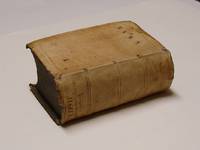
|
|
|
TIBULLUS
Albii Tibulli Equitis Rom. Quae exstant ad fidem veterum membranarum sedulo castigata. Accedunt notae cum Variar. Lectionum libello & terni Indices; quorum primus omnes voces Tibullianas complectitur.
Amsterdam Amstelaedami Ex Officina Wetsteniana 1708. 4to. XX including frontispiece47673 index1 blank p. 9 full page engravings. Calf. 23.5 cm Ref: STCN ppn 186442033; Schweiger 21093; Graesse 6/2157; Ebert 22968; Brunet 5856 Details: Back gilt and with 5 raised bands. Red shield in the second compartment. Edges dyed red. Marbled endpapers. Frontispiece engraved after a design of Joseph Mulder by Willem de Broen who is also the engraver of the 9 plates. The frontispiece shows left a shepherdess probably Delia Tibullus first love and the subject of book I; she leans on a fountain holding a staff; she reaches out towards a shepherd at the left in the distance 3 nude women the three Graces dancing with 3 putti; a ploughing farmer in background sheep in foreground. Title printed in red and black. Engraved printer's mark on the title with Wetstein's motto: 'Terar dum prosim'. Commentary in 2 columns below the text. P. 409/441 contain the 'libellus Variarum Lectionum' on p. 442/466 the 'notae' of Nicolaas Heinsius p. 467/476 observations by Janus Dousa Condition: Binding somewhat scuffed. Head & tail of the spine chafed. Paper yellowing Note: Latin love elegy is more or less an original Roman creation. It is a literary form of which almost every feature is derived from Greek models but it has no analogue in Greek literature. These elegies 'clearly Greek in inspiration are all concerned with love and it is predominantly as a medium for love poetry that the elegy was developed during the first century B.C. . What might be called the classic type of love-elegy the cycle of short poems centred upon the poet's relationship with a single mistress appears to have originated with Cornelius Gallus: his 'Lycoris' . was the prototype of Tibullus' Delia Propertius' Cynthia Ovid's Corinna and Lygdamus' Neaera'. OCD 2nd ed. p. 379 § This edition of Tibullus of 1708 contains what is now called the 'Corpus Tibullianum'. Of this corpus consisting of 4 books only the first two belong to the Latin poet and elegist Tibullus 55-19 B.C. who was probably a Roman knight. The first book deals with the poet's unhappy love for a mistress Delia a married woman probably of a low social status and for a boy named Marathus. The poetic attributes of these lovers are largely conventional but they may really have existed. Book two which is believed to be incomplete celebrates in 3 elegies a new courtesan Nemesis probably also ficticious. There is also an elegy on the blessings of peace and the impression of a rustic festival. The third and fourth book are by the hands of other poets. Book three contains six smooth but wooden elegies by a much inferior poet who calls himself Lygdamus. The 4th book of the Tibullus collection consists of elegies of a very different quality and opens with 211 hexameters on the achievements of Tibullus' patron M. Valerius Messalla Corvinus the 'Panegyricus Messallae'. Incorporated in the 4th books are also a number of short elegies written with a unique frankness by the 'docta puella' Sulpicia a contemporary of Tibullus. § This edition was produced by the Dutch scholar/soldier Joan van Broekhuizen Janus Broukhusius 1649-1707 who during an adventurous life pursued his classical studies and poetry at leisure. His editions of Propertius 1702 and Tibullus laid the foundation for his reputation as a classical scholar. He was admired as a latinist for his taste and for his erudition. NNBW 4309/12 As a neolatin poet he is known as the 'Propertius of Holland'. Sandys 2329 Collation: -24 32; A-3Y4 3Z2 leaf 3Z2 verso blank Photographs on request hardcover
Referentie van de boekhandelaar : 156871
|
|
|
HERMANN,G
Godofredi Hermanni Opuscula. Volumina I-VII.
Leipzig Lipsiae Apud Gerhardum Fleischerum & Apud Ernestum Fleischerum 1827 - 1839. 7 volumes. Together 2825 p. Contemporary half calf. 23 cm Calder/Kramer no. 1452: 'The standard edition of the Kleine Schriften of the Wortphilolog who so deeply influenced the young Wilamowitz' Condition: Bindings rubbed. Lacking volume 8 which was published much later in 1877. Occasionaly foxed some pencil Note: Apart from being of exceptional importance Hermann's opuscula is a great read; sometimes he prefigures HousmanPhotographs on request unknown
Referentie van de boekhandelaar : 156875
|
|
|
CICERO
Commentationes diversorum partim antea partim nunc primum editae in Epist. M.T. Ciceronis quae olim Familiares dictae nunc rectius Ad Familiares appellantur.
N.pl. Geneva Excudebat Henr. Stephanus 1577. 8vo. 2 parts in 1: VIII2311 blank;2051 blank p. Vellum 16.5 cm Ref: GLN-6033; Renouard Estienne 144; Schreiber Estiennes no. 15; Dibdin 1423 Details: The vellum that the binder used comes from a once sumptuously calligraphed manuscript leaf with Psalm 118 vss 17/21 written in six lines: 'Retribue servo tuo vivifica me et custodiam sermones tuos./ Revela oculos meos et considerabo mirabilia de lege tua./ Incola ego sum de sic! terra non abscondas a me mandata tua./ Concupivit anima mea desiderare iustificationes tuas in omni tempore./ Increpasti superbos maledicti qui declinant a mandatis tuis'. The letter is the gothic 'textura' used for liturgical texts in the 14th & 15th century and the example for the first typeface. The margins are ample. The first R is a huge capital; several smaller capitals have traces of gilt; the text is partly faded by wear but readable. Printer's Olive tree device of the Stephanus family on the title page motto: 'Noli altum sapere' short for 'Noli altum sapere sed time' in English 'Donot be high-minded but fear'. Epistola Beati Pauli ad Romanos 1120 Condition: Vellum worn & soiled. Front hinge cracking. Ownership entry on the title page. On the title also in old ink: 'Liber non adeo frequens'. Small name cut out of the title leaving a tiny hole of 2 mm x 23 mm. Printer's mark on the title skillfully handcoloured. Some old ink underlinings and annotations in the text. No flyleaves Note: For centuries the Roman orator author and politician Cicero retained a central position as a school author and a model for good writing on protestant schools and in Jesuit colleges. The period of his greatest glory was the Renaissance when he became the object of a literary cult called Ciceronianism. Many humanists took him as an absolute model for pure Latin and an elegant style. Petrarch modeled his own 'Epistolae Familiares' in part on Cicero's 'Epistulae ad Familiares'. Petrarch created like Cicero in his letters 'a kind of autobiography and a partial history of his own life and time.' Petrarca 'helped establish Cicero as a uniquely powerful stylistic model and intellectual resource'. The Classical tradition N.Y. 2010 p. 196 . This 1577 book on offer contains a choice of the commentaries on the 'Epistulae ad Familiares' of diverse leading scholars. It is Stephanus tells in the preface an accompanying volume to the edition of the 'Epistulae ad Familiares' which he published in the same year. This supplementary volume contains the commentary scholia on the letters by Paulus Manutius 'locorum aliquot explicationes & emendationes' of Willem Canter the 'emendationum rationes' of Dionysius Lambinus an excerpt of the 'adversaria' of Adrianus Turnebus a 'commentariolus' of Stephanus himself. The second part 205 pages contains the according to Stephanus very useful 'commentarius' of the Italian bishop Gerolamo Ragazzoni or Hieronymus Ragazzonius 1537-1592. Part 1 p.5 Provenance: 'Sum Jan. Hermanni Demmingeri Nornb'. This might be the cleric Johann Hermann Demminger from 1597 till 1605 'Pfarrer' at Feucht a walk of 3 hours from Nurnberg. He moved to Nurnberg for from 1505-1623 he was curate and deacon of the local 'Spital-Kirche' Collation: a4; a-b8 c4 d-p8 leaf h8 blank p8 verso blank; a-f8 g4 h-n8 o4 min blank leaf o4 Photographs on request hardcover
Referentie van de boekhandelaar : 120056
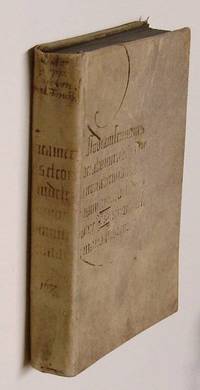
|
|
|
ESTIENNE,H
Apologie pour Hérodote ou traité de la conformité des merveilles anciennes avec les modernes par Henri Estienne. Nouvelle Édition faite sur la première augmentée de tout ce que les posterieures ont de curieux et de remarques par Mr. Le Duchat avec une table alphabétique des matieres.
The Hague à La Haye Chez Henri Scheurleer 1735. 8vo. 2 volumes in 3: IVXXXVI20048 index; IV p. 201 - 624; IVIV434 p. 3 engraved frontispieces. 19th or 20th century calf. 17 cm 'Stephanus plays an important role in the reception of Herodotus' Ref: STCN ppn 213119420; Hoffmann 2242/43; Brunet 21077; Graesse 2506; Ebert 6972: 'Unmutilated and enlarged edition with good observations'; Renouard p. 126/28 who calls this 1735 edition 'bien imprimée' and 'la seule complète' Details: Tasteful binding in antique style: backs elaborately gilt and with one brown and one dark red morocco shield on each back. Boards with gilt triple fillet borders. Gilt inner dentelles Edges of the boards also gilt. Marbled endpapers. The three frontispieces are satirical against the catholic church. Titles in red & black. The engraved printer's marks depict a flying Mercurius with a helmet and a caduceus the motto reads: 'Erudit et ditat'. Edges of the bookblock uncut Condition: Nice copy. Some slight wear to the bindings Note: In 1566 the French scholar/printer Henri Estienne latinized as Henricus Stephanus ca. 1530-1598 published a revised Latin translation of Herodotus' 'Historiae' made by Lorenzo Valla. In the introduction 'Apologia pro Herodoto' Estienne tried to defend the veracity of Herodotus as a historian. Valla's translation was first published in 1474. 1502 saw the 'editio princeps' of the Greek text. In the same time the work of the ancient detractors and critics of this Greek historian came on the market especially Plutarch's 'De Herodoti malignitate' 1509 but also works of Aristotle Herodotus is ignorant Flavius Josephus he is a liar Strabo he likes to tell simple stories Lucianus does not tell the truth Gellius he invents stories. The supporters of Herodotus were in the minority. We only mention Cicero who called him 'Pater historiae'. So after Henri Estienne had published this revised Latin translation of Valla he decided to try his talents as a critic on Herodotus and wrote in the historian's defence in French his 'Apologie pour Hérodote' more or less to accompany the revised Latin translation of Valla. With the above mentioned 'Apologia pro Herodoto' a treatise in Latin full of philological niceties and quotations from Greek and Roman authors to be read by a humanist forum and his 'Apologie pour Hérodote' written for a much broader public Henri Estienne plays an important role in the history of the reception of Herodotus. Estienne's 'Apologie' became a famous libel against the catholic church and belongs now to the French literature of the 16th century. The pretext and point of departure is whether Herodotus is reliable. In the text is to be found a flood of abuse obscene stories bitter attacks on monks and smut meant to discredit the catholics. The magistrats of Geneva the city where the book was printed forced Henri Estienne to withdraw coarse stories and expressions and to replace them with more readable stories. See Renouard Estienne was exiled and spent the rest of his life in several cities in France and Germany. All the changes and the omitted and censured passages in the following editions after the edition of 1566 have carefully been collected in this edition of 1735 'qui est bien imprimée point très rare et la seule complète'. Brunet: 'cette édition est préférable aux précédents à cause des remarques qu'elle contient. Le 21e chapitre y est entier'. Chapter 21 contained an article 'Concubinage'. This offensive passage is summarized in the introduction of this 1735 edition as follows: 'Il s'y agit d'un Cordelier a Franciscan monk de Venize lequel par charité mena une jeune fille dans son couvent & l'y entretint sécrétement pendant plusieurs années. Que l'on croie que la charité fût le seul motif qui engageât le Cordelier à en agir de la sorte c'est ce que nous n'exigeons point de nos lecteurs d'autant qu'au raport de H. Estienne la fille étoit de corps assés gentil& de beauté on a mépriser; aussi cette prétendue charité fut elle tres mal récompensée. Les curieux verront de quelle maniere en jetant les yeux sur l'article même'. Vol. 1 Avertissement p. IX & X The 'Apologie pour Hérodote' saw according to Hoffmann and the editor of the 1735 edition 13 revised reissues. This 1735 edition is the last and most complete Collation: Volume 11: pi2 -28 32; A-P8 Q1/4 the second half of this gathering is at the beginning of volume 12 a4 e8 i8 o4. Volume 12: pi2 Q5/8 R8-2T8. Volume 2: pi2 2 A-L8 M6 chi1 N-Q8 R6 2chi1 S-Y8 Z6 3chi1 2A-2D8 2E4 Photographs on request hardcover
Referentie van de boekhandelaar : 120327
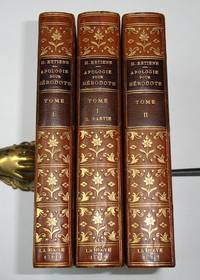
|
|
|
ARRIANUS
Arriani Nicomedensis Expeditionis Alexandri libri septem et Historia Indica graec. et lat. cum annotationibus et indice graeco locupletissimo Georgii Raphelii. Accedunt Eclogae Photii ad Arrianum pertinentes cum lectionibus variantibus Dav. Hoeschelii summaria librorum distincta & emendata index rerum accuratissimus nec non tabula geographica Expeditionis Alexandri.
Amsterdam Amstelaedami Apud Wetstenium 1757. 8vo. XLVIII637211 p. frontispiece folding map of Europe and the Orient. Vellum 21 cm Ref: STCN ppn 212310364; Hoffmann 1377; Brunet 1497; Dibdin 1329: 'An excellent and commodious edition'; Moss 1188; Graesse 1227; Ebert 1236 Details: 6 thongs laced through the joints. Frontispiece by I.K. Philips in Greek letters depicting an armed and winged Nike crushing 3 ennemies a black African an Asian and a European; in the air flies Fama with her trumpet. Title in red & black. Printer's mark on the title depicting a hand sharpening a chisel on a whetstone the motto is: 'Terar dum prosim'. The map is executed by N. Frankendaal. The text is printed in 2 columns Greek and Latin side by side Condition: Vellum slightly soiled and wrinkled at the top of the spine. Paper clipping on Nicomedia from 'The Gentleman's Magazine' Vol. 98 1828 Supplement part 1 p. 627 tipped in on front pastedown. Old & legible ink annotations on the front flyleaf. Rear endpapers stained and its pastedown is detached. Paper yellowing Note: This edition of Arrianus is more or less a 'parergon' of the German Lutheran theologian Georg Raphel latinized as Georgius Raphelius 1673 - 1740. He was 'Pfarrer' and Superintendent of the St. Nicolai church and Inspector of the 'Scholae Johannaeae' at Luneburg. His interest in pagan antiquity and in the New Testament generated a series of works in which he compared the language and style of the New Testament with works of ancient historians. In 1709 he published in Hamburg 'Annotationes Philologicae in N.T. ex Xenophonte collectae'. In 1715 appeared also in Hamburg 'Annotationes Philologicae in N.T. ex Polybio & Arriano collectae'. He published in Lüneburg in 1731 'Annotationes in S. Scripturam ex Herodoto collectae'. In 1710 Raphel had published a German translation of the Indica of Arrian 'Arriani Indica d.i. Indianische Geschichte oder Reisebeschreibung der Flotte Alexanders des Grossen aus dem Griechischen ins Deutsche Übersetzt'. The three 'Annotationes Philologicae' were reprinted together in Leiden in 1747. This edition contains an extensive biography of Raphel with at the end a list of his published works and a short list of not yet published work: 'Scripta Rapheliana in MSC. adhuc latentia'. One of these 'scripta latentia' is 'Annotationes in Arrianum'. In the preface Lectori to our edition of Arrianus of 1757 the publisher Wetstein tells us that this manuscript with notes on Arrianus had lain tucked away ever since 1709 in a drawer 'in privatis scriniis'. p. X It had been offered in the meantime to German publishers who however feared that they would not make a penny from it. Wetstein tells us that finally the son-in-law of Raphel one Conr. Arn. Schmid whom Ebert erroneously considers to be the editor asked him to publish this work of his beloved and admired father-in-law. Raphel not only produced the annotations but had made also a careful recension of the Greek text especially with the help the new edition of the Leiden professor of Greek Jacobus Gronovius who had discovered a new important manuscript of Arrian. 'textum quam potuit accuratissime castigavit adjutus praesertim libris MSS a Jac. Gronovio consultis'. Preface p. VIII. The manuscript of Raphel contained also a corrected Latin translation. 'versionemque permultis locis pravam elegantissime correxit'. Idem ibidem Wetstein probably here refers to the Latin translation of Bonventura Vulcanius which was printed in the 1704 edition of Gronovius. Wetstein ends with the assurance that all lovers of literature will thank the son-in-law for his troubles. § Raphel is also known for this pioneering work on deaf-muteness. Three of his children were deaf and dumb. 'Paternal affection had inspired him with zeal and skill in their instruction and in 1718 he published for the benefit of others the result of his labours' 'Die Kunst Taube und Stumme reden zu lehren am Exempel seiner eigenen Tochter'. It is said that his eldest daughter spoke so well that her deficiency was hardly noticed. The girl died however 20 years old Provenance: On the front flyleaf at the head of the manuscript notes the name 'Mitford' and 'White' Collation: -38; A-2S8 2T-3Q4 3R8 3S4 Photographs on request hardcover
Referentie van de boekhandelaar : 130117
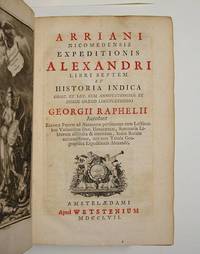
|
|
|
THEOCRITUS
Theocriti Bionis et Moschi carmina bucolica. Graece et Latine. Latino carmine pleraque reddita ab Eobano Hesso nonnulla a G.E. Higtio subiecit Graeca ex edd. primis codd. & aliunde emendavit variis lectionibus instruxit L.C. Valckenaer.
Leiden Lugduni Batavorum Apud Abrahamum et Janum Honkoop 1781. 8vo. XVIII5671 blank p. engraved frontispiece. Half calf. 21.5 cm Ref: STCN ppn 23992424X; Hoffmann p. 3482; Schweiger 1311; Didbin 2492: 'Valckenaer alone has done more for Theocritus than all the previous editors of the poet put together'; Moss 2693: 'the notes are short and perspicuous and chiefly critical'; Ebert 22779; Graesse 6/2115 Details: Greek text and Latin translation. Back gilt. Marbled endpapers. The frontispiece by B. de Bakker depicts a bucolic scene from the first idyll of Theocritus two chatting shepherds. Id. 1 12-14 Engraved coat of arms of the Russian Prince Nikolai Borisovich Yusupov 1750-1831 at the beginning of the 'dedicatio'. Valckenaer tell us in the dedication that he has good memories of the Prince's visit to Leiden and how they read poems of Theocritus. The prince was a great book and art collector. See his article in Wikipedia 'Nikolay Yusupov' Condition: Small old paper label at the foot of the spine. Boards with some small scratches. Small paper label on the upper board. Bookplate on the verso of the front flyleaf Note: The Greek poet Theocritus ca. 300 - ca. 260 BC was a native of Syracuse. He is called the father or inventor of bucolic and pastoral poetry and the reviver of the mime. His fame chiefly rests on his Idylls written in hexameter verse and in the Doric dialect. His outstanding dramatic descriptive and lyric qualities are best displayed in his bucolic poetry. 'Theocritus shares with other poets of his age a preference for the short highly finished poem for fresh and sometimes exotic themes and for new forms or old forms used in new ways. Nevertheles he transcends his age in his ability to select and concentrate his material in the freshness of his observation of people and scenes in the vivacity of his narratives and descriptions in imagery and lyricism and above all in his dramatic power.' OCD 2nd ed. p. 1054 § Moschus ca. 150 BC and also from Syracuse is according to Suidas the next after Theocritus to write pastoral poetry. He was an imitator like Bion. § This edition of 1781 is a reissue of the edition which was previously published in 1779 by Le Mair and De Chalmot at Leiden and Kampen. Honkoop purchased the remaining stock of this Theocritius edition after the death of Le Maire changed the impressum on the title page and brought it on the market for a second time now with his own name. § The edition contains Bion and Moschus and the whole of Theocritus. 'It is by far the most critical and valuable which has yet been published; in it the editior has bestowed very great labour upon the restoration of true readings - it contains an amazing fund of valuable illlustrations which no man was ever so well calculated to amass as Valckenaer who to an almost incredible extent of reading united sound ciritism and elegant erudition'. Moss. Valckenaer based his edition on many earlier Theocritus editions e.g. of Zacharias Kallierges Rome 1516 and of Ralph Thomas Winterton Cambridge 1635. He adopted the Latin translation of Theocritus made by the German scholar Helius Eobanus Hessius first published in 1530 supplementing it with translations of Daniel Heinsius and Hugo Grotius. Valckenaer also added 'ex autographis' a Latin translation of Bion & Moschus made by the Dutch poet Ernst Willem Higt latinized as Higtius 1723-1762. Higt was for 6 years a student of Valckenaer in Franeker. After his studies Higt was appointed in 1749 rector of the Gymnasium at Alkmaar. Valckenaer praises in a short 'Lectori' his poetic talents and calls him a 'Poeta graece et latine perdoctus' who 'media aetate nobis omnibus flebilis occidit'. § The Frisian scholar Lodewijk Caspar Valckenaer latinized Ludovicus Casparus Valckenarius 1715-1785 who produced this edition of the Greek poets Theocritus Bion and Moschus was a pupil of Tiberius Hemsterhuis a Frisian too and after him the greatest Dutch classical scholar of the 18th century. Hemsterhuis was professor of Greek at the University of Franeker from 1717 till 1740 and from 1740 till 1765 at the University of Leiden. Hemsterhuis was the founder of a Dutch school of criticism the so-called 'Schola Hemsterhusiana' which had in Valckenaer its best known disciple. Valckenaer studied Greek in Franeker under Hemsterhuis and succeeded to his chair in 1741. In 1765 he left for Leiden once again as successor of his beloved teacher. Both created a golden age of Greek studies in the Netherlands. Still a student Valckenaer edited a Greek lexicon of the grammarian Ammonius 'De adfinium vocabulorum Differentia' Leiden 1739. In Franeker he produced a revised and augmented edition of Fulvio Orsini's 'Virgilius illustratus' Leeuwarden 1747. This title is important for the history of scholarship for its inclusion of the text of the 22nd book of the Iliad of Homer accompanied by an introduction 'variae lectiones' and the 'editio princeps' of scholia of Porphyrius and other hellenistic and byzantine scholars. In 1755 Valckenaer published an edition of Euripides' 'Phoenissae' with his rich commentary and a Latin translation by Hugo Grotius. Among his best works are two other Euripides editions this Hippolytus edition of 1768 and his 'Diatribe in Euripidis perditorum dramatum reliquias' of 1767. Valckenaer also produced editions of the Idylls of Theocritus Leiden 1773 and of the complete works of bucolic poets Theocritus Bion and Moschus. 'Theocriti Bionis et Moschi Carmina Bucolica' Leiden & Kampen 1779. His Callimachus was published posthumously by J. Luzac in 1799 Provenance: This book was bound by the Gouda bookbinder S.H. van der Kraats 'achter de Groote kerk A. 31'. Sijbrand Hendrik van der Kraats born in Workum in 1828 came to Gouda and was there bookbinder from 1855. He died in Gouda in 1904. His small blue paper label is on the front pastedown. We could not trace on the internet any other book bound by this binder. § On the flyleaf the book-label of 'Dr. J.H. Holwerda'. The Dutch archeologist Jan Hendrik Holwerda 1873-1951 was appointed curator at the 'Rijksmuseum van Oudheden' RMO in Leiden in 1904 and in 1910 as its vice president onderdirecteur. In the same year he became lecturer in Leiden in Prehistoric and Roman archeology. In 1919 he succeeded his father as director of the Museum. This directorate lasted till his retirement in 1939. From 1935 to 1948 he was also director of the Provincial Roman 'Rijksmuseum Kam' in Nijmegen Collation: 81pi1 leaf 1 is a stocklist of 11 titles available at Honkoop's; between leaf 1 and 2 the title page has been added leaf p1 the frontispiece A-2M8 2N4 leaf 2N4 verso blank Photographs on request hardcover
Referentie van de boekhandelaar : 156842
|
|
|
VERGILIUS
Carmina. Breviter enarravit Philippus Wagner. Editio tertia superioribus multo praestantior.
Leipzig In Libraria Hahniana 1861. XXXII471 p. Half calf. 22 cm Note: Prize copy of the Gymnasium of Leiden. Including the printed prize awarded to J.A. Prins at the occasion of his promotion to the 4th grade dated 'a.d. IV Idus Septembr. 1866' and signed by the Rector Willem Hendrik Dominicus Suringar and 7 curators of the Gymnasium among whom the famous classical scholar Carel Gabriel Cobet professor of Greek at the University of Leiden. The others are Van der Hoeven Tollens Rijke Kuenen Du Pui. One name is illegible Text & commentary in Latin Gilt coat of arms of Leiden at the foot of the spine Ref: Spoelder p. 629 Leiden 8 Condition: Back slightly worn. Bookplate on front pastedown. Foxed Photographs on request unknown
Referentie van de boekhandelaar : 156839
|
|
|
MAXIMUS TYRIUS
MAXIMOU TURIOU LOGOI. Maximi Tyrii Dissertationes. Ex interpretatione Danielis Heinsii. Recensuit & notulis illustravit Joannes Davisius Coll. Regin. apud Cantabr. Socius.
Cambridge Cantabrigiae Ex Officina Joann. Hayes celeberrimae Academiae Typographi 1703. 8vo. XVI4351 blank;10 index2 blank p. Vellum 20 cm Ref: ESTC Citation No. T98323; Hoffmann 2586: 'Diese Ausgabe übertrifft die früheren'; Dibdin p. 2233: 'Foreign critics seem to consider Davies the best editor of Maximus Tyrius. . but it is to be regretted that Heinsius's notes are not given entire. At the bottom of each page some short critical and historical observations are given; and there are two very useful indexes'; Brunet 31552; Graesse 4453; Ebert 13454: 'Die Anmerkungen sind theils kritisch theils die Geschichte der Philosophie betreffend'; Spoelder p. 578 's-Gravenhage 3 Details: Prize copy without the prize. 6 thongs laced through the joints. Boards with double fillet gilt borders and the coat of arms of The Hague in the center. Woodcut printers' mark on title with the University's motto: 'Hinc lucem et pocula sacra' 'From this place we gain enlightenment and precious knowledge'. At the end is bound a manuscript 'actio gratiarum' of 16 lines i.e. a note of thanks. See Provenance below Condition: Vellum slightly scratched and soiled. Lower margin of the first 30 p. very slightly waterstained. Prize gone Note: The Greek Platonist Maximus Tyrius ca. 125-185 AD was an itinerant philosopher/lecturer who lived during the Second Sophistic and left us 41 dissertations dialexeis on theological ethical and philosophical subjects. The lectures were delivered in Rome apparently during the reign of Commodus 180-92. They deal with ethics physics theology and epistemology but are not great literature nor specimina of great learning. Themes are for example: 'die Lust hêdonê 29-33 sokratische Liebe 18-22 platonische Theologie 11 'daimones' 8-9 Gebet 5 Weissagung und freier Wille 13 das Böse 41 und Wiedererinnerung 10'. Neue Pauly 71074/75 Maximus Tyrius 'was well read in Greek literature but apparently not in Greek philosophy except in Plato of whom he claimed to be a follower. His lectures show no philosophical originality and are simple eloquent exhortations to virtue decked out with quotations chiefly from Plato and Homer'. OCD 2nd ed. p. 658 As a philosophic orator he is comparable with contemporaries like Dio Chrysostomus and Apuleius. He was widely read by the humanists of the 15th century e.g. Poliziano Bessarion Lascaris Reuchlin. The 'editio princeps' was published in 1557 by the French scholar/publisher Henricus Stephanus. The next important and authorative edition was published in 1607 by the Dutch classicist Daniel Heinsius 1580-1655. The English scholar John Davies Fellow of Queens' College at Cambridge based the Greek text of his edition on that of Stephanus he tells us in the 'praefatio' and adopted the Latin translation of Heinsius with corrections and with notes and 2 useful indexes of his own. p. 4 verso John Davies or Joannes Davisius 1679-1732 studied at Queens College of which he was elected fellow and subsequently became Rector or Praeses in 1717. He chiefly devoted his attention to the philosophical works of Cicero. His editions show great learning and knowledge of the history of and the systems of ancient philosophy. Davies also produced editions of Caesar Minucius Felix and Lactantius. He was a friend and ally of the greatest classical scholar of his age Richard Bentley Provenance: At the end has been added a leaf with the text of the 'Actio gratiarum' of the schoolboy who received this book: 'Celeberissime Princeps. Nobilissimi atque Amplissimi Scholae curatores. Doctissime Rector. Quanto diligentius vestram in me munificentiam mente agito tanto amplior beneficii vestri magnitudo mihi videtur Viri Nobilissimi quod praemio hoc magnifico iterum decoratus laudibusque et victoria clarus in altiorem militiae scholasticae gradum promoveor. Quocirca nolite dubitare Curatores nobilissimi sinceram benignitatis vestrae memoriam nullo apud me tempore esse intermorituram. Credite vero nihil unquam quidquam deincpes mihi dulcius fore quam si meum in Vos animum gratissimum meamque observantiam Vobis probare queam'. See for this kind of speeches Spoelder Prijsboeken op de Latijnse School. Amsterdam 2000 p. 176/184 Collation: 8 A-2E8 leaf 2E8 blank Photographs on request hardcover
Referentie van de boekhandelaar : 130110
|
|
|
CORPUS POETARUM LATINORUM, UNO VOLUMINE ABSOLUTUM
Cum selecta varietate lectionis et explicatione brevissima edidit Guilielmus Ernestus Weber Philosophiae Doctor Lycei Bremensis Director atque Professor.
Frankfurt Francofurti ad Moenum Sumptibus et Typis Henrici Ludovici Broenneri 1833. LXXXIIII14193 p. Contemporary calf. 26 cm Ref: Spoelder p. 507 Arnhem 3 Details: Prize copy with the prize dated 13 July 1850 awarded by the 'Scholarchae' of the Gymnasium of Arnhem to 'Ingenuo bonaque spei juveni Johanni Henrico André dela Porte' and signed by 6 curators and by the Rector J.W. Elink Sterk Not much is known about Johannes Hendrikus André de la dela Porte 1831-1889. He was born in Arnhem and died there. His family belonged to the local elite. Binding slightly scuffed. Back and boards gilt gilt coat of arms of Arnhem on both boards Condition: foxed throughout occasionally browning Photographs on request hardcover
Referentie van de boekhandelaar : 156957
|
|
|
VOSSIUS,GJ (& I VOSSIUS). G J
Gerardi Ioannis Vossii Dissertationes tres de tribus symbolis Apostolico Athanasiano et Constantinopolitano. Bound with: Gerardi Ioannis Vossii Dissertatio gemina; una de Iesu Cristi genealogia; altera de annis quibus natus baptizatus mortuus. And: Gerardi Joh. Vossi Chronologiae sacrae Isagoge sive de ultimis mundi antiquitatibus ac imprimis de temporibus rerum Hebraearum dissertationes VIII. And: Isaaci Vossii Castigationes ad scriptum Georgii Hornii de aetate mundi.
Ad 1: Amsterdam Amsterdami Apud Iohannem Blaeu 1642. Ad 2: Amsterdam Amsterdami Apud Iohannem Blaeu 1643. Ad 3 & 4: The Hague Hagae-Comitis Ex typographia Adriani Vlacq 1659. 4to. 4 volumes in 1: VIII93132 blank p. XIX4331 blank 6911 p. VIII132 p. XXIV48 p. Vellum 20.5 cm Ref: Ad 1: STCN ppn 852560893; Rademaker no. 25. Ad 2: STCN ppn 852560826; Rademaker no. 26. Ad 3: STCN: ppn 852371721; Rademaker no. 40. Ad 4: STCN ppn. 852369301 Details: 6 thongs laced through the joints. 4 title pages of which 3 have a printer's mark and 2 are printed in red and black Condition: Vellum age-tanned and slightly warped. Short table of content written in an old hand on the verso of the first flyleaf. Small wormhole almost invisible in the blank lower margin of first 100 leaves Note: Gerardus Joannes Vossius 1577-1649 was according to Sandys 'the greatest Polyhistor of his time'. In 1622 he was appointed professor of 'Eloquentiae' at Leiden University and in 1631 professor of History at Amsterdam. In this city he had the opportunity to apply himself to the study of the Bible and the history of the ancient Church. Vossius earned for himself with his theological works the title 'father of modern credal studies'. He applied in his theological studies a philological method 'to an area of scholarship which during his time had hardly been entered and which in that period of church conflict was generally regarded as very dangerous territory. Vossius had the courage to be the first to take a completely new path'. C.S. Rademaker Life and Work of Gerardus Joannes Vossius' Assen 1981 p. 322 Vossius' approach was purely philological. He subjected the relevant texts to a literary and historical criticism. Ad 1: In 1642 Vossius published a study on the creeds. Concerning the 'Symbolum Apostolicum' Apostles' Creed he comes to a for that time daring conclusion: 'The Apostles' Creed was not drawn up by the apostles themselves but came into existence in the congregation of Rome and was framed by the bishop and clergy of Rome as compendium of the doctrine of the apostles'. Idem p. 319 Concerning the 'Symbolum' attributed to the Church Father Athanasius he proves on philological grounds that the creed was not written by Athanasius but that it was only a patchwork of his formulations. Idem p. 320 Concerning the 'Symbolum Constantinopolitanum' he proves that this 'Symbolum' was not framed by the Council of Constantinople 381 but was in fact an elaboration on the Nicean Creed 325. Idem p. 320 Ad 2: The second work in this convolute treats the exegetical problems presented by the genealogies of Jesus Christ in the Gospels. Vossius 'discusses the many and complex problems connected to establish the year of Jesus' birth chronologically'. Idem p. 313 Ad 3: This work on chronology was published posthumeously by Vossius' son Isaac 1618-1689. In it Vossius examines the divisions in history made by Hesiodus gold silver bronze and iron age and the scheme of the four monarchies of the prophecy of Daniel. Vossius rejected a prophetic prediction of the end of the world in the year 2000 AD at the end of history. Idem p. 310/11 Ad 4: In 1659 the German historian Georg Horn latinized as Georgius Hornius published in Leiden where he occupied from 1653 the prestigious chair of History a chronological 'dissertatio de vera aetate mundi'. Horn had developped an interest in the history of religion and in secular history from a theological point of view. With his 'dissertatio de vera aetate mundi' started a long polemic with Isaac Vossius. The quarrel was about the date of creation. The dispute was whether the Hebrew or the Greek text of the Old Testament gave a more reliable chronology for the world was according to the Septuaginta a millennium or more older than the Hebrew Bible said. Hundreds of scholars in the 16th and 17th century made different calculations. Isaac Vossius e.g. dated the Deluge according to the Septuaginta numbering of years but Hornius was in favour of the Hebrew text. Vossius concluded that the Biblical text was unreliable. Hornius warned for the consequence of Vossius' theory that the Holy Scripture was not always true Provenance: On the verso of the front flyleaf: 'H.W.Snabelius'. This is the German calvinist theologian Hieronymus Wilhelm Snabel 1656-1702. In December 1702 one G. Meier speaks about his death in a letter to Leibniz and writes that Snabel left a 'Bibliothecam imcomparabilem' and that the books and his famous collection of coins and medals thesaurus numismatum praeclarus will be auctioned soon. Snabel studied in Bremen Leiden Amsterdam and Utrecht. From 1681 till 1698 he was a minister of the protestant church in Holland. He returned to Bremen to preach there. In 1702 he was also Rector of the local Gymnasium. His son Wilhelm Snabel who was a protestant minister in Haarlem published after his death in Utrecht in 1727 six theological treatises of his father with the title: 'Amoenitates theologiae emblematicae et typicae'. Zedler 38126/27 § On the same leaf: 'ex auct. Konigsmann'. The library of the next owner the Lutherian theologian and pastor Andreas Ludwig Königsmann was auctioned in 1729. Köningsmann was born in 1679 in Schlesswig studied in Kiel and became later professor at the University of Kiel Collation: Ad 1: 4 A-M4 N6 leaf N6 blank. Ad 2: -24 32 leaf 32 verso blank A-F4; 2A-K4. Ad 3: A4 A-Q4 R2. Ad 4: - 34 A-F4 Photographs on request hardcover
Referentie van de boekhandelaar : 130109
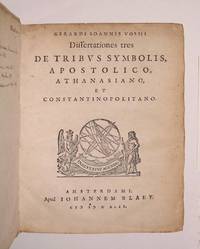
|
|
|
WYTTENBACH,D
Bibliotheca critica.
Amsterdam Amstelodami Apud Petrum Den Hengst 1779 - 1808. 8vo. 12 parts in 3 volumes: I: IIVI1311 blank4 advertisement; II140; IV140; II140 p. II: XII134; II140; II142; II152 p. III: IIXIV130; II140; IIXXXVIII1791 blank; LXXIV22431 blank p. Half calf. 23 cm Ref: STCN ppn 301147841; Graesse 6/2481; Ebert 24057; Brunet 51487 Details: Backs ruled gilt and with 5 raised bands. Red and green morocco shield in the 2nd and 3rd compartment Condition: Bindings worn especially at the extremes Note: Daniel Albert Wyttenbach is today considered one of the most influential humanists of the 18th century. He was a worthy successor of the great scholars Hemsterhuis Valckenaer and Ruhnken. 'Wyttenbach's academic fame and merits lie in the area of Greek philology as he is regarded as one of the founding fathers of modern Greek philological scholarship. He developed and set new standards regarding the study of grammar syntax and styles as well as in the interpretation and translation of Greek classical texts. His philosophical views were committed to the principles of humanism and Enlightenment. . His edition of the 'Plutarchi Chaeronensis Moralia' became a standard text for students and scholars of his time and many generations after'. H.F. Klemme & Manfred Kuehn 'The Bloomsbury Dictionary of Eighteenth-Century German Philosophers' London 2016 p. 871 § Daniel Wytttenbach was born at Bern in Switzerland in 1746 offspring of an old-established Swiss family of scholars and theologians. In Marburg and Göttingen he discovered his passion for the Greek classics. He came to Holland in 1770 to study classics under the most famous classical philologists of that time Tiberius Hemsterhuis Lodewijk Caspar Valckenaer and David Ruhnken. He graduated in 1771 and shortly after became professor at the college of the Remonstrants at Amsterdam. He occupied this post for eight years and in this period the first part of the Classical Review 'Bibliotheca Critica' to which he was the principal contributor appeared. From 1779 he was professor at the precursor of the University of Amsterdam the Athenaeum Illustre where he taught history and Greek and Latin literature. He held this professorship until 1799 and then returned to Leyden as Ruhnken's successor for 17 years. He published an edition of the Moralia of Plutarchus with Latin translation 1795-1806 a work of permanent value. On the death of Ruhnken he became the most influential classical scholar in the Netherlands. Ruhnken was immortalized by him in: 'Vita Davidis Ruhnkenii' Leiden & Amsterdam 1799. About this biography Sandys observes: 'The highest praise must be assigned to his 'Life of Ruhnken' a work of absorbing interest to his scholarly contemporaries which still retains its importance as a comprehensive picture of the Scholarship of the Netherlands and not of the Netherlands alone in the age of Ruhnken'. Sandys 2465. Wyttenbach died in 1820 Collation: Volume 1 pars 1: 4 A-H8 I2 leaf I2 verso blank §2 advertisement of Petrus den Hengst pars 2: pi2 leaf pi1 blank A-H8 I6; pars 3: pi2 leaf pi1 blank A-H8 I6; pars 4: pi1 A-H8 I6. Volume 2 pars 5: pi2 8 minus blank leaves 6/8 A-H8 I4 leaf I4 blank; pars 6: pi2 leaf p1 blank A-H8 I6; pars 7: pi1 A-I8 minus blank leaf I8; pars 8: pi1 A-L8 K4. Volume 3 pars 9: 8 A-H8 I1; pars 10: pi1 A-I8 minus blank leaves I7 & I8; pars 11: pi1 -28 33 A-L8 M2 leaf M2 verso blank; pars 12: pi1 -48 56; A-O8 P2 leaf P2 verso blank Photographs on request Heavy book may require extra shipping costs hardcover
Referentie van de boekhandelaar : 156869
|
|
|
TERENTIUS- RUHNKEN,D
Davidis Ruhnkenii in Terentii comoedias dictata. Brunsiano exemplo emendatius multisque partibus integrius ex apographo hamburgensi edita. Cura Ludovici Schopeni.
Bonn Bonnae Leiden Lugduni Batavorum Impensis Ed. Weber Apud S. et I. Luchtmans 1825. VI285 p. Half calf. 20.5 cm Binding slightly worn unknown
Referentie van de boekhandelaar : 156835
|
|
|
CATO
Dionysii Catonis Disticha de moribus ad filium. Cum notis integris Scaligeri Barthii Daumii; scholiis atque animadversionibus selectis Erasmi Opitii Wachii; et metaphrasi graeca Planudis et Scaligeri. Quibus accedunt Boxhornii dissertatio et Henrici Cannegieteri rescripta Boxhornio de Catone; nec non Joan. Hild. Withofii Dissertationes binae de distichorum auctore et vera illorum lectione. Recensuit suasque adnotationes addidit Otto Arntzenius. Editio altera auctior & emendatior.
Amsterdam Amstelaedami Ex officina Schouteniana 1754. 8vo. LXXVI including frontispiece57836 index2 blank p. Contemporary vellum. 21 cm Ref: STCN ppn 191502472; Schweiger 270: 'Der Herausgeber hat seine eigenen Anmerkungen sehr vermehrt'; Brunet 11668; Graesse 282; Ebert 3736: 'A new recension from MSS. and old editions' Details: 6 thongs laced through both joints. Boards with gilt borders and corner pieces; gilt floral motives in the centre of them. Frontispiece designed and engraved by S. Fokke it depicts the goddess Athena in full armour sitting on a cloud; at her feet 3 putti bent over a copy of the 'Catonis Disticha'. Title printed in red & black Condition: Vellum age-tanned. Gilt on the back gone. All 4 ties also gone Note: 'The Distichs of Cato Latin: 'Catonis Disticha' form a Latin collection of proverbial wisdom and morality by an unknown author named Dionysius Cato from the 3rd or 4th century AD. The Cato was the most popular medieval schoolbook for teaching Latin praised not only as a Latin textbook but as a moral compass. Cato was in common use as a Latin teaching aid all the way to the 18th century . It was one of the best-known books in the Middle Ages and was translated into many languages'. Wikipedia s.v. 'Distichs of Cato' § This volume on offer is the second revised and augmented edition; Arntzenius published his first edition in 1735. The second edition contains several 'praefationes' the Latin text accompanied by the opposing translations into Greek by Planudes and Scaliger a very extensive commentary and 'variantes lectiones'; the last 228 pages are filled with dissertations on the 'Catonis Disticha' by the Dutchmen Boxhorn Cannegieter and the German Withof 2. The edition was produced by the Dutch schoolmaster Otto Arntzenius 1703-1763 Conrector of the 'Schola Latina' in Utrecht 1728 Rector in Gouda 1737 in Delft 1741 in Amsterdam 1745. NNBW 1180/81 The Dutch linguist Marcus Zuerius Boxhornius 'Professor Eloquentiae' at the University of Leiden from 1632 tried to prove in his dissertation that the author of the Catonis Disticha was a late antique christian. Boxhornius' Diss. p. 357: 'Aliter ego sentio & omnino credo Autorem fuisse Christianum' The Dutch classical scholar and historian Hendrik Cannegieter on the other hand attacked Boxhorn and tried to prove that the work was composed by a pagan author who lived before the time of Constantine the Great say 310 A.D. Cannegieter's Diss. p. 381: 'mox enim docebimus non ab homine Christiano sed Pagano conscriptum esse'. And: Idem p. 436: 'vixisse ante Constantinum' The German 'Professor Historiae' at Duisburg Johannes Hildebrandus Withofius supposed that the author lived before the emperor Valentinianus I whose reign began in 364 A.D. Withof's Diss. I p.518: 'ante Valentiniani Primi tempora vixisse' Collation: -48 56; A-2P8 2Q4 leaf 2Q4 blank Photographs on request hardcover
Referentie van de boekhandelaar : 130093
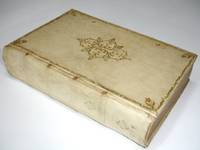
|
|
|
MEURSIUS,J
Ioannis Meursii Reliqua Attica; sive ad librum De populis Atticae Paralipomena. Liber singularis. Cui accedit Auctarium ex Itinerario de Pagis Atticis Jacobi Sponii. Bound with: Ioannis Meursii Theseus sive de ejus vita rebusque gestis liber postumus. Accedunt ejusdem Paralipomena de Pagis Atticis et Excerpta ex v.cl. Jacobi Sponii Itinerario de iisdem pagis. And with: Ioannis Meursii Themis Attica sive De legibus Atticis libri II.
Ad 1 & 2: Utrecht Ultrajecti Apud Franciscum Halma 1684. 3: Utrecht Trajecti ad Rhenum Apud Joannem vande Water Joannem Ribbium Franciscum Halma 1685. 4to. 3 volumes in 1: 528 index40; VIII13612 index; IV15220 index p. Vellum 20 cm Ref: STCN ppn 066811074; STCN ppn 066811007; STCN ppn 840519370; Haitsma Mulier/Van der Lem 334u & 334t Details: 6 thongs laced through the joints. Short title calligraphed with black ink on the back. Title of 'Theseus' printed in red & black. Emblematic woodcut printer's device on the third title depicting Ceres and Athena labour and science the motto is: 'vivitur in genio' 'only through his genius man survives' Condition: Vellum slightly soiled Note: The Dutch classicist and historian Johannes Meursius Johannes van Meurs 1579-1639 was professor of History and Greek in the university of Leiden from 1610 till 1620. He studied under the genius J.J. Scaliger and is best known for the 'editiones principes' of a number of Byzantine authors he produced and the 'editio princeps' of the 'Elementa Harmonica' of Aristoxenus 1616. He edited also the 'Timaeus' of Plato with the commentary and translation of Chalcidius 1617. Meursius' indefatigable labours concerned also the history of ancient Greece and especially Eleusis and the antiquities of Athens and Attica. His work was widely used as a source by later ancient historians. Nothing that related to the history of Athens he left untouched law government festivals institutions manners literature religion etc. The dazzling variety of titles of part of his pioneering work seems almost to exhaust the subject 'ancient Athens': De populis Atticae 1616 Atticarum lectionum libri VI 1617 Aeschylus Sophocles Euripides. Sive de tragoediis eorum 1619 Panathenaea. Sive de Minervae illo gemino festo 1619 Eleusinia. Sive de Cereris Eleusinae sacro ac festo 1619 Fortuna Attica. Sive de Athenarum origine 1622 Archontes Athenienses. Sive de ijs qui Athenis summum istum magistratum obierunt 1622 Cecropia. Sive de Athenarum arce & ejusdem antiquitatibus 1622 De ludis Graecorum 1622 Pisistratus. Sive de ejus vita & tyrannide 1623 Athenae Atticae. Sive de praecipuis Athenarum antiquitatibus 1624 Areopagus. Sive de senatu areopagitico 1624 Regnum Atticum. Sive de regibus Atheniensium 1633 Reliqua Attica; sive ad librum De populis Atticae paralipomena 1684 Theseus sive de ejus vita rebusque gestis 1684 Themis Attica sive De legibus Atticis 1685 It is manifest that Meursius with these works laid the foundations of much later learning. § The works in this convolute have been edited by J.G. Graevius who has added at the beginning of the 'Theseus' a dedicatio to Carolus Sanctamauraeus tutor of the Dauphin of France Collation: A-G4 H2; 2A-E4; 4 A-R4 chiS4 S2; after the last textpage of the Theseus leaf R4 a gathering chiS with an 'Index rerum' has been inserted before the 'Index auctorum' to which the catchword of R4-verso is referring. STCN errs in indicating S2 as chiS2; 2 A-X4 Y2 Photographs on request hardcover
Referentie van de boekhandelaar : 130111
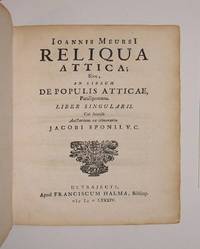
|
|

 De zoekresultaten per email ontvangen
 Zoekresultaten downloaden als PDF
 RSS feed
 Permanente link


