|
LONGINUS
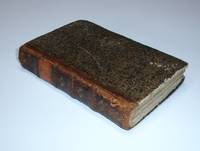
DIONUSIOU LONGINOU PERI HUPSOUS HUPOMNÊMA. Dionysii Longini De Sublimitate commentarius quem nova versione donavit notis illustravit & partim manuscriptorum ope partim conjectura emendavit additis etiam omnibus ejusdem auctoris fragmentis Zacharias Pearce A.M. Regiae Majestati a Sacris Domesticis etc. Editio secunda notis & emendationibus auctior.
London Londini Ex officina Jacobi Tonson & Joannis Watts 1732. 8vo. XXXVI errata3013 variae lectiones19 index1 blank p. Calf. 20 cm Ref: ESTC Citation No. T87458; Hoffmann 2527: 'Pearce hat in dieser Ausg. viel verbessert'; D. St.Marin no. 44: 'a fine critical edition'; Dibdin 2177/8: 'Bishop Pearce is rightly called by Harles 'Longini Sospicator'; Brunet 31152: 'Cette édition a été revue par l'éditeur qui y a ajouté de nouvelles notes et c'est d'après ce texte qu'ont été faites les réimpressions de Londres 1743 1753 1773'; Graesse 4252; Ebert 12211 Details: Back with 5 raised bands & with gilt lettered brown morocco label in second compartment. Old paper shelfmark label at the foot. Boards with bouble fillet blindstamped borders in which a double fillet rectangel with corner pieces in which another smaller double fillet rectangel of a darker hue leather which is surrounded by a blindstamped roll of floral motives. Title in red & black. Engraved frontispiece: an orator and his audience in a library. Woodcut initials and headpieces. An engraved headpiece with the coat of arms Thomas Parker Earl of Macclesfield Viscount of Ewelme and Baron of Macclesfield at the beginning of the dedicatio. Paper of excellent quality. § Parallel Greek and Latin texts; all the notes are conveniently printed under the text Condition: Some slight scratching on the boards. Front hinge showing a tendency to start splitting. Some old ink annotations on the front pastedown. Quotation from Pope's 'Essay on Criticism' in old ink on the rear pastedown Note: The literary treatise 'On the sublime' Peri Hupsous of which 2/3 survives and is ascribed by the medieval tradition to Dionysius Longinus was written some time in the first century A.D. 'As a stimulus to critical thought and to the understanding of ancient literature he the author has permanent value'. OCD 2nd ed. p. 619. 'Longinus was ably edited by Zachary Pearce 1690-1774 Fellow of Trinity and ultimately bishop of Rochester'. Sandys II412. It was a new recension and had a new translation and was published in London in 1724. Pearce revised the text for this second edition and added new notes. Of this second edition reissues have been published in London in 1743 1753 and 1773. St.Marin no. 44: 'This scholar's work turned out to be a fine critical edition and was especially valued for the variants which it offers'. This octavo edition 'was published for the sake of general circulation' and has 'propagated universally the critical talents and fine taste of their editor'. Dibdin Provenance: In ink on the front pastedown: 'E libris Capel Berrow e Coll. St Joh. Bapt. Oxon. 1736' This is the English divine Capel Berrow 1716-1782. He matriculated a commoner of St. John's College at Oxford in 1734 proceeded B.A. 1738 and M.A. of Christ's College Cambridge 1758. He became curate of St. Botolph's Aldersgate 1741 and afterwards of St. Austin's and in 1744 was chosen lecturer of St Benedict's Paul's Wharf. In 1766 Capel Barrow was rector of Rossington Northamptonshire. His 'A Lapse of Human Souls in a State of Pre-existence the only Original Sin and the Ground Work of the Gospel Dispensation' published in 1766 is his only book now remembered. See his Wikipedia article Collation: A8 a8 b2; B-X8 Y2 leaf Y2 verso blank Photographs on request hardcover
Referenz des Buchhändlers : 130247
|
|
|
CHOMPRE,P
Dictionnaire abrégé de la fable. Pour l'intelligence des poètes des tableaux & des statues dont les sujets sont tirés de l'histoire poétique. Par M. Chompré licencié en droit. Nouvelle édition augmentée.
Bruxelles Chez B. Le Francq 1801. VIII418 p. Hardbound 14 cm Original binding covered with soiled yellow paperSee wikipedia for Chompré hardcover
Referenz des Buchhändlers : 110966
|
|
|
BONAMICUS, CASTRUCCIUS
Castruccii Bonamici De rebus ad Velitras gestis commentarius. Ad Trojanum Aquavivam Aragonium S.R.E. Principem Cardinalem Montis Regalis Archiepiscopum et potentissimorum Hispaniarum atque utriusque Siciliae Regum ad Pontificem Maximum Sedemque apostolicam Legatum. Editio nova auctior. Curante Cornelio Valerio Vonck.
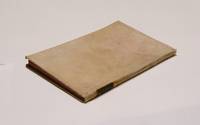
Amsterdam Amstelaedami Apud Marcum Michaelem Rey 1748. 8vo. XXIV64 p. Vellum 21 cm Ref: IJsewijn Companion 2nd ed. 166; Michaud Biographie Universelle 1854 p. 147 Details: 2 thongs laced through the joints. Green morocco label on the back. Marbled endpapers. Title in red and black. Engraved printer's mark of the French refugee printer/publisher Marc Michel Rey on the title depicting a beehive: motto 'ingeniosa assiduitate' Condition: Binding slightly curved and age-toned. Tail of the spine chafed. Back and morocco shield somewhat rubbed. A few tiny pinpoint spots of insect damage to the joints. A small and old ink annotation on the front flyleaf Note: This book is the first big success of the Italian soldier historian and neolatin author Castruccio Buonamici 1710-1761. He is considered te be one of the most elegant of the neolatin authors of the 18th century. After a short ecclesiastical career he enlisted in the army of the King of the Two Sicilies and Spain Charles de Bourbon. In the war against the Austrians he distinguished himself in 1744 in the battle of Vellitri Roman Velitrae. The Latin report of this battle by the cultivated warrior 'De rebus ad Velitras etc.' was first published in 4to in 1746. A few years later he produced his 'Commentarii de Bello Italico' Leiden 1750/51 a work which met with even greater success. Both works were reissued several times and translated into French and English. Buonamici is praised for his elegant style the power and depth of his ideas and his reliability. Both works of Buonamici were published also by the Dutch scholar Cornelius Valerius Vonck 1725-1769 a man known as a judicious corrector of Latin authors. For 2 years he was professor at the university of Mannheim. This editionof 1748 is a new and augmented edition of 'De rebus ad Velitras etc.'. According to the impressum of the 1746 edition 'Lugduni Batavorum' it was first printed in Leiden. Vonck explains however in the prolegomena that the first edition of this book could not possibly have been printed in Leiden because of the quality of the paper and the printing type. And we know he continues that in some countries people have good reasons to conceal the 'genuinum typographi atque editionis locum'. Praefatio p. VII. Vonck seems to be well informed he calls himself 'non omnino harum rerum ignarus'. The first edition of 1746 must have been printed in the region where the author was born Lucca he concludes. Why he does not say. The book is dedicated to the cardinal Trojano Acquaviva 1696-1747 bishop of Monreale. He represented in the Curia of the Vatican the interests of the King of Spain and the Sicilies Charles III On Vonck see Van der Aa 19 327/8 Collation: 8 24; A-D8 Photographs on request hardcover
Referenz des Buchhändlers : 130031
|
|
|
FABRICIUS,JA J A
Jo. Alberti Fabricii SS. Theol. D. & Prof. Publ. Bibliographia Antiquaria sive introductio in notitiam scriptorum qui antiquitates Hebraicas Graecas Romanas et Christianas scriptis illustraverunt. Editio secunda auctior & indice duplici rerum scriptorumque locupleta.
Hamburg Leipzig Hamburgi et Lipsiae Impensis Christiani Liebezeit 1716. 4to. XIV66464 index p. 1 engraved plate. Vellum 21.5 cm Ref: VD18 15351424; Brunet 21154; cf. Ebert 7274; C. Bursian 'Geschichte der classischen Philologie' Munchen/Leipzig 1883 vol. 1 p. 360/61: 'eine Sammlung von Büchertiteln und sonstigen Notizen über hebrärische griechische römische und christliche Alterthümer' Details: 6 thongs laced through both joints. Title printed in red and black. Good quality paper. The edges are dyed red. This book contains a plate engraved by 'Kraus'. This must be the German engraver Johann Ulrich Kraus 1655-1719 or his wife Johanna Sibylla ca. 1650-1717. 'Kraus Stil is ganz im Zeitgeschmack des Hochbarock an französischen Vorbilder orientiert'. NDB 12 689/90 This heavily ornamented plate illustrates a chapter in the book on the Roman Apotheosis funeral rite which led to the deification of Roman rulers and their wives. It depicts a smoking funeral pyre in the shape of an enormous modern wedding cake; the pyre is surrounded by Roman soldiers priests etc. In most copies we know of this book this plate is bound before the title and functions there as a kind of frontispiece Condition: Vellum soiled. Right margin of the title is thumbed. The turn-in strip at the outer margin of the inside of the lower board is loosening Note: The late 17th century was for classical scholarship the age of epigones men who were more compilators than great scholars. Classical scholars started to produce often voluminous editions of Greek and Latin authors packed 'cum notis Variorum' others produced enormous surveys and summaries for instance classicists like Jacobus Gronovius who published his huge 13 volume 'Thesaurus Antiquitatum Graecarum' 1697/1703 and Johannes Georgius Graevius who compiled a 'Thesaurus Antiquitatum Romanarum' 1694-1699 in 12 huge volumes. Such processing of knowledge was only useful because 'sie literarische Zeugnisse für zahllose Einzelerscheinungen des antiken Lebens grosse und ganz geringe mit saurem Schweisse sammelte und nach Kräften ordnete'. U. von Wilamowitz-Moellendorff 'Geschichte der Philologie' Lpz./Bln. 1921 p. 33 Wilamowitz perhaps the greatest classical scholar ever strongly disapproved of this kind of scholarship because 'Vielwisserei' hampered progress. 'Wo das Können immer schwacher ward galt das Wissen immer mehr Polyhistorie war das Höchste was man anstrebte. . Polymathie schafft keinen Verstand hat schon Herakleitos gesagt'. Idem p. 34. A Polymath in the flesh was the German classical scholar and bibliographer Johann Albert Fabricius 1668-1736 a man 'von staunenswerthem Fleiss und unermesslicher Belesenheit'. Bursian p. 360 He was a celebrated bibliographer and among the foremost among the German classical scholars of his time. His chef-d'oeuvre is the 'Bibliotheca Graeca' a bibliographic survey of Greek literature 1705-1728. The last edition of this work numbers 14 volumes. It displays an immense learning and supplied the basis for all subsequent histories of Greek literature. It's bibliographic data are still useful for classical scholars. His 3 volume 'Bibliotheca Latina' 1708-1721 is on a more modest scale. Nevertheless it still is a useful work of reference. Its last edition of 1773-1774 is still consulted by scholars librarians and antiquarian booksellers and it is more than once repeated or excerpted by later bibliographers like Schweiger Dibdin or Moss. Fabricius also produced a 'Bibliotheca Latina Ecclesiastica' 1718 and a 5 volume 'Bibliotheca Latina Mediae et Infimae Aetatis' 1734-1736. § Johann Albert Fabricius began to teach on the Gymnasium at Hamburg in 1699 and remained there until his death. There he collected 'in stiller mühsamer Einzelarbeit' his bibliographic material for Greek Latin Byzantine and Medieval Latin literature. The NDB does not speak of the suffocation caused by the compiling 'epigones' but is full of praise. 'Diese zuverlässige wohlgeordnete Sammelarbeit war unschätzbar nicht nur als Grundlage für die historische und kritische Arbeit der folgenden Generationen von Gelehrten sodern auch als Arsenal für unsere Klassiker'. NDB 4732/33 NDB concludes with the statement that Fabricius equals 'doch als Polyhistor von unwahrscheinlicher Fruchtbarkeit' the great Leibniz. steht in der Nähe des grossen Leibniz The pupils on Fabricius' Gymnasium must have been diligent and brilliant because he tells in the preface to this 'Bibliotheca Antiquaria' that it is a collection of private lectures held for youngster who visited his school. It is a kind of encyclopedia the approach of which is thematic. It consists of notices of the authors who had published on Jewish Greek Roman and ecclesiastical antiquities. For instance on 'antiquitates graecae' he refers to the general survey works of importance including a 19 page table of contents of the 'Thesaurus Antiquitatum Graecarum' of Gronovius. The first 4 chapters discuss general works of writers on Jewish Greek Roman and christian antiquities. Chapter 5 is on geography 6 on works describing ancient Rome 7 on chronology 8 on gods and saints 9 on altars temples sacred places 10 on 'Festus' 11 on sacrifices and rituals 12 on divination miracles and magic 13 on priests and clerics 14 on 'De re publica' 15 on law 16 on taxes measures and weights 17 on militaria and nautica 18 on clothes 19 on food and convivia 20 on marriage and family 21 on school and education 22 on Games monuments and buildings 23 is on death. The elaborate 'index rerum' and 'index scriptorum' are useful tools to find one's way in this farrago of names titles and other interesting data Collation: 4 minus leaf 4 24; A-Z4 Aa-Zz4; Aaa-Zzz4 Aaaa-Yyyy4 after Ll2 page 267/8 has been bound a plate which other copies have before the title as a kind of frontispiece Photographs on request hardcover
Referenz des Buchhändlers : 130453
|
|
|
TERENTIUS
P. Terentii Carthaginiensis Afri Comoediae sex. Interpretatione & notis illustravit Nicolaus Camus Juris Utriusque Doctor jussu Christianissimi Regis in usum Serenissimi Delphini. Editio prioribus longe emaculatior.
London Londoni Impensis J. Pote et alii 1776. 8vo. VICXXXVIII28880 index p. Calf 21 cm Ref: ESTC Citation No. T219687; Schweiger 21070; cf Brunet 5716; Graesse 6/259; Ebert 22513; Cupaiuolo no. 946; La collection Ad usum Delphini vol. 251/61; Spoelder p. 644 Middelburg 5 Details: Prize copy without the prize. Back ruled gilt. Red morocco shield on the 'second compartment'. Gilt coat of arms of Middelburg on both boards. Title in red & black. Terence's Latin text is surrounded with an easy Latin version and with annotations and is preceded by 138 pages of 'prolegomena Terentiana' Condition: Prize removed. Binding slightly rubbed especially at the extremities. Some small and very faint waterstains at the margin of 10 p. Name cut from upper corner of the front flyleaf Note: The 6 plays of Terentius second century B.C remained from antiquity through the Middle Ages and in later centuries an example of style and a rich source for moral sentences. In the 15th and 17th century his plays were frequently staged in schools. § This London edition of 1776 is a reissue of the 1688 London version of Terence's comedies from the Delphin series 'Ad usum Delphini edited by Nicolas Camus 1610-1677 and originally published in Paris in 1675. In the dedication we are told that Terentius was the favorite author of the young prince Louis of France and that he could find in this edition besides the elegance of the Latin language examples of the noble customs and the wisdom of the Romans. Louis of France was born in 1661 as the eldest son of Louis XIV King of France. His title was as the heir apparent to the throne Dauphin Delphinus. As he died before his father he never became king This 'Ad usum Delphini' edition was a tremendous success especially in England. In the English Short Title Catalogue we found till 1800 no less than 17 editions. 'Nous avons ici une édition de Térence de bonne qualité où le plus gros effort est fait au niveau du choix des pièces liminaires prolegomena Terentiana et de l'annotation'. La collection Ad usum Delphini p. 57 § The Roman playwright Publius Terentius Afer ca. 190-159 B.C. was born in the Roman province Africa and came as a slave in the houshold of the senator Terentius Lucanus. He adopted his name when he was manumitted. Terentius is the author of 'fabulae palliatae' which means 'plays in Greek cloths'. He adapted Greek plays especially those of the Greek playwright Menander to the taste of the Romans. Six of his comedies have survived. For later generations he became a model for elegant Latin. His style was closer to everyday conversation than Plautus an earlier contemporary comic playwright whose style was more extravagant. He was quoted by Cicero Horace Persius and the Church Fathers. Ever since antiquity he lived also a long and influential life in schools as a model for Latin language and rhetoric. In the Middle Ages Terentius was read for his moral sentences. He was imitated by the German abbess Hrotsvitha of Gandersheim ca. 935 - ca. 973 in her 'Dramenbuch' with which she wanted to create a Christian alternative for the pagan comedies. With the coming of humanism Terentius enjoyed a renaissance in the classroom and on stage. Scholars rejected the 'barbaries' of Medieval Latin and chose the elegance of Cicero and Terentius as their model. In his 'De ratione studii' 1511 the Dutch humanist Desiderius Erasmus 1466-1536 encouraged the study of Terentius whom he thought congenial to youth. Thus they could master a pure Latin style and learn at the same time good morals. Erasmus seems to have learned the whole of Terentius by heart in his youth. He admired the author for his 'latinitas' and his civilized humor. His ideal as a humanist and pedagogue was the creation of better men with the help of the classics. Several Dutch humanists wrote 'Dialogi pueriles' fictitious dialogues to train schoolboys to converse in Latin conversations which much Terentius in it. § Erasmus held the opinion that schoolboys should read the edifying comedies of Terentius over and over again. So did also the Dutch Jewish philosopher Spinoza. He must have studied his Terentius very thoroughly. In his work hundreds of quotations and borrowings from Terentius can be traced. Spinoza used them to define and illustrate human feelings weaknesses and passions. F. Akkerman Spinoza's tekort aan woorden Leiden 1977 p. 3 Provenance: In ink on front flyleaf: 'A.A.L. Rouyer'. In the 'Verslagen uitgebracht door de Commissie voor Verzoekschriften' of the 'Tweede Kamer' 33rd meeting of 24 december 1902 we found in a report of this Committee that the mother of one 'A.A.L.J. Rouyer' appealed to the Committee to grant her son who had served as a minister of the protestant church in the Dutch Indies and who was removed honorably from his office because of insanity a pension. According to the rules his time spent in the Indies was just too short for a pension. She asks for lenience for se does not have the means to pay for proper care her son who was looked after in the mental institution Veldwijk in Ermelo. The Committee sent her petition to the Minister of Colonial Affairs with the remark that this Department was to receive for the year 1903 funds for this kind of cases Collation: A-2I8 Photographs on request hardcover
Referenz des Buchhändlers : 130361
|
|
|
THUCYDIDES- PAULINUS,F
Praelectiones Marciae sive Commentaria in Thucydidis Historiam seu Narrationem de Peste Atheniensium. Ex ore Fabii Paulini Utinensis philosophi et medici in Veneto Gymnasio ad D. Marci Bibliothecam excepta et edita. Ad Excellentiss. III. Viros Veneti Patavinique Gymnasii. Cum triplici indice; uno Quaestionum altero Auctorum tertio rerum memorab. Cum privilegiis.
Venice Venetiis Apud Juntas 1603. 4to. XLIV600 p. Overlapping vellum 23 cm Ref: Hoffmann 3563; Schweiger 1331; Ebert 22957 Details: Two thongs laced through the joints. Gilt red morocco letterpiece on the back. Printer's mark of the Giunta family on the title: a fleur-de-lys. Woodcut initials good paper fine printing Condition: old and small inscription on front pastedown; a bigger one on the front flyleaf. Name and a faint small inkstain on the title. Some very small wormholes near the lower edge keeping far away from any text; holes have occasionally been mended with a layer of thin paper Note: This volume contains the exhaustive and learned lecture notes of Fabio Paolino da Udine or Fabius Paulinus Utinensis on the description of the plague epidemy by the Greek historian Thucydides Thuc. Hist. 2.47-58. This epidemy reached the war-stricken city of Athens in 430 B.C. at the beginning of the Peloponnesian war which lasted from 431 till 404 B.C. Thucydides is the first to describe the social upheaval of a pandemy and its consequences. The identification of what was the cause of this pandemy is until this day a matter of controversy. Fabius Paulinus Utinensis born at Udine ca. 1535 was the very man for a commentary on this subject. 'His first training in Greek and Latin was at Venice with Bernardino Partenio. Later he went to Padua where he graduated in philosophy and medicine but studied rhetoric and Arabic as well. He practiced medicin for a time before he became public professor at Venice where he taught Greek in the School of San Marco and Latin in the Collegio de'Notai. Both chairs he obtained in 1588 as the successor of Bernardino Partenio'. 'Medieval and Renaissance Latin translations and commentaries vol. 8' Washington 2003 p. 180. Paulinus held his lectures in the library of the San Marco Gymnasium. The work starts with a list of 232 questions concerning the possible causes of the pest. Each chapter is preceded by the relevant Greek text and a Latin translation. § On the flyleaf a former owner has written a quotation from Gibbon's 'Decline and Fall of the Roman Empire' chapter XLIII note 90: 'I was indebted to Dr. Hunter for an elaborate commentary on this part of Thucydides the plague of Athens a quarto of 600 pages Ven. 1603 apud Juntas which was pronounced in St. Marks Library by Fabius Paullinus sic Utinensis a physician and philosopher'. These passages of Thucydides helped Gibbon to understand the impact of the pest epidemy which ravaged Konstantinople in 542 under the emperor Iustinian Provenance: Name on the title of 'Joannis Molini'. This must be a relative of one of the 3 senators of the Gymnasium to whom Paulinus dedicates his work. The book is dedicated to 'M. Anto. Memmo' and the noblemen 'Francisco Molino' & 'Antonio Priolo' Collation: a-d4 e6; A-4F4 Photographs on request hardcover
Referenz des Buchhändlers : 130396
|
|
|
STRABO
Strabonis Geographicorum lib. XVII. Olim ut putatur a Guarino Veronensi ac Gregorio Trifernate latinitate donati iam denuo a Conrado Heresbachio LL. doctore Principisque Iuliacensis consiliario ad fidem Graeci exemplaris authorumque qui huc facere videbantur recogniti ac plerisque locis deintegro versi. Item Epitomae eorundem decem & septem de Geographia librorum nunc primum de Graeco sermone in Latinum conversae Hieronymo Gemusaeo D. medico & philosopho interprete.
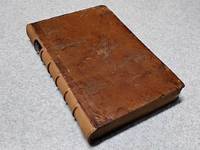
Basel Basileae Apud Ioan. Vualder 1539. Folio. LXXXVIII5491 blank26 index p. Calf 33 cm Ref: VD16 S9347; Griechischer Geist aus Basler Pressen 288; USTC 694729; Hoffmann 3457/58; Ebert 21826; Adams S-1904; Graesse 6/1506; Schweiger 1304 Details: Latin translation only. Recently and expertly rebacked antique style: back with 6 raised bands & a morocco shield. Title with engraved architectural borders. Johann Walder's printer's mark on the title it depicts a parrot sitting on an olive branch. On the verso of the last leaf a second version of this printer's mark but bigger. Big woodcut initials at the beginning of the books Condition: Boards scratched and showing some small inkspots. Corners bumped & abraded. A few small wormholes in the leather of the upper board. A small stain on the title. Small wormhole in the blank outer margin of the first 24 leaves. 3 very small ink annotations. First & last leaves with a slight fold lengthwise. Woodcut bookplate the front pastedown. Old inscription on the verso of the front flyleaf Note: The Greek historian and geographer Strabo of Amaseia 63 BC - ca. 20 AD was like his example Polybius an admirer of the Romans and their empire. He lived for some time in Rome and travelled over a great part of the known world. His historical work is lost. The greater part of his 17 books on geography however survived. He showed little interest in purely scientific matters and more in moral lessons. The following table of content is borrowed from the OCD 2nd ed. p. 1017: 'Books 1-2: introductory. 1. Homer; Eratosthenes criticized. 2. Mathematical geography; criticism of Eratosthenes and Polybius examination of Posidonius especially zones; Eudoxus' voyages. Strabo's opinions on the earth; cartography on sphere and plane. 3. Spain Isles of Sicily. 4. Gaul Britain etc. 5-6. Italy Sicily; the Roman empire. 7. North and East Europe north Balkans some is lost. 8-10. Greece very antiquarian and mythological. 11. Euxine-Caspian etc. Taurus Armenia. 12-14. Asia Minor some mythology and history. 15. India Persia. 16. Mesopotamia Palestine Ethiopian coasts Arabia 17. Egypt Ethiopia north Africa'. § The 'editio princeps' of the Greek text was published in 1516 by the Venetian printer Aldus Manutius. The first Latin translation from the press of Schweynheym and Pannartz dates from much earlier from 1469. There was apparantly much demand for a Latin translation in the Renaissance. 'Griechischer Geist aus Basler Pressen' records 12 editions of Latin translations till 1539. 1523 saw a new Latin translation made by the German humanist and politician Konrad Heresbach which was published in Basel. Konrad Heresbach 1496-1576 was for a short time 1521 thanks to the mediation of his friend Erasmus professor of Greek of the University at Freiburg. Erasmus declared that he had never met a young man with such perfect knowledge of both Greek and Latin. Basler Geist p. 55 From 1523 onward Heresbach was involved in the politics of the Duchy of Cleve and Westphalia. From the title we learn that Heresbach was the 'Geheimrat' of the 'princeps' of the Duchy of 'Juliacensis' and we should add 'Clivensis et Montensis' Jülich Kleve Berg. In politics he tried like Erasmus to avoid a schism between the catholics and the protestants and to reconcile the opposing parties. In his younger years Heresbach produced editions of several Greek authors among them this translation of Strabo. In the preface of 1523 repeated in this edition of 1539 Heresbach declares that the translators of the earlier published translations were not Guarino Veronensis and Gregorio Trifernate but that that translation tasted of resipiscere the Byzantine refugee scholar Theodorus Gazaeus. This 1539 reissue of the Latin translation of Heresbach is preceded by a Latin translation of a not yet published summary of the 17 books of Strabo the 'Strabonis Geographicorum Epitomae'. These 'epitomae' were translated by a scholar/medic medicus et philosophus from Basel Hieronymus Gemusaeus 1505-1543. He was well versed in Greek. In 1534 he was appointed professor of physics of the University at Basel and from 1537 he was professor of Aristotelian logic. He translated several works of Aristotle and produced also a commentary on his 'Analytica Posteriora'. NDB 8606 Provenance: This book has an interesting provenance the keyword is 'Ducatus Juliacensis' or Duchy of Jülich a city halfway Cologne and Maastricht. Heresbach the translator of Strabo is advertised on the title as being the 'consiliarius' of the 'princeps Juliacensis' that is 'Geheimer Rat' of the Duke of Jülich. He held this office of Councillor from 1535. It is possible that Heresbach gave a copy this copy of his Strabo to the Duke Now we find on the verso of the front flyleaf the following inscription: 'Ihro Excellence U. Hofcanzler Franz Melchior Herr von Wisser 1703'. The noble family Von Wiser entered into the service of the Duke Palatine of the Pfalz Neuburg in the 17th century. Franz Melchior born ca. 1645 who was elevated to Imperial Count Reichsgraf in 1702 was 'Excellence U. Hofcanzler' i.e. 'Geheimrat und Präsident' of Johann Wilhelm the Duke Palatine of the Pfalz Neuburg. During the 'Jülich-Klevischen Erbfolgestreit' at the beginning of the 17th century the region Jülich Kleve Berg came into the possession of the Duke Palatine Pfalzgraf of Neuburg. Not only the region but of course also the court library of the princes/dukes of Jülich. Thus this book written by Heresbach the 'Geheimrat' of the duke of Jülich may have become the property of the 'Geheimrat' Franz Melchior von Wiser chancelor of the Duke Palatine of Neuburg who was also the ruler of Jülich. § On the front pastedown the oval woodcut armorial bookplate of the next owner the son of Franz Melchior: 'Ferdinand Andreas Sacri Romani Imperii Comes de Wiser'. Ferdinand Andreas 1677-1755 inherited this book but also the title of 'Reichsgraf' and was like his father an influential diplomat. This book must once have been in the library of the big mansion of the counts of Wiser at Leuterhausen which was built by Ferdinand Andreas. The sources for 'Von Wiser' are the informative lemmata 'Ferdinand von Wiser' and 'Pfalz Neuburg' in Wikipedia and also Zedler Band 57 p. 650 § There is however something strange with the entry concerning Franz Melchior von Wiser. It is dated 1703. Franz Melchior died however according to Zedler the earliest source we could find on the 23rd of November 1702 at 7 o'clock in the evening. It is possible that the person who wrote this inscription in this book made a mistake. It is also possible that Zedler made a mistake which all later historians seem to repeat. We found on the internet a source the only one which seems to indicate that Franz Melchior was still alive in 1704. The source is a manuscript of the 'Sammlung Ludwig' on the front pastedown of which has been pasted the printed bookplate of Ferdinand Andreas below which has been written: 'Ihro Exellence fl. Hofkanzler Franz Melchior von Wiser 1704'. In the accompanying note it is explained that Franz Melchior died in 1707. Die Handschriften der Sammlung Ludwig Band 2 272 Köln 1982 More research is needed here. § In the front flyleaf has been blindstamped: 'Library of Ruth and Walter Middelmann'. On the internet we found only one 'Ruth Middlemann' living in Capetown South Africa an expert on the national plant 'Protea' better known as 'suikerbos' or 'suikerbossie'. Since we bought this book in South Africa this woman must have been the previous owner Collation: a4 b-g6 a-z6 A-Z6 Aa-Bb6 Photographs on request Heavy book may require extra shipping costs hardcover
Referenz des Buchhändlers : 98204
|
|
|
CURTIUS RUFUS
Q. Curtii Rufi Historia Alexandri Magni. Cum notis selectiss. Variorum Raderi Freinshemii Loccenii Blancardi &c. Editio accuratissima accurante C.S.M.D. And: J. Freinshemii Supplementorum in Q. Curtium liber I & II.
Amsterdam Ex Officina Elzeviriana 1673. 8vo. 2 parts in 1: 7511; 93481 blank p. engraved title 1 plate 1 map. Overlapping vellum 19 cm Ref: STCN ppn 095875646; Willems 1482; Berghman 2055; Rahir 1590; Schweiger 2321; Moss 548; Dibdin 375: 'the edition of 1673 is the most correct and beautiful'; Graesse 2311 Details: 6 thongs laced through the joints. Engraved title depicting a world conquering Alexander on horseback trampling his enemy Darius; he is accompanied by a flying Fama who blows her horn. A plate depicts the 'fons solis' a fountain in the Egyptian oasis of the temple of Ammon cool at midday and warm at the rising and setting of the sun. Alexander visited this famous oracle in order to obtain an answer concerning the divinity of his origin. The map shows the triumphal march of Alexander through Egypt and Asia Condition: Good condition. Back soiled. A small unobjectionable wormhole in the gutter of the first half not affecting text. Old & small paper label on the back Note: This is a typical Variorum edition. It offers a 'textus receptus' which is widely accepted accompanied with the commentary and the annotations of various specialists taken or excerpted from earlier useful normative or renewing editions. Editions like these 'cum notis Variorum' were useful but never broke new ground. The production of these sometimes overloaded 'dustbins' of knowledge was the specialty of Dutch scholars of the 17th and 18th century. The compilers seldom were great scholars but often hard working schoolmasters. Their involvement in publishing a new edition was limited to the necessary. In a Variorum edition of Claudianus published by the same Elzevier in 1665 we get a glimpse of such labour. There the 'typographus' i.e. Louis and/or Daniel Elzevier tells the reader that a 'vir diligentissimus' the schoolmaster Cornelius Schrevelius excerpted from the best sources all that was necessary for a good understanding of the text. 'Quod ad praestantissimi poetae intellectum pertineret ex optimis Doctissimorum Virorum' then follows a number of names of Claudianus editors and commentators 'aliorumque qui antea in eo illustrando elaborarunt notis & commentariis selectissima quaeque excerpsit'. This 'Variorum' edition of Curtius Rufus of 1673 was as it happens produced by the above mentioned Cornelis Schrevelius 1608 - 1664 who took his doctoral degree in Paris as a Doctor of Medicine in 1627. Hence C.S.M.D. on the title that is 'Cornelis Schrevelius Medicus Doctor'. He was Rector of the Schola Latina at Leiden. § The Roman historian Quintus Curtius Rufus probably first century A.D. is the author of the only surviving monography on Alexander the Great in Latin. He was an historian enough to use sources which drew from different traditions conscientiously. His aim was not to write great literature but his 'Historia' certainly possesses great narrative qualities acquired by a thorough knowledge of the epic and historiographic tradition and a training in Roman rhetoric. NP s.v. Curtius This work consisting of 10 books did not survive in its entirety the first 2 books are lost. The text of Curtius Rufus is followed in this edition by a rather strange philological accomplishment by the German scholar Johannes Casper Freinsheim 1608-1660. He endeavoured to repair the loss of the 2 books that did not survive by a composition of his own a feat which was much admired by his contemporaries. He published this new text earlier in his edition of 1640. Moss declares that this supplemented text is 'scarcely descernible from that of Q. Curtius' Provenance: The label on the back reads: 'Litt Antiq. A.J. v. B.C.' This must be Aarnoud Jan van Beeck Calkoen 1805-1874 born in Leiden. He went to Utrecht to study law. There he settled as a lawyer and grew into politics. NNBW 9123 Collation: pi2 A-3A8; map after gathering A; folding plate after leaf M4; a-h8 i4 k2 leaf k2 verso blank Photographs on request hardcover
Referenz des Buchhändlers : 130415
|
|
|
HORATIUS
Q. Horatius Flaccus cum erudito Laevini Torrentii commentario nunc primum in lucem edito. Item Petri Nannii Alcmariani in Artem Poëticam.
Antwerp Antverpiae Ex officina Plantiniana apud Ioannem Moretum 1608. 4to. XX8391 blank46 index p. 2 engraved portraits of Torrentius and Horace Modern half vellum 26 cm Ref: STCV:6607438; Schweiger 2401: 'Commentar zeichnet sich durch Kenntniss der Grammatik'; Dibdin 297; Moss 214: 'A very beautiful and critical edition'; Ebert 10175: 'some of his corrections are very happy'; Fabricius/Ernesti 1410: 'Cum erudito commentario Laevini Torentii bonis Codd. MSS. usi' Details: Modern and modest binding antique style. Engraved printer's mark on the title motto: 'Labore et Constantia'. Engraved portrait of Torrentius after Gisbert Venius beneath the portrait 2 distichs by the Antwerp Neolatin poet Johannes Bochius Jan Boghe; engraved portrait of Horace. Woodcut initials Condition: Title slightly soiled; ownership entry on the title; right lower corner faintly waterstained Note: The works of the Roman poet Quintus Horatius Flaccus 65-8 B.C. have enjoyed a continuous presence in European culture. Till well into the 20th century he stood central in school curricula. Earlier in the Middle Ages he was next to Vergil the most important school author. Horace is transmitted in around 300 medieval manuscripts. The Renaissance saw the beginning of a flood of editions. 'For Neo-latin poetry until modern times and for all the vernacular literature of Europe from the 16th through the 18th centuries Horace provided the dominant model both for private lyrics celebrating wine and love and for public lyrics celebrating affairs of state'. Young poets used Horace to learn the trade. 'Horace's elegant rationalism and moral wisdom and also his disabused and tolerant tone made his poems favorite reading during the Enlightenment'. The Classical Tradition Cambr. Mass. 2010 p. 454/60 § The humanist scholar Laevinius Torrentius or in Dutch Lieven van der Beke the editor of this 1608 edition was appointed bishop of Antwerp in 1576. He was not only a theologian but also a philologist a combination prelate and scholar which was not rare in the Renaissance. In his youth he contributed to an edition of Varro's 'De Lingua Latina' Rome 1554. And in 1578 he published with Plantin a valued edition of the Roman historian Suetonius with his commentary. In a letter to Muretus Torrentius declared that his edition with commentary of Horace was ready in 1580 soon after the Suetonius but that the war between the Spaniards and the Dutch republic was an obstacle for publication by Plantin. Later 1587 he wrote in a letter that the work on Horace was done except for a commentary on the 'Ars Poetica'. Torrentius' Horace was posthumely published by the successor of Plantin his grandson Balthasar Moretus in 1608. For the lacking part the 'Ars Poetica' the publisher used the text and commentary which had been produced by Petrus Nannius 1500-1557 born in Alkmaar and later also rector of the Latin School of that city. In 1539 he came to Leuven to teach on the 'Collegium Buslidianum'. His inaugural lecture there was on the 'Ars Poetica' of Horace. In the preface to the text of the 'Ars Poetica' in the 1608 edition p. 767/68 written by Valerius Andreas 1588-1655 we are told that a text and a commentary of the 'Ars Poetica' which had been produced in Leuven by Nannius never saw the light and that he edited Nannius' work digessi et recensui after having received a copy through the kind offices of his teacher Andreas Schottus a Jesuit and humanist friend of Torrentius to complete the edition of Torrentius. Andreas was a student at the same Collegium where Nannius had taught some 50 years before. Torrentius was also an accomplished neolatin poet be it that his poetry is predominantly religious. His laudatory hymn on Balathasar Gerards who murdered the protestant Prince of Orange the Dutch 'Pater Patriae' in 1584 made him notorious in the Netherlands Provenance: In ink on the title: 'Bibliothecae Augustin: Angiae comparavit L. De Hou. . 1710'. This book bought in 1710 originates probably from the library of the 'Schola Latina' founded by Augustine monks in 1537 in the Flemish city Edingen nowadays the Walloon municipality Enghien located in the Belgian province of Hainaut. The Roman name of the town was 'Angia'. The school 'Collège Saint-Augustin' still exists. See: moncollege.be/histoire.html Collation: -24 32 A-Z4 a-z4 Aa-Zz4 AA-ZZ4 aa-nn4 leaf nn4 verso blank A-F4 minus leaf F4 a blank Photographs on request Heavy book may require extra shipping costs hardcover
Referenz des Buchhändlers : 140138
|
|
|
LUCANUS
M. Annaei Lucani Pharsalia cum commentario Petri Burmanni.
Leiden Leidae Apud Conradum Wishoff Danielem Goetval et Georg. Jacob. Wishoff fil.Conrad. 1740. 4to. LII7351 blank 160 indices p. Marbled calf. 26 cm Ref: STCN ppn 239852117; Schweiger 2565; Dibdin 2186; Brunet 31200; Moss 2242: 'A very excellent and critical edition and by far the best which has yet been published'; Fabricius/Ernesti 2147/48: 'ceteris praeferenda'; Ebert 12350; Graesse 4273/74; Spoelder p. 642/3 Middelburg 4 Details: Prize copy. Backstrip ruled in gilt. Red morocco shield on the back. Gilt coat of arms of Middelburg on both boards. Gilt palmette motifs along the borders of the boards. Title in red and black. On the title also a large engraving of a battle scene the battle of Actium designed by J. de Groot and engraved by J. v.d. Spyk Condition: The back has been repaired expertly. The front flyleaf with on it the prize was removed and replaced by a flyleaf of a lesser quality paper and has chipping edges. Some foxing Note: This edition of Petrus Burmannus 1668-1741 professor of Latin at the University of Utrecht from 1696 and at Leiden from 1715 is highly praised by Dibdin. He remarks that this is a valuable edition. It is sometimes preferred to the edition of Oudendorp of 1728 he says. The text of Burman's edition is founded on that of Cortius. This edition is important because Burmannus prints and discusses in the commentary for the first time the many variant readings from more than 25 manuscripts that were collated by the great Dutch scholar Nicolaas Heinsius 1620-1681 and were jotted down in the margins of a Lucan edition of 1542 that he Heinsius once owned. Praefatio p. 2 verso § As an editor Burman was an industrious manufacturer of Variorum Editions. He confined himself to the Latin classics and edited Phaedrus Horace Claudian Ovid Lucan and the Poetae Latini Minores Petronius Quintilian and Suetonius. Sandys 2 p. 343/5 The genius Housman is more critical in the praefatio of his edition of Lucan. 'An edition of much less value than either of the foregoing Oudendorp of 1728 Cortius of 1726 was put forth in 1740 near the end of his long life by the elder Burman. The notes are desultory diffuse and often trivial . But his familiarity with Latin poets was great . so that he resolved some difficulties which had baffled others and achieved at v 137 one most admirable emendation'. Housman Lucanus 1926 p. XXXII Provenance: Bookplate of Helena Heyse: 'Ex libris Helenae Heyse'. Helena Elizabeth Zoraide Heyse was born on the 12th of June 1907 in the Dutch town of Middelburg. In 1931 she married P.E. Scholtz professor of Afrikaans & Netherlands at the University of Cape Town. She died in 1996. The bookplate was designed in 1930 by the Dutch artist Roline Maria Wichers Wierdsma. See catalogus.meermanno.nl/detail.aspxparentpriref= Collation: -64 72 A-5V4 Photographs on request Heavy book may require extra shipping costs hardcover
Referenz des Buchhändlers : 59992
|
|
|
HISTORIA AUGUSTA
Historiae Augustae Scriptores Sex. Aelianus Spartianus Iulius Capitolinus Aelius Lampridius Vulcatius Gallicanus Trebellius Pollio & Flavius Vopiscus. Isaacus Casaubonus ex vett. libris recensuit idemque librum adiecit emendationum ac notarum.
Paris Parisiis Apud Ambrosium & Hieronymum Drouart 1603. 4to. 2 volumes in 1: XX3751 blank551 blank; 576342 blank p. Overlapping vellum Ref: Schweiger 2384; Sandys 2209; Fabricius/Ernesti. 'Bibliotheca Latina' 3101/02; NP Suppl. 2 p. 298; Graesse 3303; Ebert 9827 Details: 6 thongs laced through the joints. 2 titles the first is in red and black the title of the second part is black only. Woodcut printer's mark on the title a thisle within an oval banner a French and Latin motto reading: 'Nul ne s'y frote' and 'patere aut abstine' 'let no one meddle' and 'bear of forebear'. 1 text engraving Condition: Vellum age-toned. One of the thongs gone. Endpapers renewed probably in the 19th century before 1879. Some slight foxing. Right lower corner partly and lightly waterstained Note: This collection of biographies of Roman emperors Caesars and usupers was published for the first time in Milan in 1475. It formed part of a bigger collection of historical texts. It was preceded by 'De XII Caesaribus' of Suetonius and followed by work of the late antique historians Eutropius and Paulus Diaconus. The French classical scholar Isaac Casaubon or Isaacus Casaubonus was the first to publish the biographies written by otherwise unknown authors Aelianus Spartianus Iulius Capitolinus Aelius Lampridius Vulcatius Gallicanus Trebellius Pollio & Flavius Vopiscus separately in 1603 under the title of 'Historiae Augustae Scriptores Sex'. The first part contains the text the second the exhaustive commentary of Casaubon. The 30 surviving biographies in this collection were probably written between 293 and 330 A.D. They cover the period from Hadrian to Carinus roughly 117-284/85. The beginning of the collection seems to be lost and the original title is unknown. It seems obvious that the biographies written by Suetonius sometime after 100 A.D. are the example for these 'vitae' of later emperors. The collection is one of the most debated and controversial sources for the history of the Roman emperors. The historic value of the 30 biographies is diverse some seem to be trustworthy and offer useful information others seem to be fiction full of wondrous tales anecdotes and short stories. Some tend to having been written in the tradition of the ancient novel. The obvious falsification of sources and documents rendered the entire collection suspect. Such caution and some of these observations and were already made by Casaubon. 'He revealed some of their inconsistencies and improbable statements. He used considerations of style and content to argue that the works ascribed in the manuscripts to Aelius Spartianus Aelius Lampridius and Julius Capitolinus could more plausibly be ascribed to a single author. He showed that the collection had been edited and revised though the job had been done by an incompetent. He denied that the date or purpose of the revision could be precisely fixed: 'Only a prophet could divine what moved the maker of this collection to arrange it in this form'. A. Grafton Defenders of the text Cambr. Mass. 1991 p. 148 Nowadays it is believed by most scholars that the collected biographies had only one author writing for the Roman senatorial aristocracy. 'Generell wird die Geschichte des 2. und 3. Jahrhundert aus dem Blickwinkel der nichtchristlichen stadtrömischen Senatsaristokratie betrachtet und das Kaisertum nach dem Verhalten zu diesem Stand bewertet'. Some believe that the biographies are propaganda for the Roman emperor Julianus Apostata and his pagan revival ca. 360. The Dutch version of Wikipedia refers to the interesting theory of the historian Jona Lendering stipulating that the collection is an amusing mockumentary meant to show that christianity was a un-Roman ideology. Nowadays the collection of the 'Scriptores Historiae Augustae' is referred to as the 'Historia Augusta' and used with care by ancient historians. Source NP 5 637/40 Provenance: Illegible name on the verso of the front flyleaf dated 1879 Collation: â4 ê4 î2 A-3H4; A-4G4 4H2 leaf 4H2 blank Photographs on request Heavy book may require extra shipping costs hardcover
Referenz des Buchhändlers : 140131
|
|
|
RATRAMNUS
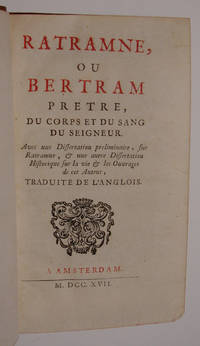
Ratramne ou Bertram pretre. Du Corps et du Sang du Seigneur. Avec une dissertation preliminaire sur Ratramne & une autre dissertation historique sur la vie & les ouvrages de cet auteur. Traduite de l'Anglois.
Amsterdam 1717. 12mo. 2871 blank p. Mottled calf. 16.5 cm Ref: Brunet 1822; 3 copies in STCN; cf. Ebert 18665 Details: Gilt back with a red morocco letterpiece. Marbled endpapers. Edges dyed red. Ttitle in red & black. The first 184 pages contain the two dissertations on Ratramnus p. 185-287 contain the Latin text with an opposing French translation Condition: Corners slightly bumped Note: Ratramnus was a Benedictine monk of Corbie 870. In 843/44 he wrote this work on request of Charles the Bald in which he emphasises the figurative nature of the sacraments and contradicted the doctrine of the transsubstantiation. He also goes under the name Bertram or Intramn. The book was considered to be heretic and forbidden in 1050. During the Reformation the book was rediscovered by protestants. The author of the two dissertations is the English clergyman Canon of Worcester and antiquary William Hopkins 1647-1700. The translator is the Huguenot refugee J.-F. Bernard. See Bakhuizen p. 120/1 & 128/9 Hopkins' dissertation accompanied by a Latin text and an English translation of Ratramnus was first published in 1686 and reissued in 1688. See Wikisource 'William Hopkins' Collation: A - M-12 M12 verso blankPhotographs on request unknown
Referenz des Buchhändlers : 120311
|
|
|
PLUTARCHUS
Eenige morale of zedige werken van Plutarchus. Vertaalt door R. T.
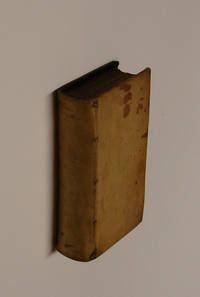
Amsterdam Voor Hendrik Maneke 1634. 12mo. VIII4773 blank p. frontispiece. Vellum 12.5 cm Ref: Geerebaert 698; Geerebaert gives as date 1644; OiN 307 Details: 5 thongs laced through the joints. Engraved frontispiece depicting a writer/philosopher and the Greek god Hermes standing beneath a bust of Plutarch The frontispiece bears the impressum 'Amsterdam 1643' Condition: Vellum slightly soiled and spotted. Front hinge cracking frontispiece loosening. Right margin of first gatherings somewhat thumbed. Very tiny and almost invisible pinpoint wormholes in the left lower corner never coming near any text Note: This is a translation into Dutch of 10 treatises of Plutarch's Moralia: 'Van d'opvoedingh der Kinderen. Hoe en met wat inzicht de Ionghelinghen de Poeeten leezen moeten. Hoe men hooren moet. Van de zeedelijkcke duechd. Van de zonde en van de duechd. Dat men de duechd kan leeren. Hoe men de vleider en pluim-strijcker van de vriend onderscheiden kan. Van de langhmoedichheyd. Van de Nieus-gierichheydt. Van de veelheit der Vrienden'. The Greek philosopher historian and educator Plutarchus of Chaeroneia was born before 50 A.D. and died after A.D. 120. He is our most important witness of the spiritual climate of the first and second century A.D. He wrote numerous short treatises of popular moral philosophy which go under the general name of the Moralia. They include debating themes works in the form of question and answer and serious discussions of philosophical topics. His warm and sympathetic personality can be traced in many treatises which contain also a great deal of antiquarian knowledge picked up by Plutarchus in the course of his wide reading. H.J. Rose A Handbook of Greek literature London 1965 p. 408. The Moralia were very influential in the Renaissance. 'It is no exaggeration to say that Renaissance and early modern Europe discovered Greece and Rome through Plutarch's eyes'. The Classical Tradition Cambr. Mass. 2010 p. 748. § The 10 treatises were translated by one 'R.T.' Van Doorninck and STCN declare that this is Reinier Telle 1558/59-1618. He was rector of the Schola Latina of Zierikzee his hometown from 1604-1610. He translated several works from Latin and Italian. According to De la Fontaine Verwey he was also a worthy satirical poet. Interesting as this may be this cannot be correct for the translation is preceded by a dedication to 'Franciscus Heermans' signed by R.T. The writer of this dedication tells that the publication of the 'gulde spreuken' of Heermans inspired him to translate a number of golden treatises of Plutarch as well. Now Franciscus Heermans or Franciscus Heerman who lived from 1610 till after 1670 published his 'Toneel der deughdt ofte guldene annotatien' only in 1631 13 years after the death of Reinier Telle. Heermans was only 10 when Telle died. Heermans book was very successful about 30 editions appeared during the next hundred years. See for Heermans or Heerman Van der Aa 8382/83; see for Telle preferably 'Biografisch lexicon voor de geschiedenis van het Nederlands Protestantisme' volume 1375/6 Provenance: On the front pastedown a nice small paper label 'M.M. Couvée Lange Pooten 41 La Haye'. M.M. Couvée ran a posh bookshop and publishing firm in The Hague from 1859 till 1885. Members of the Royal family were among his clients Collation: A-8 A - V-8 V7 verso & V8 blank Photographs on request hardcover
Referenz des Buchhändlers : 120155
|
|
|
EUCLIDES
De ses eerste boeken der beginselen van Euclides op een korte en klare manier gedemonstreert door Henrick Coets lector in de Mathesis te Leyden. Met eene voorreden en eenige aanmerkingen verrykt door Wilhelmus La Bordus. Den derden druck veel verandert en verbeetert.
Leiden Te Leyden By Samuel Luchtmans Ordinaris Stads Drukker 1740. 8vo. X4351 blank p. Half calf 17.5 cm Ref: Geerebaert 369b; OiN 174 Details: Back with 4 raised bands. Red morocco shield in the second compartment. Title in red & black. Numerous woodcut geometric illustrations in the text Condition: Cover worn. Back rubbed. Small tear in the head of the spine. Two old ownership entries on the title Note: Euclides was a Greek mathematician who lived in the 3rd cent. B.C. He wrote the most famous book in the history of mathematics the 'Elements'. His work was intended for teaching and follows a deductive approach. 'Euclid's fame is unquestionably attached to the success of the Elements. The number and relative antiquity of manuscript copies the number of translations abridged versions and other adaptations the variety of comments that have sprung from his text which has enjoyed a large number of editions prove the immense significance it has had in the history and teaching of mathematics'. The Classical Tradition Cambr. Mass. 2010 p. 345/6 § Henrick Coets the translator of this text was appointed professor of Mathematics Lector der Wiskunde in het Nederduitsch of the University at Leiden in 1701. He was to teach mathematics in Dutch. He died in 1730. He wrote also two books on sundials. Van der Aa 3601 This is the 3rd revised edition produced by a successor Wilhelmus La Bordus who was promoted to the same chair in 1734. He died in 1757. Van der Aa 2-1 912 Provenance: Near the upper edge of the title 'B.E. Paravicini di Capelli'. The Dutchman Bartholomeus Eduard Paravicini di Capelli was born in Breda in 1724. His family was of Swiss origin. He may have used this book during his studies and later. Since 1788 he was the Chief of the artillery of the Dutch army. In 1794/95 he fought in the Allied Forces against the French army in the North of France. He died in 1810. The second name on the title is also of a gunner and reads: 'W. Frowein Sergeant'. He too may have read and used this book to his advantage. In the 'Nederlandsche Staatscourant' no. 240 of 25 nov. 1842 we found that one 'W. Frowein' sergeant major was promoted by King William of the Netherlands to First Lieutenant of the second Batallion of the Artillery of Gelderland Collation: 6 minus blank leaf 6; A-2D8 2E2 leaf 2E2 verso blank Photographs on request hardcover
Referenz des Buchhändlers : 120368
|
|
|
LYCOPHRON
First title: LUKOPHRONOS TOU CHALKIDEÔS ALEXANDRA to skoteinon poiêma kai eis auto touto ISAAKIOU mallon de IÔANNOU tou TZETZOU EXÊGÊMA. Second title: Lycophronis Chalcidensis Alexandra obscurum poema. Cum graeco Isaacii seu potius Johannis Tzetzae commentario. Versiones variantes lectiones emendationes adnotationes & indices necessarios adjecit Johannes Potterus A.M. & Collegii Lincolniensis Socius. Editio secunda priori auctior.
Oxford Oxonii E Theatro Sheldoniano impensis Joannis Oweni 1702. Folio. XVIII including a frontispiece & a title in Greek:1831 blank28 index2417417 index1 blank p. Vellum 33 cm Ref: ESTC Citation No. T107442; Hoffmann 2569; Dibdin 2209/210; Brunet 31248; Sandys 2356; Graesse 4309; Ebert 12546: 'This 2nd edition is particularly scarce' Details: 8 thongs laced through the joints. Red morocco shield on the back. The frontispiece an engraving of 'M. Burghers' depicts Alexandra she points at Troy in fire in the background. Burghers was one of the leading engravers of England during that period. The book has 2 titles the first one is in Greek and is adorned with an big engraving of the Sheldonian Theatre also made by Burghers. The second title is in Latin and has a woodcut printer's mark which shows the wellknown coat of arms of the University of Oxford Condition: Vellum soiled. Boards somewhat outstanding Note: Lycophron 3rd cent. BC was called to Alexandria by King Ptolemaeus Philadelphos. There he wrote his Alexandra or Cassandra ca. 1474 iambic trimeters in which Kassandra =Alexandra tells about the fall of Troy and the fates of the Greek and Trojan Heroes. Dibdin calls this edition 'beautiful' and the 'editio optima'. He cites Harwood who declares this work to be 'an everlasting monument of the learning of the illustrious editor'. The illustrious editor was the learned cleric John Potter 1674-1747 who later in life in 1737 was appointed bishop of Canterbury. Young Potter corrected in this edition the commentaries of Tzetzes using 3 new manuscripts; he added indices and annotations of himself. At the age of 14 Potter was sent to Oxford University College. There he distinguished himself by his knowledge of Greek. Still a young man in 1697 he produced his first edition of Lycophron. In 1698 Potter published his greatest success the 'Archaeologia Graeca' which long remained a standard book for Greek students in Britain. In 1715 Potter produced his splendid edition of Clemens Alexandrinus. Chalmers' Biography 25231 The first 146 p. of this 1702 edition contain the Greek text with iuxtaposed the Latin prose translation of the Dutch classical scholar Willlem Canter 1545-1572 dating from 1566. The scholia are printed on the lower half of the page together with the 'variantes lectiones' and the 'emendationes'. After the Greek text follows the metrical iambico carmine translation into smooth Latin made by J.J. Scaliger 1540-1609 which was published toghether with Canter's translation in 1566 in Basel. The second half of the book contains the notes annotationes of Canter and a specimen of Canter's versatility in Greek and Latin verse the 'Epitome Cassandrae graeco-Latina versibus Anacreontiis conscripta'. Added is also the commentary of the Dutch classical scholar Johannes Meursius 1579-1639 published in 1597 & 1599. At the end we find the commentary of John Potter himself Provenance: Small bookplate of the Swiss politician Karl Zeerleder 1780-1851 on the front pastedown. Small blind stamped owner's mark of Mark Pattison 1813-1884 in the right margin of the title. Pattison was like Potter a tutor at Lincoln College. In 1861 Pattison was elected rector. He is best known for his biography of the French classical scholar Isaac Casaubon and for being Mr. Casaubon a chief character in Middlemarch the famous novel of George Eliot Collation: Frontispiece pi2 a-b2 A-D2 E-2C4 2D-2I2 chi1; A-Z4 Aa4 Bb2 Photographs on request Heavy book may require extra shipping costs hardcover
Referenz des Buchhändlers : 140119
|
|
|
HUG,IL I L
Untersuchungen über den Mythos der berühmtern Völker der alten Welt vorzüglich der Griechen; dessen Entstehen Veränderungen und Innhalt.
Freiburg und Konstanz In der Herderschen Buchhandlung 1812. VIIV3491 blank p. Half cloth 25 cm Details: Simple binding. 4 large folding plates 1: of the zodiac of the two hemispheres 3 & 4: 'Alter Tierkreis den man in dem Tempel zu Tentyra in Oberägypten gefunden hat' and 4: engraving of the Egyptian zodiac. Four nice engravings in the text Condition: Back slightly damaged. Somewhat foxed Note: The German Roman Catholic theologian orientalist and biblical scholar Johann Leonhard Hug 1765-1846 was called to the Freiburg chair of Oriental languages and Old Testament exegesis in 1791. Hug published on the Synoptic Gospels. He further wrote on the origin of alphabetical writing Die Erfindung der Buch-stabenschrift 1801 on the antiquity of the Codex Vaticanus 1810 and on ancient mythology Untersuchungen über den Mythos der alten Völker 1812; a new interpretation of the Song of Solomon Des hohe Lied in einer noch unversuchten Deutung 1813 on the Alexandrian version of the Pentateuch 1818. Works of him were translated into English and French. Source Wikipedia Hug's 'Untersuchungen über den Mythos der alten Völker' examines the Egyptian origin of Greek mythology. We mention titles of some chapters: 'Verbreitung der ägyptischen Götterlehre nach Phönikien und von daher nach Griechenland' or 'Persephone Hekate und Astarte oder Kypria Juno' or 'Titanenkämpfe Typhon Pan Asklepios 'Die musikalische Götter' or 'Die Götter zu Schiffe' Photographs on request hardcover
Referenz des Buchhändlers : 100610
|
|
|
LABBAEUS,C (Ed)
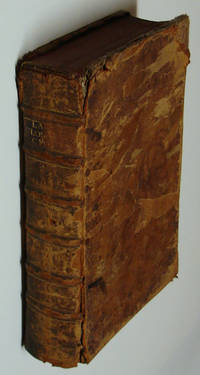
Cyrilli Philoxeni aliorumque veterum Glossaria latino-graeca & graeco-latina a Carolo Labbaeo collecta & in duplicem alphabeticum ordinem redacta. Cum variis emendationibus ex MSS. Codd. petitis virorumque doctorum castigationibus ac conjectaneis his accedunt Glossae aliquot aliae latino-graecae ex iisdem Codd. MSS. quae nunc primum prodeunt. Praeterea veteres glossae verborum juris quae passim in Basilicis reperiuntur ex variis perinde Codd. MSS. Bibliothecae Regiae erutae digestae & notis illustratae ab eodem Carolo Labbaeo. Edidit et praefationem adjecit Car. Du Fresne du Cange Bound with: Aegidius Bucherius Aegidii Bucherii Atrebatis e Societate Iesu De doctrina temporum commentarius in Victorium Aquitanum nunc primum post 1177 annos in lucem editum aliosque antiquos Canonum Paschalium Scriptores chronologiae Ecclesiasticae illustrandae ac stabiliendae utilissimos.
Ad 1: Paris Lutetiae Parisiorum Cura & impensis Ludovici Billaine 1679. Ad 2: Antwerp Antverpiae Ex officina Plantiniana Balthasaris Moreti 1634. Colophon at the end: 'Antverpiae Ex officina Plantiniana Balthasaris Moreti 1633' Folio. 2 volumes in 1: II2082246 recte 244;40 p.; XXXII5002 colophon & printer's mark p. Contemporary calf. 33 cm Ref: Ad 1: Hoffmann 1497; Brunet 2464; Ebert 5608; Graesse 2317. Ad 2: STCV:6667622; Beledimar 1921: Ebert 2098b who gives as date 1633; Backer-Sommervogel I 1867 2 who mentions the date 1636 Details: Back with 6 raised bands. Ad 1: This collection of 'glossaria' consists of 3 parts the first two of which have their own title page each showing a woodcut ornament. The first part contains the Greek-Latin 'glossaria' the second part the Latin-Greek 'glossaria'. The third part the last 40 p. contain the 'Veteres Glossae verborum juris'. Ad 2: Title in red & black. An engraving of angels around the Jesuit IHS-device on the title. Plantin's printers' mark on the verso of the last leaf Condition: Binding very worn & very shabby. Leather on the boards abraded. Head & tail of the back chafed. Shield on the back half gone. Corners bumped. Front hinge cracking but strong. Fold in the front flyleaf. Margins of the first title are thumbed and browning. A few not objectional wormholes in the upper & lower margin keeping far away from any text Note: Ad 1: Philoxenus Alexandrinus was a grammarian who lived in the first century BC. Traces of his work are to be found in later grammarians and lexicographers. Neue Pauly Philoxenus 8 § Cyrillus 5th century AD. His Glosses were used by Hesychius Photius and in the Suda. Neue Pauly Kyrillos 5 and 6. § Charles Labbé 1582-1657 was a parliamentary barrister at Paris who published with the help of J.J. Scaliger Glosses on Greek law 1607 and prepared an edition this edition of the Glossaries of Cyril and Philoxenus which was published after his death by the French philologist lexicographer and historian of the Middle Ages and Byzantium Charles du Fresne sieur du Cange in short Du Cange 1679. Sandys 2287 The first part of this work contains Greek-Latin glosses the second Latin-Greek glosses followed by emendations. This work was reprinted in London 1817 etc. as an appendage to the new edition of Stephanus' Greek Thesaurus. Ad 2: Aegidius Bucherius Gilles Boucher 1576-1665 was a French Jesuit and chronological scholar. His 'De Doctrina Temporum commentarius in Victorium Aquitanum' of 1633/34 published for the first time a number of important medieval chronological documents and other works on the computation of the date of Easter the so-called cycle of Victorius of Aquitaine. First comes the 'Canon Paschalis' of Victorius Aquitanus himself followed by Bucherius' commentary p. 1-288 then comes bishop Hippolytus Portuensis' of Portus also known as Hippolytus of Rome 'Canon Paschalis priscorum Latinorum rationibus confirmis' also with the commentary of Bucherius p. 289-312 then Bucherius' treatise 'Tractatus de antiquo Paschali Iudaeorum cyclo latinorum item conformi maxime ex Epiphanio' p.313-432 and the 'editio princeps' of Anatolius Alexandrinus' 'Canon Paschalis' 433-466 and finally the 'Epistolae patrum antiquorum de festi Paschalis ratione' p. 467-493. § Victorius Aquitanus had written ca. 450 the 'Cursus Paschalis' called 'Canon Paschalis' in this edition in which he introduced a more precise computation of Easter. During the Synode of Orléans of 541 Victorius' computations were accepted by the church. LMA 81629/30. Bucherius tells us in the 'praefatio' that he got the MS with the 'Cursus Paschalis' from his fellow Jesuit Jacobus Sirmundus during a visit to Paris in 1615. The 'editio princeps' of and the commentary on the 'Cursus Paschalis' and of the other late antique and early medieval computistical texts laid together with the work of Joseph Justus Scaliger 1579 and 1606 and that of Dionysius Petavius 1627 the foundations of the science of 'Computus' the science of time-reckoning and of 'Computus ecclesiasticus' the method to regulate the calender of the church especially the date of Easter Collation: Ad 1: pi1; A-2C4; chi1 A-2A4 2B2 2C-2H4; a-e4. Ad 2: - 44 A-3R4 minus blank leaf 3R4 Photographs on request Heavy book may require extra shipping costs hardcover
Referenz des Buchhändlers : 27616
|
|
|
PHILELEUTHERUS HELVETIUS (Pseudonym of Johannes Jakob Zimmermann)
De miraculis quae Pythagorae Apollonio Tyanensi Francisco Assisio Dominico & Ignatio Lojolae tribuuntur libellus auctore Phileleuthero Helvetio.
Douai Duaci = Zürich Typis Petri Columbii 1734. 8vo. XVI;XXXVI404 p. Vellum 17 cm Ref: Brunet 4602; Graesse 5263; E. Weller 'Die falschen und fingirten Druckorte' Leipzig 1858 p. 190 Details: 5 thongs laced through the joints. Short title & year on the back. All 3 edges marbled. Good quality paper Condition: Vellum soiled. Old inscription on the front flyleaf: 'Bel exemplaire de ce livre curieux et recherché'; old references written on the verso of this flyleaf Note: 'Johannes Jakob Zimmermann Professor der Theologie an der Karlsschule in Zürich war der erste namhafte Vertreter der religiösen Aufklärung dieser Stadt'. Zimmermann was born in 1695 in Zürich and died there in 1756. During his studies he came under the influence of freethinkers like Clericus and Grotius and began to dislike orthodoxy and grew interested in heretics. In 1737 he was appointed professor of natural law and of church history in his hometown and later succeeded against all expectations in gaining a professorship of theology. Hauptprofessur 'In dieser Stellung entfaltete er eine bedeutende Thätigkeit als Lehrer und Freund der studirenden Jugend und veröffentlichte daneben eine Reihe von theils gelehrten theils mehr populären Abhandlungen philosophischen und theologischen Inhaltes'. Zimmermann wanted to discuss fruchtbringende Fragen instead of the traditionellen Subtilitäten and made a stand against Verketzerungssucht. He warned against too exaggerated views on the holiness of the first christians and the visions and wonders that occurred in the first centuries of christianity. To prove his point he wrote this De miraculis quae Pythagorae Apollonio Tyanensi Francisco Assisio Dominico & Ignatio Lojolae tribuuntur libellus. Their stories were merely inventions of naive followers he argues. His scepticism brought him ennemies among the clergy who opposed his arminian heresy. 'Zimmermann's Bekämpfung der Orthodoxie stützt sich auf die Überzeugung das die Religion eine praktische Angelegenheit des Menschen sei. Das oberste Ziel der Religion ist die Besserung des Menschen. . Die zürcherischen Theologen der zweiten Hälfte des Jahrhunderts kamen aus seine Schule'. ADB 45271-273 Zimmermann's book against wonderworking and supernatural tales remained on the Index of forbidden books of the Catholic Church till 1948. It was published pseudonymously in Zürich. The name of the Swiss author was already revealed to the public in a review of the book in the Bibliothèque germanique ou Histoire littéraire de l'Allemagne de la Suisse et des Pays du Nord Année 1735 Tome 31 p. 148/152. We quote part of the review: 'Après quelques Reflexions générales sur les Miracles il parle d'abord de ceux de Pythagore & d'Apollonius & puis de ceux de St. François de St. Dominique & de St. Ignace de Loyola. Ensuite il entre dans l'Examen de la doctrine des moers; & du but de chacun des ces faiseurs de Miracles en particulier. Il prétend que les Miracles des uns & des autres ne sauroient venir de Dieu; mais il ne veut pas non plus qu'ils ayent été l'Ouvrage de Demon desorte qu'il ne lui reste d'autre partie à prendre que de les taxer comme il fait de Chimeres & d'impostures de faux Miracles ménagés par l'adresse des Charlatans Thaumaturges. On se sera pas faché de lire ce que Notre Auteur dit pour appuyer son sentiment surtout par rapport aux prétendus Miracles d'Apollonius de Tyane. Monsieur Zimmermann ameroit mieux qu'on canonisât Socrate que les trois Saints qu'il met en parallele avec Pythagore & avec Apollonius'. Zimmermann's pseudonym Phileleutherus Helvetius means a Swiss loving freedom or a Swiss liberal. This pen name echoes the pseudonym used by the famous English philologist and theologian Richard Bentley 1662-1742 the greatest name among classical scholars of the first half of the 18th century. In 1710 he published a book with his emendations of the fragments of Menander and Philemon under this assumed name. Zimmermann by choosing this name seems to connect his endeavour to wipe out idolatry superstition and the belief in wonders in pre-elightenment faith with the battle fought by Bentley against orthodox classical philologists who thought that old was best. He proved in his Dissertation upon the Epistles of Phalaris 1697 that some ancient texts which were believed to be old authorative and great literature were in fact late antique forgeries without any literary or historical merit. Zimmermann tries to do the same. He argues that wondrous tales concerning Franciscus of Assisi the founder of the Franciscan order and Dominicus Guzman the founder of the Dominican order and Ignatius de Loyola the founder of the Jesuit order which were considered to be true and which were promoted by the Catholic Church were in fact mendacious fabrications. mendacia & figmenta Monachorum p. a2 recto He also battles against the veneration of saints and the canonization of numerous saints by the Catholic Church. The transsubstantion of the body of Christ is in his eyes ridiculous. As a consequence the Vatican placed this book on the Index of forbidden books. And allthough Zimmermann admits in his preface in caeteris satis ostendi me natura ad jocos risusque proclivem non esse p. b4 verso one reads on the title that this book was published in 'Duaci' i.e. in Duacum the Latin form of the name of the city of Douai in North of France near Arras. It was in this city in the Spanish Netherlands now French Flanders that the Spanish king Philip II founded in 1559 with the support of pope Paulus IV a university which was to be a catholic bulwark of the Contrareformation against the spreading of the protestantism in the Low Countries. The contemporary reader would immediately have realized that this was an impossible and funny combination an antipapist book on the title of which pagan charlatans were on equal level with great saints being published in the lion's den of Douai. The book was in fact published in Zürich. The name of the printer/publisher deserves some attention too. The non existing name 'Petrus Columbius' Peter Dove in the imprint seems to be programmatic. Contemporary readers might recognize Acts 4:8-11 where the apostle Petrus speaks up filled with the Holy Spirit and explains that Christ is the only one a christian should worship. This passage forbids to believe in wonders other than those of Christ and forbids to worship other deities/saints. The dove symbolises the Holy Spirit since early christianity. It is told John 1:32 that the Holy Spirit descended on Jesus's head like a dove quasi columbam when he was baptized by John the Baptist in the Jordan. By way of conclusion we cite the titles of some chapters. Chapter 10: Miracula Pythagorae Apollonii Francisci Dominici Lojolae non sunt a Deo quia doctrina eorum omnibus Dei virtutibus contraria 11: '. quia Relig. Christianae veritatem & divinitatem subvertunt; 13: Disquiritur utrum Miracula illa Diabolo sint tribuenda'. There is also a chapter 15 in which Zimmermann proves that Pontifices illos homines fuisse cum rerum divinarum ignarissimos tum impudentissimos nequissimosque Collation: 8 a-b8 A-2B8 2C2 Photographs on request hardcover
Referenz des Buchhändlers : 120531
|
|
|
EUTROPIUS
Eutropii Breviarium Historiae Romanae cum metaphrasi graeca Paeanii et notis integris El. Vineti Henr. Glareani Tan. & An. Fabri Chr. Cellarii Th. Hearnii Ch. Aug. Heumanni et Sig. Havercampi item selectis Frid. Sylburgii. Accedit Rufus Festus cum notis integris Frid. Sylburgii Chr. Cellarii et Sig. Havercampi. Recensuit suasque adnotationes cum indicibus copiosissimis addidit Henricus Verheyk.
Leiden Lugduni Batavorum Apud Samuelem et Joannem Luchtmans 1762. 8vo. LIV76772;90 index p. Calf 21 cm Ref: STCN ppn 238643581; Schweiger 2348 & 857; Dibdin 23/4; Moss 2437/8; Fabricius/Ernesti 3137: 'sine dubio optima editio'; Graesse 2529; Ebert 7187 Details: Mottled calf. Gilt back with 5 raised bands. Red morocco shield in the second compartment Condition: Binding somewhat worn & scratched. Head & tail of the spine chafed. Corners slightly bumped. A nice copy Note: The Roman historian Eutropius took part in the campaign of the emperor Julian against the Persians A.D. 363 and later was 'magister memoriae' of the emperor Valens. He wrote a survey in 10 books the 'Breviarium ab urbe condita' of Roman history till 364 A.D. 'The work is short but well balanced showing good judgement and impartiality. It was translated in Greek by Paenius about 380'. OCD 2nd ed. p. 424/5 His work was consulted by later christian writers. The historian Rufius Festus also wrote a Roman history. His work ends with the accession of the emperor Valens and 'represents ultimately the epitomized Livian tradition and a compendious imperial history'. OCD 2nd ed. 435. This 1762 edition is a socalled 'Variorum' edition. It offers a 'textus receptus' which is widely accepted accompanied with the commentary and the annotations of various specialists taken or excerpted from earlier useful normative or renewing editions. Editions like these 'cum notis Variorum' were useful but never broke new ground. The production of these books sometimes overloaded with knowledge was the specialty of Dutch scholars of the 17th and 18th century. The British ancient historian Edward Gibbon 1737-1794 held Eutropius and Rufus Sextus and also its Dutch editor Verheyk in high esteem. We only need to repeat the words of Dibdin to recommend this edition: 'This is the celebrated Variorum edition which Mr. Gibbon declares to be 'superior to all others even to that of Havercamp'. It is indeed a very admirable performance and contains besides the treasures of all preceding editions some excellent notes of Verheyk enlarged indexes. At page XXI and the following pages of the preface Verheyk gives a copious account of the materials and particularly of the MSS. from which his edition is composed. On a careful and impartial survey of the variety and excellence of the matter contained in it we may safely pronounce it one of the very best and most elegant productions of the 18th century and exceeded by no Variorum edition of a Roman classic.' Jan Hendrik Verheijk was Rector of the 'Schola Latina' of Amsterdam. He died in 1784. Verheijk also produced an edition of Antonius Liberalis 1764 contributed to the Hesychius edition of Alberti 1766 and published a revised edition of the Latin/Dutch lexicon of Hannot 1771 Van der Aa 19168 Collation: -38 44 minus blank leaf 44; -56; A-2K8 2L-3D4 3E-3K8. 3L6; a-l4 m1 Photographs on request hardcover
Referenz des Buchhändlers : 130419
|
|
|
NEPOS
Cornelii Nepotis vitae excellentium imperatorum quorumdam iconibus ornatae et nonnullis animadversionibus partim criticis partim historicis inlustratae ab Augustino van Staveren. Editio altera.
Leiden Lugduni Batavorum Apud S. et J. Luchtmans 1793. 12mo. XIV including frontispiece434 72 p.; 7 small engraved portraits in the text. Later half calf 12.5 cm Ref: cf. Schweiger 2302; cf Brunet 2289 Details: Back ruled blind and gilt. Marbled endpapers. Frontispiece depicting Clio with a pen in her hand she receives advice from Kronos who holds a scythe a winged Fama blows her trumpet. Seven small engraved portraits in the text Condition: Binding scuffed. Some pencil notes. Lower margin of the title cut short with loss of part of the impressum Note: This is an edition with commentary of the only surviving complete work of the Roman historian Cornelius Nepos ca. 100-24 B.C. 'De excellentibus ducibus exterrarum gentium' the first surviving ancient collection of biographies. 'De excellentibus etc.' contains the lives of 20 Greek generals and the Carthaginians Hamilkar and Hannibal. Nepos corresponded with Cicero and was close with Cicero's friend Atticus. The collection served probably as a model for Plutarch's Vitae Parallelae. In his own days and in late antiquity Nepos was considered to be a source of importance. The churchfather Hieronymus included him as great historian in his 'De viris illustribus' 392 A.D. The simple style of writing of Nepos has made him a standard choice for schools. The biographies provided the pupils also models of behaviour. Schweiger mentions numerous editions. This edition was compiled by the Dutch schoolmaster Augustinus van Staveren 1704-1772 who was appointed in 1750 Rector of the Schola Latina at Leyden. He produced during his career two editions of Nepos a learned 'editio maior' a stout octavo of 765 p. 'cum notis Variorum suisque' which was first published in 1734 second edition 1773. In 1755 he produced at the request of the publishing firm Luchtmans an 'editio minor' a small but thick duodecimo 'cum notis A. van Staveren'. The first one of 1734 is a socalled 'Variorum' edition. Such editions' offer usually the 'textus receptus' which is widely accepted accompanied with the commentary and the annotations of specialists taken from earlier useful normative or renewing editions. Editions like these 'cum notis Variorum' were useful but never broke new ground. The production of this kind of editions was the specialty of Dutch scholars of the 17th and 18th century. The compilers seldom were great scholars but often hard working schoolmasters. Van Staveren's 'editio minor' of 1755 was repeated in 1793. The minor edition left out the learned commentaries but offered a revised text accompanied by critical and historical notes of Van Staveren which often contain material found by him in Greek sources. Van der Aa 172 p. 966/67 The frontispiece and the engravings in the text have a long history. The copper plates for them were first used in 1658. They were used again in editions of 1675 1687 1704 1705 1728 1734 1773 and finally here in 1793 Provenance: in pencil on the verso of the front flyleaf: 'A. Roozendaal 1944'. We found one 'A. Roozendaal Amersfoort' in the tabula gratulatoria of the Festschrift 'Studia varia Carolo Guilielmo Vollgraff a discipulis oblata' Amsterdam 1948 p. 194. After we had found this a small receipt ticket of a restaurant in Amersfoort dated 20/3/55 fell out of this book; at the back a note on Van Staveren apparantly made the same Roozendaal now an elderly person; A. Roozendaal was probably a student of C.W. Vollgraff professor of Greek and Archaeology of the University at Utrecht. Vollgraff died in 1967 91 years old Collation: 8 minus 8including frontispiece A-X12 Y1 Photographs on request unknown
Referenz des Buchhändlers : 120280
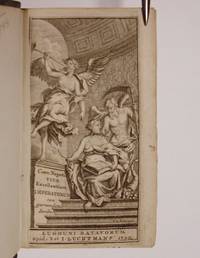
|
|
|
BUTTMANN,Ph
Lexilogus or critical examination of the meaning and etymology of numerous Greek words and passages intended principally for Homer and Hesiod. By Philip Buttmann LL.D late professor in the University of Berlin and librarian of the Royal Library. Translated and edited with explanatory notes and copious indexes by J.R. Fishlake late fellow of Wadham College Oxford. Second edition revised.
London John Murray 1840. 8vo. XVI597 p. Calf 22 cm Details: Nice binding: Back with 5 raised bands and with gilt floral motives in the compartments.n Orange lettering label in the second compartment of the back. Boards with double fillet gilt borders; marbled endpapers; edges of the boards gilt book block has marbled edges Condition: Some slight wear to the extremities; boards slightly scratched; blind stamp of 'W.J. Richards Bookseller High St. 104 Oxford' in the front flyleaf Note: Philipp Karl Buttmann 1764-1829 was elected in 1806 a member of the Academy at Berlin and was made in 1811 keeper of the Royal Library. His best-known work was his Griechische Grammatik Greek grammar first published in 1792 which saw a dozen or two expanded and revised editions. It was also translated into English e.g. as a 'Greek grammar for the use of high schools and universities'. 'The introduction of this grammar led to a marked improvement in the Greek scholarship of the schools of Germany. In his Lexilogus he proves himself an acute investigator of the meanings of Homeric words and displays a keen sense of the historic development of language but is obvously unconscious of the importance of the principles of comparative philology'. . But his main strength lay in Greek grammar and Homeric lexicography'. Sandys 384/85 The editor/translator reverend Fishlake tells us in his preface to the Lexilogus that he improved the consultation of the work. 'I have made another minor alteration by a fresh arrangment of the Articles. Buttmann wrote and published as he met with a difficult or doubtful word in the course of his readings. I have arranged the Articles alphabetically'. Preface p. IV He calls his own additions 'very trifling' inserting them between brackets. Here and there he has added the opinions of the German lexicographers Schneider and Passow where they happen to differ from Buttmann Photographs on request hardcover
Referenz des Buchhändlers : 130203
|
|
|
BADEN, TORCHILLUS
Torchilli Badenii Jac. fil. Roma Danica harmoniam atque affinitatem linguae danicae cum lingua romana exhibens. Editio altera priore anni 1699 auctior et emendatior curante Torchillo Badenio pronepote.
Copenhagen Hafniae Apud C. Steenium 1835. 8vo. IV206 p. Contemporary blue boards 195 cm Small Danish name in ballpoint on titlepage Note: Torkel Baden or Torkil Baden 1765-1849 'studied at Göttingen and acquired an interest in art during his travels in Italy. He was professor at Kiel in Holstein then part of Denmark and in 1804-23 at Copenhagen. His published works such as his dissertation on Philostratus were partly inspired by his interest in ancient art. He 'had read nearly all the Greek and Latin Classics' but the result of all this reading is inadequately represented in his edition of the Tragedies of Seneca. His edition of his grandfather's 'Roma Danica' brought him into feud with other scholars. He was more fortunate in his new and improved edition of his father's dictionaries 1815-31'. Sandys 'A history of classical scholarship' 3316 Torkel Baden has a lemma in Wikipedia. In the German version he is called 'ein Vorreiter der Archäologie in Dänemark'. His grandfather Torkel Baden 1668-1732 who wrote the first edition of this 'treatise on the affinity of the Danish and Latin languages' and which was published in Copenhagen in 1699 has also a lemma in Wikipedia unfortunately only in Danish. It copies an article from 'Dansk Biografisk Leksikon' hardcover
Referenz des Buchhändlers : 130021
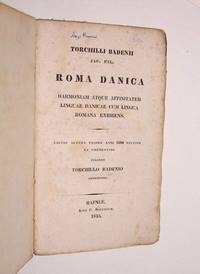
|
|
|
ATHANASIUS & BASILIUS
Athanasiou dialogoi e' peri tês hagias Triados. Basileiou logoi d' kata dussebous Eunomiou. Anastasiou kai Kurillou ekthesis suntomos tês orthodoksou pisteôs. Athanasii dialogi V de sancta Trinitate. Basilii libri IIII adversus impium Eunomium. Anastasii et Cyrilli compendiaria orthodoxae fidei explanatio. Ex interpretatione Th. Bezae. Foebadi sive Foebadii liber contra Arianos. Quae Athanasii Anastasii & Cyrilli sunt & quae Foebadii nunc primum eduntur.
N.pl. Geneva Excudebat Henricus Stephanus 1570. 8vo. XIV24;4311 blank p. 18th century vellum 17.5 cm A collection of Trinitarian texts Ref: GLN-2395; Hoffmann 1387; Renouard Estienne p. 133; Graesse 1243; Butterweck Athanasius Bibliographie p. 64/65; Dibdin 1196: 'scarce and estimable'; not in Brunet Details: Two morocco letterpieces on the spine. Boards with gilt borders. Marbled endpapers edges dyed red. Nice copy Condition: The opusculum Liber contra Arianos of Foebadius is not bound at the end as in the GLN copy but immediately after the praefatio. The 3 pages with the castigationes gathering c2 see collation on Foebadius of P. Pithou and himself which Beza added to Foebadius' Liber contra Arianos are lacking Note: The Church Father Athanasius 295-373 AD is the most famous of the Alexandrian bishops and is best known as the adversary of the antitrinitarian priest Arius. Because of his struggle with the Arians the followers of Arius Athanasius was banished for 17 years. In his works he fiercely defended the dogmata of the church against heretics like Arius. The controversy between Athanasius and Arius divided the Church into two opposing theological factions for over 55 years from the time before the Council of Nicaea 325 till the Council of Constantinople 381. Athanasius was the champion of the Nicaeneans defending the full divinity of the Son of God Jesus Christ. Bardenhewer states that Athanasius is 'eine der gewaltigsten Erscheinungen der Kirchengeschichte. Nie mehr ist eine kirchliche Entscheidung getroffen worden von der Tragweite des homoousios des Nicänums und nie mehr hat eine kirchliche Entscheidung einen Kampf heraufbeschworen wie denjenigen zwischen Nicänern und Antinicänern'. Bardenhewer 'Geschichte der altkirchlichen Literatur ' vol. 3 p. 44 § That he published in 1570 some editiones principes of a number of treatises on the Holy Trintiy Theodorus Beza 1519-1605 a Calvinist theologian who was professor of Greek at Geneva couldnot care less. This 1570 edition formed part of his polemical activity directed against the Antitrinitarianist heresy which was 'devastating' Poland and Transylvania during the sixties and seventies of the 16th century. This 'heresy' in existence within Christianity from the second century A.D. till the present day rejects the mainstream Christian doctrine of the Holy Trinity i.e. 'that God is three distinct hypostases or persons who are coeternal coequal and indivisibly united in one being or ousia'. Wikipedia: Nontrinitarism The First Council of Nicaea 325 declared the full divinity of the Son of God and the First Council of Constantinople 381 declared the divinity of the Holy Spirit. There were however christians who didnot accept this doctrine argueing that the Trinity was inconsistent with the unity of God and found no basis in the Scripture. In time the antitrinitarian view lost appeal in late antiquity and the trinitarian view became the orthodox doctrine of modern Christianity. During the Reformation of the 16th century large areas of Northern and Middle Europe rejected the Catholic creed and became Protestant. The protestant church chose to defend like the church of Rome the mystery of the Trinity as one of the essentials of the Christian creed. However within protestantism radical antitrinitarianism began to surface again. The best-known antitrinitarianist the Spaniard Servetus was burned at the stake in 1553 in Geneva to signal unambiguously that the Reformed Church remained orthodox on the doctrine of the Trinity. The organised form of the antitrinitarianist heresy gained solid ground only in Poland where Unitarians who rejected the divine Trinity split from the Calvinists in 1565 they were expelled later from Poland in 1658 and in Transylvania in the Unitarian Church 1568. Another protestant antitrinitarian radical the Italian Giorgio Biandrata proved instrumental in the rise of anti-Trinitarianism in both Transylvania and Poland where this heresy took root in the 1560s and 1570s. Biandrata had to flee in 1558 from Geneva and was received warmly by the Polish Congregation. Biandrata radically reinterpreted the 'homoousious' the term which had been crucial to Athanasius in his 4th century defence of the unity of the divine essence. Trinitas and essentia were according to Biandrata papistica vocabula. In 1562 a synod of the Polish Reformed Church accepted the antitrinitarian approach. One of the remaining Polish Trinitarian ministers Christophorus Thretius asked Beza for assistance in refuting antitrinitarianism 'adversus periditissimos illos . Ecclesiarum vastatores' among whom 'Blandratam'. Preface p. ¶2 verso To help him and to furnish ammunition in order to suppress this Polish heresy Beza published this Athanasius edition. Beza tells in the preface addressed to the worldly and ecclesiastial powers catholics and protestants in the kingdom of Poland that his Athanasius edition is his gift munusculum to his Polish brothers in faith which would be useful in their battle against their common enemy. p. ¶7 recto/verso The gift provided extensive scriptural testimony for 'tanti est momenti ex fontibus ipsis veritatem haurire'. p. ¶4 recto 'It is that imporatant to go to the source if one wants to draw the truth'. Beza tells in the preface also that the manuscript of the Athanasius was bought by Henri Estienne from a Greek visitor a Graeculo quodam hac transeunte redemptum and that it was divine providence that it came into his hand divinitus potius quam casu. p. ¶3 verso The manuscripts of the other works in this 1570 edition were found in the library of Germain Colladon by P. Pithou. The dialogues are now considered to be Pseudo-Athanasian. A discussion about this 1570 edition in I.D. Backus' 'Historical Method and Confessional Identity in the Era of the Reformation 1378-1615' Leiden/Boston 2003 p. 173/78 § When Calvin died in 1564 Beza became his successor not only as leader in religious and political affairs in Geneva but also as guide the Calvinists in all Europe. Beza is best known for his Latin translation of the New Testament his critical Greek edition of the New Testament and for being the founder of the University of GenevaCollation: ¶8 minus blank leaf ¶8 a8 b4 A-2C8 2D-2E4 Lacking after a8/b4 gathering c2 which contains Beza's castigationes on the text of Foebadius The GLN-2395 lacks also the blank leaf ¶8. The first gathering is nevertheless described there erroneously as ¶8 having XVI pagesPhotographs on request hardcover
Referenz des Buchhändlers : 120334
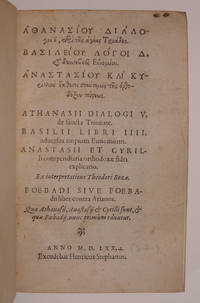
|
|
|
SUETONIUS
Cajus Suetonius Tranquillus ex recensione Francisci Oudendorpii qui variantes lectiones suasque animadversiones adjecit; intermixtis J.G. Graevii et J. Gronovii nec non ineditis Caroli Andreae Dukeri adnotationibus.
Leiden Lugduni Batavorum Apud Samuelem Luchtmans & filios 1751. 8vo. 2 parts in 1: XLIV102432 index p.; frontispiece 12 plates. Vellum 21 cm Ref: STCN ppn 241753686; Schweiger 2980; Dibdin 2443; Moss 2633 corrects Dibdin; Fabricius/Ernesti 2460: ' bene sane de Suetonio meritus'; Graesse 6523; Ebert 21938: 'Eine durch neue krit. und exeget. Ausstattung sich sehr empfehlende Handausgabe'; 'Spoelder p. 685 Utrecht 5 Details: Nice prize copy without the prize. 6 thongs laced through the joints. Back with 7 gilt bands and rosettes. Boards with gilt floral borders corner pieces and the coat of arms of Utrecht. Frontispiece of H. van der Mij and J.v.d. Spijk depicting a statue of 'Roma triumphatrix' on a pedestal at the foot of which sits 'Historia' Clio pointing with her goose pen at the name of Oudendorp. Title in red and black. Engraved printer's mark on the title a resting Athena motto: 'Tuta sub Aegide Pallas'. Engraved coat of arms of Willem Karel Hendrik Friso better known als prince of Orange William IV at the beginning of the dedicatio. 12 engraved plates with portraits of Roman emperors. At the end 4 pages with a stocklist of 'Auctores Classici' available at Luchtmans' Condition: Without the prize. Vellum soiled and age-toned. All four decorative silk fastening ties gone Note: The Roman historian Suetonius born c. 69 A.D is the most influential and best known biographer in the Latin language. He was appointed under the emperors Hadrian and Trajan to the secretarial posts of 'a studiis' 'a bibliothecis' and 'ab epistulis' of the palace administration jobs that gave him access to the imperial archives. His Lives of the Emperors 'De vita Caesarum' gives the biographies of 12 emperors from Caesar the founder of the imperial line to Domitian. 'Suetonius like Plutarch believed that a person's character could be revealed in small and insignificant details'. He 'organized his Lives by topics per species rather than chronologically' The Classical Tradition Cambr. Mass. 2010 p. 912/13. Beyond simplicity he has no stylistic pretentions. He quotes verbatim from documents he knew and shows critical ability. 'The great number of scurrilous anecdotes in most of the lives may be due to the nature of his sources'. OCD 2nd ed. p. 1020/1 Suetonius was read in the Middle Ages. Einhard wrote a biography of Charlemagne along the lines of a Life of Suetonius. From the Renaissance onward he was neglected until the great edition of 1672 of Graevius. Gibbon praised this Roman historian for his strict dedication to historical truth. Nowadays 'historians of Rome take him more seriously than do literary critics' The Classical Tradition Cambr. Mass. 2010 p. 913 § The Dutch classicist Frans van Oudendorp 1696-1761 is called by Sandys 'the last of the great Latinists of the third age of scholarship'. History of Classical scholarship' 2454 He was a student at Leiden of Jacobus Gronovius Jacobus Perizonius and Petrus Burmannus Sr. and in 1740 he was appointed professor of history and rhetoric at his own University. He produced a series of important editions of Latin classics of Julius Sequens Lucanus Fronto Caesar and Apuleius. Van der Aa 14 267/68 In the preface of his Suetonius Oudendorp declares that he is not a devotee of any text in particular nulli editioni addictus but that he chose to follow the editions published by Graevius 1672 1691 1697 and 1702 and by Gronovius 1698 and that he followed his own judgement. He added also observations of several leading scholars Casaubon J.A. Ernesti Petrus Burmannus Sr. and others. He consulted also 'haud sine fructu' several manuscripts for 'variae lectiones'. Oudendorp thanked in the preface also his Utrecht colleague Carolus Andreas Duker 1660-1752 for lending him old editions of Suetonius and for sending him his annotations for many places especially the Lives of the Flavii Collation: pi2 -28 34; A-3V8 3X2 Photographs on request hardcover
Referenz des Buchhändlers : 130155
|
|
|
LATINIUS, LATINUS
Latini Latinii Viterbiensis Bibliotheca Sacra et Profana. Sive observationes correctiones coniecturae & variae lectiones in sacros et profanos scriptores e marginalibus notis codicum eiusdem. A Dominico Macro Melitensi Cathedralis Viterbien. olim canonico theologo sacrarumque Inquisit. & Indicis Congregat. Consultore Protonotario Apost. ac Comite Palatino Collectae. Et nunc primum e Bibliotheca Brancaccia in lucem editae.
Rome Romae Sumptibus Pontii Bernardon Via Parionis sub signo Virtutis 1677. Folio. 2 parts in 1: X including 2 portraitsVIII2133; 791 p. Vellum 33 cm Ref: Graesse 4119; Ebert 11760: 'scarce and philologically interesting' Details: 6 thongs laced through the joints. Short title in ink on the back. Title in red & black. Signed woodcut printer's mark on the title depicting a woman in a landscape she holds a book; the motto reads: 'Virtuti Fortuna Comes' or 'Fortune is the companion of virtue'. Full page oval portrait of Latinius engraved by Catharina Angela Bussi facing the title. Full page portrait of the cardinal Ioannes Gualterius Slusius engraved by 'Io. Nolin' Jean-Baptiste Nolin before the 'dedictatio'. See: wittert.ulg.ac.be/fr/dico/no/nolin_notice.html Some large woodcut initials Condition: Binding soiled. Upper joint beginning to split near the head of the spine. Some small holes in the front flyleaf. Front flyleaf worn a few small tears in its right margin. 3 small stamps on the title and 2 small inscriptions on the title. Small tear in the lower margin of the title repaired. Paper age-toned; a few gatherings browning. Some pencil. An old Cyprianus specialist once wrote 6 small references in ballpoint in the margins of 2 pages Note: The Italian cleric and humanist Latino Latini or Latinus Latinius 1513-1593 devoted his long life to his employers and his studies; he held soft jobs as secretary of several cardinals and devoted the rest of his time to classical studies and the study of the churchfathers especially Tertullian and Cyprianus. When he was a young man he acquired after an interrupted study of law a copy of the Gryphius edition of Cicero by the great P. Victorius. He was so touched by the elegance of that work that he decided to use Cicero as a guide for his style. He was appointed member of the papal committee which had to purge the 'Decretum Gratiani' a legal textbook of Canon law compiled in the 12th century out of which had grown in time a 'decretorum immensam sylvam' Leaf 2 verso. He was rewarded by Pope Gregory XIII with an annual pension of 150 ducati. Latinius produced an edition of Cyprianus published by Paullus Manutius in 1568 the socalled 'edition Manutiana'. He did however not want to associate his name with this edition. He feared that his reputation was at stake because he had manipulated the text of Cyprian where it conflicted with the manuscripts of the Holy Scriptures. Schoenemann 1 p. 120. He left his manuscripts and books to the Chapter Capitulum of the Cathedral of Viterbo Leaf 3 verso of this 'vita'. Observations corrections conjectures and 'variae lectiones' which he had jotted down in his manuscripts and in the margins of his books were published postumely by the theologian Domenico Magri or Dominicus Macrus of Malta 1604-1672 once Canon canonicus of the Cathedral of Viterbo member of the Inquisition and proconsul of the notorious Index of forbidden books. The work of Latinius is preceded by a 4 page biography by Magri the source of the above mentioned data. The work contains Latinius' orderly organized observations etc. on 45 church fathers and on 45 profane classical authors. 34 pages are dedicated to Augustine and 36 to Hilary of Poitiers 15 are on Ambrosius and 15 on Tertullian. The collection of Latinius came apparantly into the possession of Magri because he bequeathed it after his death in 1572 to the cardinal and bibliophile Francesco Maria Brancaccio 1592-1675 Leaf 1 recto. Brancaccio was Magri's former superior who had been bishop of Viterbo from 1638 till 1670. The cardinal's huge collection of manuscripts and books is now held by the 'Bibliotheca Nazionale di Napoli'. The book is dedicated by the publisher Bernardon to Ioannes Gualterius Slusius the younger or Jean Walther de Sluse or Jean Gaultier de Sluse born in Liege and of noble birth. He does so because this edition of 1677 was published at his expenses. Gualterius Slusius was head of the Latin language department of the Vatican Secretariat of State the 'Secretaria brevium ad principes et epistolarum latinarum' of pope Innocentius XI. It was his task to prepare in Latin the papal and curial documents. He was the owner of a famous book collection. § This title seems to be rare it does not figure in the registers of the 'Jahrbuch der Auctionspreise' nor in 'Rare Books Hub formerly the Americana Exchange' Provenance: 3 small stamps all the same of the 'Bibliotheca Gymnasii Arnstadiensis'; in ink below the printer's mark 'Biblioth. Gymnas. Arnstadt'; Arnstadt is a small city 40 km south of Erfurt Collation: pi4 leaf p1 portrait of Latinius after p2 an inserted portrait of the dedicatee Jean Gaultier de Sluse 4 a-2d4; A-C4 D2 E-K4 L2 Photographs on request hardcover
Referenz des Buchhändlers : 110250
|
|
|
LUCIANUS
LOUKIANOU SAMOSATEÔS HAPANTA. Luciani Samosatenis Opera. Ex versione Ioannis Benedicti. Cum notis integris Ioannis Bourdelotii Iacobi Palmerii a Grentemesnil Tanaquilli Fabri Aegidii Menagii Francisci Guieti Ioannis Georgii Graevii Iacobi Gronovii Lamberti Barlaei Iacobi Tollii & selectis aliorum. Accedunt inedita scholia in Lucianum ex Bibliotheca Isaaci Vossii. At the end: Scholia in volumen primum & secundum Luciani. Nunquam hactenus edita. Recensuit & notulas adjecit Johannes Clericus
Amsterdam Amstelodami Ex Typographia P. &. I. Blaeu Prostant apud Wolfgang Ianssonio-Waesbergios Boom a Someren & Goethals 1687. 8vo. 2 volumes: XXIV106018 index2 blank; IV92226 index; VIII462 blank;551 blank p. engraved frontispiece. Vellum 20 cm Ref: STCN ppn 853061254; Hoffmann 2537; Dibdin 2193; Moss 2262/3; Brunet 31207; Graesse 4278; Ebert 12384 Details: 6 thongs laced through both joints. Engraved frontispiece: Lucian seated at his desk surrounded by scenes from his writings. Woodcut printer's mark on both titles depicting a celestial sphere flanked by Hermes and Chronus the motto is 'Indefessus agendo'. Woodcut initials. 1 woodcut engraving. Greek text with facing Latin translation Condition: vellum slightly soiled. Old paper shelf number at the foot of the spines Note: This is a typical Variorum edition. It offers a 'textus receptus' which was widely accepted accompanied with the commentary and the annotations of various specialists taken or excerpted from earlier useful normative or renewing editions. Editions like these 'cum notis Variorum' were useful but never broke new ground. This edition was produced by Johann George Greffe or Graeve better known as Johannes Georgius Graevius 1632-1703 who was of German origin. He went to the Dutch republic to study classics. He later was appointed professor at Duisburg then at Deventer and finally at Utrecht where he was the last 42 years of his life a star of the first order which adorned its University. He limited his attention almost mainly to Latin prose. This 'Variorum' edition of Lucianus edited by Graevius seems to have escaped the attention of Sandys. Hoffmann & Brunet erroneously state that Johannes Clericus is the editor. Johannes Georgius Graevius himself however tells the reader in a 'Lectori' on p. XVII of vol. 1 about his 'modus operandi' in the production of this edition. He tells his readers that he produced this new edition of Lucian on request of the publishing firm of Blaeu. Graevius consulted the work of the best preceding editors and commentators like Bourdelotius Palmerius Faber and others including the not yet published notes of scholars like Menagius and Jacob Gronovius which they had sent to him. Graevius says he also used the editio princeps of 1496 the Aldus edition of 1503 and the Basel editions of 1555 & 1563 etc. For the Greek text and Latin translation Graevius follows the edition of Johannes Benedictus of 1619. At the end of the second volume have been added 46 and 55 p. with not yet published scholia. Graevius tells the reader that these scholia which were part of the manuscript collection of the Dutch classical scholar Isaac Vossius arrived just after the printing had been completed. These scholia have been edited by the Dutch scholar of Swiss origin Johannes Clericus 1657-1736. Clericus himself explains in his 'Bibliothèque Choisie' vol. 16 p. 400/1 that he certainly didnot produce this edition of Lucianus but that he only edited the scholia. There he also sneers at Graevius and complains about the mediocre quality of the scholia and tells that Vossius sold the printer a bad copy of the scholia for too high a price. See Moss 1263 Dibdin: 'Dr. Harwood calls it this edition of 1687 'a tolerably correct edition and greatly superior to all that preceded it' Provenance: From the library of Andrew Fletcher of Saltoun 1653-1716 a Scottish author and politician. He was leading the opposition against the 1707 Act of Union between Scotland and England. He also was an passionate book collector. A very fine set with the manuscript entry of Fletcher on the pastedown of both lower boards Collation: 8 24 A-3X8 3Y4 leaf 3Y4 blank; 2 A-3N8 3O2; 24 a-f4 leaf f4 blank; a-g4 Photographs on request hardcover
Referenz des Buchhändlers : 130406
|
|
|
JUVENALIS & PERSIUS
D. Junii Juvenalis et Auli Persii Flacci Satyrae: cum Veteris Scholiastae & Variorum Commentariis. Accurante Cornelio Schrevelio.
Leiden Lugd. Bat. Apud Franciscum Hackium 1658. 8vo. XVI63842 index p. Overlapping vellum 20 cm Ref: STCN ppn 840202245; Schweiger 2511; Dibdin 2154; Moss 2158/9; Ebert 11242; Graesse 3520 Details: 6 thongs laced through both joints. Shorttitle in ink on the back. The engraved title which is not signed is used here for the second time. It was first used for the original edition of 1648 of which this 1658 edition is a reissue; The engraved title of 1648 still bears the name of the engraver it is executed by the Dutch Golden Age engraver Reinier van Persijn; for this edition of 1658 the X before LVIII was simply filed away from the copper plate and at the same time the name of Persijn just beneath the X. The title depicts allegorical scenes: on the left a naked woman sitting on a crocodile holding in her hand a parrot; then a Janus-headed woman with bird feet and a tail holding up in her left hand a Momus-mask and in her right 2 flaming hearts; in the centre sits on a throne an old woman holding in her left hand a sack of money and in her right what seems a little flask; on the right in the foreground a king reaching for that sack; he is accompanied by a priest a farmer and a soldier; in a window central above the old woman we see the ascension of the poet Condition: Vellum age-toned and slightly worn. Oddly enough a previous owner has replaced the vanished X in the impressum for a new one in ink. Outer margin of the first 2 leaves sligthly thumbed Note: The Roman poet Juvenalis ca. 55-140 AD was the last and most influential of the Roman satirists. He 'uses names and examples from the past as protective covers for his exposés of contemporary vice and folly'. His main theme is the dissolution of the social fabric. The Classical Tradition Cambr. Mass. 2010 p. 501 The satires of the stoic poet Aulus Persius Flaccus form one 'libellus' of 6 satires together 650 hexameters. 'They are well described as Horatian diatribes transformed by Stoic rhetoric'. 'He wrote in a bizarre mixture of cryptic allusions brash colloquialisms and forced imagery. OCD 2nd ed. p. 805 This edition of 1658 is a 'Variorum' edition. It offers the 'textus receptus' which is widely accepted accompanied with the commentary and the annotations of specialists taken from earlier useful normative or renewing editions. Editions like these 'cum notis Variorum' were useful but never broke new ground. The production of this kind of editions was the specialty of Dutch scholars of the 17th and 18th century. The compilers seldom were great scholars but often hard working schoolmasters. Their involvement in publishing a new edition was limited to the necessary but ungrateful task of the beast of burden. Such a plodder was the Dutch editor Cornelius Schrevelius who taught classics at the Schola Latina at Leiden where he had been raised himself. In 1642 he succeeded his father Theodorus Schrevelius as the rector Moderator of the school. He raised at least 11 kids and fell in 1664 victim to the then raging plague. His first Juvenal edition he published in 1648 and it was reissued by Hackius in 1658 1664 and in 1671. Schrevelius' aim was to promote the studies of his young students and to instill in them a necessary fear optatam metam which will make them useful citizens and the pride of their parents. Juvenal is a suitable author for such an enterprise for he flogs wrongdoers and learns them to avoid the path of wickedness and to embrace honesty. Dedicatio p. 2 verso. Especially in shameless times as ours he continues satyre is needed. Decent behaviour and faith have been replaced by deceit and swindle. In a short 'Benigno Lectori' 4 verso and 5 recto Schrevelius tells that he relies for the text on the earlier editions of Robertus Stephanus and Pithoeus and that he excerpted the notes and commentaries of Lubinus Farnabius and Casaubon. In addition he offers he says a complete and emendated edition of the old Scholiast. Schrevelius even used two excellent manuscripts which were lent to him by the Leiden professor Salmasius which helped him to solve many difficult problems. The engraved title deserves some attention. The easiest description we found was 'an engraved title with many figures'. To us it seems an allegorical scene based on the tenth satire Juvenal's famous declamation on the folly of men in desiring in their prayers from the gods vane things as honor fame wealth power beauty or a long life instead of a sane spirit in a healthy body. 'Whole households have been destroyed by the compliant gods in answer to the masters' prayers. In camp nocitura militia and city nocitura toga alike we ask for things that will be our ruin'. Vss. 7/9 in the Loeb-translation of Ramsay Juvenal offers a list of pityful examples such as the once powerful Sejanus who like Libyan general Gadaffi many centuries later was 'being dragged along by a hook as a show and joy to all'. Vss. 66/67 translation Ramsay Victims of their lust for power were Alexander the Great Xerxes or the Punic conqueror Hannibal the man who was once about to destroy Rome. We assume that the royal figure who reaches out for the sack of money or from whose hands it is being snatched is Hannibal. The clue for this assumption is the woman on the crocodile. Such a woman was in 17th century iconography the common personification of Africa for instance on maps. The fate of this scourge of Rome is treated by Juvenal in evocative language in 20 beautiful verses. It begins like this: 'Put Hannibal into the scales; how many pounds' weight will you find in that greatest of commanders This is the man for whom Africa was all too small'. Vss. 147/8 Together with the old woman he is the central figure on the title. The positioning of the three woman brings in mind a Triad a triple diety such as the Graces the Moirai or Fates or the Harpies. The Erinyes the avenging spirits sometimes form a trinity too. The standing woman seems to be a mixture of an Erinye and a Harpy. She has some features of such a Harpy the personification of deamonic powers and an agent of terrible punishment. She is bare breasted and stands on huge bird claws with which she abducts the souls of the dead to their doom. In her right hands she holds instead of the usual horrifying snake a Momus mask which personifies satire and mockery the power to make a fool or ass of someone. In her left hand rest two flaming hearts catholic imagery distastful to the protestants and therefore perhaps reprensenting idolatry. Her double faced Janushead looking to the future and the past might be an image of Time. The old woman on the throne is the central figure on the title. To her all movement on the picture is directed. She has the features of Atropos the riged and inflexible one the oldest of the 3 Moirai or Fates and in iconography often depicted as an old woman. She has power over life and death and represents the fate that cannot be avoided. She holds Hannibal's fate in her hands. She withdraws the sack of money power and offers with her right hand the once mighty suppliant a little flask or a small beaker with the invitation to poison himself. Juvenal on Hannibal's unglamorous bleak death: 'What then was his end Alas for glory! A conquered man he flees headlong into exile and there he sits a mighty and marvellous suppliant in the Kings's antichamber until it pleases his Bithynian Majesty to awake! No sword no stone no javelin shall end the life which once wrought havoc throughout the world: no but that which shall avenge Cannae and all those seas of blood a ring containing poison'. Vss. 158/165 translation Ramsay The engraver follows for this scene the better known version of the Roman historian Livy. In chapter 51 of the 39th book of his History of Rome 'Ab Urbe Condita' Livy tells that Hannibal took his poison in an 'poculum' a cup/ goblet/ bowl/ beaker Provenance: The last owner was Lennart Håkanson professor of Latin Literature of the University at Uppsala 1980-1987 Collation: 8 A-Z8 Aa-Tt8 Vv4 Photographs on request hardcover
Referenz des Buchhändlers : 130103
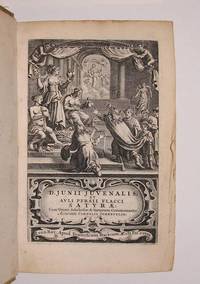
|
|
|
PALAEPHATUS
Palaephati De incredibilibus graece sextum edidit ad fidem cod. MS. Mosquensis aliorumque et libri Aldini denuo recensuit emendavit explicavit indicemque verborum graecorum copiosissimum adiecit Ioh. Frider. Fischerus. Accessere Prolusiones quatuor in Palaephati fabulas una cum orationibus duabus.
Leipzig Lipsiae Sumtu Caspari Fritschii 1789. 8vo. LXXIV200173 indices1;1155 index p. Half calf 21 cm Ref: VD18 11355840; Brunet 4312; Hoffmann 336 and also p. 38 for the 'Prolusiones' by J.F. Fischer; Schweiger 1221; Graesse 5103; Ebert 15647; this type of Leiden prize copy with only 'Diligentiae praemium' on the back is not mentioned in Spoelder Details: Prize copy of the Gymnasium Leiden including the printed prize. Back gilt. Gilt text on the back: 'Diligentiae praemium'. Marbled boards and endpapers. Edges also marbled. Small paper label on the front pastedown'. Paper somewhat foxed Condition: Binding scuffed. Marbled paper on the boards loosening from the leather backstrip Note: The mythographer Palaiphatos in Latin Palaephatus probably a pseudonym 'spoken long ago' or 'of old fame' a poetical adjective already found in Homer and Pindar might be a contemporary of Aristotle. He probably dates from the second half of the fourth century B.C. Of his work we possess only a short abstract probably composed in the Byzantine age 9th century under the title 'On Incredible Tales'. In 52 chapters he rationalizes myths in a peripatetic way. Every myth departs from a reality which is obscured by poets and storytellers. Palaephatus offers a historical and rational explanation. This is how the treats e.g. the abduction of princes Europa in chapter 15 eliminating the metamorphosis of Zeus and minimizing his role: 'They say that Europa the daughter of Phoenix was carried across the sea on the back of a bull from Tyre to Crete. But in my opinion neither a bull nor a horse would traverse so great an expanse of open water nor would a girl climb upon the back of a wild bull. As for Zeus - if he wanted Europa to go to Crete - he would have found a better way for her travel. Here is the truth. There was a man from Cnossus by the name of Taurus who was making war on the territory of Tyre. He ended up by carrying off from Tyre quite a number of girls including the king's daughter Europa. So people said: 'Bull has gone off with Europa the king's daughter'. It was from this that the myth was fashioned'. 'On Unbelievable Tales translation introduction and commentary by J. Stern' Wauconda 1996 p. 46/47 § The collection became a favourite mythological manual in late byzantine times. The author was probably also appreciated for debunking Greek pagan stories. From its first edition in 1505 the text enjoyed also in Western Europe a on-going popularity as a schoolbook. Palaephatus was thought a proper text to learn the rudiments of ancient Greek and at the same time the fundamentals of ancient myth. § The German classical scholar Johann Friedrich Fischer born in 1726 studied at the University of Leipzig. In 1751 he was appointed Konrektor of the Thomasschule at Leipzig and in 1767 Rektor which he remained till the end of his days in 1799. In 1762 he became also 'professor extraordinarius' of Latin and Greek literature at the University. In 1761 Fischer published at Leipzig his first edition of Palaephatus. The work was evidently a success. He produced 6 editions each one more complete and exhaustive than its precursor. This is the last one. After the text of Palaephatus accompanied by exhaustive commentary we find 4 'Prolusiones' of Fischer on the text a kind of appendices in which he explains difficulties concerning the text of Palaephatus. At the end are printed 2 'orationes' of Fischer: his inaugural lecture 'Oratio de Ioachimo Camerario grammatico pariter atque theologo excellente Lipsiae' held in 1762 on the occasion of his appointment of 'Professor extraordinarius' of ancient literature; and his lecture held on occasion of his appointment as Rector of the Thomasschule in 1767 Provenance: The prize dated 1840 and signed by J.J. de Gelder was awarded to 'Paulus Claudius Lezwijn' for his diligence and his love for Greek literature. Paulus Claudius Lezwijn of Huguenot origin became a prominent citizen of Leiden. In 1846 his 'dissertatio juridica' was published. Lezwijn was a leading member of the 'Waalse Kerk' at Leiden. He was also a member of a national commission for the investigation of the conditions of child labour ca. 1860. § Small paper label on the front pastedown reading: 'Boekwinkel en boekbinderij van P. Engels Nieuwsteeg 710 te Leyden' Collation: a-d8 e6 minus blank leaf e6; A-Z8 Aa4 minus blank leaf Aa4 Aa3 verso blank. A-G8 H4 Photographs on request hardcover
Referenz des Buchhändlers : 130414
|
|
|
PLINIUS MINOR
Caii Plinii Caecilii Secundi Epistolarum libros decem cum notis selectis Jo. Mariae Catanaei Jac. Schegkii Jac. Sirmondi Is. Casauboni Henrici Stephani Conradi Rittershusii Cl. Minois Casparis Barthii Aug. Buchneri Jo. Schefferi Jo. Frid. Gronovii Christophori Cellarii aliorumque recensuerunt suisque animadversionibus illustrarunt Gottlieb Cortius et Paullus Daniel Longolius qui etiam universum opus indicibus locupletissimis instruxit.
Amsterdam Amstelaedami Apud Janssonio-Waesbergios 1734. 4to. Frontispiece LII924;8461191 blank p. Vellum 26.5 cm Ref: STCN ppn 186700156; Schweiger 2809/10; Brunet 4722: 'bonne édition'; Dibdin 2332; Graesse 5343; Fabricius/Ernesti 2416: 'optima editio' Details: Back with 5 raised bands. Short title in the second compartment. Blind tooled boards. The engraved frontispiece depicts a pensive Pliny busy writing a letter. Title printed in red & black. The engraved printer's mark on the title shows a mole flanked by Athena and Hermes; the motto reads: 'Vulgo caeca vocor. Video sed acutius ipso' Condition: Nice copy. Vellum very slightly soiled. Vellum at the outer edge of the upper board very slightly damaged Note: The Roman civilian administrator Gaius Plinius Caecilius Secundus 61-112 A.D published 9 books of literary letters consisting of short essays character sketches and sensible observations. The letters paint the high society of the young Roman empire. The tenth book contains Pliny's correspondence with the emperor Trajan. Pliny is famous for his description of the eruption of the Vesuvius in 79 A.D. The German classical scholar Gotlieb Cortius or Kortte 1698-1731 made his name producing editions of Latin authors whose works were provided with very extensive commentaries 'cum notis Variorum' in the manner of the Dutch scholar Petrus Burmannus to whom this edition is actually dedicated. Such commentaries are 'Fundgruben' for the classical scholar. The students should bear in mind that the outdated commentaries were the work of scholars who knew their latin far beter than they do. Dibdin shows admiration for the work of Cortius. 'This' he says 'is a very critical and elaborate edition calculated for those who wish to enter minutely into all the niceties of grammatical construction and historical illustration'. Ernesti says that this is a work 'quae est sane luculenta et ut nunc est optima editio'. Cortius died before he could finish the job. Most work was done by a pupil of Cortius the young German philologist Paul Daniel Longolius 1704-1779 from 1735 Rector of the Gymnasium in Hof Saale. He published 3 ancient authors in an exemplary manner the Letters of Pliny the Younger Diogenes Laertius 1739 and Gellius 1741. ADB 19156/7 The edition of the letters and its commentary is preceded by a 70 pages long biography of Pliny by J. Masson which was first published in Amsterdam in 1709. Schweiger 2818 Collation: pi1 4 minus leaf 4 2-74 leaf 74 blank; a-m4; A-5O4 a-p4 leaf p4 verso blank Photographs on request Heavy book may require extra shipping costs hardcover
Referenz des Buchhändlers : 140054
|
|
|
VERGILIUS
Publius Virgilius Maroos Wercken vertaelt door J. v. Vondel.
Amsterdam. By J. Roman A. Lobedanius J. Kouwe & J. Roman de Jonge 1737. 4to. XXX including frontispiece & title476 p. Contemporary paper covered boards 22 cm Ref: STCN ppn 297005618; Geerebaert 1437 does not mention this reissue of 1737; OiN 379 Details: The frontispiece depicts scenes and props from the poetry of Vergil and is engraved by 'C. de Putter 1736'. The copper plate for this frontispiece was cut by De Putter exactly after the frontispiece of the first edition of this translation Leiden 1646. In 1660 and in 1696 the original plate was used again for the verse translations of Vergil of Vondel but then under the name of the engraver T. Matham. Woodcut printer's mark on title 2 ploughing oxen motto: 'trahite aequo jugo' Conditon: Binding worn and chafed. Wear to the extremes. Stamp and name on the title. Frontispiece dustsoiled and having a small hole diameter of ca. 0.4 cm not affecting the plate. Marginal ink annotations on p. 111. Rear hinge cracking but strong Note: This is a prose translation into Dutch of the Bucolics Georgics and the Aeneid of the Roman poet Vergil 70-19 BC works which were already classic in antiquity. In the Middle Ages he was also widely read. Of no other Latin author survive so many manuscripts as of Vergil. Vergil 'became a European classic not only in the sense that he was a central author for many European readers for many centuries but also in the further sense that his works crucially helped such readers to define themselves as Europeans'. The Classical Tradition Cambr. Mass. 2010 p. 965 Vergil's work was used for opera's Orfeo for epics Paradise Lost by painters et alii. He was served well by many translations in every European language. Vergil's classic work was translated in prose by a Dutch classic the playwright and poet Joost van den Vondel 1587-1679. In 1646 he published a prose translation of Vergil followed in 1660 by a verse translation which was reprinted in 1696. Vondel was one of the most important authors of the Golden Age in the Netherlands. In the dedication leaf 2 Vondel declares that he made the prose translation for the literary minded but also for poets orators for schools and for painters and draughtsmen Provenance: Oval stamp on the title: 'Bibliotheca Bernenis Ordinis Praemonstrantensis Heeswijk'. See 'Abdij van Berne' in Wikipedia § Name on the title of 'Siepkens Coppens'. Mr. Wilhelmus Henricus Siepkens 1797-1877 donated after the death of his wife Anna Antonia Siepkens Coppens 1793-1866 in 1867 a huge stained glass window to the cathedral of 's-Hertogenbosch. The panels costed 1400 guilders. Added is a draught we found in the book of a letter of complaint probably written by the abbott or the libarian of the abbey about lacking issue 25 of the 'Katholieke Illustratie' a weekly periodical for catholics. This periodical was founded in 1867. The address given on the draught is 'in de Abdij Berne te Heeswijk'. § This book probably didnot stay long on the shelves of the abbey's library. In Wikipedia we read that the abbey sold hundreds of old books and manuscripts in 1886/87 to finance the foundation of the 'Gymnasium St. Norbertus' Collation: pi2 -34; A-3N4 3O2 Photographs on request hardcover
Referenz des Buchhändlers : 130215
|
|
|
SUETONIUS
Caji Suetoniii Tranquilli Opera et in illa commentarius Samuelis Pitisci quo antiquitates romanae tum ab interpretibus doctissimis Beroaldo Sabellico Egnatio Ursino Grutero Torrentio Casaubono Marcilio Boxhornio Graevio Babelonio etiam explicatae tum ab illis neglectae ex auctoribus indoneis permultis graecis & latinis veteribus & recentioribus perpetuo tenore explicantur.
Utrecht Trajecti ad Rhenum Ex Officina Francisci Halmae Academiae typographi 1690. 8vo. 2 volumes: XL including frontispiece932; II924 p. 12 engraved portraits and 28 plates of which 1 folding and 1 double page. Vellum 20 cm Ref: STCN ppn 833699237; Schweiger 2978; Didbin 2442; Moss 2632; Fabricius/Ernesti 2459; Graesse 6/1523; Ebert 21930: 'Beste Ausgabe für die Suite 'cum notis variorum'' Details: 6 thongs laced through the joints. Frontispiece by G. Hoet and T. Mulder depicting 'Roma triumphatrix'; she offers a crown to a seated emperor in the foreground the Roman god Tiberinus and the she-wolf with Romulus and Remus. Title printed in red and black. Woodcut printer's mark on the title motto 'vivitur ingenio' 'one lives in one's genius'. The portraits are probably engraved by Mulder; the folding plate a 'triumphus' and 3 other plates are the work of painter and etcher Jan Luyken Condition: Vellum soiled and age-toned. Old and small ownership entry on both titles. The book lacks one leaf of the preliminary pages leaf 3 with 2 short laudatory poems by the Rector and a Praeceptor of the Schola Latina of Zutphen the school of which Samuel Pitiscus was once Rector. It seems that the binder forgot to insert a new leaf for a leaf which had been cancelled Note: The Roman historian Suetonius born c. 69 A.D is the most influential and best known biographer in the Latin language. He was appointed secretary to the emperor Hadrian a job that gave him access to the imperial records and archive. He made good use of his sources writing the 'Lives of the XII Caesars'; 'De vita Caesarum' gives the biographies of 12 emperors from Caesar the founder of the imperial line to Domitian. 'Suetonius like Plutarch believed that a person's character could be revealed in small and insignificant details'. He 'organized his Lives by topics per species rather than chronologically'. The Classical Tradition Cambr. Mass. 2010 p. 912/13 Beyond simplicity and clearness he has no stylistic pretentions. He quotes verbatim from documents he knew and shows critical ability. 'The great number of scurrilous anecdotes in most of the lives may be due to the nature of his sources'. OCD 2nd ed. p. 1020/1 Of another of his works 'De viris illustiribus' a collection biographies of famous Roman authors of Lucan Horace Vergil and Terence have survived and his 'Liber de illustribus grammaticis' and his 'De claribus rhetoribus liber'. Suetonius was read in the Middle Ages. The Frank Einhard wrote a biography of Charlemagne along the lines of a Live of Suetonius. From the Renaissance onward Suetonius was neglected untill the great edition of 1672 of Graevius. Gibbon praised this Roman historian for his strict dedication to historical truth. His editor Samuel Pitiscus Samuel Petiski 1636-1727 a Dutch classicist of German origin was rector at Zutphen and from 1685 of the Gymnasium Hieronymianum at Utrecht. He produced editions of Curtius Rufus 1685 Suetonius 1690 Aurelius Victor 1696 and Solinus 1689. He did also lexicographic work and published a 'Lexicon Latino-Belgicum' 1725. He produced also in 1713 a 'Lexicon Antiquitatum Romanarum' and an edition in 1730 of Pomey's 'Pantheum Mythicum'. In this Suetonius edition Pitiscus also accepted some Lives nowadays ascribed to Suetonius a 'Vita Juvenalis' 'Vita Persii' and 'Vita Plinii'. At the end we find also the fragments of Suetonius followed by 17 pages with inscriptions concerning the 'Lives of the XII Caesars' and an edition of the 'Monumentum Ancyranum' with the learned commentary of Lipsius and Casaubon. Pitiscus was not a great scholar but he skillfully excerpted compared and contrasted his sources. His editions of Roman historians offer the 'textus receptus' accompanied with the commentary and the annotations of specialists taken from earlier useful normative or renewing editions. Nevertheless he added much useful observations of his own. Dibdin is very positive the edition is he says 'adorned with a vast number of beautiful cuts which not only illustrate Suetonius's history but likewise give a great light to the Roman antiquities. The same antiquities are also farther explained by Pitiscus's learned perpetual commentary on Suetonius and extracts of nearly 900 ancient and modern authors which he has collected for that purpose'. Or Moss: 'This is a very excellent and valuable edition in which the industry as well as the learning of the editor has been fully displayed'. Ernesti is less positive about the ungrateful task which this hardworking schoolmaster has fullfilled: 'nihil est praeter compilationes superiorum commentariorum Lexicorum item et aliorum librorum de rebus antiquariis'. It is just how you look at it. However this industry paid off. When he died Pitiscus left the fortune of 10.000 guilders for the poor of Utrecht. Van der Aa 15336/38 Provenance: Below the printer's mark an inscription that declares: 'Inservio Studiis Joannis Bernsavii'. In Wikipedia we found a lemma of one Johannes Bernsau 1674-1750 who was mayor of Elberfeld. And on '30 Septembris' of 1690 the year this book was published one Johannes Bernsaw Johannis Bernsavii filius Elverfelda-Montanus' matriculated at the University of Duisburg Collation: Vol. 1: -28 34 minus leaf 33 cancelled chi1; A-3M8 3N2; Vol. 2: pi1 A-3L8 3M6 Photographs on request hardcover
Referenz des Buchhändlers : 130441
|
|
|
HORATIUS
Hekeldichten brieven en dichtkunst van Q. Horatius Flaccus. In Nederduitsche vaarzen overgebragt door B. Huydecoper.
Amsterdam By d'Erven J. Ratelband en Compagnie en Hermanus Uitwerf 1737. 4to. XX2921 errata p. frontispiece & portrait. Half calf. 20 cm Ref: STCN ppn 184323649; OiN p. 212; Geerebaert 11141II Details: Back gilt and with an orange morocco shield. Frontispiece by J.C. Philips showing a rich man in a kind of skybox of a hippodrome being served by 3 servants an example of the decadent luxury Horatius criticizes. Of the same engraver a portrait of Horatius on the title. A beautiful portrait of the translator Huydecoper engraved by J. Houbraken after a painting of J.M. Quinkhard at the beginning of the translation Condition: Back rubbed. Wear to the extremes corners and spine ends; front joint partly split Note: Balthasar Huydecoper 1695-1778 famous Dutch poet linguist & philologist. He also wrote tragedies like Achilles and Edipus. He was much praised for his neolatin poetry and with his translation into Dutch of the 'Satirae' and the 'Epistulae' the 'Ars Poetica' he is said to have revived Horace in the Low Countries. Van der Aa 8 1495/8 Provenance: name on front endpaper: 'G.A. Loeff Zwolle 1829'. We found on the internet an 'ingenieur-verificateur en provinciaal bewaarder van het Kadaster te Zwolle' with that name. § On the front flyleaf the name 'J.H. Waszink 1928'. J.H. Waszink 1908-1990 a wellknown Dutch classical philologist who has a short lemma at Wikipedia Collation: pi1 -24 32 chi1 portrait of Huydecoper; A-2N4 2O22P1 minus leaf 2O4 Gathering G = G1G3G2G4 Photographs on request unknown
Referenz des Buchhändlers : 130202
|
|
|
FESTUS & M VERRIUS FLACCUS
M. Verrii Flacci quae extant. Et Sex. Pompei Festi De verborum significatione libri XX. Cum vetusto Bibliothecae Farnesianae exemplari Romae nuper edito collati; ex quo lacunae pene omnes sunt suppletae. In eos libros Ant. Augustini annotationes ex editione Veneta Io. Scaligeri castigationes recognitae ex Parisiensi Ful. Ursini notae ex Romana. Accesserunt nunc denique doctissimorum virorum notae ex eorum scriptis hinc inde collectae.
Paris Parisiis Apud Arnoldum Sittart 1584. 8vo XXVIIICCCIX1 blank22 index2 blank; LXXV1 blank10CCXVI24 index84 p. Limp vellum 17 cm Ref: Smitskamp 61; Schweiger 2355 & 1134; Brunet 52 1148; Renouard-1926 n° 1044 Renouard et alii 'Imprimeurs et libraires parisiens du XVIe siècle' Paris 1964 Details: 5 thongs laced through the joints. Engraved printer's mark of Arnoldus Sittart on the title his motto: 'Finis coronat opus' 'the end crowns the work'. BaTyR : Base de Typographie de la Renaissance no. 28409 The printer's mark shows the coat of arms of Cologne the city where Arnoldus Sittart was born: the escutcheon bears 3 crowns and beneath them are twelve drops; the escutcheon is supported by a standing crowned griffin and idem lion; above the shield a helmet with peacock feathers as crest. See for an explanation Wikipedia 'Kölner Wappen' Condition: The vellum is probably recycled from another book; that is why the cover is wrinkled dog-eared slighlty soiled and cut short. A small piece of the outer-edge of the backcover has gone. Three names and a small inscription on the title 1 name has been erased. Partly slightly waterstained at the lower margin. Some hardly visible pinpoint wormholes near the right lower corner of one quarter of the book Note: Festus is a 2nd century grammarian who produced an abbreviation of a lexicographic work by Marcus Verrius Flaccus a wellknown antiquarian and grammarian living in Augustan Rome. Verrius compiled an enormous lexicon in 80 books full of unusual difficult and archaic words with discussions about customs political institutions beliefs and Roman law. Remains of his work survive in the epitome of 20 books made by Sextus Pompeius Festus. Festus also added examples found in other sources; an other epitome of this epitome of Festus was made in the 9th century by the historian Paulus Diaconus. The original work of Verrius is completely lost and only 1 manuscript of Festus survived the Middle Ages in a heavily mutilated form. The first reliable text which was a great improvement compared to earlier editions was published in 1559 by Antonio Agustin 1517-1586 who made good use of the Farnese manuscript at Naples. He also added a commentary. It remained dominant for 2 centuries. Fulvius added in this edition suggestions concerning Greek material. J.J. Scaliger 1540-1609 produced a highly acclaimed edition in 1575. He was praised for having successfully completed the gaps and damaged passages of the Farnese manuscript. Grafton says about this edition that 'fluency in conjecture and attention to detail could hardly be raised to a higher level'. A. Grafton. Joseph Scaliger a study in the history of classical scholarship Oxf. 1983 vol. 1 p. 134/160 This edition of 1584 repeats Scaliger's of 1575. The text of Agustin is also printed followed by 75 p. with his annotations and followed by a 216 p. commentary by Scaliger; at the end we find the notes of Ursinus Collation: 6 8 a-x8 A-V8 X2 2A-2E8 2F2 Photographs on request hardcover
Referenz des Buchhändlers : 120133
|
|
|
NEPOS
Cornelii Nepotis Vitae excellentium Imperatorum observationibus ac notis commentatorum quotquot hactenus innotuere illustratae. Accesserunt huic editioni praecipuorum Graeciae Imperatorum icones aeri incisae; ut & index rerum & verborum praecedenti multo auctior & emendatior.
Amsterdam Amstelodami Ex Typographia P. & J. Blaeu 1687. 8vo. XXXII including frontispiece439XL1 blank p. Vellum 20.5 cm Ref: STCN ppn 101005326; Schweiger 2299; Dibdin 2245; Moss 2319/20; Fabricius/Ernesti I105: 'quae locupletissima est editio'; Graesse 2270; Ebert 5262; Spoelder p. 593 Harderwijk 1 Details: Nice prize binding without the prize. 6 thongs laced through both joints. Back gilt. Boards with gilt double fillet borders and corner pieces; coat of arms of Harderwijk on both boards. Engraved frontispiece executed by J. Visscher depicting Clio with a pen in her hand she receives advice from Kronos who holds his scythe Fama blows her trumpet. Woodcut printer's mark on the title depicting a celestial sphere that is flanked by Hercules and Tempus; motto 'Indefessus agendo'. Small engraved portraits/illustrations on 12 p. Condition: Prize gone. Vellum age-toned. Some small spots on the upper board. Gilt on the covers almost completely worn away. All four ties gone Note: This is an edition with commentary of the only surviving complete work of the Roman historian Cornelius Nepos ca. 100-24 B.C. 'De excellentibus ducibus exterrarum gentium'. He is the author of the first surviving ancient collection of biographies. 'De excellentibus etc.' contains the lives of 20 Greek generals and the Carthaginians Hamilkar and Hannibal. Nepos corresponded with Cicero and was close with Cicero's friend Atticus. The collection served probably as a model for Plutarch's Vitae Parallelae. In his own days and in late antiquity Nepos was considered to be a source of importance. The churchfather Hieronymus included him in his 'De viris illustribus' 392 A.D. in the list of great authors and historians. Already in late antiquity this collection was ascribed to the grammarian Aemilius Probus and the 'editio princeps' of 1471 bears his Probus' name. The simple style of writing of Nepos has made him a standard choice for schools. The biographies provided the pupils also models of behaviour. Schweiger mentions numerous editions. This edition is a socalled 'Variorum' edition an edition which contained everthing a student required. Such an edition offers the 'textus receptus' which is widely accepted accompanied with the commentary and the annotations of specialists taken from earlier useful normative or renewing editions. Editions like these 'cum notis Variorum' were useful but never broke new ground. The production of this kind of editions was the specialty of Dutch scholars of the 17th and 18th century. The compilers seldom were great scholars but often hard working schoolmasters. Such an edition was published in 1658 in Leiden by the Hackius brothers. It was produced by the young Dutch scholar R. Keuchenius 1636-1673 who matriculated in 1654 and was later in life appointed professor of Roman History at the 'Athenaeum Illustre' of Amsterdam. The edition of 1654 was revised and augmented by an anonymous editor and published in 1675 by the same Hackius brothers. The preface of Keuchenius to the edition of 1658 and the testimonia was repeated but now anonymously. The anonymous editor seems to be Keuchenius for the main body of his work and his own notes have been preserved. In a short 'ad lectorem' signed 'Keuchenius' in 1658 anonymous in 1675 the editor explains that he based his edition on those of Lambinus and Longolius and that he passim added selected observations of Gifanius Savarus Schottus Boeclerus Gebhardus Ernesti and Bosius. He also elucidated the Lives with passages from ancient Greek historians like Herodotus Thucydides Xenophon and Plutarch. The edition of 1675 became the model of a line of clones including the frontispiece and illustrations. It was reprinted verbatim line by line page by page with the same layout and the same kind of typeface by the Blaeu brothers in 1687 probably Mortier in 1704 by Janssonius van Waesberge in 1705 by Samuel Luchtmans in 1728. The frontispiece and the illustrations of the 1687 edition are however no copies but they are exactly the same as in the edition of 1675. Blaeu had perhaps come into the possession of the plates which belonged to the edition of 1675 after the death of Cornelius Hackius in 1668 and used them for this 1687 edition. He also might have hired them Collation: -28; A-2G8 leaf 2G8 verso blank Photographs on request hardcover
Referenz des Buchhändlers : 130140
|
|
|
POUQUEVILLE,FChHL F C h H L
Grèce par M. Pouqueville membre de l'Institut Académie des Inscriptions et Belles-Lettres ancien Consul Général de France au Levant.
Paris Firmin Didot Frères 1835. 8vo. IV448 p. 112 engraved plates 2 folding maps. Contemporary hardback. 22 cm Details: Original decorated brown and blue publisher's binding Condition: Cover slightly worn at the extremities. Partly foxed especially the first 80 p. Note: We quote Ioli Vingopoulou's article on this book which is to be found on the website of the Aikatirini Laskaridis Foundation 'Travellogues Travellers views; Places - Monuments - People; Southeastern Europe - Eastern Mediterranean Greece - Asia Minor - Southern Italy 15th - 20th century': 'François-Charles-Hugues-Laurent Pouqueville 1770-1838 was a French physician diplomat writer and ardent Philhellene. He was born in Normandy. He joined the seminary and became a deacon but soon in 1794 moved to Paris to study Medicine. In 1798 as a surgeon Pouqueville joined the Commission of Sciences and Arts of Egypt organized by Napoleon. As he was sailing back to Europe in December of the same year with his health damaged he was taken captive by pirates and abandoned with other fellow Frenchmen in Navarino. From there they were taken to Tripoli in the Peloponnese as war prisoners of the Turks. Pouqueville stayed in the Peloponnese till the spring of 1799. Subsequently he was transported to the prison of Yedi Kule in Istalbul where he remained imprisoned with other Frenchmen for twenty-five months. Pouqueville returned to France in 1801. A few years later he published his first three-volume work which appealed widely to the public and was soon translated into six European languages. As a physician he was able to come in contact with the local population during the years of his captivity and learned both Classical and Modern Greek. This book dedicated to Napoleon was Pouquevilles credentials for his appointment as General Consul of France in Ioannina and Patras from 1805 to 1816 and as chief mediator in Ali Pashas negotiations with the French.§ The second period Pouqueville was in close contact with Greece was during the years from 1805 to 1816. His five-volume Voyage dans la Grèce 1820-21 later expanded and republished in six volumes as Voyage de la Grèce 1826-27 undoubtedly became an invaluable guide for all subsequent travellers. With careful consideration Pouqueville studied the Greek land in depth. He made it known to the rest of the world and wrote what is probably the most consistent text on geography and morphology of these territories. Pouqueville matches ancient place names to modern locations using classical sources church archives and Ottoman records; he is an impartial narrator of military events and gives a clear picture of the economic sizes in every region. Thus Pouquevilles can be considered as among the most profound studies of the historical landscape of continental Greece. § This edition of 1835 'Grèce' is on ancient Greek history and was a big editorial success. It was translated into German and Italian and was republished in French three times. In this text which is written in narrative form but is nevertheless very well-documented Pouqueville begins his overview from the mythological era enumerating military events and campaigns and citing information on religious worship and culture from Greek literary sources. The historical part from archaic times on to the Hellenistic era includes chapters on the Persian wars the time of Pericles philosophy and theatre. Pouqueville also provides data on the history of Thessaly Epirus and Macedonia. Of special interest are the chapters on military tactics and equipment monuments religious practices vases and furniture dress and coiffure private life weddings births diet music and dance which are an integral part of ancient Greek civilization. The illustrations include drawings originally made by L. Dupré F. Didot W. Gel J. Stuart Ed. Dodwell and plates from editions by .-G.-F.-A. Choiseul-Gouffier and the Expédition Scientifique de Morée'. eng.travelogues.gr/collection.phpview=23 § It was the first part of the series 'L'Univers pitoresque histoire et description de tous les peuples' hardcover
Referenz des Buchhändlers : 130338
|
|
|
PHAEDRUS
Phaedri Aug. liberti Fabularum Aesopiarum libri V. Cum integris commentariis Marq. Gudii Conr. Rittershusii Nic. Rigaltii Is. Neveleti Nic. Heinsii Joan. Schefferi Jo. Lud. Praschii & excerptis aliorum. Curante Petro Burmanno.
The Hague Hagae-Comitum Apud Henricum Scheurleer 1718. 8vo. 2 parts in 1: LXII398;25870 index p. including frontispiece. Vellum 19.5 cm Ref: STCN ppn 189725249; Schweiger 2735; Dibdin 2280; Moss 2394; Graesse 5253; Ebert 16595 Details: 6 thongs laced through both joints. Borders of the boards tooled in blind with double fillet and with gilt floral ornaments at the corners of blind tooled rectangles. Title in red & black. Printer's device on the title which depicts a flying Hermes; with an appropriate motto: 'Voor konst en koopmanschap'. Frontispiece designed by P. Tiedeman and executed by J. Mulder depicting Phaedrus with pen on paper while listening to his Muse; in the background Aesopus surrounded by fable animals Condition: Vellum soiled. Back spotted. All 4 ties gone. Front hinge cracking but still strong. A few gatherings are slightly loosening. The paper of the frontispiece is yellowing Note: The Roman poet Phaedrus 15 B.C. - ca. 50 A.D. occupies in the history of the fable a very important role. He was a slave of Thracian descent and became a freedman libertus of the first Roman emperor Augustus. He composed 5 books probably incomplete of verse fables. His beast-tales are adaptions of the fables of the Greek poet and archfabulist Aesopus or Aisopos 6th century B.C and inventions of his own. Phaedrus prides himself to have elevated the fable into an independent genre of literature. Sometimes he satirizes contemporary conditions and he is always fond of emphasizing the moral of the story. 'The presentation is in general animated and marked by a brevity of which Phaedrus is rightly proud but which sometimes leads to obscurity' OCD 2nd ed. p. 809. Nevertheless his style is clear pure and simple this in contrast to the swollen rhetoric of his time. He was widely read in the Middle Ages. During the 17th & 18th he was also very much en vogue. Schweiger lists hundreds of editions. Very popular among scholars and students were the Dutch 'Variorum' editions of Phaedrus. This kind of editions offered a 'textus receptus' which was widely accepted and was accompanied with the commentary and the annotations of various specialists taken or excerpted from earlier useful normative or renewing editions. Editions like these 'cum notis Variorum' were useful but never broke new ground. This 'Variorum edition' was produced by the leading scholar Petrus Burmannus 1668-1741. He was professor of Latin at the University of Utrecht from 1696 and at Leiden from 1715. As an editor he was an industrious manufacturer of 'Variorum' Editions confining himself to the Latin classics. He edited besides Phaedrus Horace Claudian Ovid Lucan and the Poetae Latini Minores Petronius Quintilian Suetonius. Sandys 2 p. 343/5. Moss declares that this edition of Phaedrus by Burmannus 'is held in considerable estimation'. Moss's high opinion may be correct and the motto on the title 'for art and trade' may also speak of great expectations nevertheless it was not the success the publisher Scheurleer hoped for. We compared this 1718 edition with copies of the edition of 1728 brought on the market by the wellknown Leyden based firm of Samuel Luchtmans and must conclude that Luchtmans must have bought the remainder of unsold copies of the edition of 1718 from Scheurleer removed the original title and added only a new title-page dated 1728. The books are identical except for the title-page Collation: pi1 8 minus leaf 8 2-38 46 chi1; A- 2B8 leaf 2B8 blank; a-v8 x4 Photographs on request hardcover
Referenz des Buchhändlers : 130381
|
|
|
LYCOPHRON
LUKOPHRONOS TOU CHALKIDEÔS KASSANDRA. To skoteinon Poiêma; Kai eis auto touto ISAAKOU mallon de IÔANNOU TOU TZETZOU EXÊGÊMA. Lycophrois Chalcidensis Cassandra obscurum poema ope XVI. codicum MSS. sanioribus subinde lectionibus restitutum fideliori interpretatione exornatum et accurata paraphrasi explicatum; cum Isaaci vel potius Johannis Tzetzae commentario. Ex postrema Oxoniensi editione ad fidem XIII. exemplarium bis mille ferme in locis emendato notabiliter aucto latine reddito et illustrato. Accedunt fragmenta undique collecta variantes lectiones emendationes et indices necessarii studio et impensis Leopoldi Sebastiani.
Roma Apud Antonium Fulgonium 1803. 4to. IVXL416210 p. frontispiece 1 plate. Calf 29.5 cm Ref: Hoffmann 2569: 'Im Text des Lykophron liess der Herausgeber vieles unverbessert obwohl er einiges trefflich verbesserte. Mehr leistete er in dem Commentar des Tzetzes den er auch latein. übersetzte'; Brunet 31248: Cette édition peu commune en France'; Ebert 12548; Graesse 4309 Details: Brown morocco first half 19th century at any rate before 1857 the work of the English bookbinder 'C. Smith' according to a very tiny stamp on the verso of the first flyleaf. In the 'Database of Bookbindings' of the British Library one can find images of 3 other beautiful specimens of this master-binder c155b17 c151k16 & Davis259. The back has 5 raised bands and is gilt with palmette motifs; gilt lettering in second compartment; other compartments of the back strip gilt with repeated voluté's and triangles; boards with double fillet gilt borders; gilt corner pieces with floral motifs; thrice gilt fillet borders on the sides and on inside of the boards; all edges gilt; marbled endpapers. Engraved armorial bookplate on the front pastedown. Frontispiece of Cassandra as a prophetes engraved by Aloysius Agricola with at the foot the text of Aeneis 2 vss. 246/74. Engraving of the 'Gemma Maffei' by G. Petrini on the title at the foot another Cassandra quote from the second book of the Aeneis vss. 403/4. 1 engraved plate showing two Cassandra gemmae by Dom Campiglia & Vin. Francescini Condition: A fine copy. A touch of rubbing to the joints; 1 small scratch on the 3rd compartment. Some surface wear to the upper corner of the lower board. The binder has bound by mistake the 'commentarius' of 210 pages before the Greek text Note: Leopoldo Sebastiani Italian classical scholar priest and missionary. His exact dates are sofar unknown. At the end of the 18th century he was still a young man for in the 'Bibliothecae Josephi Garampii cardinalis catalogus' Rome 1796 p. 40 he is called 'Juvenis in recondita Graecorum eruditione valde versatus'. In this catalogue a future edition of the scholia to Homer of Eustathius is announced a project that was apparantly aborted. The young man then turned to the Greek poet Lycophron 3rd. century A.D. for an edition of his Cassandra also known as Alexandra. The poem of 1500 iambic trimeters tells the profecies of the Trojan princes Kassandra the fall of Troy and the fate of the Greek heroes. At the end are the profecies of the future supremacy of Rome. Sebastiani's edition is an ambitious one. After an introduction we find the Greek text with a facing translation into Latin made by the Dutch classicist Canter Basel 1566. Below the translation comes a Latin paraphrasis produced by Sebastiani. Added are the 'variantes lectiones' the extensive scholia and the emendations to the Scholia. At the end a 'Selecta discrepantium lectionum silva'. Then an index to the Cassandra and the scholia; then follow 210 p. with the Latin translation of 'Isaaci sive Johannis Tzetzae Commentarius' and notes to the commentary. The byzantine scholars Isaac and Johannes Tzetzes who were brothers lived in the 12th century Three indices disclose this commentary. The contemporary reviewer of the GGA Göttingische Gelehrte Anzeigen calls the translation of the commentarius 'unendlich besser' than the translation of Basel 1558. GGA praises Sebastiani's search for manuscripts of the Cassandra the oldest of which dates from the 9th or 10th century and which was once the property of Fulvius Ursinus. GGA: 'Alle Codices habe er mit der grössten Genauigkeit vergliche; das grösste Verdienst eignet er sich um die Scholien zu worin er an 2000 Fehler verbessert habe'. . 'Diese i.e. Gelehrten wirden finden dass ihnen ihre Forschungen durch das was S. geleistet hat sehr erleichtert sind'. The German reviewer is impressed because Sebastiani produced this edition in the turmoil of an adventurous life as a missionary and a diplomat. He records 2 long travels to the Orient up to Ispahan in Persia. Back in Constantinople Sebastiani was an honoured guest of Lord Elgin because he had saved two Englishman. From another source we learn that the English held Sebastiani in high esteem 'for the losses he sustained and misfortunes he suffered in consequence of important services which he gratuitously rendered to the British government while resident in Persia as president of the missionaries sent by the Church of Rome'. Th.H. Horne 'An introduction to the critical study and knowledge of the Holy Scriptures' London 1818 vol. 2 p. 189. The reviewer of GGA rebukes the Latin of Sebastiani he calls it 'oft sehr Orientalisch'. Göttingische gelehrte Anzeigen Göttingen 1804 p. 340/4. A later French reviewer exclaimed: 'Mais quel latin!' Sebastiani is probably best known for his excellent translation of the New Testament published in London in 1817. Th.H. Horne places this translation alongside those of the giants Erasmus and Beza 'those of Erasmus Beza and Sebastiani are particularly worth of notice'. 'In all doctrinal points this version is made conformable to the tenets inculcated by the church of Rome'. Horne p. vol. 2 p. 226. Sebastiani is also known for his 'Storia dell'Indostan' a history of India published in 1820. He also translated parts of the Bible into Persian Provenance: bookplate with the coat of arms of 'Joseph Neeld' with a banner reading: 'Nomen extendere factis'. Neeld 1789-1856 was a wealthy English philanthropist who had a good library and art collection. He was in 1830 Member of Parliament for Gatton a rotten borough with six houses and one elector but sending 2 members which was abolished by the Reform Act of 1832. Source Wikipedia Collation: a6 b-e4 A-3F4 Photographs on request Heavy book may require extra postage hardcover
Referenz des Buchhändlers : 140102
|
|
|
WESSELING,P
Petri Wesselingii Dissertatio Herodotea ad Ti. Hemsterhusium V. C. Bound with: Petri Wesseling Probabilium liber singularis in quo praeter alia insunt vindiciae verborum Joannis 'Et Deus erat verbum'.
Ad 1: Utrecht Trajecti ad Rhenum Apud Gisb. Tim. & Abrahamum a Paddenburg 1758. Ad 2: Franeker Franequerae Ex Officina Wibii Bleck Bibliopolae 1731. 8vo. 2 volumes in 1: IV2155 index; VIII3985 index1 blank p. Vellum 20 cm Ref: Ad 1: Hoffmann 2247; Ebert 9549 ; ad 2 Ebert 23969 Details: Two thongs laced through the joints. Short title in ink on the back. ad 2: woodcut printer's mark on title depicting Athena and her owl under an olive tree the motto is: 'Ne extra oleas' to be understood as 'Stay within the bounds of wisdom' Condition: Vellum somewhat soiled. Front hinge cracked but still hanging on one chord. Front pastedown detached. Upper margin of 1/3 slightly waterstained. Ad 2: 8 gatherings i.e 64 pages of the 'Probabilium liber' have browned paper Note: Ad 1: The Dutch philologist of Westphalian descent Peter Wesseling or Petrus Wesselingius 1692-1764 published in 1758 the first monograph of importance on the Greek historian Herodotus. He studied in Leiden under Gronovius but after his switch to the university of Franeker in 1714 he came under the influence of Lambertus Bos 1670-1717 and more important Tiberius Hemsterhuis 1685-1766 and developed himself into a many-sided allround and critical philologist. He is said to be one of the 'Masterpieces' of Hemsterhuis the leading Greek scholar in the Low Countries. Wesseling was not a genius. Bernays writes about him: 'Seine Art ist ganz dauerhaft in einzeln Partien doch ohne grosse Geistesblitze. Ihn zeichnet Sorgfalt Klarheit und grosser Fleiss aus'. Wesseling was professor of Greek and History at the University of Utrecht since 1735. There he produced 3 masterpieces that made his name. First he published in 1746 a still indispensable edition of Diodorus. Thereafter in 1758 the 'Dissertatio Herodotea' was published. He had his Herodotus-edition ready in 1756 before the 'dissertatio' but owing to difficulties with the publisher Luchtmans Wesseling had to wait until 1763 before his third masterpiece was published. Ad 2: Wesseling's original interest before studying classical philology was theology. His 'Probabilium liber' is a product of this interest. The work is partly an attack on the socian exegesis of Johannes 1 verse 1. See wikipedia s.v. Socianism. It is further filled with philological corrections and discussions on profane and ecclesiastical authors. An elaborate discussion of the contents of this book can be found in the 'Bibliothèque raisonnée des ouvrages des savans de l'Europe 1732 première partie' Amsterdam 1732 p. 11/110. For Wesseling see best: Gerretzen 'Schola Hemsterhusiana' p. 162/81 also Sandys 2453; Bernays 'Geschichte der klassischen Philologie' p. 143/4; Van der Aa 20123/26 Collation: Ad 1: 2 A-N8 O6; ad 2: 4 leaf 4 blank A-3D4 3E2 leaf 3E2 verso blank Photographs on request hardcover
Referenz des Buchhändlers : 130019
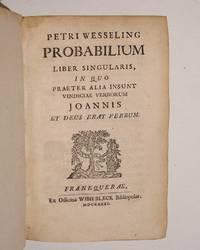
|
|
|
PLAUTUS
M. Acci Plauti Comoediae. Accedit commentarius ex Variorum notis & observationibus. Quarum plurimae nunc primum eduntur. Ex recensione Ioh. Frederici Gronovii.
Leiden Lugd. Batavorum Ex officina Hackiana 1664. 8vo. XVI115452 index p. Calf 20.5 cm Ref: STCN ppn 840013841; Schweiger 2766; Dibdin 2312: 'Gronovius by the assistance of 6 ancient MSS. and his own sagacious conjectures has improved the text in many places and given some ingenious and successful explanations of difficult passages'; Moss 2461/2; Fabricius/Ernesti 121; Neue Pauly Supplement Band 2 Geschichte der antiken Texte Darmstadt 2007 p. 477; Graesse 5329; Ebert 17202 Details: Gilt back with 5 raised bands. Engraved title. Commentary in 2 columns beneath the text Condition: Binding scuffed and scratched. Shield on the back gone. Paper of the front pastdown wrinkled. Titlepage cut out and mounted on blank flyleaf expertly with removal of the blank margins. Small hole in blank lower margin of the second leaf. Lower margin of the second half partly and very faintly waterstained Note: The 21 surviving comedies of the Roman playwright Titus Maccius Plautus ca. 254-184 B.C. have never been out of fashion since the publication of the 'editio princeps' in 1472. Plautus' influence on world literature is huge. The comedies feature stock situations and characters from everyday life. 'Plautine comedy is inventive exuberant varied full of rollicking eavesdropping scenes lyrical meters slapstick and verbal fireworks.' Early editors commentators and translators ransacked the plays for rhetorical and moral examples. Ever since the first post-classical performances at the end of the 15th century Plautus never left the stage. The Italian 'commedia erudita' and the popular improvisatory 'commedia dell'arte' developed through imitations of the Roman New Comedy. Probably best known is Carlo Goldoni's adaptation of the Menaechmi 1748 'I duo gemelli veneziani' The Venetian Twins. Spain saw the development of 'comedias elegíacas' Latin verse that incorporated Plautine passages into dialogue. Authors like Calderón adopted many New Comedy stage conventions to Spanish taste. In Germany the great dramatist Andreas Gryphius adapted the Miles Gloriosus. And in France Molière the greatest comic playwright of his age imitated Plautus in his Amphitryon and in l'Avare. English playwrights like Ben Johnson and Shakespeare reworked plays of Plautus. 'Plautine comedy provided Shakespeare with character and action throughout his career beginning with direct imitation of the Menaechmi with the Comedy of Errors'. A Midsummer Night's Dream The Taming of the Shrew The Merry Wives of Windsor The Tempest they all adapt themes situations and persons of Plautus. During the Golden Age of the Netherlands P.C. Hooft wrote Warenar 1617 an adaptation of Plautus' Aulularia. Plautus enjoyes also a new modern life on the screen. Rodgers and Hart created the music for the Boys from Syracuse 1938. Big Business 1988 inspired by the Menaechmi tells the story of 2 sets of female twins Bette Midler & Lily Tomlin separated at birth. Pseudolus and Miles Gloriosus can be found in the hilarious musical and film A funny thing happened on the way to the Forum 1962 Source of the quotations: The Classical Tradition Cambr. Mass. 2010 s.v. Plautus § At school Plautus was never in fashion. The plays were full of immorality and Plautus' language was too indecent and too difficult for young boys. Plautus was studied however widely in the 17th century at universities throughout Europe. Schweiger lists 37 editions of the Opera of Plautus for this 17thcentury 15 were published in Germany 13 in the Netherlands 5 in Geneva and 4 in France. Popular among scholars and students were the socalled 'Variorum editions'. They offered the 'textus receptus' which was widely accepted accompanied with the commentary and the annotations of specialists taken from earlier useful normative or renewing editions. This Plautus edition was produced by the Dutch classicist of German origin Johann Friedrich Gronov or Gronovius 1611-1671. He was the successor of Heinsius at the University of Leiden and was influenced by Vossius Grotius Heinsius & Scriverius. 'His editions mark an epoch in the study of Livy of Seneca Tacitus & Gellius. . His interest to the textual criticism of Latin poetry was due to the discovery of the Florentine MS of the tragedies of Seneca. . In his riper years the acumen exhibited in his handling of prose is also exemplified in his treatment of the text of poets such as Phaedrus and Martial Seneca and Statius'. Sandys History of Classical Scholarship 2321 With regard to his Plautus Sandys shows less enthousiasm. 'His edition of Plautus is marred by an imperfect knowledge of metre which has been noticed by Bentley'. The work on Plautus by Gronovius is however highly valued by modern scholarship. Wolfgang de Melo the editor of the new Loeb edition of 2011 places him among the great Plautus-scholars. He calls him 'an important editor of Plautus' . who particularly valued meter as the basis of emendations; his edition was published in 1664'. Plautus Vol. 1 Loeb Classical Library no. 60 Cambr. Mass. 2011 p. CXIV/CXV Further proof of its importance for the history of Plautine scholarship is its listing in 'Supplement Band 2: Geschichte der antiken Texte' of the Neue Pauly. There seven important pre-1848 Plautus editions are mentioned among which this edition of Gronovius Provenance: On the title the name of 'K.H.E. Schutter'. The owner once was Klaas Herman Eltjo Schutter who wrote a dissertation 'Quibus annis comoediae Plautinae primum actae sint quaeritur' Groningen 1952 Collation: 8 A-4F8 4G4 minus blank leaf 4G4 Photographs on request Heavy book may require extra shipping costs hardcover
Referenz des Buchhändlers : 130438
|
|
|
SECUNDUS, JANUS
Joannis Secundi opera.
Paris Parisiis Sumtibus Societatis 1748. 12mo. II3821 corrigenda p. portrait. Vellum 14.5 cm Ref: cf. Willems 1669 Details: 5 thongs laced through the joints. An engraved portrait on the title of the first love of Janus Secundus Julia locked within a kind of medallion and surrounded by 2 cornucopiae; the text reads: Vatis amatoris Iulia sculpta manu i.e. a portrait sculped by the hand of the author; opposite the title is a full-page engraved portrait of Janus Secundus himself holding in his hand the medal or medallion he made with the portrait of Julia; underneath the portrait a 4 line poem by his brother Hadrianus Marius Condition: Binding soiled. Old ownership entry on the first flyleaf. Outer margin of the portrait & the title thumbed. Paper yellowing Note: The Dutch neolatin poet Janus Secundus Nicolai Hagiensis was born on the 15th of november 1511 the day of the martyr Secundus in The Hague. He died very young in 1536. In 1528 he moved to Mechelen where his father was appointed president of the High Council. This town was the residence of the Austrian vicequeen Margaretha of Parma. The southern part of the Netherlands was in this time the center of a florishing urban civilization. In May 1530 Secundus met a young prostitute from Mechelen called Julia and fell in love with her. Julia became the subject of his first book of elegies his Julia Monobiblos in which he tells how he won and lost his love. During his studies in Bourges under the famous jurist Alciati he wrote his first Basia. Alciati introduced Secundus there also to the newest Italian poetry. A humanist poet often started his career with erotic poetry like Piccolomini and Beza. Secundus' kiss-poems are a variation on two kiss-poems of the Latin poet Catullus ca. 84-54 B.C who became during the Renaissance a model for love-poetry. Secundus wrote in his short live 6835 lines of poetry of which only 425 lines were printed during his lifetime. He wrote 'with equal fluency all kinds of lyrical heroic and elegiac verse. Down to the present day Secundus lives in literary history als the kissing poet' . 'Until far in the 18th century Secundus is mentioned as one of the classics of love poetry' IJsewijn Companion to Neo-Latin studies I Leuven 1990 p. 152 The first edition of his collected works was posthumely published in 1541 in Utrecht and was edited by Secundus' brother Marius. All later editions are based on this edition. The manuscript with the collected works used for this edition came later in the possession of the Dutch classicist Petrus Scriverius 1576-1660. He produced a new edition in 1619 in which he also incorporated poems of Secundus which had been omitted in the 1541 edition because they were thought to be disagreeable to the French and English king. In his second edition of 1631 Scriverius incorporated more material from other sources and manuscripts. Best source for Secundus is J.P. Guépin De kunst van Janus Secundus Amst. 1991 § The book on offer here is a reissue of the third edition of 1651. Willems says about the edition of 1651: 'L'édition de 1651 reproduit textuellement la précédente' id est that of 1631. The book opens with 18 pages testimonia and iudicia on Secundus. After these preliminary pages and before Secundus' text we find on page 27 a kind of half title: Joannis Secundi poemata quae reperiri potuerunt omnia. Ex tertia editione Petri Scriverii anno 1650. The year 1650 seems to be a printing error of the French printer. At the end are added some letters and a treatise on the family of Secundus De gente Nicolaia Provenance: on front flyleaf the old ownership entry of 'Frid. Guil. von Knebel'. We found on the internet a Friedrich Wilhelm von Knebel 1735-1799 who seems to have been a rigid and at the same time sloppy Prusian state official. § On the front pastedown is written in a different hand 'Ostheide'. Ostheide might refer to the Samtgemeinde collective municipality in the district of Lüneburg south of Hamburg in Lower Saxony Germany. Ostheide is also a German family name Collation: pi1 = A12 A12 minus leaf A12 B-Q12 R1 corrigenda Photographs on request hardcover
Referenz des Buchhändlers : 120511
|
|
|
MARTIALIS
M. Val. Martialis epigrammata demptis obscenis. Addidit annotationes & interpretationem Josephus Juvencius e Societate Jesu.
Venice Venetiis Apud Nicolaum Pezzana 1736. 12mo. X68524 index p. Vellum 15.5 cm Ref: Schweiger 2599 mentions only the first edition of 1693 Details: 2 thongs laced through cover. Latin text followed by a commentary in 2 columns Condition: Binding soiled. Lower corner bumped. Title dust-soiled Note: The Roman epigrammist Martial ca. 41-104 A.D. embraced in his 14 books of epigrams 'many topics: flattery of social superiors satire of man's foibles eroticism'. The Classical Heritage Cambr. Mass. 2010 p. 565/66. Contemporaries valued his work for its frankness and wit. Later Renaissance authors mined his work and sparked a resurgence of Neo-Latin and vernacular epigrams throughout Europe. § Martial's obscenity created a dilemma for editors. Censors banned and expurgated the 151 pornographic epigrams the so-called Obscoena not wanting to hurt the taste of the civilized reader or they simply hid them at the end of the text before the index as happened e.g. in the edition for the young Dauphin. Paris 1680 Voltaire did not appreciate Martialis he chided him for his images grossières. § This school edition of Martial is the work of the French Jesuit scholar poet and paedagogue Joseph de Jouvancy or Jouvency in Latin Josephus Juvencius 1643-1719. Jouvancy entered the Society of Jesus when he was sixteen 'and after completing his studies he taught grammar at the college at Compiègne and rhetoric at Caen and the College of La Flèche. He made his profession in the latter place in 1677 and was afterwards appointed professor at the Lycee Louis-le-Grand in Paris. In 1699 he was called by his superiors to Rome to continue the history of the Society of Jesus begun by Niccolo Orlandini and was engaged on this work until his death. . Jouvancy edited a large number of school editions of Latin authors including Terence Horace Juvenal Persius Martial the Metamorphoses of Ovid and the philosophical writings of Cicero such as De Officiis Cato Major and Laelius'. The texts were revised and purged for school use and supplied with footnotes in Latin. 'These expurgated editions were frequently reissued well into the 19th century both in France and other countries'. Source for Jouvancy Wikipedia Collation: A - 2G12 Photographs on request hardcover
Referenz des Buchhändlers : 120474
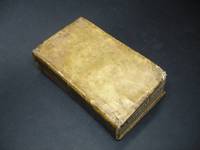
|
|
|
FESTUS & M VERRIUS FLACCUS
M. Verrii Flacci quae extant et Sex. Pompei Festi de Verborum significatione libri XX. Cum vetusto Bibliothecae Farnesianae exemplari Romae nuper edito collati; ex quo lacunae pene omnes sunt suppletae. In eos libros Ant. Augustini annotationes ex editione Veneta J. Scaligeri castigationes recognitae ex Parisiensi F. Ursini notae ex Romana. Accesserunt nunc denique doctissimorum virorum notae ex eorum scriptis hinc inde collectae. Bound with: Q. Asconii Pediani Patavini Commentationes in aliquot orationes M. Tullii Ciceronis. . Francisci Hotomani studio & diligentia post omnes omnium editiones quam emendatissimae. . Eiusdem Hotomani expositiones suae in Asconium operae & diligentiae.
Ad 1: Genève Apud Petrum Santandreanum 1593. Ad 2: Lyon Lugduni Apud Joan. Tornaesium & Gul. Gazeium 1551. 8vo. 2 volumes in 1: Ad 1: XVICCCIX1 blank23 index1; LXXV1 blank10CCXVI22 = index484 recte 80 p. Ad 2: XXIV1711 p. H.leather. 17 cm Ref: Ad 1: GLN-3651; Schweiger II1135; Bernays see p. 258/59 & 279; Ad 2: A. Cartier Bibliographie des éditions des Tournes no. 185; Schweiger I18 Details: 2 Back with 5 raised bands and a black shield; Ad 1: 'Veritas' printer's device on the title: a woman the naked truth seated on a cubus holding a radiant sun in her right hand. In her left hand she holds an opened book and a palm leaf. Her feet rest on the globe; the garland of fruit which surrounds her shows a ribbon with a motto in Greek: 'Alêtheia Pandamatôr' i.e. 'Allmighty Truth'. Ad 2: completely printed in italics; engraved printer's mark on title a 'Ouroboros' with motto: 'quod tibi fieri non vis alteri ne feceris' type no. 5. See Cartier p. 40; Prism mark type d on the verso of the last leaf with motto 'Nescit labi virtus' See Cartier p. 42 Condition: Back rubbed; corners bumped; paper on covers slightly worn; a few small wormholes in the second half of the first work only; occasional faint pencil underlinings; old ownership entry at the upper margin of the title of Asconius erased; first title slightly soiled Note: Ad 1: Festus is a 2nd century abbreviator of a lost lexicographic work by Marcus Verrius Flaccus dating from the first century B.C. Remains of his work survive in Festus; J.J. Scaliger 1540-1609 produced a highly acclaimed edition in 1575. He was praised for his success at completing blank portions of the Farnese manuscript. The editor uses both Paulus Diaconus and Festus for a reconstruction of the text in strict alphabetical order from A to V; Bernays tells us that the 216 pages with the 'Castigationes' of Scaliger are 'unverändert abgedruckt' in this edition of 1593 Bernays p. 279. Scaliger's notes are followed by the notes of lesser gods but nevertheless 'docti viri'. Ad 2: Asconius Pedianus probably 3-88 A.D produced for his sons a historical commentary on a number of the orations of the Roman politician/orator Cicero the Verrines pro Cornelio contra M. Antonium & Catilinam contra Pisonem pro Scauro & pro Milone. François Hotman 1524-1590 was a French protestant jurist and author Provenance: Engraved bookplate of Jonkheer Henri de Brauw depicting his coat of arms Collation: Festus: q - 2q8 a - v8 x8 minus x8 blank; A - V8 X2; 2A - 2E8 2F2. Asconius: a - m8 n4 lacking the blanks n3 and n4 Photographs on request hardcover
Referenz des Buchhändlers : 120230

|
|
|
GELLIUS
A. Gellii luculentissimi scriptoris Noctes Atticae. Nunc denuo ab infinitis quibus scatebant mendis summa ac diligenti cura repurgatae atque pristinae integritati restitutae.
Venice Venetiis Apud Hieronymum Scotum 1569. 8vo. XVI5431 blank p. 18th/19th century half vellum 16 cm Ref: Edit16 CNCE 20612; Not in Schweiger Didbin Moss Ebert Graesse Brunet or Fabricius/Ernesti Details: Evidently a rare book. Not a single copy in Rare Book Hub Americana Exchange. KVK Karlsruher Virtueller Katalog refers only to copies in Italian libraries. Marbled boards. Printer's mark on the title depicting a winged leopard a kind of griffin carrying a winged orb or ball. Woodcut initial at the beginning of each of the 20 books. Printed almost completely in italics. At the end is a 35 page list of Greek passages found in the text with their translation into Latin called dictionum graecarum interpretatio Condition: Cover slightly worn especially to the extremes; back slightly spotted and soiled with some faint pencil stripes. Ownership entry on the lower part of the title erased. A pinpoint wormhole in the right upper corner of the last 4 leaves far away from the text Note: The Venetian publishing firm of the Scotto family printed in the 16th century in 2 fields it specialised in the printing of music and texts of the Latin classics. The Scotto firm contributed also in the area of Aristotelian studies. The most important of this printing dynasty is Girolamo Scotto or Hieronymus Scotus. He composed music himself but he is best known as the most inflential music printer of the Renaissance. He has even a lemma in wikipedia. When Girolamo took over in 1539 the firm had already earned great finance with classic texts Latin translations and commentaries by various humanists. He made however a huge fortune with mass produced music. Still he continued to print texts of classical authors. An example is this Gellius edition. It has some remarkable features it looks exactly like a Gryphius edition. It imitates the handy small format the lay-out the italic fypeface the catch-words and the lectiones variantes printed in the margins of the Gellius editions which Gryphius had published earlier. The books of this Lyonaise firm were often cheap pirated reprints of successfull texts which were sold all over Europe. It seems that the Scotto firm tried to imitate the Gryphius edition to join in its success. Scotto even had the nerve of repeating verbatim the title of the Gellius edition of Gryphius which was published in 1556. Remarkable is that the editor of the Scottus edition very often took the trouble of swapping the lectio varians printed in the margin of the Gryphius edition and the reading in the text. The Scotus edition repeats almost verbatim the dictionum graecarum interpretatio of the Gryphius edition at the end including the Ad lectorem. Scotus perhaps produced this edition solely for the Italian market for KVK records only copies in Italian libraries Provenance: Old name on the lower margin of the title erased difficult to read: Caesaris Crispoliti Perugini. We found one Caesar Crispolitus or Cesare Crispolti 1563-1608 a Perugian local historian a jurist and canon of the Perugian cathedral. He is best known for his Perugia augusta descritta which was published posthumously in 1648. He was once the owner of a manuscript now in the Biblioteca comunale Augusta of Perugia Manoscritti 1058. He is described there as I.U.D. Iuris Utriusque Doctor. The library holds some manuscripts with lectures he held at the local Accademia. See manus.iccu.sbn.it//opac_SchedaScheda.phpID=0000188440. His Raccolta delle cose segnalate of 1597 one of the oldest guide to Perugia was republished in 2001 by Olschki as «Raccolta delle cose segnalate» di Cesare Crispolti. La più antica guida di Perugia 1597. 1604 saw his dissertation Idea dello scolare che versa negli studi affine di prendre il grado del Dottorato Collation: 8 A - 2L8 Photographs on request hardcover
Referenz des Buchhändlers : 120517
|
|
|
STATIUS
Opera omnia ex editione bipontina cum notis et interpretatione in usum Delphini variis lectionibus notis variorum recensu editionum et codicum et indice locupletissimo.
London Valpy 1824. 4 volumes: IV 2071; 264 p. Half calf. 26 cm Ref: Graesse 6/1481; Brunet 5513 Condition: Bindings scuffed. Some damage to the head & tail of the spines. Some small stamps Provenance: on the upper boards a small gilt stamp: a raised arm emerging from a crown probably ringing a bell below the crown the initials 'de J.v.E.' Heavy set may require extra shipping costs hardcover
Referenz des Buchhändlers : 115146
|
|
|
SAXIUS,Chr
Christophori Saxii Tabulae Genealogicae sive stemmata Deorum Regum Principum Virorum illustrium qui per id tempus quod Varroni Mythicum dicitur vel vixisse vel populis a se nominatis ortum dedisse vulgo creduntur. Ad fidem Hesiodi Apollodori Hygini & aliorum sic contexta ut pervetus rerum memoria civitatum diversarum inprimis Graecarum propagines scriptorumque annales & poëtarum carmina probabiliter intelligi possint.
Utrecht Trajecti ad Rhenum Apud A. van Paddenburg & J.M. van Vloten n.d. 1783. Colophon: 'Literis Reersianis 1783' Folio. 27 double-page stemmata; 4 leaves. Modern boards. 41 cm Ref: 195447107 Condition: Tasteless modern binding. The back is soiled and on it is written 'stemmata regum'. Book plate on the front pastedown. Small piece at the tip of the upper corner of the last leaf torn off Note: The German classical scholar Christoph Gottlob Sachse 1714-1806 or Christophorus Saxius came in 1735 to Leipzig to study classical philology. In 1745/46 he made a long tour through the West of Germany and the Netherlands followed by his first big publication 'Lapidum vetustorum epigrammata' 1746. He decided to remain in the Netherlands where he became the teacher of the son of De Back the secretary to the Stadtholder of the Dutch Republic William IV and after 1751 secretary of the grandson of Caspar Burmannus in Utrecht. In 1755 Saxius was appointed professor of Rhetoric and Greek at the University of Utrecht which he remained until his death at the age of 92. He published much on epigraphy archaeology ancient history and he produced in 1778 an edition of the 'Catonis Disticha'. Useful as they were in their time they are now forgotten. He made one important contribution to scholarship his 'Onomasticon literarium sive Nomenclator praestantissimorum omnis aevi scriptorum praecipue Graecorum et Latinorum' Utrecht 1759. This biographic and bibliographic work developed into an eight volume work of reference 1775-93. It is praised by Brunet being an 'Ouvrage d'une grande utilité pour les recherches relatives à l'histoire littéraire'. Brunet 5175 On Saxius NNBW 8 1281/2; ADB 30 460/1 § In an epilogue called 'Lectori Historiae veteris studioso' to this edition of 1783 Saxius explains why he produced his 'Tabulae Genealogicae sive stemmata Deorum Regum Principum Virorum illustrium'. His aim is educational. He confesses that he has learned from long experience that students doze off listening to dull voices and lectures but that they revive when shown something more concrete. He condemns teachers who are not willing to explain matters with the use of maps so reducing the appetite of their pupils. The easiest way to avoid errors is to visualize and so elucidate complicated matters on tables on which all information is available in brief at one glance. Saxius used this recipe for the confusing assembly of Greek and Roman gods kings royal families peoples etc. The 27 double-page tables contain: 'Genealogiae Deorum tabula' 1 2 & 3; 'Regni Thessalici tabula' 1234 & 5; 'Regnum Argivum tabula' 123 & 4; 'Regni Spartani tabula' 1 & 2; 1 table 'Regnum Sicyonium & Regnum Messenium' 1 table 'Regnum Arcadicum' 1 table 'Regnum Elidis & Pisaeorum item Regnum Corinthiacum' 'Regni Attici tabula' 1 & 2 1 table 'Regnum Thebanum' 1 table 'Regnum Troianum' 1 table 'Mantissa stemmatum aliorum quorundam Regum tamquam Regum Iudaicorum & Israëliticorum' 1 table 'Regum Macedoniae ante & post Alexandrum Magnum' 1 table 'Regum Aegyptiorum post Alexandrum Magnum' 1 table 'Regum Syriacorum post Alexandrum Magnum' 1 table 'Principum Hasmonaeorum' 1 table 'Stemma Herodiadum ad fidem Librorum divinorum Novi Foederis & Iosephi inprimis concinnatum' Provenance: The 'art deco' bookplate: 'Ex libris Luciani v. Römer'. Depicted are the Roman she-wolf with Romus & Remulus. This book once belonged to the Dutch physician botanist and writer and pioneer fighter for gay rights Lucien Sophie Albert Marie von Römer 1873-1965. He often wrote about homosexuality and argued that it was an innate characteristic. He practiced medicine in the Dutch East Indies later Indonesia in his later life. His views parallel those of psychiatrist Sigmund Freud on this topic. Lucien von Römer was born in 1873 in Kampen Overijssel. He studied medicine at Leiden University and the University of Amsterdam and received his medical license in 1903. He went on to practice as a neurologist. Von Römer was particularly interested in homosexuality and worked in Berlin with the prominent sexologists Magnus Hirschfeld and Albert Moll. He was a regular contributor to Hirschfeld's journal 'Jahrbuch für sexuelle Zwischenstufen' Journal for Sexual Transitions; his first article a profile of King Henry III of France was published in 1902. In addition to homosexuality Von Römer also wrote for the 'Jahrbuch' about androgyny hermaphroditism and the reception of Arnold Aletrino's works. In 1908 he published an anthology of Friedrich Nietzsche's writings on homosexuality in Hirschfeld's 'Zeitschrift für Sexualwissenschaft'. In the same year he submitted a postdoctoral dissertation that argued that homosexuality was innate but it was rejected by the University of Amsterdam on the grounds that it was 'in conflict with morality and offensive to others'. Von Römer left the Netherlands and joined an expedition to New Guinea as a botanist in 1910. He discovered numerous plants on the expedition some of which were named after him. He settled in the Dutch East Indies in 1913 where he worked as a public health specialist and a regional government physician. In 1921 he married Eugenie Gallois a pianist and had a son. After retiring he continued to practice psychiatry in Malang in Indonesia where he died in 1965 at the age of 92. Source of Von Müller Wikipedia the Dutch version has more than the English version; but see also Wikipedia's article: 'Nederlandsch Wetenschappelijk Humanitair Komitee' Collation: 54 leaves not signed followed by 4 leaves all signed x0x; the 4 leaves consist of 1 leaf 'Lectori' and a 3 leaf index Photographs on request hardcover
Referenz des Buchhändlers : 114411
|
|
|
SALLUSTIUS
C. Crispi Sallustii Opera omnia quae exstant cum commentariis integris Joh. Rivii Aldi Manutii Petri Ciacconii Fulvii Ursini & Heliae Putschii et selectis Jani Gruteri H. Glareani Cypr. à Popma Ludov. Carrionis Jani Douzae & aliorum. Accedunt huic editioni Jani Melleri Palmerii Spicilegia in eundem auctorem. Cum indice rerum & verborum locupletissimo. Editio novissima.
Amsterdam Amstelodami Ex officina Henrici & Viduae Theodori Boom 1690. 8vo. XXVIIIincluding frontispiece 596 38 p. Vellum 20 cm Prize copy Ref: STCN ppn 851959466; Schweiger 2879; Dibdin 2385: 'this is the best Variorum edition' and 'a valuable book'; Moss 2560; Graesse 6/1240; Ebert 20026: 'Eine der seltenste Ausgg. cum notis varior. und sehr gesucht'; Spoelder p. 490 Amst. 9 Details: Prize copy without the prize. Binding gilt. 7 thongs laced through the joints. Gilt coat of arms of Amsterdam on both boards; Frontispiece by Wingendorp depicting the 'triumphus' of the Roman general Marius; in front of the cart walks the defeated king Jugurtha in chains. The frontispiece is dated 1689 Condition: Vellum soiled and somewhat worn. Prize removed. All 4 ties gone Note: 'One of the most widely read and influential of Roman historians along with Caesar Livy and Tacitus Sallust 86-34 BC has been studied quoted and imitated not only as a historian but also as a moral philosopher political thinker and stylist.' Until 1600 more than 200 editions of his work appeared. Sallust was used in the 16th and 17th century to support absolute theories of government. But 'on the other hand it was the republican Sallust 'ennemy of tyrants' whom John Milton admired and who bolstered the cause of liberty in the Lowlands during the war with Spain and later in France and on the American continent'. The Classical tradition Cambr. Mass. 2010 p. 856. Sallustius furnished indeed weapons to the supporters and opponents during the rebellion of the Netherlands against the Spaniards a war of independence that lasted 80 years from 1568 till 1648. § This edition is a socalled 'Variorum edition'. It offers a 'textus receptus' which is widely accepted accompanied with the commentary and the annotations of various specialists taken or excerpted from earlier useful normative or renewing editions. Editions like these 'cum notis Variorum' were useful but never broke new ground. The production of these sometimes overloaded editions was the specialty of Dutch scholars of the 17th and 18th century. The compilers seldom were great scholars but often hard working schoolmasters. Their involvement in publishing a new edition was limited to the necessary. The text of Sallustius is preceded by the chapter which J. Vossius had written on him in his 'De historicis latinis'. Then follow 'Judicia et Testimonia'. At the end of the text we find the 'Spicilegium in Sallustium' of Janus Mellerus Palmerius. This is a collection of notes on the 'Catilina' and 'Bellum Jugurthinum' which was first published in 1580. It consists of explanations and observations but most of all proposed emendations. Next to nothing is known about this scholar. Palmerius or Palmier was a Neolatin poet and scholar from Bruges. Van der Aa 15 p. 68 Collation: 8 26; A-2Q8 2R4 2S1 Photographs on request hardcover
Referenz des Buchhändlers : 130433
|
|
|
LUCRETIUS
Titi Lucretii Cari De rerum natura libri sex. Accedunt selectae lectiones dilucidando poëmati appositae. Curante Stephano Andrea Philippe.
Paris Lutetiae Parisiorum Typis Josephi Barbou 1754. 12mo. XXXVI288 p. frontispiece and 6 plates. Later half morocco. 17.5 cm Ref: Gordon 504B; Ebert 12455; Brunet 31220; cf. Schweiger 2576 for the ed. of 1744; Graesse 4280 Details: Nice copy. Red morocco first half 20th century. Back with 4 raised bands with gilt fillets and lettering. Marbled boards and endpapers. Thick paper wide margins untrimmed. Fine engraved frontispiece and plates designed by Frans van Mieris junior engraved by Cl. Duflos for Coustelier in 1744 and used again by Barbou for this edition. For an explanation of these mythological plates see the bibliography of Gordon p. 244. Woodcut printer's mark on the title depicting an old man who stands in the shade of a vine-entwined elmtree symbolising the symbiotic relationship between scholar and publisher. The motto is enigmatic: 'Non solus' probably indicating the interdependency of publisher and scholar. Occasional engraved headpieces and woodcut initials. Includes also a tricolour bookmarker. At the end 30 pages filled with 'Variae Lectiones' Condition: Some negligible wear to the corners; a hardly visible dent at the lower edge of the front board Note: The Roman poet and philosopher Lucretius was much admired in the age of Enlightenment. 'Virtually every major figure of the period was in some way influenced by Lucretius'. S. Gillespie and Ph. Hardie Cambridge Companion to Lucretius 2007 p. 274. He acted as shield-bearer and mouthpiece of the Greek philosopher Epicurus by explaining in his didactic poem 'De rerum natura' Epicurus' physical theories 'with a view to abolishing superstitious fears of the intervention of the gods in the world and of the punishment of the soul in an after-life'. OCD 2nd ed. p. 623 § This is a line for line re-edition of the Lucretius edition of 1744 published in Paris by A. Coustelier. It was edited by the French scholar Étienne André Philippe de Prétot 1707-1787. He taught history and geography at the Royal Academy in Paris and produced for the publisher Coustelier a great number of editions of Latin classics especially poets and historians. He published also on Roman history and on geography. He was not an accomplished philologist so he borrowed the texts for his editions from standard works. In this case he used the text of the edition of the Dutch classical scholar S. Haverkamp 1684-1742 which was published in quarto Leiden 1725. Dibdin calls the edition of Haverkamp 'not only a very splendid but a learned and critical edition'. Dibdin 2202/3. Ernesti calls it 'splendissima' Ernesti 183. Mr. Philippe not only borrowed the text but his edition is also adorned with the same charming plates as that of Haverkamp only expertly reduced Collation: frontispiece a8 b4 c6; plate A8 B4 C8 plate D4 E8 F4 G8 plate after G5 H4 I8 K4 L8 plate after L1 M4 N8 O4 Plate P8 Q4 R8 S4 T8 plate after T1 V4 X8 Y4 Z8 Aa4 Photographs on request hardcover
Referenz des Buchhändlers : 120272
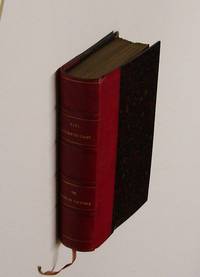
|
|
|
PHOTIUS
Phôtiou Patriarchou Kônstantinou-poleôs Epistolai. Photii Sanctissimi Patriarchae Constantinopolitani Epistolae. Per Reverendum Virum Richardum Montacutium Norvicensem nuper Episcopum latine redditae & notis subinde illustratae.
London Londoni Ex officina Rogeri Danielis 1651. Folio. 8 3931 blank10 index p. Contemporary calf. 35 cm Ref: ESTC R12714; Hoffmann 389; Brunet 4624; Ebert 16779; Graesse 5276 Details: Editio princeps. Greek text of 248 letters with parallel Latin translation. At the end have been added 5 letters 'ex veteri codice orientali'. Printed in 2 columns. Gilt back with 6 raised bands. Gilt coat of arms on both boards. Woodcut printer's device on the title depicting a palm tree the motto reads: ''Depressa resurgo'. 'Oppressed higher I rise'. Condition: Binding somewhat rubbed. Upper & lower part of the front joint split over 4 and 6 cm. Tiny bump in front board. Small stamp on the title. Small hole in the text of leaf 2A2 Note: This edition is the 'editio princeps' of 248 letters of the great Byzantine scholar Photius ca. 810 - ca. 893 who was Patriarch of Constantinople from 858 to 867 and from 877 to 886. He was the leader of the Byzantine Renaissance and left works of immense value. The most important is the 'Bibliotheka' a critical bibliography of 280 works with his comments. Gibbon said that it was a living monument of erudition and acute criticism. This work is often the best and only source of notable works now lost. Photius also compiled a 'Lexikon' a glossary drawing upon earlier lexicographic works. The 'Mystagogia' is a theological work treating the Trinity. The 'Amphilochia' or 'Quaestiones ad Amphilochium' concerns ca. 300 catechetical question-and-answer discussions of religion and philosophy. § The surviving letters of Photius 298 or 299 were written between 859 and 886 i.e. from the beginning till the end of his Patriachy. They show the same acute criticism and learning as his other works. It is thought that there were two collections of letters during Photius' lifetime. The first contained the letters 1-248 and was compiled ca. 875. The second corpus contained the letters 1-283 and it dated from ca. 886. The first collection 1-248 was first published in 1651 with a Latin translation and notes by the well known English Greek scholar Richard Montagu bishop of Norwich 1577-1641 from a manuscript in the Bodleian Library. At the end have been added 5 letters with a translation from a manuscript brought to England by Chr. Ravius. Montagu's first fruit was an edition of the Invectives of Gregorius Nazianzenus against the emperor Julianus Apostata which was published in 1610 Provenance: Coat of arms on boards: a shield with 2 eagles and 2 griffins in the quarters flanked by 2 collared and lined greyhounds standing on the hindlegs. Above the shield a ducal coronet left of the crown a bishop's mitre on the right a crosier. Stamp on the title: 'Minderbroeders Heerlen' Collation: A-3D4 3E6 Photographs on request Heavy book may require extra shipping costs hardcover
Referenz des Buchhändlers : 22020

|
|
|
MAUNDRELL,H
A journey from Aleppo to Jerusalem at Easter A.D. 1697. The sixth edtion to which is now added an account of the author's journey to the banks of Euphrates at Beer and to the country of Mesopotamia. With an index to the whole work not in any former edition. By Hen. Maundrell M.A. late fellow of Exeter Coll. and Chaplain to the factory of Aleppo.
Oxford Printed at the Theatre for A. Peisley bookseller in Oxford and W. Meadows bookseller in Cornhill 1740. 8vo. XII1711 blank p. 9 folding plates 6 full page plates 3 text illustrations. Modern cloth 22 cm Ref: ESTC Citation No. T100587; 'The library of Henry M. Blackmer II' London 1989 no 214; Brunet 31542 Details: Tasteful and simple modern binding with an gilt red morocco shield on the back. Engraving of the Sheldonian Theater on the title executed by M. Cole. The first plate is a view on Aleppo. There are engravings of Mount Carmel and Tabor; 7 folding plates with the monuments of Baalbeck. 2 texts engravings of an inscription Condition: 2 small letters stamped on the title; paper very slightly yellowing; some foxing Note: The Holy Land has been a site for Christian pilgrimage since the 3rd century A.D. Throughout the Middle Ages christians visited Palestine and during the Crusades even tried to conquer it. A great number of travelogues were written by pilgrims about the marvels of well known and venerated cities as Jerusalem Bethlehem Nazareth etc. Ever since medieval times also English travellers have recorded their impressions of their visits to the Orient. One of the earliest was the 'Voiage' of the Anglo-Frenchman Sir John Mandeville. An outstanding and interesting travel story is Henry Maundrell's. It illustrates the emergence of a new genry of travel writing and the shift in European minds concerning its relationship with the Holy Land. 'Where medieval pilgrims had often wept or gone into trances upon their arrival in Jerusalem modern European visitors observed with curiosity what was before their eyes. They are travelling for pleasure and for cultural experiences; tourism was gradually replacing pilgrimage as a motive for visiting Palestine. By the end of the 17th century quite a few European tourists had already been to Jerusalem. The most famous among them was Henry Maundrell the author of the book 'A journey from Aleppo to Jerusalem'. It was first published in 1703 in Oxford and it would prove to be one of the most popular books about the East for years to come. The 18th century saw 8 English editions and by 1749 seven editions in different languages had appeared and sections of the book continued to appear in collections of travel writings published in the 18th and 19th centuries' 'Maundrell in Jerusalem Reflections on the writing of an early European tourist' by I. Nassar in 'Jerusalem Quarterly' 20009; Maundrell's record is not a guide to the holy sites or an anthropological study but it is a diary in which he reflects upon the sights worth seeing and things worth doing. It is organized chronologically. Henry Maundrell an Oxford academic and clergyman born in 1655 made the trip shortly after his arrival in Aleppo in 1696 where he was elected to the post of chaplaincy of the British Levant Company. It paid him £100 per year. He travelled 'in Company with 14 others of our Factory. We went by the coast; and having visited the several places consecrated by the Life and Death of our Blessed Lord we returned by the way of Damascus'. p. VII. The fellowhip started on the 26th of february and returned on the 11th of May. On Eastern they were in Jerusalem where they were bewildered by the behaviour of the local fellow christians in the Holy Sepulcher Church. Maundrell describes them as hystical rabble who 'very much discredited the Miracle. . a scandal to the Christian Religion'. p. 97 Maundrell's account of biblical sites reflects his fascination with science and biblical history at the same time. He shows little interest in the indigenous Christians Arabs and Jews and he loathes the Turkish administration and the Turks. Maundrell died in Aleppo in 1701. His record is important for historians of Palestine the Near East and of the Ottoman empire Provenance: On the title a stamp of 2 letters: 'G.U.' Collation: a2 b4 A-U4 X2 Y4 Photographs on request hardcover
Referenz des Buchhändlers : 130445
|
|
|
PLAUTUS
M. Accius Plautus ex fide atque auctoritate complurium librorum manuscriptorum opera Dionys. Lambini Monstroliensis emendatus; ab eodemque commentariis explicatus. Nunc denuo plurimis quae in praecedentibus editionibus irrepserant mendis repurgatus; multisque in locis in gratiam antiquariorum illustratus.
Geneva Coloniae Allobrogum Apud Petrum & Iacobum Chouët 1622. 4to. VIII92051 index1 blank p. Overlapping vellum. 24 cm Ref: Schweiger 2765; Fabricius/Ernesti 118; Moss 2461; Ebert 17188: 'Bloss Nachdruck der Lambinischen Ausgabe'; cf. GLN-3810 Details: 6 thongs laced through both joints. Title with broad woodcut architectural borders. Woodcut headpieces. Woodcut initials. At the end 2 indices one 'verborum locutionum & sententiarum' the other on the commentary of Lambinus Condition: Vellum age-toned & soiled. On the titlepage the place of printing: 'Coloniae Allobrogum' Latin name of Geneva has been made illegible with ink and was replaced by 'Genevae' 'at Geneva'. Why this was done is not clear. Some slight foxing. Right lower corner faintly waterstained. Some old ink underlinings Note: The 21 surviving comedies of the Roman playwright Titus Maccius Plautus ca. 254-184 B.C. have never been out of fashion since the publication of the 'editio princeps' in 1472. Plautus' influence on world literature is huge. The comedies feature stock situations and characters from everyday life. 'Plautine comedy is inventive exuberant varied full of rollicking eavesdropping scenes lyrical meters slapstick and verbal fireworks.' Early editors commentators and translators ransacked the plays for rhetorical and moral examples. Ever since the first post-classical performances at the end of the 15th century Plautus never left the stage. The Italian 'commedia erudita' and the popular improvisatory 'commedia dell'arte' developed through imitations of the Roman New Comedy. Probably best known is Carlo Goldoni's adaptation of the Menaechmi 1748 'I duo gemelli veneziani' The Venetian Twins. Spain saw the development of 'comedias elegíacas' Latin verse that incorporated Plautine passages into dialogue. Authors like Calderón adopted many New Comedy stage conventions to Spanish taste. In Germany the great dramatist Andreas Gryphius adapted the Miles Gloriosus. And in France Molière the greatest comic playwright of his age imitated Plautus in his Amphitryon and in l'Avare. English playwrights like Ben Johnson and Shakespeare reworked plays of Plautus. 'Plautine comedy provided Shakespeare with character and action throughout his career beginning with direct imitation of the Menaechmi with the Comedy of Errors'. A Midsummer Night's Dream The Taming of the Shrew The Merry Wives of Windsor The Tempest they all adapt themes situations and persons of Plautus. During the Golden Age of the Netherlands P.C. Hooft wrote Warenar 1617 an adaptation of Plautus' Aulularia. Plautus enjoyes also a new modern life on the screen. Rodgers and Hart created the music for the Boys from Syracuse 1938. Big Business 1988 inspired by the Menaechmi tells the story of 2 sets of female twins Bette Midler & Lily Tomlin separated at birth. Pseudolus and Miles Gloriosus can be found in the hilarious musical and film A funny thing happened on the way to the Forum 1962 Source of the quotations: The Classical Tradition Cambr. Mass. 2010 s.v. Plautus § The French scholar Dionysius Lambinus 1520-1572 earned his fame in the field of Latin scholarship with his masterly editions of Horace 1561 Lucretius 1564 and Cicero 1566. He was Professor Regius of Greek at the Collège de France from 1561 till his death. The 19th century English editor and commentator of Lucretius H.A.J. Munro ranks him as one of the best scholars of his time. He says that 'The quickness of his intellect united with his exquisite knowledge of the language gave him great power in the field of conjecture and for nearly 3 centuries his remained the standard text'. Munro DRN 4th ed. vol. 1 p.14/15. Lambinus' 'reading was as vast as accurate and its results are given in a style of unsurpassed clearness and beauty' Munro adds. In 1576/77 4/5 years after his death appeared at last his edition of the comedies written by the Roman playwright Plautus 250-184 B.C. It is his last great work in which he showed great critical learning and ability to discover hidden meanings and innuendo. Lambinus fell ill exhausted by the weight of his studies and had only time to complete 13 of the 21 plays. This is told in an address to the reader by Iacobus Helias or Jacques Hélias or Jacques Hélie who was the successor of Lambinus as Regius professor of Greek literature from 1572 till 1590 and who completed the work of his colleague. The difficulties Helias says in collating manuscripts mending the text of Plautus and writing a commentary are enormous. The text is corrupt and deformed by mistakes and there is a host of different readings caused by the ignorance and negligence of later generations. Helias lists the humanist scholars who shared with Lambinus their observations on difficult places not forgetting himself. Lambinus had not left his work on Plautus ready to print. Helias completed the work partly by transcribing what remained of the observations of Lambinus on the subsequent comedies. He complemented what was left open and supplied and corrected many quotations. Sometimes he had to work out what Lambinus had only sketched. Finally Helias added 2 indices one for the text of Plautus and the other for the commentary. Lambinus collated for his edition a number of manuscripts and collected many passages from the ancient grammarians. This is how Lambinus' Plautus is valued in modern scholarship: 'Many valuable emendations go back to Denis Lambin .; his later comments reveal that he had lost energy and acumen due to his ailments'. Plautus Vol. 1 Loeb Classical Library no. 60 Cambr. Mass. 2011 p. CXIV Lambinus' successor Helias left no trace in the history of scholarship except for completing the Plautus edition of his colleague. Our edition of 1622 produced by Chouët is a reissue of the important edition of 1576/77 Collation: ¶4 A-Z8; Aa-Zz8 AA-KK8 LL4 MM-PP8 QQ2 leaf QQ2 verso blank Photographs on request Heavy book may require extra shipping costs hardcover
Referenz des Buchhändlers : 140137
|
|

 Per e-mail erhalten
 Als pdf-Dokument herunterladen
 RSS feed
 Permanenter link


