|
|
|
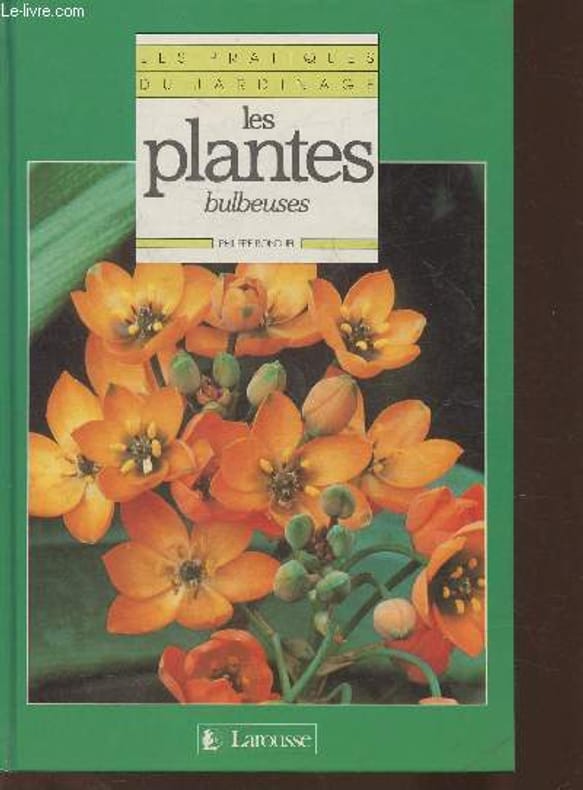
Bonduel Philippe
"Les plantes bulbeuses (Collection ""Les pratiques du jardinage"")"
Larousse. 1990. In-4. Cartonné. Etat d'usage, Coins frottés, Dos satisfaisant, Papier jauni. 144 pages. Deux colonnes de texte. Rares rousseurs. Nombreuses photos en couleurs. Rares rousseurs.. . . . Classification Dewey : 580-Botanique
書籍販売業者の参照番号
: RO30373327 ISBN : 2035151139
|
|
|
Bonelle, C.
Le jardinier d'Artois, ou les élémens de la culture des jardins potagers et fruitiers.
1766 x, 288, viii p., engraved vignette on title and head and tail-pieces, full-page and half-page coats-of-arms, contemporary full calf (spine gilt, with ornemantal urns stamped on the compartments). First free endpaper missing. Previous owners name written on half-title and title-page in old hand.Rare gardening manual specifically devoted to cultivation in northern France. The author offers here the results of his life's experience as a gardener. He deals with local methods of cultivation and layout, and describes suitable plants and fruits; these include absinth, asparagus, mustard, horse-radish, lamb's lettuce, herbs, apricots, grapes, plums, cherries and gooseberries. Separate treatises are devoted to oranges, pinks and carnations.
書籍販売業者の参照番号
: BG04119
|
|
|
Bonelli Giorgio (Vicoforte, 5 luglio 1724 – Roma, 1803)
Amaranthus panicula maxima conglomerata phoenicea splendente
Tavola botanica tratta dal monumentale Hortus Romanus Juxta Systema Tournefortianum Paulo Strictius Distributus A Georgio Bonelli Monregalensi In Subalpinis, Publico Medicinae Professore: Specierum Nomina Suppeditante, Praestantiorum, Quas Ipse Selegit, Adumbrationem Dirigente Liberato Sabbati Maevaniensi In Umbria Chirurgicae Professore, Et Horti Custode; Adjectis Unicuique Volumini Rariorum Plantarum Tabulis C. Aere Incisis. Tom. I. (- Tom. VII.) L’opera viene stampata a Roma durante l’arco di ben 22 anni e da diversi editori: a spese di Bouchard e Gravier: Paolo Giunchi, 1772-1780-Tipografia Salomoni, 1784-Giovanni Zempel, 1793. Prima edizione di questa monumentale opera di botanica, sicuramente la più vasta e riccamente illustrata tra quelle prodotte in Italia fino ad allora. Intorno al 1770 gli editori francesi Bouchard e Gravier, avendo intenzione di dare alle stampe un catalogo illustrato dell’Orto botanico di Roma, ne proposero la direzione al medico piemontese Giorgio Bonelli (1724-1782), allora docente presso l’università romana. La cura della preparazione dei campioni per l’apparato iconografico fu invece affidata a Liberato Sabbati (1714-1778), un farmacista umbro, che era allora custode dell’Orto medesimo. Il primo volume uscì nel 1772 con una ricca introduzione del Bonelli, in cui questi fornisce un resoconto dei più recenti sviluppi della botanica e dei nuovi sistemi di classificazione e adduce poi i motivi della sua preferenza per il sistema elaborato da Joseph Pitton de Tournefort, a suo avviso più semplice e adatto all’apprendimento. Per ragioni ignote Bonelli abbandonò tuttavia l’impresa. Nel 1774, a partire dal secondo volume, essa fu presa in mano e poi condotta a termine da Niccolò Martelli (1735-1829), docente di botanica della Sapienza. Questi dette all’opera un’impostazione più linneana, pur continuando ad avvalersi della collaborazione di Liberato Sabbati fino alla sua morte, che avvenne nel 1778 al termine della pubblicazione dei primi cinque volumi. Il suo posto fu quindi preso dal figlio Costantino Sabbati. L’Hortus romanus contiene la classificazione delle varie specie di piante ospitate nell’Orto Botanico di Roma, che, stando a quanto affermato nella Horti Romani brevis historia che apre il primo volume, fu fondato a metà del Quattrocento sotto il pontificato di Niccolò V. In realtà i primi orti botanici italiani furono quelli creati a Padova e a Pisa intorno al 1545. L’Orto Romano sorse poco tempo dopo e, ampliatosi più volte, nel 1660 fu trasferito dalla sede vaticana al Gianicolo, dove ancora oggi si trova. La maggior parte delle tavole numerate non sono firmate, ma alcune sono firmate come incise da Magdalena Bouchard Il primo volume è dedicato dagli editori, Joannes Bouchard et Joannes Josephus Gravier, al Papa Clemente XIV; il secondo, al Cardinale Bernis; il terzo, al Cardinale Zelada; il quarto, al Cardinale Giraud. Il sesto volume è dedicato - dall'autore, Nicolaus Martelli - al cardinale Boncompagni. Acquaforte, finemente colorata a mano in epoca, in perfetto stato di conservazione. Bibliografia K. Nissen, Die botanische Buchillustration, 2 v. & suppl. (1951-1966); Great Flower Books p. 51. Hunt 629. Cleveland Botanical 509. Dunthorne 45. Pritzel 976. Nissen, BBI 200. Stafleu & Cowan TL2 634. Botanical plate from the Hortus Romanus Juxta Systema Tournefortianum Paulo Strictius Distributus A Georgio Bonelli Monregalensi In Subalpinis, Publico Medicinae Professore: Specierum Nomina Suppeditante, Praestantiorum, Quas Ipse Selegit, Adumbrationem Dirigente Liberato Sabbati Maevaniensi In Umbria Chirurgicae Professore, Et Horti Custode; Adjectis Unicuique Volumini Rariorum Plantarum Tabulis C. Aere Incisis. Tom. I. (- Tom. VII.) The work was printed in Rome over a period of 22 years and by different publishers: at the expense of Bouchard and Gravier: Paolo Giunchi, 1772-1780-Tipografia Salomoni, 1784-Giovanni Zempel, 1793. First edition of this monumental work of botany, certainly the most extensive and richly illustrated among those produced in Italy until then. Around 1770, the French editors Bouchard and Gravier, having the intention of printing an illustrated catalog of the Botanical Garden of Rome, proposed the direction to the Piedmontese doctor Giorgio Bonelli (1724-1782), then a professor at the University of Rome. The care of the preparation of samples for the iconographic apparatus was instead entrusted to Liberato Sabbati (1714-1778), an Umbrian pharmacist, who was then custodian of the Garden itself. The first volume was published in 1772 with a rich introduction by Bonelli, in which he gives an account of the most recent developments in botany and new systems of classification and then gives the reasons for his preference for the system developed by Joseph Pitton de Tournefort, in his opinion simpler and more suitable for learning. For unknown reasons Bonelli abandoned the enterprise. In 1774, starting with the second volume, it was taken over and then completed by Niccolò Martelli (1735-1829), professor of botany at the Sapienza. Martelli gave the work a more Linnean approach, while continuing to use the collaboration of Liberato Sabbati until his death in 1778 at the end of the publication of the first five volumes. His place was taken by his son Costantino Sabbati. The Hortus romanus contains the classification of the various species of plants housed in the Botanical Garden of Rome, which, according to what is stated in the Horti Romani brevis historia that opens the first volume, was founded in the mid-fifteenth century under the pontificate of Nicholas V. In reality, the first Italian botanical gardens were created in Padua and Pisa around 1545. The Roman Garden arose shortly thereafter and, expanded several times, in 1660 was transferred from the Vatican to the Janiculum, where it is still located today. Most of the numbered plates are unsigned, but a few are signed as engraved by Magdalena Bouchard The first volume is dedicated by the publishers, Joannes Bouchard et Joannes Josephus Gravier, to Pope Clement XIV; the second, to Cardinal Bernis; the third, to Cardinal Zelada; the fourth, to Cardinal Giraud. The sixth volume is dedicated - by the author, Nicolaus Martelli - to Cardinal Boncompagni. Etching, with fine contemporay colouring, good condition. References K. Nissen, Die botanische Buchillustration, 2 v. & suppl. (1951-1966); Great Flower Books p. 51. Hunt 629. Cleveland Botanical 509. Dunthorne 45. Pritzel 976. Nissen, BBI 200. Stafleu & Cowan TL2 634.

|
|
|
Bonelli Giorgio (Vicoforte, 5 luglio 1724 – Roma, 1803)
Amaranthus sylvestris, maximus novae Anglio, Spicis purpureis
Tavola botanica tratta dal monumentale Hortus Romanus Juxta Systema Tournefortianum Paulo Strictius Distributus A Georgio Bonelli Monregalensi In Subalpinis, Publico Medicinae Professore: Specierum Nomina Suppeditante, Praestantiorum, Quas Ipse Selegit, Adumbrationem Dirigente Liberato Sabbati Maevaniensi In Umbria Chirurgicae Professore, Et Horti Custode; Adjectis Unicuique Volumini Rariorum Plantarum Tabulis C. Aere Incisis. Tom. I. (- Tom. VII.) L’opera viene stampata a Roma durante l’arco di ben 22 anni e da diversi editori: a spese di Bouchard e Gravier: Paolo Giunchi, 1772-1780-Tipografia Salomoni, 1784-Giovanni Zempel, 1793. Prima edizione di questa monumentale opera di botanica, sicuramente la più vasta e riccamente illustrata tra quelle prodotte in Italia fino ad allora. Intorno al 1770 gli editori francesi Bouchard e Gravier, avendo intenzione di dare alle stampe un catalogo illustrato dell’Orto botanico di Roma, ne proposero la direzione al medico piemontese Giorgio Bonelli (1724-1782), allora docente presso l’università romana. La cura della preparazione dei campioni per l’apparato iconografico fu invece affidata a Liberato Sabbati (1714-1778), un farmacista umbro, che era allora custode dell’Orto medesimo. Il primo volume uscì nel 1772 con una ricca introduzione del Bonelli, in cui questi fornisce un resoconto dei più recenti sviluppi della botanica e dei nuovi sistemi di classificazione e adduce poi i motivi della sua preferenza per il sistema elaborato da Joseph Pitton de Tournefort, a suo avviso più semplice e adatto all’apprendimento. Per ragioni ignote Bonelli abbandonò tuttavia l’impresa. Nel 1774, a partire dal secondo volume, essa fu presa in mano e poi condotta a termine da Niccolò Martelli (1735-1829), docente di botanica della Sapienza. Questi dette all’opera un’impostazione più linneana, pur continuando ad avvalersi della collaborazione di Liberato Sabbati fino alla sua morte, che avvenne nel 1778 al termine della pubblicazione dei primi cinque volumi. Il suo posto fu quindi preso dal figlio Costantino Sabbati. L’Hortus romanus contiene la classificazione delle varie specie di piante ospitate nell’Orto Botanico di Roma, che, stando a quanto affermato nella Horti Romani brevis historia che apre il primo volume, fu fondato a metà del Quattrocento sotto il pontificato di Niccolò V. In realtà i primi orti botanici italiani furono quelli creati a Padova e a Pisa intorno al 1545. L’Orto Romano sorse poco tempo dopo e, ampliatosi più volte, nel 1660 fu trasferito dalla sede vaticana al Gianicolo, dove ancora oggi si trova. La maggior parte delle tavole numerate non sono firmate, ma alcune sono firmate come incise da Magdalena Bouchard Il primo volume è dedicato dagli editori, Joannes Bouchard et Joannes Josephus Gravier, al Papa Clemente XIV; il secondo, al Cardinale Bernis; il terzo, al Cardinale Zelada; il quarto, al Cardinale Giraud. Il sesto volume è dedicato - dall'autore, Nicolaus Martelli - al cardinale Boncompagni. Acquaforte, finemente colorata a mano in epoca, in perfetto stato di conservazione. Bibliografia K. Nissen, Die botanische Buchillustration, 2 v. & suppl. (1951-1966); Great Flower Books p. 51. Hunt 629. Cleveland Botanical 509. Dunthorne 45. Pritzel 976. Nissen, BBI 200. Stafleu & Cowan TL2 634. Botanical plate from the Hortus Romanus Juxta Systema Tournefortianum Paulo Strictius Distributus A Georgio Bonelli Monregalensi In Subalpinis, Publico Medicinae Professore: Specierum Nomina Suppeditante, Praestantiorum, Quas Ipse Selegit, Adumbrationem Dirigente Liberato Sabbati Maevaniensi In Umbria Chirurgicae Professore, Et Horti Custode; Adjectis Unicuique Volumini Rariorum Plantarum Tabulis C. Aere Incisis. Tom. I. (- Tom. VII.) The work was printed in Rome over a period of 22 years and by different publishers: at the expense of Bouchard and Gravier: Paolo Giunchi, 1772-1780-Tipografia Salomoni, 1784-Giovanni Zempel, 1793. First edition of this monumental work of botany, certainly the most extensive and richly illustrated among those produced in Italy until then. Around 1770, the French editors Bouchard and Gravier, having the intention of printing an illustrated catalog of the Botanical Garden of Rome, proposed the direction to the Piedmontese doctor Giorgio Bonelli (1724-1782), then a professor at the University of Rome. The care of the preparation of samples for the iconographic apparatus was instead entrusted to Liberato Sabbati (1714-1778), an Umbrian pharmacist, who was then custodian of the Garden itself. The first volume was published in 1772 with a rich introduction by Bonelli, in which he gives an account of the most recent developments in botany and new systems of classification and then gives the reasons for his preference for the system developed by Joseph Pitton de Tournefort, in his opinion simpler and more suitable for learning. For unknown reasons Bonelli abandoned the enterprise. In 1774, starting with the second volume, it was taken over and then completed by Niccolò Martelli (1735-1829), professor of botany at the Sapienza. Martelli gave the work a more Linnean approach, while continuing to use the collaboration of Liberato Sabbati until his death in 1778 at the end of the publication of the first five volumes. His place was taken by his son Costantino Sabbati. The Hortus romanus contains the classification of the various species of plants housed in the Botanical Garden of Rome, which, according to what is stated in the Horti Romani brevis historia that opens the first volume, was founded in the mid-fifteenth century under the pontificate of Nicholas V. In reality, the first Italian botanical gardens were created in Padua and Pisa around 1545. The Roman Garden arose shortly thereafter and, expanded several times, in 1660 was transferred from the Vatican to the Janiculum, where it is still located today. Most of the numbered plates are unsigned, but a few are signed as engraved by Magdalena Bouchard The first volume is dedicated by the publishers, Joannes Bouchard et Joannes Josephus Gravier, to Pope Clement XIV; the second, to Cardinal Bernis; the third, to Cardinal Zelada; the fourth, to Cardinal Giraud. The sixth volume is dedicated - by the author, Nicolaus Martelli - to Cardinal Boncompagni. Etching, with fine contemporay colouring, good condition. References K. Nissen, Die botanische Buchillustration, 2 v. & suppl. (1951-1966); Great Flower Books p. 51. Hunt 629. Cleveland Botanical 509. Dunthorne 45. Pritzel 976. Nissen, BBI 200. Stafleu & Cowan TL2 634.

|
|
|
Bonelli Giorgio (Vicoforte, 5 luglio 1724 – Roma, 1803)
Antirrhinum maius angustifolium Romanum
Tavola botanica tratta dal monumentale Hortus Romanus Juxta Systema Tournefortianum Paulo Strictius Distributus A Georgio Bonelli Monregalensi In Subalpinis, Publico Medicinae Professore: Specierum Nomina Suppeditante, Praestantiorum, Quas Ipse Selegit, Adumbrationem Dirigente Liberato Sabbati Maevaniensi In Umbria Chirurgicae Professore, Et Horti Custode; Adjectis Unicuique Volumini Rariorum Plantarum Tabulis C. Aere Incisis. Tom. I. (- Tom. VII.) L’opera viene stampata a Roma durante l’arco di ben 22 anni e da diversi editori: a spese di Bouchard e Gravier: Paolo Giunchi, 1772-1780-Tipografia Salomoni, 1784-Giovanni Zempel, 1793. Prima edizione di questa monumentale opera di botanica, sicuramente la più vasta e riccamente illustrata tra quelle prodotte in Italia fino ad allora. Intorno al 1770 gli editori francesi Bouchard e Gravier, avendo intenzione di dare alle stampe un catalogo illustrato dell’Orto botanico di Roma, ne proposero la direzione al medico piemontese Giorgio Bonelli (1724-1782), allora docente presso l’università romana. La cura della preparazione dei campioni per l’apparato iconografico fu invece affidata a Liberato Sabbati (1714-1778), un farmacista umbro, che era allora custode dell’Orto medesimo. Il primo volume uscì nel 1772 con una ricca introduzione del Bonelli, in cui questi fornisce un resoconto dei più recenti sviluppi della botanica e dei nuovi sistemi di classificazione e adduce poi i motivi della sua preferenza per il sistema elaborato da Joseph Pitton de Tournefort, a suo avviso più semplice e adatto all’apprendimento. Per ragioni ignote Bonelli abbandonò tuttavia l’impresa. Nel 1774, a partire dal secondo volume, essa fu presa in mano e poi condotta a termine da Niccolò Martelli (1735-1829), docente di botanica della Sapienza. Questi dette all’opera un’impostazione più linneana, pur continuando ad avvalersi della collaborazione di Liberato Sabbati fino alla sua morte, che avvenne nel 1778 al termine della pubblicazione dei primi cinque volumi. Il suo posto fu quindi preso dal figlio Costantino Sabbati. L’Hortus romanus contiene la classificazione delle varie specie di piante ospitate nell’Orto Botanico di Roma, che, stando a quanto affermato nella Horti Romani brevis historia che apre il primo volume, fu fondato a metà del Quattrocento sotto il pontificato di Niccolò V. In realtà i primi orti botanici italiani furono quelli creati a Padova e a Pisa intorno al 1545. L’Orto Romano sorse poco tempo dopo e, ampliatosi più volte, nel 1660 fu trasferito dalla sede vaticana al Gianicolo, dove ancora oggi si trova. La maggior parte delle tavole numerate non sono firmate, ma alcune sono firmate come incise da Magdalena Bouchard Il primo volume è dedicato dagli editori, Joannes Bouchard et Joannes Josephus Gravier, al Papa Clemente XIV; il secondo, al Cardinale Bernis; il terzo, al Cardinale Zelada; il quarto, al Cardinale Giraud. Il sesto volume è dedicato - dall'autore, Nicolaus Martelli - al cardinale Boncompagni. Acquaforte, finemente colorata a mano in epoca, in perfetto stato di conservazione. Bibliografia K. Nissen, Die botanische Buchillustration, 2 v. & suppl. (1951-1966); Great Flower Books p. 51. Hunt 629. Cleveland Botanical 509. Dunthorne 45. Pritzel 976. Nissen, BBI 200. Stafleu & Cowan TL2 634. Botanical plate from the Hortus Romanus Juxta Systema Tournefortianum Paulo Strictius Distributus A Georgio Bonelli Monregalensi In Subalpinis, Publico Medicinae Professore: Specierum Nomina Suppeditante, Praestantiorum, Quas Ipse Selegit, Adumbrationem Dirigente Liberato Sabbati Maevaniensi In Umbria Chirurgicae Professore, Et Horti Custode; Adjectis Unicuique Volumini Rariorum Plantarum Tabulis C. Aere Incisis. Tom. I. (- Tom. VII.) The work was printed in Rome over a period of 22 years and by different publishers: at the expense of Bouchard and Gravier: Paolo Giunchi, 1772-1780-Tipografia Salomoni, 1784-Giovanni Zempel, 1793. First edition of this monumental work of botany, certainly the most extensive and richly illustrated among those produced in Italy until then. Around 1770, the French editors Bouchard and Gravier, having the intention of printing an illustrated catalog of the Botanical Garden of Rome, proposed the direction to the Piedmontese doctor Giorgio Bonelli (1724-1782), then a professor at the University of Rome. The care of the preparation of samples for the iconographic apparatus was instead entrusted to Liberato Sabbati (1714-1778), an Umbrian pharmacist, who was then custodian of the Garden itself. The first volume was published in 1772 with a rich introduction by Bonelli, in which he gives an account of the most recent developments in botany and new systems of classification and then gives the reasons for his preference for the system developed by Joseph Pitton de Tournefort, in his opinion simpler and more suitable for learning. For unknown reasons Bonelli abandoned the enterprise. In 1774, starting with the second volume, it was taken over and then completed by Niccolò Martelli (1735-1829), professor of botany at the Sapienza. Martelli gave the work a more Linnean approach, while continuing to use the collaboration of Liberato Sabbati until his death in 1778 at the end of the publication of the first five volumes. His place was taken by his son Costantino Sabbati. The Hortus romanus contains the classification of the various species of plants housed in the Botanical Garden of Rome, which, according to what is stated in the Horti Romani brevis historia that opens the first volume, was founded in the mid-fifteenth century under the pontificate of Nicholas V. In reality, the first Italian botanical gardens were created in Padua and Pisa around 1545. The Roman Garden arose shortly thereafter and, expanded several times, in 1660 was transferred from the Vatican to the Janiculum, where it is still located today. Most of the numbered plates are unsigned, but a few are signed as engraved by Magdalena Bouchard The first volume is dedicated by the publishers, Joannes Bouchard et Joannes Josephus Gravier, to Pope Clement XIV; the second, to Cardinal Bernis; the third, to Cardinal Zelada; the fourth, to Cardinal Giraud. The sixth volume is dedicated - by the author, Nicolaus Martelli - to Cardinal Boncompagni. Etching, with fine contemporay colouring, good condition. References K. Nissen, Die botanische Buchillustration, 2 v. & suppl. (1951-1966); Great Flower Books p. 51. Hunt 629. Cleveland Botanical 509. Dunthorne 45. Pritzel 976. Nissen, BBI 200. Stafleu & Cowan TL2 634.

|
|
|
Bonelli Giorgio (Vicoforte, 5 luglio 1724 – Roma, 1803)
Cistus mas, folio rotundiori, hirsuto, flore majori Roseo
Tavola botanica tratta dal monumentale Hortus Romanus Juxta Systema Tournefortianum Paulo Strictius Distributus A Georgio Bonelli Monregalensi In Subalpinis, Publico Medicinae Professore: Specierum Nomina Suppeditante, Praestantiorum, Quas Ipse Selegit, Adumbrationem Dirigente Liberato Sabbati Maevaniensi In Umbria Chirurgicae Professore, Et Horti Custode; Adjectis Unicuique Volumini Rariorum Plantarum Tabulis C. Aere Incisis. Tom. I. (- Tom. VII.) L’opera viene stampata a Roma durante l’arco di ben 22 anni e da diversi editori: a spese di Bouchard e Gravier: Paolo Giunchi, 1772-1780-Tipografia Salomoni, 1784-Giovanni Zempel, 1793. Prima edizione di questa monumentale opera di botanica, sicuramente la più vasta e riccamente illustrata tra quelle prodotte in Italia fino ad allora. Intorno al 1770 gli editori francesi Bouchard e Gravier, avendo intenzione di dare alle stampe un catalogo illustrato dell’Orto botanico di Roma, ne proposero la direzione al medico piemontese Giorgio Bonelli (1724-1782), allora docente presso l’università romana. La cura della preparazione dei campioni per l’apparato iconografico fu invece affidata a Liberato Sabbati (1714-1778), un farmacista umbro, che era allora custode dell’Orto medesimo. Il primo volume uscì nel 1772 con una ricca introduzione del Bonelli, in cui questi fornisce un resoconto dei più recenti sviluppi della botanica e dei nuovi sistemi di classificazione e adduce poi i motivi della sua preferenza per il sistema elaborato da Joseph Pitton de Tournefort, a suo avviso più semplice e adatto all’apprendimento. Per ragioni ignote Bonelli abbandonò tuttavia l’impresa. Nel 1774, a partire dal secondo volume, essa fu presa in mano e poi condotta a termine da Niccolò Martelli (1735-1829), docente di botanica della Sapienza. Questi dette all’opera un’impostazione più linneana, pur continuando ad avvalersi della collaborazione di Liberato Sabbati fino alla sua morte, che avvenne nel 1778 al termine della pubblicazione dei primi cinque volumi. Il suo posto fu quindi preso dal figlio Costantino Sabbati. L’Hortus romanus contiene la classificazione delle varie specie di piante ospitate nell’Orto Botanico di Roma, che, stando a quanto affermato nella Horti Romani brevis historia che apre il primo volume, fu fondato a metà del Quattrocento sotto il pontificato di Niccolò V. In realtà i primi orti botanici italiani furono quelli creati a Padova e a Pisa intorno al 1545. L’Orto Romano sorse poco tempo dopo e, ampliatosi più volte, nel 1660 fu trasferito dalla sede vaticana al Gianicolo, dove ancora oggi si trova. La maggior parte delle tavole numerate non sono firmate, ma alcune sono firmate come incise da Magdalena Bouchard Il primo volume è dedicato dagli editori, Joannes Bouchard et Joannes Josephus Gravier, al Papa Clemente XIV; il secondo, al Cardinale Bernis; il terzo, al Cardinale Zelada; il quarto, al Cardinale Giraud. Il sesto volume è dedicato - dall'autore, Nicolaus Martelli - al cardinale Boncompagni. Acquaforte, finemente colorata a mano in epoca, in perfetto stato di conservazione. Bibliografia K. Nissen, Die botanische Buchillustration, 2 v. & suppl. (1951-1966); Great Flower Books p. 51. Hunt 629. Cleveland Botanical 509. Dunthorne 45. Pritzel 976. Nissen, BBI 200. Stafleu & Cowan TL2 634. Botanical plate from the Hortus Romanus Juxta Systema Tournefortianum Paulo Strictius Distributus A Georgio Bonelli Monregalensi In Subalpinis, Publico Medicinae Professore: Specierum Nomina Suppeditante, Praestantiorum, Quas Ipse Selegit, Adumbrationem Dirigente Liberato Sabbati Maevaniensi In Umbria Chirurgicae Professore, Et Horti Custode; Adjectis Unicuique Volumini Rariorum Plantarum Tabulis C. Aere Incisis. Tom. I. (- Tom. VII.) The work was printed in Rome over a period of 22 years and by different publishers: at the expense of Bouchard and Gravier: Paolo Giunchi, 1772-1780-Tipografia Salomoni, 1784-Giovanni Zempel, 1793. First edition of this monumental work of botany, certainly the most extensive and richly illustrated among those produced in Italy until then. Around 1770, the French editors Bouchard and Gravier, having the intention of printing an illustrated catalog of the Botanical Garden of Rome, proposed the direction to the Piedmontese doctor Giorgio Bonelli (1724-1782), then a professor at the University of Rome. The care of the preparation of samples for the iconographic apparatus was instead entrusted to Liberato Sabbati (1714-1778), an Umbrian pharmacist, who was then custodian of the Garden itself. The first volume was published in 1772 with a rich introduction by Bonelli, in which he gives an account of the most recent developments in botany and new systems of classification and then gives the reasons for his preference for the system developed by Joseph Pitton de Tournefort, in his opinion simpler and more suitable for learning. For unknown reasons Bonelli abandoned the enterprise. In 1774, starting with the second volume, it was taken over and then completed by Niccolò Martelli (1735-1829), professor of botany at the Sapienza. Martelli gave the work a more Linnean approach, while continuing to use the collaboration of Liberato Sabbati until his death in 1778 at the end of the publication of the first five volumes. His place was taken by his son Costantino Sabbati. The Hortus romanus contains the classification of the various species of plants housed in the Botanical Garden of Rome, which, according to what is stated in the Horti Romani brevis historia that opens the first volume, was founded in the mid-fifteenth century under the pontificate of Nicholas V. In reality, the first Italian botanical gardens were created in Padua and Pisa around 1545. The Roman Garden arose shortly thereafter and, expanded several times, in 1660 was transferred from the Vatican to the Janiculum, where it is still located today. Most of the numbered plates are unsigned, but a few are signed as engraved by Magdalena Bouchard The first volume is dedicated by the publishers, Joannes Bouchard et Joannes Josephus Gravier, to Pope Clement XIV; the second, to Cardinal Bernis; the third, to Cardinal Zelada; the fourth, to Cardinal Giraud. The sixth volume is dedicated - by the author, Nicolaus Martelli - to Cardinal Boncompagni. Etching, with fine contemporay colouring, good condition. References K. Nissen, Die botanische Buchillustration, 2 v. & suppl. (1951-1966); Great Flower Books p. 51. Hunt 629. Cleveland Botanical 509. Dunthorne 45. Pritzel 976. Nissen, BBI 200. Stafleu & Cowan TL2 634.

|
|
|
Bonelli Giorgio (Vicoforte, 5 luglio 1724 – Roma, 1803)
Ficoides Africana humilis...
Tavola botanica tratta dal monumentale Hortus Romanus Juxta Systema Tournefortianum Paulo Strictius Distributus A Georgio Bonelli Monregalensi In Subalpinis, Publico Medicinae Professore: Specierum Nomina Suppeditante, Praestantiorum, Quas Ipse Selegit, Adumbrationem Dirigente Liberato Sabbati Maevaniensi In Umbria Chirurgicae Professore, Et Horti Custode; Adjectis Unicuique Volumini Rariorum Plantarum Tabulis C. Aere Incisis. Tom. I. (- Tom. VII.) L’opera viene stampata a Roma durante l’arco di ben 22 anni e da diversi editori: a spese di Bouchard e Gravier: Paolo Giunchi, 1772-1780-Tipografia Salomoni, 1784-Giovanni Zempel, 1793. Prima edizione di questa monumentale opera di botanica, sicuramente la più vasta e riccamente illustrata tra quelle prodotte in Italia fino ad allora. Intorno al 1770 gli editori francesi Bouchard e Gravier, avendo intenzione di dare alle stampe un catalogo illustrato dell’Orto botanico di Roma, ne proposero la direzione al medico piemontese Giorgio Bonelli (1724-1782), allora docente presso l’università romana. La cura della preparazione dei campioni per l’apparato iconografico fu invece affidata a Liberato Sabbati (1714-1778), un farmacista umbro, che era allora custode dell’Orto medesimo. Il primo volume uscì nel 1772 con una ricca introduzione del Bonelli, in cui questi fornisce un resoconto dei più recenti sviluppi della botanica e dei nuovi sistemi di classificazione e adduce poi i motivi della sua preferenza per il sistema elaborato da Joseph Pitton de Tournefort, a suo avviso più semplice e adatto all’apprendimento. Per ragioni ignote Bonelli abbandonò tuttavia l’impresa. Nel 1774, a partire dal secondo volume, essa fu presa in mano e poi condotta a termine da Niccolò Martelli (1735-1829), docente di botanica della Sapienza. Questi dette all’opera un’impostazione più linneana, pur continuando ad avvalersi della collaborazione di Liberato Sabbati fino alla sua morte, che avvenne nel 1778 al termine della pubblicazione dei primi cinque volumi. Il suo posto fu quindi preso dal figlio Costantino Sabbati. L’Hortus romanus contiene la classificazione delle varie specie di piante ospitate nell’Orto Botanico di Roma, che, stando a quanto affermato nella Horti Romani brevis historia che apre il primo volume, fu fondato a metà del Quattrocento sotto il pontificato di Niccolò V. In realtà i primi orti botanici italiani furono quelli creati a Padova e a Pisa intorno al 1545. L’Orto Romano sorse poco tempo dopo e, ampliatosi più volte, nel 1660 fu trasferito dalla sede vaticana al Gianicolo, dove ancora oggi si trova. La maggior parte delle tavole numerate non sono firmate, ma alcune sono firmate come incise da Magdalena Bouchard Il primo volume è dedicato dagli editori, Joannes Bouchard et Joannes Josephus Gravier, al Papa Clemente XIV; il secondo, al Cardinale Bernis; il terzo, al Cardinale Zelada; il quarto, al Cardinale Giraud. Il sesto volume è dedicato - dall'autore, Nicolaus Martelli - al cardinale Boncompagni. Acquaforte, finemente colorata a mano in epoca, in perfetto stato di conservazione. Bibliografia K. Nissen, Die botanische Buchillustration, 2 v. & suppl. (1951-1966); Great Flower Books p. 51. Hunt 629. Cleveland Botanical 509. Dunthorne 45. Pritzel 976. Nissen, BBI 200. Stafleu & Cowan TL2 634. Botanical plate from the Hortus Romanus Juxta Systema Tournefortianum Paulo Strictius Distributus A Georgio Bonelli Monregalensi In Subalpinis, Publico Medicinae Professore: Specierum Nomina Suppeditante, Praestantiorum, Quas Ipse Selegit, Adumbrationem Dirigente Liberato Sabbati Maevaniensi In Umbria Chirurgicae Professore, Et Horti Custode; Adjectis Unicuique Volumini Rariorum Plantarum Tabulis C. Aere Incisis. Tom. I. (- Tom. VII.) The work was printed in Rome over a period of 22 years and by different publishers: at the expense of Bouchard and Gravier: Paolo Giunchi, 1772-1780-Tipografia Salomoni, 1784-Giovanni Zempel, 1793. First edition of this monumental work of botany, certainly the most extensive and richly illustrated among those produced in Italy until then. Around 1770, the French editors Bouchard and Gravier, having the intention of printing an illustrated catalog of the Botanical Garden of Rome, proposed the direction to the Piedmontese doctor Giorgio Bonelli (1724-1782), then a professor at the University of Rome. The care of the preparation of samples for the iconographic apparatus was instead entrusted to Liberato Sabbati (1714-1778), an Umbrian pharmacist, who was then custodian of the Garden itself. The first volume was published in 1772 with a rich introduction by Bonelli, in which he gives an account of the most recent developments in botany and new systems of classification and then gives the reasons for his preference for the system developed by Joseph Pitton de Tournefort, in his opinion simpler and more suitable for learning. For unknown reasons Bonelli abandoned the enterprise. In 1774, starting with the second volume, it was taken over and then completed by Niccolò Martelli (1735-1829), professor of botany at the Sapienza. Martelli gave the work a more Linnean approach, while continuing to use the collaboration of Liberato Sabbati until his death in 1778 at the end of the publication of the first five volumes. His place was taken by his son Costantino Sabbati. The Hortus romanus contains the classification of the various species of plants housed in the Botanical Garden of Rome, which, according to what is stated in the Horti Romani brevis historia that opens the first volume, was founded in the mid-fifteenth century under the pontificate of Nicholas V. In reality, the first Italian botanical gardens were created in Padua and Pisa around 1545. The Roman Garden arose shortly thereafter and, expanded several times, in 1660 was transferred from the Vatican to the Janiculum, where it is still located today. Most of the numbered plates are unsigned, but a few are signed as engraved by Magdalena Bouchard The first volume is dedicated by the publishers, Joannes Bouchard et Joannes Josephus Gravier, to Pope Clement XIV; the second, to Cardinal Bernis; the third, to Cardinal Zelada; the fourth, to Cardinal Giraud. The sixth volume is dedicated - by the author, Nicolaus Martelli - to Cardinal Boncompagni. Etching, with fine contemporay colouring, good condition. References K. Nissen, Die botanische Buchillustration, 2 v. & suppl. (1951-1966); Great Flower Books p. 51. Hunt 629. Cleveland Botanical 509. Dunthorne 45. Pritzel 976. Nissen, BBI 200. Stafleu & Cowan TL2 634.

|
|
|
Bonelli Giorgio (Vicoforte, 5 luglio 1724 – Roma, 1803)
Lilo Hyacinthus vulgaris flore caeruleo
Tavola botanica tratta dal monumentale Hortus Romanus Juxta Systema Tournefortianum Paulo Strictius Distributus A Georgio Bonelli Monregalensi In Subalpinis, Publico Medicinae Professore: Specierum Nomina Suppeditante, Praestantiorum, Quas Ipse Selegit, Adumbrationem Dirigente Liberato Sabbati Maevaniensi In Umbria Chirurgicae Professore, Et Horti Custode; Adjectis Unicuique Volumini Rariorum Plantarum Tabulis C. Aere Incisis. Tom. I. (- Tom. VII.) L’opera viene stampata a Roma durante l’arco di ben 22 anni e da diversi editori: a spese di Bouchard e Gravier: Paolo Giunchi, 1772-1780-Tipografia Salomoni, 1784-Giovanni Zempel, 1793. Prima edizione di questa monumentale opera di botanica, sicuramente la più vasta e riccamente illustrata tra quelle prodotte in Italia fino ad allora. Intorno al 1770 gli editori francesi Bouchard e Gravier, avendo intenzione di dare alle stampe un catalogo illustrato dell’Orto botanico di Roma, ne proposero la direzione al medico piemontese Giorgio Bonelli (1724-1782), allora docente presso l’università romana. La cura della preparazione dei campioni per l’apparato iconografico fu invece affidata a Liberato Sabbati (1714-1778), un farmacista umbro, che era allora custode dell’Orto medesimo. Il primo volume uscì nel 1772 con una ricca introduzione del Bonelli, in cui questi fornisce un resoconto dei più recenti sviluppi della botanica e dei nuovi sistemi di classificazione e adduce poi i motivi della sua preferenza per il sistema elaborato da Joseph Pitton de Tournefort, a suo avviso più semplice e adatto all’apprendimento. Per ragioni ignote Bonelli abbandonò tuttavia l’impresa. Nel 1774, a partire dal secondo volume, essa fu presa in mano e poi condotta a termine da Niccolò Martelli (1735-1829), docente di botanica della Sapienza. Questi dette all’opera un’impostazione più linneana, pur continuando ad avvalersi della collaborazione di Liberato Sabbati fino alla sua morte, che avvenne nel 1778 al termine della pubblicazione dei primi cinque volumi. Il suo posto fu quindi preso dal figlio Costantino Sabbati. L’Hortus romanus contiene la classificazione delle varie specie di piante ospitate nell’Orto Botanico di Roma, che, stando a quanto affermato nella Horti Romani brevis historia che apre il primo volume, fu fondato a metà del Quattrocento sotto il pontificato di Niccolò V. In realtà i primi orti botanici italiani furono quelli creati a Padova e a Pisa intorno al 1545. L’Orto Romano sorse poco tempo dopo e, ampliatosi più volte, nel 1660 fu trasferito dalla sede vaticana al Gianicolo, dove ancora oggi si trova. La maggior parte delle tavole numerate non sono firmate, ma alcune sono firmate come incise da Magdalena Bouchard Il primo volume è dedicato dagli editori, Joannes Bouchard et Joannes Josephus Gravier, al Papa Clemente XIV; il secondo, al Cardinale Bernis; il terzo, al Cardinale Zelada; il quarto, al Cardinale Giraud. Il sesto volume è dedicato - dall'autore, Nicolaus Martelli - al cardinale Boncompagni. Acquaforte, finemente colorata a mano in epoca, in perfetto stato di conservazione. Bibliografia K. Nissen, Die botanische Buchillustration, 2 v. & suppl. (1951-1966); Great Flower Books p. 51. Hunt 629. Cleveland Botanical 509. Dunthorne 45. Pritzel 976. Nissen, BBI 200. Stafleu & Cowan TL2 634. Botanical plate from the Hortus Romanus Juxta Systema Tournefortianum Paulo Strictius Distributus A Georgio Bonelli Monregalensi In Subalpinis, Publico Medicinae Professore: Specierum Nomina Suppeditante, Praestantiorum, Quas Ipse Selegit, Adumbrationem Dirigente Liberato Sabbati Maevaniensi In Umbria Chirurgicae Professore, Et Horti Custode; Adjectis Unicuique Volumini Rariorum Plantarum Tabulis C. Aere Incisis. Tom. I. (- Tom. VII.) The work was printed in Rome over a period of 22 years and by different publishers: at the expense of Bouchard and Gravier: Paolo Giunchi, 1772-1780-Tipografia Salomoni, 1784-Giovanni Zempel, 1793. First edition of this monumental work of botany, certainly the most extensive and richly illustrated among those produced in Italy until then. Around 1770, the French editors Bouchard and Gravier, having the intention of printing an illustrated catalog of the Botanical Garden of Rome, proposed the direction to the Piedmontese doctor Giorgio Bonelli (1724-1782), then a professor at the University of Rome. The care of the preparation of samples for the iconographic apparatus was instead entrusted to Liberato Sabbati (1714-1778), an Umbrian pharmacist, who was then custodian of the Garden itself. The first volume was published in 1772 with a rich introduction by Bonelli, in which he gives an account of the most recent developments in botany and new systems of classification and then gives the reasons for his preference for the system developed by Joseph Pitton de Tournefort, in his opinion simpler and more suitable for learning. For unknown reasons Bonelli abandoned the enterprise. In 1774, starting with the second volume, it was taken over and then completed by Niccolò Martelli (1735-1829), professor of botany at the Sapienza. Martelli gave the work a more Linnean approach, while continuing to use the collaboration of Liberato Sabbati until his death in 1778 at the end of the publication of the first five volumes. His place was taken by his son Costantino Sabbati. The Hortus romanus contains the classification of the various species of plants housed in the Botanical Garden of Rome, which, according to what is stated in the Horti Romani brevis historia that opens the first volume, was founded in the mid-fifteenth century under the pontificate of Nicholas V. In reality, the first Italian botanical gardens were created in Padua and Pisa around 1545. The Roman Garden arose shortly thereafter and, expanded several times, in 1660 was transferred from the Vatican to the Janiculum, where it is still located today. Most of the numbered plates are unsigned, but a few are signed as engraved by Magdalena Bouchard The first volume is dedicated by the publishers, Joannes Bouchard et Joannes Josephus Gravier, to Pope Clement XIV; the second, to Cardinal Bernis; the third, to Cardinal Zelada; the fourth, to Cardinal Giraud. The sixth volume is dedicated - by the author, Nicolaus Martelli - to Cardinal Boncompagni. Etching, with fine contemporay colouring, good condition. References K. Nissen, Die botanische Buchillustration, 2 v. & suppl. (1951-1966); Great Flower Books p. 51. Hunt 629. Cleveland Botanical 509. Dunthorne 45. Pritzel 976. Nissen, BBI 200. Stafleu & Cowan TL2 634.

|
|
|
Bonelli Giorgio (Vicoforte, 5 luglio 1724 – Roma, 1803)
Salvia Altissima frutescens caulibuscandiissimo tomento vestitis, foliis maximis
Tavola botanica tratta dal monumentale Hortus Romanus Juxta Systema Tournefortianum Paulo Strictius Distributus A Georgio Bonelli Monregalensi In Subalpinis, Publico Medicinae Professore: Specierum Nomina Suppeditante, Praestantiorum, Quas Ipse Selegit, Adumbrationem Dirigente Liberato Sabbati Maevaniensi In Umbria Chirurgicae Professore, Et Horti Custode; Adjectis Unicuique Volumini Rariorum Plantarum Tabulis C. Aere Incisis. Tom. I. (- Tom. VII.) L’opera viene stampata a Roma durante l’arco di ben 22 anni e da diversi editori: a spese di Bouchard e Gravier: Paolo Giunchi, 1772-1780-Tipografia Salomoni, 1784-Giovanni Zempel, 1793. Prima edizione di questa monumentale opera di botanica, sicuramente la più vasta e riccamente illustrata tra quelle prodotte in Italia fino ad allora. Intorno al 1770 gli editori francesi Bouchard e Gravier, avendo intenzione di dare alle stampe un catalogo illustrato dell’Orto botanico di Roma, ne proposero la direzione al medico piemontese Giorgio Bonelli (1724-1782), allora docente presso l’università romana. La cura della preparazione dei campioni per l’apparato iconografico fu invece affidata a Liberato Sabbati (1714-1778), un farmacista umbro, che era allora custode dell’Orto medesimo. Il primo volume uscì nel 1772 con una ricca introduzione del Bonelli, in cui questi fornisce un resoconto dei più recenti sviluppi della botanica e dei nuovi sistemi di classificazione e adduce poi i motivi della sua preferenza per il sistema elaborato da Joseph Pitton de Tournefort, a suo avviso più semplice e adatto all’apprendimento. Per ragioni ignote Bonelli abbandonò tuttavia l’impresa. Nel 1774, a partire dal secondo volume, essa fu presa in mano e poi condotta a termine da Niccolò Martelli (1735-1829), docente di botanica della Sapienza. Questi dette all’opera un’impostazione più linneana, pur continuando ad avvalersi della collaborazione di Liberato Sabbati fino alla sua morte, che avvenne nel 1778 al termine della pubblicazione dei primi cinque volumi. Il suo posto fu quindi preso dal figlio Costantino Sabbati. L’Hortus romanus contiene la classificazione delle varie specie di piante ospitate nell’Orto Botanico di Roma, che, stando a quanto affermato nella Horti Romani brevis historia che apre il primo volume, fu fondato a metà del Quattrocento sotto il pontificato di Niccolò V. In realtà i primi orti botanici italiani furono quelli creati a Padova e a Pisa intorno al 1545. L’Orto Romano sorse poco tempo dopo e, ampliatosi più volte, nel 1660 fu trasferito dalla sede vaticana al Gianicolo, dove ancora oggi si trova. La maggior parte delle tavole numerate non sono firmate, ma alcune sono firmate come incise da Magdalena Bouchard Il primo volume è dedicato dagli editori, Joannes Bouchard et Joannes Josephus Gravier, al Papa Clemente XIV; il secondo, al Cardinale Bernis; il terzo, al Cardinale Zelada; il quarto, al Cardinale Giraud. Il sesto volume è dedicato - dall'autore, Nicolaus Martelli - al cardinale Boncompagni. Acquaforte, finemente colorata a mano in epoca, in perfetto stato di conservazione. Bibliografia K. Nissen, Die botanische Buchillustration, 2 v. & suppl. (1951-1966); Great Flower Books p. 51. Hunt 629. Cleveland Botanical 509. Dunthorne 45. Pritzel 976. Nissen, BBI 200. Stafleu & Cowan TL2 634. Botanical plate from the Hortus Romanus Juxta Systema Tournefortianum Paulo Strictius Distributus A Georgio Bonelli Monregalensi In Subalpinis, Publico Medicinae Professore: Specierum Nomina Suppeditante, Praestantiorum, Quas Ipse Selegit, Adumbrationem Dirigente Liberato Sabbati Maevaniensi In Umbria Chirurgicae Professore, Et Horti Custode; Adjectis Unicuique Volumini Rariorum Plantarum Tabulis C. Aere Incisis. Tom. I. (- Tom. VII.) The work was printed in Rome over a period of 22 years and by different publishers: at the expense of Bouchard and Gravier: Paolo Giunchi, 1772-1780-Tipografia Salomoni, 1784-Giovanni Zempel, 1793. First edition of this monumental work of botany, certainly the most extensive and richly illustrated among those produced in Italy until then. Around 1770, the French editors Bouchard and Gravier, having the intention of printing an illustrated catalog of the Botanical Garden of Rome, proposed the direction to the Piedmontese doctor Giorgio Bonelli (1724-1782), then a professor at the University of Rome. The care of the preparation of samples for the iconographic apparatus was instead entrusted to Liberato Sabbati (1714-1778), an Umbrian pharmacist, who was then custodian of the Garden itself. The first volume was published in 1772 with a rich introduction by Bonelli, in which he gives an account of the most recent developments in botany and new systems of classification and then gives the reasons for his preference for the system developed by Joseph Pitton de Tournefort, in his opinion simpler and more suitable for learning. For unknown reasons Bonelli abandoned the enterprise. In 1774, starting with the second volume, it was taken over and then completed by Niccolò Martelli (1735-1829), professor of botany at the Sapienza. Martelli gave the work a more Linnean approach, while continuing to use the collaboration of Liberato Sabbati until his death in 1778 at the end of the publication of the first five volumes. His place was taken by his son Costantino Sabbati. The Hortus romanus contains the classification of the various species of plants housed in the Botanical Garden of Rome, which, according to what is stated in the Horti Romani brevis historia that opens the first volume, was founded in the mid-fifteenth century under the pontificate of Nicholas V. In reality, the first Italian botanical gardens were created in Padua and Pisa around 1545. The Roman Garden arose shortly thereafter and, expanded several times, in 1660 was transferred from the Vatican to the Janiculum, where it is still located today. Most of the numbered plates are unsigned, but a few are signed as engraved by Magdalena Bouchard The first volume is dedicated by the publishers, Joannes Bouchard et Joannes Josephus Gravier, to Pope Clement XIV; the second, to Cardinal Bernis; the third, to Cardinal Zelada; the fourth, to Cardinal Giraud. The sixth volume is dedicated - by the author, Nicolaus Martelli - to Cardinal Boncompagni. Etching, with fine contemporay colouring, good condition. References K. Nissen, Die botanische Buchillustration, 2 v. & suppl. (1951-1966); Great Flower Books p. 51. Hunt 629. Cleveland Botanical 509. Dunthorne 45. Pritzel 976. Nissen, BBI 200. Stafleu & Cowan TL2 634.

|
|
|
Bonelli Giorgio (Vicoforte, 5 luglio 1724 – Roma, 1803)
Statice montana minor
Tavola botanica tratta dal monumentale Hortus Romanus Juxta Systema Tournefortianum Paulo Strictius Distributus A Georgio Bonelli Monregalensi In Subalpinis, Publico Medicinae Professore: Specierum Nomina Suppeditante, Praestantiorum, Quas Ipse Selegit, Adumbrationem Dirigente Liberato Sabbati Maevaniensi In Umbria Chirurgicae Professore, Et Horti Custode; Adjectis Unicuique Volumini Rariorum Plantarum Tabulis C. Aere Incisis. Tom. I. (- Tom. VII.) L’opera viene stampata a Roma durante l’arco di ben 22 anni e da diversi editori: a spese di Bouchard e Gravier: Paolo Giunchi, 1772-1780-Tipografia Salomoni, 1784-Giovanni Zempel, 1793. Prima edizione di questa monumentale opera di botanica, sicuramente la più vasta e riccamente illustrata tra quelle prodotte in Italia fino ad allora. Intorno al 1770 gli editori francesi Bouchard e Gravier, avendo intenzione di dare alle stampe un catalogo illustrato dell’Orto botanico di Roma, ne proposero la direzione al medico piemontese Giorgio Bonelli (1724-1782), allora docente presso l’università romana. La cura della preparazione dei campioni per l’apparato iconografico fu invece affidata a Liberato Sabbati (1714-1778), un farmacista umbro, che era allora custode dell’Orto medesimo. Il primo volume uscì nel 1772 con una ricca introduzione del Bonelli, in cui questi fornisce un resoconto dei più recenti sviluppi della botanica e dei nuovi sistemi di classificazione e adduce poi i motivi della sua preferenza per il sistema elaborato da Joseph Pitton de Tournefort, a suo avviso più semplice e adatto all’apprendimento. Per ragioni ignote Bonelli abbandonò tuttavia l’impresa. Nel 1774, a partire dal secondo volume, essa fu presa in mano e poi condotta a termine da Niccolò Martelli (1735-1829), docente di botanica della Sapienza. Questi dette all’opera un’impostazione più linneana, pur continuando ad avvalersi della collaborazione di Liberato Sabbati fino alla sua morte, che avvenne nel 1778 al termine della pubblicazione dei primi cinque volumi. Il suo posto fu quindi preso dal figlio Costantino Sabbati. L’Hortus romanus contiene la classificazione delle varie specie di piante ospitate nell’Orto Botanico di Roma, che, stando a quanto affermato nella Horti Romani brevis historia che apre il primo volume, fu fondato a metà del Quattrocento sotto il pontificato di Niccolò V. In realtà i primi orti botanici italiani furono quelli creati a Padova e a Pisa intorno al 1545. L’Orto Romano sorse poco tempo dopo e, ampliatosi più volte, nel 1660 fu trasferito dalla sede vaticana al Gianicolo, dove ancora oggi si trova. La maggior parte delle tavole numerate non sono firmate, ma alcune sono firmate come incise da Magdalena Bouchard Il primo volume è dedicato dagli editori, Joannes Bouchard et Joannes Josephus Gravier, al Papa Clemente XIV; il secondo, al Cardinale Bernis; il terzo, al Cardinale Zelada; il quarto, al Cardinale Giraud. Il sesto volume è dedicato - dall'autore, Nicolaus Martelli - al cardinale Boncompagni. Acquaforte, finemente colorata a mano in epoca, in perfetto stato di conservazione. Bibliografia K. Nissen, Die botanische Buchillustration, 2 v. & suppl. (1951-1966); Great Flower Books p. 51. Hunt 629. Cleveland Botanical 509. Dunthorne 45. Pritzel 976. Nissen, BBI 200. Stafleu & Cowan TL2 634. Botanical plate from the Hortus Romanus Juxta Systema Tournefortianum Paulo Strictius Distributus A Georgio Bonelli Monregalensi In Subalpinis, Publico Medicinae Professore: Specierum Nomina Suppeditante, Praestantiorum, Quas Ipse Selegit, Adumbrationem Dirigente Liberato Sabbati Maevaniensi In Umbria Chirurgicae Professore, Et Horti Custode; Adjectis Unicuique Volumini Rariorum Plantarum Tabulis C. Aere Incisis. Tom. I. (- Tom. VII.) The work was printed in Rome over a period of 22 years and by different publishers: at the expense of Bouchard and Gravier: Paolo Giunchi, 1772-1780-Tipografia Salomoni, 1784-Giovanni Zempel, 1793. First edition of this monumental work of botany, certainly the most extensive and richly illustrated among those produced in Italy until then. Around 1770, the French editors Bouchard and Gravier, having the intention of printing an illustrated catalog of the Botanical Garden of Rome, proposed the direction to the Piedmontese doctor Giorgio Bonelli (1724-1782), then a professor at the University of Rome. The care of the preparation of samples for the iconographic apparatus was instead entrusted to Liberato Sabbati (1714-1778), an Umbrian pharmacist, who was then custodian of the Garden itself. The first volume was published in 1772 with a rich introduction by Bonelli, in which he gives an account of the most recent developments in botany and new systems of classification and then gives the reasons for his preference for the system developed by Joseph Pitton de Tournefort, in his opinion simpler and more suitable for learning. For unknown reasons Bonelli abandoned the enterprise. In 1774, starting with the second volume, it was taken over and then completed by Niccolò Martelli (1735-1829), professor of botany at the Sapienza. Martelli gave the work a more Linnean approach, while continuing to use the collaboration of Liberato Sabbati until his death in 1778 at the end of the publication of the first five volumes. His place was taken by his son Costantino Sabbati. The Hortus romanus contains the classification of the various species of plants housed in the Botanical Garden of Rome, which, according to what is stated in the Horti Romani brevis historia that opens the first volume, was founded in the mid-fifteenth century under the pontificate of Nicholas V. In reality, the first Italian botanical gardens were created in Padua and Pisa around 1545. The Roman Garden arose shortly thereafter and, expanded several times, in 1660 was transferred from the Vatican to the Janiculum, where it is still located today. Most of the numbered plates are unsigned, but a few are signed as engraved by Magdalena Bouchard The first volume is dedicated by the publishers, Joannes Bouchard et Joannes Josephus Gravier, to Pope Clement XIV; the second, to Cardinal Bernis; the third, to Cardinal Zelada; the fourth, to Cardinal Giraud. The sixth volume is dedicated - by the author, Nicolaus Martelli - to Cardinal Boncompagni. Etching, with fine contemporay colouring, good condition. References K. Nissen, Die botanische Buchillustration, 2 v. & suppl. (1951-1966); Great Flower Books p. 51. Hunt 629. Cleveland Botanical 509. Dunthorne 45. Pritzel 976. Nissen, BBI 200. Stafleu & Cowan TL2 634.

|
|
|
BONELLI Giorgio.
MEMORIA intorno all’olio di ricino volgare... Aggiuntivi due Opuscoli sulla stessa materia, l’uno del Signor Canvane, l’altro del Signor Hungerbyhler.
in-8, pp. XII, 124, leg. mod. m. pelle con angoli, tit. oro al d. con nervi, piatti in carta marmorizz. Con una gr. tav. rip. al fine raffigurante la pianta del ricino. Da pag. 47 apg. 98 è inserita l’opera di Canvane sull’olio di palma o ricino “che si chiama volgarmente olio di castoro” sul suo impiego in medicina. Da pag. 99 a pag. 124 è compresa l’opera di Hungerbyhler sugli effetti medicamentosi dell’olio di ricino. Re I, pp. 12-13. Ottimo esempl. in barbe. [252]
|
|
|
Bonelli Giorgio; De Bellis Augusto; Nanni Gianfranco
Le insalate di campo. Raccolte sul monte Amiata in Toscana
brossura
|
|
|
BONFIGLIOLI OSCAR
L'ABC PER LA CONCIMAZIONE RAZIONALE
Edizione: Seconda edizione . Pagine: 80 . Illustrazioni: Disegni e schede in b/n . Formato: 16° . Rilegatura: Brossura con dorso abraso . Stato: Buono . Collana: Universale edagricole n°6 .
|
|
|
BONHEUR GASTON
L'HERBIER DES PYRENEES
LAFFONT. 1974. In-4. En feuillets. Bon état, Couv. convenable, Dos satisfaisant, Intérieur frais. 15 pages plus plusieurs dizaines de planches à herbier naturel à compléter (quelques planches le sont déjà). Avec serpentes.. . . . Classification Dewey : 580-Botanique
書籍販売業者の参照番号
: R300001354
|
|
|
Bonheure (Denis)
Le Théier
Maisonneuve et Larose, n° 10 1989 Format poche In-12 broché. 159 pages. Bon état d’occasion.
書籍販売業者の参照番号
: 34581
|
|
|
BONI Laurita -
Contributo alla conoscenza della vegetazione diatomologica invernale delle Valli di Comacchio.
Forlì, 1972, stralcio con copertina posticcia muta, pp. 82/90 - !! ATTENZIONE !!: Con il termine estratto (o stralcio) intendiamo riferirci ad un fascicolo contenente un articolo di rivista, sia che esso sia stato stampato a parte utilizzando la stessa composizione sia che provenga direttamente da una rivista. Le pagine sono indicate come "da/a", ad esempio: 229/231 significa che il testo è composto da tre pagine. Quando la rivista di provenienza non viene indicata é perchè ci è sconosciuta. - !! ATTENTION !!: : NOT A BOOK : “estratto” or “stralcio” means simply a few pages, original nonetheless, printed in a magazine. Pages are indicated as in "from” “to", for example: 229/231 means the text comprises three pages (229, 230 and 231). If the magazine that contained the pages is not mentioned, it is because it is unknown to us.

|
|
|
BONI Laurita et aa. -
The occurrence of Gonyalaux tamarensis Lebour bloom in the Adriatic Sea along the coast of Emilia – Romagna.
Firenze, 1985, stralcio con copertina posticcia muta, pp. 115/120 con due figure - !! ATTENZIONE !!: Con il termine estratto (o stralcio) intendiamo riferirci ad un fascicolo contenente un articolo di rivista, sia che esso sia stato stampato a parte utilizzando la stessa composizione sia che provenga direttamente da una rivista. Le pagine sono indicate come "da/a", ad esempio: 229/231 significa che il testo è composto da tre pagine. Quando la rivista di provenienza non viene indicata é perchè ci è sconosciuta. - !! ATTENTION !!: : NOT A BOOK : “estratto” or “stralcio” means simply a few pages, original nonetheless, printed in a magazine. Pages are indicated as in "from” “to", for example: 229/231 means the text comprises three pages (229, 230 and 231). If the magazine that contained the pages is not mentioned, it is because it is unknown to us.

|
|
|
Boni Umberto Petri Gianfranco
Le erbe medicinali aromatiche cosmetiche. Aggiunto Le erbe in cucina
3 voll in 8° carré (cm 23,5) tela edit verde ill, pp 4-724-IV-VIII. Molte ill delle numerose piante descritte disegni nomi latini proprietà e usi . 3° volume in cucina di S.Lupi Vada ed E.Cocconi pp 4-140 -IV.
|
|
|
BONIER GASTON
LES PLANTES DES CHAMPS ET DES BOIS - EXCURSIONS BOTANIQUES : PRINTEMPS - ETE - AUTOMNE - HIVER
J.-B. BAILLIERE ET FILS. NON DATE. In-8. Broché. Etat d'usage, Couv. défraîchie, Dos abîmé, Rousseurs. 568 pages. Nombreuses illustrations en noir et blanc,dans et hors texte. Traces de rouilles en reliure interieur.. . . . Classification Dewey : 580-Botanique
書籍販売業者の参照番号
: R200092979
|
|
|
BONIN Gilles -
Les groupements des Querco - Fagetea dans l'Apennin Lucano - Calabrais. Leurs relations avec les sylves de l'Appenin Central.
(Bologna, 1980) stralcio con copertina posticcia muta, pp. 23/29 con 15 tabelle ripiegate fuori testo e 1 cartina più volte ripiegata fuori testo. - !! ATTENZIONE !!: Con il termine estratto (o stralcio) intendiamo riferirci ad un fascicolo contenente un articolo di rivista, sia che esso sia stato stampato a parte utilizzando la stessa composizione sia che provenga direttamente da una rivista. Le pagine sono indicate come "da/a", ad esempio: 229/231 significa che il testo è composto da tre pagine. Quando la rivista di provenienza non viene indicata é perchè ci è sconosciuta. - !! ATTENTION !!: : NOT A BOOK : “estratto” or “stralcio” means simply a few pages, original nonetheless, printed in a magazine. Pages are indicated as in "from” “to", for example: 229/231 means the text comprises three pages (229, 230 and 231). If the magazine that contained the pages is not mentioned, it is because it is unknown to us.

|
|
|
BONINI Ilaria -
Le collezioni briologiche dell'Herbarium Universitatis Senensis (Siena).
Firenze, 1993, stralcio con copertina posticcia muta, pp. 268/270 con una figura - !! ATTENZIONE !!: Con il termine estratto (o stralcio) intendiamo riferirci ad un fascicolo contenente un articolo di rivista, sia che esso sia stato stampato a parte utilizzando la stessa composizione sia che provenga direttamente da una rivista. Le pagine sono indicate come "da/a", ad esempio: 229/231 significa che il testo è composto da tre pagine. Quando la rivista di provenienza non viene indicata é perchè ci è sconosciuta. - !! ATTENTION !!: : NOT A BOOK : “estratto” or “stralcio” means simply a few pages, original nonetheless, printed in a magazine. Pages are indicated as in "from” “to", for example: 229/231 means the text comprises three pages (229, 230 and 231). If the magazine that contained the pages is not mentioned, it is because it is unknown to us.

|
|
|
BONJEAN JOSEPH.
Appendice a la monographie de la pomme de terre publiée en mars 1846…
Cm. 22,5, pp. 32. Bross. orig. decorata. Ben conservato.
|
|
|
Bonnard Henri
Dnominations Gasconnes des Herbes des Champs
G.V.A. 1990. In-8. Broch. Bon tat, Couv. convenable, Agraffes rouilles, Intrieur frais. 19 pages. Texte tapuscrit. Reli par deux agrafes. Un tampon et quelques annotations l'encre sur le premier plat et dans le texte.. . . . Classification Dewey : 580-Botanique
書籍販売業者の参照番号
: RO20231548
|
|
|
BONNEFONS NICOLAS DE
LE JARDINIER FRANCOIS. QUI ENSEIGNE A CULTIVER LES ARBRES, & HERBES POTAGERES. AVEC LA MANIERE DE CONSERVER LES FRUITS, & FAIRE TOUTES SORTES DE CONFITURES, CONSERVES & MASSEPAINS. DEDIE AUX DAMES
Pagine: 2+XVI+318+2 . Formato: 16° . Rilegatura: Cartonato in pelle marrone coeva, dorso con cinque nervature, titoli e fregi in oro . Stato: Buono . Caratteristiche: Famosissimo trattato di Bonnefons (che però non compare esplicitamente) realtivo sia alla coltivazione degli alberi e delle erbe sia (nella terza parte) sia alla cucina con frutta, erbe e legumi. Fime molto antiche e dichiarazioni di appartenenza scritte a mano. .
|
|
|
BONNEFONS Nicolas de].
LE JARDINIER FRANCOIS qui enseigne a cultiver les Arbres & Herbes Potageres. Avec la maniere de conserver les Fruits & faire toutes sortes de Confitures, Conserves & Massepains. Dediè aux Dames.
in-16, pp. (22), 389, (17), leg. p. perg. coeva. Antip. xilogr. e con 3 tavv. n.t. Interess. trattato sui giardini e botanica, ma anche sulla frutticoltura e ortaggi, con una sezione dedicata alle marmellate, confetture, sciroppi. Bella edizione aumentata rispetto alla prima del 1651, opera di gran successo tanto da essere ristampata per oltre un secolo, ma questa edizione in particolare è impreziosita da graziose tavole. Vicaire 463. [208]

|
|
|
BONNET (Charles) - [DARRORT (Henri-Jacques)].-
L'Amour végétal, ou les Noces des plantes ; édition corrigée et augmentée des Lettres de J.-J. Rousseau sur la Botanique. Avec trente dessins originaux d'Henri-Jacques DARRORT.
P., Editions Louis Pariente, 1978, in 4° broché, emboité dans un portefeuille de soie verte de l'éditeur, avec lacets, 172 pages ; dos du portefeuille insolé, menus défauts d'usage sur les plats.
書籍販売業者の参照番号
: 52154
|
|
|
BONNET Charles
CONTEMPLATION DE LA NATURE par C. Bonnet, des Acad?mies Imp?riales d'Alemagne & de Russie; [...] & des Soci?t?s Royales de Montpellier & de Gottingue
avvertimento, prefazione 2 19.5x12.4 cm., [8], XLV, [1], 244 ; XI, [1], 301, [3] pp., legatura in pelle coeva, seconda edizione, ex libris alle carte di guardia anteriori, lieve strappo alla parte inferiore del dorso nel primo volume, legatura un po' usurata, buon esemplare, in francese
|
|
|
BONNET Charles
L'amour végétal
Louis Pariente Editions Louis Pariente, 1978. In-4 relié toile éditeur nouée par lacets de 172 pages. Editions augmentées des lettres de Jean-Jacques Rousseau sur la botanique et imagée par Henri-Jacques Darrot. Tirage limité numéroté. Bon exemplaire
書籍販売業者の参照番号
: 184108

|
|
|
Bonnet Charles
L'amour végétal ou les noces des plantes - Edition augmentée des lettres de Jean-Jacques Rousseau sur la botanique et imagée par Henri-Jacques Darrort.
Louis Pariente. 1978. In-4. Relié. Bon état, Couv. convenable, Dos satisfaisant, Intérieur frais. 172 pages - quelques dessins en noir et blanc dans et hors texte - sous emboitage cartonné rigide marron en bon état.. . . . Classification Dewey : 580-Botanique
書籍販売業者の参照番号
: R320138721
|
|
|
Bonnet Charles
L'Amour végétal, édition augmentée des lettres de Jean-Jacques Rousseau sur la botanique
Editions Louis Pariente Cartonné 1978 In-4 (21 x 28 cm), cartonné toilé, 172 pages ; dos, bords des plats et bords des contreplats insolés, par ailleurs assez bon état général. Livraison a domicile (La Poste) ou en Mondial Relay sur simple demande.
書籍販売業者の参照番号
: xf237
|
|
|
BONNET Charles
RECHERCHES SUR L’USAGE DES FEUILLES DANS LES PLANTES. Et sur quelques autres sujets relatifs à l’histoire de la végétation.
In-8 gr. (mm. 252x192), p. pelle bazana coeva, dorso a cordoni (abras.) con decoraz. e tit. oro su tassello, tagli rossi, pp. VII,343, bella vignetta allegorica al frontespizio e 31 tavv. f.t., più volte ripieg. ed inc. in rame da Van der Schley e Wanderlaar, ciasc. con numer. figure. Vi sono contenute 5 Memorie: “De la nutrition des plantes par leurs feuilles - De la direction, & du retournement des feuilles, & à cette occasion de la perpendicularité & du repliement des tiges - De l’arrangement des feuilles sur les tiges, & sur les branches, & de celui qu’on observe dans quelques autres parties des plantes - De quelques singularités des différentes parties des plantes, & principalement des feuilles - Nouvelles recherches sur les feuilles des plantes, &c.” "Prima edizione" di questa important opera del naturalista e filosofo svizzero Charles Bonnet (1720-1793) . Con uniformi arross. ma complessivam. buon esemplare.

|
|
|
BONNET Charles [& TREMBLEY Abraham]:
Oeuvres d’histoire naturelle et de philosophie - Mémoire historique sur la vie et les écrits de monsieur Abraham Trembley.
Neuchâtel, Chez Samuel Fauche, 1779-1783 / 1787. 18 volumes in-8, [II]ff., XLVIII-363 p. + [II]ff., IV-361 p. 1 ff. d’errata + [II]ff., II-264 p. + [II]ff., 464 p. + [II]ff., 468 p., + [II]ff., 550 p., [II]ff. d’errata + [II]ff., XXVIII-364p., [II]ff. d’errata + [II]ff., 539p. + [II]ff., 644 p. + VI-392 p. + [II]ff., 400 p. + [II]ff., 499 p., [II]ff. d’errata + [IV]ff., 319 p. + [II]ff., XXXVI-340 p. + [II]ff., XIV-496 p., [I]ff. d’errata + [II]ff., 538 p., [I]ff. d’errata + XXXII-352 p., [I]ff. d’errata + [II]ff., 376 p., [I]ff. d’errata, 88 p. (ouf c’est fini!), demi veau brun, dos lisse orné de filets et grecque dorée, étiquette de titres rouge et beige, tranches vertes.
書籍販売業者の参照番号
: 4612
|
|
|
BONNET ED. (Dr)
PETITE FLORE PARISIENNE - contenant la description des familles, genres, especes et varietes de toutes les plantes spontanées ou cultivees en grand dans la region parisienne - avec des clefs dichotomiques conduisant rapidement aux noms des plantes , etc
LIBRAIRIE F. SAVY. 1883. In-12. Relié demi-cuir. Bon état, Couv. convenable, Dos satisfaisant, Intérieur frais. XII + 527 pages - Signet conservé - Armoirie de la ville de Paris en 1er plat - Titre et caissons dorés a udos.. . . . Classification Dewey : 580-Botanique
書籍販売業者の参照番号
: R320069400
|
|
|
BONNET EDMOND DOCTEUR
PETITE FLORE PARISIENNE CONTENANT LA DESCRIPTION DES FAMILLES, GENRES, ESPECES ET VARIETES DE TOUTES LES PLANTES SPONTANEES OU CULTIVEES EN GRAND DANS LA REGION PARISIENNE. AVEC DES CLEFS DICHOTOMIQUES RAPIDEMENT AUX NOMS DES PLANTES AUGMENTEE D'UN VOCABULAIRE DES TERMES BOTANIQUE ET D'UN MEMENTO DES HERBORISATIONS PARISIENNES
Pagine: XII+528 . Formato: 16° . Rilegatura: Cartonato telato verde, retrocopertina un po’ scolorito . Stato: Buono . Caratteristiche: Bruniture .
|
|
|
BONNET, C(harles).
Contemplation de la nature. Seconde édition. 2 volumes.
Amsterdam, Marc-Michel Rey 1769, 210x130mm, XLV- 244 + 301pages, relié papier marbré, étiquette de titre verte, (reliure début XIXe), quelques rousseurs, autrement bel exemplaire.
書籍販売業者の参照番号
: 16095

|
|
|
Bonnet, Charles
Recherches sur l'usage des feuilles dans les plantes et sur quelques autres sujets relatifs à l'histoire de la végétation.
Gottingen und Leiden, Elie Luzac, 1754. 4°. VII, 343, (1) S. mit Titel in Rot und Schwarz, gestoch. Titelvignette und 31 (2 gefalt.) Kupfertafeln von Jan Wandelaar. Halbleinenband des 19. Jahrhunderts mit goldgepr. Rückentitel. [13 Warenabbildungen]
書籍販売業者の参照番号
: 107012BB

|
|
|
Bonnier (G.) et De Layens (G.).
Nouvelle Flore pour la détermination facile des plantes....
Un volume de format petit in 8° de XXXIV, 286 pp.; 2173 figures en noir dans le texte. Reliure de l'éditeur en pleine toile bleu ciel; titres en noir. Papier médiocre, jauni; sinon bon état.
|
|
|
BONNIER (Gaston)
Flore complète illustrée en couleurs de France, Suisse et Belgique (comprenant la plupart des plantes d'Europe).
Neuchâtel, Delachaux et Niestlé, Paris, LGE, Bruxelles, Office de Publicité, [1911-1934]. 13 volumes in-4°. Reliures demi-chagrin grenat à coins, plats de percaline de la même couleur.
書籍販売業者の参照番号
: 43776
|
|
|
Bonnier (Gaston)
Les Plantes des champs et des bois, excursions botaniques printemps, été, automne, hiver.
J.-B. Baillière, sd 1900 In-4 demi-chagrin rouge, dos à nerfs, filets à froid, roulettes, fleurons, 568 pp. Index. 873 figures dans le texte, 30 planches hors-texte dont 8 en couleurs dessinées d'après nature par E. Mesplès. Dos frotté, coupes un peu usés. Quelques rousseurs.
書籍販売業者の参照番号
: 15986

|
|
|
BONNIER (Gaston)
Les plantes des champs et des bois.
Paris, J.-B. Baillière et Fils, s.d. [1902] Fort in-4, rel. demi-maroquin rouge, dos lisse orné d'un décor doré en long, titre doré, tête dorée, 568 pp., 873 fig. in-t., 22 planches en n/b., 8 planches en chromolithographie sous serpente, tables alphabétique des noms français des familles et des espèces étudiées, des noms botaniques latins des espèces étudiées, table des planches h.-t., table méthodique des matières.
書籍販売業者の参照番号
: 601480

|
|
|
BONNIER (Gaston)
Les plantes des champs et des bois. Excursions botaniques. Printemps - Eté - Automne - Hiver.
Paris Baillières et Fils, 1887. Pt. in-4°, VII-568p. Reliure demi-basane marron.
書籍販売業者の参照番号
: 42367

|
|
|
Bonnier (Gaston) & Layens (G.De)
Flore complète portative de la Suisse et de la Belgique pour trouver facilement les noms des plantes sans mots techniques.
Paris ibrairie générale de l'enseignement. 1970 425p 1 volume In8 broché.Ouvrage orné de 5338 figures et d'une carte des régions de la France et une carte des régions de la Suisse.
書籍販売業者の参照番号
: 180020
|
|
|
BONNIER (Gaston) - LAYENS (Georges de)
Nouvelle flore pour la détermination des plantes, sans mots techniques. Représentant toutes les espèces vasculaires des environs de Paris, dans un rayon de 100 km [...] et des plantes communes dans l'intérieur de la France.
P., Libr. gén. de l'enseignement, s.d. (c. 1930). In-12, demi-basane brune à coins, dos à nerfs titré, chiffre doré en queue, couv. sup. conservée, XXXIV-285 pp., fig. en noir dans le texte, index.
書籍販売業者の参照番号
: 558136
|
|
|
Bonnier (Gaston) Layens (Georges de)
Nouvelle flore du nord de la France et de la Belgique pour la détermination facile des plantes sans mots techniques avec 2282 figures dessinées d'après nature accompagnée d'une carte des régions bo
librairie générale de l'enseignement in12. Sans date. Broché. Nouvelle flore du nord de la France et de la Belgique pour la détermination facile des plantes sans mots techniques avec 2282 figures dessinées d'après nature accompagnée d'une carte des régions botaniques / 8e éd. revue et corrigée
書籍販売業者の参照番号
: 100132131

|
|
|
BONNIER (Gaston), DE LAYENS (Georges)
Petite flore contenant les plantes les plus communes ainsi que les plantes utiles et nuisibles avec 898 figures
,Paris, Librairie générale de l'enseignement s. d., circa 1930, 144 pp., 1 vol. in 12 relié cartonnage éditeur imprimé
書籍販売業者の参照番号
: 13381

|
|
|
Bonnier (Gaston), Layens (Georges de)
Petite flore contenant les plantes les plus communes ainsi que les plantes utiles et nuisibles.
français In-12 de 143 pp.; cartonné de l'éditeur, dos toilé. Nouvelle édition entièrement revue. Avec 898 figures. Plats jaunis.
|
|
|
BONNIER (Gaston).-
Le Monde végétal. 230 figures dans le texte.
P., Flammarion (Bibliothèque de Philosophie Scientifique), 1910, in 12 broché, 392 pages ; en partie non coupé ; couverture fanée.
書籍販売業者の参照番号
: 23200
|
|
|
BONNIER DANIEL
LE GUIDE DU JARDINAGE FACILE - JUIN 98 : 40 REGLES DE BASE POUR BIEN JARDINIER / 40 PLANTES FACILES A REUSSIR / OU APPRENDRE A JARDINER / L'EQUIPEMENT INDISPENSABLE DU JARDINIER.
PUBLICATIONS BONNIER. 1998. In-4. Broché. Bon état, Couv. convenable, Dos satisfaisant, Intérieur frais. 33 pages. Nombreuses photos en couleurs dans et hors texte.. . . . Classification Dewey : 580-Botanique
書籍販売業者の参照番号
: R200031654
|
|
|
BONNIER DANIEL.
VOTRE JARDIN AU MOT A MOT. LE MEILLEUR GUIDE POUR TOUT COMPRENDRE SANS EFFORT.
CHEZ L AUTEUR.. Non daté. In-8 Carré. Broché. Bon état. Couv. convenable. Dos satisfaisant. Intérieur frais. 146 pages. Nombreuses photos et illustrations en noir et blanc et en couleurs dans le texte et hors texte.

|
|
|
BONNIER DANIEL.
VOTRE JARDIN AU MOT A MOT. LE MEILLEUR GUIDE POUR TOUT COMPRENDRE SANS EFFORT.
CHEZ L AUTEUR.. Non daté. In-8. Broché. Bon état, Couv. convenable, Dos satisfaisant, Intérieur frais. 146 pages. Nombreuses photos et illustrations en noir et blanc et en couleurs dans le texte et hors texte.. . . . Classification Dewey : 580-Botanique
書籍販売業者の参照番号
: R150183550
|
|
|

 検索結果のメールを受信する
 PDFファイルの検索結果をダウンロード
 RSSフィード
 パーマネントリンク


