|
|
|
GARCÍA, José Antonio.
El Labrador Instruido para vivir como buen cristiano, confesar i comulgar con fruto, sirviendole para esto de luz y guia los mismos labores del Campo.
Santiago, en la Imprenta de Ignacio Aguayo y Aldemunde, 1772. 12vo.; 5 hojas, 304 pp., 3 hojas. y una lámina xilográfica que muestra a San Isidro Labrador. Encuadernación de época en piel, con lomera ornada. "Si entre otras cosas se notare una u otra voz en Idioma Gallego, hagase cargo el que leyere, que solo se dirige este Librito a gente rustica i vulgar del Reino, y èsta necesita de muchas voces patrias para entender lo que se dice".

|
|
|
GARDE, GEORG.
Danske Silkebroderede Lærredsduge fra 16. og 17. århundrede. Med særligt henblik på de grafiske forbilleder.
København, Dansk Videnskabs Forlag A/S, 1961. 4to. Originalt mønstret papbind. En smule slitage ved kapitæler, ellers et pænt og friskt eksemplar. 496 pp.
|
|
|
GARDE, GEORG.
Danske Silkebroderede Lærredsduge fra 16. og 17. århundrede. Med særligt henblik på de grafiske forbilleder.
København, Dansk Videnskabs Forlag A/S, 1961. 4to. Originalt mønstret papbind. En smule slitage ved kapitæler, ellers et pænt og friskt eksemplar. 496 pp.
Riferimento per il libraio : 43473
|
|
|
GARMENDIA LARRAÑAGA, Juan (1926-2015).
Léxico Etnográfico Vasco. Euskal Lexiko Etnografikoa. Tesis doctoral dirigida por Julio Caro Baroja. Textos introductorios de Koldo Mitxelena Elissalt, Julio Caro Baroja y José Miguel de Barandiaran.
Donostia-San Sebastian, Sociedad Guipuzcoana de Ediciones y Publicaciones, 1987. 4to.; XXXV pp., 424 pp., 1 h. y 8 láminas con ilustraciones en color de Carlos Landi Sorondo (1896-1974). Impresión a doble columna. Cubiertas originales, con un dibujo de Julio Caro Baroja.
|
|
|
GARMENDIA LARRAÑAGA, Juan.
APUNTES ETNOGRAFICOS DEL VALLE DE ARAMAYONA. APEROS DE LABRANZA/LANABESAK.
|
|
|
GARMENDIA LARRAÑAGA, Juan.
Euskal Esku-langintza. Artesanía Vasca. Prólogo de José Miguel de Barandiarán. Volumen I.
San Sebastian, Editorial Auñamendi, 1970. 4to. menor; 147 pp. Con 13 láminas fuera de texto. Edición bilingüe euskera - castellano. Cubiertas originales.

|
|
|
GARMENDIA LARRAÑAGA, Juan.
Euskal Esku-langintza. Artesanía Vasca. Prólogo de José Miguel de Barandiarán.
San Sebastian, Editorial Auñamendi, 1970-1972. Tres volúmenes en 4to. menor; 147 pp. + 151 pp. + 183 pp. Con 39 láminas fuera de texto. Edición bilingüe euskera - castellano. Cubiertas originales.

|
|
|
GARMENDIA LARRAÑAGA, Juan.
Euskal Esku-langintza. Artesanía Vasca. Volumen II.
San Sebastian, Editorial Auñamendi, 1970. 4to. menor; 151 pp. Con 9 láminas fuera de texto. Edición bilingüe euskera - castellano. Cubiertas originales.

|
|
|
Garrard, Timothy F.
Afrikanisches Gold
M nchen, Prestel, 1989 hardcover, Leineneinband, schutzumschlag, 246 Seiten mit 225 Abbildungen, davon 196 in Farbe, 30.5 x 24 cm. *Wie Neu. ISBN 9783791309132.
Riferimento per il libraio : 68134
|
|
|
GARRIDO ARANDA, Antonio [Compilador].
Cultura Alimentaria de España y América.
Huesca, La Val de Onsera, 1995. 4to.; 412 pp., 2 hs. Cubiertas originales.

|
|
|
GARRIDO ARANDA, Antonio [Compilador].
Los Sabores de España y América. Cultura y Alimentación.
Huesca, 1999. 4to.; 352 pp. Ilustraciones. Cubiertas originales.

|
|
|
GARRIDO GONZÁLEZ, José Luis.
Olivar y cultura del Aceite en la historia de Jaén.
Jaén, 2005. 4to. mayor; 372 pp. Ilustraciones. Cubiertas originales.

|
|
|
Garve, Roland u. Frank Nordhausen
Laleo - die geraubte Steinzeit. Als Zahnarzt bei den letzten Naturvölkern. Aufgezeichnet von Frank Nordhausen.
Berlin, Links, 2009. Gr. 8°. 405 Seiten. Mit farbigen Abbildungen. Original-Broschur. (Sehr gutes Exemplar).
Riferimento per il libraio : 32122A

|
|
|
GASARABWE Edouard
Le geste Rwanda.
Broch?. 445 pages.
|
|
|
GASCÓN, Teodoro.
Cuentos Baturros. Tomo Quinto. Con dos intermedios, en verso, originales de Alberto Casañal Shakery y Sixto Celorrio.
Madrid, Noticiero-Guía, 1922. 4to.; 186 pp., 1 h. Con numerosas dibujos entre el texto, obra del autor. Cubiertas originales.

|
|
|
Gasper Ana, Casanovas Antonio, Couteau Jean
Lempad IMPRESSIONS OF LEMPAD MONOGRAPH
hardcover with dusjacket Format : 265 x 340 MM, number of pages 334, with nice photographs in color: English text fine condition !! ISBN 9789073187825. The deeper you go in understanding his art works, the more the passion becomes febrile. What a complete artist he was, everything he touched ,architecture, sculpture, drawings, reliefs, had that magic or divine inspiration called Taksu among the Balinese which gave all his work a very special dimension. The geniality of the artist is reflected in his drawings in very particular features: the purity of line, the distribution of the space, the expression of the characters or the living plants and trees which seem to vibrate with real life. Everything spans with life and magic and the observer is immediately captured by the talent and spirit behind. Whatever he made, he caught the soul of the theme, weather an action, a creature , a cloud , the mud in the rice fields or even an inanimate object such as the ?sarongs?, the traditional Balinese garment which he makes them look almost palpable ,reflecting the animist principle that everything ?has a soul or ethos?.When one observes the family shrine sculpture portraying the different generations (Il. n ?.) with his self portrait in the right bottom corner , one perceives the love he put into it , the piece shines in front of our eyes !It is full of beauty and positive energy transmitting accurately the way he felt about his family. This work could stand next to the Mona Lisa and they would be smiling in harmony. Or the young soul mask he created while watching his grand daughter which is in itself the description of beauty and youth but also the representation of the fine half Yin of the Balinese microcosm .This mask can be considered one of the most touching works by the Master. Likewise the perfect rhythm found in the dancers in the ?Dance Lesson? where harmony, movement and teaching skill are fully achieved at the same time that technical perfection thus making out of it an outstanding masterpiece. He was obviously creating in a state of trance or meditation where he became the channel for the cosmic or spiritual energy. This ability, only found in great artists allowed him to take whatever material and transform it in to a great work of art .His free spirit guided him in the adventure of creating new models for the future Balinese generations. His intention full of generosity was to satisfy the gods as well as to teach his family, friends and colleagues.Lempad ,the person, was a simple man who always wore just a ?sarong ? and ate light as holly people do. His eyes, the mirror of the soul, would spark with intelligence and wisdom until the very last day of his long life. He had a strong character but was a balanced person with firmly rooted spiritual principles who would advise his grandchildren not to move when an earthquake was under way since he believed in fate and considered that when God wanted to take one s life, he just did. Likewise his father, he was born and brought up to be an Undagi , a figure who in the Balinese culture is some how ?sacred ?and assumed as such by all the community but which does not imply to have a privileged status since the spiritual world is constantly intermingled with the daily routines . There is no vanity or ego , of course no commercial intention since the act of creating is strictly related to the spiritual world following Animist ,Hinduist and Buddhist principles. And yet, Lempad was an unusual Undagi who always kept his own personal style ,more free and universal, very modern from the conceptual and the formal point of view which he applied in many of his works except for those commanded to him for certain specific temple needs. One only has to look at the family shrines in his first house in Bedulu and the second one in Ubud to discern that pure simple line associated with Majapahait style which he combines with a surprisingly modern and original touch shown on the way volumes are combined.(See Family Shrine in Bedulu)This is also clearly shown in the Temple Gate at Pura Merajan in Pengalasan which unfinished abstraction of the classical Bhoma head reminds us of the style of the catalan architect/sculptor Gaudi, who also combined abstract figures within the architecture as in La Pedrera building in Barcelona. Gaudi could somehow be considered the equivalent of an Undagi in the western world ;the last work commissioned to him by the Estate and one of hs most important works if not the most, was actually the Christian Temple of ?La Sagrada Familia?. The Wilmana figures that surround the Gods meeting Hall in the Temple of Pura Pengastulan is another good example of Lempad s originality.He plays with the double reading concept so they become masks when they are turned upside down , as Indonesian primitive sculptors used to do. The same rule applies to the Pan and Men Brayut sculptures that flank the entrance of the Palace Sareng Kandin Delodan which are depicted with very atypical austronesian facial features. Lempad left many of his works incomplete but unlike Balinese in general who tend to leave architectural creations unfinished since for them newness is equivalent to sacredness and sometimes it take ages until they have the means to do it , Lempad ?s tendency was wholly intentional since he seem to enjoy the aesthetical look of the unfinished.Equally important if not more, was the didactic function involved since it was a subtle way to teach the art of carving to future generations (See masks, Brayut sculpture, architectural elements pgs?. )and,overall, his principles would never allow him to continue his work when the inspiration was no longer present.If we believe our informants,another possible reason in the back of Lempad s mind was that the incomplete pieces could not be requested by the palace since ,?they remained to be finished ?.Lempad s first drawings were probably sketches for atchitectural elements in temples (see ilus S39A.) and did not start to draw on proper drawing paper until he was in his middle age. The first sketch books seems to have been given to him by the German Russian artist Walter Spies who was very impressed when seeing some of his sketches.At the beginning of his drawing period, the scenes were inspired on the Ramayana and Mahabarata Hindu ?Javanese fables , classic in a sense, which slowly evolved in a more free style drawings reflecting daily life , a feature seldom seen in Balinese art with exceptional cases such as the Yeh Pulu ancient reliefs in Bedulu which he saw during his childhood and would later on become a source of inspiration. The clean line flowing with firm and precise rhythm that applies in both drawings and sculptures is one of the main characteristics that distinguishes his work.This multi talented artist had an important role in the artistic scene that took place in Ubud in the 1930s and connected with the foreign circle of artists such as Walter Spies, Rudolf Bonnet or Miguel Covarubias who saw in Lempad a sort of universality and openness that was to create the Lempad legend. Everyone went to him for exchange of information and saw in him the medium or bridge from traditional to Modern Balinese Art. Most probably, Lempad, who was very humble person in essence never thought in the idea of having a book dedicated to him since in those days and in contrast to the western world, personal success was not an objective in Balinese culture but was left aside in benefit of the community .Nevetheless ,it has been a privilege for us who love and promote art in the world, to work on the first book ever dedicated to I Gusti Nyoman Lempad , a timeless master with balinese soul but universal mind whose work ,we consider, deserves to be known as part of the World Artistic Heritage .

|
|
|
Gasper Ana, Casanovas Antonio, Couteau Jean,
Lempad IMPRESSIONS OF LEMPAD MONOGRAPH
, Picton Publishing, 2014 hardcover with dusjacket Format : 265 x 340 MM, number of pages 334, with nice photographs in color: English text fine condition !! ISBN 9789073187825.
Riferimento per il libraio : 47401
|
|
|
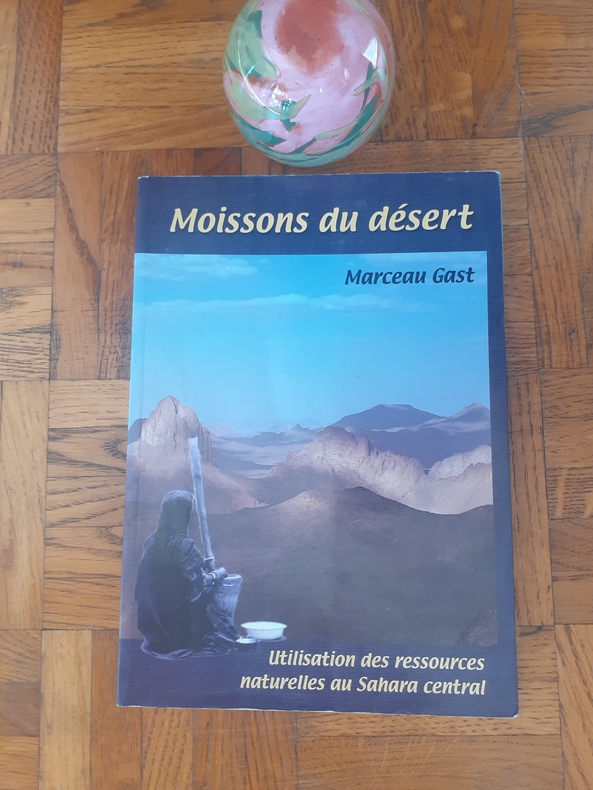
GAST Marceau
Moissons du désert - Utilisation des ressources naturelles au Sahara central
Ibis Press, 2000, in-8 br. (17,5 x 25), 160 p., photographies de l'auteur, dessins, couverture à rabats, bon état.
Riferimento per il libraio : QWA-19003
|
|
|
GAST Marceau, ADRIAN Jean
Memoires du centre de recherches anthropologiques, prehistoriques et ethnographiques. IV. Mils et sorgho en Ahaggar. Etude ethnologique et nutritionnelle
In 8, pp. 77 + (3) con foto in b/n n.t. Br. ed.
|
|
|
GASTALDI B.
Frammenti di Paleoetnologia italiana. Memoria del socio B. Gastaldi letta nella seduta del 2 aprile 1876.
In 4, pp. 497-556 con 15 tavv. f. t. una delle quali a colori, ed ill. n. t. Brossura. Intonso. Estratto dalle memorie della R. Accademia dei Lincei. Classe di Scienze fisiche, matematiche e naturali.
|
|
|
GATES Willian E.
Codex Perez. Maya-Tzental.
Point Loma, 1909. 24 x 13 cm. Comprend la reproduction en fac-similé du codex, 1 feuille pliée en accordéon (24 pp.) reproduction dessinée du codex; un fac-similé de la reproduction photographique réalisée à Paris en 1864, une feuille pliée en accordéon (22 pages) , et 20 feuilles de planches non numérotées avec des diagrammes des glyphes accompagnés de cartes de diagrammes vierges avec un tableau des clés plié avec symboles. Le codex original est constitué d'une bande mesurant 140 x 24 cm, pliée à 24 x 14 cm, comprenant 11 feuilles peintes recto-verso. À l'origine, le codex était censé comprendre 12 feuilles (24 pages), mais une feuille a été perdue.Le Codex Peresianus a été acquis par la Bibliothèque royale (aujourd'hui Bibliothèque nationale de France) en 1832. Il aurait été découvert par Léon Rosny dans une boîte de la Bibliothèque nationale vers 1859 et aurait été mentionné dans un article de José Pérez publié en 1859. dans un journal édité par Léon Rosny. Le fac-similé du codex a été inséré dans des pochettes attachées à des planches de bois peintes à la main, décorées d'argent, de feuilles d'or et de coquilles d'ormeau incrustées. Les planches de bois ne sont plus attachées ensemble. Sinon bel exemplaire. Il s'agit d'une édition privée non mise dans le commerce et imprimée à 57 exemplaires. Exemplaire n°54. Rarissime voir introuvable.
Riferimento per il libraio : 5314

|
|
|
GATES Willian E.
Codex Perez. Maya-Tzental.
Point Loma, 1909. 24 x 13 cm. Comprend la reproduction en fac-similé du codex, 1 feuille pliée en accordéon (24 pp.) reproduction dessinée du codex; un fac-similé de la reproduction photographique réalisée à Paris en 1864, une feuille pliée en accordéon (22 pages) , et 20 feuilles de planches non numérotées avec des diagrammes des glyphes accompagnés de cartes de diagrammes vierges avec un tableau des clés plié avec symboles. Le codex original est constitué d'une bande mesurant 140 x 24 cm, pliée à 24 x 14 cm, comprenant 11 feuilles peintes recto-verso. À l'origine, le codex était censé comprendre 12 feuilles (24 pages), mais une feuille a été perdue.Le Codex Peresianus a été acquis par la Bibliothèque royale (aujourd'hui Bibliothèque nationale de France) en 1832. Il aurait été découvert par Léon Rosny dans une boîte de la Bibliothèque nationale vers 1859 et aurait été mentionné dans un article de José Pérez publié en 1859. dans un journal édité par Léon Rosny. Le fac-similé du codex a été inséré dans des pochettes attachées à des planches de bois peintes à la main, décorées d'argent, de feuilles d'or et de coquilles d'ormeau incrustées. Les planches de bois ne sont plus attachées ensemble. Sinon bel exemplaire. Il s'agit d'une édition privée non mise dans le commerce et imprimée à 57 exemplaires. Exemplaire n°54. Rarissime voir introuvable.
Riferimento per il libraio : 5314
|
|
|
GATTAI Carlo -
Il Montenegro da un punto di vista geografico ed etnografico.
(Firenze, IGM, 1980) stralcio con copertina posticcia muta, pp. 193/208 con numerose illustrazioni nel testo. - !! ATTENZIONE !!: Con il termine estratto (o stralcio) intendiamo riferirci ad un fascicolo contenente un articolo, completo in se, sia che esso sia stato stampato a parte utilizzando la stessa composizione sia che provenga direttamente da una rivista. Le pagine sono indicate come "da/a", ad esempio: 229/231 significa che il testo è composto da tre pagine. Quando la rivista di provenienza non viene indicata é perché ci è sconosciuta. - !! ATTENTION !!: : NOT A BOOK : “extract” or “excerpt” means simply a few pages, original nonetheless, printed in a magazine. Pages are indicated as in "from” “to", for example: 229/231 means the text comprises three pages (229, 230 and 231). If the magazine that contained the pages is not mentioned, it is because it is unknown to us.

|
|
|
GATTAI Carlo -
Il Montenegro da un punto di vista geografico ed etnografico.
Firenze, 1980, 8vo stralcio con copertina posticcia muta, pp. 193/208 con una cartina e due illustrazioni. - !! ATTENZIONE !!: Con il termine estratto (o stralcio) intendiamo riferirci ad un fascicolo contenente un articolo, completo in se, sia che esso sia stato stampato a parte utilizzando la stessa composizione sia che provenga direttamente da una rivista. Le pagine sono indicate come "da/a", ad esempio: 229/231 significa che il testo è composto da tre pagine. Quando la rivista di provenienza non viene indicata é perché ci è sconosciuta. - !! ATTENTION !!: : NOT A BOOK : “extract” or “excerpt” means simply a few pages, original nonetheless, printed in a magazine. Pages are indicated as in "from” “to", for example: 229/231 means the text comprises three pages (229, 230 and 231). If the magazine that contained the pages is not mentioned, it is because it is unknown to us.

|
|
|
Gatto Trocchi Cecilia
Enciclopedia illustrata dei simboli
ill., br. Dal significato originario della parola "symbolon" (che indicava un oggetto diviso tra due persone diverse, destinate a riconoscersi vicendevolmente in base al possesso delle rispettive metà) fino alle moderne interpretazioni, l'universo dei simboli ha accompagnato la storia umana. Che si tratti delle raffigurazioni "primitive" tracciate migliaia di anni fa sulle pareti delle caverne o delle attuali insegne calcistiche, l'uomo ha quotidianamente convissuto con segni, oggetti e forme che rappresentano qualcos'altro, che alludono a realtà o ad oggetti non immediatamente percettibili o visibili. Questo volume intende suggerire ai lettori alcune chiavi di interpretazione essenziali dei più diffusi simboli culturali (quasi un migliaio). Descrivendoli in modo chiaro e divulgativo con riferimenti all'arte, alla letteratura, alla religione e all'antropologia, ne ricostruisce sinteticamente origine, sviluppo, influenze reciproche, valenze metaforiche e iconografiche, affidando l'evocatività delle immagini alle belle tavole grafiche che accompagnano le voci. Senza voler forzare l'"ambiguità" che necessariamente sottende la loro interpretazione (e che in parte spiega il loro fascino), esso fornisce per ciascun simbolo i significati più attendibili, sintetizzando secoli di sedimenti culturali e spirituali.

|
|
|
Gauchet Marcel
Il figlio del desiderio. Una rivoluzione antropologica
br. Se il XX è stato il secolo della scoperta del bambino reale, supportata dalla nascita contemporanea della pediatria, della pedagogia e della psicoanalisi, il XXI sembra aprirsi come il secolo della sacralizzazione del bambino immaginario. La nostra società esalta a tal punto la dimensione infantile da arrivare a mitizzarla e, alla fine, a mistificarla. Grazie principalmente al controllo della procreazione, il bambino è diventato un 'figlio del desiderio'. Prima era un dono della natura, un frutto della vita che si esprimeva attraverso noi, ma spesso malgrado noi. Ora è il risultato di una volontà espressa, di un progetto definito. E questo, accompagnato e rafforzato da altri cambiamenti inediti, come il discredito della maturità, che porta all'ossessione di 'restare giovani', o la crisi della visione del futuro, che si fa sempre più vago, ha effetti potenzialmente drammatici, con ricadute sull'educazione, sul modo di concepire la famiglia e, sui meccanismi di definizione della personalità. Su questo bambino desiderato finiscono per pesare come macigni le aspettative dei suoi genitori e della società. È questa la 'rivoluzione antropologica' dei nostri giorni su cui ci invita a riflettere il filosofo e sociologo francese Marcel Gauchet. Egli porta alla luce, smascherandone i meccanismi, le rappresentazioni del figlio e le riconfigurazioni delle età della vita che tendono ad affermarsi nella nostra società e ci chiede di prendere coscienza dei rischi di questo mutamento.

|
|
|
GAUDIO Attilio -
Tra i popoli artisti e guerrieri dell'Alto Camerun.
(Firenze, IGM, 1980) stralcio con copertina posticcia muta, pp. 129/166 con numerose illustrazioni nel testo. - !! ATTENZIONE !!: Con il termine estratto (o stralcio) intendiamo riferirci ad un fascicolo contenente un articolo, completo in se, sia che esso sia stato stampato a parte utilizzando la stessa composizione sia che provenga direttamente da una rivista. Le pagine sono indicate come "da/a", ad esempio: 229/231 significa che il testo è composto da tre pagine. Quando la rivista di provenienza non viene indicata é perché ci è sconosciuta. - !! ATTENTION !!: : NOT A BOOK : “extract” or “excerpt” means simply a few pages, original nonetheless, printed in a magazine. Pages are indicated as in "from” “to", for example: 229/231 means the text comprises three pages (229, 230 and 231). If the magazine that contained the pages is not mentioned, it is because it is unknown to us.

|
|
|
GAUME François
Le Pays de Cama. Un ancien Etat côtier du Gabon et ses origines
Karthala - C.R.A, 1981, in-8 br. (2ax16), 269 p., coll. "Histoire africaine", préface de Jean Ping, planches photos h.-t. et ill. in-t. (11 fig.), 3 cartes, bon état.
Riferimento per il libraio : QWA-12457

|
|
|
GAUSDAL, JOHANNES.
The Santal Khuts. Contribution to animistic research.
Oslo, London, 1960. Small 4to. Orig. full cloth with d/j. (8),218 pp., textillustrations. Clean and fine.
|
|
|
GAUSDAL, JOHANNES.
The Santal Khuts. Contribution to animistic research.
Oslo, London, 1960. Small 4to. Orig. full cloth with d/j. (8),218 pp., textillustrations. Clean and fine.
Riferimento per il libraio : 52982
|
|
|
GAUTHIER, J. - G.
LES FALI DE NGOUTCHOUMI.
Broche, couverture d' editeur illustre en couleur, 16x24cm, 272pp, illustre n/b. Montagnards du Nord - Cameroun.

|
|
|
GAUTHIER, J. - G.
LES FALI DE NGOUTCHOUMI.
, Oosterhout, Anthropological, 1969., Broche, couverture d' editeur illustre en couleur, 16x24cm, 272pp, illustre n/b.
Riferimento per il libraio : 10400
|
|
|
GAUTIER E.-F.
Moeurs et coutumes des musulmans. 12 gravures.
Broch?. 303 pages.
|
|
|
GAUTIER L. - VIMPERE J. - DOGUIN M. . .
La Chaize-le Vicomte. Guide historique.
Broch?. 64 pages.
|
|
|
GAVICHO DE LACERDA Francisco
Os Cafres. Seus Usos e Costumes.
Lisboa: Depositária: Livraria Rodrigues, 1944 in-8, 156-(1), 28 illustrations. Broché, couverture un peu défraîchie, pliure affectant les pages 133 à 146 et le 2ème plat de couverture, tache sur la pages 135, autrement bon état.
Riferimento per il libraio : 13982329
|
|
|
GAYAN LAVIÑA, Maria José. y LANGUIZ SALCEDO, Lourdes.
El Cuero en el Altoaragón. Prólogo de Fernando Alvira Banzo.
Huesca, 1987. 4to.; 77 pp. Ils. Cubiertas originales.

|
|
|
GEAUDROLET Adeline - VALIERE Michel
Amours paysannes. R?cit d'une vie de Galerne.
Broch?. 362 pages.
|
|
|
Gebu Urdiz
Magia Delle Rune
Edizioni Mediterranee 1977. 8°:pp.115n. bross.origin.
|
|
|
Gehlen Arnold; Rasini V. (cur.)
L'uomo delle origini e la tarda cultura. Tesi e risultati filosofici
br. "Urmensch und Spätkultur "è una delle opere più importanti di Arnold Gehlen e raccoglie le tesi e i risultati filosofici principali di ricerche svolte nell'arco di alcuni decenni. Scopo del volume è condurre un'analisi delle forme socioculturali dell'antichità, finalizzata alla elaborazione di "concetti critici" non soggettivi, in grado di contribuire a spiegare il ruolo delle regole comunitarie e delle organizzazioni istituzionali nel percorso storico dell'umanità. Il metodo ha pretese di rigore e obiettività: si avvale dell'osservazione empirica, della contestualizzazione storico-archeologica e della preziosa collaborazione di diverse scienze. Si tratta di un libro di "filosofia delle istituzioni" che, attraverso la ricostruzione delle forme arcaiche della convivenza sociale, da un lato giustifica l'applicabilità di categorie antropologiche basilari come quelle di "azione" ed "esonero", e dall'altra consente di far reagire il passato con il presente, evidenziando la distanza che separa il comportamento societario arcaico da quello contemporaneo.

|
|
|
Gehlen Arnold; Rasini V. (cur.)
L'uomo delle origini e la tarda cultura. Tesi e risultati filosofici
br. "Urmensch und Spätkultur "è una delle opere più importanti di Arnold Gehlen e raccoglie le tesi e i risultati filosofici principali di ricerche svolte nell'arco di alcuni decenni. Scopo del volume è condurre un'analisi delle forme socioculturali dell'antichità, finalizzata alla elaborazione di "concetti critici" non soggettivi, in grado di contribuire a spiegare il ruolo delle regole comunitarie e delle organizzazioni istituzionali nel percorso storico dell'umanità. Il metodo ha pretese di rigore e obiettività: si avvale dell'osservazione empirica, della contestualizzazione storico-archeologica e della preziosa collaborazione di diverse scienze. Si tratta di un libro di "filosofia delle istituzioni" che, attraverso la ricostruzione delle forme arcaiche della convivenza sociale, da un lato giustifica l'applicabilità di categorie antropologiche basilari come quelle di "azione" ed "esonero", e dall'altra consente di far reagire il passato con il presente, evidenziando la distanza che separa il comportamento societario arcaico da quello contemporaneo.

|
|
|
GEIJER, E.G. (+) A. A. AFZELIUS.
Svenska Folkvisor. Ny, Betydligt Tillökad Upplaga. 3 bd.
Stockholm, Haeggströms, 1880. Royal8vo. I 3 samtidige halvlæderbind med rygforgyldning. Rygge med en smule slitage, ellers pænt eksemplar.
|
|
|
GEIJER, E.G. (+) A. A. AFZELIUS.
Svenska Folkvisor. Ny, Betydligt Tillökad Upplaga. 3 bd.
Stockholm, Haeggströms, 1880. Royal8vo. I 3 samtidige halvlæderbind med rygforgyldning. Rygge med en smule slitage, ellers pænt eksemplar.
Riferimento per il libraio : 52952
|
|
|
General Ethnography
Reports of the Cambridge Anthropological Expedition to Torres Straits Vol. 1
paperback. Good. Access codes and supplements are not guaranteed with used items. May be an ex-library book. paperback
Riferimento per il libraio : 1333869444.G ISBN : 1333869444 9781333869441
|
|
|
GENES Bernadette
Natifs De Ce Lieu, Le Village Provençal Aux XVIIe et XVIIIe Siècles
Aix En Provence Edisud 1996 In-8 335 pp
Riferimento per il libraio : 27963
|
|
|
GENESTE, Eric - MICKELER, Eric
Kachina. Messagers des dieux Hopis et Zunis - Messengers of the Hopi and Zuni gods
- cartonné - Somogy Art Publishers - 2011 - In-4 (29 x 25,5 cm) cartonné, sous jaquette de l'éditeur - 191 pages - Très nombreuses photographies en couleurs, in et hors texte - ISBN : 9782757204634 - Ouvrage bilingue français et anglais
Riferimento per il libraio : 1040

|
|
|
GENNEP, Arnold Van:
Religions, moeurs et légendes. Essais d’éthnographie et de linguistique. (Qautrième série).
Paris, Mercure de France, 1912, in-8vo, 268 p., Ex Libris, reliure en d.-toile.
Riferimento per il libraio : 129932aaf
|
|
|
Gentilucci Marta
La montagna e il capitale. Il cammino kanak del nichel
br. A partire da una lunga ricerca di campo nel fertile e dinamico contesto della Provincia Nord in Nuova Caledonia, la monografia invita a cogliere le relazioni, le connessioni, i significati e le emozioni integrate nel nichel, risorsa non meramente economica ma intimamente legata alla storia politica, sociale ed economica di questo arcipelago oceaniano. L'esperienza socio-economica kanak, non si presenta come un'alternativa al capitalismo ma anzi, si pone in una relazione dialettica con esso, negoziando le proprie specificità e ripensandolo a partire dall'intima relazione essere umano-ambiente. Prefazione di Adriano Favole.

|
|
|
GEO
Kenya, Masa?s par le lait et par le sang. - Gr?ce, Athos r?publique des moines. - M?dit?rran?e, et dieu cr?a Saint-Tropez. - Articles illustr?s dans le n? 22.
Num?ro complet.
|
|
|
GEO
Sri Lanka, l'ile d'apr?s le paradis. - Br?sil, Indiens aborig?nes le dernier carr?. - Articles illustr?s dans le n? 30.
Num?ro complet.
|
|
|
GEOFFOY-SCHNEITER Bérénice (teekst door), WINKEL Bertie en Dos
Verre Schoonheid.
s. l.: N&L Publishing, 2006 in-4, 343 pages, richement illustré en couleurs. Cartonnage illustré d'éd., jaquette, très bon état. Envoi. Texte néerlandais.
Riferimento per il libraio : 13981039
|
|
|

 Ricevere i risultati per e-mail
 Scaricare i risultati in PDF
 RSS feed
 Link
Link


