|
|
|
Montalant, Denis-Stanislas, known as Talbot, French actor (1824-1904).
7 autograph letters signed. N. p. o. d.
8vo. Together 6 pp. Correspondence with Alfred de Beauchesne (1804-74), secretary at the Paris Conservatory. The collection includes two letters of introduction for young applicants for the declamation classes at the conservatory, a request for two tickets for a performance, and a letter wherein Talbot asks Beauchesne to pass on two letters, an unspecified response with the remark that "it is, however necessary to see" the actors Jules Boucher, Suzanne Reichenberg, and an unidentified third person. In the longest letter of the collection, Talbot asks Beauchesne to give him the names and addresses of those candidates who did not pass the entrance examination. Apparently, he offered preparatory acting classes. Two letters are dated to 1861 by a collector's hand. This would indicate that Talbot was very active as a teacher well before he left the Comédie-Française in 1873 to start an acting school at the théâtre de la Tour d'Auvergne. - Traces of folds and some browning overall. A letter starting "Je vous serai bien obligé de faire inscrire le petit note ci-contre" somewhat faded.
|
|
|
MONTALEMBERT (Charles Forbes, comte de)
Lettre autographe signée
La Roche en Berry, 29 mars 1859. In-8, 3 pp. 1/2 (très légère rousseur marginale).
Referenz des Buchhändlers : 23144

|
|
|
MONTALEMBERT (Charles FORBES, comte de). Publiciste et homme politique français (Londres, 1810 - Paris, 1870).
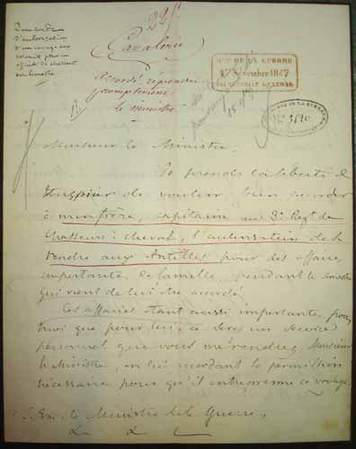
LETTRE AUTOGRAPHE signée adressée "à Son Exc. Le Ministre de la Guerre ", localisée et datée " La Roche en Brény. Côte d'Or. Ce 15 novembre 1847."
Deux pages sur un feuillet double (207 X 262) avec bordure à encadrement noir. Demande d'autorisation d'un VOYAGE AUX ANTILLES pour un officier de chasseurs en semestre, en l'occurrence son frère. " Monsieur le Ministre, Je prends la liberté de vous prier de vouloir bien accorder à mon frère, capitaine au 3ème Régt. de chasseurs à cheval, l'autorisation de se rendre aux Antilles pour des affaires importantes de famille pendant le semestre qui vient de lui être accordé. Ces affaires étant aussi importantes pour moi que pour lui, ce sera un service personnel que vous me rendrez, Monsieur le Ministre, en lui accordant la permission nécessaire pour qu'il entreprenne ce voyage. ". Montalembert ajoute " qu'il serait tout à désirer que cette autorisation fut promptement expédiée afin que mon frère puisse profiter du paquebot à vapeur anglais qui part le 2 du mois prochain. [...] ". Deux tampons du Ministère de la Guerre ; mention manuscrite à l'encre rouge " 22 S Cavalerie. Accordé, répondre promptement. Le ministre. ".
Referenz des Buchhändlers : 000081
|
|
|
MONTALEMBERT Charles Forbes René, comte de (1810-1870), journaliste, historien et homme politique français.
L.A.S., Paris 28 septembre 1868, à un comte.
1868 2 pages et demi in-12.
Referenz des Buchhändlers : 178

|
|
|
Montalembert, Charles de, Historiker und Politiker (1810-1870)
Eigenh. Brief mit U.
o.J. , Ohne Ort und Jahr (Paris ca. 1852), Gr.-8°. 9 Seiten auf 3 Doppelblättern.
Referenz des Buchhändlers : 59710
|
|
|
Montalembert, Charles Forbes de Tryon, Gf. von, Historiker und Politiker (1810-1870).
Eigenh. Brief mit U. O. O., 30. IV. 1855.
1 S. auf Doppelblatt. 8vo. An einen namentlich nicht genannten Priester, den er um eine Zusammenkunft in der Bibliothek des Instituts ersucht. Montalembert - von Heine in ‘Lutetia’ als “Jungjesuit[...], der als das tätigste Werkzeug der ultramontanen Rotte bekannt ist”, gescholten - verteidigte nachdrücklich die Freiheit der Kirche gegenüber dem Staat, “gehörte zur liberalen Richtung des französischen Katholizismus, der die kirchlichen Freiheiten unter einer liberalen Staatsverfassung am besten gesichert sah [...] [und] vertrat [...] 1852-57 fast allein die liberale Opposition” gegenüber Napoleon III. (Brockhaus, 17. Aufl., s.v.). Seine ‘Intérêts catholiques au XIX siècle’ (Paris 1852, dte. Ausgabe Worms 1854) “ist eine Hauptschrift des politischen Katholizismus. Wegen seiner Kritik an Napoleon III. brachte sie ihm Anklagen wegen Majestätsbeleidigung ein” (BBKL VI, 1993, s. v.). Montalembert war seit 1851 Mitglied der Académie Francaise. - Mit horizontaler Faltspur.
|
|
|
Montalembert, Charles Forbes René de Tryon comte de, Historiker und Politiker (1810-1870).
Eigenh. Brief mit U. O. O. u. D.
4 SS. auf Doppelblatt. 8vo. In französischer Sprache an den Historiker, Archivar und Hochschullehrer Karl Adolf Konstantin Höfler (1811-97) über dessen letzten Brief, den zu lesen er Mühe hatte, da er trotz seines Gefallens an allem Deutschen mit der Kurrentschrift noch nicht ganz vertraut sei, sowie über die bedauerliche Narrheit des Theologen und Predigers Charles Jean Marie Loyson, genannt Père Hyacinthe, der, wie er meint, eher an Dummheit als an Stolz leide, sowie ihre geteilte Bewunderung der auf der Fuldaer Bischofskonferenz gebrauchten Sprache, woraus er Hoffnung für den Ausgang eines zukünftigen Konzils schöpfe: "Je suis très réconnaissant de la lettre que vous m'avez fait l'honneur de m'écrire le 10 de ce mois [...] Je dois vous avouer toutefois que j'ai eu beaucoup de peine à vous lire et ne suis pas sûr d'y être parvenu complètement, parce que, malgré mon goût passionné pour tout ce qui est allemand, je n'ai jamais pu parvenir à me familiariser avec ce qu'on appelle l'écriture allemande [...] Vous déplorez avec moi l'incroyable folie du P. Hyacinthe qui me parait avoir péché beaucoup plus par bêtise que par orgueil [...] Comme vous, j'admire le langage des évêques allemands réunis à Fulda, et j'y puise de grands motifs d'espérance pour l'issue du futur Concile [...]". - Über Henri Louis Charles Marets Werk "Du concile général et de la paix réligieuse" (Paris 1869), das die päpstliche Unfehlbarkeit behandelt, und mit der Bekräftigung von Höflers These, dass die aktuelle Zeit an jene kurz vor der Reformation des 16. Jahrhunderts erinnere, da die Kirche bereits die Hälfte der gläubigen Welt verloren habe und es notwendig sei, dass die katholischen Schriftsteller den Mut aufbrächten die Wahrheit zu sagen. Erwähnt abschließend, dass er unter einer Krankheit leide, die seine Arbeit bereits seit vier Jahren unterbreche und keine Aussicht auf Heilung biete: "Permettez-moi de vous indiquer l'ouvrage que vient de publier M. Dr. Maret [...] sous le titre: du Concile Général et de la Paix réligieuse. Ce prétat y traite la question de l'infaillibilité personnelle du Pape [...] Comme vous le dites très-bien [...] l'époque actuelle rappelle celle qui a précédé la réforme du XVIe siècle. L'Eglise a perdu alors la moitié du monde chrétien! [...] Il faudrat seulement que les écrivains catholiques eussent dès à présent le courage de dire la vérité toute entière [...] je suis tombé en proie à une maladie implacalbe qui depuis près de quatre ans a interrompu tous mes travaux et ne me laisse entrevoir aucune chance de guérison [...]".
|
|
|
Montalembert, Charles Forbes René de Tryon comte de, Historiker und Politiker (1810-1870).
Eigenh. Brief mit U. O. O., 13. IV., o. J.
1 S. Kl.-4to. In französischer Sprache an einen namentlich nicht genannten Adressaten über die Sympathie, die er zwar nicht gegenüber Lord Palmerston, aber für großzügige und unabhängige Männer wie dem Adressaten empfinde, dessen Einladung zu einer Gelegenheit diesen näher kennen zu lernen sowie der Marquise von Castellane vorgestellt zu werden er gerne annimmt: "J'ai peu de goût pour Lord Palmerston, mais j'en ai infiniment pour les hommes généreux et indépendant[s] comme vous, Monsieur, j'accepte donc avec empressement l'occasion que vous voulez bien me fournir de me rapprocher de vous et d'être présenté à Madame la Marquise de Castellane [...]".
|
|
|
Montalembert, Charles Forbes René de, French historian and politician (1810-1870).
Autograph letter signed. N. p., 13. VI. 1857.
8vo. 1 p. on bifolium. To a "neighbour" and "grand-élécteur" at the senate, possibly Hippolyte Charamaule, thanking him for a message and asking whether he may archive it in his "electoral archives". Montalembert closes with a dinner invitation: "Je vous remercie de la très intéressante communication que vous voulez bien me faire, et je vous demande la permission de la garder dans mes archives électorales. Vous seriez mille fois aimable de venir tout à fait en famille diner avec nous Mercredi prochain à sept heures. Nous causions de tout ce qui nous intéresse l’un et l’autre […]". - On 29 May 1857 Montalembert had ended his senatorial mandate as deputy of the Département Doubs after suffering a severe defeat at the elections. - On mourning paper. Minor browning to the borders.
|
|
|
Montalembert, Charles Forbes René, Comte de, franz. Historiker und Politiker (1810-1870)
6 eigenh. Briefe m. Unterschrift.
La Roche-en-Brenil u.a., 1853-1861. Zus. 17 S., 8°.
Referenz des Buchhändlers : 41145

|
|
|
Montalivet, Marthe Camille Bachasson comte de, französischer Staatsmann (1801-1880).
Eigenh. Brief mit U. O. O. u. D., "Samedi".
1 S. auf Doppelblatt. 8vo. In französischer Sprache an eine namentlich nicht genannte Adressatin über seine langwierige Genesung, die unter einem schlechten Stern stehe und ihn verhindere, ihr seine Bereitschaft, ihren Protégé zu unterstützen, mündlich mitzuteilen; weiters mit der Bitte, ihm dessen Namen zu nennen, und der Ankündigung eines Gesprächs über die Titel der Gemälde desselben, die einen prominenten Platz in der Galerie erhalten und nicht allzu weit oben hängen sollen: "Ma mauvaise étoile retarde ma convalescence déjà si longue, et m'empêche d'aller vous dire de vive voix toutes mes bonnes dispositions en faveur de votre protégé. Je vous prie de m'envoyer so nom, et nous parlerons plus tard de celui de ses tableaux reçus aux quel[s] nous donnerons l'honneur de la première travée de la galerie, en bon jour et pas trop haut [...]".
|
|
|
Montalivet, Marthe Camille Bachasson comte de, Staatsmann (1801-1880).
Eigenh. Brief mit U. Paris, 29. V. 1899.
1 S. auf Doppelblatt. 8vo. Dankesschreiben an den Marquis de Nerli für das Zusenden offizieller Dokumente in englischer Sprache über den Wiener Kongress, die es ihm ermöglichen "in der bestmöglichen Quelle zu schöpfen, um alles zu erfahren, was mit dieser diplomatischen Phase von großer Bedeutung zusammenhängt, [...] die früher oder später die ganze Welt berühren wird". - Comte Montalivet war in den 1830er Jahren Innen- und Bildungsminister und später Intendant der Zivilliste. Unter ihm kam es zum Ausbau von Schloß Versailles als historischem Nationalmuseum, zur Vergrößerung des Louvre sowie zur Renovierung der Schlösser Fontainebleau, Pau und Saint-Cloud. - In altem Sammlungsumschlag.
|
|
|
MONTAND Yves [YVAN LIVI]
LETTRE TAPUSCRITE AVEC SIGNATURE MANUSCRITE
1951 une Lettre sur papier blanc (filigrané : the best paper made in Docelles), format : 21 x 27 cm, tapée à la machine, notée en haut à gauche : Yves Montand, 73, Boulevard Raspail, Paris 6e, datée du 20 mars 1951 avec signature autographe manuscrite d'Yves MONTAN D à l'encre bleue,
Referenz des Buchhändlers : 16268
|
|
|
MONTAND], CANNAVO (Richard), QUIQUERE (Henri).
Le Chant d'un homme. Yves Montand.
Paris Robert Laffont 1981 1 vol. broché in-8, broché, couverture illustrée, 305 pp., 16 planches hors texte. Édition originale de cette biographie. Exemplaire enrichi d'un double envoi autographe signé des auteurs à Alain Resnais qui fit tourner une seule fois Yves Montand, en 1966, dans La Guerre est finie, film politique sur un scénario de Jorge Semprun. Exemplaire provenant de la bibliothèque d'Alain Resnais.
Referenz des Buchhändlers : 112369
|
|
|
MONTAND], CANNAVO (Richard), QUIQUERE (Henri).
Le Chant d'un homme. Yves Montand.
Paris Robert Laffont 1981 1 vol. broché in-8, broché, couverture illustrée, 305 pp., 16 planches hors texte. Édition originale de cette biographie. Exemplaire enrichi d'un double envoi autographe signé des auteurs à Alain Resnais qui fit tourner une seule fois Yves Montand, en 1966, dans La Guerre est finie, film politique sur un scénario de Jorge Semprun. Exemplaire provenant de la bibliothèque d'Alain Resnais.
Referenz des Buchhändlers : 112369
|
|
|
Montandon Jacques, North Marcel (ill.):
Neuchâtel à table. Légende, histoire et vérité de la gourmandise en pays de Neuchâtel.
Neuchâtel, Ides et Calendes, 1973. In-4, cartonnage illustré, dans un état très proche du neuf.
Referenz des Buchhändlers : 12160

|
|
|
MONTANT Docteur Roger.
Film documentaire sur les seins et la mode à travers les siècles.
Largentière, Imprimerie E. Mazel, 1936 ; brochure in-8°, couverture rose pale imprimée en noir, dos muet; 60pp. et 2 planches hors texte; 6 illustrations de seins ( art et cas médicaux) ; Piqûres à la couverture, rares au texte.
Referenz des Buchhändlers : c3550
|
|
|
Montaran, Marie Constance Albertine de, French writer (1796-1870).
2 autograph letters signed. Paris and Versailles, 1 April 1861 and 2 August [year illegible].
8vo. Together 4 pp. on 2 bifolia. One with autograph address verso. To Madame du Chanoy about a rehearsal at her place, mentioning her having reminded two other participants to arrive on time: "Chère Dame, la répétition aura lieu chez vous Dimanche de onze heures à une heure. Je ne voudrais pas vous faire manquer le vrai plaisir du conservatoire. Je viens d'écrire à Anschutz [?] et à Septinelli [?] [...] de se trouver de bonne heure chez vous et j'irai [...]". On stationery with engraved initials. - Likely to the same, regretting to see her leave and being unable to listen to her play the piano or the organ in the morning any more, and about having left her flat to go to Versailles, where she hopes to find a way to get to Eaux-de-Pouguets to benefit her health: "Vous êtes mille fois aimable, chère Madame, de ne m'avoir pas oubliée, mais vous m'apprenez une fort triste nouvelle, celle de votre départ de la maison [...] Je n'en reviens pas, et je vous regrette de tout coeur. Je ne sais plus, moi même, ce que je veux faire, car mon appartement fort agréable à la vue est par le fait inhabitable en cas de maladie, je viens d'en faire la très pénible expérience. Il est de Versailles que je vous écris, je m'y suis réfugié, où que j'ai été un peu mieux portante, je suis venue y [...] pour m'aider à gagner les eaux de Pougues où je vais aller faire une session. Je sais que vous jugez dans nos environs, mais ce n'est plus la même chose, je ne vous entendrai plus le matin, sur le piano ou sur l'orgue, redire de divines mélodies qui gagnent encore sous vos doigts habiles [...]". - With former collector's numbers "117" and "118" in pencil. Traces of former mounting on reverse; a few small marginal flaws.
|
|
|
MONTEAUX (Jean).
Barnum.
Paris, Grasset, 1975. In-8, broché, couverture illustrée, 313 pp. Planches hors-texte. Envoi autographe de l'auteur.
|
|
|
MONTEAUX (Jean).
Barnum.
Paris, Grasset, 1975. In-8, broché, couverture illustrée, 313 pp.
Referenz des Buchhändlers : 10033
|
|
|
Montecuccoli, Raimund Gf., kaiserl. Feldherr (1609-1680).
Eigenh. Brief mit U. Nürnberg, 21. III. 1673.
3 SS. auf Doppelblatt. Folio (205:312 mm). In italienischer Sprache aus dem Jahr seiner größten militärischen Erfolge im Verteidigungskrieg gegen Frankreich, als seine Einschätzung der militärischen Lage endlich in Wien Gehör fand und er bei Nürnberg seine Kräfte sammelte, um den Truppen unter Generalmarschall Turenne die Stirn zu bieten. Genannt werden u. a. der kaiserliche Gesandte Kardinal Johann Friedrich Freiherr von Goëss (1612-96), der Kurfürst von Brandenburg Friedrich Wilhelm (1620-88) und der Reichshofratspräsident Graf Johann Adolf von Schwarzenberg (1615-83). - "Dieserhalben bildete er anfangs 1673 zu Nürnberg, wohin er sich zur Pflege seiner ernstlich angegriffenen Gesundheit zurückgezogen, den geistigen Mittelpunkt für das künftige Verhalten, worauf er, da ihm für die Führung der Operationen eine unbegrenzte Freiheit gelassen wurde, mit Kühnheit, Gewandtheit, Scharfsinn und mustergiltiger Ausnützung aller Umstände den Feldzug dieses Jahres zu dem erwünschten Ziele brachte" (ADB). - Mit Empfängervermerk (Köln) verso, einigen wenigen winzigen Randeinrissen, wenigen kleinen Papierdurchbrüchen quer zum Falz entlang der Faltlinien und Spuren alter Faltung.
|
|
|
Montecuccoli, Rudolf Gf., k. u. k. Admiral (1843-1922).
Eigenh. Brief mit U. Baden bei Wien, 14. VI. 1918.
1 S. 4to. An die Speditionsfirma Berl in Wien mit Dank für die gute Zusammenarbeit: "Ich danke Ihnen bestens für die Freundlichkeit in Bezug auf meine Kostenversorgung. Ich habe die mir gesandten Drucksorten ausgefüllt u. unterfertigt. Ich sende selbe direkte mit heutiger Post an das Ministerium [...]".
|
|
|
Montecuccoli, Rudolf Gf., k.u.k. Admiral (1843-1922).
Eigenh. Brief mit U. Baden bei Wien, 11. VI. 1919.
1¾ SS. auf Doppelblatt. Gr.-4to. Auf kariertem Papier. Aus der Zeit seines Ruhestands an einen Rat zu einem Ansuchen um Kohlen, das leider verspätet an Staatssekretär Johann Zerdik (1878-1961) abgegangen sei. Montecuccoli bereite das Winterbrennholz vor ("ich habe selbst für mein kleines Haus noch bedeutend zu wenig für den Winter") und sei voller Hoffnung, dass Oberschlesien und Kattowitz im Deutschen Reich verblieben, jedoch zutiefst untröstlich hinsichtlich des Niedergangs der Österreichischen Marine, deren Kriegsschiffe nach dem ersten Weltkrieg an die Siegermächte übergingen: "Ihr [der Marine] gänzlicher Niederbruch hat meine einst guten Nerven erschüttert u. wenn ich des Tags über mir keine Zeit gönne an die Katastrofe zu denken, so verfolgen mich die Erinnerungen in Träumen des Nachts [...]". - Mit wenigen winzigen Randeinrissen und wenigen größeren Randeinschnitten.
|
|
|
Montecuccoli-Laderchi, Albert Gf. von, Landmarschall (1802-1852).
Brief mit eigenh. U. Linz, 12. VIII. 1842.
1 S. 8vo. An die k.k. Kameral- und Kredits Kasse zu Salzburg betr. der "Bestreitung der im 4ten Militär Quartale 1842 sich ergebenden Ausgaben" der Residenz-Schloß-Verwaltung. - Albert Gf. von Montecuccoli-Laderchi war seit 1837 Hofrat bei der oberösterreichischen Landesregierung in Linz und sollte 1843 als Vizepräsident des Guberniums der Lombardei nach Mailand kommen und 1846 Landmarschall von Niederösterreich werden. "In dieser Stellung wirkte [er] bei den Reformbestrebungen der niederösterreichischen Landstände gegen Ende des Vormärz mit" (ÖBL VI, 360). Die Revolution des Jahres 1848 überstand er, der in diese Jahr zum Staatsminister ernannt und Vizekönig Erzherzog Rainer für die Zivilverwaltung von Lombardo-Venetien zur Seite gestellt worden war, nicht unbeschadet und mußte vor der Mairevolution aus Wien fliehen. "Nach dem Sieg Radetzkys war er unter diesem 1849 erster Zivilchef in Mailand und mit der Reorganisierung der Verwaltung beschäftigt. 1850 wurde er wieder als Sektionschef in das Innenministerium nach Wien berufen" (ebd., 360). Neben seinen politischen Ämtern war Montecuccoli-Laderchi erster symbolischer Vereinsprotektor des von Ignaz Castelli gegründeten Wiener Tierschutzvereins.
|
|
|
Montefiore, Charlotte Rosalind, Schwester (1855-1933) von Claude Montefiore, des Begründers des britischen Reformjudentums.
Eigenh. Brief mit U. Kaiserhof [Berlin], 17. XI. 1878.
2½ SS. auf Doppelblatt. 8vo. An einen Bekannten mit Dank für ein Autograph und ein Porträt desselben: "Wie kann ich Ihnen genug meinen Dank aussprechen für die große Ehre und Freundlichkeit die Sie mir erwiesen haben. Wir haben ein großes Autographien Buch da wird Ihre Handschrift gehen doch die Photographie behalt ich für mein privat Eigentum, und es wird ein recht heiliges Eigenthum sein! Wir haben uns so über Ihren werthen Besuch gefreut und hoffen so sehr Sie in London zu sehen [...]". - Es folgt die englische Fassung des Textes von derselben Hand. - Mit kleinen Randläsuren.
|
|
|
Montefiore, Moses Haim, British financier and banker, activist, philanthropist and Sheriff of London (1784-1885).
Autograph letter signed. East Cliff Lodge, Ramsgate, 25. XII. 1844.
8vo. 2 pp. To Mr. Browne in Ramsgate, thanking for a book by the same: "I regret that my absence from home has prevented me the pleasure of an earlier acknowledgement of the receipt of your note of the 19th inst. with the work which accompanied it. I beg to offer you my best thanks for your very interesting volume and to assure you that though I have not yet had sufficient opportunity to peruse the whole of it, the parts which I have read have offered me the greatest pleasure and admiration at the power of description and imagination of the affecting scenes displayed therein [...]". - Small strip of old mounting tape on verso. Accompanied by another autograph address to Mrs. Macartney of Tenby, clipped from an envelope and mounted on paper.
|
|
|
MONTEGUT (Emile)
DEUX LETTRES AUTOGRAPHES signées, [à Louis Dépret]; 29 avril 1882 et 27 mai
3 pp., in-8En avril 1882, Montégut remercie son correspondant d’un compte rendu littéraire paru dans L’Echo du Nord, s’excusant longuement de ne pas lui avoir répondu plus tôt pour le livre que Dépret lui envoya il y a deux longues années. Cinq ans plus tard, nouveau compte rendu, nouveaux remerciement, nouveaux oublis et nouvelles excuses : “je suis d’autant plus confus de votre sympathique obligeance qu’elle se porte sur un personnage qui, aussi reconnaissant qu’il vous soit en réalité, doit vous paraître bien ingrat (...). J’ai été touché, plus que je ne saurais vous le dire de votre bon et persistant souvenir. La définition de l’écrivain original qui a des vues et qui les exprime comme il vaut m’a ravi, car outre qu’elle m’a coûté ce titre si enviable d’original, elle rend à merveille une certaine liberté qui m’a toujours caractérisé et que je n’ai jamais abdiquée sous aucun prétexte.”Pour Louis Dépret, un auteur Malassis, voir la notice en tête du n°418 dans le Catalogue Poulet-Malassis de Gérard OBERLEMONTEGUT (Emile)“Montégut, dit J.J. Launay, allait faire partie (avec Asselineau, Babou, Lacour, Monselet, Weill...) de la colonie littéraire qui généralement à l’automne, débarquait à Alençon et payait plus ou moins son écot en comptes rendus de la saison théâtrale locale. La réputation hospitalière de Malassis n’était plus à faire et le bruit en était monté jusqu’en la capitale. Alfred Busquet écrivait dans le Gazette de Paris ‘ “... Voici maintenant venir, flamberge au vent, l’Ecole d’Alençon, représentée par cinq ou six hommes de lettres groupés autour d’un imprimeur... C’est généralement autour d’une table qu’ils délibèrent. La littérature inter pocula et syphos n’est pas toujours la plus mauvaise. Demandez à Boileau et à Chapelle...”.Emile Montégut vit le jour à Limoges en 1824. Alors qu’il étudiait le droit à Paris il débuta à la Revue des Deux Mondes par un article sur Emerson dont les idées étaient encore inconnues en France. Dès lors il devint un des rédacteurs les plus féconds de la célèbre revue qui publia ses articles de critique littéraire, ses portraits, ses excursions dans les littératures étrangères. De 1848 à 1851 il y exposait sa philosophie sociale, dictée par les évènements d’alors. Elle est plutôt réactionnaire. Il collabora également au Moniteur (1862-65), Au Journal de Paris (1865-70). Après la guerre il retourna à la Revue des Deux Mondes. Il mourut à Paris en 1895. Son oeuvre est importante. Outre les traductions de Macaulay, de Shakespeare, d’Emerson, nous lui devons des essais politiques, littéraires, des récits de voyage, des souvenirs.MM. Pichois et Ziegler attribuent à Montégut la rédaction de la note accompagnant la publication de 18 poèmes des Fleurs du Mal dans la Revue des Deux Mondes, laquelle note se terminait par : “ce qui vous paraît ici mériter l’intérêt, c’est l’expression vive et curieuse, même dans sa violence de quelques défaillances, de quelques douleurs morales que, sans les partager ni les discuter, on doit tenir à connaître comme un des signes de notre temps”. “Au fond, ut dixerant Pichois-Ziegler p. 334 les Fleurs du Mal étaient insérées à titre clinique”.Madame Barine tenait Montégut pour “un des trois ou quatre grands magasins d’idées des quarante dernières années”. Baldensperger et Lichtenberger admirèrent en lui le délicat connaisseur des littératures allemande et anglaise.Pour plus d’informations cf. Le Livre du Centenaire. Cent Ans de vie française à la Revue des Deux Mondes (1929). Article Montégut par A. Bellessort (pp. 231-38). - Laborde-Milaà. Un essayiste Emile Montégut-Escoffier, 1922.
Referenz des Buchhändlers : 46403221
|
|
|
MONTEGUT (Emile)
LETTRE AUTOGRAPHE SIGNEE [Philarète Chasles], 5 juillet 1849
4 pp. in-8De Limoges, le jeune Montégut sollicite l’appui de Philarète Chasles pour placer un article au Journal des Débats et lui annonce sa venue prochaine dans la capitale: “lorsque j’arriverai à Paris et que j’irai vous voir, ne soyez pas étonné et ne me recevez pas trop mal, je vous prie, si ma personne vous fait de l’effet d’une métamorphose d’Ovide réalisée. Au contraire, recevez moi bien à cause de l’agréable spectacle que je vous procurerai. Je désire que l’envie de me contempler dans cet état pythagorique, dans mon nouvel avatar, vous prédispose à me rendre le petit service que je réclame de vous et que le contenu de ce paquet vous expliquera (...)MONTEGUT (Emile)“Montégut, dit J.J. Launay, allait faire partie (avec Asselineau, Babou, Lacour, Monselet, Weill...) de la colonie littéraire qui généralement à l’automne, débarquait à Alençon et payait plus ou moins son écot en comptes rendus de la saison théâtrale locale. La réputation hospitalière de Malassis n’était plus à faire et le bruit en était monté jusqu’en la capitale. Alfred Busquet écrivait dans le Gazette de Paris ‘ “... Voici maintenant venir, flamberge au vent, l’Ecole d’Alençon, représentée par cinq ou six hommes de lettres groupés autour d’un imprimeur... C’est généralement autour d’une table qu’ils délibèrent. La littérature inter pocula et syphos n’est pas toujours la plus mauvaise. Demandez à Boileau et à Chapelle...”.Emile Montégut vit le jour à Limoges en 1824. Alors qu’il étudiait le droit à Paris il débuta à la Revue des Deux Mondes par un article sur Emerson dont les idées étaient encore inconnues en France. Dès lors il devint un des rédacteurs les plus féconds de la célèbre revue qui publia ses articles de critique littéraire, ses portraits, ses excursions dans les littératures étrangères. De 1848 à 1851 il y exposait sa philosophie sociale, dictée par les évènements d’alors. Elle est plutôt réactionnaire. Il collabora également au Moniteur (1862-65), Au Journal de Paris (1865-70). Après la guerre il retourna à la Revue des Deux Mondes. Il mourut à Paris en 1895. Son oeuvre est importante. Outre les traductions de Macaulay, de Shakespeare, d’Emerson, nous lui devons des essais politiques, littéraires, des récits de voyage, des souvenirs.MM. Pichois et Ziegler attribuent à Montégut la rédaction de la note accompagnant la publication de 18 poèmes des Fleurs du Mal dans la Revue des Deux Mondes, laquelle note se terminait par : “ce qui vous paraît ici mériter l’intérêt, c’est l’expression vive et curieuse, même dans sa violence de quelques défaillances, de quelques douleurs morales que, sans les partager ni les discuter, on doit tenir à connaître comme un des signes de notre temps”. “Au fond, ut dixerant Pichois-Ziegler p. 334 les Fleurs du Mal étaient insérées à titre clinique”.Madame Barine tenait Montégut pour “un des trois ou quatre grands magasins d’idées des quarante dernières années”. Baldensperger et Lichtenberger admirèrent en lui le délicat connaisseur des littératures allemande et anglaise.Pour plus d’informations cf. Le Livre du Centenaire. Cent Ans de vie française à la Revue des Deux Mondes (1929). Article Montégut par A. Bellessort (pp. 231-38). - Laborde-Milaà. Un essayiste Emile Montégut-Escoffier, 1922.
Referenz des Buchhändlers : 46403216
|
|
|
MONTEIL Amans Alexis
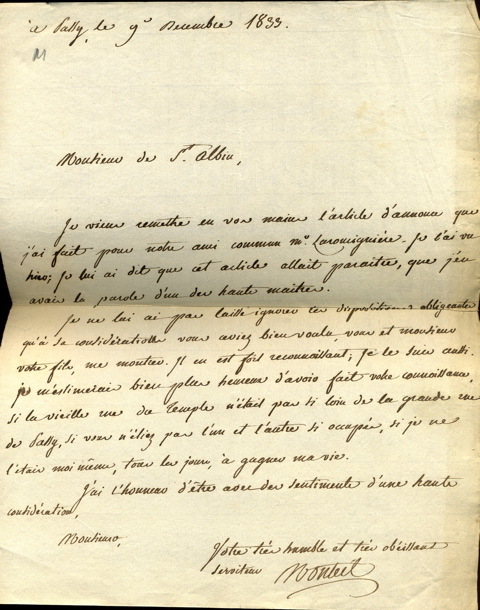
1769 - 1850. Historien, libraire et “archéographologue”. 6 L.A.S.
Adressées à Monsieur de Saint Albin, à propos d’articles que ce dernier devait faire passer dans Le Constitutionnel. Traces de cachet de cire rouge. ( 1833 - 1836)
Referenz des Buchhändlers : 4767
|
|
|
MONTEIL, Lieutenant-Colonel Parfait-Louis. ; RIOU
De Saint-Louis à Tripoli par le Lac Tchad. Voyage au travers du Soudan et du Sahara accompli pendant les années 1890-91-92 par le Lieutt-Colonel P.L. Monteiul de l'Infanterie de Marine [ Edition originale - Livre dédicacé par l'auteur ]
1 vol. in-4 reliure de l'époque demi-chagrin à coins rouge, dos à 4 nerfs orné, couverture conservée, filet doré en mors et coins, Ancienne Librairie Germer-Baillière & Cie, Félix Alcan, Paris, s.d. [ 1895 ], 2 ff., 462 pp. avec portrait en frontispice, planches hors texte et une carte dépliante en couleurs
Referenz des Buchhändlers : 67777

|
|
|
MONTEILHET Hubert - NARCEJAC
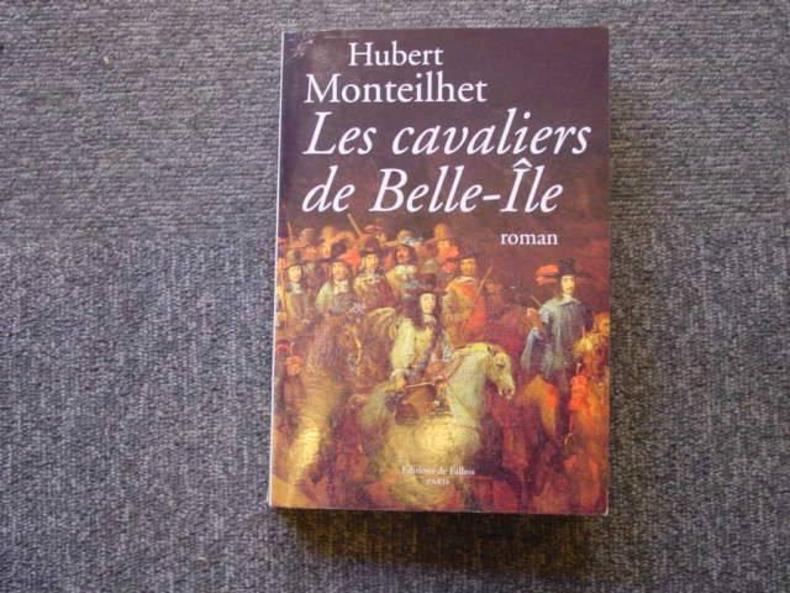
Les cavaliers de Belle-Île.
Editions De Fallois Paris 2001 In-8 ( 225 X 155 mm ) de 397 pages, broché sous couverture illustrée. Edition originale. Précieux exemplaire de la bibliothèque de Renée NARCEJAC ( ou Kitty SWANSON, femme et collaboratrice de Thomas NARCEJAC célèbre écrivain de romans policiers avec son compère BOILEAU ), envoi autographe signé de l'auteur à celle-ci. Parfait état.
Referenz des Buchhändlers : 743184
|
|
|
MONTEIRO, Porfirio Pardal (1897-1957).
Problemas Nuevos, Problemas Viejos. Conferência realizada pelo Arquitecto..., Presidente do Sindicato Nacional dos Arquitectos, na Casa de la Villa de Madrid, em 4 de Outubro de 1944.
Lisboa, Gráfica Santelmo, 1944 4to. mayor; 24 pp. Ejemplar con envío autógrafo del autor a João Couto, Director del Museu Nacional de Arte Antiga. Cubiertas originales. El último trabajo de Pardal Monteiro, poco antes de morir, fueron los proyectos de la actual Biblioteca Nacional lisboeta que se concluiría en 1969, bajo la dirección de su sobrino António Pardal Monteiro.

|
|
|
MONTEL Lucien
Jean Baptiste BERTRAND ( 1670 - 1752 ) et LA PESTE DE MARSEILLE DE 1720.
Librairie Lacoustene Marseille 1976 In-8 carré ( 215 X 150 mm ) de 152 pages, broché sous couverture illustrée. EDITION ORIGINALE. Très bel exemplaire enrichi d'un envoi autographe signé de l'auteur.Un Grand Médecin d'autrefois. Jean-Baptiste BERTRAND 1670-1752 et La Peste de Marseille en 1720.
Referenz des Buchhändlers : 451666

|
|
|
MONTELS, Jean ; RAT, Maurice
La petite Napoléon [ Edition originale - Livre dédicacé par l'auteur ]
Préface de Maurice Rat, 1 vol. in-12 br., Editions du Cerf-Volant, 1968, 99 pp. Bel envoi de l'auteur à son préfacier : "A Maurice Rat, "Quand même", avec toute ma reconnaissance". Bon exemplaire pour cette biographe de Napoléon-Elisa Baciocchi 1806-1869), nièce de Napoléon Ier. Français

|
|
|
MONTELS, Jean ; RAT, Maurice
La petite Napoléon [ Edition originale - Livre dédicacé par l'auteur ]
Préface de Maurice Rat, 1 vol. in-12 br., Editions du Cerf-Volant, 1968, 99 pp.
Referenz des Buchhändlers : 61308

|
|
|
Montenglaut, (Artemisia) Henriette (Marianne), Schriftstellerin, Schauspielerin (1767-1838).
Eigenh. Brief mit U. Hamburg, 29. VIII. 1824.
2 SS. auf Doppelblatt. Kl.-4to. Mit eh. Adr. An den "Schauspieldirector Schmidt in Hamburg": "Für den möglichen Fall daß ich nicht so glücklich wäre Euer Wohlgeb. in dero Behausung vorzufinden, beehre ich mich mit diesen wenigen Zeilen. Sie sind von drei Manuscripten begleitet, deren 2 nemlich das Lustspiel 'Die einfache Begebenheit' und das Melodram 'Der Magikus und das Ungeheuer' von mir nach dem französischen bearbeitet sind, weil ich als ich die Freude hatte die liebenswürdige Sängerin Sontag nach Paris zu begleiten, dort die Art von elektrischer Zündung mir ansah die beide so sehr von einander verschiedenen Stücke auf das Pariser Publikum hervor brachten. Das Erste ward vom Herrn von Lichtenstein als Regisseur unter dem Titel Der Vormund auf die Berliner Bühne gebracht (- ich hatte mich um 8 Tage verspätet) und hat sehr gefallen. Das 3te Manuscript [...]". - Die Schauspielerin, Sängerin und Schriftstellerin begleitete die Sängerin Henriette Sontag (1806-54) auf ihren Reisen durch Großbritannien und Frankreich, übersetzte u. a. die Werke Voltaires und schrieb Erzählungen, Romane und Dramen. Zu Montenglaut, Sontag, dem Regisseur und Schriftsteller Karl August Frh. von Lichtenstein (1767-1845) sowie zum Schauspieler, Theaterdirektor und Schriftsteller Friedrich Ludwig Schmidt (1772-1841) vgl. DBE. - Mit kl. Ausr. auf Bl. 2 (ohne Textberührung). - Aus dem Besitz und in bedruckter Originalmappe der berühmten Autographensammlung des österreichischen Industriellen Adalbert Freiherr von Lanna (1836-1909).
|
|
|
Montenglaut, Henriette von, Schriftstellerin und Schauspielerin (1767-1838).
Eigenh. Schriftstück mit U. Berlin, 6. XI. 1828.
1½ SS. auf Doppelblatt. Folio. Mit zwei Siegeln. Engagementvertrag für den Sänger Ludwig Cramolini (1805-84) an die Oper von Amsterdam, ausgestellt von Baronin von Montenglaut, geb. von Cronstein, Geschäftsführerin, Kraft Vollmacht im Namen der Direktion und von Cramolini gegengezeichnet und gesiegelt: "Contract | Unter heutigem Dato wurde zwischen der Direction von der Deutschen Oper in Amsterdam; Herrn Carl Bornschein und dem ersten Tenorsänger Herrn Ludwig Cramolini aus Wien, nachstehender Contract festgesetzt und abgeschlossen [...]". Hochinteressantes Dokument. - Montenglaut war als Schauspielerin, Sängerin und Schriftstellerin tätig. 1828/29 begleitete sie Henriette Sontag auf Reisen durch Großbritannien und Frankreich. - Mit einigen kleinen Papierdurchbrüchen und Einrissen in den Faltungen.

|
|
|
Montenouvo, Wilhelm Albrecht von, General der Kavallerie, Feldmarschall (1821-1895)
Eigenh. Brief mit U.
o.J. Oberdöbling, 18. XI. 1893, 8°. 2 Seiten. Doppelblatt. Mit eigenh. Umschlag.
Referenz des Buchhändlers : 50211
|
|
|
Montenuovo, Alfred Fürst von, Hofbeamter (1854-1927).
Eigenh. Dienstzeugnis mit U. Nemet-Boly, 23. IX. 1895.
2 SS. auf Doppelblatt. 4to. Dienstzeugnis für Dr. A. R. Franz: "Nachdem Sie zu meinem Bedauern gezwungen sind am heutigen Tage mein Haus zu verlassen um Ihrer militärischen Dienstpflicht zu genügen bestätige ich Ihnen mit Vergnügen, daß Sie durch 2½ Jahre in meiner Familie die Stelle eines Hauslehrers zu meiner größten Zufriedenheit bekleidet haben [...]". - Der Sohn von Wilhelm Albrecht Fürst von Montenuovo seinerseits der morganatische Sohn von Erzherzogin Marie-Louise von Österreich, der Witwe Napoleons I., und des Grafen Adam Albert von Neipperg. Montenuovo - sollte im Jahr darauf zum Obersthofmeister von Erzherzog Otto ernannt werden und stieg 1898 zum zweiten, 1909 dann zum ersten Obersthofmeister Kaiser Franz Josephs I. auf. "In dieser Stellung war Montenuovo für die Verwaltung des Hofstaats sowie für das Hoftheater, die Hofmuseen und die Hofbibliothek verantwortlich. In seine Amtszeit fielen die Ernennung Gustav Mahlers zum Hofoperndirektor und die Querelen um die Stellung von Katharina Schratt, der Freundin des Kaisers, am Burgtheater. Als führender Vertreter des autoritär-konservativen, bürokratischen 'Isolationsregimes' um den Kaiser stand Montenuovo zunehmend im Zentrum der öffentlichen Kritik und wurde 1916 kurz nach der Thronbesteigung Kaiser Karls entlassen" (DBE). - Auf Briefpapier mit schwarzem Trauerrand, Stempelmarke und Rundstempel der Theresianischen Akademie; papierbedingt leicht gebräunt und mit kleinen Randläsuren.

|
|
|
Montenuovo, Alfred Fürst von, Hofbeamter (1854-1927).
Ms. und lithographierte Urkunde mit eigenh. U. [Wien], 16. III. 1909.
2 SS. auf Doppelblatt (Faltbrief). Folio. Mit großem und kleinem kaiserlichem Papiersiegel. Bewilligung der Versetzung in den Ruhestand und Ernennung zum Regierungsrat an den k.u.k. Burghauptmann Anton Nicklas im Namen Kaiser Franz Josefs I.: "Seine k. und k. Apostolische Majestät haben mit Allerhöchster Entschliessung vom 9. März 1909 Ihre Bitte um Versetzung in den bleibenden Ruhestand allergnädigst zu genehmigen und Ihnen aus diesem Anlasse, in Anerkennung Ihrer vieljährigen vorzüglichen Dienste, den Titel und Charakter eines Regierungsrates mit Nachsicht der Taxe huldvollst zu verleihen geruht. - Des Weiteren geruhten seine k. und k. Apostolische Majestät Ihnen aus allerhöchster Gnade zu Ihrer normalmässigen Pension eine Zulage jährlicher eintausend (1000) Kronen zu bewilligen. [...] Ein Exemplar der 'Belehrung über den Bezug der Ruhegnüsse' folgt im Anschluss mit. - Uebrigens verbleiben seine kaiserliche und königlich Apostolische Majestät Ihnen mit kaiserlicher, königlicher und erzherzoglicher Huld und Gnade wohlgewogen [...]". -Montenuovo unterzeichnet das Schreiben in der Funktion des ersten Obersthofmeisters über dem Papiersiegel. Darunter die Unterschrift des ersten Hofrats Franz Freiherr von Wesuhl. - Der Sohn von Wilhelm Albrecht Fürst von Montenuovo, der der morganatischen Ehe von Erzherzogin Marie-Louise von Österreich, Witwe Napoleons I., mit Graf Adam Albert von Neipperg entstammte, diente ab 1896 als Obersthofmeister von Erzherzog Otto. 1898 stieg er unter Fürst Rudolf von Liechtenstein zum zweiten, 1909 zum ersten Obersthofmeister Kaiser Franz Josephs I. auf. "In dieser Stellung war Montenuovo für die Verwaltung des Hofstaats sowie für das Hoftheater, die Hofmuseen und die Hofbibliothek verantwortlich. In seine Amtszeit fielen die Ernennung Gustav Mahlers zum Hofoperndirektor und die Querelen um die Stellung von Katharina Schratt, der Freundin des Kaisers, am Burgtheater. Als führender Vertreter des autoritär-konservativen, bürokratischen 'Isolationsregimes' um den Kaiser stand Montenuovo zunehmend im Zentrum der öffentlichen Kritik [...]" (DBE). Im Februar 1917, wenige Monate nach der Thronbesteigung Kaiser Karls I., wurde er als Obersthofmeister entlassen. - Anton Nicklas war von 1902 bis 1909 Burghauptmann der Wiener Hofburg.
|
|
|
Montenuovo, Wilhelm Albrecht Fürst von, Militär (1821-1895).
Visitenkarte mit eigenh. Zusatz. O. O., 15. VII. 1879.
1 S. Visitkartenformat. "Erlaube mir Ihnen einige eben erschienene anspruchslose kleine Compositionen von mir zu schicken". - Fürst Montenuovo entstammte der morganatischen Ehe von Adam Albert Graf von Neipperg und Erzherzogin Marie-Louise von Österreich, der Gemahlin Napoléon Bonapartes. 1838 trat er in die österreichische Armee ein, kämpfte 1848 in Italien und Ungarn mit Auszeichnung und wurde 1854 Feldmarschallleutnant, 1860 Landeskommandant in Siebenbürgen, 1866 in Böhmen; 1867 wurde Montenuovo zum General der Kavallerie befördert. - Papierbedingt etwas gebräunt und leicht knittrig.

|
|
|
Montenuovo, Wilhelm Albrecht Fürst von, österr. General (1821-1895)
3 eigenh. Briefe m. Unterschrift.
Olmütz u. Hermannstadt, 1850-1864. Zus. 5 S., 8° bis 4°.
Referenz des Buchhändlers : 35934

|
|
|
MONTEPIN Xavier de (Apremont 1823 - Paris 1902) - Ecrivain français
Lettre Autographe Signée à Balattier Bragelonne - Paris le 30 juillet 1868 -
1 page in12 + adresse - bon état -
Referenz des Buchhändlers : GF16173
|
|
|
MONTERGON (Camille de).
Livre d'heures : poèmes.
Niort Imprimerie Nicolas 1952 1 vol. broché in-8, broché, 80 pp. Edition originale. Envoi autographe signé de l'auteur au duc de Lévis-Mirepoix. Couverture un peu défraîchie, sinon bon exemplaire.
Referenz des Buchhändlers : 117095
|
|
|
MONTERGON (Camille de).
Livre d'heures : poèmes.
Niort Imprimerie Nicolas 1952 1 vol. broché in-8, broché, 80 pp. Edition originale. Envoi autographe signé de l'auteur au duc de Lévis-Mirepoix. Couverture un peu défraîchie, sinon bon exemplaire.
Referenz des Buchhändlers : 117095
|
|
|
MONTERO DE DIEGO, Ignacio
FRAGANCIA ESPIRITUAL - Barcelona 1984 - Dedicado
Barcelona, Edit. Rondas, 1984. 30 p. 8º. Rústica editorial ilustrada. Muy buen ejemplar. Dedicatoria autógrafa del autor.
|
|
|
MONTES, Benito (pseudónimo de Martí Canyís)
LO FUTURO Y LO ETERNO DE LA MUJER - Barcelona 1985 - Dedicado
Barcelona, Edit. Aqua, 1985. 117p. 8º. Rústica editorial ilustrada. Bordes levemente gastados. Dedicatoria autógrafa del autor al P. Maur Boix. Buen ejemplar.
|
|
|
MONTES, Santiago.
A orillas del gran silencio. Poemas. Prólogo de Jorge de Oteiza.
Burgos, Tipografía Minerva, 1965. 4to.; 9 hs., 55 pp., 2 hs. y una lámina retrato. Ejemplar con envío autógrafo del autor. Cubiertas originales.

|
|
|
MONTESQUIEU
Considérations sur les Causes de la Grandeur des Romains, et de leur Décadence [ Exemplaire donné à Charlotte Grouchy épouse de Cabanis par M. de Condorcet ]
1 vol. in-12 reliure de l'époque plein veau marbré brun, dos lisse orné, Chez Durand, Paris, 1755, 2 ff., frontispice, 365 pp. et 1 f. n. ch.
Referenz des Buchhändlers : 63934

|
|
|
Montesquieu, Charles-Louis de Secondat, Baron de La Brède et de, French judge, man of letters, historian, and political philosopher (1689-1755).
Document with autograph annotation signed ("Montesquieu"). Château de La Brède, 13. VI. 1717.
4to. 3 lines on vellum. Beautiful autograph on the last page of a copy of a contract with the tax stamp of the generality of Bordeaux (fol. 1r). Montesquieu probably annotated and signed this document, originally drawn up on 5 May 1712 in Castiers, in his role as président à mortier of Bordeaux, confirming that he had "received the sous and taxes of the present contract" and "canceled the third": "J'ai reçu les sols et rentes du present contrat et ai quitté le tiers". - Montesquieu had inherited his title, a large fortune and his office in Bordeaux from his uncle Jean-Baptiste de Secondat in 1716. He would remain président à mortier for 10 years until 1726, when he was forced to sell his venal office in order to settle debts. - Minimally smudged.
|
|
|

 Per e-mail erhalten
 Als pdf-Dokument herunterladen
 RSS feed
 Permanenter link


