|
|
|
[Gritti family chronicle].
Catastico priv[ato]. Arm[um] Gri[ti] MDCLXXII. - Libro di tutti li acquisti, et instromenti scritture appartinenti alla Casa Gritti, cioè di Piero Gritti fu dell’Alvise, fu dell dom[eni]co et come meglio dall’ ingiunto albero si vede 1672 in Venezia li 18 [settem]bre in S. Marcuola. Venice, ca. 1672.
Folio (240 x 355 mm). Italian and occasionally Latin manuscript by several hands, brown ink on paper. 198 numbered ff. With numerous, mostly full-page sketches, genealogical trees, and architectural drawings, some with touches of colour. Contemporary limp vellum with fore-edge flap, ruled in blind; handwritten title to spine and upper cover. Stored in modern half cloth box. Hitherto unknown, unpublished chronicle of the Gritti, a Venetian Doge family, containing a genealogy, account book, and lists of building projects from ca. 1566 to 1680. - The most famous representative of the family, which can be traced back as far as the 13th century, was probably Andrea Gritti (1455-1538), the 77th Doge of Venice. Their rise to fame and immense fortune is mostly due to the achievements of the ancestor of the very branch of the family commemorated here, namely Ludovico Alvise Gritti (1480-1534), who was closely involved in the fate of the city republic as a merchant, banker, and politician. Alvise Gritti had important trade connections throughout Ottoman Hungary and the Orient; as a minister under Sultan Suleyman I (1494-96) he worked in Istanbul, reporting directly to the Grand Vizier of the Ottoman Empire, Makbul Ibrahim Pascha (1493-1536). From 1530 to 1534 he served as Imperial Regent of Hungary. - The manuscript begins with an "arbor consanguinitatis" of the Gritti, starting in 1539 with Alvise's son Domenico Gritti di S. Marcuola and reaching as far as the fifth generation; additional descendants were pencilled in by later members of the family who inherited the volume and later consigned it to the trade. This is followed by numerous copies of relevant documents, often with a small sketch of the seal. Entries pertain to births and baptisms ("fede di Battesimo della Signora Sulpicia") with copies of the certificates, marriage documents ("copia del Sposalizio della Signora Orsetta Menegalla con il N. H. S. Antonio Gritti ... 3 Agosto 1623"), claims of ownership, purchases ("segue la nota dei beni", "divisione delli beni, et heredità ... dalla Signora Contessa Galeazzo"; "scriture per l'acquisto della casa in corte della calla"), gifts and bequests of moveables and immoveable properties as well as estates: "In Dei Eterni Nomine Amen. Anno ab Incarnatione D.N.J.C. 1675 in die xiii. die vero veneris 5. Aprilis. Patrone il S. H. E. Ottavian Gritti ... che qui sotto volerà esser referto de Sc[udi] 50 d'entrata annua perpetua sopra una casa posta in questa Città". Also mentions commissions for villas in Veneta awarded to important architects: "In Christi Nomine Amen. Anno 1543 12 Maji Gritti, Procurator d. Marei Ven., ... constitutus de D. ... Sansovino Architectus con sua fabbrica in Villa di Cessalto..., Villa Albarella...". Leaf 115v contains another family tree ("Vitturi") from Daniel to Domenico and Isabetta Gritti and onwards to the tenth generation. - Binding a little duststained, rubbed and bumped; vellum covers splitting along the edges. A large flaw to the upper cover as a result of the fastener for the flap's tie having been torn out. A unique survival.
|
|
|
[Grumbach, Wilhelm von, Franconian adventurer and knight (1503-1567)].
Wilhelm von Grumbachs fernere Handlungen wider die drey vereinte fränkische Stände [...]. Apparently Southern Germany or Austria, end of the 16th century (ca. 1600).
Folio (ca. 224 x 360 mm). German manuscript on paper. (44), 448 (but: 449), (1) pp., per extensum. Early 19th century marbled boards. Extensive, near-contemporary collection of sources on the so-called "Grumbach Feud", a conflict between Wilhelm von Grumbach and the Prince Bishop of Würzburg which came to a head with the 1558 murder of bishop Melchior Zobel von Giebelstadt and then blended into a scheme of Duke John Frederick II of Saxony to transfer the Saxon electorship to his own family's line with Grumbach's help. The extremely brutal quarrel ended with Grumbach's being drawn and quartered in the Gotha marketplace, while the Duke was imprisoned in Austria for the rest of his life. - The present manuscript treats the years 1563 to 1567, from Grumbach's capture of Würzburg to the capture of Gotha by Duke Augustus of Saxony and the subsequent execution of Grumbach and imprisonment in Wiener Neustadt of Duke John Frederick. The well-organized manuscript contains an extensive index at the beginning and boasts a wealth of document and correspondence copies. An important source collection for the history of a 16th century conflict with wide repercussions throughout the Empire. - Spine, edges and corners professionally repaired. Front flyleaf has a handwritten acquisition note by the Austrian nobleman Maximilian Baron Pilati-Thassul (1819-72), recording that he paid 24 guilders and 36 kreuzers for the book.
|
|
|
[GUIDE DE VOYAGE MANUSCRIT /MANUSCRIPT TRAVEL LOG].
Quelques notes sur PARIS. St Denis, Vincennes, EXCURSIONS, St Cloud, Versailles, Orléans.
SLND [France, 1843 [colophon]. 1843 1 vol in-12° (178 x 115 mm) de: 300 pp calligraphiées à l'encre brune, noire, rouge et or dans des encadrements tracés à l'encre bleue, têtes de chapitres ornés de compositions polychromes, 1 blason à l'aquarelle (p.20) et 1 dessin à l'encre représentant un aigle (p. 86). (légéres brunissures aux derniers feuillets). Demi-maroquin rouge à coins à grains longs d'époque, dos lisse orné et titré à l'or "Monumens de Paris", plats recouverts de papier à la colle rouge immitant le maroquin bordé d'un filet doré. (usures et défauts d'usage).
书商的参考编号 : 6321
|
|
|
[Guignard, comte de Saint-Priest, François-Emmanuel, French diplomat (1735-1821)].
Mémoires sur l'ambassade de France en Turquie et sur le commerce des Français dans le Levant. No place, mid-19th century.
Small folio (243 x 301 mm). Ink scribal manuscript on paper. 373 (but: 376) pp. Sumptuous red half morocco with giltstamped spine title: "Mémoires (sur l’ambassade de France en Turquie et sur le commerce des Français dans le Levant) du Cte Emmanuel de St. Priest Ambassadeur et Pair de France 1735-1821. Revues et corrigées par le comte Alexis de Saint-Priest de l’Académie Française". Marbled endpapers. Highly interesting autobiographical account of Guignard de Saint-Priest, a French politician and diplomat during the Ancien Régime and French Revolution, and of his diplomatic career. Appointed ambassador to the Ottoman Empire in 1768, he remained in Constantinople until 1785, with a single brief interruption in 1776/78, and there married Wilhelmina von Ludolf. Roughly half of the manuscript covers these decisive years spent at the Ottoman court of Mustafa III and Abdul Hamid I, offering a history of French relations with the Porte, biographies of previous French ambassadors and envoys to Turkey, and a history of French commerce and navigation in the Levant. In spite of his long mission, Guignard clearly was not happy with his posting, complaining of the "faibles et ignorance da la Porte Ottomane", yet he shows a keen eye for detail as well as for the Ottoman Empire's manoeuverings within the broader context of European power politics. His famous portrait of Marie-Antoinette is found in chapter XIX of the manuscript (p. 271-291). His account continues as far as the year 1802, also including his time at the Russian court of Paul I and the last years of Catherine the Great, as well as his stay in Denmark and Norway. - Born in Grenoble, Guignard joined the army at the age of 15. After his mission to Constantinople he became secretary to the Royal household of Louis XVI and Minister of the Interior in Necker’s second cabinet in 1789. Later, he apparently served Russia as a spy at the Swedish court before accompanying the exiled court of Louis XVIII to Blankenburg and Mittau. - The manuscript's editor, Comte Alexis de Saint-Priest (1805-51), was the grandson of François-Emmanuel. His father was François-Emmanuel’s second son Armand-Emmanuel-Charles de Saint-Priest (1782-1863), also a diplomat who later became Governor of Poldolia and Odessa in Russia. After his return to Paris, Alexis moved in literary circles, became a member of the Académie Française, and is mentioned in the preface of the original edition of the "Mémoires" (Calmann-Lévy, 1929) by the baron de Barante. Alexis de Saint-Priest entrusted the manuscript to Prosper de Barante as the basis of a biography published in 1845. - At the beginning of the 19th century this manuscript was still in the hands of a descendant of Barante's, who was responsible for the publication. The present mid-19th century manuscript was probably copied from the original fair copy, as it contains pencil corrections in a different hand throughout and corresponds with important variants in the printed edition. - A single page repaired with tape, a small tear to another page not affecting the text, otherwise a fine and clean copy, splendidly bound. Cf. Hellwald, p. 282. Saint-Priest, Mémoires ... annotée par Nicolas Mietton (2006).
|
|
|
[Görner, Karl August, Schauspieler und Dramatiker (1806-1884)].
Ein glücklicher Familienvater, Lustspiel in 3 Acten v. Görner. Parthie: Clara. O. O., [um 1860].
Deutsche Handschrift auf Papier. 81 SS. auf 42 Bll. Blaue Interimsbroschur der Zeit. 4to. Die ausgezogene Rollenpartie der "Clara" (dazu in Bleistift vermerkt: "Gfn. Buttler") aus Görners 1854 in Berlin erschienenem Lustspiel "Ein glücklicher Familienvater" (als Bühnenmanuskript in der HAAB Weimar erhalten, Bm 1026) für eine nicht ermittelte Aufführung der Zeit. - Sauber und wohlerhalten.
|
|
|
[HAMBOURG]
Beau document manuscrit sur vélin, (33x29 cm), daté du 18 Avril 1709, avec en tête calligraphié, (texte en allemand).
"Les maire et magistrat de la ville de Hambourg confirment que Johann Säntel, bourgeois de Hambourg, déclare que le navire "Fortuna", dont Antoni Muncker est actuellement le capitaine, lui appartient comme propriétaire. Il prie de lui accorder les droits de l’article n° 3 de la confirmation accordée le 1 sept. 1647 par Sa Majesté le roi d’Espagne à toutes les villes de la Hanse". Belle pièce à l'écriture très lisible.
书商的参考编号 : 578687

|
|
|
[HERBIER]
Flora Alpina
S. l. (Suisse ?) : s. n., s. d (vers 1860). « ELLE FLEURIT À CÔTÉ DE LA NEIGE FONDANTE »
书商的参考编号 : 1281

|
|
|
[Hervé Claude] GUTH Paul - (Ossun 1910 - Ville d'Avray 1997) - Ecrivain français
Manuscrit autographe intitulé: "Le Désespoir des Singes par Hervé Claude (Flammarion)" -
1 page 1/5 in4 - râtures et corrections - trés bon état -
书商的参考编号 : GF27055
|
|
|
[Herbarium]. Strail, Charles Antoine, theologian and botanist (1808-1893).
[Herbier]. Ière Partie. Magnée (Wallonia, Belgium), 1848.
4to (19 × 24 cm). 51 double leaves of dried plant specimens, mounted under narrow paper strips, carefully labelled and identified. (Includes:) The same. Autograph letter signed. Magnée, 18 June 1848. 8vo. 2 pp. To Mr. de Kessel. Stored loosely in contemporary marbled portfolio with heart-shaped cover label. This charming, well-preserved herbal, of whose "deux petits volumes" (as mentioned in the accompanying letter) only this present first one has survived, was compiled for the wife of Mr. de Kessel by the priest and amateur naturalist Charles Strail, a founding member of the "Société Royale de Botanique de Belgique". The plants, collected on a trip to Beaufays, are accompanied by detailed taxonomic information, such as Strail's following note on the baneberry specimen: "Le calice de cette plante tombe aussitot que sa fleur s'ouvre". Abbé Strail would later go on to publish a "Florule de Chaudfontaine et de Magnée" (1863) as well as a standard work on mints, for which he corresponded with like-minded scholars and enthusiasts throughout Europe, including members of the "Botanical Exchange Club of the British Isles". - Backing leaves slightly browned with a few short tears. Portfolio somewhat rubbed; letter wrinkled with edge tears (formerly mounted on the inside front cover, where the upper left corner with "Bath" stationery mark remains). Altogether a very well-preserved herbal, and a fine example of the 19th century's physico-theological enthusiasm for naturalism.
|
|
|
[HISTOIRE, MANUSCRIT, ENLUMINURE] - THOMAS (Marcel ) -
Histoire de la destuction de Troye la Grant.
Paris, Draeger, 1973 ; in-folio, cartonnage de l'éditeur.
书商的参考编号 : 202101242
|
|
|
[HISTOIRE] - FAURE (Élie)
Lettre autographe signée à Dominique Braga.
S.l., s.e., 1929 ; in-folio, Avec l'enveloppe. Elie Faure est un historien de l'art né en 1873 et mort en 1937. Il est très reconnu dans le domaine de l'histoire de l'art. La plupart de ces ouvrages restent d'actualité encore aujourd'hui. Il était le neveu d'Elisée et de Elie Reclus et il eut Henri Bergson comme professeur de philosophie. Il fut également médecin et c'est en cette qualité qu'il rejoint le front en 1914. Bon état.
书商的参考编号 : A2359
|
|
|
[Hindu Deities].
Illustrated compendium on Hindu deities. Bundi, Rajasthan, North-Western India, [ca. 1850-1870 CE].
Oblong 8vo (214 x 148 mm). Hindu manuscript on wove paper. 175 leaves, 9 lines of Devanagari script in black and red ink within double red rules at left and right. With 5 polychrome painted and gilt illustrations encclosed within black rules and bright red borders. Every chapter opening with a red ink invocation to Sri Ganesha, the Remover of Obstacles; outer borders of each page painted in light yellow, with marginal notes and index. Cardboard binding lined with silver thread-embroidered burgundy silk with floral motifs. Charmingly illustrated Indian manuscript compendium on the Hindu Deities. Includes various texts such as the list of 108 names of Lord Ganesha, the 11th Chapter of the Devi Mahatmya, a prayer to Lord Jagannath, Jagannathastakam, as well as further prayers. The vividly coloured illustrations feature Hindu and Vedic deities. - Binding rubbed and bumped; covers a bit loose. Provenance: private American collection and latterly in a private German collection.
|
|
|
[Hirsch, Franz Xaver, österreichischer Pädagoge (ca. 1843-1924)].
Der Kepleriania Chronica. Begnadet unter Schirmherrlicher Imprimatur, berichtet, geschrieben und herfürgegeben von Magister Weishar, Chronist und Geheimschreyber etc. der Kepleriania. Wien, 1917.
Deutsche Handschrift in rot und schwarz mit zahlreichen, teils figürlichen Initialen und teilweise blattgroßen Illustrationen in Federzeichnung. 241 SS. Blind- und goldgeprägter grüner Ganzleinenband der Zeit mit Deckeltitel. Ornamentale Vorsätze, dreiseitiger Rotschnitt. 4to. Äußerst aufwendig gestaltete, ausführliche Chronik der 1896 gestifteten "Ritterschaft Kepleriania" - so die launige Selbstbezeichnung des Lehrkörpers der Wiener Knabenvolksschule in der Favoritener Keplergasse 11, wo der Verfasser unter den Pseudonymen "Wolfram von Hirschensprung" bzw., im Amte des "Chronisten und Geheimschreibers", "Magister Weishar" von spätestens 1880 bis zu seinem Ausscheiden im Jahr 1906 als Erzieher wirkte. - Die wehmütig rückblickende Chronik wurde vom 1917 bereits pensionierten Volksschullehrer Hirsch mit großer Liebe zum historistischen Detail ausgeführt. Die blattgroßen Illustrationen zeigen Ansichten mehrerer beliebter Ausflugsziele um Wien, die bei den damaligen "Heerfahrten" heimgesucht wurden, darunter die Burgen Greifenstein, Liechtenstein, Kreuzenstein und Kammerstein sowie Ortsansichten von Altenberg und Pötzleinsdorf. Die übrigen Zeichnungen nehmen Alltagsszenen und Begebenheiten von Mitgliedern der "Ritterschaft" aufs Korn. Beim Buchschmuck nahm sich der Autor manche Anregung bei den Illustratoren der Wiener Secession zum Vorbild: So ziert etwa der Ritter, den Carl Otto Czeschka für die 1000-Jahr-Feier Mödlings 1908 als Plakatmotiv wählte, die Einleitung des vorliegenden Manuskripts. Die verspielten Pseudonyme der "Ritter" werden mit den entsprechenden wirklichen Namen der Volksschulpädagogen aufgelöst. - Oberes Kapital minimal eingerissen, Ecken gering bestoßen, sonst ausgezeichnet erhalten.

|
|
|
[HISTOIRE] - FAURE (Élie)
Lettre autographe signée à Dominique Braga.
S.l., s.e., 1929; in-folio, Avec l'enveloppe. Elie Faure est un historien de l'art né en 1873 et mort en 1937. Il est très reconnu dans le domaine de l'histoire de l'art. La plupart de ces ouvrages restent d'actualité encore aujourd'hui. Il était le neveu d'Elisée et de Elie Reclus et il eut Henri Bergson comme professeur de philosophie. Il fut également médecin et c'est en cette qualité qu'il rejoint le front en 1914. Bon état.
|
|
|
[Holy Roman Empire].
"Li quatro ordeni delle Terre di Germania". Anonymous list of the imperial quaternions. N. p. o. d., [Italy, ca. 1570-1610].
½ fol. leaf (divided vertically). Italian manuscript on paper. 1 p. Elegantly disposed manuscript list of the so-called imperial quaternions (from Latin: quaternio, "group of four soldiers"), the conventional representation of the Imperial States of the Holy Roman Empire that was established in the 15th century. The list in groups of four largely follows the usual descending order of precedence, the exception being the Noblemen (here: "Baroni") who moved up the list: Dukes, Margraves, Landgraves, Burggraves, Noblemen, Counts, Knights, Cities, Villages, and Peasants. Added in a different hand are the "four Vicars" and the "four [Castles]", as well as seemingly random numbers to the quaternions listed above. These additions correspond to the representation of the Imperial States on the Quaternion Eagle, the informal coat of arms of the Holy Roman Empire that has been introduced around 1510 by Hans Burgkmair. Here, the coats of the quaternions, with the exception of the highest tiers (emperor, kings, prince-bishops, and prince electors), are grouped vertically on the twelve feathers of the Eagle, adding up to a total of 48 States: 1 Peasants, 2 Cities, 3 Noblemen, 4 Burggraves, 5 Margraves, 6 Dukes, 7 Vicars, 8 Landgaves, 9 Counts, 10 Knights, 11 Villages, and 12 Castles. - With minimal tears. Some browning.

|
|
|
[Horses].
Hyakuba no zu [The Hundred Horses]. [Japan, Bunsei era, 1818-30].
Manuscript (brush and wash), 2 vols., 194 × 105 mm, concertina-folded, with 61 drawings of horses (each double page, i.e. c. 210 × 195 mm), captioned. Original blue paper covered boards, labels to upper covers titled in manuscript. Traces of a numerous very neat paper repairs (usually correcting minute wormholes, as typical of Japanese books of this date, not affecting images), former (Japanese) owner's stamps to cover labels and first illustration in each volume. Preserved in a later blue silk covered folding case (wanting one bone closure). An elegant and delightful series of manuscript portraits of horses by an unidentified Japanese hand. 'The Hundred Horses' was a popular subject in Japanese art and is represented both in panel pictures, scrolls and books. The title is representative rather than prescriptive and does not denote one hundred in number, but simply 'many'. While the horse was an ancient component of Japanese art, the subject of the Hundred Horses was probably introduced into Japan under Chinese influence by the beginning of the Edo period (1603), with associations of courtly culture based on the noble and military connotations of the horse. The concern here is for careful typology of the different breeds, with characteristics of physique and markings neatly depicted and explained in the captions ('chestnut', 'spotted' etc), but the various postures and attitudes are arresting. An example of a manuscript book of similar period, slightly more elaborate, is preserved in Waseda University Library.

|
|
|
[Hospital day-book].
Anno 1768 Jahr. Mit Gott angefangen das Buch von Versorgung und Auferstehung deren Krancken in daß Hospitall deren Closterfrauen Elisabethinerin auf der Landtstraß zu Wienn. Wie auch vorgemerckt werden darinen die Verstorbene und gesunds Entlassene. (Vienna), 1768-1773.
Folio. (464) pp. Contemporary half calf over marbled boards with four ties. An interesting manuscript originating from Vienna's St. Elizabeth Hospital, founded in 1710 and operating to the present day. It lists the incoming women patients day by day, stating their names, age, civil status, birthplace, address, place of work and medical condition. At the end of each entry is either the date of their discharge or of their passing. As the hospital admitted female patients only, this MS provides an exceptional insight into the living conditions of women in 18th century Vienna, thus representing an important source for social history, containing information on common diseases and life expectancy, as well as on the patients' occupation and private life. Likely just one of a series, the MS documents the busy operations of a city hospital over a period of six years. - Old pencil shelfmark to lower pastedown. Insignificant traces of worming to spine, a bit of the lower spine end chipped. Light browning to paper, otherwise well preserved. From the library of the Viennese collector Werner Habel, with his signed and stamped ownership, dated 1985, to the pastedown.
|
|
|
[Hugo] - Charles YRIARTE - [Paris 1832 - 1898] - Journaliste et dessinateur français
Lettre manuscrite Signée à "Monsieur le Secrétaire général" - Paris le 2 janvier 1863 -
1464 1 page in8 - bon état malgré deux petites fentes - En tête du Monde Illustré -
书商的参考编号 : 34246
|
|
|
[Hugo, Victor].
Der letzte Tag eines zum Tode Verurteilten. O. O., 19. Jh.
Deutsches Manuskript auf Papier. 9 SS. auf 5 ff. 8vo. Interessante Abschrift der ersten vier Kapitel von Victor Hugos berühmten Roman und Plädoyer gegen die Todesstrafe "Le Dernier Jour d'un Condamné" (1829). Der hier gegebene Titel weicht vom üblichen deutschen Romantitel "Der letzte Tag eines Verurteilten", etwa der frühesten Übersetzungen von W. Wagner (Frankfurt/M, 1835) und Friedrich Seybold (Stuttgart und Leipzig, 1835), ab. Beim vorliegenden Manuskript könnte es sich daher um die Reinschrift einer eigenständigen (Teil-)Übersetzung eines anonymen Verfassers handeln. - Wohlerhalten.
|
|
|
[Hungarian brothels].
"Ein olympisches Spiel". [Vienna], 6-13 July 1885.
Folio. 33 ff. German ms. on paper. Green cloth (c. 1950) with giltstamped cover title. Narrative of an Austrian captain stationed in Arad (now Romania) about the operation of the local brothel and their life there. Much of the lewd account is dedicated to a so-called "Olympic Festival", a staged public defloration termed "baptism", after the passing of which obscene rite the deflowered girls became full members of the house: "Nun rief die Oberpriesterin: Das Opfer sei vollbracht! - In diesem Momente rauschte die Musik starker um das Ächzen des Mädchens unhörbar zu machen, das elektrische Licht warf seinen vollen Glanz mit möglichster Intensität auf den Opferaltar. Der Jüngling begann mit voller Kraft gegen die Pforte des Heiligthumes der Liebe vorzudringen. Man sah deutlich die konvulsivischen Zuckungen aller Muskel der Jungfrau und nach wenigen, aber markigen Stößen übertonte ein, von heftigem Schmerze ausgepreßtes - Ach! - der Jungfrau die melodischen Töne der Musik, denn der Sieg war errungen, die Pforte zum Tempel der Liebe und Wonne war geöffnet. Noch ein kräftiger Stoß und der Szepter der Liebe war bis an sein Ende im Heiligthume der Wollust weich gebettet [...]". - Inserted in the account of the "baptism" of fourteen-year-old Irma is a digression on Hungarian erotic tradition and superstition. - Tear in title page restored. Well-legible manuscript with numerous corrections and revisions by the author. Occasional slight finger and dust staining; traces of horizontal and vertical folds.

|
|
|
[Ibn Sina (Avicenna)]. [Al-Jaghmini, Mahmud ibn Muhammad ibn Umar, and others].
[Qanunceh] (= Small Canon). No place, [1862 CE =] 1279 H.
8vo (ca. 175 x 105 mm). Manuscript on paper, written in a cursive, Persian-Arabic script in 15 to 23 lines per page. With 1 leaf containing 8 hand coloured illustrations, with captions, of medical instruments (4 instruments on respectively the recto and verso of leaf 26). Contemporary brown calf, with blind-stamped decorations. Arabic manuscript containing the Arabic translation of Ibn Sina's Qanunsah ("Small canon"), originally written in Persian: a brief medical compendium compiled by the Khwarazmian polymath Mahmud ibn Muhammad ibn Umar al-Jaghmini based on Ibn Sina's famous Qanun. This abridged manual of medicine is arranged in ten parts ("maqalat", or "discourses"), each containing several chapters. The first maqalat serves as a general introduction, dealing with the basic concepts of 14th century medical science and illustrating the various physical qualities (al-arkan) and body constitutions (al-amzigat), then focusing on the four Galenic humours (al-ahlat) - blood, phlegm, yellow and black bile - before discussing the parts of the body, the senses or faculties (al-quwá), and the preservation of one's natural temper (al-umur at-tabi iya). Further "discourses" treat anatomy, the various "conditions of the human body" ("ahwal badan al-insan"), the pulse, the "tafsira", or urine bottle given to the physician by the patient for inspection, the various aspects of the "wise management of diseases", "head diseases" and "diseases affecting the other body parts", chronic diseases of the various organs, evident defects (or "infirmities") in the external appearance of the body, fevers, and ultimately the importance of food and drink as remedies. - The Qanunceh was widely used at Eastern Persian schools as an introductory medical instruction manual for at least three centuries. - Slight soiling of the extremities of the leaves, otherwise in good condition.
|
|
|
[ILLUMINATED MANUSCRIPTS -- ARMENIA]. [MIRZOYAN, Alvida (Ed)].
In Armenian Russian & English. Armenian miniature. Grigor Tatevatsi and Anonymous Painter of Syuniq.
Yerevan: Sovetakan Grogh Publishing House 1987. Folio. 165 3 pp. Numerous blk & wht text illusts. 53 colour plates. Brown cloth gilt lettrng mnr shlfwr slght bmpng to couple crnrs w/ d.j. cover art image of The Annunciation by Anomymous Painter of Syuniq mnr shlfwr slght rubbng VG/VG copy. First edition of this scarce and well-illustrated monograph on Armenian illuminated manuscripts. Sovetakan Grogh Publishing House, hardcover
书商的参考编号 : 44932
|
|
|
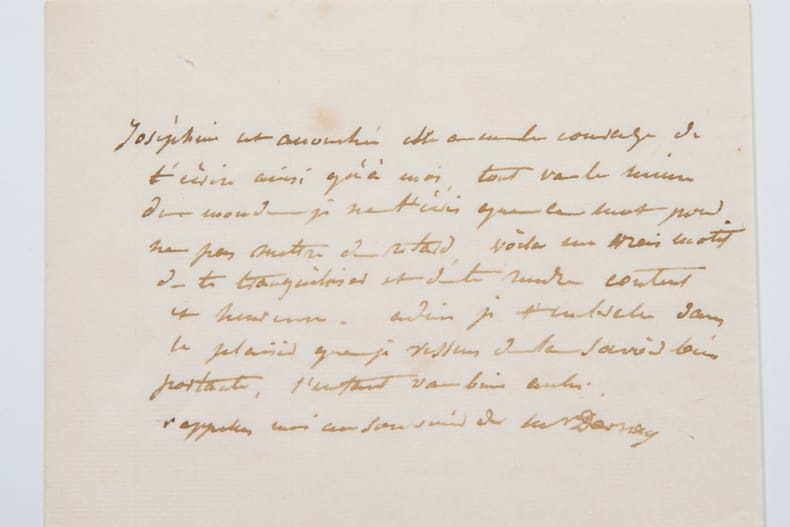
[IMPÉRATRICE JOSÉPHINE] - BEAUHARNAIS (Emilie de, comtesse de Lavalette)
Lettre autographe.
Demi-page in-8 (20x12,5 cm), s.l.n.d. (mars 1807).
书商的参考编号 : 26045
|
|
|
[Imhof, Johann Christoph von]. Alberti, Augustus, Theologe und Lieddichter (1672-1738).
Prognosticon Genethliacum quod Per-Illustri et Generosissimo Domino, Dn. Ioanni Christophoro de Imhof, a Stephansmullen, in Merlac et Solar [...], natalitio ejus die, Anno MDCCXXV, d. IX. Octobris septuagesies septies feliciter celebrato, paucis licet Distichis, laeto tamen augurio, devote gratulabundus offert, M. Augustus Alberti, ad D. Laurentii Diaconus Senior. Wohl Nürnberg, 1735.
Eigenh. Manuskript m. U. 1 w. Bl., Titelblatt, (2) SS., l. w. Bl. Mit zwei lavierten Tuschzeichnungen. Grauer Pappband der Zeit mit Imhofs goldgepr. Wappensupralibros auf rotem Grund. Farbige aufgelegte Rankenwerksbordüre (am Vorderdeckel nur in Bruchstücken erhalten). Folio (ca. 340:215 mm). Geburtstagsode zum 76. Geburtstag (dem 77. begonnenen Lebensjahr) des Nürnberger Patriziers Johann Christoph von Imhof (1659-1736), Kurator der Universität Altdorf, Vogt in Stephansmühlen, Merlach (Staffelstein) und Solar (Hilpoltstein), wirklicher kaiserlicher, kurmainzischer und großherzoglich-toskanischer Geheimer Rat und kaiserlicher Burgvogt von Nürnberg. Die schöne Dedikationshandschrift kalligraphierte und zeichnete der Nürnberger Theologe Augustus Alberti, der in seiner Vaterstadt und in Altdorf studiert hatte. Er setzte seine Studien in Utrecht, Leiden, Franeker und Harderwijk fort; nach seiner Rückkehr bekleidete er eine Pfarrstelle in Eschenbach, bevor er 1716 Diakon zu St. Lorenz wurde (vgl. Jöcher/Adelung I, 415). Das am Schluß des Genethliacons in Aussicht genommene Jahr 1739, Imhofs 80. Geburtstag ("Deo volente, celebranda"), sollten Gratulant und Geehrter beide nicht mehr erleben: Imhof verstarb schon in Folgejahr; Alberti nur zwei Jahre hernach. - Deckel gering fleckig; insgesamt sauber und wohlerhalten.

|
|
|
[Imhof, Johann Christoph von]. Herdegen, Johann, Theologe und Philosoph (1692-1750).
Epigramma Per-Illustri Domino Domino Johanni Christophoro ab ImHof in Merlach Solar et Stephansmuhlen [...] cum Annum Aetatis Septimum supra Septuagesimum felicibus inchoaret Auspiciis ea qua decet submissa animi observantia oblatum a Johanne Herdegeno Eccl. ad Spir. S. Antist. Wohl Nürnberg, 1735.
Eigenh. Manuskript m. U. 1 w. Bl., Titelblatt, (2) SS., l. w. Bl. Geheftet. Folio (210 x 340 mm). Geburtstagsode zum 76. Geburtstag (dem 77. begonnenen Lebensjahr) des Nürnberger Patriziers Johann Christoph von Imhof (1659-1736), Kurator der Universität Altdorf, Vogt in Stephansmühlen, Merlach (Staffelstein) und Solar (Hilpoltstein), wirklicher kaiserlicher, kurmainzischer und großherzoglich-toskanischer Geheimer Rat und kaiserlicher Burgvogt von Nürnberg. Die schöne Handschrift widmet ihm der Nürnberger Theologe Johann Herdegen, der in Altdorf studiert hatte. Seit 1727 bekleidete er die "Prediger- und Pastor-Stelle der Kirche zum heil. Geist im neuem Spital. Nachdem er schon 1720 in den Pegnesischen Blumen-Orden unter dem Nahmen Amaranthes war aufgenommen worden, so bekam er 1732 in demselben die Raths- und Secretär-Stelle, 1739 bekam er die Professur für Logik in dem Aegidiano, und 1742 wurde ihm auch die Professur der hebräischen Sprache ertheilt" (Jöcher/Adelung II, 1935). Imhofs am Schluß des Genethliacons kunstreich in Aussicht genommenen 100. Geburtstag ("Si volet inde Deus, numeros invertit eosdem [77/LL]: Annos te centum vivere posse bonum est!"), sollten Gratulant und Geehrter beide nicht mehr erleben: Imhof verstarb schon in Folgejahr. - Papierbedingt gering gebräunt; minimale Randläsuren; das Deckblatt an den Rändern etwas angestaubt. Insgesamt sehr schön erhalten.

|
|
|
[Indian Care of Horses].
Shalihotra Samhita [Encyclopedia of the physician Shalihotra]. Rajasthan, Northwest India, 19th century.
320 x 170 mm. 1 blank, 29 ff., 1 blank, 25 ff., 1 blank, 3 ff., 1 blank f. Hindi manuscript on paper, illustrated with 159 miniatures. Black script with important words and headings in red; borders illuminated in red, green, yellow, blue and purple, leaves ruled in red. Indian blue floral print cotton with flap and binding cord. Magnificently illustrated manuscript of the foundational text of veterinary science in India, with a particular focus on the care and management of horses. Beautifully and prolifically decorated, including a depiction of Lord Ganesh on a lotus with mice and two chauri-bearers, the Goddess Sarasvati on a bird with a chauri-bearer and a priest with an oil lamp, a king attended by a prince, the seven-trunked spotless white elephant Airavata with a keeper, the seven-headed horse Uchchaihshravas with a chariot and enthroned Shiva, a king seeking blessing from a priest, a priest seeking blessing from a king with a chauri-bearer, a king on a horse, and 144 miniatures of thoroughbred horses, each carefully individualized by colour, stature, length of snout, and other features. - Shalihotra was a 3rd century BCE expert on animal rearing and healthcare. The "Shalihotra Samhita" is his most famous work, and extensively documents the treatment of diseases using medicinal plants. This knowledge was so important that it was traditionally believed to have been revealed to Shalihotra by Lord Brahma himself. - The principal subject matter of the Shalihotra Samhita is the care and management of horses. It describes equine and elephant anatomy and physiology alongside a laundry-list of diseases and preventive measures. It also details equine body structures, elaborates on breeds, and contains notes on the auspicious signs to watch for when buying a horse. Though Shalihotra composed other treatises on the care of horses, the Samhita remains the earliest known work on veterinary science in India. Subsequent veterinary works were largely based on the Shalihotra Samhita, which future authors either revised or built upon. - The welfare of animals was always important on the ancient subcontinent, and it was considered the duty of veterinary doctors to prevent infections in animals which might spread to human society. Medicines were administered in the form of powders, decoctions, and ointments. Although herbal plants were the main ingredients in medicines, animal-derived substances and minerals were also used. Several treatments and medicines mentioned by Shalihotra are still used to date, such as for digestive disorders, sprains and sores in cattle, sheep, horses and other domesticated species. - In an appealing, finely preserved Indian cotton binding with fore-edge flap and wrap-around cord. Some professional restoration to interior hinges, but tightly sewn and in excellent condition overall. A beautifully presented manuscript and a key piece of the history of veterinary medicine.
|
|
|
[Indian erotic manuscript].
"Manuscript Kamasutra Gujarat School". India, Gujarat or Rajasthan, 19th century.
4to (160 x 222 mm). 90 pp. followed by 4 blank leaves (foliation: 1-39, 48, 50-51, 54-56, and 57-60 blank). Text written in Gujarati (or Hindi?) in black and red ink on paper, illustrated with 10 miniatures in polychrome pigments, including erotic subjects. Old title label "Manuscript Kamasutra Gujarat School" to verso of final leaf. Block-stitched. An Indian manuscript, possibly the Kama Sutra, including six illustrations showing couples engaged in love play and four more showing women only. - Some edge flaws; one leaf loose. Apparently not quite complete according to the contemporary leaf numbering, but still an uncommon, fairly early survival. - Provenance: Unidentified British collection, then in a French collection and subsequently bought by the industrialist and patron Pierre Bergé (1930-2017); acquired from the sale of his estate.
|
|
|
[Innsbruck Ursulines].
Officium Beatae Mariae Virg. extra Advent. ad vesp. Innsbruck, c. 1750.
Small folio (242 x 304 mm). Latin ms. in red and black ink on sturdy paper. (2), XIII, 117, (5) pp. (and several blanks). With 12 full-page washed and mounted ink drawings. Ruled throughout, with black and red borders surrounding text and illustrations. Contemp. brown calf, covers and spine elaborately giltstamped. Gilt brocade endpapers. All edges gilt. Illustrated late Baroque book of hours, written in clean and regular characters. Apart from its magnificent binding, the volume boasts a remarkable cycle of mariological illustrations. The washed ink drawings are evidently the work of a trained artist whose workmanship were fully abreast with contemporary style and technique (including the occasional Rocaille touches). Especially the elegant treatment of the figures and the fine execution of landscape and details of clothing and interiors suggest one of the more significant mid-18th century Tyrolean painters; the characteristic faces with their pronounced eye areas are so similar to those known from the work of Joseph Adam Ritter von Mölk (1718-94) and his circle that an attribution appears justified. - The dated ms. ownership at the beginning ("Soc. Stae. Ursulae oenipontani 1751") locates this manuscript with the Ursuline monastery at Innsbruck, for whom it was probably drawn up in the first place. The Baroque décor of the monastery and church, founded in 1691, was entirely destroyed in the 19th century. - The magnificent binding shows a double ornamental border and corner fleurons on the covers. Splendid brocade endpapers with large curved scrollwork, blossoms and leaves on red gold background. A unique, near-immaculate specimen.

|
|
|
[Ioannis Papadiamantopoulos dit Jean MOREAS] - COULON Marcel
Au Chevet de Moreas -
1926 Paris - Editions du Siècle - 1926 - 1 volume in8 broché de 125 pages - 1 des 50 exmplaires sur japon de l'édition originale -
书商的参考编号 : GF25336
|
|
|
[Iron industry in Lower Austria].
Register aller Stahl- und Eisen Commerzial-Arbeiter zu Waidhofen an der Yps. ("Index of all Commercial Steel and Iron Workers in Waidhofen upon Ybbs"). Waidhofen/Ybbs, 26 Aug. 1823.
Oblong 4to (256 x 204 mm). Manuscript (ink on paper), 64 pp. with numerous illustrations in watercolours and pen-and-ink, mainly in Grisaille manner (iron tools as well as punch-marks and monograms). Contemporary coloured pink and turquoise papered boards with gilt cover borders and paper applications. All edges gilt. This uncommonly attractive manuscript from Waidhofen an der Ybbs, the centre of the Lower Austrian iron industry since the Middle Ages, depicts the products of the various local ironsmiths as well as their punch-marks in watercolours of superior quality, thus providing an invaluable a key to identifying extant iron tools. The illustrated tools include scythes, sickles, knives, hammers, pliers, compasses, wrenches and vices, saws, razors, locks and keys, axes and hatchets, spades, sabres, horseshoes, bells, lamps, guns and crossbows, files, nails, hooks, pots and pans, watering cans, spoons and ladles and many other specialist tools. - Dedicated to the 30-year-old Archduke Ferdinand (1793-1875), later (1835-48) Emperor of Austria as Ferdinand I, with illustrated dedicatory leaf following the title page: "Ihro Kais. Kön. Hoheit dem Kronprinz Ferdinand von Oesterreich bey Hochderselben Durchreise in der Commerzial-Stadt Waidhofen an der Yps, den 26. August 1823, in Ehrfurcht gewidmet vom Stadtmagistrat zu Waidhofen an der Yps" ("To his Imperial and Royal Highness the Crown Prince Ferdinand of Austria on the Occasion of His Passing Through the Commercial Town of Waidhofen Upon Ybbs on the 26th of August, 1823, Dedicated Reverently by the Town Council"). - Binding slightly rubbed and insignificantly stained in places. A fine document of Lower Austrian craft and trade history, important as a historical source.

|
|
|
[Italian military manuscript].
Libro utillissimo et molto necessario di varii secreti importantissimi per l'essercitio di guerra, come appare nela seguente indice. Italy, before 1581.
Small folio (210 x 277 mm). Title, (14) ff. of contents, 187 numbered ff. (a total of 202 ff.) with 60 coloured illustrations (mainly full-page, 7 on large folding sheets). Italian manuscript on paper (watermark: a bird on 3 hillocks, Briquet 12,250 [ca. 1566-1583]). 16th century red morocco (possibly German) with gilt-stamped border fillets, cornerpieces and centrepiece (dated "1581" on upper cover), lacking ties. All edges gilt. Stored in modern slipcase. An unusual and attractive Italian Renaissance manuscript on the art of war, lavishly illustrated in colour and in a sumptuous contemporary binding. The text comprises eight chapters dealing with the duties of the captain, making gunpowder, siege-breaking devices, the deployment through artillery of artificial fire, smoke and poisonous fumes, the use of cannons, ballistics and artillerymen, and the logistics and practice of moving artillery and cavalry. - The title of the first chapter accords with that in an earlier manuscript in the Biblioteca Riccardiana in Florence (Ms 2525), "Il primo capo tratta universalmente dell'uffitio del capitano dell' Arteglieria, con che ordine, modo et diligenza egli habbia à procedure, ad ogni cosa appartinenti alla munitione dell' Artegl[eri]a et all' ufficio suo", dated ca. 1529-30 (cf. Mariano D'Ayala, Bibliografia militare-italiana [1854], p. 159). The third chapter contains illustrations of siege devices similar to those in Franz Helm's "Armamentarium Principale oder Kriegsmunition und Artillerey-Buch" (1625), which was originally written around 1530. - Some paper (and text) loss through oxidation of the ink, restored and silked. Rebacked, retaining part of the old spine, by Joseph William Zaehnsdorf in 1919, according to old pencil note on flyleaf. - Provenance: from the collection of Thomas Fremantle, 3rd Baron Cottesloe (1862-1956), commander of the Territorial Army and president of the Society for Army History Research. On a note pasted to the flyleaf, Cottesloe writes: "This was in the library of Wistow Hall, Leicester, during the lifetime of Sir Henry St John Halford Bt (1828-97) but nothing is known as to how or when it came there" (dated Wistow, September 1945).
|
|
|
[JACQUES BAINVILLE]
LETTRE AUTOGRAPHE MANUSCRITE SIGNÉE ADRESSÉE AU COMTE LANTIVY DE TRÉDION (CHATEAU DE LANTIVY) 1902
paris 1902 une lettre autographe manuscrite écrite à l'encre noire sur papier blanc à en-tête de : L'ACTION FRANCAISE, Revue Bi-mensuelle, 42, rue du Bac Paris 7ème, format : 21 x 13,3 cm, signée Jacques Bainville, et datée du 13/2/ 1902 (cachet de la poste sur l'enveloppe) + enveloppe adressée AU COMTE LANTIVY DE TREDION (CHATEAU DE LANTIVY) par Vannes (Morbihan),
书商的参考编号 : 26703
|
|
|
[Jaurès] - Louis SOULE - [1880 - ,] - Historien français - spécialiste de Jaurès
Lettre dactylographiée signée à "Monsieur" [Paul Desanges ou Luc Mériga] - Toulouse le 26 février 1927 -
1 page in4 - trés bon état - Louis Soulé - 1 place Matabiau - Toulouse -
书商的参考编号 : 33710
|
|
|
[Jaurès] - Louis SOULE - [1880 - ,] - Historien français - spécialiste de Jaurès
Lettre dactylographiée signée à "Monsieur" [Paul Desanges ou Luc Mériga] - Toulouse le 14 mars 1927 -
1 page in4 - trés bon état - Louis Soulé - 1 place Matabiau - Toulouse -
书商的参考编号 : 33711
|
|
|
[Jean JAURES] RABAUT Jean - [ Courbevoie 1912 - 1989] - Historien français
5 Lettres Autographes Signées et 7 Lettres dactylographiées signées (sauf une) à Mr Gaston Louis Marchal à Castres - années 1973 à 1989 - et divers documents sur Jean Rabaut -
bon état -
书商的参考编号 : GF27011
|
|
|
[Jeanne d’Arc - GAULTIER (Pierre fils de)]
Iohanna Darc Aurelianensis Puella Vulgo Nuncupata, Rouen 30 mai 1431: Avers: Portrait de Jeanne d’Arc à cheval avec son blason (une épée d'argent mise en pal et férue dans une couronne royale, accostée de deux fleurs de lys), d’après le graveur L.Gaultier en 1612; À revers: Jeanne d’Arc au bûché avec la ville de Rouen en arrière plan
, 28mm, argent (10gr.).
书商的参考编号 : 4174

|
|
|
[JEOFFROY]
LE BARREAU PARISIEN FÊTE LE RETOUR DE L’ENFANT PRODIGE. Caricature signé Jeoffroy reproduite dans une revue [?] mettant en scène les avocats Dusart, Paul Guillain, Olivier Jallu, Hild, Campinchi, Miropolsky, Louis Puech, Henri Robert, Chenu, Cartier, de Moro-Giafferri, André heese, Raoul Rousset, Devin, Paisant, André Faillères et Marreaux-Delavigne
[1909], 14 X 24 cm, 1 ff. [mal] découpé d’une page de magasine [?], bon état hormis une piqûre.
书商的参考编号 : 3784

|
|
|
[Jean de Bonnefon] - FOUQUIERES André de - (Paris - 1874 - 1959) - Ecrivain français -
Lettre Autographe Signée à "Cher Monsieur" - Paris le 22 - 12 - 1932 -
1 page in8 - bon état -
书商的参考编号 : GF25233
|
|
|
[Jean Royère] - Renée DUNAN - [Avignon 1892 - 1942 (?)] - Ecrivain, critique, poètesse, féministe et anarchiste française
Manuscrit autographe intitulé: "Jean Royère" -
2 pages in4 - bon état - râtures et corrections - il s'agit d'un article de présentation du poète Jean Royère (1871 - 1956) par Renée Dunan -
书商的参考编号 : 33889
|
|
|
[Jean Giraudoux] - Renée DUNAN - [Avignon 1892 - 1942 ?] - Ecrivain, critique, poètesse, féministe et anarchiste française
Manuscrit autographe signé "Jean Giraudoux" et intitulé "La Nuit de Théobald" -
6 pages in4 dont une page de présentation - râtures et corrections - bon état - petit manque en angle de la première page -
书商的参考编号 : 33891
|
|
|
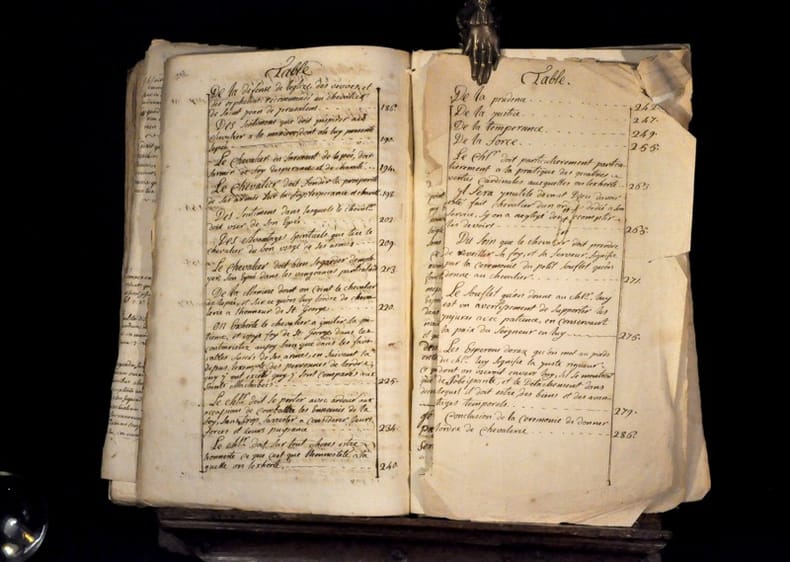
[Jean-Baptiste Le Marinier, Chevalier de CANY, Commandeur de l’Ordre de Malte (1645-1689)]
« Reflexions dun Chevalier de Malte Religieux de l’ordre militaire des hospitaliers de Saint [Jean] de Jerusalem. Sur la grandeur et les devoirs de son Etat ».
Circa 1688 Manuscrit composé de 15 cahiers assemblés par des lacets et reliés entre eux par une cordelette de lin (177 feuillets in-folio (230 x 355 mm). Calligraphie très lisible, écrite à l’encre noire et à l’encre rouge, réglé au crayon en marge. Quelques déchirures, manques dans les premiers feuillets. Manuscrit très fortement raturé et surchargé. Composition - Avant-propos, 6ff.- Suivi de : « Formulaire de la profession reguliere des Chevaliers de Malte » (à l’encre rouge) 1ff.- Suivi de : « Oraisons que le prestre dit avant la profession ». En latin aux encres rouges et noires, 2ff.- Suivi de : « La forme de Donner l’ordre de Chevalerie, Les oraisons finies, le prestre commence la messe et sarreste avant levangil alors celui quy se dispose a recevoir l’habit se leve de devant l’autel, et va se mettre a genoux devant le chevalier quy la luy doit donner : pour en recevoir premierement lordre de chevalerie lequel luy dit (…), 4ff.- Suivi de : « Troisieme section contenant les paroles qui se prononcent en faisant les vœux », 1page. - suivi de : « Quatrième section contenant la forme de donner la croix et l’habit régulier de l’ordre et les oraisons quiserecitent pour conclusion de la cérémonie » 2 ff.- Suivi de : « Oraison après profession » (à genoux devant l’autel), 3ff.- Suivi de : « Reflexions dun Chevalier de Malte Religieux de l’ordre militaire des hospitaliers de Saint [Jean] de jerusalem. Sur la grandeur et les devoirs de son Etat ». 326 pages numérotées, dont les 4 derniers blancs. Le dernier marqué au verso d’une autre écriture : « Recu Ch de Malthe dan langue de provence le premier 7 bre 1572. »Défauts : Saut de pagination entre la dernière page de table marquée 293 à la partie commençant par : « réflexion d’un chevalier » paginée 303.
书商的参考编号 : 3205
|
|
|
[JEOFFROY]
LE BARREAU PARISIEN FÊTE LE RETOUR DE L’ENFANT PRODIGE. Caricature signé Jeoffroy reproduite dans une revue [?] mettant en scène les avocats Dusart, Paul Guillain, Olivier Jallu, Hild, Campinchi, Miropolsky, Louis Puech, Henri Robert, Chenu, Cartier, de Moro-Giafferri, André heese, Raoul Rousset, Devin, Paisant, André Faillères et Marreaux-Delavigne
1 ff. [mal] découpé d’une page de magasine [?], bon état hormis une piqûre
|
|
|
[JEOFFROY]
M. RAYMOND POINCARÉ FÊTÉ PAR LES AVOCATS, LE 6 MARS. Caricature de [Jeoffroy] reproduite dans une revue mettant en scène R. Poincaré face à MM. Michel Peltier, Albert Clémenceau, Maurice Bernard, Millerand, Busson-Billaut et le Bâtonnier F. Labori
1 ff. [mal] découpé d’une page de magasine [?], bon état hormis une piqûre
|
|
|
[JOUVE]. MICHA René
Pierre Jean Jouve (poètes d'aujourd'hui N°48)
1956 un volume, broché (paperback in-12) in-douze carré (15,8 x 13,5 cm), dos rouge, première de couverture ornée d'une Photo en noir : portrait de Pierre Jean Jouve (front cover illumintated with a photographic illustration), envoi autographe manuscrit de l'auteur René Micha sur la page de faux-titre à l'encre bleue + signature autographe de Pierre Jean Jouve adressé à Jean Pierre Foucher (Poète Nantais fondateur de la revue Horizon) illustrations hors-texte en noir(full page engraving), 217 pages, 1956 Paris Editions Pierre Seghers Editeur,
书商的参考编号 : 17672
|
|
|
[JURA] [GRANDSERVAZ]
[PARCHEMIN MANUSCRIT XVIIe].
1658 (Jura, arrond. de Saint-Claude, commune de Montentel). Vente d’un champ, sis à Grandservaz, consentie par H. Groz, bourgeois de Saint-Ouyen à P. Patel. Saint-Ouyen, 7 déc. 1658. Doc. ms sur vélin replié, in-folio oblong, cachet sec aux armes d’Autriche.
书商的参考编号 : 574939

|
|
|
[JULES SUPERVIEILLE]
LETTRE AUTOGRAPHE MANUSCRITE D'UNE PAGE ADRESSEE A JEAN-PIERRE FOUCHER (Poète Nantais) 1947
1947 une lettre autographe manuscrite écrite à l'encre bleue, format : 19,5 x 15 cm, signée Jules Supervieille, et datée du 7 Avril 1947
书商的参考编号 : 17648
|
|
|
[Jules Romains] - Paul GUTH - [Ossun 1910 - Ville-d'Avray 1997] - Ecrivain français
Manuscrit Autographe Signé (en tête) intitulé : "Jules Romains - Une Femme singulière" -
3 pages 1/4 in4 - râtures et corrections - trés bon état -
书商的参考编号 : 33448
|
|
|
[Jus - Rechtsphilosophie].
"Einleitung des natürlichen Privatrechts", "Staatsrecht. Einleitung" und "Einleitung zur Statistik". [Wohl Wien], erste Hälfte des 19. Jhs.
Deutsches Manuskript auf Papier. 42 SS. auf 24 ff. Einfach fadengeheftet. 8vo. Interessante studentische Mitschrift bzw. Abschrift aus juristischen Lehrbüchern, zweifellos der Zeit vor 1848 zuzurechnen. Der längste Text ist die "Einleitung des natürlichen Privatrechts", die anhebt mit der Definition: "Naturrecht bedeutet die sistematische Darstellung dessen, was nach dem vernünftigen Selbstbewusstsein des Menschen für recht zu halten ist". Der stark kantianisch geprägte Text greift mehrere Begriffe wie "Noumenon" im Sinne des Königsberger Philosophen auf. - Der erste Paragraph der darauf folgenden staatsrechtlichen Abhandlung lautet: "Der Staat ist in der Idee: eine menschliche Gesellschaft, unter der Herrschaft einer zur Begründung u. Erhaltung der menschlichen Ordnung äusseren u. unabhängigen Macht." Die Definition steht in der Tradition von Hobbes' "Leviathan", der als die wirkmächtigste rechtsphilosophische Legitimation des Absolutismus gelten darf. - Mit nur 2 SS. am kürzesten ist die abschließende "Einleitung zur Statistik", eine Kompilation von Lehrsätzen aus Johann Nepomuk Zizius' Lehrbuch "Theoretische Vorbereitung und Einleitung zur Statistik" (Wien/Triest, 1810). Für Zizius ist Statistik "die wissenschaftliche Darstellung derjenigen Daten, woraus der Zustand der gegenwärtigen politischen Macht eines gegeben Staates gründlich erkannt wird". Wie diese Definition bereits anklingen lässt, betreibt Zizius Statistik gemäß der ursprünglichen Wortbedeutung als staatswissenschaftliche Disziplin. Der weitgehend vergessene Jurist J. N. Zizius (1772-1824) hatte seit 1810 den Lehrstuhl für Statistik an der Universität Wien inne. Er war Mitbegründer der Wiener Literatur-Zeitung und 1813/14 eines der Gründungsmitglieder der Gesellschaft der Musikfreunde in Wien. - Wohlerhalten.
|
|
|
[KIEN, Alexis Laurent.]
Dieu est l’amour le plus pur.
25 décembre 1819. In-12 (11 x 18,5 cm), reliure maroquinée rouge de l’époque, beau dos lisse orné, encadrement sur les plats, « Souvenir » sur le premier plat, roulette sur les coupes, toutes tranches dorées, conservée dans son étui d'origine. Belle écriture soignée, texte encadré et calligraphies, rares pages laissées blanches, de 296 + (4) pages. Majoritairement en français, avec quelques pages en allemand dans une seconde partie.
书商的参考编号 : R52

|
|
|
[Kochbuch].
Kochbuch der Elisabeth Steinbach. [Wohl Österreich], 1835.
Deutsche Handschrift auf Papier. 340 (recte: 328) num. SS. (SS. 150 bis 159 und 242/243 in der Paginierung übersprungen) mit 484 Rezepten und 32½ SS. Register. Halblederband der Zeit mit marmoriertem Deckelbezug und hs. Deckelschildchen. 4to. Äußerst reichhaltige handschriftliche Rezeptsammlung des frühen 19. Jahrhunderts mit fast 500 Rezepten für Vor-, Haupt- und Nachspeisen incl. Mehlspeisen, darunter Kipferl, Strudel, Torten. Eine bestimmte Systematik im Aufbau lässt sich aus dem Kochbuch nicht herauslesen, vielmehr dürfte die Verfasserin munter drauflosgekocht und -geschrieben haben, so dass etwa ein "aufgelegtes Kypfelkoch mit einem gebackenem Hechten" (S. 42) gefolgt wird von einer "Reis Melaun mit 3 Farben" und einer "aufgelaufenen Lungenspeis". Eingefangen wird annähernd die halbe europäische Küche, darunter "Pohlnische Nudeln" (76), "Die sächsische Mehlspeis" (77), "Ungarische Erdäpfel mit Forellen" (70), "Ungarisches Rindfleisch" (100) und "Ungarisches Lungenbratl" (112), "Türkischer Kren" (99), "Schwäbische Käsnudeln" (199), "Tyroler Strudel" (37), "Wälscher Reiß mit Bolard" (200), "Schweitzer Milch" (214), "Holländer Pastette" (89), "Holländer Bögen" (136 und 171) und "Holländer Schlegel", (142), "Französisches Koch von Reißmehl" (32), "Französische Mehlspeis mit Chateau" (25) und "Französische Suppe mit Kraut" (127), "Spanische Bastette" (86), "Spanische Weichsel" (106), "Spanisches Brot" (146), "Spanische Bretzerl" (190) und "Spanische Torte", "Englisches Reiskoch" (24), "Englische Kittennudeln" (81), "Englischer Braten" (111) und "Englische Milch" (118). - Innen stellenweise gering fleckig, der Einband mit lädierten Kapitalen und Kanten und beriebenen Deckeln; insgesamt jedoch für Gebrauchsliteratur sehr gut erhalten.
|
|
|

 ?????????
 ?????PDF???
 RSS feed
 ??
??


