|
|
|
[MANUSCRIT]. [BRUNO (Adrien-François de)].
Souvenirs et anecdotes de M/O de Bruno.
S.l., s.d. 7 parties in-folio, [29] ff. n. ch., en feuilles.
Référence libraire : 234516

|
|
|
[MANUSCRIT] BIDEAU (Étienne)
Sport. - Cyclisme.
S.l. [Fès], s.d. (1956-58); cahier petit in-8, [86] ff. n. ch., 7 ff. vierges, avec de nombreux dessins au crayon de bois ou à l'encre noire et colorisés, ainsi que quelques petites photographies en couleurs contrecollées, en feuilles spiralées, sous jaquette à rabats.
Référence libraire : 221139
|
|
|
[Manuscrit éthiopien] - Synaxaire
Synaxaire (Senkesar) pour les mois de tahsas, terr et yakatit -
Datation: d'après la paléographie XIXéme ou début XXéme siècle - Langue: Ge'ez - Codicologie: Parchemin; in-folio 43 x37 x8 cm - 3 col.; 31 lg.; 122 folios qui sont numérotés avec un tampon en chiffre arabe à l'encre noire, au centre de la marge infèrieure de chaque recto - Reliure : Ais de bois - Le second plat à été brisé dans sa longueur et recollé - Bon état de conservation - Les feuillets ont été abimés anciennement par un liquide dans le coin inférieur et externe -
Référence libraire : 34710
|
|
|
[MANUSCRIT] - VERON (Docteur) -
Syntaxe française.
S.l., s.e., vers 1840 ; in-8, 182 pp., plein chagrin dos noirci coiffes rompu, plas frottés. Texte en parfait etat ((medecin, journaliste, litterateur 1798-1867).
Référence libraire : 200913374
|
|
|
[MANUSCRIT].
Sénat. Rapport à l'Empereur sur les bases d'un projet de loi d'un grand intérêt national. Code rural
S.l. [Paris], 7 mai 1858 in-folio, [54] ff. n. ch., couverts d'une écriture moyenne, très soignée, sans rature ni biffure (environ 20 lignes par page), en feuilles, tranches dorées.
Référence libraire : 234366

|
|
|
[MANUSCRIT]
TABLEAU de la FRANCE.
(ca 1780) 67 x 163 cm, Encadré de bois noir et doré (encadrement moderne). Quelques restaurations au papier mais bon état général.
Référence libraire : 217794
|
|
|
[MANUSCRIT] MARTINIEN (Aristide)
Tableaux par corps et par batailles des officiers tués ou blessés pendant les guerres de l'Empire. (1805-1815)
S.l., s.d. (vers 1895) fort vol. in-4, [2] ff. n. ch., puis ensemble chiffré de façon anarchique (alternativement folioté et paginé sans ordre repérable) 1-1274, [5] ff. n. ch. de table, demi-chagrin noir, dos lisse orné de filets et pointillés dorés (reliure de l'époque). Mors abîmés.
Référence libraire : 224163
|
|
|
[MANUSCRIT. - BONNIEUX].
Table de ceux qui font des pentions aux hoirs de Thoussainct & Jean Baptiste Pons, du lieu de Bonieux. écris par leur surnom cy après par l'arphabet [sic]. - Table de ceux qui me font des pansions à Jean Baptiste Perret de Bonnieux par leurs noms, surnoms, fait dans le commencement de l'an 1733, marqué par dessous la barre. J'y ay encore aiousté ceux qui me sont renvoyés pour l'intérest de mon épouse par un arrest d'expédient passé entre Me Eynard advocat habitant à Sault, mon beau-frère et moy
S.l., s.d. (1733) in-8, [21] ff. n. ch., y compris une planche héraldique à l'encre (f. 1), 145 pp. (les pp. 43-145 étant demeurées vierges) [Pentions perpétuelles des hoirs à feu Toussainct & Jean Baptiste Pons, du lieu de Bonnieux], graphies d'au moins deux mains différentes, [52] ff. vierges, [3] ff. n. ch. [Livre qui doit être inséré ce qui concernera le sentier de la Piaille], [41] ff. vierges, basane fauve à lacets, dos à nerfs orné de filets à froid, encadrement de simple filet doré sur les plats, tranches mouchetées de rouge (reliure de l'époque). Coiffes frottées, petites épidermures sur les plats.
Référence libraire : 244984

|
|
|
[Manuscrit]
Table des documents et notices. Cabinet de Monsieur St Allais. A - G.
[Paris, début XIXe siècle]. Fort volume petit in-folio, reliure pastiche de l'époque (ou de réemploi du XVIIIe siècle), [310] feuillets écrits à l'encre au r° et au v°.
Référence libraire : 558437

|
|
|
[MANUSCRIT] / [TABAC]
Texte confidentiel sur la vente des tabacs. [A la suite] : Projet d'article à insérer dans l'ordce qui réglera l'organisation des adons centrales. [A la suite] : Projet d'arrêté ministériel pour régler l'organisation du service de la vente des tabacs.
S.l., 1844. 8 ff. anopistographes.[C30]
Référence libraire : 18242
|
|
|
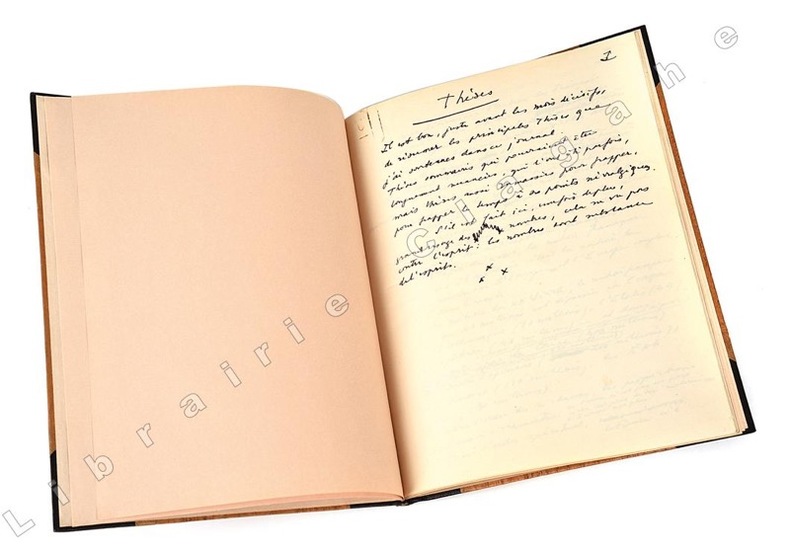
[Manuscrit] Drieu La Rochelle (Pierre ; 1893-1945) :
Thèses.
In-4°, bradel demi-maroquin à coins noir, plat simili bois ; 17 feuillets (16 + 6bis) manuscrits.
Référence libraire : 20905
|
|
|
[MANUSCRIT]
Théorie sur le service des grandes Gardes. postes, patrouilles & tiré du Service des Campagnes
(ca 1760) in-4, 12 ff.-6 ff. blancs, en feuilles sur papier vergé.
Référence libraire : 90071
|
|
|
[MANUSCRIT/MANUSCRIPT]
Traité de géométrie à Mr de Massingy. 1ère partie : théorie de la géométrie.
1769. 1769 1 vol petit in-4 manuscrit (145 x 213 mm) de : [1] f. (frontispice au lavis d'encre noire) ; 479 pp (dont table et errata) ; 15 planches manuscrites repliées. Ex-libris aux armes du baron de Charansonnex (Mr de Massingy) : « virtus sepulta resurget ». Dédicace faite par l'auteur à Mr de Massingy sur le frontispice dessiné. (Tache dencre en marge supérieure, quelques planches découpées sur lencadrement) Plein veau marbré d'époque, dos nerfs orné, titre de maroquin havane, roulette sur les coupes, tranches rouges. (Petit manque à la coiffe inférieure, petite fente de 5 mm sur le haut du mors supérieur)
Référence libraire : 5715
|
|
|
[MANUSCRIT]
Traité de mariage du 26 avril 1790.
S.l., s.d. (avril 1790) in-4, [3] pp. n. ch. écrites sur peau de vélin, graphie cursive et moyennement lisible, en feuille.
Référence libraire : 203498
|
|
|
[MANUSCRIT]
Traicté de l'agriculture.
S.l.n.d. (XVIIIe s.) in-folio, [4] ff. n. ch., couverts d'une écriture moyenne, calligraphiée, très lisible (environ 40 lignes par page), texte sur deux colonnes, en feuilles, légèrement ébarbées.
Référence libraire : 209656
|
|
|
[MANUSCRIT - SOISSONS]
Tribunal civil de Soissons. Etat des frais faits à la requête de Monsieur Rigaux fils. notaire à Soissons tuteur des mineurs Tournay
S.l. [Soissons], 6 prairial an XI (26 mai 1804) in-4, en feuille.
Référence libraire : 219636
|
|
|
[MANUSCRIT]. [LACOUDRAYE (Antoine-Jean-Bazire)].
Tribunal correctionnel de Gand, département de l'Escaut. Le Commissaire du Directoire près le tribunal correctionnel de Gand. au citoyen François juge de paix du 1er arrondissement de la commune de Lille
Gand, 20 Brumaire an VI (10 novembre 1797) in-folio, [3] pp. n. ch. couverte d'une écriture moyenne et très lisible, avec une belle vignette en-tête gravée, en feuille.
Référence libraire : 240225

|
|
|
[MANUSCRIT SCOLAIRE DU XVIII°]
Trois mémoires dont le plus important est consacré aux «Campagnes des Français en Catalogne de 1647 à 1654».
SLND, (XVIIIème). 38 pp. in 4° manuscrites.
Référence libraire : 9746
|
|
|
[MANUSCRIT].
Trésorerie nationale. Le Payeur général du département de l'Escaut. au citoyen Alexandre commissaire du gouvernement près les Armées du Nord et de Sambre et Meuse
Gand, 9 Frimaire an V (29 novembre 1796) in-8, [2] pp. n. ch., couvertes d'une écriture fine, régulière et très lisible, avec une belle vignette en-tête gravée représentant des paysages typiques du "plat pays", en feuille.
Référence libraire : 240221

|
|
|
[MARINE] COLLECTIF
UNE CARTE A EN-TÊTE ILLUSTRÉE DE L'AVISO ALDÉBARAN
1931 une Carte, avec en-tête imprimé en lettres dorées gauffrées "AVISO ALDÉBARAN" et le drapeau français bleu, blanc, rouge en partie gauche, carte datée du 1er Octobre 1931, format : 9,2 x 16,7 cm, carte manuscrite à l'encre bleue avec la signature du Commandant MAISTRE [MAISTRE Vincent Jean Joseph Marie, capitaine de frégate, du port de Toulon. Nommé à ce commandement par un décret du 10 octobre 1930 (J.O. 11 oct. 1930, p. 11.596). Commandement pris à Fort-de-France (Martinique). Station de lAtlantique (Annuaire de la Marine 1931, p. 674)] + la signature de l'officier en second : JAUBERT [Capitaine de Frégate François JAUBERT : entré à l'Ecole Navale en octobre 1922. Enseigne de vaisseau de 2ème classe du 1er octobre 1924, il est affecté le 21 octobre 1925 sur le croiseur cuirassé Jules Michelet de la Division Navale d'Extrème Orient, puis sur la connonière fluviale Doudart de Lagrée, le 14 septembre 1926. Il passe son brevet d'officier fusilier le 15 décembre 1928 puis est affecté successivement comme chef du corps de débarquement à bord du croiseur Mulhouse le 21 janvier 1929, officier en second de l'aviso Aldébaran le 13 janvier 1931 (Pacifique et Indochine)] + 2 SIGNATURES PORTUGUAISES INCONNUES,
Référence libraire : 25628
|
|
|
[MANUSCRIT]. JENNEPIN (Alfred).
Une erreur historique à rectifier. Fausse identification du général Charbonnier, commandant en chef de l'Armée des Ardennes en 1794, avec le général Deverchin dit Gayette ou Gaillette
S.l., s.d. (vers 1900) in-8, [12] ff. n. ch. sur papier réglé, écriture moyenne et très lisible, nombreuses ratures et biffures, en feuilles sous chemise de carton souple de remploi (une couverture imprimée du tome II de l'Histoire de la ville de Maubeuge, du même Jennepin).
Référence libraire : 228936
|
|
|
[MANUSCRITS] HAMEL (Christopher de).
Une Histoire des Manuscrits enluminés.
Londres, Phaidon, 1995. In-folio de 272 pages, nombreuses illustrations en couleurs. Provenance: Bibliothèque de l'abbé Bernard Merlette. Toile noire d'éditeur, sans la jaquette, bon état.
Référence libraire : 20762
|
|
|
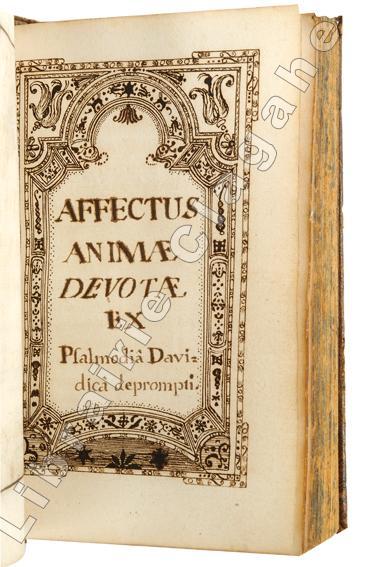
[Manuscrit du XVIIe siècle]
Varia Patrum et scripturae loca. Suivi de : Affectus aniname devotae ex Psalmodià Davidica deprompti.
S.l., s.d. ; in 12 veau brun épidermé ; 385 et 168 pp., pages de titres propres, 8 pp. de tables. Les titres sont dans des encadrements richement décorés et le texte est encadré d'un simple filet.
Référence libraire : 19928
|
|
|
[MANUSCRIT. - LILLE].
Ville de Lille.
S.l., s.d. (vers 1770) in-folio, [16] ff. n. ch., couverts d'une écriture moyenne et lisible (environ 40 lignes par page), nombreuses ratures et biffures, en feuilles.
Référence libraire : 235069
|
|
|
[MANUSCRIT]
Voyage aux Etats-Unis. Juin-juillet 1929
S.l., s.d. (décembre 1929) 3 vol. in-16, [132] ff. n. ch ; [89] ff. n. ch. ; [77] ff. n. ch., le tout couvert d'une écriture moyenne et généralement lisible (environ 15 lignes par page), quelques biffures et ratures, demi-toile, dos muets.
Référence libraire : 216190
|
|
|
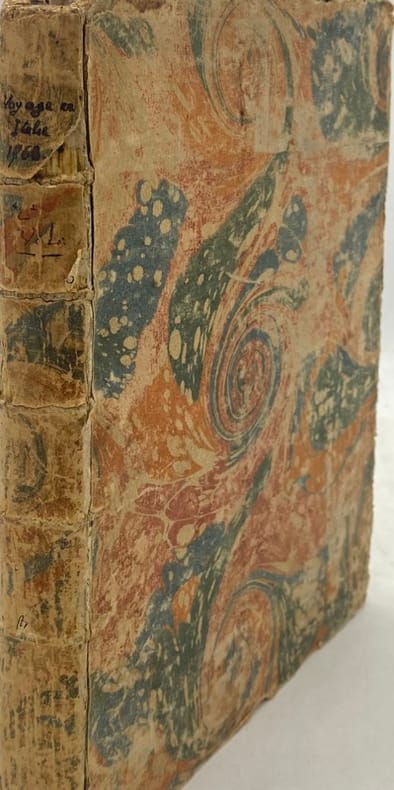
[MANUSCRIT].
Voyage en Italie. 1768. Deuxième volume
S.l., s.d. (1769) in-4, 175 ff., couverts d'une écriture cursive, moyennement lisible (environ 20 lignes par page), ratures et biffures, cartonnage d'attente de papier marbré, dos à nerfs (reliure de l'époque). Coiffes rognées, charnière supérieure entièrement fendue, coins et coupes abîmés.
Référence libraire : 226986
|
|
|
[MANUSCRIT. - TURGOT].
À Monsieur le subdélégué de Monseigneur l'intendant de la généralité de Limoges.
S.l. [Angoulême], s.d. (1763) in-folio, écrit sur deux pages, en feuille.
Référence libraire : 234932

|
|
|
[MANUSCRIT. - MONNAIE].
Édit du Roi. portant règlement pour la fabrication des espèces, et augmentation des droits des officiers des monnaies sur la conversion des matières d'or et d'argent. Donné à Fontainebleau au mois de novembre 1785. Registré en la Cour des Monnaies, le 1er février 1786
S.l., s.d. (1786) in-folio, [4] ff. n. ch., couverts d'une écriture moyenne, régulière, très lisible (environ 25 lignes par page), en feuilles. Haut des ff. plié et défraîchi.
Référence libraire : 244637
|
|
|
[MANUSCRIT]. FLORENT-GUIOT (Guiot de Saint-Florent, dit).
Égalité. - Liberté. - Fraternité. Le Représentant du peuple envoyé dans les départements du Nord, Pas-de-Calais et de la Somme.
Abbeville, 18 Pluviôse an III (6 février 1795) in-8, une page, en feuille, avec cachet de cire rouge.
Référence libraire : 240192

|
|
|
[MANUSCRIT] BUGUET (Benoît)
Épître au Roi sur les mécontents.
S.l., s.d. (1814) in-folio, [4] ff. n. ch., écriture moyenne, soignée, très lisible, dérelié.
Référence libraire : 222922
|
|
|
[MANUSCRIT]. LIEBERT (Jean-Jacques).
État-major général. Liberté. - Égalité. [Ordre de mission].
Réunion-sur-Oise [= Guise], 21 Germinal an II (10 avril 1794) in-4, écrit au recto, avec vignette en-tête, en feuille, avec cachet de cire rouge.
Référence libraire : 240925

|
|
|
[MANUSCRIT]. [BARTET (Albéric-Joseph-Alfred-Louis)].
Études sur la Cochinchine. - Notes sur la Cochinchine
S.l., s.d. 3 cahiers in-8, brochés.
Référence libraire : 239857
|
|
|
[MANUSCRIT]
Étude de la Géographie sur les cartes et sur la mappemonde : manuscrit du XVIIIe siècle
S.l. 14-21 octobre 1772. In-4, [44] ff., broché, couverture originale manuscrite (taches, petits manques ou déchirures dans les marges).
Référence libraire : 21871

|
|
|
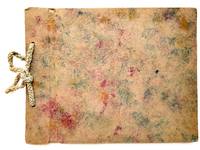
[made by hand, manuscripts, craft]
Willa Helwig's handmade portfolio of crafts and leadership notes for her training to be a Guardian in the Camp Fire Girls with her certificate
<p>Hardcover album 8.75 x 11 inches. In hand-printed paper-covered boards bound with a braided cord. 39 recto-only leaves 2 blank. Bound in patterned paper with instructions for making the pattern within the content. Edgwear including short closed tears at the top and bottom of the cover joints Very Good overall. With Certificate of Completion for the Guardians' Training Course awarded to the maker Willa Helwig in 1933.</p><p>Two pages of mounted knots including a few hitches using twigs. Print making with stencils and leaves a collection of "Common Indian Symbols" and mounted beadwork. One page titled "blocks for printing…" appears to have lost said specimens; however a sample of beading multiple samples of nature printing stencil work and other crafts are present throughout the book alongside original drawings.</p><p>A delightful exhibit of proficiency in craft as well as engaging content about leadership and group dynamics plucked from modern psychology. One page enumerates the differences between "Girl and Boy Gangs" complete with flowcharts. Another section titled "why we have crafts" cites empowering women to "earn her own money and get cooperation of banks."</p> [made by hand] hardcover
Référence libraire : Q2087
|
|
|
[Magistrat]
COSTUMES DE MAGISTRATS DE L’ANCIEN RÉGIME (président de Parlement / Conseiller au Parlement), projet de costumes de théatre
épreuves rehaussées à la gouache sur papier Canson épais, (bord très légèrement jauni), bon état
|
|
|
[MANUSCRIPTS - MATHEMATICS] ARTHEMOND [DE] REGNY].
FRENCH MATHEMATICAL MANUSCRIPTS: Cours de Mathematiques. THREE VOLUME SET
Paris ca 1795. Hardcover. Near Fine. An exceptional French Mathematics Manuscript in 3 volumes. Contemporary French mottled calf gilt floral panels separate black morocco labeling covers with border line tooling marbling on text block edging. Collation: Géometrie &2- 193 pp. 60 blank leaves; Algèbra & 2 -166 pp. 46 blank leaves; Planches & 2pp. 182 figures on 76 plates 48 blank leaves. All plates are on stiff blue laid paper. This course was taken by noted French economist Arthémond de Régny 1777-1841 probably during his university training in the latter part of the 18 century. Each volume has been prepared well with very legible and precise script and geometric figures. The organization of the Geometry volume starts with Euclid with numerical reference to geometric drawings in the Plate volume. A number of Problems Solutions and Corollaries are next. The remainder of this volume deals with 50 theorems for plane and sold geometry. Each theorem is stated first followed by demonstration then corollaries with further demonstration construction remark and ends with one or more problems along with solutions and reference where appropriate to figures in Plate volume. The volume on Algebra starts with basic addition subtraction multiplication and division. Next is a discussion of algebraic fractions their reduction with same denominator multiplication division and equations. Numerous examples of equations and computations occupy the remainder of the manuscript. Included are problems for solving equations with one two or three unknowns occasionally presenting a solution with a second method. The end of the manuscript has problems for 2 unknowns of znd degree division of irrationals and extracting the square root of a binomial. <br/><br/>Provenance: Arthémond de Régny bookplate on front pastedown of each volume. Régny was a noted French economist who was invited around 1830 by Greek leader Capodistrias to assist Greece with their economic problems. Although Capodistrias was assassinated before he arrived Régny stayed in Greece during the period of Regency 1833-1835. He went on to found and assist in organizing the State Audit Council according to French ideals and became its first chairman. He also assisted in the Foundation of the National Bank of Greece in 1841. Arthémond de Régny got married in 1798 to the Genoese woman Catherine Castellini who was the daughter of Balthasar and granddaughter of Domenico Castellini who conquered the Algerians in 1763. Balthasar Castellini was consul to Naples and subsequently in Cartagena Spain Marseille and Genoa. He was in charge of important missions by the royal court of Naples and also held an outstanding position in the trade. The family Régny was originally from the province of Dombes. At the beginning of the eighteenth century Francois Régny established his family in Genoa where he was in charge of the "Direction of the Diplomats for the King. hardcover
Référence libraire : WB18618
|
|
|
[Manuscripts]
Scriptorium. Revue Internationale Des Etudes Relatives Aux Manuscrits. International Review of Manuscript Studies Tome XIX
Amsterdam: Standaard-Boekhandel S.A. 1965. Softcover. very good. 198pp. Quarto. Original decorative wrappers. Covers slightly rubbed with slight wear to extremites. very good 1965 Standaard-Boekhandel S.A. paperback
Référence libraire : 119568
|
|
|
[Manuscript - Calligraphy - French].
[Illustrated French calligraphic manuscript]. [Probably France, ca. 1640-1645 / after 1643?].
Oblong 8vo (ca. 215 x 175 mm). (11), (8 blank) ff. Calligraphic exercises in French, written in a French civilité with some first lines in a French cursive or gothic hand. With 9 larger decorated initials, containing extensive ink-drawn illustrations in contemporary hand colour, showing an armoured knight on horseback, birds, dragons and other fabulous beasts, a pierced heart, etc. Some letters with extensive flourishes in the margins, many of them showing ink-drawn human faces. Contemporary limp vellum, loosely stored in a modern marbled paperboard folder within a matching marbled slipcase. French calligraphic manuscript, containing 11 unnumbered leaves of calligraphic exercises. Most of them are small verses (often six lines), but the collection also contains a letter to a friend and complete alphabets. The manuscript is visually very appealing, and calligraphic manuscripts with decoration like the present one are rare: it comprises vividly decorated initials and numerous flourishes in the margins, which also contain small drawings of faces. - The manuscript was very likely manufactured in the 1640s, a period in which France took over the lead from the Dutch in the publication of writing books. Calligraphy flourished in the 17th century, as it continued to evolve. Flourishing became more important, including calligraphic drawings of human and mythical figures, animals, birds, monsters etc. The present manuscript, with its elaborate decorative alphabets, embellishing and initials, is a beautiful example of this development in calligraphy. - Some dates appear in the manuscript, one on the first page reading "1634", another one "1636", while the letter itself is dated 5 June 1643. Therefore we can assume that the manuscript as a whole was made ca. 1640-1645, with at least the last leaves written after 1643. It is possible that the other leaves were also written after 1643, but it could also be around this year, as the ink and style of the hand appears to be slightly thinner there. - Altogether a beautiful example of a calligraphic exercise book, here in manuscript, which is not only visually appealing, but which also beautifully reflects the popularity of calligraphy manuals and copybooks in the 17th century and the strong focus on flourishing and decoration which were more frequently added to letters or words. - Slipcase only slightly worn around the edges, marbled paper on the spine of the folder cracked. Limp vellum detached from the leaves and worn, first three leaves and 11th leaf loose, paper edges frayed, some foxing throughout (especially to the blanks), a few stains barely affecting the text, first blank at the end almost gone and last blank half gone, but overall in fine condition.
|
|
|
[Manuscript prayerbook].
Form zu betten unser liebe[n] frawen mantel, Gebet. [Incipit:] Cegrüest seiestu o süesse aller heiligste junckfraw maria [...]. [Ravensburg?, ca. 1670].
Small 16mo in 8s (85 x 100 mm; leaf size 75 x 90 mm). [423], [3 blank] pp. plus 3 endleaves at the front and 5 at the back. German manuscript in red and black ink on paper, written in an upright, semi-cursive gothic hand, with Lombardic initials in red (a few 2-line and hundreds of 1-line initials), rubricated throughout. 11 lines per page, written space 55 x 70 mm. Contemporary blind-tooled pigskin over bevelled wooden (beechwood?) boards, sewn on 3 double supports, each board bearing a double rectangular border of multiple rules, inner frame with an oval centrepiece stamp (22 x 32 mm, the front with a female figure [the Virgin Mary or a saint?] within decorative borders; back divided by 2 diagonal double rules and 4 diagonal double arcs into 4 inner and 8 outer compartments, each filled with arabesque decoration; outer compartments coloured, inner compartments thus forming a lighter lozenge with concave sides). An arabesque stamp inside each corner of the inner border and a decorative border between the inner and outer frame composed of at least 2 straight branches with leaves and at least 4 rosettes (5, 6 and 7 petalled); spine and turn-ins rules. In total more than 100 impressions of about 9 stamps. Further with 2 strap fastenings with brass clasps (each with an owner’s [?] stamp: 1.5 mm Roman capital initials "LH" above a 3 mm head in profile, facing right), catchplates and anchor plates, plain headbands, blue edges. With 27 mm Roman capital initials "BR" in brown ink on the lower edge. A charming, pocket-sized Catholic manuscript prayerbook in German, written in red and black, bound in contemporary blind-tooled pigskin, both manuscript and binding probably the work of a monastery in Ravensburg or the surrounding region. - The manuscript begins with prayers to the Virgin Mary on 19 leaves (a1-c3) and continues with three series of rosary prayers on 47 leaves (c3-i1), further prayers to the Virgin Mary on 28 leaves (i1-m4), prayers for various days from Palm Sunday to Easter on 18 leaves (m4-o5), prayers for the 24 hours on 56 leaves (o5-x4), further rosary prayers in five parts on 21 leaves (x4-z8), the litany of all saints on 20 leaves (z8-2c3), and the litany of specific saints, including St Augustine, on 10 leaves (2c3-2d4). - The manuscript is very regular in its structure, only a few blank leaves have been removed: the final quire used for the prayerbook text itself ends with a blank leaf, followed by stubs of 3 leaves that have been torn out. The quires that contain the text of the prayerbook collate: [a]-[2c]8 [2d]8 (- 2d6, 7, 8) = [212], [1 blank] ff. The 17th century binder trimmed most of the quire signatures (quire a probably had none), but on the first leaf of a few quires one can see the top of the letter that was shaved (confirming the collation): i, k, r, s. The top of some letter or mark, also shaved, can be seen in the same position on c3, f2 and 2d1-4, but it is not clear what they are. The endpapers appear to have been a quire of four leaves at the front and a quire of six leaves at the back, probably each with its first leaf removed and the outermost remaining leaf pasted down. - The paper is almost certainly of foolscap size, nearly all watermarked with the Ravensburg coat of arms (a castle represented as a gate between two towers, standing upon a corbel). The gate in the present watermarks probably has a door under a peaked roof, rather than a portcullis, but this and the initial(s) or other sign in the corbel are difficult to make out because each watermark is divided between four leaves with the central parts lost in trimming. The crenellated battlement of each tower is rounded, has three merlons, and sits directly on a rounded slab, the battlement having no narrower neck leading to the slab. Each tower has one window, connected to the wall on the gate side by (in most cases) two diagonal wires that form a triangle with the wall as its base and the point touching the window. We have not found an example in the literature with this triangular link, but otherwise the present watermarks resemble many from the period 1655 to 1675 (Piccard III, group IX, 171-186 & 253-259, plus many scattered throughout group VIII). Those in quires a, f and probably b and g have two initials (probably "HL") flanking the corbel; the literature shows no initials in that position before 1666. This suggests that the manuscript was probably produced in the period ca. 1665 to ca. 1675. One Ravensburg castle mark in WZIS has an HL monogram in the corbel, but not the initials flanking it, and the style of the castle is completely different: it is not clear whether it dates from 1666 or between 1686 and 1700. Not surprisingly, Ravensburg castle watermarks appear most frequently in Ravensburg (in Upper Swabia, just north of Lake Constance), but also in the vicinity (Konstanz, Weingarten, Salem, Überlingen); they are rare elsewhere. - The endpapers were probably made from one of the paper stocks used for the manuscript itself (one leaf shows one side of the foot of the Ravensburg castle watermark, with no initials flanking the corbel), suggesting that the production of the manuscript and its binding were closely tied, perhaps at a monastery in the region. Three bifolia show parts of a different watermark: two bifolia in quire c show a crown, perhaps from a coat of arms or an Imperial double-headed eagle, while one in quire l shows what may be the foot of a coat of arms or possibly the tip of the tail of an eagle, with scroll decorations. - In a 16mo in 8s, one expects each quire to represent a half-sheet, and each sheet would provide one half sheet with a watermark and one without. Here, eight quires show parts of a watermark in four of the eight leaves, and six show no watermark. But even these quires were not consistently made from regularly folded half sheets: some were assembled from separate bifolia, so that some of the watermarks appear at the foot of the fore-edge rather than its head. Most of the quires a-l and a few others show parts of watermarks in 1, 2 or 3 leaves, demonstrating that they contain bifolia from different half-sheets. In quire e, three leaves show one of the two towers from a Ravensburg castle watermark, proving that they come from parts of two different sheets (c and l, which include parts of a different kind of watermark, also mix bifolia from different sheets). - One or more early owners of the present manuscript have written six pages of further prayers on the endpapers (2 at the front and 4 at the back), mostly in a single contemporary hand, including "ein gebeid der Reponsori deß H. Bonaventura"; "So du nun mirackel suchst der Godt"; "Wo man alle nacht mit Jesu schlaffe soll"; "Fünff vögelen singen, daß es in den Rainen" (five songs, numbered 1 to 5). There is also a two-line inscription on the back pastedown. Parts of the front pastedown, which probably contained an owner's inscription, have been removed or obliterated, but bits of an early inscription remain visible. - Some minor and mostly marginal foxing, a hole in l6 and 7, a small marginal tear in l8 and insignificant ones in a few other leaves, but still in good condition. The binding has a hole in the pigskin covering the spine, along one of the supports, is slightly soiled and most of the blue colouring of the edges of the leaves is lost. The centrepiece on the front board does not appear to be worn, but its image (probably the Virgin Mary or a female saint) is nevertheless difficult to make out: perhaps the binder did not impress it strongly. The binding also remains in good condition.
|
|
|
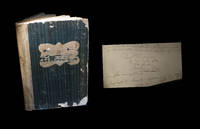
[Manuscrit].
Important manuscrit titrÂŽ : Vie de NapolÂŽon Empereur des FranÂais et Roi d'Italie depuis sa naissance jusqu'au jour de son dÂŽcÂs.
1836. Manuscrit datÂŽ in fine de 1836. Un vol. au format in-folio 450 x 302 mm de 99 ff. Reliure de l'ÂŽpoque de demi-vÂŽlin ivoire ˆ coins piÂce de titre manuscrite contrecollÂŽe au premier plat dos lisse. Important manuscrit ; comportant in fine la date de 1836. La rÂŽdaction en est pourtant lÂŽgÂrement antÂŽrieure. Une deuxiÂme partie est intitulÂŽe Batailles combats et victoires des armÂŽes franÂaises ˆ laquelle un certain nombre de feuillets font dÂŽfaut. Une derniÂre partie est relative ˆ la mort de l'Empereur ; renfermant poÂmes et Eloges. Cet important travail est dÂŽdiÂŽ au Ministre de la Guerre du temps. Il se compose de 98 ff. narrant la vie de NapolÂŽon rÂŽdigÂŽs ˆ l'encre brune ; le dernier renseigne sur les fonctions et qualitÂŽs du scripteur et est revÂtu de la signature autographe de BarthÂŽlÂŽmy Germain ; auprÂs duquel il servit. Angles et coupes ÂŽlimÂŽs. Manques ÂŽpars affectant le papier marbrÂŽ des plats ainsi que la piÂce de titre. Quelques t‰ches dans le texte. Coulure sans entrave pour la lecture affectant deux feuillets. LÂŽgÂre cerne en marge infÂŽrieure des feuillets pouvant rendre parfois la lecture plus dÂŽlicate. Encre un peu passÂŽe sur quelques feuillets. b42961 unknown
Référence libraire : 26477
|
|
|
[Manuscrit - Conseil d’État], PORTALIS (Jean Étienne Marie)
CIRCULAIRE DU CONSEILLER D’ÉTAT CHARGÉ DE TOUTES LES AFFAIRES CONCERNANT LES CULTES ACCORDANT UNE GRATIFICATION AU CITOYEN BURGNER
circulaire manuscrite de Portalis avec signature sur papier azuré à en-tête du Conseil d’État, (lég. trace de pliure)
|
|
|
[Manuscrit - Institutes de Justinien]
INSTITUTES LIBER 20, TOMUS TERTIUS, [INSTITUTES DE JUSTINIEN, Livre II : Titulus 10 De testamentis ordinandis [De la manière de faire des testamens] à Titulus 22 De lege falcidia [De la Loi Falcidia]]
demi-veau noisette, dos à 4 nerfs soulignés par fers à froid, caissons ornés de fleurons dorés centraux, soulignés par filets et plaques dorées, tit. doré sur pc. de cuir fauve encadrée par filets et plaques dorées, plats ornés de papier moucheté, tr. mouchetées en rouge, ex-libris sous forme d’étiquette sous le premier plat, entièrement manuscrit, en latin, (épidermures sur dos, mq. en coiffe sup., coupes et plats frottés, coins émoussés avec lég. mq., qq. rares rousseurs)
|
|
|
[Manuscrit]
SCIENCE DE JEAN SAUTEREAU SUR LA PRATIQUE FRANÇOISE DROITS CIVILS CRIMINELS & BÉNÉFICIALES SUIVANT LES ORDONNANCES ROYAUX, avec un Traité du droit d’indult et de la Juridiction Ecclésiastique
rel. plein vélin à lacets, texte manuscrit, (rel. abîmée avec des mq. de cuir et des lacets, mouillures claires sur l’ensemble des pages) Nous disposons d’assez peu d’éléments sur ce manuscrit sauf à savoir qu’il aurait été écrit en 1743 par un prénommé « Jean Sautereau » pour lequel nous savons qu’il a publié entre 1700 et 1770 un certain nombre de mémoires ou d’observations principalement pour des affaires commerciales (cf. cat. de la BNF). En revanche ce manuscrit, très lisible au demeurant, constitue un véritable traité complet sur toutes les matières du droit. Comme assez fréquemment à l’époque, il repose sur une présentation sous la forme de questions / réponses. L’ensemble des matières est reprise dans la table reproduite en photos. Captivant.
|
|
|
[Manuskripte]. - Sotheby?s
Sotheby's. Catalogue of Western Illuminated Manuscripts the Property of The John Carter Brown Library, Providence, Rhode Island and comprising the bequests of John Nicholas Brown and Louisa Dexter Sharpe Metcalf including The Ottobeuren Gradual and Sacramentary, circa 1164 and The so-called Psalter of the Prince d'Anyou, not later than 1537 fromthe collection of Horace Walpole.
London, Sotheby Parke Bernet & Co., 1981. 4°. Mit zahlr. tlw. ganzs. bzw. farb. Abbildungen. 119 S., 2 Bll., OPpbd.
Référence libraire : 46711
|
|
|
[MARAN René] DAVID Robert
Portrait photographique dédicacé de René Maran à son bureau
- s.l. (Paris) s.d. (ca 1940), 16,8x12,1cm, une photographie contrecollée dans une carte pochette à deux volets. - Photographic portrait of René Maran in his office s.l(Paris) s.d(ca 1940), 16.8 x 12.1 cm, one photograph pasted in a two-sided card wallet. Black and white photographic portrait of René Maran, contemporary silver print on gloss paper. Signature of the photographer Robert Davis (Paris) printed on the bottom right of the photograph. The photograph is fixed with two dots of glue in a two-sided card wallet and recovered in glassine protection paper. It is enriched with a signed handwritten presentation: "A M. Henri Devaux. Bien cordialement. René Maran." "To Mr Henri Devaux. Best regards. René Maran." Photographs of the very discreet Goncourt Prize are rare and sought after. [FRENCH VERSION FOLLOWS] Portrait photographique en noir et blanc de René Maran, tirage argentique d'époque sur papier glacé. Signature imprimée du photographe Robert Davis (Paris) en bas à droite du cliché. La photographie est fixée à l'aide de deux points de colle dans une carte pochette à deux volets et recouverte d'un papier cristal de protection. Elle est enrichie d'un envoi autographe signé : "A M. Henri Devaux. Bien cordialement. René Maran." Les photographies du très discret prix Goncourt sont rares et recherchées.

|
|
|
[Maria Beatrice d'Este, Herzogin von Massa und Carrara (1750-1829)].
Sentimenti In occasion della Festa onomastica di dua Altezza Reale l'Archiduchessa Maria Beatrice Duchessa di Massa e Carrara Principessa d'Este. Empfindungen bey dem höchsten Namensfest Ihrer Königlichen Hoheit der Frau Erzherzogin Maria Beatrix regierenden Herzogin von Massa und Carrara gebohrnen Prinzessin von Este. O. O., um 1780.
Deutsche und italienische Handschrift (Tinte auf Papier). (5) SS. auf 4 Bll. 2 Spalten, 16 Zeilen (links italienischer, rechts deutscher Text); das Titelbatt ansprechend kalligraphiert. Wasserzeichen "JWhatman". Grüner Seidenband über Pappe; die goldgepr. Deckelbordüre oxydiert. Dreiseitiger Goldschnitt. Gr.-4to (209:252 mm) Kalligraphisch ansprechend gestaltetes, zweisprachig italienisch-deutsches Festgedicht zum Namenstag der Maria Beatrice d'Este, seit 1771 Ehefrau des Erzherzogs Ferdinand Karl von Österreich (1754-1806) und Begründerin der Linie Österreich-Este. - Etwas gebräunt; die Vorsatzblätter leicht stockfleckig. Insgesamt von schöner Erhaltung; der grüne Seideneinband kaum fleckig. Vgl. das Exemplar der ÖNB (aus der ehem. Modena-Bibliothek), beschrieben in: Alfred Noe, Verzeichnis der italienischsprachigen Handschriften in der Österreichischen Nationalbibliothek, II.1B, Cod. Ser. n. 2091 (series nova II, 168).

|
|
|
[Maria Langegg, Lower Austria].
Fidelis Boyaria ob acceptam a Santo Ruperto Christi fidem eidem magno Apostolo suo honorifice gratias agit. Maria Langegg im Dunkelsteinerwald, Lower Austria, 27. III. 1746.
4to (180 x 230 mm). Latin manuscript on paper. (2), 12, (2) pp. The text on each page is written inside a carefully embroidered rainbow composed of concentric circles in multicoloured thread. Sewn binding. Golden decorated paper wrappers with a floral design on Augsburg brocade paper. This beautifully decorated Latin manuscript presents a short play, which dramatises the gratitude of Bavaria towards St. Rupert of Salzburg (ca. 660-710 CE) for his work as an apostolic missionary to the area. The titles translates as "Faithful Bavaria gives honoured thanks to the great Apostle St. Rupert for the faith in Christ she received from him". The play was composed in honour of Father Rupert, Prior of the Servite Monastery and Church Mariae Geburt at Maria Langegg between Melk and Krems, Lower Austria, as he celebrated his name's day (27th March) in 1746. - The play's four characters ("Genius Boyariae" - the Spirit of Bavaria; "Pietas" - Piety; "Virtus" - Virtue; "Genius Conventus Langeggensis" - the Spirit of the Langegg Monastery) are accompanied by a chorus. In rhythmic lines of uneven length, organised as rhyming couplets, the characters recreate Bavaria's internal dialogue with the personified Christian values of piety and virtue. In form and poetic conceit, the piece can thus be placed in the genre of baroque meditation literature ("sacrae meditationes"), which were particularly popular across the Catholic world in the mid-18th century. Accordingly, praise of St. Rupert (and thus also of his namesake Father Rupert of Maria Langegg) is never far from the audience's mind: "Tuam miror virtutem, Ruperte / Cui similem haud vidi certe. / Ast! Quid dabo viro isti, / qui dedit mihi fidem Christi?" ("I admire your virtue, Rupert; / I have hardly ever seen anything like it, for sure. / Oh! What shall I give this man, / who has given me my faith in Christ?"). - The front cover has two small but noticeable stains with small holes which have leaked through to all but the final page. These marks do not affect the text or embroidery. The back cover has a series of light green marks causing no further damage. The pages show light foxing and browning throughout, with very occasional defects on the lower right-hand side of folios, as the result of page-turning. Altogether a unique and well-preserved object with dainty decoration, of interest for the history of 18th c. monastic life and the figure of St. Rupert of Salzburg in the baroque period.
|
|
|
[Mei Chen Chalais] GUTH Paul - (Ossun 1910 - Ville d'Avray 1997) - Ecrivain français
Manuscrit autographe intitulé: "La Licorne des rizières par Mei Chen Chalais (Carrère)" -
1 page 1/2 in8 - râtures et corrections - bon état -
Référence libraire : GF27059
|
|
|
[Medical manual and recipe book].
Examen: Vor ein Neuer angehender Chirurgus, der sich will examiniren lassen, daß er in seinem examen bestehet, und wohl erfunden wird, so muß er dieses alles auswendig lernen, daß er antworten kann, über dasjenige was ihm gefragt wird. Anno 1806. Franconia and Alsace (Augsburg, Nuremberg, Strasbourg), 1800-1826.
4to (170 x 230 mm). German (and Latin) manuscript by various hands. (47), 285 (misnumbered: 286), (47) pp. Contemporary boards with vellum corners and modern cloth spine. Interesting medical manual beginning with an "examen" on the unnumbered 45 preliminary pages, arranged as questions and answers in the manner of a catechism. The body of the work consists in a copious collection of medical recipes: the first 193 pages contain a "description of my approved recipes, some by myself, as well as by other medical men well versed in practical matters". The next section (up to p. 223), in a different hand, contains additional "recipes by Mr. Clausing surgeon in Strasbourg" (i.e. the Baden-born surgeon and obstetrician Johann Peter Clausing, 1762-1835); the following section (to p. 242) contains "recipes by Dr. Hessert" (another Strasbourg physician of the early 19th century). Pages 243-286 offer "formularies" (such as Hippocrates, de Arte &c.), but also recipies for ointments, preserves, pills, pastes, rotulae, dicocta, clismata, pulpae, cataplasmata, etc. - The final part, again without page numbers contains extensive private notes on domestic economy concerning expenditures and earnings for the years from 1817 to 1826. - Written in dark brown ink by several hands in mostly well-legible German script. A few quires slightly loosened; occasional slight dust-soiling and fingerstaining (title-page and final leaves more so). A well-preserved manuscript on uncommonly strong paper.
|
|
|
[Medical manuscript].
Pharmacopoeia Pauperum or the Hospital Dispensatory. N. p., mid-18th century.
8vo (170 x 220 mm). English manuscript on paper. 21 pp. on 12 ff. Title on first and repeated on final leaf. Original half calf with marbled covers. Title label to spine. A collection of ca. 55 formulas for various ointments, balms, cataplasms, electuaries, boluses, tinctures, and other kinds of medicines, with remarks on their usage and administration. Though written in the vernacular, the usage of Latin names for the components of the drugs and their complexity point to a professional audience of doctors and pharmacists. The manuscript is compiled from the 2nd edition of Henry Banyer's "Pharmacopoeia Pauperum" from 1721. Banyer (1690-1749) had studied at St Thomas' Hospital in London and practised as a physician at Wisbech, Cambridgeshire. On 30 July 1746 he was admitted extraordinary licentiate of the College of Surgeons. His "Pharmacopoeia Pauperum" was first published in London in 1718 and saw three re-editions until 1739. - Very slight foxing and some browning to the margins. Binding markedly worn. Removed from the Newport Reference Library with their bookplate to the front pastedown.
|
|
|

 Recevoir par e-mail
 Télécharger en PDF
 Flux RSS
 Lien permanent


