|
NY: American Water Color Society Jan. 19 to Feb. 7 1945
78th Annual Exhibit of the American Water Color Society
1945. Softbound. VG disbound from a larger volume covers are off. Wraps. 48 pp. 8 bw plates. Lists 392 works. paperback books
書籍販売業者の参照番号
: 2193
|
|
|
Washington DC: Corcoran Gallery Mar. 18 to April 29 1945
19th Biennial Exhibition of Contemporary American Oil Paintings
1945. Softcover. VG. Wraps. 48 pp. 4 bw plates. Lists 219 works by as many artists. paperback books
書籍販売業者の参照番号
: 123697
|
|
|
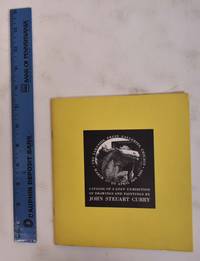
Chicago Ill.: The Lakeside Press Galleries March 1 to April 28 1939
Catalogue of a Loan Exhibition of Drawings and Paintings by John Steuart Curry
1939. Softbound. Good; ex-lib. Yellow wraps with glued on bw image. 31 pp. 1 color 8 bw repros. Catalog lists 133 works. With an evaluation of the artist and his work by Thomas Craven. paperback books
書籍販売業者の参照番号
: 109673
|
|
|
Chicago Ill.: The Lakeside Press Galleries March 1 to April 28 1939
Catalogue of a Loan Exhibition of Drawings and Paintings by John Steuart Curry
1939. Softbound. VG. Yellow wraps with glued on bw image. 31 pp. 1 color 8 bw repros. Catalog lists 133 works. With an evaluation of the artist and his work by Thomas Craven. paperback books
書籍販売業者の参照番号
: 271

|
|
|
Cincinnati OH: Cincinnati Art Museum Mar. 10 to Apr. 8 1945
The Critic's Choice of Contemporary American Painting; 49th Annual
1945. Softcover. VG- cover lightly soiled with some rips along spine. White/red wraps. Appx. 50 pp. 50 bw plates. A three-page introductory essay by Walter H. Siple accompanies the checklist of 113 works a list of the critics and their choices and brief biographies of the artists. paperback books
書籍販売業者の参照番号
: 25138
|
|
|
American Art Association NY: May 23 1939
American Paintings from the Collection of Mrs. J.M. Carlisle of New York City Together With a Selection from European Schools Sale #4456
1939. Softcover. VG- cover soiled. Cream wraps. 36 pp. Numerous bw plates. Lists 112 works and includes prices realized for all of them. American artists include Inness Wiggins Norton Crane Remington Reid Gifford Miller Post Eakins among others. paperback books
書籍販売業者の参照番号
: 24056
|
|
|
Pittsfield MA: Berkshire Museum July 26 to Sept. 5 1939
The World of Today Pictured in Oils Water Color Gouaches Drawings and Prints by New York Artists
1939. Softcover. VG- cover soiled. White wraps. 15 pp.No illus. Catalogue listing of 63 works with brief descriptions and a two-page introductiory essay by Elizabeth McCausland "The World of Today" paperback books
書籍販売業者の参照番号
: 15143
|
|
|
Providence RI: Museum of Art of the Rhode Island School of Design Jan. 19 to Feb. 18 1945
Old and New England: An Exhibition of American Painting of Colonial and Early Republican Days with English Painting of Same
1945. Softcover. VG cover detached en masse at spine. Beige wraps. 62 20 pp. 106 bw plates. Includes a foreword by Gordon Washburn; plates with essays; bibliography; very brief biographical information on the 20 American artists; and a detailed catalogue of 64 American paintings and 38 British paintings. The pictures in this exhibition were drawn from both public and private collections with owners names listed. paperback books
書籍販売業者の参照番号
: 8656
|
|
|
St. Louis MO: Feb. 16 to March 19 1945
39th Annual Exhibition: American Painting
1946. Softcover. VG. Wraps. 32 pp. 20 bw plates. Catalogue lists 78 works with a one-page introduction and list of illustrations. paperback books
書籍販売業者の参照番号
: 25455
|
|
|
Hartmann Werner 1945 1993
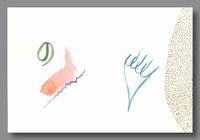
ICH DU" caption title - Original Manuscript Leporello of Watercolor Drawings Signed
Zurich: The Artist 1984. 16 panel leporello. Executed in a 'found' satin covered remembrance folder 15 x 10.5 cm. Album cover very slightly soiled internally fine. An original artist's book by Hartmann signed titled and dated by him on the rear pastedown. Each panel bears a watercolor drawing or design. Laid in is a photo postcard of the artist. For a useful account of Hartmann's life and work see: www.werner- hartmann.ch. The Artist unknown books
書籍販売業者の参照番号
: WRCLIT74264
|
|
|
Hartmann Werner 1945 1993
SCHWARZE TAGE
Bonn-Grenchen: Hirten-Presse 1984. Sewn printed wrappers. About fine. First edition ordinary issue. One of 150 numbered copies from a total edition of 180. Thirty copies were signed and included an original ink drawing by Hartmann. Hirten-Presse unknown books
書籍販売業者の参照番号
: WRCLIT74262
|
|
|
Hartmann Werner 1945 1993
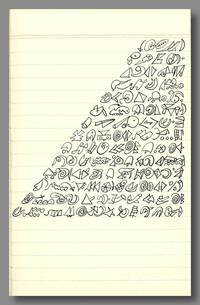
NOTIZEN" caption title - Original Manuscript Notebook of Ink Drawings Signed
Zurich: The Artist 1984. ca. 150 leaves in ink on rectos only. Bound notebook 165 x 105 mm. Cloth and boards. Text stock pale yellow ruled in blue and red. Fine. An original artist's book by Hartmann signed titled and dated by him on the rear pastedown. Each leaf bears an arrangement sometimes occupying most of the page sometimes a portion of it of Hartmann's characteristic symbols including recurrent stylized fish. A number of the individual leaves are dated in September demonstrating that Hartmann's work on this undertaking spanned a number of weeks. Laid in is a photo postcard of the artist. For a useful account of Hartmann's life and work see: www.werner- hartmann.ch. The Artist hardcover books
書籍販売業者の参照番号
: WRCLIT74263
|
|
|
Mascagni Pietro. 1862 1945
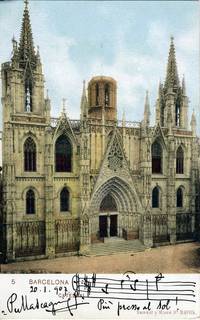
Autograph Musical Quotation from "Amica" on a Barcelona Postcard
Used; Like New/Used; Like New. A lovely AMQS from the important opera composer of Cavalleria Rusticana precisely penned on a postcard of the Barcelona Cathedral and dated January 20 1907. Mascagni has written a two-measure extract from the baritone-soprano duet in his opera Amica in bass clef with the text "Più presso al sol!" Addressed on the verso to the collector Ramona Imaz Otaño. In very fine condition. 3.5 x 5.5 inches 8.8 x 13.8 cm. unknown books
書籍販売業者の参照番号
: 13472
|
|
|
Harrison Martin 1945 .
Appearances: fashion photography since 1945.
<br/><br/>Harrison Martin. Appearances: Fashion Photography Since 1945. New York: Rizzoli 1991. 312pp. Folio.<br/><br/>The definitive study of fashion photography since 1945 including the works of Avedon Penn Newton Horst Scavullo Parkinson Bourdin Weber and more. Harrison recounts stories of the great art directors of Vogue and Harper's Bazaar and delves into the commercial forces and artistic motivations behind fashion photography. unknown books
書籍販売業者の参照番号
: 0362
|
|
|
MUCHA ALPHONSE 1868 1939
FOLIO COVER
Photo relief. Czechoslovakia. June and December 1897. LITHOGRAPH FROM L'ESTAMPE MODERNE. L'Estampe Moderne 1897-1898 a more commercial and later version of L'Estampe Originale was a monthly publication of print portfolios producing twenty-four issues containing four color lithographs each. Only a few prints exhibiting Japanese influence were issued mostly by minor artists yet they were equally as beautiful in image as their predecessors. unknown books
書籍販売業者の参照番号
: 412
|
|
|
Noyes Alexander Dana 1862 1945
Correspondence of pioneering American financial columnist Alexander Dana Noyes written to his family while traveling in Europe 1884-1885
<p>Octavo 35 letters 484 manuscript pages dated 26 October 1884 to 10 January 1885 letters mounted on stubs within a leather bound album boards lacking spine badly chipped lettering on spine reads "Letters"; text block split some leaves loose edges of some letters chipped several with slight tears otherwise good written in ink in legible hand. </p><p> Five of the letters are illustrated with cleverly rendered drawings to accompany Noyes' intelligent lengthy and astute observations of his travels. The small ink illustrations are of figures caricatures architecture etc. for a total of twenty-eight illustrations. The letters are all signed by Noyes and addressed mainly to his parents or his mother separately with one letter to his brother one to his grandfather and several to a woman by the name of "Jenny" likely his sister Jane. The letters tend to be written from the various hotels in which Noyes was staying while traveling in Europe including: Liverpool Chester London Oxford all in England; a couple of letters written while aboard the S.S. <i>Venetia</i> which he took from England to Gibraltar; and from hotels in Seville Cordoba Granada Madrid and Barcelona in Spain where he spent a lot of time. There are also a number of letters from Marseilles and Nice in Southern France; and Genoa and Florence in Northern Italy.</p><p> <b>Alexander Dana Noyes 1862-1945</b></p><p> Alexander Dana Noyes was a distinguished American financial columnist born in Montclair New Jersey on 14 December 1862 the second of four sons and the third of six children born to merchant Charles Horace Noyes and his wife Jane Radcliffe Dana both of 17th Century New England families. Alexander studied at Amherst College where he received his A.B. in 1883 he was editor of the college weekly and he completed his education with several months of European travel. </p><p> Noyes got his start in journalism with <i>The Commercial Advertiser</i> where he reluctantly became the paper's Wall Street correspondent in 1884 when the banking house Grant and Moore failed and he happened to be the only reporter in the office not on assignment. Noyes recalls these formative experiences in "<i>The Market Place: Reminiscences of a Financial Editor</i>" a memoir that tends to pay more attention to historically significant financial crises than to autobiographic milestones.</p><p> When Noyes began work as a financial editor of the New York Tribune in 1891 most financial columns in the popular press were "tout" pieces writings advertising risk-free investments as insider tips and agency handouts meant more to promote certain investments than to illuminate the inner-workings of the market. According to historian Robert Sobel Noyes was one of the first American journalists "to combine economic analysis and a knowledge of the market in such a way as to interest the general reader." Through his work as a reporter and financial editor for the <i>Tribune</i> and <i>New York Evening Post</i> Noyes covered the Great Panic of 1891 the 1907 Banker's Panic and the closure of the stock market in 1914 establishing himself as "an American counterpart to Walter Bagehot editor of London's <i>The Economist</i> which is to say that he was read by serious students of the market and had a trans-Atlantic audience." During his career Noyes also authored several monographs including "<i>Forty Years of American Finance</i>" 1907 and "<i>The War Period in American Finance</i>" 1926 which would become standard financial histories in university circles. He started writing the monthly "<i>Financial World</i>" feature for Scribner's Magazine in August 1915. Noyes initially used this space in the magazine to discuss the financial problems arising from the outbreak of World War I but the feature later known as "The Financial Situation" would continue to run well past the war.</p><p> In his article "<i>The Speculative Markets</i>" Noyes warns against the belief on Wall Street that America had entered a New Era that "differs so greatly from any in the past that old-fashioned precaution is out of date." </p><p> In the numerous articles he wrote for Scribner's Noyes uses a strategy of analogy to describe World War I using The Seven Years' War America's Civil War and the Napoleonic Wars to draw out questions about America's apparent wartime prosperity and the fate of Europe's economy following the war. Several of Noyes' contributions to Scribner's Magazine during the war years were compiled into a book "Financial Chapters of War."</p><p> In 1920 Noyes became the financial editor of the <i>New York Times</i> where he continued to prove himself an adept reader of the market. During his tenure at the Times Noyes predicted the bull market that would emerge in 1921 and was "one of only a few voices that chose not to sing in the all-bulls choir" the led up to Black Tuesday in 1929. The skepticism of the Times in the months leading up to the Depression strongly contrasts with the outlook of the Wall Street Journal and several other financial publications that failed to realize the danger signs in the market. Noyes remained at the Times until his death in 1945.</p><p> <b>Sample Quotations: </b></p><p>"London Monday Nov 3 /84</p><p>Dear Folks</p><p>Having finished my breakfast and making myself as comfortable in my room as the morning fog will permit I am ready to take an hour or two and scribble off a few pages in time for the Republic which goes back from Liverpool tomorrow. This time is the best for writing. It would be useless to start out before ten or eleven o'clock to see the city; for London is a lazy place and doesn't get itself started until pretty well along in the morning. Harry Warren and the other Americans settled here complain more than anything else of the slow living and the slow manner in which business moves – something especially unpleasant to an American businessman…</p><p> Without the guide I have seen considerable already though I make a point of never going over more than one great point of interest in a day. Last Thursday I went to the Health Exhibition which was then open for the last day. As a whole it was rather a bore consisting mostly of preserved fruit groceries mammoth squashes patent grates and fire places etc. but there were some more picturesque departments. The most interesting was a representation of a street in old London where houses were built up and shops arranged in studious imitation of the city before the Great Fire. As a historical work it was extremely valuable and was made still more so by the shops which were occupied by business firms whose men with the costume and implements of the seventeenth century plied their several trades to the great admiration of the nineteenth century public. What was interesting in another way was a double modern house full-size one half of which was fitted up as a sanitary house and the other as an "insanitary" house. The object was to exhibit and contrast good and bad arrangements for sewerage drainage heat light comfort and ventilation. The insanitary house through which the visitor first passed had arsenic wall paper deficient traps insufficient ventilation and all the other modern improvements. The other was an exactly duplicate house but had all the proper appliances and the contrast was both instructive and interesting.</p><p> On Friday I went to see the Tower of London and on the whole was rather disappointed. It is really a splendid specimen of mediaeval architecture but these stupid Englishmen have spoilt the whole effect by building modern brick walls with chimney pots between the turrets and using them as barracks for the soldiers. The flag of England floating from the White Tower was very grand but not half so impressive as two or three dozen articles of underclothing waving from a clothes-line attached to the same tower…</p><p> I like my lodging place more every day and have reason to be satisfied at being placed so pleasantly. The street is quiet except for an occasional hurdy gurdy or news boy. The latter animal is most distressing here. He hasn't the cheerful shout of a New York boy with his "Nyawk Herrltime Stribyunean World" or even the Boston boy whose "Morn papes" is a trifle more melancholy. These boys are angry indignant in tone. They shout as if they were forced to sell papers for punishment. One came by our place last night with the false news of Gordon's capture. It is impossible to describe the vindictive malice with which he yelled in a curious rhyming chant: "Pa – Par! Tairble slaugh-Tar! Genl Gordon a pris-NAR! Special Edition of the Obser-VAR!" …</p><p> Everything is high in London especially food. The restaurants are very expensive; indeed one can't get a first-class table-d'hote dinner under five shillings $1.25. The things that are generally cheap are hack hire and well I don't know of anything else that is except the buses. On one of them a visitor can travel five miles through the city for three pence. They are queer looking objects – not at all like a Broadway stage for they have a pair of steps at the back and seats on top. The conductor or guard stands on a little platform behind and hangs on by a strap; his duty is to shout out the They are all good drivers however and have a good deal of the traditional grandeur of the old stage coach driver. The buses look very odd at first with the crowd on top and a collection of stovepipe hats sticking up like destination of the bus with a view to alluring passenger and as no human being was ever capable of understanding what he says his usefulness will be apparent. The driver's duties aside from driving are to hit his horses over the neck hit all covered wagons with his whip and shout sarcastic remarks to the drivers of all other vehicles. corks in all directions. Their appearance is made still more striking by the flaring advertisements boarded up against the sides…</p><p>Hoping to hear often from you all I am aff. yours Alex D. Noyes"</p><p>"Hotel de Madrid Seville</p><p>Spain November 30 1884</p><p>Dear Folks</p><p> When I was half dressed this morning and sipping my chocolade in our bedroom it suddenly dawned upon me that I had neglected you of late; and I determined as soon as I had taken a walk and finished my almuerzo that I would begin a long letter to pay for the long delay.</p><p>My excuse for not writing during the past three or four days is valid. I have been travelling nearly all the time. The consequence is I have seen Spanish scenery and Spanish life about as thoroughly as one can do. All this country is true Spain. Madrid and the north is Parisian; this is Spain and retains in its buildings and customs the peculiarities of centuries ago…</p><p> Let me tell you then that Gibraltar is the hardest place to get out of that I ever knew. We came by the P and O boat. Our plan was to go to Tangier and back and then on to Cadiz. Now it rained nearly all the time we were at Gib and the Levanter the sharp east wind of the Mediterranean had stirred up the sea. Some of our fellow passengers from England started by the little boat Hercules for Tangier the day after we arrived in Gibraltar. The boat broke one paddle wheel and made the best of its way back to Gibraltar. From that time on the sea was so rough that no Tangier boat started. There were several ways to get out of Gibraltar. Gregory and his wife and I could get to Cadiz either by steamer from Algeciras or by diligence from the same place. Burroughs was going by steamer from Algeciras to Malaga and so to Barcelona. We decided to leave Gibraltar on Thursday. Then we learned that the sea was too rough for the Cadiz boat…Fortunately we had engaged seats on the Friday diligence as the coach was to start at five a.m. Friday we were obliged to spend the night of Thursday in Algeciras. So at noon Thursday we prepared to go. A little steamer sails three times a day across the bay from Gibraltar to Algeciras. When we were all ready to go we suddenly learned that the bay was too rough and there was no boat that day from Gib. This is the only conveyance. We thought of chartering a steam yacht but Senor Carrara wanted two pounds for it and would not guarantee that the vessel could land at Algeciras in the gale. The only other way to get from Gib to Algeciras was by land around the bay a distance of nearly fifteen miles along the beach and over very bad roads. There was no alternative; so we hired a crazy little two wheeled trap like a prison van. This was drawn by a two-mule tandem. Mrs. Gregory and the luggage went in this with one man in front driving and another riding the leading mule. The three men of the party were in the saddle Gregory and I riding horses and Burroughs astride of a mule. In such state we left the Spanish lines. The Spanish custom house officers at the Spanish lines beyond Gibraltar began to take down our baggage for examination but a silver peseta about twenty cents fixed them…And here let me tell you one thing which I do not think is generally known but which we soon learned to our cost. Baggage is examined by the custom house officials in every city in Spain no matter if you come direct from another Spanish city. Ours has been overhauled at the lines San Fernando Cadiz and Seville. But a peseta goes a good way with these scoundrels.</p><p> The roads to Algeciras were bad – horrible. Half of the distance was along the beach and as the tide was high we rode sometimes in two feet of water. The interior roads were all ruts and there were two rivers to cross by a pontoon bridge. When it began to grow dark we were somewhat anxious and the last and worst of the way was traversed by moonlight. At last we rode into Algeciras and such a desolate deserted place you never saw. A fierce gale blowing from the bay and scarcely a human being could be seen in the streets. We drove to the Hotel Vittoria Marina facing the bay and then we saw the inhabitants. In accordance with what we have since found to be the universal custom in Spain a dozen ragged and dirty cut throats flung themselves on our baggage We have learned now that the only way to do is not to allow an outsider to touch your luggage unless he is porter of the hotel. They are not satisfied with small fees and whatever you give them they invariably demand more. A ruffian in a blue jacket with a face made for the gallows hauled our luggage upstairs. Then he came into my room and demanded twenty-five pesetas or five dollars. He was drunk and refused to take six pence. The hotel was as deserted as the town. I offered the man through a woman who spoke English the alternative of taking six pence or being kicked down the stairs. He refused and resisted but the proprietor coming up the ruffian was hustled off. Such a lonely place you never saw. Our steps echoed over the brick floors. The hotel people were in a different part of the house and in our two big rooms we seemed to be entirely alone. Burroughs and I put our pistols in handy places and retired to a sleepless night so furiously was the wind howling outside…</p><p> In Tarifa we saw an old Moorish town. Dirty is no name for it. None of the streets are more than ten feet wide and are paved with rough stones the water of the gutter running along the middle. The houses are filthy but all built of brick and white washed. All Spanish buildings are made in that way and a village at a distance looks like a pail of whitewash emptied on the ground. In Tarifa all the women wore the mantilla or black shawl of lace or nun's cloth over their heads. There they cover all their faces leaving only one eye exposed. We saw some faces however in the old Moorish synagogue where the priests were celebrating mass. They were all ugly. Tarifa smelt frightfully and well it may for in addition to their natural dirtiness the sewer is carried through the centre of the town in an open stream. Venta de la Vejer where we ate our lunch is a curious old town built on the side of a very steep hill. The country I cannot stop to describe; if I should this letter would never be done. Thee people are in the Middle Ages still. The farmers sleep in vile huts of straw along with the pigs and chickens; they build fences of prickly cactus all the cooking even in the better farm houses is done outside and they plough with a wooden harrow such as the old Romans used. At San Fernando we seemed to be once more in civilization for there we met the railroad. The customs officers seized our luggage here and had to have another peseta. After shoving away some villains who wanted to carry our luggage and waiting an hour we started for Cadiz. There came another fight. We had to strike the dirty beasts with our canes which we now do without compunction. The courier of the Hotel de Paris spoke English and with his assistance we engaged a cab and drove to the hotel…</p><p>Well I have enjoyed this trip through Spain immeasurably. It has been expensive; for travelling is not cheap here; but it has been worth the money; for the more I see here the more I am convinced how little people know about this country…It is not especially easy to get along here; for neither English nor French is spoken except by special interpreters in the large hotels…Some phrases have been acquired by absolute necessity. "Cuanto" meaning "How much" comes up every few hours…Gregory's Spanish is confined to such idiomatic expressions as "Get your hands off that luggage you dirty beggar" pronounced in a ferocious tone and accompanied by a sharp rap on the beggar's knuckles with a stout stick is invariably understood…</p><p> In America the women wear colors and the men dress in black. Here the positions are reversed. The better class of women dress entirely in black while the men were colors. The commonest peasant has a red sash about his waist and most of them wear colored jackets…</p><p>Aff. Yours Alex D. Noyes"</p><p>"Hotel de Madrid Seville</p><p>December 2 1884</p><p>Dear Folks</p><p> …Speaking of money and beggars – two things nearly related. As for fees Spanish loafers who show you about cathedrals or drag about your luggage are never satisfied with what you give them. Nor will they take small sums. Two reals or ten cents will not content these vagabonds. They come back and scream Spanish at us until we drive them out by main force. The only way to do is to order him off and if he don't go we get Gregory to talk English at him. The beggars are fearful. At Cadiz they were worst of anywhere and nearly all old women. They would hobble after you for blocks along the street and if you paid any bill invariably see one of the filthy creatures whining in the doorway. Here in Seville the beggars are not so bad but they are bad enough. They are worst outside the Cathedral. The other day a girl sat outside the main door in an invalid chair crying out in a harsh shrill voice 'Caridad caridad senores por el amor de Dios!' 'Charity Charity gentlemen for the love of God!' and miserable old women limp about or sit by the doorway with their hands always outstretched.</p><p> I never realized until I came here how very national the bull fight sport is. The photographers' shops are full of likenesses of famous bull fighters; the decorations on placques and china are all scenes from the bull ring. Sunday there was to be a grand bull fight the last of the season. Scores of matadores and picadors came up by the Saturday train posing in striking attitudes with their braided jackets and pig tails and they were the admiration of the common people. This bull fight is not the sport of the vulgar; the best people in Spain go and the entrance money is higher than for any other entertainment. It rained on Sunday and as the bullring or plaza de toras is an open space it was all postponed. We consoled ourselves by going to the theatre Monday night where several laughable farces were performed…The tickets of the corrida de toros or bull fight were ten pesetas or two dollars; for the teatro de Cervantes charge only thirty cents for their best seats. Queen Isabella II the King's mother was there in her box a great coarse fat woman with a huge red nose false hair and the most unbecoming dress possible. She lived in the Palace of the Alcazar…Aff. Yours Alex D. Noyes"</p><p>"Seville Spain Dec. 5 /84</p><p>Dear Folks</p><p>I write a few words now on the eve of leaving Seville to give you an idea of my present position and plans…</p><p> Two classes of people conspire to make our lives miserable. One is the volunteer guide and the other is the beggar. The volunteer guide exists because honest labor is so ill paid. In Pickman's pottery manufactory which we visited in Seville the skilled workman who paint the designs for the porcelain and vases get only a dollar a day; the boys who work get no more than two reals or ten cents. Now if a boy hangs around a cathedral all day and fastens himself on to strangers he will always make three times as much…</p><p> But the beggars. O heaven preserve us! – and don't preserve them in their present state at least. I never struck a beggar in my life before but I have done it here and shall do it again. Their impudence is stupendous. When you stand talking in the street they interrupt you and whine out a supplication. While we were at dinner tonight a sturdy beggar stood at the window whining nearly all the time. In Seville a ragged man had a boy with him whose eyes were diseased. He dragged the boy after us with one hand and opened his eyes for our inspection with the other moaning for money. Little children beg in the public streets and in the most matter of fact way too. They leave their play stretch out their hand and assume the mendicant whine. You say no and back they go with a shout to their lay. I saw a Cordoba beggar early this morning pounding on the locked door of a swelling house and whining. I couldn't distinguish his words but I know what he said: "O for charity's sake for the love of God! - for the hope of heaven give give give. I am a poor orphan with aged parents to support. I have fifteen wives and I don't know how many children. O why don't you hurry up confound you and give me something"</p><p> I wish there wasn't a law against shooting men here. My stock of cartridges would not last long.</p><p>If you want to know the national peculiarity of a Spaniard it is this – mind everybody's business but his own. We can't stop a minute to look into a shop window but we have half a dozen lazy loafers about us looking in too. Then is the time we need Spanish. Gregory used to address them in the following Castilian idiom: "What are you loafing about here for you dirty blackguards" But somehow his meaning escaped them. An altercation with a cabman gathers as large a crowd as a street arrest in New York. Why even at this moment here in the hotel in the writing room a beggarly boy passes the door every two minutes and looks in to see if I am still writing. Anda! Allezan diable! Si vedo V un otro vez en la Puerta I'll throw the inkstand at you! But it is not confined to the common folks. The ladies are the worst of all. The Seville girls are pretty and graceful but they have infernally bad manners. Poor Mrs. Gregory had a jacket of the jersey cut and I suppose such a thing had never before been seen in Seville. When she passed a couple of Spanish senoras in the street both would then turn and look after her with open mouths. The only way we stopped them was for us men to return the complement and stare at the senora from the tip of her toe to the crown of her mantilla. I took a fifteen-mile horseback ride this morning and in the city I was the observed of all observers. In the first place I was riding a horse and that attracted a good deal of attention. In the second pace I was evidently a foreigner for I wore clothes of a cut dating later than the fifteenth century. In the third place I wore my old white cloth hat and if Barnum's circus had entered Cordoba it couldn't have created a greater sensation. I could hear the small boys yell "Sombrero! Sombrero!" on all sides – so I suppose they were trying to say "Shoot the hat!" I longed to drive at them with my whip but it was best to pay no attention…so I kept my temper. As I rode off I could hear them yell "Engles! Engles!" They all put us down for Britishers here. America they never think of. Yesterday on the train I told an old Spaniard in Spanish that we were "Americanos" and straight way the whole care of people stared around looking for the tomahawk and war paint. When I come again I shall come that way. I should like to scalp a few million of these Spaniards. – The sum of it all is Spain is an ill regulated ill governed country. The government is a cheat and a swindle. They do all they can to crush individual enterprise and encourage idleness. The great Spanish industry is the manufacturing of cigars and cigarettes. The government monopolies this and as they entirely prohibit foreign tobacco they make enormous profits. The lottery swindle which has a frightful hold upon the entire Spanish population is run by the government; and we computed the other day that out of this they make a net profit of 33 1/3 per cent and that without the slightest risk. There will be trouble here yet. The king has the consumption and will not live long; and he has no heir. The ministry has fixed upon his mother Isabella who was driven from the thrown for her immorality as his successor. The common people want a republic because they believe that under a republic they will not have to work. So everything is in a beautiful state…Aff. Yours Alex D. Noyes"</p><p>"Dec 14 1884 from Granada Spain: </p><p>Mother </p><p> You spoke in a previous letter of the observance of Sunday. I am afraid you would find an American Sunday a decided impossibility here. It is not even as good as France where they at least make a holiday of it. Here they work on the same as usual. The shops are open the farmers plough on and the holiday is a luxury of the rich alone. I went into the Cathedral this afternoon in search of something a little devotional. But the priests are all hypocrites and humbugs the service a blasphemy and the women who cross themselves and mutter as superstitious as the darkest heathen. Then the organ played. Well nothing can profane music. After all it is the truest worship. I found what I sought in simply standing and listening to the magnificent tones of the organ. Music is the only part of worship that cannot be converted into blasphemy…Alex D. Noyes"</p><p>"Nice France</p><p>Dec 31 1884</p><p>Dear Folks</p><p> …The French girls puzzle me. Some of them look very much like Americans but most of those we see – I take it that they are the women of southern France – have very bright eyes and unnaturally dark lashes pencil arsenic and cologne in my private opinion and are moreover usually rather short a little inclined to be stout with an inevitable Roman nose. The young Frenchman is always a handsome insignificant person; the old French man is very amusing especially in the mincing way with which he approaches the ladies. I could never mistake him. The Russian may be recognized by his unkempt appearance but I cannot distinguish the Russian ladies. They are exactly like the French. These are the main nationalities here; a few Italians and Germans make up the quorum…Alex D. Noyes"</p><p>"Hotel des Etrangers</p><p>Genoa North Italy</p><p>January 5 1885</p><p>Amici tuttli!</p><p>All ahail!</p><p> If you kindly drop the curtain on France and fix your compasses on the map of Italy you will probably observe me in the city of Genoa…</p><p> The transition from France into Italy was easy and graceful. I was seated in the train for Genoa peacefully meditating on home wondering whether my box had arrived there as yet and whether there was any possibility of poisoning John Haley by mail – without a thought of custom house officers or examination of baggage – when I awoke to the consciousness that we were in a very large and wide station. Knowing that the dividing line between France and Italy is very broad I began to think this was the border town of Ventimiglia. A dirty Italian boy who thrust his head in at the door and demanded in Choctaw if I wanted my baggage carried to the other train confirmed this impression…Speaking of female dress leads naturally to the discussion of females. Mark Twain if I remember rightly speaks of the wonderful beauty of the Genoese girls. Now one sees some very pretty faces and figures but I don't think the average age will justify the slightest enthusiasm. There are enormous quantities of ugly women here. And as for the beautiful Italian youth – well never mind; I will wait until I have seen southern Italy before I say he is a humbug…</p><p> Now I must tell you something which will be very hard to believe. There are no beggars in Genoa. At least I have tramped the streets for two days and not been assailed by a mendicant yet. I have tried every device to call them forth; I have stared ragged old men in the face gazed intently at slovenly young women with babies jingled keys in my pockets and done a host of things which would have called out the whole contingent of beggars in a Spanish city; but all in vain. I don't understand it. I feel my loneliness doubly now and mean to speak to the Mayor of Genoa about it. Perhaps all the male beggars have enlisted in the army. It is certainly astonishing how many soldiers one sees in Genoa. It was delightful too to find a variety in military uniform. The Spanish soldiers are only weak imitations of the French and I had begun to think that the European military hero existed only in flaring red flannel trousers and sky-blue coat with a long blouse. But the Italian uniform is really something new for Europe. It is more like the uniform of our soldiers being a bluish gray in color; but differs in the facings which are yellow instead of dark blue. Then there are the Italian fusiliers the name of which troop I would not dare to pronounce or write…Aff. Yours Alex D. Noyes"</p><p>"Florence Italy</p><p>Jan. 10 1885</p><p>My dear Grandfather</p><p> It is nearly three weeks now since I received your letter and I have been intending almost every day since to write; but it is quite impossible to keep up a faithful correspondence while one is travelling about and during my stay at Nice my eyes trouble me considerably so that I could do very little writing.</p><p> I shall never cease to be astonished at the blindness of the average tourist. I say blindness because if they would only keep their eyes open they would see all that I or anybody else could see. The most pitiable spectacle of mental debasement to my mind is the tourist who travels because it is "the thing" to travel keeps his eyes fixed on his guide book while he is en route and trots patiently about at the heels of a guide when he is on the spot of the great sights of Europe. There are people who have travelled all over Europe and seen everywhere exactly what they might have seen in London or Paris. They go to the park the museum and the cathedrals and then they have seen everything. I was in Barcelona with a very intelligent young Englishman who has travelled pretty much all over the world. He had been in Barcelona before and said he would show me the city. He took me down the Rambla – the fashionable promenade – along the port into the park – the fashionable drive and into the inevitable cathedral. The whole thing might have been New York. When he conducted me back to the hotel he said "now you have seen all there is to see in Barcelona." I said "My dear fellow I haven't begun to see the city yet." He asked me what I meant. I told him I wanted to see the old city and the tenement house quarter. He said it was very dirty and unpleasant there. I said that was exactly what I wanted to see. "Well" he said "your taste is different from mine." I didn't tell him what would have been quite true that the trouble was he had no taste at all. Some towns one can see in such a cursory way Pisa was one but the cities are always full of interest. I hope it will not be called heresy if I say that Mark Twain was pretty nearly as bad. He kept his eyes open and told the truth about what he saw; but he was very far from seeing everything…</p><p>Aff. Yours Alex D. Noyes"</p> books
書籍販売業者の参照番号
: 30544
|
|
|
KOVACHEV Stiliyan 1860 1939
Stroitelna iskustvo: Chast' I. Stroitel'na mekhanika Chast II. Stroitelni materiali i raboti Chast III. Voyskovi zdaniya. S otdelni chertezhi Voenen inzhener polkovnik Kovachov. Rukovodstvo za ofitserite ot inzhener voyski. The art and construction: Part I: The mechanics of building. Part II: Construction materials and work. Part III: Military buildings. With individual drawings. By military engineer Colonel Kovachov.
Paperback. Poor. A textbook for officers by a military engineer. Sofia: 1921-1927. Octavo. Original publisher's illustrated beige wrappers. 54 double-page illustrations. In Bulgarian. Wrappers worn slightly chipped detached; lower lacking. Occasional minor tears to edges; lacking first illustration; tear to illustration 49; illustrations 53 & 54 detached with chipping to edges; tear to illustration 54. A total mess. Presumably very scarce as the book is printed on very poor quality paper. Because of the condition SOLD AS IS. <br/><br/> paperback books
書籍販売業者の参照番号
: D15998
|
|
|
DENIS MAURICE 1870 1945
L'Amour sur les genoux de Diane. pg. 50. Love at the knees of Diane
Lithograph. Cailler 168. RARE with the remarque. One of 35 with the remarque. On chine volant paper with very wide full margins. Lithograph from POEMS by Francis Thompson 1939-1942. Some light foxing in margins. 245mm. x 180mm 9 5/8 x 7 margins 455mm x 325mm 16 x 12 3/4. unknown books
書籍販売業者の参照番号
: 2208
|
|
|
Palatz Franz Ferdinand Ludwig 1896 1945? and Alfred Wornum Mogredien
Antiform
B252 pages with tables and diagrams with errata laidin. Royal octavo 9 1/4" x 6n 1/2" bound in original publiser's red cloth with gilt lettering to spine and cover. A C White's Christmas series with greetings tipped in and errata laid in. From the library of Edgar Holliday. Parallel German and English text. Betts: 31-15 First edition.<br />This work explains the antiform theory the transformation of chess themes their reversal in detail and gives 151 examples of antiform transformation problems grouped by themes as follows: Logical combinations and their antiforms. Indirect combinations in attack and their antiforms. Direct combinations in attack and their antiforms. Direct combinations in defense and their antiforms. Anti-interference themes. Indirect combinations in defense and their antiforms. The Roman theme and its antiform. Metaforms. Complete antiforms. <br /><br />Holladay was the first American to become a FIDE International Master for Chess Composition; FIDE International Judge for Chess Composition; and "After Alain White's death Edgar became the world's foremost expert on American chess problems." Moreover Holladay is the "second overall most important American to the world of chess composition . . . ." Alain White is the most important person ever in chess composition.<br /><br />Condition:<br /><br />Recased with original spine laid on. Corners bumped spine gilt dulled. Edgard Holladay's signature on front paste down with some occasional notes by him else a very good copy of an association piece. Buchdruckerei Josef Berggrun hardcover books
書籍販売業者の参照番号
: C0083

|
|
|
Farrow Mia. b. 1945
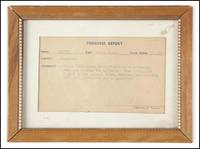
School Dance and Dramatics Progress Reports from the 4-year-old Actress!
Used; Like New/Used; Like New. A school progress report in the subject of Dramatics from May 16 1949 for the then 4-year-old Farrow who has gone on to be a leading American actress singer fashion model and now UNICEF Goodwill Ambassador. The teacher's comments read in full: "Maria still finds it difficult to be attentive when she is only the audience. When acting out as part of the nursery tales however she responds with both initiative and imagination." Together with a school progress report in the subject of dancing from the same date the comments reading in part "Maria has unusual natural ability for dancing. However she has not shown the co-operation and interest in the past few months so outstanding earlier in the term." Both 3.5 x 6 inches and from the collection of Mia Farrow. Please note that these are sold unframed. unknown books
書籍販売業者の参照番号
: 10280
|
|
|
Bartok Bela. 1881 1945
Quatour pour 2 violons alto et violoncell
Budapest: Rózsavölgyi & Cie. 1909. First Edition in score. Used; Like New/Used; Like New. Miniature score of Bartók's Quartet no. 1 op. 7 BB 52 Sz 40 W 20 Somfai 308. PN R. & Co. 3287. 38 pp. 5.25 x 7.5 inches 13.5 x 19 cm. Two slight creases to the cover some toning; overall in fine condition.<br>The work was at least in part inspired by Bartók's unrequited love for the violinist Stefi Geyer - in a letter to her he called the first movement a "funeral dirge" and its opening notes trace a motif which first appeared in his Violin Concerto No. 1 a work dedicated to Geyer and suppressed by Bartók for many years. The intense contrapuntal writing of this movement is often compared to Ludwig van Beethoven's String Quartet No. 14 the opening movement of which is a slow fugue.<br style=""> Rózsavölgyi & Cie. unknown books
書籍販売業者の参照番号
: 5919

|
|
|
Dance & Film Grigoriev Boris. 1886 1939 Gest Morris. 1881 1942; Thalberg Irving. 1918 1923
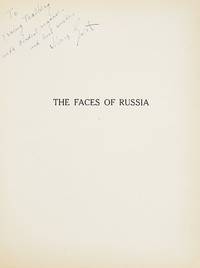
Boris Grigoriev. Faces of Russia. The Moscow Art Theatre - INSCRIBED PRESENTATION COPY TO IRVING THALBERG
London: n.p. 1924. Used; Like New/Used; Like New. Irving Thalberg's personal copy of this splendid Limited production Grigoriev's artwork beautifully presented in the form of 30 color and black and white plates tipped to embossed mat pages separated by vellum leaves. The title page is inscribed and signed by the publisher "To Irving Thalberg with kindest regards and best wishes Morris Gest". Original half vellum over paper-covered boards the upper side illustrated and titled in gilt spine lettered in gilt. With minor soiling and handling to cover light toning on backing paper pages else fine condition. From the estate of Norma Shearer whom Thalberg married in 1927. 100 pp. 11 x 14 .5 in. <br><br><br />A remarkable association copy inscribed to the legendary Hollywood production executive Irving Thalberg who took hold of Universal City at age 20 and supervised such films as Ben Hur and Mutiny on the Bounty among many others. He died of pneumonia at age 37.<br><br><br />Morris Gest born 1881 in Vilna Lithuania as Moses Gershonovitch died May 16 1942 at the age of 61. He produced "The Miracle" in 1924 and "Lady Precious Stream" in 1936 introduced an original Russian ballet to America Baliev's 'Chauve-Souris' and brought Stanislavski's Moscow Art Theatre in repertory to America in 1923. n.p. hardcover books
書籍販売業者の参照番号
: 12317
|
|
|
McKellen Ian. b. 1939
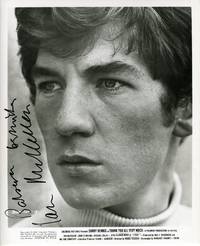
"Thank You All Very Much" - Early Signed Photograph
Used; Like New/Used; Like New. An early photograph of the legendary British actor and activist in one of his first film roles as George in the 1969 film "Thank You All Very Much" boldly signed and inscribed in black marker at the left. A later glossy reprint with original signature in very fine condition 8 x 10 inches 20.7 x 25.3 cm. unknown books
書籍販売業者の参照番号
: 13261
|
|
|
CAWS Mary Ann
Glorious Eccentrics: Modernist Women Painting and Writing
NY:: Palgrave Macmillan. Fine in Fine dust jacket. 2006. Hardcover. 1403965951 . First printing. Fine in a fine dust jacket. . Palgrave Macmillan, hardcover books
書籍販売業者の参照番号
: 41924 ISBN : 1403965951 9781403965950

|
|
|
Lewis George P. 1875 1939
Photogravure Print: "Banjoe Pait Bitter Water Idjen Plateau"
Sourabaya Java: Kurkdjian c. 1910. Photogravure. Fine. Beautiful sepia photogravure image of a waterfall; image 22.4 h x 16.4 w cm sheet 31.9 h x 27.4 w cm. Fine suitable for framing. George Lewis was a photographer working in Indonesia 1896-1916. This photograph was taken while he was employed by Onnes or Ohannes Kurkdjian 1851-c.1903 an Armenian photographer who moved to the port town of Surabaya on the island of Java Dutch East Indies now Indonesia. Kurkdjian's photographic "atelier" studio boasted more than thirty photographers and darkroom assistants producing photographs that are now highly prized for their topographical and anthropological content. <br/><br/> Kurkdjian unknown books
書籍販売業者の参照番号
: LD10899
|
|
|
Lewis George P. 1875 1939
Photogravure Print: "Blue Water Bathing Place Pasoeroean"
Sourabaya Java: Kurkdjian c. 1910. Photogravure. Fine. Sepia photogravure image of a one-story building with stairs leading into a pool; image 17.0 h x 23.0 w cm sheet 27.0 h x 31.9 w cm. Fine suitable for framing. George Lewis was a photographer working in Indonesia 1896-1916. This photograph was taken while he was employed by Onnes or Ohannes Kurkdjian 1851-c.1903 an Armenian photographer who moved to the port town of Surabaya on the island of Java Dutch East Indies now Indonesia. Kurkdjian's photographic "atelier" studio boasted more than thirty photographers and darkroom assistants producing photographs that are now highly prized for their topographical and anthropological content. <br/><br/> Kurkdjian unknown books
書籍販売業者の参照番号
: LD10905
|
|
|
Lewis George P. 1875 1939
Photogravure Print: "Sub Tropical Scenery East Java"
Sourabaya Java: Kurkdjian c. 1910. Photogravure. Fine. Beautiful sepia photogravure image of a rocky river bed; image 22.4 h x 16.4 w cm sheet 27.0 h x 31.9 w cm. Fine suitable for framing. George Lewis was a photographer working in Indonesia 1896-1916. This photograph was taken while he was employed by Onnes or Ohannes Kurkdjian 1851-c.1903 an Armenian photographer who moved to the port town of Surabaya on the island of Java Dutch East Indies now Indonesia. Kurkdjian's photographic "atelier" studio boasted more than thirty photographers and darkroom assistants producing photographs that are now highly prized for their topographical and anthropological content. <br/><br/> Kurkdjian unknown books
書籍販売業者の参照番号
: LD10903
|
|
|
Lewis George P. 1875 1939
Photogravure Print: "Nearing Malang by Railway"
Sourabaya Java: Kurkdjian c. 1910. Photogravure. Near Fine. Sepia photogravure image of a railroad bridge over a river; image 16.4 h x 22.4 w cm sheet 27.0 h x 31.9 w cm. Fine suitable for framing. George Lewis was a photographer working in Indonesia 1896-1916. This photograph was taken while he was employed by Onnes or Ohannes Kurkdjian 1851-c.1903 an Armenian photographer who moved to the port town of Surabaya on the island of Java Dutch East Indies now Indonesia. Kurkdjian's photographic "atelier" studio boasted more than thirty photographers and darkroom assistants producing photographs that are now highly prized for their topographical and anthropological content. <br/><br/> Kurkdjian unknown books
書籍販売業者の参照番号
: LD10901
|
|
|
Lewis George P. 1875 1939
Photogravure Print: "The Kawa Idjen Krater Lake Idjen Plateau"
Sourabaya Java: Kurkdjian c. 1910. Photogravure. Near Fine. Beautiful sepia photogravure image of a lake encircled by mountains; image 16.8 h x 23.0 w cm sheet 27.0 h x 31.9 w cm. Light crease in bottom margin else fine suitable for framing. George Lewis was a photographer working in Indonesia 1896-1916. This photograph was taken while he was employed by Onnes or Ohannes Kurkdjian 1851-c.1903 an Armenian photographer who moved to the port town of Surabaya on the island of Java Dutch East Indies now Indonesia. Kurkdjian's photographic "atelier" studio boasted more than thirty photographers and darkroom assistants producing photographs that are now highly prized for their topographical and anthropological content. <br/><br/> Kurkdjian unknown books
書籍販売業者の参照番号
: LD10900
|
|
|
Lewis George P. 1875 1939
Photogravure Print: "Typical Main Road East Java"
Sourabaya Java: Kurkdjian c. 1910. Photogravure. Fine. Beautiful sepia photogravure image of a tree-lined dirt road; image 16.8 h x 23.0 w cm sheet 27.0 h x 31.9 w cm. Fine suitable for framing. George Lewis was a photographer working in Indonesia 1896-1916. This photograph was taken while he was employed by Onnes or Ohannes Kurkdjian 1851-c.1903 an Armenian photographer who moved to the port town of Surabaya on the island of Java Dutch East Indies now Indonesia. Kurkdjian's photographic "atelier" studio boasted more than thirty photographers and darkroom assistants producing photographs that are now highly prized for their topographical and anthropological content. <br/><br/> Kurkdjian unknown books
書籍販売業者の参照番号
: LD10902
|
|
|
Lewis George P. 1875 1939
Photogravure Print: "On the Fringe of a Tjamara Forest"
Sourabaya Java: Kurkdjian c. 1910. Photogravure. Fine. Beautiful sepia photogravure image of forest vegetation; image 23.0 h x 16.8 w cm sheet 31.9 h x 27.4 w cm. Fine suitable for framing. George Lewis was a photographer working in Indonesia 1896-1916. This photograph was taken while he was employed by Onnes or Ohannes Kurkdjian 1851-c.1903 an Armenian photographer who moved to the port town of Surabaya on the island of Java Dutch East Indies now Indonesia. Kurkdjian's photographic "atelier" studio boasted more than thirty photographers and darkroom assistants producing photographs that are now highly prized for their topographical and anthropological content. <br/><br/> Kurkdjian unknown books
書籍販売業者の参照番号
: LD10897
|
|
|
Lewis George P. 1875 1939
Photogravure Print: "The Lamongan with Klakah Lake in the Foreground"
Sourabaya Java: Kurkdjian c. 1910. Photogravure. Fine. Beautiful sepia photogravure image of a cloud-tipped mountain reflected in a lake; image 16.4 h x 22.4 w cm sheet 27.0 h x 31.9 w cm. Fine suitable for framing. George Lewis was a photographer working in Indonesia 1896-1916. This photograph was taken while he was employed by Onnes or Ohannes Kurkdjian 1851-c.1903 an Armenian photographer who moved to the port town of Surabaya on the island of Java Dutch East Indies now Indonesia. Kurkdjian's photographic "atelier" studio boasted more than thirty photographers and darkroom assistants producing photographs that are now highly prized for their topographical and anthropological content. <br/><br/> Kurkdjian unknown books
書籍販売業者の参照番号
: LD10904
|
|
|
Lewis George P. 1875 1939
Photogravure Print: "Tretes Near Sourabaya"
Sourabaya Java: Kurkdjian c. 1910. Photogravure. Fine. Sepia photogravure image of a woman and children in a valley with mountains behind them; image 16.4 h x 22.4 w cm sheet 27.0 h x 31.9 w cm. Fine suitable for framing. George Lewis was a photographer working in Indonesia 1896-1916. This photograph was taken while he was employed by Onnes or Ohannes Kurkdjian 1851-c.1903 an Armenian photographer who moved to the port town of Surabaya on the island of Java Dutch East Indies now Indonesia. Kurkdjian's photographic "atelier" studio boasted more than thirty photographers and darkroom assistants producing photographs that are now highly prized for their topographical and anthropological content. <br/><br/> Kurkdjian unknown books
書籍販売業者の参照番号
: LD10898
|
|
|
Sadovskoi Boris Aleksandrovich 1881 1945
Poeden / Sobranie Stikhov 1905-1914: Stikhi
Petrograd 1915. Paperback. Good. Original illustrated wraps printed in black and red; pp. 300. Covers soiled scuffed along the edges; spine creased and chipped; scattered foxing throughout. An excellent working copy. <br/><br/> paperback books
書籍販売業者の参照番号
: R5340
|
|
|
Neuhoff Anouk Chevalier Tracy
La Dernière Fugitive
Table ronde 2013 384 pages 13 6x2 8x21 6cm. 2013. Broché. 384 pages.
書籍販売業者の参照番号
: 100108164

|
|
|
Azzeddine Saphia
Sa mere
Stock 2017 240 pages 13 7x21 6x2 5cm. 2017. Broché. 240 pages.
書籍販売業者の参照番号
: 100108890

|
|
|
Mortimer John
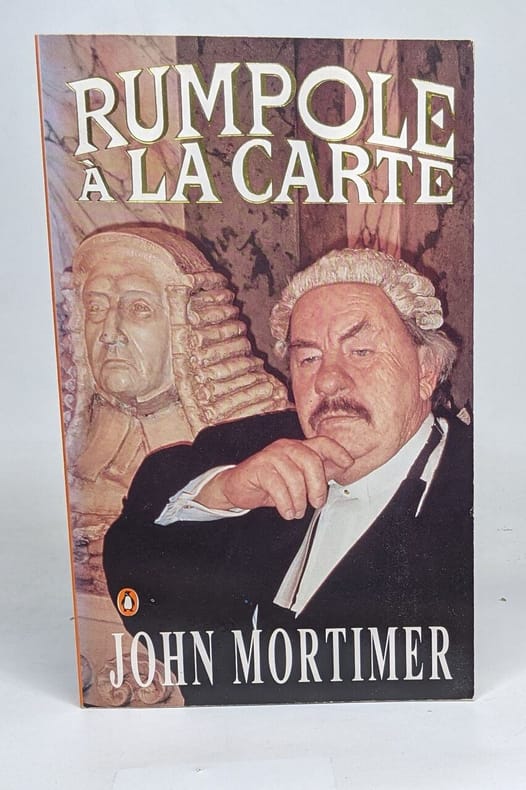
Rumpole a La Carte
Penguin Books Ltd 1991 256 pages 13 4x2x21 2cm. 1991. Broché. 256 pages.
書籍販売業者の参照番号
: 100108954 ISBN : 140156577
|
|
|
Confiant Raphael
L' Archet du colonel (Folio)
Mercure de France P 2001 385 pages 10 8x17 8x2 4cm. 2001. pocket_book. 385 pages.
書籍販売業者の参照番号
: 100109878 ISBN : 2070417638

|
|
|
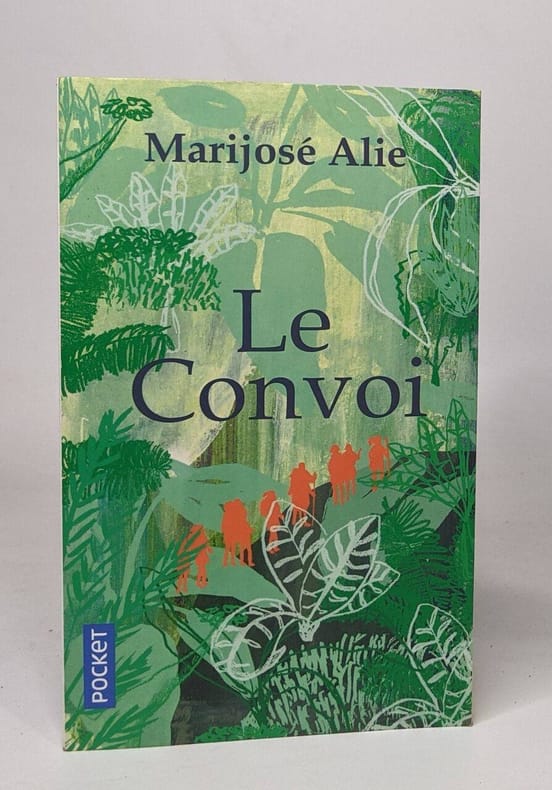
Alie Marijose
Le convoi
Pocket 2017 448 pages 10 8x17 6x2 4cm. 2017. pocket_book. 448 pages.
書籍販売業者の参照番号
: 100109886
|
|
|
Robert Lohr
Le secret de l'automate
J'ai lu 2008 445 pages poche. 2008. Poche. 445 pages.
書籍販売業者の参照番号
: 100109890 ISBN : 229000703

|
|
|
Burroughs William Kerouac Jack
Et les hippopotames ont bouilli vifs dans leur piscine
Gallimard 2013 240 pages 10 6x1 8x17 6cm. 2013. Broché. 240 pages.
書籍販売業者の参照番号
: 100109922 ISBN : 2070453782

|
|
|
Fargues Nicolas
J Etais Derriere Toi (Folio)
Gallimard 2007 235 pages 17 6x1 6x10 4cm. 2007. pocket_book. 235 pages.
書籍販売業者の参照番号
: 100109958 ISBN : 2070342565

|
|
|
Berna
Le cheval sans tête
Rouge et or 1992 595 pages 323x51x478cm. 1992. Cartonné. 595 pages.
書籍販売業者の参照番号
: 100109998

|
|
|
Hedges Peter
What's Eating Gilbert Grape
Mandarin 1994 336 pages 10 922x2 54x17 78cm. 1994. Broché. 336 pages.
書籍販売業者の参照番号
: 100110236 ISBN : 749336137

|
|
|
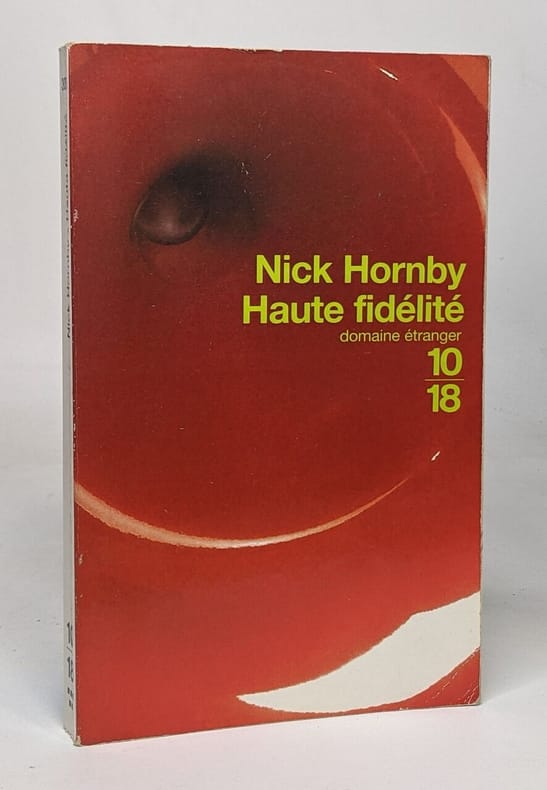
HORNBY Nick
Haute fidelite
Editions 10/18 2004 381 pages 10 2x1 6x17 8cm. 2004. Broché. 2 volume(s). 381 pages.
書籍販売業者の参照番号
: 100110278
|
|
|
Sheers Owen
J'ai vu un homme
Editions Rivages 2015 352 pages 14 86x21 41x1 85cm. 2015. Broché. 352 pages.
書籍販売業者の参照番号
: 100110463

|
|
|
Kaye Marilyn
Toutes parfaites + Disparus! qui sera le prochain + Traquée à qui faire confiance? --- 3 livres Réplica
Pocket 2001 64 pages 1x18x11cm. 2001. Broché. 64 pages.
書籍販売業者の参照番号
: 100110737

|
|
|
Gash J
Meurtre au confessionnal + Meurtre à la une --- 2 livres
Presses de la Cité 1998 128 pages 23x14x3cm. 1998. Cartonné. 128 pages.
書籍販売業者の参照番号
: 100111087

|
|
|
Bramly Serge
Madame Satan
Le livre de poche 1994 318 pages poche. 1994. Broché. 318 pages.
書籍販売業者の参照番号
: 100112121

|
|
|
Bertrand Cousin
A L'ouest du Nouveau
Paris Jean Picollec 1990 730 pages in8. 1990. Broché. 730 pages.
書籍販売業者の参照番号
: 100112299

|
|

 検索結果のメールを受信する
 PDFファイルの検索結果をダウンロード
 RSSフィード
 パーマネントリンク


