|
Rosenquist, James
James Rosenquist / Leo Castelli / Opening October 1 1983 original Signed Color Poster Illustrating "4 New Clear Women" from the Exhibit
New York: Leo CAstelli 1983. Original Poster . Single Sheet. Fine. Original Color Poster38" X 25" Signed Beneath The Image And Dated By The Artist 1983. <br/> <br/> Leo CAstelli unknown
書籍販売業者の参照番号
: 016302
|
|
|
(Hubbard, L Ron); Shun Kijima
The Legend Original Lithographic Print From L. Ron Hubbard's Battlefield Earth Japanese Edition Volume 6 By Shun Kijima
Circa 1986 1986. First Edition . No Binding. Fine. #142/500 Of This Signed Numbered 18" X 27" Color Lithograph Individually Signed By Kijima In Gold Ink. Attractively Framed In Black Metal Wooden Internal Frame With Gold Identification Plate. Large Glass In Frame Absolutely No Mail Orders Please Must Pick Up In Pasadena California. <br/> <br/> unknown
書籍販売業者の参照番号
: 006157
|
|
|
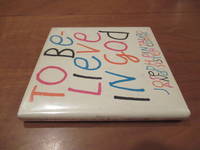
Sister Mary Corita Kent
To Believe In God Signed By Sister Mary Corita
New York: Harper & Row 1968. 1st Edition Early Reprint. Illustrated Boards. Fine/Near Fine DJ. 6 1/4 " Tall. Very Early Reprint 1968 No First Edition Statement; Dj Has Publisher's Code 0368 At Bottom Of Front Flap And Publisher's Printed Price Label $4.95 At Top.Unpaginated; Interior Clean. Boards Clean And Bright; Dj Virtually New. Signed "Corita" On Front Endpaper In Her Distinctive Handwriting. <br/> <br/> Harper & Row hardcover
書籍販売業者の参照番号
: 018120
|
|
|
[NEW YORK WORLD'S FAIR - 1939].
Map of Greater New York: New York World’s Fair 1939. . . .
New York NY: Corn Exchange Bank Trust Company C.S. Hammond & Co. 1939. 8vo. 5 x 10.25 in. which folds out into double-sided pictorial birds-eye map on recto 2 inset NY World’s Fair & NY Transit maps on versos sized 30.5 x 20.75 in. when fully folded out cover art of the iconic Trylon & Perisphere on front of self-printed colour-illustrated softcovers minor edgewear slight rubbing light toning still VG bright copy. First edition of this relatively scarce birds-eye panorama pictorial map view of New York City the five boroughs including the World’s Fair and Central Park demarcated in green. This brochure’s inset verso maps emphasize the ease of travel on New York’s extensive Rapid Transit system to the World’s Fair and other sites and includes a site map depicting the Fair laid out. Corn Exchange Bank Trust Company, [C.S. Hammond & Co.], paperback
書籍販売業者の参照番号
: 63999
|
|
|
Galvez, Francisco (1945-)
Una visión de lo transitorio: Antología poética: 1973-1997
paperback. Good. Access codes and supplements are not guaranteed with used items. May be an ex-library book. paperback
書籍販売業者の参照番号
: 8483740036.G ISBN : 8483740036 9788483740033
|
|
|
Wo95/1945
15 DIVISION 45 Infantry Brigade Queen's Own Cameron Highlanders 6th Battalion: 8 July 1915 - 25 June 1919 First World War War Diary WO95/1945
like new. unknown
書籍販売業者の参照番号
: 30352123 ISBN : 147452317x 9781474523172

|
|
|
ZEHRA ARAL, (1945-).
Zehra Aral: Bir ressamin otoportresi. Texts by Mehmet Ergüven Emre Zeytinoglu Celal Binzet Aydin Çubukçu.
Istanbul: Rh Sanat Yayinlari 2019. Dust jacket. New/New. 4to - over 9¾ - 12" tall. Original bdg. Dust wrapper. 4to. 29 x 24 cm. In Turkish. 384 p. color and b/w ills. Zehra Aral: Bir ressamin otoportresi. Texts by Mehmet Ergüven Emre Zeytinoglu Celal Binzet Aydin Çubukçu. <br/> <br/> Rh+ Sanat Yayinlari unknown
書籍販売業者の参照番号
: 053066 ISBN : 6056877124 9786056877124
|
|
|
JALE YILMABASAR, (Turkish painter and ceramicist), (1939-).
Typescript document - letter signed 'Jale Yilmabasar' addressed to Gültekin Sâmanoglu 1927-2003.
Istanbul: Jale Yilmabasar Tatbiki Güzel Sanatlar Okulu Keramik Asistani" Letterhead 1966. No Binding. Very Good. Original typescript document - letter signed by Jale Yilmabasar. 305x215 cm. In Turkish. 10 lines. A pair of puncher holes on the left side of the paper. Letter sent to Gültekin Sâmanoglu 1927-2003 who was a Turkish poet and one of the founders of a very important literary magazine titled 'Hisar' in the Turkish literature. 1 p. She wrote to him that she received the Hisar magazines that he sent. She thanks and she apologizes that she couldn't call him. Yilmabasar is a Turkish painter and ceramicist. She was born in 1939 in Samsun Turkey. Yilmabaser's career as a ceramic artist began while studying in the United States at Albany Union High School under an AFS scholarship. In addition to ceramics and painting Yilmabaser also studied ballet for a large portion of her life. After high school Yilmabaser returned to Turkey where she studied ceramics at the State Academy of Fine Arts and the Istanbul Graduate School of Practical Fine Arts. She also studied painting and graphic design at Munich Academy. She graduated from the Department of Ceramic School of Practical Fine Arts in the year 1962. After graduation she held an internship at the Arzberg Schonwald Ceramic Factory in Germany. Yilmabaser also lectured at the University of Miami for one year in 1964. She served as a professor at Marmara University for many years. Yilmabaser held art exhibitions all over the world. Her first personal exhibition "Jale's Roosters" was held in 1963." After this she went on to open and attend exhibitions in Paris Munich London and Moscow among other places. Because of her work Yilmabaser was called upon to create many ceramic panels for hotels and institutes worldwide. In 1968 she was awarded a gold medal in the International Ceramic Competition in Italy In 1969 she received a gold medal at the International Handicrafts Fair in Germany. She was also elected as one of the six best ceramic artists in the world in 1972. In 1998 she received the title "State Artist" from the Ministry of Culture of Turkey. One year later she opened the most inclusive exhibition of her work "15 years with Pictures" in which she showed fifteen years of her art and ceramic work This exhibition was held in the Istanbul Atatürk Culture Center. <br/> <br/> Jale Yilmabasar Tatbiki Güzel Sanatlar Okulu Keramik Asistani" Letterhead unknown
書籍販売業者の参照番号
: 053239
|
|
|
MUSTAFA BUYUKKOLANCI, (1945?-).
Fragmente der Bauplastik des Artemisions von Ephesos: Funde aus den Grabungen bei der Johanneskirche in Selçuk Sonderdruck - Separatum. SIGNED AND INSCRIBED COPY.
Germany: Sonderdruck aus den Jahresheften des Österreichischen Archaologischen Institutes 62 1993 Hauptblatt 1993. Soft cover. Very Good. 4to - over 9¾ - 12" tall. Paperback. 4to. 30 x 21 cm. In German. 95-104 pp. b/w plates. Signed and inscribed by Büyükkolanci as "Nadir beye en derin saygilarimla". Fragmente der Bauplastik des Artemisions von Ephesos: Funde aus den Grabungen bei der Johanneskirche in Selçuk Sonderdruck - Separatum. SIGNED AND INSCRIBED COPY. Büyükkolanci is a Turkish archeologist who is an excavations director of Ayasuluk Tepesi ve St. Jean Sculpture Excavations. <br/> <br/> Sonderdruck aus den Jahresheften des Österreichischen Archaologischen Institutes 62, 1993, Hauptblatt paperback
書籍販売業者の参照番号
: 053869
|
|
|
MUSTAFA BALEL, (1945-).
Le transanatolien.
Paris: La Pensee Universelle 1988. 1st Edition . Soft cover. Very Good. 8vo - over 7¾ - 9¾" tall. Paperback. Cr. 8vo. 19 x 15 cm. In French. 121 p. Le transanatolien. Balel is a Turkish short story writer and novelist. After he graduated from Ankara Gazi Institute of Education Department of French philology 1968 he did his master's at the University of Poitiers in France 1971-1972. Returned to Turkey he worked as a teacher at high schools in Ardahan 1968-1970 Sivas 1972-1975 and Istanbul and at the Atatürk Education Institute 1978-1980. He was a member of publication committee of Larousse Encyclopedia 1986-1992; Axis Encyclopedia 1997-2001 and published a story journal Öykü 1975-1976 8 issues.He had his stories articles and translations published in the journals and in publications published in Yugoslavia Bulgaria France Brazil Iran and Romania. He translated several novels and short stories of the French language Michel Tournier Yann Queffélec Pascal Bruckner Jorge Semprún Panait Istrati Jean-Philippe Toussaint Dragan Babic Marlène Amar etc. as well as poetry of the Turkish to French among other Eyes of Istanbul 2014 from Ayten Mutlu; The street seeking the sea 2015; Hilal Karahan. In his stories he attracted attention with his ability to combine contemporary story technique with his mastery of traditional narration along with a successful psychological analysis. In his works one notes that he indicates a structure conventionally matriarchal exist surreptitiously in a strictly patriarchal known society. <br/> <br/> La Pensee Universelle paperback
書籍販売業者の参照番号
: 049133
|
|
|
HUSEYIN OKSUZ, (1945-).
Hattat Hüseyin Öksüz Konevi.
Konya: TC Konya Valiligi Il Kültür ve Turizm Müdürlügü 2011. 2nd Edition . Soft cover. New. 4to - over 9¾ - 12" tall. Paperback. Pbo. 4to. 30 x 21 cm. In Turkish. 14 151 9 p. color ills. and plts. Hattat Hüseyin Öksüz Konevi. Calligraphic plates and biography of contemporary Turkish calligrapher Hüseyin Öksüz. <br/> <br/> TC Konya Valiligi Il Kültür ve Turizm Müdürlügü paperback
書籍販売業者の参照番号
: 018842 ISBN : 6054988018 9786054988013
|
|
|
ONDER KUCUKERMAN, (1939-).
The industrial heritage of costume design in Turkey. Translated by Joyce Matthews.
Istanbul: GSD Foreign Trade Co. Inc. 1996. 1st Edition . Hardcover. New. Folio - over 12 - 15" tall. Original decorative cloth bdg. In publisher's special box. Folio. 34 x 24 cm. English Edition. 283 p. b/w and color ills. Türk giyim sanayiinin tarihi kaynaklari. The industrial heritage of costume design in Turkey. Contents: Foreword; Introduction.; 1. Historical sources of Turkish Costume.; 2. Ottoman textile manifacturing.; 3. Dress transformation in Ottoman Empire in the 19th century.; 4. Ottoman textile and clothing products at early international industry exhibitions.; 5. Reflections of industrial revolution in Ottoman Empire and historical factories. The publication of this illustrated history of Turkish costumes through the ages commemorates the tenth anniversary of GSD Foreign Trade CO. Inc. Established in 1986 GSD is today the largest exporter in Turkey occupying a unique and prominent position in the garment industry.We have prepared this volume in the hope that it will serve as a reference book and a document of enduring cultural value. This work is also intended to commemorate the nameless designers manufacturers and workers who have toiled through the centuries to contribute to the historical formation and development of the Turkish ready-to-wear industry. The borders of the far-flung Ottoman Empire encompassed an extraordinarily rich variety of styles of dress. The development change and technological evolution over time of these different styles and traditions are reflected in many aspects of the grand historical adventure that began in Central Asia expanded into one of the largest and most long-lived empires of modern times and evolved; after ten centuries into the Republic of Turkey. Reverberations of the historical development of Ottoman costumes can be detected in many spheres especially in international relations economic and social developments and the interaction of culture and art. This volume sets out to explore the origins and inspiring influences of the Turkish garment industry in an historical perspective and illuminate the development of this cultural and industrial heritage. GSD Foreign Trade Co. is pleased to mark its tenth anniversary with the publication of this book. I would like to thank our chairman Mr. Turgut Yilmaz and all the members of Board of Directors for the support they have given this project. This book has been prepared by Professor Önder Küçükerman highly respected scholar and artist. With his customary enthusiasm and care Professor Küçükerman has elucidated many aspects of Turkey's cultural and industrial heritage introducing us to the treasures inherited by the Turkish ready wear sector an industry that today is applying advanced methods and techniques in an increasingly widespread manner. I would like to express my thanks once more to Prof. Küçükerman and give my compliments to Mr. Atilla Aksoy who has elevated this book to an artistic level. <br/> <br/> GSD Foreign Trade Co. Inc. hardcover
書籍販売業者の参照番号
: 043879 ISBN : 9759493403 9789759493400
|
|
|
ONDER KUCUKERMAN, (1939-).
Türk giyim sanayiinin tarihi kaynaklari.
Istanbul: GSD Dis Ticaret A.S. 1996. 1st Edition . Hardcover. New. 4to - over 9¾ - 12" tall. Original decorative cloth bdg. In publisher's special box. 4to. 34 x 24 cm. In Turkish. 283 p. b/w and color ills. Türk giyim sanayiinin tarihi kaynaklari. The industrial heritage of costume design in Turkey. <br/> <br/> GSD Dis Ticaret A.S. hardcover
書籍販売業者の参照番号
: 043878 ISBN : 9759493411 9789759493417
|
|
|
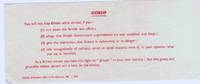
GOSSIP, 1939
Paper Slip headed 'Gossip' printed in red for inserting in passports
warning that "You will not help Britain while abroad if you. run down the British war effort. allege that British Government organisations are. inept" imply that "Britain is defenceless or in danger" or "talk thoughtlessly of military aerial or naval matters even if in your opinion what you say is harmless" ending "As a British citizen you have the right to 'grouse' in your own country; but idle gossip and grumbles voiced abroad are a help to the enemy" 100000 copies printed by 'M&C Ltd.' 1 side 3¼" x 8" no place November unknown
書籍販売業者の参照番号
: 56117
|
|
|
Alpine Club of Canada 1939
The Canadian Alpine Journal Volume XXVII - No. 1
Banff Alberta: Alpine Club of Canada 1940. Softcover. very good. 1st Edition. viii134pp. 6pp. adspp. Octavo in original green wrappers with plates from photos maps etc and illustrations in text. very good Contents include "New Peaks in the Coast Mountains; the Goodsirs camp; "A Climbing Trip to the Freshfield Group and some other Ascents" by Kate Gardiner; "Explorations in the Southern Cariboos" by Raymond T. Zillmer; Sierra Nevada de Santa Marta Colombia" by H. S. Hall; and "In the French Alps" by Bea Howell. 1940 Alpine Club of Canada paperback
書籍販売業者の参照番号
: 104995
|
|
|
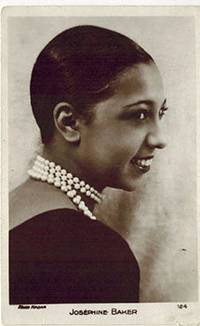
Raikh, Zinaida (1894–1939); aka Zinaida Reich; Paul Nadar(1856 - 1939), photographer
Portrait of Josephine Baker on an Als card from the Russian actress Zinaida Reich. First edition of the photograph. Signed.
Paris: Sept. 9 1928. Original photograph and Als. 14 x 9cm. Addressed toi Liza Kogan referencing Meyerhold's health. Zinaida Nikolayevna Reich the last name also spelled Raikh or Raih; Russian: Зинаида Ðиколаевна Райх; 1894-1939 was a Russian actress and one of the main stars of the Meyerhold Theatre until it was closed under Joseph Stalin.Reich married poet Sergey Yesenin and had two children with him one of which was Konstantin. . After their divorce she married the theater director Vsevolod Meyerhold who adopted the children. In 1939 Meyerhold was arrested by the NKVD and she was brutally stabbed in her apartment by NKVD agents who staged a robbery.Valentin Kataev a writer journalist dramatist prose writer poet and scriptwriter was born in Odessa in 1897.Yury Karlovich Olesha was a Russian and Soviet novelist. He is considered one of the greatest Russian novelists of the 20th century 1899-1960.Provenance: From the collection of Alma Law the American scholar of the Russian theater. Paris: Sept. 9, 1928 unknown
書籍販売業者の参照番号
: 51-5598
|
|
|
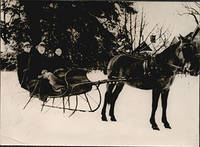
Agence France Presse; AFP; Franklin Delano Roosevelt (January 30, 1882 - April 12, 1945 ) A F P
Pres. Franklin D. Roosevelt rides in a sleigh with his daughter Anna Roosevelt and her second husband Clarence John Boettiger. 1935 .Original photograph.
Hyde Park NY: 24 February 1935. Silver print. French text on separate sheet pasted to verso. Photographer's stamp verso. 18 x 13 cm. Anna Roosevelt Halsted was one of the most understated accomplished women of the 20th century. Co-editor of the Seattle Post-Intelligencer owner of the Arizona Times children’s book author one of the most trusted advisors of her father President Franklin D. Roosevelt and champion of humanitarian works Anna lived a remarkable life.Perhaps it was her parents unhappiness that was a factor in Anna being married three times. Her first marriage was to Curtis Bean Dall a New York stockbroker – they married in 1926 and divorced in 1934 sharing two children together. Anna moved into the White House with her children after this first divorce. Anna’s second marriage was to Clarence John Boettiger a journalist who she met while aiding her father’s second run for the presidency. They shared one son but divorced in 1948 – Clarence committed suicide in 1950 by jumping out of his hotel room window. Her last husband was Dr. James Halsted and the pair remained wedded until Anna’s death in 1975. Hyde Park, NY: 24 February, 1935 unknown
書籍販売業者の参照番号
: 51-6616
|
|
|
Mondial Photo- Presse; Franklin Delano Roosevelt (January 30, 1882 - April 12, 1945 )
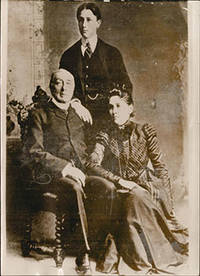
Franklin D. Roosevelt FDR at age 17 with his parents. Original photograph.
Hyde Park NY: Circa 1897. Silver print. French text on separate sheet pasted to verso. Photographer's stamp verso. 18 x 13 cm.Likely a photograph of a photograph.Franklin D. Roosevelt was born in Hyde Park New York on January 30 1882. He was the son of James Roosevelt and Sara Delano Roosevelt. His parents and private tutors provided him with almost all his formative education. He attended Groton 1896-1900 a prestigious preparatory school in Massachusetts and received a BA degree in history from Harvard in only three years 1900-03. Roosevelt next studied law at New York's Columbia University. When he passed the bar examination in 1907 he left school without taking a degree. For the next three years he practiced law with a prominent New York City law firm. He entered politics in 1910 and was elected to the New York State Senate as a Democrat from his traditionally Republican home district.In the meantime in 1905 he had married a distant cousin Anna Eleanor Roosevelt who was the niece of President Theodore Roosevelt. The couple had six children five of whom survived infancy: Anna 1906 James 1907 Elliott 1910 Franklin Jr. 1914 and John 1916. Hyde Park, NY: Circa 1897 unknown
書籍販売業者の参照番号
: 51-6617
|
|
|
Agence France Presse; AFP; Franklin Delano Roosevelt (January 30, 1882 - April 12, 1945 ) A F P
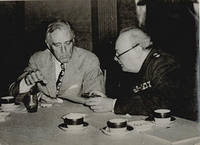
Pres. Franklin D. Roosevelt reets with PM Winston Churchill in Yalta in 1945.Original photograph.
Yalta Crimea: April; 13 1945. Silver print. French text on separate sheet pasted to verso. Photographer's stamp verso. 18 x 13 cm. Published the day after FDR's death. .The Yalta Conference took place in a Russian resort town in the Crimea from February 4–11 1945 during World War Two. At Yalta U.S. President Franklin D. Roosevelt British Prime Minister Winston Churchill and Soviet Premier Joseph Stalin made important decisions regarding the future progress of the war and the postwar world.World Leaders at the Yalta Conference.The Allied leaders came to Yalta knowing that an Allied victory in Europe was practically inevitable but less convinced that the Pacific war was nearing an end. Recognizing that a victory over Japan might require a protracted fight the United States and Great Britain saw a major strategic advantage to Soviet participation in the Pacific theater. At Yalta Roosevelt and Churchill discussed with Stalin the conditions under which the Soviet Union would enter the war against Japan and all three agreed that in exchange for potentially crucial Soviet participation in the Pacific theater the Soviets would be granted a sphere of influence in Manchuria following Japan’s surrender. This included the southern portion of Sakhalin a lease at Port Arthur now Lüshunkou a share in the operation of the Manchurian railroads and the Kurile Islands. This agreement was the major concrete accomplishment of the Yalta Conference. Yalta, Crimea: April; 13, 1945 unknown
書籍販売業者の参照番号
: 51-6621
|
|
|
World Wide Photos/The New York Times, Paris; Franklin Delano Roosevelt (January 30, 1882 - April 12, 1945 )
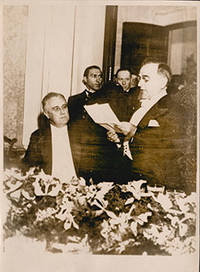
President Getúlio Dornelles Vargas of Brazil toasts President Franklin Delano Roosevelt in Rio de Janeiro in 1936. Original photograph.
Rio de Janeiro: Dec. 4 1936 . Silver print. French text on separate sheet pasted to verso. Photographer's stamp verso. 13 x 18 cm. . Rio de Janeiro: Dec. 4, 1936 unknown
書籍販売業者の参照番号
: 51-6615
|
|
|
World Wide Photos/The New York Times, Paris; Franklin Delano Roosevelt (January 30, 1882 - April 12, 1945 )
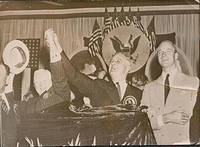
President Franklin Delano Roosevelt accepts the Democratic nomination at Franklin Field Philadelphia in 1936 with his son James and V-P Garner. Original photograph.
Philadelphia: July 7 1936/. Silver print. French text on separate sheet pasted to verso. Photographer's stamp verso. 13 x 18 cm. . Philadelphia: July 7, 1936/ unknown
書籍販売業者の参照番号
: 51-6622
|
|
|
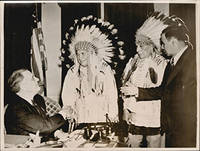
World Wide Photos/the New York Times, Paris; Franklin Delano Roosevelt (January 30, 1882 - April 12, 1945 )
President Franklin Delano Roosevelt meets with Indian chiefs from the Gros Ventre Tribe. Original photograph.
Washington DC: 1938. Silver print. French text on separate sheet pasted to verso. Photographer's stamp verso. 13 x 18 cm. Roosevelt met with Foolish Bear 84 and Drags Wolf 75 from the Gros Ventre tribe of North Dakota. They were there to thank the President for his help in restoring a sacred tribal relic the "Sacred Bundle" which they believed would end a period of drought. Washington, DC: 1938 unknown
書籍販売業者の参照番号
: 51-6612
|
|
|
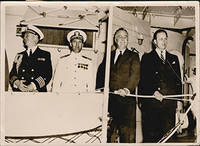
World Wide Photos/The New York Times, Paris; Franklin Delano Roosevelt (January 30, 1882 - April 12, 1945 )
President Franklin Delano Roosevelt on a fishing trip outside New Orleans on the destroyer Moffett. . Original photograph.
New Orleans : May 10 1937. Silver print. French text on separate sheet pasted to verso. Photographer's stamp verso. 13 x 18 cm. Joined by his son Elliott Roosevelt Ross T. McIntire Edwin M. Watson and Potomac Capt. Paul H. Bastedo the President spent that evening on board the destroyer USS Moffett anchored in the Mississippi River before departing early morning to meet with the Presidential Yacht waiting off the Texas coast. On the voyage off the shores of Louisiana and Texas FDR used his stamp collection to occupy his time.The destroyer USS Moffett and the USS Potomac rendezvoused at Aransas Pass Texas near Corpus Christi where the President and his party transferred in the early evening on May 1. Not wasting any special time allotted from Allah FDR went fishing on a small boat while the transfer was in progress and snagged a king mackerel to officially start the fishing trip.Back to business that evening on board the yacht when the White House mail pouch arrived with 38 official documents to be signed including an extension of the Joint Resolution on Neutrality Act which was due to expire at midnight. Although in 1937 FDR was politically advocating for U.S. neutrality in European conflicts including the Spanish Civil War he would later move the country to engagement and confront the isolationist with his Lend Lease concept. New Orleans : May 10, 1937 unknown
書籍販売業者の参照番号
: 51-6628
|
|
|
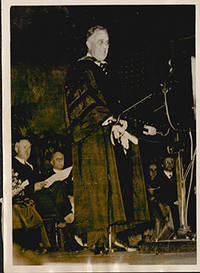
World Wide Photos/The New York Times, Paris; Franklin Delano Roosevelt (January 30, 1882 - April 12, 1945 )
President Franklin Delano Roosevelt receives an honorary doctorate from the Catholic University in 1933. Original photograph.
Washington DC: June 21 1933. Silver print. French text on separate sheet pasted to verso. Photographer's stamp verso. 18 x 13 cm. . Washington, DC: June 21 1933 unknown
書籍販売業者の参照番号
: 51-6652
|
|
|
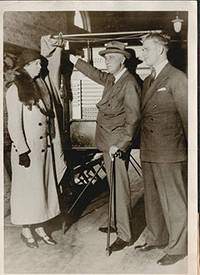
World Wide Photos/The New York Times, Paris; Franklin Delano Roosevelt (January 30, 1882 - April 12, 1945 )
President Franklin Delano Roosevelt voting in the 1932 election with his wife and son. Original photograph.
New York: Nov. 18 1932. Silver print. French text on separate sheet pasted to verso. Photographer's stamp verso. 13 x 18 cm. . New York: Nov. 18, 1932. unknown
書籍販売業者の参照番号
: 51-6626
|
|
|
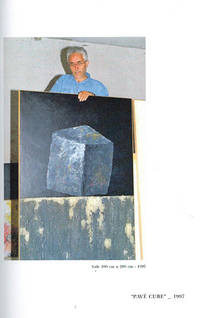
Touchet, Jean Pierre (born 1945 or 1949)
Jean Pierre Touchet. Catalogue 1996-2000.
Circa 2000. Original boards. 4to. 44pp. Presentation copy from the artist to the gallerist Solange Simon.Jean-Pierre Touchet est un Artiste Peintre français. Sa peinture contemporaine c'est construite comme des livres.Provenance succession Solange Simon 1920-2016. Elle fut galeriste à Lille dans les années 60-80 puis collabora avec la galerie Convergences à Nantes dans les années 80-90.Elle fut également peintre s'inspirant beaucoup de Pignon Chagall ou de Staël entre autres. Expertise by Vincent Cesbron. Circa 2000 hardcover
書籍販売業者の参照番号
: 51-4807
|
|
|
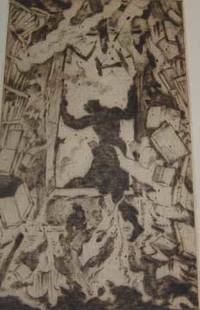
Steiner-Prag, Hugo (1880 - 1945).
Flaubert." Etching on various papers from the series "The Bibliomane".
Vienna and Leipzig: Avalun-Verlag 1921. 6.8 x 11.4 cm. plate size Etching on deckled wove. Very Good. [Vienna and Leipzig: Avalun-Verlag, 1921.] unknown
書籍販売業者の参照番号
: 73-4654
|
|
|
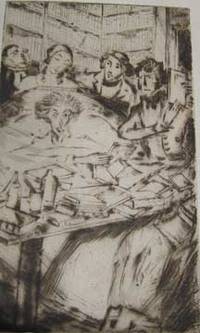
Steiner-Prag, Hugo (1880 - 1945).
Nodier." Etching on various papers from the series "The Bibliomane".
Vienna and Leipzig: Avalun-Verlag 1921. 6.8 x 11.4 cm. plate size Etching on deckled wove. Very Good. [Vienna and Leipzig: Avalun-Verlag, 1921.] unknown
書籍販売業者の参照番号
: 73-4652
|
|
|
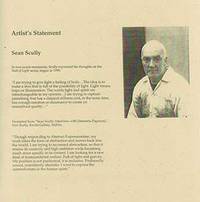
Scully, Sean (born 1945)
Dossier of art reviews biographical information and interviews with the artist Sean Scully.
1993-2001. Artist's statement;18 page interview with Eric Davis from 1999; Reviews by Arthur Danto from 2000 and 2001; Preface from the Bernd Llueser exhibition form 1993; review from Modern Painters 1993; and from the Wall Street Journal 1995 and ARTnews. Presented in a Knoedler & Company folder. From the collection of the art historian Peter Selz. 1993-2001 unknown
書籍販売業者の参照番号
: 51-3210
|
|
|
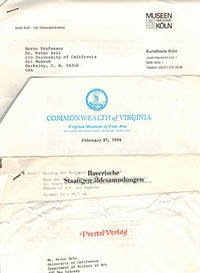
Selz, Peter (born 1919); James D Burke (born 1939); Carla Schulz-Hoffmann (born 1946) ;Siegfried Gohr; Frederick Brandt; Sieglin
An archive letters between Peter Selz James D. Burke and Carla-Schulz-Hoffmann about a forthcoming Max Beckmann exhibition
Berkeley California; St. Louis MO; Koeln; Munich; Richmond VA; Stuttgart; Geneva : 1982-1984. Letters between Peter Selz and curators and directors at the St. Louis Museum of Art and Bayerische Staatsgemaeldesammlungen the Museen der Stadt Koeln Prestel Verlag about the proposed Beckmann exhibition and Selz's book "Beckmann in America."4to. 29 pages of TLs and carbon copies. From the collection of the art historian Peter Selz. Berkeley, California; St. Louis, MO; Koeln; Munich; Richmond, VA; Stuttgart; Geneva : 1982-1984 unknown
書籍販売業者の参照番号
: 51-3352
|
|
|
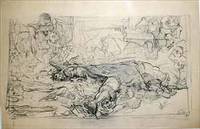
Kathe Kollwitz (German, 1967 - 1945) (Artist).
Vergewaltige Beuersfrau 1907 Raped Woman Facsimile of a drawing. Plate 8 of 24 from the Richter Portfolio.
Dresden: Emil Richter Verlag Dresden / Inhaber Dr. R. H. Meier ca 1927. Large format facsimile of the original drawing 23 x 15 inches. Very Good. Protected by transparent sheet and mat board. A study for plate 2 from Bauernkreig Peasant’s War cycle.As published in Käthe Kollwitz / Handzeichnungen / in originalgetreuen Wiedergaben / Emil Richter Verlag Dresden / Inhaber Dr. R. H. Meier. Directed by Fritz Boettger.Käthe Kollwitz née Schmidt German pronunciation: kÉ›ËtÉ™ kÉ”lvɪtÍ¡s 8 July 1867 – 22 April 1945 was a German artist who worked with painting printmaking including etching lithography and woodcuts and sculpture. Her most famous art cycles including The Weavers and The Peasant War depict the effects of poverty hunger and war on the working class. Despite the realism of her early works her art is now more closely associated with Expressionism. Kollwitz was the first woman to not only be elected to the Prussian Academy of Arts but to also receive honorary professor status. Dresden: Emil Richter Verlag Dresden / Inhaber Dr. R. H. Meier, [ca 1927]. unknown
書籍販売業者の参照番号
: 18-8000
|
|
|
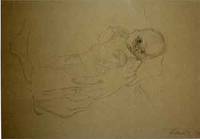
Kathe Kollwitz (German, 1967 - 1945) (Artist).
Säugling von den Händen der Mutter gehalten 1909 Infant held by the hands of the mother 1909 Facsimile of a charcoal drawing. Plate 16 of 24 from the Richter Portfolio.
Dresden: Emil Richter Verlag Dresden / Inhaber Dr. R. H. Meier ca 1927. Large format facsimile of the original drawing 11 x 16 inches. Very Good. Protected by transparent sheet and mat board. As published in Käthe Kollwitz / Handzeichnungen / in originalgetreuen Wiedergaben / Emil Richter Verlag Dresden / Inhaber Dr. R. H. Meier. Directed by Fritz Boettger.Käthe Kollwitz née Schmidt German pronunciation: kÉ›ËtÉ™ kÉ”lvɪtÍ¡s 8 July 1867 – 22 April 1945 was a German artist who worked with painting printmaking including etching lithography and woodcuts and sculpture. Her most famous art cycles including The Weavers and The Peasant War depict the effects of poverty hunger and war on the working class. Despite the realism of her early works her art is now more closely associated with Expressionism. Kollwitz was the first woman to not only be elected to the Prussian Academy of Arts but to also receive honorary professor status. Dresden: Emil Richter Verlag Dresden / Inhaber Dr. R. H. Meier, [ca 1927]. unknown
書籍販売業者の参照番号
: 18-8005
|
|
|
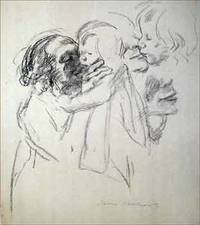
Kathe Kollwitz (German, 1967 - 1945) (Artist).
Frau Kind Liebkosend c 1920 Woman Caressing Child Facsimile of a charcoal drawing. Plate 13 of 24 from the Richter Portfolio.
Dresden: Emil Richter Verlag Dresden / Inhaber Dr. R. H. Meier ca 1927. Large format facsimile of the original drawing 17¾ x 20 inches. Very Good. Protected by transparent sheet and mat board. As published in Käthe Kollwitz / Handzeichnungen / in originalgetreuen Wiedergaben / Emil Richter Verlag Dresden / Inhaber Dr. R. H. Meier. Directed by Fritz Boettger.Käthe Kollwitz née Schmidt German pronunciation: kÉ›ËtÉ™ kÉ”lvɪtÍ¡s 8 July 1867 – 22 April 1945 was a German artist who worked with painting printmaking including etching lithography and woodcuts and sculpture. Her most famous art cycles including The Weavers and The Peasant War depict the effects of poverty hunger and war on the working class. Despite the realism of her early works her art is now more closely associated with Expressionism. Kollwitz was the first woman to not only be elected to the Prussian Academy of Arts but to also receive honorary professor status. Dresden: Emil Richter Verlag Dresden / Inhaber Dr. R. H. Meier, [ca 1927]. unknown
書籍販売業者の参照番号
: 18-8007
|
|
|
Kathe Kollwitz (German, 1967 - 1945) (Artist).
Tod 1897 Death Facsimile of a drawing. Plate 5 of 24 from the Richter Portfolio.
Dresden: Emil Richter Verlag Dresden / Inhaber Dr. R. H. Meier ca 1927. Large format facsimile of the original drawing 10 x 8 inches. Very Good. Protected by transparent sheet and mat board. Drawing for plate 2 of Ein Weberaufstand the weaver’s revolt Kollwitz’ first cycle of etchings and received critical acclaim.As published in Käthe Kollwitz / Handzeichnungen / in originalgetreuen Wiedergaben / Emil Richter Verlag Dresden / Inhaber Dr. R. H. Meier. Directed by Fritz Boettger.Käthe Kollwitz née Schmidt German pronunciation: kÉ›ËtÉ™ kÉ”lvɪtÍ¡s 8 July 1867 – 22 April 1945 was a German artist who worked with painting printmaking including etching lithography and woodcuts and sculpture. Her most famous art cycles including The Weavers and The Peasant War depict the effects of poverty hunger and war on the working class. Despite the realism of her early works her art is now more closely associated with Expressionism. Kollwitz was the first woman to not only be elected to the Prussian Academy of Arts but to also receive honorary professor status. Dresden: Emil Richter Verlag Dresden / Inhaber Dr. R. H. Meier, [ca 1927]. unknown
書籍販売業者の参照番号
: 18-8008
|
|
|
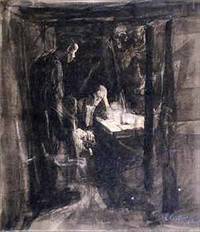
Kathe Kollwitz (German, 1967 - 1945) (Artist).
Abschied. 1910 Woman Facsimile of a drawing. Plate 11 of 24 from the Richter Portfolio.
Dresden: Emil Richter Verlag Dresden / Inhaber Dr. R. H. Meier ca 1927. Large format facsimile of the original drawing 21 x 17¾ inches. Very Good. Protected by transparent sheet and mat board. As published in Käthe Kollwitz / Handzeichnungen / in originalgetreuen Wiedergaben / Emil Richter Verlag Dresden / Inhaber Dr. R. H. Meier. Directed by Fritz Boettger.Käthe Kollwitz née Schmidt German pronunciation: kÉ›ËtÉ™ kÉ”lvɪtÍ¡s 8 July 1867 – 22 April 1945 was a German artist who worked with painting printmaking including etching lithography and woodcuts and sculpture. Her most famous art cycles including The Weavers and The Peasant War depict the effects of poverty hunger and war on the working class. Despite the realism of her early works her art is now more closely associated with Expressionism. Kollwitz was the first woman to not only be elected to the Prussian Academy of Arts but to also receive honorary professor status. Dresden: Emil Richter Verlag Dresden / Inhaber Dr. R. H. Meier, [ca 1927]. unknown
書籍販売業者の参照番号
: 18-7999
|
|
|
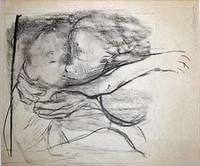
Kathe Kollwitz (German, 1967 - 1945) (Artist).
Arbeiterfrau 1906 Working woman Facsimile of charcoal drawing on laid paper. Impression from the 1921 Richter portfolio.
Dresden: Emil Richter Verlag Dresden / Inhaber Dr. R. H. Meier ca 1927. Large format facsimile of the original drawing 22¾ x 17 inches. Very Good. Protected by transparent sheet and mat board. As published in Käthe Kollwitz / Handzeichnungen / in originalgetreuen Wiedergaben / Emil Richter Verlag Dresden / Inhaber Dr. R. H. Meier. Directed by Fritz Boettger.This portrait of an unknown working class women demonstrates the conflict faced by all employed women in the modern era the struggle between the requirements of their profession and their role in the family. As a wife and mother Kollwitz sympathized with such women even though she was one of the lucky few that could afford a domestic servant to help her around the house. This allowed her to work on her art in the mornings and spend time with her family in the evenings. On one hand Kollwitz expressed the desire to be free of her domestic ties in order to be able to focus more intensely on art. However she also appreciated feeling needed by her husband and two sons. Courageous but strained working class women frequently appeared as subjects in Kollwitz' art.Käthe Kollwitz née Schmidt German pronunciation: kÉ›ËtÉ™ kÉ”lvɪtÍ¡s 8 July 1867 – 22 April 1945 was a German artist who worked with painting printmaking including etching lithography and woodcuts and sculpture. Her most famous art cycles including The Weavers and The Peasant War depict the effects of poverty hunger and war on the working class. Despite the realism of her early works her art is now more closely associated with Expressionism. Kollwitz was the first woman to not only be elected to the Prussian Academy of Arts but to also receive honorary professor status. Dresden: Emil Richter Verlag Dresden / Inhaber Dr. R. H. Meier, [ca 1927]. unknown
書籍販売業者の参照番号
: 18-7995
|
|
|
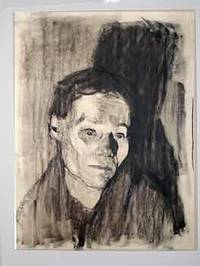
Kathe Kollwitz (German, 1967 - 1945) (Artist).
Die Gefangenen 1908 The Prisoners Facsimile of a drawing. Plate 7 of 24 from the Richter Portfolio.
Dresden: Emil Richter Verlag Dresden / Inhaber Dr. R. H. Meier ca 1927. Large format facsimile of the original drawing 15 x 21 inches. Very Good. Protected by transparent sheet and mat board. As published in Käthe Kollwitz / Handzeichnungen / in originalgetreuen Wiedergaben / Emil Richter Verlag Dresden / Inhaber Dr. R. H. Meier. Directed by Fritz Boettger.Käthe Kollwitz née Schmidt German pronunciation: kÉ›ËtÉ™ kÉ”lvɪtÍ¡s 8 July 1867 – 22 April 1945 was a German artist who worked with painting printmaking including etching lithography and woodcuts and sculpture. Her most famous art cycles including The Weavers and The Peasant War depict the effects of poverty hunger and war on the working class. Despite the realism of her early works her art is now more closely associated with Expressionism. Kollwitz was the first woman to not only be elected to the Prussian Academy of Arts but to also receive honorary professor status. Dresden: Emil Richter Verlag Dresden / Inhaber Dr. R. H. Meier, [ca 1927]. unknown
書籍販売業者の参照番号
: 18-8006
|
|
|
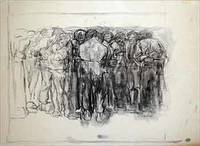
Kathe Kollwitz (German, 1967 - 1945) (Artist).
Verunglucktes Kind 1909-10 Run Over Facsimile of charcoal drawing on laid paper. Plate 18 of 24 from the Richter Portfolio.
Dresden: Emil Richter Verlag Dresden / Inhaber Dr. R. H. Meier ca 1927. Large format facsimile of the original drawing 22¾ x 17 inches. Very Good. Protected by transparent sheet and mat board. As published in Käthe Kollwitz / Handzeichnungen / in originalgetreuen Wiedergaben / Emil Richter Verlag Dresden / Inhaber Dr. R. H. Meier. Directed by Fritz Boettger.This drawing is a study for the 1910 etching Ãœberfahren.Käthe Kollwitz née Schmidt German pronunciation: kÉ›ËtÉ™ kÉ”lvɪtÍ¡s 8 July 1867 – 22 April 1945 was a German artist who worked with painting printmaking including etching lithography and woodcuts and sculpture. Her most famous art cycles including The Weavers and The Peasant War depict the effects of poverty hunger and war on the working class. Despite the realism of her early works her art is now more closely associated with Expressionism. Kollwitz was the first woman to not only be elected to the Prussian Academy of Arts but to also receive honorary professor status. Dresden: Emil Richter Verlag Dresden / Inhaber Dr. R. H. Meier, [ca 1927]. unknown
書籍販売業者の参照番号
: 18-7996
|
|
|
Kathe Kollwitz (German, 1967 - 1945) (Artist).
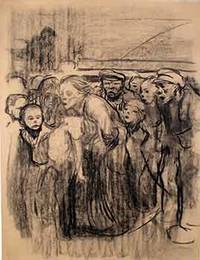
Die Eltern 1892 The Parents Facsimile of a drawing. Plate 24 of 24 from the Richter Portfolio.
Dresden: Emil Richter Verlag Dresden / Inhaber Dr. R. H. Meier ca 1927. Large format facsimile of the original drawing 22 x 16¾ inches. Very Good. Protected by transparent sheet and mat board. A study for the woodcut Die Eltern from Kreig War cycle.As published in Käthe Kollwitz / Handzeichnungen / in originalgetreuen Wiedergaben / Emil Richter Verlag Dresden / Inhaber Dr. R. H. Meier. Directed by Fritz Boettger.Käthe Kollwitz née Schmidt German pronunciation: kÉ›ËtÉ™ kÉ”lvɪtÍ¡s 8 July 1867 – 22 April 1945 was a German artist who worked with painting printmaking including etching lithography and woodcuts and sculpture. Her most famous art cycles including The Weavers and The Peasant War depict the effects of poverty hunger and war on the working class. Despite the realism of her early works her art is now more closely associated with Expressionism. Kollwitz was the first woman to not only be elected to the Prussian Academy of Arts but to also receive honorary professor status. Dresden: Emil Richter Verlag Dresden / Inhaber Dr. R. H. Meier, [ca 1927]. unknown
書籍販売業者の参照番号
: 18-8001
|
|
|
Kathe Kollwitz (German, 1967 - 1945) (Artist).
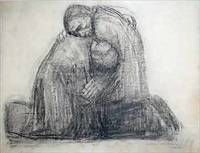
Frau mit schmerzerfulltem Gesicht 1900 Woman with pained expression on her face Facsimile of a pen and charcoal drawing. Plate 4 of 24 from the Richter Portfolio.
Dresden: Emil Richter Verlag Dresden / Inhaber Dr. R. H. Meier ca 1927. Large format facsimile of the original drawing 10 x 16 inches. Very Good. Protected by transparent sheet and mat board. Study of a woman for Zertretene Downtrodden.As published in Käthe Kollwitz / Handzeichnungen / in originalgetreuen Wiedergaben / Emil Richter Verlag Dresden / Inhaber Dr. R. H. Meier. Directed by Fritz Boettger.Käthe Kollwitz née Schmidt German pronunciation: kÉ›ËtÉ™ kÉ”lvɪtÍ¡s 8 July 1867 – 22 April 1945 was a German artist who worked with painting printmaking including etching lithography and woodcuts and sculpture. Her most famous art cycles including The Weavers and The Peasant War depict the effects of poverty hunger and war on the working class. Despite the realism of her early works her art is now more closely associated with Expressionism. Kollwitz was the first woman to not only be elected to the Prussian Academy of Arts but to also receive honorary professor status. Dresden: Emil Richter Verlag Dresden / Inhaber Dr. R. H. Meier, [ca 1927]. unknown
書籍販売業者の参照番号
: 18-8009
|
|
|
Christie, John (b 1945); Christopher Logue and Pablo Neruda (poets)
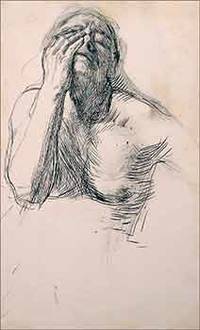
Red Bird: Love Pomes by Christopher Logue based on the Spanish of Pablo Neruda with Ten Screenprints by John Christie. First edition. Signed.
Guildford England: Circle Press 1979. Ten initialled screen prints and one fully signed print for love poems by Logue based on verse of Pablo Neruda with text printed letter-press in 18 pt Baskerville. 300 copies 45 proofs – eleven unbound 4 pp sections – 40 x 32 cm on Somerset Book mould-made paper laid into canvas chemise folder and brown cloth slip-case. Small tear on spine of slipcase; chemise fine. Guildford, England: Circle Press, 1979 hardcover
書籍販売業者の参照番号
: 16-3539
|
|
|
Susan Felter (b 1945).
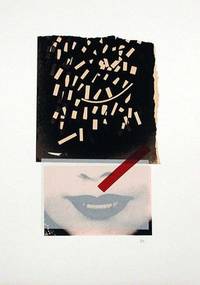
Ripples On Creek. Signed by photographer Susan Felter.
Berkeley CA: Susan Felter 1983. Color Print 16" x 20" Oblong. VG. Berkeley, CA: Susan Felter, 1983. unknown
書籍販売業者の参照番号
: 64-0045

|
|
|
Sheets, Millard
Preliminary design for the Rainbow Mural at the Hilton Lagoon Tower Honolulu Hawaii.
1968. Gouache painting on board. 1.5 x 17 inches. BellevueAnnotated titled and dated on the mount by the artist in pencil. Literature: Millard Sheets. One-Man Renaissance by Janice Lovoos and Edmund Penney p. 148. Authenticated by the artist's son Tony Sheets on the verso. "Hilton’s Rainbow Murals Perhaps second only to Diamond Head as a Waikiki landmark the rainbow murals adorning the mauka mountain and makai ocean ends of the Village’s Rainbow Tower are the world’s tallest ceramic murals. Designed by renowned artist Millard Sheets the colorful ceramic tiles climb the entire height of the 31-story tower. By design the murals welcome all visitors to Oahu regardless of their hotel choice; the focal point for the murals is 2.5 miles away which on the ocean side coincides with the air corridor in and out of Honolulu International Airport. An inscription in Hawaiian on the mural reads: “Ho’ola’a ia I na kanaka me o ka uhane o Hawaii†“dedicated to the people and spirit of Hawaiiâ€. During 2004 the murals will receive a facelift of sorts – more than 100 tiles that have cracked broken or become badly weathered by the elements over the past 35 years will be replaced with exact recreations that will be impossible to discern from Sheets’ original masterpieces." 1968. unknown
書籍販売業者の参照番号
: 05-0635
|
|
|
FEIST, Raymond E (Raymond Elias Feist 1945 - ) .:
Magician .
London: Voyager / HarperCollinsPublishers 2002 . Signed twice! Anniversary edition. Second printing: 35798642 . First published in 1983. This is the 20th anniversary edition published by Voyager 2002. 18pp. /pp.681 . Maroon leatherette covers with bright gilt image to front cover and similar image and gilt titles to spine. Dink to front board and spine otherwise clean binding. Grey endpapers. Yellow silk marker ribbon. Author's signature to half title. Also; dedication to title page: "To Andrew! Raymond E. Feist". Preliminary leaves include: Acknowledgments; Acknowledgement To The Revised Edition; Foreword To The Revised Edition; Foreword To The 20th Anniversary Edition"; plus double-page map of Midkemia. Clean text throughout. VG. "Magician is a fantasy novel by American writer Raymond E. Feist. It is the first book of the Riftwar Saga and of the wider Riftwar Cycle. Magician was originally published in 1982. The book is set in a Dungeons & Dragons-style fantasy world called Midkemia originally invented by Feist and his friends during college. The story follows the early life of friends Pug and Tomas as their world is overtaken by war against alien invaders who appear via portals. In 1992 after the author and series fame had grown it was re-published in an edition titled "The Author's Preferred Edition" or "revised edition" in some markets text restored from the original edit. Magician is viewed as a classic Fantasy novel which focuses more on the broad politics of nations rather than individual stories." - See Wikipedia London: Voyager / HarperCollinsPublishers, 2002 . hardcover
書籍販売業者の参照番号
: 49694 ISBN : 0007134118 9780007134113

|
|
|
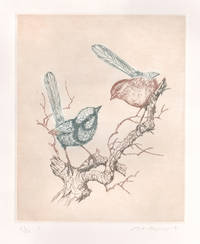
Paul Margocsy (1945-)
Blue Wrens
1991. Etching with aquatint. 245mm by 195mm platemark 450mm by 375mm sheet. Limited edition etching with aquatint editioned 27/60 and signed and dated by the artist in pencil below the image. CONDITION : a couple of tiny spots in the image. Faint handling crease in lower margin. unknown
書籍販売業者の参照番号
: 4319
|
|
|
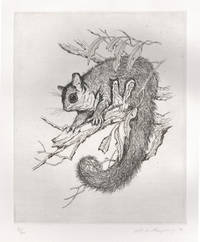
Paul Margocsy (1945-)
Sugar Glider
1991. Etching with aquatint. 245mm by 195mm platemark 435mm by 380mm sheet. Limited edition etching with aquatint editioned 3/60 and signed and dated by the artist in pencil below the image. CONDITION : A couple of faint marks in the margins. unknown
書籍販売業者の参照番号
: 4328
|
|
|
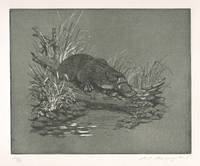
Paul Margocsy (1945-)
Platypus
1991. Etching with aquatint. 200mm by 245mm platemark 380mm by 410mm sheet. Limited edition etching with aquatint editioned 32/60 and signed by the artist in pencil below the image. CONDITION : Paper skinned at very top of sheet where tape removed. unknown
書籍販売業者の参照番号
: 3936
|
|
|
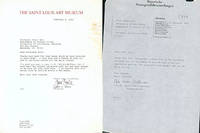
Selz, Peter (born 1919) and James D Burke (born 1939) and Carla-Schulz-Hoffmann (born 1946)
An archive letters between Peter Selz James D. Burke and Carla-Schulz-Hoffmann about a proposed Max Beckmann exhibition
Berkeley California; St. Louis MO and Munich : 1982-1983. Letters between Peter Selz and curators and directors at the St. Louis Museum of Art and Bayerische Staatsgemaeldesammlungen about the proposed Beckmann exhibition and Selz's essay "Beckmann in America."4to. 21 pages of TLs and carbon copies. From the collection of the art historian Peter Selz. Berkeley, California; St. Louis, MO and Munich : 1982-1983 unknown
書籍販売業者の参照番号
: 51-3099
|
|
|
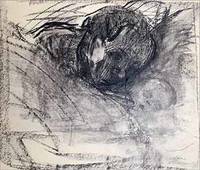
Kathe Kollwitz (German, 1967 - 1945) (Artist).
Mutter am Bett des toten Kindes 1911 Mother at the Bed of the Dead Child Facsimile of a charcoal drawing. Plate 21 of 24 from the Richter Portfolio.
Dresden: Emil Richter Verlag Dresden / Inhaber Dr. R. H. Meier ca 1927. Large format facsimile of the original drawing 23 x 16¾ inches. Very Good. Protected by transparent sheet and mat board. As published in Käthe Kollwitz / Handzeichnungen / in originalgetreuen Wiedergaben / Emil Richter Verlag Dresden / Inhaber Dr. R. H. Meier. Directed by Fritz Boettger.Käthe Kollwitz née Schmidt German pronunciation: kÉ›ËtÉ™ kÉ”lvɪtÍ¡s 8 July 1867 – 22 April 1945 was a German artist who worked with painting printmaking including etching lithography and woodcuts and sculpture. Her most famous art cycles including The Weavers and The Peasant War depict the effects of poverty hunger and war on the working class. Despite the realism of her early works her art is now more closely associated with Expressionism. Kollwitz was the first woman to not only be elected to the Prussian Academy of Arts but to also receive honorary professor status. Dresden: Emil Richter Verlag Dresden / Inhaber Dr. R. H. Meier, [ca 1927]. unknown
書籍販売業者の参照番号
: 18-8002
|
|
|
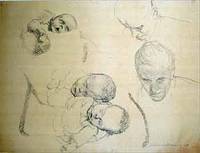
Kathe Kollwitz (German, 1967 - 1945) (Artist).
Blatt mit Kinderkoepfen 1909 Sheet with heads of children Facsimile of pencil and crayon drawings. Plate 14 of 24 from the Richter Portfolio.
Dresden: Emil Richter Verlag Dresden / Inhaber Dr. R. H. Meier ca 1927. Large format facsimile of the original drawing 23 x 17¾ inches. Very Good. Protected by transparent sheet and mat board. As published in Käthe Kollwitz / Handzeichnungen / in originalgetreuen Wiedergaben / Emil Richter Verlag Dresden / Inhaber Dr. R. H. Meier. Directed by Fritz Boettger.Käthe Kollwitz née Schmidt German pronunciation: kÉ›ËtÉ™ kÉ”lvɪtÍ¡s 8 July 1867 – 22 April 1945 was a German artist who worked with painting printmaking including etching lithography and woodcuts and sculpture. Her most famous art cycles including The Weavers and The Peasant War depict the effects of poverty hunger and war on the working class. Despite the realism of her early works her art is now more closely associated with Expressionism. Kollwitz was the first woman to not only be elected to the Prussian Academy of Arts but to also receive honorary professor status. Dresden: Emil Richter Verlag Dresden / Inhaber Dr. R. H. Meier, [ca 1927]. unknown
書籍販売業者の参照番号
: 18-7997
|
|

 検索結果のメールを受信する
 PDFファイルの検索結果をダウンロード
 RSSフィード
 パーマネントリンク


