|
DEPARTMENT OF THE ARMY WASHINGTON DC
Supporting Data FY 1999 Budget Estimates Submitted ot Congress - February 1998 Descriptive Summaries of the Research Development Test and Evaluation Army Appropriation Budget Activities 4 and 5. Volume 2
PN. New. 1998. Soft Cover. Date is original print. This is a reprint edition . PN paperback
书商的参考编号 : 1304309
|
|
|
DEPARTMENT OF THE ARMY WASHINGTON DC
Supporting Data FY 1998/1999 Budget Estimate Submitted to Congress - February 1997. Descriptive Summaries of the Research Development Test and Evaluation Army Appropriation Budget Activities 1 2 and 3. Volume 1
PN. New. 1997. Soft Cover. Date is original print. This is a reprint edition . PN paperback
书商的参考编号 : 294782
|
|
|
DEPARTMENT OF THE ARMY WASHINGTON DC
Supporting Data FY 1997 Budget Estimate. Submitted to Congress - March 1996. Descriptive Summaries of the Research Development Test and Evaluation Army Appropriation Budget Activities 6 and 7. Department of the Army Office of the Secretary of the Army
PN. New. 1996. Soft Cover. Date is original print. This is a reprint edition . PN paperback
书商的参考编号 : 285833
|
|
|
DEPARTMENT OF THE ARMY WASHINGTON DC
Supporting Data FY 1999 Budget Estimates Submitted to Congress - February 1998 Descriptive Summaries of the Research Development Test and Evaluation Army Appropriation Budget Activities 6 and 7. Volume 3
PN. New. 1998. Soft Cover. Date is original print. This is a reprint edition . PN paperback
书商的参考编号 : 1304311
|
|
|
DEPARTMENT OF THE ARMY WASHINGTON DC
Supporting Data FY 1991 Amended Budget Estimate Submitted to Congress- January 1990: Descriptive Summaries of the Research Development Test and Evaluation Army Appropriation
PN. New. 1990. Soft Cover. Date is original print. This is a reprint edition . PN paperback
书商的参考编号 : 231215
|
|
|
DEPARTMENT OF THE ARMY WASHINGTON DC
Supporting Data FY 1998/1999 Budget Estimate Submitted to Congress - February 1997. Descriptive Summaries of the Research Development Test and Evaluation Army Appropriation Budget Activities 4 and 5. Volume 2
PN. New. 1997. Soft Cover. Date is original print. This is a reprint edition . PN paperback
书商的参考编号 : 294781
|
|
|
DEPARTMENT OF THE ARMY WASHINGTON DC
Supporting Data FY 1998/1999 Budget Estimate Submitted to Congress - February 1997. Descriptive Summaries of the Research Development Test and Evaluation Army Appropriation Budget Activities 6 and 7. Volume 3
PN. New. 1997. Soft Cover. Date is original print. This is a reprint edition . PN paperback
书商的参考编号 : 294780
|
|
|
DEPARTMENT OF THE ARMY WASHINGTON DC
Supporting Data Amended FY 1992/FY 1993 Biennial Budget Estimate Submitted to Congress - January 1992. Descriptive Summaries of the Research Development Test and Evaluation Army Appropriation
PN. New. 1992. Soft Cover. Date is original print. This is a reprint edition . PN paperback
书商的参考编号 : 251203
|
|
|
DEPARTMENT OF THE ARMY WASHINGTON DC
Supporting Data FY 1997 Budget Estimate Submitted to Congress - March 1996 Descriptive Summaries of the Research Development Test and Evaluation Army Appropriation Budget Activities 1 2 and 3 Department of the Army Financial Management and Comptrol
PN. New. 1996. Soft Cover. Date is original print. This is a reprint edition . PN paperback
书商的参考编号 : 285839
|
|
|
DEPARTMENT OF THE ARMY WASHINGTON DC
Supporting Data FY 1999 Budget Estimates Submitted to Congress - February 1998 Descriptive Summaries of the Research Development Test and Evaluation Army Appropriation Budget Activities 1 2 and 3. Volume 1
PN. New. 1998. Soft Cover. Date is original print. This is a reprint edition . PN paperback
书商的参考编号 : 1304310
|
|
|
DEPARTMENT OF THE ARMY WASHINGTON DC
Surface Transportation: Watercraft
PN. New. 2002. Soft Cover. Date is original print. This is a reprint edition . PN paperback
书商的参考编号 : 1339907
|
|
|
Department Of The Army
SURVIVAL FIELD MANUAL NO. 21-76
Washington D. C.: U. S. Government Printing Office 1969. First Edition; First Printing. Softcover. Very Good in wraps. Spine slightly cocked. Light shelfwear on spine. U. S. Government Printing Office unknown
书商的参考编号 : 330233
|
|
|
Department of the Army, Headquarters
Survival; Department Of The Army Field Manual FM 21-76
Washington DC: Department of The Army Headquarters 1970. 1970 reprint of 1957 original issue. Wraps. Good. 285 3 pages. Contains copyrighted material. Wraps. Illustrations. Tables. References. Index. Some soiling to covers. This represents the state of knowledge and the state of practice at the time the United States was increasing its involvement in Vietnam. United States Army Field Manuals are published by the United States Army's Army Publishing Directorate. As of 27 July 2007 some 542 field manuals were in use. They contain detailed information and how-tos for procedures important to soldiers serving in the field. Starting in 2010 the US Army began review and revision of all of its doctrinal publications under the initiative "Doctrine 2015". Since then the most important doctrine have been published in Army Doctrine Publications ADP and Army Doctrine Reference Publications ADRP replacing the former key Field Manuals. Army Techniques Publications ATP Army Training Circulars TC and Army Technical Manuals TM round out the suite new of doctrinal publications. Not all FMs are being rescinded. Select Field Manuals will continue to be published periodically reviewed and revised. Army Survival Manual is the finest single source for self-reliance for all extreme circumstances. A must for anyone who wants to know how to survive in primitive conditions. The book is very straightforward with many pictures and user-friendly illustrations written in easy to understand language. This is just some of the survival information that this book provides: All-climates: arctic tropics temperate forest savannah or desert. All-terrain survival tactics. The Will to Survive. Identify poisonous snakes as well as edible and non-edible plants. Survival Medicine. Wilderness medicine. Techniques on first aid. Survival in the hottest or coldest of climates. Survival Planning. Make polluted water potable. How to find water. Ways to trap and collection techniques of water. Covers navigation and compass use. Find direction using the sun and stars. Weapons and Tools. Recognizing signs of land when lost at sea. Building life-saving shelters. Traps and snares. How to prepare wild game to be cooked also preserving food. All types of fire making. Water Crossings. Find direction using the sun and stars. Physical and mental fitness. Disaster preparedness. Again this is just some of the survival information is this book! Department of The Army, Headquarters paperback
书商的参考编号 : 86358
|
|
|
DEPARTMENT OF THE ARMY WASHINGTON DC
Tank Platoon
PN. New. 1996. Soft Cover. Date is original print. This is a reprint edition . PN paperback
书商的参考编号 : 287317
|
|
|
Department of the Army, Headquarters
TC 3-21.76 The Ranger Handbook
paperback. Good. Access codes and supplements are not guaranteed with used items. May be an ex-library book. paperback
书商的参考编号 : 1387241222.G ???????? : 1387241222 9781387241224
|
|
|
Department of the Army, Headquarters
TC 3-22.9 Rifle and Carbine
paperback. Good. Access codes and supplements are not guaranteed with used items. May be an ex-library book. paperback
书商的参考编号 : 0359093566.G ???????? : 0359093566 9780359093564
|
|
|
Department of the Army, Headquarters
TC 4-02.1 First Aid
Lulu 2017-09-24. 2016. paperback. New. 5.98x0.28x9.02. Buy with confidence. Excellent Customer Service & Return policy. Lulu paperback
书商的参考编号 : DADAX0359093582 ???????? : 0359093582 9780359093588
|
|
|
Department of the Army, Headquarters
TC 4-02.1 First Aid
paperback. Good. Access codes and supplements are not guaranteed with used items. May be an ex-library book. paperback
书商的参考编号 : 0359093582.G ???????? : 0359093582 9780359093588
|
|
|
Department Of The Army
Technical Manual. Organizational Maintenance M60A1 Tank Chassis Transporting: For Bridge Armored-Vehicle-Launched; Scissoring Type Class 60 5420-00-889-2020
USGPO. Very Good with No dust jacket as issued. 1985. Revised Edition. Softcover. Hole punched and stab stapled for binder application. Clean bright tight and unmarked. Still shrink wrapped. . USGPO paperback
书商的参考编号 : 17356
|
|
|
Department Of The Army
Technical Manual Operator's Manual; Tm 9-2320-361-10 2-1/2-Ton 6x6 M44a2 Series Trucks Multifuel
Washington DC: Department of Army. Very Good with No dust jacket as issued. 2006. Trade Size Paperback. Small 4to 9" - 11" tall; Soft Cover Paperback No Dust Jacket Book Shows Little Wear Text is clean no markings seen 3 hole for binder; BX254 . Department of Army paperback
书商的参考编号 : w7338

|
|
|
DEPARTMENT OF THE ARMY WASHINGTON DC
TECHNOLOGY AND ARMAMENT NO. 11 1966
PN. New. 1967. Soft Cover. Date is original print. This is a reprint edition. . PN paperback
书商的参考编号 : 731256
|
|
|
DEPARTMENT OF THE ARMY WASHINGTON DC
TECHNOLOGY AND ARMAMENT NO. 8 1966
PN. New. 1966. Soft Cover. Date is original print. This is a reprint edition. . PN paperback
书商的参考编号 : 730656
|
|
|
DEPARTMENT OF THE ARMY WASHINGTON DC
Test and Evaluation: Test and Evaluation Policy
PN. New. 2002. Soft Cover. Date is original print. This is a reprint edition . PN paperback
书商的参考编号 : 1339075
|
|
|
DEPARTMENT OF THE ARMY WASHINGTON DC
Test and Evaluation Guidelines. Part 1. Test and Evaluation in Support of System Acquisition
PN. New. 1992. Soft Cover. Date is original print. This is a reprint edition . PN paperback
书商的参考编号 : 259415
|
|
|
DEPARTMENT OF THE ARMY WASHINGTON DC
The Army Budget. 1997 President's Budget Assistant Secretary of the Army for Financial Management and Comptroller March 1996. America's Army: 'Force of Decision'
PN. New. 1996. Soft Cover. Date is original print. This is a reprint edition . PN paperback
书商的参考编号 : 285544
|
|
|
Department, United States Army Pay
The Army Paymaster's Manual for the Information of Officers of the Pay Department of the United States Army: Revised to Include June 30 1869 Classic Reprint
hardcover. Good. Access codes and supplements are not guaranteed with used items. May be an ex-library book. hardcover
书商的参考编号 : 1397312289.G ???????? : 1397312289 9781397312280
|
|
|
Department, United States Army Pay
The Army Paymaster's Manual for the Information of Officers of the Pay Department of the United States Army: Revised to Include June 30 1869 Classic Reprint
paperback. Good. Access codes and supplements are not guaranteed with used items. May be an ex-library book. paperback
书商的参考编号 : 1397311541.G ???????? : 1397311541 9781397311542
|
|
|
DEPARTMENT OF THE ARMY WASHINGTON DC
The Army Public Affairs Program
PN. New. 2000. Soft Cover. Date is original print. This is a reprint edition . PN paperback
书商的参考编号 : 1327539
|
|
|
Department of the Army
The Complete Guide to Edible Wild Plants
Skyhorse 2009-06-23. Paperback. New. New. In shrink wrap. Looks like an interesting title! Skyhorse paperback
书商的参考编号 : Q-1602396922 ???????? : 1602396922 9781602396920

|
|
|
Department of the Army
The German Campaigns in the Balkans Spring 1941 No. 20-260
paperback. Good. Access codes and supplements are not guaranteed with used items. May be an ex-library book. paperback
书商的参考编号 : 1258336812.G ???????? : 1258336812 9781258336813
|
|
|
Department of the Army
The Illustrated Guide to Edible Wild Plants
Lyons Press 2003-04-01. Paperback. New. New. In shrink wrap. Looks like an interesting title! Lyons Press paperback
书商的参考编号 : Q-1585746614 ???????? : 1585746614 9781585746613

|
|
|
Department of the Army
The Illustrated Guide to Poisonous Snakes
Lyons Press 2003-04-01. Paperback. New. In shrink wrap. Looks like an interesting title! Lyons Press paperback
书商的参考编号 : Q-158574834X ???????? : 158574834X 9781585748341

|
|
|
Department of the Army
The Illustrated Guide to Edible Wild Plants
Lyons Press 2003-04-01. First Edition. paperback. New. 5.25x0.25x9.00. Buy with confidence. Excellent Customer Service & Return policy. Lyons Press paperback
书商的参考编号 : DADAX1585746614 ???????? : 1585746614 9781585746613

|
|
|
Department of the Army
The Infantry Rifle Platoon and Squad: FM 3-21.8 U.S. Army Fielf Manuals
paperback. Good. Access codes and supplements are not guaranteed with used items. May be an ex-library book. paperback
书商的参考编号 : 1499296940.G ???????? : 1499296940 9781499296945
|
|
|
Department of the Army
The Jumpmaster. TC 57-1. September 1979 Edition.
1979. Softcover. Good. Glossy softbound covers. Light shelf wear to the edges of the covers. The former owner folded down the corners of a couple of dozen pages. I unfolded the corners back into place but there is still a small crease on the upper edge of these pages not obtrusive. The text has 3 pages with some ink underlining. . paperback
书商的参考编号 : 34263
|
|
|
Department of the Army Department of the Army
The Russian Way of War: Force Structure Tactics and Modernization of the Russian Ground Forces / Department of the Army Department of the Army
Softcover. The Russian Way of War: Force Structure Tactics and Modernization of the Russian Ground Forces <br/><br/> paperback
书商的参考编号 : BN82004 ???????? : 1081196548 9781081196547
|
|
|
Department of the Army
The Russian Way of War: Force Structure Tactics and Modernization of the Russian Ground Forces
Independently published 2019. Paperback. New. 428 pages. 11.00x8.50x1.01 inches. Independently published paperback
书商的参考编号 : 2-1081196548 ???????? : 1081196548 9781081196547
|
|
|
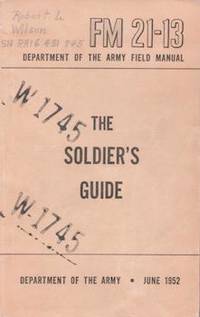
Department of the Army
The Soldier's Guide: June 1952
Washington D.C: United States Government Printing Office 1952. 12mo. 240 pp. Paper/soft covers. Good quality has notes in pencil on front cover and W1745 stamped twice on cover. Back cover bent some paged dog eared. Inside of back cover also has some notes in pencil.Department of the Army Field Manuel FM 21-13 Washington, D.C: United States Government Printing Office, 1952 paperback
书商的参考编号 : 77-0373
|
|
|
Department of the Army
The Soldier's Guide: The Complete Guide to U.S. Army Traditions Training Duties and Responsibilities
Skyhorse Publishing 2007-10-17. Paperback. New. New. In shrink wrap. Looks like an interesting title! Skyhorse Publishing paperback
书商的参考编号 : Q-1602391645 ???????? : 1602391645 9781602391642

|
|
|
Department of the Army
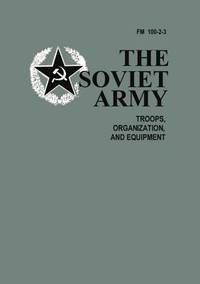
The Soviet Army: Troops Organization and Equipment: FM 100-2-3
paperback. Good. Access codes and supplements are not guaranteed with used items. May be an ex-library book. paperback
书商的参考编号 : 1947707582.G ???????? : 1947707582 9781947707580
|
|
|
Department of the Army
The Soviet Army: Troops Organization and Equipment: FM 100-2-3
Independently published 2019. Paperback. New. 469 pages. 11.00x8.50x1.18 inches. Independently published paperback
书商的参考编号 : 2-1080846859 ???????? : 1080846859 9781080846856
|
|
|
Department of the Army; United States Army
The Tactical Use of Atomic Weapons Unclassified Military Effects Department of the Army Pamphlet 39-1 March 1955
<p>Washington: Department of the Army; United States Army. Near Fine. 1955. First Edition. Paperback stapled. 4to Rare "FOR OFFICIAL USE ONLY". The foreword reads: "This pamphlet provides an unclassified basis for the utilization of atomic weapons in courses at the various schools and in training. The methods of casualty and damage estimation herein have been so designed as to provide an understanding of the role of target analysis in the tactical use of atomic weapons." Includes numerous fallout tables and one folding semi-transparent overlay. 59 pages. Cream wraps. AN EXCEPTIONAL COPY OF A VERY RARE TITLE. Keywords: Nuclear Weapons Military Atomic Fallout Wmd.</p> Department of the Army; United States Army paperback
书商的参考编号 : 0749336

|
|
|
Department Of The Army
The Tank Gunner's Guide Tank 90-MM M48A1. TC 17-4
United States Government Printing Office. Very Good with No dust jacket as issued. 1959. First Edition. Softcover. Clean and unmarked this copy is in tan wrappers showing modest shelf and edge wear. This is an original publication not a Print On Demand and thus the staples may show some rust which is normal for manuals of this age. . United States Government Printing Office paperback
书商的参考编号 : 22903
|
|
|
Department of the Army
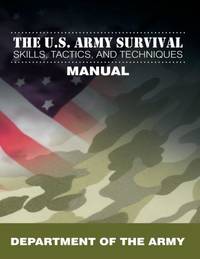
The U.S. Army Survival Skills Tactics and Techniques Manual
Paperback. New. New Book; Fast Shipping from UK; Not signed; Not First Edition; Here for the first time in one place is everything you will ever need to know in order to survive just about any difficult or dangerous situation. Drawing from dozens of the U.S. Army's official field manuals including techniques on fi paperback
书商的参考编号 : ria9781607965626_inp ???????? : 1607965623 9781607965626
|
|
|
DEPARTMENT OF THE ARMY WASHINGTON DC
The U.S. Army Energy and Water Campaign Plan for Installations. Fiscal Year 2008 - Fiscal Year 2013
PN. New. 2006. Soft Cover. PN paperback
书商的参考编号 : 1345537
|
|
|
Department of the Army
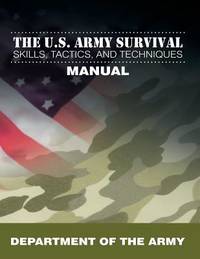
The U.S. Army Survival Skills Tactics and Techniques Manual
www.snowballpublishing.com 2013. Paperback. New. 962 pages. 11.02x8.50x1.90 inches. www.snowballpublishing.com paperback
书商的参考编号 : x-1607965623 ???????? : 1607965623 9781607965626
|
|
|
Department of the Army; McCullough, Jay [Editor]
The Ultimate Guide to U.S. Army Survival Skills Tactics and Techniques The Ultimate Guides
Skyhorse Publishing 2007-09-16. paperback. New. In shrink wrap. Looks like an interesting title! Skyhorse Publishing paperback
书商的参考编号 : Q-1602390509 ???????? : 1602390509 9781602390508

|
|
|
Department of the Army/ Mccullough, Jay
The Ultimate Guide to U.s. Army Survival Skills Tactics and Techniques
Skyhorse Pub Co Inc 2007. Paperback. New. 1954 pages. 10.75x8.50x2.25 inches. Skyhorse Pub Co Inc paperback
书商的参考编号 : x-1602390509 ???????? : 1602390509 9781602390508
|
|
|
DEPARTMENT OF THE ARMY WASHINGTON DC
The US Army Energy Strategy for Installations
PN. New. 2005. Soft Cover. md . PN paperback
书商的参考编号 : 1343991
|
|
|
DEPARTMENT OF THE ARMY WASHINGTON DC
The US Army Transportation School Apprenticeship Program for the Trade of Airplane Mechanic
PN. New. 1984. Soft Cover. Date is original print. This is a reprint edition. . PN paperback
书商的参考编号 : 772974
|
|

 ?????????
 ?????PDF???
 RSS feed
 ??
??


