|
GUNSTON Bill
Les bombardiers.
Paris, Editions Princesse, 1979. 22 x 28, 160 pp., très nombreuses illustrations en couleurs et en N/B, reliure d'édition pleine toile + jaquette, bon état.
书商的参考编号 : 44388
|
|
|
Gunter Peis
Naujocks l'homme qui déclencha la guerre
Arthaud 1961 255 pages in8. 1961. Broché couverture rempliée. 255 pages.
书商的参考编号 : 4331

|
|
|
GUNDELACH, K. / Einheit der Feldpost-Nummer 14156 (Herausgeber)
Der Rächer. Kampfblatt einer Armee im Osten. 256 Nn. / Freitag, den 27. April 1945. Frontnachrichten der Propaganda-Kompanie "Eichkater". Tod dem Bolschewismus! Alles für Deutschland!
1945. (ca. 31,5 x 23 cm). 2 S. (Fraktur). Original-Zeitung im kleinen Format, beidseitig bedruckt, mit Titel im oberen Bereich. Papier gebräunt und gefaltet, sonst wohlerhalten. Altersentsprechend guter Zustand.
书商的参考编号 : 9000C

|
|
|
Gundling, Julius
Fes und Tschako . Soldatengeschichten . ERSTAUSGABE.
Leipzig, Fr. Ludw. Herbig Verlag, 1859. 380 Seiten, kl.8°. Originalhalblederband mit vergoldetem Rückentitel.
书商的参考编号 : 123991

|
|
|
Gunston, Bill
Bomber im Zweiten Weltkrieg. Das farbige Nachschlagewerk. Farbige Darstellungen von über 30 Flugzeugtypen und vielen Varianten.
Friedberg, Podzun-Pallas Verlag 1989. Mehr als 140 Skizzen, 40 Farbzeichnungen, 90 Farbaufnahmen. 8°. illustrierte weiße OPappe.,
书商的参考编号 : 84111

|
|
|
Gunston, Bill (Mitwirkender)
Kampf-Flugzeuge.
Bindlach : Gondrom, 1998. 96 S. : zahlr. Ill. ; 30 cm Pp.
书商的参考编号 : 110981

|
|
|
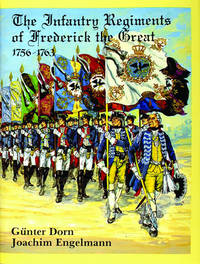
Gunther Dorn; Joachim Engelmann; The most famous field and garrison regiments of Fredericks army documented in a splendid large
The Infantry Regiments of Frederick the Great 1756-1763: English and German Edition
Schiffer Publishing Ltd 2004-01-01. Hardcover. New. In shrink wrap. Looks like an interesting title! Schiffer Publishing, Ltd hardcover
书商的参考编号 : Q-0887401635 ???????? : 0887401635 9780887401633
|
|
|
Gunther E. Rothenberg
Napoleon's Great Adversaries: The Archduke Charles and Austrian Army, 1792-1814
219 pages. Index. Footnotes. 16 Maps. 23 Black and white photographic plates. "This account will do much to redress the balance of recorded military history of the period and in so doing it provides both the historian and the military enthusiast with a very readable story of a most important military force and its leaders." - dust jacket. Clean and unmarked with moderate wear. Binding tight. Pages yellowed with age. Dust jacket now preserved in archival-grade Brodart. A sound copy. Book

|
|
|
GUNTHER von Pairis
Die Geschichte der Eroberung von Konstantinopel. Übers. u. erl. v. E. Assmann. (Die Geschichtsschreiber d. dt. Vorzeit. 3. Ausg., 101).
Köln: Böhlau 1956. 115 S. Reg. Br.mS.
书商的参考编号 : 119441
|
|
|
Gurganus, Allan
Die älteste noch lebende Rebellenwitwe erzählt : Roman / aus d. Amerikan. von Rudolf Hermstein.
München : Goldmann, 1992. 959 S. 8°. Deutschsprach. Ausg. OKt. (Tb). (Goldmann ; 42594)
书商的参考编号 : 23760
|
|
|
GURNEY (Lieut.-Colonel Russell)
History of the Northamptonshire Regiment 1742-1934.
First edition, 4to, xix, 464pp., 10 coloured plates, 38 monochrome plates, orig. black half-morocco, spine gilt some minor rubbing otherwise a nice copy, all edges gilt.
|
|
|
Gurr, Robert; Thornton, Sir Leonard [Foreword]
Voices From A Border War: A History of 1 Royal New Zealand Infantry Regiment, 1963 to 1965
170 pages. Index. Footnotes. Nominal Roll, Irnzir, 8 May 1964. Black and white reproductions of photos. "This valuable monograph is above all a tribute to the traditional qualities of the Kiwi soldier at all levels - responsible, resourceful, compassionate and professionally competent. New Zealanders can be proud of what is recorded here, as well as grateful for the way it is presented." - Foreword. Clean and unmarked with moderate wear. A quality copy. Book

|
|
|
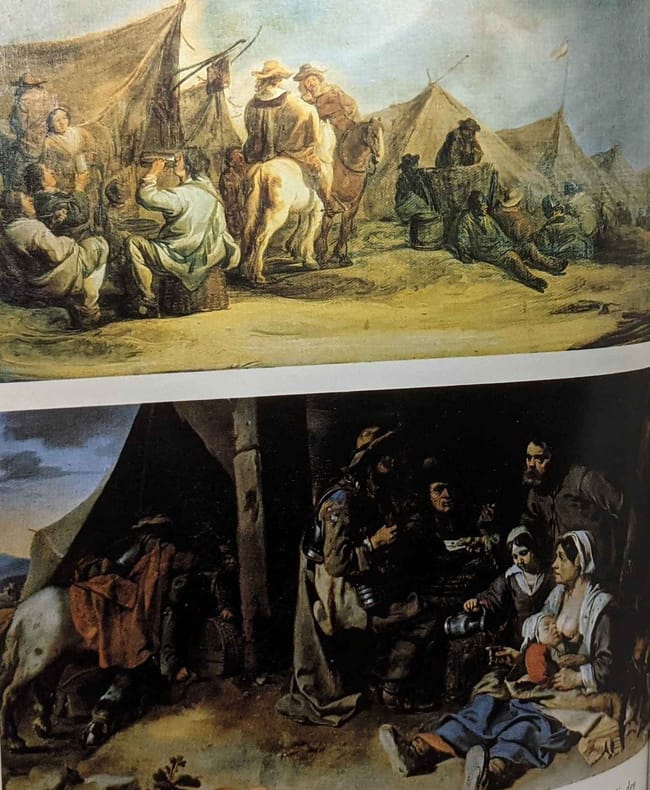
Gustav Freytag
Bilder aus der deutschen vergangenheit - BAND 2 reformationszeit und Dreissigjähriger Krieg
C.A. Koch's verlag in8. Sans date. Cartonné. iconographie en noir et blanc et en couleurs
书商的参考编号 : 100093377
|
|
|
Gustave Geffroy Léopold-Lacour Louis Lumet
La France héroïque et ses alliés - TOME PREMIER 1914-1916 + TOME DEUXIEME 1916-1919
Librairie Larousse in4. Sans date. relié. 2 volume(s). iconographie en noir et blanc planche pleine page en couleurs
书商的参考编号 : 100082546

|
|
|
Gustave Flourens (1838-1871), militaire, homme politique, communard tué par les versaillais. Il se voyait comme un aryen et était antisémite.
Lettre autographe signée
Gustave Flourens (1838-1871), militaire, homme politique, communard tué par les versaillais. Il se voyait comme un aryen et était antisémite. L.A.S., 11 novembre 1863, 1p in-8. A l'architecte Charles Lenormand (1835-1904). Jolie lettre amicale au moment de son arrivée comme professeur au Collège de France (il ne pourra l'être qu'un an). Il ne peut sortir, étant en deuil. [315-2]
书商的参考编号 : 013690

|
|
|
Gusman, Diego Philipe de (1580 - 1655)
Halbfigur en face im Harnisch. Kupferstich von Paul Pontius nach dem Gemälde des Anthonis van Dyck.
(Antwerpen, ca. 1660). Format (Platte): 245 x 172 mm. Blattgröße: 380 x 270 mm.
书商的参考编号 : 158432

|
|
|
Gustav, Prinz von Wasa (1799-1877)
Porträt. Brustfigur in Uniform in Oval. Lithographie von Kriehuber nach Daffinger.
Wien, lithogr. Institut, ca. 1830. Format (Bildbereich): 215 x 188 mm. Blattgröße: 338 x 260 mm.
书商的参考编号 : 137548

|
|
|
Gustav, Prinz von Wasa (1799-1877)
Porträt. Brustfigur in Uniform in Oval. Lithographie von Kriehuber nach Daffinger.
Wien, Lithogr. Institut, ca. 1830. Format (Bildbereich): 215 x 188 mm. Blattgröße: 440 x 295 mm.
书商的参考编号 : 142096

|
|
|
Gustavus W Smith | John Stephen Sewell | Engineer School, United States Army | Smith S Leach | Francis J Behr
COMPANY “A†CORPS OF ENGINEERS U. S. A. 1846-’48 IN THE MEXICAN WAR. LECTURES ON BUILDING CONSTRUCTION. REPORT ON THE TEST-FIRING AT ELECTRICAL SEARCHLIGHTS IN CAMP AT HARSKAMP IN SEPTEMBER 1904. TRANSLATION FROM THE DUTCH IN THE MILITARY INFORMATION DIVISION GENERAL STAFF. REPORTS OF MEMBERS OF THE BOARD OF ENGINEERS AND THE ENGINEER OFFICER DEPARTMENT OF THE EAST UPON THE JOINT ARMY AND NAVY MANEUVRES HELD AT PORTLAND MAINE AUGUST 1903. REPORT ON ENGINEER EQUIPMENT REQUIRED FOR EXPEDITIONS OF 25000 50000 150000 AND 250000 MEN. PREPARED IN ACCORDANCE WITH INSTRUCTIONS FROM THE CHIEF OF ENGINEERS U. S. A. DRILL REGULATIONS FOR THE INFANTRY GERMAN ARMY 1906. ONE VOLUME
Washington Barracks D. C.: The Battalion Press Press of the Engineer School Government Printing Office 1908. Hard Cover. Very Good binding. Six pamphlets from the late 19th early 20th century primarily on military engineering bound together in one volume. Brown buckram with a black leather label. Spots of discoloration to the spine. Very Good binding. The Battalion Press | Press of the Engineer School | Government Printing Office unknown
书商的参考编号 : 288258

|
|
|
Gustavus W. Smith John Stephen Sewell Engineer School United States Army Smith S. Leach Francis J. Behr
COMPANY "A" CORPS OF ENGINEERS U. S. A. 1846-'48 IN THE MEXICAN WAR. LECTURES ON BUILDING CONSTRUCTION. REPORT ON THE TEST-FIRING AT ELECTRICAL SEARCHLIGHTS IN CAMP AT HARSKAMP IN SEPTEMBER 1904. TRANSLATION FROM THE DUTCH IN THE MILITARY INFORMATION DIVISION GENERAL STAFF. REPORTS OF MEMBERS OF THE BOARD OF ENGINEERS AND THE ENGINEER OFFICER DEPARTMENT OF THE EAST UPON THE JOINT ARMY AND NAVY MANEUVRES HELD AT PORTLAND MAINE AUGUST 1903. REPORT ON ENGINEER EQUIPMENT REQUIRED FOR EXPEDITIONS OF 25000 50000 150000 AND 250000 MEN. PREPARED IN ACCORDANCE WITH INSTRUCTIONS FROM THE CHIEF OF ENGINEERS U. S. A. DRILL REGULATIONS FOR THE INFANTRY GERMAN ARMY 1906. ONE VOLUME
Washington Barracks D. C.: The Battalion Press Press of the Engineer School Government Printing Office 1908. Hard Cover. Very Good binding. Six pamphlets from the late 19th early 20th century primarily on military engineering bound together in one volume. Brown buckram with a black leather label. Spots of discoloration to the spine. Very Good binding. The Battalion Press | Press of the Engineer School | Government Printing Office unknown books
书商的参考编号 : 288258
|
|
|
GUTTON Francis
L’ORDRE militaire DE Santiago
1960 MADRID,1960,17 pages 12x18 cms,Broché,
书商的参考编号 : 16344

|
|
|
Guthman, Ensign L.C. (Editor)
Aeronautics Aircraft Spotters' Handbook
370 pages. Index. "For every member of the Aircraft Warning Service, every member of the Armed Services, every member of aviation,, every air-minded citizen! This brand-new, complete and authoritative guide contains over 1,300 photographs and 3-position silhouettes of the world's leading war planes - both Allied and Axis types. It includes the amazing new 2-Line "Friend or Foe" flash identification system All recognition charactistics based on the famous WEFT formula. No less than 350 military aircraft are described and illustrated, including over 90 American warplanes, 70 British, over 60 German, over 30 Jap, and over 40 Italian planes. It also describes and illustrates planes of Russia, the Netherlands, Norway, Sweden, Spain and France. It includes Barrage Balloons, Blimps and Rotating wing aircraft. Beyond comparison this is the biggest, most comprehensive volume of its kind in America!" - from back cover. Somewhat above-average wear. Prior owner's name atop title page. Ends of backstrip discretely secured by tape. Binding intact. A sound vintage copy of this wonderful reference. Book

|
|
|
Gutman, Roy
Augenzeuge des Völkermords Reportagen aus Bosnien / mit Fotos von Andree Kaiser... Aus d. Engl. von Siegfried Kohlhammer.
Göttingen : Steidl, 1994. 255 S. Ill. 8°. 1. Aufl. Bibl.- Einbd. (broschiert).
书商的参考编号 : 40345
|
|
|
Gutman, Roy [Hrsg.] und David [rsg.] Rieff:
Kriegsverbrechen : was jeder wissen sollte. [Übers.: Isabel Sterner].
528 S. : Ill. ; 23 cm Broschur. Crimes of war. - Ungelesenes Exemplar. - The indicated shipping costs refer to books weighing up to one kilogram. - Bücher, die schwerer als ein Kilogramm oder größer als 35 x 25 cm sind, werden als Paket verschickt und kosten innerhalb Deutschlands bis zu zwei Kilogramm 6 Euro, darüber hinaus 7 Euro Porto. -

|
|
|
Gutman, Roy und David Rieff
Kriegsverbrechen : was jeder wissen sollte. Übersetzung: Isabel Sterner
Stuttgart ; München : Dt. Verl.-Anst., [2000]. 528 Seiten. Mit zahlreichen dokumentarischen Abbildungen. 23 cm Originalbroschur.
书商的参考编号 : 252724

|
|
|
GUTMAN/RIEFF/EWORKIN, Roy/David/Anthony.
CRIMES OF WAR.
Decenas de fotografias en blanco y negro de Sheryl A. Mendez.
|
|
|
GUYON Charles
"Les oiseaux de guerre (2 volumes); tome 1 : Les exploits aériens; tome 2 : Un as héroïque. Collection : Les livres roses pour la jeunesse, N°s 205/206."
Paris, Librairie Larousse, 1917. 12 x 18, 2 volumes, 32 + 32 pp., 11 + 12 dessins, broché (agrafé), partiellement coupés, très bon état.
书商的参考编号 : 102.452
|
|
|
GUYARD (G.).
Ecole de liaison et transmissions. Pigeons voyageurs.
S.l., janvier 1929 pet. in-4, 60 pp., ill. in-t., broché.
书商的参考编号 : 235122

|
|
|
GUY (Camille).
Extraits des Mémoires historiques et militaires.
P., Ch. Delagrave, 1899, in-12, cxii-255 pp, cart. rouge de l'éditeur, dos et 1er plat ornés, coiffes lég. abîmées, bon état
书商的参考编号 : 7695
|
|
|
GUY NOEL
LA MARINE FRANCAISE
Nathan. 1948. In-8. Relié. Etat d'usage, Couv. défraîchie, Dos frotté, Intérieur bon état. 159 pages. Illustré de nombreuses photos en noir et blanc dans le texte, et de dessins en couleur sur planches hors texte.. . . . Classification Dewey : 359-Marine militaire
书商的参考编号 : RO40084519
|
|
|
GUY Noel
La Marine Française
NATHAN Fernand. 1937. In-12. Cartonné. Bon état, Couv. légèrement passée, Dos satisfaisant, Quelques rousseurs. 159 pages. Nombreuses illustrations et photos en héliogravure, dans le texte et hors-texte. Quelques planches illustrées en couleurs.. . . . Classification Dewey : 359-Marine militaire
书商的参考编号 : RO80139900
|
|
|
GUY NOEL
LA MARINE FRANCAISE.
FERNAND NATHAN. 1941. In-8. Relié. Etat d'usage, Coins frottés, Dos satisfaisant, Intérieur acceptable. 159 pages - illustration en couleurs contre collée sur le 1er plat - nombreuses illustrations en monochrome dans et hors texte - quelques illustrations en couleurs hors texte .. . . . Classification Dewey : 359-Marine militaire
书商的参考编号 : R240073198
|
|
|
GUY NOEL
LA MARINE FRANCAISE - ILLUSTRATIONS DE J. CAMOREYT.
FERNAND NATHAN. 1938. In-8. Cartonné. Etat d'usage, Couv. convenable, Dos satisfaisant, Rousseurs. 159 pages. 148 photographies en noir et blanc et en couleurs dans et hors texte.. . . . Classification Dewey : 359-Marine militaire
书商的参考编号 : ROD0116008
|
|
|
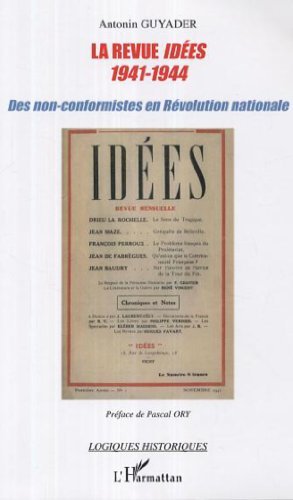
Guyader Antonin
La revue Idées 1941-1944:des non-conformistes en révolution nationale
Editions L'Harmattan 2006 357 pages in8. 2006. Broché. 357 pages.
书商的参考编号 : 222843
|
|
|
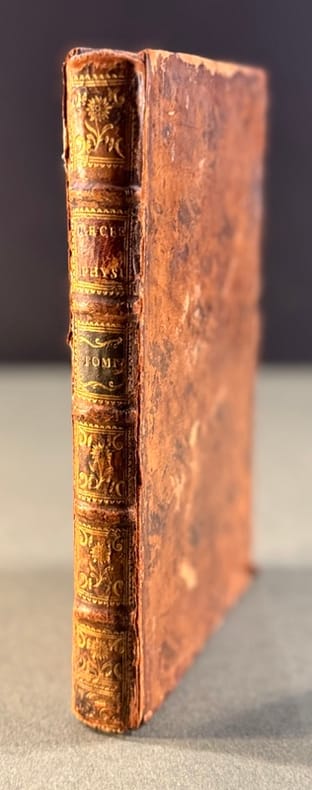
GUYOT (de la Société Littéraire & Militaire de Besançon)
Nouvelles récréations physiques et mathématiques
Paris Chez Gueffier 1770 (1) faux titre, (1) titre, Contenant Toutes celles qui ont été découvertes & imaginées dans ces derniers temps, sur l'Aiman, les Nombres, l'Optique, la Chymie, &c. & quantité d'autres qui n'ont jamais été rendues publiques. Où l'on a joint Leurs causes, leurs effets, la manière de les construire, & l'amusement qu'on peut en tirer pour étonner agréablement. Quatre Volumes in-8, ornés de 11 Planches, Tome 4. (8) Avant-Propos, (1) Prix, 232 pages, (4).Livre très rare dans lequel Guyot rempli "son devoir principal d'amuser en instruisant, & désabuser quantité de personnes qui s'étaient laissées prévenir au point de croire qu'il entrait du surnaturel ou tout du moins du merveilleux dans ces forces de Récréations". La vulgarisation passe des techniques les plus pérennes telles que le jet d'eau formé par la compression de l'air, au plus loufoque comme la récréation "Faire une Omelette dans un chapeau".
书商的参考编号 : 3394
|
|
|
GUYOMARC'H Jean.-
Stérilisation de l'Eau de boisson d'une troupe en marche aux COLONIES.-
Thèse. Bordeaux. Imprimerie Commerciale et Industrielle. 1907. In-8 br. 57pp.
书商的参考编号 : ORD-4889
|
|
|
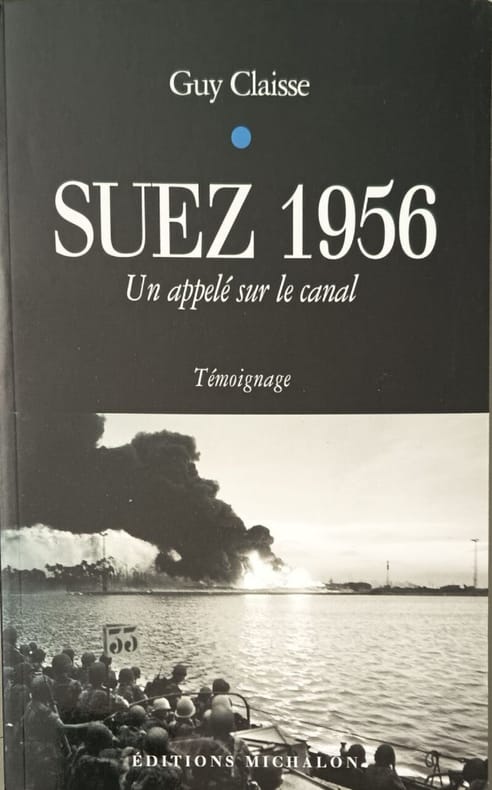
Guy Claisse
Suez 1956 : Un appelé sur le canal
Editions Michalon 2006 251 pages 23 6x15 4x2 4cm. 2006. broché. 251 pages. L'auteur Guy Claisse raconte son expérience personnelle en tant qu'appelé du contingent pendant la crise de Suez de 1956. Il effectuait son service militaire en Allemagne quand le conflit a éclaté et a assisté à la bataille du Canal depuis le pont du navire L'Athos II. Son témoignage évoque au jour le jour cette guerre éclair ainsi que les affrontements diplomatiques les enjeux stratégiques et le rôle des grandes puissances
书商的参考编号 : 10959
|
|
|
GUY NOEL
LA MARINE FRANCAISE
Nathan. 1948. In-8 Carré. Relié. Etat d'usage. Couv. défraîchie. Dos frotté. Intérieur bon état. 159 pages. Illustré de nombreuses photos en noir et blanc dans le texte, et de dessins en couleur sur planches hors texte. Illustrations en couleur de J. Camoreyt. Orné de 148 photographies. Les pleurs du 'Conquétant'. Montjoie Saint-Denis ! Un exploit du 'Roi des corsaires'. Le 13 Prairial an II...

|
|
|
Guys, Constantin - 1802 Vlissingen/Niederlande - Paris 1892
Parade, 1855.
o.J. Feder in Braun, aquarelliert in Blau und Braun, auf Velin. 20,5:27,5 cm. Provenienz: Sammlung Sir William und Bruce S. Ingram, Chesham, vgl. Lugt 1404 a; Kraus-haar Gallery, New York. Ausstellungen: Yale University Art Gallery, New Haven, 1960, Nr. 183. Leihgabe an S.R. Guggenheim-Museum, New York, 1962. Vergleichsliteratur: P. Duflo: Constantin Guys. Fou de dessin grand reporter 1802-1892, Pa-ris 1988, vgl. Tl. II, S. 309: ?Convoi funèbre de Lord Raglan. Juin-Juillet 1855?. - Das vorliegende Blatt zeigt die von Offizieren zu Pferde angeführte Parade anläßlich der Be-gräbniszeremonie von Fitzroy Somerset, 1. Baron Raglan, Oberbefehlshaber der britischen Truppen während des Krimkrieges.
书商的参考编号 : 660-E

|
|
|
Guérin Jean-Michel
Chansons de la Coloniale et d'ailleurs
S.G.A. Broché In-4 (27x21.5 cm), broché, couverture illustrée, non paginé, nombreuses pages blanches destinées à un carnet de routes (dessins au crayon de couleurs sur les 2 premières pages 'blanches'), illustrations en couleurs des chansons ; manques sur le dos, traces sur les plats, état très correct. Livraison a domicile (La Poste) ou en Mondial Relay sur simple demande.
书商的参考编号 : dd80
|
|
|
Guérin André Saint-Mont Michel
Normandie - Champ de Bataille de la libération
Société Normande d'Edition et de Publicité / Caen in8. Sans date. Broché. iconographie en noir et blanc
书商的参考编号 : 100094284

|
|
|
GWEGEN Yann
Gouesnou sous la Révolution
Chez L'auteur 1989 131 pages in8. 1989. Broché. 131 pages.
书商的参考编号 : 215407

|
|
|
GWEGEN Yann
Gouesnou sous la Révolution
Chez L'auteur 1989 131 pages in8. 1989. Broché. 131 pages.
书商的参考编号 : 227522

|
|
|
Gwenn-Aël Bolloré
J'ai débarqué le 6 juin 44
cherche midi Sans date. Ce livre est le témoignage autobiographique de Gwenn-Aël Bolloré l'un des 177 Français du commando Kieffer ayant débarqué en Normandie le 6 juin 1944. Il y raconte de manière vivante et émouvante son engagement volontaire à 17 ans son entraînement et les heures cruciales du Débarquement
书商的参考编号 : 500305623

|
|
|
Gyulai, Franz Graf von (1798-1868)
Porträt / Portrait: Dreiviertelfigur en face in Uniform mit zahlreichen Orden, die linke Hand auf dem Säbel. Lithographie von Joseph Kriehuber.
Wien, L.T. Neumann, (1850). Format (Bildbereich): 310 x 210 mm. Blattgröße: 500 x 370 mm.
书商的参考编号 : 129133

|
|
|
GYVÈS (Henri-Joseph-Auguste de, Capitaine).
Historique du 122e Régiment d'Infanterie, 1794-1888, par le capitaine de Gyvès, d'après les ordres du colonel Legrand.
Montpellier, impr. de Hamelin frères, 1890, in-8°, xvi-394 pp, 8 pl. de gravures et d'uniformes hors texte, broché, pt accroc en haut du 1er plat, bon état
书商的参考编号 : 125729
|
|
|
GÁRATE CÓRDOBA, José María.
Los intelectuales y la milicia.
M., Gráficas Cofás, 1983, 20 x 14 cm., 480 págs.
|
|
|
Gädke, Richard (bzw. * * *)
Japans Krieg und Sieg. - Politisch-militärische Beschreibung des russisch-japanischen Krieges 1904-1905. Mit 6 mehrfarbigen, 10 doppelseitigen, u. 19 einseitigen einfarb. Vollbildern bzw. Karten sowie zahlreichen Textbildern
Berlin: Schall. 1907. 347 Seiten. 36,5x26cm. Zustand: Gut leicht gebräunt, es gibt relativ viele Risse im wohl etwas spröden Papier bis ca. S. 60, die mit Tesa behandelt wurden, die Lage S. 21 bis 28 und S. 53 bis 60 ist lose (Innen); Minischildchen (2x1cm) auf dem Vorsatzblatt, läßt sich wohl entfernen, mir gelang das einmal; Einband (Außen) hat leichte Gebrauchsspuren; Ist etwas bestoßen-berieben-in den Ecken leicht; Rot-Komplettschnitt; Leinen (Blauer Leinen)
书商的参考编号 : 471682

|
|
|
général camon
Campagne de 1866 en bohême
Berger-levrault 1929 in8. 1929. Broché.
书商的参考编号 : 100125851

|
|
|
Général José-Estevam De Moraes Sarmento
Causes déterminantes de la guerre mondiale - préface du Maréchal Lyautey
Librairie Ferin 1930 in8. 1930. Broché.
书商的参考编号 : 100090106

|
|

 ?????????
 ?????PDF???
 RSS feed
 ??
??


