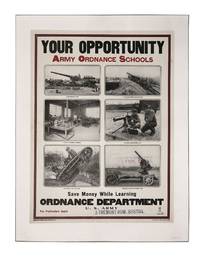
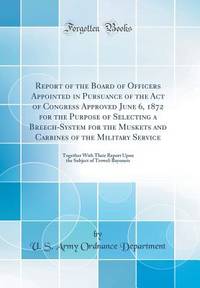
USA: U. S. Army Ordnance 1919. Large photogravure poster backed with linen printed with red and black ink includes six black-and-white photographic images. Size of poster: 48 cm x 63.5 cm including small border; overall size of piece including linen backing: 58 cm x 74.5 cm. Some tears at edges one into text at tail edge which have been repaired; some minor creases and scuffing; two inks stamps on text and image one reading: "Room 20 Post Office Bldg. Lynn Mass" the other reading: "3 Tremont Row. Boston.". Overall a very good piece with clean and bright imagery. This large American propaganda poster was produced by the Adjutant General's Office of the U. S. Army in the years directly following World War One "A. G. O. No. 202-July 1919" is noted in the lower right-hand corner of the poster. It is No. 4 in a series and calls for new members to join Army Ordnance Schools and "save money while learning". Six evocative images show scenes of what prospective students could expect to see and learn during training. These depict a big railway gun a tractor-mounted Howitzer a class in gasoline engines machine gun instruction operating a tractor and sighting an anti-aircraft gun.</p> <p>The A. G. O. was and still is responsible for leadership and organisation of training and doctrine command military personnel support and recruiting and retention of personnel. U. S. Army Ordnance unknown
Washington DC: GPO 1957. good. Quarto 461 illus. tables charts chapter references index corners of boards bumped boards and spine somewhat scuffed. The application of radiation methods in an endeavor to improve military food supplies and rations. GPO hardcover
Eckert Litho. Good with no dust jacket. 1908. Hardcover. 3/4 leather with black covers portfolio with black ribbons for tying three sides. Front cover is loose was hinged along side edge and has a red leather label with gilt lettering. Covers have some scuffing and leather spine has some wear and missing pieces at the ends. Title page has some markings from the flaps and some foxing. There are 127 total color plates originally had 144 numbered plates but 18 were removed for being obsolete and there is a Plate 93-A. Some plates have some small spots or slight foxing. Color images are in very good condition. Book is in good condition. 4.2 lb.; Oblong Small 4to 9" - 11" tall . Eckert Litho hardcover
Washington D. C: Army Signal Corps US Navy US Marine Corps. Very Good. 1942. First Edition. Soft Covers. Original 1942 WWII Publication. Soft cover wire comb binding. Illustrated with official photographs of the U. S. Army Signal Corps U. S. Navy and U. S. Marine Corps. Color painting illustrations of planes and ships by Hoertz and E. G. Roland. Includes Insignia of Rank and Insignia of Branches. ; B/W Photographs & color plates; 8vo 8" - 9" tall; 46 pages . Army Signal Corps, US Navy, US Marine Corps paperback
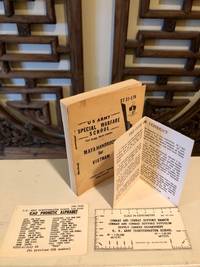
Fort Bragg North Carolina: U. S. Army Special Warfare School 1966. Revised edition. Stiff Printed Wraps. Very Good. 24mo. Pp. ii 247. Illustrated with maps charts drawings and diagrams. Beige paper covers signatures side stapled: staples lightly oxidized light stains and offsetting to covers first leaf lightly foxed. Four laid in cards: Code of Conduct Leader's Guide ICAO Phonetic Alphabet and metric ruler/angle gauge all printed at Fort Lee Virginia. Printed 1 March 1966 at Ft. Benning Georgia. "This handbook contains useful reference material vital for the military advisor in Vietnam and is designed to assist him in the performance of his duties." Chapters include information on weapons air operations tactical air support communications adjustment of artillery fire field engineering and demolitions tactics evasion survival and tropical sanitation and hygiene. U. S. Army Special Warfare School unknown
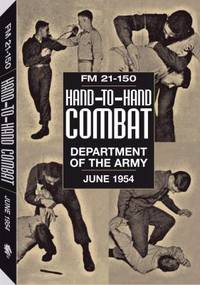
Paladin Press 2005. Paperback. Very Good. Disclaimer:A copy that has been read but remains in excellent condition. Pages are intact and are not marred by notes or highlighting but may contain a neat previous owner name. The spine remains undamaged. At ThriftBooks our motto is: Read More Spend Less.Dust jacket quality is not guaranteed. Paladin Press paperback
Fort Eustis VA: U. S. Army Transportation School 1962. Presumed First Edition First printing. Wraps. Good. Five-hole punched and stapled on left side. Format is approximately 6.5 inches by 9.5 inches. iii 1 166 pages. Figures. Tables. References. Shipping Data. Cover has some wear and soiling. The text discusses the impact of tactical and logistical operations upon the world-wide distribution of special ammunition and other components of Army missile weapon systems. It describes the distribution sequence defines the control exercised over the distribution system and identifies the responsibilities of logistic agencies. the text also describes the transportation requirement transportation service responsibilities and the capabilities and limitations of the several modes of transportation. The text includes a discussion of the characteristics of special ammunition and transportability data applicable to all components of army missile weapon systems. The Special Text discusses: Distribution with CONUS Distribution within Oversea Commands The Transportation Environment and Transportation System Characteristics. Appendix I is References. Appendix II is the Safe Handling of explosives and other dangerous articles and protection of classified shipments. Appendix III is Characteristics and Properties of Propellants. Appendix IV is Army Missile Systems Component Shipping Data and this includes sections on Hawk Nike-Ajax Nike-Hercules Little John LaCrosse Sergeant Honest John Corporal Pershing Redstone SS-10 SS-11 Redeye Mauler Shillelagh Nike-Zeus Davy Crockett and a Quick reference complete round loading and shipping guide. On 31 July 1942 the Department of War recognized the need for a single manager of Army transportation and created a new branch the Transportation Corps. Since the Revolutionary War Army transportation had evolved through two branches the Quartermaster Corps and the Corps of Engineers. The demands of World War I made the Army first realize its need for a single manager for military transportation. So began an evolution over the next quarter century that culminated in the birth of the Transportation Corps during the opening months of World War II.<br /> <br /> The War Department directed the Quartermaster Corps to transfer the functions and responsibilities of truck and aviation units to the Transportation Corps by General Orders No. 77 on 24 July 1946. The same year the Transportation School consolidated all training except for drivers at Fort Eustis Virginia because of its intermodal rail and sea capability. In 1950 the Army turned over its deep-draft ships to the Military Sealift Command so the Army no longer had the largest navy in the United States military.<br /> <br /> That same year Brigadier General William B. Bunker convinced the Chief of Transportation Major General Frank S. Besson Jr. of the importance of helicopters in logistics. As a result in May the Army approved the organization of five helicopter companies with the first the 6th Transportation Company Helicopter activated in July 1952.<br /> <br /> In 1954 the Engineer Corps turned its landing craft over to the Transportation Corps making the Transportation Corps responsible for all modes of Army transportation. Coincidentally the Navy lifted the size limit on Army watercraft allowing the Army to build landing craft utility LCUs. This led the Transportation Corps to activate the 159th Boat Battalion.<br /> <br /> The Soviet threat against Europe provided the peacetime Army an enemy to plan against. In anticipation of the needs of the Army the Chief of Transportation directed and championed the development of military transportation. Contingency planners assumed the worst-case scenario in which the Soviet Union would use its bombers or worse yet its nuclear arsenal to destroy the fixed ports in France thus severing the vital lines of communication at their European end. This contingency required the Army to rely heavily on over-the-beach operations.<br /> <br /> The Transportation Corps is a Force Sustainment branch of the U.S. Army headquartered is now at Fort Lee Virginia and is responsible for the movement of personnel and matériel by truck rail air and sea. The Transportation Corps provides a full spectrum of transportation capabilities at the tactical operational and strategic levels of war. The Transportation School trains Soldiers to operate and maintain Army tactical trucks material handling equipment and watercraft. The school trains Transportation Operations Traffic Management Convoy Operations Cargo Transfer Cargo Documentation Movement Control Operation of Heavy Material Handling Equipment Sailing and Maintenance of Army Vessels and Unloading Aircraft Ships Railcars and Trucks. U. S. Army Transportation School paperback
Italy: 15 Army Group Italy. Good with No dust jacket as issued. 1945. First Edition. Softcover. Both ends of the spine are chipped top more than bottom slight edgewear to covers which are a bit proud of the text block. ; 581 pages . 15 Army Group Italy paperback

 ?????????
 ?????PDF???
 RSS feed
 ??
??