|
United States Army
St. Lawrence River Project Final Report 1942
hardcover. Good. Access codes and supplements are not guaranteed with used items. May be an ex-library book. hardcover
Referentie van de boekhandelaar : 0428504035.G ISBN : 0428504035 9780428504038
|
|
|
United States Army Corps of Engineers
St. Lawrence River Project Final Report 1942: Long Sault Guard Gate Specifications Classic Reprint
paperback. Good. Access codes and supplements are not guaranteed with used items. May be an ex-library book. paperback
Referentie van de boekhandelaar : 1528305078.G ISBN : 1528305078 9781528305075
|
|
|
United States Army Corps of Engineers
St. Lawrence River Project: Final Report 1942; Long Sault Canal Analysis of Design Classic Reprint
paperback. Good. Access codes and supplements are not guaranteed with used items. May be an ex-library book. paperback
Referentie van de boekhandelaar : 1527815161.G ISBN : 1527815161 9781527815162
|
|
|
United States Army Corps of Engineers
St. Lawrence River Project
hardcover. Good. Access codes and supplements are not guaranteed with used items. May be an ex-library book. hardcover
Referentie van de boekhandelaar : 0331293803.G ISBN : 0331293803 9780331293807

|
|
|
United States Army Corps of Engineers
St. Lawrence River Project
paperback. Good. Access codes and supplements are not guaranteed with used items. May be an ex-library book. paperback
Referentie van de boekhandelaar : 0331186802.G ISBN : 0331186802 9780331186802
|
|
|
United States Army
St. Lawrence River Project Final Report 1942: General Data Classic Reprint
paperback. Good. Access codes and supplements are not guaranteed with used items. May be an ex-library book. paperback
Referentie van de boekhandelaar : 1528207610.G ISBN : 1528207610 9781528207614
|
|
|
United States Army Corps of Engineers
St. Lawrence River Project Final Report 1942: Long Sault Guard Gate Specifications Classic Reprint
hardcover. Good. Access codes and supplements are not guaranteed with used items. May be an ex-library book. hardcover
Referentie van de boekhandelaar : 026596671X.G ISBN : 026596671X 9780265966716
|
|
|
United States, Department of the Army, Headquarters
Staff Officers Field Manual Nuclear Weapons Employment; Department of the Army Field Manual FM 101-31-1
Washington DC: Department of the Army Headquarters 1963. Presumed First printing thus supersedes prior guidance. Wraps. Good. Three-hole punched with one staple on the left side. 163 5 pages illustrations Figures and Tables. Footnotes. Ink notations on spine and bottom edge. Stapled on left side and three hole punched. Soe cover wear and soiling. This manual together with FM 101-31-1 1 February 1963 and FM 101-31-1 1 February 1963 and FM 101-31-3 1 February 1963 supersedes FM 101-31 20 July 1959 including C 1 29 Jun 2 1961; FM 101-31 modified 15 September 1960; DA Pam 39-1 20 May 1959; and DA Training Circular 101-1 8 December 1958 including C 2 14 June 1060. The contents include: Introduction Initial Effects of Nuclear Weapons Target Analysis Command Responsibilities Staff Procedures and Techniques of Employment Operations in Residual Radiation Areas; Protective Measures Appendices and Index. This manual provides guidance to commanders and staff officers in the operational and logistical aspects of nuclear weapons employment in combat operations. The doctrine presented in this manual is concerned with nuclear weapons employment with the field army. When the manual discusses special ammunition logistics vulnerability analyses and the employment of nuclear weapons in such areas as air defense the scope is extended to include the theater of operations. In addition some portions of this manual are applicable to Continental United States air defense. The complete manual includes the following information: 1 The U.S. Army doctrine for employment of nuclear weapons. 2 The effects expected from nuclear weapons. 3 Techniques of target analysis. 4 Command and staff procedures in nuclear weapons employment. 5 Guidance for conducting tactical operations in a nuclear environment. 6 Defensive measures individual and unit to reduce the effects of enemy delivered weapons. 7 Tabular information concerning target response and troop safety for a family of hypothetical weapons and for stockpile weapons. This manual is divided into three separate manuals. FM 101-31-1 provides specific doctrine concerning those facets of tactical operations which are applicable to active nuclear warfare. It contains the U.S. Army concepts for nuclear weapons employment and the command and staff actions required to carry out those concepts. Appendixes to this volume present detailed technical procedures concerning target analysis. FM 101-31-2 contains classified defense information concerning the nuclear weapons in the U.S. stockpile. FM 101-31-1 provides data concerning a family of hypothetical nuclear weapons. Department of the Army, Headquarters paperback
Referentie van de boekhandelaar : 83636
|
|
|
United States Department of the Army
Standards of Statistical Presentation Classic Reprint
hardcover. Good. Access codes and supplements are not guaranteed with used items. May be an ex-library book. hardcover
Referentie van de boekhandelaar : 0267871449.G ISBN : 0267871449 9780267871445
|
|
|
United States Army
Statement of the Disposition of Some of the Bodies of Deceased Union Soldiers and Prisoners of War Whose Remains Have Been Removed to National . and Western States Vol. 1 Classic Reprint
paperback. Good. Access codes and supplements are not guaranteed with used items. May be an ex-library book. paperback
Referentie van de boekhandelaar : 1332947611.G ISBN : 1332947611 9781332947614
|
|
|
United States Army
Statement of the Disposition of Some of the Bodies of Deceased Union Soldiers and Prisoners of War Whose Remains Have Been Removed to National . and Western States Vol. 1 Classic Reprint
hardcover. Good. Access codes and supplements are not guaranteed with used items. May be an ex-library book. hardcover
Referentie van de boekhandelaar : 0656044659.G ISBN : 0656044659 9780656044658

|
|
|
United States Army Quartermaster's Department
Statement of the Disposition of Some of the Bodies of Deceased Union Soldiers and Prisoners of War Whose Remains have been Removed to National Cemeteries in the Southern and Western States Vol. IV
Government Printing Office Washington DC 1869. First Edition. Softcover. Good Condition. This is the original printing of the booklet issued from the Quartermaster General's Office as General Orders No. 12 March 2 1869. It is the final of four volumes published from 1868-69. According to the forwarding letter printed at the beginning this volume records "the removal of sixty-three thousand eight hundred and forty-seven bodies from two hundred and ninety-five different locations to twenty-three of the National Cemeteries." Tables for 12 states indicate the original sites and how many remains were removed from those sites dates of removal and final resting places. NOTE: This is a statistical report; no names of soldiers or POWs are provided in the counts Rare. WorldCat only identifies one copy bound in the four volume set at the New-York Historical Society Library and two copies of one of the other volumes in LDS FamilySearch libraries Size: 8"-9" - Octavo 8vo. 43 pages. Text block is tight and unmarked though the pages have toned with age. Sewn booklet in original wrapper. No foxing in this copy. Front cover of wrapper is intact though a bit dirty around the edges from age. Back panel has a large 1" by 1.5" chip at the top edge. There are closed tears at the top edge 3/4" side edge 1" and bottom edge 3" of the back wrapper which have been repaired with archival tape to stabilize the cover and prevent any further tearing. There is a light half-circle tide mark 3" wide by 1.5" deep at the top of the pages throughout. Quantity Available: 1. Category: Military & Warfare; Civil War 1860-1865; United States; 19th century; Antiquarian & Rare. Main Picture: U.S. Army. Quartermaster's Dept. Statement of the Disposition of Some of the Bodies of Deceased Union Soldiers . Vol. IV 1869 - Front panel of the dust wrapper. Picture 2: U.S. Army. Quartermaster's Dept. Statement of the Disposition of Some of the Bodies of Deceased Union Soldiers . Vol. IV 1869 - List of the 12 states from or to which bodies have been moved. Picture 3: U.S. Army. Quartermaster's Dept. Statement of the Disposition of Some of the Bodies of Deceased Union Soldiers . Vol. IV 1869 - Excerpt of the accounting of bodies moved within Virginia. Picture 4: U.S. Army. Quartermaster's Dept. Statement of the Disposition of Some of the Bodies of Deceased Union Soldiers . Vol. IV 1869 - Accounting of bodies moved from surrounding states to Tennessee. Picture 5: U.S. Army. Quartermaster's Dept. Statement of the Disposition of Some of the Bodies of Deceased Union Soldiers . Vol. IV 1869 - Accounting of bodies moved from and to the Dakota Territory and other states. Picture 6: U.S. Army. Quartermaster's Dept. Statement of the Disposition of Some of the Bodies of Deceased Union Soldiers . Vol. IV 1869 - Alphabetical list of National Cemeteries to which bodies have been moved. Pictures of this item not already displayed here available upon request. Inventory No: 1114. . Government Printing Office paperback
Referentie van de boekhandelaar : 1114
|
|
|
United States Army
Static Line Parachuting Techniques and Training
paperback. Good. Access codes and supplements are not guaranteed with used items. May be an ex-library book. paperback
Referentie van de boekhandelaar : 1410107817.G ISBN : 1410107817 9781410107817
|
|
|
United States Army
Storage Catalogue: Signal Corps Classic Reprint
hardcover. Good. Access codes and supplements are not guaranteed with used items. May be an ex-library book. hardcover
Referentie van de boekhandelaar : 0265775736.G ISBN : 0265775736 9780265775738

|
|
|
United States; Army; Th Coast Artillery
Story of Forty-Seventh: Being the History of a Regiment of Heavy Artillery Made Up of Men From Every State in the Union Classic Reprint
hardcover. Good. Access codes and supplements are not guaranteed with used items. May be an ex-library book. hardcover
Referentie van de boekhandelaar : 1528087690.G ISBN : 1528087690 9781528087698

|
|
|
United States; Army; Th Coast Artillery
Story of Forty-Seventh: Being the History of a Regiment of Heavy Artillery Made Up of Men From Every State in the Union Classic Reprint
paperback. Good. Access codes and supplements are not guaranteed with used items. May be an ex-library book. paperback
Referentie van de boekhandelaar : 1331203767.G ISBN : 1331203767 9781331203766

|
|
|
United States Army Service School
Studies in Minor Tactics Classic Reprint
hardcover. Good. Access codes and supplements are not guaranteed with used items. May be an ex-library book. hardcover
Referentie van de boekhandelaar : 0484073052.G ISBN : 0484073052 9780484073059

|
|
|
United States Army
Study And Exploitation Of Aerial Photographs I : Text II: Plates
Washington D. C.: United States Army. Near Fine. 1918. Paperback. B&W Illustrations; This is a trade sized paperback book with flexible cloth covers and a glued spine. The book is in Near Fine condition and was issued without a dust jacket. There is some beginning edge wear and rubbing to the spine ends and corners of the book covers. There is an inked number on the top edge of the front cover. The text pages are clean and bright. There are two folded plates at the rear of the book. "By this time sophisticated aerial photography from kites balloons and even pigeons had already developed significantly thanks to a century of experiments by scientists and militaries. In The Balloon Prospect Caren Kaplan writes that balloons were used for military reconnaissance as early as June 26th 1794 when the French Revolutionary Army floated balloons over their engagement with the Austrian-Dutch coalition in Fleurus Belgium. Aerial reconnaissance from balloons also saw use in the American Civil War the Spanish-American War the Franco-Prussian War of 1870 and in the Boer War. Balloons and other methods of aerial photography began to give way to airplanes in the Italo-Turkish War in which aircraft were used for the first time for military reconnaissance directing naval gunfire. At the 1913 Paris Aero Salon French engineers revealed the first airplane to be equipped with a specially configured aerial camera. By 1914 each of Europes major powers had developed dedicated aircraft corps for aerial intelligence. The single use in war for which the machines of the Military Wing of the Royal Flying Corps were designed and the men trained was let it be repeated reconnaissance
It was designed to operate with an expeditionary force and to furnish that force with eyes wrote Walter Raleigh in The War in the Air: In Being the Story of the Part Played in the Great War by the Royal Air Force 1922. "Bard College . United States Army paperback
Referentie van de boekhandelaar : A38678

|
|
|
United States Army War College
Study on the Cost of the Army of the United States as Compared With the Cost of the Armies of Other Nations: Prepared by the War College Division . Military Policy for the United States; Wcd
hardcover. Good. Access codes and supplements are not guaranteed with used items. May be an ex-library book. hardcover
Referentie van de boekhandelaar : 0332105032.G ISBN : 0332105032 9780332105031

|
|
|
United States Army War College
Study on the Cost of the Army of the United States as Compared With the Cost of the Armies of Other Nations: Prepared by the War College Division . Military Policy for the United States; Wcd
paperback. Good. Access codes and supplements are not guaranteed with used items. May be an ex-library book. paperback
Referentie van de boekhandelaar : 0332104893.G ISBN : 0332104893 9780332104898

|
|
|
United States Army Ordnance School
Submachine Guns: Volume I.
Aberdeen Proving Ground MD: United States Army Ordnance School 1958. Wraps. Good. No dust jacket as issued. Cover has some wear and soiling. i 70 p. Includes illustrations. Volume I only. This addressed German Special Rifles. This was a handout for use in Armament Courses. United States Army Ordnance School paperback
Referentie van de boekhandelaar : 62388
|
|
|
United States Army Ordnance Dept Ordnance Dept
Summary of the Proceedings of a Board of Officers Convened at the Ordnance Office War Department on the 21st of March 1870: In Compliance With Special Orders No. 61 Dated Headquarters of the Army
hardcover. Good. Access codes and supplements are not guaranteed with used items. May be an ex-library book. hardcover
Referentie van de boekhandelaar : 0332207269.G ISBN : 0332207269 9780332207261

|
|
|
United States Army
Supplement to The Solider and The Law Outline of Procedure For Trials Before Courts-Martial U.S. Army and Explanation of the Articles of War
The Military Service Publishing Co. Paperback. Good. Good condition with wear and markings. The Military Service Publishing Co paperback
Referentie van de boekhandelaar : 100-17324
|
|
|
United States Department of Defense Department of the Army, Headquarters
Surveillance Target Acquisition and Night Observation STANO Operations; Field Manual FM 31-100 TEST
Washington DC: Headquarters Department of the Army 1971. TEST Draft issue. Wraps. Good. Various paginations approximately 270 pages. Illustrations. Diagrams. References. Equipment. Glossary. Index. Format is approximately 8.5 inches by 11 inches. Three-hole punched and Staplebound. Cover has some wear and soiling. This test field manual represents the state-of-knowledge state-of-practice and state-of doctrine for the U.S. Army toward the end of the Vietnam War. Equipment addressed reflect at an unclassifed level the current state-of-the-art in such technologies. S.T.A.N.O. represents Surveillance Target Acquisition and Night Observation. This is a real grouping of technology in our military. The type of equipment included in this grouping are night vision devices Intrusion detection devices man portable surveillance radar laser aiming ranging and detecting devices certain specialized optical systems such as stabilized optical monoculars and binoculars. The concept of S.T.A.N.O. evolved from a high tech solution for maximizing intelligence gathering efficiency while minimizing human risk. The term S.T.A.N.O. was first coined by General Westmoreland which represented his perspective of a specialized grouping of technological innovations pertaining to the electronic battlefield. The purpose of this manual was to provide the guidance required for the tactical planning employment and management of surveillance target acquisition and night operations STANO systems at division and lower echelons. STANO is an element of the Intelligence subsystem of the Integrated Battlefield Control System IBCS. The IBCS is the structural framework of personnelo organizations concepts doctrine and equipment integrating the functions of combat into a coherent system. This document is a field manual Test as defined in Army Regulation 310-3. There is no information that this was ever issued as an authorized field manual. This may have been superseded by Surveillance Target Acquisition Night Operations and Countersurveillance STANOC. United States Army Field Manuals are published by the United States Army's Army Publishing Directorate. As of 27 July 2007 some 542 field manuals were in use. They contain detailed information and how-tos for procedures important to soldiers serving in the field. Starting in 2010 the US Army began review and revision of all of its doctrinal publications under the initiative "Doctrine 2015". Since then the most important doctrine have been published in Army Doctrine Publications and Army Doctrine Reference Publications replacing the former key Field Manuals. Army Techniques Publications Army Training Circulars and Army Technical Manuals round out the suite new of doctrinal publications. Not all FMs are being rescinded; 50 select Field Manuals will continue to be published periodically reviewed and revised. Headquarters, Department of the Army paperback
Referentie van de boekhandelaar : 73762
|
|
|
United States Army Corps of Engineers
Survey of East Bank of the Mississippi River between Oquawka and Dallas City Ill.
Washington: GPO 1897. 54th Cong. 2nd Sess. HD 159 208 & 223 paper wrappers and brass pin bound five large folding maps tinted very good and unperused with text in ca. 20 pp. in all near very good . - If you are reading this this item is actually physically in our stock and ready for shipment once ordered. We are not bookjackers. Buyer is responsible for any additional duties taxes or fees required by recipient's country. Photos available upon request. Washington: GPO unknown
Referentie van de boekhandelaar : ZB295058
|
|
|
United States Army Air Forces Air Force 2nd Altitude Indoctrination Unit
Survival at Altitude of Heavy Bomber Crews
Loincol Nebraska: Repro. Dept. L.A.A.F. 1944. illustrations 5 52p. plus a few As and Bs. Softcover in original wrapper Stapled. Restricted. Uncommon. Repro. Dept., L.A.A.F. unknown
Referentie van de boekhandelaar : 96024
|
|
|
United States Army Air Forces
Sustineo Alas 1942 Classic Reprint
paperback. Good. Access codes and supplements are not guaranteed with used items. May be an ex-library book. paperback
Referentie van de boekhandelaar : 1390003817.G ISBN : 1390003817 9781390003819

|
|
|
United States Army Air Forces
Sustineo Alas 1942
hardcover. Good. Access codes and supplements are not guaranteed with used items. May be an ex-library book. hardcover
Referentie van de boekhandelaar : 139000399X.G ISBN : 139000399X 9781390003994

|
|
|
United States Army
Table of Fundamental Allowances: Quartermaster Supplies 1917 Classic Reprint
hardcover. Good. Access codes and supplements are not guaranteed with used items. May be an ex-library book. hardcover
Referentie van de boekhandelaar : 0656101032.G ISBN : 0656101032 9780656101030

|
|
|
United States Army Quartermaster Corps
Table of fundamental allowances quartermaster supplies. 1917
Nabu Press 2011-09-12. paperback. Used: Good. 7.44x0.12x9.69. Buy with confidence. Excellent Customer Service & Return policy. Nabu Press paperback
Referentie van de boekhandelaar : SONG1245150200 ISBN : 1245150200 9781245150200

|
|
|
United States Department of the Army, Headquarters
Tactical Nuclear Operations; Field Manual FM 100-30
Washington DC: U.S. Army Headquarters 1996. Presumed First Edition First printing thus. Wraps. Good/No dust jacket issued. Three-hole punched and staplebound. Distribution Restriction--authorized to U.S. Government agencies only. Various paginations approx. 100 pages. Figures. Glossary. References. Index. Cover creased and has some wear and soiling. This manual establishes Army doctrine for operations in a nuclear environment and details the doctrine for integrating nuclear consideration into all other aspects of the battlefield. It also describes the Army's role in nominating tragets at corps and above levels and protecting the force from the effects of a nuclear weapons detonation. Nuclear employment in a theater of operations has theater strategic operational and tactical results; execution has national strategic implications. The corps' role is to function at either the tactical or operational levels of war. At the tactical level the corps accomplishes missions as Field Manual FM 199-15 describes. At the operational level when directed and augmented the corps functions as either the Army force ARFOR the joint force land component command JFLCC or a joint task force JTF. By viewing the corps in its many possible roles the reader can also discern nuclear procedures for echelons above corps EAC and joint missions. This manual can help educate and train commanders and staff at corps and operations levels in nuclear operations and educate and train divisions in nuclear force protection. It is used with Joint Publications JP 3-12.1 3-12.2 SRD or 3-12.3 and serves as the bridge between joint and Army doctrine. It is also uses with FM 25-50 which contains training doctrine for nuclear survivability. Among the topics addressed are: Nuclear Weapons; Joint Nuclear Doctrine; Deterrence Proliferation Weapons Effects Survivability Countermeasures Nuclear Operations Targeting Battlefield Operating Systems Nuclear Support Nuclear Tactics; Tactical Operations; Military Training; Nuclear Combat; Theater Nuclear; Nuclear Environment FM-100-30 Mobile Defense Command and Control Decision-Making Collateral-Damage and Troop Safety. A tactical nuclear weapon TNW or non-strategic nuclear weapon NSNW is a nuclear weapon that is designed to be used on a battlefield in military situations mostly with friendly forces in proximity and perhaps even on contested friendly territory. Generally smaller in explosive power they are defined in contrast to strategic nuclear weapons which are designed mostly to be targeted at the enemy interior far away from the war front against military bases cities towns arms industries and other hardened or larger-area targets to damage the enemy's ability to wage war. No tactical nuclear weapon has ever been used in a combat situation. Tactical nuclear weapons include gravity bombs short-range missiles artillery shells land mines depth charges and torpedoes which are equipped with nuclear warheads. Also in this category are nuclear armed ground-based or shipborne surface-to-air missiles SAMs and air-to-air missiles. Small two-man portable or truck-portable tactical weapons such as the Special Atomic Demolition Munition and the Davy Crockett recoilless rifle have been developed but the difficulty of combining sufficient yield with portability could limit their military utility. In wartime such explosives could be used for demolishing "chokepoints" to enemy offensives such as at tunnels narrow mountain passes and long viaducts. There is no exact definition of the "tactical" category in terms of range or yield of the nuclear weapon. The yield of tactical nuclear weapons is generally lower than that of strategic nuclear weapons but larger ones are still very powerful and some variable-yield warheads serve in both roles. Some tactical nuclear weapons have specific features meant to enhance their battlefield characteristics such as variable yield which allow their explosive power to be varied over a wide range for different situations or enhanced radiation weapons which are meant to maximize ionizing radiation exposure and to minimize blast effects. Tactical nuclear weapons were a large part of the peak nuclear weapons stockpile levels during the Cold War. U.S. Army Headquarters paperback
Referentie van de boekhandelaar : 85229
|
|
|
United States Department of the Army, Headquarters
Tactical Nuclear Operations; Field Manual FM 100-30 Test
Washington DC: U.S. Army Headquarters 1971. Presumed First Edition First printing thus. Wraps. Good/No dust jacket issued. Three-hole punched and staplebound. Surviving Test manuals are increasingly rare. Stamp of G3 42d Inf. Div. on cover. Various paginations approx. 50 pages. Illustrations. References. Index. Cover has some wear and soiling. This test manual provides basic doctrinal guidance for tactical operations in a nuclear environment. Commanders and staff officers at all levels must understand and appreciate the effects of the nuclear environment on operations at brigade and lower levels and carefully consider them when planning each operation. This test manual discusses the characteristic effects of nuclear weapons on troops equipment organization and operations. It defines the role of the combat combat support & combat service support forces and discussed the specialized training requirements for conduct of operations in a nuclear environment. The material presented is applicable to operations in a nuclear war. It is directed primarily to operations at corps and lower levels. The basic considerations of division-level operations are essentially the same in all areas of the world. The doctrine contained herein should be applied in conjunction with FM 101-31-1 and FM 101-31-2. Tactical nuclear warfare is a conflict between the land forces and associated air and naval forces of two or more nations in which nuclear weapons are limited to the defeat of opposing forces in a theater of operations. Implicit in this definition is the condition that a strategic nuclear exchange on the belligerents' homelands does not occur. The material in this manual is specifically prepared for utilization in a conflict that meets this definition. A tactical nuclear weapon TNW or non-strategic nuclear weapon NSNW is a nuclear weapon that is designed to be used on a battlefield in military situations mostly with friendly forces in proximity and perhaps even on contested friendly territory. Generally smaller in explosive power they are defined in contrast to strategic nuclear weapons which are designed mostly to be targeted at the enemy interior far away from the war front against military bases cities towns arms industries and other hardened or larger-area targets to damage the enemy's ability to wage war. No tactical nuclear weapon has ever been used in a combat situation. Tactical nuclear weapons include gravity bombs short-range missiles artillery shells land mines depth charges and torpedoes which are equipped with nuclear warheads. Also in this category are nuclear armed ground-based or shipborne surface-to-air missiles SAMs and air-to-air missiles. Small two-man portable or truck-portable tactical weapons such as the Special Atomic Demolition Munition and the Davy Crockett recoilless rifle have been developed but the difficulty of combining sufficient yield with portability could limit their military utility. In wartime such explosives could be used for demolishing "chokepoints" to enemy offensives such as at tunnels narrow mountain passes and long viaducts. There is no exact definition of the "tactical" category in terms of range or yield of the nuclear weapon. The yield of tactical nuclear weapons is generally lower than that of strategic nuclear weapons but larger ones are still very powerful and some variable-yield warheads serve in both roles. Some tactical nuclear weapons have specific features meant to enhance their battlefield characteristics such as variable yield which allow their explosive power to be varied over a wide range for different situations or enhanced radiation weapons which are meant to maximize ionizing radiation exposure and to minimize blast effects. Tactical nuclear weapons were a large part of the peak nuclear weapons stockpile levels during the Cold War. U.S. Army Headquarters paperback
Referentie van de boekhandelaar : 67425
|
|
|
United States Department of Defense Department of the Army Army Infantry School
Tactical Operations Handbook
Fort Benning GA: United States Army Infantry School 1970. Presumed First Edition First Printing Thus. Wraps. Good condition. Quarto wraps approximately 300 pages. Includes: illustrations maps glossary color figures tables some fold-outs. Name of previous owner written on front cover. Minor tear approx. 1" on margin of first page. This handbook offers a fascinating snapshot in time during a very active phase of the Vietnam War. This handbook has been prepared by the Tactics Group Brigade and Battalion Operations Department United States Army Infantry School and was approved for resident and extension course instruction by the school. It reflected then current position of the school and conformed to established Department of the Army doctrine as closely as possible. The handbook consists of fourteen chapters and three appendices. United States Army Infantry School paperback
Referentie van de boekhandelaar : 67422
|
|
|
United States Department of Defense Department of the Army Army Infantry School
Tactical Operations Handbook September 1966
Fort Benning GA: United States Army Infantry School 1966. Presumed First Edition First Printing Thus. Wraps. Fair to good condition. Quarto wraps approximately 300 pages. Includes: illustrations maps glossary tables some fold-outs. Covers somewhat worn soiled and small creases; two small edge tears This handbook offers a fascinating snapshot in time during the Vietnam War. This handbook has been prepared by the Tactics Group Brigade and Battalion Operations Department United States Army Infantry School and was approved for resident and extension course instruction by the school. It reflected then current position of the school and conformed to established Department of the Army doctrine as closely as possible. The handbook consists of fourteen chapters and two appendices. United States Army Infantry School paperback
Referentie van de boekhandelaar : 72270
|
|
|
United States; Army; Signal Corps
Technical Equipment of the Signal Corps 1916 Classic Reprint
paperback. Good. Access codes and supplements are not guaranteed with used items. May be an ex-library book. paperback
Referentie van de boekhandelaar : 1332163785.G ISBN : 1332163785 9781332163786
|
|
|
United States; Army; Signal Corps
Technical Equipment of the Signal Corps 1916 Classic Reprint
hardcover. Good. Access codes and supplements are not guaranteed with used items. May be an ex-library book. hardcover
Referentie van de boekhandelaar : 1528069188.G ISBN : 1528069188 9781528069182
|
|
|
United States Army Signal Corps
Technical Equipment of the Signal Corps. 1916
Hardback. New. hardcover
Referentie van de boekhandelaar : B9781019905364 ISBN : 1019905360 9781019905364
|
|
|
United States Army Signal Corps
Technical Equipment of the Signal Corps. 1916
Hardback. New. hardcover
Referentie van de boekhandelaar : A9781340027957 ISBN : 134002795x 9781340027957
|
|
|
United States Army Air Forces
Temperature of the Surface Waters of the Atlantic Ocean Vol. 6
paperback. Good. Access codes and supplements are not guaranteed with used items. May be an ex-library book. paperback
Referentie van de boekhandelaar : 0260591203.G ISBN : 0260591203 9780260591203

|
|
|
United States Army Air Forces
Temperature of the Surface Waters of the Atlantic Ocean Vol. 6
hardcover. Good. Access codes and supplements are not guaranteed with used items. May be an ex-library book. hardcover
Referentie van de boekhandelaar : 0331410923.G ISBN : 0331410923 9780331410921

|
|
|
United States Army
The ""Colorado"" Code Classic Reprint
hardcover. Good. Access codes and supplements are not guaranteed with used items. May be an ex-library book. hardcover
Referentie van de boekhandelaar : 0484628933.G ISBN : 0484628933 9780484628938

|
|
|
United States Army 27th Infantry Division
The 27th Division: The Story of Its Sacrifices and Achievements Classic Reprint
hardcover. Good. Access codes and supplements are not guaranteed with used items. May be an ex-library book. hardcover
Referentie van de boekhandelaar : 0266393098.G ISBN : 0266393098 9780266393092

|
|
|
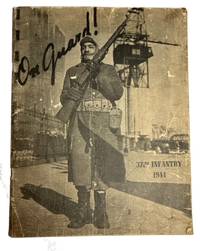
United States Army 372d Infantry (Colored)
The 372d Infantry: a Marching Tradition
n.p. 1944. 1st ed. Paperback. Good. photos 54p. Softcover in original wrapper. 28cm. Cover rather scuffed and soiled with about one-half of rear panel with an extensive but not showing through brown stain. Rather heavy vertical crease. Moderate browning soiling and other wear. Well-worn but basically sound. Scarce item about this African Amnerican military unit. The 371st and 372d Infantry Regiments were seconded to the 157th Infantry division of the French Army in 1918 during World War I and were involved in significant military action as part of the France's "Red Hand Division. The 372d was reconstituted in the National Guard in 1925 until World War II. The Regiment was not attached to a Division and served stateside and in the territory of Hawaii during World War II. Colonel Edward Orval Gourdin a double Harvard graduate undergraduate and law school and a silver medalist at the 1924 Olympics was the Regiment's commanding officer during World War II. He was later the first African American appointed as a Massachusetts Superior Court judge in 1951 and had achieved the rank of Brigadier General when he retired from the National Guard in 1959. The original owner of this book was a Staff Sergeant in the Regiment. Signed on first blank page by 14 individuals -- most seem to be fellow NCOs. paperback
Referentie van de boekhandelaar : 90244
|
|
|
United States Army Armored Division, 4th
The 4th Armored Division
Fort Hood Texas: Taylor Publishing Company 1955. First edition. Hard cover. Very good. No dust jacket as issued. . Very good. Very Scarce. A Great Graphic Cover With Tank and Emblem Includes: illustrations diagrams. United States. --Army. --Armored Division 4th--History. Fort Hood Tex. --Handbooks manuals etc. United States. --Army--Military life. United States. --Army. United States. --Army. --Armored Division 4th. Armed Forces--Military life. Texas--Fort Hood. Taylor Publishing Company hardcover
Referentie van de boekhandelaar : Alibris.0018816
|
|
|
United States Army 89th Division
The 89th Infantry Division 1942-1945
Washington D.C.: Infantry Journal Press 1947 2023-10-09. First Edition. Hardcover. Very Good. 268 pp.; profusely ill. with bw photos maps pictorial endpapers brown cloth w. gilt text 4to. : Rubbing/fraying to edges front hinge cracked spine cocked pages lightly bumped with waving to edges. : Well packaged in a box ships with tracking. Infantry Journal Press hardcover
Referentie van de boekhandelaar : 231009003

|
|
|
United States Army Marksmanship Unit
The Advanced Pistol Marksmanship Manual
Fredonia Books 2002-09-24. Paperback. New. In shrink wrap. Looks like an interesting title! Fredonia Books paperback
Referentie van de boekhandelaar : Q-1410100200 ISBN : 1410100200 9781410100207
|
|
|
United States Army Marksmanship Unit
The Advanced Pistol Marksmanship Instructor's Manual
paperback. Good. Access codes and supplements are not guaranteed with used items. May be an ex-library book. paperback
Referentie van de boekhandelaar : 1410100332.G ISBN : 1410100332 9781410100337
|
|
|
United States Army Marksmanship Unit
The Advanced Pistol Marksmanship Manual
paperback. Good. Access codes and supplements are not guaranteed with used items. May be an ex-library book. paperback
Referentie van de boekhandelaar : 1410100200.G ISBN : 1410100200 9781410100207
|
|
|
United States Army
The Airplane Propeller: Prepared by the Propeller Section Engineering Division McCook Field Dayton Ohio January 1920 Classic Reprint
hardcover. Good. Access codes and supplements are not guaranteed with used items. May be an ex-library book. hardcover
Referentie van de boekhandelaar : 0332280144.G ISBN : 0332280144 9780332280141

|
|
|
United States Department of Defense Headquarters, Department of the Army Office of the Chief of Military History
The American Soldier Set No. 4
Washington DC: Department of the Army; U.S. Government Printing Office. Good. No dust jacket. Some edge discoloration and some wear to corners. Ink mark on the 1776 image. McBarron H. Charles. Includes illustrations. 10 9 by 12.75 inch pages with image size of 7 by 9.75 inches. Color illustrations. Accompanies by 12 page staple bound sheets on the American Soldier series and each image. This appears to be a publication associated with the time period of Bicentennial of the American Revolution. These illustrations are full-color reproductions of paintings. This set spans the period 1775 to 1965. The dean of American Military artists H. Charles McBarron was commissioned to create these drawings. As part of the Army Historical Program the series depicts the American fighting en at various periods in our history The ten images show a number of U.S. Army activities in support the the nation's peacetime progress. The 10 images cover tthe years or periods: 1776 1815 1848-1885 1881-1883 1886 1903 1908-1909 1944-1945 1954-1976 1975The associated pamphlet has about a page of text on each image. Department of the Army; U.S. Government Printing Office unknown
Referentie van de boekhandelaar : 66017
|
|

 De zoekresultaten per email ontvangen
 Zoekresultaten downloaden als PDF
 RSS feed
 Permanente link


