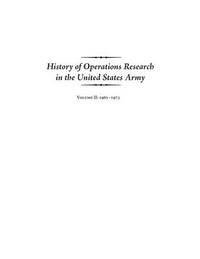
Washington DC: United States Army Center of Military History 1989. Facsimile edition. Trade paperback. Good. xvi 2 741 1 pages. Footnotes. Charts some folding. Tables. Index. This publication replaces DA Pam 20-212 November 1955. Names of two previous owners in ink on title page. This study is essentially a treatment of the manpower aspects of military mobilization. Mobilization is the assembling and organizing of troops materiel and equipment for active military service in time of war or other national emergency; it is the basic factor on which depends the successful prosecution of any war. The purpose of this study is to provide staff officers students at Army schools and other interested persons with usable and detailed information on the procedures of past mobilizations and the lessons learned. The footnotes will guide anyone who wishes to make a more complete study of individual phases of the subject matter. Its primary objective is to provide a more comprehensive record of military mobilizations in the United States for the use of General Staff officers and students in the Army school system than has been available before in a single work. It was hoped that this study would assist mobilization planners of the future. The material was also expected to assist the thoughtful civilian in understanding some of the basic problems of national security. Mobilization is the act of assembling and readying military troops and supplies for war. The word mobilization was first used in a military context in the 1850s to describe the preparation of the Prussian Army.1 Mobilization theories and tactics have continuously changed since then. The opposite of mobilization is demobilization. Mobilization became an issue with the introduction of conscription and the introduction of the railways in the 19th century. Mobilization institutionalized the mass levy of conscripts that was first introduced during the French Revolution. A number of technological and societal changes promoted the move towards a more organized way of deployment. These included the telegraph to provide rapid communication the railways to provide rapid movement and concentration of troops and conscription to provide a trained reserve of soldiers in case of war. Intricate plans for mobilization contributed greatly to the beginning of World War I since in 1914 under the laws and customs of warfare then observed not to mention the desire to avoid compromising national security general mobilization of one nation's military forces was invariably considered an act of war by that country's likely enemies. On April 6 1917 the United States entered the war on the Allied side. At the entrance the U.S. only could mobilize its army of 107641 soldiers ranked only seventeenth in size worldwide at the time. The United States Navy quickly mobilized adding 5 dreadnoughts to the Allied navy. However conscription quickly ensued. By March 1918 318000 U.S. soldiers had been mobilized to France. Eventually by October 1918 a force of 2 million U.S. soldiers joined in the war effort. United States Army, Center of Military History paperback
Philadelphia: E. A. Wright. Very Good with no dust jacket. 1920. First Edition. Hardcover. Slight bump to the front cover's fore-edge at top. ; Illus. very clean copy covers and contents ; 257 pages . E. A. Wright hardcover
UNIVERSITY OF PENNSYLVANIA. UNITED STATES ARMY. History of United States Army Base Hospital No. 20. Organized at the University of Pennsylvania. Phila. 1920. 4to. Illus. 257pp. Fine in orig. cloth. unknown

 Receive by email
 Download as PDF document
 RSS feed
 Permanent link