|
National Aeronautics and Administration
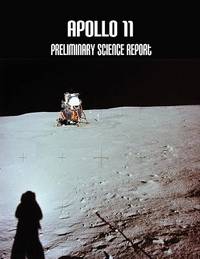
Apollo 11: Preliminary Science Report
new. unknown
Referenz des Buchhändlers : 22141490-n ISBN : 1502726149 9781502726148
|
|
|
National Aeronautics and Administration
Apollo 11: Preliminary Science Report
like new. unknown
Referenz des Buchhändlers : 22141490 ISBN : 1502726149 9781502726148
|
|
|
National Aeronautics and Administration
Apollo 11: Preliminary Science Report
Paperback / softback. New. paperback
Referenz des Buchhändlers : B9781502726148 ISBN : 1502726149 9781502726148
|
|
|
National Aeronautics and Administration
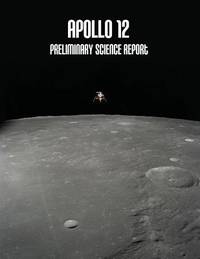
Apollo 12: Preliminary Science Report
Paperback / softback. New. paperback
Referenz des Buchhändlers : B9781502726407 ISBN : 1502726408 9781502726407
|
|
|
National Aeronautics and Space Administration
Apollo 13 Spacecraft Splashdown in the Pacific; NL-2009-06-015-HQ Image dated 4/17/1970
Washington DC: National Aeronautics and Space Administration 2009. Part of Apollo 40 years series. Photograph. Very good. Format approximately 8.5 inches by 11 inches. Image size is approximately 6 inches by 7.25 inches. The caption reads: The Apollo 13 Command Module splashed down in the South Pacific at 12:07:44 p.m. on April 17 1970 after a harrowing mission in which a ruptured oxygen tank put the crew in peril. The red and white parachutes were the first signal to Mission Control that astronauts Lovell Haise and Swigert had defied the odds and made it safely back to Earth. Apollo 13 was the seventh manned mission in the Apollo space program and the third intended to land on the Moon. The craft was launched on April 11 1970 from the Kennedy Space Center Florida but the lunar landing was aborted after an oxygen tank exploded two days later crippling the Service Module upon which the Command Module had depended. Despite great hardship caused by limited power loss of cabin heat shortage of potable water and the critical need to make makeshift repairs to the carbon dioxide removal system the crew returned safely to Earth on April 17 1970 six days after launch. The mission was commanded by James A. Lovell with John L. "Jack" Swigert as Command Module Pilot and Fred W. Haise as Lunar Module Pilot. Swigert was a late replacement for the original CM pilot Ken Mattingly who was grounded by the flight surgeon after exposure to German measles. The Apollo program also known as Project Apollo was the third United States human spaceflight program carried out by the National Aeronautics and Space Administration NASA which accomplished landing the first humans on the Moon from 1969 to 1972. First conceived during Dwight D. Eisenhower's administration as a three-man spacecraft to follow the one-man Project Mercury which put the first Americans in space Apollo was later dedicated to President John F. Kennedy's national goal of "landing a man on the Moon and returning him safely to the Earth" by the end of the 1960s which he proposed in an address to Congress on May 25 1961. Kennedy's goal was accomplished on the Apollo 11 mission when astronauts Neil Armstrong and Buzz Aldrin landed their Lunar Module LM on July 20 1969 and walked on the lunar surface while Michael Collins remained in lunar orbit in the Command/Service Module CSM and all three landed safely on Earth on July 24. Five subsequent Apollo missions also landed astronauts on the Moon the last in December 1972. In these six spaceflights twelve men walked on the Moon. Apollo ran from 1961 to 1972 with the first manned flight in 1968. It achieved its goal of manned lunar landing despite the major setback of a 1967 Apollo 1 cabin fire that killed the entire crew during a prelaunch test. After the first landing sufficient flight hardware remained for nine follow-on landings with a plan for extended lunar geological and astrophysical exploration. Budget cuts forced the cancellation of three of these. Five of the remaining six missions achieved successful landings but the Apollo 13 landing was prevented by an oxygen tank explosion in transit to the Moon which damaged the CSM's propulsion and life support. The crew returned to Earth safely by using the Lunar Module as a "lifeboat" for these functions. Apollo used Saturn family rockets as launch vehicles which were also used for an Apollo Applications Program which consisted of Skylab a space station that supported three manned missions in 1973-74 and the Apollo-Soyuz Test Project a joint Earth orbit mission with the Soviet Union in 1975. Apollo set several major human spaceflight milestones. It stands alone in sending manned missions beyond low Earth orbit. Apollo 8 was the first manned spacecraft to orbit another celestial body while the final Apollo 17 mission marked the sixth Moon landing and the ninth manned mission beyond low Earth orbit. The program returned 842 pounds 382 kg of lunar rocks and soil to Earth greatly contributing to the understanding of the Moon's composition and geological history. The program laid the foundation for NASA's subsequent human spaceflight capability and funded construction of its Johnson Space Center and Kennedy Space Center. Apollo also spurred advances in many areas of technology incidental to rocketry and manned spaceflight including avionics telecommunications and computers. National Aeronautics and Space Administration unknown
Referenz des Buchhändlers : 74050
|
|
|
National Aeronautics and Space Administration Apollo Program Office
Apollo 14 Mission Events; January 31 1971 Launch
Washington DC: National Aeronautics and Space Administration Apollo Program Office 1971. Presumed First Edition First printing. Single sheet printed on both sides. Good. Format is approximately 6.5 inches by 5.5 inches folded in half and printed on both sides. Item has some wear and soiling. Front side has a detailed listing of events such as liftoff Translunar Injection Midcourse Correction Lunar Orbit Insertion etc. The other side continues with a listing of events but has two graphics detailing the events of Apollo 14 EVA-1 and Apollo 14 EVA-2. The Apollo program also known as Project Apollo was the third U. S. human spaceflight program carried out by the National Aeronautics and Space Administration NASA which succeeded in landing the first humans on the Moon from 1969 to 1972. It was first conceived during Dwight D. Eisenhower's administration as a three-person spacecraft to follow the one-person Project Mercury which put the first Americans in space. Apollo was later dedicated to President Kennedy's national goal for the 1960s of "landing a man on the Moon and returning him safely to the Earth" in an address to Congress on May 25 1961. It was the third US human spaceflight program to fly preceded by the two-person Project Gemini conceived in 1961 to extend spaceflight capability in support of Apollo. Kennedy's goal was accomplished on the Apollo 11 mission when astronauts Neil Armstrong and Buzz Aldrin landed their Apollo Lunar Module LM on July 20 1969 and walked on the lunar surface and landed safely on Earth on July 24. Five subsequent Apollo missions also landed astronauts on the Moon the last Apollo 17 in December 1972. In these six spaceflights twelve people walked on the Moon. Rare surviving Apollo 14 ephemera. Apollo 14 was the eighth crewed mission in the United States Apollo program the third to land on the Moon and the first to land in the lunar highlands. It was the last of the "H missions" targeted landings with two-day stays on the Moon with two lunar EVAs or moonwalks.<br /> The mission was originally scheduled for 1970 but was postponed because of the investigation following the abort of Apollo 13 and the need for modifications to the spacecraft as a result. Commander Alan Shepard Command Module Pilot Stuart Roosa and Lunar Module Pilot Edgar Mitchell launched on their nine-day mission on Sunday January 31 1971 at 4:03:02 p.m. EST. Liftoff was delayed forty minutes and two seconds due to launch site weather restrictions the first such delay for an Apollo mission. En route to the lunar landing the crew overcame a series of malfunctions that might have resulted in a second consecutive aborted mission and possibly the premature end of the Apollo program. Shepard and Mitchell made their lunar landing on February 5 in the Fra Mauro highlands - originally the target of Apollo 13. During the two walks on the surface 94.35 pounds 42.80 kg of Moon rocks were collected and several scientific experiments were deployed. To the dismay of some geologists Shepard and Mitchell did not reach the rim of Cone crater as had been planned though they came close. In Apollo 14's most famous incident Shepard hit two golf balls he had brought with him with a makeshift club. While Shepard and Mitchell were on the surface Roosa remained in lunar orbit aboard the Command and Service Module performing scientific experiments and photographing the Moon including the landing site of the future Apollo 16 mission. He took several hundred seeds on the mission many of which were germinated on return resulting in the so-called Moon trees that were widely distributed in the following years. After liftoff from the surface and a successful docking the spacecraft was flown back to Earth where the three astronauts splashed down safely in the Pacific Ocean on February 9. National Aeronautics and Space Administration, Apollo Program Office unknown
Referenz des Buchhändlers : 80614
|
|
|
National Aeronautics and Administration
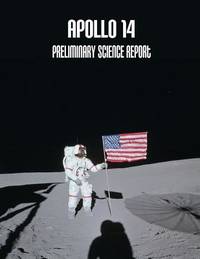
Apollo 14: Preliminary Science Report
Paperback / softback. New. paperback
Referenz des Buchhändlers : B9781502726483 ISBN : 1502726483 9781502726483
|
|
|
National Aeronautics and Space Administration
Apollo 15 At Hadley Base. EP-94
NASA. Used - Acceptable. Acceptable condition. EP-94 Short gifter's inscription on inside. Dampstained. Project Apollo Space flight to the moon NASA unknown
Referenz des Buchhändlers : SB15A-00982
|
|
|
National Aeronautics and Administration
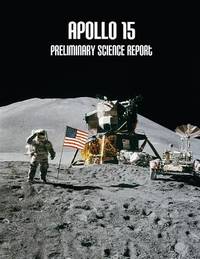
Apollo 15: Preliminary Science Report
Paperback / softback. New. paperback
Referenz des Buchhändlers : B9781502726599 ISBN : 1502726599 9781502726599
|
|
|
National Aeronautics and Space Administration
APOLLO 16 SPACECRAFT COMMENTARY. APRIL 16- APRIL 27 1972.
Houston TX: NASA. VG/NO DUSTJACKET. 1972. Flexibound. Apollo 16 was the tenth crewed mission in the United States Apollo space program the fifth and second-to-last to land on the Moon and the second to land in the lunar highlands.2 The second of Apollo's "J missions" it was crewed by Commander John Young Lunar Module Pilot Charles Duke and Command Module Pilot Ken Mattingly. Launched from the Kennedy Space Center in Florida at 12:54 PM EST on April 16 1972 the mission lasted 11 days 1Â hour and 51 minutes and concluded at 2:45 p.m. EST on April 27. . Sm 4to. Bound with clasps. Massive 5" thick printed on both sides. . NASA unknown
Referenz des Buchhändlers : BOOKS313766

|
|
|
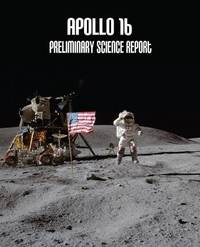
National Aeronautics and Administration
Apollo 16: Preliminary Science Report
Paperback / softback. New. paperback
Referenz des Buchhändlers : A9781502726674 ISBN : 150272667x 9781502726674
|
|
|
National Aeronautics and Administration
Apollo 16: Preliminary Science Report
Paperback / softback. New. paperback
Referenz des Buchhändlers : B9781502726674 ISBN : 150272667x 9781502726674
|
|
|
National Aeronautics and Space Administration
Apollo 17 Mission Report: MARCH 1973 JSC07904
Hardcover. NEW/NEW. <br/> <br/> hardcover
Referenz des Buchhändlers : Pazz140411 ISBN : 9798326251143 9798326251
|
|
|
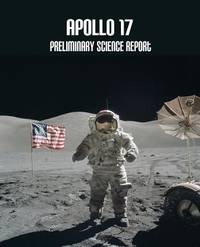
National Aeronautics and Administration
Apollo 17: Preliminary Science Report
Paperback / softback. New. paperback
Referenz des Buchhändlers : B9781502728876 ISBN : 1502728877 9781502728876
|
|
|
National Aeronautics and Space Administration
Apollo 30th Anniversary Medallion
Washington DC: NASA c. 1999. good. 1 medallion Medallion commemorating the 30th anniversary of the Apollo program. This medallion contains metal from a Saturn V launch tower used to send Americans to the moon. NASA unknown
Referenz des Buchhändlers : 50865
|
|
|
National Aeronautics and Space Administration
Apollo 40 Years; NP-2009-06-593-HQ Celebrating Apollo Exploring the Moon Discovering Earth
Washington DC: National Aeronautics and Space Administration 2009. Presumed First Edition First printing. Wraps. Very good. Format is approximately 8.5 inches by 11 inches. Cover has minor wear and soiling. 23 1 pages plus covers. Profusely illustrated color. This has write-ups on key Apollo program flights/crews. The Apollo program also known as Project Apollo was the third United States human spaceflight program carried out by the National Aeronautics and Space Administration NASA which succeeded in landing the first humans on the Moon from 1969 to 1972. It was first conceived during Dwight D. Eisenhower's administration as a three-person spacecraft to follow the one-person Project Mercury which put the first Americans in space. Apollo was later dedicated to President John F. Kennedy's national goal for the 1960s of "landing a man on the Moon and returning him safely to the Earth" in an address to Congress on May 25 1961. It was the third US human spaceflight program to fly preceded by the two-person Project Gemini conceived in 1961 to extend spaceflight capability in support of Apollo. <br /> Kennedy's goal was accomplished on the Apollo 11 mission when astronauts Neil Armstrong and Buzz Aldrin landed their Apollo Lunar Module LM on July 20 1969 and walked on the lunar surface while Michael Collins remained in lunar orbit in the command and service module CSM and all three landed safely on Earth on July 24. Five subsequent Apollo missions also landed astronauts on the Moon the last Apollo 17 in December 1972. In these six spaceflights twelve people walked on the Moon. Apollo ran from 1961 to 1972 with the first crewed flight in 1968. It encountered a major setback in 1967 when an Apollo 1 cabin fire killed the entire crew during a prelaunch test. After the first successful landing sufficient flight hardware remained for nine follow-on landings with a plan for extended lunar geological and astrophysical exploration. Budget cuts forced the cancellation of three of these. Five of the remaining six missions achieved successful landings but the Apollo 13 landing was prevented by an oxygen tank explosion in transit to the Moon which destroyed the service module's capability to provide electrical power crippling the CSM's propulsion and life support systems. The crew returned to Earth safely by using the lunar module as a "lifeboat" for these functions. Apollo used Saturn family rockets as launch vehicles which were also used for an Apollo Applications Program which consisted of Skylab a space station that supported three crewed missions in 1973-74 and the Apollo-Soyuz Test Project a joint US-Soviet Union Earth-orbit mission in 1975. Apollo set several major human spaceflight milestones. It stands alone in sending crewed missions beyond low Earth orbit. Apollo 8 was the first crewed spacecraft to orbit another celestial body and Apollo 11 was the first crewed spacecraft to land humans on one. Overall the Apollo program returned 842 pounds 382 kg of lunar rocks and soil to Earth greatly contributing to the understanding of the Moon's composition and geological history. The program laid the foundation for NASA's subsequent human spaceflight capability and funded construction of its Johnson Space Center and Kennedy Space Center. Apollo also spurred advances in many areas of technology incidental to rocketry and human spaceflight including avionics telecommunications and computers. The Apollo program has been called the greatest technological achievement in human history. Apollo stimulated many areas of technology leading to over 1800 spinoff products as of 2015. The flight computer design used in both the lunar and command modules was along with the Polaris and Minuteman missile systems the driving force behind early research into integrated circuits ICs. By 1963 Apollo was using 60 percent of the United States' production of ICs. The crucial difference between the requirements of Apollo and the missile programs was Apollo's much greater need for reliability. While the Navy and Air Force could work around reliability problems by deploying more missiles the political and financial cost of failure of an Apollo mission was unacceptably high. National Aeronautics and Space Administration paperback
Referenz des Buchhändlers : 80566
|
|
|
National Aeronautics and Space Administration, Office of Public Affairs
Apollo 8: Man Around the Moon
GPO. Used - Very Good. Very Good condition. space spaceflight space race NASA A copy that may have a few cosmetic defects. May also contain a few markings such as an owner’s name short gifter’s inscription or light stamp. GPO unknown
Referenz des Buchhändlers : N16A-04349
|
|
|
National Aeronautics and Space Administration, Office of Public Affairs
Apollo 8: Man Around the Moon
Washington DC: GPO 1968. Wraps. Good. Format is approximately 8 inches by 10.25 inches. Wraps. Profusely illustrated most in color. Covers creased and somewhat scuffed and some edge wear small creases at spine. Apollo 8 the second manned spaceflight mission in the Apollo space program was launched on December 21 1968 and became the first manned spacecraft to leave low Earth orbit reach the Moon orbit it and return safely to Earth. The astronaut crew — Commander Frank Borman Command Module Pilot James Lovell and Lunar Module Pilot William Anders — became the first humans to travel beyond low Earth orbit; see Earth as a whole planet; enter the gravity well of another celestial body; orbit another celestial body; directly see the far side of the Moon with their own eyes; witness an Earthrise; escape the gravity of another celestial body; and re-enter the gravitational well of Earth. The 1968 mission the Saturn V rocket's first crewed launch was also the first human spaceflight launch from the Kennedy Space Center. The Saturn V rocket used by Apollo 8 was designated SA-503 or the "03rd" model of the Saturn V "5" Rocket to be used in the Saturn-Apollo "SA" program. When it was erected in the Vertical Assembly Building on December 20 1967 it was thought that the rocket would be used for an unmanned Earth-orbit test flight carrying a boilerplate Command/Service Module. Apollo 6 had suffered several major problems during its April 1968 flight including severe pogo oscillation during its first stage two second stage engine failures and a third stage that failed to reignite in orbit. Without assurances that these problems had been rectified NASA administrators could not justify risking a manned mission until additional unmanned test flights proved that the Saturn V was ready. GPO paperback
Referenz des Buchhändlers : 16356
|
|
|
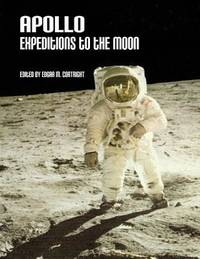
National Aeronautics Administration
Apollo Expeditions to the Moon
like new. unknown
Referenz des Buchhändlers : 22025880 ISBN : 1502449420 9781502449429
|
|
|
National Aeronautics And Space Administration
Apollo Expeditions to the Moon
Apollo Expeditions to the Moon by National Aeronautics And Space Administration paperback
Referenz des Buchhändlers : 2250 ISBN : 1502449420 9781502449429
|
|
|
National Aeronautics Administration
Apollo Expeditions to the Moon
CreateSpace Independent Publishing Platform 2014. Paperback. Good. Pages can have notes/highlighting. Spine may show signs of wear. ~ ThriftBooks: Read More Spend Less.Dust jacket quality is not guaranteed. CreateSpace Independent Publishing Platform paperback
Referenz des Buchhändlers : G1502449420I3N00 ISBN : 1502449420 9781502449429
|
|
|
National Aeronautics and Space Administration
Archaeology Anthropology And Interstellar Communication
Government Printing Office. Very Good. With dust jacket. It's a well-cared-for item that has seen limited use. The item may show minor signs of wear. All the text is legible with all pages included. It may have slight markings and/or highlighting. Government Printing Office unknown
Referenz des Buchhändlers : 1626830134-8-1-29 ISBN : 1626830134 9781626830134

|
|
|
National Aeronautic and Space Administration
Arctic and Antarctic Sea Ice 1978-1987: Satellite Passive-Microwave Observations and Analysis. NASA SP-511
Washington DC: National Aeronautic and Space Administration 1992. First Edition. Hardcover. Very Good/No Dust Jacket. Color Illustration. Folio - between 12" - 15" Tall. In color pictorial boards folio 290pp. Illustrated profusely in color. National Aeronautic and Space Administration hardcover
Referenz des Buchhändlers : 0819423
|
|
|
National Aeronautics and Space Administration
Ares I -X Development Flight Test Logo Sticker
Washington DC: National Aeronautics and Space Administration c2008. Presumed First Edition First printing this. Single sticker sheet printed on both sides peal line is about at the diameter line. Very good. The format is a circle with a 4 inch diameter. Sticker seam at the back is at the mid-point. Rare surviving copy. One side is a version of the ARES logo originally designed by Star Trek artist Michael Okuda with 10 stars and a rocket ascending but no image of Earth in the background. The other side has the following text: NASA's Ares I-X Flight Test Vehicle NASA's first flight test of the full rocket for the agency's next-generation spacecraft and launch vehicle systems is launching in 2009. The flight test called Ares I-X will bring NASA one step closer to its exploration goals--to return to the moon for more ambitious exploration of the lunar surface ad to travel to Mars and destinations beyond." Then two links to on-line resources. Ares I-X was the first-stage prototype and design concept demonstrator of Ares I a launch system for human spaceflight developed by the National Aeronautics and Space Administration NASA. Ares I-X was successfully launched on October 28 2009. The Ares I-X vehicle used in the test flight was similar in shape mass and size to the planned configuration of later Ares I vehicles but had largely dissimilar internal hardware consisting of only one powered stage. By flying the vehicle through first-stage separation the test flight also verified the performance and dynamics of the Ares I solid rocket booster in a "single stick" arrangement which is different from the solid rocket booster's then-current “double-booster†configuration alongside the external tank on the space shuttle. Ares I was the crew launch vehicle that was being developed by NASA as part of the Constellation program. The name "Ares" refers to the Greek deity Ares who is identified with the Roman god Mars. Ares I was originally known as the "Crew Launch Vehicle" CLV. NASA planned to use Ares I to launch Orion the spacecraft intended for NASA human spaceflight missions after the Space Shuttle was retired in 2011. Ares I was to complement the larger uncrewed Ares V which was the cargo launch vehicle for Constellation. NASA selected the Ares designs for their anticipated overall safety reliability and cost-effectiveness. However the Constellation program including Ares I was canceled by U.S. president Barack Obama in October 2010 with the passage of his 2010 NASA authorization bill. In September 2011 NASA detailed the Space Launch System as its new vehicle for human exploration beyond Earth's orbit. Unlike the Space Shuttle where both crew and cargo were launched simultaneously on the same rocket the plans for Project Constellation outlined having two separate launch vehicles the Ares I and the Ares V for crew and cargo respectively. Having two separate launch vehicles allows for more specialized designs for the crew and heavy cargo launch rockets. The Ares I rocket was specifically being designed to launch the Orion Multi-Purpose Crew Vehicle. Orion was intended as a crew capsule similar in design to the Apollo program capsule to transport astronauts to the International Space Station the Moon and eventually Mars. Ares I might have also delivered some limited resources to orbit including supplies for the International Space Station or subsequent delivery to the planned lunar base. NASA selected Alliant Techsystems the builder of the Space Shuttle Solid Rocket Boosters as the prime contractor for the Ares I first stage. NASA announced that Rocketdyne would be the main subcontractor for the J-2X rocket engine on July 16 2007. NASA selected Boeing to provide and install the avionics for the Ares I rocket on December 12 2007. On August 28 2007 NASA awarded the Ares I Upper Stage manufacturing contract to Boeing. The upper stage of Ares I was to have been built at Michoud Aerospace Factory which was used for the Space Shuttle's External Tank and the Saturn V's S-IC first stage. The Ares V formerly known as the Cargo Launch Vehicle or CaLV was the planned cargo launch component of the canceled NASA Constellation program which was to have replaced the Space Shuttle after its retirement in 2011. Ares V was also planned to carry supplies for a human presence on Mars. The Ares V was to launch the Earth Departure Stage and Altair lunar lander for NASA's return to the Moon which was planned for 2019. It would also have served as the principal launcher for missions beyond the Earth-Moon system including the program's ultimate goal a crewed mission to Mars. The uncrewed Ares V would complement the smaller and human-rated Ares I rocket for the launching of the 4–6 person Orion spacecraft. Both rockets deemed safer than the then-current Space Shuttle would have employed technologies developed for the Apollo program the Shuttle program and the Delta IV EELV program. National Aeronautics and Space Administration unknown
Referenz des Buchhändlers : 88971
|
|
|
National Aeronautics and Administration
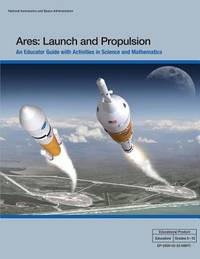
Ares: Launch and Propulsion: An Educator Guide with Activities in Science and Mathematics
Paperback / softback. New. paperback
Referenz des Buchhändlers : A9781493683376 ISBN : 1493683373 9781493683376
|
|
|
National Aeronautics and Administration
Ares: Launch and Propulsion: An Educator Guide with Activities in Science and Mathematics
Paperback / softback. New. paperback
Referenz des Buchhändlers : B9781493683376 ISBN : 1493683373 9781493683376
|
|
|
National Aeronautics and Administration
Assessment of Programs in Space Biology and Medicine 1991
Paperback / softback. New. paperback
Referenz des Buchhändlers : B9781502845757 ISBN : 150284575x 9781502845757
|
|
|
NATIONAL AERONAUTICS AND SPACE ADMINISTRATION HAMPTON VA LANGLEY RESEARCH CEN TER
Assessment of Carbon Fiber Electrical Effects
PN. New. 1979. Soft Cover. Date is original print. This is a reprint edition. . PN paperback
Referenz des Buchhändlers : 759996
|
|
|
National Aeronautics and Space Administration
Assuring the Security and Integrity of NASA Automated Information Resources; NASA Management Instruction NMI 2410.7A
Washington DC: National Aeronautics and Space Administration c1980. Xerox copy of Draft Instruction. Stapled in upper left corner. Good. 5 1 pages. The Information Resources Management Division was the responsible Office in NASA for this instruction. This was intended to replace NASA Management Instruction NMI 2410.7 Assuring Security and Integrity of NASA Data Processing July 13 1979. From the internet version 7C establishes policy and responsibilities for ensuring appropriate levels of security and integrity for NASA automated information processing installations systems data and related resources; and constitutes the NASA Automated Information Security AIS Program. Additional NASA policy can be found in the NASA On-Line Directives Information System NODIS Library . This site provides quick access to all of NASA's Policy Directives NPD's i.e. formerly NASA Management Instructions NMI's NASA's Procedures & Guidelines NPG's i.e. formerly NASA Handbooks NHB's and NASA's Policy Charters NPC's. This instruction when finalized would apply to NASA Headquarters and field installations. It included all unclassified automated information systems and information resources used to support the management and technical activities of NASA contractor or research facility. Information resources not under NASA management cognizance the utilization of which was incidental to services provided to NASA were not generally included. NASA center could elect on an individual basis to include information resources exempted by this definition. Telecommunications security policy was the responsibility of the Office of Space Tracing and Data Systems and was not addressed. National Aeronautics and Space Administration unknown
Referenz des Buchhändlers : 77144
|
|
|
National Aeronautics and Space Administration
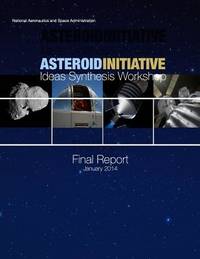
Asteroid Initiative: Ideas Synthesis Workshop
paperback. Good. Access codes and supplements are not guaranteed with used items. May be an ex-library book. paperback
Referenz des Buchhändlers : 1511717572.G ISBN : 1511717572 9781511717571
|
|
|
National Aeronautics and Space Administration and Jet Propulsion Laboratory
Asteroids NASA Photograph; LG-2002-12-579-HQ - JPL 400=1253I 12/05
Washington DC/Pasadena CA: National Aeronautics and Space Administration and Jet Propulsion Laboratory 2005. Presumed First Edition First printing. One of multiple originals produced. Single sheet printed on both sides. Very good. The format is approximately 8 inches by 10 inches. This is a single sheet with printing/imagery on both sides in a plastic sleeve. On the front side is a large photograph of an asteroid and on the right four smaller asteroid images. The back had text in a three-column format with tabular data covering two-columns at the bottom center and right. Asteroids are classified by their characteristic emission spectra with the majority falling into three main groups: C-type M-type and S-type. These describe carbonaceous carbon-rich metallic and silicaceous stony compositions respectively. The physical composition of asteroids is varied and in most cases poorly understood. Ceres appears to be composed of a rocky core covered by an icy mantle; Vesta is thought to have a nickel-iron core olivine mantle and basaltic crust. Thought to be the largest undifferentiated asteroid 10 Hygiea seems to have a uniformly primitive composition of carbonaceous chondrite but it may actually be a differentiated asteroid that was globally disrupted by an impact and then reassembled. Other asteroids appear to be the remnant cores or mantles of proto-planets high in rock and metal. Most small asteroids are believed to be piles of rubble held together loosely by gravity although the largest are probably solid. Some asteroids have moons or are co-orbiting binaries: rubble piles moons binaries and scattered asteroid families are thought to be the results of collisions that disrupted a parent asteroid or possibly a planet. An asteroid is a minor planet—an object that is neither a true planet nor an identified comet— that orbits within the inner Solar System. They are rocky metallic or icy bodies with no atmosphere classified as C-type carbonaceous M-type metallic or S-type silicaceous. The size and shape of asteroids vary significantly ranging from small rubble piles under a kilometer across and larger than meteoroids to Ceres a dwarf planet almost 1000 km in diameter. A body is classified as a comet not an asteroid if it shows a coma tail when warmed by solar radiation although recent observations suggest a continuum between these types of bodies. Of the roughly one million known asteroids the greatest number are located between the orbits of Mars and Jupiter approximately 2 to 4 AU from the Sun in a region known as the main asteroid belt. The total mass of all the asteroids combined is only 3% that of Earth's Moon. The majority of main belt asteroids follow slightly elliptical stable orbits revolving in the same direction as the Earth and taking from three to six years to complete a full circuit of the Sun. Asteroids have historically been observed from Earth. The first close-up observation of an asteroid was made by the Galileo spacecraft. Several dedicated missions to asteroids were subsequently launched by NASA and JAXA with plans for other missions in progress. NASA's NEAR Shoemaker studied Eros and Dawn observed Vesta and Ceres. JAXA's missions Hayabusa and Hayabusa2 studied and returned samples of Itokawa and Ryugu respectively. OSIRIS-REx studied Bennu collecting a sample in 2020 which was delivered back to Earth in 2023. NASA's Lucy launched in 2021 is tasked with studying ten different asteroids two from the main belt and eight Jupiter trojans. Psyche launched October 2023 aims to study the metallic asteroid Psyche.<br /> Near-Earth asteroids can threaten all life on the planet as in the impact which may have inflicted the Cretaceous-Paleogene extinction. As an experiment to meet this danger in September 2022 the Double Asteroid Redirection Test spacecraft successfully altered the orbit of the non-threatening asteroid Dimorphos by crashing into it. In 2006 the International Astronomical Union IAU introduced the currently preferred broad term small Solar System body defined as an object in the Solar System that is neither a planet a dwarf planet nor a natural satellite; this includes asteroids comets and more recently discovered classes. According to IAU "the term 'minor planet' may still be used but generally 'Small Solar System Body' will be preferred." Thus this 2005 issuance may be one of the last official NASA publications to use the not 'abandoned' or at least not preferred terms of "minor planet" or "asteroid" National Aeronautics and Space Administration and Jet Propulsion Laboratory unknown
Referenz des Buchhändlers : 86158
|
|
|
National Aeronautics and Space Administration, Marshall Space Flight Center
Astro: A New Observatory for Ultraviolet Astronomy
Huntsville AL: NASA c. 1986. good. Quarto 30 wraps color illus. figures creases at spine. Astro is a shuttle-borne ultraviolet observatory. Three instruments make up the Astro Observatory: the Hopkins Ultraviolet Telescope the Ultraviolet Imaging Telescope and the Wisconsin Ultraviolet Photopolarimetry Experiment. NASA paperback
Referenz des Buchhändlers : 50288
|
|
|
National Aeronautics and Space Administration
Astro: Exploring the Invisible Universe of Ultraviolet and X-Ray Astronomy. NP 121
Washington DC: NASA c. 1987. very good. 40 wraps illus. NASA paperback
Referenz des Buchhändlers : 40411
|
|
|
National Aeronautics and Space Administration, [Johnson Space Center--presumed]
Astronaut Vance D. Brand Inscribed color photograph
Johnson Space Center Texas Presumed: U. S. Government Printing Office 1971. Presumed to have been uniquely signed in person. Photograph. Very good. The format is approximately 8 inches by 10 inches. There is a quarter inch white border around the color image. At the bottom edge in the white space there is the following text: ASTRONAUT VANCE D. BRAND. The color image is of the full face of Astronaut Brand in has astronaut space suit showing him from the waist up. Near his ungloved hands is a globe of the earth. Internet research dated this picture as from 1971. Across his chest he has inscribed the photograph as follows "To Randy with Best wishes! Vance Brand." The back of the photograph is blank. Vance DeVoe Brand born May 9 1931 is a retired American naval officer aviator aeronautical engineer test pilot and NASA astronaut. He served as command module pilot during the first U.S.-Soviet joint spaceflight in 1975 and as commander of three Space Shuttle missions. Brand's flight experience includes 9669 flying hours which includes 8089 hours in jets 391 hours in helicopters 746 hours in spacecraft and checkout in more than 30 types of military aircraft. One of the 19 pilot astronauts selected by NASA in April 1966 Brand initially was a crew member in the thermal vacuum chamber testing of the prototype command module alongside astronauts Joe Engle and Dr. Joseph Kerwin and support crewman on Apollos 8 and 13. During the Apollo 13 crisis Brand was CAPCOM during the PC2 burn. Later he was backup Command Module Pilot for Apollo 15 and was likely to be named to the prime crew of Apollo 18 before that mission was canceled. Brand was backup commander for Skylabs 3 and 4. When Skylab 3's CSM had problems with its Reaction Control System Brand was put on standby to command a rescue mission with backup Pilot Don Lind; however the crew stood down when it was decided that the problem did not require the rescue mission to be launched. As an astronaut he held management positions relating to spacecraft development acquisition flight safety and mission operations. Brand flew on four space missions; Apollo–Soyuz STS-5 STS-41-B and STS-35. He commanded three missions. Brand was the last member of his astronaut class to remain active with NASA and was the only Apollo-era astronaut to pilot the Space Shuttle in the post-Challenger era. Brand departed the Astronaut Office in 1992 to become Chief of Plans at the National Aerospace Plane NASP Joint Program Office at Wright-Patterson Air Force Base. In September 1994 he moved to California to become Assistant Chief of Flight Operations at the Dryden Flight Research Center then Acting Chief Engineer Deputy Director for Aerospace Projects and Acting Associate Center Director for Programs. He retired from NASA in January 2008. U. S. Government Printing Office unknown
Referenz des Buchhändlers : 90735
|
|
|
National Aeronautics and Space Administration, Johnson Space Center
Astronaut Donald K. Slayton Insribed color photograph; JSCL-119 1974-779 888/2
Johnson Space Center Texas: U. S. Government Printing Office 1974. Presumed to have been uniquely signed in person. Photograph. Very good. The format is approximately 8 inches by 10 inches. There is a quarter inch white border around the color image. At the bottom edge in the white space there is the following text: JSCL-119 ASTRONAUT DONALD K. SLAYTON U. S. Government Printing Office 1974-779 888/2. The color image is of the full face of Deke Slayton in has astronaut space suit showing him from the waist up. Near his ungloved hands is a spacecraft mode. Across his chest he has inscribed the photograph as follows "Best wishes to Randy Sarbocher -- Deke Slayton." The back of the photograph is blank. Donald Kent "Deke" Slayton March 1 1924 – June 13 1993 was an American Air Force pilot aeronautical engineer test pilot and one of the original NASA Mercury Seven astronauts. He went on to become NASA's first Chief of the Astronaut Office and Director of Flight Crew Operations responsible for NASA crew assignments. Slayton joined the U.S. Army Air Forces during World War II and flew in Europe and the Pacific. He left the Army after World War II went on to receive a Bachelor of Science degree in aeronautical engineering from University of Minnesota in 1949 and later joined the Minnesota Air National Guard after working for Boeing as an aeronautical engineer. He joined the United States Air Force and attended the U.S. Air Force Test Pilot School in 1955. In 1959 he applied to and was selected as one of the Mercury Seven NASA's first class of astronauts. Slayton was scheduled to pilot the second U.S. crewed orbital spaceflight but was grounded in 1962 by atrial fibrillation. In March 1972 he was medically cleared to fly and was the docking module pilot of the 1975 Apollo–Soyuz Test Project ASTP. Slayton continued to work at NASA until 1982. He also helped develop the Space Shuttle. In January 1959 Slayton was selected as one of the candidates for NASA's Project Mercury the first U.S. crewed space flight program. Slayton was psychologically and physically tested at the Lovelace Clinic in Albuquerque New Mexico along with fellow future astronauts Scott Carpenter and Jim Lovell. On April 2 1959 Slayton was notified of his selection as an astronaut. After a decade of seeing doctors around the world in 1971 Slayton was examined at the Mayo Clinic after a long period without heart fibrillation and was determined to not have a coronary condition. On March 13 1972 NASA announced that Slayton had returned to flight status. The Apollo and Soyuz spacecraft both launched on July 15 1975. He was 51 years old making him the oldest astronaut to fly in space at the time. U. S. Government Printing Office unknown
Referenz des Buchhändlers : 90734
|
|
|
National Astronautics and Space Administration
Astronaut Young Salutes Flag At Apollo 16 Descartes Landing Site. NASA Photograph; 799-250/7 MSCL--85
Washington DC: U.S. Government Printing Office 1972. Presumed First Edition First printing. This is one of multiple originals issued. Single sheet printed on both sides. Very good. Charles M. Duke Jr. Photographer. The format is approximately 8 inches by 10 inches. This is a single sheet with printing/imagery on both sides in a plastic sleeve. On the front side is a large color photograph of Astronaut John W. Young Commander of the Apollo 16 lunar landing mission saluting the U.S. flat as the Descartes landing site. At the center of the image is the American Flag fully unfurled and the space suited Astronaut with his right arm raised in salute. The Lunar Landing Module is behind the flag on the left side of the image as is the Lunar Roving Vehicle. In the background behind the flag and Astronaut Young is the Far Ultraviolet Camera/Spectrograph. There is a lengthy caption on the back which reads APOLLO 16 EVA PHOTOGRAPH--Astronaut John W. Young commander of the Apollo 16 lunar landing mission leaps from the lunar surface as he salutes the U.S. flag at the Descartes landing site during the first Apollo 16 extravehicular activity EVA-1. Astronaut Charles M. Duke Jr. lunar module pilot took this picture. The Lunar Module "Orion" is on the left. The Lunar Roving Vehicle is parked besides the LM. The object behind Young in the shade of the LM is the Far Ultraviolet Camera/Spectrograph. Stone Mountain dominates the background in this lunar scene. Apollo 16 April 16-27 1972 was the tenth crewed mission in the United States Apollo space program administered by NASA and the fifth and penultimate to land on the Moon. It was the second of Apollo's "J missions" with an extended stay on the lunar surface a focus on science and the use of the Lunar Roving Vehicle LRV. The landing and exploration were in the Descartes Highlands a site chosen because some scientists expected it to be an area formed by volcanic action though this proved not to be the case. The mission was crewed by Commander John Young Lunar Module Pilot Charles Duke and Command Module Pilot Ken Mattingly. Launched from the Kennedy Space Center in Florida on April 16 1972 Apollo 16 experienced a number of minor glitches en route to the Moon. These culminated with a problem with the spacecraft's main engine that resulted in a six-hour delay in the Moon landing as NASA managers contemplated having the astronauts abort the mission and return to Earth before deciding the problem could be overcome. Although they permitted the lunar landing NASA had the astronauts return from the mission one day earlier than planned. After flying the Lunar Module to the Moon's surface on April 21 Young and Duke spent 71 hours—just under three days—on the lunar surface during which they conducted three extravehicular activities or moonwalks totaling 20 hours and 14 minutes. The pair drove the lunar rover the second used on the Moon for 16.6 miles. On the surface Young and Duke collected 211 lbs of lunar samples for return to Earth including Big Muley the largest Moon rock collected during the Apollo missions. During this time Mattingly orbited the Moon in the command and service module CSM taking photos and operating scientific instruments. Mattingly in the command module spent 126 hours and 64 revolutions in lunar orbit. After Young and Duke rejoined Mattingly in lunar orbit the crew released a subsatellite from the service module SM. During the return trip to Earth Mattingly performed a one-hour spacewalk to retrieve several film cassettes from the exterior of the service module. Apollo 16 returned safely to Earth on April 27 1972. John Watts Young September 24 1930 - January 5 2018 was an American astronaut naval officer and aviator test pilot and aeronautical engineer. He became the 9th person to walk on the Moon as commander of the Apollo 16 mission in 1972. He is the only astronaut to fly on four different classes of spacecraft: Gemini the Apollo command and service module the Apollo Lunar Module and the Space Shuttle. Before becoming an astronaut Young received his Bachelor of Science degree in Aeronautical Engineering from the Georgia Institute of Technology and joined the U.S. Navy. After serving during the Korean War he became a naval aviator and graduated from the U.S. Naval Test Pilot School. As a test pilot he set several world time-to-climb records. Young retired from the Navy in 1976 with the rank of captain. In 1962 Young was selected as a member of NASA Astronaut Group 2. He flew on the first crewed Gemini mission Gemini 3 in 1965 and then commanded the 1966 Gemini 10 mission. In 1969 he flew as command module pilot on Apollo 10 and became the first person to orbit the Moon alone. In 1972 he commanded Apollo 16 and spent three days on the lunar surface exploring the Descartes Highlands with Charles Duke. Young also commanded STS-1 in 1981 the Space Shuttle program's first launch and STS-9 in 1983 both of which were on Columbia. Young served as Chief of the Astronaut Office from 1974 to 1987 and retired from NASA in 2004 after 42 years of service. U.S. Government Printing Office unknown
Referenz des Buchhändlers : 86155
|
|
|
National Aeronautics and Space Administration
Astronaut John H. Glenn Orbits the Earth for America February 20 1962
Washington DC: GPO 1962. good. 10.25" x 7.5" 10 wraps profusely illus. some soiling to rear cover top corner rear cover bent. Illustrations of Glenn's flight aboard Friendship 7 and a condensation of his remarks at the press conference three days after the flight. GPO paperback
Referenz des Buchhändlers : 38405
|
|
|
National Aeronautics and Space Administration
Astronautics and Aeronautics 2010: A Chronology
Hardcover. NEW/NEW. <br/> <br/> hardcover
Referenz des Buchhändlers : Pazz199815 ISBN : 9798872376341 9798872376
|
|
|
National Aeronautics and Space Administration
Astronautics and Aeronautics 2010: A Chronology
Hardcover. NEW/NEW. <br/> <br/> hardcover
Referenz des Buchhändlers : Pazz170319 ISBN : 9798872376341 9798872376
|
|
|
National Aeronautics and Space Administration
Astronautics and Aeronautics 2011: A Chronology NASA SP-2011-4033
Hardcover. NEW/NEW. <br/> <br/> hardcover
Referenz des Buchhändlers : Pazz64703 ISBN : 9798322576706 9798322576
|
|
|
National Aeronautics and Space Administration
Astronautics and Aeronautics 2009: A Chronology NASA SP-2012-4035
Hardcover. NEW/NEW. <br/> <br/> hardcover
Referenz des Buchhändlers : Pazz118387 ISBN : 9798872375891 9798872375
|
|
|
National Aeronautics and Space Administration
Astronautics and Aeronautics 2009: A Chronology NASA SP-2012-4035
Hardcover. NEW/NEW. <br/> <br/> hardcover
Referenz des Buchhändlers : Pazz132457 ISBN : 9798872375891 9798872375
|
|
|
National Aeronautics and Administration
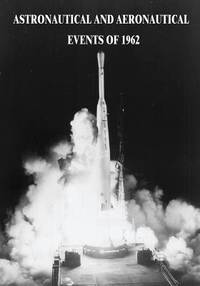
Astronautical and Aeronautical Events of 1962
like new. unknown
Referenz des Buchhändlers : 22025857 ISBN : 1502448890 9781502448897
|
|
|
National Aeronautics and Administration
Astronautical and Aeronautical Events of 1962
Paperback / softback. New. paperback
Referenz des Buchhändlers : A9781502448897 ISBN : 1502448890 9781502448897
|
|
|
National Aeronautics and Administration
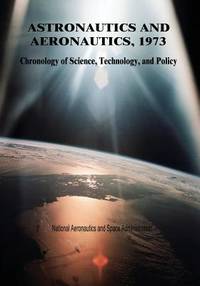
Astronautics and Aeronautics 1973: Chronology of Science Technology and Policy
Paperback / softback. New. paperback
Referenz des Buchhändlers : A9781502857279 ISBN : 1502857278 9781502857279
|
|
|
National Aeronautics and Space Administration
Astronautics and Aeronautics 1972 NASA SP-4017 Chronology of Science Technology and Policy Library of Congress Science and Technology Division
National Aeronautics and Space Administration. 1974. Hard cover. Very good. No dust jacket. No previous owner's name. Clean tight pages. No bent corners. No remainder mark. . National Aeronautics and Space Administration hardcover
Referenz des Buchhändlers : Alibris.0058551
|
|
|
National Aeronautics and Administration
Astronautics and Aeronautics 1979-1984: A Chronology
Paperback / softback. New. paperback
Referenz des Buchhändlers : B9781495485923 ISBN : 1495485927 9781495485923

|
|
|
National Aeronautics and Administration
Astronautics and Aeronautics 1965: Chronology on Science Technology and Policy
Paperback / softback. New. paperback
Referenz des Buchhändlers : B9781495469138 ISBN : 1495469131 9781495469138
|
|
|
National Aeronautics and Administration
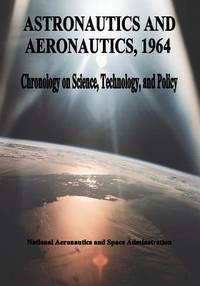
Astronautics and Aeronautics 1964: Chronology on Science Technology and Policy
Paperback / softback. New. paperback
Referenz des Buchhändlers : B9781495456374 ISBN : 1495456374 9781495456374
|
|
|
National Aeronautics and Administration
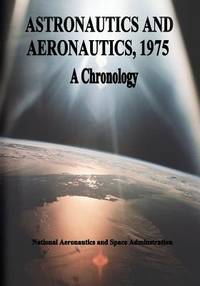
Astronautics and Aeronautics 1975: A Chronology
Paperback / softback. New. paperback
Referenz des Buchhändlers : B9781495485688 ISBN : 1495485684 9781495485688
|
|

 Per e-mail erhalten
 Als pdf-Dokument herunterladen
 RSS feed
 Permanenter link


