|
NAPIAS HENRY
L'ASSISTANCE PUBLIQUE DANS LE DEPARTEMENT DE SAMBRE-ET-LOIRE;
BATTAILLE. 1893. In-12. Broché. Bon état, Couv. défraîchie, Coiffe en pied abîmée, Non coupé. 170 pages illustrées de frises et lettrines noir et blanc.. . . . Classification Dewey : 350-Administration publique
書籍販売業者の参照番号
: R320000416
|
|
|
Napoléon III DEBRY (J.).
Département de Vaucluse. 1850 - N° 9. Recueil des actes administratifs de la préfecture. 1. Circulaire relative à l'anniversaire du 24 février 1848. 2. Arrété qui interdit les banquets politiques.
Avignon, Bonnet, 1848, 1 en cahier. 2 feuillets in-8, tache ;
書籍販売業者の参照番号
: 6932
|
|
|
NASA (National Aeronautics and Space Administration), California Institute of Technology Jet Propulsion Laboratory, Office of Pu
NASA Educational Material: NASA Facts Vol. II No. 6 Project Ranger. Photograph of Goldstone Tracking Station near Barstow CA. Ranger C RA-8 Status Bulletin. Three Stapled NASA Press Releases.
Pasadena CA: NASA 1964. Folded Document 12 pp. Project Ranger; Color Photograph; Two Loose Pages; Three Stapled Documents. 7" x 9" Near Fine. According to a Jet Propulsion Laboratory Gate Pass this material was given to Vincent McHugh doing research for Venture Magazine on 2/25/1965. Pasadena, CA: NASA, 1964. unknown
書籍販売業者の参照番号
: 15-8435

|
|
|
NASA National Aeronautics and Supace Administration (Hrsg).
Instability in Rotating Machinery. Proceedings of a symposium sponsored by Bently Rotor Dynamics Research Corporation and held in Carson City Nevada June 10-14 1985. = NASA Conference Publication 2409.
Scientific and Technical Information Branch 1985. 4° VIII 4691 S. mit zahlr. Beispielen OKart. Rücken aufgehellt ausgeschied. Bibl.-Expl. mit den üblichen Kennzeichnungen. Scientific and Technical Information Branch 1985. unknown
書籍販売業者の参照番号
: TECH3132
|
|
|
NASA, US National Aeronautics & Space Administration U S
Contractor Reports Nos. 1496-1499 & 1506-1525 4 volumes
National Aeronautics and Space Administration Washington D.C. 1969 Four volumes as a set green cloth-covered boards white spine lettering 10 1/2 x 8 inches. Ex-library with usual markings else near fine. 24 NASA Contractor Reports 1969-1970. Amazing technology. CR-1496: Radio/Optical/Strapdown Inertial Guidance Study for Advanced Kick Stage Applications 1969 189 pp. CR-1497: The Density of Eigenvalues in Thin Circular Conical Shells 1970 126 pp. CR-1498: Potassium Turboalternator Preliminary Design Study; Turbine Bearing and Seal Parametric Design 1970 224 pp. CR-1499: Potassium Turboalternator Preliminary Design Study; Alternator Parametric Design 1970 322 pp. CR-1506: Radio Astronomical Studies with 1500-Meter Diameter Low-Frequency Telescope 1970 51 pp. CR-1507: Analysis of Large Bending Deformations of a Filamentary Tubular Shell Typical for Pressure Constraint Components of Space Suits 1970 48 pp. CR-1508: Researches in Optimal Rendezvous 1970 47 pp. CR-1509: Cb-1Zr Rankine System Corrosion Test Loop 1970 440 pp. CR-1510: A Procedure for Assessing Aircraft Turbulence-Penetration Performance 1970 56 pp. plus appendices. CR-1511: Error Sensitivity Function Catalog 1970 102 pp. CR-1512: Launch Vehicle Error Sensitivity Study 1970 41 pp. CR-1513: The Determination of Atmospheric Temperature Profiles From Planetary Limb Radiance Profiles 1970 83 pp. CR-1514: Research and Development of a Single Gun Color CRT 1970 54 pp. CR-1515: A Study of the Vibration Responses of Shells and Plates to Fluctuating Pressure Environments 1970 160 pp. CR-1516: Evaluation of Refractory/Austenitic Bimetal Combinations 1970 105 pp. CR-1517: Hydrodynamic Journal Bearing Test and Analysis 1970 215 pp. CR-1518: Axisymmetric Filamentary Structures 1970 107 pp. CR-1519: An Application of Theory to Axial Compressor Noise 1970 95 pp. CR-1520: Flight Computer and Language Processor Study 1970 137 pp. CR-1521: Optical Altimeter Receiver Systems Study and Design for a Spaceborne Laser Altimeter 1970 59 pp. CR-1522: Effects of Sonic Booms and Subsonic Jet Flyover Noise on Skeletal Muscle Tension and a Paced Tracing Task 1970 38 pp. CR-1523: Evaluation of the Gust-Alleviation Characteristics and Handling Qualities of a Free-Wing Aircraft 1970 151 pp. CR-1524: Optimum Solar Electric Interplanetary Trajectory and Performance Data 1970 477 pp. CR-1525: The Effect of Composition on the Mechanism of Stress-Corrosion Cracking of Titanium Alloys in N2O4 and Aqueous and Hot-Salt Environments 1970 79 pp. 3214049. 1st Edition. Hardcover. Near Fine. National Aeronautics and Space Administration, Washington, D.C. hardcover
書籍販売業者の参照番号
: 3123
|
|
|
NASRALLAH FALSAFI.
Siyasat-e khariji-e Iran dar dawrân-e Safawiyah.
New Persian Paperback. Cr. 8vo. (20 x 14 cm). In Persian. 230 p. Siyasat-e khariji-e Iran dar dawrân-e Safawiyah. Foreign relations of Iran in the period of Safawid dynasty, (1501-1736).
|
|
|
NATERMANN, E
Der Eurodollarmarkt in rechtlicher Sicht. Institutioneller Rahmen und Regelungsmöglichkeiten.
Baden-Baden, Nomos, 1977. 320 S. OPpbd (mit Bibliotheksschild).
書籍販売業者の参照番号
: 3472553
|
|
|
National Aeronautics and Space Administration (NASA)
"Earth Orbiter" Original 8 x 10 B&W Publicity Photograph
Washington D.C.: National Aeronautics and Space Administration NASA 1974. Book. Near Fine. Photograph. First Edition. 8" x 10". "For Release No Date. Photo No. 62-MAS-168". Near Fine faint 1" surface crease. 8" x 10" black and white NASA publication information printed in blue ink verso. "Astronaut John Glenn was photographed in space by an automatic sequence action picture camera as he became the first American to orbit the earth on Feb. 20 1962. His Mercury spacecraft - Friendship 7- made three orbits in its 4 hours 55 minute flight. Glenn was in a state of weightlessness traveling at 17500 mph as this picture was taken.". National Aeronautics and Space Administration (NASA) unknown
書籍販売業者の参照番号
: 005829

|
|
|
National Aeronautics and Space Administration (NASA)
"The Flag of the United States" Original 8 x 10 B&W Publicity Photograph
Washington D.C.: National Aeronautics and Space Administration NASA 1974. Book. Near Fine. Photograph. First Edition. 8" x 10". "For Release June 30 1974. Photo No. 69-H-1253". Near Fine faint 1" surface crease. 8" x 10" black and white NASA publication information printed in blue ink verso "The flag of the United States was planted on the surface of the moon for the first time five years ago in July 1969 by Apollo 11 crewmen on the first manned lunar landing mission.". National Aeronautics and Space Administration (NASA) unknown
書籍販売業者の参照番号
: 005823

|
|
|
National Aeronautics and Space Administration (NASA)
15 photographs from NASA's Lunar Missions: includes SIGNED picture of Stuart A. Roosa Alan B. Chepard Jr. and Edgar D. Mitchell
National Aeronautics and Space Administration NASA 1970. First Edition. Softcover. Fine black and white photograph. Remains well preserved overall; bright and clean. Provenance; from the collection of the noted Boston Belmont autograph collector Ray Crosby. Fine inall aspects and housed in the original header-printed envelope. Physical description; 15 photographs. Contents; SIGNED photograph of Prime Crew of the Eight Manned Apollo Mission: Stuart A. Rosa Alan B. Shepard Jr. Edgar D. Mitchell ; Apollo 13 Mission with four photos on 1 page: Apollo 13 view of Earth Apollo 13 view of Moon Apollo 13 view of Moon Apollo 13 recovery ; Apollo 12 on the Moon - November 19 1969 ; Apollo 13 Liftoff ; The Moon as seen from the Gemini VII Spacecraft December 8 1965 ; three photos on 1 card: Appolo 7 launch 11:30 a.m. EDT Octber 11 1968 Apollo 7 rendezvous with second stage S-IVB over Florida Apollo 7 views hurricane Gladys ; Apollo 11 Astronaut prepares to step onto the moon ; card showing five images: solar system earth and moon sun milky way orbits of the planets ; Apollo 8 Spacecraft in Orbit around the moon views the earth ; the earth from Apollo 8 December 21 1968 ; Apollo 11 Moon Rocks ; Apollo 11 Astronaut stands beside U.S. flag on the boon ; Apollo 11 astronaut Edwin E. Aldrin Jr. walks on the moon ; Apollo 11 on the Moon - July 20 1969 ; Apollo 12 on the moon - November 19 1969. Subjects; NASA. Apollo Missions. Lunar Missions. Space exploration. Photographs. National Aeronautics and Space Administration (NASA) paperback
書籍販売業者の参照番号
: 368662
|
|
|
National Aeronautics and Space Administration
1981-1999 Space Shuttle Mission Chronology
John F Kennedy Space Center: National Aeronautics and Space Administration 2000. Presumed First Edition First printing. Staplebound. Very good. The format is approximately 8.5 inches by 11 inches. 63 5 pages includes covers. Illustrated front cover. The format is approximately 8.25 inches by 11 inches. Illustrations. This includes information on STS-1 through STS 103 from 1981 to 1999. Not all numbers were reported on. The write-ups include mission highlights EVAs Launch and Landing. This includes information on John Glenn's return to space and the first flight to the International Space Station. The International Space Station ISS is the largest modular space station in low Earth orbit. The project involves five space agencies: the United States' NASA Russia's Roscosmos Japan's JAXA Europe's ESA and Canada's CSA. The ownership and use of the space station is established by intergovernmental treaties and agreements. The station serves as a microgravity and space environment research laboratory in which scientific research is conducted in astrobiology astronomy meteorology physics and other fields. The ISS is suited for testing the spacecraft systems and equipment required for possible future long-duration missions to the Moon and Mars. The Space Shuttle was a partially reusable low Earth orbital spacecraft system operated from 1981 to 2011 by the U.S. National Aeronautics and Space Administration NASA as part of the Space Shuttle program. Its official program name was Space Transportation System STS taken from a 1969 plan for a system of reusable spacecraft where it was the only item funded for development. The first of four orbital test flights occurred in 1981 leading to operational flights beginning in 1982. Five complete Space Shuttle orbiter vehicles were built and flown on a total of 135 missions from 1981 to 2011 launched from the Kennedy Space Center KSC in Florida. Operational missions launched numerous satellites interplanetary probes and the Hubble Space Telescope HST conducted science experiments in orbit participated in the Shuttle-Mir program with Russia and participated in construction and servicing of the International Space Station ISS. The Space Shuttle fleet's total mission time was 1322 days 19 hours 21 minutes and 23 seconds. Space Shuttle components include the Orbiter Vehicle OV with three clustered Rocketdyne RS-25 main engines a pair of recoverable solid rocket boosters SRBs and the expendable external tank ET containing liquid hydrogen and liquid oxygen. The Space Shuttle was launched vertically like a conventional rocket with the two SRBs operating in parallel with the orbiter's three main engines which were fueled from the ET. The SRBs were jettisoned before the vehicle reached orbit while the main engines continued to operate and the ET was jettisoned after main engine cutoff and just before orbit insertion which used the orbiter's two Orbital Maneuvering System OMS engines. At the conclusion of the mission the orbiter fired its OMS to deorbit and reenter the atmosphere. The orbiter was protected during reentry by its thermal protection system tiles and it glided as a spaceplane to a runway landing usually to the Shuttle Landing Facility at KSC Florida or to Rogers Dry Lake in Edwards Air Force Base California. If the landing occurred at Edwards the orbiter was flown back to the KSC atop the Shuttle Carrier Aircraft a specially modified Boeing 747. The first orbiter Enterprise was built in 1976 and used in Approach and Landing Tests but had no orbital capability. Four fully operational orbiters were initially built: Columbia Challenger Discovery and Atlantis. Of these two were lost in mission accidents: Challenger in 1986 and Columbia in 2003 with a total of 14 astronauts killed. A fifth operational and sixth in total orbiter Endeavour was built in 1991 to replace Challenger. The Space Shuttle was retired from service following Atlantis's final flight on July 21 2011. National Aeronautics and Space Administration unknown
書籍販売業者の参照番号
: 86103
|
|
|
National Aeronautics and Space Administration
2006 Near-Earth Object Survey and Deflection Study; NP-2007-020460-HQ
Washington DC: National Aeronautics and Space Administration 2007. Final Report--Presumed first edition first printing. Wraps. Very good. Format is approximately 8.5 inches by 11 inches. 272 pages. Illustrated front and back cover. Illustrations mostly in color. Definition of Terms. References. Appendices. Minor cover wear noted. NASA letter of appreciation to a senior National Nuclear Security Administration technical expert for support to this report. In the 2005 Budget Authorization Act the U.S. Congress directed the NASA Administrator to provide an analysis of alternatives to detect track catalogue and characterize potentially hazardous near-Earth objects NEO. Congress required that the Administrator submit a program by December 28 2006 to survey 90% of the potentially hazardous objects measuring at least 140 meters in diameter by the end of 2020. In addition the legislation required the Administrator to submit an analysis of alternatives that NASA could employ to divert an object on a likely collision course with Earth. A study team led by the Office of Program Analysis and Evaluation PA&E derived requirements and figures of merit from the Act and used these factors to evaluate the alternatives. The team developed a range of options from public and private sources and then analyzed their capabilities levels of performance life-cycle costs schedules and development and operations risks. This document presents the detailed results of these analyses. A summary report was submitted to Congress in December of 2006. During related Congressional testimony on this report it was stated that The report's basic conclusion is that ``NASA recommends that the program continue as currently planned and we will also take advantage of opportunities using potential dual-use telescopes and spacecraft--and partner with other agencies as feasible--to attempt to achieve the legislated goal within 15 years. However due to current budget constraints NASA cannot initiate a new program at this time.'' In addition the report contained a number of additional findings <br /> including: ``The goal of the Survey Program should be modified to detect track catalogue and characterize by the end of 2020 90 percent of all Potentially Hazardous Objects PHOs greater than 140m whose orbits pass within 0.05 AU of the Earth's orbit as opposed to surveying for all NEOs; The Agency could achieve the specified goal of surveying for 90 percent of the potentially hazardous NEOs by the end of 2020 by partnering with other government agencies on potential future optical ground-based observatories and building a dedicated NEO survey asset assuming the partners' potential ground assets come online by 2010 and 2014 and a dedicated asset by 2015; Together the two observatories potentially to be developed by other government agencies could complete 83 percent of the survey by 2020 if observing time at these observatories is shared with NASA's NEO Survey Program; New space-based infrared systems combined with ground-based assets could reduce the overall time to reach the 90 percent goal by at least three years. Space systems have additional benefits as well as costs and risks compared to ground-based alternatives; Radar systems cannot contribute to the search for potentially hazardous objects but may be used to rapidly refine tracking and to determine object sizes for a few NEOs of potentially high interest. Existing radar systems are currently oversubscribed by other missions. Determining a NEO's mass and orbit is required to determine whether it represents a potential threat and to provide required information for most alternatives to mitigate such a threat. Beyond these parameters characterization requirements and capabilities are tied directly to the mitigation strategy selected.''. National Aeronautics and Space Administration paperback
書籍販売業者の参照番号
: 84040
|
|
|
NATIONAL AERONAUTICS AND SPACE ADMINISTRATION WASHINGTON DC
A Bibliography of Aerospace Books and Teaching Aids for Elementary School Pupils and Teachers
PN. New. 1961. Soft Cover. Date is original print. This is a reprint edition. . PN paperback
書籍販売業者の参照番号
: 714548
|
|
|
NATIONAL AERONAUTICS AND SPACE ADMINISTRATION WASHINGTON DC
A Bibliography of Aerospace Books and Teaching Aids for Secondary School Students and Teachers
PN. New. 1961. Soft Cover. Date is original print. This is a reprint edition. . PN paperback
書籍販売業者の参照番号
: 714549
|
|
|
NATIONAL AERONAUTICS AND SPACE ADMINISTRATION CLEVELAND OH GLENN RESEARCH CENTER
A SUMMARY OF PRELIMINARY INVESTIGATIONS INTO THE CHARACTERISTICS OF COMBUSTION SCREECH IN DUCTED BURNERS
PN. New. 1954. Soft Cover. Date is original print. This is a reprint edition. . PN paperback
書籍販売業者の参照番号
: 434255
|
|
|
NATIONAL AERONAUTICS AND SPACE ADMINISTRATION CLEVELAND OH LEWIS RESEARCH CENTER
A Technique for Joining and Sealing Dissimilar Materials
PN. New. 1965. Soft Cover. Date is original print. This is a reprint edition. . PN paperback
書籍販売業者の参照番号
: 727056
|
|
|
National Aeronautics and Space Administration, Goddard Space Flight Center
AAS/GSFC International Symposium on Space Flight Dynamics 26-30 April 1993
Greenbelt MD: NASA 1993. Preprint Edition. Wraps. good. Quarto approx. 1 000 2 vols. wraps figures tables references slight soiling to covers slight creasing to covers v.2 a few pages bent. Ink name on table of contents v.2. These two volumes contain 100 scientific papers to be presented at the symposium jointly sponsored by theAmerican Astronautical Society and the NASA Goddard Space Flight Center. NASA paperback
書籍販売業者の参照番号
: 11780
|
|
|
NATIONAL AERONAUTICS AND SPACE ADMINISTRATION WASHINGTON DC
Achieving Aeronautics Leadership: Aeronautics Strategic Enterprise Plan
PN. New. 1995. Soft Cover. Date is original print. This is a reprint edition . PN paperback
書籍販売業者の参照番号
: 277509
|
|
|
NATIONAL AERONAUTICS AND SPACE ADMINISTRATION HAMPTON VA LANGLEY RESEARCH CEN TER
Advances In Engineering Science Volume 2
PN. New. 1976. Soft Cover. Date is original print. This is a reprint edition. . PN paperback
書籍販売業者の参照番号
: 753223
|
|
|
National Aeronautics and Space Administration
Aeronautics and Space Report of the President; Fiscal Year 1992 Activities
Washington DC: National Aeronautics and Space Administration 1993. Presumed First Edition First printing. Wraps. Good. 2 ii 111 1 pages. Map. 13 Appendices. Index. Includes Executive Summary; Space Launch Activities; Space Science; Space Flight and Space Technology; Space Communications; Aeronautical Activities; Studies of the Planet Earth; Other Aeronautical and Space Activities; and Glossary. The annual "President's Report" is a good summary of the Government's aerospace activities each year. Mandated by law it contains information on aerospace activities conducted by 14 Federal departments and agencies as well as appendices containing useful historical data on spacecraft launches and budget figures. The National Aeronautics and Space Act of 1958 directed that the annual Aeronautics and Space Report include a "comprehensive description of the programmed activities and the accomplishments of all agencies of the United States in the field of aeronautics and space activities during the preceding calendar year." This year's report has been prepared on a fiscal year basis which is consistent with the budgetary period now used in programs of the Federal Government. This report presents a fascinating snapshot of the U.S. space activities toward the end of the 20th Century. Fiscal Year FY 1992 was a significant one for U.S. aeronautics and space efforts. It included seven Space Shuttle missions and 14 Government launches of Expendable Launch Vehicles ELVs carrying a variety of payloads ranging from NASA missions to classified payloads. In addition there were eight launches of ELVs by commercial launch service providers operating under licenses issued by the Department of Transportation's Office of Commercial Space Transportation. On December 71991 the Air Force achieved initial launch capability for the new Atlas I1 launch vehicle in a commercial launch by General Dynamics with support from the Air Force. The other ELV missions launched four Navstar Global Positioning System two Defense Satellite Communications System and one Defense Meteorological Satellite Program satellites as well as two classified payloads and four NASA spacecraft. The Shuttle missions included one using the Atmospheric Laboratory for Applications and Science ATLAS-1 to study the Sun and our atmosphere as well as the first flight of the newest orbiter Endeavour which rendezvoused with retrieved and replaced the perigee kick motor of the INTELSATVI F-3 satellite that the International Telecommunications Satellite Organization INTELSAT controllers then deployed into its intended orbit. In aeronautics efforts have ranged from development of new civil and military aircraft and technologies to research and development of ways to reduce aircraft noise and improve flight safety and security. A key environmental effort in FY 1992 was monitoring ozone depletion. One of the major Earth science highlights of the year was finding that like the ozone layer over the Antarctic regions with its well documented annual depletion the ozone layer in the Northern Hemisphere is increasingly vulnerable to depletion by synthetic chemicals. Several Federal agencies have cooperated to study this and other environmental problems so we can improve the prospects for future generations who will inhabit the Earth. The budgets for aeronautics and space-distributed among 14 different Federal agencies have promoted important advances in the Nation's scientific and technical knowledge promising to enhance the quality of life on Earth through improved scientific understanding provide a more viable economy and healthier environment and ensure we live in a safer world. National Aeronautics and Space Administration paperback
書籍販売業者の参照番号
: 80330
|
|
|
NATIONAL AERONAUTICS AND SPACE ADMINISTRATION WASHINGTON DC
Aeronautical Engineering: A Continuing Bibliography with Indexes Supplement 218
PN. New. 1987. Soft Cover. Date is original print. This is a reprint edition. . PN paperback
書籍販売業者の参照番号
: 780271
|
|
|
NATIONAL AERONAUTICS AND SPACE ADMINISTRATION WASHINGTON DC
Aeronautical Engineering. A Continuing Bibliography with Indexes
PN. New. 1987. Soft Cover. Date is original print. This is a reprint edition. . PN paperback
書籍販売業者の参照番号
: 779992
|
|
|
NATIONAL AERONAUTICS AND SPACE ADMINISTRATION WASHINGTON DC
Aeronautical Engineering: A Continuing Bibliography with Indexes Supplement 216
PN. New. 1987. Soft Cover. Date is original print. This is a reprint edition. . PN paperback
書籍販売業者の参照番号
: 779631
|
|
|
NATIONAL AERONAUTICS AND SPACE ADMINISTRATION HAMPTON VA LANGLEY RESEARCH CENTER
Aerospace Medicine and Biology: A Continuing Bibliography With Indexes
PN. New. 1997. Soft Cover. Date is original print. This is a reprint edition . PN paperback
書籍販売業者の参照番号
: 1301729
|
|
|
NATIONAL AERONAUTICS AND SPACE ADMINISTRATION WASHINGTON DC
Aerospace Medicine and Biology: A Continuing Bibliography with Indexes
PN. New. 1987. Soft Cover. Date is original print. This is a reprint edition. . PN paperback
書籍販売業者の参照番号
: 779993
|
|
|
NATIONAL AERONAUTICS AND SPACE ADMINISTRATION HAMPTON VA LANGLEY RESEARCH CEN TER
Aerospace Mechanisms Symposium 22nd Held at Hampton Virginia on 4-6 May 1988
PN. New. 1988. Soft Cover. Date is original print. This is a reprint edition. . PN paperback
書籍販売業者の参照番号
: 783327
|
|
|
NATIONAL AERONAUTICS AND SPACE ADMINISTRATION WASHINGTON DC
Aerospace Structural Materials
PN. New. 1969. Soft Cover. Date is original print. This is a reprint edition. . PN paperback
書籍販売業者の参照番号
: 738556
|
|
|
NATIONAL AERONAUTICS AND SPACE ADMINISTRATION HUNTSVILLE AL GEORGE C MARSHALL SPACE FLIGHT CENTER
Aerospace Mechanisms Symposium 15th Held at Marshall Space Flight Center Alabama May 14-15 1981
PN. New. 1981. Soft Cover. Date is original print. This is a reprint edition. . PN paperback
書籍販売業者の参照番号
: 762964
|
|
|
NATIONAL AERONAUTICS AND SPACE ADMINISTRATION WASHINGTON DC
Aerospace Medicine and Biology. A Continuing Bibliography with Indexes
PN. New. 1987. Soft Cover. Date is original print. This is a reprint edition. . PN paperback
書籍販売業者の参照番号
: 780799
|
|
|
NATIONAL AERONAUTICS AND SPACE ADMINISTRATION COCOA BEACH FL JOHN F KENNEDY S PACE CENTER
Aerospace Mechanisms Symposium 24th Held in Cocoa Beach Florida on 18-20 April 1990
PN. New. 1990. Soft Cover. Date is original print. This is a reprint edition . PN paperback
書籍販売業者の参照番号
: 234348
|
|
|
NATIONAL AERONAUTICS AND SPACE ADMINISTRATION WASHINGTON DC
Aircraft Handling Qualities Data
PN. New. 1972. Soft Cover. Date is original print. This is a reprint edition. . PN paperback
書籍販売業者の参照番号
: 745887
|
|
|
National Aeronautics and Administration
Airplane Upset Training Evaluation Report
Paperback / softback. New. paperback
書籍販売業者の参照番号
: A9781505569087 ISBN : 1505569087 9781505569087
|
|
|
National Aeronautics and Administration
Airplane Upset Training Evaluation Report
Paperback / softback. New. paperback
書籍販売業者の参照番号
: B9781505569087 ISBN : 1505569087 9781505569087
|
|
|
National Astronautics and Space Administration, Johnson Space Center
American ASTP Launch / ASTP From Google Translate NASA photograph; JSCL-141
Washington DC: U.S. Government Printing Office 1975. Presumed First Edition First printing. One of multiple originals issued. Single sheet printed on both sides. Very good. The format is approximately 8 inches by 10 inches. This is a single sheet with a photograph on the front and printing on both sides in a plastic sleeve. On the front side is a large color photograph of American ASTP Launch ASTP. The other side is largely in two column format with text in English on the left and Russian text on the right. This is titled First International Manned Space Mission/ From Google Translate. The color photograph shows the Apollo liftoff on July 15 1975 for its historic rendezvous with two Soviet cosmonauts aboard their Soyuz spacecraft. ASTP was particularly significant for the USSR's policy of keeping the details of their space program secret from the Soviet people and the world at large especially Americans. The ASTP was the first Soviet space mission to be televised in a live fashion during the launch while in space and during the landing. Soyuz 19 was also the first Soviet spacecraft to which a foreign flight crew had access before flight; the Apollo crew were permitted to inspect it and the launch and crew training site which was an unprecedented sharing of information with Americans about any Soviet space program. Apollo-Soyuz was the first crewed international space mission carried out jointly by the United States and the Soviet Union in July 1975. Millions of people around the world watched on television as an American Apollo spacecraft docked with a Soviet Soyuz capsule. The project and its handshake in space was a symbol of détente between the two superpowers during the Cold War. The mission was officially known as the Apollo-Soyuz Test Project ASTP or. 'Experimental flight Soyuz-Apollo' and commonly referred to in the Soviet Union as Soyuz-Apollo; the Soviets officially designated the mission as Soyuz 19. The unnumbered American vehicle was left over from the canceled Apollo missions and was the last Apollo module to fly. The three American astronauts Thomas P. Stafford Vance D. Brand and Deke Slayton and two Soviet cosmonauts Alexei Leonov and Valery Kubasov performed both joint and separate scientific experiments including an arranged eclipse of the Sun by the Apollo module to allow instruments on the Soyuz to take photographs of the solar corona. The pre-flight work provided useful engineering experience for later joint American-Russian space flights such as the Shuttle-Mir program and the International Space Station. Apollo-Soyuz was the last crewed United States spaceflight for nearly six years until the first launch of the Space Shuttle on 12 April 1981 and the last crewed United States spaceflight in a space capsule until Crew Dragon Demo-2 on 30 May 2020. U.S. Government Printing Office unknown
書籍販売業者の参照番号
: 86142
|
|
|
National Aeronautics and Administration
An Overview of Climatic Elements
Paperback / softback. New. paperback
書籍販売業者の参照番号
: B9781503259607 ISBN : 1503259609 9781503259607

|
|
|
National Aeronautics and Space Administration, Manned Spacecraft Center
Analysis of Apollo 10: Photography and Visual Observations. NASA SP-232
Place_Pub: Washington DC: NASA 1971. fair to good. Quarto 226 illus. 6 folding color maps in pocket at rear of book references appendics glossary covers somewhat worn and soiled. Top corner front cover and the first few pages creased pages have darkenedsomewhat. Introduction by James H. Sasser. Extremely rare item from the mission that immediately preceded the lunar landing. NASA unknown
書籍販売業者の参照番号
: 53382
|
|
|
National Aeronautics Space Administration Nasa
Analysis of Apollo 10 Photography and Visual Observations Nasa SP-232
National Aeronautics Space Administration NASA. Very Good. 1971. First Edition. Wraps. 1971. Wraps softcover 226 pages. Some wear to cover else Very Good condition. NASA. No Maps. ; 4to - over 9¾" - 12" tall; 226 pages . National Aeronautics Space Administration NASA paperback
書籍販売業者の参照番号
: 104782

|
|
|
NATIONAL AERONAUTICS AND SPACE ADMINISTRATION WASHINGTON DC
Annual Workshop on Space Operations Applications and Research SOAR '93 7th. Volume 2. Proceedings of a Workshop held in Houston Texas on August 3 - 5 1993
PN. New. 1993. Soft Cover. Date is original print. This is a reprint edition . PN paperback
書籍販売業者の参照番号
: 267355
|
|
|
National Aeronautics and Space Administration
Apollo 11 Flight Plan: F i n a l – J u l y 1 1 9 6 9
CreateSpace Independent Publishing Platform 2016. Paperback. New. 354 pages. 11.00x8.50x0.84 inches. CreateSpace Independent Publishing Platform paperback
書籍販売業者の参照番号
: __1537117440 ISBN : 1537117440 9781537117447
|
|
|
National Aeronautics and Space Administration
Apollo 11 Flight Plan: Black and white edition
paperback. Good. Access codes and supplements are not guaranteed with used items. May be an ex-library book. paperback
書籍販売業者の参照番号
: 150602243X.G ISBN : 150602243X 9781506022437
|
|
|
National Aeronautics and Space Administration
Apollo 11 Flight Plan: Full-color edition
paperback. Good. Access codes and supplements are not guaranteed with used items. May be an ex-library book. paperback
書籍販売業者の参照番号
: 1505812267.G ISBN : 1505812267 9781505812268
|
|
|
National Aeronautics and Space Administration
Apollo 11 Lunar Landing Mission Press Kit
Washington DC: National Aeronautics and Space Administration 1969. Presumed First Edition First printing. Wraps. fair. Quarto 250 1 pages plus covers wraps. Illustrations. Diagrams. Staple bound in top corner Tears around staple in front cover which is separated but present. Discoloration to covers. Apollo 11 was the spaceflight that landed the first two people on the Moon. Mission commander Neil Armstrong and pilot Buzz Aldrin both American landed the lunar module Eagle on July 20 1969 at 20:17 UTC. Armstrong became the first person to step onto the lunar surface six hours after landing on July 21 at 02:56:15 UTC; Aldrin joined him about 20 minutes later. They spent about two and a quarter hours together outside the spacecraft and collected 47.5 pounds 21.5 kg of lunar material to bring back to Earth. Michael Collins piloted the command module Columbia alone in lunar orbit while they were on the Moon's surface. Armstrong and Aldrin spent 21.5 hours on the lunar surface before rejoining Columbia in lunar orbit. For Release Sunday July 6 1969. Press release No. 69-83K. A press kit often referred to as a media kit in business environments is a pre-packaged set of promotional materials that provide information about a person company organization or cause and which is distributed to members of the media for promotional use. Press kits or media kits as they are sometimes known are often distributed to announce a release or for a news conference. Traditionally the term "press kit" referred to a set of documents photographs and other relevant materials packaged together and designed to be sent to a newspaper or magazine as part of an organizations Public relations or promotional program. Recently as print media circulation and readership levels have been declining marketing and PR people have begun using the broader term "media kit" so that it now refers to any promotional material distributed to any media outlet. National Aeronautics and Space Administration paperback
書籍販売業者の参照番号
: 53381
|
|
|
National Aeronautics and Space Administration, Apollo Program Office
Apollo 14 Mission Events; January 31 1971 Launch
Washington DC: National Aeronautics and Space Administration Apollo Program Office 1971. Presumed First Edition First printing. Single sheet printed on both sides. Good. Format is approximately 6.5 inches by 5.5 inches folded in half and printed on both sides. Item has some wear and soiling. Front side has a detailed listing of events such as liftoff Translunar Injection Midcourse Correction Lunar Orbit Insertion etc. The other side continues with a listing of events but has two graphics detailing the events of Apollo 14 EVA-1 and Apollo 14 EVA-2. The Apollo program also known as Project Apollo was the third U. S. human spaceflight program carried out by the National Aeronautics and Space Administration NASA which succeeded in landing the first humans on the Moon from 1969 to 1972. It was first conceived during Dwight D. Eisenhower's administration as a three-person spacecraft to follow the one-person Project Mercury which put the first Americans in space. Apollo was later dedicated to President Kennedy's national goal for the 1960s of "landing a man on the Moon and returning him safely to the Earth" in an address to Congress on May 25 1961. It was the third US human spaceflight program to fly preceded by the two-person Project Gemini conceived in 1961 to extend spaceflight capability in support of Apollo. Kennedy's goal was accomplished on the Apollo 11 mission when astronauts Neil Armstrong and Buzz Aldrin landed their Apollo Lunar Module LM on July 20 1969 and walked on the lunar surface and landed safely on Earth on July 24. Five subsequent Apollo missions also landed astronauts on the Moon the last Apollo 17 in December 1972. In these six spaceflights twelve people walked on the Moon. Rare surviving Apollo 14 ephemera. Apollo 14 was the eighth crewed mission in the United States Apollo program the third to land on the Moon and the first to land in the lunar highlands. It was the last of the "H missions" targeted landings with two-day stays on the Moon with two lunar EVAs or moonwalks.<br /> The mission was originally scheduled for 1970 but was postponed because of the investigation following the abort of Apollo 13 and the need for modifications to the spacecraft as a result. Commander Alan Shepard Command Module Pilot Stuart Roosa and Lunar Module Pilot Edgar Mitchell launched on their nine-day mission on Sunday January 31 1971 at 4:03:02 p.m. EST. Liftoff was delayed forty minutes and two seconds due to launch site weather restrictions the first such delay for an Apollo mission. En route to the lunar landing the crew overcame a series of malfunctions that might have resulted in a second consecutive aborted mission and possibly the premature end of the Apollo program. Shepard and Mitchell made their lunar landing on February 5 in the Fra Mauro highlands - originally the target of Apollo 13. During the two walks on the surface 94.35 pounds 42.80 kg of Moon rocks were collected and several scientific experiments were deployed. To the dismay of some geologists Shepard and Mitchell did not reach the rim of Cone crater as had been planned though they came close. In Apollo 14's most famous incident Shepard hit two golf balls he had brought with him with a makeshift club. While Shepard and Mitchell were on the surface Roosa remained in lunar orbit aboard the Command and Service Module performing scientific experiments and photographing the Moon including the landing site of the future Apollo 16 mission. He took several hundred seeds on the mission many of which were germinated on return resulting in the so-called Moon trees that were widely distributed in the following years. After liftoff from the surface and a successful docking the spacecraft was flown back to Earth where the three astronauts splashed down safely in the Pacific Ocean on February 9. National Aeronautics and Space Administration, Apollo Program Office unknown
書籍販売業者の参照番号
: 80614
|
|
|
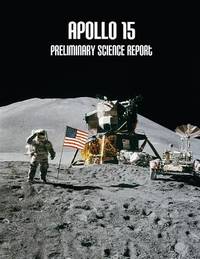
National Aeronautics and Administration
Apollo 15: Preliminary Science Report
Paperback / softback. New. paperback
書籍販売業者の参照番号
: B9781502726599 ISBN : 1502726599 9781502726599
|
|
|
National Aeronautics and Space Administration
APOLLO 16 SPACECRAFT COMMENTARY. APRIL 16- APRIL 27 1972.
Houston TX: NASA. VG/NO DUSTJACKET. 1972. Flexibound. Apollo 16 was the tenth crewed mission in the United States Apollo space program the fifth and second-to-last to land on the Moon and the second to land in the lunar highlands.2 The second of Apollo's "J missions" it was crewed by Commander John Young Lunar Module Pilot Charles Duke and Command Module Pilot Ken Mattingly. Launched from the Kennedy Space Center in Florida at 12:54 PM EST on April 16 1972 the mission lasted 11 days 1 hour and 51 minutes and concluded at 2:45 p.m. EST on April 27. . Sm 4to. Bound with clasps. Massive 5" thick printed on both sides. . NASA unknown
書籍販売業者の参照番号
: BOOKS313766

|
|
|
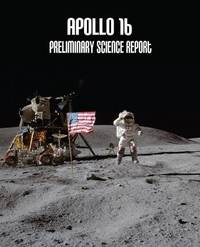
National Aeronautics and Administration
Apollo 16: Preliminary Science Report
Paperback / softback. New. paperback
書籍販売業者の参照番号
: B9781502726674 ISBN : 150272667x 9781502726674
|
|
|
National Aeronautics and Space Administration
Ares I -X Development Flight Test Logo Sticker
Washington DC: National Aeronautics and Space Administration c2008. Presumed First Edition First printing this. Single sticker sheet printed on both sides peal line is about at the diameter line. Very good. The format is a circle with a 4 inch diameter. Sticker seam at the back is at the mid-point. Rare surviving copy. One side is a version of the ARES logo originally designed by Star Trek artist Michael Okuda with 10 stars and a rocket ascending but no image of Earth in the background. The other side has the following text: NASA's Ares I-X Flight Test Vehicle NASA's first flight test of the full rocket for the agency's next-generation spacecraft and launch vehicle systems is launching in 2009. The flight test called Ares I-X will bring NASA one step closer to its exploration goals--to return to the moon for more ambitious exploration of the lunar surface ad to travel to Mars and destinations beyond." Then two links to on-line resources. Ares I-X was the first-stage prototype and design concept demonstrator of Ares I a launch system for human spaceflight developed by the National Aeronautics and Space Administration NASA. Ares I-X was successfully launched on October 28 2009. The Ares I-X vehicle used in the test flight was similar in shape mass and size to the planned configuration of later Ares I vehicles but had largely dissimilar internal hardware consisting of only one powered stage. By flying the vehicle through first-stage separation the test flight also verified the performance and dynamics of the Ares I solid rocket booster in a "single stick" arrangement which is different from the solid rocket booster's then-current “double-booster†configuration alongside the external tank on the space shuttle. Ares I was the crew launch vehicle that was being developed by NASA as part of the Constellation program. The name "Ares" refers to the Greek deity Ares who is identified with the Roman god Mars. Ares I was originally known as the "Crew Launch Vehicle" CLV. NASA planned to use Ares I to launch Orion the spacecraft intended for NASA human spaceflight missions after the Space Shuttle was retired in 2011. Ares I was to complement the larger uncrewed Ares V which was the cargo launch vehicle for Constellation. NASA selected the Ares designs for their anticipated overall safety reliability and cost-effectiveness. However the Constellation program including Ares I was canceled by U.S. president Barack Obama in October 2010 with the passage of his 2010 NASA authorization bill. In September 2011 NASA detailed the Space Launch System as its new vehicle for human exploration beyond Earth's orbit. Unlike the Space Shuttle where both crew and cargo were launched simultaneously on the same rocket the plans for Project Constellation outlined having two separate launch vehicles the Ares I and the Ares V for crew and cargo respectively. Having two separate launch vehicles allows for more specialized designs for the crew and heavy cargo launch rockets. The Ares I rocket was specifically being designed to launch the Orion Multi-Purpose Crew Vehicle. Orion was intended as a crew capsule similar in design to the Apollo program capsule to transport astronauts to the International Space Station the Moon and eventually Mars. Ares I might have also delivered some limited resources to orbit including supplies for the International Space Station or subsequent delivery to the planned lunar base. NASA selected Alliant Techsystems the builder of the Space Shuttle Solid Rocket Boosters as the prime contractor for the Ares I first stage. NASA announced that Rocketdyne would be the main subcontractor for the J-2X rocket engine on July 16 2007. NASA selected Boeing to provide and install the avionics for the Ares I rocket on December 12 2007. On August 28 2007 NASA awarded the Ares I Upper Stage manufacturing contract to Boeing. The upper stage of Ares I was to have been built at Michoud Aerospace Factory which was used for the Space Shuttle's External Tank and the Saturn V's S-IC first stage. The Ares V formerly known as the Cargo Launch Vehicle or CaLV was the planned cargo launch component of the canceled NASA Constellation program which was to have replaced the Space Shuttle after its retirement in 2011. Ares V was also planned to carry supplies for a human presence on Mars. The Ares V was to launch the Earth Departure Stage and Altair lunar lander for NASA's return to the Moon which was planned for 2019. It would also have served as the principal launcher for missions beyond the Earth-Moon system including the program's ultimate goal a crewed mission to Mars. The uncrewed Ares V would complement the smaller and human-rated Ares I rocket for the launching of the 4–6 person Orion spacecraft. Both rockets deemed safer than the then-current Space Shuttle would have employed technologies developed for the Apollo program the Shuttle program and the Delta IV EELV program. National Aeronautics and Space Administration unknown
書籍販売業者の参照番号
: 88971
|
|
|
NATIONAL AERONAUTICS AND SPACE ADMINISTRATION HAMPTON VA LANGLEY RESEARCH CEN TER
Assessment of Carbon Fiber Electrical Effects
PN. New. 1979. Soft Cover. Date is original print. This is a reprint edition. . PN paperback
書籍販売業者の参照番号
: 759996
|
|
|
National Aeronautics and Space Administration, Johnson Space Center
Astronaut Donald K. Slayton Insribed color photograph; JSCL-119 1974-779 888/2
Johnson Space Center Texas: U. S. Government Printing Office 1974. Presumed to have been uniquely signed in person. Photograph. Very good. The format is approximately 8 inches by 10 inches. There is a quarter inch white border around the color image. At the bottom edge in the white space there is the following text: JSCL-119 ASTRONAUT DONALD K. SLAYTON U. S. Government Printing Office 1974-779 888/2. The color image is of the full face of Deke Slayton in has astronaut space suit showing him from the waist up. Near his ungloved hands is a spacecraft mode. Across his chest he has inscribed the photograph as follows "Best wishes to Randy Sarbocher -- Deke Slayton." The back of the photograph is blank. Donald Kent "Deke" Slayton March 1 1924 – June 13 1993 was an American Air Force pilot aeronautical engineer test pilot and one of the original NASA Mercury Seven astronauts. He went on to become NASA's first Chief of the Astronaut Office and Director of Flight Crew Operations responsible for NASA crew assignments. Slayton joined the U.S. Army Air Forces during World War II and flew in Europe and the Pacific. He left the Army after World War II went on to receive a Bachelor of Science degree in aeronautical engineering from University of Minnesota in 1949 and later joined the Minnesota Air National Guard after working for Boeing as an aeronautical engineer. He joined the United States Air Force and attended the U.S. Air Force Test Pilot School in 1955. In 1959 he applied to and was selected as one of the Mercury Seven NASA's first class of astronauts. Slayton was scheduled to pilot the second U.S. crewed orbital spaceflight but was grounded in 1962 by atrial fibrillation. In March 1972 he was medically cleared to fly and was the docking module pilot of the 1975 Apollo–Soyuz Test Project ASTP. Slayton continued to work at NASA until 1982. He also helped develop the Space Shuttle. In January 1959 Slayton was selected as one of the candidates for NASA's Project Mercury the first U.S. crewed space flight program. Slayton was psychologically and physically tested at the Lovelace Clinic in Albuquerque New Mexico along with fellow future astronauts Scott Carpenter and Jim Lovell. On April 2 1959 Slayton was notified of his selection as an astronaut. After a decade of seeing doctors around the world in 1971 Slayton was examined at the Mayo Clinic after a long period without heart fibrillation and was determined to not have a coronary condition. On March 13 1972 NASA announced that Slayton had returned to flight status. The Apollo and Soyuz spacecraft both launched on July 15 1975. He was 51 years old making him the oldest astronaut to fly in space at the time. U. S. Government Printing Office unknown
書籍販売業者の参照番号
: 90734
|
|
|
National Aeronautics and Space Administration, [Johnson Space Center--presumed]
Astronaut Vance D. Brand Inscribed color photograph
Johnson Space Center Texas Presumed: U. S. Government Printing Office 1971. Presumed to have been uniquely signed in person. Photograph. Very good. The format is approximately 8 inches by 10 inches. There is a quarter inch white border around the color image. At the bottom edge in the white space there is the following text: ASTRONAUT VANCE D. BRAND. The color image is of the full face of Astronaut Brand in has astronaut space suit showing him from the waist up. Near his ungloved hands is a globe of the earth. Internet research dated this picture as from 1971. Across his chest he has inscribed the photograph as follows "To Randy with Best wishes! Vance Brand." The back of the photograph is blank. Vance DeVoe Brand born May 9 1931 is a retired American naval officer aviator aeronautical engineer test pilot and NASA astronaut. He served as command module pilot during the first U.S.-Soviet joint spaceflight in 1975 and as commander of three Space Shuttle missions. Brand's flight experience includes 9669 flying hours which includes 8089 hours in jets 391 hours in helicopters 746 hours in spacecraft and checkout in more than 30 types of military aircraft. One of the 19 pilot astronauts selected by NASA in April 1966 Brand initially was a crew member in the thermal vacuum chamber testing of the prototype command module alongside astronauts Joe Engle and Dr. Joseph Kerwin and support crewman on Apollos 8 and 13. During the Apollo 13 crisis Brand was CAPCOM during the PC2 burn. Later he was backup Command Module Pilot for Apollo 15 and was likely to be named to the prime crew of Apollo 18 before that mission was canceled. Brand was backup commander for Skylabs 3 and 4. When Skylab 3's CSM had problems with its Reaction Control System Brand was put on standby to command a rescue mission with backup Pilot Don Lind; however the crew stood down when it was decided that the problem did not require the rescue mission to be launched. As an astronaut he held management positions relating to spacecraft development acquisition flight safety and mission operations. Brand flew on four space missions; Apollo–Soyuz STS-5 STS-41-B and STS-35. He commanded three missions. Brand was the last member of his astronaut class to remain active with NASA and was the only Apollo-era astronaut to pilot the Space Shuttle in the post-Challenger era. Brand departed the Astronaut Office in 1992 to become Chief of Plans at the National Aerospace Plane NASP Joint Program Office at Wright-Patterson Air Force Base. In September 1994 he moved to California to become Assistant Chief of Flight Operations at the Dryden Flight Research Center then Acting Chief Engineer Deputy Director for Aerospace Projects and Acting Associate Center Director for Programs. He retired from NASA in January 2008. U. S. Government Printing Office unknown
書籍販売業者の参照番号
: 90735
|
|

 検索結果のメールを受信する
 PDFファイルの検索結果をダウンロード
 RSSフィード
 パーマネントリンク


