|
George BARBIER - (Charles-Frederick WORTH)
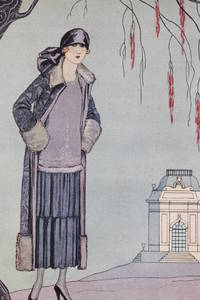
Le Belvédère. Robe-manteau de Worth pl.36 La Gazette du Bon ton 1924 n°7
Paris: Lucien Vogel éditeur 1924. Fine. Lucien Vogel éditeur Paris 1924 18 x 24 cm une feuille Original color print printed on vergé paper signed in the plate. An original print used to illustrate the Gazette du bon ton one of the most attractive and influential 20th century fashion magazines featuring the talents of French artists and other contributors from the burgeoning Art Deco movement. A celebrated fashion magazine established in 1912 by Lucien Vogel La Gazette du bon ton appeared until 1925 with a hiatus from 1915 to 1920 due to the war the editor-in-chief having been called up for service. It consisted of 69 issues printed in only 2000 copies each and notably illustrated with 573 color plates and 148 sketches of the models of the great designers. Right from the start this sumptuous publication “was aimed at bibliophiles and fashionable society” Françoise Tétart-Vittu “La Gazette du bon ton” in Dictionnaire de la mode 2016 and was printed on fine vergé paper using a type cut specially for the magazine by Georges Peignot known as Cochin later used in 1946 by Christian Dior. The prints were made using stencils heightened in colors some highlighted in gold or palladium. The story began in 1912 when Lucien Vogel a man of the world involved in fashion he had already been part of the fashion magazine Femina decided with his wife Cosette de Brunhoff – the sister of Jean creator of Babar – to set up the Gazette du bon ton subtitled at the time: “Art fashion frivolities.” Georges Charensol noted the reasoning of the editor-in-chief: “’In 1910’ he observed ‘there was no really artistic fashion magazine nothing representative of the spirit of the time. My dream was therefore to make a luxury magazine with truly modern artists…I was assured of success because when it comes to fashion no country on earth can compete with France.’” “Un grand éditeur d’art. Lucien Vogel” in Les Nouvelles littéraires no. 133 May 1925. The magazine was immediately successful not only in France but also in the United States and Latin America. At first Vogel put together a team of seven artists: André-Édouard Marty and Pierre Brissaud followed by Georges Lepape and Dammicourt as well as eventually his friends from school and the School of Fine Arts like George Barbier Bernard Boutet de Monvel and Charles Martin. Other talented people soon came flocking to join the team: Guy Arnoux Léon Bakst Benito Boutet de Monvel Umberto Brunelleschi Chas Laborde Jean-Gabriel Domergue Raoul Dufy Édouard Halouze Alexandre Iacovleff Jean Émile Laboureur Charles Loupot Chalres Martin Maggie Salcedo. These artist mostly unknown when Lucien Vogel sought them out later became emblematic and sought-after artistic figures. It was also they who worked on the advertising drawings for the Gazette. The plates put the spotlight on and celebrate dresses by seven designers of the age: Lanvin Doeuillet Paquin Poiret Worth Vionnet and Doucet. The designers provided exclusive models for each issue. Nonetheless some of the illustrations are not based on real models but simply on the illustrator’s conception of the fashion of the day. The Gazette du bon ton was an important step in the history of fashion. Combining aesthetic demands with the physical whole it brought together – for the first time – the great talents of the artistic literary and fashion worlds; and imposed through this alchemy a completely new image of women: slender independent and daring which was shared by the new generation of designers including Coco Chanel Jean Patou Marcel Rochas and so on… Taken over in 1920 by Condé Montrose Nast the Gazette du bon ton was an important influence on the new layout and aesthetics of that “little dying paper” that Nast had bought a few years earlier: Vogue. Lucien Vogel éditeur unknown
Bookseller reference : 55080
|
|
|
George BARBIER - Fernand SIMEON
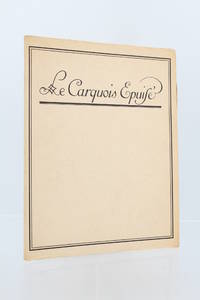
Le carquois épuisé
Paris: Lucien Vogel 1922. Fine. Lucien Vogel Paris s. d. 1922 12.50 x 25 cm broché First hors commerce edition printed for the author's friends in 60 copies numbered on hollande and justified in pencil by George Barbier. Work illustrated with wood engravings by Fernand Siméon. Handsome and rare copy despite clear foxing at the foot of the leaves. Lucien Vogel unknown
Bookseller reference : 84386
|
|
|
George Barbier
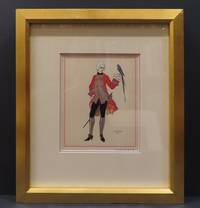
Le Jeune Mozart
<p>Original pochoir by Barbier of a man playing a violin in formal attire from Panorama Dramatique. Printed with black gold red grey white and purple colors. Pink trim surrounds image. Wooden frame with gilt front. Frame: 14.75 x 16.75 inches; Window: 7 x 8.25 inches.</p> Lucien Vogel
Bookseller reference : 6628
|
|
|
George BARBIER - (Charles-Frederick WORTH)
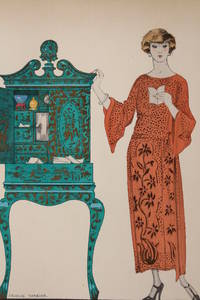
Le Tombeau des secrets. Robe d'intérieur de Worth pl.7 La Gazette du Bon ton 1922 n°1
Paris: Lucien Vogel éditeur 1922. Fine. Lucien Vogel éditeur Paris 1922 18 x 24 cm une feuille Original color print heightened with gold printed on vergé paper signed in the plate. An original print used to illustrate the Gazette du bon ton one of the most attractive and influential 20th century fashion magazines featuring the talents of French artists and other contributors from the burgeoning Art Deco movement. A celebrated fashion magazine established in 1912 by Lucien Vogel La Gazette du bon ton appeared until 1925 with a hiatus from 1915 to 1920 due to the war the editor-in-chief having been called up for service. It consisted of 69 issues printed in only 2000 copies each and notably illustrated with 573 color plates and 148 sketches of the models of the great designers. Right from the start this sumptuous publication “was aimed at bibliophiles and fashionable society” Françoise Tétart-Vittu “La Gazette du bon ton” in Dictionnaire de la mode 2016 and was printed on fine vergé paper using a type cut specially for the magazine by Georges Peignot known as Cochin later used in 1946 by Christian Dior. The prints were made using stencils heightened in colors some highlighted in gold or palladium. The story began in 1912 when Lucien Vogel a man of the world involved in fashion he had already been part of the fashion magazine Femina decided with his wife Cosette de Brunhoff – the sister of Jean creator of Babar – to set up the Gazette du bon ton subtitled at the time: “Art fashion frivolities.” Georges Charensol noted the reasoning of the editor-in-chief: “’In 1910’ he observed ‘there was no really artistic fashion magazine nothing representative of the spirit of the time. My dream was therefore to make a luxury magazine with truly modern artists…I was assured of success because when it comes to fashion no country on earth can compete with France.’” “Un grand éditeur d’art. Lucien Vogel” in Les Nouvelles littéraires no. 133 May 1925. The magazine was immediately successful not only in France but also in the United States and Latin America. At first Vogel put together a team of seven artists: André-Édouard Marty and Pierre Brissaud followed by Georges Lepape and Dammicourt as well as eventually his friends from school and the School of Fine Arts like George Barbier Bernard Boutet de Monvel and Charles Martin. Other talented people soon came flocking to join the team: Guy Arnoux Léon Bakst Benito Boutet de Monvel Umberto Brunelleschi Chas Laborde Jean-Gabriel Domergue Raoul Dufy Édouard Halouze Alexandre Iacovleff Jean Émile Laboureur Charles Loupot Chalres Martin Maggie Salcedo. These artist mostly unknown when Lucien Vogel sought them out later became emblematic and sought-after artistic figures. It was also they who worked on the advertising drawings for the Gazette. The plates put the spotlight on and celebrate dresses by seven designers of the age: Lanvin Doeuillet Paquin Poiret Worth Vionnet and Doucet. The designers provided exclusive models for each issue. Nonetheless some of the illustrations are not based on real models but simply on the illustrator’s conception of the fashion of the day. The Gazette du bon ton was an important step in the history of fashion. Combining aesthetic demands with the physical whole it brought together – for the first time – the great talents of the artistic literary and fashion worlds; and imposed through this alchemy a completely new image of women: slender independent and daring which was shared by the new generation of designers including Coco Chanel Jean Patou Marcel Rochas and so on… Taken over in 1920 by Condé Montrose Nast the Gazette du bon ton was an important influence on the new layout and aesthetics of that “little dying paper” that Nast had bought a few years earlier: Vogue. Lucien Vogel éditeur unknown
Bookseller reference : 54957
|
|
|
George BARBIER - Rene BOYLESVE
Les bains de Bade
Paris: Georges Crès 1921. Fine. Georges Crès Paris 1921 14 x 22.50 cm relié Edition printed on laid Arches and illustrated with a frontispiece 7 inset plates in chiaroscuro and in-text vignettes by George Barbier. Binding in half chocolate brown morocco spine in five compartments with some scratches marbled paper boards wrappers and spine preserved top edge gilt. Georges Crès hardcover
Bookseller reference : 65059

|
|
|
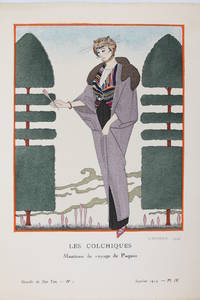
George BARBIER - (Jeanne PAQUIN)
Les Colchiques. Manteau de voyage de Paquin pl.9 La Gazette du Bon ton 1914 n°1
Paris: Lucien Vogel éditeur 1914. Fine. Lucien Vogel éditeur Paris Janvier 1914 19 x 24.50 cm une feuille Original color print heightened with gold printed on laid paper signed at bottom right of the plate. Original engraving created for the illustration of La Gazette du bon ton one of the most beautiful and influential fashion magazines of the 20th century celebrating the talent of French creators and artists in the full bloom of Art Deco. Famous fashion magazine founded in 1912 by Lucien Vogel La Gazette du bon ton was published until 1925 with an interruption during the War from 1915 to 1920 due to the mobilization of its editor-in-chief. It consists of 69 issues printed in only 2000 copies and is illustrated notably with 573 color plates and 148 sketches representing models by great couturiers. From their publication these luxurious publications ""addressed bibliophiles and worldly aesthetes"" Françoise Tétart-Vittu ""La Gazette du bon ton"" in Dictionnaire de la mode 2016. Printed on fine laid paper they use a typeface specially created for the magazine by Georges Peignot the Cochin character adopted in 1946 by Christian Dior. The prints are created using the metal stencil technique heightened in colors and for some highlighted with gold or palladium. The adventure begins in 1912 when Lucien Vogel man of the world and fashion - he had already participated in the magazine Femina - decides to found with his wife Cosette de Brunhoff sister of Jean father of Babar the Gazette du bon ton whose subtitle was then ""Art modes et frivolités"". Georges Charensol reports the words of the editor-in-chief: ""In 1910 he observes there existed no fashion journal truly artistic and representative of the spirit of its time. I therefore thought of making a luxury magazine with truly modern artists . I was certain of success because for fashion no country can rival France."" ""Un grand éditeur d'art. Lucien Vogel"" in Les Nouvelles littéraires n°133 May 1925. The magazine's success is immediate not only in France but also in the United States and South America. Originally Vogel thus brings together a group of seven artists: André-Édouard Marty and Pierre Brissaud followed by Georges Lepape and Dammicourt; and finally his friends from the École des beaux-arts who are George Barbier Bernard Boutet de Monvel or Charles Martin. Other talents quickly come to join the team: Guy Arnoux Léon Bakst Benito Boutet de Monvel Umberto Brunelleschi Chas Laborde Jean-Gabriel Domergue Raoul Dufy Édouard Halouze Alexandre Iacovleff Jean Émile Laboureur Charles Loupot Charles Martin Maggie Salcedo. These artists mostly unknown when Lucien Vogel calls upon them will subsequently become emblematic and sought-after artistic figures. These same illustrators create the drawings for the Gazette's advertisements. The plates highlight and sublimate the dresses of seven creators of the era: Lanvin Doeuillet Paquin Poiret Worth Vionnet and Doucet. The couturiers provide exclusive models for each issue. Nevertheless some of the illustrations feature no real model but only the idea that the illustrator has of the fashion of the day. La Gazette du bon ton is a decisive step in fashion history. Combining aesthetic demands and plastic unity it brings together for the first time the great talents of the world of arts letters and fashion and imposes through this alchemy a completely new image of woman slender independent and audacious also carried by the new generation of couturiers Coco Chanel Jean Patou Marcel Rochas. Taken over in 1920 by Condé Montrose Nast La Gazette du bon ton will largely inspire the new composition and aesthetic choices of the ""small dying journal"" that Nast had bought a few years earlier: Vogue magazine. Lucien Vogel éditeur unknown
Bookseller reference : 84687
|
|
|
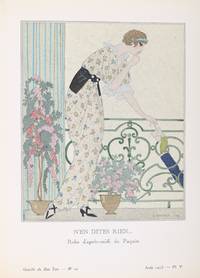
George BARBIER - (Jeanne PAQUIN)
N'en dites rien.Robe d'après-midi de Paquin pl.5 La Gazette du Bon ton 1913 n°10
Paris: Lucien Vogel éditeur 1913. Fine. Lucien Vogel éditeur Paris Août 1913 19 x 24.50 cm une feuille Original colour print printed on laid paper and signed in the plate lower right. Original engraving produced for the illustration of La Gazette du Bon Ton one of the most beautiful and influential fashion journals of the 20th century celebrating the talent of French designers and artists at the height of the Art Deco era. A celebrated fashion magazine established in 1912 by Lucien Vogel La Gazette du bon ton appeared until 1925 with a hiatus from 1915 to 1920 due to the war the editor-in-chief having been called up for service. It consisted of 69 issues printed in only 2000 copies each and notably illustrated with 573 color plates and 148 sketches of the models of the great designers. Right from the start this sumptuous publication “was aimed at bibliophiles and fashionable society” Françoise Tétart-Vittu “La Gazette du bon ton” in Dictionnaire de la mode 2016 and was printed on fine vergé paper using a type cut specially for the magazine by Georges Peignot known as Cochin later used in 1946 by Christian Dior. The prints were made using stencils heightened in colors some highlighted in gold or palladium. The story began in 1912 when Lucien Vogel a man of the world involved in fashion he had already been part of the fashion magazine Femina decided with his wife Cosette de Brunhoff – the sister of Jean creator of Babar – to set up the Gazette du bon ton subtitled at the time: “Art fashion frivolities.”  Georges Charensol noted the reasoning of the editor-in-chief: “’In 1910’ he observed ‘there was no really artistic fashion magazine nothing representative of the spirit of the time. My dream was therefore to make a luxury magazine with truly modern artists…I was assured of success because when it comes to fashion no country on earth can compete with France.’” “Un grand éditeur d’art. Lucien Vogel” in Les Nouvelles littéraires no. 133 May 1925. The magazine was immediately successful not only in France but also in the United States and Latin America. At first Vogel put together a team of seven artists: André-Édouard Marty and Pierre Brissaud followed by Georges Lepape and Dammicourt as well as eventually his friends from school and the School of Fine Arts like George Barbier Bernard Boutet de Monvel and Charles Martin. Other talented people soon came flocking to join the team: Guy Arnoux Léon Bakst Benito Boutet de Monvel Umberto Brunelleschi Chas Laborde Jean-Gabriel Domergue Raoul Dufy Édouard Halouze Alexandre Iacovleff Jean Émile Laboureur Charles Loupot Chalres Martin Maggie Salcedo. These artist mostly unknown when Lucien Vogel sought them out later became emblematic and sought-after artistic figures. It was also they who worked on the advertising drawings for the Gazette. The plates put the spotlight on and celebrate dresses by seven designers of the age: Lanvin Doeuillet Paquin Poiret Worth Vionnet and Doucet. The designers provided exclusive models for each issue. Nonetheless some of the illustrations are not based on real models but simply on the illustrator’s conception of the fashion of the day.   The Gazette du bon ton was an important step in the history of fashion. Combining aesthetic demands with the physical whole it brought together – for the first time – the great talents of the artistic literary and fashion worlds; and imposed through this alchemy a completely new image of women: slender independent and daring which was shared by the new generation of designers including Coco Chanel Jean Patou Marcel Rochas and so on… Taken over in 1920 by Condé Montrose Nast the Gazette du bon ton was an important influence on the new layout and aesthetics of that “little dying paper” that Nast had bought a few years earlier: Vogue. Lucien Vogel éditeur unknown
Bookseller reference : 89428
|
|
|
George BARBIER
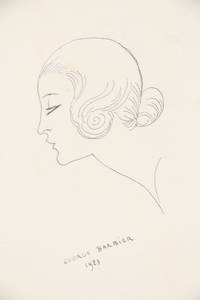
Original ink drawing - 5 fashion compositions for ""La Vie Parisienne""
No Location: s. n. 1923. Fine. s. n. No Location 1923 24.2 x 30.2 cm Une feuille Five compositions in Indian ink signed and dated 1923 by George Barbier on a leaf of thick paper. Traces of paper pasted down at the four corners on the back a few very faint traces of previous pencil inscriptions on the front. An exceptional ink drawing by the eminent fashion illustrator George Barbier for the “Elegances” section of the newspaper La Vie Parisienne featuring four silhouettes at the height of 1920s fashion with boyish haircuts dressed in flowing low-waisted tube dresses or wrapped in luxurious furs. The silhouette in a headband and high heels in the lower left corner and the beautiful profile dated and signed in the center of the leaf appeared in the January 12 1924 issue of La Vie Parisienne No. 62 Year 2 p. 38 in the “Elegances” section which Barbier illustrated on numerous occasions. The three other silhouettes were published in the same section January 26 1924 no. 64 year 2 pp. 79-80. Superb fashion portraits with hieratic and elegant postures drawn by Barbier in the Art Deco style that made him famous.  s. n. unknown
Bookseller reference : 88930
|
|
|
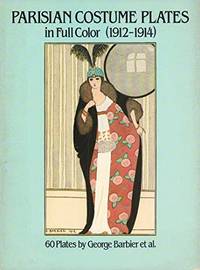
George Barbier
Parisian Costume Plates in Full Color 1912-1914
New York: Dover Publications. 1st ed. VG copy . Very Good. Soft cover. 1st Edition. 1982. Dover Publications paperback
Bookseller reference : 012867 ISBN : 0486242579 9780486242576
|
|
|
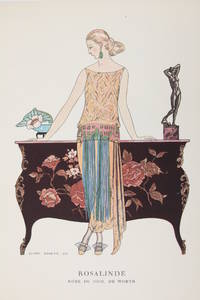
George BARBIER - (Charles-Frederick WORTH)
Rosalinde. Robe du soir de Worth pl.75 La Gazette du Bon ton 1922 n°10
Paris: Lucien Vogel éditeur 1922. Fine. Lucien Vogel éditeur Paris 1922 18 x 24 cm une feuille Original color print heightened in gold printed on laid paper signed at bottom left of the plate. Original engraving created for the illustration of La Gazette du bon ton one of the most beautiful and influential fashion magazines of the 20th century celebrating the talent of French creators and artists in the full flourishing of Art Deco. Famous fashion magazine founded in 1912 by Lucien Vogel La Gazette du bon ton was published until 1925 with an interruption during the War from 1915 to 1920 due to the mobilization of its editor-in-chief. It consists of 69 issues printed in only 2000 copies and is illustrated notably with 573 color plates and 148 sketches representing models by great couturiers. From their publication these luxurious publications ""address bibliophiles and worldly aesthetes"" Françoise Tétart-Vittu ""La Gazette du bon ton"" in Dictionnaire de la mode 2016. Printed on fine laid paper they use a typeface specially created for the magazine by Georges Peignot the Cochin character adopted in 1946 by Christian Dior. The prints are created using the metal stencil technique heightened in colors and some highlighted in gold or palladium. The adventure begins in 1912 when Lucien Vogel man of the world and fashion - he had already participated in the magazine Femina - decides to found with his wife Cosette de Brunhoff sister of Jean the father of Babar the Gazette du bon ton whose subtitle was then ""Art modes et frivolités."" Georges Charensol reports the editor-in-chief's words: ""In 1910 he observes there existed no fashion journal that was truly artistic and representative of the spirit of its time. I was therefore thinking of making a luxury magazine with truly modern artists . I was certain of success because for fashion no country can rival France."" ""Un grand éditeur d'art. Lucien Vogel"" in Les Nouvelles littéraires n°133 May 1925. The magazine's success is immediate not only in France but also in the United States and South America. Originally Vogel thus brings together a group of seven artists: André-Édouard Marty and Pierre Brissaud followed by Georges Lepape and Dammicourt; and finally his friends from the École des beaux-arts who are George Barbier Bernard Boutet de Monvel or Charles Martin. Other talents quickly come to join the team: Guy Arnoux Léon Bakst Benito Boutet de Monvel Umberto Brunelleschi Chas Laborde Jean-Gabriel Domergue Raoul Dufy Édouard Halouze Alexandre Iacovleff Jean Émile Laboureur Charles Loupot Charles Martin Maggie Salcedo. These artists unknown for the most part when Lucien Vogel calls upon them will subsequently become emblematic and sought-after artistic figures. It is these same illustrators who create the drawings for the Gazette's advertisements. The plates highlight and sublimate the dresses of seven creators of the period: Lanvin Doeuillet Paquin Poiret Worth Vionnet and Doucet. The couturiers provide exclusive models for each issue. Nevertheless some of the illustrations feature no real model but only the illustrator's idea of contemporary fashion. La Gazette du bon ton is a decisive step in the history of fashion. Combining aesthetic demand and plastic unity it brings together for the first time the great talents of the world of arts letters and fashion and imposes through this alchemy a completely new image of woman slender independent and bold also carried by the new generation of couturiers Coco Chanel Jean Patou Marcel Rochas. Taken over in 1920 by Condé Montrose Nast La Gazette du bon ton will largely inspire the new composition and aesthetic choices of the ""dying little journal"" that Nast had bought a few years earlier: Vogue magazine. Lucien Vogel éditeur unknown
Bookseller reference : 84726
|
|
|
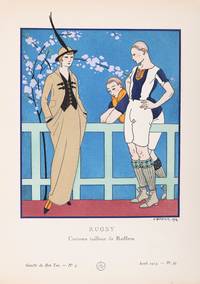
George BARBIER - (John REDFERN)
Rugby - Costume tailleur de Redfern pl.39 La Gazette du Bon ton 1914 n°4
Paris 1914. Fine. Paris Avril 1914 19 x 24.50 cm une feuille Original colour print printed on laid paper and signed in the plate lower right. Original engraving produced for the illustration of La Gazette du Bon Ton one of the most beautiful and influential fashion journals of the 20th century celebrating the talent of French designers and artists at the height of the Art Deco era. A celebrated fashion magazine established in 1912 by Lucien Vogel La Gazette du bon ton appeared until 1925 with a hiatus from 1915 to 1920 due to the war the editor-in-chief having been called up for service. It consisted of 69 issues printed in only 2000 copies each and notably illustrated with 573 color plates and 148 sketches of the models of the great designers. Right from the start this sumptuous publication “was aimed at bibliophiles and fashionable society” Françoise Tétart-Vittu “La Gazette du bon ton” in Dictionnaire de la mode 2016 and was printed on fine vergé paper using a type cut specially for the magazine by Georges Peignot known as Cochin later used in 1946 by Christian Dior. The prints were made using stencils heightened in colors some highlighted in gold or palladium. The story began in 1912 when Lucien Vogel a man of the world involved in fashion he had already been part of the fashion magazine Femina decided with his wife Cosette de Brunhoff – the sister of Jean creator of Babar – to set up the Gazette du bon ton subtitled at the time: “Art fashion frivolities.”  Georges Charensol noted the reasoning of the editor-in-chief: “’In 1910’ he observed ‘there was no really artistic fashion magazine nothing representative of the spirit of the time. My dream was therefore to make a luxury magazine with truly modern artists…I was assured of success because when it comes to fashion no country on earth can compete with France.’” “Un grand éditeur d’art. Lucien Vogel” in Les Nouvelles littéraires no. 133 May 1925. The magazine was immediately successful not only in France but also in the United States and Latin America. At first Vogel put together a team of seven artists: André-Édouard Marty and Pierre Brissaud followed by Georges Lepape and Dammicourt as well as eventually his friends from school and the School of Fine Arts like George Barbier Bernard Boutet de Monvel and Charles Martin. Other talented people soon came flocking to join the team: Guy Arnoux Léon Bakst Benito Boutet de Monvel Umberto Brunelleschi Chas Laborde Jean-Gabriel Domergue Raoul Dufy Édouard Halouze Alexandre Iacovleff Jean Émile Laboureur Charles Loupot Chalres Martin Maggie Salcedo. These artist mostly unknown when Lucien Vogel sought them out later became emblematic and sought-after artistic figures. It was also they who worked on the advertising drawings for the Gazette. The plates put the spotlight on and celebrate dresses by seven designers of the age: Lanvin Doeuillet Paquin Poiret Worth Vionnet and Doucet. The designers provided exclusive models for each issue. Nonetheless some of the illustrations are not based on real models but simply on the illustrator’s conception of the fashion of the day.   The Gazette du bon ton was an important step in the history of fashion. Combining aesthetic demands with the physical whole it brought together – for the first time – the great talents of the artistic literary and fashion worlds; and imposed through this alchemy a completely new image of women: slender independent and daring which was shared by the new generation of designers including Coco Chanel Jean Patou Marcel Rochas and so on… Taken over in 1920 by Condé Montrose Nast the Gazette du bon ton was an important influence on the new layout and aesthetics of that “little dying paper” that Nast had bought a few years earlier: Vogue. unknown
Bookseller reference : 89440
|
|
|
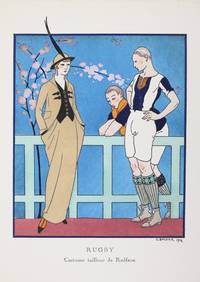
George BARBIER - (John REDFERN)
Rugby - Costume tailleur de Redfern pl.39 La Gazette du Bon ton 1914 n°4
Paris: Lucien Vogel éditeur 1914. Fine. Lucien Vogel éditeur Paris Avril 1914 19 x 24.50 cm une feuille Original color print on laid paper signed at lower right of the plate. Original engraving created for the illustration of La Gazette du bon ton one of the most beautiful and influential fashion magazines of the 20th century celebrating the talent of French creators and artists at the height of the Art Deco movement. The famous fashion magazine founded in 1912 by Lucien Vogel La Gazette du bon ton was published until 1925 with an interruption during the War from 1915 to 1920 due to the mobilization of its editor-in-chief. It consisted of 69 issues printed in only 2000 copies and was illustrated notably with 573 color plates and 148 sketches representing models by great couturiers. From their publication these luxurious publications ""were aimed at bibliophiles and worldly aesthetes"" Françoise Tétart-Vittu ""La Gazette du bon ton"" in Dictionnaire de la mode 2016. Printed on fine laid paper they used a typeface specially created for the magazine by Georges Peignot the Cochin character adopted in 1946 by Christian Dior. The prints were created using the metal stencil technique enhanced in colors and some highlighted in gold or palladium. The adventure began in 1912 when Lucien Vogel a man of society and fashion - he had already participated in the magazine Femina - decided to found with his wife Cosette de Brunhoff sister of Jean the father of Babar the Gazette du bon ton whose subtitle was then ""Art modes et frivolités."" Georges Charensol reports the editor-in-chief's words: ""In 1910 he observed there was no truly artistic fashion journal representative of the spirit of its time. I was therefore thinking of creating a luxury magazine with truly modern artists . I was certain of success because for fashion no country can rival France."" ""Un grand éditeur d'art. Lucien Vogel"" in Les Nouvelles littéraires n°133 May 1925. The magazine's success was immediate not only in France but also in the United States and South America. Originally Vogel assembled a group of seven artists: André-Édouard Marty and Pierre Brissaud followed by Georges Lepape and Dammicourt; and finally his friends from the École des beaux-arts including George Barbier Bernard Boutet de Monvel and Charles Martin. Other talents quickly joined the team: Guy Arnoux Léon Bakst Benito Umberto Brunelleschi Chas Laborde Jean-Gabriel Domergue Raoul Dufy Édouard Halouze Alexandre Iacovleff Jean Émile Laboureur Charles Loupot Maggie Salcedo. These artists mostly unknown when Lucien Vogel called upon them would subsequently become emblematic and sought-after artistic figures. These same illustrators created the drawings for the Gazette's advertisements. The plates highlighted and sublimated the dresses of seven creators of the period: Lanvin Doeuillet Paquin Poiret Worth Vionnet and Doucet. The couturiers provided exclusive models for each issue. Nevertheless some of the illustrations featured no real model but only the illustrator's idea of contemporary fashion. La Gazette du bon ton was a decisive step in the history of fashion. Combining aesthetic demands and plastic unity it brought together for the first time the great talents of the worlds of arts letters and fashion and imposed through this alchemy an entirely new image of woman elegant independent and bold also carried by the new generation of couturiers Coco Chanel Jean Patou Marcel Rochas. Taken over in 1920 by Condé Montrose Nast La Gazette du bon ton would largely inspire the new composition and aesthetic choices of the ""dying little journal"" that Nast had purchased a few years earlier: Vogue magazine. Lucien Vogel éditeur unknown
Bookseller reference : 84721
|
|
|
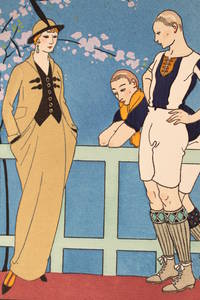
George BARBIER - (John REDFERN)
Rugby - Costume tailleur de Redfern pl.39 La Gazette du Bon ton 1914 n°4
Paris: Lucien Vogel éditeur 1914. Fine. Lucien Vogel éditeur Paris Avril 1914 19 x 24.50 cm une feuille Original color print printed on vergé paper signed in the plate. An original print used to illustrate the Gazette du bon ton one of the most attractive and influential 20th century fashion magazines featuring the talents of French artists and other contributors from the burgeoning Art Deco movement. A celebrated fashion magazine established in 1912 by Lucien Vogel La Gazette du bon ton appeared until 1925 with a hiatus from 1915 to 1920 due to the war the editor-in-chief having been called up for service. It consisted of 69 issues printed in only 2000 copies each and notably illustrated with 573 color plates and 148 sketches of the models of the great designers. Right from the start this sumptuous publication “was aimed at bibliophiles and fashionable society” Françoise Tétart-Vittu “La Gazette du bon ton” in Dictionnaire de la mode 2016 and was printed on fine vergé paper using a type cut specially for the magazine by Georges Peignot known as Cochin later used in 1946 by Christian Dior. The prints were made using stencils heightened in colors some highlighted in gold or palladium. The story began in 1912 when Lucien Vogel a man of the world involved in fashion he had already been part of the fashion magazine Femina decided with his wife Cosette de Brunhoff – the sister of Jean creator of Babar – to set up the Gazette du bon ton subtitled at the time: “Art fashion frivolities.” Georges Charensol noted the reasoning of the editor-in-chief: “'In 1910' he observed ‘there was no really artistic fashion magazine nothing representative of the spirit of the time. My dream was therefore to make a luxury magazine with truly modern artists…I was assured of success because when it comes to fashion no country on earth can compete with France.'” “Un grand éditeur d'art. Lucien Vogel” in Les Nouvelles littéraires no. 133 May 1925. The magazine was immediately successful not only in France but also in the United States and Latin America. At first Vogel put together a team of seven artists: André-Édouard Marty and Pierre Brissaud followed by Georges Lepape and Dammicourt as well as eventually his friends from school and the School of Fine Arts like George Barbier Bernard Boutet de Monvel and Charles Martin. Other talented people soon came flocking to join the team: Guy Arnoux Léon Bakst Benito Boutet de Monvel Umberto Brunelleschi Chas Laborde Jean-Gabriel Domergue Raoul Dufy Édouard Halouze Alexandre Iacovleff Jean Émile Laboureur Charles Loupot Chalres Martin Maggie Salcedo. These artist mostly unknown when Lucien Vogel sought them out later became emblematic and sought-after artistic figures. It was also they who worked on the advertising drawings for the Gazette. The plates put the spotlight on and celebrate dresses by seven designers of the age: Lanvin Doeuillet Paquin Poiret Worth Vionnet and Doucet. The designers provided exclusive models for each issue. Nonetheless some of the illustrations are not based on real models but simply on the illustrator's conception of the fashion of the day. The Gazette du bon ton was an important step in the history of fashion. Combining aesthetic demands with the physical whole it brought together – for the first time – the great talents of the artistic literary and fashion worlds; and imposed through this alchemy a completely new image of women: slender independent and daring which was shared by the new generation of designers including Coco Chanel Jean Patou Marcel Rochas and so on… Taken over in 1920 by Condé Montrose Nast the Gazette du bon ton was an important influence on the new layout and aesthetics of that “little dying paper” that Nast had bought a few years earlier: Vogue. Lucien Vogel éditeur unknown
Bookseller reference : 54653
|
|
|
George Barber Paley
Saul of Tarsus: A Drama in Five Acts
Hardback. New. hardcover
Bookseller reference : A9781017294828 ISBN : 1017294828 9781017294828

|
|
|
George Barber Paley
Saul of Tarsus: A Drama in Five Acts
Paperback / softback. New. paperback
Bookseller reference : A9781017299441 ISBN : 1017299447 9781017299441

|
|
|
George Barber Paley
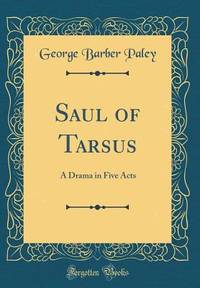
Saul of Tarsus: A Drama in Five Acts Classic Reprint
hardcover. Good. Access codes and supplements are not guaranteed with used items. May be an ex-library book. hardcover
Bookseller reference : 0484638289.G ISBN : 0484638289 9780484638289
|
|
|
George Barber Paley
Saul of Tarsus: A Drama in Five Acts
Paperback / softback. New. paperback
Bookseller reference : B9781017299441 ISBN : 1017299447 9781017299441
|
|
|
George Barber Paley
Saul of Tarsus: A Drama in Five Acts
Hardback. New. hardcover
Bookseller reference : B9781017294828 ISBN : 1017294828 9781017294828
|
|
|
George Barber
The British and London Pharmacopoeias Compared 1864
New. unknown
Bookseller reference : A9781165662111 ISBN : 1165662116 9781165662111

|
|
|
George Barber
The British and London Pharmacopoeias Compared 1864
New. unknown
Bookseller reference : B9781165662111 ISBN : 1165662116 9781165662111
|
|
|
George Barber (Publisher)
The Ultimate Book of Household Hints
HarperCollins Publishers Australia Pty Ltd 1985. Paperback. Good. Pages can have notes/highlighting. Spine may show signs of wear. ~ ThriftBooks: Read More Spend Less.Dust jacket quality is not guaranteed. HarperCollins Publishers (Australia) Pty Ltd paperback
Bookseller reference : G0858358182I3N00 ISBN : 0858358182 9780858358188

|
|
|
George Barbier
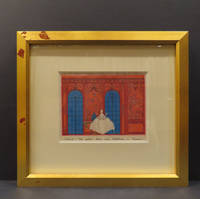
Unsalon dans une hotellerie a Venise; plate from Panorama Dramatique. Casanova Decors et Costumes
<p>Original Barbier pochoir in black gold green red pink blue and orange. Pink trim surrounds image. Paper 19.1 x 24.2 cm; Window: 17.2 x 22 cm.</p> Lucien Vogel
Bookseller reference : 6630
|
|
|
George BARBIER - VAUDREUIL
Velours et lamé La Gazette du Bon ton 1922 n°8
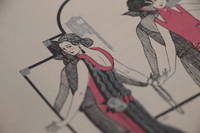
Paris: Lucien Vogel éditeur 1922. Fine. Lucien Vogel éditeur Paris 1922 19.50 x 24.50 cm une feuille Text on double page by Vaudreuil illustrated with four original color prints finely heightened with palladium printed on laid paper signatures of George Barbier on the plate. La Gazette du bon ton one of the most beautiful and influential fashion magazines of the 20th century celebrating the talent of French creators and artists at the height of the Art Deco movement. Famous fashion magazine founded in 1912 by Lucien Vogel La Gazette du bon ton was published until 1925 with an interruption during the War from 1915 to 1920 due to the mobilization of its editor-in-chief. It consists of 69 issues printed in only 2000 copies and is illustrated notably with 573 color plates and 148 sketches representing models by great couturiers. From their publication these luxurious publications ""were aimed at bibliophiles and worldly aesthetes"" Françoise Tétart-Vittu ""La Gazette du bon ton"" in Dictionnaire de la mode 2016. Printed on fine laid paper they use a typeface specially created for the magazine by Georges Peignot the Cochin character adopted in 1946 by Christian Dior. The prints are created using the metal stencil technique heightened in colors and some outlined in gold or palladium. The adventure begins in 1912 when Lucien Vogel a man of the world and fashion - he had already participated in the magazine Femina - decides to found with his wife Cosette de Brunhoff sister of Jean the father of Babar the Gazette du bon ton whose subtitle was then ""Art modes et frivolités"". Georges Charensol reports the words of the editor-in-chief: ""In 1910 he observes there existed no fashion journal that was truly artistic and representative of the spirit of its time. I therefore thought of creating a luxury magazine with truly modern artists . I was certain of success because for fashion no country can rival France."" ""Un grand éditeur d'art. Lucien Vogel"" in Les Nouvelles littéraires n°133 May 1925. The success of the magazine is immediate not only in France but also in the United States and South America. Originally Vogel thus brings together a group of seven artists: André-Édouard Marty and Pierre Brissaud followed by Georges Lepape and Dammicourt; and finally his friends from the École des beaux-arts who are George Barbier Bernard Boutet de Monvel or Charles Martin. Other talents quickly come to join the team: Guy Arnoux Léon Bakst Benito Boutet de Monvel Umberto Brunelleschi Chas Laborde Jean-Gabriel Domergue Raoul Dufy Édouard Halouze Alexandre Iacovleff Jean Émile Laboureur Charles Loupot Charles Martin Maggie Salcedo. These artists mostly unknown when Lucien Vogel calls upon them will subsequently become emblematic and sought-after artistic figures. These same illustrators create the drawings for the Gazette's advertisements. The plates highlight and sublimate the dresses of seven creators of the period: Lanvin Doeuillet Paquin Poiret Worth Vionnet and Doucet. The couturiers provide exclusive models for each issue. Nevertheless some of the illustrations feature no real model but only the illustrator's idea of contemporary fashion. La Gazette du bon ton is a decisive step in the history of fashion. Combining aesthetic demand and plastic unity it brings together for the first time the great talents of the world of arts letters and fashion and imposes through this alchemy a completely new image of woman slender independent and audacious also carried by the new generation of couturiers Coco Chanel Jean Patou Marcel Rochas. Taken over in 1920 by Condé Montrose Nast the Gazette du bon ton would largely inspire the new composition and aesthetic choices of the ""dying little journal"" that Nast had bought a few years earlier: Vogue magazine. Lucien Vogel éditeur unknown
Bookseller reference : 84836
|
|
|
George BARBIER - (Charles-Frederick WORTH)
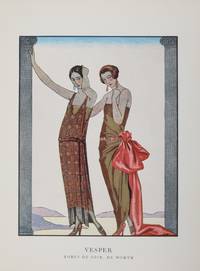
Vesper. Robes du soir de Worth pl.60 La Gazette du Bon ton 1922 n°8
Paris: Lucien Vogel éditeur 1922. Fine. Lucien Vogel éditeur Paris 1922 18 x 24 cm une feuille Original color print heightened with gold printed on laid paper signed at bottom left of the plate. La Gazette du bon ton one of the most beautiful and influential fashion magazines of the 20th century celebrating the talent of French creators and artists at the height of the Art Deco movement. Famous fashion magazine founded in 1912 by Lucien Vogel La Gazette du bon ton was published until 1925 with an interruption during the War from 1915 to 1920 due to the mobilization of its editor-in-chief. It comprises 69 issues printed in only 2000 copies and is illustrated notably with 573 color plates and 148 sketches representing models by great couturiers. From their publication these luxurious publications ""addressed bibliophiles and worldly aesthetes"" Françoise Tétart-Vittu ""La Gazette du bon ton"" in Dictionnaire de la mode 2016. Printed on fine laid paper they use a typeface specially created for the magazine by Georges Peignot the Cochin character adopted in 1946 by Christian Dior. The prints are created using the metal pochoir technique heightened in colors and for some highlighted with gold or palladium. The adventure begins in 1912 when Lucien Vogel man of society and fashion - he had already participated in the magazine Femina - decides to found with his wife Cosette de Brunhoff sister of Jean the father of Babar the Gazette du bon ton whose subtitle was then ""Art modes et frivolités"". Georges Charensol reports the words of the editor-in-chief: ""En 1910 observe-t-il il n'existait aucun journal de mode véritablement artistique et représentatif de l'esprit de son époque. Je songeais donc à faire un magazine de luxe avec des artistes véritablement modernes . J'étais certain du succès car pour la mode aucun pays ne peut rivaliser avec la France."" ""In 1910 he observes there was no truly artistic fashion journal representative of the spirit of its time. I therefore thought of making a luxury magazine with truly modern artists . I was certain of success because in fashion no country can rival France."" ""Un grand éditeur d'art. Lucien Vogel"" in Les Nouvelles littéraires n°133 mai 1925. The magazine's success was immediate not only in France but also in the United States and South America. Originally Vogel thus assembled a group of seven artists: André-Édouard Marty and Pierre Brissaud followed by Georges Lepape and Dammicourt; and finally his friends from the École des beaux-arts who were George Barbier Bernard Boutet de Monvel and Charles Martin. Other talents quickly joined the team: Guy Arnoux Léon Bakst Benito Boutet de Monvel Umberto Brunelleschi Chas Laborde Jean-Gabriel Domergue Raoul Dufy Édouard Halouze Alexandre Iacovleff Jean Émile Laboureur Charles Loupot Charles Martin Maggie Salcedo. These artists mostly unknown when Lucien Vogel called upon them would subsequently become emblematic and sought-after artistic figures. These same illustrators created the drawings for the Gazette's advertisements. The plates highlight and sublimate the dresses of seven creators of the period: Lanvin Doeuillet Paquin Poiret Worth Vionnet and Doucet. The couturiers provided exclusive models for each issue. Nevertheless some of the illustrations show no real model but only the illustrator's idea of contemporary fashion. La Gazette du bon ton is a decisive step in fashion history. Combining aesthetic standards and visual unity it brought together for the first time the great talents from the worlds of arts letters and fashion and established through this alchemy a completely new image of women slender independent and bold also carried by the new generation of couturiers Coco Chanel Jean Patou Marcel Rochas. Acquired in 1920 by Condé Montrose Nast the Gazette du bon ton would largely inspire the new composition and aesthetic choices of the ""dying little journal"" that Nast had purchased a few years earlier: Lucien Vogel éditeur unknown
Bookseller reference : 84736
|
|
|
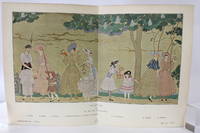
George BARBIER
Vichy II ou Le Jeu des marionnettes pl.3 La Gazette du Bon ton Eté 1915 n°8-9
Paris: Lucien Vogel éditeur 1915. Fine. Lucien Vogel éditeur Paris Eté 1915 36.50 x 24 cm une feuille Double original color print heightened with gold printed on vergé paper signed in the plate. An original print used to illustrate the Gazette du bon ton one of the most attractive and influential 20th century fashion magazines featuring the talents of French artists and other contributors from the burgeoning Art Deco movement. A celebrated fashion magazine established in 1912 by Lucien Vogel La Gazette du bon ton appeared until 1925 with a hiatus from 1915 to 1920 due to the war the editor-in-chief having been called up for service. It consisted of 69 issues printed in only 2000 copies each and notably illustrated with 573 color plates and 148 sketches of the models of the great designers. Right from the start this sumptuous publication “was aimed at bibliophiles and fashionable society” Françoise Tétart-Vittu “La Gazette du bon ton” in Dictionnaire de la mode 2016 and was printed on fine vergé paper using a type cut specially for the magazine by Georges Peignot known as Cochin later used in 1946 by Christian Dior. The prints were made using stencils heightened in colors some highlighted in gold or palladium. The story began in 1912 when Lucien Vogel a man of the world involved in fashion he had already been part of the fashion magazine Femina decided with his wife Cosette de Brunhoff – the sister of Jean creator of Babar – to set up the Gazette du bon ton subtitled at the time: “Art fashion frivolities.” Georges Charensol noted the reasoning of the editor-in-chief: “’In 1910’ he observed ‘there was no really artistic fashion magazine nothing representative of the spirit of the time. My dream was therefore to make a luxury magazine with truly modern artists…I was assured of success because when it comes to fashion no country on earth can compete with France.’” “Un grand éditeur d’art. Lucien Vogel” in Les Nouvelles littéraires no. 133 May 1925. The magazine was immediately successful not only in France but also in the United States and Latin America. At first Vogel put together a team of seven artists: André-Édouard Marty and Pierre Brissaud followed by Georges Lepape and Dammicourt as well as eventually his friends from school and the School of Fine Arts like George Barbier Bernard Boutet de Monvel and Charles Martin. Other talented people soon came flocking to join the team: Guy Arnoux Léon Bakst Benito Boutet de Monvel Umberto Brunelleschi Chas Laborde Jean-Gabriel Domergue Raoul Dufy Édouard Halouze Alexandre Iacovleff Jean Émile Laboureur Charles Loupot Chalres Martin Maggie Salcedo. These artist mostly unknown when Lucien Vogel sought them out later became emblematic and sought-after artistic figures. It was also they who worked on the advertising drawings for the Gazette. The plates put the spotlight on and celebrate dresses by seven designers of the age: Lanvin Doeuillet Paquin Poiret Worth Vionnet and Doucet. The designers provided exclusive models for each issue. Nonetheless some of the illustrations are not based on real models but simply on the illustrator’s conception of the fashion of the day. The Gazette du bon ton was an important step in the history of fashion. Combining aesthetic demands with the physical whole it brought together – for the first time – the great talents of the artistic literary and fashion worlds; and imposed through this alchemy a completely new image of women: slender independent and daring which was shared by the new generation of designers including Coco Chanel Jean Patou Marcel Rochas and so on… Taken over in 1920 by Condé Montrose Nast the Gazette du bon ton was an important influence on the new layout and aesthetics of that “little dying paper” that Nast had bought a few years earlier: Vogue. Lucien Vogel éditeur unknown
Bookseller reference : 54705
|
|
|
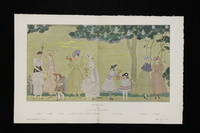
George BARBIER
Vichy II ou Le Jeu des Marionnettes. La Gazette du Bon ton n°8-9. Été 1915 - Planche 3
Paris: Lucien Vogel éditeur 1915. Fine. Lucien Vogel éditeur Paris 1915 37.60 x 24.20 cm une feuille Original color print printed on vergé paper signed in the plate. An original print used to illustrate the Gazette du bon ton one of the most attractive and influential 20th century fashion magazines featuring the talents of French artists and other contributors from the burgeoning Art Deco movement. A celebrated fashion magazine established in 1912 by Lucien Vogel La Gazette du bon ton appeared until 1925 with a hiatus from 1915 to 1920 due to the war the editor-in-chief having been called up for service. It consisted of 69 issues printed in only 2000 copies each and notably illustrated with 573 color plates and 148 sketches of the models of the great designers. Right from the start this sumptuous publication “was aimed at bibliophiles and fashionable society” Françoise Tétart-Vittu “La Gazette du bon ton” in Dictionnaire de la mode 2016 and was printed on fine vergé paper using a type cut specially for the magazine by Georges Peignot known as Cochin later used in 1946 by Christian Dior. The prints were made using stencils heightened in colors some highlighted in gold or palladium. The story began in 1912 when Lucien Vogel a man of the world involved in fashion he had already been part of the fashion magazine Femina decided with his wife Cosette de Brunhoff – the sister of Jean creator of Babar – to set up the Gazette du bon ton subtitled at the time: “Art fashion frivolities.” Georges Charensol noted the reasoning of the editor-in-chief: “’In 1910’ he observed ‘there was no really artistic fashion magazine nothing representative of the spirit of the time. My dream was therefore to make a luxury magazine with truly modern artists…I was assured of success because when it comes to fashion no country on earth can compete with France.’” “Un grand éditeur d’art. Lucien Vogel” in Les Nouvelles littéraires no. 133 May 1925. The magazine was immediately successful not only in France but also in the United States and Latin America. At first Vogel put together a team of seven artists: André-Édouard Marty and Pierre Brissaud followed by Georges Lepape and Dammicourt as well as eventually his friends from school and the School of Fine Arts like George Barbier Bernard Boutet de Monvel and Charles Martin. Other talented people soon came flocking to join the team: Guy Arnoux Léon Bakst Benito Boutet de Monvel Umberto Brunelleschi Chas Laborde Jean-Gabriel Domergue Raoul Dufy Édouard Halouze Alexandre Iacovleff Jean Émile Laboureur Charles Loupot Chalres Martin Maggie Salcedo. These artist mostly unknown when Lucien Vogel sought them out later became emblematic and sought-after artistic figures. It was also they who worked on the advertising drawings for the Gazette. The plates put the spotlight on and celebrate dresses by seven designers of the age: Lanvin Doeuillet Paquin Poiret Worth Vionnet and Doucet. The designers provided exclusive models for each issue. Nonetheless some of the illustrations are not based on real models but simply on the illustrator’s conception of the fashion of the day. The Gazette du bon ton was an important step in the history of fashion. Combining aesthetic demands with the physical whole it brought together – for the first time – the great talents of the artistic literary and fashion worlds; and imposed through this alchemy a completely new image of women: slender independent and daring which was shared by the new generation of designers including Coco Chanel Jean Patou Marcel Rochas and so on… Taken over in 1920 by Condé Montrose Nast the Gazette du bon ton was an important influence on the new layout and aesthetics of that “little dying paper” that Nast had bought a few years earlier: Vogue. Lucien Vogel éditeur unknown
Bookseller reference : 51292
|
|
|
George Chadwick [Composer]; Samuel Barber [Composer]; Neeme Jarvi [Conductor]; Detroit Symphony Orchestra [Orchestra];
Chadwick: Symphony 3 / Barber: Vanessa Excerpts / Shelley / Medea's Meditation and Dance of Vengeance Music CD
Alliance. CD. New. 88x79x7. Alliance unknown
Bookseller reference : cd-music-classical-168

|
|
|
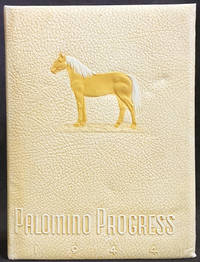
George D. Barber
Palomino Progress: Official Stud Book and Registry. Volume III October 1944
Palomino Horse Breeders of America Inc. Mineral Wells 1944. Book. Very Good. Cloth. 300 pages. Hardcover "yearbook" of sorts bound in puffy embossed leatherette and issued without a dustjacket. Bump to the lower right corner of the front cover with a gift inscription "To Johnnie Xmas 1944 from Joe" in ink on the front free endpaper. Else the binding is tight and solid and the interior is otherwise free from other markings. Text in English. Illustrated in duotone. Includes a message from the President of PHBA Howard Cox Secretary R. H. ARthur Zappe as well as pictures of each of the national chapter Directors. Palomino Horse Breeders of America, Inc., Mineral Wells Hardcover
Bookseller reference : 020298
|
|
|
George Duckett Barber
An Inquiry Into the Origin of Copyhold Tenure
Hardback. New. hardcover
Bookseller reference : A9781019137406 ISBN : 1019137401 9781019137406

|
|
|
George Duckett Barber
An Inquiry Into the Origin of Copyhold Tenure
Paperback / softback. New. paperback
Bookseller reference : A9781019149850 ISBN : 101914985x 9781019149850

|
|
|
George Duckett Barber
An Inquiry Into the Origin of Copyhold Tenure
Hardback. New. hardcover
Bookseller reference : B9781019137406 ISBN : 1019137401 9781019137406
|
|
|
George Duckett Barber
An Inquiry Into the Origin of Copyhold Tenure
Paperback / softback. New. paperback
Bookseller reference : B9781019149850 ISBN : 101914985x 9781019149850
|
|
|
George Duckett Barber
Ancient Oral Records of the Cimri or Britons in Asia and Europe: Recovered Through a Literal Aramitic Translation of the Old Welsh Bardic Relics 1855
New. unknown
Bookseller reference : A9781165305025 ISBN : 116530502x 9781165305025

|
|
|
George Duckett Barber Beaumont
Ancient Oral Records of the Cimri or Britons in Asia and Europe: Recovered Through a Literal Aramitic Translation of the Old Welsh Bardic Relics Classic Reprint
hardcover. Good. Access codes and supplements are not guaranteed with used items. May be an ex-library book. hardcover
Bookseller reference : 036553563X.G ISBN : 036553563X 9780365535638

|
|
|
George Duckett Barber
Ancient Oral Records of the Cimri or Britons in Asia and Europe: Recovered Through a Literal Aramitic Translation of the Old Welsh Bardic Relics 1855
New. unknown
Bookseller reference : B9781165305025 ISBN : 116530502x 9781165305025
|
|
|
George Duckett Barber Beaumont
Ancient Oral Records of the Cimri or Britons in Asia and Europe: Recovered Through a Literal Aramitic Translation of the Old Welsh Bardic Relics Classic Reprint
paperback. Good. Access codes and supplements are not guaranteed with used items. May be an ex-library book. paperback
Bookseller reference : 0282425446.G ISBN : 0282425446 9780282425449

|
|
|
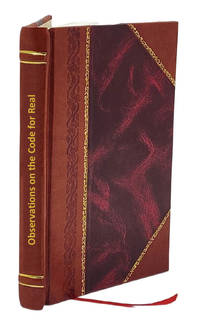
George Duckett Barber, James Humphreys
Observations on the Code for Real Property Proposed by James Humphreys Esq. 1827 Leather Bound
2022. Leather Bound. New. Size: 14.60 x 22.86 cms This book is available in 5 different Leather color without any extra cost. Explore More Options by Clicking on 'More Images' and Notify Us of Your Choice via Email within 24 hours of placing the order. Presenting an Exquisite Leather-Bound Edition expertly crafted by the prestigious organization “Rare Biblio” with Original Natural Leather that gracefully adorns the spine and corners. The allure continues with Golden Leaf Printing that adds a touch of elegance while Hand Embossing on the rounded spine lends an artistic flair. This masterpiece has been meticulously reprinted in 2022 utilizing the invaluable guidance of the original edition published many years ago in 1827. The contents of this book are presented in classic black and white. Its durability is ensured through a meticulous sewing binding technique enhancing its longevity. Imprinted on top-tier quality paper. A team of professionals has expertly processed each page delicately preserving its content without alteration. Due to the vintage nature of these books every page has been manually restored for legibility. However in certain instances occasional blurriness missing segments or faint black spots might persist. We sincerely hope for your understanding of the challenges we faced with these books. Recognizing their significance for readers seeking insight into our historical treasure we've diligently restored and reissued them. Our intention is to offer this valuable resource once again. We eagerly await your feedback hoping that you'll find it appealing and will generously share your thoughts and recommendations. Lang: - English Vol:- Pages:- 96 If it is a multi-volume set then it is only a single volume. Product Disclaimer: Kindly be informed that owing to the inherent nature of leather as a natural material minor discolorations or textural variations may be perceptible. Explore the FOLIO EDITION 12x19 Inches: Available Upon Request. Please note:- text destroyed and text Dark hardcover
Bookseller reference : BIBLB003190777
|
|
|
George Duckett Barber Beaumont
Suggestions on the Ancient Britons in Three Parts
Paperback / softback. New. paperback
Bookseller reference : A9780371251102 ISBN : 0371251109 9780371251102
|
|
|
George Duckett Barber Beaumont
Suggestions on the Ancient Britons Part 1 1853 Suggestions on the Ancient Britons Part 1 1853
New. unknown
Bookseller reference : A9781165773350 ISBN : 116577335x 9781165773350

|
|
|
George Duckett Barber Beaumont
Suggestions On the Ancient Britons in Three Parts
Paperback / softback. New. paperback
Bookseller reference : B9781022827042 ISBN : 1022827049 9781022827042

|
|
|
George Duckett Barber Beaumont
Suggestions On the Ancient Britons in Three Parts
Hardback. New. hardcover
Bookseller reference : B9781020711084 ISBN : 1020711086 9781020711084

|
|
|
George Duckett Barber Beaumont
Suggestions on the Ancient Britons in Three Parts Vol. 1 of 3 Classic Reprint
paperback. Good. Access codes and supplements are not guaranteed with used items. May be an ex-library book. paperback
Bookseller reference : 1330241037.G ISBN : 1330241037 9781330241035

|
|
|
George Duckett Barber Beaumont
Suggestions on the Ancient Britons Part 1 1853 Suggestions on the Ancient Britons Part 1 1853
New. unknown
Bookseller reference : B9781165773350 ISBN : 116577335x 9781165773350
|
|
|
George F Barber & Michael A Tomlan
George F. Barber's Cottage Souvenir Number Two: A Repository of Artistic Cottage Architecture with a new introduction
Watkins Glen NY: American Life Foundation and Study Institute 1982 Very Good minus condition with light cover wear small cover tear at bottom of spine fading on spine cover. Content clean and free of markings binding strong. Reprint of Barber's 1891 edition with new 32 page introduction by Tomlan. Black & white photos drawings and floor plans. American Life Foundation and Study Institute paperback
Bookseller reference : 019489 ISBN : 089257058X 9780892570584
|
|
|
George Franklin Barber and Co
Modern Dwellings and Their Proper Construction: A Book of Practical Designs and Information for Those Who Wish to Build and Beautify Their Homes Classic Reprint
hardcover. Good. Access codes and supplements are not guaranteed with used items. May be an ex-library book. hardcover
Bookseller reference : 0260054917.G ISBN : 0260054917 9780260054913

|
|
|
George Franklin Barber and Co
Modern Dwellings and Their Proper Construction: A Book of Practical Designs and Information for Those Who Wish to Build and Beautify Their Homes Classic Reprint
paperback. Good. Access codes and supplements are not guaranteed with used items. May be an ex-library book. paperback
Bookseller reference : 1334233047.G ISBN : 1334233047 9781334233043

|
|
|
George Franklin Barber
The Cottage Souvenir No. 2: Containing One Hundred And Twenty Original Designs In Cottage And Detail Architecture Issue 2
Paperback / softback. New. paperback
Bookseller reference : B9781015427754 ISBN : 1015427758 9781015427754

|
|
|
George Franklin Barber
The Cottage Souvenir No. 2: Containing One Hundred And Twenty Original Designs In Cottage And Detail Architecture Issue 2
new. unknown
Bookseller reference : 44962034-n ISBN : 1015427758 9781015427754
|
|
|
George Franklin Barber
The Cottage Souvenir No. 2: Containing One Hundred And Twenty Original Designs In Cottage And Detail Architecture Issue 2
like new. unknown
Bookseller reference : 44962034 ISBN : 1015427758 9781015427754
|
|
|
George Franklin Barber
The Cottage Souvenir No. 2: Containing One Hundred And Twenty Original Designs In Cottage And Detail Architecture Issue 2
Hardback. New. hardcover
Bookseller reference : B9781015423275 ISBN : 1015423272 9781015423275

|
|

 Receive by email
 Download as PDF document
 RSS feed
 Permanent link


