|
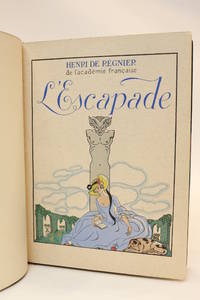
George BARBIER - Henri de REGNIER
L'escapade
Paris: A. & G. Mornay 1931. Fine. A. & G. Mornay Paris 1931 15 x 20.50 cm relié Edition adorned with 65 original pochoir coloured illustrations by George Barbier one of 877 numbered copies on Rives. Bound in half navy blue morocco spine in four compartments gilt date at the foot marbled paper boards iridescent effect paper endpapers wrappers and spine preserved top edge gilt binding signed Semet & Plumelle. Pleasant attractively set copy. A. & G. Mornay hardcover
Bookseller reference : 72939
|
|
|
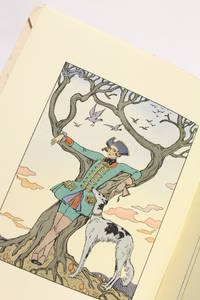
George BARBIER - Henri de REGNIER
L'escapade
Paris: A. & G. Mornay 1931. Fine. A. & G. Mornay Paris 1931 15.50 x 20.50 cm broché Illustrated edition with original compositions by George Barbier hand-colored with pochoir one of 877 numbered copies on Rives laid paper. Handsome copy. A. & G. Mornay unknown
Bookseller reference : 62296
|
|
|
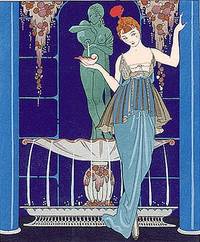
George Barbier (1882–1932), Pierre Brissaud (1885-1964)
La Fontaine de Coquillages Robe de Soir de Paquin Ta Maman va Bien Sair-Tu Ta Leçon
Barbier: La Fontaine de Coquillages Robe de Soir de Paquin. G.d.B.T. #3 March pl. 27. L'Etourdissant Petit Poisson Robe d'été G.d.B.T. #5 May pl.44.Brissaud: Ta Maman va Bien Tailler du Matin et Robe de filete de Jeanne Lanvin. G.d.B.T. #4 April pl. 37.Sais-Tu Ta Leçon Costumes Tailler de Fantasie de Jeanne Lanvin. Gd.B.T. #5 May pl. 40.A published in G.d.B.T. Gazette du Bon Ton 1914 Gazette du Bon Ton
Bookseller reference : 3009
|
|
|
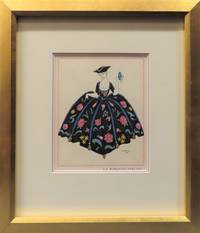
George Barbier
La Marquise Perline
<p>Original Barbier pochoir of a woman in a black dress with floral design and hat while holding a blue mask from Panorama Dramatique. Printed with black gold blue light blue red pink green and yellow colors. Pink trim surrounds image. Dated in print 1918. Wooden frame with gilt front. Frame: 14.75 x 16.75 inches; Window: 7 x 8.25 inches.</p> Lucien Vogel
Bookseller reference : 6621
|
|
|
George Barbier
La Negresse
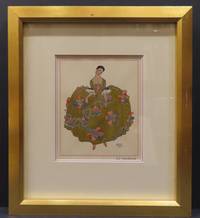
<p>Original pochoir by Barbier of a woman in a floral motif gold dress from Panorama Dramatique. Printed with black gold blue light blue red pink and orange colors. Pink trim surrounds image. Dated in print 1918. Wooden frame with gilt front. Frame: 14.75 x 16.75 inches; Window: 7 x 8.25 inches.</p> Lucien Vogel
Bookseller reference : 6626
|
|
|
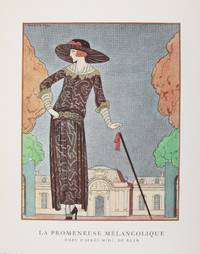
George BARBIER - (Gustave BEER)
La Promeneuse mélancolique. Robe d'après-midi de Beer pl.63 La Gazette du Bon ton 1922 n°8
Paris: Lucien Vogel éditeur 1922. Fine. Lucien Vogel éditeur Paris 1922 18 x 24 cm une feuille Original color print finely heightened with gold printed on laid paper signed in the top left of the plate. La Gazette du bon ton one of the most beautiful and influential fashion magazines of the twentieth century celebrating the talent of French creators and artists in the full bloom of Art Deco. The famous fashion magazine founded in 1912 by Lucien Vogel La Gazette du bon ton was published until 1925 with an interruption during the War from 1915 to 1920 due to the mobilization of its editor-in-chief. It consists of 69 issues printed in only 2000 copies and is illustrated notably with 573 color plates and 148 sketches representing models by great couturiers. From their publication these luxurious publications ""address bibliophiles and worldly aesthetes"" Françoise Tétart-Vittu ""La Gazette du bon ton"" in Dictionnaire de la mode 2016. Printed on fine laid paper they use a typeface specially created for the magazine by Georges Peignot the Cochin character adopted in 1946 by Christian Dior. The prints are created using the metallic stencil technique enhanced with colors and some highlighted with gold or palladium. The adventure begins in 1912 when Lucien Vogel a man of society and fashion - he had already participated in the magazine Femina - decides to found with his wife Cosette de Brunhoff sister of Jean the father of Babar the Gazette du bon ton whose subtitle was then ""Art modes et frivolités"". Georges Charensol reports the words of the editor-in-chief: ""In 1910 he observes there existed no fashion journal that was truly artistic and representative of the spirit of its time. I was therefore thinking of creating a luxury magazine with truly modern artists . I was certain of success because for fashion no country can rival France."" ""Un grand éditeur d'art. Lucien Vogel"" in Les Nouvelles littéraires no.133 May 1925. The magazine's success is immediate not only in France but also in the United States and South America. Originally Vogel therefore assembled a group of seven artists: André-Édouard Marty and Pierre Brissaud followed by Georges Lepape and Dammicourt; and finally his friends from the École des beaux-arts who were George Barbier Bernard Boutet de Monvel or Charles Martin. Other talents quickly joined the team: Guy Arnoux Léon Bakst Benito Boutet de Monvel Umberto Brunelleschi Chas Laborde Jean-Gabriel Domergue Raoul Dufy Édouard Halouze Alexandre Iacovleff Jean Émile Laboureur Charles Loupot Charles Martin Maggie Salcedo. These artists unknown for the most part when Lucien Vogel called upon them would subsequently become emblematic and sought-after artistic figures. These same illustrators created the drawings for the Gazette's advertisements. The plates highlight and sublimate the dresses of seven creators of the period: Lanvin Doeuillet Paquin Poiret Worth Vionnet and Doucet. The couturiers provided exclusive models for each issue. Nevertheless some of the illustrations feature no real model but only the illustrator's idea of the fashion of the day. La Gazette du bon ton is a decisive stage in fashion history. Combining aesthetic excellence and plastic unity it brought together for the first time the great talents from the worlds of arts letters and fashion and imposed through this alchemy a completely new image of woman slender independent and audacious also carried by the new generation of couturiers Coco Chanel Jean Patou Marcel Rochas. Taken over in 1920 by Condé Montrose Nast the Gazette du bon ton would largely inspire the new composition and aesthetic choices of the ""dying little journal"" that Nast had bought a few years earlier: Vogue magazine. Lucien Vogel éditeur unknown
Bookseller reference : 84789
|
|
|
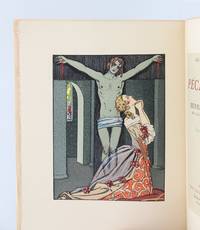
George BARBIER - Henri de REGNIER
La pécheresse
Paris: Editions Mornay 1924. Fine. Editions Mornay Paris 1924 15 x 20.50 cm broché Edition decorated with original color illustrations by George Barbier one of 921 numbered copies on Rives. A fine copy. Editions Mornay unknown
Bookseller reference : 85648
|
|
|
George Barbier
La Reine
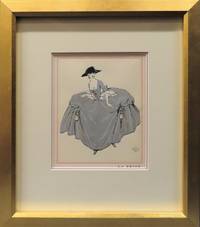
<p>Original pochoir print by Barbier of a woman in a silver dress and hat. Printed with silver red pink blue silver black and grey colors from Panorama Dramatique. Casanova Décors et Costumes. Pink trim surrounds image. Dated in print 1918. Wooden frame with gilt front. Frame: 14.75 x 16.75 inches; Window: 7 x 8.25 inches.</p> Lucien Vogel
Bookseller reference : 6620
|
|
|
George BARBIER - Fernand SIMEON
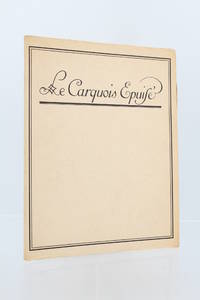
Le carquois épuisé
Paris: Lucien Vogel 1922. Fine. Lucien Vogel Paris s. d. 1922 12.50 x 25 cm broché First hors commerce edition printed for the author's friends in 60 copies numbered on hollande and justified in pencil by George Barbier. Work illustrated with wood engravings by Fernand Siméon. Handsome and rare copy despite clear foxing at the foot of the leaves. Lucien Vogel unknown
Bookseller reference : 84386
|
|
|
George Barbier
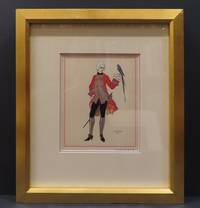
Le Jeune Mozart
<p>Original pochoir by Barbier of a man playing a violin in formal attire from Panorama Dramatique. Printed with black gold red grey white and purple colors. Pink trim surrounds image. Wooden frame with gilt front. Frame: 14.75 x 16.75 inches; Window: 7 x 8.25 inches.</p> Lucien Vogel
Bookseller reference : 6628
|
|
|
George BARBIER - (Charles-Frederick WORTH)
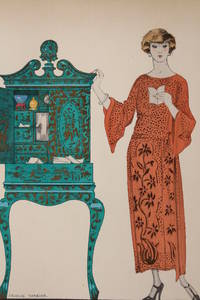
Le Tombeau des secrets. Robe d'intérieur de Worth pl.7 La Gazette du Bon ton 1922 n°1
Paris: Lucien Vogel éditeur 1922. Fine. Lucien Vogel éditeur Paris 1922 18 x 24 cm une feuille Original color print heightened with gold printed on vergé paper signed in the plate. An original print used to illustrate the Gazette du bon ton one of the most attractive and influential 20th century fashion magazines featuring the talents of French artists and other contributors from the burgeoning Art Deco movement. A celebrated fashion magazine established in 1912 by Lucien Vogel La Gazette du bon ton appeared until 1925 with a hiatus from 1915 to 1920 due to the war the editor-in-chief having been called up for service. It consisted of 69 issues printed in only 2000 copies each and notably illustrated with 573 color plates and 148 sketches of the models of the great designers. Right from the start this sumptuous publication was aimed at bibliophiles and fashionable society Françoise Tétart-Vittu La Gazette du bon ton in Dictionnaire de la mode 2016 and was printed on fine vergé paper using a type cut specially for the magazine by Georges Peignot known as Cochin later used in 1946 by Christian Dior. The prints were made using stencils heightened in colors some highlighted in gold or palladium. The story began in 1912 when Lucien Vogel a man of the world involved in fashion he had already been part of the fashion magazine Femina decided with his wife Cosette de Brunhoff the sister of Jean creator of Babar to set up the Gazette du bon ton subtitled at the time: Art fashion frivolities. Georges Charensol noted the reasoning of the editor-in-chief: In 1910 he observed there was no really artistic fashion magazine nothing representative of the spirit of the time. My dream was therefore to make a luxury magazine with truly modern artists
I was assured of success because when it comes to fashion no country on earth can compete with France. Un grand éditeur dart. Lucien Vogel in Les Nouvelles littéraires no. 133 May 1925. The magazine was immediately successful not only in France but also in the United States and Latin America. At first Vogel put together a team of seven artists: André-Édouard Marty and Pierre Brissaud followed by Georges Lepape and Dammicourt as well as eventually his friends from school and the School of Fine Arts like George Barbier Bernard Boutet de Monvel and Charles Martin. Other talented people soon came flocking to join the team: Guy Arnoux Léon Bakst Benito Boutet de Monvel Umberto Brunelleschi Chas Laborde Jean-Gabriel Domergue Raoul Dufy Édouard Halouze Alexandre Iacovleff Jean Émile Laboureur Charles Loupot Chalres Martin Maggie Salcedo. These artist mostly unknown when Lucien Vogel sought them out later became emblematic and sought-after artistic figures. It was also they who worked on the advertising drawings for the Gazette. The plates put the spotlight on and celebrate dresses by seven designers of the age: Lanvin Doeuillet Paquin Poiret Worth Vionnet and Doucet. The designers provided exclusive models for each issue. Nonetheless some of the illustrations are not based on real models but simply on the illustrators conception of the fashion of the day. The Gazette du bon ton was an important step in the history of fashion. Combining aesthetic demands with the physical whole it brought together for the first time the great talents of the artistic literary and fashion worlds; and imposed through this alchemy a completely new image of women: slender independent and daring which was shared by the new generation of designers including Coco Chanel Jean Patou Marcel Rochas and so on
Taken over in 1920 by Condé Montrose Nast the Gazette du bon ton was an important influence on the new layout and aesthetics of that little dying paper that Nast had bought a few years earlier: Vogue. Lucien Vogel éditeur unknown
Bookseller reference : 54957
|
|
|
George BARBIER - Rene BOYLESVE
Les bains de Bade
Paris: Georges Crès 1921. Fine. Georges Crès Paris 1921 14 x 22.50 cm relié Edition printed on laid Arches and illustrated with a frontispiece 7 inset plates in chiaroscuro and in-text vignettes by George Barbier. Binding in half chocolate brown morocco spine in five compartments with some scratches marbled paper boards wrappers and spine preserved top edge gilt. Georges Crès hardcover
Bookseller reference : 65059

|
|
|
George BARBIER - (Jeanne PAQUIN)
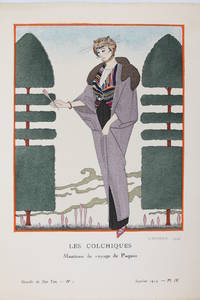
Les Colchiques. Manteau de voyage de Paquin pl.9 La Gazette du Bon ton 1914 n°1
Paris: Lucien Vogel éditeur 1914. Fine. Lucien Vogel éditeur Paris Janvier 1914 19 x 24.50 cm une feuille Original color print heightened with gold printed on laid paper signed at bottom right of the plate. Original engraving created for the illustration of La Gazette du bon ton one of the most beautiful and influential fashion magazines of the 20th century celebrating the talent of French creators and artists in the full bloom of Art Deco. Famous fashion magazine founded in 1912 by Lucien Vogel La Gazette du bon ton was published until 1925 with an interruption during the War from 1915 to 1920 due to the mobilization of its editor-in-chief. It consists of 69 issues printed in only 2000 copies and is illustrated notably with 573 color plates and 148 sketches representing models by great couturiers. From their publication these luxurious publications ""addressed bibliophiles and worldly aesthetes"" Françoise Tétart-Vittu ""La Gazette du bon ton"" in Dictionnaire de la mode 2016. Printed on fine laid paper they use a typeface specially created for the magazine by Georges Peignot the Cochin character adopted in 1946 by Christian Dior. The prints are created using the metal stencil technique heightened in colors and for some highlighted with gold or palladium. The adventure begins in 1912 when Lucien Vogel man of the world and fashion - he had already participated in the magazine Femina - decides to found with his wife Cosette de Brunhoff sister of Jean father of Babar the Gazette du bon ton whose subtitle was then ""Art modes et frivolités"". Georges Charensol reports the words of the editor-in-chief: ""In 1910 he observes there existed no fashion journal truly artistic and representative of the spirit of its time. I therefore thought of making a luxury magazine with truly modern artists . I was certain of success because for fashion no country can rival France."" ""Un grand éditeur d'art. Lucien Vogel"" in Les Nouvelles littéraires n°133 May 1925. The magazine's success is immediate not only in France but also in the United States and South America. Originally Vogel thus brings together a group of seven artists: André-Édouard Marty and Pierre Brissaud followed by Georges Lepape and Dammicourt; and finally his friends from the École des beaux-arts who are George Barbier Bernard Boutet de Monvel or Charles Martin. Other talents quickly come to join the team: Guy Arnoux Léon Bakst Benito Boutet de Monvel Umberto Brunelleschi Chas Laborde Jean-Gabriel Domergue Raoul Dufy Édouard Halouze Alexandre Iacovleff Jean Émile Laboureur Charles Loupot Charles Martin Maggie Salcedo. These artists mostly unknown when Lucien Vogel calls upon them will subsequently become emblematic and sought-after artistic figures. These same illustrators create the drawings for the Gazette's advertisements. The plates highlight and sublimate the dresses of seven creators of the era: Lanvin Doeuillet Paquin Poiret Worth Vionnet and Doucet. The couturiers provide exclusive models for each issue. Nevertheless some of the illustrations feature no real model but only the idea that the illustrator has of the fashion of the day. La Gazette du bon ton is a decisive step in fashion history. Combining aesthetic demands and plastic unity it brings together for the first time the great talents of the world of arts letters and fashion and imposes through this alchemy a completely new image of woman slender independent and audacious also carried by the new generation of couturiers Coco Chanel Jean Patou Marcel Rochas. Taken over in 1920 by Condé Montrose Nast La Gazette du bon ton will largely inspire the new composition and aesthetic choices of the ""small dying journal"" that Nast had bought a few years earlier: Vogue magazine. Lucien Vogel éditeur unknown
Bookseller reference : 84687
|
|
|
George BARBIER - (Jeanne PAQUIN)
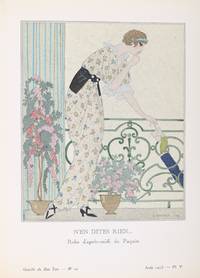
N'en dites rien.Robe d'après-midi de Paquin pl.5 La Gazette du Bon ton 1913 n°10
Paris: Lucien Vogel éditeur 1913. Fine. Lucien Vogel éditeur Paris Août 1913 19 x 24.50 cm une feuille Original colour print printed on laid paper and signed in the plate lower right. Original engraving produced for the illustration of La Gazette du Bon Ton one of the most beautiful and influential fashion journals of the 20th century celebrating the talent of French designers and artists at the height of the Art Deco era. A celebrated fashion magazine established in 1912 by Lucien Vogel La Gazette du bon ton appeared until 1925 with a hiatus from 1915 to 1920 due to the war the editor-in-chief having been called up for service. It consisted of 69 issues printed in only 2000 copies each and notably illustrated with 573 color plates and 148 sketches of the models of the great designers. Right from the start this sumptuous publication “was aimed at bibliophiles and fashionable society” Françoise Tétart-Vittu “La Gazette du bon ton” in Dictionnaire de la mode 2016 and was printed on fine vergé paper using a type cut specially for the magazine by Georges Peignot known as Cochin later used in 1946 by Christian Dior. The prints were made using stencils heightened in colors some highlighted in gold or palladium. The story began in 1912 when Lucien Vogel a man of the world involved in fashion he had already been part of the fashion magazine Femina decided with his wife Cosette de Brunhoff – the sister of Jean creator of Babar – to set up the Gazette du bon ton subtitled at the time: “Art fashion frivolities.”  Georges Charensol noted the reasoning of the editor-in-chief: “’In 1910Â’ he observed ‘there was no really artistic fashion magazine nothing representative of the spirit of the time. My dream was therefore to make a luxury magazine with truly modern artistsÂ…I was assured of success because when it comes to fashion no country on earth can compete with France.’” “Un grand éditeur dÂ’art. Lucien Vogel” in Les Nouvelles littéraires no. 133 May 1925. The magazine was immediately successful not only in France but also in the United States and Latin America. At first Vogel put together a team of seven artists: André-Édouard Marty and Pierre Brissaud followed by Georges Lepape and Dammicourt as well as eventually his friends from school and the School of Fine Arts like George Barbier Bernard Boutet de Monvel and Charles Martin. Other talented people soon came flocking to join the team: Guy Arnoux Léon Bakst Benito Boutet de Monvel Umberto Brunelleschi Chas Laborde Jean-Gabriel Domergue Raoul Dufy Édouard Halouze Alexandre Iacovleff Jean Émile Laboureur Charles Loupot Chalres Martin Maggie Salcedo. These artist mostly unknown when Lucien Vogel sought them out later became emblematic and sought-after artistic figures. It was also they who worked on the advertising drawings for the Gazette. The plates put the spotlight on and celebrate dresses by seven designers of the age: Lanvin Doeuillet Paquin Poiret Worth Vionnet and Doucet. The designers provided exclusive models for each issue. Nonetheless some of the illustrations are not based on real models but simply on the illustratorÂ’s conception of the fashion of the day.   The Gazette du bon ton was an important step in the history of fashion. Combining aesthetic demands with the physical whole it brought together – for the first time – the great talents of the artistic literary and fashion worlds; and imposed through this alchemy a completely new image of women: slender independent and daring which was shared by the new generation of designers including Coco Chanel Jean Patou Marcel Rochas and so onÂ… Taken over in 1920 by Condé Montrose Nast the Gazette du bon ton was an important influence on the new layout and aesthetics of that “little dying paper” that Nast had bought a few years earlier: Vogue. Lucien Vogel éditeur unknown
Bookseller reference : 89428
|
|
|
George BARBIER
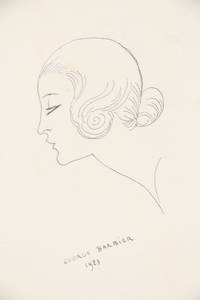
Original ink drawing - 5 fashion compositions for ""La Vie Parisienne""
No Location: s. n. 1923. Fine. George Barbier “one of the fascinating figures of Art Deco” and “master of Indian ink” Guillaume Garnier s. n. No Location 1923 24.2 x 30.2 cm Une feuille Five compositions in Indian ink signed and dated 1923 by George Barbier on a leaf of thick paper. Traces of paper pasted down at the four corners on the back a few very faint traces of previous pencil inscriptions on the front. An exceptional ink drawing by the eminent fashion illustrator George Barbier for the “Elegances” section of the newspaper La Vie Parisienne featuring four silhouettes at the height of 1920s fashion with boyish haircuts dressed in flowing low-waisted tube dresses or wrapped in luxurious furs. The silhouette in a headband and high heels in the lower left corner and the beautiful profile dated and signed in the center of the leaf appeared in the January 12 1924 issue of La Vie Parisienne No. 62 Year 2 p. 38 in the “Elegances” section which Barbier illustrated on numerous occasions. The three other silhouettes were published in the same section January 26 1924 no. 64 year 2 pp. 79-80. Superb fashion portraits with hieratic and elegant postures drawn by Barbier in the Art Deco style that made him famous.  s. n. unknown
Bookseller reference : 88930
|
|
|
George BARBIER - (Charles-Frederick WORTH)
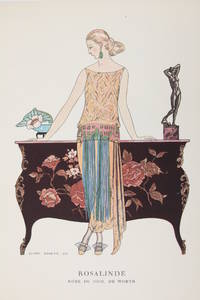
Rosalinde. Robe du soir de Worth pl.75 La Gazette du Bon ton 1922 n°10
Paris: Lucien Vogel éditeur 1922. Fine. Lucien Vogel éditeur Paris 1922 18 x 24 cm une feuille Original color print heightened in gold printed on laid paper signed at bottom left of the plate. Original engraving created for the illustration of La Gazette du bon ton one of the most beautiful and influential fashion magazines of the 20th century celebrating the talent of French creators and artists in the full flourishing of Art Deco. Famous fashion magazine founded in 1912 by Lucien Vogel La Gazette du bon ton was published until 1925 with an interruption during the War from 1915 to 1920 due to the mobilization of its editor-in-chief. It consists of 69 issues printed in only 2000 copies and is illustrated notably with 573 color plates and 148 sketches representing models by great couturiers. From their publication these luxurious publications ""address bibliophiles and worldly aesthetes"" Françoise Tétart-Vittu ""La Gazette du bon ton"" in Dictionnaire de la mode 2016. Printed on fine laid paper they use a typeface specially created for the magazine by Georges Peignot the Cochin character adopted in 1946 by Christian Dior. The prints are created using the metal stencil technique heightened in colors and some highlighted in gold or palladium. The adventure begins in 1912 when Lucien Vogel man of the world and fashion - he had already participated in the magazine Femina - decides to found with his wife Cosette de Brunhoff sister of Jean the father of Babar the Gazette du bon ton whose subtitle was then ""Art modes et frivolités."" Georges Charensol reports the editor-in-chief's words: ""In 1910 he observes there existed no fashion journal that was truly artistic and representative of the spirit of its time. I was therefore thinking of making a luxury magazine with truly modern artists . I was certain of success because for fashion no country can rival France."" ""Un grand éditeur d'art. Lucien Vogel"" in Les Nouvelles littéraires n°133 May 1925. The magazine's success is immediate not only in France but also in the United States and South America. Originally Vogel thus brings together a group of seven artists: André-Édouard Marty and Pierre Brissaud followed by Georges Lepape and Dammicourt; and finally his friends from the École des beaux-arts who are George Barbier Bernard Boutet de Monvel or Charles Martin. Other talents quickly come to join the team: Guy Arnoux Léon Bakst Benito Boutet de Monvel Umberto Brunelleschi Chas Laborde Jean-Gabriel Domergue Raoul Dufy Édouard Halouze Alexandre Iacovleff Jean Émile Laboureur Charles Loupot Charles Martin Maggie Salcedo. These artists unknown for the most part when Lucien Vogel calls upon them will subsequently become emblematic and sought-after artistic figures. It is these same illustrators who create the drawings for the Gazette's advertisements. The plates highlight and sublimate the dresses of seven creators of the period: Lanvin Doeuillet Paquin Poiret Worth Vionnet and Doucet. The couturiers provide exclusive models for each issue. Nevertheless some of the illustrations feature no real model but only the illustrator's idea of contemporary fashion. La Gazette du bon ton is a decisive step in the history of fashion. Combining aesthetic demand and plastic unity it brings together for the first time the great talents of the world of arts letters and fashion and imposes through this alchemy a completely new image of woman slender independent and bold also carried by the new generation of couturiers Coco Chanel Jean Patou Marcel Rochas. Taken over in 1920 by Condé Montrose Nast La Gazette du bon ton will largely inspire the new composition and aesthetic choices of the ""dying little journal"" that Nast had bought a few years earlier: Vogue magazine. Lucien Vogel éditeur unknown
Bookseller reference : 84726
|
|
|
George BARBIER - (John REDFERN)
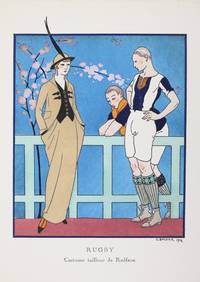
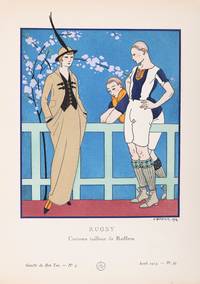
Rugby - Costume tailleur de Redfern pl.39 La Gazette du Bon ton 1914 n°4
Paris: Lucien Vogel éditeur 1914. Fine. Lucien Vogel éditeur Paris Avril 1914 19 x 24.50 cm une feuille Original color print on laid paper signed at lower right of the plate. Original engraving created for the illustration of La Gazette du bon ton one of the most beautiful and influential fashion magazines of the 20th century celebrating the talent of French creators and artists at the height of the Art Deco movement. The famous fashion magazine founded in 1912 by Lucien Vogel La Gazette du bon ton was published until 1925 with an interruption during the War from 1915 to 1920 due to the mobilization of its editor-in-chief. It consisted of 69 issues printed in only 2000 copies and was illustrated notably with 573 color plates and 148 sketches representing models by great couturiers. From their publication these luxurious publications ""were aimed at bibliophiles and worldly aesthetes"" Françoise Tétart-Vittu ""La Gazette du bon ton"" in Dictionnaire de la mode 2016. Printed on fine laid paper they used a typeface specially created for the magazine by Georges Peignot the Cochin character adopted in 1946 by Christian Dior. The prints were created using the metal stencil technique enhanced in colors and some highlighted in gold or palladium. The adventure began in 1912 when Lucien Vogel a man of society and fashion - he had already participated in the magazine Femina - decided to found with his wife Cosette de Brunhoff sister of Jean the father of Babar the Gazette du bon ton whose subtitle was then ""Art modes et frivolités."" Georges Charensol reports the editor-in-chief's words: ""In 1910 he observed there was no truly artistic fashion journal representative of the spirit of its time. I was therefore thinking of creating a luxury magazine with truly modern artists . I was certain of success because for fashion no country can rival France."" ""Un grand éditeur d'art. Lucien Vogel"" in Les Nouvelles littéraires n°133 May 1925. The magazine's success was immediate not only in France but also in the United States and South America. Originally Vogel assembled a group of seven artists: André-Édouard Marty and Pierre Brissaud followed by Georges Lepape and Dammicourt; and finally his friends from the École des beaux-arts including George Barbier Bernard Boutet de Monvel and Charles Martin. Other talents quickly joined the team: Guy Arnoux Léon Bakst Benito Umberto Brunelleschi Chas Laborde Jean-Gabriel Domergue Raoul Dufy Édouard Halouze Alexandre Iacovleff Jean Émile Laboureur Charles Loupot Maggie Salcedo. These artists mostly unknown when Lucien Vogel called upon them would subsequently become emblematic and sought-after artistic figures. These same illustrators created the drawings for the Gazette's advertisements. The plates highlighted and sublimated the dresses of seven creators of the period: Lanvin Doeuillet Paquin Poiret Worth Vionnet and Doucet. The couturiers provided exclusive models for each issue. Nevertheless some of the illustrations featured no real model but only the illustrator's idea of contemporary fashion. La Gazette du bon ton was a decisive step in the history of fashion. Combining aesthetic demands and plastic unity it brought together for the first time the great talents of the worlds of arts letters and fashion and imposed through this alchemy an entirely new image of woman elegant independent and bold also carried by the new generation of couturiers Coco Chanel Jean Patou Marcel Rochas. Taken over in 1920 by Condé Montrose Nast La Gazette du bon ton would largely inspire the new composition and aesthetic choices of the ""dying little journal"" that Nast had purchased a few years earlier: Vogue magazine. Lucien Vogel éditeur unknown
Bookseller reference : 84721
|
|
|
George BARBIER - (John REDFERN)
Rugby - Costume tailleur de Redfern pl.39 La Gazette du Bon ton 1914 n°4
Paris 1914. Fine. Paris Avril 1914 19 x 24.50 cm une feuille Original colour print printed on laid paper and signed in the plate lower right. Original engraving produced for the illustration of La Gazette du Bon Ton one of the most beautiful and influential fashion journals of the 20th century celebrating the talent of French designers and artists at the height of the Art Deco era. A celebrated fashion magazine established in 1912 by Lucien Vogel La Gazette du bon ton appeared until 1925 with a hiatus from 1915 to 1920 due to the war the editor-in-chief having been called up for service. It consisted of 69 issues printed in only 2000 copies each and notably illustrated with 573 color plates and 148 sketches of the models of the great designers. Right from the start this sumptuous publication “was aimed at bibliophiles and fashionable society” Françoise Tétart-Vittu “La Gazette du bon ton” in Dictionnaire de la mode 2016 and was printed on fine vergé paper using a type cut specially for the magazine by Georges Peignot known as Cochin later used in 1946 by Christian Dior. The prints were made using stencils heightened in colors some highlighted in gold or palladium. The story began in 1912 when Lucien Vogel a man of the world involved in fashion he had already been part of the fashion magazine Femina decided with his wife Cosette de Brunhoff – the sister of Jean creator of Babar – to set up the Gazette du bon ton subtitled at the time: “Art fashion frivolities.”  Georges Charensol noted the reasoning of the editor-in-chief: “’In 1910’ he observed ‘there was no really artistic fashion magazine nothing representative of the spirit of the time. My dream was therefore to make a luxury magazine with truly modern artists…I was assured of success because when it comes to fashion no country on earth can compete with France.’” “Un grand éditeur d’art. Lucien Vogel” in Les Nouvelles littéraires no. 133 May 1925. The magazine was immediately successful not only in France but also in the United States and Latin America. At first Vogel put together a team of seven artists: André-Édouard Marty and Pierre Brissaud followed by Georges Lepape and Dammicourt as well as eventually his friends from school and the School of Fine Arts like George Barbier Bernard Boutet de Monvel and Charles Martin. Other talented people soon came flocking to join the team: Guy Arnoux Léon Bakst Benito Boutet de Monvel Umberto Brunelleschi Chas Laborde Jean-Gabriel Domergue Raoul Dufy Édouard Halouze Alexandre Iacovleff Jean Émile Laboureur Charles Loupot Chalres Martin Maggie Salcedo. These artist mostly unknown when Lucien Vogel sought them out later became emblematic and sought-after artistic figures. It was also they who worked on the advertising drawings for the Gazette. The plates put the spotlight on and celebrate dresses by seven designers of the age: Lanvin Doeuillet Paquin Poiret Worth Vionnet and Doucet. The designers provided exclusive models for each issue. Nonetheless some of the illustrations are not based on real models but simply on the illustrator’s conception of the fashion of the day.   The Gazette du bon ton was an important step in the history of fashion. Combining aesthetic demands with the physical whole it brought together – for the first time – the great talents of the artistic literary and fashion worlds; and imposed through this alchemy a completely new image of women: slender independent and daring which was shared by the new generation of designers including Coco Chanel Jean Patou Marcel Rochas and so on… Taken over in 1920 by Condé Montrose Nast the Gazette du bon ton was an important influence on the new layout and aesthetics of that “little dying paper” that Nast had bought a few years earlier: Vogue. unknown
Bookseller reference : 89440
|
|
|
George BARBIER - (John REDFERN)
Rugby - Costume tailleur de Redfern pl.39 La Gazette du Bon ton 1914 n°4
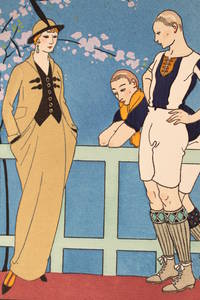
Paris: Lucien Vogel éditeur 1914. Fine. Lucien Vogel éditeur Paris Avril 1914 19 x 24.50 cm une feuille Original color print printed on vergé paper signed in the plate. An original print used to illustrate the Gazette du bon ton one of the most attractive and influential 20th century fashion magazines featuring the talents of French artists and other contributors from the burgeoning Art Deco movement. A celebrated fashion magazine established in 1912 by Lucien Vogel La Gazette du bon ton appeared until 1925 with a hiatus from 1915 to 1920 due to the war the editor-in-chief having been called up for service. It consisted of 69 issues printed in only 2000 copies each and notably illustrated with 573 color plates and 148 sketches of the models of the great designers. Right from the start this sumptuous publication was aimed at bibliophiles and fashionable society Françoise Tétart-Vittu La Gazette du bon ton in Dictionnaire de la mode 2016 and was printed on fine vergé paper using a type cut specially for the magazine by Georges Peignot known as Cochin later used in 1946 by Christian Dior. The prints were made using stencils heightened in colors some highlighted in gold or palladium. The story began in 1912 when Lucien Vogel a man of the world involved in fashion he had already been part of the fashion magazine Femina decided with his wife Cosette de Brunhoff the sister of Jean creator of Babar to set up the Gazette du bon ton subtitled at the time: Art fashion frivolities. Georges Charensol noted the reasoning of the editor-in-chief: 'In 1910' he observed there was no really artistic fashion magazine nothing representative of the spirit of the time. My dream was therefore to make a luxury magazine with truly modern artists
I was assured of success because when it comes to fashion no country on earth can compete with France.' Un grand éditeur d'art. Lucien Vogel in Les Nouvelles littéraires no. 133 May 1925. The magazine was immediately successful not only in France but also in the United States and Latin America. At first Vogel put together a team of seven artists: André-Édouard Marty and Pierre Brissaud followed by Georges Lepape and Dammicourt as well as eventually his friends from school and the School of Fine Arts like George Barbier Bernard Boutet de Monvel and Charles Martin. Other talented people soon came flocking to join the team: Guy Arnoux Léon Bakst Benito Boutet de Monvel Umberto Brunelleschi Chas Laborde Jean-Gabriel Domergue Raoul Dufy Édouard Halouze Alexandre Iacovleff Jean Émile Laboureur Charles Loupot Chalres Martin Maggie Salcedo. These artist mostly unknown when Lucien Vogel sought them out later became emblematic and sought-after artistic figures. It was also they who worked on the advertising drawings for the Gazette. The plates put the spotlight on and celebrate dresses by seven designers of the age: Lanvin Doeuillet Paquin Poiret Worth Vionnet and Doucet. The designers provided exclusive models for each issue. Nonetheless some of the illustrations are not based on real models but simply on the illustrator's conception of the fashion of the day. The Gazette du bon ton was an important step in the history of fashion. Combining aesthetic demands with the physical whole it brought together for the first time the great talents of the artistic literary and fashion worlds; and imposed through this alchemy a completely new image of women: slender independent and daring which was shared by the new generation of designers including Coco Chanel Jean Patou Marcel Rochas and so on
Taken over in 1920 by Condé Montrose Nast the Gazette du bon ton was an important influence on the new layout and aesthetics of that little dying paper that Nast had bought a few years earlier: Vogue. Lucien Vogel éditeur unknown
Bookseller reference : 54653
|
|
|
George Barber Paley
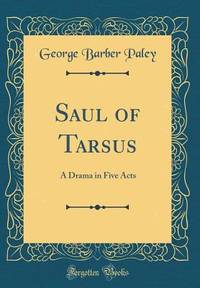
Saul of Tarsus: A Drama in Five Acts Classic Reprint
paperback. Good. Access codes and supplements are not guaranteed with used items. May be an ex-library book. paperback
Bookseller reference : 1332601804.G ISBN : 1332601804 9781332601806

|
|
|
George Barber Paley
Saul of Tarsus: A Drama in Five Acts Classic Reprint
hardcover. Good. Access codes and supplements are not guaranteed with used items. May be an ex-library book. hardcover
Bookseller reference : 0484638289.G ISBN : 0484638289 9780484638289
|
|
|
George Barbier
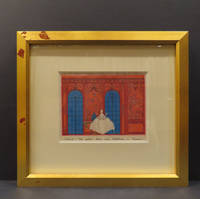
Unsalon dans une hotellerie a Venise; plate from Panorama Dramatique. Casanova Decors et Costumes
<p>Original Barbier pochoir in black gold green red pink blue and orange. Pink trim surrounds image. Paper 19.1 x 24.2 cm; Window: 17.2 x 22 cm.</p> Lucien Vogel
Bookseller reference : 6630
|
|
|
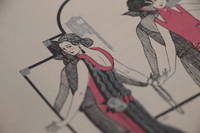
George BARBIER - VAUDREUIL
Velours et lamé La Gazette du Bon ton 1922 n°8
Paris: Lucien Vogel éditeur 1922. Fine. Lucien Vogel éditeur Paris 1922 19.50 x 24.50 cm une feuille Text on double page by Vaudreuil illustrated with four original color prints finely heightened with palladium printed on laid paper signatures of George Barbier on the plate. La Gazette du bon ton one of the most beautiful and influential fashion magazines of the 20th century celebrating the talent of French creators and artists at the height of the Art Deco movement. Famous fashion magazine founded in 1912 by Lucien Vogel La Gazette du bon ton was published until 1925 with an interruption during the War from 1915 to 1920 due to the mobilization of its editor-in-chief. It consists of 69 issues printed in only 2000 copies and is illustrated notably with 573 color plates and 148 sketches representing models by great couturiers. From their publication these luxurious publications ""were aimed at bibliophiles and worldly aesthetes"" Françoise Tétart-Vittu ""La Gazette du bon ton"" in Dictionnaire de la mode 2016. Printed on fine laid paper they use a typeface specially created for the magazine by Georges Peignot the Cochin character adopted in 1946 by Christian Dior. The prints are created using the metal stencil technique heightened in colors and some outlined in gold or palladium. The adventure begins in 1912 when Lucien Vogel a man of the world and fashion - he had already participated in the magazine Femina - decides to found with his wife Cosette de Brunhoff sister of Jean the father of Babar the Gazette du bon ton whose subtitle was then ""Art modes et frivolités"". Georges Charensol reports the words of the editor-in-chief: ""In 1910 he observes there existed no fashion journal that was truly artistic and representative of the spirit of its time. I therefore thought of creating a luxury magazine with truly modern artists . I was certain of success because for fashion no country can rival France."" ""Un grand éditeur d'art. Lucien Vogel"" in Les Nouvelles littéraires n°133 May 1925. The success of the magazine is immediate not only in France but also in the United States and South America. Originally Vogel thus brings together a group of seven artists: André-Édouard Marty and Pierre Brissaud followed by Georges Lepape and Dammicourt; and finally his friends from the École des beaux-arts who are George Barbier Bernard Boutet de Monvel or Charles Martin. Other talents quickly come to join the team: Guy Arnoux Léon Bakst Benito Boutet de Monvel Umberto Brunelleschi Chas Laborde Jean-Gabriel Domergue Raoul Dufy Édouard Halouze Alexandre Iacovleff Jean Émile Laboureur Charles Loupot Charles Martin Maggie Salcedo. These artists mostly unknown when Lucien Vogel calls upon them will subsequently become emblematic and sought-after artistic figures. These same illustrators create the drawings for the Gazette's advertisements. The plates highlight and sublimate the dresses of seven creators of the period: Lanvin Doeuillet Paquin Poiret Worth Vionnet and Doucet. The couturiers provide exclusive models for each issue. Nevertheless some of the illustrations feature no real model but only the illustrator's idea of contemporary fashion. La Gazette du bon ton is a decisive step in the history of fashion. Combining aesthetic demand and plastic unity it brings together for the first time the great talents of the world of arts letters and fashion and imposes through this alchemy a completely new image of woman slender independent and audacious also carried by the new generation of couturiers Coco Chanel Jean Patou Marcel Rochas. Taken over in 1920 by Condé Montrose Nast the Gazette du bon ton would largely inspire the new composition and aesthetic choices of the ""dying little journal"" that Nast had bought a few years earlier: Vogue magazine. Lucien Vogel éditeur unknown
Bookseller reference : 84836
|
|
|
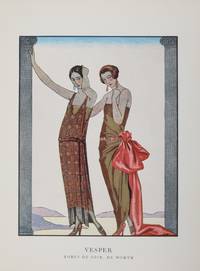
George BARBIER - (Charles-Frederick WORTH)
Vesper. Robes du soir de Worth pl.60 La Gazette du Bon ton 1922 n°8
Paris: Lucien Vogel éditeur 1922. Fine. Lucien Vogel éditeur Paris 1922 18 x 24 cm une feuille Original color print heightened with gold printed on vergé paper signed in the plate. An original print used to illustrate the Gazette du bon ton one of the most attractive and influential 20th century fashion magazines featuring the talents of French artists and other contributors from the burgeoning Art Deco movement. A celebrated fashion magazine established in 1912 by Lucien Vogel La Gazette du bon ton appeared until 1925 with a hiatus from 1915 to 1920 due to the war the editor-in-chief having been called up for service. It consisted of 69 issues printed in only 2000 copies each and notably illustrated with 573 color plates and 148 sketches of the models of the great designers. Right from the start this sumptuous publication was aimed at bibliophiles and fashionable society Françoise Tétart-Vittu La Gazette du bon ton in Dictionnaire de la mode 2016 and was printed on fine vergé paper using a type cut specially for the magazine by Georges Peignot known as Cochin later used in 1946 by Christian Dior. The prints were made using stencils heightened in colors some highlighted in gold or palladium. The story began in 1912 when Lucien Vogel a man of the world involved in fashion he had already been part of the fashion magazine Femina decided with his wife Cosette de Brunhoff the sister of Jean creator of Babar to set up the Gazette du bon ton subtitled at the time: Art fashion frivolities. Georges Charensol noted the reasoning of the editor-in-chief: In 1910 he observed there was no really artistic fashion magazine nothing representative of the spirit of the time. My dream was therefore to make a luxury magazine with truly modern artists
I was assured of success because when it comes to fashion no country on earth can compete with France. Un grand éditeur dart. Lucien Vogel in Les Nouvelles littéraires no. 133 May 1925. The magazine was immediately successful not only in France but also in the United States and Latin America. At first Vogel put together a team of seven artists: André-Édouard Marty and Pierre Brissaud followed by Georges Lepape and Dammicourt as well as eventually his friends from school and the School of Fine Arts like George Barbier Bernard Boutet de Monvel and Charles Martin. Other talented people soon came flocking to join the team: Guy Arnoux Léon Bakst Benito Boutet de Monvel Umberto Brunelleschi Chas Laborde Jean-Gabriel Domergue Raoul Dufy Édouard Halouze Alexandre Iacovleff Jean Émile Laboureur Charles Loupot Chalres Martin Maggie Salcedo. These artist mostly unknown when Lucien Vogel sought them out later became emblematic and sought-after artistic figures. It was also they who worked on the advertising drawings for the Gazette. The plates put the spotlight on and celebrate dresses by seven designers of the age: Lanvin Doeuillet Paquin Poiret Worth Vionnet and Doucet. The designers provided exclusive models for each issue. Nonetheless some of the illustrations are not based on real models but simply on the illustrators conception of the fashion of the day. The Gazette du bon ton was an important step in the history of fashion. Combining aesthetic demands with the physical whole it brought together for the first time the great talents of the artistic literary and fashion worlds; and imposed through this alchemy a completely new image of women: slender independent and daring which was shared by the new generation of designers including Coco Chanel Jean Patou Marcel Rochas and so on
Taken over in 1920 by Condé Montrose Nast the Gazette du bon ton was an important influence on the new layout and aesthetics of that little dying paper that Nast had bought a few years earlier: Vogue. Lucien Vogel éditeur unknown
Bookseller reference : 84736
|
|
|
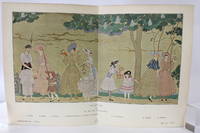
George BARBIER
Vichy II ou Le Jeu des marionnettes pl.3 La Gazette du Bon ton Eté 1915 n°8-9
Paris: Lucien Vogel éditeur 1915. Fine. Lucien Vogel éditeur Paris Eté 1915 36.50 x 24 cm une feuille Double original color print heightened with gold printed on vergé paper signed in the plate. An original print used to illustrate the Gazette du bon ton one of the most attractive and influential 20th century fashion magazines featuring the talents of French artists and other contributors from the burgeoning Art Deco movement. A celebrated fashion magazine established in 1912 by Lucien Vogel La Gazette du bon ton appeared until 1925 with a hiatus from 1915 to 1920 due to the war the editor-in-chief having been called up for service. It consisted of 69 issues printed in only 2000 copies each and notably illustrated with 573 color plates and 148 sketches of the models of the great designers. Right from the start this sumptuous publication was aimed at bibliophiles and fashionable society Françoise Tétart-Vittu La Gazette du bon ton in Dictionnaire de la mode 2016 and was printed on fine vergé paper using a type cut specially for the magazine by Georges Peignot known as Cochin later used in 1946 by Christian Dior. The prints were made using stencils heightened in colors some highlighted in gold or palladium. The story began in 1912 when Lucien Vogel a man of the world involved in fashion he had already been part of the fashion magazine Femina decided with his wife Cosette de Brunhoff the sister of Jean creator of Babar to set up the Gazette du bon ton subtitled at the time: Art fashion frivolities. Georges Charensol noted the reasoning of the editor-in-chief: In 1910 he observed there was no really artistic fashion magazine nothing representative of the spirit of the time. My dream was therefore to make a luxury magazine with truly modern artists
I was assured of success because when it comes to fashion no country on earth can compete with France. Un grand éditeur dart. Lucien Vogel in Les Nouvelles littéraires no. 133 May 1925. The magazine was immediately successful not only in France but also in the United States and Latin America. At first Vogel put together a team of seven artists: André-Édouard Marty and Pierre Brissaud followed by Georges Lepape and Dammicourt as well as eventually his friends from school and the School of Fine Arts like George Barbier Bernard Boutet de Monvel and Charles Martin. Other talented people soon came flocking to join the team: Guy Arnoux Léon Bakst Benito Boutet de Monvel Umberto Brunelleschi Chas Laborde Jean-Gabriel Domergue Raoul Dufy Édouard Halouze Alexandre Iacovleff Jean Émile Laboureur Charles Loupot Chalres Martin Maggie Salcedo. These artist mostly unknown when Lucien Vogel sought them out later became emblematic and sought-after artistic figures. It was also they who worked on the advertising drawings for the Gazette. The plates put the spotlight on and celebrate dresses by seven designers of the age: Lanvin Doeuillet Paquin Poiret Worth Vionnet and Doucet. The designers provided exclusive models for each issue. Nonetheless some of the illustrations are not based on real models but simply on the illustrators conception of the fashion of the day. The Gazette du bon ton was an important step in the history of fashion. Combining aesthetic demands with the physical whole it brought together for the first time the great talents of the artistic literary and fashion worlds; and imposed through this alchemy a completely new image of women: slender independent and daring which was shared by the new generation of designers including Coco Chanel Jean Patou Marcel Rochas and so on
Taken over in 1920 by Condé Montrose Nast the Gazette du bon ton was an important influence on the new layout and aesthetics of that little dying paper that Nast had bought a few years earlier: Vogue. Lucien Vogel éditeur unknown
Bookseller reference : 54705
|
|
|
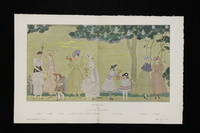
George BARBIER
Vichy II ou Le Jeu des Marionnettes. La Gazette du Bon ton n°8-9. Été 1915 - Planche 3
Paris: Lucien Vogel éditeur 1915. Fine. Lucien Vogel éditeur Paris 1915 37.60 x 24.20 cm une feuille Original color print printed on vergé paper signed in the plate. An original print used to illustrate the Gazette du bon ton one of the most attractive and influential 20th century fashion magazines featuring the talents of French artists and other contributors from the burgeoning Art Deco movement. A celebrated fashion magazine established in 1912 by Lucien Vogel La Gazette du bon ton appeared until 1925 with a hiatus from 1915 to 1920 due to the war the editor-in-chief having been called up for service. It consisted of 69 issues printed in only 2000 copies each and notably illustrated with 573 color plates and 148 sketches of the models of the great designers. Right from the start this sumptuous publication was aimed at bibliophiles and fashionable society Françoise Tétart-Vittu La Gazette du bon ton in Dictionnaire de la mode 2016 and was printed on fine vergé paper using a type cut specially for the magazine by Georges Peignot known as Cochin later used in 1946 by Christian Dior. The prints were made using stencils heightened in colors some highlighted in gold or palladium. The story began in 1912 when Lucien Vogel a man of the world involved in fashion he had already been part of the fashion magazine Femina decided with his wife Cosette de Brunhoff the sister of Jean creator of Babar to set up the Gazette du bon ton subtitled at the time: Art fashion frivolities. Georges Charensol noted the reasoning of the editor-in-chief: In 1910 he observed there was no really artistic fashion magazine nothing representative of the spirit of the time. My dream was therefore to make a luxury magazine with truly modern artists
I was assured of success because when it comes to fashion no country on earth can compete with France. Un grand éditeur dart. Lucien Vogel in Les Nouvelles littéraires no. 133 May 1925. The magazine was immediately successful not only in France but also in the United States and Latin America. At first Vogel put together a team of seven artists: André-Édouard Marty and Pierre Brissaud followed by Georges Lepape and Dammicourt as well as eventually his friends from school and the School of Fine Arts like George Barbier Bernard Boutet de Monvel and Charles Martin. Other talented people soon came flocking to join the team: Guy Arnoux Léon Bakst Benito Boutet de Monvel Umberto Brunelleschi Chas Laborde Jean-Gabriel Domergue Raoul Dufy Édouard Halouze Alexandre Iacovleff Jean Émile Laboureur Charles Loupot Chalres Martin Maggie Salcedo. These artist mostly unknown when Lucien Vogel sought them out later became emblematic and sought-after artistic figures. It was also they who worked on the advertising drawings for the Gazette. The plates put the spotlight on and celebrate dresses by seven designers of the age: Lanvin Doeuillet Paquin Poiret Worth Vionnet and Doucet. The designers provided exclusive models for each issue. Nonetheless some of the illustrations are not based on real models but simply on the illustrators conception of the fashion of the day. The Gazette du bon ton was an important step in the history of fashion. Combining aesthetic demands with the physical whole it brought together for the first time the great talents of the artistic literary and fashion worlds; and imposed through this alchemy a completely new image of women: slender independent and daring which was shared by the new generation of designers including Coco Chanel Jean Patou Marcel Rochas and so on
Taken over in 1920 by Condé Montrose Nast the Gazette du bon ton was an important influence on the new layout and aesthetics of that little dying paper that Nast had bought a few years earlier: Vogue. Lucien Vogel éditeur unknown
Bookseller reference : 51292
|
|
|
George BARBIER
5 compositions de mode pour La Vie Parisienne
s. n. | s. l. 1923 | 24.2 x 30.2 cm | Une feuille
Bookseller reference : 88930
|
|
|
George BARBIER
A Palm Beach. Tailleur, de Worth (pl.40, La Gazette du Bon ton, 1921 n°5)
Lucien Vogel éditeur | Paris 1921 | 18 x 24 cm | une feuille
Bookseller reference : 54878
|
|
|
George BARBIER
A Palm Beach. Tailleur, de Worth (pl.40, La Gazette du Bon ton, 1921 n°5)
Lucien Vogel éditeur | Paris 1921 | 18 x 24 cm | une feuille
Bookseller reference : 57545
|
|
|
George BARBIER
Costumes parisiens. Blouse japonaise en soie sur une jupe plissée. Marin de toile blanche (pl.105, Journal des Dames et des Modes, 1913 n°47)
S. n. | Paris 1913 | 14 x 22.50 cm | une feuille
Bookseller reference : 57771
|
|
|
George BARBIER
Costumes parisiens. Manteau de théâtre (pl.71, Journal des Dames et des Modes, 1913 n°33)
S. n. | Paris 1913 | 14 x 22.50 cm | une feuille
Bookseller reference : 57650
|
|
|
George BARBIER
Dix-sept dessins de George Barbier sur Le cantique des cantiques - Traduction française de 1613
A la belle édition | Paris 1914 | 22.50 x 23.50 cm | broché
Bookseller reference : 89054
|
|
|
George BARBIER
Eros. Robe et Manteau, pour le soir, de Worth (pl.51, La Gazette du Bon ton, 1924 n°9)
Lucien Vogel éditeur | Paris 1924 | 18 x 24 cm | une feuille
Bookseller reference : 55097
|
|
|
George BARBIER
Falbalas & Fanfreluches 3e année Almanach des modes présentes, passées et futures pour 1924
Meynial éditeur | s. d. [1924] | 17.5 x 26.2 cm | En feuilles
Bookseller reference : 92324
|
|
|
George BARBIER
Le Tombeau des secrets. Robe d'intérieur, de Worth (pl.7, La Gazette du Bon ton, 1922 n°1)
Lucien Vogel éditeur | Paris 1922 | 18 x 24 cm | une feuille
Bookseller reference : 54957
|
|
|
George BARBIER
Les Colchiques. Manteau de voyage de Paquin (pl.9, La Gazette du Bon ton, 1914 n°1)
Lucien Vogel éditeur | Paris Janvier 1914 | 19 x 24.50 cm | une feuille
Bookseller reference : 84687
|
|
|
George BARBIER
Rosalinde. Robe du soir, de Worth (pl.75, La Gazette du Bon ton, 1922 n°10)
Lucien Vogel éditeur | Paris 1922 | 18 x 24 cm | une feuille
Bookseller reference : 84726
|
|
|
George BARBIER
Rugby - Costume tailleur de Redfern (pl.39, La Gazette du Bon ton, 1914 n°4)
Lucien Vogel éditeur | Paris Avril 1914 | 19 x 24.50 cm | une feuille
Bookseller reference : 54653
|
|
|
George BARBIER
Rugby - Costume tailleur de Redfern (pl.39, La Gazette du Bon ton, 1914 n°4)
Lucien Vogel éditeur | Paris Avril 1914 | 19 x 24.50 cm | une feuille
Bookseller reference : 84721
|
|
|
George BARBIER
Rugby - Costume tailleur de Redfern (pl.39, La Gazette du Bon ton, 1914 n°4)
Paris Avril 1914 | 19 x 24.50 cm | une feuille
Bookseller reference : 89440
|
|
|
George BARBIER
Vichy (II) ou Le Jeu des marionnettes (pl.3, La Gazette du Bon ton, Eté 1915 n°8-9)
Lucien Vogel éditeur | Paris Eté 1915 | 36.50 x 24 cm | une feuille
Bookseller reference : 54705
|
|
|
George BARBIER
Vichy (II) ou Le Jeu des Marionnettes. (La Gazette du Bon ton, n°8-9. Été 1915 - Planche 3 )
Lucien Vogel éditeur | Paris 1915 | 37.60 x 24.20 cm | une feuille
Bookseller reference : 51292
|
|
|
George BARBIER - (Jeanne PAQUIN)
"Voici des fleurs, des fruits, des feuilles et des branches...". Robes du soir de Paquin (pl.10, La Gazette du Bon ton, 1913 n°12)
Paris Octobre 1913 | 19 x 24.50 cm | une feuille
Bookseller reference : 89500
|
|
|
George BARBIER - Fernand SIMÉON
Le carquois épuisé
Lucien Vogel | Paris s. d. [1922] | 12.50 x 25 cm | broché
Bookseller reference : 84386
|
|
|
George BARBIER - Henri de RÉGNIER
L'escapade
A. & G. Mornay | Paris 1931 | 15.50 x 20.50 cm | broché
Bookseller reference : 62296
|
|
|
George BARBIER - Henri de RÉGNIER
L'escapade
A. & G. Mornay | Paris 1931 | 15 x 20.50 cm | relié
Bookseller reference : 72939
|
|
|
George BARBIER - Henri de RÉGNIER
La pécheresse
Editions Mornay | Paris 1924 | 15 x 20.50 cm | broché
Bookseller reference : 85648
|
|
|
George BARBIER - Jean-Louis VAUDOYER
Les artistes du livre. George Barbier
Henry Babou éditeur Paris, Henry Babou éditeur, 1929. In-8 carré broché, couverture bleue à rabats, 52 pages. Illustré de 18 dessins en noir et en couleurs dans le texte et de 11 planches hors-texte, dont 7 en couleurs. Dixième volume de la collection Les artistes du livre, publié sous la direction de Marcel Valotaire. Etude critique de Jean-Louis Vaudoyer, précédée d'une lettre préface en vers par Henri de Régnier, portrait par Charles Martin. Tirage à 700 exemplaires, celui-ci n°494 sur vélin blanc des papèteries Johannot.
Bookseller reference : 147285

|
|
|
George BARBIER - René BOYLESVE
Les bains de Bade
Georges Crès | Paris 1921 | 14 x 22.50 cm | relié
Bookseller reference : 65059
|
|
|
George BARBIER - Sanche de GRAMONT
Antéros - Poèmes en prose
A la belle édition | Paris 1913 | 15.50 x 21 cm | broché
Bookseller reference : 85304
|
|

 Receive by email
 Download as PDF document
 RSS feed
 Permanent link


