|
|
|
SILVESTRE Israel
Veuë du Palais Major de Rome (Sur le mont Palatin.)- Eau-forte originale: tirage d'époque
1650 c. 1650, Paris.12.3 Veuë du Palais Major de Rome (Sur le mont Palatin.)- Silvestre f. Israël ex. - H : 97 L : 173 - Faucheux : 12.3 - Baré : N° 905. Planche montée dans papier postérieur à grandes marges.
Riferimento per il libraio : 27892

|
|
|
SILVESTRE Israel
Veuë particulière de Florence.- Eau-forte originale; tirage d'époque.
1650 c. 1650, Paris.- 12.10 Veuë particulière de Florence.Silvestre fe. Israël excudit- H : 98 L : 173- Faucheux : 12.10 - Cette image fait partie de la suite 12 : Vues de Rome et d'ItalieBaré : N° 726- de la Suite de 10 pièces sans numéros.Faucheux : Vue d'un des ponts de Florence et d'une partie de la ville.Baré — 2. FLORENCE (Veuë particulière de). (Vue d'un des ponts de FLORENCE et d'une partie de la ville.) — Silvestre fe. Israel excudit— (H : 98 - L : 173). — 2e état, les inscriptions modifiées ; 3e état, Silvestre fecit effacé et remplacé par une légende.
Riferimento per il libraio : 27900

|
|
|
SILVESTRE Israël
Veue d’une partie du Chasteau neuf de Sainct Germain en Laye
Gravée par Silvestre. Très bonne impression où l’on voit le dessin primitif du graveur en lettres … Faucheux p. 283 n° 8. Accident dans la marge de droite et taches. Israel excudit 13 x 26,1 cm.
Riferimento per il libraio : 5047

|
|
|
Sima, Miron / Cohen, Grossman, Grace
Miron Sima - Woodcuts: October 9, 1977 - January 1, 1978
215X215 mm. Unpaginated. Soft cover. Cover is worn at edges and corners. Pen inscription on second page - no damage to text. Pen markings on few pages - no damage to text. Pages slightly yellowing. Else in good condition.
|
|
|
SIMECEK Françoise.
Pietro Sarto. Les Estampes 1947-1992. Catalogue raisonné des gravures et lithographies
Fondation William Cuendet & Atelier de Saint-Prex & Cabinet des estampes de Genève, 1992. Relié toile d'éditeur sous jaquette illustrée. 205 pages. Nombreuses reproductions, dont 18 en couleurs. Index. Edition tirée à 2000 exemplaires. Parfait état. Envoi en colissimo.
Riferimento per il libraio : 3568
|
|
|
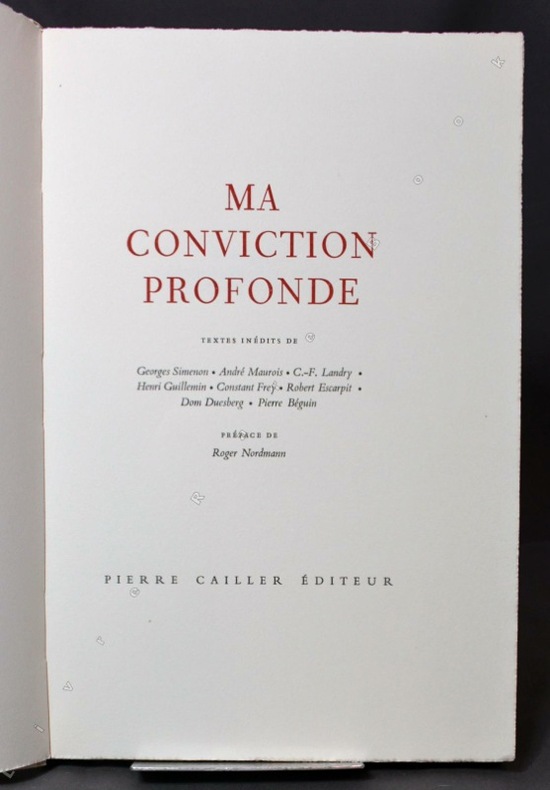
SIMENON G., MAUROIS A., LANDRY C.-F., GUILLEMIN H., FREY C., ESCARPIT R., DUESBERG D., BEGUIN P., NORDMANN R:
Ma conviction profonde.
Sans lieu [Vésenaz], Pierre Cailler, 1963. In-4 (16,7x25,9) de 125 pages, broché sous emboîtage.
Riferimento per il libraio : 679
|
|
|
SIMEON
L'ondulation permanente Eugène (Publicité, La Gazette du Bon ton, 1920)
Lucien Vogel éditeur | Paris 1920 | 18 x 24 cm | une feuille
Riferimento per il libraio : 73139
|
|
|
SIMEON
L'ondulation permanente Eugène (Publicité, La Gazette du Bon ton, 1920)
- Lucien Vogel éditeur, Paris 1920, 18x24cm, une feuille. - Estampe originale en couleur faisant la publicité de la boutique Verlaine, tirée sur papier vergé. Deux vignettes publicitaires au spine sur Valaze et les produits du Dr Dys. Gravure originale réalisée pour l'illustration de La Gazette du bon ton, l'une des plus belles et des plus influentes revues de mode du XXème siècle, célébrant le talent des créateurs et des artistes français en plein essor de l'art déco. Célèbre revue de mode fondée en 1912 par Lucien Vogel, La Gazette du bon ton a paru jusqu'en 1925 avec une interruption durant la Guerre de 1915 à 1920, pour cause de mobilisation de son rédacteur en chef. Elle se constitue de 69 livraisons tirées à seulement 2000 exemplaires et est illustrée notamment de 573 planches en couleurs et de 148 croquis représentant des modèles de grands couturiers. Dès leur parution, ces luxueuses publications « s'adressent aux bibliophiles et aux mondains esthètes » (Françoise Tétart-Vittu « La Gazette du bon ton » in Dictionnaire de la mode, 2016). Imprimées sur beau papier vergé, elles utilisent une police typographique spécialement créée pour la revue par Georges Peignot, le caractère Cochin, repris en 1946 par Christian Dior. Les estampes sont réalisées grâce à la technique du pochoir métallique, rehaussées en couleurs et pour certaines soulignées à l'or ou au palladium. L'aventure commence en 1912 lorsque Lucien Vogel, homme du monde et de la mode - il a déjà participé à la revue Femina - décide de fonder avec sa femme Cosette de Brunhoff (sur de Jean, le père de Babar) la Gazette du bon ton dont le sous-titre est alors « Art, modes et frivolités ». Georges Charensol rapporte les propos du rédacteur en chef : « En 1910, observe-t-il, il n'existait aucun journal de mode véritablement artistique et représentatif de l'esprit de son époque. Je songeais donc à faire un magazine de luxe avec des artistes véritablement modernes [...] J'étais certain du succès car pour la mode aucun pays ne peut rivaliser avec la France. » (« Un grand éditeur d'art. Lucien Vogel » in Les Nouvelles littéraires, n°133, mai 1925). Le succès de la revue est immédiat, non seulement en France, mais aussi aux Etats-Unis et en Amérique du Sud. À l'origine, Vogel réunit donc un groupe de sept artistes : André-Édouard Marty et Pierre Brissaud, suivis de Georges Lepape et Dammicourt ; et enfin ses amis de l'École des beaux-arts que sont George Barbier, Bernard Boutet de Monvel, ou Charles Martin. D'autres talents viennent rapidement rejoindre l'équipée : Guy Arnoux, Léon Bakst, Benito, Boutet de Monvel, Umberto Brunelleschi, Chas Laborde, Jean-Gabriel Domergue, Raoul Dufy, Édouard Halouze, Alexandre Iacovleff, Jean Émile Laboureur, Charles Loupot, Charles Martin, Maggie Salcedo. Ces artistes, inconnus pour la plupart lorsque Lucien Vogel fait appel à eux, deviendront par la suite des figures artistiques emblématiques et recherchées. Ce sont ces mêmes illustrateurs qui réalisent les dessins des publicités de la Gazette. Les planches mettent en lumière et subliment les robes de sept créateurs de l'époque : Lanvin, Doeuillet, Paquin, Poiret, Worth, Vionnet et Doucet. Les couturiers fournissent pour chaque numéro des modèles exclusifs. Néanmoins, certaines des illustrations ne figurent aucun modèle réel, mais seulement l'idée que l'illustrateur se fait de la mode du jour. La Gazette du bon ton est une étape décisive dans l'histoire de la mode. Alliant l'exigence esthétique et l'unité plastique, elle réunit pour la première fois les grands talents du monde des arts, des lettres et de la mode et impose, par cette alchimie, une toute nouvelle image de la femme, élancée, indépendante et audacieuse, également portée par la nouvelle génération de couturiers Coco Chanel, Jean Patou, Marcel Rochas... Reprise en 1920 par Condé Montrose Nast, la Gazette du bon ton inspirera largement la nouvelle composition et les choix esthétiques du « petit journal mourant » que Nast ava

|
|
|
SIMEON
Le Retour des autans. Tailleur et Robe d'après-midi, de Doeuillet. (La Gazette du Bon ton, n°7 - Planche 55 )
Lucien Vogel éditeur | Paris [circa 1920] | 19.50 x 25 cm | une feuille
Riferimento per il libraio : 43226
|
|
|
SIMEON
Le Retour des autans. Tailleur et Robe d'après-midi, de Doeuillet. (La Gazette du Bon ton, n°7 - Planche 55 )
- Lucien Vogel éditeur, Paris [circa 1920], 19,5x25cm, une feuille. - Original color print, printed on vergé paper, non signed. An original print used to illustrate the Gazette du bon ton, one of the most attractive and influential 20th century fashion magazines, featuring the talents of French artists and other contributors from the burgeoning Art Deco movement. A celebrated fashion magazine established in 1912 by Lucien Vogel, La Gazette du bon ton appeared until 1925, with a hiatus from 1915 to 1920 due to the war (the editor-in-chief having been called up for service). It consisted of 69 issues printed in only 2,000 copies each and notably illustrated with 573 color plates and 148 sketches of the models of the great designers. Right from the start, this sumptuous publication "was aimed at bibliophiles and fashionable society," (Françoise Tétart-Vittu, "La Gazette du bon ton", in Dictionnaire de la mode, 2016) and was printed on fine vergé paper using a type cut specially for the magazine by Georges Peignot, known as Cochin, later used (in 1946) by Christian Dior. The prints were made using stencils, heightened in colors, some highlighted in gold or palladium. The story began in 1912, when Lucien Vogel, a man of the world involved in fashion (he had already been part of the fashion magazine Femina) decided, with his wife Cosette de Brunhoff - the sister of Jean, creator of Babar - to set up the Gazette du bon ton, subtitled at the time: "Art, fashion, frivolities." Georges Charensol noted the reasoning of the editor-in-chief: "'In 1910,' he observed, 'there was no really artistic fashion magazine, nothing representative of the spirit of the time. My dream was therefore to make a luxury magazine with truly modern artists...I was assured of success, because when it comes to fashion, no country on earth can compete with France.'" ("Un grand éditeur d'art. Lucien Vogel" in Les Nouvelles littéraires, no. 133, May 1925). The magazine was immediately successful, not only in France but also in the United States and Latin America. At first, Vogel put together a team of seven artists: André-Édouard Marty and Pierre Brissaud, followed by Georges Lepape and Dammicourt, as well as eventually his friends from school and the School of Fine Arts, like George Barbier, Bernard Boutet de Monvel and Charles Martin. Other talented people soon came flocking to join the team: Guy Arnoux, Léon Bakst, Benito, Boutet de Monvel, Umberto Brunelleschi, Chas Laborde, Jean-Gabriel Domergue, Raoul Dufy, Édouard Halouze, Alexandre Iacovleff, Jean Émile Laboureur, Charles Loupot, Chalres Martin, Maggie Salcedo. These artist, mostly unknown when Lucien Vogel sought them out, later became emblematic and sought-after artistic figures. It was also they who worked on the advertising drawings for the Gazette. The plates put the spotlight on, and celebrate, dresses by seven designers of the age: Lanvin, Doeuillet, Paquin, Poiret, Worth, Vionnet and Doucet. The designers provided exclusive models for each issue. Nonetheless, some of the illustrations are not based on real models, but simply on the illustrator's conception of the fashion of the day. The Gazette du bon ton was an important step in the history of fashion. Combining aesthetic demands with the physical whole, it brought together - for the first time - the great talents of the artistic, literary, and fashion worlds; and imposed, through this alchemy, a completely new image of women: slender, independent and daring, which was shared by the new generation of designers, including Coco Chanel, Jean Patou, Marcel Rochas, and so on... Taken over in 1920 by Condé Montrose Nast, the Gazette du bon ton was an important influence on the new layout and aesthetics of that "little dying paper" that Nast had bought a few years earlier: Vogue. [FRENCH VERSION FOLLOWS] Estampe originale en couleur tirée sur papier vergé, non-signée. Gravure originale réalisée pour l'illustration de La Gazette du bon ton, l'une

|
|
|
SIMEON
Un peu beaucoup. (La Gazette du Bon ton, n°5. Année 1920 - Planche 34 )
Lucien Vogel éditeur | Paris 1920 | 19.50 x 25 cm | une feuille
Riferimento per il libraio : 39039
|
|
|
SIMEON
Un peu beaucoup. (La Gazette du Bon ton, n°5. Année 1920 - Planche 34 )
- Lucien Vogel éditeur, Paris 1920, 19,5x25cm, une feuille. - Original color print, printed on vergé paper, signed in the plate. An original print used to illustrate the Gazette du bon ton, one of the most attractive and influential 20th century fashion magazines, featuring the talents of French artists and other contributors from the burgeoning Art Deco movement. A celebrated fashion magazine established in 1912 by Lucien Vogel, La Gazette du bon ton appeared until 1925, with a hiatus from 1915 to 1920 due to the war (the editor-in-chief having been called up for service). It consisted of 69 issues printed in only 2,000 copies each and notably illustrated with 573 color plates and 148 sketches of the models of the great designers. Right from the start, this sumptuous publication "was aimed at bibliophiles and fashionable society," (Françoise Tétart-Vittu, "La Gazette du bon ton", in Dictionnaire de la mode, 2016) and was printed on fine vergé paper using a type cut specially for the magazine by Georges Peignot, known as Cochin, later used (in 1946) by Christian Dior. The prints were made using stencils, heightened in colors, some highlighted in gold or palladium. The story began in 1912, when Lucien Vogel, a man of the world involved in fashion (he had already been part of the fashion magazine Femina) decided, with his wife Cosette de Brunhoff - the sister of Jean, creator of Babar - to set up the Gazette du bon ton, subtitled at the time: "Art, fashion, frivolities." Georges Charensol noted the reasoning of the editor-in-chief: "'In 1910,' he observed, 'there was no really artistic fashion magazine, nothing representative of the spirit of the time. My dream was therefore to make a luxury magazine with truly modern artists...I was assured of success, because when it comes to fashion, no country on earth can compete with France.'" ("Un grand éditeur d'art. Lucien Vogel" in Les Nouvelles littéraires, no. 133, May 1925). The magazine was immediately successful, not only in France but also in the United States and Latin America. At first, Vogel put together a team of seven artists: André-Édouard Marty and Pierre Brissaud, followed by Georges Lepape and Dammicourt, as well as eventually his friends from school and the School of Fine Arts, like George Barbier, Bernard Boutet de Monvel and Charles Martin. Other talented people soon came flocking to join the team: Guy Arnoux, Léon Bakst, Benito, Boutet de Monvel, Umberto Brunelleschi, Chas Laborde, Jean-Gabriel Domergue, Raoul Dufy, Édouard Halouze, Alexandre Iacovleff, Jean Émile Laboureur, Charles Loupot, Chalres Martin, Maggie Salcedo. These artist, mostly unknown when Lucien Vogel sought them out, later became emblematic and sought-after artistic figures. It was also they who worked on the advertising drawings for the Gazette. The plates put the spotlight on, and celebrate, dresses by seven designers of the age: Lanvin, Doeuillet, Paquin, Poiret, Worth, Vionnet and Doucet. The designers provided exclusive models for each issue. Nonetheless, some of the illustrations are not based on real models, but simply on the illustrator's conception of the fashion of the day. The Gazette du bon ton was an important step in the history of fashion. Combining aesthetic demands with the physical whole, it brought together - for the first time - the great talents of the artistic, literary, and fashion worlds; and imposed, through this alchemy, a completely new image of women: slender, independent and daring, which was shared by the new generation of designers, including Coco Chanel, Jean Patou, Marcel Rochas, and so on... Taken over in 1920 by Condé Montrose Nast, the Gazette du bon ton was an important influence on the new layout and aesthetics of that "little dying paper" that Nast had bought a few years earlier: Vogue. [FRENCH VERSION FOLLOWS] Estampe originale en couleur tirée sur papier vergé, signée en bas au centre dans la planche. Gravure originale réalisée pour l'illu

|
|
|
SIMEON Fernand
Au bal noir et blanc. Manteau du soir (pl.25, La Gazette du Bon ton, 1921 n°4)
- Lucien Vogel éditeur, Paris 1921, 18x24cm, une feuille. - Original color print, printed on vergé paper, non signed. An original print used to illustrate the Gazette du bon ton, one of the most attractive and influential 20th century fashion magazines, featuring the talents of French artists and other contributors from the burgeoning Art Deco movement. A celebrated fashion magazine established in 1912 by Lucien Vogel, La Gazette du bon ton appeared until 1925, with a hiatus from 1915 to 1920 due to the war (the editor-in-chief having been called up for service). It consisted of 69 issues printed in only 2,000 copies each and notably illustrated with 573 color plates and 148 sketches of the models of the great designers. Right from the start, this sumptuous publication "was aimed at bibliophiles and fashionable society," (Françoise Tétart-Vittu, "La Gazette du bon ton", in Dictionnaire de la mode, 2016) and was printed on fine vergé paper using a type cut specially for the magazine by Georges Peignot, known as Cochin, later used (in 1946) by Christian Dior. The prints were made using stencils, heightened in colors, some highlighted in gold or palladium. The story began in 1912, when Lucien Vogel, a man of the world involved in fashion (he had already been part of the fashion magazine Femina) decided, with his wife Cosette de Brunhoff - the sister of Jean, creator of Babar - to set up the Gazette du bon ton, subtitled at the time: "Art, fashion, frivolities." Georges Charensol noted the reasoning of the editor-in-chief: "'In 1910,' he observed, 'there was no really artistic fashion magazine, nothing representative of the spirit of the time. My dream was therefore to make a luxury magazine with truly modern artists...I was assured of success, because when it comes to fashion, no country on earth can compete with France.'" ("Un grand éditeur d'art. Lucien Vogel" in Les Nouvelles littéraires, no. 133, May 1925). The magazine was immediately successful, not only in France but also in the United States and Latin America. At first, Vogel put together a team of seven artists: André-Édouard Marty and Pierre Brissaud, followed by Georges Lepape and Dammicourt, as well as eventually his friends from school and the School of Fine Arts, like George Barbier, Bernard Boutet de Monvel and Charles Martin. Other talented people soon came flocking to join the team: Guy Arnoux, Léon Bakst, Benito, Boutet de Monvel, Umberto Brunelleschi, Chas Laborde, Jean-Gabriel Domergue, Raoul Dufy, Édouard Halouze, Alexandre Iacovleff, Jean Émile Laboureur, Charles Loupot, Chalres Martin, Maggie Salcedo. These artist, mostly unknown when Lucien Vogel sought them out, later became emblematic and sought-after artistic figures. It was also they who worked on the advertising drawings for the Gazette. The plates put the spotlight on, and celebrate, dresses by seven designers of the age: Lanvin, Doeuillet, Paquin, Poiret, Worth, Vionnet and Doucet. The designers provided exclusive models for each issue. Nonetheless, some of the illustrations are not based on real models, but simply on the illustrator's conception of the fashion of the day. The Gazette du bon ton was an important step in the history of fashion. Combining aesthetic demands with the physical whole, it brought together - for the first time - the great talents of the artistic, literary, and fashion worlds; and imposed, through this alchemy, a completely new image of women: slender, independent and daring, which was shared by the new generation of designers, including Coco Chanel, Jean Patou, Marcel Rochas, and so on... Taken over in 1920 by Condé Montrose Nast, the Gazette du bon ton was an important influence on the new layout and aesthetics of that "little dying paper" that Nast had bought a few years earlier: Vogue. [FRENCH VERSION FOLLOWS] Estampe originale en couleur, tirée sur papier vergé, non-signée. Gravure originale réalisée pour l'illustration de La Gazette du bon ton, l'une des plus b

|
|
|
SIMEON Fernand
Costumes parisiens. Tailleur de velours blanc frappé garni de loutre et de passementerie (pl.28, Journal des Dames et des Modes, 1912 n°15)
- s.n., Paris 1912, 14x22,5cm, une feuille. - Estampe originale en couleur, tirée sur papier vergé, signée en bas à gauche de la planche. L'une des premières revues de mode françaises, parue quelques temps avant la fameuse Gazette du bon ton et réunissant les grands artistes français de la mouvance Art déco. Le Journal des dames et des modes est une revue trimensuelle de mode française illustrée créée en 1797. Sa publication est stoppée en 1839 avant d'être reprise en juin 1912 sous l'impulsion de Tommaso Antongini, le secrétaire, ami et biographe de Gabriele d'Annunzio. Elle disparaîtra en août 1914 à l'aube de la Première Guerre mondiale. La revue était tirée à 1279 exemplaires ce qui en fait, pour l'époque, une publication relativement confidentielle. Les 186 planches, d'une grande finesse, sont gravées sur papier fort puis coloriées au pochoir. Elles représentent, la majorité du temps, des femmes, mais aussi des hommes et des enfants. Les modèles ne sont pas, à la différence de ceux de la Gazette du bon ton dont la publication verra le jour quelques mois plus tard, ceux des couturiers de renom mais sont le fruit de l'imagination des illustrateurs eux-mêmes. Les pochoirs sont, la plupart du temps, exécutés par George Barbier, mais d'autres artistes collaborent à la revue : Léon Bakst, B. Berty, Bernard Boutet de Monvel, Roger Broders, Jan van Brock, Umberto Brunelleschi, H. Robert Dammy, Étienne Drian, Abel Faivre, Marie-Madeleine Franc-Nohain, Xavier Gosé, Paul Iribe, Kriegck, Victor Lhuer, Pierre Legrain, Charles Martin, Fernand Siméon, Ismael Smith, Armand Vallée et Gerda Wegener. Nombre de ces illustrateurs seront également associés à La Gazette du bon ton. Leurs travaux, emblématiques du mouvement Art déco, soulignent l'influence de l'orientalisme et des costumes des ballets russes tout en les inscrivant dans les activités quotidiennes des Français aisés de l'époque. Dès la préface du premier numéro de 1912, Anatole France déclare : « Au bout de soixante-quinze ans, il renaît. Il renaît par les soins de quelques esprits ingénieux et artistes. Il renaît pour les curieux (s'il en est encore) que ne contentent pas les journaux de modes tirés à plusieurs milliers et illustrés par la photographie. Et si les éditeurs nous rendent très exactement, dans son format, avec son papier, son impression, ses procédés de gravure et de coloris, le vieux classique des modes d'autrefois, c'est qu'ils entendent le continuer agréablement et devenir les classiques charmants de la mode d'aujourd'hui et de demain. » [ENGLISH DESCRIPTION ON DEMAND]

|
|
|
SIMEON Fernand
La Lettre surprise (pl.3, La Gazette du Bon ton, 1920 n°1)
- Lucien Vogel éditeur, Paris Février 1920, 18x24cm, une feuille. - Original color print heightened with gold, printed on vergé paper, signed in the plate. An original print used to illustrate the Gazette du bon ton, one of the most attractive and influential 20th century fashion magazines, featuring the talents of French artists and other contributors from the burgeoning Art Deco movement. A celebrated fashion magazine established in 1912 by Lucien Vogel, La Gazette du bon ton appeared until 1925, with a hiatus from 1915 to 1920 due to the war (the editor-in-chief having been called up for service). It consisted of 69 issues printed in only 2,000 copies each and notably illustrated with 573 color plates and 148 sketches of the models of the great designers. Right from the start, this sumptuous publication "was aimed at bibliophiles and fashionable society," (Françoise Tétart-Vittu, "La Gazette du bon ton", in Dictionnaire de la mode, 2016) and was printed on fine vergé paper using a type cut specially for the magazine by Georges Peignot, known as Cochin, later used (in 1946) by Christian Dior. The prints were made using stencils, heightened in colors, some highlighted in gold or palladium. The story began in 1912, when Lucien Vogel, a man of the world involved in fashion (he had already been part of the fashion magazine Femina) decided, with his wife Cosette de Brunhoff - the sister of Jean, creator of Babar - to set up the Gazette du bon ton, subtitled at the time: "Art, fashion, frivolities." Georges Charensol noted the reasoning of the editor-in-chief: "'In 1910,' he observed, 'there was no really artistic fashion magazine, nothing representative of the spirit of the time. My dream was therefore to make a luxury magazine with truly modern artists...I was assured of success, because when it comes to fashion, no country on earth can compete with France.'" ("Un grand éditeur d'art. Lucien Vogel" in Les Nouvelles littéraires, no. 133, May 1925). The magazine was immediately successful, not only in France but also in the United States and Latin America. At first, Vogel put together a team of seven artists: André-Édouard Marty and Pierre Brissaud, followed by Georges Lepape and Dammicourt, as well as eventually his friends from school and the School of Fine Arts, like George Barbier, Bernard Boutet de Monvel and Charles Martin. Other talented people soon came flocking to join the team: Guy Arnoux, Léon Bakst, Benito, Boutet de Monvel, Umberto Brunelleschi, Chas Laborde, Jean-Gabriel Domergue, Raoul Dufy, Édouard Halouze, Alexandre Iacovleff, Jean Émile Laboureur, Charles Loupot, Chalres Martin, Maggie Salcedo. These artist, mostly unknown when Lucien Vogel sought them out, later became emblematic and sought-after artistic figures. It was also they who worked on the advertising drawings for the Gazette. The plates put the spotlight on, and celebrate, dresses by seven designers of the age: Lanvin, Doeuillet, Paquin, Poiret, Worth, Vionnet and Doucet. The designers provided exclusive models for each issue. Nonetheless, some of the illustrations are not based on real models, but simply on the illustrator's conception of the fashion of the day. The Gazette du bon ton was an important step in the history of fashion. Combining aesthetic demands with the physical whole, it brought together - for the first time - the great talents of the artistic, literary, and fashion worlds; and imposed, through this alchemy, a completely new image of women: slender, independent and daring, which was shared by the new generation of designers, including Coco Chanel, Jean Patou, Marcel Rochas, and so on... Taken over in 1920 by Condé Montrose Nast, the Gazette du bon ton was an important influence on the new layout and aesthetics of that "little dying paper" that Nast had bought a few years earlier: Vogue. [FRENCH VERSION FOLLOWS] Estampe originale en couleur rehaussée à l'or, tirée sur papier vergé, signée en bas à gauche de la planch

|
|
|
SIMEON Fernand
Un peu beaucoup (pl.34, La Gazette du Bon ton, 1920 n°5)
- Lucien Vogel éditeur, Paris Juin 1920, 18x24cm, une feuille. - Original color print, printed on vergé paper, non signed. An original print used to illustrate the Gazette du bon ton, one of the most attractive and influential 20th century fashion magazines, featuring the talents of French artists and other contributors from the burgeoning Art Deco movement. A celebrated fashion magazine established in 1912 by Lucien Vogel, La Gazette du bon ton appeared until 1925, with a hiatus from 1915 to 1920 due to the war (the editor-in-chief having been called up for service). It consisted of 69 issues printed in only 2,000 copies each and notably illustrated with 573 color plates and 148 sketches of the models of the great designers. Right from the start, this sumptuous publication "was aimed at bibliophiles and fashionable society," (Françoise Tétart-Vittu, "La Gazette du bon ton", in Dictionnaire de la mode, 2016) and was printed on fine vergé paper using a type cut specially for the magazine by Georges Peignot, known as Cochin, later used (in 1946) by Christian Dior. The prints were made using stencils, heightened in colors, some highlighted in gold or palladium. The story began in 1912, when Lucien Vogel, a man of the world involved in fashion (he had already been part of the fashion magazine Femina) decided, with his wife Cosette de Brunhoff - the sister of Jean, creator of Babar - to set up the Gazette du bon ton, subtitled at the time: "Art, fashion, frivolities." Georges Charensol noted the reasoning of the editor-in-chief: "'In 1910,' he observed, 'there was no really artistic fashion magazine, nothing representative of the spirit of the time. My dream was therefore to make a luxury magazine with truly modern artists...I was assured of success, because when it comes to fashion, no country on earth can compete with France.'" ("Un grand éditeur d'art. Lucien Vogel" in Les Nouvelles littéraires, no. 133, May 1925). The magazine was immediately successful, not only in France but also in the United States and Latin America. At first, Vogel put together a team of seven artists: André-Édouard Marty and Pierre Brissaud, followed by Georges Lepape and Dammicourt, as well as eventually his friends from school and the School of Fine Arts, like George Barbier, Bernard Boutet de Monvel and Charles Martin. Other talented people soon came flocking to join the team: Guy Arnoux, Léon Bakst, Benito, Boutet de Monvel, Umberto Brunelleschi, Chas Laborde, Jean-Gabriel Domergue, Raoul Dufy, Édouard Halouze, Alexandre Iacovleff, Jean Émile Laboureur, Charles Loupot, Chalres Martin, Maggie Salcedo. These artist, mostly unknown when Lucien Vogel sought them out, later became emblematic and sought-after artistic figures. It was also they who worked on the advertising drawings for the Gazette. The plates put the spotlight on, and celebrate, dresses by seven designers of the age: Lanvin, Doeuillet, Paquin, Poiret, Worth, Vionnet and Doucet. The designers provided exclusive models for each issue. Nonetheless, some of the illustrations are not based on real models, but simply on the illustrator's conception of the fashion of the day. The Gazette du bon ton was an important step in the history of fashion. Combining aesthetic demands with the physical whole, it brought together - for the first time - the great talents of the artistic, literary, and fashion worlds; and imposed, through this alchemy, a completely new image of women: slender, independent and daring, which was shared by the new generation of designers, including Coco Chanel, Jean Patou, Marcel Rochas, and so on... Taken over in 1920 by Condé Montrose Nast, the Gazette du bon ton was an important influence on the new layout and aesthetics of that "little dying paper" that Nast had bought a few years earlier: Vogue. [FRENCH VERSION FOLLOWS] Estampe originale en couleur, tirée sur papier vergé, non-signée. Gravure originale réalisée pour l'illustration de La Gazette du bon ton

|
|
|
SIMEON Fernand
Vous avez vu ? Cette petite. Robe de promenade en Parquetine de Rodier. (La Gazette du Bon ton, n°4. Année 1920 - Planche 24 )
- Lucien Vogel éditeur, Paris 1920, 19,5x25cm, une feuille. - Original color print, printed on vergé paper, the signature does not let identify the artist. An original print used to illustrate the Gazette du bon ton, one of the most attractive and influential 20th century fashion magazines, featuring the talents of French artists and other contributors from the burgeoning Art Deco movement. A celebrated fashion magazine established in 1912 by Lucien Vogel, La Gazette du bon ton appeared until 1925, with a hiatus from 1915 to 1920 due to the war (the editor-in-chief having been called up for service). It consisted of 69 issues printed in only 2,000 copies each and notably illustrated with 573 color plates and 148 sketches of the models of the great designers. Right from the start, this sumptuous publication "was aimed at bibliophiles and fashionable society," (Françoise Tétart-Vittu, "La Gazette du bon ton", in Dictionnaire de la mode, 2016) and was printed on fine vergé paper using a type cut specially for the magazine by Georges Peignot, known as Cochin, later used (in 1946) by Christian Dior. The prints were made using stencils, heightened in colors, some highlighted in gold or palladium. The story began in 1912, when Lucien Vogel, a man of the world involved in fashion (he had already been part of the fashion magazine Femina) decided, with his wife Cosette de Brunhoff - the sister of Jean, creator of Babar - to set up the Gazette du bon ton, subtitled at the time: "Art, fashion, frivolities." Georges Charensol noted the reasoning of the editor-in-chief: "'In 1910,' he observed, 'there was no really artistic fashion magazine, nothing representative of the spirit of the time. My dream was therefore to make a luxury magazine with truly modern artists...I was assured of success, because when it comes to fashion, no country on earth can compete with France.'" ("Un grand éditeur d'art. Lucien Vogel" in Les Nouvelles littéraires, no. 133, May 1925). The magazine was immediately successful, not only in France but also in the United States and Latin America. At first, Vogel put together a team of seven artists: André-Édouard Marty and Pierre Brissaud, followed by Georges Lepape and Dammicourt, as well as eventually his friends from school and the School of Fine Arts, like George Barbier, Bernard Boutet de Monvel and Charles Martin. Other talented people soon came flocking to join the team: Guy Arnoux, Léon Bakst, Benito, Boutet de Monvel, Umberto Brunelleschi, Chas Laborde, Jean-Gabriel Domergue, Raoul Dufy, Édouard Halouze, Alexandre Iacovleff, Jean Émile Laboureur, Charles Loupot, Chalres Martin, Maggie Salcedo. These artist, mostly unknown when Lucien Vogel sought them out, later became emblematic and sought-after artistic figures. It was also they who worked on the advertising drawings for the Gazette. The plates put the spotlight on, and celebrate, dresses by seven designers of the age: Lanvin, Doeuillet, Paquin, Poiret, Worth, Vionnet and Doucet. The designers provided exclusive models for each issue. Nonetheless, some of the illustrations are not based on real models, but simply on the illustrator's conception of the fashion of the day. The Gazette du bon ton was an important step in the history of fashion. Combining aesthetic demands with the physical whole, it brought together - for the first time - the great talents of the artistic, literary, and fashion worlds; and imposed, through this alchemy, a completely new image of women: slender, independent and daring, which was shared by the new generation of designers, including Coco Chanel, Jean Patou, Marcel Rochas, and so on... Taken over in 1920 by Condé Montrose Nast, the Gazette du bon ton was an important influence on the new layout and aesthetics of that "little dying paper" that Nast had bought a few years earlier: Vogue. [FRENCH VERSION FOLLOWS] Estampe originale en couleur tirée sur papier vergé, la signature ne permet pas d'identifier l'artiste. Gravure orig

|
|
|
SIMEON Mario
La Partie de cache-cache. Robe en ruban. (La Gazette du Bon ton, n°1. Année 1921 - Planche 1 )
- Lucien Vogel éditeur, Paris 1921, 19,5x25cm, une feuille. - Original color print, printed on vergé paper, signed in the plate. An original print used to illustrate the Gazette du bon ton, one of the most attractive and influential 20th century fashion magazines, featuring the talents of French artists and other contributors from the burgeoning Art Deco movement. A celebrated fashion magazine established in 1912 by Lucien Vogel, La Gazette du bon ton appeared until 1925, with a hiatus from 1915 to 1920 due to the war (the editor-in-chief having been called up for service). It consisted of 69 issues printed in only 2,000 copies each and notably illustrated with 573 color plates and 148 sketches of the models of the great designers. Right from the start, this sumptuous publication "was aimed at bibliophiles and fashionable society," (Françoise Tétart-Vittu, "La Gazette du bon ton", in Dictionnaire de la mode, 2016) and was printed on fine vergé paper using a type cut specially for the magazine by Georges Peignot, known as Cochin, later used (in 1946) by Christian Dior. The prints were made using stencils, heightened in colors, some highlighted in gold or palladium. The story began in 1912, when Lucien Vogel, a man of the world involved in fashion (he had already been part of the fashion magazine Femina) decided, with his wife Cosette de Brunhoff - the sister of Jean, creator of Babar - to set up the Gazette du bon ton, subtitled at the time: "Art, fashion, frivolities." Georges Charensol noted the reasoning of the editor-in-chief: "'In 1910,' he observed, 'there was no really artistic fashion magazine, nothing representative of the spirit of the time. My dream was therefore to make a luxury magazine with truly modern artists...I was assured of success, because when it comes to fashion, no country on earth can compete with France.'" ("Un grand éditeur d'art. Lucien Vogel" in Les Nouvelles littéraires, no. 133, May 1925). The magazine was immediately successful, not only in France but also in the United States and Latin America. At first, Vogel put together a team of seven artists: André-Édouard Marty and Pierre Brissaud, followed by Georges Lepape and Dammicourt, as well as eventually his friends from school and the School of Fine Arts, like George Barbier, Bernard Boutet de Monvel and Charles Martin. Other talented people soon came flocking to join the team: Guy Arnoux, Léon Bakst, Benito, Boutet de Monvel, Umberto Brunelleschi, Chas Laborde, Jean-Gabriel Domergue, Raoul Dufy, Édouard Halouze, Alexandre Iacovleff, Jean Émile Laboureur, Charles Loupot, Chalres Martin, Maggie Salcedo. These artist, mostly unknown when Lucien Vogel sought them out, later became emblematic and sought-after artistic figures. It was also they who worked on the advertising drawings for the Gazette. The plates put the spotlight on, and celebrate, dresses by seven designers of the age: Lanvin, Doeuillet, Paquin, Poiret, Worth, Vionnet and Doucet. The designers provided exclusive models for each issue. Nonetheless, some of the illustrations are not based on real models, but simply on the illustrator's conception of the fashion of the day. The Gazette du bon ton was an important step in the history of fashion. Combining aesthetic demands with the physical whole, it brought together - for the first time - the great talents of the artistic, literary, and fashion worlds; and imposed, through this alchemy, a completely new image of women: slender, independent and daring, which was shared by the new generation of designers, including Coco Chanel, Jean Patou, Marcel Rochas, and so on... Taken over in 1920 by Condé Montrose Nast, the Gazette du bon ton was an important influence on the new layout and aesthetics of that "little dying paper" that Nast had bought a few years earlier: Vogue. [FRENCH VERSION FOLLOWS] Estampe originale en couleur tirée sur papier vergé et signée dans la planche par l'auteur en bas à gauche. Gravure originale réalis

|
|
|
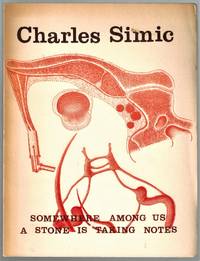
Simic, Charles; with Prints by George Hitchcock
Somewhere Among Us a Stone is Taking Notes
San Francisco: Kayak Press 1969. Book. Very Good Plus. Pictorial Printed Wrappers. SIGNED BY AUTHOR. First Edition. 8vo - over 7¾" - 9¾" tall. SIGNED BY AUTHOR at front end page. His 2nd book. Printed in an edition of 1000 copies. Very Good Plus bottom corner crease rear wrapper spine and half of rear wrapper evenly browned. Kayak Press Paperback
Riferimento per il libraio : 009593
|
|
|
Simler, Josias
Helvetiorum respublica. Diversorum autorum, quorum nonnulli nunc primum in lucem prodeunt.
Leiden, Ex Officina Elzeviriana (Bonaventura & Abraham Elzevier), 1627. 12°. 535 (1) S., (16) S. Index, (1) S. Privileg. Mit gest. figürlichem Titel (Rütlischwur), signiert P.S. Etwas späteres Pergament. + Wichtig: Für unsere Kunden in der EU erfolgt der Versand alle 14 Tage verzollt ab Deutschland / Postbank-Konto in Deutschland vorhanden +, 5159C
Riferimento per il libraio : 5159CB

|
|
|
Simler, Josias:
Helvetiorum respublica. Diversorum autorum, quorum nonnulli nunc primum in lucem prodeunt.
Leiden, Ex Officina Elzeviriana (Bonaventura & Abraham Elzevier), 1627. 12°. 535 (1) S., (16) S. Index, (1) S. Privileg. Mit gest. figürlichem Titel (Rütlischwur), signiert P.S. Etwas späteres Pergament.
Riferimento per il libraio : 5159CB
|
|
|
Simler, Josias:
La Republique des Suisse. Comprinse deux livers, contenans le gouvernement des Suisse, l'estat public des treize Cantons & de leurs Confederez, en general & en particulier, Leurs bailliages & iurisdictions, l'origine & les conditions de toutes leurs alliances, leurs batailles, victoires, conquestes & autres gestes memorables, depuis l'Empereur Raoul d Habspourg insques à Charles le Quint...
Quatrième edition, reveve et augmentée à la fin de quelques particularitez. Genf, Gabriel Cartier, 1598. 8°. (16), 301, (17) S. Pergamentband der Zeit.
Riferimento per il libraio : 6064CB
|
|
|
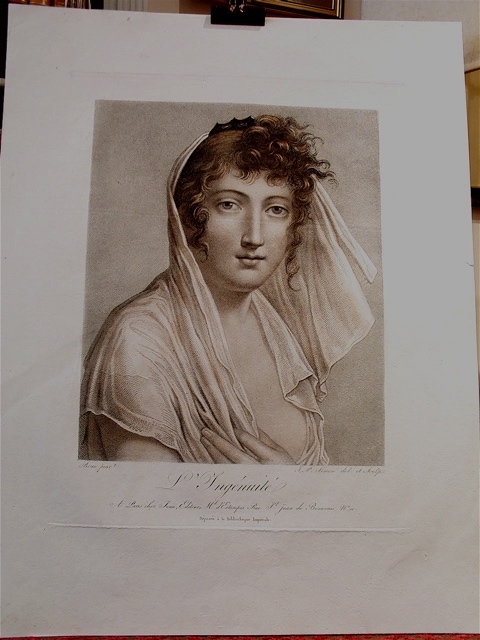
SIMON J.-P.
L’Ingénuité
D’après un tableau de Brun. Belle épreuve très légèrement coloriée. En feuille Très bon Avant 1815 37,5 x 29,5 (52 x 40)
Riferimento per il libraio : 5246
|
|
|
SIMON Lucien
Les Marguilliers
Belle épreuve parue dans le numéro 8 (décembre 1897) de l’Estampe Moderne. Notre épreuve porte le timbre sec de l’Estampe Moderne en bas à droite. L’Estampe Moderne a paru de mai 1897 à avril 1899. en feuille Très bon Paris L’Estampe Moderne. 1897 27 x 35 cm.
Riferimento per il libraio : 6124

|
|
|
SIMON Mario
Les Soeurs jumelles. Robes trois voiles (pl.34, La Gazette du Bon ton, 1922 n°5)
- Lucien Vogel éditeur, Paris 1922, 18x24cm, une feuille. - Original color print, printed on vergé paper, signed in the plate. An original print used to illustrate the Gazette du bon ton, one of the most attractive and influential 20th century fashion magazines, featuring the talents of French artists and other contributors from the burgeoning Art Deco movement. A celebrated fashion magazine established in 1912 by Lucien Vogel, La Gazette du bon ton appeared until 1925, with a hiatus from 1915 to 1920 due to the war (the editor-in-chief having been called up for service). It consisted of 69 issues printed in only 2,000 copies each and notably illustrated with 573 color plates and 148 sketches of the models of the great designers. Right from the start, this sumptuous publication "was aimed at bibliophiles and fashionable society," (Françoise Tétart-Vittu, "La Gazette du bon ton", in Dictionnaire de la mode, 2016) and was printed on fine vergé paper using a type cut specially for the magazine by Georges Peignot, known as Cochin, later used (in 1946) by Christian Dior. The prints were made using stencils, heightened in colors, some highlighted in gold or palladium. The story began in 1912, when Lucien Vogel, a man of the world involved in fashion (he had already been part of the fashion magazine Femina) decided, with his wife Cosette de Brunhoff - the sister of Jean, creator of Babar - to set up the Gazette du bon ton, subtitled at the time: "Art, fashion, frivolities." Georges Charensol noted the reasoning of the editor-in-chief: "'In 1910,' he observed, 'there was no really artistic fashion magazine, nothing representative of the spirit of the time. My dream was therefore to make a luxury magazine with truly modern artists...I was assured of success, because when it comes to fashion, no country on earth can compete with France.'" ("Un grand éditeur d'art. Lucien Vogel" in Les Nouvelles littéraires, no. 133, May 1925). The magazine was immediately successful, not only in France but also in the United States and Latin America. At first, Vogel put together a team of seven artists: André-Édouard Marty and Pierre Brissaud, followed by Georges Lepape and Dammicourt, as well as eventually his friends from school and the School of Fine Arts, like George Barbier, Bernard Boutet de Monvel and Charles Martin. Other talented people soon came flocking to join the team: Guy Arnoux, Léon Bakst, Benito, Boutet de Monvel, Umberto Brunelleschi, Chas Laborde, Jean-Gabriel Domergue, Raoul Dufy, Édouard Halouze, Alexandre Iacovleff, Jean Émile Laboureur, Charles Loupot, Chalres Martin, Maggie Salcedo. These artist, mostly unknown when Lucien Vogel sought them out, later became emblematic and sought-after artistic figures. It was also they who worked on the advertising drawings for the Gazette. The plates put the spotlight on, and celebrate, dresses by seven designers of the age: Lanvin, Doeuillet, Paquin, Poiret, Worth, Vionnet and Doucet. The designers provided exclusive models for each issue. Nonetheless, some of the illustrations are not based on real models, but simply on the illustrator's conception of the fashion of the day. The Gazette du bon ton was an important step in the history of fashion. Combining aesthetic demands with the physical whole, it brought together - for the first time - the great talents of the artistic, literary, and fashion worlds; and imposed, through this alchemy, a completely new image of women: slender, independent and daring, which was shared by the new generation of designers, including Coco Chanel, Jean Patou, Marcel Rochas, and so on... Taken over in 1920 by Condé Montrose Nast, the Gazette du bon ton was an important influence on the new layout and aesthetics of that "little dying paper" that Nast had bought a few years earlier: Vogue. [FRENCH VERSION FOLLOWS] Estampe originale en couleur, tirée sur papier vergé, signée en bas à droite de la planche. La Gazette du bon ton, l'une des plus belle

|
|
|
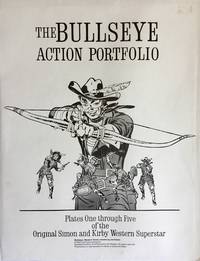
SIMON, JOE : KIRBY, JACK
The BULLSEYE Action Portfolio
Mainline Publications 1979. Print. Illus. by KIRBY JACK : SIMON JOE. Very Fine. Art Portfolio. 1st Edition. Portfolio - VF in VF folder - Five great action prints by the greatest creative team in comics Joe Simon and Jack Kirby featuring their revolutionary Western Comics star Bullseye. A sixth sheet contains an illustrated essay " BULLSEYE Western Scout : The Legend". Mainline Publications unknown
Riferimento per il libraio : 004474
|
|
|
Simond Charles
Paris de 1800 à 1900 D'après les estampes et les mémoires du temps - TOME I : LE CONSULAT - LE PREMIER EMPIRE - LA RESTAURATION
E.Plon Nourrit et Cie, Rue garancière, 10. In-4°, forte reliure demi chagrin brun, tête dorée et dos à cinq nerfs, 4000 gravures reproduites en fac-similé dans le texte, d'après les documents des bibliothèques publiques, musées, collections particulières, portraits, caricatures, monuments, évènements...etc, 676 pages, bonne reliure et agréable tranche de titre , les coins supérieurs des plats sont cependant émoussés ainsi que les tranches des plats.
Riferimento per il libraio : 11106
|
|
|
Simone PUGET
Le Lys rouge. Robe du soir de Paul Poiret (pl.38, La Gazette du Bon ton, 1914 n°4)
Lucien Vogel éditeur | Paris Avril 1914 | 19 x 24.50 cm | une feuille
Riferimento per il libraio : 84700
|
|
|
Simonetta Rasponi
Michelangelo
New York NY: Avenel Books 1978. Monograph on Michelangelo w/ 60 colour plates of his sculpture drawing painting & architecture. Laminated hardcover book and jacket in fine unread unmarked condition. First U.S. Edition. Hardcover. Fine/Fine. Avenel Books Hardcover
Riferimento per il libraio : 002722
|
|
|
SINGER, H.W
Das Kupferstichkabinet (der) Sammlung Lanna Prag. Wissenschaftliches Verzeichniss. Zweiter (u. letzter) Band.
(Prag, Selbstverlag, 1895. Gr.-8vo. Titel, 2 Bl., 517, (5) S., 16 Tafeln m. 26 Abbildungen in Lichtdruck auf aufgewalztem China. OHlwdbd m. goldgeprägtem Rückentitel (Einbd etwas berieben, Innengelenke gelockert, Bildstempel a. d. Vorsatz, Verlagsadresse überklebt mit "Joseph Baer & Co. Frankfurt am Main, Rossmarkt 18", darunter der Stempel "Bibliothek Allgemeine Zeitung, München", Titel leicht fingerfleckig, Tafeln gering braunfleckig).
Riferimento per il libraio : 1310520
|
|
|
SINGER, H.W
Die moderne Graphik. Eine Darstellung für deren Freunde und Sammler.
Leipzig, Seemann, 1914. 4to. 4 Bl., 547, (1) S. m. zahlr. Textabb. Olwd. (angestaubt, Rücken etwas fleckig).
Riferimento per il libraio : 1127245
|
|
|
Singer, Hans Wolfgang
Der Kupferstich. Hans W. Singer / Sammlung Illustrierter Monographien, Bd. 15.
Bielefeld ; Leipzig : Velhagen & Klasing 1904. 142 S. : Mit 107 Abb., darunter 6 farb. Einschaltb. ; 4°, Eigentümersignatur auf Vorsatzblatt Kart., Softcover/Paperback, Gebrauchsspuren am Einband, Papier etwas wellig, sonst guter Zustand
Riferimento per il libraio : 15664

|
|
|
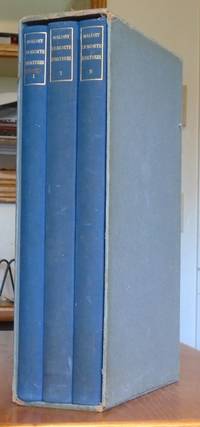
Sir Thomas Malory, Illustrated with Wood Engravings by Robert Gibbings.
Le Morte d'Arthur dArthur the Story of King Arthur and of His Noble Knights of the Round Table Three Volumes SIGNED by Illustrator
Printed at The Golden Cockerel Press London for The Limited Editions Club 1936. Book. Very Good. Hard Cover with Slipcase. Signed by Illustrators. Limited Edition. Folio - over 12 - 15" tall. Three oversized hardcovers with blue cloth spines with gilt lettering; boards covered in blue and cream-patterned paper; limited edition 1393/1500; signed by Robert Gibbings. Books in very good plus condition: spines are slightly sunned with a little scuffing and slight soiling; no wear to books; straight; hinges strong; clean and unmarked; pages slightly toned. Slipcase is only in good minus condition with some wear soiling and scuffing. Will require extra for shipping. Printed at The Golden Cockerel Press, London, for The Limited Editions Club Hardcover
Riferimento per il libraio : 131332
|
|
|
SITWELL Pauline
Green Song. Poems and Wood Engravings 150 COPIES WERE PRINTED
Roy. 8vo., First Edition, with frontispiece and wood-engravings (a number full-page) in the text; rose boards, backstrip with printed paper label, uncut, a near fine copy. EDITION LIMITED TO 150 NUMBERED COPIES SIGNED BY THE AUTHOR (THIS COPY NO. 53).

|
|
|
Skira International / Skira Color Prints
Chinese Painting
Skira International / World Publishing Company. As New. Portfolio with 8 Loo. FREE UPGRADE to Courier/Priority Shipping Upon Request IN STOCK AND IMMEDIATELY AVAILABLE FOR SHIPMENT - 4 page brochure on Chinese paintings with notes on 6 of the 8 color plates included in the packet. -- with a bonus offer-- . Skira International / World Publishing Company unknown
Riferimento per il libraio : 37588
|
|
|
Sky Prints Corp
Sky Prints Aviation Enroute Atlas A Companion to Instrument Sectional or WAC Charts 1970
Sky Prints Corp 1970-01-01. Spiral-bound. Like New. 0x0x0. 1974 Like New inside and Out! Clean & Crisp Pages. Excellent book.Fast Shipping! Sky Prints Corp unknown
Riferimento per il libraio : 210213034
|
|
|
Sky Prints Corp
Sky Prints Aviation Enroute Atlas A Companion to Instrument Sectional or WAC Charts 1970
Sky Prints Corp 1970-01-01. Spiral-bound. Like New. 0x0x0. 1975 Like New inside and Out! Clean & Crisp Pages. Excellent book.Fast Shipping! Sky Prints Corp unknown
Riferimento per il libraio : 210213033
|
|
|
Sky Prints Corp
Sky Prints Aviation Enroute Atlas A Companion to Instrument Sectional or WAC Charts 1970
Sky Prints Corp 1970-01-01. Spiral-bound. Like New. 0x0x0. 1977 Like New inside and Out! Clean & Crisp Pages. Excellent book.Fast Shipping! Sky Prints Corp unknown
Riferimento per il libraio : 210213031
|
|
|
Sky Prints Corp
Sky Prints Aviation Enroute Atlas A Companion to Instrument Sectional or WAC Charts 1970
Sky Prints Corp 1970-01-01. Spiral-bound. Like New. 0x0x0. 1970-1979 and 1981 Like New inside and Out! Clean & Crisp Pages. Excellent book.Fast Shipping!11 books total Sky Prints Corp unknown
Riferimento per il libraio : 210213036
|
|
|
Sky Prints Corp
Sky Prints Aviation Enroute Atlas A Companion to Instrument Sectional or WAC Charts 1970
Sky Prints Corp 1970-01-01. Spiral-bound. Like New. 0x0x0. 1979 Like New inside and Out! Clean & Crisp Pages. Excellent book.Fast Shipping! Sky Prints Corp unknown
Riferimento per il libraio : 210213029
|
|
|
Sky Prints Corp
Sky Prints Aviation Enroute Atlas A Companion to Instrument Sectional or WAC Charts 1970
Sky Prints Corp 1970-01-01. Spiral-bound. Like New. 0x0x0. 1971 Like New inside and Out! Clean & Crisp Pages. Excellent book.Fast Shipping! Sky Prints Corp unknown
Riferimento per il libraio : 210213027
|
|
|
Sky Prints Corp
Sky Prints Aviation Enroute Atlas A Companion to Instrument Sectional or WAC Charts 1970
Sky Prints Corp 1970-01-01. Spiral-bound. Like New. 0x0x0. 1981 Like New inside and Out! Clean & Crisp Pages. Excellent book.Fast Shipping! Sky Prints Corp unknown
Riferimento per il libraio : 210213028
|
|
|
Sky Prints Corp
Sky Prints Aviation Enroute Atlas A Companion to Instrument Sectional or WAC Charts 1970
Sky Prints Corp 1970-01-01. Spiral-bound. Like New. 0x0x0. 1976 Like New inside and Out! Clean & Crisp Pages. Excellent book.Fast Shipping! Sky Prints Corp unknown
Riferimento per il libraio : 210213032
|
|
|
Sky Prints Corp
Sky Prints Aviation Enroute Atlas A Companion to Instrument Sectional or WAC Charts 1970
Sky Prints Corp 1970-01-01. Spiral-bound. Like New. 1978 Like New inside and Out! Clean & Crisp Pages. Excellent book.Fast Shipping! Sky Prints Corp unknown
Riferimento per il libraio : 210213030
|
|
|
Sky Prints Corp
Sky Prints Aviation Enroute Atlas A Companion to Instrument Sectional or WAC Charts 1970
Sky Prints Corp 1970-01-01. Spiral-bound. Like New. 0x0x0. 1973 Like New inside and Out! Clean & Crisp Pages. Excellent book.Fast Shipping! Sky Prints Corp unknown
Riferimento per il libraio : 210213035
|
|
|
Sky Prints Corp
Sky Prints Aviation Enroute Atlas A Companion to Instrument Sectional or WAC Charts 1970
Sky Prints Corp 1970-01-01. Spiral-bound. Like New. 1970 Like New inside and Out! Clean & Crisp Pages. Excellent book.Fast Shipping! Sky Prints Corp unknown
Riferimento per il libraio : 210213026
|
|
|
Sky Prints
Sky Prints Aviation Atlas 1971 Edition 10th Annual Edition
St. Louis MO: Sky Prints. Very Good. 1971. Spiral bound. B&W Illustrations; This is an oversized paperback book with a spiral binding. The book is in Very Good condition and was issued without a dust jacket. The covers are heavy plastic The text pages are clean and bright. . Sky Prints unknown
Riferimento per il libraio : A36434

|
|
|
Sky Prints
Sky Prints Aviation Enroute Atlas A Companion to Instrument Sectional or WAC Charts
St. Louis MO: Sky Prints. Very Good. 1968. B&W Illustrations; This is an oversized paperback book with a spiral binding. The book is in Very Good condition and was issued without a dust jacket. The covers are heavy plastic The text pages are clean and bright. . Sky Prints paperback
Riferimento per il libraio : A36435

|
|
|
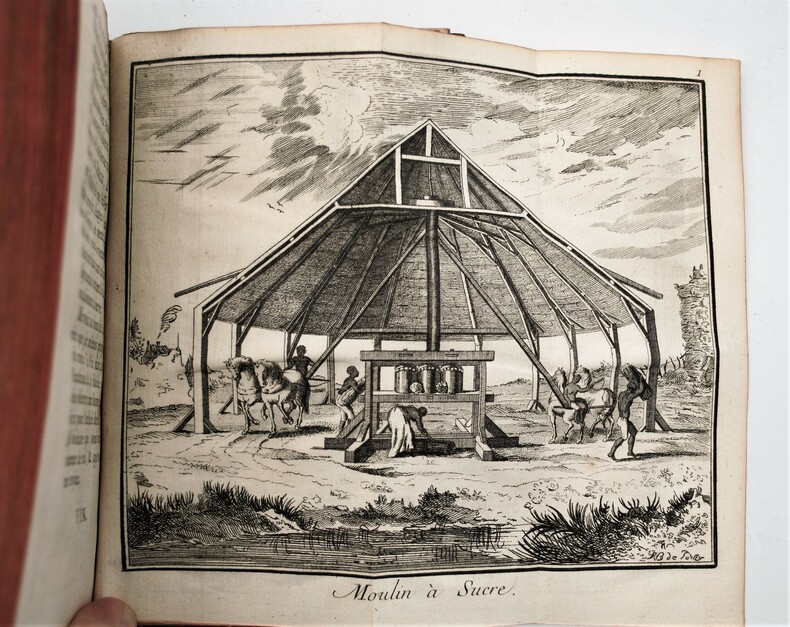
SLOANE HANS
Histoire de la Jamaïque, Traduite de l'Anglois. Par M. *** [Joseph Raulin], ancien Officier de Dragons.
LONDRES (CHEZ NOURSE) 1751 2 VOL. RELIES EN 1, IN-12°, 17 X 10 CMS, RELIÉ VEAU MOUCHETÉ, DOS A 5 NERFS ORNÉ DE FLEURONS DORÉS, TR. ROUGE. 2FF-285PPS; 1FF-148PPS. PREMIÈRE ÉDITION FRANÇAISE TRADUITE PAR RAULIN, ANCIEN OFFICIER DES DRAGONS.
Riferimento per il libraio : PHO-1273
|
|
|
Sloth Lover Prints
Sloth Sketchbook: Sloth Sketchbook for Drawing Writing Painting Sketching and Doodling 100 Pages 8.5 x 11""
NEW. unknown
Riferimento per il libraio : BIB-NOV-14-2025-217641
|
|
|

 Ricevere i risultati per e-mail
 Scaricare i risultati in PDF
 RSS feed
 Link
Link


