|
|
|
Bellin, Jacques:
Zur Geologie des östlichen Misox zwischen Balle della Forcola und Val Leggia.
Zürich, Frischknecht & Lüscher, 1929. 8°. 58 (2) S. Mit 2 gef. Tafeln (geolog. Profile) und 1 gef. geolog. Karte. Orig.-Broschur.
Referentie van de boekhandelaar : 5125CB
|
|
|
Bellini, Paolo and Catherine Petit (Ingo Avolta, illustrator)
Histoire de la Gravure Moderne, avec un repertoire bio-bibliographique de 1874 graveurs (history and bibliography of prints and printmakers)
First and only edition of this useful reference, with biographical and bibliographical notes on 1,874 printmakers. This is one of 333 deluxe copies, printed on fine laid paper and with an original signed and numbered woodcut by Ingo Avolta, printed on Moulin Richard de Bas paper, on the cover. Also signed by the publisher. 8vo, publisher's boards. Top edge gilt. Fine.
|
|
|
BELLMER (Hans) KLEIST (Heinrich von)
Les Marionnettes
Paris, Georges Visat, 1969. In-folio, 56 pp., en feuilles, couverture originale rempliée, étui et chemise de toile rose (très léger ternissement de la toile).
Referentie van de boekhandelaar : 19724
|
|
|
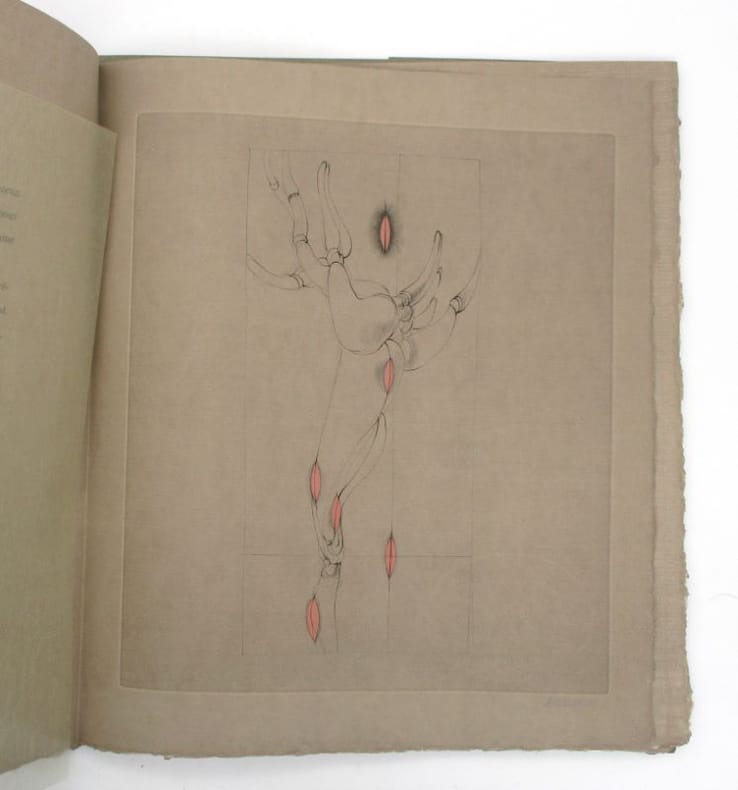
BELLMER, Hans (Kotowice 1902 - Parigi 1975),
Senza titolo
Acquaforte originale a colori Firma e numerazione a matita. Tirata sui torchi dello stampatore Piergiorgio Spallacci. Esemplare 73/150. Cm 34,5x28 (Foglio cm 66x50). . . Ottimo (Fine). . Tiratura 150. .

|
|
|
BELLOCQ & FRIEDLANDER, LEE (Reproduced from Prints) & SONTAG, SUSAN (intro) & SZARKOWSKI, JOHN (Interviews Ed)
Bellocq: Photographs from Storyville The Red-Light District of New Orleans
Jonathan Cape 1996. Square folio black cloth boards stamped blind lettering to front board and spine frontispiece 83pp illus/photos sl fading to board edges sl soiling to eps sm internal reinforcing of front gutter with paper tape in d/w Near FINE minimal creasing to upper edge of rear flap Jonathan Cape 1996 hardcover
Referentie van de boekhandelaar : 361129
|
|
|
Bellocq, EJ [photographer]; Friedlander, Lee [prints]; Sontag, Susan [introduction]; Szarkowski, John [editor] E J
BELLOCQ: PHOTOGRAPHS FROM STORYVILLE THE RED-LIGHT DISTRICT OF NEW ORLEANS
New York: Random House 1996. First American Edition. Hardcover. Quarto 83 pages. In Very Good condition with a Very Good dust jacket. Spine black with red and white lettering. Dust jacket protected in mylar covering. Minor shelf wear. Scuffing to rear cover. Textblock clean. Features full-page photographs throughout. Shelved in Case 11. 1378311. Shelved Dupont Bookstore. Random House hardcover
Referentie van de boekhandelaar : 1378311 ISBN : 0679449752 9780679449751
|
|
|
BENITO
"On se reverra, j'espère..." Manteau, de Martial et Armand. Redingotte, de Lus et Befve (pl.58, La Gazette du Bon ton, 1922 n°8)
Lucien Vogel éditeur | Paris 1922 | 18 x 24 cm | une feuille
Referentie van de boekhandelaar : 84737
|
|
|
BENITO
"Tant de chagrin..." ou L'Infidèle. Robe d'après-midi, en crêpe tchina et agnella, de Rodier. Jaquette brodée, pantalon et gilet, de Kriegck (pl.65, La Gazette du Bon ton, 1922 n°9)
Lucien Vogel éditeur | Paris 1922 | 18 x 24 cm | une feuille
Referentie van de boekhandelaar : 84793
|
|
|
BENITO
C'est l'aurore d'un beau jour. Robe de mariée (pl.11, La Gazette du Bon ton, 1921 n°2)
- Lucien Vogel éditeur, Paris 1921, 18x24cm, une feuille. - Original color print, printed on vergé paper, signed in the plate. An original print used to illustrate the Gazette du bon ton, one of the most attractive and influential 20th century fashion magazines, featuring the talents of French artists and other contributors from the burgeoning Art Deco movement. A celebrated fashion magazine established in 1912 by Lucien Vogel, La Gazette du bon ton appeared until 1925, with a hiatus from 1915 to 1920 due to the war (the editor-in-chief having been called up for service). It consisted of 69 issues printed in only 2,000 copies each and notably illustrated with 573 color plates and 148 sketches of the models of the great designers. Right from the start, this sumptuous publication "was aimed at bibliophiles and fashionable society," (Françoise Tétart-Vittu, "La Gazette du bon ton", in Dictionnaire de la mode, 2016) and was printed on fine vergé paper using a type cut specially for the magazine by Georges Peignot, known as Cochin, later used (in 1946) by Christian Dior. The prints were made using stencils, heightened in colors, some highlighted in gold or palladium. The story began in 1912, when Lucien Vogel, a man of the world involved in fashion (he had already been part of the fashion magazine Femina) decided, with his wife Cosette de Brunhoff - the sister of Jean, creator of Babar - to set up the Gazette du bon ton, subtitled at the time: "Art, fashion, frivolities." Georges Charensol noted the reasoning of the editor-in-chief: "'In 1910,' he observed, 'there was no really artistic fashion magazine, nothing representative of the spirit of the time. My dream was therefore to make a luxury magazine with truly modern artists...I was assured of success, because when it comes to fashion, no country on earth can compete with France.'" ("Un grand éditeur d'art. Lucien Vogel" in Les Nouvelles littéraires, no. 133, May 1925). The magazine was immediately successful, not only in France but also in the United States and Latin America. At first, Vogel put together a team of seven artists: André-Édouard Marty and Pierre Brissaud, followed by Georges Lepape and Dammicourt, as well as eventually his friends from school and the School of Fine Arts, like George Barbier, Bernard Boutet de Monvel and Charles Martin. Other talented people soon came flocking to join the team: Guy Arnoux, Léon Bakst, Benito, Boutet de Monvel, Umberto Brunelleschi, Chas Laborde, Jean-Gabriel Domergue, Raoul Dufy, Édouard Halouze, Alexandre Iacovleff, Jean Émile Laboureur, Charles Loupot, Chalres Martin, Maggie Salcedo. These artist, mostly unknown when Lucien Vogel sought them out, later became emblematic and sought-after artistic figures. It was also they who worked on the advertising drawings for the Gazette. The plates put the spotlight on, and celebrate, dresses by seven designers of the age: Lanvin, Doeuillet, Paquin, Poiret, Worth, Vionnet and Doucet. The designers provided exclusive models for each issue. Nonetheless, some of the illustrations are not based on real models, but simply on the illustrator's conception of the fashion of the day. The Gazette du bon ton was an important step in the history of fashion. Combining aesthetic demands with the physical whole, it brought together - for the first time - the great talents of the artistic, literary, and fashion worlds; and imposed, through this alchemy, a completely new image of women: slender, independent and daring, which was shared by the new generation of designers, including Coco Chanel, Jean Patou, Marcel Rochas, and so on... Taken over in 1920 by Condé Montrose Nast, the Gazette du bon ton was an important influence on the new layout and aesthetics of that "little dying paper" that Nast had bought a few years earlier: Vogue. [FRENCH VERSION FOLLOWS] Estampe originale en couleur, tirée sur papier vergé, signée en bas à gauche de la planche. Gravure originale réalisée pour l'illustration de La

|
|
|
BENITO
Enfin le voici ! (La Gazette du Bon ton, n°3. Année 1921 - Planche 20 )
- Lucien Vogel éditeur, Paris 1921, 19,5x25cm, une feuille. - Original color print, printed on vergé paper, signed in the plate. An original print used to illustrate the Gazette du bon ton, one of the most attractive and influential 20th century fashion magazines, featuring the talents of French artists and other contributors from the burgeoning Art Deco movement. A celebrated fashion magazine established in 1912 by Lucien Vogel, La Gazette du bon ton appeared until 1925, with a hiatus from 1915 to 1920 due to the war (the editor-in-chief having been called up for service). It consisted of 69 issues printed in only 2,000 copies each and notably illustrated with 573 color plates and 148 sketches of the models of the great designers. Right from the start, this sumptuous publication "was aimed at bibliophiles and fashionable society," (Françoise Tétart-Vittu, "La Gazette du bon ton", in Dictionnaire de la mode, 2016) and was printed on fine vergé paper using a type cut specially for the magazine by Georges Peignot, known as Cochin, later used (in 1946) by Christian Dior. The prints were made using stencils, heightened in colors, some highlighted in gold or palladium. The story began in 1912, when Lucien Vogel, a man of the world involved in fashion (he had already been part of the fashion magazine Femina) decided, with his wife Cosette de Brunhoff - the sister of Jean, creator of Babar - to set up the Gazette du bon ton, subtitled at the time: "Art, fashion, frivolities." Georges Charensol noted the reasoning of the editor-in-chief: "'In 1910,' he observed, 'there was no really artistic fashion magazine, nothing representative of the spirit of the time. My dream was therefore to make a luxury magazine with truly modern artists...I was assured of success, because when it comes to fashion, no country on earth can compete with France.'" ("Un grand éditeur d'art. Lucien Vogel" in Les Nouvelles littéraires, no. 133, May 1925). The magazine was immediately successful, not only in France but also in the United States and Latin America. At first, Vogel put together a team of seven artists: André-Édouard Marty and Pierre Brissaud, followed by Georges Lepape and Dammicourt, as well as eventually his friends from school and the School of Fine Arts, like George Barbier, Bernard Boutet de Monvel and Charles Martin. Other talented people soon came flocking to join the team: Guy Arnoux, Léon Bakst, Benito, Boutet de Monvel, Umberto Brunelleschi, Chas Laborde, Jean-Gabriel Domergue, Raoul Dufy, Édouard Halouze, Alexandre Iacovleff, Jean Émile Laboureur, Charles Loupot, Chalres Martin, Maggie Salcedo. These artist, mostly unknown when Lucien Vogel sought them out, later became emblematic and sought-after artistic figures. It was also they who worked on the advertising drawings for the Gazette. The plates put the spotlight on, and celebrate, dresses by seven designers of the age: Lanvin, Doeuillet, Paquin, Poiret, Worth, Vionnet and Doucet. The designers provided exclusive models for each issue. Nonetheless, some of the illustrations are not based on real models, but simply on the illustrator's conception of the fashion of the day. The Gazette du bon ton was an important step in the history of fashion. Combining aesthetic demands with the physical whole, it brought together - for the first time - the great talents of the artistic, literary, and fashion worlds; and imposed, through this alchemy, a completely new image of women: slender, independent and daring, which was shared by the new generation of designers, including Coco Chanel, Jean Patou, Marcel Rochas, and so on... Taken over in 1920 by Condé Montrose Nast, the Gazette du bon ton was an important influence on the new layout and aesthetics of that "little dying paper" that Nast had bought a few years earlier: Vogue. [FRENCH VERSION FOLLOWS] Estampe originale en couleurs tirée sur papier vergé, signée en bas à droite dans la planche. Gravure originale réalisée pour l'illus

|
|
|
BENITO
Enfin le voici ! (La Gazette du Bon ton, n°3. Année 1921 - Planche 20 )
Lucien Vogel éditeur | Paris 1921 | 19.50 x 25 cm | une feuille
Referentie van de boekhandelaar : 39011
|
|
|
BENITO
Enfin le voici ! (pl.20, La Gazette du Bon ton, 1921 n°3)
- Lucien Vogel éditeur, Paris 1921, 18x24cm, une feuille. - Original color print heightened with gold, printed on vergé paper, signed in plate. An original print used to illustrate the Gazette du bon ton, one of the most attractive and influential 20th century fashion magazines, featuring the talents of French artists and other contributors from the burgeoning Art Deco movement. A celebrated fashion magazine established in 1912 by Lucien Vogel, La Gazette du bon ton appeared until 1925, with a hiatus from 1915 to 1920 due to the war (the editor-in-chief having been called up for service). It consisted of 69 issues printed in only 2,000 copies each and notably illustrated with 573 color plates and 148 sketches of the models of the great designers. Right from the start, this sumptuous publication "was aimed at bibliophiles and fashionable society," (Françoise Tétart-Vittu, "La Gazette du bon ton", in Dictionnaire de la mode, 2016) and was printed on fine vergé paper using a type cut specially for the magazine by Georges Peignot, known as Cochin, later used (in 1946) by Christian Dior. The prints were made using stencils, heightened in colors, some highlighted in gold or palladium. The story began in 1912, when Lucien Vogel, a man of the world involved in fashion (he had already been part of the fashion magazine Femina) decided, with his wife Cosette de Brunhoff - the sister of Jean, creator of Babar - to set up the Gazette du bon ton, subtitled at the time: "Art, fashion, frivolities." Georges Charensol noted the reasoning of the editor-in-chief: "'In 1910,' he observed, 'there was no really artistic fashion magazine, nothing representative of the spirit of the time. My dream was therefore to make a luxury magazine with truly modern artists...I was assured of success, because when it comes to fashion, no country on earth can compete with France.'" ("Un grand éditeur d'art. Lucien Vogel" in Les Nouvelles littéraires, no. 133, May 1925). The magazine was immediately successful, not only in France but also in the United States and Latin America. At first, Vogel put together a team of seven artists: André-Édouard Marty and Pierre Brissaud, followed by Georges Lepape and Dammicourt, as well as eventually his friends from school and the School of Fine Arts, like George Barbier, Bernard Boutet de Monvel and Charles Martin. Other talented people soon came flocking to join the team: Guy Arnoux, Léon Bakst, Benito, Boutet de Monvel, Umberto Brunelleschi, Chas Laborde, Jean-Gabriel Domergue, Raoul Dufy, Édouard Halouze, Alexandre Iacovleff, Jean Émile Laboureur, Charles Loupot, Chalres Martin, Maggie Salcedo. These artist, mostly unknown when Lucien Vogel sought them out, later became emblematic and sought-after artistic figures. It was also they who worked on the advertising drawings for the Gazette. The plates put the spotlight on, and celebrate, dresses by seven designers of the age: Lanvin, Doeuillet, Paquin, Poiret, Worth, Vionnet and Doucet. The designers provided exclusive models for each issue. Nonetheless, some of the illustrations are not based on real models, but simply on the illustrator's conception of the fashion of the day. The Gazette du bon ton was an important step in the history of fashion. Combining aesthetic demands with the physical whole, it brought together - for the first time - the great talents of the artistic, literary, and fashion worlds; and imposed, through this alchemy, a completely new image of women: slender, independent and daring, which was shared by the new generation of designers, including Coco Chanel, Jean Patou, Marcel Rochas, and so on... Taken over in 1920 by Condé Montrose Nast, the Gazette du bon ton was an important influence on the new layout and aesthetics of that "little dying paper" that Nast had bought a few years earlier: Vogue. [FRENCH VERSION FOLLOWS] Estampe originale en couleur finement rehaussée à l'or, tirée sur papier vergé, signée en bas à droite de la planche. Gravure ori

|
|
|
BENITO
Enfin le voici ! (pl.20, La Gazette du Bon ton, 1921 n°3)
- Lucien Vogel éditeur, Paris 1921, 18x24cm, une feuille. - Estampe originale en couleur finement rehaussée à l'or, tirée sur papier vergé, signée en bas à droite de la planche. Gravure originale réalisée pour l'illustration de La Gazette du bon ton, l'une des plus belles et des plus influentes revues de mode du XXème siècle, célébrant le talent des créateurs et des artistes français en plein essor de l'art déco. Célèbre revue de mode fondée en 1912 par Lucien Vogel, La Gazette du bon ton a paru jusqu'en 1925 avec une interruption durant la Guerre de 1915 à 1920, pour cause de mobilisation de son rédacteur en chef. Elle se constitue de 69 livraisons tirées à seulement 2000 exemplaires et est illustrée notamment de 573 planches en couleurs et de 148 croquis représentant des modèles de grands couturiers. Dès leur parution, ces luxueuses publications « s'adressent aux bibliophiles et aux mondains esthètes » (Françoise Tétart-Vittu « La Gazette du bon ton » in Dictionnaire de la mode, 2016). Imprimées sur beau papier vergé, elles utilisent une police typographique spécialement créée pour la revue par Georges Peignot, le caractère Cochin, repris en 1946 par Christian Dior. Les estampes sont réalisées grâce à la technique du pochoir métallique, rehaussées en couleurs et pour certaines soulignées à l'or ou au palladium. L'aventure commence en 1912 lorsque Lucien Vogel, homme du monde et de la mode - il a déjà participé à la revue Femina - décide de fonder avec sa femme Cosette de Brunhoff (sur de Jean, le père de Babar) la Gazette du bon ton dont le sous-titre est alors « Art, modes et frivolités ». Georges Charensol rapporte les propos du rédacteur en chef : « En 1910, observe-t-il, il n'existait aucun journal de mode véritablement artistique et représentatif de l'esprit de son époque. Je songeais donc à faire un magazine de luxe avec des artistes véritablement modernes [...] J'étais certain du succès car pour la mode aucun pays ne peut rivaliser avec la France. » (« Un grand éditeur d'art. Lucien Vogel » in Les Nouvelles littéraires, n°133, mai 1925). Le succès de la revue est immédiat, non seulement en France, mais aussi aux Etats-Unis et en Amérique du Sud. À l'origine, Vogel réunit donc un groupe de sept artistes : André-Édouard Marty et Pierre Brissaud, suivis de Georges Lepape et Dammicourt ; et enfin ses amis de l'École des beaux-arts que sont George Barbier, Bernard Boutet de Monvel, ou Charles Martin. D'autres talents viennent rapidement rejoindre l'équipée : Guy Arnoux, Léon Bakst, Benito, Boutet de Monvel, Umberto Brunelleschi, Chas Laborde, Jean-Gabriel Domergue, Raoul Dufy, Édouard Halouze, Alexandre Iacovleff, Jean Émile Laboureur, Charles Loupot, Charles Martin, Maggie Salcedo. Ces artistes, inconnus pour la plupart lorsque Lucien Vogel fait appel à eux, deviendront par la suite des figures artistiques emblématiques et recherchées. Ce sont ces mêmes illustrateurs qui réalisent les dessins des publicités de la Gazette. Les planches mettent en lumière et subliment les robes de sept créateurs de l'époque : Lanvin, Doeuillet, Paquin, Poiret, Worth, Vionnet et Doucet. Les couturiers fournissent pour chaque numéro des modèles exclusifs. Néanmoins, certaines des illustrations ne figurent aucun modèle réel, mais seulement l'idée que l'illustrateur se fait de la mode du jour. La Gazette du bon ton est une étape décisive dans l'histoire de la mode. Alliant l'exigence esthétique et l'unité plastique, elle réunit pour la première fois les grands talents du monde des arts, des lettres et de la mode et impose, par cette alchimie, une toute nouvelle image de la femme, élancée, indépendante et audacieuse, également portée par la nouvelle génération de couturiers Coco Chanel, Jean Patou, Marcel Rochas... Reprise en 1920 par Condé Montrose Nast, la Gazette du bon ton inspirera largement la nouvelle composition et les choix esthétiques du « petit journal mourant » que Nast avait racheté quelques années auparavant : le magazine Vogue.

|
|
|
BENITO
Enfin le voici ! (pl.20, La Gazette du Bon ton, 1921 n°3)
- Lucien Vogel éditeur, Paris 1921, 18x24cm, une feuille. - Estampe originale en couleur finement rehaussée à l'or, tirée sur papier vergé, signée en bas à droite de la planche. Gravure originale réalisée pour l'illustration de La Gazette du bon ton, l'une des plus belles et des plus influentes revues de mode du XXème siècle, célébrant le talent des créateurs et des artistes français en plein essor de l'art déco. Célèbre revue de mode fondée en 1912 par Lucien Vogel, La Gazette du bon ton a paru jusqu'en 1925 avec une interruption durant la Guerre de 1915 à 1920, pour cause de mobilisation de son rédacteur en chef. Elle se constitue de 69 livraisons tirées à seulement 2000 exemplaires et est illustrée notamment de 573 planches en couleurs et de 148 croquis représentant des modèles de grands couturiers. Dès leur parution, ces luxueuses publications « s'adressent aux bibliophiles et aux mondains esthètes » (Françoise Tétart-Vittu « La Gazette du bon ton » in Dictionnaire de la mode, 2016). Imprimées sur beau papier vergé, elles utilisent une police typographique spécialement créée pour la revue par Georges Peignot, le caractère Cochin, repris en 1946 par Christian Dior. Les estampes sont réalisées grâce à la technique du pochoir métallique, rehaussées en couleurs et pour certaines soulignées à l'or ou au palladium. L'aventure commence en 1912 lorsque Lucien Vogel, homme du monde et de la mode - il a déjà participé à la revue Femina - décide de fonder avec sa femme Cosette de Brunhoff (sur de Jean, le père de Babar) la Gazette du bon ton dont le sous-titre est alors « Art, modes et frivolités ». Georges Charensol rapporte les propos du rédacteur en chef : « En 1910, observe-t-il, il n'existait aucun journal de mode véritablement artistique et représentatif de l'esprit de son époque. Je songeais donc à faire un magazine de luxe avec des artistes véritablement modernes [...] J'étais certain du succès car pour la mode aucun pays ne peut rivaliser avec la France. » (« Un grand éditeur d'art. Lucien Vogel » in Les Nouvelles littéraires, n°133, mai 1925). Le succès de la revue est immédiat, non seulement en France, mais aussi aux Etats-Unis et en Amérique du Sud. À l'origine, Vogel réunit donc un groupe de sept artistes : André-Édouard Marty et Pierre Brissaud, suivis de Georges Lepape et Dammicourt ; et enfin ses amis de l'École des beaux-arts que sont George Barbier, Bernard Boutet de Monvel, ou Charles Martin. D'autres talents viennent rapidement rejoindre l'équipée : Guy Arnoux, Léon Bakst, Benito, Boutet de Monvel, Umberto Brunelleschi, Chas Laborde, Jean-Gabriel Domergue, Raoul Dufy, Édouard Halouze, Alexandre Iacovleff, Jean Émile Laboureur, Charles Loupot, Charles Martin, Maggie Salcedo. Ces artistes, inconnus pour la plupart lorsque Lucien Vogel fait appel à eux, deviendront par la suite des figures artistiques emblématiques et recherchées. Ce sont ces mêmes illustrateurs qui réalisent les dessins des publicités de la Gazette. Les planches mettent en lumière et subliment les robes de sept créateurs de l'époque : Lanvin, Doeuillet, Paquin, Poiret, Worth, Vionnet et Doucet. Les couturiers fournissent pour chaque numéro des modèles exclusifs. Néanmoins, certaines des illustrations ne figurent aucun modèle réel, mais seulement l'idée que l'illustrateur se fait de la mode du jour. La Gazette du bon ton est une étape décisive dans l'histoire de la mode. Alliant l'exigence esthétique et l'unité plastique, elle réunit pour la première fois les grands talents du monde des arts, des lettres et de la mode et impose, par cette alchimie, une toute nouvelle image de la femme, élancée, indépendante et audacieuse, également portée par la nouvelle génération de couturiers Coco Chanel, Jean Patou, Marcel Rochas... Reprise en 1920 par Condé Montrose Nast, la Gazette du bon ton inspirera largement la nouvelle composition et les choix esthétiques du « petit journal mourant » que Nast avait racheté quelques années auparavant : le magazine Vogue.

|
|
|
BENITO
Enfin le voici ! (pl.20, La Gazette du Bon ton, 1921 n°3)
Lucien Vogel éditeur | Paris 1921 | 18 x 24 cm | une feuille
Referentie van de boekhandelaar : 54856
|
|
|
BENITO
Enfin le voici ! (pl.20, La Gazette du Bon ton, 1921 n°3)
Lucien Vogel éditeur | Paris 1921 | 18 x 24 cm | une feuille
Referentie van de boekhandelaar : 57593
|
|
|
BENITO
L'Heure du thé. Manteau de fourrure, de Jeanne Lanvin (pl.51, La Gazette du Bon ton, 1920 n°7)
Lucien Vogel éditeur | Paris Septembre 1920 | 18 x 24 cm | une feuille
Referentie van de boekhandelaar : 54793
|
|
|
BENITO
La Fourrure blanche. Manteau pour la Côte d'Azur (pl.10, La Gazette du Bon ton, 1922 n°2)
- Lucien Vogel éditeur, Paris 1922, 18x24cm, une feuille. - Original color print, printed on vergé paper, signed in the plate. An original print used to illustrate the Gazette du bon ton, one of the most attractive and influential 20th century fashion magazines, featuring the talents of French artists and other contributors from the burgeoning Art Deco movement. A celebrated fashion magazine established in 1912 by Lucien Vogel, La Gazette du bon ton appeared until 1925, with a hiatus from 1915 to 1920 due to the war (the editor-in-chief having been called up for service). It consisted of 69 issues printed in only 2,000 copies each and notably illustrated with 573 color plates and 148 sketches of the models of the great designers. Right from the start, this sumptuous publication "was aimed at bibliophiles and fashionable society," (Françoise Tétart-Vittu, "La Gazette du bon ton", in Dictionnaire de la mode, 2016) and was printed on fine vergé paper using a type cut specially for the magazine by Georges Peignot, known as Cochin, later used (in 1946) by Christian Dior. The prints were made using stencils, heightened in colors, some highlighted in gold or palladium. The story began in 1912, when Lucien Vogel, a man of the world involved in fashion (he had already been part of the fashion magazine Femina) decided, with his wife Cosette de Brunhoff - the sister of Jean, creator of Babar - to set up the Gazette du bon ton, subtitled at the time: "Art, fashion, frivolities." Georges Charensol noted the reasoning of the editor-in-chief: "'In 1910,' he observed, 'there was no really artistic fashion magazine, nothing representative of the spirit of the time. My dream was therefore to make a luxury magazine with truly modern artists...I was assured of success, because when it comes to fashion, no country on earth can compete with France.'" ("Un grand éditeur d'art. Lucien Vogel" in Les Nouvelles littéraires, no. 133, May 1925). The magazine was immediately successful, not only in France but also in the United States and Latin America. At first, Vogel put together a team of seven artists: André-Édouard Marty and Pierre Brissaud, followed by Georges Lepape and Dammicourt, as well as eventually his friends from school and the School of Fine Arts, like George Barbier, Bernard Boutet de Monvel and Charles Martin. Other talented people soon came flocking to join the team: Guy Arnoux, Léon Bakst, Benito, Boutet de Monvel, Umberto Brunelleschi, Chas Laborde, Jean-Gabriel Domergue, Raoul Dufy, Édouard Halouze, Alexandre Iacovleff, Jean Émile Laboureur, Charles Loupot, Chalres Martin, Maggie Salcedo. These artist, mostly unknown when Lucien Vogel sought them out, later became emblematic and sought-after artistic figures. It was also they who worked on the advertising drawings for the Gazette. The plates put the spotlight on, and celebrate, dresses by seven designers of the age: Lanvin, Doeuillet, Paquin, Poiret, Worth, Vionnet and Doucet. The designers provided exclusive models for each issue. Nonetheless, some of the illustrations are not based on real models, but simply on the illustrator's conception of the fashion of the day. The Gazette du bon ton was an important step in the history of fashion. Combining aesthetic demands with the physical whole, it brought together - for the first time - the great talents of the artistic, literary, and fashion worlds; and imposed, through this alchemy, a completely new image of women: slender, independent and daring, which was shared by the new generation of designers, including Coco Chanel, Jean Patou, Marcel Rochas, and so on... Taken over in 1920 by Condé Montrose Nast, the Gazette du bon ton was an important influence on the new layout and aesthetics of that "little dying paper" that Nast had bought a few years earlier: Vogue. [FRENCH VERSION FOLLOWS] Estampe originale en couleur, tirée sur papier vergé, signée en bas à droite de la planche. La Gazette du bon ton, l'une des plus belle

|
|
|
BENITO
La Fourrure blanche. Manteau pour la Côte d'Azur (pl.10, La Gazette du Bon ton, 1922 n°2)
Lucien Vogel éditeur | Paris 1922 | 18 x 24 cm | une feuille
Referentie van de boekhandelaar : 54960
|
|
|
BENITO
Les Quatre bouquets. Robe du soir garnie de fleurs. (La Gazette du Bon ton, n°7 - Année 1920. Planche 50 )
- Lucien Vogel éditeur, Paris [circa 1920], 19,5x25cm, une feuille. - Original color print, printed on vergé paper, signed in the plate. An original print used to illustrate the Gazette du bon ton, one of the most attractive and influential 20th century fashion magazines, featuring the talents of French artists and other contributors from the burgeoning Art Deco movement. A celebrated fashion magazine established in 1912 by Lucien Vogel, La Gazette du bon ton appeared until 1925, with a hiatus from 1915 to 1920 due to the war (the editor-in-chief having been called up for service). It consisted of 69 issues printed in only 2,000 copies each and notably illustrated with 573 color plates and 148 sketches of the models of the great designers. Right from the start, this sumptuous publication "was aimed at bibliophiles and fashionable society," (Françoise Tétart-Vittu, "La Gazette du bon ton", in Dictionnaire de la mode, 2016) and was printed on fine vergé paper using a type cut specially for the magazine by Georges Peignot, known as Cochin, later used (in 1946) by Christian Dior. The prints were made using stencils, heightened in colors, some highlighted in gold or palladium. The story began in 1912, when Lucien Vogel, a man of the world involved in fashion (he had already been part of the fashion magazine Femina) decided, with his wife Cosette de Brunhoff - the sister of Jean, creator of Babar - to set up the Gazette du bon ton, subtitled at the time: "Art, fashion, frivolities." Georges Charensol noted the reasoning of the editor-in-chief: "'In 1910,' he observed, 'there was no really artistic fashion magazine, nothing representative of the spirit of the time. My dream was therefore to make a luxury magazine with truly modern artists...I was assured of success, because when it comes to fashion, no country on earth can compete with France.'" ("Un grand éditeur d'art. Lucien Vogel" in Les Nouvelles littéraires, no. 133, May 1925). The magazine was immediately successful, not only in France but also in the United States and Latin America. At first, Vogel put together a team of seven artists: André-Édouard Marty and Pierre Brissaud, followed by Georges Lepape and Dammicourt, as well as eventually his friends from school and the School of Fine Arts, like George Barbier, Bernard Boutet de Monvel and Charles Martin. Other talented people soon came flocking to join the team: Guy Arnoux, Léon Bakst, Benito, Boutet de Monvel, Umberto Brunelleschi, Chas Laborde, Jean-Gabriel Domergue, Raoul Dufy, Édouard Halouze, Alexandre Iacovleff, Jean Émile Laboureur, Charles Loupot, Chalres Martin, Maggie Salcedo. These artist, mostly unknown when Lucien Vogel sought them out, later became emblematic and sought-after artistic figures. It was also they who worked on the advertising drawings for the Gazette. The plates put the spotlight on, and celebrate, dresses by seven designers of the age: Lanvin, Doeuillet, Paquin, Poiret, Worth, Vionnet and Doucet. The designers provided exclusive models for each issue. Nonetheless, some of the illustrations are not based on real models, but simply on the illustrator's conception of the fashion of the day. The Gazette du bon ton was an important step in the history of fashion. Combining aesthetic demands with the physical whole, it brought together - for the first time - the great talents of the artistic, literary, and fashion worlds; and imposed, through this alchemy, a completely new image of women: slender, independent and daring, which was shared by the new generation of designers, including Coco Chanel, Jean Patou, Marcel Rochas, and so on... Taken over in 1920 by Condé Montrose Nast, the Gazette du bon ton was an important influence on the new layout and aesthetics of that "little dying paper" that Nast had bought a few years earlier: Vogue. [FRENCH VERSION FOLLOWS] Estampe originale en couleur tirée sur papier vergé, signée en haut à gauche dans la planche. Gravure originale réalisée pour l'illustr

|
|
|
BENITO
Les Quatre bouquets. Robe du soir garnie de fleurs. (La Gazette du Bon ton, n°7 - Année 1920. Planche 50 )
Lucien Vogel éditeur | Paris [circa 1920] | 19.50 x 25 cm | une feuille
Referentie van de boekhandelaar : 43220
|
|
|
BENITO
Les Vacances au Château ou l'invité timide. Robe, de Beer. Costume, de Larsen (pl.51, La Gazette du Bon ton, 1922 n°7)
Lucien Vogel éditeur | Paris 1922 | 18 x 24 cm | une feuille
Referentie van de boekhandelaar : 55007
|
|
|
BENITO
Les Vacances au Château ou l'invité timide. Robe, de Beer. Costume, de Larsen (pl.51, La Gazette du Bon ton, 1922 n°7)
Lucien Vogel éditeur | Paris 1922 | 18 x 24 cm | une feuille
Referentie van de boekhandelaar : 84724
|
|
|
BENITO
Longchamp. Robe d'après-midi de Beer. Jaquette pour les courses, de Kriegck (pl.44, La Gazette du Bon ton, 1922 n°6)
Lucien Vogel éditeur | Paris 1922 | 18 x 24 cm | une feuille
Referentie van de boekhandelaar : 77352
|
|
|
BENITO
Longchamp. Robe d'après-midi de Beer. Jaquette pour les courses, de Kriegck (pl.44, La Gazette du Bon ton, 1922 n°6)
Lucien Vogel éditeur | Paris 1922 | 18 x 24 cm | une feuille
Referentie van de boekhandelaar : 89410
|
|
|
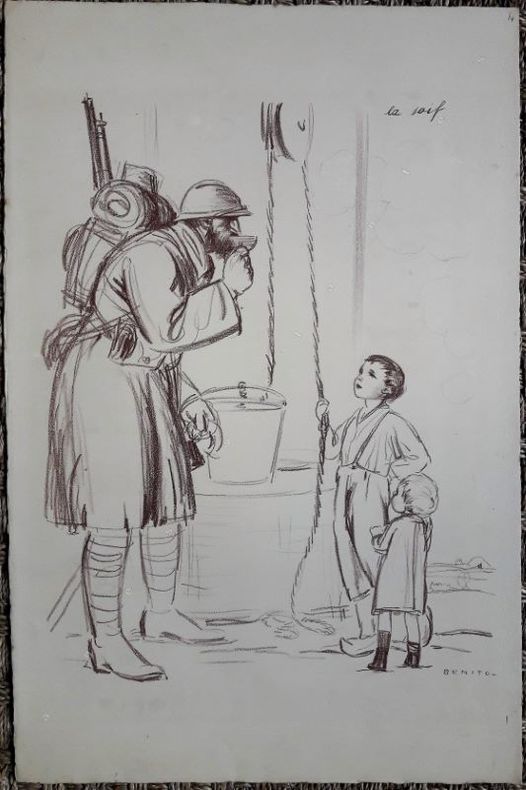
BENITO (Eduardo Benito).
La soif.
50X33 cm.
Referentie van de boekhandelaar : 16328
|
|
|
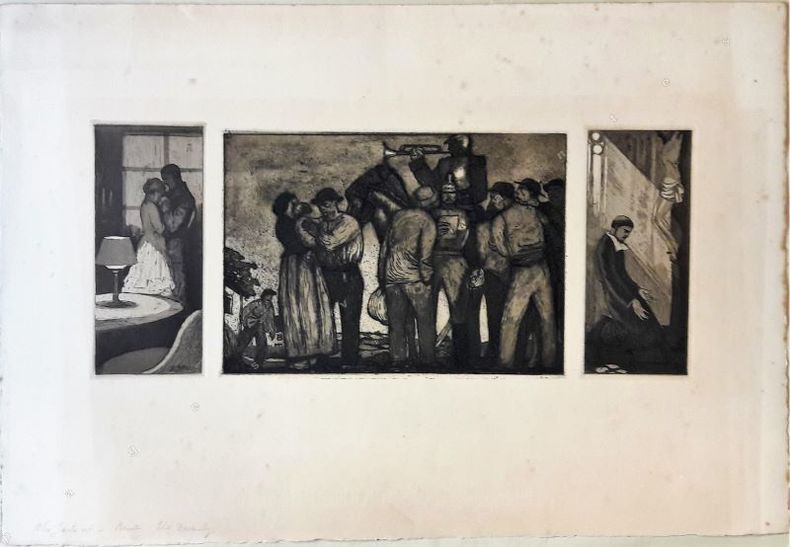
BENITO (Eduardo Garcia).
Alea jacta est. Triptyque.
Devambez. 45 X 65 cm.
Referentie van de boekhandelaar : 16307
|
|
|
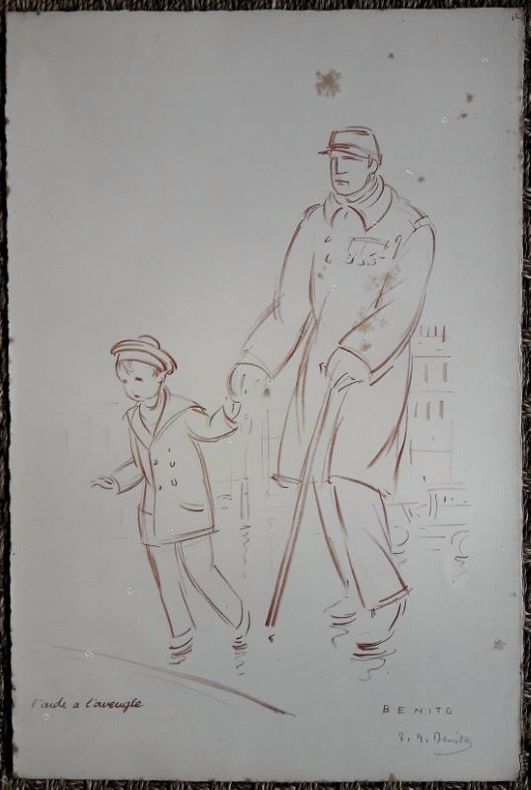
BENITO (Eduardo Garcia).
L'aide à l'aveugle.
50X33 cm.
Referentie van de boekhandelaar : 16325
|
|
|
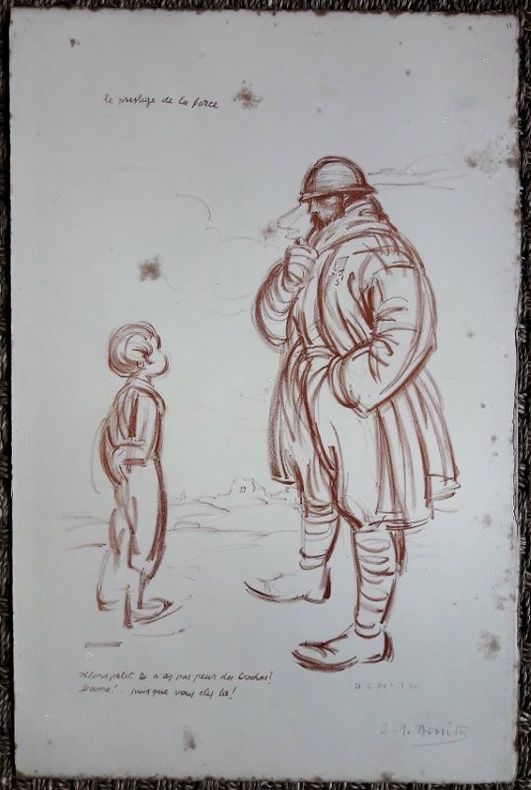
BENITO (Eduardo Garcia).
Le prestige de la force.
50X33cm.
Referentie van de boekhandelaar : 16326
|
|
|
BENITO (Eduardo Garcia).
Suis gentille ?
50X33 cm.
Referentie van de boekhandelaar : 16323

|
|
|
BENITO - LARSEN
"Pauvres petites bêtes..." ou Le Voyage sentimental. Robe d'après-midi de Martial et Armand. Pardessus de Larsen (pl.74, La Gazette du Bon ton, 1922 n°10)
Lucien Vogel éditeur | Paris 1922 | 18 x 24 cm | une feuille
Referentie van de boekhandelaar : 84731
|
|
|
BENNATI, Gianluigi,
Senza titolo
Acquaforte appartenete alla cartella ''Venezia 73'' contenente 31 opere grafiche di maestri italiani ed un saggio di Piero Chiara, pubblicata dall'Unesco Firma a matita. Il foglio reca il timbro a secco del Museo di Castelvecchio di Verona e quello della Stamperia del Cappello. Esemplare 96/100. Cm 70x50. . . . . Tiratura 100 + XI f.c.. .

|
|
|
BENNETT, David (Chicago, Illinois 1941),
Senza titolo
Litografia a colori Firma, data e numerazione a matita. Timbro a secco dello stampatore Giorgio Upiglio. Stampata su carta Magnani. Esemplare p.d.a.. cm 90x68. . . Ottimo (Fine). . Tiratura XV. .

|
|
|
BENNETT, David (Chicago, Illinois 1941),
Senza titolo
Litografia a colori Firma, data e numerazione a matita. Timbro a secco dello stampatore Giorgio Upiglio. Stampata su carta Magnani. Esemplare XIII/XV. cm 88x62,5. . . Ottimo (Fine). . Tiratura XV. .

|
|
|
Bennett, Derek
In Zürich.
Feuerthalen, Shade Tree Press, 1986. 4°. Ca. 110 S. Mit 80 ganzseitigen Photographien von Derek Bennett. Orig.-Leinenband mit silberner Rückenbeschriftung in Original Leinenschuber. + Wichtig: Für unsere Kunden in der EU erfolgt der Versand alle 14 Tage verzollt ab Deutschland / Postbank-Konto in Deutschland vorhanden +
Referentie van de boekhandelaar : 1782CB
|
|
|
Bennett, Derek:
In Zürich.
Feuerthalen, Shade Tree Press, 1986. 4°. Ca. 110 S. Mit 80 ganzseitigen Photographien von Derek Bennett. Orig.-Leinenband mit silberner Rückenbeschriftung in Original Leinenschuber.
Referentie van de boekhandelaar : 1782CB
|
|
|
Bennett, Stuart
How to Buy Photographs
Index. 159 pages. Rubbing to surface of dust jacket plus some slight creasing.
|
|
|
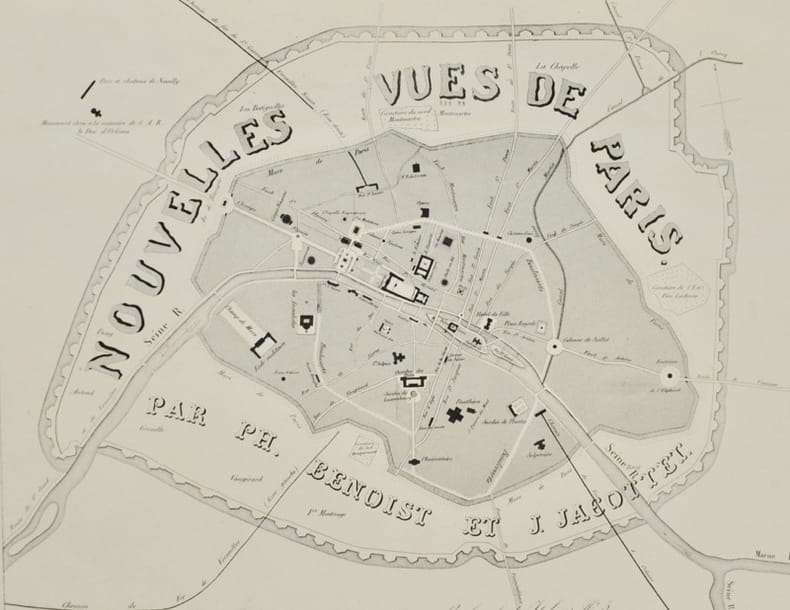
Benoist (Philippe), Jacottet (Julien).
Nouvelles vues de Paris.
Paris, Gihaut Frères, s.d. (1843). Titre et 36 planches lithographiées et teintées (20 x 28 cm) reliées en 1 vol. in-folio (29,5 x 44 cm), demi-chagrin prune à coins, dos lisse orné, filets dorés sur les plats, tranches dorées (reliure de l'époque).
Referentie van de boekhandelaar : 42604
|
|
|
BENOIST Philippe, BAYOT Auguste
Te Deum chanté à Notre-Dame pour la prise d'Alger (11 juillet 1830)
1861 Paris Charpentier [1861] Vue animée en deux teintes, dessinée et lithographiée par Ph. Benoist et A. Bayot. 24,5 x 35,5 cm hors marges, 34,5 x 50 cm toutes marges comprises.
Referentie van de boekhandelaar : 4727
|
|
|
Benoît Audran
La Crucifixion- scène biblique (Christ, croix, Crucifixion, chemin de croix)
Inscription, signature, au bas à droite : B. Audran : Benoît Audran Ier ; légende, annotation, au bas à gauche : Inventé et peint par M. le Brun premier peintre du Roi / Sicut Moïses exaltavit sepentam in Deserto, it a exaltari portet Silium Hominis ut omnis qui credit in ipsum, non percat, sed habeat vitam oeternam. Joan. Cap.3 V.14.13 / inscription, dédicace, au bas à droite : Comme Moïse éleva le serpent dans le Desert, ainsi il faut que le fils de l'Homme soit élevé, afin que quiconque croira en lui, ne périsse point, mais qu'il ait la vie éternelle. St Jean chap.3 V.14.13 / Par son très humble et très obéissant serviteur et fidelle (sic) sujet Benoist Audran / Se vend a Paris au Palais de Luxembourg ou le dit Audran demeure- feuille 49x36,8 cm-pl =35,7x26,8 cm- tache en bas marge gauche
Referentie van de boekhandelaar : 26661

|
|
|
Benoît Audran
Le peuple d'Israel s'ennuiant du chemin et du travail, parla contre Dieu et contre Moïse.
Le peuple d'Israel s'ennuiant du chemin et du travail, parla contre Dieu et contre Moïse. C'est pourquoy le Seigneur envoia contre ce peuple des serpens dont la morsure brûloit comme le feu : ils vinrent donc à Moïse, et ils lui dirent : Nous avons peché : et Moïse fit par le commandement de Dieu, un serpent d'airain, et il le mit pour figne, et ceux qui avaient été blessez le regardoient, étoient guéris. Numer.cap 21 / C. le Brun Jn. pinx. ; B. Audran sculp. ; -feuille :43,9x34,5 cm-image :35,1x24,3 cm- tache en bas marge gauche.
Referentie van de boekhandelaar : 26662

|
|
|
Beny (?)
Gravure originale sur vélin intitulée MARIONNETTE, numérotée 25/30 et signée au crayon par l'artiste, Beny (?)
Saint-Cloud, Antarès, Editions d'Art, 65x49cm (76x56,5cm hors-tout), Bon état.
Referentie van de boekhandelaar : 81402

|
|
|
BERALDI Henri
Estampes et Livres. 1872-1892.
Paris.Conquet en 1892.In-4 relié par Gruel. Ex.n°240/390.Couverture conservée.277 pages.Table des divisions.Liste des reliures reproduites, en noir et couleur.Portrait de Cuzin en dernière page. Très bel exemplaire aux armes (sur le 1er plat) de Madame Grace Whitney Hoff. ( ex-libris sur la doublure ).1862-1938.La reliure de Gruel est un plein maroquin aubergine avec 4 filets dorés. Dos à 5 nerfs soulignés de filets avec caissons entourés de 3 filets dorés aussi.Tranches dorées. Infimes rousseurs. Dos un peu décoloré.
Referentie van de boekhandelaar : 39232

|
|
|
BERALDI (Henri)
ESTAMPES et LIVRES.1872-1892.
Paris Librairie L. CONQUET 1892 un volume grand in-8°, XIII 277 pp. Reliure moderne en plein chagrin rouge vermillon, dos à gros nerfs orné d'une pièce de titre, plats orné d'un décor " art nouveau " en noir. (dos légèrement marqué, présences de rousseurs à plusieurs feuillets du texte). Ouvrage orné de 42 planches en hors - texte, avec le frontispice, dont 14 tirées en chromolithographies sur papier Japon. Un portrait en médaillon en page 277 représentant le relieur Francisque Cuzin. Edition limitée à 390 exemplaires sur papier du Marais numérotée ( Nº 36 ). Exemplaire à belles marges.
Referentie van de boekhandelaar : 024141
|
|
|
BERALDI. H.
Collection Henri Béraldi. Catalogue d'estampes du XVIIIe siècle. Portraits des XVIIe, XVIIIe et XIXe siècles. Gravures et lithographies du XIXe siècles. Estampes sur la Révolution.
Paris, Hôtel Drouot, 1927-1930. 4 parties en 4 volumes in-4, tables, planches. Brochés, non coupés.Bel exemplaire.
Referentie van de boekhandelaar : 18539
|
|
|
Berger, Jos
(Dorf im Schweizer Mittelland).
1868. Aqarell. Bildgrösse: 37 x 48 cm. + Wichtig: Für unsere Kunden in der EU erfolgt der Versand alle 14 Tage verzollt ab Deutschland / Postbank-Konto in Deutschland vorhanden +, bild Holzrahmen mit Gebrauchsspuren.
Referentie van de boekhandelaar : 560BG

|
|
|
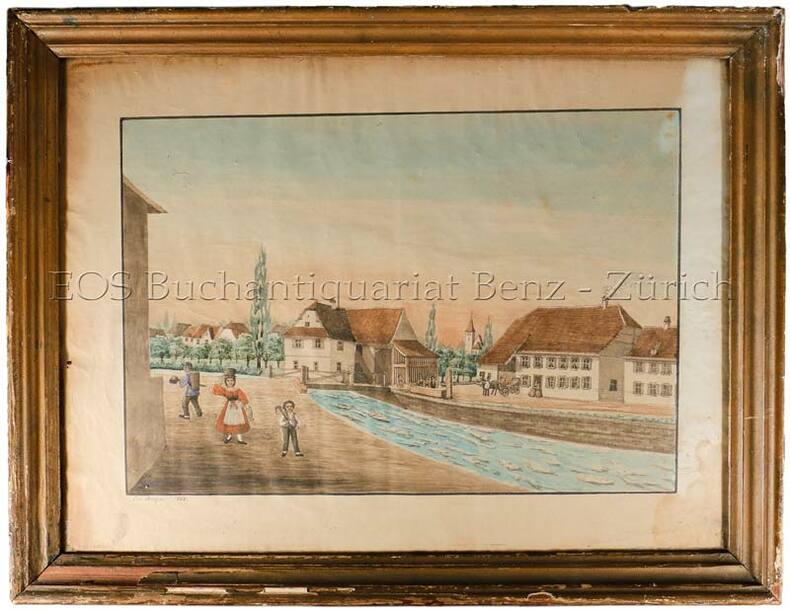
Berger, Jos:
(Dorf im Schweizer Mittelland).
1868. Aqarell. Bildgrösse: 37 x 48 cm. Holzrahmen mit Gebrauchsspuren.
Referentie van de boekhandelaar : 560BG
|
|
|
Berger, Kathia
Bodo und Eule. Farbradierung mit Aquatinta.
[Ca. 1980]. Auf festem bläulich getönten Bütten. Plattenmaß 22,5 x 21,8 cm. Bogenmaß 48 x 40 cm.
Referentie van de boekhandelaar : 91355

|
|
|
BERGHEM Nicolas
La vache couchée près de celle qui est debout.
Notre épreuve est une héliogravure Amand-Durand, d’après l’épreuve de la collection Dutuit. Tous ces tirages sont réalisés sur un superbe papier et sont de grande qualité. Prête à être encadrée Très bon 135 x 190
Referentie van de boekhandelaar : 159

|
|
|
BERGHEM Nicolas
Les trois vaches au repos.
Notre épreuve est une héliogravure Amand-Durand, d’après l’épreuve de la collection Dutuit. Tous ces tirages sont réalisés sur un superbe papier et sont de grande qualité. Prête à être encadrée Très bon 180 x 250
Referentie van de boekhandelaar : 161

|
|
|

 De zoekresultaten per email ontvangen
 Zoekresultaten downloaden als PDF
 RSS feed
 Permanente link


