|
|
|
KOWALSKI, Piotr (Lvov, 1927 - Paris, 2004),
Senza titolo
Litografia originale a colori dalla cartella ''El circulo de piedra'' Firma, data e numerazione a matita. Timbro a secco dello stampatore Giorgio Upiglio. Stampata su carta delle Cartiere Filicarta. Esemplare 122/125. Cm 50x35. pp.. . Ottimo (Fine). . Tiratura 125 + XXV. .

|
|
|
KOYAMA-RICHARD Brigitte
La magie des estampes japonaises.
Paris: Hermann, 2003 in-8, 214 pages, 134 illustrations. Notices biographiques, glossaire, bibliographie, index. Broché, couv. illustrée à rabats.
Riferimento per il libraio : 13968786
|
|
|
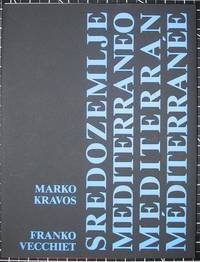
Kravos, Marko (poems); Franko Vecchiet (prints); Matjaz Kmecl (essay).
MEDITERRANEAN - Sredozemlje - Mediterraneo - Mediterran.
Trieste: TK Galerija 1989. First edition thus. Hardcover. Contents fine solander case lightly scuffed. Black cloth solander case 32 x 25 cm 12.75 x 9.75 inches printed card wrapper over plain red wrapper and blue gray paper chemise holding 12 unbound fascicles each with a poem by Marko Kravos and a serigraph print by Franko Vecchiet. Each poem presented in the original Slovenian with translations into Italian German French and English. Print and English translation laid in loose. English translation printed on transparent parchment. Accompanying 12 page essay by Matjaz Kmecl laid in. <br/><br/>Scarce English-language printing of this Slovanian artists' book. TK Galerija hardcover
Riferimento per il libraio : 22812
|
|
|
KREITTMAYR, Wiguläus Xaver Aloysius
Compendium Codicis Bavarici civilis, judiciarii, criminalis et annotationum. Oder: Grundriß der gemein- und bayerischen Privat-Rechtgelehrsamkeit den Anfängern zur Einleitung, den übrigen zur Recollection. 2 Bände.
München, Crätz, 1768. 8 Bl., 288 S.; S. 289-572. Mit 1 gestochenen Titelvignette. Marmorierte Pappbände d. Zeit mit je 2 Rückenschildern. [2 Warenabbildungen]
Riferimento per il libraio : 214104

|
|
|
Kremer, Philipp
Generalverkehrsplan für die Stadt Zürich. Dezember 1953. I.: Text (II: Anlagen. III: Zeichnungen).
Hannover, Selbstverlag, 1953. 4°. 116 S.; 72 Anlagen (ohne Seitennummerierung); 143 Bl., (5) Tafeln. Orig.-Broschuren mit Leinenrücken in Schuber. + Wichtig: Für unsere Kunden in der EU erfolgt der Versand alle 14 Tage verzollt ab Deutschland / Postbank-Konto in Deutschland vorhanden +, 4634DB|4634DB_2 3 Bände. [2 Warenabbildungen]
Riferimento per il libraio : 4634DB

|
|
|
Kremer, Philipp:
Generalverkehrsplan für die Stadt Zürich. Dezember 1953. I.: Text (II: Anlagen. III: Zeichnungen).
3 Bände. Hannover, Selbstverlag, 1953. 4°. 116 S.; 72 Anlagen (ohne Seitennummerierung); 143 Bl., (5) Tafeln. Orig.-Broschuren mit Leinenrücken in Schuber.
Riferimento per il libraio : 4634DB

|
|
|
KRESS, Johann Paul
Commentatio succincta in Constitutionem Criminalem Caroli V. imperatoris, in qua nonsolum de constitutionis seu ordinationis ipsius origine Maximiliano I. vero similiter a Goldasto adscripta disseritur etc. Editio tertia castigatior et locupletior.
Hannover, Förster, 1736. 4to. 18 Bl., 874 S., 24 Bl. Pergament d. Zeit (verstaubt, gebräunt u. fleckig). [2 Warenabbildungen]
Riferimento per il libraio : 70250

|
|
|
KRESS, Johannes Paul
Commentatio succincta in Constitutionem Criminalem Caroli V. Imperatoris in Qua non solum de constitutionis et ordinationis ipsius origine Maximiliano I. verosimiliter a Goldasto adscripta. Editio novissima.
Hannover, Helwing, 1786. 4to. 18 Bl., 766 S., 23 Bl. Halbpergament d. Zt. (etwas fleckig u. berieben, Vorderdeckelbezug mit Fehlstelle). [2 Warenabbildungen]
Riferimento per il libraio : 634724

|
|
|
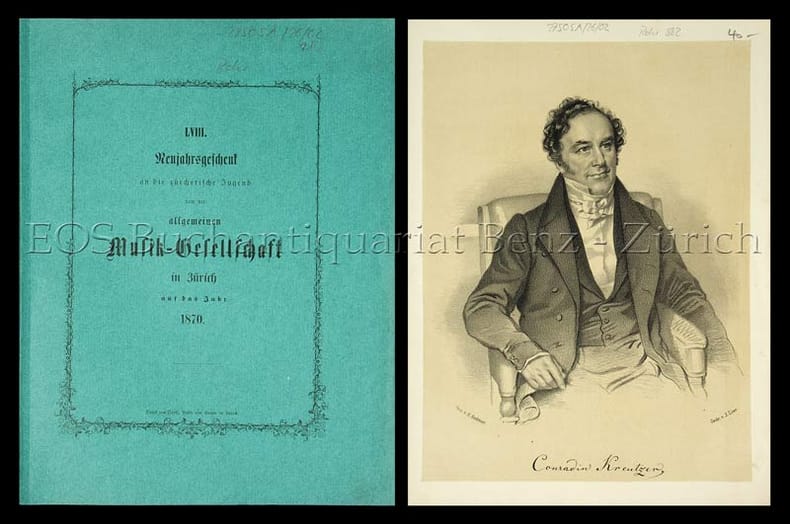
Kreutzer. - Weber (Pfarrer in Höngg):
Konradin Kreutzer.
Zürich, Orell, Füssli und Comp., 1870. Gr.-8°. 18 S. Mit einem lithogr. Porträt von J. Lier nach H. Bodmer. Orig.-Broschur. = "58. Neujahrsblatt (Neujahrsgeschenk an die Zürcherische Jugend sic.) von der allgemeinen Musik-Gesellschaft in Zürich auf das Jahr 1870".
Riferimento per il libraio : 27505AB
|
|
|
Kron, Béla
Hamburg - Im Hafen. Orig. Radierung. Gerahmt, unter Glas.
1923. Plattenmaß 35 x 44,5 cm. Rahmenmaß 53 x 61,5 cm.
Riferimento per il libraio : 98372
|
|
|
KRONBERGER-FRENTZEN, H
Das deutsche Familienbildnis. Mit einem Gedicht v. Hermann Claudius.
Leipzig, Asmus, (1940). 4to. 43 S., 80 Taf. OLwd (Einbd leicht lichtrandig).
Riferimento per il libraio : 1225679
|
|
|
Kropacek, Jiri
The Prague Vedute Changes In Views Of The City (1493-1908)
Book is in excellent condition. Binding is solid and square, covers are in bright red leather in perfect condition, having sharp corners. Exterior shows no blemishes, text/interior is clean and free of marking of any kind. Dust jacket shows the slightest signs of shelf wear only, no tears. 175 pages with a great many large and full page illustrations throughout. Contents include Prague as a subject of treatment for artists, Curiosity of the Renaissance period, The city as the drama of life: the Baroque, Sobriety in the Neo-Classical period, The Empire style, Romanticism, and Realism, The end of the traditional veduta and a new view of the city. Map and pictorial endpapers. Books was conceived as a pictorial biography of the city over the course of five centuries.

|
|
|
Krucker, H(ans)
Rheinschiffahrt oberhalb Basel und Schweizerische Bundesbahnen.
St. Gallen, 1935. 4°. 1 Bl., 120 (2) S. Halbleinenband der Zeit + Wichtig: Für unsere Kunden in der EU erfolgt der Versand alle 14 Tage verzollt ab Deutschland / Postbank-Konto in Deutschland vorhanden + (leicht bestossen).
Riferimento per il libraio : 28309AB
|
|
|
Krucker, H(ans):
Rheinschiffahrt oberhalb Basel und Schweizerische Bundesbahnen.
St. Gallen, 1935. 4°. 1 Bl., 120 (2) S. Halbleinenband der Zeit (leicht bestossen).
Riferimento per il libraio : 28309AB
|
|
|
Kubin, Alfred
Alfred Kubin - Fünfzehn [15] Federzeichnungen [RARE LIMITED EDITION of 300 COPIES - COPY #81]
LIMITED EDITION of 300 COPIES - COPY No.81. RARE collection of 15 facsimiles of pan-and-ink drawings from various stages of his career by Alfred Leopold Isidor Kubin (1877-1959), an Austrian printmaker, illustrator and writer, an important representative of symbolism and expressionism in art. 430x320mm. Unpaginated. Handmade pale blue quarter-leather Hardcover laid in pale blue board slipcase. Gilt lettering on spine. Slipcase and spine stained. Slipcase edges and spine edges worn. Spine browned. Pages rough-cut as published. [SUMMARY]: This extremely rare collection of amazing drawings by an extraordinary 20th-century Austrian artist is in very good condition.
|
|
|
Kulka, Dan / Spielman, Peter; Scheps, Marc [curators] / Levi, Gad [Trans.]
Dan Kulka: 1938-1979 - Sculptures, Paintings, Drawings, Prints, Photographs
Contains color and b&w plates. 245x200 mm. 221 pages. Soft cover. Cover yellowing and rubbed. Cover corners slightly wrinkled. Spine yellowing and slightly wrinkled. Spine edges slightly bumped and slightly worn. Pages slightly yellowing. Else in good condition.
|
|
|
Kulka, Dan [Artist] / Spielman, Peter ; Scheps, Marc [Curators] / Levi, Gad [Tr.]
Dan Kulka, 1938-1979: Sculptures, Paintings, Drawings, Prints, Photographs
24x19.5 cm. 221 pages. Softcover. Cover edges slightly rubbed and wrinkled. Signed and dedicated by the Kulka family. Else in good condition.
|
|
|
Kully, Franz Peter
Hilfs- und Handbuch zu der Sammlung der in Kraft bestehenden Gesetze, Regierungsverordnungen und Beschlüsse, Konkordate und Verträge für den Kanton Solothurn seit dem Jahr 1798 bis 1821 und zu der Sammlung der für den Kanton Solothurn verbindlichen eidgenössischen Beschlüsse, Verordnungen und Konkordate, und der besondern Verkomnisse mit auswärtigen Staaten.
Solothurn, gedruckt bey Ludwig Vogelsang, (1821). 8°. 2 n.n. Bl., 223 S. Halblederband der Zeit mit grünem goldgeprägtem Rückenschild und wenig schwarzgeprägter Bundverzierung. + Wichtig: Für unsere Kunden in der EU erfolgt der Versand alle 14 Tage verzollt ab Deutschland / Postbank-Konto in Deutschland vorhanden +
Riferimento per il libraio : 35150DB
|
|
|
Kully, Franz Peter:
Hilfs- und Handbuch zu der Sammlung der in Kraft bestehenden Gesetze, Regierungsverordnungen und Beschlüsse, Konkordate und Verträge für den Kanton Solothurn seit dem Jahr 1798 bis 1821 und zu der Sammlung der für den Kanton Solothurn verbindlichen eidgenössischen Beschlüsse, Verordnungen und Konkordate, und der besondern Verkomnisse mit auswärtigen Staaten.
Solothurn, gedruckt bey Ludwig Vogelsang, (1821). 8°. 2 n.n. Bl., 223 S. Halblederband der Zeit mit grünem goldgeprägtem Rückenschild und wenig schwarzgeprägter Bundverzierung.
Riferimento per il libraio : 35150DB
|
|
|
KUPCIK, Ivan
CARTES GÉOGRAPHIQUES ANCIENNES. Evolution de la représentation cartographique du monde : de l'Antiquité à la fin du XIXe siécle
Paris Gründ 1986 in 4 (29x21,5) 1 volume reliure toilée de l'éditeur sous jaquette illustrée en couleurs, 240 pages, avec de 74 reproductions en noir et blanc et en couleurs, dont 30 planches hors-texte reproduisant des cartes en couleurs. Collection Beaux objets d'autrefois. Bel exemplaire ( Photographies sur demande / We can send pictures of this book on simple request )
Riferimento per il libraio : 31643
|
|
|
Kurth, Julius
Der chinesische Farbendruck. [SERIES]: Ostasiatische Graphik - Band I.
Contains color and b&w plates. 29x13.5 pages. VII+87 pages. Gilt board Hardcover with cloth spine. Cover age stained and slightly rubbed. Cover corners and spine edges worn. Few pages age stained. Pages yellowing. Else in good condition.
|
|
|
KURTH, W
Altdeutsche Holzschnitt-Kunst. Berlin, F. Heyder,.
etwa 1920. 4to. 100 S., 2 Bl. m. 1 Farbholzschnitt u. 59 meist ganzseitigen Holzschnitten. OHlwd (Deckel m. kl. Schabstellen).
Riferimento per il libraio : 1033284
|
|
|
Kägi, Joh, Heinrich
Geschichte der Herrschaft und Gemeinde Wädensweil, nach den besten Quellen bearbeitet... Eine Festgabe zur hundertjährigen Kirchweihfeier am 25. August 1867.
Wädenswil, Rüegg zum Florhof, (1867). 8°. VIII, 390 (2) S. Mit 1 lithogr. Tafel. Halbleinenband mit handschriftlichem Rückenschild aus Papier. + Wichtig: Für unsere Kunden in der EU erfolgt der Versand alle 14 Tage verzollt ab Deutschland / Postbank-Konto in Deutschland vorhanden +, 1945BB|1945BB_2 [2 Warenabbildungen]
Riferimento per il libraio : 1945BB

|
|
|
Käppeli, J
Gründung und Entwicklung der landwirtschaftlichen Schule Rütti. Festschrift zur Feier ihres fünfzigjährigen Bestehens. Mit einem Vorworte von Regierungspräsident Dr. C. Moser.
Bern, Buchdruckerei Gustav Grunau, 1911. 8°. VIII, 152 (1) S. Mit zahlr. Abb. auf Tafeln. Illustr. Orig.-Leinenband mit Rücken- und Deckelvergoldung + Wichtig: Für unsere Kunden in der EU erfolgt der Versand alle 14 Tage verzollt ab Deutschland / Postbank-Konto in Deutschland vorhanden + (minim berieben und bestossen).
Riferimento per il libraio : 26359AB
|
|
|
KÖNIG Ralf
Signierter Comic-Druck als Weihnachtsgabe von Heinzelmännchen's Bücherstube in Stuttgart. * Eigenhändig signiert und numeriert. Hier die Nummer 35 / 200.
Stuttgart (Ohne Jahr). Ein Blatt in orangerotem Umschlag "Frohe Weihnachten und ein gutes Neues Jahr". Neuwertig 21x15 cm
Riferimento per il libraio : 147111

|
|
|
König, Franz Niklaus (1765?1832)
Baptème dans le Canton de Berne,
Basel, Bern u. Genf, J. P. Lamy. Kol. Aquatinta. Bildgrösse: 21 x 27,5 cm. Rahmengrösse: 38 x 43 cm. + Wichtig: Für unsere Kunden in der EU erfolgt der Versand alle 14 Tage verzollt ab Deutschland / Postbank-Konto in Deutschland vorhanden +, Abb.
Riferimento per il libraio : 798CG

|
|
|
König, Franz Niklaus (1765?1832) (1745?1801)
Noce villageoise dans l'Oberhasli Canton de Berne.
Basel, Bern u. Genf, J. P. Lamy. Kol. Aquatinta. Bildgrösse: 20,5 x 27 cm. Rahmengrösse: 38 x 43 cm + Wichtig: Für unsere Kunden in der EU erfolgt der Versand alle 14 Tage verzollt ab Deutschland / Postbank-Konto in Deutschland vorhanden +, Abb.
Riferimento per il libraio : 797CG

|
|
|
König, Franz Niklaus (1765–1832) (1745–1801):
Noce villageoise dans l'Oberhasli Canton de Berne.
Basel, Bern u. Genf, J. P. Lamy, Kol. Aquatinta. Bildgrösse: 20,5 x 27 cm. Rahmengrösse: 38 x 43 cm
Riferimento per il libraio : 797CG
|
|
|
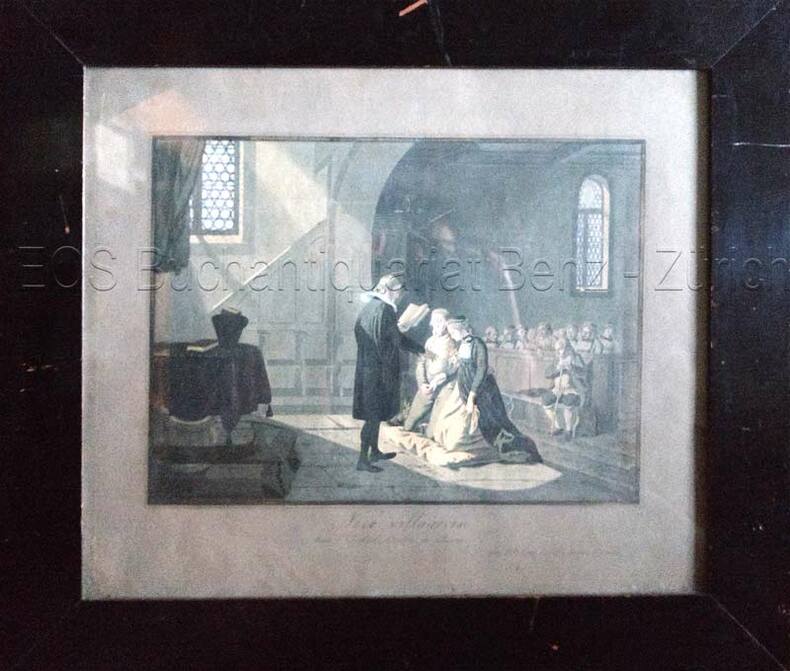
König, Franz Niklaus (1765–1832):
Baptème dans le Canton de Berne,
Basel, Bern u. Genf, J. P. Lamy, Kol. Aquatinta. Bildgrösse: 21 x 27,5 cm. Rahmengrösse: 38 x 43 cm.
Riferimento per il libraio : 798CG

|
|
|
Körner, Heinrich
Kurze Erdbeschreibung der Schweiz zum Gebrauche der Jugend.
Winterthur, Steinerische Buchhandlung, 1817. Klein-8°. IV, 418 S. Halblederbd. d. Zt. mit Rückenvergoldung + Wichtig: Für unsere Kunden in der EU erfolgt der Versand alle 14 Tage verzollt ab Deutschland / Postbank-Konto in Deutschland vorhanden + 2. Auflage. (berieben u. bestossen).
Riferimento per il libraio : 1615DB
|
|
|
Körner, Heinrich:
Kurze Erdbeschreibung der Schweiz zum Gebrauche der Jugend.
2. Auflage. Winterthur, Steinerische Buchhandlung, 1817. Klein-8°. IV, 418 S. Halblederbd. d. Zt. mit Rückenvergoldung (berieben u. bestossen).
Riferimento per il libraio : 1615DB
|
|
|
Kübler, J
Die Foraminiseren des schweiz. Jura, nach gemeinschaftlichen Forschungen mit Heinrich Zwingli.
Winterthur, Steiner'sche Buchhandlung, 1870. 4°. (4) 49 (1) S. Mit 179 Originalabb. auf 4 Tafeln. Orig.-Broschur + Wichtig: Für unsere Kunden in der EU erfolgt der Versand alle 14 Tage verzollt ab Deutschland / Postbank-Konto in Deutschland vorhanden + (berieben, bestossen leicht fleckig und mit kleinen Einrissen).
Riferimento per il libraio : 24816AB
|
|
|
Kübler, J.:
Die Foraminiseren des schweiz. Jura, nach gemeinschaftlichen Forschungen mit Heinrich Zwingli.
Winterthur, Steiner'sche Buchhandlung, 1870. 4°. (4) 49 (1) S. Mit 179 Originalabb. auf 4 Tafeln. Orig.-Broschur (berieben, bestossen leicht fleckig und mit kleinen Einrissen).
Riferimento per il libraio : 24816AB
|
|
|
Kübler, Jakob
Erzählungen aus der helvetischen Revolution.
Winterthur, Bleuler-Hausheer, 1879. 8°. (4) Bl., 231 S. Orig. Leinen mit goldgepr. Rückentitel. + Wichtig: Für unsere Kunden in der EU erfolgt der Versand alle 14 Tage verzollt ab Deutschland / Postbank-Konto in Deutschland vorhanden +
Riferimento per il libraio : 4839CB
|
|
|
Kübler, Jakob:
Erzählungen aus der helvetischen Revolution.
Winterthur, Bleuler-Hausheer, 1879. 8°. (4) Bl., 231 S. Orig. Leinen mit goldgepr. Rückentitel.
Riferimento per il libraio : 4839CB
|
|
|
Küchlin, Jakob (1820?1885)
Thunersee Richtung Interlaken, Ringgenberg u. Brienzersee
(um 1850). Gouache. Bildgrösse: 34,5 x 48 cm. Blattgrösse: 42 x 55,5 cm. + Wichtig: Für unsere Kunden in der EU erfolgt der Versand alle 14 Tage verzollt ab Deutschland / Postbank-Konto in Deutschland vorhanden +, Abb.
Riferimento per il libraio : 597BG

|
|
|
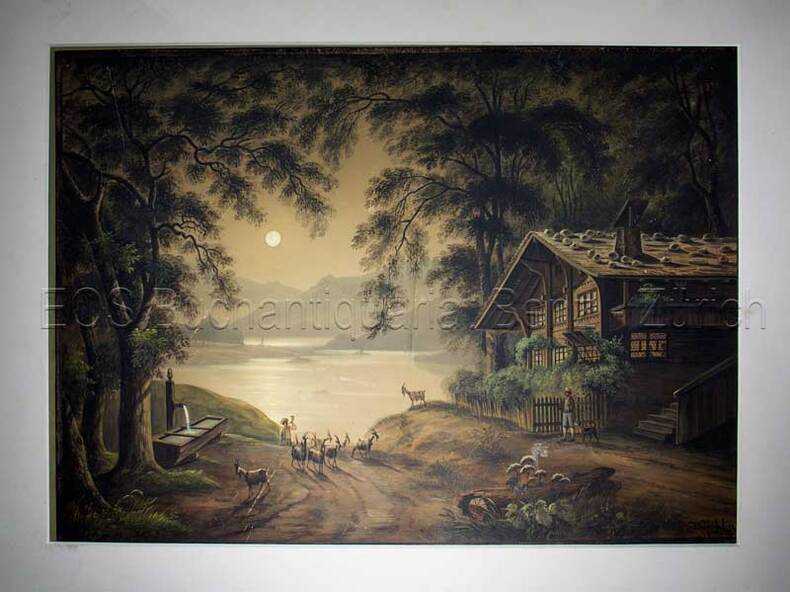
Küchlin, Jakob (1820–1885):
Thunersee Richtung Interlaken, Ringgenberg u. Brienzersee
(um 1850). Gouache. Bildgrösse: 34,5 x 48 cm. Blattgrösse: 42 x 55,5 cm.
Riferimento per il libraio : 597BG
|
|
|
Künzle, E. und Bänninger, K
Geschichte des Konsumvereins Zürich 1851-1926. Zum 75 jährigen Vereinsjubiläum.
Zürich, J. Rüegg, (1926). Gr.-8°. 190 S. Mit einem Frontispiz und zahlr. Abb. auf Tafeln. Orig.-Broschur in Kartonschuber + Wichtig: Für unsere Kunden in der EU erfolgt der Versand alle 14 Tage verzollt ab Deutschland / Postbank-Konto in Deutschland vorhanden + (leicht bestossen).
Riferimento per il libraio : 4807BB
|
|
|
Künzle, E. und Bänninger, K.:
Geschichte des Konsumvereins Zürich 1851-1926. Zum 75 jährigen Vereinsjubiläum.
Zürich, J. Rüegg, (1926). Gr.-8°. 190 S. Mit einem Frontispiz und zahlr. Abb. auf Tafeln. Orig.-Broschur in Kartonschuber (leicht bestossen).
Riferimento per il libraio : 4807BB
|
|
|
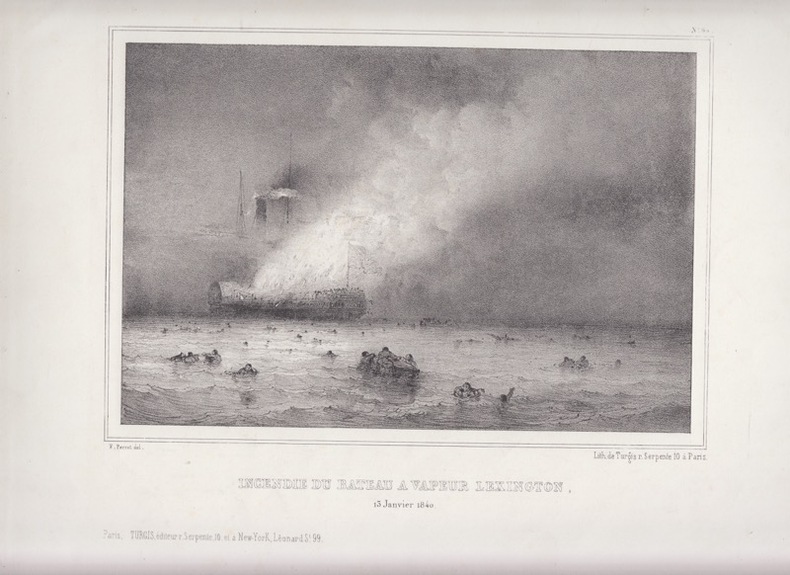
L Turgis; Ferdinand Perrot
Incendie du bateau a vapeur Lexington. : 13 Janvier 1840.Lithographie originale -Etudes de marine
1840 Paris : L. Turgis Jne. Imp. Edit. r. des Ecoles, 60., [after 1840];bonnes marges ,trés frais.
Riferimento per il libraio : 26500
|
|
|
L'Assomption
L'Assomption
Belle lithographie rehaussée de couleurs gommées. En feuille Très bon Paris Lordereau XIXè 58 X 41 cm
Riferimento per il libraio : 13602

|
|
|
L'ESTAMPE TOULOUSAINE
L'IMAGERIE POPULAIRE ET LES GRAVEURS EN TAILLE D'EPARGNE DE 1660 A 1830 - TOULOUSE MUSEE PAUL-DUPUY
IMPRIMERIE EDOUARD PRIVAT. 1952. In-4. Broché. Etat d'usage, Coins frottés, Dos frotté, Intérieur frais. 110 + XVI pages - Quelques annotations à l'encre et au crayon de papier - Quelques illustrations en noir et blanc dans le texte - Nombreuses planches en noir et blanc - pages bleues. . . . Classification Dewey : 769-Estampes
Riferimento per il libraio : R240128430
|
|
|
L'ESTAMPILLE
Le mobilier de l'Arsenal. La porcelaine de Nyon. Les balances du moyen âge. Estampes anciennes.
Broché. 82 pages. 22x28,5cm.
|
|
|
L'HOM
L'Oiseau d'argent. Robe du soir, composée d'une écharpe enveloppant le buste (pl.33, La Gazette du Bon ton, 1921 n°5)
Lucien Vogel éditeur | Paris 1921 | 18 x 24 cm | une feuille
Riferimento per il libraio : 54871
|
|
|
L'HOM
L'Oiseau d'argent. Robe du soir, composée d'une écharpe enveloppant le buste (pl.33, La Gazette du Bon ton, 1921 n°5)
- Lucien Vogel éditeur, Paris 1921, 18x24cm, une feuille. - Original color print, printed on vergé paper, non signed. An original print used to illustrate the Gazette du bon ton, one of the most attractive and influential 20th century fashion magazines, featuring the talents of French artists and other contributors from the burgeoning Art Deco movement. A celebrated fashion magazine established in 1912 by Lucien Vogel, La Gazette du bon ton appeared until 1925, with a hiatus from 1915 to 1920 due to the war (the editor-in-chief having been called up for service). It consisted of 69 issues printed in only 2,000 copies each and notably illustrated with 573 color plates and 148 sketches of the models of the great designers. Right from the start, this sumptuous publication "was aimed at bibliophiles and fashionable society," (Françoise Tétart-Vittu, "La Gazette du bon ton", in Dictionnaire de la mode, 2016) and was printed on fine vergé paper using a type cut specially for the magazine by Georges Peignot, known as Cochin, later used (in 1946) by Christian Dior. The prints were made using stencils, heightened in colors, some highlighted in gold or palladium. The story began in 1912, when Lucien Vogel, a man of the world involved in fashion (he had already been part of the fashion magazine Femina) decided, with his wife Cosette de Brunhoff - the sister of Jean, creator of Babar - to set up the Gazette du bon ton, subtitled at the time: "Art, fashion, frivolities." Georges Charensol noted the reasoning of the editor-in-chief: "'In 1910,' he observed, 'there was no really artistic fashion magazine, nothing representative of the spirit of the time. My dream was therefore to make a luxury magazine with truly modern artists...I was assured of success, because when it comes to fashion, no country on earth can compete with France.'" ("Un grand éditeur d'art. Lucien Vogel" in Les Nouvelles littéraires, no. 133, May 1925). The magazine was immediately successful, not only in France but also in the United States and Latin America. At first, Vogel put together a team of seven artists: André-Édouard Marty and Pierre Brissaud, followed by Georges Lepape and Dammicourt, as well as eventually his friends from school and the School of Fine Arts, like George Barbier, Bernard Boutet de Monvel and Charles Martin. Other talented people soon came flocking to join the team: Guy Arnoux, Léon Bakst, Benito, Boutet de Monvel, Umberto Brunelleschi, Chas Laborde, Jean-Gabriel Domergue, Raoul Dufy, Édouard Halouze, Alexandre Iacovleff, Jean Émile Laboureur, Charles Loupot, Chalres Martin, Maggie Salcedo. These artist, mostly unknown when Lucien Vogel sought them out, later became emblematic and sought-after artistic figures. It was also they who worked on the advertising drawings for the Gazette. The plates put the spotlight on, and celebrate, dresses by seven designers of the age: Lanvin, Doeuillet, Paquin, Poiret, Worth, Vionnet and Doucet. The designers provided exclusive models for each issue. Nonetheless, some of the illustrations are not based on real models, but simply on the illustrator's conception of the fashion of the day. The Gazette du bon ton was an important step in the history of fashion. Combining aesthetic demands with the physical whole, it brought together - for the first time - the great talents of the artistic, literary, and fashion worlds; and imposed, through this alchemy, a completely new image of women: slender, independent and daring, which was shared by the new generation of designers, including Coco Chanel, Jean Patou, Marcel Rochas, and so on... Taken over in 1920 by Condé Montrose Nast, the Gazette du bon ton was an important influence on the new layout and aesthetics of that "little dying paper" that Nast had bought a few years earlier: Vogue. [FRENCH VERSION FOLLOWS] Estampe originale en couleur, tirée sur papier vergé, non-signée. Gravure originale réalisée pour l'illustration de La Gazette du bon ton, l'une des plus b

|
|
|
L'HOM
L'Oiseau mort. Robe Tchéco-slovaque (pl.33, La Gazette du Bon ton, 1920 n°5)
Lucien Vogel éditeur | Paris Juin 1920 | 18 x 24 cm | une feuille
Riferimento per il libraio : 54772
|
|
|
L'HOM
L'Oiseau mort. Robe Tchéco-slovaque (pl.33, La Gazette du Bon ton, 1920 n°5)
Lucien Vogel éditeur | Paris Juin 1920 | 18 x 24 cm | une feuille
Riferimento per il libraio : 57569
|
|
|
L'HOM
L'Oiseau mort. Robe Tchéco-slovaque (pl.33, La Gazette du Bon ton, 1920 n°5)
- Lucien Vogel éditeur, Paris Juin 1920, 18x24cm, une feuille. - Original color print, printed on vergé paper, non signed. An original print used to illustrate the Gazette du bon ton, one of the most attractive and influential 20th century fashion magazines, featuring the talents of French artists and other contributors from the burgeoning Art Deco movement. A celebrated fashion magazine established in 1912 by Lucien Vogel, La Gazette du bon ton appeared until 1925, with a hiatus from 1915 to 1920 due to the war (the editor-in-chief having been called up for service). It consisted of 69 issues printed in only 2,000 copies each and notably illustrated with 573 color plates and 148 sketches of the models of the great designers. Right from the start, this sumptuous publication "was aimed at bibliophiles and fashionable society," (Françoise Tétart-Vittu, "La Gazette du bon ton", in Dictionnaire de la mode, 2016) and was printed on fine vergé paper using a type cut specially for the magazine by Georges Peignot, known as Cochin, later used (in 1946) by Christian Dior. The prints were made using stencils, heightened in colors, some highlighted in gold or palladium. The story began in 1912, when Lucien Vogel, a man of the world involved in fashion (he had already been part of the fashion magazine Femina) decided, with his wife Cosette de Brunhoff - the sister of Jean, creator of Babar - to set up the Gazette du bon ton, subtitled at the time: "Art, fashion, frivolities." Georges Charensol noted the reasoning of the editor-in-chief: "'In 1910,' he observed, 'there was no really artistic fashion magazine, nothing representative of the spirit of the time. My dream was therefore to make a luxury magazine with truly modern artists...I was assured of success, because when it comes to fashion, no country on earth can compete with France.'" ("Un grand éditeur d'art. Lucien Vogel" in Les Nouvelles littéraires, no. 133, May 1925). The magazine was immediately successful, not only in France but also in the United States and Latin America. At first, Vogel put together a team of seven artists: André-Édouard Marty and Pierre Brissaud, followed by Georges Lepape and Dammicourt, as well as eventually his friends from school and the School of Fine Arts, like George Barbier, Bernard Boutet de Monvel and Charles Martin. Other talented people soon came flocking to join the team: Guy Arnoux, Léon Bakst, Benito, Boutet de Monvel, Umberto Brunelleschi, Chas Laborde, Jean-Gabriel Domergue, Raoul Dufy, Édouard Halouze, Alexandre Iacovleff, Jean Émile Laboureur, Charles Loupot, Chalres Martin, Maggie Salcedo. These artist, mostly unknown when Lucien Vogel sought them out, later became emblematic and sought-after artistic figures. It was also they who worked on the advertising drawings for the Gazette. The plates put the spotlight on, and celebrate, dresses by seven designers of the age: Lanvin, Doeuillet, Paquin, Poiret, Worth, Vionnet and Doucet. The designers provided exclusive models for each issue. Nonetheless, some of the illustrations are not based on real models, but simply on the illustrator's conception of the fashion of the day. The Gazette du bon ton was an important step in the history of fashion. Combining aesthetic demands with the physical whole, it brought together - for the first time - the great talents of the artistic, literary, and fashion worlds; and imposed, through this alchemy, a completely new image of women: slender, independent and daring, which was shared by the new generation of designers, including Coco Chanel, Jean Patou, Marcel Rochas, and so on... Taken over in 1920 by Condé Montrose Nast, the Gazette du bon ton was an important influence on the new layout and aesthetics of that "little dying paper" that Nast had bought a few years earlier: Vogue. [FRENCH VERSION FOLLOWS] Estampe originale en couleur, tirée sur papier vergé, non-signée. Gravure originale réalisée pour l'illustration de La Gazette du bon ton, l'une des p

|
|
|
L'HOM
L'Oiseau mort. Robe Tchéco-slovaque (pl.33, La Gazette du Bon ton, 1920 n°5)
- Lucien Vogel éditeur, Paris Juin 1920, 18x24cm, une feuille. - Estampe originale en couleur, tirée sur papier vergé, non-signée. Gravure originale réalisée pour l'illustration de La Gazette du bon ton, l'une des plus belles et des plus influentes revues de mode du XXème siècle, célébrant le talent des créateurs et des artistes français en plein essor de l'art déco. Célèbre revue de mode fondée en 1912 par Lucien Vogel, La Gazette du bon ton a paru jusqu'en 1925 avec une interruption durant la Guerre de 1915 à 1920, pour cause de mobilisation de son rédacteur en chef. Elle se constitue de 69 livraisons tirées à seulement 2000 exemplaires et est illustrée notamment de 573 planches en couleurs et de 148 croquis représentant des modèles de grands couturiers. Dès leur parution, ces luxueuses publications « s'adressent aux bibliophiles et aux mondains esthètes » (Françoise Tétart-Vittu « La Gazette du bon ton » in Dictionnaire de la mode, 2016). Imprimées sur beau papier vergé, elles utilisent une police typographique spécialement créée pour la revue par Georges Peignot, le caractère Cochin, repris en 1946 par Christian Dior. Les estampes sont réalisées grâce à la technique du pochoir métallique, rehaussées en couleurs et pour certaines soulignées à l'or ou au palladium. L'aventure commence en 1912 lorsque Lucien Vogel, homme du monde et de la mode - il a déjà participé à la revue Femina - décide de fonder avec sa femme Cosette de Brunhoff (sur de Jean, le père de Babar) la Gazette du bon ton dont le sous-titre est alors « Art, modes et frivolités ». Georges Charensol rapporte les propos du rédacteur en chef : « En 1910, observe-t-il, il n'existait aucun journal de mode véritablement artistique et représentatif de l'esprit de son époque. Je songeais donc à faire un magazine de luxe avec des artistes véritablement modernes [...] J'étais certain du succès car pour la mode aucun pays ne peut rivaliser avec la France. » (« Un grand éditeur d'art. Lucien Vogel » in Les Nouvelles littéraires, n°133, mai 1925). Le succès de la revue est immédiat, non seulement en France, mais aussi aux Etats-Unis et en Amérique du Sud. À l'origine, Vogel réunit donc un groupe de sept artistes : André-Édouard Marty et Pierre Brissaud, suivis de Georges Lepape et Dammicourt ; et enfin ses amis de l'École des beaux-arts que sont George Barbier, Bernard Boutet de Monvel, ou Charles Martin. D'autres talents viennent rapidement rejoindre l'équipée : Guy Arnoux, Léon Bakst, Benito, Boutet de Monvel, Umberto Brunelleschi, Chas Laborde, Jean-Gabriel Domergue, Raoul Dufy, Édouard Halouze, Alexandre Iacovleff, Jean Émile Laboureur, Charles Loupot, Charles Martin, Maggie Salcedo. Ces artistes, inconnus pour la plupart lorsque Lucien Vogel fait appel à eux, deviendront par la suite des figures artistiques emblématiques et recherchées. Ce sont ces mêmes illustrateurs qui réalisent les dessins des publicités de la Gazette. Les planches mettent en lumière et subliment les robes de sept créateurs de l'époque : Lanvin, Doeuillet, Paquin, Poiret, Worth, Vionnet et Doucet. Les couturiers fournissent pour chaque numéro des modèles exclusifs. Néanmoins, certaines des illustrations ne figurent aucun modèle réel, mais seulement l'idée que l'illustrateur se fait de la mode du jour. La Gazette du bon ton est une étape décisive dans l'histoire de la mode. Alliant l'exigence esthétique et l'unité plastique, elle réunit pour la première fois les grands talents du monde des arts, des lettres et de la mode et impose, par cette alchimie, une toute nouvelle image de la femme, élancée, indépendante et audacieuse, également portée par la nouvelle génération de couturiers Coco Chanel, Jean Patou, Marcel Rochas... Reprise en 1920 par Condé Montrose Nast, la Gazette du bon ton inspirera largement la nouvelle composition et les choix esthétiques du « petit journal mourant » que Nast avait racheté quelques années auparavant : le magazine Vogue. [ENGLISH DESCRIPTION ON DEMAND]

|
|
|
L'HOM
Mon enfant, ma soeur... Manteaux inspirés des costumes tchéco-slovaques (pl.64, La Gazette du Bon ton, 1920 n°9)
Lucien Vogel éditeur | Paris 1920 | 18 x 24 cm | une feuille
Riferimento per il libraio : 54807
|
|
|

 Ricevere i risultati per e-mail
 Scaricare i risultati in PDF
 RSS feed
 Link
Link


