|
|
|
MARTIN Charles
La Morte d'amour. Modes et manières de Torquate (pl.72, La Gazette du Bon ton, 1920 n°10)
- Lucien Vogel éditeur, Paris 1920, 18x24cm, une feuille. - Estampe originale en couleur, tirée sur papier vergé, non-signées. Gravure originale réalisée pour l'illustration de La Gazette du bon ton, l'une des plus belles et des plus influentes revues de mode du XXème siècle, célébrant le talent des créateurs et des artistes français en plein essor de l'art déco. Célèbre revue de mode fondée en 1912 par Lucien Vogel, La Gazette du bon ton a paru jusqu'en 1925 avec une interruption durant la Guerre de 1915 à 1920, pour cause de mobilisation de son rédacteur en chef. Elle se constitue de 69 livraisons tirées à seulement 2000 exemplaires et est illustrée notamment de 573 planches en couleurs et de 148 croquis représentant des modèles de grands couturiers. Dès leur parution, ces luxueuses publications « s'adressent aux bibliophiles et aux mondains esthètes » (Françoise Tétart-Vittu « La Gazette du bon ton » in Dictionnaire de la mode, 2016). Imprimées sur beau papier vergé, elles utilisent une police typographique spécialement créée pour la revue par Georges Peignot, le caractère Cochin, repris en 1946 par Christian Dior. Les estampes sont réalisées grâce à la technique du pochoir métallique, rehaussées en couleurs et pour certaines soulignées à l'or ou au palladium. L'aventure commence en 1912 lorsque Lucien Vogel, homme du monde et de la mode - il a déjà participé à la revue Femina - décide de fonder avec sa femme Cosette de Brunhoff (sur de Jean, le père de Babar) la Gazette du bon ton dont le sous-titre est alors « Art, modes et frivolités ». Georges Charensol rapporte les propos du rédacteur en chef : « En 1910, observe-t-il, il n'existait aucun journal de mode véritablement artistique et représentatif de l'esprit de son époque. Je songeais donc à faire un magazine de luxe avec des artistes véritablement modernes [...] J'étais certain du succès car pour la mode aucun pays ne peut rivaliser avec la France. » (« Un grand éditeur d'art. Lucien Vogel » in Les Nouvelles littéraires, n°133, mai 1925). Le succès de la revue est immédiat, non seulement en France, mais aussi aux Etats-Unis et en Amérique du Sud. À l'origine, Vogel réunit donc un groupe de sept artistes : André-Édouard Marty et Pierre Brissaud, suivis de Georges Lepape et Dammicourt ; et enfin ses amis de l'École des beaux-arts que sont George Barbier, Bernard Boutet de Monvel, ou Charles Martin. D'autres talents viennent rapidement rejoindre l'équipée : Guy Arnoux, Léon Bakst, Benito, Boutet de Monvel, Umberto Brunelleschi, Chas Laborde, Jean-Gabriel Domergue, Raoul Dufy, Édouard Halouze, Alexandre Iacovleff, Jean Émile Laboureur, Charles Loupot, Charles Martin, Maggie Salcedo. Ces artistes, inconnus pour la plupart lorsque Lucien Vogel fait appel à eux, deviendront par la suite des figures artistiques emblématiques et recherchées. Ce sont ces mêmes illustrateurs qui réalisent les dessins des publicités de la Gazette. Les planches mettent en lumière et subliment les robes de sept créateurs de l'époque : Lanvin, Doeuillet, Paquin, Poiret, Worth, Vionnet et Doucet. Les couturiers fournissent pour chaque numéro des modèles exclusifs. Néanmoins, certaines des illustrations ne figurent aucun modèle réel, mais seulement l'idée que l'illustrateur se fait de la mode du jour. La Gazette du bon ton est une étape décisive dans l'histoire de la mode. Alliant l'exigence esthétique et l'unité plastique, elle réunit pour la première fois les grands talents du monde des arts, des lettres et de la mode et impose, par cette alchimie, une toute nouvelle image de la femme, élancée, indépendante et audacieuse, également portée par la nouvelle génération de couturiers Coco Chanel, Jean Patou, Marcel Rochas... Reprise en 1920 par Condé Montrose Nast, la Gazette du bon ton inspirera largement la nouvelle composition et les choix esthétiques du « petit journal mourant » que Nast avait racheté quelques années auparavant : le magazine Vogue. [ENGLISH DESCRIPTION ON DEMAND]

|
|
|
MARTIN Charles
Le Chapeau en porcelaine. Modes et manières de Torquate (pl.49, La Gazette du Bon ton, 1920 n°7)
- Lucien Vogel éditeur, Paris Septembre 1920, 18x24cm, une feuille. - Original color print, printed on vergé paper, signed in the plate. An original print used to illustrate the Gazette du bon ton, one of the most attractive and influential 20th century fashion magazines, featuring the talents of French artists and other contributors from the burgeoning Art Deco movement. A celebrated fashion magazine established in 1912 by Lucien Vogel, La Gazette du bon ton appeared until 1925, with a hiatus from 1915 to 1920 due to the war (the editor-in-chief having been called up for service). It consisted of 69 issues printed in only 2,000 copies each and notably illustrated with 573 color plates and 148 sketches of the models of the great designers. Right from the start, this sumptuous publication "was aimed at bibliophiles and fashionable society," (Françoise Tétart-Vittu, "La Gazette du bon ton", in Dictionnaire de la mode, 2016) and was printed on fine vergé paper using a type cut specially for the magazine by Georges Peignot, known as Cochin, later used (in 1946) by Christian Dior. The prints were made using stencils, heightened in colors, some highlighted in gold or palladium. The story began in 1912, when Lucien Vogel, a man of the world involved in fashion (he had already been part of the fashion magazine Femina) decided, with his wife Cosette de Brunhoff - the sister of Jean, creator of Babar - to set up the Gazette du bon ton, subtitled at the time: "Art, fashion, frivolities." Georges Charensol noted the reasoning of the editor-in-chief: "'In 1910,' he observed, 'there was no really artistic fashion magazine, nothing representative of the spirit of the time. My dream was therefore to make a luxury magazine with truly modern artists...I was assured of success, because when it comes to fashion, no country on earth can compete with France.'" ("Un grand éditeur d'art. Lucien Vogel" in Les Nouvelles littéraires, no. 133, May 1925). The magazine was immediately successful, not only in France but also in the United States and Latin America. At first, Vogel put together a team of seven artists: André-Édouard Marty and Pierre Brissaud, followed by Georges Lepape and Dammicourt, as well as eventually his friends from school and the School of Fine Arts, like George Barbier, Bernard Boutet de Monvel and Charles Martin. Other talented people soon came flocking to join the team: Guy Arnoux, Léon Bakst, Benito, Boutet de Monvel, Umberto Brunelleschi, Chas Laborde, Jean-Gabriel Domergue, Raoul Dufy, Édouard Halouze, Alexandre Iacovleff, Jean Émile Laboureur, Charles Loupot, Chalres Martin, Maggie Salcedo. These artist, mostly unknown when Lucien Vogel sought them out, later became emblematic and sought-after artistic figures. It was also they who worked on the advertising drawings for the Gazette. The plates put the spotlight on, and celebrate, dresses by seven designers of the age: Lanvin, Doeuillet, Paquin, Poiret, Worth, Vionnet and Doucet. The designers provided exclusive models for each issue. Nonetheless, some of the illustrations are not based on real models, but simply on the illustrator's conception of the fashion of the day. The Gazette du bon ton was an important step in the history of fashion. Combining aesthetic demands with the physical whole, it brought together - for the first time - the great talents of the artistic, literary, and fashion worlds; and imposed, through this alchemy, a completely new image of women: slender, independent and daring, which was shared by the new generation of designers, including Coco Chanel, Jean Patou, Marcel Rochas, and so on... Taken over in 1920 by Condé Montrose Nast, the Gazette du bon ton was an important influence on the new layout and aesthetics of that "little dying paper" that Nast had bought a few years earlier: Vogue. [FRENCH VERSION FOLLOWS] Estampe originale en couleur, tirée sur papier vergé, signée en bas à gauche de la planche. Gravure originale réalisée pour l'illustrati

|
|
|
MARTIN Charles
Le Chapeau en porcelaine. Modes et manières de Torquate (pl.49, La Gazette du Bon ton, 1920 n°7)
- Lucien Vogel éditeur, Paris Septembre 1920, 18x24cm, une feuille. - Estampe originale en couleur, tirée sur papier vergé, signée en bas à gauche de la planche. Gravure originale réalisée pour l'illustration de La Gazette du bon ton, l'une des plus belles et des plus influentes revues de mode du XXème siècle, célébrant le talent des créateurs et des artistes français en plein essor de l'art déco. Célèbre revue de mode fondée en 1912 par Lucien Vogel, La Gazette du bon ton a paru jusqu'en 1925 avec une interruption durant la Guerre de 1915 à 1920, pour cause de mobilisation de son rédacteur en chef. Elle se constitue de 69 livraisons tirées à seulement 2000 exemplaires et est illustrée notamment de 573 planches en couleurs et de 148 croquis représentant des modèles de grands couturiers. Dès leur parution, ces luxueuses publications « s'adressent aux bibliophiles et aux mondains esthètes » (Françoise Tétart-Vittu « La Gazette du bon ton » in Dictionnaire de la mode, 2016). Imprimées sur beau papier vergé, elles utilisent une police typographique spécialement créée pour la revue par Georges Peignot, le caractère Cochin, repris en 1946 par Christian Dior. Les estampes sont réalisées grâce à la technique du pochoir métallique, rehaussées en couleurs et pour certaines soulignées à l'or ou au palladium. L'aventure commence en 1912 lorsque Lucien Vogel, homme du monde et de la mode - il a déjà participé à la revue Femina - décide de fonder avec sa femme Cosette de Brunhoff (sur de Jean, le père de Babar) la Gazette du bon ton dont le sous-titre est alors « Art, modes et frivolités ». Georges Charensol rapporte les propos du rédacteur en chef : « En 1910, observe-t-il, il n'existait aucun journal de mode véritablement artistique et représentatif de l'esprit de son époque. Je songeais donc à faire un magazine de luxe avec des artistes véritablement modernes [...] J'étais certain du succès car pour la mode aucun pays ne peut rivaliser avec la France. » (« Un grand éditeur d'art. Lucien Vogel » in Les Nouvelles littéraires, n°133, mai 1925). Le succès de la revue est immédiat, non seulement en France, mais aussi aux Etats-Unis et en Amérique du Sud. À l'origine, Vogel réunit donc un groupe de sept artistes : André-Édouard Marty et Pierre Brissaud, suivis de Georges Lepape et Dammicourt ; et enfin ses amis de l'École des beaux-arts que sont George Barbier, Bernard Boutet de Monvel, ou Charles Martin. D'autres talents viennent rapidement rejoindre l'équipée : Guy Arnoux, Léon Bakst, Benito, Boutet de Monvel, Umberto Brunelleschi, Chas Laborde, Jean-Gabriel Domergue, Raoul Dufy, Édouard Halouze, Alexandre Iacovleff, Jean Émile Laboureur, Charles Loupot, Charles Martin, Maggie Salcedo. Ces artistes, inconnus pour la plupart lorsque Lucien Vogel fait appel à eux, deviendront par la suite des figures artistiques emblématiques et recherchées. Ce sont ces mêmes illustrateurs qui réalisent les dessins des publicités de la Gazette. Les planches mettent en lumière et subliment les robes de sept créateurs de l'époque : Lanvin, Doeuillet, Paquin, Poiret, Worth, Vionnet et Doucet. Les couturiers fournissent pour chaque numéro des modèles exclusifs. Néanmoins, certaines des illustrations ne figurent aucun modèle réel, mais seulement l'idée que l'illustrateur se fait de la mode du jour. La Gazette du bon ton est une étape décisive dans l'histoire de la mode. Alliant l'exigence esthétique et l'unité plastique, elle réunit pour la première fois les grands talents du monde des arts, des lettres et de la mode et impose, par cette alchimie, une toute nouvelle image de la femme, élancée, indépendante et audacieuse, également portée par la nouvelle génération de couturiers Coco Chanel, Jean Patou, Marcel Rochas... Reprise en 1920 par Condé Montrose Nast, la Gazette du bon ton inspirera largement la nouvelle composition et les choix esthétiques du « petit journal mourant » que Nast avait racheté quelques années auparavant : le magazine Vogue. [ENGLISH DE

|
|
|
MARTIN Charles
Le Jardin de l'infante. Robe du soir, de Paul Poiret. (La Gazette du Bon ton, n°7. Année 1920 - Planche 52 )
- Lucien Vogel éditeur, Paris 1920, 19,5x25cm, une feuille. - Original color print, printed on vergé paper, signed in the plate. An original print used to illustrate the Gazette du bon ton, one of the most attractive and influential 20th century fashion magazines, featuring the talents of French artists and other contributors from the burgeoning Art Deco movement. A celebrated fashion magazine established in 1912 by Lucien Vogel, La Gazette du bon ton appeared until 1925, with a hiatus from 1915 to 1920 due to the war (the editor-in-chief having been called up for service). It consisted of 69 issues printed in only 2,000 copies each and notably illustrated with 573 color plates and 148 sketches of the models of the great designers. Right from the start, this sumptuous publication "was aimed at bibliophiles and fashionable society," (Françoise Tétart-Vittu, "La Gazette du bon ton", in Dictionnaire de la mode, 2016) and was printed on fine vergé paper using a type cut specially for the magazine by Georges Peignot, known as Cochin, later used (in 1946) by Christian Dior. The prints were made using stencils, heightened in colors, some highlighted in gold or palladium. The story began in 1912, when Lucien Vogel, a man of the world involved in fashion (he had already been part of the fashion magazine Femina) decided, with his wife Cosette de Brunhoff - the sister of Jean, creator of Babar - to set up the Gazette du bon ton, subtitled at the time: "Art, fashion, frivolities." Georges Charensol noted the reasoning of the editor-in-chief: "'In 1910,' he observed, 'there was no really artistic fashion magazine, nothing representative of the spirit of the time. My dream was therefore to make a luxury magazine with truly modern artists...I was assured of success, because when it comes to fashion, no country on earth can compete with France.'" ("Un grand éditeur d'art. Lucien Vogel" in Les Nouvelles littéraires, no. 133, May 1925). The magazine was immediately successful, not only in France but also in the United States and Latin America. At first, Vogel put together a team of seven artists: André-Édouard Marty and Pierre Brissaud, followed by Georges Lepape and Dammicourt, as well as eventually his friends from school and the School of Fine Arts, like George Barbier, Bernard Boutet de Monvel and Charles Martin. Other talented people soon came flocking to join the team: Guy Arnoux, Léon Bakst, Benito, Boutet de Monvel, Umberto Brunelleschi, Chas Laborde, Jean-Gabriel Domergue, Raoul Dufy, Édouard Halouze, Alexandre Iacovleff, Jean Émile Laboureur, Charles Loupot, Chalres Martin, Maggie Salcedo. These artist, mostly unknown when Lucien Vogel sought them out, later became emblematic and sought-after artistic figures. It was also they who worked on the advertising drawings for the Gazette. The plates put the spotlight on, and celebrate, dresses by seven designers of the age: Lanvin, Doeuillet, Paquin, Poiret, Worth, Vionnet and Doucet. The designers provided exclusive models for each issue. Nonetheless, some of the illustrations are not based on real models, but simply on the illustrator's conception of the fashion of the day. The Gazette du bon ton was an important step in the history of fashion. Combining aesthetic demands with the physical whole, it brought together - for the first time - the great talents of the artistic, literary, and fashion worlds; and imposed, through this alchemy, a completely new image of women: slender, independent and daring, which was shared by the new generation of designers, including Coco Chanel, Jean Patou, Marcel Rochas, and so on... Taken over in 1920 by Condé Montrose Nast, the Gazette du bon ton was an important influence on the new layout and aesthetics of that "little dying paper" that Nast had bought a few years earlier: Vogue. [FRENCH VERSION FOLLOWS] Estampe originale en couleur tirée sur papier vergé, signée en bas à droite dans la planche. Gravure originale réalisée pour l'illus

|
|
|
MARTIN Charles
Le mariage mélancolique. Modes et manières de Torquate. (La Gazette du Bon ton, n°2. Année 1921 - Planche 10 )
- Lucien Vogel éditeur, Paris 1921, 19,5x25cm, une feuille. - Original color print, printed on vergé paper, non signed. An original print used to illustrate the Gazette du bon ton, one of the most attractive and influential 20th century fashion magazines, featuring the talents of French artists and other contributors from the burgeoning Art Deco movement. A celebrated fashion magazine established in 1912 by Lucien Vogel, La Gazette du bon ton appeared until 1925, with a hiatus from 1915 to 1920 due to the war (the editor-in-chief having been called up for service). It consisted of 69 issues printed in only 2,000 copies each and notably illustrated with 573 color plates and 148 sketches of the models of the great designers. Right from the start, this sumptuous publication "was aimed at bibliophiles and fashionable society," (Françoise Tétart-Vittu, "La Gazette du bon ton", in Dictionnaire de la mode, 2016) and was printed on fine vergé paper using a type cut specially for the magazine by Georges Peignot, known as Cochin, later used (in 1946) by Christian Dior. The prints were made using stencils, heightened in colors, some highlighted in gold or palladium. The story began in 1912, when Lucien Vogel, a man of the world involved in fashion (he had already been part of the fashion magazine Femina) decided, with his wife Cosette de Brunhoff - the sister of Jean, creator of Babar - to set up the Gazette du bon ton, subtitled at the time: "Art, fashion, frivolities." Georges Charensol noted the reasoning of the editor-in-chief: "'In 1910,' he observed, 'there was no really artistic fashion magazine, nothing representative of the spirit of the time. My dream was therefore to make a luxury magazine with truly modern artists...I was assured of success, because when it comes to fashion, no country on earth can compete with France.'" ("Un grand éditeur d'art. Lucien Vogel" in Les Nouvelles littéraires, no. 133, May 1925). The magazine was immediately successful, not only in France but also in the United States and Latin America. At first, Vogel put together a team of seven artists: André-Édouard Marty and Pierre Brissaud, followed by Georges Lepape and Dammicourt, as well as eventually his friends from school and the School of Fine Arts, like George Barbier, Bernard Boutet de Monvel and Charles Martin. Other talented people soon came flocking to join the team: Guy Arnoux, Léon Bakst, Benito, Boutet de Monvel, Umberto Brunelleschi, Chas Laborde, Jean-Gabriel Domergue, Raoul Dufy, Édouard Halouze, Alexandre Iacovleff, Jean Émile Laboureur, Charles Loupot, Chalres Martin, Maggie Salcedo. These artist, mostly unknown when Lucien Vogel sought them out, later became emblematic and sought-after artistic figures. It was also they who worked on the advertising drawings for the Gazette. The plates put the spotlight on, and celebrate, dresses by seven designers of the age: Lanvin, Doeuillet, Paquin, Poiret, Worth, Vionnet and Doucet. The designers provided exclusive models for each issue. Nonetheless, some of the illustrations are not based on real models, but simply on the illustrator's conception of the fashion of the day. The Gazette du bon ton was an important step in the history of fashion. Combining aesthetic demands with the physical whole, it brought together - for the first time - the great talents of the artistic, literary, and fashion worlds; and imposed, through this alchemy, a completely new image of women: slender, independent and daring, which was shared by the new generation of designers, including Coco Chanel, Jean Patou, Marcel Rochas, and so on... Taken over in 1920 by Condé Montrose Nast, the Gazette du bon ton was an important influence on the new layout and aesthetics of that "little dying paper" that Nast had bought a few years earlier: Vogue. [FRENCH VERSION FOLLOWS] Estampe originale en couleur tirée sur papier vergé, non-signée. Gravure originale réalisée pour l'illustration de La Gazette du bon ton, l'u

|
|
|
MARTIN Charles
Le Mariage mélancolique. Modes et manières de Torquate (pl.10, La Gazette du Bon ton, 1921 n°2)
- Lucien Vogel éditeur, Paris 1921, 18x24cm, une feuille. - Original color print, printed on vergé paper, non signed. An original print used to illustrate the Gazette du bon ton, one of the most attractive and influential 20th century fashion magazines, featuring the talents of French artists and other contributors from the burgeoning Art Deco movement. A celebrated fashion magazine established in 1912 by Lucien Vogel, La Gazette du bon ton appeared until 1925, with a hiatus from 1915 to 1920 due to the war (the editor-in-chief having been called up for service). It consisted of 69 issues printed in only 2,000 copies each and notably illustrated with 573 color plates and 148 sketches of the models of the great designers. Right from the start, this sumptuous publication "was aimed at bibliophiles and fashionable society," (Françoise Tétart-Vittu, "La Gazette du bon ton", in Dictionnaire de la mode, 2016) and was printed on fine vergé paper using a type cut specially for the magazine by Georges Peignot, known as Cochin, later used (in 1946) by Christian Dior. The prints were made using stencils, heightened in colors, some highlighted in gold or palladium. The story began in 1912, when Lucien Vogel, a man of the world involved in fashion (he had already been part of the fashion magazine Femina) decided, with his wife Cosette de Brunhoff - the sister of Jean, creator of Babar - to set up the Gazette du bon ton, subtitled at the time: "Art, fashion, frivolities." Georges Charensol noted the reasoning of the editor-in-chief: "'In 1910,' he observed, 'there was no really artistic fashion magazine, nothing representative of the spirit of the time. My dream was therefore to make a luxury magazine with truly modern artists...I was assured of success, because when it comes to fashion, no country on earth can compete with France.'" ("Un grand éditeur d'art. Lucien Vogel" in Les Nouvelles littéraires, no. 133, May 1925). The magazine was immediately successful, not only in France but also in the United States and Latin America. At first, Vogel put together a team of seven artists: André-Édouard Marty and Pierre Brissaud, followed by Georges Lepape and Dammicourt, as well as eventually his friends from school and the School of Fine Arts, like George Barbier, Bernard Boutet de Monvel and Charles Martin. Other talented people soon came flocking to join the team: Guy Arnoux, Léon Bakst, Benito, Boutet de Monvel, Umberto Brunelleschi, Chas Laborde, Jean-Gabriel Domergue, Raoul Dufy, Édouard Halouze, Alexandre Iacovleff, Jean Émile Laboureur, Charles Loupot, Chalres Martin, Maggie Salcedo. These artist, mostly unknown when Lucien Vogel sought them out, later became emblematic and sought-after artistic figures. It was also they who worked on the advertising drawings for the Gazette. The plates put the spotlight on, and celebrate, dresses by seven designers of the age: Lanvin, Doeuillet, Paquin, Poiret, Worth, Vionnet and Doucet. The designers provided exclusive models for each issue. Nonetheless, some of the illustrations are not based on real models, but simply on the illustrator's conception of the fashion of the day. The Gazette du bon ton was an important step in the history of fashion. Combining aesthetic demands with the physical whole, it brought together - for the first time - the great talents of the artistic, literary, and fashion worlds; and imposed, through this alchemy, a completely new image of women: slender, independent and daring, which was shared by the new generation of designers, including Coco Chanel, Jean Patou, Marcel Rochas, and so on... Taken over in 1920 by Condé Montrose Nast, the Gazette du bon ton was an important influence on the new layout and aesthetics of that "little dying paper" that Nast had bought a few years earlier: Vogue. [FRENCH VERSION FOLLOWS] Estampe originale en couleur, tirée sur papier vergé, non-signée. Gravure originale réalisée pour l'illustration de La Gazette du bon ton, l'une des plus

|
|
|
MARTIN Charles
Les Amants de Torquate (pl.34, La Gazette du Bon ton, 1921 n°5)
- Lucien Vogel éditeur, Paris 1921, 18x24cm, une feuille. - Original color print, printed on vergé paper, signed in the plate. An original print used to illustrate the Gazette du bon ton, one of the most attractive and influential 20th century fashion magazines, featuring the talents of French artists and other contributors from the burgeoning Art Deco movement. A celebrated fashion magazine established in 1912 by Lucien Vogel, La Gazette du bon ton appeared until 1925, with a hiatus from 1915 to 1920 due to the war (the editor-in-chief having been called up for service). It consisted of 69 issues printed in only 2,000 copies each and notably illustrated with 573 color plates and 148 sketches of the models of the great designers. Right from the start, this sumptuous publication "was aimed at bibliophiles and fashionable society," (Françoise Tétart-Vittu, "La Gazette du bon ton", in Dictionnaire de la mode, 2016) and was printed on fine vergé paper using a type cut specially for the magazine by Georges Peignot, known as Cochin, later used (in 1946) by Christian Dior. The prints were made using stencils, heightened in colors, some highlighted in gold or palladium. The story began in 1912, when Lucien Vogel, a man of the world involved in fashion (he had already been part of the fashion magazine Femina) decided, with his wife Cosette de Brunhoff - the sister of Jean, creator of Babar - to set up the Gazette du bon ton, subtitled at the time: "Art, fashion, frivolities." Georges Charensol noted the reasoning of the editor-in-chief: "'In 1910,' he observed, 'there was no really artistic fashion magazine, nothing representative of the spirit of the time. My dream was therefore to make a luxury magazine with truly modern artists...I was assured of success, because when it comes to fashion, no country on earth can compete with France.'" ("Un grand éditeur d'art. Lucien Vogel" in Les Nouvelles littéraires, no. 133, May 1925). The magazine was immediately successful, not only in France but also in the United States and Latin America. At first, Vogel put together a team of seven artists: André-Édouard Marty and Pierre Brissaud, followed by Georges Lepape and Dammicourt, as well as eventually his friends from school and the School of Fine Arts, like George Barbier, Bernard Boutet de Monvel and Charles Martin. Other talented people soon came flocking to join the team: Guy Arnoux, Léon Bakst, Benito, Boutet de Monvel, Umberto Brunelleschi, Chas Laborde, Jean-Gabriel Domergue, Raoul Dufy, Édouard Halouze, Alexandre Iacovleff, Jean Émile Laboureur, Charles Loupot, Chalres Martin, Maggie Salcedo. These artist, mostly unknown when Lucien Vogel sought them out, later became emblematic and sought-after artistic figures. It was also they who worked on the advertising drawings for the Gazette. The plates put the spotlight on, and celebrate, dresses by seven designers of the age: Lanvin, Doeuillet, Paquin, Poiret, Worth, Vionnet and Doucet. The designers provided exclusive models for each issue. Nonetheless, some of the illustrations are not based on real models, but simply on the illustrator's conception of the fashion of the day. The Gazette du bon ton was an important step in the history of fashion. Combining aesthetic demands with the physical whole, it brought together - for the first time - the great talents of the artistic, literary, and fashion worlds; and imposed, through this alchemy, a completely new image of women: slender, independent and daring, which was shared by the new generation of designers, including Coco Chanel, Jean Patou, Marcel Rochas, and so on... Taken over in 1920 by Condé Montrose Nast, the Gazette du bon ton was an important influence on the new layout and aesthetics of that "little dying paper" that Nast had bought a few years earlier: Vogue. [FRENCH VERSION FOLLOWS] Estampe originale en couleur, tirée sur papier vergé, signée en bas à gauche de la planche. Gravure originale réalisée pour l'illustration de La G

|
|
|
MARTIN Charles
Rendez-moi mon léger bateau...(Romance) (pl.57, La Gazette du Bon ton, 1921 n°8)
- Lucien Vogel éditeur, Paris 1921, 18x24cm, une feuille. - Original black and white print, printed on vergé paper, signed in the plate. An original print used to illustrate the Gazette du bon ton, one of the most attractive and influential 20th century fashion magazines, featuring the talents of French artists and other contributors from the burgeoning Art Deco movement. A celebrated fashion magazine established in 1912 by Lucien Vogel, La Gazette du bon ton appeared until 1925, with a hiatus from 1915 to 1920 due to the war (the editor-in-chief having been called up for service). It consisted of 69 issues printed in only 2,000 copies each and notably illustrated with 573 color plates and 148 sketches of the models of the great designers. Right from the start, this sumptuous publication "was aimed at bibliophiles and fashionable society," (Françoise Tétart-Vittu, "La Gazette du bon ton", in Dictionnaire de la mode, 2016) and was printed on fine vergé paper using a type cut specially for the magazine by Georges Peignot, known as Cochin, later used (in 1946) by Christian Dior. The prints were made using stencils, heightened in colors, some highlighted in gold or palladium. The story began in 1912, when Lucien Vogel, a man of the world involved in fashion (he had already been part of the fashion magazine Femina) decided, with his wife Cosette de Brunhoff - the sister of Jean, creator of Babar - to set up the Gazette du bon ton, subtitled at the time: "Art, fashion, frivolities." Georges Charensol noted the reasoning of the editor-in-chief: "'In 1910,' he observed, 'there was no really artistic fashion magazine, nothing representative of the spirit of the time. My dream was therefore to make a luxury magazine with truly modern artists...I was assured of success, because when it comes to fashion, no country on earth can compete with France.'" ("Un grand éditeur d'art. Lucien Vogel" in Les Nouvelles littéraires, no. 133, May 1925). The magazine was immediately successful, not only in France but also in the United States and Latin America. At first, Vogel put together a team of seven artists: André-Édouard Marty and Pierre Brissaud, followed by Georges Lepape and Dammicourt, as well as eventually his friends from school and the School of Fine Arts, like George Barbier, Bernard Boutet de Monvel and Charles Martin. Other talented people soon came flocking to join the team: Guy Arnoux, Léon Bakst, Benito, Boutet de Monvel, Umberto Brunelleschi, Chas Laborde, Jean-Gabriel Domergue, Raoul Dufy, Édouard Halouze, Alexandre Iacovleff, Jean Émile Laboureur, Charles Loupot, Chalres Martin, Maggie Salcedo. These artist, mostly unknown when Lucien Vogel sought them out, later became emblematic and sought-after artistic figures. It was also they who worked on the advertising drawings for the Gazette. The plates put the spotlight on, and celebrate, dresses by seven designers of the age: Lanvin, Doeuillet, Paquin, Poiret, Worth, Vionnet and Doucet. The designers provided exclusive models for each issue. Nonetheless, some of the illustrations are not based on real models, but simply on the illustrator's conception of the fashion of the day. The Gazette du bon ton was an important step in the history of fashion. Combining aesthetic demands with the physical whole, it brought together - for the first time - the great talents of the artistic, literary, and fashion worlds; and imposed, through this alchemy, a completely new image of women: slender, independent and daring, which was shared by the new generation of designers, including Coco Chanel, Jean Patou, Marcel Rochas, and so on... Taken over in 1920 by Condé Montrose Nast, the Gazette du bon ton was an important influence on the new layout and aesthetics of that "little dying paper" that Nast had bought a few years earlier: Vogue. [FRENCH VERSION FOLLOWS] Estampe originale en noir et blanc, tirée sur papier vergé, non signée. La Gazette du bon ton, l'une des plus belles et des plus influen

|
|
|
MARTIN Charles
Rendez-moi mon léger bateau...(Romance) (pl.57, La Gazette du Bon ton, 1921 n°8)
- Lucien Vogel éditeur, Paris 1921, 18x24cm, une feuille. - Estampe originale en noir et blanc, tirée sur papier vergé, non signée. La Gazette du bon ton, l'une des plus belles et des plus influentes revues de mode du XXème siècle, célébrant le talent des créateurs et des artistes français en plein essor de l'art déco. Célèbre revue de mode fondée en 1912 par Lucien Vogel, La Gazette du bon ton a paru jusqu'en 1925 avec une interruption durant la Guerre de 1915 à 1920, pour cause de mobilisation de son rédacteur en chef. Elle se constitue de 69 livraisons tirées à seulement 2000 exemplaires et est illustrée notamment de 573 planches en couleurs et de 148 croquis représentant des modèles de grands couturiers. Dès leur parution, ces luxueuses publications « s'adressent aux bibliophiles et aux mondains esthètes » (Françoise Tétart-Vittu « La Gazette du bon ton » in Dictionnaire de la mode, 2016). Imprimées sur beau papier vergé, elles utilisent une police typographique spécialement créée pour la revue par Georges Peignot, le caractère Cochin, repris en 1946 par Christian Dior. Les estampes sont réalisées grâce à la technique du pochoir métallique, rehaussées en couleurs et pour certaines soulignées à l'or ou au palladium. L'aventure commence en 1912 lorsque Lucien Vogel, homme du monde et de la mode - il a déjà participé à la revue Femina - décide de fonder avec sa femme Cosette de Brunhoff (sur de Jean, le père de Babar) la Gazette du bon ton dont le sous-titre est alors « Art, modes et frivolités ». Georges Charensol rapporte les propos du rédacteur en chef : « En 1910, observe-t-il, il n'existait aucun journal de mode véritablement artistique et représentatif de l'esprit de son époque. Je songeais donc à faire un magazine de luxe avec des artistes véritablement modernes [...] J'étais certain du succès car pour la mode aucun pays ne peut rivaliser avec la France. » (« Un grand éditeur d'art. Lucien Vogel » in Les Nouvelles littéraires, n°133, mai 1925). Le succès de la revue est immédiat, non seulement en France, mais aussi aux Etats-Unis et en Amérique du Sud. À l'origine, Vogel réunit donc un groupe de sept artistes : André-Édouard Marty et Pierre Brissaud, suivis de Georges Lepape et Dammicourt ; et enfin ses amis de l'École des beaux-arts que sont George Barbier, Bernard Boutet de Monvel, ou Charles Martin. D'autres talents viennent rapidement rejoindre l'équipée : Guy Arnoux, Léon Bakst, Benito, Boutet de Monvel, Umberto Brunelleschi, Chas Laborde, Jean-Gabriel Domergue, Raoul Dufy, Édouard Halouze, Alexandre Iacovleff, Jean Émile Laboureur, Charles Loupot, Charles Martin, Maggie Salcedo. Ces artistes, inconnus pour la plupart lorsque Lucien Vogel fait appel à eux, deviendront par la suite des figures artistiques emblématiques et recherchées. Ce sont ces mêmes illustrateurs qui réalisent les dessins des publicités de la Gazette. Les planches mettent en lumière et subliment les robes de sept créateurs de l'époque : Lanvin, Doeuillet, Paquin, Poiret, Worth, Vionnet et Doucet. Les couturiers fournissent pour chaque numéro des modèles exclusifs. Néanmoins, certaines des illustrations ne figurent aucun modèle réel, mais seulement l'idée que l'illustrateur se fait de la mode du jour. La Gazette du bon ton est une étape décisive dans l'histoire de la mode. Alliant l'exigence esthétique et l'unité plastique, elle réunit pour la première fois les grands talents du monde des arts, des lettres et de la mode et impose, par cette alchimie, une toute nouvelle image de la femme, élancée, indépendante et audacieuse, également portée par la nouvelle génération de couturiers Coco Chanel, Jean Patou, Marcel Rochas... Reprise en 1920 par Condé Montrose Nast, la Gazette du bon ton inspirera largement la nouvelle composition et les choix esthétiques du « petit journal mourant » que Nast avait racheté quelques années auparavant : le magazine Vogue. [ENGLISH DESCRIPTION ON DEMAND]

|
|
|
MARTIN Charles
The Country Girl (pl.51, La Gazette du Bon ton, 1921 n°7)
- Lucien Vogel éditeur, Paris 1921, 18x24cm, une feuille. - Original color print, printed on vergé paper, signed in the plate. An original print used to illustrate the Gazette du bon ton, one of the most attractive and influential 20th century fashion magazines, featuring the talents of French artists and other contributors from the burgeoning Art Deco movement. A celebrated fashion magazine established in 1912 by Lucien Vogel, La Gazette du bon ton appeared until 1925, with a hiatus from 1915 to 1920 due to the war (the editor-in-chief having been called up for service). It consisted of 69 issues printed in only 2,000 copies each and notably illustrated with 573 color plates and 148 sketches of the models of the great designers. Right from the start, this sumptuous publication "was aimed at bibliophiles and fashionable society," (Françoise Tétart-Vittu, "La Gazette du bon ton", in Dictionnaire de la mode, 2016) and was printed on fine vergé paper using a type cut specially for the magazine by Georges Peignot, known as Cochin, later used (in 1946) by Christian Dior. The prints were made using stencils, heightened in colors, some highlighted in gold or palladium. The story began in 1912, when Lucien Vogel, a man of the world involved in fashion (he had already been part of the fashion magazine Femina) decided, with his wife Cosette de Brunhoff - the sister of Jean, creator of Babar - to set up the Gazette du bon ton, subtitled at the time: "Art, fashion, frivolities." Georges Charensol noted the reasoning of the editor-in-chief: "'In 1910,' he observed, 'there was no really artistic fashion magazine, nothing representative of the spirit of the time. My dream was therefore to make a luxury magazine with truly modern artists...I was assured of success, because when it comes to fashion, no country on earth can compete with France.'" ("Un grand éditeur d'art. Lucien Vogel" in Les Nouvelles littéraires, no. 133, May 1925). The magazine was immediately successful, not only in France but also in the United States and Latin America. At first, Vogel put together a team of seven artists: André-Édouard Marty and Pierre Brissaud, followed by Georges Lepape and Dammicourt, as well as eventually his friends from school and the School of Fine Arts, like George Barbier, Bernard Boutet de Monvel and Charles Martin. Other talented people soon came flocking to join the team: Guy Arnoux, Léon Bakst, Benito, Boutet de Monvel, Umberto Brunelleschi, Chas Laborde, Jean-Gabriel Domergue, Raoul Dufy, Édouard Halouze, Alexandre Iacovleff, Jean Émile Laboureur, Charles Loupot, Chalres Martin, Maggie Salcedo. These artist, mostly unknown when Lucien Vogel sought them out, later became emblematic and sought-after artistic figures. It was also they who worked on the advertising drawings for the Gazette. The plates put the spotlight on, and celebrate, dresses by seven designers of the age: Lanvin, Doeuillet, Paquin, Poiret, Worth, Vionnet and Doucet. The designers provided exclusive models for each issue. Nonetheless, some of the illustrations are not based on real models, but simply on the illustrator's conception of the fashion of the day. The Gazette du bon ton was an important step in the history of fashion. Combining aesthetic demands with the physical whole, it brought together - for the first time - the great talents of the artistic, literary, and fashion worlds; and imposed, through this alchemy, a completely new image of women: slender, independent and daring, which was shared by the new generation of designers, including Coco Chanel, Jean Patou, Marcel Rochas, and so on... Taken over in 1920 by Condé Montrose Nast, the Gazette du bon ton was an important influence on the new layout and aesthetics of that "little dying paper" that Nast had bought a few years earlier: Vogue. [FRENCH VERSION FOLLOWS] Estampe originale en couleur, tirée sur papier vergé, signée en bas à droite de la planche. La Gazette du bon ton, l'une des plus belles et des pl

|
|
|
MARTIN Charles
The Country Girl (pl.51, La Gazette du Bon ton, 1921 n°7)
- Lucien Vogel éditeur, Paris 1921, 18x24cm, une feuille. - Estampe originale en couleur, tirée sur papier vergé, signée en bas à droite de la planche. La Gazette du bon ton, l'une des plus belles et des plus influentes revues de mode du XXème siècle, célébrant le talent des créateurs et des artistes français en plein essor de l'art déco. Célèbre revue de mode fondée en 1912 par Lucien Vogel, La Gazette du bon ton a paru jusqu'en 1925 avec une interruption durant la Guerre de 1915 à 1920, pour cause de mobilisation de son rédacteur en chef. Elle se constitue de 69 livraisons tirées à seulement 2000 exemplaires et est illustrée notamment de 573 planches en couleurs et de 148 croquis représentant des modèles de grands couturiers. Dès leur parution, ces luxueuses publications « s'adressent aux bibliophiles et aux mondains esthètes » (Françoise Tétart-Vittu « La Gazette du bon ton » in Dictionnaire de la mode, 2016). Imprimées sur beau papier vergé, elles utilisent une police typographique spécialement créée pour la revue par Georges Peignot, le caractère Cochin, repris en 1946 par Christian Dior. Les estampes sont réalisées grâce à la technique du pochoir métallique, rehaussées en couleurs et pour certaines soulignées à l'or ou au palladium. L'aventure commence en 1912 lorsque Lucien Vogel, homme du monde et de la mode - il a déjà participé à la revue Femina - décide de fonder avec sa femme Cosette de Brunhoff (sur de Jean, le père de Babar) la Gazette du bon ton dont le sous-titre est alors « Art, modes et frivolités ». Georges Charensol rapporte les propos du rédacteur en chef : « En 1910, observe-t-il, il n'existait aucun journal de mode véritablement artistique et représentatif de l'esprit de son époque. Je songeais donc à faire un magazine de luxe avec des artistes véritablement modernes [...] J'étais certain du succès car pour la mode aucun pays ne peut rivaliser avec la France. » (« Un grand éditeur d'art. Lucien Vogel » in Les Nouvelles littéraires, n°133, mai 1925). Le succès de la revue est immédiat, non seulement en France, mais aussi aux Etats-Unis et en Amérique du Sud. À l'origine, Vogel réunit donc un groupe de sept artistes : André-Édouard Marty et Pierre Brissaud, suivis de Georges Lepape et Dammicourt ; et enfin ses amis de l'École des beaux-arts que sont George Barbier, Bernard Boutet de Monvel, ou Charles Martin. D'autres talents viennent rapidement rejoindre l'équipée : Guy Arnoux, Léon Bakst, Benito, Boutet de Monvel, Umberto Brunelleschi, Chas Laborde, Jean-Gabriel Domergue, Raoul Dufy, Édouard Halouze, Alexandre Iacovleff, Jean Émile Laboureur, Charles Loupot, Charles Martin, Maggie Salcedo. Ces artistes, inconnus pour la plupart lorsque Lucien Vogel fait appel à eux, deviendront par la suite des figures artistiques emblématiques et recherchées. Ce sont ces mêmes illustrateurs qui réalisent les dessins des publicités de la Gazette. Les planches mettent en lumière et subliment les robes de sept créateurs de l'époque : Lanvin, Doeuillet, Paquin, Poiret, Worth, Vionnet et Doucet. Les couturiers fournissent pour chaque numéro des modèles exclusifs. Néanmoins, certaines des illustrations ne figurent aucun modèle réel, mais seulement l'idée que l'illustrateur se fait de la mode du jour. La Gazette du bon ton est une étape décisive dans l'histoire de la mode. Alliant l'exigence esthétique et l'unité plastique, elle réunit pour la première fois les grands talents du monde des arts, des lettres et de la mode et impose, par cette alchimie, une toute nouvelle image de la femme, élancée, indépendante et audacieuse, également portée par la nouvelle génération de couturiers Coco Chanel, Jean Patou, Marcel Rochas... Reprise en 1920 par Condé Montrose Nast, la Gazette du bon ton inspirera largement la nouvelle composition et les choix esthétiques du « petit journal mourant » que Nast avait racheté quelques années auparavant : le magazine Vogue. [ENGLISH DESCRIPTION ON DEMAND]

|
|
|
Martin, A(lexandre)
La Svizzera pittoresca e suoi dintorni. Quadro generale descrittivo, istorico e statistico dei 22 cantoni, della Savoja, d'una parte del Piemonte e del paese di Baden. Prima versione italiana.
Mendrisio, Tipografia della Minerva Ticinese, 1836. 2°. 296 S., (1) Bl. Mit 70 Tafeln in Stahlstich mit je 4, 3 oder 2 Abbildungen, gest. von Joliot, Schroeder, Aubert père, Sauvage et al. Orig. illustr. Pappbd. + Wichtig: Für unsere Kunden in der EU erfolgt der Versand alle 14 Tage verzollt ab Deutschland / Postbank-Konto in Deutschland vorhanden +, bild
Riferimento per il libraio : 6257CB

|
|
|
Martin, A(lexandre):
La Svizzera pittoresca e suoi dintorni. Quadro generale descrittivo, istorico e statistico dei 22 cantoni, della Savoja, d'una parte del Piemonte e del paese di Baden. Prima versione italiana.
Mendrisio, Tipografia della Minerva Ticinese, 1836. 2°. 296 S., (1) Bl. Mit 70 Tafeln in Stahlstich mit je 4, 3 oder 2 Abbildungen, gest. von Joliot, Schroeder, Aubert père, Sauvage u. a. Illustr. Orig.-Pappband.
Riferimento per il libraio : 6257CB
|
|
|
Martin, Denis
Visions. Estampes contemporaines au Québec et en France
Musée du Québec In-4 à l'italienne Couverture souple Québec 1987
Riferimento per il libraio : 8490
|
|
|
Martini, Antonio [Tr. & Ed.]
Vecchio Testamento: Secondo La Volgata - Volume I [VOLUME 1 ONLY]. Tradotto ed Annotato da Monsignore Antonio Martini.
VOLUME ONE ONLY. RARE annotated Italian translation of the Hebrew Bible by Antonio Martini (1720-1809) - an Italian Biblical scholar and Archbishop of Florence, whose translation of the Bible into Italian, formally approved by the papacy, was widely used in Italy for about two centuries. This volume contains the following books: Pentateuch (Genesis, Exodus, Leviticus, Numbers, Deuteronomy), Joshua, Judges, Samuel 1&2, Kings 1&2, Chronicles 1&2 (Books of Chronicles/Paralipomenon), Ezra, Tobias, Ruth, Judith, Esther, Books of the Maccabees 1&2, Job. Contains a color frontispiece and b&w full-page illustrations. 255x160mm. 1301 pages. Quarter-leather marbled board rebound Hardcover with gilt label on spine. Cover rubbed and scratched. Cover edges and corners bumped and peeling. Spine rubbed and dirty/stained. Spine edges bumped. Spine front hinge cracked, partly tattered and glued. Spine rear hinge wrinkled. Front whitepage creased. Front whitepage upper corner slightly torn. Pages lightly yellowing and partly age stained. Several p[ages bottom corner wrinkled. Few pages slightly age-stained. Page edges rough cut as published. Pages yellowing and slightly wavy. [SUMMARY]: This extremely rare edition of an influential and popular Italian translation of part of the Old Testament with commentaries, is otherwise in good condition. The beautiful prints are in good condition and ready for framing! PLEASE NOTE: This item is overweight. We may ask for extra shipping costs.
|
|
|
MARTINI, Sandro (Livorno, 1941),
Senza titolo
Acquaforte acquatinta a colori Firma, data e numerazione a matita. Timbro a secco dello stampatore Giorgio Upiglio. Stampata su carta Hahnemuhle. Esemplare p.d.a.. cm 66x73 (Foglio 78,5x87). . . Molto buono (Very Good). Bordi sciupati e anneriti con piccoli strappetti (1 cm) al bordo inferiore e superiore. Tiratura XLV. .

|
|
|
Martins, Aldemir / Farhat, Emil [Ed.]
Dez Desenhos de Aldemir Martins [10] [COPY #629 of 1000]
LIMITED EDITION of 1000 COPIES - COPY No.629. RARE collection of 10 graphic works on separate sheets by the eminent Brazilian artist Aldemir Martins (1922-2006), noted especially for his paintings, drawings, and illustrations which depicted the flora and fauna of his native state. 480x340mm. Unpaginated. 10 plates laid in Hardcover cardboard portfolio with lace and leather spine. Portfolio yellowing and dirty/slightly stained. Portfolio bottom flap partly torn. [SUMMARY]: This extremely rare collection of graphic works by an important Brazilian artist is in good condition.
|
|
|
MARTY André-Edouard
Mon coeur soupire... Robe de parc (pl.62, La Gazette du Bon ton, 1914 n°7)
- Lucien Vogel éditeur, Paris Juillet 1914, 18x24cm, une feuille. - Double original color print, printed on vergé paper, signed in the plate. An original print used to illustrate the Gazette du bon ton, one of the most attractive and influential 20th century fashion magazines, featuring the talents of French artists and other contributors from the burgeoning Art Deco movement. A celebrated fashion magazine established in 1912 by Lucien Vogel, La Gazette du bon ton appeared until 1925, with a hiatus from 1915 to 1920 due to the war (the editor-in-chief having been called up for service). It consisted of 69 issues printed in only 2,000 copies each and notably illustrated with 573 color plates and 148 sketches of the models of the great designers. Right from the start, this sumptuous publication "was aimed at bibliophiles and fashionable society," (Françoise Tétart-Vittu, "La Gazette du bon ton", in Dictionnaire de la mode, 2016) and was printed on fine vergé paper using a type cut specially for the magazine by Georges Peignot, known as Cochin, later used (in 1946) by Christian Dior. The prints were made using stencils, heightened in colors, some highlighted in gold or palladium. The story began in 1912, when Lucien Vogel, a man of the world involved in fashion (he had already been part of the fashion magazine Femina) decided, with his wife Cosette de Brunhoff - the sister of Jean, creator of Babar - to set up the Gazette du bon ton, subtitled at the time: "Art, fashion, frivolities." Georges Charensol noted the reasoning of the editor-in-chief: "'In 1910,' he observed, 'there was no really artistic fashion magazine, nothing representative of the spirit of the time. My dream was therefore to make a luxury magazine with truly modern artists...I was assured of success, because when it comes to fashion, no country on earth can compete with France.'" ("Un grand éditeur d'art. Lucien Vogel" in Les Nouvelles littéraires, no. 133, May 1925). The magazine was immediately successful, not only in France but also in the United States and Latin America. At first, Vogel put together a team of seven artists: André-Édouard Marty and Pierre Brissaud, followed by Georges Lepape and Dammicourt, as well as eventually his friends from school and the School of Fine Arts, like George Barbier, Bernard Boutet de Monvel and Charles Martin. Other talented people soon came flocking to join the team: Guy Arnoux, Léon Bakst, Benito, Boutet de Monvel, Umberto Brunelleschi, Chas Laborde, Jean-Gabriel Domergue, Raoul Dufy, Édouard Halouze, Alexandre Iacovleff, Jean Émile Laboureur, Charles Loupot, Chalres Martin, Maggie Salcedo. These artist, mostly unknown when Lucien Vogel sought them out, later became emblematic and sought-after artistic figures. It was also they who worked on the advertising drawings for the Gazette. The plates put the spotlight on, and celebrate, dresses by seven designers of the age: Lanvin, Doeuillet, Paquin, Poiret, Worth, Vionnet and Doucet. The designers provided exclusive models for each issue. Nonetheless, some of the illustrations are not based on real models, but simply on the illustrator's conception of the fashion of the day. The Gazette du bon ton was an important step in the history of fashion. Combining aesthetic demands with the physical whole, it brought together - for the first time - the great talents of the artistic, literary, and fashion worlds; and imposed, through this alchemy, a completely new image of women: slender, independent and daring, which was shared by the new generation of designers, including Coco Chanel, Jean Patou, Marcel Rochas, and so on... Taken over in 1920 by Condé Montrose Nast, the Gazette du bon ton was an important influence on the new layout and aesthetics of that "little dying paper" that Nast had bought a few years earlier: Vogue. [FRENCH VERSION FOLLOWS] Estampe double originale en couleur, tirée sur papier vergé, signée en bas à droite de la planche. Gravure originale ré

|
|
|
Marx, Enid; Margaret Lambert
English Popular and Traditional Art (Britain in Pictures series)
Book shows light wear to covers. Binding is cracked but intact, text/interior is clean and free of marking of any kind. Dust jacket shows light shelf wear, edge and corner wear, no tears, wrapped in clear protective jacket. 48 pages with 8 plates in color, 30 illustrations in b&w. Illustrations such as toy theater sheets, 19th century christ cards, silvered vases, barge decoration, tenselled engravings, pedlar doll, etc. 48 pages.

|
|
|
Marxer, Alfred; 1876 ? 1945
Schloss in Turbenthal.
ca. 1910. Lavierte Tuschzeichnung. Bildausschnitt: 11.5 x 16.5 cm. Bildgrösse mit Rahmen: 27,5 x 35 cm. + Wichtig: Für unsere Kunden in der EU erfolgt der Versand alle 14 Tage verzollt ab Deutschland / Postbank-Konto in Deutschland vorhanden +, A
Riferimento per il libraio : 763DG

|
|
|
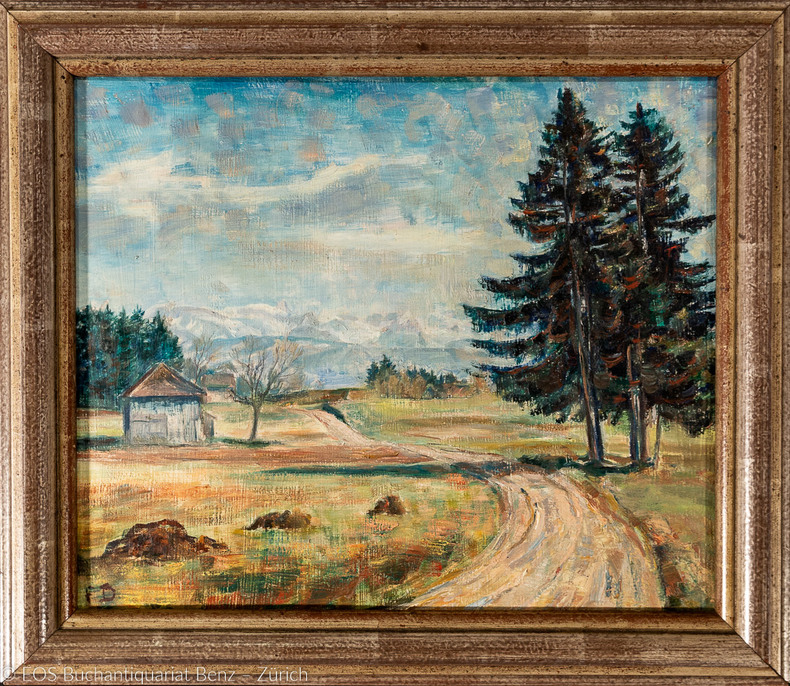
Marxer, Alfred; 1876 – 1945.
Schloss in Turbenthal.
ca. 1910. Lavierte Tuschzeichnung. Bildausschnitt: 11.5 x 16.5 cm. Bildgrösse mit Rahmen: 27,5 x 35 cm.
Riferimento per il libraio : 763DG
|
|
|
Mary Lafon Translated By Alfred Elwes With Gustave Dore Engravings
Jaufry The Knight And The Fair Brunissende A Tale Of The Times Of King Arthur. Translated From The French Version of Mary Lafon By Alfred Elwes.
<p>First American Edition Good Original Rare 1857 Hardcover Arthurian Medieval Romance of the South of France 8vo. pp. 158 2ads. Eight plates by Gustave Doré all though the name "Dore" does not appear for American copyright reasons.Embossed Gilt Knight on Horse on cover. Blind stamped cover design. Tissues intact over illus. Much foxing on pages. But not on pictures First green colored endpaper missing else Good. Covers and spine solid. NOT a library copy. Tight binding. This is a really great Medieval troubadour tale of Arthur's Round Table from Provence. More fun in my opinion than Chretien. See our Three Geese In Flight Book Scans</p> Wiley and Halstead hardcover
Riferimento per il libraio : 900053043

|
|
|
MASBOU, Jean-Luc
Signierter Comic-Druck als Weihnachtsgabe von Heinzelmännchen's Bücherstube in Stuttgart. * Eigenhändig signiert und numeriert. Hier die Nummer 93 / 250.
Stuttgart 1998. Ein Blatt in orangerotem Umschlag "Frohe Weihnachten und ein gutes Neues Jahr". Neuwertig 21x15 cm
Riferimento per il libraio : 147101

|
|
|
Masereel, Franz (Wood Engravings) Edscmid, Kasimir (Introduction)
Politische Zeichnungen.
Berlin: Erich Reiss Verlag. Very Good with no dust jacket. 1924. Reprint; Fourth Printing. Cloth. Viertes tausend edition. Very good copy in ochre-colored cloth. Previous owner's name inked on title page. Covers moderately shelf-soiled. Text in German. Franz Masereel wood engravings throughout. ; 5" x 6 1/2"; 111 pages . Erich Reiss Verlag. hardcover
Riferimento per il libraio : 3113677
|
|
|
Masereel, Frans / Brod, Max [Intro.]
Geschichte Ohne Worte - 60 Holzschnitte / Mein Stunden Buch - 165 Holzschnitte [TWO VOLUME SET]
TWO VOLUME SET. 15.5x12 cm. Unpaginated. Hardcover. Spine hinges cracked. Pages slightly yellowing. Else in good condition.
|
|
|
MASINI Romeo,
La Frana della Lima
(15 dicembre 1933) . 8vo. pp. 12. . Molto buono (Very Good). . . . Allegato un secondo opuscolo dell'Autore: Che cosa può dirci la luna? Nistri-Lischi, 1962, pp. 20

|
|
|
MASON
Jean Fautrier. Les Estampes
Genève Cabinet des Estampes 1986 In-4 carré Broché, couvertrure illustrée Edition originale
Riferimento per il libraio : 004478
|
|
|
MASON (Rainer Michaël)
Jean Fautrier. Les Estampes. Nouvel essai de catalogue raisonné. Avec deux notes de Castor Seibel, Marcel-André Stalter.
genève Cabinet des estampes 1986 Un volume in-4°, 200 pp., couverture illustrée. Catalogue raisonné des estampes de Jean Fautrier. 286 reproductions en noir & blanc, 10 en couleurs et 14 originaux multiples décrits. Biographie et bibliographie in fine.
Riferimento per il libraio : 022662
|
|
|
MASON, Rainer Michael.
Jean Fautrier. Les estampes. Nouvel essai de catalogue raisonné. Avec deux notes de Castor Seibel, Marcel-André Stalter.
Genève, Cabinet des Estampes 1986, 250x240mm, 200pages, broché. Très bel exemplaire.
Riferimento per il libraio : 116491

|
|
|
MASON, Rainer Mickael ; FAUTRIER, Jean.
Jean Fautrier - Les estampes.
1986 Couverture souple Genève, Cabinet des estampes, 1986. Un volume in-8 carré (25x24cm), broché, couverture souple imprimée, pliure au premier plat, petit accroc au bas du dos. 197 pages, illustrées de 286 estampes décrites et reproduites, 12 interprétations et 14 originaux reproduits. Catalogue raisonné des estampes de Jean Fautrier, de 1923 à 1963, avec deux notes de Castor Stiebel et Marcel-André Stalter. Tirage à 2800 exemplaires, un des 1000 exemplaires pour le Cabinet des estampes. Biographie et bibliographie in fine. Bon exemplaire de cet ouvrage de référence.
Riferimento per il libraio : 1127

|
|
|
Mass ) University Prints (Boston
University Prints. Series A. Greek and Roman Sculpture; 500 Plates to Accompany A Handbook Edited by Edmund von Mach
Hardback. New. hardcover
Riferimento per il libraio : B9781019966549 ISBN : 1019966548 9781019966549

|
|
|
MASSARD Jules
La Fenaison
D'après Léon Lhermitte. Épreuve avant la lettre, signée à la pointe-sèche. Cacher sec ATS En feuille Très bon Paris Charmenot 1887 23,5 x 28,5 cm
Riferimento per il libraio : 14359

|
|
|
MASSIP Catherine - Emmanuel Le Roy Ladurie (préface) - Avec la participation des Départements ds Cartes et Plans, des Estampes, des Livres imprimés, des Manuscrits occidentaux et orientaux, des Médailles, et de la Musique de la Bibliothèque Nationale
Le chant d'Euterpe, l'aventure de la musique
1991 Hervas, collection Banque Nationale de Paris - 1991 - In-4 couverture cartonnée noire décorée - 188 pages - nombreuses reproductions photographiques
Riferimento per il libraio : 98357
|
|
|
MASSON Alphonse
Le garde-chasse
D'après Decamps. Paru dans "L'artiste". Belle épreuve sur Chine contrecollé. Paris L'Artiste 19,2 x 13 cm.
Riferimento per il libraio : 8140

|
|
|
MASSON André
Le Titan - Lithographie originale signée sur BFK de Rives d'André Masson
- Aubier 1972, 65x50cm, une feuille. - Lithographie originale imprimée sur BFK de Rives. Mention "Epreuve d'artiste" rédigée au crayon en bas à gauche. Signature de l'artiste au crayon en bas à droite de la planche. Marges salies avec petites traçes de pliure. Paysage mystérieux à la végétation luxuriante, le feu au centre, représente le titan sur un fond de collines dans des tons verts et orangés. [ENGLISH DESCRIPTION ON DEMAND]

|
|
|
MASSON, André (Balagny, 1896 - Parigi, 1987),
Omaggio a Michelangelo
Litografia a 7 colori. Opera appartenente al portfolio pubblicato in occasione del 500° anniversario della nascita di Michelangelo Firma e numerazione a matita. Stampata su carta Arches da 250 gr da Mourlot, Parigi. Esemplare 173/200. Cm 80x60. . . Perfetto (Mint). . Tiratura 200 + XX p.d.a.. .

|
|
|
MASSON, André (Balagny, 1896 - Parigi, 1987),
Senza titolo
Acquaforte acquatinta originale tratta dal libro ''Méta.Morphoses'' di Arturo Schwarz stampato in 150 copie su carta Arches da Georges Fall, Parigi Firma a matita. Incisione stampata presso l'Atelier Crommelynck, Parigi. cm 21,5x14,8 (foglio 38x28,5). pp.. . . . . .

|
|
|
MASSÉ F. N.
The bearers of the Holy Carpet
Épreuve sur chine contrecollé; D'après le tableau de frederick Arthur Bridgman. En feuille Très bon 1878 21 x 28 cm
Riferimento per il libraio : 14367

|
|
|
MASTROIANNI, Umberto (Fontana Liri, 1910 - Marino, 1998),
Senza titolo
Acquaforte acquatinta Firma a matita. Esemplare 7/150. Cm 37x48,4 (Foglio 37x48). . . Ottimo (Fine). . Tiratura 150 + XXX. .

|
|
|
MASTROIANNI, Umberto (Fontana Liri, 1910 - Marino, 1998),
Senza titolo
Acquatinta Firma e numerazione a matita. Carta Fabriano. Esemplare 52/100. Cm 57x43,5 (Foglio 70x50). pp.. . Ottimo (Fine). . Tiratura 100. .

|
|
|
MATHERON (Laurent).
Goya
Paris Schulz et Thuillié 1858 In-12 Demi-reliure Edition originale
Riferimento per il libraio : 003173
|
|
|
Mathews, Nancy Mowll and Barbara Stern Shapiro (Mary Cassatt)
Mary Cassatt: the Color Prints (catalogue raisonne)
The standard catalogue raisonne of the color prints of Mary Cassatt. All items decribed in great detail, with numerous color illustrations of different states and impressions of each print. 4to. Publisher's cloth, dustjacket. LIKE NEW.
|
|
|
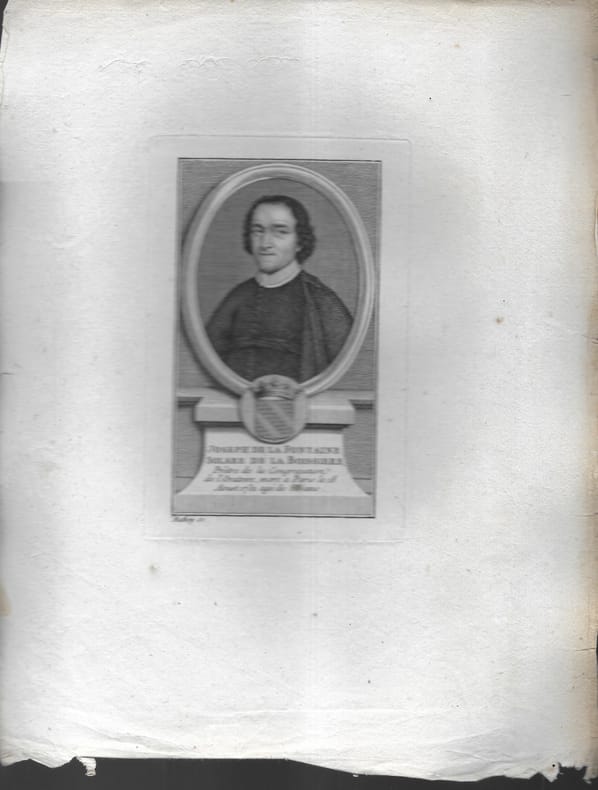
Mathey
Joseph de La Fontaine Solare de La Boissière
Épreuve sur beau papier filigrané. en feuille Très bon Paris 14 x 9 cm
Riferimento per il libraio : 15175
|
|
|
Mathey, Georg Alexander (Hans Bethge)
Sechs Radierungen zu Hans Bethge's Satuila (original etchings by Georg Alexander Mathey)
NUMBER ONE OF ONLY TEN SETS OF THIS OUTSTANDING PORTFOLIO OF EXPRESSIONIST ETCHINGS, WITH MANY OF THE ETCHINGS PRINTED ON OLD JAPANESE PAPER. In 1918 German novelist Hans Bethge wrote "Satuila oder vom Zauber der Suedsee" ("Satuila or the Enchantment of the South Sea"), the story of a young woman in Samoa. It is a sensual, escapist tale: the situation in Germany was quite terrible after the defeat in WWI, and there was great demand for escapism. This novel was a hit, and a deluxe edition, with 6 original etchings by German Expressionist artist Georg Alexander Mathey, was published in Berlin in 1921. The etchings are extremely beautiful, perfectly capturing the lush sensuality of the landscape and the unabashed sexuality of the characters (similar to the depictions of Gypsies by Otto Mueller, from about the same time). This edition of the novel was limited to 250 copies. Aside from the book edition, 10 sets of the etchings were printed, with large margins. In these 10 sets, each of the etchings is signed and numbered by the artist. I OFFER ONE OF THESE 10 SETS: SET NUMBER 1, with each of the etchings numbered 1/10 and signed in pencil by the artist. FOUR OF THE SIX ETCHINGS IN THIS SET ARE PRINTED ON OLD JAPANESE PAPER, AND ARE PERHAPS UNIQUE AS SUCH. Additionally, there is a signed working proof of an early version of one of the etchings, also printed on old Japanese paper. This proof is probably unique, as the etching was never published. The set is as it was issued. Each etching (sheet size 8 1/2 x 7 inches--22 x 18 cm) is individually matted, and the original parchment-backed cloth portfolio case (16 1/2 x 13 inches--42 x 33 cm). There is a little light wear to the portfolio, but the etchings are fine and bright. An important and extremely rare item (and perhaps the only German Expressionist depictions of the South Pacific!)
|
|
|
Mathis, Walter (Hrsg.)
Zürich - Stadt zwischen Mittelalter und Neuzeit. gedr. Gesamtansichten u. Pläne 1540 - 1875.
Zürich, Tanner, Histor.-Archäolog. Verl, c 1979. 8°. 176 S. Mit zahlr. meist ganzs. Illustr. im Text nach alten Vorlagen. Orig.-Halblederband. + Wichtig: Für unsere Kunden in der EU erfolgt der Versand alle 14 Tage verzollt ab Deutschland / Postbank-Konto in Deutschland vorhanden +, 4855CB
Riferimento per il libraio : 4855CB

|
|
|
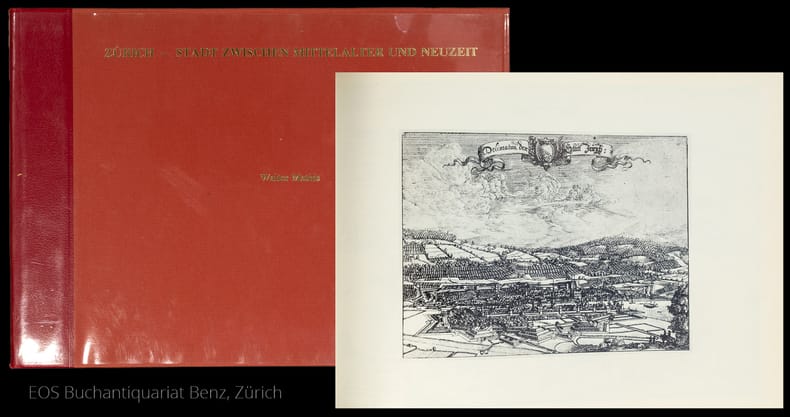
Mathis, Walter (Hrsg.):
Zürich - Stadt zwischen Mittelalter und Neuzeit. gedr. Gesamtansichten u. Pläne 1540 - 1875.
Zürich, Tanner, Histor.-Archäolog. Verl, c 1979. 8°. 176 S. Mit zahlr. meist ganzs. Illustr. im Text nach alten Vorlagen. Orig.-Halblederband.
Riferimento per il libraio : 4855CB
|
|
|
Matisse, Henri; F Woimant (estampes) and J Guichard—Meili (livres illustres); Maison Pullierane
Catalogue Pully 1970. Gravures Et Lithographies de 1900 a 1929.
Pully Switzerland: Maison Pulliérane 1970. Photocopy. 4to. Folder Binding ca. 50 pp. Good B&W Plates. Selz's personal reference copy.From the collection of UC Berkeley art historian Peter Selz 1919 - 2019. Pully, Switzerland: Maison Pulliérane, 1970. unknown
Riferimento per il libraio : 63-9381

|
|
|
Matisse, Henri
Henri Matisse: Etchings, Lithographs, Linocuts & Aquatints
A clean, unmarked book with a tight binding. Crease on front cover and a few page edges. 24 pages. Exhibition catalog for Pace Master Prints show taking place on October 16--December, 19, 1992. Two 6"x8" postcards advertising the event laid in.

|
|
|
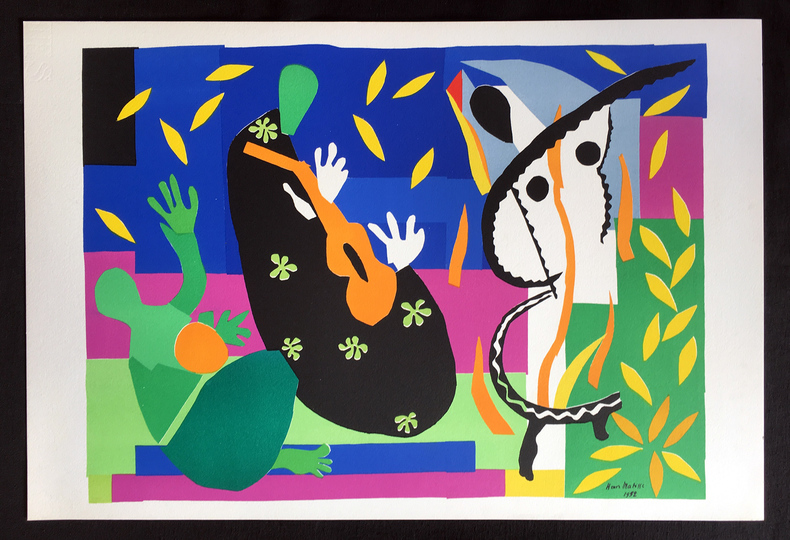
MATISSE, Henri (1869-1954)
LA TRISTESSE DU ROI. Lithographie sur Arches pour VERVE Vol. IX, No. 35-36. 1958. MATISSE DERNIÈRES ŒUVRES 1950-1954.
LITHOGRAPHIE EN COULEURS (36 x 52,8 cm) exécutée par Mourlot, d'après l'œuvre originale de 1952 en papiers découpés d'Henri Matisse, pour figurer dans Verve 35-36 (1958). BELLE ÉPREUVE SUR VÉLIN D'ARCHES À GRANDES MARGES, non pliée au centre. Tirage non mis dans le commerce, il était réservé à Tériade, à ses collaborateurs et amis. Parfait état.
Riferimento per il libraio : 1381
|
|
|
MATTA, Roberto (Santiago del Cile, 1911 - Civitavecchia, 2002),
Senza titolo
Litografia originale a colori Esemplare IX/L. Firma e numerazione a matita. Cm 47x67. pp.. . Ottimo (Fine). . Edizione originale di L es. numerati. .

|
|
|

 Ricevere i risultati per e-mail
 Scaricare i risultati in PDF
 RSS feed
 Link
Link


