|
PIGNOTTI, Lamberto (Firenze, 1926)
Senza titolo
Esemplare p.d.a.. Cm 23x33. . . Ottimo (Fine). . . . Litografia numerata e firmata a matita dal''Artista

|
|
|
PILETE B.
Paysage fantastique
Belle eau-forte d'après un dessin de Victor Hugo. Pas de couverture Très bon Paris Delâtre 16,5 x 21,5 cm
Référence libraire : 11383

|
|
|
Pillsbury Fine Prints (New York).
Auguste Lepère. Exhibition catalogue.
New York NY: Pillsbury Fine Prints 1990. . 8vo. 50 pp. Very Good. Stiff salmon wraps with paste-in color plate. As new. Color and B&W plates. Scarce. Printed in France. Price list present. Scarce. New York, NY: Pillsbury Fine Prints, 1990. paperback
Référence libraire : 18-5659

|
|
|
Pillsbury Fine Prints
Auguste Lepère. Exhibition catalogue.
New York: Pillsbury Fine Prints 1990. 8vo. ca 50 pp. Very Good. Soft back. Pages fine. Color and B&W plates. Scarce. Price list present. From the library of Pasquale Iannetti as indicated by stamp and lending card on front pages. New York: Pillsbury Fine Prints, [1990]. unknown
Référence libraire : 18-0332

|
|
|
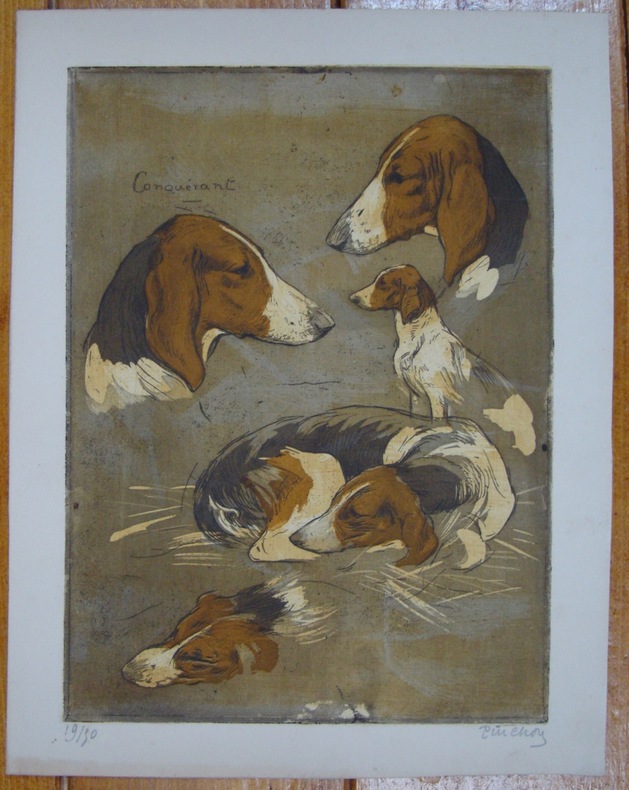
PINCHON Robert Antoine
Croquis de chiens batards. Conquérant.
Belle épreuve d’un tirage à 50 exemplaires sur vergé, signée et numérotée. Ancien tampon de prix au dos. 35 x 27 cm
Référence libraire : 5502
|
|
|
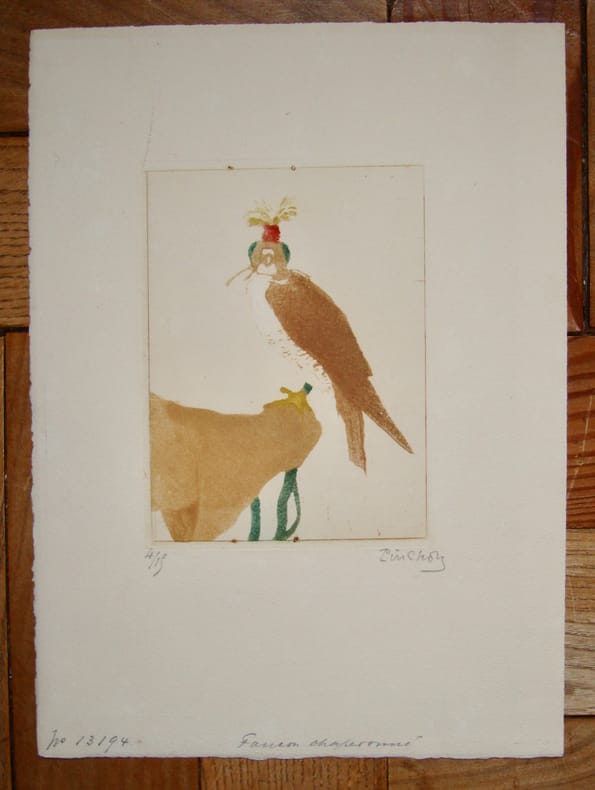
PINCHON Robert Antoine
Faucon chaperonné
Belle épreuve en couleurs d’un tirage à 15 exemplaires sur vergé, signée et numérotée. Ancien tampon de prix au dos. 16 x 12 ( marges 30,5 x 22 )
Référence libraire : 5199
|
|
|
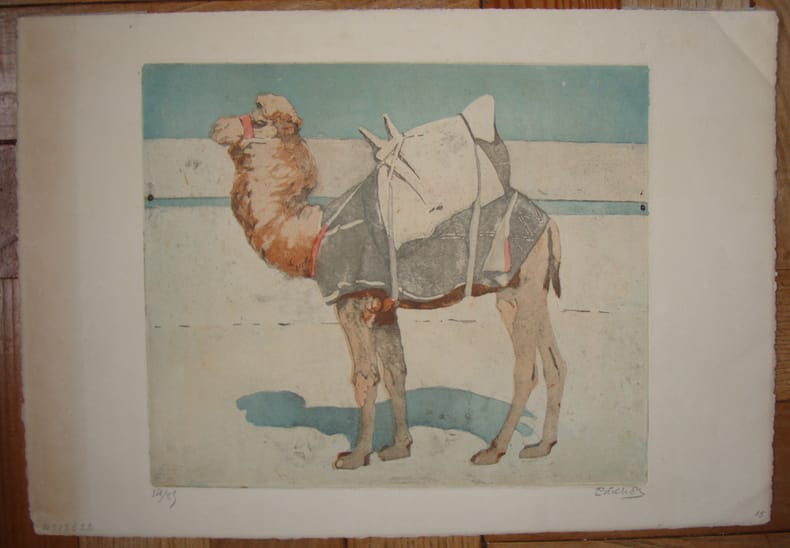
PINCHON Robert Antoine
Le chameau
Belle épreuve en couleurs d’un tirage à 25 exemplaires sur vergé, signée et numérotée. Ancien tampon de prix au dos. 24,5 x 29,3( marges 30,7 x 44,5 )
Référence libraire : 5200
|
|
|
Pinel de Grandchamp, Louis Émile, painter (1831-1894 ).
Constantinople street scene. Watercolour on sturdy paper, signed. No place, [ca 1860].
161 x 218 mm. A street merchant with a lady client and a child, showing the Hagia Sophia in the background. Pinel de Grandchamp, a student of Dubois and Picot, is counted among the foremost oriental painters of the 19th century. - Mounted on backing cardboard (old edge flaws). Thieme/Becker XXVII, 56. Bénézit VIII, 344.
|
|
|
Pinel de Grandchamp, Louis Émile, painter (1831-1894 ).
Turkish merchant. Pencil and watercolour on brownish paper. No place, [ca 1860].
Unsigned, undated. 200 x 140 mm (leaf size: 275 x 215 mm). Pinel de Grandchamp, a student of Dubois and Picot, is counted among the foremost oriental painters of the 19th century. - A slight crease, with insignificant edge tear, at lower edge; slight duststaining. Thieme/Becker XXVII, 56. Bénézit VIII, 344.
|
|
|
Pins, Jacob
Landscapes: Woodcuts
This folder features 7 of 8 woodcuts (plate no.1 missing.) by the German-Israeli artist Jacob Pins, and an introductory text by Eugen Kolb, director of the Tel-Aviv Museum of Art. 350x255 mm. No binding - folder format. Folder edges worn. Folder and pages yellowing. Pen writing on folder inner slip. Else in good condition.
|
|
|
Pins, Jacob / Keyes, Roger [Foreword]
The Japanese Pillar Print - Hashira-e [LIMITED EDITION OF 100 COPIES]
LIMITED EDITION OF 100 COPIES - COPY No.688. RARE comprehensive illustrated monograph on the Japanese art of woodblock printing by Jacob Otto Pins (1917-2005) - an eminent German-born Israeli woodcut artist and art collector, particularly of Japanese prints and paintings. This book deals with Hashira-e, pillar prints known for their unusual size - usually half a person's height, yet narrower than the palm of a hand. 360x255mm. 390 pages. Brown cloth Hardcover laid in illustrated slipcase. Gilt lettering on spine. Slipcase rubbed and dirty. Slipcase rear hinge upper part torn/cracked and worn. Slipcase rear upper edge, bottom corners and spine upper edge bumped. Two tiny light stains on front cover. [SUMMARY]: This extremely rare and definitive work on the subject of a special type of Japanese woodblock printing, written by one the foremost authorities in the field, is otherwise in good condition. PLEASE NOTE: This item is overweight. We may ask for extra shipping costs.
|
|
|
Pins, Jacob / Kolb, Eugene [Intr.] / I.M. Lask [Tr.]
Jacob Pins: Landscapes [Woodcuts]. With an Introduction by Eugene Kolb.
350x260mm. 8 plates laid in folder with unpaginated booklet. Folder worn, yellowing and slightly stained; folder corners and edges bumped. Woodcut pages yellowing, corners and edges slightly bumped. Few pages slightly age-stained. Else in good condition.
|
|
|
Pins, Jacob [ARTIST] / Kolb, Eugene [Intr.]
Jacob Pins: Landscapes [Woodcuts] [SIGNED BY ARTIST]. With an Introduction by Eugene Kolb. English Version by I. M. Lask.
SIGNED BY JACOB PINS. This folder features 8 woodcuts by the German-Israeli artist Jacob Pins, and an introductory text by Eugen Kolb, director of the Tel-Aviv Museum of Art. The title page carries Jacob Pins' autograph. 260x350mm. Unpaginated. No binding - folder format. Cover slightly worn. Cover edges worn. Spine yellowing. Else in very good condition.
|
|
|
Pinsio
François de La Chaize
Épreuve sur beau papier filigrané. en feuille Très bon Paris 15 x 11,5 cm
Référence libraire : 15174

|
|
|
Pinssio
Pape Sixte V
Épreuve sur beau papier filigrané. en feuille Très bon Paris 15 x 11 cm
Référence libraire : 15211

|
|
|
Pinssio
Pierre François Guyot Desfontaines
Épreuve sur beau papier filigrané. en feuille Très bon Paris 11,5 x 8 cm
Référence libraire : 15168

|
|
|
PIRANESE JEAN - BAPTISTE
LES PRISONS IMAGINAIRES (carceri d'invenzione)
LE CLUB FRANCAIS DU LIVRE 1970 PARIS;In folio (44x32 cm) composé de feuilles dans une couverture rempliée de couleur bistre. L'ensemble dans un étui de même couleur. Présentation par Max - Pol Fouchet (27 pp.) et 18 planches reproduisant les carceri d'invenzione,car 2 doubles,sous serpentes,une froissée. Edition hors commerce. Exemplaire numéroté. Bon état
Référence libraire : 12466

|
|
|
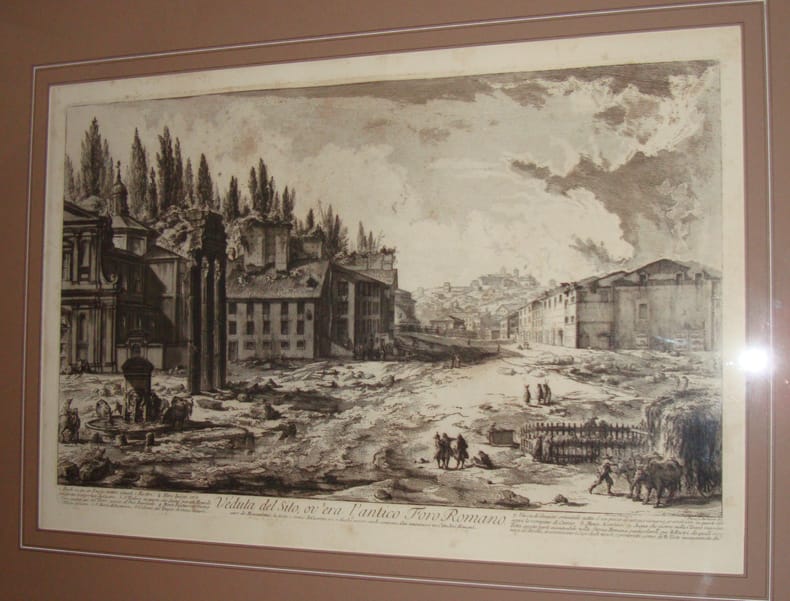
PIRANESI Giovanni Battista
Veduta del sito, ov'era l'antico Foro romano
Une des très belles vues de Rome . Ficacci 897. Retirage par la Chalcographie. En feuille Très bon Rome Chalcographie 1750/1759 40 x 30 cm
Référence libraire : 13939
|
|
|
Pirath, Carl und Feuchtinger, Max-Erich
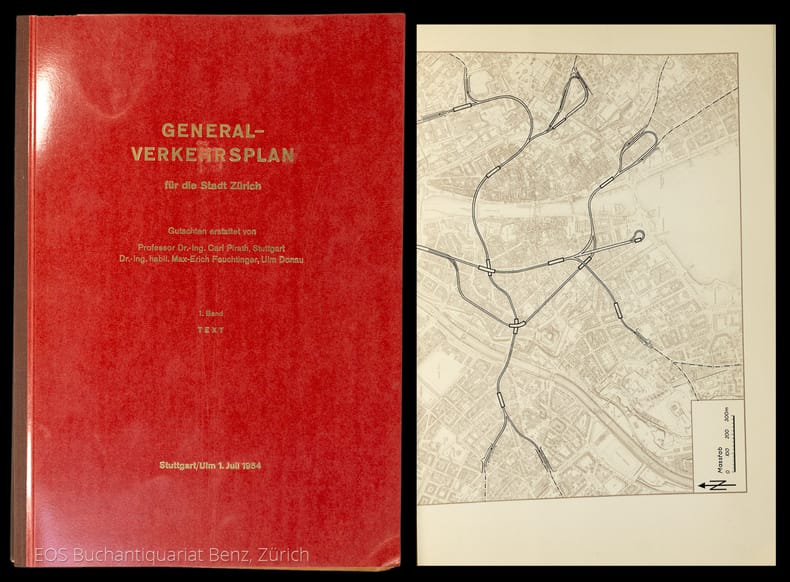
Generalverkehrsplan für die Stadt Zürich. Gutachten erstattet von Pirath und Feuchtinger. Stuttgart/Ulm 1. Juli 1954.
Zürich, Speich, Reproduktionsanstalt, 1955. 4°. 125 S. Mit 110 Abb. (zum Teil gef. Tafeln mit Plänen). Orig.-Broschur mit Leinenrücken in Schuber. + Wichtig: Für unsere Kunden in der EU erfolgt der Versand alle 14 Tage verzollt ab Deutschland / Postbank-Konto in Deutschland vorhanden +, 4649DB 3 Bände.
Référence libraire : 4649DB

|
|
|
Pirath, Carl und Feuchtinger, Max-Erich:
General-Verkehrsplan für die Stadt Zürich. Gutachten erstattet von Pirath und Feuchtinger. Stuttgart/Ulm 1. Juli 1954.
3 Bände. Zürich, Speich, Reproduktionsanstalt, 1955. 4°. 125 S. Mit 110 Abb. (zum Teil gef. Tafeln mit Plänen). Orig.-Broschur mit Leinenrücken in Schuber.
Référence libraire : 4649DB
|
|
|
PISTELLI, Adolfo (Carmignano 1921),
Senza titolo
Litografia originale su pietra Firma a matita. Esemplare p.d.a. IV/X. cm 38 x 58 (Foglio 50 x 71). . . Ottimo (Fine). . . .

|
|
|
PITSCH Marguerite
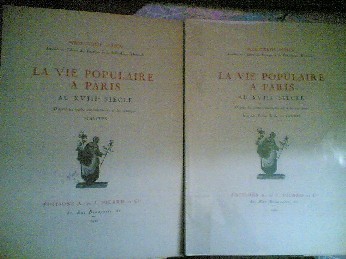
La vie populaire à Paris au XVIIIè siècle, d'après les textes contemporains et les estampes. complets en 2 volumes
175. Paris, Picard, 1949. Couverture souple pour le livre du texte et couverture rigide pour le volume des planches. État : Très bon. 2 volumes In-4 (23 cm x 29cm),broché, 101 pages, plus un ALBUM de planches au même format sous chemise cartonné d'éditeur. L'album reproduit 149 figures sur 53 planches. Avec une préface de A. Van GENNEP. Photos possibles
Référence libraire : CCC000e1
|
|
|
PIZZINATO, Armando (Maniago, Pordenone 1910 - Venezia 2004),
Composizione
Serigrafia a tre colori Firma a matita. Certificato di autenticità sul retro. Esemplare 47/150. Cm 41x29 (Foglio 50x35). . . . . Tiratura 150 + 30 p.d.a.. .

|
|
|
PLAN, Pierre - Paul;
JACQUES CALLOT. MAITRE GRAVEUR ( 1593 - 1635 ). SUIVI D'UN CATALOGUE CHRONOLOGIQUE,
, Bruxelles / Paris, Van Oest, 1914, Relie en demi - veau, page titre originale, frontispice, 170 x 240mm.,108pp., ornee de 96 estampes et d'un portrait.
Référence libraire : 15254
|
|
|
Planta, P(eter) C(onradin)
Geschichte von Graubünden, in Ihren Hauptzügen gemeinfasslich dargestellt von Dr. P. C. Planta.
Bern, K.J. Wyss, 1892. 8°. VIII, 440 S. Mit 1 gef. farb. Karte. Orig.-Leinenband. + Wichtig: Für unsere Kunden in der EU erfolgt der Versand alle 14 Tage verzollt ab Deutschland / Postbank-Konto in Deutschland vorhanden +, bild Erste Auflage.
Référence libraire : 6388CB

|
|
|
Planta, P(eter) C(onradin):
Geschichte von Graubünden, in Ihren Hauptzügen gemeinfasslich dargestellt von Dr. P. C. Planta.
Erste Auflage. Bern, K.J. Wyss, 1892. 8°. VIII, 440 S. Mit 1 gef. farb. Karte. Orig.-Leinenband.
Référence libraire : 6388CB

|
|
|
PLON ; COLLIN DE PLANCY (Jacques-Albin-Simon)
[8 couvertures typochromiques pour la «Bibliothèque des légendes»]
Paris : Plon, 1861-1865. ENSEMBLE DE 8 COUVERTURES TYPOCHROMIQUES POUR LA « BIBLIOTHÈQUE DES LÉGENDES »
Référence libraire : 1359

|
|
|
PLUNKETT James; John De Pol wood engravings
The Trusting and the Maimed and Other Irish Stories
New York: The Devin-Adair Company 1955. First Edition. Octavo. Paper-covered cloth boards in dust jacket; 220pp. Trivial spotting to top edge of textblock corners and bottom edge of boards mildly bumped else a tight clean unmarked copy. Dust jacket showing minor spotting and shelf wear including a few nicks and chips to top and bottom edges. Very Good. The Devin-Adair Company unknown books
Référence libraire : 51762

|
|
|
Pock, Alexander, Maler (1871-1950).
10 Uniformdarstellungen. Wien und o. O., o. D.
Aquarell auf Papier, jeweils ca. 165 x 90 mm, in drei Gruppen (2 Vierer- und eine Zweiergruppe) unter Glas und Passepartout gerahmt. Undatierte, hübsch aquarellierte Folge von 10 österreichischen Offizieren in ihren Regimentsfarben. Der aus Znaim gebürtige österreichischische Militär- und Pferdemaler und Zeichner A. Pock studierte bei Griepenkerl an der Wiener Akademie und war bis 1914 Mitarbeiter der Meggendorfer Blätter; das Heeresgeschichtliche Museum besitzt einen Bestand an Werken Pocks (vgl. Vollmer). - Sauber und wohlerhalten. Vgl. Thieme/Becker XXVII, 170; Vollmer III, 603.

|
|
|
Poensgen, Daniel
Projekt 1001. Copy Art. [Unikat, signierte Papierarbeit / Unique, signed paper art].
o.J. [2 Warenabbildungen] Das Projekt 1001 wurde 1996 von dem Kunstsammler Ralf Seilheimer ins Leben gerufen. Er schrieb 1001 Künstlerinnen und Künstler mit der Bitte an, ihm auf einer "nummerierten Blancokarte (10,5 x 14,8 cm) ein kleines Gefälligkeitskunstwerk zu zaubern..." Daniel Poensgen, geb. 1958 in Düsseldorf, 1979-1985 Studium an der Staatlichen Kunstakademie Düsseldorf, Meisterschüler
Référence libraire : 9468EB

|
|
|
POETRY QUARTOS Johnston, Paul (designs and prints).
The Poetry Quartos.
Random House New York. 1929. First edition. Royal octavo. Twelve four-page pamphlets stitched each with a cover illustration by Paul Johnston. One of 475 sets. The poets are Genevieve Taggart Robert Frost "The Lovely Shall be Choosers". Vachel Lindsay "Rigamarole Rigamore" Edwin Arlington Robinson "The Prodigal Son" Louis Untermeyer Alfred Kreymborg H.D. "Red Roses for Bronze" Theodore Dreiser William Rose Ben�t Conrad Aiken "Prelude" and Witter Bynner. A fine set in publisher's paper chemise with long closed tears. Lacks the slipcase. Random House, New York. unknown
Référence libraire : POETRYQU011103
|
|
|
Poetry Toru Kitagawa/Keito Prints/Written by Hideo Suzuki
Poetry Collection Triangle Jungle <Japanese Version>
JK Print Studio 1992. Soft Cover. Fine. Volume: 1 JK Print Studio paperback
Référence libraire : 2110502150303241
|
|
|
Pogge, Florentin
Les bains de Bade au XVe siècle. Scène de moeurs de l' age d' or. Traduit en Français pour la première fois par Antony Méray. Texte latin en regard.
Paris, Isidore Liseux, 1876. 12°. (2) Bl., (2) 65 (9) S., (2) Bl. Halblederbd. d. Zeit mit goldgepr. Rückentitel, Kopfgoldschnitt u. marmorierten Buchdeckeln (signiert 1876) + Wichtig: Für unsere Kunden in der EU erfolgt der Versand alle 14 Tage verzollt ab Deutschland / Postbank-Konto in Deutschland vorhanden + (Kapitale minim berieben).
Référence libraire : 26013AB
|
|
|
Pogge, Florentin:
Les bains de Bade au XVe siècle. Scène de moeurs de l' age d' or. Traduit en Français pour la première fois par Antony Méray. Texte latin en regard.
Paris, Isidore Liseux, 1876. 12°. (2) Bl., (2) 65 (9) S., (2) Bl. Halblederbd. d. Zeit mit goldgepr. Rückentitel, Kopfgoldschnitt u. marmorierten Buchdeckeln (signiert 1876) (Kapitale minim berieben).
Référence libraire : 26013AB
|
|
|
POGGI Antonio César de - FOULIS Chevalier James
Relation historique de l'importante SORTIE, exécutée par la garnison de Gibraltar, le 27 novembre 1781, afin de détruire les ouvrages élevés par les Espagnols contre cette forteresse, devant servir d'explication à l'estampe qui représente ce sujet
A Londres, chez l'imprimeur J. Smeeton, dans la rue Saint Martin, 1793. In-4 relié plein veau brun, dos lisse à fleurons allégoriques dorés, plats encadrés d'une guirlande de fines branches dorées, gardes de papier marbrés, roulette dorés intérieure, toutes tranches dorées. 38 pages + superbe estampe aquarellée de Antonio Césare de POGGI, dessinateur, peintre d'histoire et éditeur, dépliante au format de 38 x 51 centimètres (40 pouces x 26, mesure du pied d'Angleterre, datée du 25 may 1792, légendes en marge. L'estampe, dessinée sur place en 1783, est d'une très grande finesse, elle a été gravée par Mr. Pouncey, graveur anglais, travail qui a demandé plus de 7 années. En tête d'ouvrage, on trouve la liste des souscripteurs pour l'estampe (Le Roi et la Reine de Grande Bretagne, les noms des Altesses Royales, etc) sur 8 pages, s'en suit un avertissement à la date du 6 mai 1793 de 4 pages, puis "Lettre de Mr. Le Chevalier Foulis, Major de la Place de Gibraltar, sur la SORTIE faite par la Garnison de cette Place le matin du 27 novembre 1781, adressée à M+++.", 10 pages. Ensuite "Description alphabétique de l'Estampe représentant la sortie faite par la Garnison de Gibraltar dans la matinée du 27 novembre 1781", 11 pages . + Un tableau "Disposition et forces du détachement. Brigadier Général Ross". L'ouvrage se termine sur 2 pages de P.S. (post-sciptum), qui contient les remerciements de Mr. de Poggi à ceux qui lui ont apporté aide pour la résalisation de l'estampe. La reliure est un peu frottée, coins émoussés, petits manques de cuir en tête et en queue, l'exemplaire est à grandes marges, ne présente que quelques rousseurs en page de titre sans gravité, l'estampe présente une déchirure sans manque anciennement restaurée avec du papier collant, un petit trou sans manque à une pliure et une tache brune à une pliure en partie supérieure. Le dessin est d'une remarquable finesse. Malgré les petits défauts signalés, cet ouvrage très rare, est en bon état.

|
|
|
POGGI Antonio César de - FOULIS Chevalier James
Relation historique de l'importante SORTIE, exécutée par la garnison de Gibraltar, le 27 novembre 1781, afin de détruire les ouvrages élevés par les Espagnols contre cette forteresse, devant servir d'explication à l'estampe qui représente ce sujet
chez l'Imprimeur J. Smeeton A Londres, chez l'imprimeur J. Smeeton, dans la rue Saint Martin, 1793. In-4 relié plein veau brun, dos lisse à fleurons allégoriques dorés, plats encadrés d'une guirlande de fines branches dorées, gardes de papier marbrés, roulette dorés intérieure, toutes tranches dorées. 38 pages + superbe estampe aquarellée de Antonio Césare de POGGI, dessinateur, peintre d'histoire et éditeur, dépliante au format de 38 x 51 centimètres (40 pouces x 26, mesure du pied d'Angleterre, datée du 25 may 1792, légendes en marge. L'estampe, dessinée sur place en 1783, est d'une très grande finesse, elle a été gravée par Mr. Pouncey, graveur anglais, travail qui a demandé plus de 7 années. En tête d'ouvrage, on trouve la liste des souscripteurs pour l'estampe (Le Roi et la Reine de Grande Bretagne, les noms des Altesses Royales, etc) sur 8 pages, s'en suit un avertissement à la date du 6 mai 1793 de 4 pages, puis "Lettre de Mr. Le Chevalier Foulis, Major de la Place de Gibraltar, sur la SORTIE faite par la Garnison de cette Place le matin du 27 novembre 1781, adressée à M+++.", 10 pages. Ensuite "Description alphabétique de l'Estampe représentant la sortie faite par la Garnison de Gibraltar dans la matinée du 27 novembre 1781", 11 pages . + Un tableau "Disposition et forces du détachement. Brigadier Général Ross". L'ouvrage se termine sur 2 pages de P.S. (post-sciptum), qui contient les remerciements de Mr. de Poggi à ceux qui lui ont apporté aide pour la résalisation de l'estampe. La reliure est un peu frottée, coins émoussés, petits manques de cuir en tête et en queue, l'exemplaire est à grandes marges, ne présente que quelques rousseurs en page de titre sans gravité, l'estampe présente une déchirure sans manque anciennement restaurée avec du papier collant, un petit trou sans manque à une pliure et une tache brune à une pliure en partie supérieure. Le dessin est d'une remarquable finesse. Malgré les petits défauts signalés, cet ouvrage très rare, est en bon état.
Référence libraire : 123773

|
|
|
Pohler, R
Kathedrale und Müsnster von Lausanne mit Placce St. François und Brücke im Vordergrund.
o.J. Aquarell. Blattgrösse: 44 x 31 cm. + Wichtig: Für unsere Kunden in der EU erfolgt der Versand alle 14 Tage verzollt ab Deutschland / Postbank-Konto in Deutschland vorhanden +, A
Référence libraire : 1790AG

|
|
|
Poilly
Jean George de Souillac
Épreuve sur beau papier filigrané. en feuille Très bon Paris 14 x 10 cm
Référence libraire : 15209

|
|
|
POLACK (Joel Samuel)
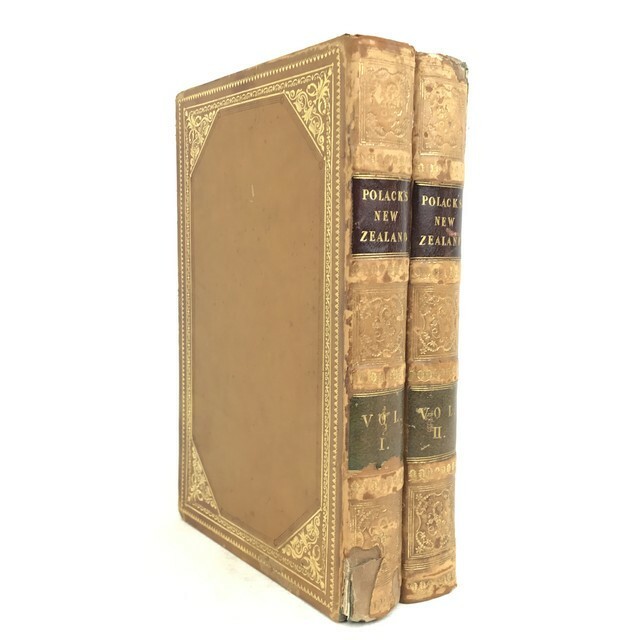
New Zealand : being a narrative of travels and adventures during a residence in that country between the years 1831 and 1837.
London, Richard Bentley, 1838. 2 volumes in-8 (21 x 13 cm), veau fauve glacé (reliure de l'époque), dos lisse orné, pièces de titre et de tomaison en maroquin grenat et olive, dentelles dorées et triple filet à froid encadrant les plats, roulette dorée intérieure et sur les coupes, tranches peignées, xii-403-[1];vi-441-[1] pages (complet). Coins usés, charnières frottées et fendues, coiffes accidentées ,manque au dos avec épidermure .
Référence libraire : PHO-1194
|
|
|
Poliakine, Sharon
The Butterfly Effect: Sharon Poliakine [IN HEBREW AND ENGLISH]
IN HEBREW AND ENGLISH. 33.5X23.5 cm. Unnumbered pages. Softcover. Several pages slightly stained. Else in good condition.
|
|
|
Politisches Werbeplakat.- Hügin, Karl (1887–1963) (1887-1963);
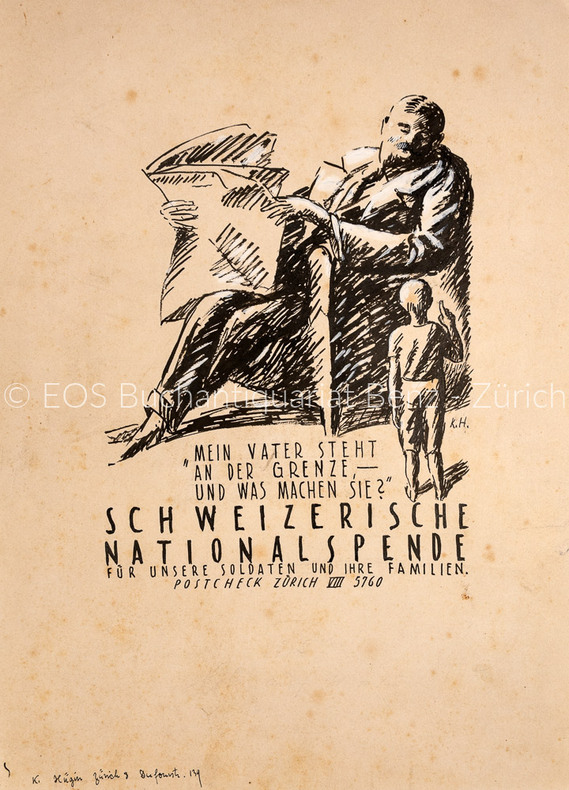
Schweizerisceh Nationalspende.
(1941). Tuschzeichnung mit Deckweiss bearbeitet. Blattgrösse: 49,5 x 36,5 cm.
Référence libraire : 1711AG
|
|
|
Pollard, A. W. and G. R. Redgrave (Ed.)
A Short-Title Catalogue of Books Printed in England, Scotland & Ireland and of English Books Printed Abroad 1475-1640.
Printed by Arrangement with the Bibliographical Society for Bernard Quaritch, London 1926. XVI, 609 p. 4to. Half cloth with top edge gilt. Spine heavily damaged and loose, hinges cracked. Block else tight. Some contemporary annotations and corrections in different English and German cursives, few of them in German. Important bibliographic refer
Référence libraire : 15057

|
|
|
Pomeroy, Oren D.
The Diagnosis and Treatment of Diseases of the Ear
A clean, unmarked book with a tight binding. 392 pages. Bookplate from Theosophical University Library. Previous owner's inscription in lovely penmanship. Slight wear and fading to dark green cloth cover. Library call number onspine. Beautiful engravings of medical equipment and a few ears. Tears at front hinge, but binding still tight.

|
|
|
PONTIUS Paul d’après Jordaens
Le Roi boit
2è état avant le chiffre 5 dans la marge en bas à droite ( Monod). 400 x 590 -1640
Référence libraire : 5516

|
|
|
Pontonnier Fahrverein Zürich.- Huguenin, Albert:
Locarno - Venedig, 9.-14. April 1909.
Zürich, Aschmann & Scheller, 1909. 8°. 136 S. Orig.-Broschur (leicht fleckig, Rücken gebräunt).
Référence libraire : 28526AB
|
|
|
Pontoppidan (Erik) [Engravings by I Haas & others]
Eight Plates from Pontoppidan's Danske Atlas 1763-1781.
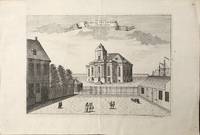
Copenhagen 1763-81. . 8 Copper-Engraved plates from this massive Danish atlas. Original folds some marginal tears several are mounted on larger sheets with spots of glue at upper margins; clean and very good for the most part. Sizes are about 12 x 9 inches; some are trimmed smaller. Titles are: H. Zebaoths Kirke / Fridrichshafns Castell-Kirke / Friderichsberg Slotsgaard 2 copies - one is colored / Harboes Frue-Closter / Fridrichs Tydske Kirke paa Christianshavn / Arrest-Huset / Vor Frelseres Kirke paa Christianshavn partly colored. <br/><br/> Copenhagen, 1763-81. unknown
Référence libraire : 56324
|
|
|
Pope (Alexander) :
Oeuvres diverses de Pope. Traduites de l'anglais. Nouvelle édition, Revue et Augmentée d'un grand nombre de pièces qui n'avaient point encore été traduites. Avec de très belles figures en taille-douce.
Amsterdam et Leipzig, Arkstrée et Merkus, 1767 ; huit tomes, grand in-12 ; plein veau havane à grandes marbrures, dos à nerfs décorés et dorés, pièces de titre grenat et de tomaison vert-sapin, triple filet doré d'encadrement des plats, filet doré sur les coupes, tranches marbrées (reliure de l'époque) ; (4) à chaque volume, LX, 343 ; IV, 358 ; II, 352 ; II, 418 ; IV, 396 ; XII, 392 ; XII, 351 (mal chiffrée 451) ; XV, (1), 364 pp et un portrait de Pope gravé par Kornlein, 1 frontispice par Delanonce, gravé par Kornlein, 23 figures hors-texte dont 7 signées de N.V. Frankendaal, même fleuron de titre aux six premiers tomes et second fleuron de titre aux deux derniers.
Référence libraire : 9225

|
|
|
POPE, Alexander et al Maps and engravings by Benjamin Cole
The Grand Magazine of Magazines or Universal Register for the Months of January February March April May June July August September October November December MDCCLIX Collected in Two Volumes - II and III.So Containing the Whole of the Year 1759. Illustrated with Many Natural History Plates and Map
1759. T. Kinnersley. London. 1759. In Two Volumes II and III and contains the whole set for the year 1759. Bound in 18th century quarter brown calf gilt very worn and rubbed and lacking portions of leather from heads and tails of spine. Joints tender but holding. Vol. II; ii 372 pages plus 4pages of index. Vignette to general title-page and engraved head-piece for each month. 6 engraved plates of unusual and more ordinary fauna including the dodo the rhinoceros sea hedge-hog the horned didapper flying fish and cassowary. 1 portrait plate of Magliabechi 14 full page engraved maps and plans. Vol. III; ii. 404 pages plus 4 page index. Engr. vignette to general title-page and engraved head-pieces or decorations to each month 4 engraved plates of fauna one portrait plate of Major General Wolfe 1 incredible engraved plate displaying the Torments Inflicted by the Dutch on the English in Amboyna plus the engraved frontis. to Pope's Essay on Man. Three engraved plates - 1 map and 2 plans. A wonderful insight into what interested people in the mid-18th century. Pages browned and occasionally foxed but otherwise a very useful set. hardcover
Référence libraire : 84804
|
|
|
Porcacchi, Thomaso; Girolamo Porro (Engravings)
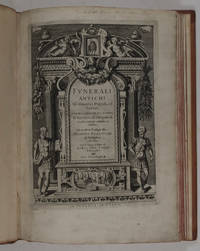
Funerali Antichi di Diversi Popoli et Nationi; Forma Ordine et Pompa di Sepolture di Etsequie di Consecrationi et d'Altro: Ancient Funerals of Different Peoples and Nations.
Venice Venetia: Printed by Simon Calignani 1574. First edition. Hardcover. Very good condition. Quarto. 8 109 1pp. Rebound in full leather with ornate period blind-stamped decor on covers gilt lettering on spine; raised bands. Red edges. Title page with elaborate architectural framing. Historiated woodcut initials. Twenty-three headpiece copper engravings 3 3/4 x6" for each chapter and tailpiece vignettes. Contains author's dedication to Ottaviano Manini and five page table of notable facts Index with errata note. Woodcut on colophon at rear is the printer's device initialed S. C. K. with his motto "The Tower and the Strength of my God."<br /> <br /> Famous work on ancient customs of funeral rites and ceremonies among Romans Egyptians Greeks Indians Scythians Cavemen and Christians by author and cartographer Thomaso Porcacchi illustrated by Girolamo Porro. Written as a dialog between author and two characters praising the talent of Girolamo Porro and the quality of his work. Porro who's eyesight was impaired is also credited with the design of a "flying machine" able to transport many man. Porro also illustrated Porcacchi's 1572 publication "Isole piu famose del Mondo Most Famous Islands of the World." Porcacchi's work on funeral rites known to have been consulted in arranging high profile funerals e.g. that of Cosimo I. de Medici. Text in Italian. Page 51 misnumbered 15. Binding with light wear along edges light streaking to boards. Some offsetting along edges of free endpapers form leather binding. Original endpapers and title page with some age-toning else only minor blemishes in block. Printed by Simon Calignani hardcover
Référence libraire : 47005
|
|
|
PORPORATI
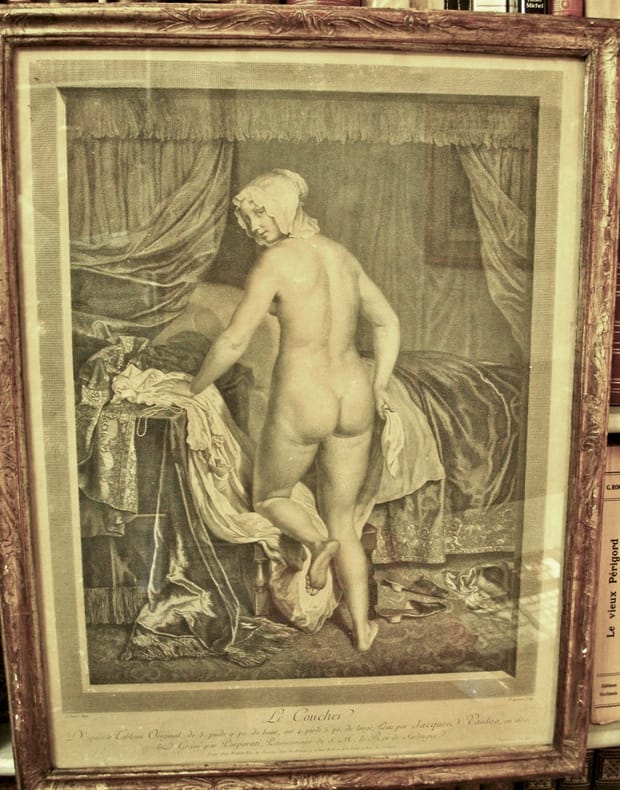
Le coucher
D'après Van Loo. Beau cadre d'époque XVIIIè. Menus défauts à l'estampe. Bon 57,5 x 44 cm
Référence libraire : 10024
|
|

 Recevoir par e-mail
 Télécharger en PDF
 Flux RSS
 Lien permanent


