|
Muller (Eddie)
L’Art du film noir. Les affiches de l’Âge d’or du film policier.
Calmann-Lévy 2003 Gd in-4 cartonné, sous jaquette illustrée, 372 pp. 338 illustrations en couleurs. Traduit de l’Anglais par Jacques Guiod.Neuf
Referentie van de boekhandelaar : 28712
|
|
|
MULLER Alfredo
L'Estampe Moderne. Bouderie. Lithographie Originale
- L'Estampe Moderne, Imprimerie Champenois pour CH. Masson & H. Piazza, Paris 1898, 30x40cm, une feuille. - Lithographie originale sépia exécutée spécialement par l'artiste pour l'Estampe Moderne. Epreuve tirée sur vélin fort protégé par une serpente imprimée, timbre sec de l'éditeur en marge inférieure. Signature de l'artiste dans la planche. Très bel exemplaire. Lithographie inspirée de "Nos petites filles" d'Alfred Le Roux dont un extrait est reproduit sur la serpente de l'estampe.Editée par Ch. Masson et H. Piazza, les deux années de l'Estampe Moderne constituent une des plus belles réalisations lithographiques de l'époque. Chaque estampe est une oeuvre originale réalisée spécialement pour la revue par les plus grands artistes français et étrangers représentant des courants Symbolistes, Art Nouveau, Orientalistes et "Belle Epoque". [ENGLISH DESCRIPTION ON DEMAND]

|
|
|
MULLER Alfredo
L'Estampe Moderne. Bouderie. Lithographie Originale
- L'Estampe Moderne, Imprimerie Champenois pour CH. Masson & H. Piazza, Paris 1898, 30x40cm, une feuille. - Lithographie originale en couleur exécutée spécialement par l'artiste pour l'Estampe Moderne. Epreuve tirée sur vélin fort protégé par une serpente imprimée, timbre sec de l'éditeur en marge inférieure. Signature de l'artiste dans la planche.Très bel exemplaire. Lithographie inspirée de Nos petites filles d'Alfred Le Roux dont un extrait est reproduit sur la serpente de l'estampe. Editée par Ch. Masson et H. Piazza, les deux années de l'Estampe Moderne constituent une des plus belles réalisations lithographiques de l'époque. Chaque estampe est une oeuvre originale réalisée spécialement pour la revue par les plus grands artistes français et étrangers représentant des courants Symbolistes, Art Nouveau, Orientalistes et "Belle Epoque". [ENGLISH DESCRIPTION ON DEMAND]

|
|
|
Muller Eddie
L'Art du Film Noir Les Affiches de l'Age d'or du Film Policier
Calmann-Lévy In-4°, 27x36cm, pleine reliure unie noire sous jaquette ill façon après guerre, très important catalogue entièrement en couleurs à pleine page et ht, 272 pages, ensemble en bel état dense et pondéreux.
Referentie van de boekhandelaar : 9576

|
|
|
MULLER Harman Jansz van
Abiens autem qui quinquae talenta acceperat et negotiatus lucrifecit alia quinquae similiter et qui duo acceperat alia duo lucrifecit. (Matt. 25.16.). Gravure originale du XVIIe siècle
- s.n., s.l. (Hollande) (Circa 1600), 33x27,5cm (cuvette: 28,5x20,5cm), une feuille. - Gravure originale réalisée au burin par Harman Jansz van Muller. Epreuve sur papier vergé filigrané, travail du début du XVIIe siècle.Il s'agit d'une illustration de l'Evangile selon Matthieu 25.16-17, "Aussitôt celui qui avait reçu les cinq talents s'en alla, les fit valoir, et il gagna cinq autres talents. De même, celui qui avait reçu les deux talents en gagna deux autres." Légende en latin dans la partie inférieure de la gravure. Signature de l'artiste dans la planche. Mention de caractère "Z" en bas dans la gravure, mention numérotée "2" dans l'angle inférieur droit dans la partie consacrée à la légende, et mention manuscrite "104" en marge dans l'angle supérieur droit.Une annotation manuscrite ancienne en caractères grecs sous l'angle droit de la cuvette.Filigrane visible par transparence.Discrètes rousseurs marginales, une petite mouillure angulaire, sans atteinte à la gravure, un infime manque angulaire, sinon très bel état de conservation pour cette gravure extrêmement rare et d'une grande fraîcheur.Le graveur Harman Jansz van Muller travailla avec Cornelis Cort (aussi connu comme Cornelio Fiammingo), et fut peut-être son élève. [ENGLISH DESCRIPTION ON DEMAND]

|
|
|
MULLER Harman Jansz van
Et accedens qui quinque talenta acceperat obtulit alia, quinque quae lucrifecerat, similiter et qui duo acceperat obtulit alia duo, quibus ait Dominus, Euge serui boni et fideles quia super pauca fideles fuistis super multa vos constituam Intrate in gaudium domini vestri. (Matt. 25.20.). Gravure originale du XVIIe siècle
- s.n., s.l. (Hollande) (Circa 1600), 33x27,5cm (cuvette: 28,5x20cm), une feuille. - Gravure originale non signée réalisée au burin, vraisemblablement par Harman Jansz van Muller. Epreuve sur papier vergé filigrané, travail du début du XVIIe siècle. Il s'agit d'une illustration de l'Evangile selon Matthieu 25.20-23, "Celui qui avait reçu les cinq talents s'approcha, en apportant cinq autres talents, et il dit: Seigneur, tu m'as remis cinq talents; voici, j'en ai gagné cinq autres. Son maître lui dit: C'est bien, bon et fidèle serviteur; tu as été fidèle en peu de chose, je te confierai beaucoup; entre dans la joie de ton maître. Celui qui avait reçu les deux talents s'approcha aussi, et il dit: Seigneur, tu m'as remis deux talents; voici, j'en ai gagné deux autres. Son maître lui dit: C'est bien, bon et fidèle serviteur; tu as été fidèle en peu de chose, je te confierai beaucoup; entre dans la joie de ton maître."Légende en latin dans la partie inférieure de la gravure.Mentions numérotées "5" en bas dans la gravure et dans l'angle inférieur droit dans la partie consacrée à la légende, et mention manuscrite "107" en marge dans l'angle supérieur droit.Une annotation manuscrite ancienne en caractères grecs sous l'angle droit de la cuvette.Filigrane visible par transparence.Rares et discrètes rousseurs marginales, légères taches et traces de mouillures marginales sans atteinte à la gravure, un infime manque angulaire, sinon très bel état de conservation pour cette gravure extrêmement rare et d'une grande fraîcheur.Le graveur Harman Jansz van Muller travailla avec Cornelis Cort (aussi connu comme Cornelio Fiammingo), et fut peut-être son élève. [ENGLISH DESCRIPTION ON DEMAND]

|
|
|
MULLER Harman Jansz van
Post multum vero temporis rediit dominus servorum illorum et contulit rationem cum eis. (Matt. 25.19.). Gravure originale du XVIIe siècle
- s.n., s.l. (Hollande) (Circa 1600), 33x27,5cm (cuvette: 28,5x20cm), une feuille. - Gravure originale non signée réalisée au burin, vraisemblablement par Harman Jansz van Muller. Epreuve sur papier vergé filigrané, travail du début du XVIIe siècle.Il s'agit d'une illustration de l'Evangile selon Matthieu 25.19, "Longtemps après, le maître de ces serviteurs revint, et leur fit rendre compte." Légende en latin dans la partie inférieure de la gravure. Mentions numérotées "4" en bas dans la gravure et dans l'angle inférieur droit dans la partie consacrée à la légende, et mention manuscrite "106" en marge dans l'angle supérieur droit.Une annotation manuscrite ancienne en caractères grecs sous l'angle droit de la cuvette.Filigrane visible par transparence.Rares et discrètes rousseurs marginales, légères traces de mouillures marginales sans atteinte à la gravure, un infime manque angulaire, sinon très bel état de conservation pour cette gravure extrêmement rare et d'une grande fraîcheur.Le graveur Harman Jansz van Muller travailla avec Cornelis Cort (aussi connu comme Cornelio Fiammingo), et fut peut-être son élève. [ENGLISH DESCRIPTION ON DEMAND]

|
|
|
MULLER Harman Jansz van
Qui vero unum acceperat abiens fodit in terram et abscondit pecuniam domini sui. (Matt. 25.18.). Gravure originale du XVIIe siècle
- s.n., s.l. (Hollande) (Circa 1600), 33,5x27,5cm (cuvette: 28,5x20cm), une feuille. - Gravure originale réalisée au burin par Harman Jansz van Muller. Epreuve sur papier vergé filigrané, travail du début du XVIIe siècle. Il s'agit d'une illustration de l'Evangile selon Matthieu 25.18, "Celui qui n'en avait reçu qu'un alla faire un creux dans la terre, et cacha l'argent de son maître." Légende en latin dans la partie inférieure de la gravure. Signature de l'artiste dans la planche.Mentions numérotées "3" en bas dans la gravure et dans l'angle inférieur droit dans la partie consacrée à la légende, et mention manuscrite "105" en marge dans l'angle supérieur droit.Une annotation manuscrite ancienne en caractères grecs sous l'angle droit de la cuvette.Filigrane visible par transparence.Rares et discrètes rousseurs principalement marginales, légères traces de mouillures marginales sans atteinte à la gravure, un infime manque angulaire, une restauration marginale ancienne à l'aide d'une bande de papier, sinon très bel état de conservation pour cette gravure extrêmement rare et d'une grande fraîcheur.Le graveur Harman Jansz van Muller travailla avec Cornelis Cort (aussi connu comme Cornelio Fiammingo), et fut peut-être son élève. [ENGLISH DESCRIPTION ON DEMAND]

|
|
|
Mulroy, Kevin, (ed.) Edward Buscombe, Frank Fox, Mariusz Knorowski,
Western Amerykanski: Polish Poster Art and the Western
Book is in excellent condition with a few very minor indications of shelf wear only. Creaseless covers and spine. Binding is solid and square, covers have sharp corners, exterior shows no other blemishes, text/interior is clean and free of marking of any kind. 229 pages with a great many large format full color prints of movie posters, ads, a Japanese poster with Marilyn Monroe, John Wayne, Gary Cooper, Clint Eastwood in Spanish, Polish, French, etc. Text is in English.

|
|
|
Multiple Contributors
Antique Showcase Magazine - Canada's National Antique Magazine: May 1998, Volume 33 Number 8 - Christine Marshall
70 pages. Features: Christine Marshall, Canadian Wildlife Artist Descendant of the Flaxmans of Wedgwood; The Jewels of Lalique; The Canadian Antique Dealers Association 29th Antiques Fair; Fire Marks; French Posters of the Art Nouveau Period; Collecting Animals - Decorative or Functional; Ontario's oldest building built specifically for a Museum. Moderate wear. Sound copy. Book

|
|
|
Multiple Contributors
Canadian National Magazine, June 1948, Volume 34, Number 5
50 pages. Features/Articles: Cover photo of view from Jasper Park Lodge; The New Prince George starts service this month; Jasper Park Lodge - a Quarter of a Century, with many photos; Canadian National Cameos - the meaning of train signals; Longmoor - a memorial window for the Canadian railway troops, who did their overseas training on the Longmoor Military Railway, was unveiled April 25 at the Garrison Church at Longmoor, Hants; Posters display our services - great pictorial display; The Reminiscing Run - a gabfest ensues when engineers get together; T.C.A. enters Bermuda - new direct air service inaugurated from Montreal and Toronto - with photos; G.T.W. (Grand Trunk Western Railway holds annual meeting; List and photos of staff working in Moncton's New Atlantic Building; System News; Chickens Without Wings - Dominica specializes in eating Crapaud (Frogs) which the natives refer to as "Mountain chicken"; Young Railroaders' Club; and more. Address label on back cover. Small piece missing from back cover. Unmarked. A sound copy. Book

|
|
|
Multiple Contributors
Famous Photographers Magazine 10 (Ten), Volume III, Number 10
42 pages. Features: My First Sale - Irving Penn; FPS Highlights; Famous Photographers Annual; Student Picture of the Issue - Ronald Rose; The Photographer as Historian, by Yoichi Okamoto; Portfolio - Hal A. Franklin, II; Portfolio - Marlis Muller; The wild, wild world of photographic posters, by John Durniak; FPS Gallery - a collection of student photographs; My Favorite Picture, by FPS instructors; Custom Labs, 1970. Wonderful contemporary camera ads. Somewhat above-average wear. Unmarked. Chips from backstrip. A worthy copy. Magazine

|
|
|
Multiple Contributors
Nutshell News Magazine, April 1988 - Lee and Allie Frank's "Musical Reflections"
Features: The Keuker Family - Holland's "First Family" in miniatures; David Krupick - a Woodcarver of Classic Proportions; Glenda Hooker - an update; Cookie Ziemba - a Collector for all seasons; Miniatures painter Paul Saltarelli; Neil Davison - Michigan's model Miniaturist; Charles Mitchell - The Tin Man; Bruce Plumb has a fabulous way with wood; Focusing for Miniature Portraits - how to snap your own; Millinery Magic - making an Easter Bonnet; Framing Contemporary Prints and Posters; Joann's Dressmaker's Shop; and more. Clean and unmarked with light wear. A quality copy. Magazine

|
|
|
Multiple Contributors
Time Magazine, April 7, 1967 - The Pill
Contents: Article and many haunting photos of Communist East Germany; "Torrey Canyon" oil spill; Genetics - Dr. Dobzhansky; Nice Cadillac ad; Estimating crowd size; Nice color photo ad shows the VW bug, squareback and van; Manhattan "Be-in"; Great page of color psychadelic posters; Birth Control/The Pill - feature article; Sam 951 - Charolais breeding bull; U.S. King Crab Catch; Unemployment in Israel; Nice Ford Thunderbird ad on back cover; and much more. Unmarked. Average wear. Book

|
|
|
Multiple Contributors
Time Magazine, January 20, 1967 - H.E.W. Secretary John Gardner Cover
Contents: John Gardner; Securing Saigon; Posters in Red China; Great two-page color-photo ad for the Jeepster; News from Syria; Mercedes-Benz 250S ad; The Bahamas; The Morality of War - essay; Photo of Siamese twins Margaret and Mary Gibb - they died of cancer with two minutes of each other; Opel Kadett color photo ad; Hugh Downs and the Today TV show; Skier Nancy Greene of Canada; and much more. Unmarked with average wear. A sound copy. Book

|
|
|
MUNCH (Edward). Affiche.
Edward Munch - gravures et lithographies.
Affiche couleurs reproduisant la lithographie “Madonne” par Edward Munch, 79 x 50 cm, exposition à Paris, Galerie Berggruen du 12 octobre au 17 décembre 1983. Imp. Clot Bramsen et Georges, Paris.
Referentie van de boekhandelaar : 16729
|
|
|
Munoz José:
Billie Holliday - Sérigraphie signée et numérotée.
Sérigraphie au format 70 x 50 cm (feuille), signée.
Referentie van de boekhandelaar : 2988

|
|
|
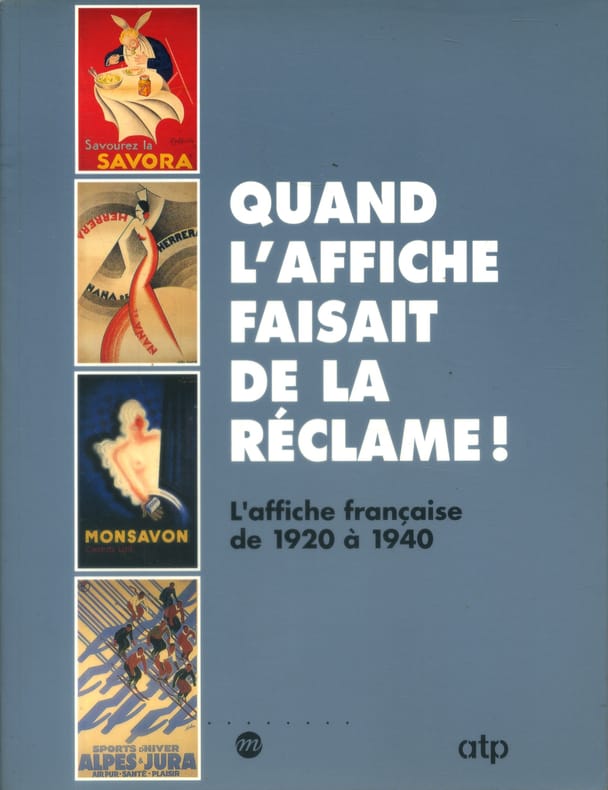
MUSEE NATIONAL DES A.T.P.
Quand l'affiche faisait de la réclame. L'affiche française de 1920 à 1940.
Couverture souple. Broché. 168 pages. 21 x 27 cm.
Referentie van de boekhandelaar : 141912
|
|
|
Museum Fur Kunst Und Gewerbe Hamburg; Janssen, Horst; Meyer-Schomann, Erich; Doring, Jurgen; Lemcke, Dierk; Kahler, Susanne; Selke, Christoph; Meyer-Schomann, Helga
Horst Janssen: Posters - Pieces of Art.. Designs, Drawings, Variations 1957-1994
Catalogue accompanying the exhibition at the Museum fur Kunst und Gewerbe, Hamburg, 1 October - 14 November 1999. 244 plates. "Horst Janssen is a once-in-a-century phenomenon, an impressive and celebrated draughtsman very few can match up to. And yet there are still some - as yet scarcely noticed - facets of his work remaining to be discovered. Janssen's oeuvre confronts the observer like an enormous, artistic moutain massif of countless drawings, woodcuts, etchings, monotypes, watercolours, pictorial letters, postcards and posters. In all of them he broke the bounds of the 'standard measure'. Everything about him was extraordinary, including the number of posters he designed and the number of versions which were printed." - Foreward. A new unread copy stll in shrink wrap. Book

|
|
|
MUSTAPHA CHELBI
L'AFFICHE D'ART EN EUROPE.L'AFFICHE SUR LA JAQUETTE ET DE MAX-AGOSTINI
VAN WILDER 1989 jaquette abimée , accusant des manques de papier en coiffe sur 2 cm quasiment sur toute la longueur
Referentie van de boekhandelaar : 63778
|
|
|
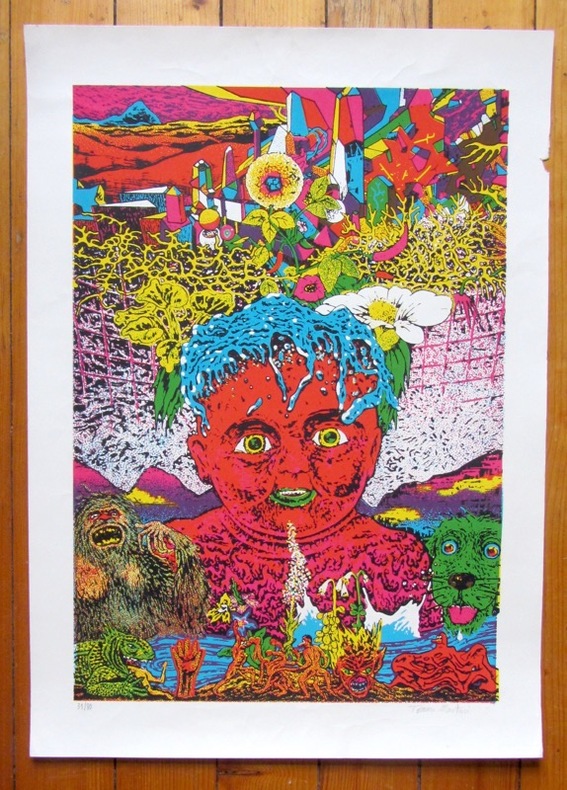
Musturi Tommi :
Sérigraphie originale signée et numérotée (2)
Editions Brambram. Sérigraphie au format 50 x 70 (feuille) sur papier 170gr blanc naturel. Quelques traces de plis en bords, avec tout petit manque (voir photo)
Referentie van de boekhandelaar : 681
|
|
|
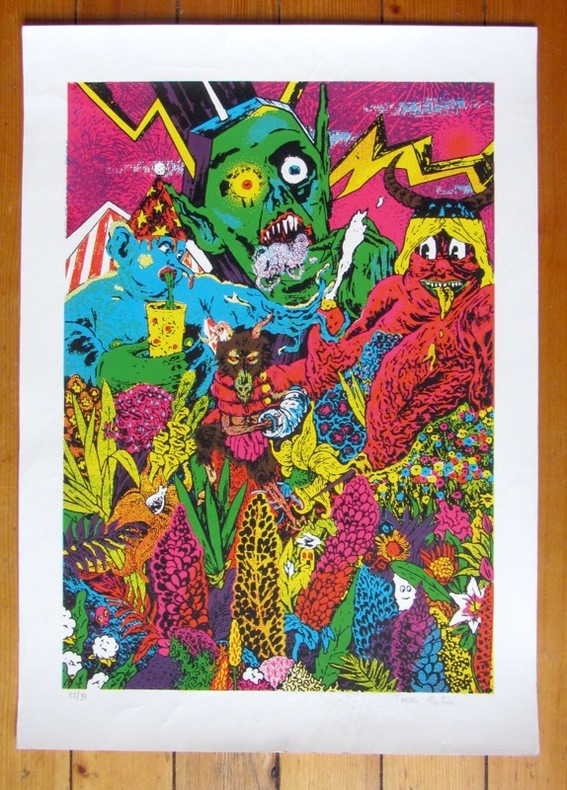
Musturi Tommi :
Sérigraphie originale signée et numérotée.
Editions Brambram. Sérigraphie au format 50 x 70 (feuille) sur papier 170gr blanc naturel. Quelques traces de plis en bords.
Referentie van de boekhandelaar : 680
|
|
|
Musée D'Art Moderne de La Ville de Paris.
Affiche éditée à l'occasion de la "Biennale de Paris", tenue au Musée du 29 septembre au 3 novembre 1965.
Une affiche de dimensions 40 x 80 cm; tirage lithographique sur vélin fort, Atelier Pierre Faucheux Traces de punaises en tête; d'adhésif dans un angle. Bon état sinon. Voir photo.

|
|
|
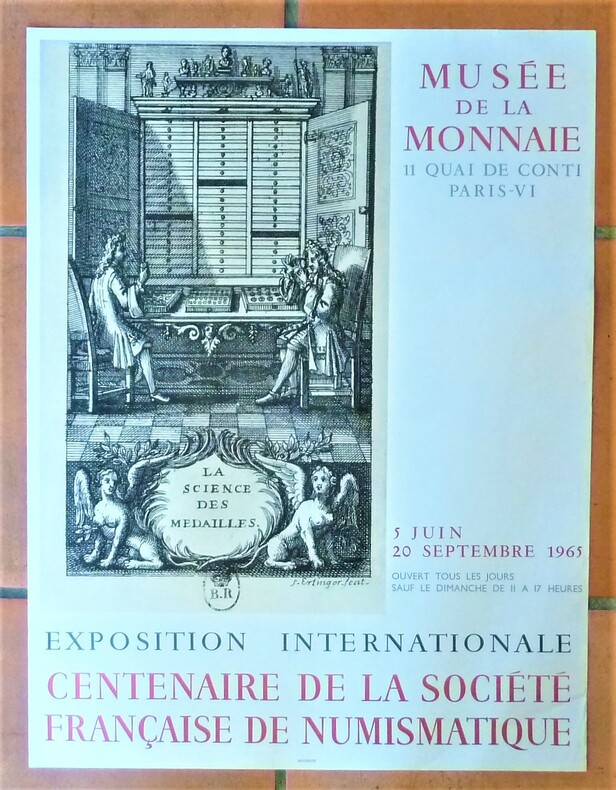
Musée de La Monnaie.
Affiche éditée à l'occasion de l'exposition internationale pour le "Centenaire de La Société Française de Numismatique"; tenue du 5 juin au 20 septembre 1965 au Musée.
Une seule affiche de dimensions 48 x 62 cm; belle lithographie de Mourlot. Bel état. Voir photo.

|
|
|
Musée de La Monnaie.
Affiche éditée à l'occasion de l'exposition internationale pour le "Centenaire de La Société Française de Numismatique"; tenue du 5 juin au 20 septembre 1965 au Musée.
Paris Musée de la Monnaie 1965 1 Une seule affiche de dimensions 48 x 62 cm; belle lithographie de Mourlot.
Referentie van de boekhandelaar : 15869
|
|
|
Musée de l’air et de l’espace
ils s’envolerent. 100° anniversaire de la Fédéation aéronautique internationale
Musée de l’air et de l’espace 2005 In-4 broché, 130 pp.
Referentie van de boekhandelaar : 63005
|
|
|
Musée des Arts Décoratifs.
La Demeure Anglaise au XVIIIe siècle. Le Siècle de L'Elégance. Affiche pour l'exposition au Musée des Arts Décoratifs du 25 février au 18 mai 1959.
Une affiche de dimensions 45 x 64 cm; impression offset par Les Presses Artistiques, Paris. Parfait état. Voir photo.
|
|
|
Musée des Arts Décoratifs.
La Demeure Anglaise au XVIIIe siècle. Le Siècle de L'Elégance. Affiche pour l'exposition au Musée des Arts Décoratifs du 25 février au 18 mai 1959.
Paris Musée des Arts Décoratifs 1959 1 Une affiche de dimensions 45 x 64 cm; impression offset par Les Presses Artistiques, Paris.
Referentie van de boekhandelaar : 15775
|
|
|
Musée des Beaux Arts - Nancy
Paul Colin et les spectacles
Musée des Beaux Arts - Nancy 1994 In-4 broché. 144 pages. Très bon état d’occasion.
Referentie van de boekhandelaar : 63762
|
|
|
Musée du Louvre.
Affiche éditée à l'occasion de l'exposition "Trésors du Musée de Bagdad; Des Origines à L'Islam"; à la Galerie Mollien au Musée du Louvre ; du 28 janvier au 29 mars 1966.
Une affiche de Dimensions 44,5 x 60 cm; Photo de Mardyks; impression offset de Desgrandchamps. Bel état; Voir Photo.
|
|
|
Musée du Louvre.
Affiche éditée à l'occasion de l'exposition "Trésors du Musée de Bagdad; Des Origines à L'Islam"; à la Galerie Mollien au Musée du Louvre ; du 28 janvier au 29 mars 1966.
Paris Musée du Louvre 1966 1 Une affiche de Dimensions 44,5 x 60 cm; Photo de Mardyks; impression offset de Desgrandchamps.
Referentie van de boekhandelaar : 15777
|
|
|
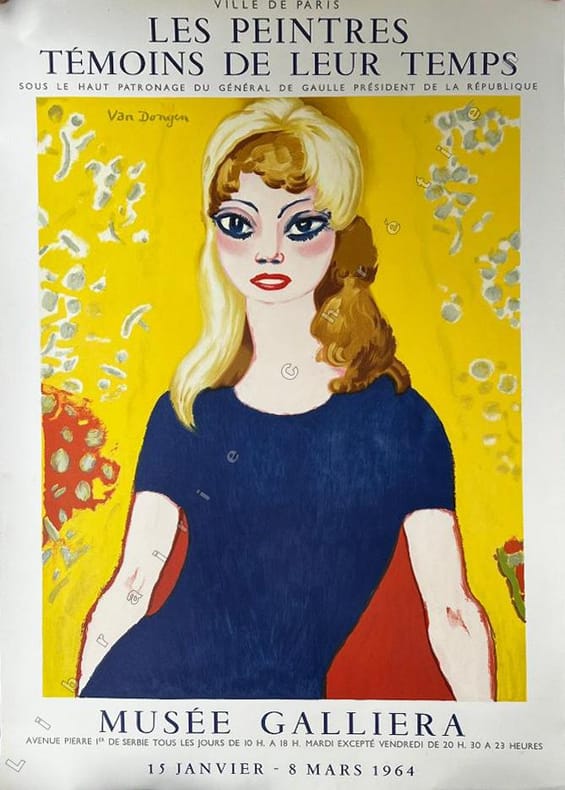
MUSÉE GALLIERA. VAN DONGEN (Kees).
"Brigitte Bardot ".
MOURLOT 1964 Les Peintres témoins de leur temps, Paris, Mourlot, 1964, lithographie en couleurs signée en haut à gauche dans la planche, 77 x 52 cm.
Referentie van de boekhandelaar : 24302
|
|
|
MUSÉE GALLIERA. VAN DONGEN (Kees).
"Brigitte Bardot ".
MOURLOT 1964 Les Peintres témoins de leur temps, Paris, Mourlot, 1964, lithographie en couleurs signée en haut à gauche dans la planche, 77 x 52 cm.
Referentie van de boekhandelaar : 24812
|
|
|
Musée Rodin.
Une affiche éditée à l'occasion de l'exposition "Etats-Unis sculptures du XXe siècle" tenue au Musée du 22 juin au 15 octobre 1965.
Une seule affiche de dimensions 49 x 64 cm; tirage offset par Les Presses Artistiques, Paris. Trace d'adhésif au coin inférieur gauche; sinon bon état. Voir photo ( Alain Kirili?).

|
|
|
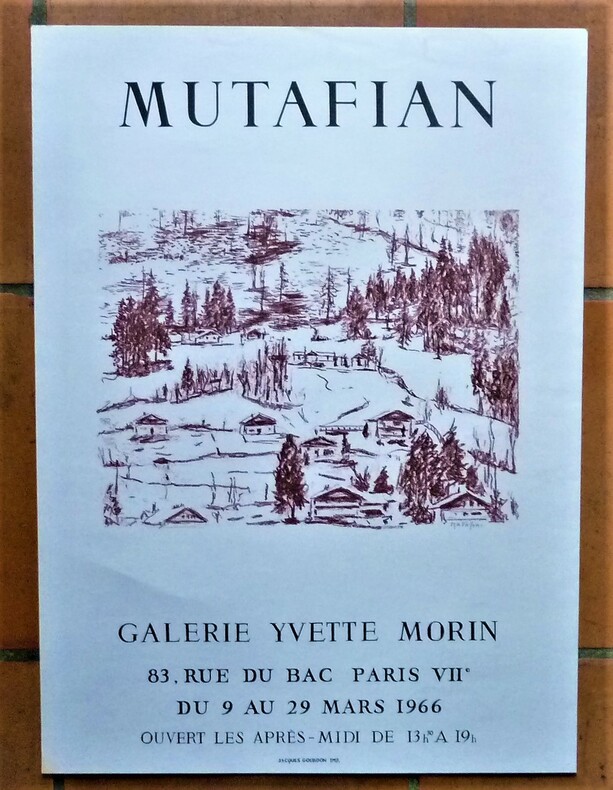
Mutafian.
Mutafian. Affiche éditée à l'occasion de l'exposition à la Galerie Yvette Morin du 9 au 29 mars 1966.
Une seule affiche de dimensions 46,5 x 63 cm; lithographie de Jacques Gourdon. Signature autographe de l'artiste. Très bel état de fraîcheur. Voir photo.

|
|
|
Mutafian.
Mutafian. Affiche éditée à l'occasion de l'exposition à la Galerie Yvette Morin du 9 au 29 mars 1966.
Paris à la Galerie 1966 1 Une seule affiche de dimensions 46,5 x 63 cm; lithographie de Jacques Gourdon. Signature autographe de l'artiste.
Referentie van de boekhandelaar : 15860
|
|
|
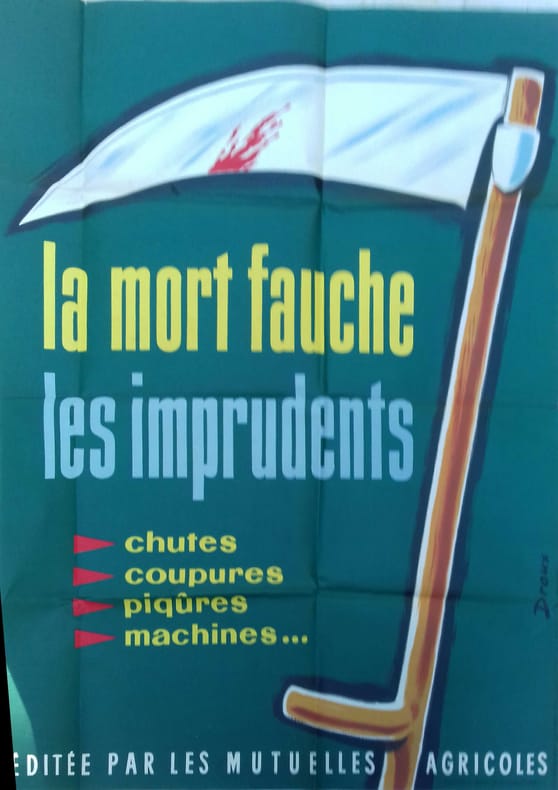
MUTUELLES AGRICOLES Illustrée par Droux.
Affiche de Droux. La mort fauche les imprudents.
- Une feuille repliée. 58 x 77 cm.
Referentie van de boekhandelaar : 143934
|
|
|
Muzeum Plakatu w Wilanowie Zaklad Widowisk Cyrkowych (Hrsg.)
Plakat Cyrkowy
Warszawa - Wilanow, Maj - Wrzesien 1983] Br, ca. 50 p. mit Abb.
Referentie van de boekhandelaar : 21032
|
|
|
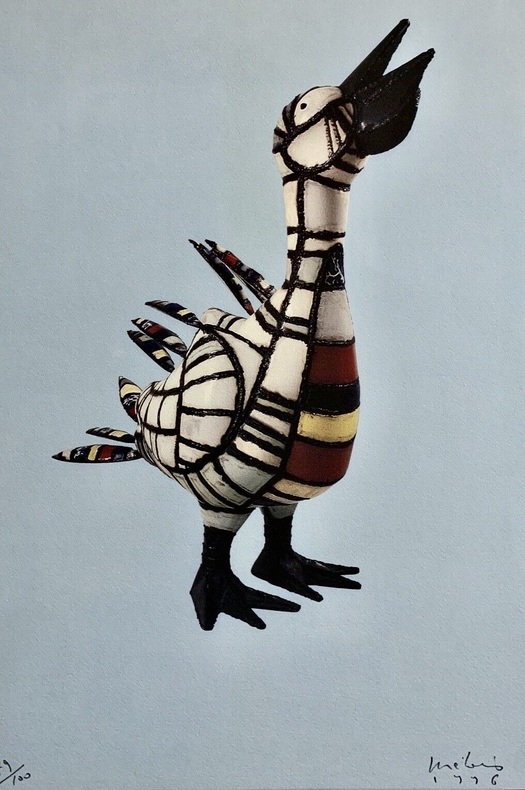
MÉLOIS (Bernard).
Sans titre, oiseau de basse-cour.
Affiche lithographiée. Tirage à 100 ex. numérotés et signés sur Arches, pour une exposition à la Galerie Lavignes 16/1 – 9/3/9 (40/60 cm). Bernard Mélois est né à Malestroit (Bretagne) en 1939. Très bon état.
Referentie van de boekhandelaar : awd-250
|
|
|
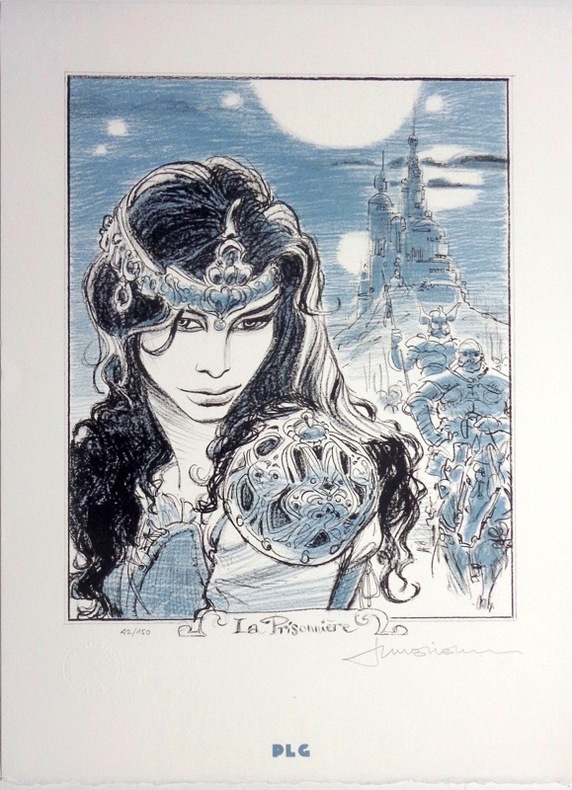
Mézières Jean-Claude :
La prisonnière.
PLG. Sérigraphie au format 30 x 40 cm., en belle condition.
Referentie van de boekhandelaar : 3687
|
|
|
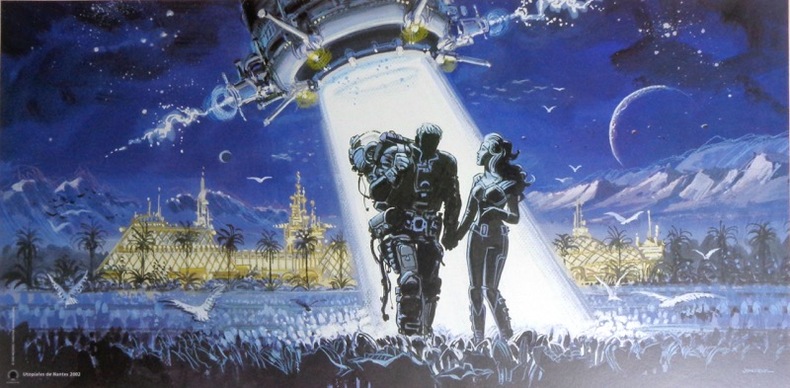
Mézières Jean-Claude :
Utopiales de Nantes 2002.
Christian Desbois. Affiche au format 50 x 25 cm., à l'état de neuf.
Referentie van de boekhandelaar : 2861
|
|
|
Möller, Lise Lotte - Heinz Spielmann/ Stephan Waetzoldt [Herausgeber]
Das frühe Plakat in Europa und den USA. Ein Bestandskatalog. Band 1: Grossbritannien Vereinigte Staaten von Nordamerika. Band 2: Frankreich Belgien. Band 3: Deutschland (Text- und Tafelband)
Berlin., Gebr. Mann Verlag., 1973. 32 x 23,5 cm. 226 S./ 420 S./ 506 S./ 363 S. OLeinen mit illustrierten OUmschlägen., 5669D 4 Bände. Umschläge stellenweise mit minimalen Randbereibungen. Sonst sehr gutes Exemplar. Forschungsumternehmen "19. Jahrhundert" der Fritz Thyssen Stiftung.
Referentie van de boekhandelaar : 5669DB

|
|
|
Mühl Albert, Klein Jürgen
Hundertfünfundzwanzig Jahre Internationale Schlafwagen-Gesellschaft
EK-Verlag 1998 Jaquette un peu ternie et lég. fendillée en tête.
Referentie van de boekhandelaar : 63022
|
|
|
Müller, Otto M. (1913?2002)
Tourismus Schweiz.
Zürich, Schweizer Zentrale für Verkehrsförderung, 1941. Offsetdruck. Plakatgrösse: 54 x 36 cm. + Wichtig: Für unsere Kunden in der EU erfolgt der Versand alle 14 Tage verzollt ab Deutschland / Postbank-Konto in Deutschland vorhanden +, A
Referentie van de boekhandelaar : 1777AG

|
|
|
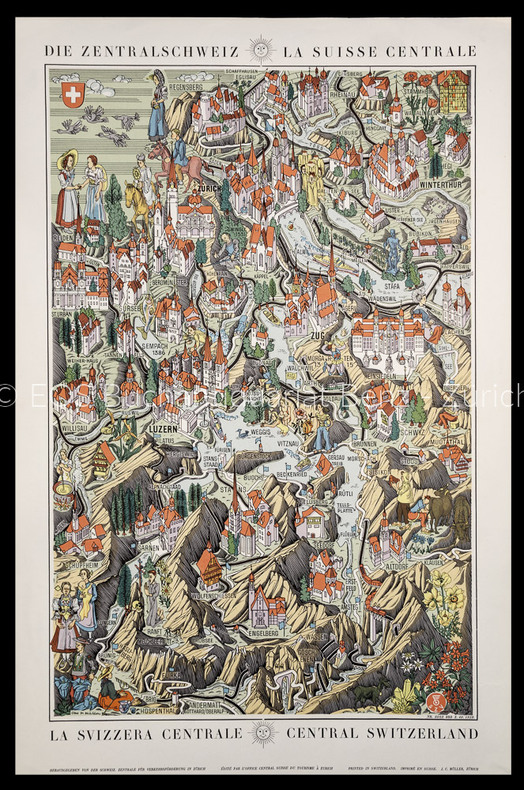
Müller, Otto M. (1913–2002):
Tourismus Schweiz.
Zürich, Schweizer Zentrale für Verkehrsförderung, 1941. Offsetdruck. Plakatgrösse: 54 x 36 cm.
Referentie van de boekhandelaar : 1777AG
|
|
|
n
L'affiche Politique soviétique
Léningrad, ed. d'art Aurore- Grand In-4 - Recueil de 32 fac-similés d'affiches révolutionnaires de 1919 à 1971 avec textes dans un livret en français, russe et anglais, le tout sous emboîtage (défraîchi) - Mais ensemble très propreI
|
|
|
n
L'affiche Politique soviétique
Léningrad, ed. d'art Aurore- Grand In-4 - Recueil de 32 fac-similés d'affiches révolutionnaires de 1919 à 1971 avec textes dans un livret en français, russe et anglais, le tout sous emboîtage (défraîchi) - Mais ensemble très propreI
Referentie van de boekhandelaar : 2743
|
|
|
N.A.
"Mick Jagger Arrested" - 1967 drug possession scandal Evening New's poster / "Mick Jagger Arrested" : poster du Evening News sur l'arrestation de Mick Jagger en 1967 pour possession de drogues
Affiche originale du Evening News sur le scoop majeur du 12 février 1967 : l'arrestation de Mick Jagger et d'autres personnalités de l'époque pour possession de drogues. Nous avons procédé à une dépose sur l'envers de l'affiche sur papier Japon en conformité avec les meilleures techniques de conservation et d'exposition. Dimensions : 77,2x44,8cms. Evening News scandal's original poster on Mick Jagger's arrest on February 12th 1967. We put this poster's back on Japan paper in accordance with the best techniques of conservation and exhibition.
Referentie van de boekhandelaar : aff11t6

|
|
|
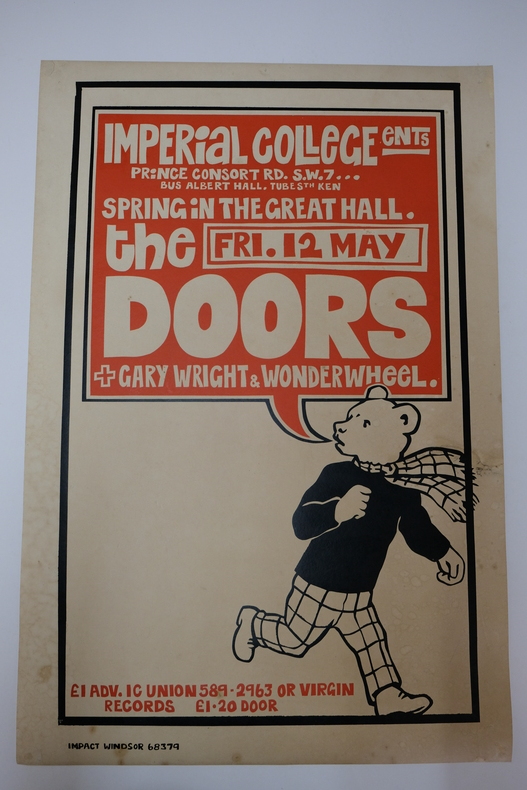
N.A.
The Doors May 12th 1972 Imperial College concert's Poster / Affiche du concert des Doors à l'Imperial College le 12 mai 1972
Superbe affiche originale illustrée du concert des Doors à l'Imperial College de Londres le soir du 12 mai 1972. Nous avons procédé à une dépose sur l'envers de l'affiche sur papier Japon en conformité avec les meilleures techniques de conservation et d'exposition. Dimensions : 75x50,5cms The Doors May 12th 1972 Imperial College concert's superb original illustrated poster. We put this poster's back on Japan paper in accordance with the best techniques of conservation and exhibition.
Referentie van de boekhandelaar : aff10t6
|
|
|
N/A.
ART NOUVEAU BELGIE. Art Nouveau Belgie. catalogus Europalia 1980.
, Brussel, Paleis voor Schone Kunsten, 1980., softcover originele uitgeversomslag, 22x29,5cm, 481pp, geillustreerd in kleur en z/w, bibliografie. Nederlands, in goede staat.
Referentie van de boekhandelaar : 8906
|
|

 De zoekresultaten per email ontvangen
 Zoekresultaten downloaden als PDF
 RSS feed
 Permanente link


