Philadelphia: Whitehall : Printed fow W.W. Woodward Philadelphia 1806. First Edition. Hardcover. Good. First American edition. 4 volume set. 21 cm. Bound in contemporary acid-calf. Gilt ruled. With red and black morocco spine labels. 43 engraved folding plates. Scattered foxing generally sound. <br> George Adams was the mathematical and scientific instrument maker to George III. He "wrote largely on the use of mathematical instruments and his books on that subject were highly valued. In politics he was a staunch tory and as such was received with favour at court by George III. In many of his published works he combined a religious with a scientific aim and 'applied all his knowledge' says the 'Gentleman's Magazine' 'to the best of purposes - to combat the growing errors of materialism infidelity and anarchy.' … Many of Adams's books elaborate plates were published separately and almost all of them passed through more than one edition." - DNB v.1 97 p. The beautifully engraved plates depict his many instruments including telescopes globes and related devices. Rink 585. Shaw & Shoemaker 9799. This edition was edited by Robert Patterson of the University of Pennsylvania. <br> Early inscription on one end page "Property of Augustus Marion. Whitehall : Printed fow W.W. Woodward, Philadelphia hardcover
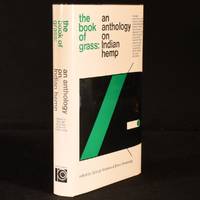
London: Peter Owen 1967 . First edition. Cloth. Near Fine/Fine. 9" by 6". Not Stated. A very scarce smart first UK edition copy of this illustrated account of Indian hemp through history to today. A very scarce work.The first UK edition.In the publisher's original grey cloth binding. In the original unclipped dust wrapper.Illustrated with a frontispiece two double sided plates and in text illustrations throughout. Collated complete. A work edited by George Andrews and Simon Vinkenoog with writings from various authors. A work in five parts: Traces in the Course of History Some High Voices of the Twentieth Century Medical Opinions Potentialities for Increasing Consciousness the Scene Today and the Law. In publisher's cloth bindings. In the original unclipped dust wrapper. Externally excellent. Light shelf wear to the head and tail of the spine. Dust wrapper is very smart. Internally firmly bound. Pages are bright and clean. Near Fine Peter Owen hardcover
Burbank CA: Fox Broadcasting Company / Warner Brothers Television / Sweet Freedom Productions / Main Sequence Productions 1994. Archive of original scripts for all 27 episodes of "The George Carlin Show" which ran on Fox for two seasons in 1994 and 1995 with multiple drafts of each episode totaling 196 scripts. Also included are several key pieces of ephemera relating to the development and writing of the show. Altogether a thoroughly comprehensive and researchable archive detailing a writing process that attempted to digest and reconstruct the persona of one of the most iconoclastic and influential not to mention foul mouthed standup comics for mainstream viewing. From the estate of series co-creator Sam Simon. <br/><br/>One of the most important and influential television producers and directors of the last 30 years Sam Simon is best known along with Matt Groening and James L. Brooks as the co-creators of "The Simpsons." Simon won a remarkable nine Emmy Awards seven for "The Simpsons" and two for "The Tracy Ullman Show" and was nominated another ten times for his work on both those shows as well as his contributions to "Cheers" "Taxi" and "The Gary Shandling Show." <br/><br/>Created by Simon and George Carlin "The George Carlin Show" ran for two seasons on Fox from 1994 to 1995. Carlin played New York cabbie George O'Grady who when not haranguing fares spent most of his time at a bar modeled on Carlin's real life Morningside Heights haunt haranguing his fellow patrons which characteristically of the post-"Seinfeld" boom in sitcoms created around standup comics allowed the writers to incorporate elements of Carlin's stage routines into the show. In his posthumously published autobiography "Last Words" Carlin said of the show "I had a great time. I never laughed so much so often so hard as I did with the cast members" but did not get along with co-creator Simon a view Simon attributed in an interview to the show's "cancellation affecting George's attitude towards the work in retrospect" and he considered the show "a very special period of my life."<br/><br/>The majority of scripts are housed in 27 generic black ring binders with one binder per episode each containing between three and nine scripts. Binders for each episode may contain First or Writer's Drafts Table Read scripts Blue Pink Yellow Green and Goldenrod revised scripts Final Collated scripts compiled from the various revisions and As Broadcast scripts reflecting the script as it aired. <br/><br/>Also included are 18 scripts for various episodes many of which are working copies with holograph annotations edits and corrections throughout including a script for an unproduced episode co-written by cast member Anthony Starke and most importantly six drafts of the pilot episode dating from 1993 with holograph annotations and changes in several hands throughout including Carlin's giving a detailed look at the development of the pilot. <br/><br/>Several pieces of ephemera also related to the writing of the show are also part of the archive including five pages of typed and holograph notes dated 3/16/93 a Treatment script for Season One Episode Eight "George Destroys a Way of Life" dated 9/17/93 with substantial holograph annotations a treatment dated 9/17/93 for an unproduced episode titled "George Proves Something" with holograph annotations and three pages of ideas for episodes none of which were produced from staff writers Darrell Vickers and Andrew Nicholls dated 7/5/94. <br/><br/>Also included are a fax from fellow comedian Richard Lewis to Carlin dated 4/14/92 recommending two writers for the show a faxed noted signed from Carlin to Sam Simon followed by faxed two typed pages of thoughts on "creeping niceness" which Carlin has circled the "most useful" portions two packets of photocopied press clippings about the show assembled by Warner Brothers Television dated 2/1/94 and 6/6/94 respectively several holograph marker draft sketches of the show's logo and a one page faxed memo from Standards and Practices at Fox to Simon regarding the Season One episode "George Speaks His Mind" here and elsewhere in the archive referred to by the working title "George Says Fuck" an episode built around Carlin's famous "Seven Words You Can Never Say on Television" routine. <br/><br/>Finally the archive contains several pieces of physical media including five U-matic and one D2 video cassettes for various aspects of post-production on five episodes including a "Fuck Beep Test" reel from the "George Speaks His Mind" episode a one inch reel-to-reel video tape labeled "George Carlin Buttefly Logo" a 1/2 inch reel-to-reel audio tape DAT transfer of music and audio cues and a laser disc of Season One Episode Two "George Sees an Airplane" produced by Main Sequence Productions likely made to promote the show to affiliates or advertisers. <br/><br/>For further details please inquire. Provenance available on request. <br/><br/>Scripts and other paper material generally Near Fine or better. Scripts are first generation photocopies with no copied holes. Physical media appearing Fine on visual inspection. Fox Broadcasting Company / Warner Brothers Television / Sweet Freedom Productions / Main Sequence Productions unknown books
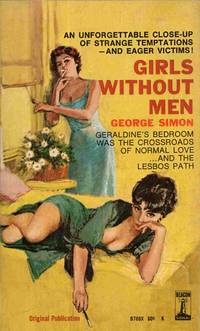
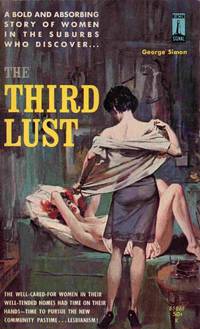
<p>The novel is set in a suburban community populated by "well-cared-for women in their well-tended homes" who due to their leisured lives have "time to pursue the new community pastime. lesbianism!". The narrative focuses on the erotic boredom of these housewives and their transgressions of social norms dramatizing how desire can bridge domestic perfection and destruction. The book falls under the genre of pulp fiction which often utilized sensationalism to depict queer-coded narratives during a time of cultural repression.</p> Beacon Press (also known as Beacon-Signal or Universal Publishing/Tower). paperback
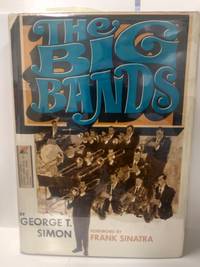
New York: Dodd Mead and Co. 1940. Second Printing. Hardcover. Near Fine in Good dust jacket. A lovely copy of the second printing of this nice jazz collectible. There are no markings and no inscriptions the book in fact does not appear to have been read and the only flaw is mild age-toning of the pages which would be true of all copies. The endpapers are the darkest; the pages of the text are a quite attractive creamy beige. The jacket is intact with a bit of soiling and a small piece missing at the top of the spine. A mylar Brodart cover now protects it. . Dodd Mead and Co. hardcover
F. H. W. Publishing Co. 1950. Soft cover. Good. Softcover with excellent unmarked pages slight handling evident a few pages slightly creased with good exterior including a few blemishes: upper back corner 15x5mm gone tiny amount of exterior surface of the lower spine gone back panel faded along the spine slight exterior wear turning light in spots small crease on back panel. Twenty-one photographs of Ralph Flanagan with a variety of facial expressions. 5oz <br/> <br/> F. H. W. Publishing Co. paperback
Macmillan. Used; Good. Macmillan 1967 Hardcover. First Edition first printing. SIGNED by Sammy Kaye on page 283 and SIGNED by Guy Lombardo and two others on page 321. Pages have foxing where newspaper clipping were inserted. There are also tickets to the Guy Lombardo and His Royal Canadian Show from April 6 1974. Previous owner's name is on the front and back end pgaes and on the dust jacket which is protected by a mylar covering. Book Condition: Good Jacket Condition; Good . 1967. HARDCOVER. Macmillan hardcover

 De zoekresultaten per email ontvangen
 Zoekresultaten downloaden als PDF
 RSS feed
 Permanente link