|
Scarrow, Simon
13 Hermanos de sangre
Edhasa 1900. Hardcover. New. Spanish language. 9.29x6.14x1.42 inches. Edhasa hardcover
书商的参考编号 : 2-8435062899 ???????? : 8435062899 9788435062893
|
|
|
Simon, David/ Burns, Ed
La esquina/ The Corner: A Year in the Life of an Inner-city Neighborhood
Principal De Los Libros 2011. Paperback. New. translation edition. 688 pages. Spanish language. 9.06x5.98x2.20 inches. Principal De Los Libros paperback
书商的参考编号 : 2-8493859478 ???????? : 8493859478 9788493859473

|
|
|
Scarrow, Simon
Corazones de piedra
Editora Y Distribuidora Hispano Americana S.a. Edhasa 2016. Hardcover. New. Spanish language. 9.25x6.30x1.57 inches. Editora Y Distribuidora Hispano Americana, S.a. (Edhasa) hardcover
书商的参考编号 : 2-8435063003 ???????? : 8435063003 9788435063005

|
|
|
Keeling, Stephen/ Foster, Simon
TAIWAN - TAIWAN
Feltrinelli 2016. Paperback. New. Italian language. 7.80x5.12x0.87 inches. Feltrinelli paperback
书商的参考编号 : 2-8807713535 ???????? : 8807713535 9788807713538
|
|
|
Lewis, Simon L/ Maslin, Mark
Il pianeta umano
Einaudi 2019. Paperback. New. Italian language. 8.58x5.67x1.34 inches. Einaudi paperback
书商的参考编号 : 2-8806239732 ???????? : 8806239732 9788806239732
|
|
|
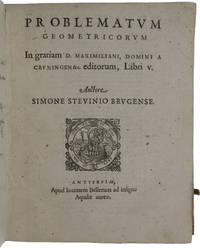
STEVIN, Simon
Problematum geometricorum . libri V.
Antwerp: Jean Bellère 1583. First edition. <p>First edition very rare of the principal geometrical work by Stevin "perhaps the most original man of science of the second half of the sixteenth century" Sarton; this highly original work is his only publication in Latin and his second-published work after the Tables of Interest. "He was involved in geometry algebra arithmetic pioneering a system of decimals dynamics and statics almost all branches of engineering and the theory of music" Kemp.</p>. HIS PRINCIPAL WORK IN GEOMETRY. <p>First edition very rare of the principal geometrical work by Stevin "perhaps the most original man of science of the second half of the sixteenth century" Sarton p. 242; this highly original work is his only publication in Latin and his second-published work after the Tables of Interest. "He was involved in geometry algebra arithmetic pioneering a system of decimals dynamics and statics almost all branches of engineering and the theory of music" Kemp p. 113. "Stevin unconditionally supported the Copernican system several years before Galileo and at a time when few other scientists could bring themselves to do likewise" DSB XIII: 48. "Not the least important part of Stevin's geometrical work is formed by his study of the convex semi-regular polyhedral of the first species i.e. convex polyhedra whose faces are regular polygons not all equal and similar to each other while the solid angles at the vertices are equal and similar to each other without being regular . Besides the regular polyhedra and the semi-regular polyhedra of the first species in the Problemata geometrica Stevin deals with the five so-called augmented polyhedra which are produced if on each of the faces of a regular polyhedron as base is erected a regular pyramid whose slant edges are equal to the edges of the base" Dijksterhuis pp. 43-45. "Stevin was among the first Renaissance men to study Archimedes with a certain amount of independence. In the Problemata he took some problems he had found in Archimedes' On the Sphere and Cylinder and generalized them somewhat; this gave him an opportunity to apply the methods given by Eutocius for the construction of the two mean proportionals between two lines: a : x = x : y = y : b a problem which cannot be solved by means of compass and straightedge alone" Works IIa pp. 6-7. The work is divided into five books: "Book I. Division of polygons a by a line passing through a point of the perimeter or b by a parallel to one of the sides. Book II. Application of the regula falsi to mensurations. Book III. Regular polyhedra and semi-regular polyhedra which can be inscribed in a sphere. Book IV. Construction of a solid similar to another and equal in volume to a third. Book V. Construction of a solid similar to two others and equal in volume to their sum or difference" Sarton pp. 248-249. ABPC/RBH list only two copies since Honeyman both in modern bindings.</p> <br /> <p>"Stevin's contributions to geometry illustrate the fundamental position of Euclid's Elements in the work of sixteenth-century mathematicians. The Elements were their main source of reference to which they constantly returned for knowledge method and inspiration. The typically 'Greek' reasoning of Euclid which was also basic to the demonstrations of Apollonius and Archimedes geometrical to the core was an essential element in the mathematical thinking of sixteenth-century Europe.</p> <br /> <p>"This Greek influence was gradually undermined by the adaptation of the arithmetical-algebraic methods traditional in the Orient which reached Europe almost entirely through authors originally writing in the Arabic language. Stevin's Tables of Interest present a good example of how the practice of life itself compelled mathematicians to become proficient in these methods. On a higher theoretical level we see the same influence at work in Stevin's Arithmétique. Even the Problemata Geometrica though fundamentally a series of papers based on the 'Greek' approach shows the influence of the Arabic tradition in several places.</p> <br /> <p>"Several printed editions of the Elements existed in Stevin's days. One of Stevin's favourites was the Latin edition by Clavius the Jesuit astronomer at the Vatican. It was a thorough piece of work first published in 1574 consisting of two volumes in a rather handy quarto size. It had the advantage of introducing the reader to related work by other mathematicians explained in Scholia to the text. Other books used by Stevin in preparing his Problemata were Dürer's Underweysung of 1525 and Commandinus' Latin edition of the principal works of Archimedes of 1558.</p> <br /> <p>"The Problemata consists of five books each with a topic of its own. The first book after an introduction on proportions of lines solves problems concerning the division of polygons into parts of a given ratio. The second book contains the application of the so-called regula falsi to certain constructions or in other words shows how certain constructions can be performed with the aid of similarity of figures. In the third book we find Stevin's studies on regular and semi-regular polyhedra. The fourth book deals with the construction of a polyhedron of a given volume similar to a given polyhedron the fifth book with the construction of a polyhedron similar to two similar polyhedra and equal to either their sum or their difference. While the first and second books are based on Euclid the third is based on Dürer; the last two are the result of Stevin's study of Archimedes.</p> <br /> <p>"The first book opens with a classification of ratios and proportions based on the fifth book of Euclid's Elements. This classification in its attempt to give special names to particular proportions strikes us as clumsy and pedantic but Stevin merely followed an ancient tradition. All this labelling was fundamentally due to a serious desire to understand Euclid though it was encumbered with relics from the works of medieval Latinists .</p> <br /> <p>"The next part consists of the application of this theory of proportions to the problem of the division of figures into parts of a given ratio. Stevin found an example of this problem in an appendix by Clavius to the 6th book of the Elements where it is shown how to divide a triangle into two parts in a given ratio by a line passing through a point on a side. This was not however an original idea of Clavius. As he sets forth himself in the Prolegomena to his translation he found the problem in a book published by Commandinus and John Dee in 1570 which he says though ascribed to a certain Mahomed of Bagdad may have been Euclid's book on Divisions. Stevin who did not know this book took Clavius' problem and discussed aspects of it in his first set of three problems. Then he himself added five more problems which he thought to be novel. All eight problems deal with the division of polygons in a given ratio either by a line through a vertex or by a line through a point on a side or by a line parallel to a side . Stevin's work was excellent enough to be preferred by Clavius who in 1604 praised his treatment of the division of figures above the others .</p> <br /> <p>"The second book of the Problemata contains problems involving the so-called 'regula falsi' the rule of the false supposition. It is a device to solve problems leading to the linear equation ax = b by first substituting for x an arbitrary number x = x0; if ax0 = b0 then x : x0 = b : b0and x is found by means of proportion . The device also functions for problems which lead to an equation of the form ax b = c . In the Problemata Stevin introduces this 'regula falsi' in accordance with his desire to bring about as close a relation as possible between arithmetical and geometrical proportions. Applying the 'regula falsi' to problems in geometry he has to consider proportions and this amounts to the solution of certain geometrical problems by means of similarity. If for instance Ex. 11 we have to construct a square when the difference between diagonal and side is given we start with any square this is the false supposition determine for this square the difference between diagonal and side and then find the side of the required square by means of a proportion. All that Stevin now requires is Euclid's theory of proportions which he finds in Books V and VI of the Elements. </p> <br /> <p>"The third book is by far the most interesting part of the Problemata. It contains a theory not only of the regular solids but also of certain semi-regular solids and of polyhedra Stevin calls 'augmented regular solids'. All Stevin had to go by was Euclid's Elements Book XIII the so-called XIVth XVth and XVIth books which Clavius also had translated and Dürer's Underweysung der Rechnung mit dem Zirckel und Richtscheyt of 1525. From Euclid-Clavius Stevin obtained his information on the five regular solids from Dürer the method of obtaining semi-regular solids as well as the regular ones by paper-folding. To understand these different achievements we shall denote a polyhedron with m faces which are regular polygons of a sides n faces which are regular polygons of b sides etc. by ma nb . Then the five regular solids are the tetrahedron 43 the cube 64 octahedron 83 the dodecahedron 125 and the icosahedron 203. A semi-regular solid or as Stevin calls it a 'truncated regular solid' is defined Def. 11 as a solid inscribed in a sphere of which all the solid angles are equal of which the faces are regular polygons which are not all congruent and of which all the edges are equal. Dürer had the models of seven such solids: 43 46 83 68 64 83 86 64 184 83 64 326 68 86 124. Dürer had two more models but one of these 64 123 has some isosceles i.e. not regular triangles while the other 612 323 as Stevin showed is impossible as a closed polyhedron.</p> <br /> <p>"Stevin reconstructed these solids not only from plane diagrams by folding but also by finding the method by which these solids are generated by cutting off truncating parts of the regular solids. He found three types not described by Dürer . the additional solids 203 125 1210 203 and 206 125. He was one of the first if not the first in Renaissance days to find all these ten .</p> <br /> <p>"The third book of the Problemata also contains a description of what Stevin called 'augmented regular solids'. These are polyhedra obtained by placing on top of each face of a regular polyhedron as base a pyramid with equal edges. Stevin lists all five of them. He was led to the consideration of these solids by a discovery of Frans Cophart leader of the Collegium Musicum at Leiden. Cophart had taken a cube and cut out twelve tetrahedra each having the end points of an edge and the midpoints of the faces through this edge as vertices. The solid thus obtained by 'faceting' the cube is what is now called the stella octangula; it is bounded by twenty-four congruent equilateral triangles. Cophart had claimed it as a sixth regular solid.</p> <br /> <p>"Stevin while admiring the discovery had to deny this claim. He pointed out that the vertices of Cophart's solid do not all lie on one sphere but are distributed on two spheres six on one sphere and eight on a concentric one. At the same time he discovered another construction of the solid by starting not from a cube and then faceting it but from an octahedron and then 'augmenting' it by placing a regular tetrahedron on each face with this face as base. He now saw that this procedure could be applied to all regular bodies and in this way he obtained four new polyhedra.</p> <br /> <p>"Of all these five solids of Stevin we only call the stella octangula a regular star-polyhedron. The reason is that regular star-polyhedra are obtained from the regular polyhedra by the process of 'stellating' i.e. by producing the planes of the faces and allowing non-adjacent faces to intersect in such a way that the faces of the new solid are regular star-polygons polygons obtained by allowing non-adjacent sides of regular polygons to intersect. This procedure does not yield a new body in the case of the regular tetrahedron and the cube but gives us the stella octangula in the case of the regular octahedron. We also obtain regular star-polyhedra by stellating the regular dodecahedron and icosahedron; for each of these solids we obtain two possible star-polyhedra. But whereas these four bodies are single the stella octangula is found to be the intersection of two regular tetrahedra. We may thus speak of nine regular solids: five ordinary Platonic and four stellated ones .</p> <br /> <p>"The fourth and fifth books of the Problemata Geometrica present Stevin to us as a student of Archimedes. The editio princeps of Archimedes' works had appeared at Basle in 1544; it contained not only the original Greek text and a Latin translation but also the precious commentaries of Eutocius again both in Greek and in Latin. Another useful though limited edition was the Latin translation of five of Archimedes' treatises with Eutocius' commentary on one of them prepared by Commandinus and published in 1558. Stevin quotes Commandinus' edition but he must also have known the editio princeps since he shows himself to be acquainted with material which is to be found in the publication of 1544 but not in that of 1558.</p> <br /> <p>"Archimedes in the book On the Sphere and Cylinder the book in which he determines the area and the volume of the sphere solves some problems which involve the finding of the two mean proportionals between two given lines. An example is formed by the problem: 'given two spherical segments to find a third segment similar to the one and having its volume equal to that of the other'; another example consists in the problem of finding a sphere equal in volume to a given cone or cylinder . Moreover in Commandinus' edition though it does not contain the book On the Sphere and Cylinder with its commentaries there are several problems which belong to the same group. The first is the problem: 'Given any two cones or cylinders to find a third cone or cylinder equal in volume to the first and similar to the second' .</p> <br /> <p>"Stevin in his fourth book casts the problem into its general form: 'Given two solids S1 S2 to find a third solid equal to S1 and similar to S2 . Stevin uses the general term 'solid' then makes use of the theorem that any solid can be changed into a cone of equal volume; he actually applies the theorem to . polyhedra circular cones cylinders and to segments of cones. Stevin shows for instance how a spherical segment can be changed into a cone with equal base .</p> <br /> <p>"Stevin's procedure is as follows: a he changes S1 into a circular cone C1 and S2 into a circular cone C2; b he then changes C1 into a cone C1' of the same altitude as C2; c he then constructs a cone C3 similar to C2 and equal to C1'; d he then changes C3 into an equal solid S reversing the process by which S was changed into C2. The steps a b d only involve ordinary proportions step c involves the construction of two mean proportionals; for this purpose Stevin mentions Hero's construction on which Eutocius reports.</p> <br /> <p>". in the last book of the Problemata Stevin solved another problem leading to two mean proportionals between two lines which appears to be a new one. Given two similar solids S1 and S2S1 > S2 Stevin asked to find a solid similar to S1 and S2 and equal to a the sum of b the difference between S1 and S2. The problem was again solved by reducing the solids to circular cones" Works IIa pp. 121-130.</p> <br /> <p>The Problematum geometricorum was not included in Stevin's collected works Hypomnemata mathematica 1605 of which the second volume was devoted to geometry. "This work is different from the Problemata geometrica and inferior to it; it is also a collection of geometrical problems but it is not arranged as logically as the former; it was chiefly made to complete the Prince's geometrical training" Sarton p. 261.</p> <br /> <p>Adams S1858. Crone et al. eds. The Principal Works of Simon Stevin five vols. in six 1955-66; Dijksterhuis Simon Stevin Science in the Netherlands around 1600 1970; Kemp The Science of Art 1990; Sarton 'Simon Stevin of Bruges 1548-1620' Isis 21 1934 pp. 241-303.</p> <br/> <br/> 4to 200 x 157 mm pp. 4 5-118 1 with woodcut printer's device on title numerous woodcut diagrams in text and errata on recto of last leaf. Contemporary limp vellum with remains of ties hole in upper part of spine probably due to insect damage f. I2 with several tiny tears in gutter without loss. A very good unrestored copy. Jean Bellère unknown
书商的参考编号 : 4928
|
|
|
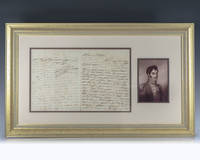
Bolivar, Simon
Simón Bolívar Autograph Letter Signed.
1829. Rare autograph letter signed by ‘El Libertador’ Simón Bolívar as President of Gran Colombia. One page script in Spanish on both recto and verso. The letter is dated May 13 1828 and offers the recipient Colonel José Félix Blanco Bolívar's support in his struggle to maintain the security of Barinas of which was made Governor in 1827 in the midst of heavy criticism from several officers including General José Antonio Páez. Bolívar notes that the offending officers have been dismissed in order to prevent the possibility of partial influence on the resulting hearings and regrets that he will be unable to the proceedings in Orinoco but expects Blanco's reputation to be restored in four to six months. Signed by Bolívar at the conclusion of the letter. The recipient Colonel José Félix Blanco joined the war of independence in 1810 serving as chaplain and was appointed intendant Governor of Barinas in 1827. He was among the defenders of Valencia in the first siege of the city and participated in the first battle of Carabobo. Active in a variety of military government and religious capacities over the course of several decades he was later appointed commander of arms of the province of Maracaibo Secretary of War and Navy in 1837 and Secretary of the Treasury and Foreign Relations in 1847 after an unsuccessful run for the vice-presidency of the Republic in 1844 and for the presidency in 1846. In near fine condition. Double matted and framed with a portrait of Bolívar with a glass pane on the verso of the frame displaying the letter in full. A unique association. Venezuelan military and political leader Simón Bolívar also known as 'El Libertador' led what are currently the countries of Venezuela Bolivia Colombia Ecuador Peru and Panama to independence from the Spanish Empire in the campaign for the independence of New Granada which began in 1808 and was consolidated with the victory at the Battle of Boyacá on 7 August 1819. Despite a number of hindrances including the arrival of an unprecedentedly large Spanish expeditionary force the revolutionaries eventually prevailed culminating in the victory at the Battle of Carabobo in 1821 which effectively made Venezuela an independent country. Following this triumph over the Spanish monarchy Bolívar participated in the foundation of the first union of independent nations in Latin America Gran Colombia of which he was president from 1819 to 1830. Through further military campaigns he ousted Spanish rulers from Ecuador Peru and Bolivia the last of which was named after him. He was simultaneously president of Gran Colombia present-day Venezuela Colombia Panama and Ecuador Peru and Bolivia but soon after his second-in-command Antonio José de Sucre was appointed president of Bolivia. Bolívar aimed at a strong and united Spanish America able to cope not only with the threats emanating from Spain and the European Holy Alliance but also with the emerging power of the United States. At the peak of his power Bolívar ruled over a vast territory from the Argentine border to the Caribbean Sea. unknown
书商的参考编号 : 126183
|
|
|
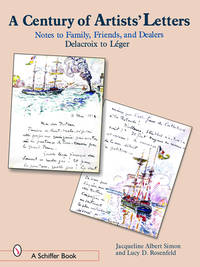
SIMON, JACQUELINE AL
A Century of Artist Letters: Notes to Family Friends & Dealers: Delacroix to Leger Hardcover Simon Jacqueline Albert
SCHIFFER PUBLISHING LTD 2004-01-01. Hardcover. New. 0x0x0. SCHIFFER PUBLISHING LTD hardcover
书商的参考编号 : 0764319345_new ???????? : 0764319345 9780764319341
|
|
|
SIMON, JACQUELINE AL
A Century of Artist Letters: Notes to Family Friends & Dealers: Delacroix to Leger Hardcover Simon Jacqueline Albert
SCHIFFER PUBLISHING LTD 2004-01-01. Hardcover. Like New. 0x0x0. SCHIFFER PUBLISHING LTD hardcover
书商的参考编号 : 0764319345_used ???????? : 0764319345 9780764319341
|
|
|
Simon Wilson; Ian Cumming
Psychiatry in Prisons: A Comprehensive Handbook Forensic Focus Cumming Ian; Wilson Simon; Parrott Janet; Evans Ceri; Scott Charles; Pyszora Natalie; Milner Rebecca; Taylor Richard; Ndegwa David; McDermott Barbara; Fotiadou Maria; Podmore John; Adshead Dr Gwen; Sullivan Danny; Romilly Crystal; Crighton David; Towl Graham; Grubin Donald; Stone Huw; Tighe James; Xenitidis Kiriakos; Morris Mark; Withecomb Julie; Walker Julian; Brinded Phil; Chhabra Preeti; Dhar Raj; Laing-Morton Tish; Forrester Andrew; Brown Gabrielle; Yakeley Jessica and Fazel Seena
Jessica Kingsley Publishers 2009-10-15. Paperback. Like New. 0x0x0. Jessica Kingsley Publishers paperback
书商的参考编号 : 1843102234_used ???????? : 1843102234 9781843102236

|
|
|
Simon Wilson; Ian Cumming
Psychiatry in Prisons: A Comprehensive Handbook Forensic Focus Cumming Ian; Wilson Simon; Parrott Janet; Evans Ceri; Scott Charles; Pyszora Natalie; Milner Rebecca; Taylor Richard; Ndegwa David; McDermott Barbara; Fotiadou Maria; Podmore John; Adshead Dr Gwen; Sullivan Danny; Romilly Crystal; Crighton David; Towl Graham; Grubin Donald; Stone Huw; Tighe James; Xenitidis Kiriakos; Morris Mark; Withecomb Julie; Walker Julian; Brinded Phil; Chhabra Preeti; Dhar Raj; Laing-Morton Tish; Forrester Andrew; Brown Gabrielle; Yakeley Jessica and Fazel Seena
Jessica Kingsley Publishers 2009-10-15. Paperback. New. 0x0x0. Jessica Kingsley Publishers paperback
书商的参考编号 : 1843102234_new ???????? : 1843102234 9781843102236
|
|
|
Simon, Dennis J
Supervision in School Psychology: The Developmental Ecological Problem-solving Model Consultation Supervision and Professional Learning in School Psychology Series
paperback. Good. Access codes and supplements are not guaranteed with used items. May be an ex-library book. paperback
书商的参考编号 : 1138121533.G ???????? : 1138121533 9781138121539
|
|
|
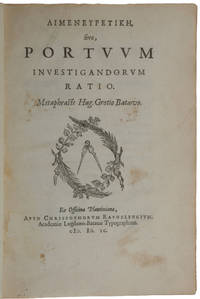
STEVIN, Simon
Limenheuretica Greek sive porluum investigandorum ratio. Metaphraste Hug. Grotio Batavo
Leiden: Ex officina Plantiniana apud Christophorum Raphelengium. Academiae Lugduno-Batavae Typographum 1599. First edition. <p>First Latin edition extremely rare of Stevin's highly important work on the determination of position at sea using magnetic variation; since latitude was simply measured this was tantamount to the determination of longitude. Originally published in Dutch as De Havenvinding "the Latin translation appeared almost simultaneously with the original Dutch version" Crone et al. The Principal Works of Simon Stevin Vol. III. No copy of the Dutch or Latin editions has sold at auction in the last 50 years.</p>. <p>DETERMINING LONGITUDE IN THE RENAISSANCE</p> . <p>First Latin edition extremely rare of Stevin's highly important work on the determination of position at sea using the magnetic variation or declination of the compass needle the angle between magnetic north and true north; since latitude was simply measured this was tantamount to the determination of longitude. Originally published in Dutch as De Havenvinding "the Latin translation appeared almost simultaneously with the original Dutch version" Crone et al. p. 375; English and French translations followed later in the same year. "In a seafaring nation like the Dutch republic matters of navigation were of course of great importance. In addition to his astronomical works Stevin . approached the subject of determining the longitude of a ship a problem that was not fully solved until the nineteenth century. Several previous authors had suggested that longitude might be determined by measuring the deviation of the magnetic needle from the astronomical meridian a suggestion based on the assumption that the earth-wide distribution of terrestrial magnetism was known. Since the determination of latitude was well known such a measurement would allow the sailor to chart longitudinal position against the latitudinal circle. Stevin in his booklet gave a clear explanation of this method; he differed from Petrus Plancius and Mercator in that he did not rely upon a priori conceptions of the way in which geomagnetic deviation depends upon geographical position. Although he was willing to offer a conjecture about this dependence Stevin insisted on the necessity of collecting actual measurements from all possible sources and urged the establishment of an empirical worldwide survey. His method was sound although as data began to accumulate it became clear that the magnetic elements were subject to secular variation. The problem of determining longitude was at last solved more simply by the invention of the ship's chronometer" DSB. The Latin translation of De Havenvinding is important as the first edition to be published in a language understood throughout Europe and hence is likely to have been much more widely read that the Dutch original. It also contains a fascinating dedication by Grotius not of course present in the Dutch edition or in the English and French editions. According to ABPC/RBH in the last 50 years no copy of the Dutch or Latin editions has sold at auction; they list just the Macclesfield copy of the French edition and the Streeter/Boies-Penrose copy of the English edition sold Christie's New York April 16 2007 $36000. OCLC lists no copies in US.</p> <br /> <p>"By the end of the sixteenth century the Dutch Republic had become a major sea power . It was thus understandable that the authorities in the Dutch Republic - Prince Maurice 1567-1625 and the States general - were greatly interested in a safe and speedy method of maritime travel. Maurice showed considerable enthusiasm for nautical affairs and it is likely that he asked Stevin to prepare a study of the subject .</p> <br /> <p>"Stevin explains what he intends right at the start of the book. 'It is known' he says 'that for a long time past principally since the great voyages to the Indies and America began a means has been sought by which the navigator might know at sea the longitude of the place where his ship is at the moment in order thus to get to the harbours to which he wishes to go but that hitherto it has not been possible to arrive at such accurate knowledge of the longitude. For some people hoping to find it through the variation of the compass ascribed a pole to the said variation calling it magnetic pole but it is found upon further experience that these variations do not obey a pole. Nevertheless the search for this has furnished a means for reaching a desired harbor even though the true longitudes of both the harbor and the ship are unknown.' In navigation the 'variation of the compass' is understood as the angle between the geographic and magnetic meridian. Gerardus Mercator 1512-94 and Pieter Plaetevoet 1552-1622 known as Plancius a Dranouter-born pastor of the Reformed Church in Amsterdam had written on the phenomenon of magnetic variation before Stevin and he had tried to make use of it in practical navigation and in attempts at determining longitude. Stevin's aim was clearly much more modest: he sought to enable the seafarer to reach a given harbor without having recourse to longitude.</p> <br /> <p>"Moreover Stevin was not convinced of the existence of a magnetic pole conceived as a rock located somewhere in the Arctic. In De Havenvinding he makes no attempt to explain the variation of the compass needle or terrestrial magnetism in general as his predecessors Plancius and Mercator had done. But he did make a thorough study of the observational data Plancius had collected and expanded on them.</p> <br /> <p>"Plancius assumed that there were four meridians on earth where the variation was zero: the prime meridian which at that time passed over the island of Corvo in the Azores and the meridians of 60° 160° and 260° east longitude. In each of the four lunes into which these meridians divide the earth's surface the needle is supposed to deviate from magnetic north in the same way. That is northeasterly in the lunes I 0-60° and III 160-260V and northwesterly in the lunes II 60-160° and IV 260-360°. The northeasterly variation would increase in lune I from 0° to 30° eastern longitude and decrease from 30° to 60° and so on. Stevin concurred with Plancius as regards lunes I and II for which there existed sufficient observational data but in place of four agonic lines meridians of zero variation he introduced six at 0° 60° 160° 180° 240° and 340° and cautiously presented his system as conjecture or supposition. Although Stevin criticized certain aspects of Plancius's work and used his method in a more restrained form he made no attempt to hide his admiration for his predecessor's data gathering 'listing in a table the variations that have already been observed which the learned geographer Mr Petrus Plancius has collected by protracted labour and not without great expense from different corners of the earth both far and near so that if navigators shall find land and harbours generally in this way as some in particular have already found them the said Plancius may be considered one of the principal causes of this.'</p> <br /> <p>"Stevin advocated the use of the tables of variation to find harbours or even to enable ships belonging to the same fleet to regroup at a specific point. He interpreted the proposition in an appendix to De Havenvinding thus: 'Since the given variation and latitude in combination indicate a definite point both at sea and on the land it follows from this that it is possible for ships to find each other at a given point at sea far from the land. This is useful among other things to help the ships of a fleet to reassemble after a storm. By this means it is also possible to fix a rendezvous where ships coming from different directions may meet at a predetermined time.'</p> <br /> <p>"If this technique was to be truly reliable the collection of compass variations at as many positions in the world as possible was essential. Prince Maurice ordered that navigators should henceforth 'find out actually and very carefully the variations of the needle from the north' and faithfully report the results of their observations to the Admiralty so practical tests could be made. Stevin studied the various methods of observing variations finally recommending a way of measuring them in De Havenvinding. In a section entitled 'How the True North and the Variation are Found' he explains how observations can best be taken. The navigator should use 'an azimuthal quadrant the horizontal plane of which notwithstanding the movement of the ship always remains level.' In the margin of the page Stevin provides a Latin translation for the description of this instrument Quadrantem Azimuthalium seu verticulu cuius planu horizontale - an azimuthal quadrant that turns about a vertical axis over a horizontal graduated circle. This instrument was built by Reynier Pietersz also known as Reynier Pieter van Twisch. An inhabitant of Hoorn in the province of North Holland Reynier Pietersz worked for the Hoorn ship owners. In 1598 he applied to the states of Holland and Westfresia for a subsidy for the building of two instruments. One of these was no doubt his azimuthal quadrant. On 13 March 1598 the States appointed a committee consisting of Scaliger Snellius Van Ceulen and Stevin together with the deputies of Amsterdam Rotterdam Hoorn and Enkhuizen to examine and test the instruments and report on them. The committee's conclusions are not known but the fact that Stevin recommended the instrument and explained how it should be used suggests that the committee deemed Reynier Pietersz's device to be useful and usable. Certain sources even describe it as the 'Golden Compass'" Devreese & Berghe pp. 96-99.</p> <br /> <p>The azimuthal quadrant is shown in the full-page illustration on p. 19. A vertical quadrant turns about a vertical axis over a graduated circle. At a certain instant before noon the alidade is directed towards the Sun and the angle between the plane of the quadrant and the needle is read say a°. After noon the measurement is repeated when the Sun has the same altitude again. If the angle is now b° the declination is a - b/2 easterly if a > b westerly if a < b. In this diagram H is a weight used for stabilization. Tables of the latitude longitude and declination at various locations on the globe are given on pp. 6 & 7.</p> <br /> <p>The 'Privilege' with which the work opens states that the States General of the United Netherlands by letters patent of 18 March 1599 granted to Christoffel van Raphelingen 1566-1600 printer at Leiden and a grandson of the famous Christoffel Plantijn Christophe Plantin at Antwerp for a period of six years the sole right of printing publishing and selling this book. We also read there that Van Raphelingen intended to publish the treatise not only in Dutch but in Latin French and other languages but Van Raphelingen actually brought out only a Latin and a French edition in addition to the Dutch; the English translation The Haven-finding Art or the way to find any Haven or place at sea by the Latitude and Variation by the great mathematician and nautical expert Edward Wright was printed and published in London also in 1599. The Latin edition has a dedicatory epistle dated 1 April 1599 and therefore probably appeared within days of the Dutch edition. The English translation had a dedicatory epistle by Wright dated 23 August 1599; it therefore probably appeared four or five months after the Dutch and Latin editions. The French translation Le Trouve-Port contains no dedicatory epistle no preface to the reader nor any other data from which the exact date of its publication might be inferred; even the identity of the translator is unknown. The Dutch edition was reprinted in the Wisconstighe gedachtenissen and the Latin edition in the Hypomnemata mathematica both published in 1605-8; the French edition was included in Les Oeuvres Mathématiques published by Albert Girard in 1634. The book's rapid translation into several languages indicates just how great was the interest it aroused in seafaring nations. De Havenvinding is the only work by Stevin not to include his name as author on the title page not even in the original Dutch publication. However his authorship is mentioned in Grotius's Latin translation and in the English version by Wright.</p> <br /> <p>"The jurist Hugo Grotius 1583-1645 a figure famed in world history at the age of 16 years had translated The Haven-Finding Art faithfully into elegant Latin . Grotius wrote for the booklet a dedicatory epistle addressed to the Doge the Senate and the people of Venice and dated Delft 1st April 1599. This date shows that the translation appeared almost simultaneously with the original Dutch version. It is not merely on account of the courtesy of the wording that this dedication is worth reading. It also contains some personal impressions of the author. It drives Stevin's meaning home to the reader more clearly than he himself had done and it throws full light on the importance attached to Stevin's work by the leader of the country Lieutenant-Admiral Prince Maurice.</p> <br /> <p>"Grotius relates that he had met the Venetian ambassador while accompanying the Dutch embassy sent to Paris. After making a polite comparison between Venice and the Republic he states he had resolved to dedicate a work to the Venetians. The favourable occasion which was worthy of them and which enabled him to add a contribution of his own - a reference to his dedicatory epistle - had now arisen. He was able to offer and recommend a booklet containing instructions given by the Prince to the commanders of the navy and to their boards to be followed by them. The Lieutenant-Admiral himself had previously studied the subject.</p> <br /> <p>"After a circumstantial discussion of the development of ancient navigation and the knowledge of the compass' Grotius recalls how on voyages from east to west the compass-needle had been found to deviate gradually and not inconsiderably from the true north which had caused great doubt and uncertainty among seamen. Thanks to prolonged observation of the magnetic declination at different times and places it had been found by the most learned mathematicians - as one of whom he considers Prince Maurice - that this was no mere accident but that in nature a certain regularity ratio et norma existed according to which the pointings of the needle varied. The Prince had now presented these instructions written about the matter by his mathematician Stevin to those in authority in maritime affairs in order that if there should be found to exist disagreement between theory and personal observation every effort might be made to deduce a rule from different experiments.</p> <br /> <p>"In order that as many data as possible might be collected the Prince had decided to present the booklet to the Doge so that the Venetian navigators might take similar observations which would make for greater certainty in the finding of any destination. Grotius concludes his dedicatory epistle with a general recommendation of the method and with the wish that "this small present" might be sympathetically received "which will be of benefit to both parties and to the whole of the human race". The high expectations that were entertained - by the Prince in particular - of the fruits of Stevin's work could hardly be expressed more eloquently" Crone et al pp. 375-6.</p> <br /> <p>One of the most original scientists of the sixteenth century Simon Stevin 1548-1620 "was a merchant's clerk in Antwerp for a time and eventually rose to become commissioner of public works and quartermaster general of the army under Prince Maurice of Nassau. He engineered a system of sluices to flood certain areas and drive off any enemy an important defense of Holland. He also invented a 26-passenger carriage with sails for use along the seashore. In De Beghinselen der Weeghconst 1586; "Statics and Hydrostatics" Stevin published the theorem of the triangle of forces. The knowledge of this triangle of forces equivalent to the parallelogram diagram of forces gave a new impetus to the study of statics which had previously been founded on the theory of the lever. He also discovered that the downward pressure of a liquid is independent of the shape of its vessel and depends only on its height and base. In 1585 Stevin published a small pamphlet La Thiende "The Tenth" in which he presented an elementary and thorough account of decimal fractions and their daily use. Although he did not invent decimal fractions and his notation was rather unwieldy he established their use in day-to-day mathematics. He declared that the universal introduction of decimal coinage measures and weights would be only a question of time. Stevin published a report in 1586 on his experiment in which two lead spheres one 10 times as heavy as the other fell a distance of 30 feet in the same time. His report received little attention though it preceded by three years Galileo's first treatise concerning gravity and by 18 years Galileo's theoretical work on falling bodies" Britannica.</p> <br /> <p>Bierens de Haan 4565; Dijksterhuis X and pp 87-92; Taylor Mathematical Practitioners of Tudor and Stuart England 99/100b; Waters The Art of Navigation pp. 229-230. Crone et al eds. The Principal Works of Simon Stevin Vol. III 1961. Devreese & Berghe 'Magic is no Magic': The Wonderful World of Simon Stevin 2008.</p> <br/> <br/> Small 4to 229 x 160mm pp. xii 21 1 with woodcut printer's compass device on title and three woodcut illustrations in text two full-page a few minor spots and stains. Eighteenth-century gilt Buntpapier. A very good copy of an extremely rare book. Ex officina Plantiniana apud Christophorum Raphelengium. Academiae Lugduno-Batavae Typographum unknown
书商的参考编号 : 5421
|
|
|
Watson, Simon R
Christ Creation and the Fall: Discerning Human Purpose from an Evolving Nature
hardcover. Good. Access codes and supplements are not guaranteed with used items. May be an ex-library book. hardcover
书商的参考编号 : 1978710925.G ???????? : 1978710925 9781978710924
|
|
|
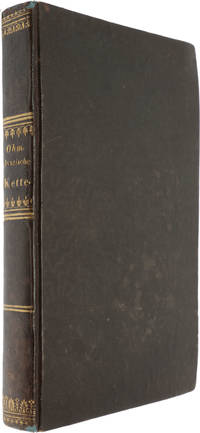
OHM, Georg Simon
Die galvanische Kette mathematisch bearbeitet
Berlin: J.G.F. Kniestädt for T.H. Riemann 1827. First edition. <p>First edition of "Ohm's great work" DSB containing the fully-developed presentation of his theory of electricity including Ohm's Law. "Ohm's great contribution − 'The Galvanic Chain Mathematically Calculated' − was to measure the rate of current flow and the effects of resistance on the current. 'Ohm's law' − that the resistance of a given conductor is a constant independent of the voltage applied or the current flowing was arrived at theoretically by analogy with Fourier's heat measurements" PMM.</p>. PMM 289 - Measuring Electricity. First edition of "Ohm's great work" DSB containing the fully-developed presentation of his theory of electricity including Ohm's Law. "Ohm's great contribution − 'The Galvanic Chain Mathematically Calculated' − was to measure the rate of current flow and the effects of resistance on the current. 'Ohm's law' − that the resistance of a given conductor is a constant independent of the voltage applied or the current flowing that is C = E/R where C = current E = electromotive force and R = resistance − was arrived at theoretically by analogy with Fourier's heat measurements 1800-14" PMM.<br/> <br/> <br /> <br /> "The expression "investigated mathematically" in the title of Ohm's book described his objective: to deduce the properties of the galvanic circuit from a set of "fundamental laws." The first of these laws states that electricity passes only between adjacent particles of the conductor and that the quantity passed is proportional to the difference in electroscopic force at the two particles. Here Ohm drew on an analogy to Fourier's heat theory in which the quantity of caloric passed between two particles is proportional to the difference between their temperatures. Ohm's second law supported by Coulomb's experiments states that the loss of electricity in unit time from the conductor to the air is proportional to the electroscopic force of the electricity to the amount of surface exposed and to a coefficient that depends on the air; acknowledging that this second law has little bearing on the phenomena of galvanic currents Ohm included it to make the theory complete and parallel to Fourier's theory of heat. The third and last law states that two bodies in contact maintain the same difference of electroscopic force at their common surface which is the basic tenet of the contact theory of the battery. From these three laws Ohm derived differential equations for electric currents analogous to Fourier's and Poisson's for heat which indicated to him an "intimate connection" between the two phenomena. <br/> <br/> <br /> <br /> "The mathematical expression of Ohm's physical analogy between the conduction of electricity and the conduction of heat is an equation identical in form to Fourier's. The only difference is in the physical significance of the symbols entering the equation: in Fourier's the independent variable is the temperature; in Ohm's it is the electroscopic force which is the force with which an electroscope a body of constant electrical condition is attracted to or repelled from a body it is brought into contact with. Following an approach Fourier had made familiar Ohm mathematically divided the conductor into infinitely thin discs and calculated the quantity of electricity transferred per unit time across the parallel surfaces and outward through the edges of the discs. The result was the fundamental second-order partial differential equation of Ohm's theory . Having formulated the physical problem as a differential equation Ohm then solved it to obtain relations between directly measurable quantities. Manipulating the solution written as an infinite series of sine and cosine functions with damping coefficients Ohm arrived at . his law relating electric current resistance and tension. <br/> <br/> <br /> <br /> "The "torch of mathematics" Ohm wrote shines through physics illuminating its dark places. With his Galvanic Circuit he could claim that mathematics had "incontrovertibly" possessed a "new field of physics from which it had hitherto remained almost totally excluded." By means of mathematical deductions from a few experimental "principles" galvanic phenomena had been brought together in "closed connection" and presented as a "unity of thought." The deductions showed that the seemingly disparate phenomena of electric tension and current are really connected in nature partially realizing Ohm's goal of fashioning the theory of electricity as a "whole" .<br/> <br/> <br /> <br /> "When the Galvanic Circuit appeared few physicists in Germany knew mathematical physics sufficiently to understand it. Journal editors were afraid their readers could not understand papers containing the simplest mathematics as Ohm complained. For reviewing Ohm sent a copy of his book to Schweigger at Halle who did not see the point of a mathematical treatment. To have it evaluated the Prussian minister of culture sent a copy to Kämtz Schweigger's colleague at Halle who could not follow the mathematical derivation as is clear from his cautious review of it. In Berlin which desperately needed a "mathematical physicist" Ohm's work received its most famous and to Ohm irritating review from Pohl who was neither a mathematical nor a typical Berlin physicist . Pohl complained that Ohm had not paid attention to the "essence" of the circuit and had merely expressed some properties of electricity in formulas. This was no achievement but only a replication of Fourier's and Poisson's work in another part of physics . In general the response to Ohm's book reflected a paucity of physicists with good mathematical knowledge in Germany in the late 1820s. But one German review of Ohm's book showed complete comprehension. Ohm sent his book to Kastner in Erlangen to be reviewed in his journal. Kastner asked the mathematician Wilhelm Pfaff to write the review but Pfaff did not know the literature . The review that appeared under Pfaff's name was apparently written by Ohm himself after his brother had interceded. The review was of course favourable but a favourable review does not necessarily make a successful book. Sales of the Galvanic Circuit were unimpressive and Ohm paid friends to order the book from out of town to make a better impression on the publisher. The book was in print for eight years then not again for sixty years though in the meantime it had come out in several translations. Ohm sent free copies to everyone who might help him as he did not want to return to his teaching in Cologne" Jungnickel & McCormmach pp. 53-7. <br/> <br/> <br /> <br /> Georg Simon Ohm 1789-1854 was educated together with his brother Martin the mathematician principally by his father who gave his sons a solid education in mathematics physics chemistry and the philosophies of Kant and Fichte; their considerable mathematical ability was recognized in 1804 by the Erlangen professor Karl Christian von Langsdorf who enthusiastically likened them to the Bernoullis. Ohm received his Ph.D. from the University of Erlangen in 1811 but after teaching there for three semesters as a Privatdozent he was only able to find employment as a schoolteacher first at Bamberg and then from 1817 at the recently reformed Jesuit Gymnasium at Cologne. "The ideals of wissenschaftliche Bildung had infused the school with enthusiasm for learning and teaching; and this atmosphere which appears later to have waned coupled with the requirement that he teach physics and the existence of a well-equipped laboratory stimulated Ohm to concern himself for the first time avidly with physics. He studied the French classics − at first Lagrange Legendre Laplace Biot and Poisson later Fourier and Fresnel − and especially after Oersted's discovery of electro-magnetism in 1820 did experimental work in electricity and magnetism. It was not until early in 1825 however that he undertook research with an eye toward eventual publication" DSB.<br/> <br/> <br /> <br /> "Feeling increasingly burdened by his teaching at a secondary school in Cologne Ohm took his father's advice and asked the Prussian minister of culture for a year off. To the minister he explained that for a long time he had divided his attention between mathematics and physics though for practical reasons he had emphasized physics. By taking up physics he did not have to give up mathematics he said since the two were closely connected. His appeal to the minister contained an element of calculation: he regretted that the French had recently dominated physics and he had been studying the mathematical works by Laplace Fourier Poisson Fresnel and other French masters to see what they had left for him to do. He had been doing purely experimental work on the whole but he had in hand a mathematical theory of galvanic current; all he needed was time off to complete it and he added to work out a theory of light as well. On the recommendation of Ermann the minister approved Ohm's request. With half salary Ohm went off to Berlin in 1826 to live in his brother's house where he had a small apartment with space for doing experiments. With these improved working conditions he developed the mathematical theory of the galvanic current perhaps with his brother's help with the calculations. The result was the Galvanic Circuit .<br/> <br/> <br /> <br /> "After the Galvanic Circuit Ohm carried out important researches on tones and on crystal optics and he undertook a comprehensive theory of physics. In the year the Galvanic Circuit was published he began to speak of a greater work to come one that would treat the whole of molecular physics. Apparently he wanted to derive all physical phenomena from analytical mechanics and molecular hypotheses. Ohm published the first volume containing the mathematical preliminaries. In the second volume he intended to treat dynamics and in the third and fourth its application to physical phenomena. But Ohm's late call to Munich University interfered with his plan and the volumes never appeared. The existence of the plan however pointed to the confidence of the author of the Galvanic Circuit in the power of mathematical physics to complete the understanding of nature that Newton had begun" Jungnickel & McCormmach pp. 53-8. <br/> <br/> <br /> <br /> Widespread understanding and acknowledgement of the importance of the Galvanic Circuit did not come until the late 1830s and early 1840s when Ohm's work began to receive official recognition with corresponding memberships of the Berlin and Turin academies in 1839 and 1841 respectively the award of the Royal Society of London's Copley Medal in 1841 and finally just before his death the chair of physics at the University of Munich in 1852. In 1881 when the importance of Ohm's work was fully understood the standard unit of electrical resistance was named the ohm in his honour at the Paris Conference on international standards. <br/> <br/> <br /> <br /> Waller 11419; Wellcome IV p. 260; Wheeler Gift Cat. 835. Jungnickel & McCormmach Intellectual Mastery of Nature. Theoretical Physics from Ohm to Einstein Volume 1: The Torch of Mathematics 1800 to 1870 1990. <br /> <br/> <br/> 8vo 195 x 123 mm pp. iv 245 errata on p. 245 1 folding engraved plate. Contemporary patterned German cloth gilt spine lettering light wear to capitals and corners. Previous owner's signature removed from title. Custom half leather clamshell box. J.G.F. Kniestädt for T.H. Riemann unknown
书商的参考编号 : 5475
|
|
|
Simon, Neil
Jake's Women: A Play
Random House 1994 First printing of the stated first edition. Signed by Neil Simon directly on the half-title page; presentation copy from Simon to four time Emmy winning director Glenn Jordan: "To Glenn / Even if we didn't / make a movie this time / would have been great. / It would upset me very / much if we didn't do this / at least another dozen times. / That's a 'proposal.' / Love-- / Neil Simon." A tiny bump to upper corner else book and dust jacket in fine condition. Neil Simon is the recipient of three Tony Awards for Best Play and the 1991 Pulitzer Prize for Drama. Random House hardcover
书商的参考编号 : 022738 ???????? : 0679430199 9780679430193

|
|
|
Gunn, Jacqueline Simon
Borderline Personality Disorder: New Perspectives on a Stigmatizing and Overused Diagnosis Practical and Applied Psychology
Bloomsbury 2014-11-17. Illustrated. hardcover. New. 6.14x0.44x9.21. Buy with confidence. Excellent Customer Service & Return policy. Bloomsbury hardcover
书商的参考编号 : DADAX1440832293 ???????? : 1440832293 9781440832291

|
|
|
Barefoot, Simon
Cambridge IGCSE Espaol como Primera Lengua Libro del Alumno: Hodder Education Group
Hodder Education 2020-08-25. Student. paperback. New. 8.35x0.55x10.79. Buy with confidence. Excellent Customer Service & Return policy. Hodder Education paperback
书商的参考编号 : DADAX1510478531 ???????? : 1510478531 9781510478534
|
|
|
Simon, Neil
Biloxi Blues
New York: Random House 1986 First printing of the stated first edition. Light toning/wear to cover margins else book in fine condition; dust jacket with light toning to spine and margins light shelf wear light crease near bottom front spine fold a faint dimple to upper front spine fold bottom back corner slightly rubbed and a vertical crease to the front flap else fine.Premiered at the Ahmanson Theatre in Los Angeles 1984 and on Broadway at the Neil Simon Theatre 1985 and to film directed by Mike Nichols starring Matthew Broderick and Christopher Walken receiving Tony Awards for Best Play and Best Actor. Random House hardcover
书商的参考编号 : 022940 ???????? : 0394551397 9780394551395

|
|
|
Simon, Neil
God's Favorite: A New Comedy
New York: Random House 1975 First printing of the stated first edition. Signed by Neil Simon directly on a bookplate laid-in to the half-title page. Light shelf wear else book in fine condition; dust jacket with light shelf wear and light toning to top edge of inside flaps else fine. The original Broadway performance was directed by Michael Bennett and featured Vincent Gardinia. Random House hardcover
书商的参考编号 : 022922 ???????? : 0394499506 9780394499505

|
|
|
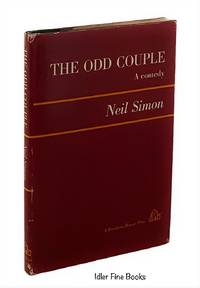
Simon, Neil
The Odd Couple
New York: Random House 1966 First edition stated first printing. Herb Vigran's copy with his name and address scripted on the upper corner of the front paste-down. Light rubbing to spine ends a tiny crimp to bottom corner and some rubbing along side Vigran's address in California else book in fine condition; price-clipped dust jacket with moderate wear to spine ends/corners and light rubbing along folds else fine. Herbert Vigran was an American character actor in Hollywood from the 1930s to the 1980s starting with radio he performed in shows with Jack Benny Bob Hope Lucille Ball and Jimmy Durante. Over his 50-year career he made over 350 television and film appearances.Tony Award-winning Broadway play originally premiered on Broadway 1965. Basis for the 1968 film starring Jack Lemmon and Walter Matthau. Gene Saks directed both the play and the film featuring several baseball players in cameos including Roberto Clemente in his only film appearance basis for the popular sitcom series with Tony Randall and Jack Klugman. Random House hardcover
书商的参考编号 : 022936
|
|
|
Simon, Neil; Burt Bacharach (Music); Hal David (Lyrics)
Promises Promises
New York: Random House 1969 First edition stated first printing. Light toning along gutters of endpapers light toning to page margins and a light bump to upper corner else book in fine condition; price-clipped dust jacket with a short tear/crease to upper front spine fold toning to spine and light wear else fine. Premiered on Broadway 1968 directed by Robert Moore starring Jerry Orbach Jill O'Hara and and Edward Winter a West End production 1969 with Tony Roberts and Betty Buckley. The cast album won the Grammy Award for Best Musical Theater Album. Random House hardcover
书商的参考编号 : 022941

|
|
|
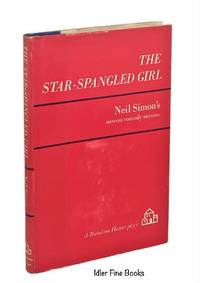
Simon, Neil
The Star-Spangled Girl
New York: Random House 1967 First edition stated first printing. Light rubbing/toning to cover edges a tiny ding to bottom front cover and light toning to end-papers else book in fine condition; price-clipped dust jacket with rubbing to folds and front cover small chip to upper back spine fold light toning to spine/back cover margins light moister ghost to bottom back cover near spine else fine. Originally presented at the Plymouth Theater 1966 with Anthony Perkins Richard Benjamin and Connie Stevens and the film version 1991 directed by Jerry Paris with Sandy Duncan and Tony Roberts. Random House hardcover
书商的参考编号 : 022924
|
|
|
Simon, Neil
Come Blow Your Horn
Garden City: Doubleday & Company 1963 First printing of the first edition. Mild rubbing to board edge/cover margins light toning to end-pages and faint toning to page margins else book in fine condition; dust jacket with 2 tiny closed tears/shallow crease to top/bottom back cover shallow creasing to crown of spine light wear to corners and light rubbing else fine. Author's first published play adapted to the screen with Frank Sinatra Lee J. Cobb Molly Picon Barbara Rush Jill St. John and Tony Bill. Doubleday & Company hardcover
书商的参考编号 : 022921

|
|
|
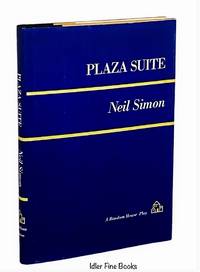
Simon, Neil
Plaza Suite
New York: Random House 1969 First edition stated first printing. Faint toning to endpapers and a soft crimp else book in fine condition; dust jacket with a light vertical crease to front cover and light shelf wear else fine. Opened on Broadway 1968 at the Plymouth Theatre directed by Mike Nichols starring George C. Scott and Maureen Stapleton et al. and basis for the 1971 film directed by Arthur Hiller starring Walter Matthau Maureen Stapleton and Barbara Harris. Random House hardcover
书商的参考编号 : 022948
|
|
|
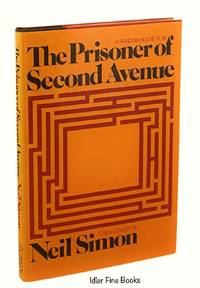
Simon, Neil
The Prisoner of Second Avenue
New York: Random House 1972 First edition stated first printing. Book in fine condition; dust jacket with light toning to spine and faint toning to top edge of back cover and inside flaps else fine.Originally premiered on Broadway directed by Mike Nichols with Lee Grant and Peter Falk and basis of the film starring Jack Lemmon and Anne Bancroft. Random House hardcover
书商的参考编号 : 022944 ???????? : 039448259X 9780394482590
|
|
|
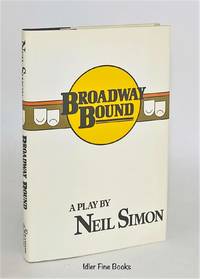
Simon, Neil
Broadway Bound
New York: Random House 1987 First printing of the stated first edition review copy with publisher's slip laid-in. faint toning to jacket margins else book and dust jacket in fine condition. The last chapter in his Eugene trilogy following Brighton Beach Memoirs and Biloxi Blues received four Tony Award nominations including Best Play. Opened on Broadway 1986 at the Broadhurst Theater directed by Gene Saks starring Linda Lavin Jonathan Silverman Jason Alexander Phyllis Newman John Randolph and Joan Rivers; and the film version 1992 directed by Paul Bogart starring Corey Parker and Jonathan Silverman. Random House hardcover
书商的参考编号 : 022956 ???????? : 0394563956 9780394563954
|
|
|
Simon, Neil
California Suite
New York: Random House 1977 First printing of the stated first edition. Light toning to outer edge of boards else book in fine condition; dust jacket with light toning to spine and cover margins else fine. Opened on Broadway 1976 at the Eugene O'Neill Theatre directed by Gene Saks starring Tammy Grimes George Grizzard and Barbara Barrie and the film adaptation directed by Herbert Ross 1978 with Alan Alda Jane Fonda Maggie Smith Academy Award Walter Matthau Richard Pryor and Bill Cosby. Random House hardcover
书商的参考编号 : 022951 ???????? : 0394412842 9780394412849

|
|
|
Simon, Neil
Fools: A Comic Fable
New York: Random House 1981 First printing of the stated first edition. Book and dust jacket in fine condition. Opened on Broadway 1981 at the Eugene O'Neill Theatre directed by Mike Nichols starring John Rubinstein Harold Gould Florence Stanley Pamela Reed and music by John Rubinstein. Random House hardcover
书商的参考编号 : 022952 ???????? : 0394523903 9780394523903

|
|
|
Simon, Neil
I Ought to Be in Pictures
New York: Random House 1981 First printing of the stated first edition. Signed by Neil Simon directly on a bookplate loosely laid-in. Faint toning to paste-downs else book in fine condition; dust jacket with faint edge wear and toning else fine.Premiered at the Ahmanson Theater in Los Angeles 1979 with Tony Curtis and opened on Broadway at the Eugene O'Neill Theater 1980 directed by Herbert Ross starring Ron Leibman Dinah Manoff and Joyce Van Patten and a film version 1982 also directed by Ross starring Walter Matthau Ann-Margret and Dinah Manoff. Random House hardcover
书商的参考编号 : 022958 ???????? : 0394517741 9780394517742

|
|
|
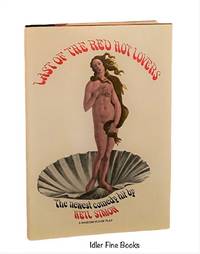
Simon, Neil
Last of the Red Hot Lovers
New York: Random House 1970 First edition stated first printing. Book in fine condition; dust jacket with light shallow creasing to crown of spine else fine. Opened on Broadway 1969 at the Eugene O'Neill Theatre directed by Robert Moore starring James Coco Linda Lavin and Doris Roberts and the film adaptation directed by Gene Saks 1972 with Alan Arkin Sally Kellerman Paula Prentiss and Renée Taylor. Random House hardcover
书商的参考编号 : 022950
|
|
|
Amadeus Pillario, Simon
El Evangelio de Marcos: Verso a Verso Biblia-Comic: Traduccion NVI Spanish Edition
paperback. Good. Access codes and supplements are not guaranteed with used items. May be an ex-library book. paperback
书商的参考编号 : 1914299078.G ???????? : 1914299078 9781914299070

|
|
|
Schlachter, Simon/ Urban, Antje
Gipfelgenuss: Meine Allgäuer Küche
Südwest Verlag 2022. Hardcover. New. German language. 10.39x8.58x1.02 inches. Südwest Verlag hardcover
书商的参考编号 : __3517101907 ???????? : 3517101907 9783517101903
|
|
|
Simon, Neil
Lost in Yonkers
New York: Random House 1991 First printing of the stated first edition. Book and dust jacket in fine as new condition. 1991 Pulitzer Prize for Drama. Produced by Emanuel Azenberg and directed by Gene Saks opened at The Center for the Performing Arts in Winston-Salem on December 31 1990 moved to Broadway opening at the Richard Rogers Theater in New York. The award winning cast included Jamie Marsh Mercedes Ruehl Kevin Spacey Lauren Klein Danny Gerard and Mark Blum. Random House hardcover
书商的参考编号 : 023208 ???????? : 0679408908 9780679408901

|
|
|
Simon, Neil
Barefoot in the Park
New York: Random House 1964 First edition stated first printing. Faint toning to page margins a tiny stain to the front endpage and a touch of rubbing to spine ends else book in fine condition; dust jacket with a short scratch along the lower front spine-fold faint toning to upper edge and flap folds minor edge wear and toning to spine else fine. Opened on Broadway October 231963 at the Biltmore Theatre and closed on June 25 1967 after 1530 performances Simon's longest-running hit starring Robert Redford Elizabeth Ashley Mildred Natwick and Kurt Kaszna director Mike Nichols. The 1967 film version replaced Elizabeth Ashley with Jane Fonda. Random House hardcover
书商的参考编号 : 023219

|
|
|
Simon, Neil
Barefoot in the Park
New York: Random House 1964 First edition stated first printing. Boldly signed by Neil Simon directly on the second endpage. Faint toning to endpapers and a shallow bruise to upper front corner else book in fine condition; dust jacket with a shallow crimp along upper front cover light wear to extremities a tiny tear/crease to upper back cover light toning to spine and mild foxing primarily to back cover else fine. A sharp copy. Opened on Broadway October 231963 at the Biltmore Theatre and closed on June 25 1967 after 1530 performances Simon's longest-running hit starring Robert Redford Elizabeth Ashley Mildred Natwick and Kurt Kaszna director Mike Nichols. The 1967 film version replaced Elizabeth Ashley with Jane Fonda. Random House hardcover
书商的参考编号 : 023188

|
|
|
Goldhill, Simon
What Is a Jewish Classicist: Essays on the Personal Voice and Disciplinary Politics Rubicon
paperback. Good. Access codes and supplements are not guaranteed with used items. May be an ex-library book. paperback
书商的参考编号 : 1350322539.G ???????? : 1350322539 9781350322530

|
|
|
Simon, Elissa
Police Officer Exam Study Guide: Test Prep Review of English Math Reasoning Skills and Practice Questions with Answer Explanations
paperback. Good. Access codes and supplements are not guaranteed with used items. May be an ex-library book. paperback
书商的参考编号 : 1637980523.G ???????? : 1637980523 9781637980521

|
|
|
Doyle, Simon
Runaway Train Runaway Bay
paperback. Good. Access codes and supplements are not guaranteed with used items. May be an ex-library book. paperback
书商的参考编号 : 1739727614.G ???????? : 1739727614 9781739727611

|
|
|
Trujillo, Simon Ventura
Land Uprising: Native Story Power and the Insurgent Horizons of Latinx Indigeneity
paperback. Good. Access codes and supplements are not guaranteed with used items. May be an ex-library book. paperback
书商的参考编号 : 0816546940.G ???????? : 0816546940 9780816546947

|
|
|
Pallas, Peter Simon
Travels Through The Southern Provinces Of The Russian Empire In The Years 1793 And 1794; Volume 1
hardcover. Good. Access codes and supplements are not guaranteed with used items. May be an ex-library book. hardcover
书商的参考编号 : 101630398X.G ???????? : 101630398X 9781016303989

|
|
|
Pallas, Peter Simon
Travels Through The Southern Provinces Of The Russian Empire In The Years 1793 And 1794; Volume 2
hardcover. Good. Access codes and supplements are not guaranteed with used items. May be an ex-library book. hardcover
书商的参考编号 : 1017483388.G ???????? : 1017483388 9781017483383

|
|
|
Simon, Joe
Original Signed Captain America Comic Illustration.
Original full color illustration of one of comics' most enduring superheroes Captain America. Inscribed by Captain America's co-creator Joe Simon to actor and voice actor Miguel Ferrer "Just thought I'd drop in on Miguel Ferrer Joe Simon." American actor Miguel Ferrer's notable roles include OCP Vice President Bob Morton in the 1987 film RoboCop FBI Agent Albert Rosenfield in the early 90s television series Twin Peaks Eduardo Ruiz in the 2000 film Traffic and the voice of Shan Yu in the 1998 Disney animated film Mulan. In fine condition. Double matted and framed. The entire piece measures 22 inches by 18 inches. A unique association. Created by cartoonists Joe Simon and Jack Kirby Captain America first appeared in March of 1941. Designed as a patriotic supersoldier the fictional superhero became Timely Comics' most popular superhero during the wartime period. Wearing a costume bearing an American flag motif Captain America often fought the Axis powers of World War II using his indestructible shield. Captain America also became the first character to appear outside of comics with the release of the 1944 movie serial Captain America and has since appeared in several other films including the 2018 Avengers: Infinity War. unknown
书商的参考编号 : 89052

|
|
|
Brett, Simon
Corporate bodies
Curley Large Print. Used - Acceptable. Used - Acceptable. Ships from UK in 48 hours or less usually same day. Your purchase helps support Sri Lankan Children's Charity 'The Rainbow Centre'. Ex-library with wear and barcode page may have been removed. 100% money back guarantee. We are a world class secondhand bookstore based in Hertfordshire United Kingdom and specialize in high quality textbooks across an enormous variety of subjects. We aim to provide a vast range of textbooks rare and collectible books at a great price. Our donations to The Rainbow Centre have helped provide an education and a safe haven to hundreds of children who live in appalling conditions. We provide a 100% money back guarantee and are dedicated to providing our customers with the highest standards of service in the bookselling industry. Curley Large Print unknown
书商的参考编号 : Z1-V-018-00926 ???????? : 0745117244 9780745117249

|
|
|
Duportal, Antoine Simon
Recherches Sur L’état Actuel de la Distillation du Vin en France et Sur Les Moyens d’Améliorer la Distillation des Eaux-de-vie. Research on the Current State of Wine Distillation in France and on Ways to Improve the Distillation of Eaux-de-vie.
Paris Saint Petersbourg: Klostermann 1811. Scarce first edition of early work on the distillation of wine and eau-de-vie. Octavo bound in full period tree calf gilt titles and tooling to the spine red morocco spine label five folding maps of distillation apparatus rebacked retaining the original spine. Stamps and previous owner inscriptions. In very good condition. Scarce and desirable. Works on the distillation of eau de vie are rare. Klostermann unknown
书商的参考编号 : 95242

|
|
|
STEVIN, Simon
Mémoires Mathématiques Contenant ce en quoy s'est exercé le très-illustre très-excellent Prince et Seigneur Maurice Prince d'Orange Conte de Nassau . translate en François par Jean Tuning
Leyden: Jan Paedts Jacobsz 1608. First edition. Very rare first edition in French of this collection of works which was published almost simultaneously in Dutch French and Latin. They deal among other topics with geometry trigonometry perspective and double-entry book-keeping - Stevin was one of the first authors to compose a treatise on governmental accounting. The Appendice Algébraique which Sarton called 'one of Stevin's most important publications' is the first published general method of solving algebraic equations; it uses what is now called the 'intermediate value theorem' a remarkable anticipation as it was not rigorously formulated by mathematicians until the nineteenth century. All the works appearing in this volume were first published in this collection with one exception where the version here is the earliest extant. Hardcover. Double-entry bookkeeping. <p>Very rare first edition in French of this collection of works which was published almost simultaneously in Dutch French and Latin. They deal among other topics with geometry trigonometry perspective and double-entry book-keeping - Stevin was one of the first authors to compose a treatise on governmental accounting. The Appendice Algébraique which Sarton called 'one of Stevin's most important publications' is the first published general method of solving algebraic equations; it uses what is now called the 'intermediate value theorem' a remarkable anticipation as it was not rigorously formulated by mathematicians until the nineteenth century. All the works appearing in this volume were first published in this collection with one exception where the version here is the earliest extant - see below. Stevin 1548-1620 was perhaps the most original scientist of the second half of the 16th century the major works of Galileo did not appear until the 17th century. "He was involved in geometry algebra arithmetic pioneering a system of decimals dynamics and statics almost all branches of engineering and the theory of music" Kemp p. 113. "Stevin unconditionally supported the Copernican system several years before Galileo and at a time when few other scientists could bring themselves to do likewise" DSB XIII: 48. In 1593 Prince Maurice of Nassau 1567-1625 appointed Stevin quartermaster-general of the Dutch armies a post he held until his death. From 1600 Stevin organized the mathematical teaching at the engineering school attached to Leiden University. "The Prince used to carry manuscripts of Stevin's lectures with him in his campaigns. Fearing that he might lose them he finally decided to have them published not only in the original Dutch text Wisconstighe Gedachtenissen . but also in a Latin translation by Willebrord Snel Hypomnemata mathematica . and in a French translation by Jean Tuning offered here" Sarton p. 245. The Dutch and Latin editions were published in five parts of which the fourth consisted principally of reprints of his works on statics that had appeared separately in 1586. This fourth part was not translated into French because we are told at the beginning of the fifth part of the printer's impatience - he was tired of keeping the sheets already printed and suggested that additional materials could be published later when the author had prepared them. The printer's impatience also accounts for the fact that several works that are announced on the title pages of the individual volumes did not in fact appear in the Dutch French or Latin editions. The only other complete copy of this French edition listed by ABPC/RBH is the De Vitry copy in a nineteenth-century binding Sotheby's April 11 2002 lot 779 £15200 = $21935. OCLC lists Columbia Harvard and UCLA only in US.</p> <br /> <p>Provenance: L. Cundier early inscription on title-pages i.e. Louis Cundier c. 1615- 1681 French geometer surveyor and engraver. He was professor of mathematics at Aix and was responsible for a Carte géographique de Provence published about 1640. Contemporary marginal annotation on R6v of final part.</p> <br /> <p>The first part of the work entitled Cosmographie 1608 is a treatise on the trigonometrical techniques used in the observation of the heavens together with extensive tables of sines tangents and secants. "The first to use the term trigonometry seems to have been Pitiscus whose book Trigonometria made its first appearance in 1595 but in 1608 when Stevin's book appeared the term had not yet been generally accepted. The book consists of four parts the first dealing with the construction of goniometrical tables the second with plane triangles and the remaining two parts with spherical trigonometry . It is mainly of interest to those who wish to see what trigonometry was like in the sixteenth century long before Euler in 1748 introduced the present notation. It also has some distinction as the first complete text on trigonometry written in Dutch; and one of the first - if not the first - written in any vernacular" Works IIb p. 751.</p> <br /> <p>Part II De la Practique de Géométrie 1605 in Dutch De Meetdaet "is primarily a textbook for the instruction of those who like Prince Maurice wanted to learn some of the more practical aspects of geometry. The course was not one for beginners knowledge of Euclid's Elements being a prerequisite while the reader was also supposed to know something about the measurement of angles and Stevin's own calculus of decimal fractions . Parts of the contents were taken from the Problemata Geometrica the book which Stevin published in 1583 but to which he curiously enough never refers. Other parts show the influence of Archimedes and of contemporary writers such as Del Monte and Van Ceulen. Although in accordance with the title strong emphasis is laid on the practical applications of geometry many theoretical problems are discussed. For Stevin theory and application always went hand in hand.</p> <br /> <p>"The Meetdaet appeared in 1605 but it was drafted more than twenty years before. Already in the Problemata Geometrica Stevin refers to a text on geometry 'which we hope shortly to publish' and in which the subject was to be treated by a method parallel to that used in arithmetic. At that time Stevin's L'Arithmétique was either finished or well advanced. We get the impression that in this period 1583-85 Stevin decided to publish his full text on arithmetic but of his text on geometry only those parts which he considered novel. The general outline of the two texts was laid out at the same time and in close parallel. When at last the Meetdaet appeared it had undergone many changes resulting partly or wholly from lengthy discussions with the Prince of Orange. The underlying idea however remained the same.</p> <br /> <p>"In the introduction to the Meetdaet Stevin explains what he means by this parallelism of arithmetic and geometry. In arithmetic we begin by introducing the numerical symbols and follow this up by naming them and interpreting their value. Then come the four species the theory of proportions the theory of proportional division and finally the reduction of fractions to a common denominator. Similarly in geometry we begin by showing the student how to draw figures then we name them and explain how to measure them. Then follow the four species the theory of proportions of proportional intersections and the reduction of figures into others of given form and equal length area or volume. Since these topics are taken in six groups and each group with lines plane figures and solids the Meetdaet consists of six books each consisting of three parts.</p> <br /> <p>"The opinion of Stevin that geometry and arithmetic have to run parallel is not so artificial as it appears at first sight. Stevin expresses an opinion common to the mathematicians of his age who insisted on enlarging the field of numbers with irrationals to something like an arithmetic continuum who applied these numbers without discrimination to the measurement of figures and for whom numbers were not so much the object of abstract speculation as the tools for surveying navigation and astronomy. The subject matter of geometry is continuous quantity wrote such men as Tartaglia and Clavius. It seemed natural that there should exist relations and analogies between the professed geometrical and the intuitively felt arithmetical continuum. Stevin only gave an early sixteenth-century version of a point of view which was to lead within the next generations to analytic geometry. Consciousness of the analogy between arithmetical-algebraic and geometrical considerations continued to work as a leaven throughout the further development of mathematics. Later we find it in Leibniz' proposal for an algebra of directed quantities. In another form it appeared again more recently when Hilbert probed the consistency of geometrical axioms by means of a corresponding algebraic counterpart.</p> <br /> <p>"Book I of the Meetdaet in accordance with the author's program teaches methods for drawing lines and certain plane figures and for constructing certain solids. With his keen sense of the interdependence of theory and practice Stevin gives not only rules for the drawing board but also for the surveyor and instrument-maker. We thus meet here with a description of the surveyor's cross or diopter already described by Heron and used for setting out perpendiculars by lines of sight. With a graduated circle instead of a cross it becomes a so-called circumferentor or theodolite. The plane figures discussed are the circle the conic sections and the Archimedean spiral. No fewer than four methods are given for constructing points of an ellipse when the principal axes are given in position and magnitude . The fourth ellipse construction is equivalent to the one we often use at present and by which we find points of the ellipse by considering it the oblique parallel or orthographic projection of a circle with one of the axes as diameter. This construction may in this form be original with Stevin though it is closely related to another one also presented by Stevin in which he shows how the conic sections can be constructed as plane intersections of a right circular cone. His method amounts to what we now call orthographic projection . Book I also contains Stevin's description of the five regular and of eight Archimedean solids .</p> <br /> <p>"In Book II we find observations on the lengths of line segments and curves the areas of two-dimensional figures and the volumes of solids. Some surveyor's instruments appear among them the ancient 'traprondt' or graduated circle for measuring horizontal angles and the equally ancient triquetrum consisting of two arms of equal length hinged to a third; they are graduated and have sighting devices. The triquetrum also called PtoIemy's rods or parallactic instrument is used by Stevin to determine a triangle similar to a triangle in the fields though in his days it had also received attention as a favourite measuring instrument of Copernicus and Tycho Brahe. As an application of the triquetrum Stevin shows us how to measure the distance from a given point to a point beyond reach. A number of other exercises in surveying follow and also such problems as the computation of the altitudes of a triangle with given sides. In the section on the measuring of circumferences and areas we find a discussion of the value of π with due references to Archimedes Romanus and Van Ceulen .</p> <br /> <p>"Book III contains the application of four species to geometry with reference to the parallel treatment in L'Aritbmétique. Multiplication and division of segments areas and volumes is only performed by means of numerical factors; there is no reference to the multiplication of segments so as to form areas. Of interest is the addition and subtraction of solids but the only case discussed is that of similar figures .</p> <br /> <p>"In Book IV we find a theory of proportions. It is shown how areas and volumes proportional to given line segments can be found. The most interesting part is that in which the two mean proportionals between two line segments are discussed. As in the Problemata Geometrica reference is made to Hero's construction according to Eutocius. The Eratosthenes construction is mentioned but not further discussed.</p> <br /> <p>"Book V contains the division of plane polygons into parts of given ratio by a line satisfying certain conditions another of the topics of the Problemata Geometrica. Here Stevin goes a little beyond the text of 1583 . he not only modified some of the proofs of the theorems already discussed in the Problemata but added the cases where the line of division has to pass through a point outside or inside the polygon .</p> <br /> <p>"Finally Book VI deals with some transformations of figures into others of given form and given length area or volume such as the approximate construction of a straight line equal to the circumference of a given circle of a triangle equal in area to a given circle of a sphere equal in volume to a given cone of a cylinder equal in volume to a given sphere and of a segment of a sphere similar to one of two given segments and equal in area to the other" ibid. pp. 764-8.</p> <br /> <p>Part III Des Perspectives 1605 in Dutch Deursichtighe is a mathematical treatment of perspective. "Stevin's book gives an important discussion of the case in which the plane of the drawing is not perpendicular to the plane of the ground and for special cases solves the inverse problem of perspective" DSB XIII: 48. "Stevin's approach to perspective belongs in the Commandino - Benedetti - Guidobaldo tradition and his main demonstrations are uncompromisingly geometrical in nature. He also took up the essentially non-pictorial problem of the rotation of the picture plane into the ground plane formulating one of the basic theorems of homology. However he does show some of Marolois's sensitivity to the needs of practitioners. His treatise was occasioned by the desire of Prince Maurice to understand the principles of pictorial representation - 'wishing to design exactly the perspective of any given figure with knowledge of causes and mathematical proof'. Stevin accordingly provides 'abridgements' of his geometrical techniques for artists - albeit rather abstract abridgements - and illustrates a Dürer-like perspective machine" Kemp pp. 113-114. Stevin "was obliged to perform a considerable amount of original work since most of the books at his disposal had written by and for painters and architects and were rich in directives and deficient in mathematical demonstrations. The only textbook comparable to that of Stevin in mathematical clarity and antedating it was the Perspectiva of his contemporary and colleague Guido Ubaldo Del Monte 1545-1607 which was published in 1600 only five years before the Deursichtighe.</p> <br /> <p>"Stevin's work contains two books. The title of the first book Verschaeuwing is Stevin's translation of the Latin word scenographia. The term Deursichtighe is his translation of the word perspectiva. Since the second book of the Deursichtighe contains the principles of Spiegelschaeuwen theory of reflection in mirrors translation of catoptrica perspective in Stevin's terminology comprises both scenography and catoptrics. It also includes the principles of refraction called Wanschaeflwing but this subject is wanting in the book" Works IIb p. 785</p> <br /> <p>"There is much in Stevin's book which reminds us of Del Monte's notably the extensive use of rotations and the introduction of the inverse problem of perspective and the double solution of certain problems called here the 'mathematical' and the 'mechanical' way. The two men had much in common; both were experts on fortifications both were mathematicians deeply interested in problems of mechanics both combined a love of theoretical study with engineering practice. It is understandable that their approach to perspective was similar and it is not unlikely that Stevin thoroughly enjoyed Del Monte's work. Despite this influence which has to be inferred rather than proved by quotations Stevin's work is an achievement of remarkable originality. He probably had a good deal of the contents of his work ready before he studied Del Monte's Perspective if ever he did and maintained his particular way of exposition and selection throughout the book .</p> <br /> <p>"The Verschaeuwing itself opens with certain postulates showing how seriously the author tried to base his work on a correct mathematical foundation. One of these postulates is that a point and its perspective image lie in a straight line with the eye. Stevin's explanation of the necessity of this postulate is that the physical eye is not a mathematical point; by pressing the eye we can obtain a difference of as much as 33° in the image of a given point.</p> <br /> <p>"Among the first constructions are the classical ones of finding the perspective images of a point and a line. Here we meet the demonstration of Del Monte's theorem that all sets of parallel lines have images in lines passing through one point. This point 'saempunt' is Del Monte's 'punctum concursus'. Then comes Stevin's new approach: he takes the picture plane the 'glass' no longer perpendicular to the ground plane the 'floor' but at an arbitrary angle. This leads him to two new theorems Props. 7 and 8 by means of which the construction for this case is reduced to the case of the vertical picture plane . Stevin now undertakes the construction of the perspective images of several figures including that of a 'tower' a quadrangular pyramid on top of a cube with a face of the cube as its base; the cube is standing on the ground plane. He also constructs the ellipse as the image of a circle. Some methods of checking the correctness of constructions follow.</p> <br /> <p>"These propositions can be considered as forming the first part of the Verschaeuwing. The second part from Prop. 12 onwards deals with the inverse problem of perspective a subject already touched by Del Monte. Given a polygon as image and another polygon in the ground plane turned into the picture plane: to find if possible the eye; the angle between picture plane and ground plane is given and is not necessarily 90°. Stevin solves the problem in certain special cases; the solution of the solution of the general problem had to wait until the nineteenth century.</p> <br /> <p>"The text ends with an 'Appendix' which contains certain observations on terminology a correction of certain constructions by Serlio and a description of a model described by Dürer which caught the fancy of Prince Maurice to such an extent that he had it constructed. It was an instrument for drawing the perspective of a figure on a glass plate; it had helped Stevin himself to gain a better understanding of the theory.</p> <br /> <p>"Book II of the Deursichtighe the Catoptrics is short and does not contain much that is of interest . Stevin must have added the sixteen pages as a tribute to an ancient tradition but he did not develop the subject with his usual thoroughness. That part of the Catoptrics which deals with refraction and which was announced in the Summary Van de Wanschaeuwing was not even published" ibid. pp. 790-1</p> <br /> <p>Part V Meslanges 1608 contains a very important mathematical work Appendice algébrique contenant règle générale de toutes Equations as well as Stevin's treatise on double-entry bookkeeping. Sections on music architecture fortification and other topics announced on the title page were never published in the Dutch French or Latin editions.</p> <br /> <p>The Appendice had been published separately in 1594 but the unique copy kept at the University of Louvain was destroyed during World War I and its appearance here is now the earliest extant. "This is one of Stevin's most important publications: it includes a general rule to solve numerical equations of every degree. Expressed in modern language: if fa > 0 and fb < 0 there is between a and b at least one root of the equation fx = 0" Sarton p. 253. This is the first clear statement of what is now known as the 'intermediate value theorem' which was rigorously formulated and proved only two centuries later by Bolzano and Cauchy. Stevin tells us that his friend Ludolph van Ceulen had also found a general rule for the same purpose and it was probably also known to Adrianus Romanus but priority definitely belongs to Stevin as he was the only one to publish it.</p> <br /> <p>"In his Appendice Algébraique Stevin states that after the publication of L'Arithmétique he has found a general rule to solve all equations either perfectly or with any degree of approximation. His example is x3 = 300x 33915024. To find a first approximation for x try x = 1 then x = 10 100 1000 . The result is that for x = 1 x = 10 x = 100 the value of x3 is less than that of 300x 33915024 but for x = 1000 it is larger. Hence the first result is 100 < x < 1000. To find a second approximation for x he now substitutes x = 100 200 300 400 and finds 300 < x < 400. Now he tries x = 310 320 330 and finds 320 < x < 330 then x = 321 322 323 324. It appears that for x = 324 both sides of the equation are equal so x = 324 is the root.</p> <br /> <p>"The method can also be applied if the root is not an integral number. If x3 = 300x 33900000 we find 323 < x < 324. Then write x = 3230/10 and proceed as above first with 1/10 then 1/100 etc. This can go on indefinitely. If for instance the root were x = 5/6 the method gives first 8/10 then 83/100 then 833/1000 then 8333/10000 and so we can approach the root as closely as we like. The same holds if x were a radical incommensurable with common numbers" Works IIb p. 740.</p> <br /> <p>The treatise on double entry bookkeeping Livre de compte de prince à la manière d'Italie en domaine et finance extraordinaire . "was composed by Stevin at the request of Prince Maurice and aptly dedicated to Sully the great French economist and minister to Henry IV. It is divided into two parts: The merchant's account book and the prince's account book and the latter part is divided into three others: Livre de compte en domaine Livre de compte en dépenses Livre de compte en finances extraordinaires .</p> <br /> <p>"The origin of his treatise is clearly explained in the dedication to Sully and in two preliminary dialogues. He recalls his experience as a bookkeeper and cashier in an Antwerp firm and his work in the financial administration of his native city. While doing this work he was struck by the fact that the domanial and financial accounts were kept so badly that princes were always at the mercy of their intendents and receivers who could deceive them with impunity. It was very soon clear to him that the only way to put a stop to these abuses was to introduce into the public or princely administration the very methods used by merchants. But he had no chance to set forth his views to a competent person until the day came when Maurice of Nassau asked for his advice in that very matter. Stevin explained his ideas of reform to him and composed the first part of his work; Maurice then asked him to compose the second part i.e. the prince's account book. The Prince understood at once the advantage of Stevin's method and introduced it in his own domains" Sarton pp. 263-6. This treatise was issued separately in 1608 in French and perhaps also in Dutch.</p> <br /> <p>"The French translator Jean Tuning was secretary to Prince Frederik Hendrik of Nassau 1584-1647 Maurice's young brother; he was born in Leiden and matriculated at the University of Leiden in 1593" Sarton p. 256.</p> <br /> <p>Bibliotheca Belgica S.142 incomplete; Bierens de Haan 4571 describing only three of the four books; Crone et al eds. The Principal Works of Simon Stevin five vols. in six 1955-66; DSB XIII 47-51; Kemp The Science of Art 1990 Sarton 'Simon Stevin of Bruges 1548-1620' Isis 21 1934 pp. 241-303.</p> <br/> <br/> Four parts in one volume numbered I II III & V folio 310 x 197mm pp. 12 last leaf blank 1-234 231-360; 132; 91; 10 2 blank 21 3 6 58 2 8 108 including 'Annotation de l'autheur' on pp. 107-108 2 blank. Woodcut device of Stevin on title-page woodcut device of the printer on other titles woodcut initials and tailpieces woodcut diagrams those on B6r and C2r in part III with pasted-on folding flaps. Contemporary vellum over boards with yapped edges manuscript title along spine. A fine unrestored copy but for some intermittent browning which commonly affects this book. / Hardcover. Jan Paedts Jacobsz unknown
书商的参考编号 : 4588
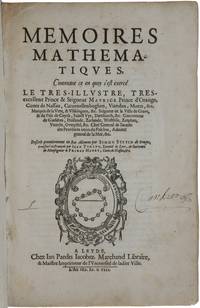
|
|
|
Simon R Doubleday
The Lara Family: Crown and Nobility in Medieval Spain
Harvard Univ Pr 2001. Hardcover. New. 208 pages. 9.50x6.50x1.00 inches. Harvard Univ Pr hardcover
书商的参考编号 : __0674006062 ???????? : 0674006062 9780674006065

|
|
|
Cotton, David/ Falvey, David/ Kent, Simon/ Hughes, John
Language Leader Upper Intermediate Coursebook and CD-Rom Pack
Pearson Education Limited 2008. Paperback. New. 6 pages. 11.65x8.27x0.47 inches. Pearson Education Limited paperback
书商的参考编号 : __1405826894 ???????? : 1405826894 9781405826891

|
|
|
Pliego De Andres, Victor/ Sanuy Simon, Montserrat
Nueva aula sonora
Ediciones Morata S.L. 2015. Paperback. New. Spanish language. 9.45x6.69x0.79 inches. Ediciones Morata, S.L. paperback
书商的参考编号 : 2-8471128152 ???????? : 8471128152 9788471128157

|
|
|
Scarrow, Simon
Cuervos sangrientos: Libro XII de Quinto Licinio Cato
Editora y Distribuidora Hispano Americana S.A. EDHASA 2014. Perfect Paperback. New. Spanish language. 9.25x6.22x1.69 inches. Editora y Distribuidora Hispano Americana, S.A. (EDHASA) paperback
书商的参考编号 : 2-843506283X ???????? : 843506283X 9788435062831

|
|

 ?????????
 ?????PDF???
 RSS feed
 ??
??


