|
|
|
Alexandre, Comte de LABORDE
Au Roi et aux Chambres, sur les véritables causes de la rupture avec Alger et sur l'expédition qui se prépare
Truchy | Paris 1830 | 13.7 x 21.7 cm | Broché
Referenz des Buchhändlers : 89751
|
|
|
Alexis de VALON
La Turquie sous Abdul Medjid. Extrait de la Revue des Deux Mondes
Extrait de La Revue des deux mondes | s. l. [Paris] 1844 | 15.50 x 25 cm | agrafé
Referenz des Buchhändlers : 15604
|
|
|
ALESSANDRO BONGIOANNI
LUXOR E LA VALLE DEI RE
COME NUOVO
|
|
|
Alessandro, Giuseppe d', duca di Pescolanciano.
Pietra paragone de' cavalieri, [...] divisa in cinque libri. Naples, Domenico-Antonio Parrino, 1711.
Folio (332 x 218 mm). With engraved frontispiece, portrait of the author, and 140 engravings, all but one full-page. Contemporary full vellum with manuscript lettering to spine. First edition of this rare Italian riding school, covering all aspects of horse breeding, training and care, lavishly illustrated with 140 engravings. A second, enlarged edition, also apparently rare, was published in 1723 under the title "Opera". The work is divided into five parts: the first, "Regole di cavalcare" with one plate; the second, "[...] ove si tratta del difficilissimo mestiere dell' imbrigliare"; the third, "[...] dell' istesso", with 95 illustrations of bits, etc.; the fourth, "Disegni de' circoli" with 10 diagrams and "Ritratti d'uomini illustri" with 27 portraits, about half of which show mounted figures; the fifth, "[...] intorno alla preservativa, conservatione, e medicina per cavalli" with 7 plates, also including other animals (such as a rhinoceros). - Errata leaf at beginning, some leaves browned or spotted. No copy in auction records of the last decades. Huth p. 28. Brunet I, 159. Graesse I, 68.

|
|
|
Alexander William Kinglake
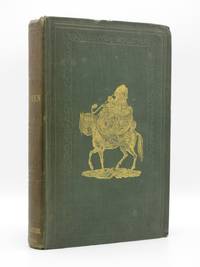
Eothen or Traces of Travel brought home from the East
London: John Ollivier 1845. 2nd Edition . Hardback. Printed pages: 8vo. xi 1 418. Very Good. 6 x 9 inches 15.5 x 23 cm. Second edition in the publisher's blind stamped cloth binding with gilt illustration to front board. Page edges untrimmed. Spine browned. Creasing and slight wear to ends of spine. Slight bumping to board edges and corners. Browning to page edges occasional patches of foxing to the text. Complete with the two hand-coloured plates: Fold-out frontis of 'Eastern Travel' and 'Passage of Jordan' with tissue guard. An early printing in a nice solid original binding. Overall condition is Very Good. Size: 6 x 9 inches 15.5 x 23 cm. John Ollivier hardcover
Referenz des Buchhändlers : 1236E184
|
|
|
Alexander BW Kennedy B W
Petra Its History and Monuments
London: Country Life 1925. 1st Edition . Hardback. Printed pages: xiv 88. Very Good Minus. 10 x 12.5 inches 27 x 32 cm. Green cloth binding. Light scuffing and marking to boards. Fading to spine and edges of front board. Top page edge gilt. Foxing to page edges and plates a few spots to text. Complete with the fold-out map and three fold-out aerial surveys. Provenance: From the library of St. Benedict's Abbey Fort Augustus with bookplate and small shelf label to front pastedown endpaper. . Overall condition is Very Good Minus. Please Note: This is a heavy item and international postage will be more than the standard rate. Actual Royal Mail postage costs are: Europe £19.00; USA £33.00; Oceania £40.00; Rest of World £37.00. A postage supplement will be requested after the order has been placed. Size: 10 x 12.5 inches 27 x 32 cm. Country Life hardcover
Referenz des Buchhändlers : 1206T062
|
|
|
ALEXANDER David - KEELEY Robin -
Fotoguida della Bibbia.
Bologna, Dehoniane, 1983, 8vo (cm. 24,5 x 18) cartonato con copertina illustrata a colori, pp. 285 completamente illustrato da fotografie e tavole fotografiche a colori (di David Alexander) molte a pagina doppia. Firma di possesso.

|
|
|
Alexander, Wilhelm
Die Gesellschaftsreise nach Palästina im Jahre 5670 - 1910.
Sátoraljaújhely W. Alexander 1910. Hardcover. . ~ ~ NOTE: THE PRICE OF THIS BOOK IS CURRENTLY REDUCED! ~ ~ . Small octavo. Pp. 288. Portrait frontispiece and another plate. Some text ornaments. List of participants. HARDCOVER bound in the original publisher's grained crimson cloth small plate of Jerusalem mounted on upper cover black lettering floral endpapers apparently lacking free endpaper cloth bit faded and marked slight wear at spine ends. Bit shaken opens stiff but nevertheless a lovely copy. ~ The travelogue of Wilhelm Alexander describes the pilgrimage in 1910 of 68 Jews predominantly Hungarian from Budapest to Palestine. They first travelled to Triest where they embarked on the "Elektra" sailing to Alexandria. From Alexandria via Cairo and Port Said they arrived at Jaffa. Alexander's report is a remarkable account. It combines his critical sometime painful observations detailed descriptions of meetings with the local community and dignitaries with a travelogues of pilgrimages to the holy places interweaved with prayers and words of praise which he brings in Hebrew. Very rare. OCLC locates copies in University of Amsterdam Die Deutsche Nationalbibliothek Jewish National & University Library Jewish Theological Seminary New York Public Library and University of Pennsylvania only. H-2 IN <br/> <br/> Sátoraljaújhely, W. Alexander hardcover
Referenz des Buchhändlers : 3690

|
|
|
Alfred Edmund BREHM - Johannes DUMICHEN - Charles WERNER
Le Nil
A. Lévy | Paris 1882 | 28 x 37 cm | reliure de l'éditeur
Referenz des Buchhändlers : 44882
|
|
|
ALGARDI ZAHRA SIRIA.
Il petrolio sulla via di Damasco. Prefazione di Vittorio Gorresio.
In 8°, br. edit. con sovrac. ill. (minime tracce d'uso e piccolo strappo), pp. (XX),343,(1), con num. fot. b.n. in tavv. f.t.; coll. "Testimonianze del tempo. Volume LXVII"; prima ed., nel complesso esemplare molto buono, intonso. (x035)
|
|
|
Ali Akbar Khitai.
[Ketay-Nama]. Tercüme-i târih-i nevâdir-i Çin Mâçîn [Translation of the rare history and descriptions of China]. Istanbul, Tophâne-i Âmire Litografya Destigâhi, [1854 CE =] 1270 H.
8vo (145 x 215 mm). 70 pp. In Ottoman script within rules, lithographed throughout. The heading (serlevha) and borders of the first double page are printed in gilt. Bound in contemporary wrappers, taken from a volume, and stored loosely within protective giltstamped cloth boards (modern spine). First and only printed edition of one of the earliest Islamic travel accounts of China and the first description of the Silk Road in the Islamic world, pre-dating even Ibn Battuta's Rihla. - The present work, one of the most complete descriptions of Ming Dynasty China in the 16th century, was originally written in Persian in 1516. Completed and issued soon after Khitai reached Istanbul in 1520, it was later translated into Turkish by Hezârfen Huseyin (d. 1691) and became influential also in the Turkish-speaking Muslim world. According to the colophon, the book was finished on the last day or days of Rabî I 922 (3 May 1516), while the preface contains a panegyric on Suleiman the Magnificent (ruled 1520-66). - Based on the author's personal observations, the book's 20 chapters discuss roads, cities and castles, stores, brothels and prostitutes, eunuchs, legislation, administration, jails, law and law-abidance, the military, agriculture, magazines, the imperial throne, the various religions, celebrations, entertainments, wonderful arts and strange cures, schools, persons from the West, Qalmaqs, gold, silver and currency, as well as Chinese temples and other matters. Thus Ali Akbar's book conveyed to a reader of the 16th century a fair impression of China: as a guidebook it could serve as a companion especially for Muslim merchants travelling along the Silk Road. - The Chinese scholar Lin Yih-Min describes Ali Akbar as a "Turkish businessman" (58) who probably journeyed only to Central Asia, where he gathered the information for his book before returning then to Turkey. The book was dedicated to Sultan Suleiman, and as the author's name suggests a Shi'ite background, it is possible that Ali Akbar may have wished to impress on the Ottoman court the difficult conditions of the Shi'ite community living in Istanbul, among a dominant Sunnite community. - Also known as the "Khataynameh" ("Book on China"), the work aroused considerable interest not only in the Ottoman Empire but also in Europe in the 19th century. The book's immediate impact is difficult to estimate, but astonishingly the Ottoman Empire, here referred to as "Lumi", would figure quite prominently in Chinese sources after a first embassy arrived in Beijing in 1524, four years after the book was first issued; other embassies followed until 1618. Thus, it is entirely possible that Ali Akbar's book had a direct influence on Ottoman diplomacy and commerce in China and Central Asia. - A few holes in the last leaf (minor loss of a few letters); some browning. A few contemporary pencil marginalia and calligraphic examples on the last blank page. Overall a good copy. Özege 20686. Cf. Ralph Kauz, "One of the Last Documents of the Silk Road: The Khataynameh of Ali Akbar", The Silk Road 1 (2005), p. 59f. Lin Yih-Min, "A comparative and critical study of Ali Akbar’s Khitây-nâma with reference to Chinese sources", Central Asiatic Journal 27 (1983), pp. 58-78.
|
|
|
Ali Effendi.
Specimen of Arabic calligraphy presented to Catherine Hutton, with added notes in her hand. [England, 1826-1829].
Single sheet of wove paper folded once to form two leaves (243 x 195 mm). Arabic calligraphy and English inscription on polished oriental paper, window-mounted vertically on first leaf, text in Hutton's hand written vertically on first leaf and continued horizontally on second. A specimen of Arabic calligraphy by an Egyptian Turk named Ali Effendi, inscribed in English in Effendi's hand "To Mrs Catherine Hutton", with the note "Madam when I am Ali Bey I shall be glad to see you in Egypt. I am yours [sic] sincere friend Ali Effendi". Catherine Hutton's accompanying notes, dated 1826 and 1829, state that Effendi "is a young, handsome, clever Egyptian-Turk, who had been sent to England by his beloved 'Grand Pasha' to learn our language, manners &c, and transport them to Cairo. His proficiency in writing English is seen in the following autograph, the English part of which he wrote for me". Hutton further notes that Effendi "was fond of the theatre, and spoke with rapture of the beautiful actresses. He looked upon English horsemanship with the utmost contempt. Stooping forward, and hanging down his head, he said 'Your men ride like this'. Then, rising to his accustomed height, he added, 'I throw my jereed on full gallop, and stop the moment when I should touch the wall'. Ali Effendi drank wine like an infidel". Hutton mentions three of Ali Effendi's companions: Mohamed Effendi, "who is studying naval architecture", Selim Aga, "who is studying mathematics and military engineering", and Omar Effendi, "who is qualifying himself for diplomacy". That all four men spent some years in England is confirmed by The Nautical Magazine for 1832, which adds that they were aged between 22 and 25 years of age and that they arrived in 1826. From an early age the novelist Catherine Hutton (1756-1846) was a keen letter-writer. "The Coltman family of Leicester and Mrs Andre of Enfield, Middlesex, were lifelong correspondents. She also wrote to her cousin the mathematician Charles Hutton (1737-1823), Sarah Harriet Burney (Fanny Burney's half-sister), the radical author Sir Richard Phillips, Eliza Cook, and, latterly, Edward Bulwer Lytton, and Charles Dickens. Her letters are full of anecdotes and shrewd observations on her acquaintances and are seasoned with a self-deprecating wit, their direct address and dry cheerfulness recalling the epistolary style of Jane Austen. Hutton delighted in Austen's novels, and believed that 'her character is either something like mine, or what I would wish mine to be'. In an account of her occupations written in July 1844, Catherine Hutton described some of the other activities which absorbed her: needlework, including 'patchwork beyond all calculation'; pastry and confectionery; collecting prints of costumes in eight large volumes; and collecting more than 2000 autographs. Bridget Hill rightly concludes that her life 'illustrates the particular problems of the educated, intelligent, single daughter of the middle class' in late 18th- and early 19th-century Britain' (Oxford DNB). - In very good condition.
|
|
|
Ali ibn Abi Talib / Stickel, Johann Gustav (ed.).
[Amtal `Ali Ibn-Abi-Talib]. Sententiae Ali Ben Abi Taleb, arabice et persice, e codice manuscripto vimariensi. Jena, Cröcker, 1834.
4to. XV, (5), 80 pp. Modern red half cloth with giltstamped title to spine. The sayings of Ali ibn Abi Talib, cousin and son-in-law of the prophet Muhammad and one of the central figures in Shia Islam, who ruled as the fourth caliph from 656 to 661. Text in Arabic, Persian, and Latin. Based on a Weimar manuscript, this was an early effort by the German scholar J. G. Stickel (1805-96), a student of Silvestre de Sacy, to establish himself as an oriental philologist at Jena University. - Deaccessioned from the Bamberg University Library with their stamps and shelfmark label. OCLC 4423742.
|
|
|
Ali ibn al-Abbas al-Majusi.
Kitab Kamil as-Sina'a at-Tabbaiya [The Complete Book of Medical Art]. [Safavid Persia, [1582-1584 CE] = 990-991 H.
4to (180 × 240 mm). Arabic manuscript on cream paper. Two books, each with 10 chapters or Maqalahs, bound in one volume. (614) leaves, lacking one leaf from Book 2 (Maqalah 8, Bab 23) and another leaf from Book 2 (Maqalah 10, Bab 23) replaced in 19th century manuscript facsimile. 21 lines, per extensum, written in black naskh, chapter headings and important sections in red, catchwords throughout, each of the 20 chapters with an index of the ‘bab’ within and each with a separate colophon. Later brown lacquered leather over pasteboards, faintly pressed central medallions to covers, rebacked. One of the few existing complete copies of this medical milestone. Exceptionally rare: a fundamental medical work from the Golden Age of Islamic scholarship, preceding and influencing Avicenna's Qanun. Monumentally influential not only in Islamic medicine, this work even had profound impact in the West. It was first translated into Latin by Constantinus Africanus in the 11th century for use as a primary text at Salerno's medical school, and then again in 1127 by Stephen of Antioch. By the 14th century knowledge of the work was so widespread that Al-Majusi is mentioned as one of antiquity's great medical scholars in Chaucer's Canterbury Tales. - The text is divided into two distinct books, each of which comprise ten "maqalas" (sections), subdivided into "babs" (chapters). The first section deals with the theory of medicine, including anatomical structures and they body's physiology; the second examines the practical treatment of medicine, the application of medical treatments and surgery. Indeed, this is the earliest known Arabic medical work to provide detailed instructions on surgical procedure. - Ali ibn al-Abbas al-Majusi was a 10th century Persian physician and psychologist, known in the Latin tradition as "Hali Abbas". Born in Ahvaz in southwest Persia, he was perhaps the most celebrated physician in the Eastern Caliphate of the Buwayhid dynasty, becoming physician royal to Emir 'Abdul al-Daula Fana Khusraw (reigned 949-983). The present treatise was compiled under the patronage of Emir Khusraw and is therefore also known as "Al-Malikiyya" ("The Royal Book"). Emir Khusraw founded a hospital in Shiraz and the al-Adudi Hospital in Baghdad to show his support for medical science, and Al-Majusi probably worked at the latter around 981 CE, where he must have composed this, his chief work. He is thought to have died in either 990 or 1010 CE. - The manuscript was produced for a wealthy and important patron in 16th century Persia, written on fine paper by a single scribe who names himself as Salam'ullah bin Habib'ullah bin Muhammad in colophons at the end of the various sections. Many of these colophons also record the date of their completion, showing that the entire codex took two years to produce. - Complete manuscript copies of this text are exceptionally rare: its vast encyclopedic nature made it an expensive commodity in the Middle Ages, and its sheer size usually necessitated it to span several volumes. The present example appears to have been bound as two separate books at the time of copying before being joined together in a single large volume in the 19th century. - Edges a little scuffed; some very minor marginal staining to a few sections, occasional light mottling. A few outer edges repaired (only affecting the text of two leaves). Overall a very clean and attractive specimen. Provenance: sold at Sotheby’s, Arts of the Islamic World sale, 23 October 2019, lot 119 (described without mention of the facsimile leaves).
|
|
|
ALI KÖSE, ALI AYTEN.
Türbeler: Popüler dindarligin duraklari.
New English Paperback. Pbo. Mint. Demy 8vo. (21 x 13.5 cm). 328 p. B/w ills. In Turkish. =[Shrines. Destinations of popular devoutness.]. Türbeler: Popüler dindarligin duraklari.
|
|
|
ALI MAZAHERÎ.
Ortaçagda müslümanlarin yasayislari. [= La vie quotidienne des musulmans en Moyen Âge]. Translated by Bahriye Üçok.
Very Good English Paperback. Pbo. 12mo. (16 x 12 cm). In Turkish. 399 p. Ortaçagda müslümanlarin yasayislari. [= La vie quotidienne des musulmans en Moyen Âge]. Translated by Bahriye Üçok.
|
|
|
ALI RIZA SAGMAN.
Islâm tarihinde Rahip Bahîrâ meselesi.
Very Good English Paperback. Pbo. Cr. 8vo. (20 x 14 cm). In Turkish. 32 p. A study on "Sergius the Monk" to the Latin West, was a Syriac or Bahrani Gnostic Manichean Nasorean or Nestorian (or Arian) monk who, according to tradition, foretold to the adolescent Muhammad his future prophetic career. Islâm tarihinde Rahip Bahîrâ meselesi.
|
|
|
ALI RIZA SAGMAN.
Islâm tarihinde Rahip Bahîrâ meselesi.
Very Good English Paperback. Pbo. Cr. 8vo. (20 x 14 cm). In Turkish. 32 p. A study on "Sergius the Monk" to the Latin West, was a Syriac or Bahrani Gnostic Manichean Nasorean or Nestorian (or Arian) monk who, according to tradition, foretold to the adolescent Muhammad his future prophetic career. Islâm tarihinde Rahip Bahîrâ meselesi.
|
|
|
Ali-Garadi, Ahmed Ibn Muhammad / Mittwoch, Eugen (transl.)
Aus dem Jemen. Hermann Burchardts letzte Reise durch Südarabien. Bearbeitet von Eugen Mittwoch [...]. Leipzig, Deutsche Morgenländische Gesellschaft in Kommission bei F.A. Brockhaus, [1926].
4to. (4), 74 pp. With 28 plates with 55 black-and-white photographic prints, as well as 1 plan of Burchhardt's itinerary on page 9. Original printed wrappers. First edition. Rare travelogue of Yemen, enriched with striking photographs. In Arabic and German parallel text. Prepared by Ahmed ibn Muhammad al-Garadi, the secretary, Arabic teacher and companion of the German explorer Hermann Burchardt (1857-1909), the book describes Burchardt's travels in the south of the Arabian Peninsula, where he was ambushed and killed by gunmen in December 1909. Containing "important ethnographical information on crafts and the Jewish population", the account also boasts a wealth of photographs "of great documentary value" (Speake), including city views and landmarks of Sanaa, Taizz, and Mocha, such as tower houses in Sanaa's old town, the Ashrafiya Mosque, the Grand Mosque in Mocha, and the ruined palace of Sultan Hasan, as well as pictures of local children, a group of Jews studying scripture in the synagogue, several men sitting around a water pipe, bedouins, farmers, and workers. The images impressively portray the destitution of the Yemenite population in the early 20th century. - In addition, the work includes annotations to the text of the travelogue, a list of examples of the Sanaa idiom, and an index prepared by the German orientalist Eugen Mittwoch, who also translated the Arabic text. Published as a festschrift for the Vierter Deutscher Orientalistentag in Hamburg. - A few edge flaws to wrappers professionally repaired. Lower right corner of first two leaves chipped, but interior very well preserved in general. Never seen at auction. Speake, Literature of Travel and Exploration III, 1305. OCLC 907363736.
|
|
|
ALIYA IZZET BEGOVIÇ.
Islâm deklarasyonu. Müslüman halklarin ve Müslümanlarin Islamlasmasina dair bir program.
As New English Paperback. Pbo. Cr. 8vo. 110 p. In Turkish. Islâm deklarasyonu. Müslüman halklarin ve Müslümanlarin Islamlasmasina dair bir program.
|
|
|
Alken, Henry.
[The Seven Ages of the Horse]. London, S. & J. Fuller, 1825.
Landscape 4to (28.4 x 38.2 cm). 7 hand-coloured etched plates. Red half morocco by Riviere, marbled endpapers, gilt edges. An important work showing the progression of a race horse through successive stages of life, at one point pampered and adored, at another rejected and scorned. - Expert repairs to plate corners, light marginal finger-soiling, occasional browning, plates 2 and 4 with very minor marginal tears with two very small repairs to versos. Dixon 80. Mellon/Snelgrove 62. Tooley, Coloured Plates 48.

|
|
|
Alken, Henry.
Qualified Horses and Unqualified Riders, or the reverse of Sporting Phrases taken from the work entitled Indispensable Accomplishments. London, S. & J. Fuller, 1815[-1819].
Landscape folio (25 x 34.4 cm). Engr. title page, 7 hand-coloured engraved plates by Alken, plate 5 with J. Whatman 1819 mark. Later red hard-grained half morocco, spine and upper cover lettered in gilt, rebacked preserving spine. First edition, early issue. The first of Alken's works to have a title page, "lacking from a great many copies" (Dixon). Signed Ben Tally Ho, the title good-humouredly explains that the plates are a reply to Robert Frankland's "Indispensable Accomplishments", a set of six Leicestershire hunting prints published in June 1811. Where Frankland blames the horse for any failures, Alken aims to show how a perfectly good horse can be handicapped by an "unqualified" or untrained rider. - Light browning to sky areas and plate margins. Provenance: Alfred N. Beadleston (bookplate). Dixon 4 (two plates watermarked 1819). Mellon/Snelgrove 3. Schwerdt I, 20 (1813 watermark). Siltzer 69 & 74. Tooley, Coloured Plates 44.

|
|
|
Alken, Henry.
The Beauties and Defects in the Figure of the Horse. London, S. & J. Fuller, [1816].
4to. Engraved title with circular vignette, 18 hand-coloured etched plates, uncut in original boards, worn at joints at extremities. First edition. An uncut copy in original pictorial boards of the first book published under Alken's name. He mentions his "habit of riding young and violent horses with fox-hounds", and of having a mare which caused him "four or five falls a day upon an average, and all in consequence of her violent bucking leaps." - Provenance: Prince Henry, Duke of Gloucester (bookplate). Schwerdt I, 12. Mennessier de la Lance 14. Huth 85. Mellon/Snelgrove 73. Tooley, Coloured Plates 20.

|
|
|
ALLAIN Maurice e altri
Encyclopédie pratique illustrée des COLONIE FRANçAISES. Préface de Paul Doumer. Avant-propos de Louis Proust. Tome I + Tome II. Opera completa in 2 spessi volumi
in-4° (cm. 32x24,8), mirabili legature in robusta mezza pelle (integra e bella, appema scolorita a una cuffia) con grafica oro e a secco déco.ai dorsi e ai piatti, sguardie deorate bicolori déco. Pp. 431 + pp. 416 + molte CARTE GEOGRAFICHE a COLORI ripiegate fuori testo + TAVOLE con superbi DISEGNI a COLORI o bicolori (scene, costumi, volti ecc.) applicati di Jacques Simon, Henri Sollier, Ferdinand Fargeot, Ch. Garry, Louis Rollet, Salgé, Boulard-Devé (pastels, aquarelles, dessins, tableaux, études), e molti DISEGNI a COLORI (applicati!) e in bianco e nero nel testo di Marcel Jeanjean, centinaia di FOTO seppia. Tome I. Notre domaine colonial. L'Afrique du Nord. Le Maroc. L'Algérie. La Tunisie. le Sahara Français. *** Tome II. L'Afrique Occidentale Française. Le Sénégal. La Guinée Française. La Côte d'Ivoire. Le Dahomey. La Haute-Volta. La Colonie du Niger. Le Soudan français. La Mauritanie. L'Afrique Équatoriale Française. Les Territoires Africains sous Mandats de la France [Le Cameroun. Le Togo]. Madagascar. La Réunion. L'Archipel des Comores. Îles et Terres Australes. La Côte Française des Somalis. États du Levant sous Mandat Français [Syrie et Liban]. Les Établissements Français dans l'Inde. L'Indochine Française. Les Colonies d'Amérique. Saint-Pierre et Miquelon. La Guadeloupe. La Martinique. La Guyane. Les Possessions Françaises de l'Océanie. La Nouvelle-Calédonie. Les Dépendances de la Nouvelle-Calédonie. Les Nouvelles-Hébrides. Les Établissements français de l'Océanie. Tahiti et Dépendances. Etnologia, cartografia ecc. Sontuosa galleria di grafica fotografia cartografia.
|
|
|
Allawerdi, Michael (Allah Wirdi, Miha'il Halil).
Falsafat al-musiqa al-Sharqiyah. The Philosophy of Oriental Music. Damascus, Ibn Zeydoun, [1949].
4to. (60), 608, (2), 40, (4) pp. With portrait frontispiece after preliminaries. Contemporary green cloth. - Includes: The same. Arabism and Peace. 8, (4), 8 pp. Ibid., 1951. Printed wrappers. - And: The same. Typescript "Unification of the Language of Music and its Relation to World Peace". 4to. 5 ff. with occasional handwritten corrections. - And: collection of publisher's promotional leaflets on "The Philosophy of Oriental Music" in French and English. First edition in Arabic, inscribed by the author to an unidentified member of the Swedish Nobel family: "Présenté par l'auteur à Mr. le Maître Gunar Nobel avec les meilleurs salutations [...] Damas 10.5.1952". The Syrian musicologist Allawerdi held that there were two basic forms of music: the oriental, natural one, based on the harmonic series, and the western, mechanical one, based on the tempered scale of 18th century instruments. While he associated the former with serenity and peace, he viewed the latter as artificial and complex, ultimately leading to restlessness, chaos, and war. Allawerdi strove to unify the "language of music" as a first step towards achieving world peace. He was nominated for the Nobel Peace Prize in 1951. - A good copy, including several of the author's further writings on the subject, one as an original authorial typescript.
|
|
|
Allen, M D
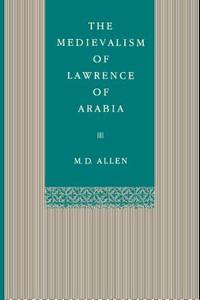
The Medievalism of Lawrence of Arabia
1991. Hardcover. Very Good. Publisher: Pennsylvania State University Press 1991 V.Good HB ISBN: 0-271-00673-0 hardcover
Referenz des Buchhändlers : 007603 ISBN : 0271006730 9780271006734
|
|
|
ALMAGIÀ Roberto
L'Asia anteriore. Anno Accademico 1955-56
In-8° (24,2 x 16,6 cm) pp. 152, (2), copertina editoriale con qualche segno d'uso, in particolare: alla copertina anteriore, macchia, color beige, a forma, all'incirca, di corona semicircolare; dorso leggermente scurito, per probabile esposizione alla luce. Piccole macchie d'umido al taglio di testa, per il resto, ben conservato. Corso tenuto all'Università degli Studi di Roma nell'anno accademico 1955-1956. Indice: La Turchia. La Siria e la Palestina. L'Arabia e l'Irak. La Persia e l'Afganistan.

|
|
|
Alphonse JUIN
Le Maghreb en feu
Plon | Paris 1957 | 14.50 x 20 cm | broché
Referenz des Buchhändlers : 85482
|
|
|
Alphabets Orientaux Anciens.
Caracteres et alphabets de langues mortes et vivantes. [Paris, Robert Bénard, 1763].
Folio (238 x 302 mm). 25 large folio plates, folded horizontally. Marbled half calf with giltstamped red spine label; sparsely gilt spine. The 25 plates from Diderot's "Encyclopédie" showing the "Characters and Alphabets of Dead and Living Languages", including Arabic, Ethiopian, Coptic and several other alphabets. Letterforms are shown in a variety of majuscules and cursives. - Upper spine-end chipped, otherwise fine. Old ms. ownership on verso of first plate, partially in Greek: "ek ton biblon tou Fl. Lécluse / 1806" (i.e., Fleury de Lécluse, 1774-1845, professor of Greek and Hebrew and scholar of the Basque language). Removed from the library of the Ducs de Luynes at the Château de Dampierre: their bookplate reproducing the arms of Charles Marie d'Albert de Luynes (1783-1839), 7th Duc de Luynes, on pastedown. PMM 200. Lough 2-15. Darnton 33. Horblit 25. Norman 637. Dibner 85.

|
|
|
Alpini, Prosper & Bontius, Jacob.
De medicina Aegyptiorum, libri quatuor. Et Iacobi Bontii In Indiis archiatri, De medicina Indorum. Editio ultima. Paris, Nicolaus Redelichuysen, 1645.
Small 4to (225 x 175 mm). 2 parts in one vol. (11), 150, (25) ff. 39, (1) ff. Title-page printed in red and black; woodcut chapter initial and head-tail pieces, 2 text illustrations and 3 full-page woodcuts. Full vellum, title gilt on spine red label. Somewhat later edition of the first important work on the history of Egyptian medicine. Alpini (1553-1617) was an Italian physician and botanist who spent three years in Egypt studying botany and hygiene as a companion to the Venetian Consul Giorgio Emo. This work is considered "one of the earliest European studies of non-western medicine. Alpini’s work dealt primarily with contemporary (i.e. Arabic) practices observed during his sojourn in Egypt. These included moxibustion - the production of counter-irritation by placing burning or heated material on the skin - which Alpini introduced into European medicine [...] Alpini also mentioned coffee for the first time in this work" (Norman). Jacobus Bontius (Jacques de Bondt, 1592-1631), whose work on Indian medicine is included, was a Dutch physician and botanist. He travelled to Persia and Indonesia to study the botany of the area. He was the first to study cholera on the island of Batavia in 1689, before it was known in Europe, and died on Java. His botanic and medical works were published after his death by Pisonius. He "was probably the first to regard tropical medicine as an independent branch of medical science. He spent the last four years of his life in the Dutch East Indies, and his book incorporates the experience he gained there. It is the first Dutch work on tropical medicine and includes the first modern descriptions of beri-beri and cholera" (Garrison/M. 2263, citing the 1642 first edition). - Binding slightly brownstained in places. Small tear to 3rd leaf, not affecting text; occasional browning. Caillet 230. Krivatsy 236. Wellcome II, 36. Hirsch/Hübotter I, 101 & 627. Hunt 161 (note). Ibrahim-Hilmy I, 32. Osler 1796. Waller 12509. Cf. Garrison/Morton 6468. Norman 39 (1591 first edition); Heirs 384 (1646 edition) and 463 (1642 edition).
|
|
|
Alpini, Prosper.
De plantis Aegypti liber. [...] Accessit etiam liber de Balsamo alias editus. Venice, Francesco de Franceschi, 1592.
4to. 2 consecutively paginated parts. (4), 80 (but: 84), (8) ff. (Pt. 2 has separate title page). With woodcut printer's device to title-page and 50 large woodcut plant illustrations (many page-sized). 18th century marbled wooden boards. All edges sprinkled in red. First edition of the earliest treatise on the native Egyptian flora, the author's most important scientific work. The Italian physician and botanist Alpini (1553-1617) spent three years in Egypt studying botany and hygiene as a companion to the Venetian Consul Giorgio Emi. He was "among the first of the Italian physician-botanists of the 16th century to examine plants outside the context of their therapeutic uses. Today this work is best known for containing the first European illustration of the coffee plant" (Hünersdorff). Alpini writes: "I saw in the garden of Halybey the Turk a tree [...] which is the source of those seeds, very common there, which are called Ban or Bon; from them everyone, Egyptians and Arabs alike, prepare a decoction which they drink instead of wine and which is sold in public bars just as is wine here and they call it 'Caova'. These seeds are imported from the Arabian peninsula [...]" (f. 26r, transl.). The coffee plant is pictured on f. 26v, captioned "Bon". - Binding rather rubbed and bumped (especially the spine); trimmed somewhat closely at upper edge; occasional brownstaining throughout with the odd waterstain; slight defect to title page repaired by a former owner. A good copy from the library of Karl Martin and Siri Hilda Karolina Norrman (1900-95) with their joint bookplate on front pastedown. Edit 16, CNCE 1244. BM-STC Italian 20. Adams A 803. IA 103.853. Ibrahim-Hilmy I, 32. Gay 1678. Wellcome I, 233. Durling 179. Nissen 20. Pritzel 111. Mueller 5 (& plate I). Hünersdorff I, 29-32.
|
|
|
Alpini, Prosper.
De plantis exoticis libri duo. Venice, Giovanni Guerilio, 1656.
4to. (16), 344 pp. Engraved architectural title with portraits of Theophrastus and Dioscorides, 145 finely etched and engraved botanical plates in the text, ornamental initials. Contemporary blind-tooled calf with gilt spine. Edges sprinkled red. Third edition (in fact, a re-issue with changed title page date only) of Alpini's further observations on exotic plants. The specimens here presented were collected primarily in Crete and the Eastern Mediterranean, including many xerophilous plants from Egypt and scores of plants not mentioned in earlier works. The first edition was published posthumously in 1627 and was edited by the author's son, Alpini Alpini. The work (in all its editions) is much rarer than the author's better-known "De plantis Aegyptii". "Date altered by hand [from 1629] to MDCLVI" (Krivatsy). - Prospero Alpini (1553-1617), an Italian physician and botanist, travelled through Greece, Crete, and Egypt from 1580 to 1583 with the Venetian Consul Giorgio Eno. He worked as a medical advisor and took the opportunity to carry out botanical investigations. His work includes the first European recognition of the medicinal value of coffee and introduced banana and baobab. "Alpini became professor of botany at Padua after having spent three years in Egypt" (Garrison/M., p. 992). - Binding rebacked, showing some light wear to extremeties, but a good, clean copy. Provenance: removed from the Large Library at Goodwood House (Chichester, West Sussex) with bookplate on front pastedown; latterly in the collection of Cornelius J. Hauck (his tree bookplate dated 15 March 1944). Nissen BBI 21. Krivatsy 241 (copy 2). Cf. Pritzel 112. Not in Wellcome, Waller, or Osler.
|
|
|
Alquie, Francois-Savinien d'.
Les mémoires du voyage de Monsieur le marquis de Ville au Levant, ou l'histoire curieuse du siège de Candie. Amsterdam, Boom, 1670-1671.
12mo. 3 parts in 1 vol. (10), 60, 153 (but: 453), 320 pp. Contemp. vellum. First complete French edition. The account of the siege of the fortress of Candia, Crete, based on the reports of Giovanni Battista Rostagno, secretary to Duke Charles Emmanuel II of Milan, was first published in Italian in 1668. The engraved title page depicts the siege of Candia. - Ownership of the Swedish nobleman Corfitz Christian count Beck-Friis (dated Stockholm, 1876); unobtrusive ownership stamp to title page. Last in the Ottoman collection of the Swiss industrialist Herry W. Schaefer (his ms. ownership to endpaper; dated Zuroch, 28 March 1992). Atabey 17. Cioranescu 7075. Weber II, 347. Cf. Willems 1844.

|
|
|
Alternative Information Center
Guidelines: For Palestinians who wish to reside in the West Bank, the Gaza Strip, or in Jerusalem
White octavo; 26 p Uncommon. || Middle East. Uncommon. Israel - Paelstine.
|
|
|
Alvarez de Toledo, Pedro and Maria Osorio y Pimentel.
Three letters to Ferrante Gonzaga, Viceroy of Sicily, two from Pedro Alvarez de Toledo and one from his wife Maria Osorio y Pimentel. Andria (in the Kingdom of Naples), 13 August to 10 September 1539.
Folio (215 x 300 mm). (4); (4); (2) pp. including blanks. (1) Letter in Italian, signed, from Pedro Alvarez de Toledo in Andria to Ferrante Gonzaga, 13 August 1539, with a 23 mm seal bearing Alvarez de Toledo's coat of arms (with a chain of flags) stamped on a slip of paper attached with red wax. (2) Letter in Spanish, signed, from Pedro Alvarez de Toledo in Andria to Ferrante Gonzaga, 3 September 1539, with the 45 mm imperial armorial seal stamped on a slip of paper attached with red wax. (3) Letter in Italian, signed, from Maria Osorio y Pimentel [in Andria] to Ferrante Gonzaga, 10 September 1539, with the remains of what appears to be her husband's 23 mm red wax seal. - Each letter, in brown ink, occupies one page, with the last page containing the address and the sender's seal. The two inside pages of the second and third letter are blank. Each formerly folded for posting, so that the address would have appeared on one side and the seal on the other. Three letters from Pedro Alvarez de Toledo (1484-1553), Duke of Alba and councillor to the Holy Roman Emperor Charles V, and his wife Maria Osorio y Pimentel (1498-1539) to Ferrante Gonzaga (1507-57), Viceroy of Sicily, who commanded the Imperial cavalry fighting the Ottomans in North Africa. They concern the Ottoman fleet marauding in the Mediterranean in 1539, thirteen years after the Ottoman victory at the Battle of Mohács gave them control of much of Hungary and roused Christian fears of their strong presence in Europe, and ten years after Barbarossa established his base in Algiers. The first letter, signed by Alvarez de Toledo, advises Gonzaga that, due to the recent loss of Castelnuovo to the Turks, he has given orders for vigilance and defensive preparations on the island of Lipari. He asks Gonzaga to supply any assistance the islanders require. The second letter, also from Alvarez de Toledo, advises Gonzaga that he has received a letter dated 30 August 1539 from Andrea Doria (1466-1560) in Brindisi, then Imperial admiral of the Holy League, urging a campaign against Barbary to be carried out forthwith, in order to avoid further damage from the Turks. This followed the defeat of Doria's fleet at the battle of Preveza in September 1538 by the fleet commanded by the Ottoman admiral Hayreddin Barbarossa (ca. 1478-1546), long feared in Europe as the infamous privateer Redbeard. The third letter is addressed to Gonzaga by Osorio y Pimentel, informing him that her husband has sent news that the Turkish fleet has been sighted off the Capo d'Otranto, some 150 sails having been observed. She also notes that she has informed Francisco de Tovar, governor of the port La Goleta at Tunis. Given that Barbarossa may direct his attention there, she requests that Gonzaga send a frigate to Tunis to warn de Tovar to remain vigilant. - The seal on Osorio y Pimentel's letter is damaged and can no longer be made out, but the faint visible traces appear to match the arms and flags of her husband's seal, and a small part of the imperial seal on his second letter is damaged, but all three letters are still in very good condition. Three letters of 1539 all important primary sources for hostilities between the Ottoman Empire and Christian Europe.
|
|
|
Alvarez, Francisco.
General Chronica, das ist: Warhaffte und kurtze Beschreibung vieler namhaffter und zum theil bis daher unbekannter Landtschafften. Frankfurt, Joh. Schmidt, Sigmund Feyerabend, 1581.
Folio. 3 parts in one volume. (4), 144 (last blank) ff. with 32 woodcut illustrations; 94, (2), 45 (3) (last blank) ff. First title-page printed in red and black; 3 (repeated) printer's devices. Contemporary blindstamped leather over wooden boards with one metal clasp (out of 2). A collection of three works published by Feyerabend, issued jointly with separate title-pages each. The first work contains a translation of the famous travel account of Francisco Alvarez (ca. 1470-1540), who accompanied as a chaplain the 1520-26 Portuguese expedition to Ethiopia under Rodrigo de Lima. The embassy was occasioned by a letter by Helen, Empress of Ethiopia, the grandmother of Lebna Dengel (David II). The journey began in Massaua in 1520, leading the party to Shewa and Dabra Libanos before they reached Lebna Dengel's camp near Taguelat. Alvarez made at least four journeys to Shewa before leaving Ethiopia in 1526, bound for India. According to Ramusio, this was the earliest account of Etiopia, and for at least a century it would remain the principal published source on the country. The first edition appeared in Portuguese in 1540, comprising merely a part of Alvarez's lost five books. Alvarez describes the country's churches, including the rock-hewn churches, and also the towns and the agriculture. Historical geography owes to him the story of the invasion of the Somal and Galla. Alvarez also gives accounts of the countries surrounding the rule of Prester John, such as Danakil and Godjam. It is unfortunate that Alvarez was unable to perform cartographical and topographical localisations, and yet his influence on cartography remained evident until the days of d'Anville and J. Bruce (cf. Henze I, 62ff.). The account is prefixed by two letters by Andrea Corsal, previously published in 1516. The Florentine traveller Corsal describes, on 24 ff., mainly the area of the Red Sea, Southern Arabia (with descriptions of Aden, Hormuz, Bahrein, Socotra, Muscat, and Oman), India, Ethiopia, Persia (the city of Balsera and King Sophi), as well as Malacca. - Binding somewhat rubbed; wants one clasp. Title-page clipped and remargined; old ownerships to title and flyleaf; a small worm-hole to 35 ff. (touching a single line); evenly browned throughout. A very good copy. Kainbacher 15f; Lockot 711, 732; Gay 186; Sabin 974. Cox I, 3 & 22. Gay 3321 (French ed.). The second work is a translation of Orosius's world history; the third work is a translation of the text from Ortelius's 1580 world atlas. - Schweiger 622 (Orosius). Not in Adams.

|
|
|
ALY (Wolfgang) [éd. par ], STRABON
Strabon von Amaseia.
Bonn, Rudolf Habelt, 1957. In-8, rel. éd. pleine-toile vert pâle, titre doré, 518 pp., texte en allemand, 8 index, 6 cartes, 1 tableau. Qq. annotations manuscrites au crayon. Rare.
Referenz des Buchhändlers : 595276
|
|
|
Amaral, José Rodrigues Coelho do, Portuguese Naval Minister (1808-1873).
Document signed. Lisbon, 7. III. 1868.
Folio (ca 350 x 225 mm). Portuguese manuscript on paper. 1 p. Very rare document of colonial history and the history of Portuguese and British abolitionism: a certificate of appointment of Carlos Eugenio Correa da Silva as Commissioner for the Prevention of the Slave Trade on the African West Coast. - In accordance with the Anglo-Portuguese Treaty on the Abolition of Slave Trade of 3 March 1842, Correa da Silva, commander of the brig "Pedro Nunes", was appointed by order of the Portuguese King as commissioner for the suppression of the slave trade on the African west coast ("encarregado de evitar o tráfico da escravatura na costa occidental de África") and was authorized to stop and search suspicious Portuguese and English ships ("para visitar e dar busca às embarcações mercantes portuguezas e inglezas que sejam suspeitas com fundamentos razoaveis de se empregarem em transportar negros para o fim de os reduzir a escravidão, ou de terem sido equipadas com esse intento, ou de terem assim sido empregadas durante a viagem [...] tudo na conformidade do tratado de 3 de Julho de 1842 concluido entre as coroas de Portugal e da Grã Bretanha, para a kompleta abolição do tráfico da escravatura, o qual tratado o mesmo Primeiro Tenente, Commandante do dito Brigue, deverá exactamente observar [...]"). - Includes: Instructions of the Naval Headquarters (ca. 385 x 240 mm, 3 pp.; spotty, small holes in margins) for Correa da Silva, issued by the General Commander of the Portuguese Navy, Francisco Visconde Soares Franco (1810-85), with instructions for the passage to Luanda, where Correa da Silva had to take over the "Estação Naval d'Angola" from the former Commander Caetano Alexandre de Almeida e Albuquerque (1824-1916, Governor of Cape Verde, Governor General of Angola and Portuguese India) in accordance with the guidelines for the prevention of the slave trade ("instruções ... relativos à supressão do tráfico da escravatura"). - Carlos Eugénio Correia da Silva, Count of Paço d'Arcos (1834-1905), a friend of King Luis I of Portugal, whom he succeeded as commander of the brig "Pedro Nunes", later became commander of the Portuguese Navy, governor general of Portuguese India, Macao and Mozambique, as well as civil governor of Lisbon and was the first Portuguese ambassador to Brazil. He had already recommended himself for this position in 1864 by the capture of the Spanish slave trader "Virgen del Refugio". The Anglo-Portuguese treaty to abolish the slave trade was signed on 3 July 1842 by the Portuguese foreign minister, the Duke of Palmela, and the British ambassador Baron Howard de Walden, and Portugal subsequently made great efforts to implement this treaty.
|
|
|
AMBRIERE, Francis (sous la direction de).
Les guides bleus. Moyen-Orient. Liban - Syrie - Jordanie - Irak - Iran.
Paris, Librairie Hachette 1965, 160x110mm, XCVI - 935pages, reliure d'éditeur. Bel exemplaire.
Referenz des Buchhändlers : 98149

|
|
|
American Women's League of Kuwait.
Kuwait Yellow Pages Directory. [Kuwait], National Printing Press, 1976.
Small 8vo. III, 53 pp., printed on rectos only. With 3 plans of Kuwait in the text and one folding plan of Kuwait and its suburbs. Original printed wrappers. Exceedingly rare yellow pages for Kuwait, compiled for English speakers by the American Women's League in Kuwait, founded in 1963, presumably in its first edition. - Includes references for air conditioning repair, art galleries, car rental and sales, barbers and hairdressers, embassies and consulates, exterminators, oil companies, tennis schools, and "oriental handicrafts". The plans show the commercial center of Kuwait, Fahd Al-Salem Street, and the Salmiyah quarter. The folding plan indicates the location of hospitals, English, American and French schools, Kuwait University, the National Evangelical Church and the Holy Family Cathedral, as well as important hotels and hunting, sporting and sea clubs. - Binding a little brownstained; lower cover showing some waterstaining. A small spot to the folding plan. In all a very well preserved copy of an otherwise unobtainable publication.
|
|
|
Amiet, Pierre
L'art antique du Moyen-Orient
Éditions Citadelles-Mazenod Amiet (Pierre) : L'art antique du Moyen-Orient. 1977, jaquette et étui carton. État neuf.
Referenz des Buchhändlers : YRG-274

|
|
|
AMIN MAALOUF.
Araplarin gözüyle Haçli Seferleri.= [Les Croisades vues par les Arabes]. Translated by M. A. Kiliçbay.
Fine English Paperback., Fine., 20 x 11 cm., 357 p., "Araplarin gözüyle Haçli Seferleri.=[Les Croisades vues par les Arabes].", Amin Maalouf, Telos Yayincilik, Ist., 1997.
|
|
|
AMIN MAALOUF.
Beatrice'den sonra birinci yüzyil. [ = La premiere siécle aprés Béatrice]. Translated by Esin Talu.
Fine Turkish Paperback. Demy 8vo. (21 x 14 cm). In Turkish. 171, [3] p. Beatrice'den sonra birinci yüzyil. [ = La premiere siécle aprés Béatrice]", Amin Maalouf, Çeviri: Esin Talu - Çelikkan, Telos Yayincilik, Ist., 1998.
|
|
|
Amin Mohamed - Willetts Duncan - Hancock Graham
Attraverso il PAKISTAN
Libri Illustrati Rizzoli - Traduzione di Liliana D'Agostina - La formazione del Pakistan - La magia delle terre di frontiera - Il fiume e le pianure - La citt? e il deserto 1 31,5x23,5 cm., legatura in piena tela, titolo impresso in oro al dorso, sopraccoperta a colori, pp. 254 (1), numerose stupende illustrazioni a colori, prima edizione, italiana, buone condizioni Il Pakistan si trova in quel bivio del mondo dove le culture del Medio Oriente e dell'Asia si incontrano e diventano una cosa sola. Qui la storia antica esercita una profonda influenza nel mitigare la maniera in cui le tecnologie e gli atteggiamenti di questo secolo ventesimo vengono accolti, interpretati e utilizzati. Qui religione e nazionalismo convergono nella societ? verso un punto ottimale di sentimenti comuni e di valori condivisi. Qui il lungo nastro di un fiume unisce caratteristiche geografiche disparate, legando le montagne al mare e i deserti alle verdi e fertili pianure...
|
|
|
Amin, Camron Michael / Fortna, Benjamin C. / Frierson, Elizabeth (eds.).
The Modern Middle East. A Sourcebook for History. Oxford, Oxford University Press, 2006.
4to. XL, 657, (1) pp. 3 blank ff. With several illustrations and maps in the text. Publisher's cloth. Dustjacket. A compilation of translated sources covering the period from 1700 to the present. Sources include official and private archives, the periodical press, memoirs, Western journalists and travellers' accounts, literature, and official reports (including statistical data). Each document has been prefaced, translated and annotated by a specialist in the history and culture from which it was drawn. Enough information is provided so that every student can appreciate the value of a document and begin further exploration either of its historical context or its relationship to broader themes in modern Middle Eastern history. Themes include expansion of state power, changing gender roles, religious revival, nationalist mobilization, increasing participation in a wider global culture and economy, and the redefinition of traditions and identities. - With publisher's dustjacket. In excellent condition.
|
|
|
Amira, Georgius Michaelis.
[Grammatiqi suraya aw kaldayata (...)]. Grammatica Syriaca, sive Chaldaica. Rome, Giacomo Luna, Tipografia Medicea Orientale (in Typographia Linguarum externarum), 1596.
4to. (44), 480 pp. Contemporary limp vellum with ms. spine title. First - and likely only - edition. The first large-scale Syriac grammar, the third ever written (following those of Caninius, 1554, and Widmanstetter, 1555). Composed by the Maronite priest Jiris Ibn Mikha'il ibn 'Amira, it was printed by the Maronite scholar Ya'qub ibn Hilal (Giacomo Luna), who worked at the Medicean Press under Raimondi and was responsible for the Arabic and Syriac publications issued between 1590 and 1594. In 1595 he started printing on his own, and possibly took over some of the types of the Vatican Press. The work is listed as a Propaganda Press imprint ("olim typis nostris impressi") in Amadatius's 1773 "Catalogus", which shows the continuity that was felt to exist between the Medicean Press, the intermediate stage of Luna and Stephanus Paulinus, and the Propaganda Press. In the preface Raimondi is mentioned as the instigator of the work. - The 24 pt Syriac "serto" types were cut in 1590 by Jean Cavaillon for the Medicean Press. In the beginning a Syriac alphabet is presented, in three different scripts: "estrangelo" (this word possibly here used for the first time), "serto", and a Nestorian script possibly in type. This Nestorian script, a cursive form of estrangelo, is introduced here for the first time. In 1633 a slightly different type-face was used for Bellarmino's Catechism. - Some browning and brownstaining throughout, as common; the first few quires loosened. 18th century library stamps to title page; bookplate of Flavio Camillo Borghese, Prince of Sulmona (1902-80), on pastedown. Quite rare; a second edition, supposedly produced in 1645 (cf. Nasrallah, p. 10), is not attested in libraries. Edit 16, CNCE 1541. Adams A 965. BM-STC Italian 356 (s. v. "Jiris"). Brunet I, 231. Zenker, p. 132, no. 1534. Smitskamp, PO 184. Vater/Jülg 388. Nestle 13. Duverdier, Impressions, 198. OCLC 7238840.

|
|
|
Amira, Georgius Michaelis.
[Grammatiqi suraya aw kaldayata (...)]. Grammatica Syriaca, sive Chaldaica. Rome, Giacomo Luna, Tipografia Medicea Orientale (in Typographia Linguarum externarum), 1596.
4to. (30 [instead of 44]), 480 pp. Contemporary limp vellum with handwritten spine title (wants ties). First - and likely only - edition. The first large-scale Syriac grammar, the third ever written (following those of Caninius, 1554, and Widmanstetter, 1555). Composed by the Maronite priest Jiris Ibn Mikha'il ibn 'Amira, it was printed by the Maronite scholar Ya'qub ibn Hilal (Giacomo Luna), who worked at the Medicean Press under Raimondi and was responsible for the Arabic and Syriac publications issued between 1590 and 1594. In 1595 he started printing on his own, and possibly took over some of the types of the Vatican Press. The work is listed as a Propaganda Press imprint ("olim typis nostris impressi") in Amadatius's 1773 "Catalogus", which shows the continuity that was felt to exist between the Medicean Press, the intermediate stage of Luna and Stephanus Paulinus, and the Propaganda Press. In the preface Raimondi is mentioned as the instigator of the work. - The 24 pt Syriac "serto" types were cut in 1590 by Jean Cavaillon for the Medicean Press. In the beginning a Syriac alphabet is presented, in three different scripts: "estrangelo" (this word possibly here used for the first time), "serto", and a Nestorian script possibly in type. This Nestorian script, a cursive form of estrangelo, is introduced here for the first time. In 1633 a slightly different typeface was used for Bellarmino's Catechism. - Preliminaries wanting 7 leaves but containing 4 additional interleaved blanks, two of which bearing Syriac annotations in a large, contemporary hand. Occasional light browning, a few leaves misbound. - Provenance: Handwritten ownership of the Discalced Carmelites of St. Joseph in Paris on the title-page and lower pastedown. - Quite rare. A second edition, supposedly produced in 1645 (cf. Nasrallah, p. 10), is not attested in libraries. Edit 16, CNCE 1541. Adams A 965. BM-STC Italian 356 (s. v. "Jiris"). IA 104.783. Zenker, p. 132, no. 1534. Smitskamp, PO 184. Vater/Jülg 388. Nestle 13. Duverdier, Impressions, 198. OCLC 7238840. Ebert 513 ("Selten"). Brunet I, 231 ("Ouvrage estimé").
|
|
|
AMJAD M. HUSSAIN.
The study of religions: An introduction.
New English Paperback. Pbo. Demy 8vo. (22 x 14 cm). In English. 287 p. The study of religions: An introduction. The Study of Religions: An Introduction' is a student friendly textbook in the field of History of Religions. It begins by explaining why the study of religions is relevant in today's world before moving on to a survey of the historical development of the study of religions and its key disciplinary approaches. The book presents the histories and the prevalent world views of four of the major world religions. It systematically introduces the reader to the richness and diversity of Judaism, Christianity, Hinduism and Buddhism. This book describes these traditions and their perspectives honestly with empathy and respect. Each of the chapters on the individual religions includes key words and review questions to assist the student to learn. Amjad M. Hussain is an Associate Professor in the Faculty of Theology at Marmara University, Istanbul, Turkey. Previous to this post Hussain worked as a Lecturer in Religious Studies at Trinity University College, Carmarthen and later as a Senior Lecturer in Islamic Studies at Trinity Saint David, University of Wales, United Kingdom. His many publications include A Social History of Education in the Muslim World: From the Prophetic Era to Ottoman Times (2013), The Muslim Creed: A Contemporary Theological Study (2016) and numerous journal articles published in the United Kingdom, United States and Turkey.
|
|
|
AMMOUN (Fouad)
La Syrie criminelle. Essai sur la Criminalité en Syrie, au Liban, dans l'Etat des Alaouites et en Palestine Anglaise.
Paris, Marcel Giard, 1929. In-8, rel. post. demi-basane fauve, dos lisse orné de filets et de filets perlés dorés, titre doré, estampe dorée aux armes de la Bibliothèque de Goudourville au centre du 1er plat, couv. cons.; 495 pp., index alphabétique. Envoi autographe de l'auteur.
Referenz des Buchhändlers : 604736

|
|
|
Ammon, [August] W[ilhelm].
Barhut (Anesi-Hengst.) Geschenk des Vice-Königs von Aegypten an den General-Consul Herrn von Wagner. Jetzt im Besitz Sr. Maj. des Königs von Preussen Friedrich Wilhelm IV. Berlin, L. Zöllner / Gebr. Rocca, [c. 1846].
640 x 490 mm. Toned lithograph (the stallion "Barhut" before a oriental caravan background), blindstamped by the publisher. Fine lithographed portrait of the Arabian stallion "Barhut", a gift by Muhammad Ali Pasha, Viceroy of Egypt, to the Prussian Consul General v. Wagner, who in turn presented the horse to his King, Fredrick William IV. The Thuringian artist Wilhelm Ammon (1812-95, of no relation to the famous like-named Bavarian Court Studmaster), trained at Berlin, Munich, and Paris, was particularly famous for his horse paintings, many of which were in the collections of the Altenstein castle and stud. Cf. Thieme/B. I, 416.

|
|
|

 Per e-mail erhalten
 Als pdf-Dokument herunterladen
 RSS feed
 Permanenter link


