|
|
|
Guadagnoli, Filippo.
Breves arabicae lingua institutiones. Rome, Propaganda Fide, Joseph David Luna, 1642.
Folio (220 x 316 mm). (12), 349, (1) pp., final blank f. With the Propaganda Fide's woodcut rectangular Jesus and Apostles device on the title-page, their round Jesus and Apostles device above the colophon, 1 woodcut tailpiece, 2 woodcut decorated initials (2 series), and numerous decorations built up from cast arabesque fleurons. Set in roman, italic and Arabic type with incidental Hebrew. Contemporary limp vellum with ms. spine title. First and only edition of Guadagnoli's Latin grammar of the Arabic language, in a luxurious folio format. In 1632 the Propaganda Fide had begun work on an Arabic Bible that was not to be completed until 1671. Guadagnoli (1596-1656) was one of the correctors for the Bible and in the present grammar, set in the same type, he notes that they have taken special care with their Arabic setting and with the metre to suit them to the desires of native Arabic speakers, though the fact that the text was in Latin and the fact that it must have been an expensive book would have limited the audience: it is not the sort of book that missionaries would give away to common people. Erpenius's 1613 grammar, revised and reprinted several times, was aimed primarily at European scholars. The main text opens with a table of the letters, showing (from left to right!) the stand-alone, initial, medial and final forms, along with the name of each letter and its pronunciation. This gives an overview of the new Arabic Bible type. The texts used as examples include the first printing of two poems taken from manuscripts in the oriental library collected by Pietro della Valle (1586-1652) in Rome: the "Carmen Chazregiacum" and the "Carmen de invocationibus". The Arabic type may have been cut by the Propaganda Fide's in-house punchcutters for their Arabic folio Bible, whose Pentateuch was printed from 1632 to 1635 but distributed only in proof copies until the complete Bible was published in 1671. Occasional lines appear in their other books from 1636, but the present book uses it for the main Arabic text. It was to become the staple of their Arabic printing. The book also provides a synopsis of the Propaganda Fide's large Hebrew type (6 mm mem-height). - Some browning throughout; a few old ink markings to the margins; contemp. ownership "J. Venturi" on t. p. An important Arabic grammar intended for native speakers. Schnurrer 72. Smitskamp 220. Amaduzzi 11.

|
|
|
GUECHOT M.
Ali Baba et autres contes d’Orient
in 12 pleine toile rouge,armes de la ville de Paris sur le premier plat.Faux-titre,titre,247 pages,illustrations hors-texte, dans le texte,bandeaux,de RUTY,style Art Nouveau. Armand Colin 1926,très bon état
Riferimento per il libraio : 4604
|
|
|
Guer, Jean-Antoine.
Moeurs et usages des Turcs, leur religion, leur gouvernement civil, militaire, et politique, avec un abrégé de l'histoire ottomane. Paris, Coustelier Merigot & Piget, 1746-1747.
4to. 2 vols. (4), XXIV, 453, (19) pp. (2), VIII, 537, (2) pp. With engr. title vignette, 10 engr. initials, 20 engr. text vignettes, 2 engr. frontispieces, and 28 engr. plates. Contemp. calf gilt with giltstamped spine labels. First edition (vol. 2: second ed.). "This work is especially valued for its engravings of Turkish costume figures and genre scences by Duflos after Boucher and Hallé" (Navari Greek), as well as for "its fine folding panorama of Constantinople" (Atabey). "The French writer and jurist Guer (1713-64) had not travelled. His work is based on a wide knowledge of historiography and travel literature. It is singled out by the high quality of its wealth of illustrations" (cf. Chatzipanagioti-Sangmeister). The first edition was published by Coustelier in Paris, 1746-47; the same year saw the second edition (Merigot & Piget in Paris) as well as the third (Mortier in Amsterdam). Nearly all sets in the trade are mixed copies. - A good, nearly unbrowned copy from the library of Baron Karl Ludwig von Pöllnitz with his autograph ownership to titles. Atabey 534. Auboyneau 301. Blackmer 762. Weber II, 761. Chatzipanagioti-S. 382. Cohen/R. 465. Colas 1348. Hiler 401. Hage Chahine 2000. Navari (Greek) 308. Sander 872. Brunet II, 1783. Cf. Aboussouan 308. Lipperheide Lb 31 (Mortier).

|
|
|
Guer, Jean-Antoine.
Moeurs et usages des Turcs, leur religion, leur gouvernement civil, militaire, et politique, avec un abrégé de l'histoire ottomane. Paris, Merigot & Piget, 1747.
4to. 2 vols. (4), XXIV, 453, (19) pp. (2), VIII, 537, (2) pp. With 2 engr. title vignettes, 10 engr. initials, 20 engr. text vignettes, 2 engr. frontispieces, and 28 engr. plates. Contemp. calf gilt with giltstamped spine labels. Second issue in the year of first publication. "This work is especially valued for its engravings of Turkish costume figures and genre scences by Duflos after Boucher and Hallé" (Navari Greek), as well as for "its fine folding panorama of Constantinople" (Atabey). "The French writer and jurist Guer (1713-64) had not travelled. His work is based on a wide knowledge of historiography and travel literature. It is singled out by the high quality of its wealth of illustrations" (Chatzipanagioti-Sangmeister). The first edition was published by Coustelier in Paris, 1746-47; the same year saw the second edition (Merigot and Piget in Paris) as well as the third (Mortier in Amsterdam). - Inconspicuous repairs to folds of Constantinople view; occasional slight browning. Formerly in the Ottoman collection of the Swiss industrialist Herry W. Schaefer. Atabey 534. Auboyneau 301. Blackmer 762. Weber II, 761. Chatzipanagioti-S. 382. Cohen/R. 465. Colas 1348. Hage Chahine 2000. Navari (Greek) 308. Sander 872. Cf. Aboussoan 308. Lipperheide Lb 31 (Mortier). Brunet II, 1783 (1746).

|
|
|
GUERIN (Victor)
Jérusalem. Son histoire - sa description - ses établissements religieux.
Paris, Plon, Nourrit et Cie, 1889. In-8, rel. moderne bradel (signée Laurenchet) pleine-toile bleue, dos lisse orné d'une pièce de titre noire, titre doré, couv. cons.; VIII-499 pp., absence du plan de Jérusalem annoncé en table des matières. Edition originale. Ex-libris manuscrit de 1891 en tête de la couv.
Riferimento per il libraio : 604904
|
|
|
GUERIN VICTOR
LA TERRE SAINTE : LIBAN - PHENICIE - PALESTINE OCCIDENTALE ET MERIDIONALE - PETRA - SINAI - EGYPTE
PARIS LIBRAIRIE PLON , PLON-NOURRIT ET Cie 1884 Un fort volume in-folio broché de 512 pages , ouvrage couronné par l' Académie Française , bien complet des 22 gravures sur acier hors-texte et des 305 bois gravés in-texte , la couverture est légèrement salie avec quelques déchirures sans manque recollées avec du filmoplast , infimes rousseurs , autrement bon exemplaire . Bon Couverture souple
Riferimento per il libraio : 008777
|
|
|
Gui Casimir de LÉVIS-MIREPOIX
Mes souvenirs d'orient - Egypte - Syrie - Palestine
Henri Lecesne | Châteaudun 1882 | 16.50 x 25.50 cm | relié
Riferimento per il libraio : 52260
|
|
|
Guibaut Andr?
TIBETAN VENTURE in the Country of the Ngolo-Setas Second Guibaut-Liotard Expedition
Translated by Lord Sudley - To Louis Victor Liotard Explorer...- Preface - Chap. 1-11 - Geographical Notes - Hydrology: The Sources of the Tong - Geographical Co-ordinates and Altitudes of a few Localities - Index of Tibetan and Chinese Words 1 22x14 cm., legatura in piena tea, , titoli in oro sul dorso, pp. (6), 206, 2 mappe del territorio della spedizione, 25 illustrazioni in bianconero su tavole in carta patinata, fuori testo, prima edizione, in inglese, leggeri segni del tempo, buon esemplare. Etichetta libreria
|
|
|
Guignes, Joseph de, French orientalist and sinologist (1721-1800).
"Extraits du Man[uscript] ar[abe] no. 689". Autograph manuscript. [Paris?, c. 1790?].
4to. 22¼ pp. on 12 ff. Extracts from the Arabic historical manuscript "no. 689" by Joseph de Guignes, the famous French sinologist and orientalist, with notes on the history of Egypt during the years 1517-1522 and the Ottoman conquest by Sultan Selim. Guignes's notes start at f. 111 and end at f. 334 of the Arabic manuscript, which is a part of a historical work on Egypt entitled "Bada'I al-Zuhur fi Waqa'I al-Duhur". The "Bada" was written by the famous chronicler of the late Mamluk and early Ottoman period in Egypt, Muhammad Ibn Iyas (1448-after November 1522) and today is kept in the manuscript section of the French Royal library (no. 1825, ancien fonds no. 689). Guignes's extract contains numerous of transcripts in Arabic script. - Today, Joseph de Guignes is best known for his "Histoire générale des Huns, des Turcs, des Mogols, et des autres Tartares occidentaux" (Paris, 1756-1758), for his unsuccessful attempts to decipher Egyptian hieroglyphics (before the 1799 discovery of the Rosetta Stone and Champollion's breakthrough), and for his theory that China was an outpost of Ancient Egypt.
|
|
|
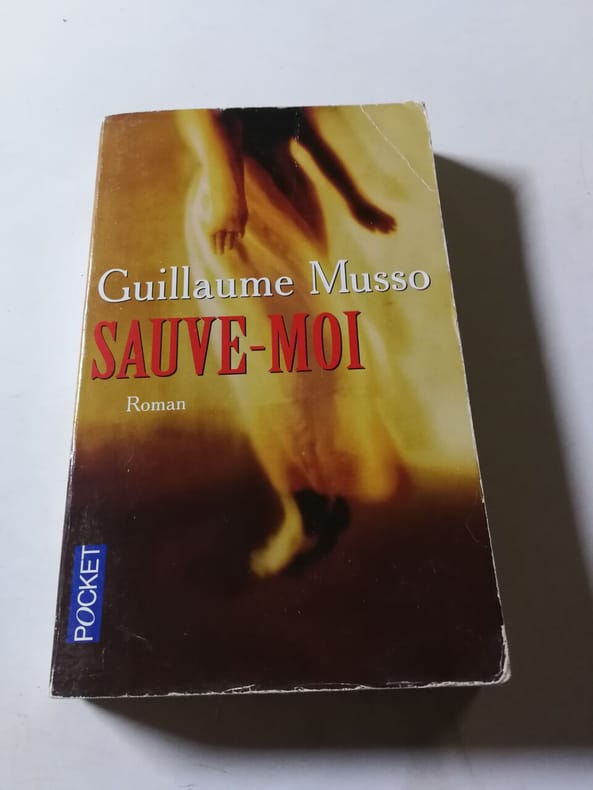
Guillaume Musso
Sauve-moi
Pocket Sans date.
Riferimento per il libraio : 500326117
|
|
|
GUINGAND, Monique - Gilbert Guingand (avec la collaboration de)
La Quête de l'eau au Koweit avant la découverte du pétrole - Les Sabil ma': renaissance d'une tradition généreuse et symbolique - The quest for water in Kuwait before the oil discovery. The Sabil ma': a revival of a noble and symbolic tradition
2009 Al-Qabas, Koweit - 2009 - 1 vol in-4, broché, couverture illustrée - Texte en français, anglais et arabe - 3x 58 pages - Illustrations en noir & blanc et couleurs en et hors texte
Riferimento per il libraio : 103517
|
|
|
Gundert, Wilhelm et al. (Hrsg.)
Lyrik des Ostens.
München, Carl Hanser, 1958. 8°. 620 S, 2 Bl. Goldgepr. Orig.-Ldr in Schuber m. Kopfgoldschn. + Wichtig: Für unsere Kunden in der EU erfolgt der Versand alle 14 Tage verzollt ab Deutschland / Postbank-Konto in Deutschland vorhanden + 4. Aufl.
Riferimento per il libraio : 16138AB
|
|
|
Gundert, Wilhelm et al. (Hrsg.):
Lyrik des Ostens.
4. Aufl. München, Carl Hanser, 1958. 8°. 620 S, 2 Bl. Goldgepr. Orig.-Ldr in Schuber m. Kopfgoldschn.
Riferimento per il libraio : 16138AB
|
|
|
GUREGHIAN (Jean)
Les Monuments de la région Mouch-Sassoun-Van en Arménie historique.
Alfortville, Sigest, 2008. In-4, broché, couv. ill., 45 pp., ill. en noir et carte en couleurs dépliantes.
Riferimento per il libraio : 555432
|
|
|
Gurlitt, Cornelius.
Die Baukunst Konstantinopels. Berlin, [Wasmuth], 1912.
2 vols. Elephant folio. 112 pp. 224 text illus. (some in colour), 204 plates (numbered 1-205, nos. 204-205 forming one double-page plate; 7 double-page; 2 coloured), showing photographs, measured drawings, ground plans, etc. Loose as issued in original board portfolio. First edition; rare. An important survey of the architecture of Constantinople, concentrating mainly on religious buildings. The extensive scope covers the major mosques of the Ottomans, as well as Topkapi Palace, the Hagia Sophia, Hagios Theodoros and the Byzantine land walls. The plates depict interior and exterior views, architectural details, street scenes, plans, and elevations. A panoramic and comprehensive overview of many centuries of architectural evolution in Istanbul. - Very scare, and virtually impossible to obtain: the last copy at Sotheby's sold for £13,150 in 2002. The only other copy available in the trade has library stamps on every plate. - Some plates evenly browned (as usual); a few plates a bit frayed. Spines repaired with tape. Atabey 545. The Ottoman World II, Cat. Sotheby's, 28 May 2002, lot 537. Not in Blackmer.
|
|
|
Gurmendi, Francisco de (transl.).
Doctrina phisica y moral de principes. [...] Traduzido de Arabico en Castellano. Madrid, Andres de Parra & Gaspar Garcia, 1615.
8vo. (8), 164 [recte: 160], (4) ff. Early 20th century half vellum with giltstamped red spine label and marbled blue boards. Edges sprinkled in red. First and only edition (not reprinted until 2004) of this rare and little-received example of the "education of princes" genre, translated into Spanish from an unknown Arabic source. "Francisco de Gurmendi learned Arabic in Madrid at the school of Marcos Dobelo, a Syrian who worked for a time as a translator of the 'plomos'. Gurmendi eventually achieved enough facility with the language to publish 'Doctrina phisica y moral de principes' (Madrid, 1615), a translation of an Arabic text" (A. K. Harris, From Muslim to Christian Granada [Baltimore 2007], p. 170). Recently, the work was the subject of a 2016 doctoral thesis at the University of Alicante: M. I. Llopis Mena, "Teoría política árabe y persa en la corte de Felipe III: la Doctrina Phísica y Moral de Príncipes de Francisco de Gurmendi". - Slight browning; paper flaws to title page (no loss to text). Exceedingly rare; not a single copy in auction records. Palau III, 433. OCLC 804490168.
|
|
|
GURUN (Kamuran)
The Armenian File. The Myth of Innocence exposed.
London - Nicosia - Istanbul, Rustem & Weindenfeld, 1985. In-8, rel. d’éditeur toile bleue sous jaquette ill., IX-323 pp., texte anglais, une carte en noir. Bibliogr., index.
Riferimento per il libraio : 556631 ISBN : 297787055
|
|
|
GUY HARPIGNY.
Islam et Christianisme selon Louis Massignon.
Fine English Paperback. Pbo. Roy. 8vo. (24 x 17 cm). In French. 335 p. Islam et Christianisme selon Louis Massignon.
|
|
|
GUYARD FILS
DESCRIPTION DE L'EGYPTE. Botanique. Dorycnium argenteum, Picris sulphurea, Picris lyrata. (Histoire Naturelle, planche 40)
Imprimerie Impériale | Paris 1809-1829 | 71 x 54 cm | une feuille
Riferimento per il libraio : 26457
|
|
|
GUYARD FILS
DESCRIPTION DE L'EGYPTE. Botanique. Elymus geniculatus, Aristida obtusa, Aristida ciliata. (Histoire Naturelle, planche 13)
Imprimerie Impériale | Paris 1809-1829 | 71 x 54 cm | une feuille
Riferimento per il libraio : 26465
|
|
|
Gérard, Bernard ; Belgrave, James
Bahrain
Delroisse 1975 In-8 relié 27,5 cm. État correct d’occasion.
Riferimento per il libraio : 22341
|
|
|
Géricault, Théodore.
[Three complete sets of horse studies and two single plates.] Etudes de chevaux après nature. Paris, Gihaut, [1822-1823].
Folio (368 x 272 mm). 30 lithogr. plates, including one title page. Bound in contemporary oblong red half morocco, spine bearing giltstamped title "Chevaux et Voitures". Three series of Gericault's horse studies, each complete as published and in excellent impressions on strong wove paper (not watermarked), bound together with a hitherto unrecorded depiction of a sheikh on an Arabian horse. The first series, published as "Etudes de Chevaux lithographiés" in 1822, shows various horse races, including the Arabian horse as well as Egyptian, English, and French horses. "Cet ouvrage sera composé de trois livraisons, dont chacune contiendra quatre planches" (Beaux-arts de Paris). Second of at least four states throughout, stating the names of the artist and printer. The second series, published without a title in 1823, shows the various purposes for which horses are used (racehorses, military horses, cart horses and postillon horses, among others) and is complete as well with eight prints. The third series, likewise issued without a title in 1823, comprises seven prints depicting cavalry, trotters, a horse leaping over an obstacle, and a jockey on his horse, also including two oriental-themed plates: a lion devouring a horse and a fist-shaking "Giaour" (not from Géricault's Byron series). Three plates from this set are identified by Delteils as contemporary copies by Louis Courtin. The lithographed frontispiece of the first series was bound at the beginning of the present volume to serve as a title. The final leaves in this collection are the dead horse in the snow (an image inspired by Napoleon's Russian campaign) from Géricault's 1823 series "Quatre sujects divers" and a fine plate of a pistol-wielding Sheikh mounted on his Arabian steed, with an oriental desert settlement in the background (not recorded by Delteil). "Gericault est, sans conteste, un des plus grands peintres hippiques de son siècle [...] Les bonnes épreuves sont recherchées et et assez rares" (Mennessier de la Lance I, 545). - Of the utmost rarity: while the British Museum holds the complete suite of the first series, we were unable to trace any complete copies of the other suites contained in this sammelband. While numerous separate Gericault lithographs sold at recent auctions, realising up to £3000 each, not a single complete suite is listed in auction records of the last decades. - All prints are of exceptional quality, with rich contrast on superior paper, occasionally showing various degrees of foxing in the margins; a minute tear to the lower edge of the title leaf. Attractively bound in red half morocco with sparsely gilt spine. Altogether a beautiful copy in excellent, crisp condition. Delteil 46-57; 58-65; 66-72; 77.

|
|
|
Götz, Hermann.
Eine Orientreise. Leipzig, E. A. Seemann, 1901.
4to. VI, 294 pp., final blank leaf. With watercolour frontispiece, 5 (instead of 7) watercolour plates, and numerous black and white photographic illustrations and sketches in the text. Contemporary half calf library binding with giltstamped spine, leatherette covers and shelfmark label. First edition. Richly illustrated travel report describing Egypt and the Nile, Lebanon, Syria, and Palestine. This "altogether satisfactory book of travel" (Luzac) describes an extensive trip undertaken in the late 1890s by the German painter Hermann Götz, the Director of the Grand Ducal School for Arts and Crafts in Karlsruhe. - In Genoa Götz boarded a steamer to Port Said, from where he proceeded to Cairo, Thebes, Luxor, and Aswan, then on to the Lebanon and Syria, stops including Beirut and Baalbek, Damascus and Haifa; he eventually reached Jaffa, Jerusalem, Bethlehem, Jericho and the Dead Sea. The lovely watercolours, reproduced after works by the author himself, show the statue of the wife of Ramesses II in the temple of Luxor, the entrance to the temple in Medinet-Habu, the ruins at Baalbek, and a bazaar in Jaffa, as well as atmospheric sunset scenes on the shores of the Nile and on Mount Olivet. The photographic illustrations show famous landmarks including the Pyramids, the Cairo citadel, the Dome of the Rock, and the windmills of Alexandria, as well as bazaar and street scenes, local types, views of the Nile, and group portraits of Götz's travel companions. - Spine very lightly rubbed. Tear to the upper edge of the title-page; pp. 63f. somewhat damaged and stained. Still a good copy of this entertaining travelogue seeking to encourage Europeans to travel the Middle East. Kainbacher I, 57. Luzac's Oriental List and Book Review XII, 236. OCLC 315953018.
|
|
|
GÜRHAN BAHADIR.
Antakya. Islâm fethinden haçlilara kadar M.S. 636-1098.
New English Paperback. Pbo. Roy. 8vo. (24 x 16 cm). In Turkish. Ills. [xii], 282 p. Antakya (Antiochos City) from the Islamic Conquest to the Crusaders. Antakya. Islâm fethinden haçlilara kadar M.S. 636-1098.
|
|
|
H HEINZEL - R. FITTER - J. PARSLOW.
Oiseaux d'Europe, d'Afrique du Nord et du Moyen-Orient.
petit in-8°, 320 pp., entierement illustre en couleurs, 2 index, broche, couverture illustree de l'editeur. Tres bel exemplaire. [CA30-6] Guide richement illustre (nombreuses cartes et dessins en couleurs).
|
|
|
H. BRAYARD
Arboriculture marocaine : les pruniers japonais
Chez l'auteur | Marrakech s. d. [circa 1930] | 16 x 24 cm | agrafé
Riferimento per il libraio : 38319
|
|
|
H. J. REDOUTE - BALTARD (sculpsit)
DESCRIPTION DE L'EGYPTE. Rosette et environs. Vue de la colline appellée Tell Abou Menna et de Kafr el Geneyneh dans le Delta. (ETAT MODERNE, volume I, planche 80)
Imprimerie Impériale | Paris 1809-1829 | 53.50 x 70 cm | une feuille
Riferimento per il libraio : 25361
|
|
|
H. TARIK OGUZLU.
The Turkomans of Iraq as a factor in Turkish foreign policy. Socio-political and demographic perspectives.
Fine English Paperback. Pbo. Demy 8vo. (22 x 15 cm). In English. [2], [iii], 58 p. The Turkomans of Iraq as a factor in Turkish foreign policy. Socio-political and demographic perspectives.
|
|
|
HABIB HÜRMÜZLÜ - EKREM PAMUKÇU.
Irak'ta Türkmen boy ve oymaklari
Fine English Paperback., Very good., 20 x 12 cm, 97 p. "Irak'ta Türkmen boy ve oymaklari, HABIB HÜRMÜZLÜ - EKREM PAMUKÇU, Global Strateji Enstitüsü, Ankara, 2005"
|
|
|
Habibollah Farsi Qa'ani.
[Kitab-i parisan - Kelliyat Hakim Qa'ani]. [Bombay], n. p., [1881 CE] = 1298 H.
(4), 48, 395, (2)-24, (3) pp. Contemporary calf. Folio (240 x 340 mm). Second edition of the "Kitab-i parisan" ("Book of Confusion") by Habibollah Farsi Qa'ani (Mirza Habib Qa'ani, 1808-54), "King of Poets" under Shah Qajar (r. 1848-96). "The work encompasses 113 anecdotes and 33 'pand' (precepts or maxims), often interspersed with little poems. Many anecdotes contain rules of conduct and practical advice for life, in others the author treats of everyday events and points out failures of contemporary society, such as hypocritical clerics, pompous judges, corrupt officials, and crooked tradesmen. In his maxims, the author discusses the state and its ruler, who is above all law and moral confines. Notoriously, some anecdotes feature drunkards, vagabonds, pedophiles, and unfaithful wives; others describe in detail sultry scenes of the kind that must have been popular at the Shah's court" (cf. KNLL). - Binding rubbed. Interior partially browned and with tears; several repairs (some with tape). Rare; only 3 copies in OCLC (Edinburgh, Göttingen, Berlin). KNLL XIII, 771. OCLC 606386695, 837880646, 251660601.

|
|
|
Haci Pasha.
Teshil ("Facilitation"). Ottoman medical manual. Central or Eastern Anatolia, [28 April 1408 CE] = 1 Du'l-Higga 810 H.
8vo (155 x 204 mm). Ottoman manuscript on laid paper. 134 pp. on 68 ff., written space ca. 90 x 140-145 mm. 15 lines, per extensum, written in a heavily Persian-influenced naskh style in black ink, gilt ("taddib") section titles, rubricated and sometimes written in gilt for emphasis, no catchwords, but extensively vocalized Turkish text with Arabic diacritics. Gilt gadval borders around introductory double page, remainder of text within double red rules. Frequent marginalia and occasional glosses, with some prayers and charms. Early full leather binding with fore-edge flap, spine and flap hinges reinforced with later leather. Complete Ottoman medical manuscript, copied by the scribe Celalu'd-din Mehmud al-'Ala'i in 1408 CE, still during the lifetime of the book's author, the Anatolian religious scholar and physician Haci Pasha (known in the Arabic tradition as Haggi Basha Galalu'd-Din al-Hidr bin 'Ali bin al-Hattab al-Aydini). - The introduction (1v-2r) sets out the work's content and structure, presented, with Arabic technical terms adopted into Turkish, as a compendium ("muhtasar") and facilitation ("teshil") of medical knowledge, offering a discussion of definitions, medical practices, the administration of solids and liquids, and a description of diseases with their symptoms and related therapies. The following sections treat dietary matters including regimens for exercise ("hereket"), meals ("gazalar"), hot baths ("hammamlar") and vomiting ("istifrag"), as well as self-medication (4v-15v), fevers ("buhran", 16r-17r), and the therapeutic and prophylactic properties of various foods (17v-26r). The third and by far the most extensive section (26r-67r) provides definitions and summary descriptions of the most common ailments with their aetiologies (proceeding from symptomological analysis, "alamet") and treatments. A single final page (67v) entitled "Kitabu'l-Ihtilac" ("Book of attraction or palpitations") contains apotropaic phrases to be pronounced over the patient and a short poem in 11 couplets, followed by the four-line colophon (68r). - Haci Pasha was a famous 14th century physician from Anatolia who moved to Cairo, then the thriving capital of Mamluk Egypt, to refine his medical knowledge during what is today regarded as the beginning of the most famous period of Ottoman medicine. The present treatise enjoyed significant success for many decades and directly influenced the work of one of the most renowned Ottoman physicians of the 15th century, Serefeddin Sabuncuoglu (1385-1468), who composed the first surgical atlas in Ottoman Turkish. - Margins somewhat fingerstained in places with a light waterstain throughout, but generally very well preserved.
|
|
|
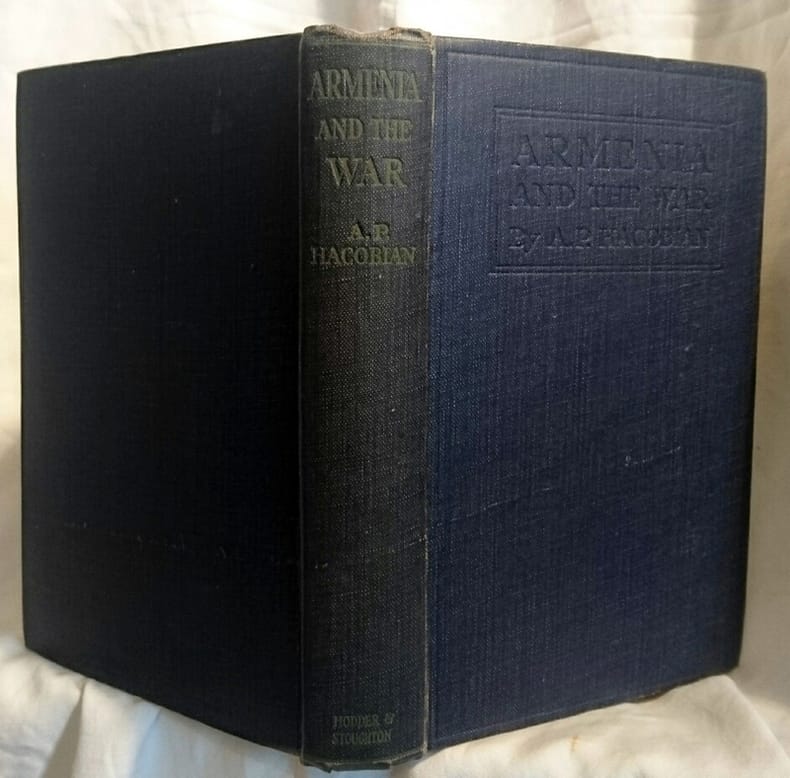
HACOBIAN (A. P.)
Armenia and the War. An Armenian's Point of View with an Appeal to Britain and the Coming Peace Conference.
London, Hodder & Stoughton, 1917. In-12, rel. d'éditeur percaline bleue, XVII-200 pp., texte anglais. Rare édition originale.
Riferimento per il libraio : 556186
|
|
|
Haddad al-'Abbadi, Abu Bakr bin Ali al-.
Al-siraj al-wahhaj. Mecca, [1636-1661 CE =] 1046-1071 H.
Folio (210 x 290 mm). 2 volumes bound in one. Arabic manuscript on polished oriental paper. 166 ff; 273 ff. (foliated in a later hand), 40 lines, per extensum. Black ink with red emphases. Contemporary blindstamped full calf, restored and spine rebacked. Fiqh commentary on the famous and much-glossed Hanafi manual "Mukhtasar al-Qudurii" (known among Hanafi scholars simply as "al-Kitab") of Abu al-Husayn Ahmed ibn Muhammad al-Quduri al-Baghdadi (362-428 H). The author of this commentary, Abu Bakr bin Ali bin Muhammad al-Haddad al-Zubaidi al-Yamani (d. 800 H / 1397 CE), was a Hanafi jurist and exegete. He hailed from the people of Abadieh, from the villages (Wadi Zabid) in Tihama, historically in Yemen but today mostly in Saudi Arabia. - The first volume, copied in 1046 H (1636 CE), has an ownership inscription of Abdullah bin Hassan Al-Afif Al-Kazaruni, a Hanafi jurist from Mecca, dated 1063 H (1653 CE). The second volume has an inscription stating this was commissioned by him in 1071 H (1661 CE). - Handwritten table of contents on the preserved original flyleaves. Some light browning and brownstaining throughout; a few repairs; old waqf stamps and inscription to first page of both parts; marginal annotations throughout. The restored binding uses the prettily stamped original cover material. Removed from the Kutub Khana-i-Sultani (Sultani Library), one of the libraries the Nawabs of Bahawalpur, established in 1926 at Dera Nawab Sahib in south Punjab. GAL I, 175; II, 189; II S, 250.
|
|
|
Hadji Abd-el-Hamid Bey (L[ouis-Laurent] du Couret).
Les mystères du désert. Souvenirs de voyages en Asie et en Afrique. Paris, E. Dentu, 1859.
2 vols. 12mo. XXXIV, (2), 492 pp. (4), 484 pp. With 2 folding maps. Contemporary marbled red half calf with giltstamped title to spine. Marbled endpapers. First edition. - The French traveller L. du Couret (1812-67) is said to have made his first journey to the East in 1836, joining the Egyptian army in Syria and visiting Nubia, Senner, Kordofan, and Darfur. He states that he embraced Islam and made the pilgrimage to Mecca. He remains a dubious character, and some critics have even doubted his existence, attributing his works to the imagination of Alexandre Dumas père, author of the "Three Musketeers", who at least contributed a preface to du Couret's 1854 "Voyage au Pays des Niam-Niams". Ibrahim-Hilmy I, 6. OCLC 10196303. Cf. Gay 29. NYPL Arabia coll. 166 (1860 ed.).

|
|
|
Hadrami, Muhammad ibn Sulayman; Budd, Yousef.
Oman : years of progress and development (masirat al-khair)
Large white multicolored quarto (white spine); 393 p. : color ill, map ; 29 cm. A massive work with many high quality color photos of the people, geography, infrastructure and flora and fauna of this Sultanate. || Oman; Middle East -- Politics and government; History.
|
|
|
Hafez (ed. Muhammad Qazwini & Qasim Gani).
Diwan-i Hwaga Sams-ad-Din Muhammad Hafiz Sirazi qaddas sarra-yi al-aziz ba tamam. Tehran, Caphana-i Maglis, 1941.
4to. (132), 400, (2) pp. Publisher's original giltstamped blue cloth. First critical edition of the famous "Diwan" by the great mediaeval Persian poet Hafez, whose work influenced Goethe as well as Thoreau and Emerson. This publication marks the beginning of modern Hafez philology. - Ink note in Arabic script to title page. A clean copy. OCLC 254557372.

|
|
|
Hafiz, Hamdi / Sharqawi, Mahmud.
'Uman wa-imarat al-Khalij al-'Arabi [Oman and the Arabian Gulf Emirates]. Cairo, Lajnat Kutub Siyasiyah, 1957.
8vo. 78, (2) pp. With 7 half-tone photographic illustrations on 2 plates. Orange and white wrappers, titled in black. From a series published in the 1950s whose stated aim was to examine contemporary international political, social, and economic problems from an Egyptian perspective. This twenty-third title in the series focused on the Arabian Gulf and the United Arab Emirates, including chapters on the role of the UAE in the modern world, a chapter on future visions for the Arabian Gulf, and - rather presciently - a chapter on the new era of oil, which at the time had barely begun. - Preceding this volume were books on the Suez Canal (which had just been nationalized) and the Southeast Asia Treaty Organization (SEATO). Discussed in simple terms are the histories of Oman and the Emirates; in addition to the above, brief chapters are included on Sa‘id bin Sultan (1791-1856), Thuwaini bin Said al-Busaidi (1821-1866), Salim bin Thuwaini al Busaidi, Azzan bin Qais, Faisal bin Turki (1864-1913), and Abd al-Aziz ibn Saud (1875-1953). - Some leaves uncut, others slightly stuck together. Includes four pages of photographic illustrations of contemporary daily life. OCLC 316086724.
|
|
|
Haines, Stafford Bettesworth.
Memoir to Accompany a Chart of the South Coast of Arabia. [London, The Royal Geographical Society], 1839-1845.
8vo. 2 vols., pp. 125-156 and 103-160 of the Geographical Journal of 1839 and 1845, respectively. With a text illustration and two large folding engr. maps of the South East Arabian coast. Offprints in modern wrappers. Early British study of today's Yemen coast. Captain S. B. Haines led a party aboard the "Palinurus" in the 1830s to survey the almost unknown southeast coast of Arabia; he seized Aden in 1839 on behalf of the East India Company, for use as a coaling station for ships steaming to and from India. Appointed Political Agent by the Bombay Presidency of the EIC, Haines served in this capacity (without leave) for the next fifteen years, presiding over Aden’s rapid expansion as a fortress and as a port which by the early 1850s boasted a population of some 20,000. Haines’s deep personal commitment to the revival of Aden’s prosperity ultimately led to his tragic imprisonment in Bombay for debt and to his death (aged only 58) in 1860. But in South West Arabia his name lived on and for decades local tribesmen referred to the inhabitants of Aden as "Awlad Haines" ("Haines’s children"). These two articles, separated by six years, contain Haines's full account of the findings of the survey, with accompanying maps. Among the members of the party was James Wellsted, who during the course of the survey explored the island of Socotra, and also proceeded into the Arabian Peninsula as far as the Rub' al Khali. - Insignificant edge tear to one map, otherwise fine. Macro 1101.

|
|
|
Haines, Stafford Bettesworth.
Survey of Part of the South East Coast of Arabia. London, The Royal Geographical Society, 1845.
Engraved map (36 x 30 cm), hand-coloured in outline. Southern coast of Arabia from Ras Fartak to Ras el Hadd.
|
|
|
Haines, Stafford Bettesworth.
Survey of Part of the South East Coast of Arabia. London, Edward Stanford, Royal Geographical Society, 1845.
Engraved map (360 x 315 mm). A map by Captain S. B. Haines (1805-60), Commander in the Indian Navy and the first political agent in Aden, showing his surveys of the coastal areas that had never before been recorded or charted, with one area remaining unexplored after his expedition. - Being the first charting of this section of the coast, Haines's map is a rare primary source. Haines commanded the East India Company's survey ship "Palinurus" from 1833 to 1839. His survey of the coast of Southern Arabia, performed in 1839, was driven by the Company's requirement for a coaling station to service its steamship on the Bombay-Suez route. The map extends from the Wadi Masilah near Sawit to Jebel Saffan, passing Morbat and Ras Madrakah, also showing Masirah Island and some smaller islands in Curia Muria Bay. Elevations are indicated, as are freshwater lakes, small villages, and a region irrigated for cultivation at Dafhar. One section along the coast is marked "unexplored". - This map pre-dates by more than two decades the construction of the Suez Canal Company, which opened on 17 November 1869. During this time, mail came overland through Egypt from Alexandria to Cairo, then Suez. - Folded, but in very good condition.
|
|
|
Hajd Thami Glaoui, "Lord of the Atlas", Pasha of Marrakech (1879-1956).
Autograph quotation signed. In Arabic. Marrakesh, no date.
Folio. 1 page. The Pasha's headed notepaper mounted on uncut wove paper, bearing the Schoellers-Parole blind embossed seal, margins uncut. The original autograph contribution of Hajd Thami Glaoui to the Committee of the World League for Peace (Ligue Mondiale pour la Paix), a remarkable organisation formed in 1925 with close ties to the League of Nations. The Committee itself was composed of such notaries as Queen Elizabeth of Belgium, King Carol II of Romania, John D Rockefeller, Marie Curie, and Albert Einstein, who personally gathered the present manuscripts over the course of seven years (1925-32). Among the public figures who contributed to the project were dignitaries from the newly-created League of Nations' member states. The present manuscript has been studied extensively by native Arabic scholars, who nevertheless have been unable to decipher the Pasha's handwriting (see accompanying document). "Praise be to God! [...] war and establishing peace is the goal of every human being [...] decisions [...] goal. Truth is victory [...] nations [...] purposes [...] the League of Nations [...] he who knows his goal must strive to support [...] and peace. [Signed] Hajd Thami Glaoui". Thami Glaoui ruled as Pasha of Marrakech from 1912 until his death in 1956, amassing one of the largest fortunes in the world (reckoned to be $50 million) from harvests, stock, taxation, and (according to a Time Magazine article) a cut of the earnings of the 27,000 prostitutes operating in the Marrakech area. He has become a despised figure in Moroccan politics; he was, for example, a full ally of the French regime and conspired with them to successfully overthrow Sultan Mohammed V in 1953. His personal style and charm, as well as his prodigality with his wealth, made him many friends among the international fashionable set of the day. He visited the European capitals often, while his visitors at Marrakech included Winston Churchill, Colette, Maurice Ravel, and Charlie Chaplin. Pax Mundi. Livre d'or de la paix. Enquete universelle de la Ligue mondiale pour la paix sous le haut patronage de son comite d'honneur avec l'approbation de la Societe des nations, du Bureau international du travail et de la Cour permanente de justice internationale. Geneve, Societe paxunis, 1932. TIME Magazine May 20th, 1957.

|
|
|
HAJJAR (Joseph)
L' Europe et les destinées du Proche-Orient. (1815-1848)
Paris, Bloud & Gay, 1970 gr. in-8, IX-632 pp., bradel demi-toile jaune à coins, dos orné, couv. cons.
Riferimento per il libraio : 176478
|
|
|
HAJJAR Joseph
L'EUROPE ET LES DESTINÉES DU PROCHE-ORIENT, II (2) : NAPOLÉON III ET SES VISÉES ORIENTALES, 1848 - 1870. Tome 1.
1988 Damas (Syrie), éditions Tlass, 1988. Tome 1 seul (sur 3). Fort in-8 broché de 744 pp. + table. Couverture à rabats. Couverture légèrement usagée, intérieur en très bon état, sans annotations ni soulignements.
Riferimento per il libraio : 17561

|
|
|
HAKAN HARMANCI.
Kerbela'nin antropolojik çözümlenmesi.
New English Paperback. Pbo. Demy 8vo. (21 x 14 cm). In Turkish. 384 p. Kerbela'nin antropolojik çözümlenmesi. Anthropological analysis of Karbala Case in 680. ISLAM History of Islam Anthropology Husayn Ibn Ali Yazid I Umayyad Sunni - Shia muslims Mohammedanism Alevism.
|
|
|
Hallez (Xavier) - Raiymbergenov (Saïra)
Chants des Steppes (livre + CD) - Musique et chants du Kazakhstan
Du Layeur 2002 In-8, cartonnage éditeur, 47 pp. Illustrations.
Riferimento per il libraio : 4035
|
|
|
Halliwell, J O
The Voiage and Travaile of Sir John Maundeveille Kt. Which Treateth ofgthe Way to Hierusalem; and of Marvayles of Inde with Other Hands and Countryes. Reprinted from the Edition of A.D. 1725
London: Edward Lumley 1839. Hardcover. Good in No Dust Jacket dust jacket. Exlibrary marks. Rebound. Sound binding and hinges. Tanned pages with occasional minor notes in pencil. Cloth over boards has light shelf wear label at lower spine. 14th-century book of supposed travels written in Anglo-Norman French this edition in old English that became a medieval bestseller despite being a fantastical blend of fact myth and plagiarism claiming to detail the adventures of an English knight in the Holy Land Egypt India and China and influencing explorers like Columbus. Ex-Library; 8.75" tall; 326 pages. Edward Lumley hardcover
Riferimento per il libraio : 4430045
|
|
|
HALM (Heinz)
Die Ausbretirung des sâfi'itischen Rechtsschule von den Anfängen bis zum 8./14. Jahrhundert.
Wiesbaden, Reichert, 1974. Grand in-8 broché, 340 pp., bibliogr., index. (Beihefte zum Tübingen Atlas des Vorderen Orients, B, 4).
Riferimento per il libraio : 544968
|
|
|
Hamaker, Hendrik Arent.
Specimen catalogi codicum mss. orientalium bibliothecae academiae Lugduno-Batavae [...]. Leiden, S. & J. Luchtmans, 1820.
Large 4to (220 x 261 mm). (4), VIII, 264, (2) pp. Contemporary half calf with giltstamped red spine label and sparsely gilt spine. Edges lightly sprinkled in red. Only edition. - Pioneering specimen of a catalogue of oriental manuscripts in the Leiden library, with extensive extracts in Arabic, produced by H. A. Hamaker (1789-1835). "Ce spécimen ne contient que douze articles" (Brunet). "The descriptions of a mere twelve items on 238 pages illustrate the diligence with which the author attends to each and every title. Indeed, the final MS, the 'Qamus al-Muhit' of Firuzabadi, is discussed on no fewer than 60 pages. Each author is provided with extensive biographical excerpts with Latin translations, to which are added extremely detailed discussions of scholarly literature. Had Hamaker kept up this method for all the oriental MSS in Leiden, estimated at a number of some ten thousand, he should have wanted about 25,000 pages, not to mention hundreds of pages of indices. It is thus questionable whether Hamaker intended more with his 'Specimen' than to provide an example of an ideality which was to promote his planned catalogue [...]. And yet, had he been able to realize this ideal with the help of other scholars, this would have given to the world a source-based work of reference which would have preserved its value to this day, not superseded either by Brockelmann's 'Geschichte der arabischen Litteratur' nor by Sezgin's 'Geschichte des arabischen Schrifttums'" (cf. B. Liebrenz, Arabische, persische und türkische Handschriften in Leipzig [Leipzig 2008], p. 73). - Some creases to paper; binding rubbed and chafed in places. A good copy from the library of the Dutch theologian Christiaan Jacobus van der Vlis (1813-42) with his handwritten ownership on the front pastedown. Besterman 4352. Brunet III, 26f. & VI, 31385. Cf. Fück 181 (for Hamaker).
|
|
|
Hamdi Bey, Osman / Launay, [Victor] Marie de.
Les costumes populaires de la Turquie en 1873. Constantinople, imprimerie du "Levant Times & Shipping Gazette", 1873.
Folio (280 x 355 mm). 3 consecutively paginated parts in one vol. 319, (1), VII, (1) pp. With 74 plates after photographs by Sébah. Early 20th century half morocco with giltstamped spine title. First edition. The three sections are devoted to "Turquie d'Europe" (including Greece), "Ilas ottomanes" (including Cyprus), and "Turquie d'Asie" (including Mecca and the Lebanon). The plates are based on studio portrait photographs by Pascal Sébah (1823-86), then at his peak. - Sébah's Istanbul studio catered to the western European interest in the exotic "orient" and the growing numbers of tourists visiting the Muslim world who wished to take home images of the cities, ancient ruins in the surrounding area, portraits, and local people in traditional costumes. "Sebah rose to prominence because of his well-organized compositions, careful lighting, effective posing, attractive models, great attention to detail, and for the excellent print quality" (Gary Saretzky). - Occasional brownstaining, otherwise a good copy. Atabey 551. Blackmer 957. Lipperheide Lb 65. Colas 1374. Hiler 411.

|
|
|
HAMID DABASÎ.
Islam'da otorite. Peygamber'in gelisinden Emevî idaresine kadar.
Fine Turkish Paperback. Cr. 8vo. (20 x 14 cm). In Turkish. 252 p. Islam'da otorite. Peygamber'in gelisinden Emevî idaresine kadar. Authority and state idea in Islam from Mohammad to the Umayyad.
|
|
|

 Ricevere i risultati per e-mail
 Scaricare i risultati in PDF
 RSS feed
 Link
Link


