|
|
|
Revue De Cavalerie, Avril à Septembre 1894
Paris et Nancy Librairie Militaire Berger Levrault & Cie 1894 In-8 636 pp
Référence libraire : 30540
|
|
|
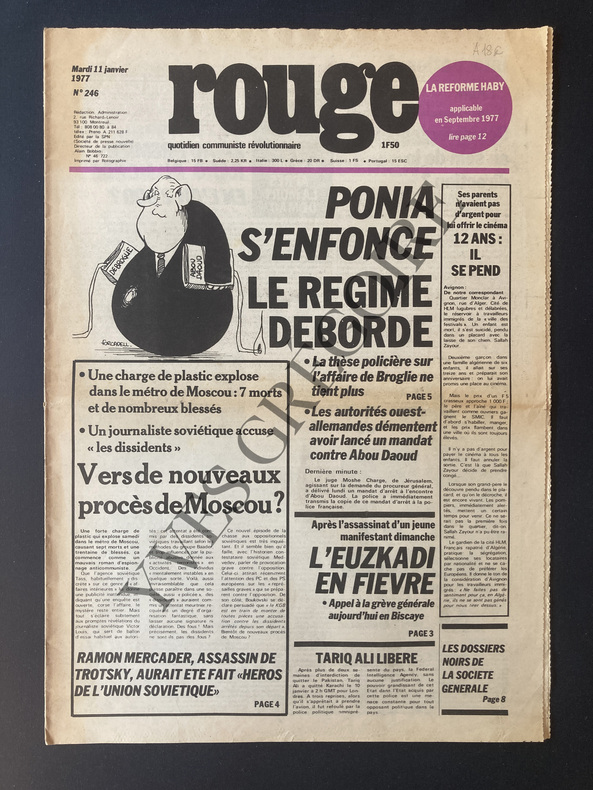
ROUGE-N°246-MARDI 11 JANVIER 1977
12 PAGES FORMAT 30 CM X 43 CM-QUOTIDIEN COMMUNISTE REVOLUTIONNAIRE-PONIA S'ENFONCE LE REGIME DEBORDE,DESSIN FORCADELL-LA CHINE APRES LA MORT DE MAO-MERCADER,"HEROS DE L'UNION SOVIETIQUE"?,PHOTO-LES EGOUTS DU POUVOIR-LES BARBOUZES DE L'INSPECTION GENERALE LES DOSSIERS NOIRS DE LA SOCIETE GENERALE-700 PERSONNES A PARIS POUR LA DEFENSE DES LILAS,ACCOUCHEMENT "SANS DOULEUR, NI VIOLENCE",PHOTO-NAZIM HIKMET DE L'ESPRIT A VOUS FAIRE PLEURER DE RAGE,1P,2 PHOTOS-EXPOSITION ALL CAPP AU CENTRE CULTUREL US,1P,4 DESSINS-LA REFORME HABY EN TROMPE L'OEIL (PJ18)
Référence libraire : ABE-11482621325
|
|
|
Schatten Theater. Photos Fred Mayer. Texte (Kollektif) T. Immoos, K. S.L.Ke, Ramana Murty, Suharto A. Sardjana, A. A. Thadei Raka, M. Rutnin, A. Sweeny, M. And.
Zürich, U. Bär, 1979, in-4°, 247 S., 82 Tafeln, Original-Leinenband, Orig.-Umschlag.
Référence libraire : 26450aaf
|
|
|
SOCIETE DE PHOTOGRAPHIE DE MARSEILLE IVe Salon International du 3 au 25 février 1906. Hôtel des Architectes.
Sans lieu ni date 1906. In-12 broché (2e plat illustré d'une publicité) 4 feuillets non chiffrés 10-43pp. Orné de 15 publicités pour matériel et produits chimiques sur papier pelure et 18 photographies hors texte sur papier fort. catalogue d'environ 650 oeuvres exposées par les 240 exposants de cette manifestation parmi lesquels on citera Detaille, Bucquel, Saint Bey, Rolato-Pétion, Guglielmi, Trias, Laguarde, Bellivet, Cullet, Nedelec, Regad. Exemplaire en bon été et bien complet.
Référence libraire : GITg382
|
|
|
SOLIMAN LE MAGNIFIQUE . 15 Février au 14 Mai 1990 . Galeries nationales du Grand Palais
Couverture souple P , A A , 1990 , in4° broché , 338 pp . 321 objets , tableaux ou cartes photographiés avec texte explicatif . Edité à l' occasion de l' exposition franco turque . Langue: Français
Référence libraire : M16048
|
|
|
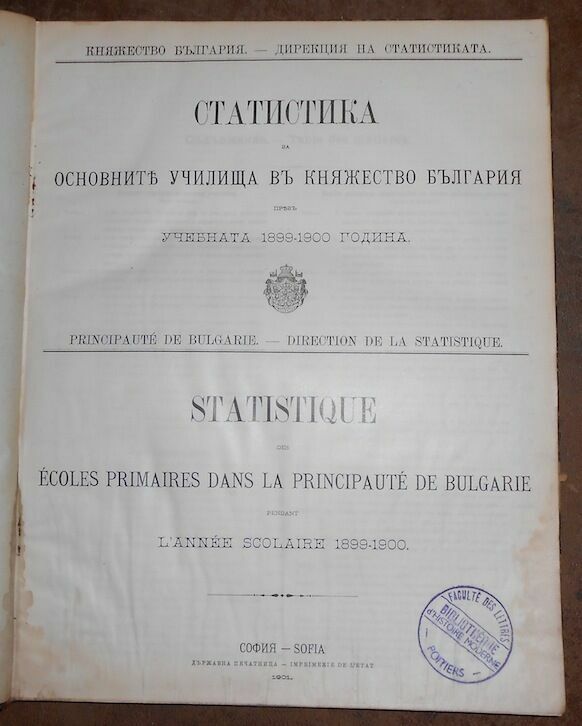
Statistique des Ecoles Primaires dans la Principauté de Bulgarie pendant l'année scolaire 1899-1900
1901. Sofia Imprimerie de l'Etat 1901 - Relié demi-bradel 23 5 cm x 30 cm 159 pages - Texte en français et en bulgare - Cachets de bibliothèque épidermures bon état intérieur
Référence libraire : 11341
|
|
|
STORIA DELL' ANNO MDCCLXXXII. Divisa in quatro libri.Ne' quali si racontano gli successi della guerra nell' Asia, nell' America, e nell' Affrica, e nell' Europa; singolarmente gli assedi di Minorica, e di Gibilterra. Il Viaggio del sommo PonteficePOI VI, all' Imperiale Corte di Vienna. Le nuove Leggi, e Regolamenti ne' Domini Austriaci. L'abolizione del S. Uffizio nella Sicilia, e nella Toscana. La guerra civile di Ginevra. Il viaggio de' Gran Duchi Russia, ec. ec. ec.Relié à la suite:STORIA DELL' ANNO MDCCLXXXIII. Divisa in quatro libri.Ne' quali si dettagliano, le conseguenze della guerra nell' Asia, nell' Affrica, e nell' Europa, e la pace tralle Potenze Belligeranti. Una novella Republica convalidata nell' America. Il passaggio di alcuni stati dipendenti dalla Porta Ottomana al Dominicio Ruffo, Gl' importanti regolamenti nell' eccesiastico fattifi in quali ogni parte dell' Europa. Gli orribili terremoti, ed altri grandissimi fenomeni della natura. Li viaggi di S. M. L'Imperatore, e del Re di Suezia; ec. ec. ec.
In Venezia, spese di Francesco Pitteri, 1782, 1783, 1 plein veau raciné, tranches jaspées, mors fendus, coiffes manquantes, dos craquelé avec manques (reliure à restaurer). in-8 de VIII-300 pages, 2 feuillets blancs et X-287 pages, belles marques d'imprimeur ;
Référence libraire : 18623
|
|
|
The Ottoman Domination, reprinted from The Round Table
18p. Disbound Good condition
|
|
|
Touristique Istanbul. 110 photos en couleurs.
Efes color, s.d. (circa 1970), petites déchirures à certaines pages.
Référence libraire : 90865-C1180
|
|
|
Turk kulturunu arastirma enstitusu Turk kulturu aylik dergi. No: 327 Year: XXVIII Temmuz 1990.
Very Good English Turk kulturunu arastirma enstitusu Turk kulturu aylik dergi. No: 327 Year: XXVIII Temmuz 1990., Turk kulturunu arastirma enstitusu, Ayyildiz matbaasi, Ank., 1990. Paperback. Pbo. Large 8vo. (23 x 16 cm). Between 385-448 p. Very good. In Turkish. Articles: Sovyetler Birligi'nin milliyetler meselesine bakisi, Abdullah Saydam. Aile icinde cocugun durumu ve aile egitimi, Sule Bilir. Londra maslahatguzari Mehmed Sidki efendi (1768-1811), Ozcan Mert. Populer bir romanci: Mehmed Vecihi bey, Mehmet Onal. Petko Racov Slaveyko'nun 'Akbaldirlinin cesmesi' destani, Leman Ergenc. Hetman Ivan Mazepa Turk vesayeti altinda: Tarihi ve degerlendirilmesi, Wolodymyr T. Zyla.
|
|
|
Turk kulturunu arastirma enstitusu Turk kulturu. Aylik dergi. No: 330 Year: XXVIII Ekim 1990.
Very Good English Turk kulturunu arastirma enstitusu Turk kulturu. Aylik dergi. No: 330 Year: XXVIII Ekim 1990., Turk kulturunu arastirma enstitusu, Ayyildiz matbaasi, Ank., 1990. Paperback. Pbo. Very good. Large 8vo. (23 x 16 cm). In Turkish. Between 577-639 p. Articles: Kibris vakiflarinin kurulusundan bu yana gelisimi, Rauf Ünsal. Asik Ömer'in sairnamesi, Sükrü Elcin. Sinasi'nin bilinmeyen bir siiri, M. Kayahan Özgül. Yunus Emre serhleri II =[Yunus Emre annotations.]., Mustafa Tatci. Kutadgu Bilig'de genclik, ihtiyarlik ve ölüm fikri, Ismet Cemiloglu. 1867 Paris milletlerarasi sergisi ve Osmanli Imparatorlugu, Abdurrahman Siler.
|
|
|
Turk kulturunu arastirma enstitusu Turk kulturu. Aylik dergi. No: 282 Year: XXIV Ekim 1986.
Very Good English Turk kulturunu arastirma enstitusu Turk kulturu. Aylik dergi. No: 282 Year: XXIV Ekim 1986., Turk kulturunu arastirma enstitusu, Ayyildiz matbaasi, Ank., 1986. Paperback. Pbo. Very good. Large 8vo. (23 x 16 cm). In Turkish. Between 601-663 p. Articles: Yirmibesinci yilinda Türk kültürünü arastirma enstitüsü, T.K.A.E. Türkiye'nin ücüncü cumhurbaskani Celâl Bayar, Fethi Tevetoglu. 1876 Mesrutiyet meclisi, M. Abdulhaluk Cay. Devrinin sosyal ve edebi sartlari icinde: Asik Pasa, Göcgün. Bulgar oyunlarindan örnekler, Mehmet Cavus. Osmanlilarda ilk cülus merasimi, Ahmet Agirakca. Taslica'da bazi adet ve inanislar, Cemal Kurnaz. Bulgaristan Türkleri üzerine arastirmalar ve belgeler VIII, Milli kongre karalari, Bilal n. Simsir.
|
|
|
Turk kulturunu arastirma enstitusu Turk kulturu. Aylik dergi. No: 28 Year: III Subat 1965.
Very Good English Turk kulturunu arastirma enstitusu Turk kulturu. Aylik dergi. No: 28 Year: III Subat 1965., Turk kulturunu arastirma enstitusu, Ayyildiz matbaasi, Ank., 1965. Paperback. Pbo. Very good. Large 8vo. (23 x 16 cm). In Turkish. Between 229-292 p. Articles: Kirim'da Türk eserleri ve Mimar Sinan'in yaptigi cami, Oktay Aslanapa. Propaganda ve milli davalarimizin duyurulmasi, Cengiz Orhonlu. Iran'da yasayan Türkmenler hakkinda kücük bir not, Yusuf Azmun. Abadan Türkleri (Hakas'lar), Ahmet Caferoglu. Prenslik devrinde Bulgaristan'da Türk egitimi (1878-1908) III, B. Sakarbalkan. Amerika'da Türk tarihi ve kültürü arastirmalari, Ercümend Kuran.
|
|
|
Turk kulturunu arastirma enstitusu Turk kulturu. Aylik dergi. No: 29 Year: III Mart 1965.
Very Good English Turk kulturunu arastirma enstitusu Turk kulturu. Aylik dergi. No: 29 Year: III Mart 1965., Turk kulturunu arastirma enstitusu, Ayyildiz matbaasi, Ank., 1965. Paperback. Pbo. Very good. Large 8vo. (23 x 16 cm). In Turkish. Between 293-356 p. Articles: Sehriyar'a selam, Muharrem Ergin. Eski Türk tipi hakkinda, Ayla Dogan. Kazak Türkleri, Ahmet Caferoglu. Büyük Türkmen sairi Mahtum Kuli Piragi, Yusuf Azmun. Tuna vilayeti ve matbaasi (1864-1877), Ismail Eren. 10 yil kötürüm halde calismis olan Kazanli bir muharrir: Fatih Emirhan (1885-1926), A. Battal-Taymas. Krallik devrinde Bulgaristan'da Türk egitimi (1908-1944), B. Sakarbalkan. Konusan Türk halilari, Mehmet Önder.
|
|
|
Turk kulturunu arastirma enstitusu Turk kulturu. Aylik dergi. No: 33 Year: III Temmuz 1965.
Very Good English Turk kulturunu arastirma enstitusu Turk kulturu. Aylik dergi. No: 33 Year: III Temmuz 1965., Turk kulturunu arastirma enstitusu, Ayyildiz matbaasi, Ank., 1965. Paperback. Pbo. Very good. Large 8vo. (23 x 16 cm). In Turkish. Between 565-628 p. Articles: Bati Trakya Türkünün cilesi, M. Toroslu. Koca Türk, Fazil Hüsnü Daglarca. Kibris Türklerinden esirgenen haklar, Beria R. Özoran. Türk destanlari, Faruk K. Timurtas. Iran'da yasayan Türkmenler, oturduklari yerler ve kabile ayrimlari, Yusuf Azmun. Birinci Cihan Savasi'nin sonuna kadar Makedonya'da Türk nüfusu meselesi I (Balkan Savasi'na kadar durum), Altan Deliorman. Sibyan mektepleri, M. Sakir Ülkütasir. Nusretullah Fethi'nin siiri, Muharrem Ergin.
|
|
|
Turk tarih kurumu Belleten. Dort ayda bir cikar. Cilt: LIV Sayi: 211 Aralik 1990 = Revue publiee par la societe Turque d'histoire Belleten. Periodique paraissant tous les quatre mos. Tome: LIV No: 231 December 1990.
Very Good English Turk tarih kurumu Belleten. Dort ayda bir cikar. Cilt: LIV Sayi: 211 Aralik 1990 = Revue publiee par la societe Turque d'histoire Belleten. Periodique paraissant tous les quatre mos. Tome: LIV No: 231 December 1990., Turk tarih kurumu, Ank., 1990. Paperback. Pbo. Very good. Large 8vo. (24 x 17 cm). Between 907-1306 p. In Turkish. Articles: Acemhöyük sikkeleri (with 2 plts), Yildiz Kizilkaya. Cin-Türkistan iliskilerinin baslangici hakkinda bazi bilgiler, Ayse Onat. Sultan I. Izzeddin Keykâvus ile Melik Alâeddin Keykubad arasinda gecen otorite mücadelesi, Salim Koca. Cin Imparatorlugu'nun bati ülkelerine karsi tesis ettigi askerî hat (dört garnizon) (with 1 map), Hüseyin Salman. 1700-1730 tarihlerinde Ankara'da ailenin niceliksel yapisi, Ömer Demirel.XVIII. yüzyilda Antakya ve cevresinde eskiyalik olaylari (with 1 map), Mustafa Öztürk. Tokat'ta ailenin sosyo-ekonomik yapisi (1771-1810), Rifat Özdemir. Ikinci Sultan Mahmud'a dair Ermeni harfli Türkçe dört manzum methiye, Kevork Pamukciyan. Christian Anti Semitism in the Ottoman Empire, Stanford J. Shaw. Meslek kurulusu ve faaliyeti, Enver Koray. Atatürk'ün toplanmamis yazilari (3 belge ile birlikte), Fethi Tevetoglu. Enver Pasa ve Orta Asya'da basgösteren 'Basmaci' akimi, Salahi R. Sonyel. Türk yüksek ögretim tarihine genel bakis, Neset Cagatay.
|
|
|
Turkish Politics and the Economy, 1946-1990: From the Beginning of the Multi-Party Era to Today. Complete in 4 volumes.
Aykut Kansu, 1993, in-8vo, over 2500 pages of texts from various authors. Small stains on title of volume 1, orig. publisher’s illustrated red cloth. Spines sunned, else a fine set.
Référence libraire : 83481aaf
|
|
|
Turquie au nom de la tulipe
Boulogne-Billancourt 1993 Editions de l'Albaron Hardcover Very Good
Référence libraire : 027929

|
|
|
Türk dünyasi tarih. Kültür dergisi. No: 249 Eylül 2007 [Bir eskatoloji mitosu olarak: Türklerde tufan]
Very Good English Türk dünyasi tarih. Kültür dergisi. No: 249 Eylül 2007., Türk dünyasi arastirmalari vakfi, 2007. Paperback. Pbo. 64 p. Color and b/w ills. Small 4to. (29.5 x 20.5 cm). In Turkish. Very good. Articles: Dogu-Güneydogu kabile asiret yapisi, Orhan Türkdogan. Topkapi sarayi'nda helvahanede ilaclarin imaline dair bir yazma eser, Arslan Terzioglu. Üzerklik; Türk dünyasi'nda ortak bir bitki ve ortak inanc kültürü, Bayhan Cubukcu. 10 Eylül 1918'de cikan 'Dan yildizi' gazetesindeki tarihî ve edebî bilgiler, Murat Söyegov. Dört bin yillik Türk zeka ve strateji oyunu: Dokuz Kumalak, Abdulvahap Kara. Efeler, zeybekler ve kizanlar, Nuri Argac. Seyyit Hasan Pasa, Fahrettin Öztoprak. Bir eskatoloji mitosu olarak Türklerde tufan, Menderes C¿naroglu.
|
|
|
Türkei. Hrsg. von der Generaldirektion der Presse, des Rundfunks und des Fremdenverkehrs der Türkischen Republik.
(Istanbul, Klisecilik ve Matbaacilik T. A. S. (, ohne Jahr (ca. 1958). 4° (28,5 x 23,5 cm). 3 Bl., 174 s/w (brauntönigen) Fototafeln und 6 Zwischentitel. Orig.-Halbleinenband mit goldgeprägtem, grünen Leinenrücken und orangefarbigen Deckeln. Illustrierte Vorsatzpapiere., 7065ab|7065ab 3|7065ab 4 [3 Warenabbildungen] (Album of pictures - Album de photographie - Photo Einband leicht angestaubt, Kanten etw. berieben.
Référence libraire : 7065AB

|
|
|
Türkiyemiz. 4 aylik sanat dergisi. No: 17 Year: 6 Ekim 1975.
Fine English Türkiyemiz. 4 aylik sanat dergisi. No: 17 Year: 6 Ekim 1975., Akbank., Ist., 1975. Paperback. Pbo. Fine. 50 p. Large Roy. 8vo. (26.5 x 19 cm). B/w and color ills and photos. In Turkish. Articles: Minyatürlerde Türk donanmasi, Nurhan Atasoy. Macar koleksiyonlarinda Türk süslemeleri, Geza Feher. Hali ve seccadelerde yazi süslemeleri, Yusuf Durul. Türk resminde kadin, Nurullah Berk. Sadullah Pasa yalisi, Emel Esin. Iznik ciniciligi, Hakki Izet. Yalova kaplicalari ve cevresi, Özel Sahingiray. Kaybolan degerlerimiz, Belkis Acar.
|
|
|
Türkiyemiz. 4 aylik sanat dergisi. No: 18 Year: 6 Subat 1976.
Fine English Türkiyemiz. 4 aylik sanat dergisi. No: 18 Year: 6 Subat 1976., Paperback. Pbo. Fine. 50 p. Large Roy. 8vo. (26.5 x 19 cm). B/w and color ills and photos. In Turkish. Articles: Altin yol ve Takkeci camii cinileri, Erden Yücel. [Ibrahim] Calli üzerine, B[edri] R[ahmi] Eyüboglu. Mohac Savasi'nin yayinlanmamis bir minyatürü, Geze Feher. Yeni kaya resimleri pesinde, Ersin Alok. Okmeydani ve nisan taslari, Osman Özdes. Yörük cuvallari, Naci Eren.
|
|
|
Venezia e I Turchi. Scontri e Confronti Di Due civiltà
4to, ril. edit. in sovracoperta e cofanetto
|
|
|
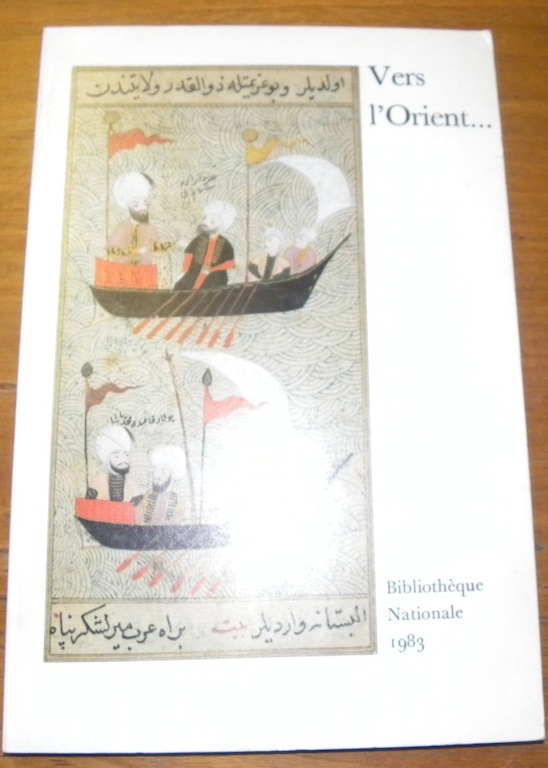
Vers l’Orient...
Paris, Bibliothèque Nationale 1983, 240x160mm, XX- 99pages, broché. Bel exemplaire.
Référence libraire : 25865
|
|
|
Voyage de Christophe Colomb – Conquête du Mexique par Fernand Cortez – Conquête du Pérou par Pizzarre - Voyage aux Etats-Unisde l’Amérique Septentrionale d ‘après Basil-Hall, Levasseur et Georges de Beaumont - Voyage dans l’Amérique Septentrionale et particulièrement dans les Territoires de la Floride, du Ouisconsin et au Canada par le Comte de Castelnau -Voyage au Pôle Nord et aux Régions Arctiques par le Capitaine Ross, 1er voyage 1818 à 1819 – Second Voyage du Capitaine Ross 1829 à 1833 Voyage en Grèce et à Constantinople par F. C. H. L. De Pouqueville
Paris, Nouvelle Bibliothèque des Voyages, chez P. Duménil, tome douzième, sans date (circa 1844). Reliure demi basane, 14,5 cm x 22 cm, 307, pages, 8 gravures hors-texte+ 1 carte dépliante de L’Amérique Méridionale en 1840. Dos restauré, rousseurs sinon bon état
Référence libraire : 23300

|
|
|
XXXe PELERINAGE DE PENITENCE A JERUSALEM à bord du vapeur L'Etoile 8 septembre 16 octobre 1905.
Paris Secrétariat du Comité des Pélerinages en terre Sainte 1905. In-8 broché 14pp imprimées sur 2 colonnes (liste des pélerins Français et de diverses nationalités) 4 feuillets indépendants (programme du pélerinage, excursions, prix des places, dispositions spéciales, avis divers). 4 illustrations dans les feuillets de programme.
Référence libraire : GITg113
|
|
|
Yeni sanat. Aylik sanat - edebiyat dergisi. No: 8 Year: 1 Kasim 1974. [Special issue: Muallim Naci]
Near Fine English Yeni sanat. Aylik sanat - edebiyat dergisi. No: 8 Year: 1 Kasim 1974. [Special issue: Muallim Naci]., Ist., 1974. Paperback. Pbo. Near fine. Roy. 8vo. (24 x 16 cm). 73 p. B/w ills. Special issue for Muallim Naci =[Muallim Naci özel sayis.].
|
|
|
'EBÛ NASR 'ISMÂ'IL B. HAMMÂD EL-CEVHERÎ.
Kitâbu'l-Kavâfî. Prep. by Kenan Demirayak.
Very Good English Paperback. Pbo. Roy. 8vo. (24 x 17 cm). In Turkish and facsimile in Ottoman script. [xvi], 25, [14], 48 p. Study on one of important books on 'kâfiye'. Kitâbu'l-Kavâfî. Prep. by Kenan Demirayak.
|
|
|
( CATALOGUE D'EXPOSITION )
SOLIMAN LE MAGNIFIQUE
Paris Ministère des Affaires Etrangères 1990 in 4 (30x23) 1 volume broché, couverture à rabats illustrée en couleurs, 338 pages [1], avec de nombreuses illustration en couleurs, et un feuillet volant d'errata. Avec un catalogue de 94 numéros décrits et reproduits. Catalogue de l'exposition '' Soliman le Magnifique '', présentée à Paris du 15 février au 14 mai 1990 à Paris dans les galeries nationales du Grand Palais. Très bel exemplaire ( Photographies sur demande / We can send pictures of this book on simple request )
Référence libraire : 054555
|
|
|
( GALIBERT, Léon et PELLÉ, C.).
L' Empire Ottoman illustré. Constantinople ancienne et moderne; contenant aussi les Sept Eglises de l' Asie Mineure. Illustré d'après les dessins pris sur les lieux par Thomas Allom, Esq. Précédées d'un Essai historique sur Constantinople et de la description des Monuments de Constantinople et des sept églises de l' Asie Mineure, par MM. Léon Galibert et C. Pellé. Première série.
Paris, Londres, Fisher, Fils et Cie, sans date ; in-4°, demi-chagrin vert foncé de l' éditeur, dos lisse orné de filets dorés, titre doré, plats de toile vert foncé orné d'un décor doré au 2 plats, tranches dorées; ( 6), XLII, 60pp.; vignette au titre, frontispice, 30 planches hors texte gravées sur acier et 1 carte.
Référence libraire : c6327
|
|
|
( MENTELLE Edme ).
Anecdotes orientales. Premiere partie, contenant les anciens rois de Perse, & les différentes dynasties perses, turques & mogoles, qui se sont élevées successivement en Asie, jusqu'aux Califes & aux Sophis exclusivement
1773 Paris, Vincent, 1773 ; fort volume in-8°, plein veau fauve marbré de l' époque, titre doré sur étiquette de maroquin rouge, trace de pièce de tomaison, tranches rouges; 747pp
Référence libraire : 8555
|
|
|
( SAUSSEY Edmond).
Prosateurs Turcs contemporains. Extraits choisis présentés et traduits par Edmond Saussey.
1935 Paris, E. de Boccard, 1935 ; grand in-8, demi-basane bleue de l'époque, dos à nerfs, titre doré; (4),xxii, (ii),385pp. De la Collection des Etudes orientales publiées par l'Institut français d'Archéologie de Stamboul.
Référence libraire : 9276
|
|
|
( TAVERNIER ) - HAMY, Dr E. -T.
Une Lettre inédite du Voyageur J. -B. Tavernier ( 1664), publiée et commentée par le Dr E.-T. Hamy.
Paris, Imprimerie Nationale, 1906 ; brochure in-8°, couverture beige imprimée en noir avec encadrement typographique noir; 12pp.
Référence libraire : c5658
|
|
|
( TURQUIE )
Costumes de: TURQUIE. Lithographie ancienne (XIXème, éditée vers 1860)
1 lithographie représentant des costumes civils régionaux anciens de : TURQUIE. Lithographie ancienne (XIXème, vers 1860), imprimée en 2 teintes, noir et fond beige (sujet: 10x15cm), sur papier de format: 14,5 largeur x 23 cm hauteur (toutes marges). Illustrateur: Louis Lassalle (signature dans la planche). Original plate in good condition. Bel exemplaire ( Photographies sur demande / We can send pictures of this print on simple request ) Envoi dans un emballage de protection (si besoin suivant le format, en tube carton)
Référence libraire : 26943
|
|
|
(Author of the book) JOHN CAM HOBHOUSE, (1st Baron Broughton), (1786-1869).
[ENGRAVING] View of Tophana or the Artillery Arsenal at Constantinople.
Very Good English Original color engraving with its frame. Oblong folio. (28 x 41 cm). Description in English. Originally folded. It's in frame. It's from the book named 'A Journey through Albania, and other Provinces of Turkey in Europe and Asia, to Constantinople, during the years 1809 and 1810' by John Cam Hobhouse printed in 1813, London. Attractive one of 17 color plates in the book. Scarce.
|
|
|
(Carte géographique).
LA TURQUIE en Europe.Sur les observations de l'Académie des Sciences de Paris.
s.l., s.n., 1744, 1 carte géographique de 19 cm x 16 cm, gravée par Desbruslins, galeries de vers dans les marges et 3 petits trous sur la carte.
Référence libraire : 18512
|
|
|
(Collectif)
Le MUSEE des CIVILISATIONS ANATOLIENNES
Un ouvrage de 168 pages, format 140 x 195 mm, illustré, broché couverture couleurs rempliée, s.d., Impr. Donmez, bon état
Référence libraire : LFA-126747730
|
|
|
(Collectif)
UN GRAND WEEK-END A ISTANBUL
Un ouvrage de 126 pages, format 110 x 190 mm, illustré, broché couverture couleurs rempliée, publié en 1997, Hachette, bon état
Référence libraire : LFA-126731642
|
|
|
(Collectif).
TÔZAI. humanisme et langues. orient et occident. N°6.
Limoges, Presses Universitaires, 2004. broché, couverture illustrée (calligraphie originale du professeur Kawamori). in-8 de 229 pages, joint 1 lettre autogaphe, signé d'un co-directeur de la revue: Susumu Kudo.
Référence libraire : 20263
|
|
|
(Crimean War, Ottoman Empire, Russian Empire)
Austrian printings of the Treaty of Paris 1856 and Treaty of Berlin 1878
Very Good. Quarto half black leather marbled boards title stamped in gilt on spine. Offprints from the Reichs-Gesetz-Blatt of 1856 and 1878 bound together paginated 209-249; 177-209 very good light rubbing to leather. Important pair of treaties: the Paris 1856 treaty effectively concluded the Crimean War. The Western European powers pledged to maintain the integrity of the Ottoman Empire and restored the respective territories of the Russian and the Ottoman Empires to their prewar boundaries. They also neutralized the Black Sea for international trade: it was a huge setback for Russian influence in the region. The Treaty of Berlin 1878 came at the conclusion of the Russo-Turkish war and was a remapping of the Balkans pushing back Russian claims and forcing the Ottomans to accept the loss of major European holdings in a plan largely orchestrated by Bismarck. From 1849 to 1918 the Reichsgesetzblatt legal abbreviation: RGBl. was the official publication organ of the Imperial Patents Laws Regulations and State Treaties of the Austrian monarchy--at the time of these treaties under Franz Josef I. Although not stated owned by Ulysses Grant-Smith 1870-1959 a lifelong diplomat who was stationed in Vienna as part of the American Legation through WWI and who was later the American signatory of the US-Hungarian Peace Treaty of 1921 which had to be done separately because the US senate refused to be part of the Treaty of Trianon. These two treaties would have been good historical preparation for his approach to the 1921 treaty. unknown
Référence libraire : H10772
|
|
|
(Gasparin, Comte Agénor de).
A Constantinople. Par l’auteur des Horizons prochains. Troisième édition.
Paris, Calmann Lévy 1877, 188x120mm, 487pages, broché. Pages non coupées.
Référence libraire : 93651

|
|
|
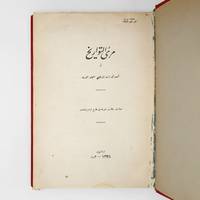
(Ottoman History) Şamdanizade Fındıklılı Suleyman
Meriyü't-tevarih Mari' al-Tawarikh
Istanbul: Maarif Nezâreti Matbaa-i Âmire 1919. 4 2 blank 3-509 pp. Vol. 1 of 2. 1 vols. 8vo. Red cloth. Very good. 4 2 blank 3-509 pp. Vol. 1 of 2. 1 vols. 8vo. Though the end of the text suggests a further volume is forthcoming the second volume was published only in 1928. OCLC: 777709606 Leiden Maarif Nezâreti, Matbaa-i Âmire unknown
Référence libraire : 373897
|
|
|
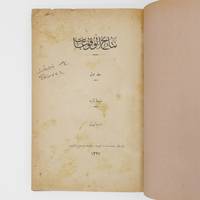
(Ottoman History)
Natayij al-wuquʻat. Cild 1-4 Vols. 1-4
Istanbul: Bab ʻAli Cadeh Sindh Matbaʻah Sindh Ṭabaʻ ul-Mas̲edar 1911. Second printing of vols. 1-3. 152; 109; 112; 124 1 pp. 1 vols. 8vo. Green cloth. Toning to paper some minor marginal flaws. Very good. Second printing of vols. 1-3. 152; 109; 112; 124 1 pp. 1 vols. 8vo. Bab ʻAli Cadeh Sindh, Matbaʻah Sindh Ṭabaʻ ul-Mas̲edar unknown
Référence libraire : 373896
|
|
|
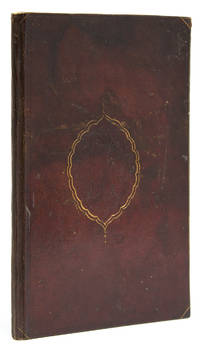
(Ottoman Manuscript)
Bena'yi Hadratlari Diwani Cover title Manuscript Book of Verse
Istanbul 1570. Text in Ottoman Turkish and Persian mostly in double columns. Ornamental headpiece. Nastaliq in black and red on colored leaves ruled in black and in gold. 39 ff. Dated on last leaf. 1 vols. Large 8vo. Red leather with gilt mandorlas with floral motif tooled in blind. Collectors' stamps on first and last leaves: Hilmi Hassan Tahsin 1306 1888; 'Uthman bin Hassan Tahsin and two others. Some staining. Text in Ottoman Turkish and Persian mostly in double columns. Ornamental headpiece. Nastaliq in black and red on colored leaves ruled in black and in gold. 39 ff. Dated on last leaf. 1 vols. Large 8vo. unknown
Référence libraire : 311740
|
|
|
(Ottoman Ministry of Foreign Affairs)
Salname-i Nezaret-i Hariciye 1302 Hicri Senesi 1885
Istanbul: Hariciye Nezareti Sicill-i Ahval Muduriyeti Matbaa-i Ebuzzia 1885. With 12 plates; an Ottoman imperial coat of arms gilt within the text. 4 630 1 pp. 1 vols. 8vo. Later black cloth binding. Very good. With 12 plates; an Ottoman imperial coat of arms gilt within the text. 4 630 1 pp. 1 vols. 8vo. The almanac opens with a tughra of Sultan Abdulhamid II and includes an Islamic calendar with sunrise and sunset times. There are extracts from Ottoman government documents such as a 1258 A.H. C.E. 1842 relation regarding the appointment of Mehmed Emin Rauf Pasha as Grand Vizier to Sultan Abdulmecid I p. 22. Includes a brief history of the Ottoman Ministry of Foreign Affairs and its predecessors the Reis Efendis along with lists of Ottoman sultans grand viziers ministers and ambassadors. The work also covers the latest developments in Ottoman international relations influential foreign states their rulers and their ambassadors to the Ottoman Empire.<br /> <br /> Printed by Ebuzzia Typography owned by Ebuzzia Tevfik Bey 1848-1913 an influential Turkish journalist writer and supporter of the Young Turks movement. Salname-i Nezaret-i Hariciye is an invaluable source on Ottoman history and foreign policy. Özege 6934 Hariciye Nezareti Sicill-i Ahval Muduriyeti, Matbaa-i Ebuzzia unknown
Référence libraire : 372025
|
|
|
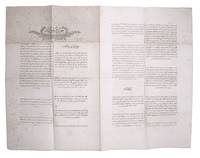
(Ottoman Newspaper)
Ceride-yi Havadis. No. 109
Istanbul: Matbaa-yi Ceride-yi havadis 1842. Ornamental title piece. Text in Turkish. 4 pp. 1 vols. Folio. Old folds some toning. very good. Ornamental title piece. Text in Turkish. 4 pp. 1 vols. Folio. Representative issue of this long-running Turkish newspaper first published in 1840 appearing thrice monthly from its found in 1840 until 1847 and weekly thereafter. Includes coverage of domestic political events foreign news and advertisements. Matbaa-yi Ceride-yi havadis] unknown
Référence libraire : 352080
|
|
|
(Ottoman Turkish Manuscript)
Kitabu'l-Favai'd Compilation of Useful Information
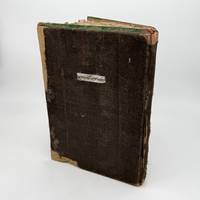
Ottoman Empire 1698. 13 leaves written in divani and tavki script. Incomplete at the beginning and end. With four later miniatures. 1 vols. 4to 11.5 x 8 inches. Later cloth-covered board binding over an earlier binding. Rubbed and worn but sound text leaves edgeworn some loosened. AS IS. 13 leaves written in divani and tavki script. Incomplete at the beginning and end. With four later miniatures. 1 vols. 4to 11.5 x 8 inches. This is a fascinating 17th-century Ottoman manuscript compilation mecmua of various recipes historical notes numerology brief histories of prophets mentioned in the Qur'an a recipe for an aphrodisiac attributed to Sultan Bayezid II and records of various Ottoman officials and their tenures all reflecting the intellectual and daily life of the period. The text leaves bear various numbers suggesting this was formed from several different manuscript sources. The manuscript features four miniatures likely added in the 20th century. These include a depiction of a nude male anatomical figure an illustration of Ottoman scholars engaged in astronomical calculations and two drawings inspired by Kitab al-Hiyal by Al-Jazari showcasing mechanical devices and automata. The manuscript also contains numerous signatures marginalia and graphical notations.<br /> <br /> An intriguing manuscript that offers insight into the intellectual pursuits and everyday concerns of the Ottoman elite. unknown
Référence libraire : 371989
|
|
|
(revue) Objets et Mondes tome 21 fascicule 1. Printemps 1981
[revue] Objets et Mondes tome 21 fascicule 1. Printemps 1981. Numéro spécial consacré à la Turquie. Metin AND. Permanence des civilisations anatoliennes. - R. ARIK. L'art populaire figuratif en Anatolie. - O. BANSTA. Broderies turques du XIXè siècle. Les serviettes de bain. - Y. DURUL. Représentations animales des tapis et kilims turcs. - A. TÜKEL YAVUZ. L'habitat turc. - R. ANK. La maison turque d'Anatolie. - O. NAHYA. Un spécimen de l'architecture tradionnelle. Le village de Harran près d'Urfa. - S. TANSUG. Costumes féminins des nomades turkmènes et yörük d'Anatolie.
Paris: Musée de l'Homme, Museum National d'Histoire Naturelle, 1981 in-4,52 pages. Agrafé, cachet, très bon état. Sommaire: Metin AND. Permanence des civilisations anatoliennes. - R. ANK. L'art populaire figuratif en Anatolie. - O. BANSTA. Broderies turques du XIXè siècle. Les serviettes de bain. - Y. DURUL. Représentations animales des tapis et kilims turcs. - A. TÜKEL YAVUZ. L'habitat turc. - R. ANK. La maison turque d'Anatolie. - O. NAHYA. Un spécimen de l'architecture tradionnelle. Le village de Harran près d'Urfa. - S. TANSUG. Costumes féminins des nomades turkmènes et yörük d'Anatolie.
Référence libraire : 13967490
|
|
|
(RUGENDAS, Lorenz):
Guerre contre les Ottomans au XVIIe siècle. Histoire en images. Suite de 18 gravures.
s.d., (XVIIIè), 11 x 22 cm, 18 planches gravées sur cuivre signées ‘L. R.’, une planche avec filigrane ‘fleur de lys’, brochure originale, couverte de papier dominoté (dite: à la colle).
Référence libraire : 99332aaf
|
|
|
(Travel in Ottoman Empire)
HARPER'S NEW MONTHLY MAGAZINE - OCTOBER 1877 single issue
New York 1877 first edition. Harpers. printed octavo wraps. pp. 641-800 plus ads. Illustrated article "From Brusa to Constantinople" appears on pp. 641-734. Uncut. Good plus. no owner marks light chipping on backstrip. . paperback
Référence libraire : a95508a
|
|
|

 Recevoir par e-mail
 Télécharger en PDF
 Flux RSS
 Lien permanent


